Segments - by Product Type (Light Soda Ash, Dense Soda Ash, Synthetic Soda Ash, Natural Soda Ash), by Application (Glass Manufacturing, Detergents & Soaps, Chemicals, Water Treatment, Pulp & Paper, Metallurgy, Others), by End-User (Industrial, Commercial, Residential)
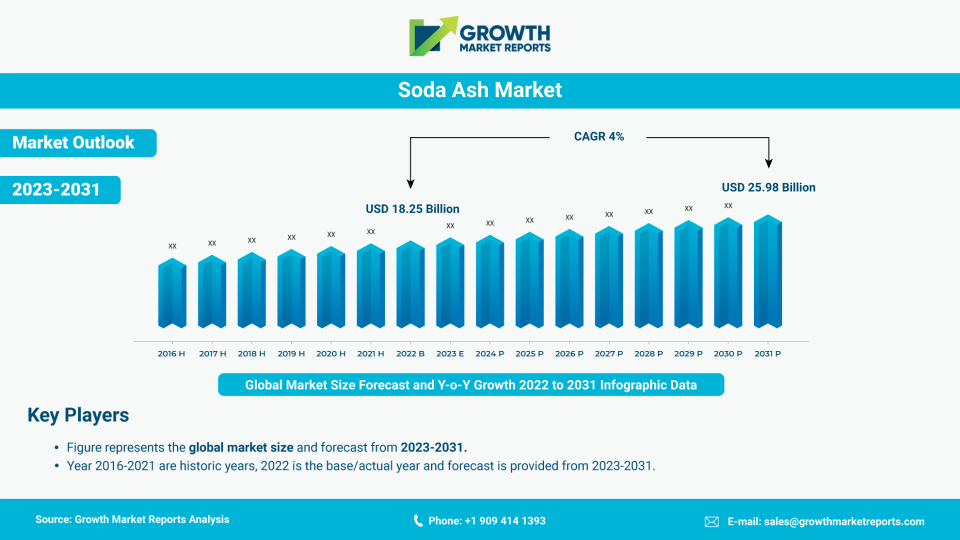
According to our latest research, the global soda ash market size was valued at USD 21.7 billion in 2024, reflecting robust demand across diverse industrial sectors. The market is forecasted to reach USD 33.1 billion by 2033, growing at a steady CAGR of 5.0% during the forecast period. This notable growth is primarily attributed to the expanding glass manufacturing industry, rising demand for detergents and soaps, and increasing usage of soda ash in water treatment applications. The soda ash market continues to benefit from industrialization and urbanization trends, particularly in emerging economies, which are driving consumption across multiple end-use segments.
One of the primary growth factors for the soda ash market is the rapid expansion of the glass manufacturing sector, which remains the largest consumer of soda ash globally. Soda ash, or sodium carbonate, is a critical ingredient in the production of flat glass, container glass, and specialty glass products. The construction boom in Asia Pacific countries, coupled with rising automotive production and infrastructure development in both developed and emerging markets, has significantly boosted the demand for glass products. Furthermore, technological advancements in glass processing and the growing preference for sustainable building materials are expected to sustain the upward trajectory of soda ash consumption within this segment over the coming years.
Another significant factor propelling the soda ash market is its widespread application in the detergents and chemicals industries. Soda ash acts as a vital cleaning agent and buffering compound in the formulation of detergents, soaps, and various household cleaning products. The global shift towards hygiene and sanitation, especially in the aftermath of the COVID-19 pandemic, has led to a surge in demand for cleaning agents, thus indirectly boosting soda ash consumption. Additionally, soda ash is extensively used in the production of chemicals such as sodium silicates, sodium bicarbonate, and other sodium-based derivatives, which find applications in diverse sectors including textiles, food processing, and pharmaceuticals. This multi-industry utility ensures a stable and growing market for soda ash in the long term.
Environmental regulations and sustainability trends are also influencing the soda ash market landscape. The increasing adoption of soda ash in water treatment applications is driven by stringent environmental policies aimed at improving water quality and reducing industrial effluents. Soda ash is effective in neutralizing acidic water and removing heavy metals, making it indispensable for municipal and industrial water treatment plants. Moreover, the ongoing shift towards eco-friendly manufacturing processes and the rising focus on circular economy principles are encouraging the use of soda ash in various green applications, including flue gas desulfurization and waste recycling, further contributing to market growth.
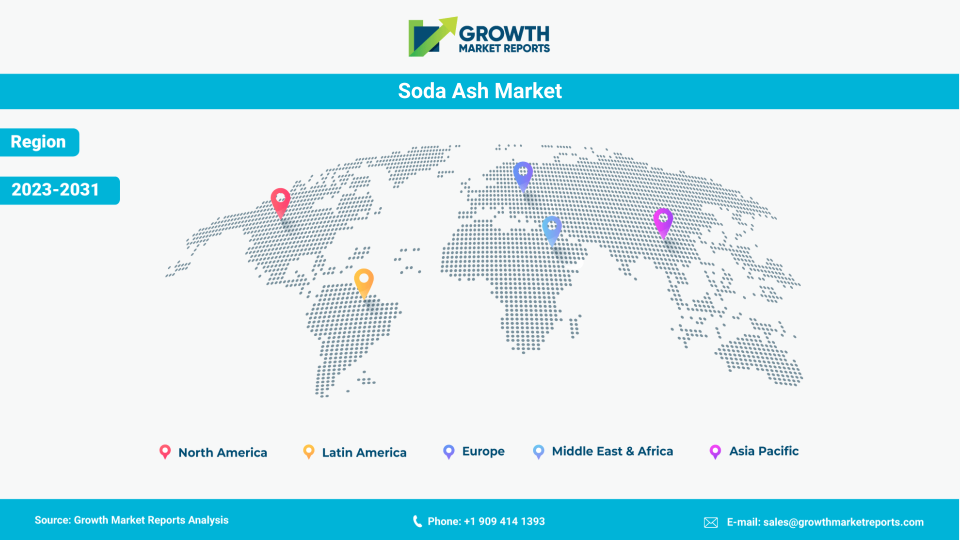
From a regional perspective, Asia Pacific continues to dominate the global soda ash market, accounting for the largest share in both production and consumption. This dominance is underpinned by the rapid industrialization and urbanization witnessed in countries like China and India, where the construction, automotive, and chemical industries are experiencing robust expansion. North America and Europe also represent significant markets, driven by mature glass and chemicals industries, although their growth rates are relatively moderate compared to Asia Pacific. Meanwhile, Latin America and the Middle East & Africa are emerging as promising markets due to increasing investments in infrastructure development and industrial projects, providing new growth avenues for soda ash manufacturers.
The soda ash market is segmented by product type into light soda ash, dense soda ash, synthetic soda ash, and natural soda ash, each catering to distinct industrial applications. Light soda ash is primarily used in the manufacturing of detergents, chemicals, and water treatment chemicals due to its high solubility and reactivity. Its lightweight nature makes it ideal for blending and mixing in various formulations, ensuring consistent performance in end-use products. The demand for light soda ash has witnessed a steady increase, particularly from the detergents and water treatment sectors, as these industries continue to expand in both developed and developing regions. Manufacturers are focusing on improving the purity and quality of light soda ash to meet the stringent requirements of these applications, further driving market growth.
Dense soda ash, on the other hand, is predominantly used in the glass manufacturing industry, where it serves as a key raw material for producing flat glass, container glass, and fiberglass. The superior density and granulation of dense soda ash make it highly suitable for high-temperature processes, ensuring minimal dust formation and efficient melting in glass furnaces. The construction and automotive industries, which are major consumers of glass products, have been instrumental in driving the demand for dense soda ash. With the global push towards energy-efficient buildings and the adoption of advanced glazing technologies, the consumption of dense soda ash is expected to witness sustained growth throughout the forecast period.
The market also distinguishes between synthetic soda ash and natural soda ash, based on the production process. Synthetic soda ash is produced using the Solvay process, which involves the chemical reaction of sodium chloride, ammonia, and limestone. This method allows for large-scale production and is widely adopted in regions where natural soda ash deposits are scarce. However, synthetic soda ash production is energy-intensive and generates significant carbon emissions, prompting manufacturers to explore cleaner production technologies. In contrast, natural soda ash is derived from trona ore and is considered more environmentally friendly due to its lower carbon footprint. The United States is a leading producer of natural soda ash, leveraging its abundant trona reserves to cater to both domestic and international markets.
The choice between synthetic and natural soda ash often depends on regional resource availability, cost considerations, and environmental regulations. While synthetic soda ash dominates in regions with limited natural resources, the growing emphasis on sustainability is driving a gradual shift towards natural soda ash, especially in North America and parts of Europe. Manufacturers are investing in process optimization and resource efficiency to enhance the competitiveness of both product types. As the demand for soda ash continues to rise across various applications, the market is witnessing increased innovation in production technologies, aimed at reducing environmental impact and improving product quality.
Overall, the product type segment of the soda ash market is characterized by a dynamic interplay of technological advancements, regulatory pressures, and shifting consumer preferences. The ongoing transition towards sustainable production methods and the diversification of application areas are expected to shape the future trajectory of the soda ash market, with both light and dense soda ash playing pivotal roles in meeting the evolving needs of end-user industries.
| Attributes | Details |
| Report Title | Soda Ash Market Research Report 2033 |
| By Product Type | Light Soda Ash, Dense Soda Ash, Synthetic Soda Ash, Natural Soda Ash |
| By Application | Glass Manufacturing, Detergents & Soaps, Chemicals, Water Treatment, Pulp & Paper, Metallurgy, Others |
| By End-User | Industrial, Commercial, Residential |
| Regions Covered | North America, Europe, APAC, Latin America, MEA |
| Base Year | 2024 |
| Historic Data | 2018-2023 |
| Forecast Period | 2025-2033 |
| Number of Pages | 291 |
| Number of Tables & Figures | 325 |
| Customization Available | Yes, the report can be customized as per your need. |
The application segment of the soda ash market is broad, encompassing glass manufacturing, detergents & soaps, chemicals, water treatment, pulp & paper, metallurgy, and others. Among these, glass manufacturing remains the dominant application, accounting for over 50% of global soda ash consumption in 2024. The integral role of soda ash in lowering the melting point of silica and facilitating the formation of glass makes it indispensable in the production of architectural glass, automotive glass, and packaging containers. The ongoing construction boom, especially in Asia Pacific, and the growing demand for energy-efficient glass products are expected to sustain the dominance of this application segment over the forecast period.
The detergents & soaps segment is another significant consumer of soda ash, leveraging its properties as a water softener, cleaning agent, and pH regulator. The global emphasis on hygiene and sanitation has led to a surge in demand for cleaning products, particularly in emerging markets where urbanization and rising disposable incomes are driving consumer spending. Soda ash is a preferred ingredient in both household and industrial cleaning formulations due to its effectiveness and cost-efficiency. The ongoing trend towards green and biodegradable cleaning products is also influencing the formulation strategies of detergent manufacturers, with soda ash playing a crucial role in meeting these new requirements.
In the chemicals industry, soda ash serves as a foundational building block for the synthesis of various sodium-based compounds, including sodium silicates, sodium bicarbonate, and sodium phosphates. These chemicals find applications in a wide range of industries, from food processing and pharmaceuticals to textiles and water treatment. The versatility of soda ash as a precursor for multiple chemical reactions ensures its continued relevance in the global chemicals market. Additionally, the increasing adoption of soda ash in specialty chemical formulations, driven by innovations in material science and process engineering, is expected to create new growth opportunities within this segment.
The water treatment application segment is witnessing robust growth, fueled by the rising need for clean and safe water in both municipal and industrial settings. Soda ash is used to adjust the pH of water, neutralize acidity, and remove impurities such as heavy metals and phosphates. With governments worldwide implementing stricter environmental regulations and investing in water infrastructure projects, the demand for soda ash in water treatment is poised for significant expansion. Furthermore, the increasing incidence of water pollution and the growing awareness of waterborne diseases are driving the adoption of soda ash-based solutions in developing regions.
Other notable application areas for soda ash include pulp & paper and metallurgy. In the pulp & paper industry, soda ash is used in the pulping process to soften wood chips and enhance fiber separation, while in metallurgy, it serves as a fluxing agent in the extraction and refining of metals. The diverse application portfolio of soda ash underscores its critical role in modern industrial processes, ensuring a stable and growing demand base across multiple sectors.
The soda ash market is segmented by end-user into industrial, commercial, and residential categories, each reflecting distinct consumption patterns and demand drivers. The industrial segment is by far the largest end-user, accounting for approximately 75% of total soda ash consumption in 2024. This dominance is attributed to the extensive use of soda ash in large-scale manufacturing processes, including glass production, chemical synthesis, and water treatment. Industrial users prioritize product quality, consistency, and cost-efficiency, prompting soda ash manufacturers to invest in advanced production technologies and supply chain optimization to meet these stringent requirements.
The commercial segment encompasses businesses and institutions such as laundries, hotels, hospitals, and cleaning service providers that utilize soda ash in their cleaning and maintenance operations. The demand from this segment is driven by the need for effective and economical cleaning agents, particularly in regions with hard water conditions. Soda ash’s ability to soften water and enhance the performance of detergents makes it a preferred choice for commercial establishments. Additionally, the increasing adoption of green cleaning practices and the emphasis on sustainability in the commercial sector are influencing the formulation of cleaning products, with soda ash playing a central role in these initiatives.
The residential segment represents a smaller but growing share of the soda ash market, driven by the rising demand for household cleaning products and water treatment solutions. As urbanization accelerates and living standards improve in emerging economies, consumers are increasingly seeking effective and affordable cleaning agents for domestic use. Soda ash is commonly found in laundry detergents, dishwashing powders, and water softeners, offering a safe and versatile solution for everyday cleaning needs. The growing awareness of the health and environmental benefits of soda ash-based products is expected to further boost demand from the residential segment in the coming years.
The segmentation by end-user highlights the diverse consumption patterns and evolving market dynamics within the soda ash industry. While industrial users will continue to drive the bulk of demand, the commercial and residential segments are expected to register faster growth rates, supported by changing consumer preferences, regulatory trends, and technological advancements. Manufacturers are increasingly focusing on product innovation and customization to cater to the specific needs of each end-user segment, ensuring sustained growth and competitiveness in the global soda ash market.
Moreover, the integration of digital technologies and data analytics in supply chain management and customer engagement is enabling soda ash producers to better understand and anticipate the evolving needs of their end-users. This strategic focus on customer-centricity and operational excellence is expected to enhance the value proposition of soda ash products across all end-user segments, driving long-term market growth and profitability.
The soda ash market presents a myriad of opportunities, particularly in the context of sustainability and technological innovation. The growing emphasis on green manufacturing processes and the adoption of circular economy principles are driving demand for eco-friendly soda ash production methods. Manufacturers are investing in cleaner technologies, such as carbon capture and utilization, to reduce the environmental footprint of soda ash production. Additionally, the rising demand for high-purity soda ash in specialty applications, such as electronics and pharmaceuticals, is creating new growth avenues for market players. The integration of digital technologies in production and supply chain management is also enhancing operational efficiency and enabling real-time monitoring of quality and performance, further strengthening the competitive position of soda ash manufacturers.
Emerging markets in Asia Pacific, Latin America, and the Middle East & Africa offer significant growth potential for the soda ash market. Rapid urbanization, industrialization, and infrastructure development in these regions are driving demand for glass, chemicals, and water treatment solutions, all of which rely heavily on soda ash. Strategic investments in capacity expansion, distribution networks, and partnerships with local players are enabling global soda ash manufacturers to tap into these high-growth markets. Furthermore, the increasing focus on water conservation and pollution control is driving the adoption of soda ash-based solutions in municipal and industrial water treatment projects, creating additional opportunities for market expansion.
Despite the favorable growth outlook, the soda ash market faces several restraining factors, the most prominent being the volatility in raw material prices and the environmental impact of synthetic soda ash production. The Solvay process, which is widely used for synthetic soda ash production, is energy-intensive and generates significant carbon emissions, attracting regulatory scrutiny and increasing compliance costs. Additionally, fluctuations in the prices of key raw materials such as limestone, salt, and energy can impact production economics and profit margins. The competition from alternative materials and substitutes in certain applications, such as caustic soda and sodium bicarbonate, also poses a threat to soda ash demand. Market players must navigate these challenges by focusing on cost optimization, process innovation, and sustainable production practices to maintain their competitive edge.
The Asia Pacific region continues to lead the global soda ash market, accounting for approximately 51% of total market revenue in 2024, which translates to around USD 11.1 billion. The region’s dominance is driven by rapid industrialization, urbanization, and robust growth in the construction, automotive, and chemicals sectors, particularly in China and India. China, as the world’s largest producer and consumer of soda ash, plays a pivotal role in shaping global market trends. The ongoing investments in infrastructure development, coupled with government initiatives to promote sustainable manufacturing, are expected to drive continued growth in the Asia Pacific soda ash market, with a projected CAGR of 5.8% through 2033.
North America represents the second-largest regional market, with a market size of approximately USD 5.2 billion in 2024. The United States is a major producer of natural soda ash, leveraging its vast trona reserves to supply both domestic and international markets. The region benefits from a mature glass and chemicals industry, as well as stringent environmental regulations that drive demand for soda ash in water treatment applications. While the growth rate in North America is moderate compared to Asia Pacific, the region remains a key exporter of soda ash, particularly to Latin America and Asia. The increasing adoption of sustainable production practices and the development of high-purity soda ash for specialty applications are expected to support steady market growth in North America over the forecast period.
Europe accounted for approximately USD 3.9 billion of the global soda ash market in 2024, driven by strong demand from the glass, chemicals, and water treatment industries. The region is characterized by a high degree of regulatory oversight, with strict environmental standards influencing production processes and product formulations. The adoption of advanced manufacturing technologies and the emphasis on sustainability are key trends shaping the European soda ash market. Meanwhile, Latin America and the Middle East & Africa are emerging as promising markets, with a combined market size of around USD 1.5 billion in 2024. These regions are experiencing rapid industrial growth and increasing investments in infrastructure and water treatment projects, providing new growth opportunities for soda ash manufacturers.
The global soda ash market is highly competitive, characterized by the presence of several large multinational corporations as well as regional and local players. The competitive landscape is shaped by factors such as production capacity, product quality, pricing strategies, distribution networks, and technological innovation. Leading companies are investing in capacity expansion, process optimization, and sustainability initiatives to strengthen their market position and cater to the evolving needs of end-users. Strategic partnerships, mergers and acquisitions, and joint ventures are common strategies employed by market players to enhance their global footprint and access new growth markets.
Innovation and sustainability have emerged as key differentiators in the soda ash market. Companies are increasingly focusing on the development of eco-friendly production processes, such as carbon capture and utilization, to reduce the environmental impact of soda ash manufacturing. The adoption of digital technologies and data analytics is enabling manufacturers to improve operational efficiency, optimize supply chains, and enhance customer engagement. Furthermore, the growing demand for high-purity soda ash in specialty applications is driving investments in research and development, with companies seeking to diversify their product portfolios and capture new market segments.
The competitive dynamics of the soda ash market are also influenced by regional factors, such as resource availability, regulatory frameworks, and market demand. For example, the United States holds a competitive advantage in natural soda ash production due to its abundant trona reserves, while China dominates synthetic soda ash production through large-scale manufacturing facilities and cost-effective operations. European companies, on the other hand, are leading the way in sustainable production practices and product innovation, reflecting the region’s strong regulatory focus and commitment to environmental stewardship.
Some of the major companies operating in the global soda ash market include Tata Chemicals Ltd., Solvay S.A., Ciner Group, OCI Company Ltd., GHCL Limited, WE Soda Ltd., and FMC Corporation. Tata Chemicals Ltd. is a leading player with a strong presence in both natural and synthetic soda ash production, catering to a diverse customer base across Asia, Europe, and North America. Solvay S.A. is renowned for its technological expertise and commitment to sustainability, focusing on the development of eco-friendly production processes and high-purity soda ash products. Ciner Group and OCI Company Ltd. are major producers with significant production capacities and global distribution networks, enabling them to serve customers in multiple regions.
< b >GHCL Limited< /b > and < b >WE Soda Ltd.< /b > are recognized for their focus on process innovation and operational efficiency, leveraging advanced technologies to enhance product quality and reduce environmental impact. FMC Corporation, although primarily known for its specialty chemicals portfolio, maintains a strong presence in the soda ash market through strategic investments and partnerships. These companies are continuously investing in research and development, capacity expansion, and sustainability initiatives to maintain their competitive edge and capitalize on emerging market opportunities. The intense competition and dynamic market environment are expected to drive further consolidation and innovation in the global soda ash market over the forecast period.
The Soda Ash market has been segmented on the basis of
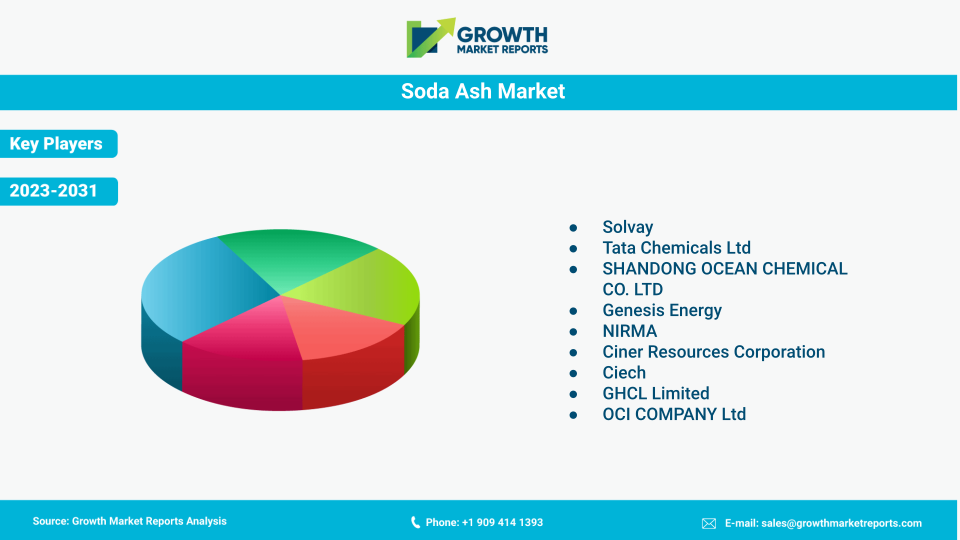
Key players in the global soda ash market are Solvay; Tata Chemicals Ltd; SHANDONG OCEAN CHEMICAL CO. LTD; Genesis Energy; NIRMA, Ciner Resources Corporation; Ciech; GHCL Limited; OCI COMPANY Ltd; DCW Ltd; Sahand Industrial Group; ICI Pakistan Limited; Bashkir Soda Company JSC; and Huanghua Tianxin Chemical Industry Co., LTD.
These players engage in mergers & acquisitions, collaborations, agreements, and partnerships to strengthen their geographical presence.
Soda ash is used to neutralize acidic water, remove heavy metals, and adjust pH levels in municipal and industrial water treatment plants, supporting compliance with environmental regulations and improving water quality.
Opportunities include the growing demand for eco-friendly and high-purity soda ash, expansion in emerging markets (Asia Pacific, Latin America, Middle East & Africa), and the integration of digital technologies for improved production and supply chain management.
Major challenges include raw material price volatility, environmental concerns related to synthetic soda ash production, competition from alternative chemicals like caustic soda, and increasing regulatory compliance costs.
Key companies include Solvay S.A., Tata Chemicals Limited, Ciner Resources Corporation, Genesis Energy, Nirma Limited, WE Soda Ltd., OCI Company Ltd., Searles Valley Minerals Inc., GHCL Limited, Sisecam Group, and others.
Asia Pacific dominates the soda ash market, accounting for about 51% of global revenue in 2024, followed by North America and Europe. Rapid industrialization in China and India is a major factor in Asia Pacific's leadership.
Stricter environmental regulations are driving the adoption of soda ash in water treatment and encouraging manufacturers to invest in cleaner production technologies, such as carbon capture and utilization, to reduce the environmental impact of synthetic soda ash.
Soda ash is segmented into light soda ash (used in detergents, chemicals, and water treatment), dense soda ash (mainly for glass manufacturing), synthetic soda ash (produced via the Solvay process), and natural soda ash (derived from trona ore, more environmentally friendly).
The largest consumers of soda ash are the glass manufacturing, detergents & soaps, chemicals, and water treatment industries. Glass manufacturing alone accounts for over 50% of global soda ash consumption.
Key growth drivers include the expanding glass manufacturing industry, rising demand for detergents and soaps, increased use in water treatment, and ongoing industrialization and urbanization, especially in emerging economies.
The global soda ash market was valued at USD 21.7 billion in 2024 and is projected to reach USD 33.1 billion by 2033, growing at a CAGR of 5.0% during the forecast period.