Scalp Scrub Market Research Report 2033

Scalp Scrub Market Research Report 2033

Segments - by Product Type (Physical Exfoliant, Chemical Exfoliant, Combination), by Application (Dandruff Treatment, Hair Growth, Deep Cleansing, Others), by Distribution Channel (Online Stores, Supermarkets/Hypermarkets, Specialty Stores, Others), by End-User (Men, Women, Unisex)

https://growthmarketreports.com/Debadatta
Author : Debadatta Patel
https://growthmarketreports.com/Vaibhav
Fact-checked by : V. Chandola
https://growthmarketreports.com/Shruti
Editor : Shruti Bhat

Upcoming | Report ID :CG-918 | 4.6 Rating | 65 Reviews | 253 Pages | Format : Docx PDF

Report Description


Scalp Scrub Market Outlook

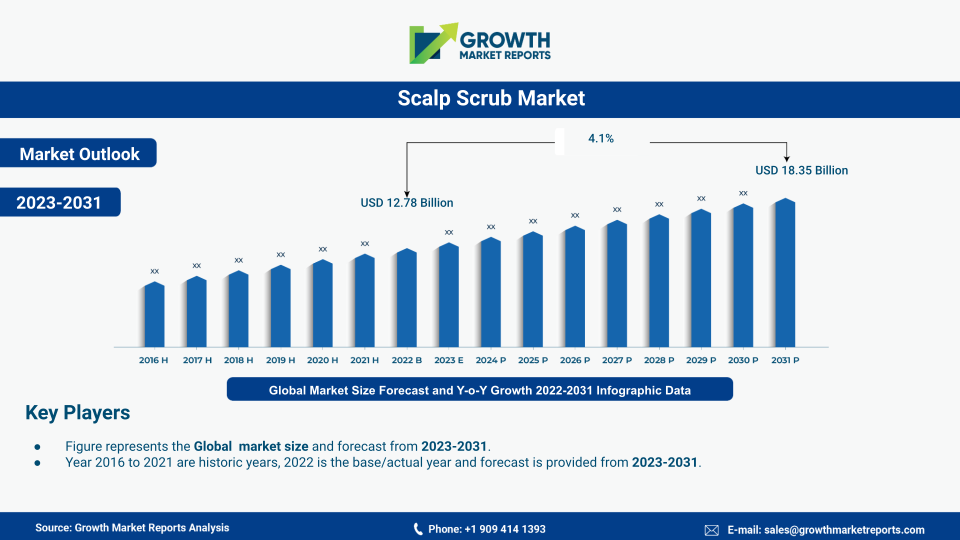
According to our latest research, the global scalp scrub market size reached USD 2.1 billion in 2024, reflecting robust demand and a strong consumer shift toward specialized hair and scalp care products. The market is projected to grow at a CAGR of 8.2% from 2025 to 2033, reaching a forecasted value of USD 4.1 billion by 2033. This impressive growth is primarily driven by increasing consumer awareness about scalp health, rising incidences of scalp-related concerns, and the expanding influence of beauty and wellness trends worldwide.

One of the major growth drivers for the scalp scrub market is the heightened awareness regarding the importance of scalp health in maintaining overall hair quality. Consumers are increasingly recognizing that a healthy scalp is foundational for robust hair growth and are seeking targeted solutions to address issues such as dandruff, buildup, and clogged follicles. This trend is further amplified by educational campaigns from dermatologists and hair care professionals, as well as content from beauty influencers on social media platforms. As consumers become more knowledgeable about the benefits of exfoliation and deep cleansing, the demand for scalp scrubs—especially those with natural and organic ingredients—continues to surge. This shift in consumer mindset is not just limited to urban populations but is also permeating semi-urban and rural markets, expanding the addressable market for scalp scrub manufacturers.

Another significant factor fueling market expansion is the growing innovation and product diversification within the scalp scrub market. Manufacturers are investing heavily in research and development to formulate products that cater to different scalp types, hair textures, and specific concerns such as dandruff, oiliness, and sensitivity. The introduction of multi-functional products that combine exfoliation with nourishment, hydration, and soothing properties is gaining traction. Additionally, the rise of clean beauty and the demand for chemical-free, cruelty-free, and eco-friendly products are influencing product development strategies. These innovations are attracting a broader demographic, including men and younger consumers, who are now more engaged in personal grooming and scalp care routines. As a result, the market is witnessing a proliferation of brands, each vying for consumer attention through unique value propositions and targeted marketing campaigns.

The rapid digitalization of retail channels is also a pivotal growth factor for the scalp scrub market. With the proliferation of e-commerce platforms, consumers now have unprecedented access to a wide variety of scalp scrubs, along with detailed product information, user reviews, and personalized recommendations. Online stores are leveraging advanced technologies such as AI-driven product suggestions and virtual consultations to enhance the consumer shopping experience. This has led to a significant increase in online sales, especially among millennials and Gen Z consumers who prefer the convenience and variety offered by digital platforms. Furthermore, the COVID-19 pandemic accelerated the shift towards online shopping, a trend that has persisted post-pandemic and continues to benefit the scalp scrub industry by expanding its reach and accessibility.

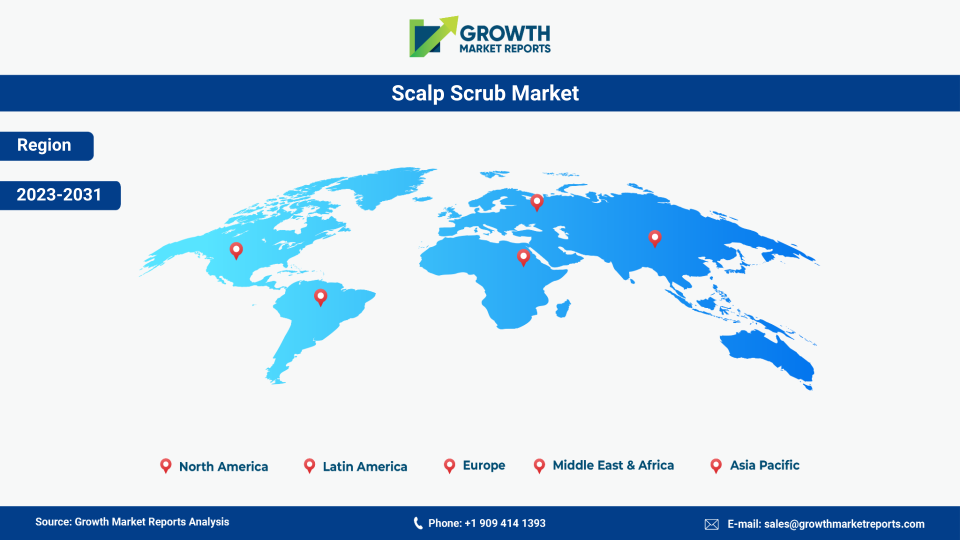
Regionally, the scalp scrub market is experiencing dynamic growth patterns, with Asia Pacific emerging as the fastest-growing region due to its large population base, rising disposable income, and increasing focus on personal care. North America and Europe continue to hold significant market shares, driven by high consumer awareness and established beauty industries. Meanwhile, Latin America and the Middle East & Africa regions are witnessing steady growth, supported by improving economic conditions and growing urbanization. The interplay of these regional dynamics is shaping the competitive landscape and influencing strategic decisions among key market players.

Global Scalp Scrub Industry Outlook

Product Type Analysis

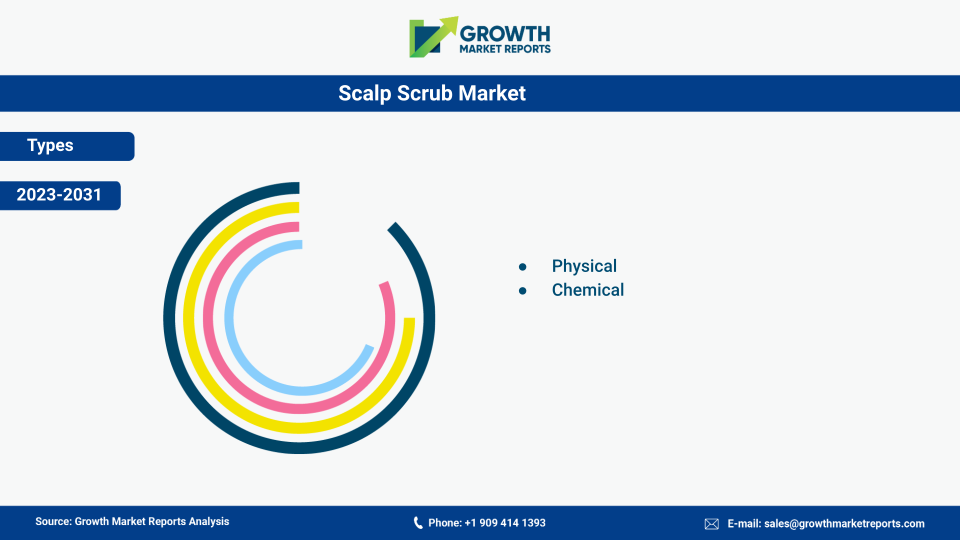
The product type segment of the scalp scrub market is broadly categorized into physical exfoliants, chemical exfoliants, and combination products. Physical exfoliants, which utilize granules or natural particles to manually slough off dead skin cells and buildup, have traditionally dominated the market. Consumers are drawn to these products for their immediate results and tactile cleansing experience. However, there is a growing concern regarding the abrasiveness of certain physical exfoliants, which can sometimes cause microtears on sensitive scalps. As a result, manufacturers are innovating with gentler, eco-friendly exfoliating agents such as sugar, salt, and biodegradable beads, catering to the demand for effective yet safe scalp care solutions. The physical exfoliant segment continues to hold a significant share, especially among consumers who prefer a more hands-on approach to scalp cleansing.

Chemical exfoliants, which include ingredients such as alpha hydroxy acids (AHAs), beta hydroxy acids (BHAs), and enzymes, are gaining rapid traction in the scalp scrub market. These products offer a non-abrasive method of exfoliation by dissolving dead skin cells and sebum buildup, making them particularly suitable for sensitive or problematic scalps. The rising popularity of chemical exfoliants can be attributed to their efficacy in addressing specific scalp concerns like dandruff, oiliness, and follicle clogging without causing physical irritation. Dermatologists and trichologists often recommend these products for individuals with chronic scalp issues, further boosting their credibility and adoption rates. As consumers become more educated about ingredient efficacy and safety, the demand for chemical exfoliant scalp scrubs is expected to continue its upward trajectory.

Combination scalp scrubs, which integrate both physical and chemical exfoliation mechanisms, represent a rapidly emerging segment within the scalp scrub market. These hybrid products are designed to offer the benefits of both immediate physical cleansing and deeper, long-term chemical exfoliation. The dual-action approach appeals to consumers seeking comprehensive scalp care solutions that address multiple concerns in a single application. Manufacturers are capitalizing on this trend by launching innovative formulations that blend natural exfoliants with mild acids or enzymes, often enriched with botanical extracts and nourishing oils. The combination product segment is particularly popular among beauty enthusiasts and individuals with complex scalp needs, driving its steady growth and market penetration.

Product differentiation and branding play a crucial role in the product type segment, with brands leveraging unique ingredient profiles, sustainable sourcing, and clinical claims to stand out in a crowded marketplace. The emphasis on clean beauty and transparency is prompting companies to disclose detailed ingredient lists and highlight the absence of harmful chemicals, appealing to health-conscious consumers. As the scalp scrub market evolves, the product type segment is expected to witness further innovation, with emerging trends such as probiotic-infused scrubs, CBD-based formulations, and personalized scalp care solutions reshaping consumer preferences and setting new industry benchmarks.

Report Scope

Attributes Details
Report Title Scalp Scrub Market Research Report 2033
By Product Type Physical Exfoliant, Chemical Exfoliant, Combination
By Application Dandruff Treatment, Hair Growth, Deep Cleansing, Others
By Distribution Channel Online Stores, Supermarkets/Hypermarkets, Specialty Stores, Others
By End-User Men, Women, Unisex
Regions Covered North America, Europe, APAC, Latin America, MEA
Base Year 2024
Historic Data 2018-2023
Forecast Period 2025-2033
Number of Pages 253
Number of Tables & Figures 335
Customization Available Yes, the report can be customized as per your need.

Application Analysis

The application segment of the scalp scrub market encompasses a diverse range of uses, including dandruff treatment, hair growth stimulation, deep cleansing, and other specialized applications. Dandruff treatment remains the most prominent application, driven by the high prevalence of dandruff and seborrheic dermatitis globally. Scalp scrubs formulated with antifungal agents, soothing botanicals, and exfoliating ingredients are increasingly preferred for their ability to remove flakes, reduce itchiness, and restore scalp balance. The growing awareness of the link between scalp health and dandruff management is prompting consumers to incorporate regular exfoliation into their hair care routines, thereby boosting the demand for targeted scalp scrub products.

Hair growth stimulation is another key application driving the growth of the scalp scrub market. Many consumers are seeking solutions to combat hair thinning, breakage, and slow growth, and scalp scrubs are being positioned as an essential step in promoting a healthy scalp environment conducive to hair regeneration. Products enriched with ingredients such as caffeine, biotin, and essential oils are marketed for their ability to improve blood circulation, unclog follicles, and enhance nutrient absorption. The increasing prevalence of hair loss due to stress, hormonal changes, and environmental factors is fueling the adoption of scalp scrubs as part of holistic hair growth regimens. This trend is particularly pronounced among younger consumers and men, who are becoming more proactive in addressing hair-related concerns.

Deep cleansing represents a rapidly growing application within the scalp scrub market, as consumers seek effective solutions to remove product buildup, excess oil, and environmental pollutants from the scalp. The popularity of styling products, dry shampoos, and pollution exposure has led to a rise in scalp congestion, necessitating periodic deep cleansing to maintain scalp and hair health. Scalp scrubs designed for deep cleansing often feature detoxifying ingredients such as charcoal, clay, and tea tree oil, which are valued for their purifying properties. The demand for deep cleansing scalp scrubs is further supported by the trend toward multi-step hair care routines and the desire for salon-like results at home.

Other specialized applications, such as soothing sensitive scalps, preventing scalp acne, and addressing specific dermatological conditions, are also contributing to the diversification of the scalp scrub market. Brands are developing targeted formulations to cater to niche consumer needs, often in collaboration with dermatologists and trichologists. The expansion of application areas is broadening the market’s appeal and encouraging product experimentation among consumers. As the understanding of scalp health continues to evolve, the application segment is expected to witness further segmentation and innovation, driving sustained growth and market differentiation.

Distribution Channel Analysis

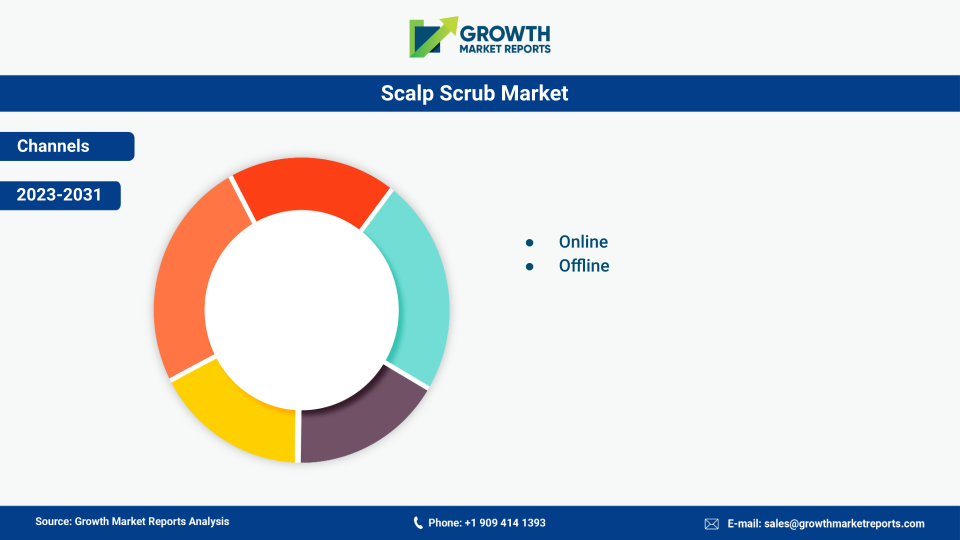
The distribution channel segment of the scalp scrub market is characterized by a dynamic mix of online stores, supermarkets/hypermarkets, specialty stores, and other retail formats. Online stores have emerged as the fastest-growing channel, propelled by the convenience, variety, and accessibility they offer to consumers. The proliferation of e-commerce platforms, coupled with advanced digital marketing strategies and influencer collaborations, has significantly expanded the reach of scalp scrub products. Consumers are increasingly relying on online reviews, tutorials, and personalized recommendations to make informed purchasing decisions. The ability to compare products, access exclusive online deals, and benefit from home delivery services has made online stores the preferred choice for a growing segment of the population, particularly among tech-savvy millennials and urban dwellers.

Supermarkets and hypermarkets continue to play a vital role in the scalp scrub market, especially in regions where offline retail remains dominant. These large-format stores offer a wide assortment of scalp scrub brands and variants, providing consumers with the opportunity to physically examine products before purchase. The visibility and accessibility of scalp scrubs in prominent retail chains contribute to impulse buying and brand discovery. Additionally, the presence of in-store promotions, discounts, and loyalty programs further incentivizes purchases. While the share of supermarkets and hypermarkets is gradually being challenged by online channels, they remain an important distribution avenue, particularly in developed markets with established retail infrastructure.

Specialty stores, including beauty and wellness outlets, salons, and pharmacies, are gaining prominence in the scalp scrub market due to their focus on personalized service and expert advice. These channels cater to consumers seeking premium products, professional recommendations, and curated selections tailored to specific scalp and hair concerns. The growing trend of experiential retail, where consumers can test products and receive consultations from trained professionals, is enhancing the appeal of specialty stores. Brands are increasingly partnering with salons and beauty clinics to offer exclusive scalp scrub treatments and drive brand loyalty. This channel is particularly effective in urban centers and among consumers willing to invest in high-quality, specialized scalp care solutions.

Other distribution channels, such as direct sales, subscription services, and pop-up stores, are also contributing to the diversification of the scalp scrub market. Direct-to-consumer (DTC) brands are leveraging social media and influencer marketing to build strong customer relationships and offer personalized product bundles. Subscription services, which deliver scalp scrubs and complementary hair care products on a recurring basis, are gaining traction among busy consumers seeking convenience and value. The evolving retail landscape is prompting brands to adopt omnichannel strategies, integrating online and offline touchpoints to enhance the consumer experience and maximize market penetration.

End-User Analysis

The end-user segment of the scalp scrub market is segmented into men, women, and unisex categories, each with distinct preferences and purchasing behaviors. Historically, women have constituted the largest end-user group, driven by their higher engagement with beauty and personal care routines. The increasing awareness of scalp health, coupled with the influence of beauty influencers and media, has made scalp scrubs a staple in women’s hair care regimens. Women are particularly drawn to products that offer multiple benefits, such as exfoliation, hydration, and nourishment, and are willing to experiment with new formulations and brands. The women’s segment continues to drive innovation and premiumization in the scalp scrub market, with a focus on clean beauty, natural ingredients, and customized solutions.

Men represent a rapidly growing end-user group in the scalp scrub market, fueled by changing attitudes toward personal grooming and self-care. The rise of the men’s grooming industry, coupled with increasing concerns about hair loss, dandruff, and oily scalps, is prompting more men to incorporate scalp scrubs into their routines. Brands are responding by developing targeted products with masculine fragrances, minimalist packaging, and specific claims such as anti-dandruff and hair growth support. Marketing campaigns featuring male celebrities and influencers are further breaking down stereotypes and encouraging men to invest in scalp health. The men’s segment is expected to witness robust growth, particularly in regions where traditional gender norms around grooming are evolving.

Unisex scalp scrubs, designed to cater to all genders, are gaining popularity in the scalp scrub market due to their versatility and broad appeal. These products often feature neutral scents, inclusive branding, and universal claims, making them suitable for shared use among family members or couples. The trend toward gender-neutral beauty is resonating with younger consumers who prioritize inclusivity, sustainability, and minimalism in their purchasing decisions. Unisex scalp scrubs are also favored by retailers and e-commerce platforms for their ability to streamline inventory and simplify marketing efforts. As the boundaries between traditional gender categories continue to blur, the unisex segment is poised for sustained growth and innovation.

The end-user segment is further influenced by demographic factors such as age, lifestyle, and cultural attitudes toward beauty and wellness. Younger consumers, in particular, are driving demand for scalp scrubs through their openness to experimentation and preference for holistic self-care routines. Older consumers, on the other hand, are seeking solutions for age-related scalp concerns such as dryness and thinning hair. The interplay of these demographic trends is shaping product development, marketing strategies, and distribution approaches within the scalp scrub market, ensuring that brands remain responsive to the evolving needs of diverse consumer segments.

Opportunities & Threats

The scalp scrub market presents a multitude of growth opportunities for industry stakeholders, driven by evolving consumer preferences, technological advancements, and the increasing convergence of beauty and wellness. One of the most promising opportunities lies in product innovation and the development of multifunctional scalp scrubs that address a range of concerns, from exfoliation and cleansing to nourishment and scalp soothing. Brands that invest in research and development to create unique, efficacious formulations—such as probiotic-infused, CBD-based, or personalized scalp scrubs—stand to capture a larger share of the market. Additionally, the growing demand for clean beauty and sustainable products offers opportunities for companies to differentiate themselves through eco-friendly packaging, cruelty-free certifications, and transparent ingredient sourcing. Collaborations with dermatologists, trichologists, and influencers can further enhance brand credibility and consumer trust, driving long-term loyalty and market growth.

Another significant opportunity in the scalp scrub market is the expansion into emerging markets, particularly in Asia Pacific, Latin America, and the Middle East & Africa. These regions are experiencing rapid urbanization, rising disposable incomes, and increasing awareness of personal care, creating a fertile ground for scalp scrub adoption. Brands that tailor their products and marketing strategies to local preferences, cultural nuances, and hair care traditions can effectively penetrate these high-growth markets. The digitalization of retail channels, coupled with the proliferation of mobile devices and social media, enables companies to reach previously underserved consumer segments and build brand presence at scale. Furthermore, the rise of direct-to-consumer models and subscription services offers additional avenues for market expansion and customer engagement, ensuring sustained growth and profitability.

Despite the favorable growth outlook, the scalp scrub market faces certain restraining factors that could impede its progress. One of the primary challenges is the potential for adverse reactions and scalp sensitivity associated with certain exfoliating ingredients, particularly in consumers with pre-existing scalp conditions or allergies. Negative experiences, such as irritation, dryness, or flaking, can lead to product returns, negative reviews, and loss of consumer trust. Regulatory scrutiny regarding ingredient safety, labeling, and marketing claims is also intensifying, requiring brands to invest in rigorous testing, compliance, and transparent communication. Additionally, the proliferation of counterfeit and substandard products in unregulated markets poses a threat to brand reputation and consumer safety. Companies must therefore prioritize quality assurance, consumer education, and proactive risk management to navigate these challenges and sustain long-term growth in the scalp scrub market.

Regional Outlook

The regional analysis of the scalp scrub market reveals distinct growth trajectories and market dynamics across key geographies. In 2024, North America accounted for the largest market share, valued at USD 710 million, driven by high consumer awareness, advanced retail infrastructure, and a strong culture of personal grooming. The United States remains the dominant market within the region, supported by a robust beauty industry, widespread adoption of scalp care routines, and the presence of leading global brands. Canada and Mexico are also witnessing steady growth, fueled by increasing urbanization and rising disposable incomes. The North American market is characterized by a high degree of innovation, premiumization, and brand loyalty, making it a key battleground for both established and emerging players.

Europe is another significant market for scalp scrubs, with a market size of USD 540 million in 2024 and a forecasted CAGR of 7.5% through 2033. The region’s growth is underpinned by a strong emphasis on clean beauty, sustainability, and holistic wellness. Countries such as the United Kingdom, Germany, France, and Italy are leading the adoption of scalp scrubs, driven by high consumer expectations, regulatory support for safe and natural ingredients, and the influence of fashion and beauty trends. The European market is also witnessing a rise in demand for organic and vegan scalp scrubs, as consumers become more discerning about ingredient sourcing and environmental impact. The presence of specialty retailers, beauty salons, and pharmacies further enhances product accessibility and consumer engagement.

The Asia Pacific region is the fastest-growing market for scalp scrubs, with a market size of USD 490 million in 2024 and a projected CAGR of 10.4% over the forecast period. The region’s growth is fueled by a large and youthful population, rising disposable incomes, and increasing awareness of scalp and hair care. Countries such as China, Japan, South Korea, and India are witnessing a surge in demand for scalp scrubs, driven by the popularity of K-beauty and J-beauty trends, the influence of social media, and the expansion of e-commerce platforms. Local brands are innovating with traditional ingredients and formulations tailored to regional hair types and concerns, while international brands are investing in localization and influencer partnerships to capture market share. The Asia Pacific market is expected to play a pivotal role in shaping the future of the scalp scrub industry, offering significant opportunities for growth, innovation, and market expansion.

Scalp Scrub Market Statistics

Competitor Outlook

The competitive landscape of the scalp scrub market is characterized by intense rivalry, rapid innovation, and a diverse array of players ranging from multinational corporations to niche indie brands. Leading companies are leveraging their extensive research and development capabilities, global distribution networks, and strong brand equity to maintain a competitive edge. Product differentiation, ingredient innovation, and targeted marketing strategies are key success factors in this highly dynamic market. The entry of new players, particularly in the natural and organic segment, is intensifying competition and driving industry-wide innovation. Strategic collaborations, mergers and acquisitions, and partnerships with dermatologists, salons, and digital influencers are common strategies employed by market leaders to expand their product portfolios, enhance brand visibility, and capture new consumer segments.

Brand loyalty and consumer trust are critical in the scalp scrub market, given the personal and sensitive nature of scalp care. Companies are investing in clinical trials, dermatological testing, and transparent communication to build credibility and reassure consumers about product safety and efficacy. The growing emphasis on sustainability and ethical sourcing is prompting brands to adopt eco-friendly packaging, cruelty-free formulations, and fair trade practices. Digital engagement, including social media campaigns, influencer collaborations, and user-generated content, is playing an increasingly important role in shaping brand perception and driving consumer engagement. Companies that can effectively balance innovation, quality, and ethical practices are well-positioned to succeed in the evolving scalp scrub market.

Major players in the scalp scrub market include L'Oréal S.A., Unilever PLC, The Procter & Gamble Company, Johnson & Johnson, Shiseido Company, Kao Corporation, Briogeo Hair Care, The Body Shop, Kérastase (L'Oréal), and Christophe Robin. These companies are recognized for their extensive product portfolios, global reach, and commitment to innovation. For example, L'Oréal and Unilever have introduced scalp scrub products under their flagship brands, leveraging advanced research and premium positioning to appeal to discerning consumers. Briogeo Hair Care and Christophe Robin are known for their focus on clean, natural ingredients and targeted scalp solutions, catering to the growing demand for sustainable and effective products.

Emerging brands and indie players are also making significant inroads in the scalp scrub market, capitalizing on niche positioning, agility, and direct-to-consumer strategies. Companies such as Ouai, Grow Gorgeous, and NatureLab Tokyo are gaining traction with innovative formulations, minimalist branding, and strong digital engagement. These brands are often at the forefront of ingredient innovation, introducing novel actives such as probiotics, adaptogens, and botanical extracts. The competitive landscape is further enriched by collaborations with salons, dermatologists, and wellness influencers, enabling brands to reach new audiences and enhance product credibility. As the scalp scrub market continues to evolve, the ability to anticipate consumer needs, invest in research and development, and build authentic brand relationships will be key determinants of long-term success.

Key Players

  • Briogeo
  • L'Oréal S.A.
  • Unilever PLC
  • Procter & Gamble Co.
  • Christophe Robin
  • Kérastase
  • Head & Shoulders
  • Aveda Corporation
  • Ouai Haircare
  • Paul Mitchell
  • The Body Shop
  • dpHUE
  • Virtue Labs
  • OGX (Organix)
  • Drunk Elephant
  • R+Co
  • Living Proof
  • NatureLab Tokyo
  • Amika
  • Sachajuan
Scalp Scrub Market Overview

Segments

The Scalp Scrub market has been segmented on the basis of

Product Type

  • Physical Exfoliant
  • Chemical Exfoliant
  • Combination

Application

  • Dandruff Treatment
  • Hair Growth
  • Deep Cleansing
  • Others

Distribution Channel

  • Online Stores
  • Supermarkets/Hypermarkets
  • Specialty Stores
  • Others

End-User

  • Men
  • Women
  • Unisex

Competitive Landscape

Major players in the global scalp scrub market includes DRUNK ELEPHANT, KAO Salon Division, OUAI HAIRCARE, BRIOGEO HAIR CARE, Christophe Robin, Kérastase, Goop, Inc., LUXURY BRAND PARTNERS (LBP), dpHUE and DAVINES SPA. Many companies are investing in research &development to withstand the competition and increase their market share.
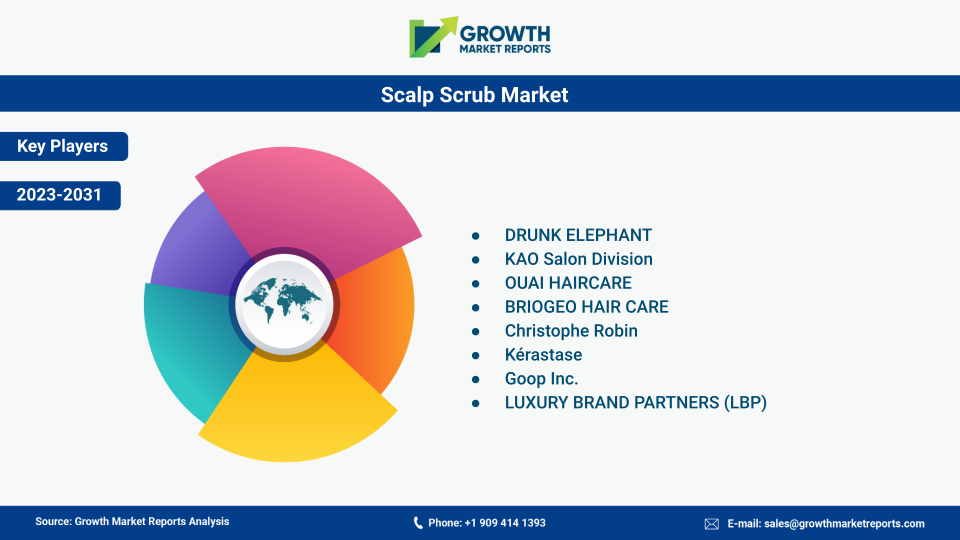

Scalp Scrub Market Keyplayers

Frequently Asked Questions

Challenges include potential scalp sensitivity or adverse reactions, regulatory scrutiny over ingredients and claims, and the threat of counterfeit or substandard products in some markets.

Trends include the rise of clean beauty, demand for natural and organic ingredients, product innovation (such as probiotic or CBD-infused scrubs), and the expansion of digital retail channels.

Yes, scalp scrubs are available for men, women, and as unisex products, with brands increasingly offering gender-neutral options to cater to a wider audience.

Scalp scrubs are primarily used for dandruff treatment, hair growth, deep cleansing, soothing sensitive scalps, and addressing scalp acne or other dermatological concerns.

Scalp scrubs are sold through online stores, supermarkets/hypermarkets, specialty stores (such as salons and pharmacies), and other channels like direct-to-consumer and subscription services.

Key companies include L'Oréal S.A., Unilever PLC, Procter & Gamble Co., Briogeo Hair Care, Christophe Robin, Kérastase, The Body Shop, and emerging brands like Ouai and NatureLab Tokyo.

Scalp scrubs help with dandruff treatment, hair growth stimulation, deep cleansing, removal of product buildup, and maintaining overall scalp health.

Asia Pacific is the fastest-growing region for scalp scrubs, driven by a large population, rising disposable incomes, and increasing focus on personal care.

The scalp scrub market is categorized into physical exfoliants, chemical exfoliants, and combination products that offer both physical and chemical exfoliation.

As of 2024, the global scalp scrub market reached a value of USD 2.1 billion, with strong growth projected through 2033.

Table Of Content

Chapter 1 Executive Summary
Chapter 2 Assumptions and Acronyms Used
Chapter 3 Research Methodology
Chapter 4 Scalp Scrub Market Overview
   4.1 Introduction
      4.1.1 Market Taxonomy
      4.1.2 Market Definition
      4.1.3 Macro-Economic Factors Impacting the Market Growth
   4.2 Scalp Scrub Market Dynamics
      4.2.1 Market Drivers
      4.2.2 Market Restraints
      4.2.3 Market Opportunity
   4.3 Scalp Scrub Market - Supply Chain Analysis
      4.3.1 List of Key Suppliers
      4.3.2 List of Key Distributors
      4.3.3 List of Key Consumers
   4.4 Key Forces Shaping the Scalp Scrub Market
      4.4.1 Bargaining Power of Suppliers
      4.4.2 Bargaining Power of Buyers
      4.4.3 Threat of Substitution
      4.4.4 Threat of New Entrants
      4.4.5 Competitive Rivalry
   4.5 Global Scalp Scrub Market Size & Forecast, 2023-2032
      4.5.1 Scalp Scrub Market Size and Y-o-Y Growth
      4.5.2 Scalp Scrub Market Absolute $ Opportunity

Chapter 5 Global Scalp Scrub Market Analysis and Forecast By Product Type
   5.1 Introduction
      5.1.1 Key Market Trends & Growth Opportunities By Product Type
      5.1.2 Basis Point Share (BPS) Analysis By Product Type
      5.1.3 Absolute $ Opportunity Assessment By Product Type
   5.2 Scalp Scrub Market Size Forecast By Product Type
      5.2.1 Physical Exfoliant
      5.2.2 Chemical Exfoliant
      5.2.3 Combination
   5.3 Market Attractiveness Analysis By Product Type

Chapter 6 Global Scalp Scrub Market Analysis and Forecast By Application
   6.1 Introduction
      6.1.1 Key Market Trends & Growth Opportunities By Application
      6.1.2 Basis Point Share (BPS) Analysis By Application
      6.1.3 Absolute $ Opportunity Assessment By Application
   6.2 Scalp Scrub Market Size Forecast By Application
      6.2.1 Dandruff Treatment
      6.2.2 Hair Growth
      6.2.3 Deep Cleansing
      6.2.4 Others
   6.3 Market Attractiveness Analysis By Application

Chapter 7 Global Scalp Scrub Market Analysis and Forecast By Distribution Channel
   7.1 Introduction
      7.1.1 Key Market Trends & Growth Opportunities By Distribution Channel
      7.1.2 Basis Point Share (BPS) Analysis By Distribution Channel
      7.1.3 Absolute $ Opportunity Assessment By Distribution Channel
   7.2 Scalp Scrub Market Size Forecast By Distribution Channel
      7.2.1 Online Stores
      7.2.2 Supermarkets/Hypermarkets
      7.2.3 Specialty Stores
      7.2.4 Others
   7.3 Market Attractiveness Analysis By Distribution Channel

Chapter 8 Global Scalp Scrub Market Analysis and Forecast By End-User
   8.1 Introduction
      8.1.1 Key Market Trends & Growth Opportunities By End-User
      8.1.2 Basis Point Share (BPS) Analysis By End-User
      8.1.3 Absolute $ Opportunity Assessment By End-User
   8.2 Scalp Scrub Market Size Forecast By End-User
      8.2.1 Men
      8.2.2 Women
      8.2.3 Unisex
   8.3 Market Attractiveness Analysis By End-User

Chapter 9 Global Scalp Scrub Market Analysis and Forecast by Region
   9.1 Introduction
      9.1.1 Key Market Trends & Growth Opportunities By Region
      9.1.2 Basis Point Share (BPS) Analysis By Region
      9.1.3 Absolute $ Opportunity Assessment By Region
   9.2 Scalp Scrub Market Size Forecast By Region
      9.2.1 North America
      9.2.2 Europe
      9.2.3 Asia Pacific
      9.2.4 Latin America
      9.2.5 Middle East & Africa (MEA)
   9.3 Market Attractiveness Analysis By Region

Chapter 10 Coronavirus Disease (COVID-19) Impact 
   10.1 Introduction 
   10.2 Current & Future Impact Analysis 
   10.3 Economic Impact Analysis 
   10.4 Government Policies 
   10.5 Investment Scenario

Chapter 11 North America Scalp Scrub Analysis and Forecast
   11.1 Introduction
   11.2 North America Scalp Scrub Market Size Forecast by Country
      11.2.1 U.S.
      11.2.2 Canada
   11.3 Basis Point Share (BPS) Analysis by Country
   11.4 Absolute $ Opportunity Assessment by Country
   11.5 Market Attractiveness Analysis by Country
   11.6 North America Scalp Scrub Market Size Forecast By Product Type
      11.6.1 Physical Exfoliant
      11.6.2 Chemical Exfoliant
      11.6.3 Combination
   11.7 Basis Point Share (BPS) Analysis By Product Type 
   11.8 Absolute $ Opportunity Assessment By Product Type 
   11.9 Market Attractiveness Analysis By Product Type
   11.10 North America Scalp Scrub Market Size Forecast By Application
      11.10.1 Dandruff Treatment
      11.10.2 Hair Growth
      11.10.3 Deep Cleansing
      11.10.4 Others
   11.11 Basis Point Share (BPS) Analysis By Application 
   11.12 Absolute $ Opportunity Assessment By Application 
   11.13 Market Attractiveness Analysis By Application
   11.14 North America Scalp Scrub Market Size Forecast By Distribution Channel
      11.14.1 Online Stores
      11.14.2 Supermarkets/Hypermarkets
      11.14.3 Specialty Stores
      11.14.4 Others
   11.15 Basis Point Share (BPS) Analysis By Distribution Channel 
   11.16 Absolute $ Opportunity Assessment By Distribution Channel 
   11.17 Market Attractiveness Analysis By Distribution Channel
   11.18 North America Scalp Scrub Market Size Forecast By End-User
      11.18.1 Men
      11.18.2 Women
      11.18.3 Unisex
   11.19 Basis Point Share (BPS) Analysis By End-User 
   11.20 Absolute $ Opportunity Assessment By End-User 
   11.21 Market Attractiveness Analysis By End-User

Chapter 12 Europe Scalp Scrub Analysis and Forecast
   12.1 Introduction
   12.2 Europe Scalp Scrub Market Size Forecast by Country
      12.2.1 Germany
      12.2.2 France
      12.2.3 Italy
      12.2.4 U.K.
      12.2.5 Spain
      12.2.6 Russia
      12.2.7 Rest of Europe
   12.3 Basis Point Share (BPS) Analysis by Country
   12.4 Absolute $ Opportunity Assessment by Country
   12.5 Market Attractiveness Analysis by Country
   12.6 Europe Scalp Scrub Market Size Forecast By Product Type
      12.6.1 Physical Exfoliant
      12.6.2 Chemical Exfoliant
      12.6.3 Combination
   12.7 Basis Point Share (BPS) Analysis By Product Type 
   12.8 Absolute $ Opportunity Assessment By Product Type 
   12.9 Market Attractiveness Analysis By Product Type
   12.10 Europe Scalp Scrub Market Size Forecast By Application
      12.10.1 Dandruff Treatment
      12.10.2 Hair Growth
      12.10.3 Deep Cleansing
      12.10.4 Others
   12.11 Basis Point Share (BPS) Analysis By Application 
   12.12 Absolute $ Opportunity Assessment By Application 
   12.13 Market Attractiveness Analysis By Application
   12.14 Europe Scalp Scrub Market Size Forecast By Distribution Channel
      12.14.1 Online Stores
      12.14.2 Supermarkets/Hypermarkets
      12.14.3 Specialty Stores
      12.14.4 Others
   12.15 Basis Point Share (BPS) Analysis By Distribution Channel 
   12.16 Absolute $ Opportunity Assessment By Distribution Channel 
   12.17 Market Attractiveness Analysis By Distribution Channel
   12.18 Europe Scalp Scrub Market Size Forecast By End-User
      12.18.1 Men
      12.18.2 Women
      12.18.3 Unisex
   12.19 Basis Point Share (BPS) Analysis By End-User 
   12.20 Absolute $ Opportunity Assessment By End-User 
   12.21 Market Attractiveness Analysis By End-User

Chapter 13 Asia Pacific Scalp Scrub Analysis and Forecast
   13.1 Introduction
   13.2 Asia Pacific Scalp Scrub Market Size Forecast by Country
      13.2.1 China
      13.2.2 Japan
      13.2.3 South Korea
      13.2.4 India
      13.2.5 Australia
      13.2.6 South East Asia (SEA)
      13.2.7 Rest of Asia Pacific (APAC)
   13.3 Basis Point Share (BPS) Analysis by Country
   13.4 Absolute $ Opportunity Assessment by Country
   13.5 Market Attractiveness Analysis by Country
   13.6 Asia Pacific Scalp Scrub Market Size Forecast By Product Type
      13.6.1 Physical Exfoliant
      13.6.2 Chemical Exfoliant
      13.6.3 Combination
   13.7 Basis Point Share (BPS) Analysis By Product Type 
   13.8 Absolute $ Opportunity Assessment By Product Type 
   13.9 Market Attractiveness Analysis By Product Type
   13.10 Asia Pacific Scalp Scrub Market Size Forecast By Application
      13.10.1 Dandruff Treatment
      13.10.2 Hair Growth
      13.10.3 Deep Cleansing
      13.10.4 Others
   13.11 Basis Point Share (BPS) Analysis By Application 
   13.12 Absolute $ Opportunity Assessment By Application 
   13.13 Market Attractiveness Analysis By Application
   13.14 Asia Pacific Scalp Scrub Market Size Forecast By Distribution Channel
      13.14.1 Online Stores
      13.14.2 Supermarkets/Hypermarkets
      13.14.3 Specialty Stores
      13.14.4 Others
   13.15 Basis Point Share (BPS) Analysis By Distribution Channel 
   13.16 Absolute $ Opportunity Assessment By Distribution Channel 
   13.17 Market Attractiveness Analysis By Distribution Channel
   13.18 Asia Pacific Scalp Scrub Market Size Forecast By End-User
      13.18.1 Men
      13.18.2 Women
      13.18.3 Unisex
   13.19 Basis Point Share (BPS) Analysis By End-User 
   13.20 Absolute $ Opportunity Assessment By End-User 
   13.21 Market Attractiveness Analysis By End-User

Chapter 14 Latin America Scalp Scrub Analysis and Forecast
   14.1 Introduction
   14.2 Latin America Scalp Scrub Market Size Forecast by Country
      14.2.1 Brazil
      14.2.2 Mexico
      14.2.3 Rest of Latin America (LATAM)
   14.3 Basis Point Share (BPS) Analysis by Country
   14.4 Absolute $ Opportunity Assessment by Country
   14.5 Market Attractiveness Analysis by Country
   14.6 Latin America Scalp Scrub Market Size Forecast By Product Type
      14.6.1 Physical Exfoliant
      14.6.2 Chemical Exfoliant
      14.6.3 Combination
   14.7 Basis Point Share (BPS) Analysis By Product Type 
   14.8 Absolute $ Opportunity Assessment By Product Type 
   14.9 Market Attractiveness Analysis By Product Type
   14.10 Latin America Scalp Scrub Market Size Forecast By Application
      14.10.1 Dandruff Treatment
      14.10.2 Hair Growth
      14.10.3 Deep Cleansing
      14.10.4 Others
   14.11 Basis Point Share (BPS) Analysis By Application 
   14.12 Absolute $ Opportunity Assessment By Application 
   14.13 Market Attractiveness Analysis By Application
   14.14 Latin America Scalp Scrub Market Size Forecast By Distribution Channel
      14.14.1 Online Stores
      14.14.2 Supermarkets/Hypermarkets
      14.14.3 Specialty Stores
      14.14.4 Others
   14.15 Basis Point Share (BPS) Analysis By Distribution Channel 
   14.16 Absolute $ Opportunity Assessment By Distribution Channel 
   14.17 Market Attractiveness Analysis By Distribution Channel
   14.18 Latin America Scalp Scrub Market Size Forecast By End-User
      14.18.1 Men
      14.18.2 Women
      14.18.3 Unisex
   14.19 Basis Point Share (BPS) Analysis By End-User 
   14.20 Absolute $ Opportunity Assessment By End-User 
   14.21 Market Attractiveness Analysis By End-User

Chapter 15 Middle East & Africa (MEA) Scalp Scrub Analysis and Forecast
   15.1 Introduction
   15.2 Middle East & Africa (MEA) Scalp Scrub Market Size Forecast by Country
      15.2.1 Saudi Arabia
      15.2.2 South Africa
      15.2.3 UAE
      15.2.4 Rest of Middle East & Africa (MEA)
   15.3 Basis Point Share (BPS) Analysis by Country
   15.4 Absolute $ Opportunity Assessment by Country
   15.5 Market Attractiveness Analysis by Country
   15.6 Middle East & Africa (MEA) Scalp Scrub Market Size Forecast By Product Type
      15.6.1 Physical Exfoliant
      15.6.2 Chemical Exfoliant
      15.6.3 Combination
   15.7 Basis Point Share (BPS) Analysis By Product Type 
   15.8 Absolute $ Opportunity Assessment By Product Type 
   15.9 Market Attractiveness Analysis By Product Type
   15.10 Middle East & Africa (MEA) Scalp Scrub Market Size Forecast By Application
      15.10.1 Dandruff Treatment
      15.10.2 Hair Growth
      15.10.3 Deep Cleansing
      15.10.4 Others
   15.11 Basis Point Share (BPS) Analysis By Application 
   15.12 Absolute $ Opportunity Assessment By Application 
   15.13 Market Attractiveness Analysis By Application
   15.14 Middle East & Africa (MEA) Scalp Scrub Market Size Forecast By Distribution Channel
      15.14.1 Online Stores
      15.14.2 Supermarkets/Hypermarkets
      15.14.3 Specialty Stores
      15.14.4 Others
   15.15 Basis Point Share (BPS) Analysis By Distribution Channel 
   15.16 Absolute $ Opportunity Assessment By Distribution Channel 
   15.17 Market Attractiveness Analysis By Distribution Channel
   15.18 Middle East & Africa (MEA) Scalp Scrub Market Size Forecast By End-User
      15.18.1 Men
      15.18.2 Women
      15.18.3 Unisex
   15.19 Basis Point Share (BPS) Analysis By End-User 
   15.20 Absolute $ Opportunity Assessment By End-User 
   15.21 Market Attractiveness Analysis By End-User

Chapter 16 Competition Landscape 
   16.1 Scalp Scrub Market: Competitive Dashboard
   16.2 Global Scalp Scrub Market: Market Share Analysis, 2023
   16.3 Company Profiles (Details – Overview, Financials, Developments, Strategy) 
      16.3.1 Briogeo
L'Oréal S.A.
Unilever PLC
Procter & Gamble Co.
Christophe Robin
Kérastase
Head & Shoulders
Aveda Corporation
Ouai Haircare
Paul Mitchell
The Body Shop
dpHUE
Virtue Labs
OGX (Organix)
Drunk Elephant
R+Co
Living Proof
NatureLab Tokyo
Amika
Sachajuan

Methodology

Our Clients

Siemens Healthcare
Microsoft
Dassault Aviation
General Electric
General Mills
Deloitte
The John Holland Group
sinopec