Body Wash and Shower Gel Products Market Size, Trends [2030]
Global Body Wash and Shower Gel Products Market
Segments - by Type (Soap Type, Surfactant Type, Surfactant and Soap-based Complex Type), Applications (Women, Men, and Kids), and Regions (North America, Europe, Asia Pacific, Latin America, and Middle East & Africa) - Global Industry Analysis, Growth, Share, Size, Trends, and Forecast 2020 – 2027
Segments - by Type (Soap Type, Surfactant Type, Surfactant and Soap-based Complex Type), Applications (Women, Men, and Kids), and Regions (North America, Europe, Asia Pacific, Latin America, and Middle East & Africa) - Global Industry Analysis, Growth, Share, Size, Trends, and Forecast 2020 – 2027
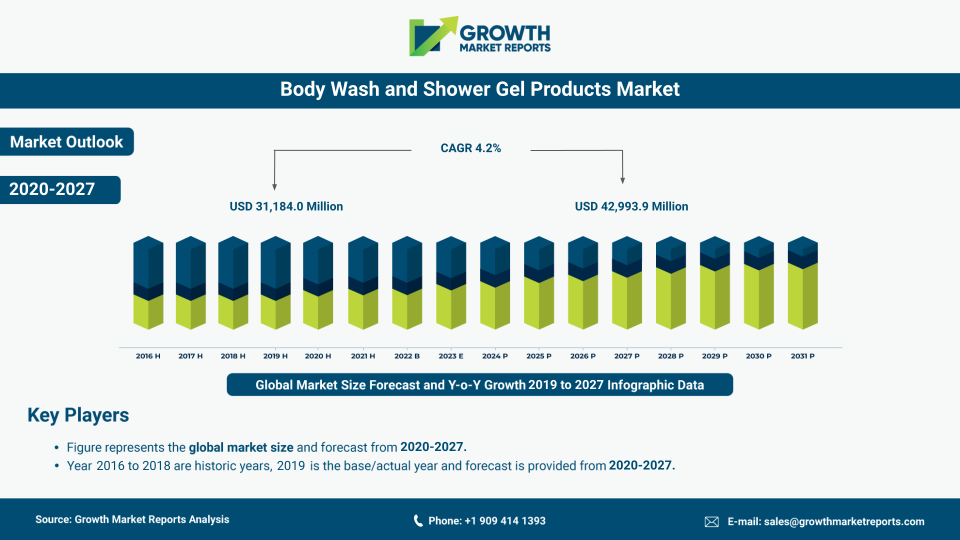
The global body wash and shower gel products market was valued at USD 31,184.0 Million in 2019 and is projected to reach USD 42,993.9 Million by 2027, expanding at a CAGR of 4.2% during the forecast period, 2020–2027. Body wash and shower gel product is a liquid-based cleansing agent for individuals that are used for cleaning dirt, oil, and sweat of the body. Currently, regular skincare is the biggest concern for individuals due to rising pollution.
The key advantage of a body wash and shower gel is the fast and convenient use for cleaning the body, while providing a perfume-like fragrance. A body wash and shower gel are a traditional bar of soap, as it is easy to use with a loofah or bath scrubber/sponge. Body washes and shower gels are available in a range of different colors and scents. A shower gel typically has a higher amount of fragrance than a body wash.
Body Wash and Shower Gel Products Market Dynamics
The market is driven by rising awareness about hygiene and health among people around the globe. Moreover, rising disposable income and increasing living standards of consumers are encouraging consumers to choose costly and esthetically appealing bath and shower products with novel ingredients and fragrances. Furthermore, frequent launches of enhanced products such as seed oil or vitamin-infused shower gels have boosted the global body wash and shower gel products market.
Rising availability of body washes and shower gels in supermarkets and malls is fueling the market growth. Moreover, the ease of use of shower gels as compared to traditional bar soaps is increasing their adoption by a large population pool across the globe. Traditional soaps contain sodium hydroxide that makes the skin dry, which in turn, is increasing the use of body washes and shower gels.
Rising sales of shower gels on e-commerce platforms is driving the market. Moreover, the presence of low surfactant levels in body washes and shower gels has made them a preferred choice for infants and children; thus, driving the market.
Body Wash and Shower Gel Products Market Segmental Outlook
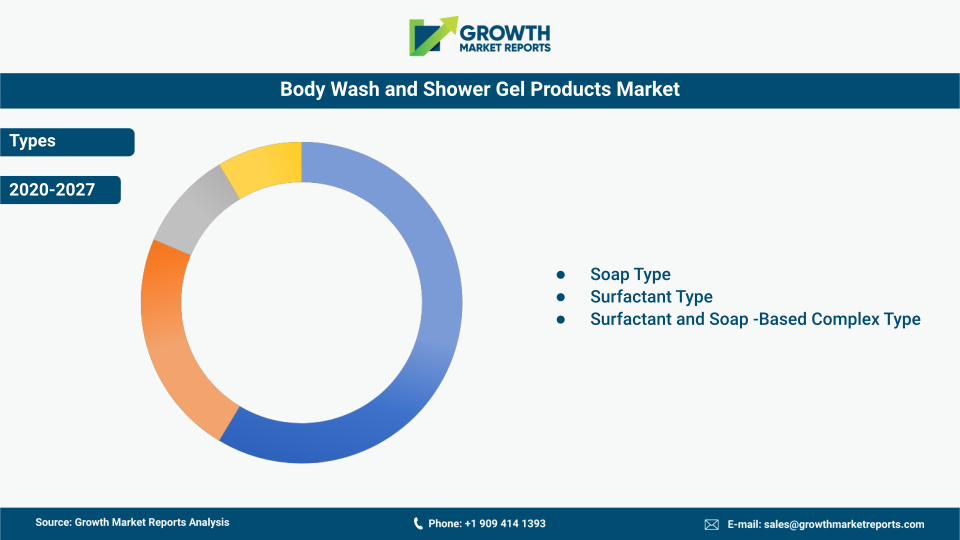
On the basis of types, the body washes and shower gel products market has been segmented into soap type, surfactant type, and surfactant and soap-based complex type. The surfactant type segment is anticipated to expand at a high CAGR during the forecast period. Surfactant is a cleansing agent used for manufacturing body washes and shower gels.
The primary and secondary surfactant types are used in body washes. The primary surfactants cleanse the skin. They create froth and cover a big area; however, secondary surfactants are used to reduce uneasiness and skin irritation during the process. Surfactants are important chemicals used in body washes and shower gels, from a cleaning perception.
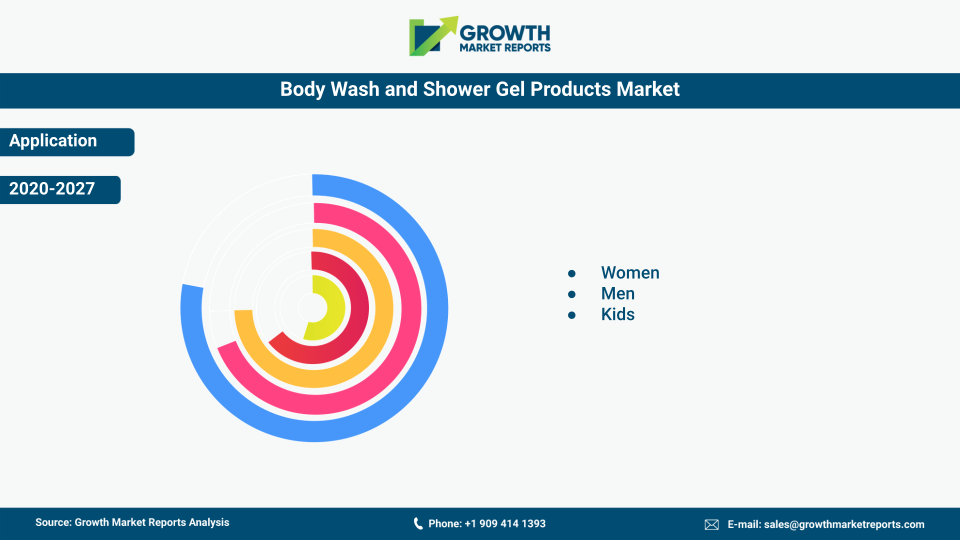
Based on applications, the body wash and shower gel products market has been segmented into women, men, and kids. The women segment held a considerable share of the market in 2019 and is expected to grow at a high pace during the forecast period. Women’s body washes and shower gels contain almost the same ingredients as those marketed for men. Hydrating ingredients such as glycerin helps increase the moisture in the skin, while the petroleum-based materials and oils help moisture into the skin. Women are more concerned about personal care and spend more than men on daily personal care products.
Body Wash and Shower Gel Products Market Regional Outlook
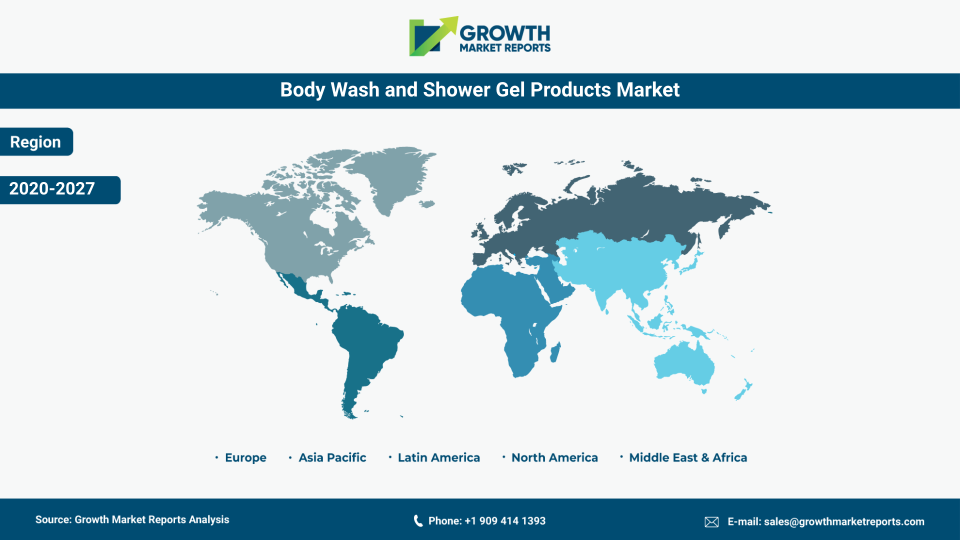
In terms of regions, the market has been segregated into North America, Europe, Asia Pacific, Latin America, and Middle East & Africa. North America held a substantial share of the market in 2019 and is anticipated to expand at a moderate CAGR during the forecast period. The evolving purchasing patterns of consumers is driving the market in North America. Moreover, consumers in the region demand organic and natural compositions, with moisturizing properties and scents. Furthermore, factors such as rising penetration of social media and e-commerce are contributing to the growth of the market in North America.
Key Benefits for Industry Participants & Stakeholders
In-depth analysis of the global body wash and shower gel products market
Historical, current and projected market size in terms of value and volume (thousand liter)
Potential & niche segments and regions exhibiting promising growth covered
Industry drivers, restraints and opportunities covered in the study
Recent industry trends and developments
Competitive landscape & strategies of key players
Neutral Perspective on Global Body Wash and Shower Gel Products Market Performance
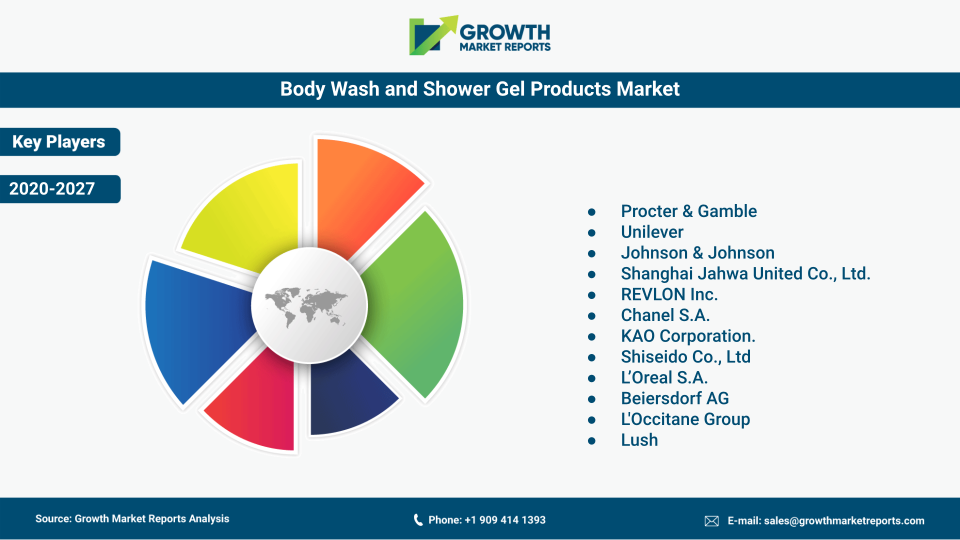
Key players in the market include Procter & Gamble, Unilever, Johnson & Johnson, Shiseido Co., Ltd., and L'Oréal S.A. among others. These companies are considered as key manufacturers of body wash and shower gel products based on their revenue, research & development (R&D) activities, regional presence, and supply chain management system.
These players are adopting key strategies such as mergers, acquisitions, and geographical expansion to strengthen their market position. For instance, in July 2019, Johnson & Johnson launched a concentrated shower gel in France. These products include lemon, orange blossom, pomegranate, orange, mint, and poppy.
In February 2018, Unilever launched Dove, Dove Men+Care, and Caress. Dove's Shower Foam has a self-foaming pump that gently nourishes skin with an airy lather. Dove Men+Care Foaming Body Wash is developed for men’s skin with a three-step process – pump, foam, and hydrate. Caress Botanicals Shower Foam is available in white orchid and coconut milk.
In February 2017, Procter & Gamble Co. launched a product ‘Duo’, which is a cross between body wash and bar soap.
Video Summary for Body Wash and Shower Gel Products Market
Chapter 1 Executive Summary Chapter 2 Assumptions and Acronyms Used Chapter 3 Research Methodology Chapter 4 Body Wash and Shower Gel Products Market Overview 4.1 Introduction 4.1.1 Market Taxonomy 4.1.2 Market Definition 4.1.3 Macro-Economic Factors Impacting the Market Growth 4.2 Body Wash and Shower Gel Products Market Dynamics 4.2.1 Market Drivers 4.2.2 Market Restraints 4.2.3 Market Opportunity 4.3 Body Wash and Shower Gel Products Market - Supply Chain Analysis 4.3.1 List of Key Suppliers 4.3.2 List of Key Distributors 4.3.3 List of Key Consumers 4.4 Key Forces Shaping the Body Wash and Shower Gel Products Market 4.4.1 Bargaining Power of Suppliers 4.4.2 Bargaining Power of Buyers 4.4.3 Threat of Substitution 4.4.4 Threat of New Entrants 4.4.5 Competitive Rivalry 4.5 Global Body Wash and Shower Gel Products Market Size & Forecast, 2017-2027 4.5.1 Body Wash and Shower Gel Products Market Size and Y-o-Y Growth 4.5.2 Body Wash and Shower Gel Products Market Absolute $ Opportunity Chapter 5 Global Body Wash and Shower Gel Products Market Analysis and Forecast By Type 5.1 Introduction 5.1.1 Key Market Trends & Growth Opportunities By Type 5.1.2 Basis Point Share (BPS) Analysis By Type 5.1.3 Absolute $ Opportunity Assessment By Type 5.2 Body Wash and Shower Gel Products Market Size Forecast By Type 5.2.1 Soap Type 5.2.2 Surfactant Type 5.2.3 Surfactant and Soap -Based Complex Type 5.3 Market Attractiveness Analysis By Type Chapter 6 Global Body Wash and Shower Gel Products Market Analysis and Forecast By Application 6.1 Introduction 6.1.1 Key Market Trends & Growth Opportunities By Application 6.1.2 Basis Point Share (BPS) Analysis By Application 6.1.3 Absolute $ Opportunity Assessment By Application 6.2 Body Wash and Shower Gel Products Market Size Forecast By Application 6.2.1 Women 6.2.2 Men 6.2.3 Kids 6.3 Market Attractiveness Analysis By Application Chapter 7 Global Body Wash and Shower Gel Products Market Analysis and Forecast by Region 7.1 Introduction 7.1.1 Key Market Trends & Growth Opportunities by Region 7.1.2 Basis Point Share (BPS) Analysis by Region 7.1.3 Absolute $ Opportunity Assessment by Region 7.2 Body Wash and Shower Gel Products Market Size Forecast by Region 7.2.1 North America 7.2.2 Europe 7.2.3 Asia Pacific 7.2.4 Latin America 7.2.5 Middle East & Africa (MEA) 7.3 Market Attractiveness Analysis by Region Chapter 8 Coronavirus Disease (COVID-19) Impact 8.1 Introduction 8.2 Current & Future Impact Analysis 8.3 Economic Impact Analysis 8.4 Government Policies 8.5 Investment Scenario Chapter 9 North America Body Wash and Shower Gel Products Analysis and Forecast 9.1 Introduction 9.2 North America Body Wash and Shower Gel Products Market Size Forecast by Country 9.2.1 U.S. 9.2.2 Canada 9.3 Basis Point Share (BPS) Analysis by Country 9.4 Absolute $ Opportunity Assessment by Country 9.5 Market Attractiveness Analysis by Country 9.6 North America Body Wash and Shower Gel Products Market Size Forecast By Type 9.6.1 Soap Type 9.6.2 Surfactant Type 9.6.3 Surfactant and Soap -Based Complex Type 9.7 Basis Point Share (BPS) Analysis By Type 9.8 Absolute $ Opportunity Assessment By Type 9.9 Market Attractiveness Analysis By Type 9.10 North America Body Wash and Shower Gel Products Market Size Forecast By Application 9.10.1 Women 9.10.2 Men 9.10.3 Kids 9.11 Basis Point Share (BPS) Analysis By Application 9.12 Absolute $ Opportunity Assessment By Application 9.13 Market Attractiveness Analysis By Application Chapter 10 Europe Body Wash and Shower Gel Products Analysis and Forecast 10.1 Introduction 10.2 Europe Body Wash and Shower Gel Products Market Size Forecast by Country 10.2.1 Germany 10.2.2 France 10.2.3 Italy 10.2.4 U.K. 10.2.5 Spain 10.2.6 Russia 10.2.7 Rest of Europe 10.3 Basis Point Share (BPS) Analysis by Country 10.4 Absolute $ Opportunity Assessment by Country 10.5 Market Attractiveness Analysis by Country 10.6 Europe Body Wash and Shower Gel Products Market Size Forecast By Type 10.6.1 Soap Type 10.6.2 Surfactant Type 10.6.3 Surfactant and Soap -Based Complex Type 10.7 Basis Point Share (BPS) Analysis By Type 10.8 Absolute $ Opportunity Assessment By Type 10.9 Market Attractiveness Analysis By Type 10.10 Europe Body Wash and Shower Gel Products Market Size Forecast By Application 10.10.1 Women 10.10.2 Men 10.10.3 Kids 10.11 Basis Point Share (BPS) Analysis By Application 10.12 Absolute $ Opportunity Assessment By Application 10.13 Market Attractiveness Analysis By Application Chapter 11 Asia Pacific Body Wash and Shower Gel Products Analysis and Forecast 11.1 Introduction 11.2 Asia Pacific Body Wash and Shower Gel Products Market Size Forecast by Country 11.2.1 China 11.2.2 Japan 11.2.3 South Korea 11.2.4 India 11.2.5 Australia 11.2.6 South East Asia (SEA) 11.2.7 Rest of Asia Pacific (APAC) 11.3 Basis Point Share (BPS) Analysis by Country 11.4 Absolute $ Opportunity Assessment by Country 11.5 Market Attractiveness Analysis by Country 11.6 Asia Pacific Body Wash and Shower Gel Products Market Size Forecast By Type 11.6.1 Soap Type 11.6.2 Surfactant Type 11.6.3 Surfactant and Soap -Based Complex Type 11.7 Basis Point Share (BPS) Analysis By Type 11.8 Absolute $ Opportunity Assessment By Type 11.9 Market Attractiveness Analysis By Type 11.10 Asia Pacific Body Wash and Shower Gel Products Market Size Forecast By Application 11.10.1 Women 11.10.2 Men 11.10.3 Kids 11.11 Basis Point Share (BPS) Analysis By Application 11.12 Absolute $ Opportunity Assessment By Application 11.13 Market Attractiveness Analysis By Application Chapter 12 Latin America Body Wash and Shower Gel Products Analysis and Forecast 12.1 Introduction 12.2 Latin America Body Wash and Shower Gel Products Market Size Forecast by Country 12.2.1 Brazil 12.2.2 Mexico 12.2.3 Rest of Latin America (LATAM) 12.3 Basis Point Share (BPS) Analysis by Country 12.4 Absolute $ Opportunity Assessment by Country 12.5 Market Attractiveness Analysis by Country 12.6 Latin America Body Wash and Shower Gel Products Market Size Forecast By Type 12.6.1 Soap Type 12.6.2 Surfactant Type 12.6.3 Surfactant and Soap -Based Complex Type 12.7 Basis Point Share (BPS) Analysis By Type 12.8 Absolute $ Opportunity Assessment By Type 12.9 Market Attractiveness Analysis By Type 12.10 Latin America Body Wash and Shower Gel Products Market Size Forecast By Application 12.10.1 Women 12.10.2 Men 12.10.3 Kids 12.11 Basis Point Share (BPS) Analysis By Application 12.12 Absolute $ Opportunity Assessment By Application 12.13 Market Attractiveness Analysis By Application Chapter 13 Middle East & Africa (MEA) Body Wash and Shower Gel Products Analysis and Forecast 13.1 Introduction 13.2 Middle East & Africa (MEA) Body Wash and Shower Gel Products Market Size Forecast by Country 13.2.1 Saudi Arabia 13.2.2 South Africa 13.2.3 UAE 13.2.4 Rest of Middle East & Africa (MEA) 13.3 Basis Point Share (BPS) Analysis by Country 13.4 Absolute $ Opportunity Assessment by Country 13.5 Market Attractiveness Analysis by Country 13.6 Middle East & Africa (MEA) Body Wash and Shower Gel Products Market Size Forecast By Type 13.6.1 Soap Type 13.6.2 Surfactant Type 13.6.3 Surfactant and Soap -Based Complex Type 13.7 Basis Point Share (BPS) Analysis By Type 13.8 Absolute $ Opportunity Assessment By Type 13.9 Market Attractiveness Analysis By Type 13.10 Middle East & Africa (MEA) Body Wash and Shower Gel Products Market Size Forecast By Application 13.10.1 Women 13.10.2 Men 13.10.3 Kids 13.11 Basis Point Share (BPS) Analysis By Application 13.12 Absolute $ Opportunity Assessment By Application 13.13 Market Attractiveness Analysis By Application Chapter 14 Competition Landscape 14.1 Body Wash and Shower Gel Products Market: Competitive Dashboard 14.2 Global Body Wash and Shower Gel Products Market: Market Share Analysis, 2019 14.3 Company Profiles (Details – Overview, Financials, Developments, Strategy) 14.3.1 Procter & Gamble 14.3.2 Unilever 14.3.3 Johnson & Johnson 14.3.4 Shanghai Jahwa United Co., Ltd. 14.3.5 REVLON Inc. 14.3.6 Chanel S.A. 14.3.7 KAO Corporation. 14.3.8 Shiseido Co., Ltd 14.3.9 L’Oreal S.A. 14.3.10 Beiersdorf AG 14.3.11 L'Occitane Group 14.3.12 Lush
Ask for Research To Be Focused On Specific Regions or Segments
Receive Data As Per Your Format and Definition
Companies Profiled based on Your Requirements
Breaking Down Competitive Landscape as per Your Requirements
Any Level of Customization
Our Clients
Client Testinomials
We needed a highly accurate and precise report, which Growth Market Reports delivered promptly. The company compiled information from a wide array of reliable agencies and sourcess.It is extremely satisfactory to be working with you. Strategy Head of Major Tech Company
We were very pleased to contact Growth Market Reports as they tailored reports precisely as per our requirements. As we are dealing with the aerospace and defense industry, we need reports of high accuracy and substantial quality. Major Player in Defense Industry
Extremely delighted to have a well-crafted report on “Global Packaging Solutions Market Research Report” from your team. Thank you for providing me with all our requirements and for incorporating our suggestions. CMO of Leading Packaging Company from USA
I had a good experience working with Growth Market Reports as they were very open to all constructive changes in the report. I found that the report had its charm embedded with ample of data. Founder and Managing Partner of Major Korean Company
Our company has been working with Growth Market Reports for some years now and we are very happy with the quality of the reports provided by the company.I, on behalf of my organization, would like to thank you for offering professional reports. Global Consulting Firm
The base year considered for the global body wash and shower gel products market report is 2019. The complete analysis period is 2017 to 2027, wherein, 2017 & 2018 are the historic years and the forecast is provided from 2020 to 2027.
The market is expected to witness substantial growth between 2019 and 2020 owing to the positive impact of COVID-19 pandemic on the body wash and shower gel products market.
Increasing awareness about health and hygiene, increasing living standards of the consumers, and rising disposable income are some of the factors driving the growth of body wash and shower gel products market.
According to the Growth Market Reports report, the market from body wash and shower gel products is likely to register a CAGR of 4.2% during forecast period, between 2020 and 2027, with an anticipated valuation of USD 42,993.9 million by the end of the 2027.











 Request For Customization
 Enquiry Before Buying
 Speak With Analyst