Contact Lens Care Solution Market Research Report 2033

Contact Lens Care Solution Market Research Report 2033

Segments - by Product Type (Multipurpose Solution, Hydrogen Peroxide-Based Solution, Saline Solution, Daily Cleaner, Others), by Material Compatibility (Soft Contact Lenses, Rigid Gas Permeable Lenses, Hybrid Lenses), by Distribution Channel (Online Stores, Optical Stores, Pharmacies, Supermarkets/Hypermarkets, Others), by End-User (Individual, Hospitals & Clinics, Eye Care Centers)

https://growthmarketreports.com/raksha
Author : Raksha Sharma
https://growthmarketreports.com/Vaibhav
Fact-checked by : V. Chandola
https://growthmarketreports.com/Shruti
Editor : Shruti Bhat

Upcoming | Report ID :HC-403 | 4.3 Rating | 12 Reviews | 292 Pages | Format : Docx PDF

Report Description


Contact Lens Care Solution Market Outlook

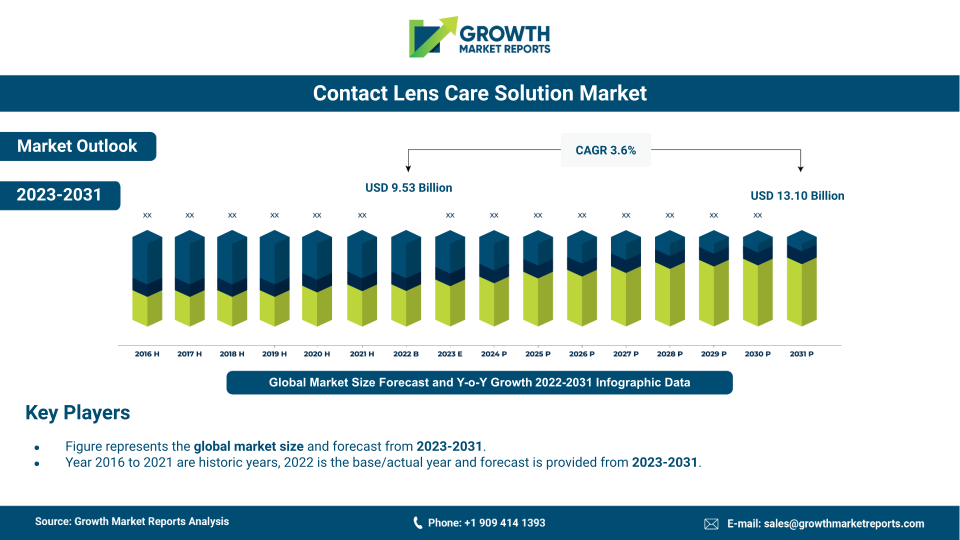
According to our latest research, the global contact lens care solution market size in 2024 stood at USD 2.25 billion. The market is exhibiting a steady expansion, driven by heightened eye health awareness and increasing adoption of contact lenses worldwide. With a projected compound annual growth rate (CAGR) of 4.7% during the forecast period, the market is expected to reach USD 3.39 billion by 2033. This robust growth trajectory is primarily fueled by advancements in lens materials, evolving consumer lifestyles, and a growing geriatric population susceptible to vision correction needs.

One of the primary growth factors propelling the contact lens care solution market is the surging prevalence of refractive errors and vision impairment globally. With an increasing number of individuals opting for contact lenses over traditional eyeglasses due to comfort, aesthetics, and convenience, the demand for effective care solutions has witnessed a significant uptick. The rise in digital device usage has also contributed to eye strain and related disorders, further driving contact lens adoption and, consequently, the need for specialized cleaning and disinfecting solutions. Additionally, the growing awareness regarding eye infections and the critical role of proper lens hygiene is prompting consumers to invest in premium care products, thereby boosting market expansion.

Technological advancements in contact lens materials and care solution formulations have also played a pivotal role in shaping the market landscape. Innovations such as multipurpose solutions that combine cleaning, disinfecting, and rinsing functions, as well as hydrogen peroxide-based systems offering enhanced antimicrobial efficacy, are gaining traction among end-users. These developments cater to the evolving needs of consumers seeking convenience and safety, while also addressing compatibility with advanced lens materials like silicone hydrogel and hybrid lenses. Furthermore, the emergence of preservative-free and hypoallergenic solutions is attracting users with sensitive eyes, expanding the marketÂ’s consumer base.

Demographic shifts, particularly the aging population, are another key driver of the contact lens care solution market. As the prevalence of presbyopia and other age-related eye conditions rises, more elderly individuals are turning to contact lenses for vision correction. This demographic trend, coupled with increasing disposable incomes in emerging economies, is fostering greater market penetration. Additionally, the proliferation of e-commerce platforms and digital marketing strategies has improved product accessibility and consumer engagement, enabling manufacturers to reach wider audiences and educate them about proper lens care practices, thus supporting sustained market growth.

Eye care is an integral aspect of maintaining overall eye health, especially for contact lens users. Proper eye care practices help prevent infections and ensure the longevity of contact lenses. Regular eye check-ups, along with the use of appropriate lens care solutions, contribute significantly to eye health. As the awareness of eye care increases, consumers are becoming more informed about the importance of using high-quality contact lens solutions that not only clean but also protect their eyes from potential irritants and pathogens. This growing emphasis on eye care is driving the demand for innovative and effective lens care products that cater to the diverse needs of users.

Regionally, North America continues to dominate the contact lens care solution market, benefiting from high awareness levels, advanced healthcare infrastructure, and a large base of contact lens wearers. Europe follows closely, supported by strong regulatory standards and increasing adoption of innovative lens care products. Meanwhile, the Asia Pacific region is emerging as a lucrative market, fueled by rapid urbanization, rising healthcare spending, and growing acceptance of contact lenses among younger populations. The marketÂ’s global outlook remains optimistic, with untapped opportunities in Latin America and the Middle East & Africa, where improving access to eye care services and consumer education are expected to drive future growth.

Global Contact Lens Care Solution Industry Outlook

Product Type Analysis

The contact lens care solution market is segmented by product type into multipurpose solutions, hydrogen peroxide-based solutions, saline solutions, daily cleaners, and others. Multipurpose solutions currently hold the largest market share, owing to their all-in-one functionality that simplifies the lens cleaning and maintenance process. These solutions are highly favored by consumers due to their convenience, as they eliminate the need for multiple products and steps. The ease of use, combined with effective cleaning and disinfection capabilities, makes multipurpose solutions the go-to choice for both novice and experienced lens wearers. Manufacturers are continuously innovating in this segment by introducing formulations with enhanced antimicrobial properties and improved compatibility with newer lens materials.

The advent of contact lens-embedded antimicrobial release technology is revolutionizing the way users approach lens hygiene. This innovative technology integrates antimicrobial agents directly into the lens material, providing continuous protection against microbial contamination. Such advancements are particularly beneficial for individuals with busy lifestyles who may not always adhere to rigorous cleaning routines. By offering an additional layer of defense, contact lens-embedded antimicrobial release systems are enhancing user safety and comfort, making them an attractive option for health-conscious consumers. As this technology evolves, it is expected to become a key component in the future of contact lens care.

Hydrogen peroxide-based solutions are gaining popularity, particularly among users who have experienced allergic reactions or sensitivities to preservatives commonly found in multipurpose solutions. These solutions offer superior disinfection, effectively eliminating bacteria, fungi, and viruses, which is crucial for users prone to eye infections. The two-step neutralization process ensures that no harmful residues remain on the lenses, making them safe for even the most sensitive eyes. As awareness about the importance of thorough lens disinfection grows, the adoption of hydrogen peroxide-based systems is expected to surge, especially among healthcare professionals and individuals with complex eye care needs.

Saline solutions, while traditionally used for rinsing and storing contact lenses, are witnessing stable demand in niche applications. They are particularly recommended for users with rigid gas permeable (RGP) lenses and those who require a preservative-free option for sensitive eyes. However, saline solutions are not effective as primary disinfectants, which limits their usage compared to multipurpose and hydrogen peroxide-based products. Nonetheless, ongoing product enhancements, such as the introduction of buffered and isotonic formulations, are helping to maintain their relevance in the market.

Daily cleaners and specialty solutions cater to specific user requirements, such as protein removal and enhanced comfort for extended wear lenses. These products are often used in conjunction with other care solutions to provide comprehensive lens maintenance. The demand for daily cleaners is particularly strong among long-term lens users who are proactive about eye health and hygiene. Manufacturers are focusing on research and development to introduce enzymatic cleaners and advanced surfactants that effectively remove deposits without damaging lens materials. The “others” segment includes specialized products like rewetting drops and travel kits, which address the diverse needs of modern consumers and contribute to the overall market growth.

Report Scope

Attributes Details
Report Title Contact Lens Care Solution Market Research Report 2033
By Product Type Multipurpose Solution, Hydrogen Peroxide-Based Solution, Saline Solution, Daily Cleaner, Others
By Material Compatibility Soft Contact Lenses, Rigid Gas Permeable Lenses, Hybrid Lenses
By Distribution Channel Online Stores, Optical Stores, Pharmacies, Supermarkets/Hypermarkets, Others
By End-User Individual, Hospitals & Clinics, Eye Care Centers
Regions Covered North America, Europe, APAC, Latin America, MEA
Base Year 2024
Historic Data 2018-2023
Forecast Period 2025-2033
Number of Pages 292
Number of Tables & Figures 322
Customization Available Yes, the report can be customized as per your need.

Material Compatibility Analysis

Material compatibility is a critical consideration in the contact lens care solution market, as the effectiveness and safety of care products vary depending on the type of lens material. The market is segmented into solutions compatible with soft contact lenses, rigid gas permeable (RGP) lenses, and hybrid lenses. Soft contact lenses, particularly those made from silicone hydrogel, constitute the largest user base, driving significant demand for compatible care solutions. These lenses offer superior comfort and oxygen permeability but are prone to protein and lipid deposits, necessitating advanced cleaning and disinfecting formulations. Manufacturers are responding by developing solutions that not only clean effectively but also maintain lens moisture and prevent irritation.

Rigid gas permeable lenses, while representing a smaller market segment, require specialized care solutions due to their unique material properties. RGP lenses are more durable and less likely to harbor deposits, but they still demand thorough cleaning and disinfection to prevent microbial contamination. Solutions designed for RGP lenses often feature stronger surfactants and cleaning agents, ensuring that the lenses remain clear and comfortable for extended periods. The market for RGP-compatible solutions is supported by a loyal user base, including individuals with specific vision correction needs such as keratoconus or high astigmatism, who rely on these lenses for optimal visual acuity.

Hybrid lenses, which combine the comfort of soft lenses with the optical performance of RGP lenses, are gaining traction among users seeking the best of both worlds. The care requirements for hybrid lenses are more complex, as they incorporate different materials in a single lens. This has prompted the development of specialized solutions that cater to hybrid lens users, addressing issues such as material compatibility, deposit removal, and long-term lens preservation. As hybrid lenses become more widely adopted, particularly among patients with irregular corneas or presbyopia, the demand for tailored care solutions is expected to rise.

The ongoing trend toward personalized eye care is influencing product development in the material compatibility segment. Manufacturers are investing in research to create solutions that are not only effective across a range of lens materials but also gentle enough for sensitive eyes. This includes the introduction of preservative-free and pH-balanced formulations, which minimize the risk of allergic reactions and enhance user comfort. As the variety of lens materials continues to expand, driven by technological advancements and evolving consumer preferences, the need for versatile and specialized care solutions will remain a key growth driver in the market.

Distribution Channel Analysis

The distribution channel landscape for contact lens care solutions is evolving rapidly, with online stores, optical stores, pharmacies, supermarkets/hypermarkets, and other channels vying for market share. Online stores have emerged as a prominent channel, particularly in the wake of the global shift toward e-commerce. Consumers are increasingly turning to digital platforms for their convenience, wider product selection, and competitive pricing. The ability to read reviews, compare products, and access expert advice online has empowered consumers to make informed purchasing decisions. Manufacturers and retailers are capitalizing on this trend by enhancing their online presence, offering subscription services, and leveraging targeted digital marketing strategies to drive sales.

Optical stores continue to play a vital role in the distribution of contact lens care solutions, especially for first-time users and those seeking professional advice. These stores offer personalized consultations, fitting services, and product demonstrations, which are crucial for ensuring proper lens care and hygiene. The trust and expertise associated with optical stores make them a preferred choice for consumers who prioritize safety and quality. Additionally, partnerships between manufacturers and optical chains have facilitated the introduction of exclusive product lines and promotional offers, further strengthening this channelÂ’s market position.

Pharmacies remain a popular distribution channel, particularly for consumers seeking convenience and accessibility. Pharmacies offer a broad range of contact lens care products, including over-the-counter solutions and prescription-based items. The presence of knowledgeable pharmacists provides an added layer of assurance for consumers, who can receive guidance on product selection and usage. The integration of pharmacies within healthcare networks and insurance schemes has also contributed to their sustained relevance in the market.

Supermarkets and hypermarkets cater to the mass market segment, offering a wide array of contact lens care solutions alongside other personal care and health products. The one-stop shopping experience, competitive pricing, and frequent promotional campaigns make these channels attractive to budget-conscious consumers. However, the lack of specialized expertise and personalized service may limit their appeal among users with specific eye care needs. Other distribution channels, such as specialty health stores and direct-to-consumer models, are gaining traction as manufacturers seek to diversify their reach and cater to niche market segments.

End-User Analysis

The end-user landscape for the contact lens care solution market is segmented into individuals, hospitals & clinics, and eye care centers. Individual consumers represent the largest end-user segment, accounting for a significant portion of market demand. The growing preference for contact lenses among young adults, professionals, and the elderly has led to increased awareness about the importance of proper lens care. Consumers are becoming more proactive in maintaining eye health, seeking out products that offer convenience, safety, and value for money. The rise of self-care trends and digital health platforms has further empowered individuals to make informed choices and adhere to recommended lens care routines.

Hospitals and clinics constitute a critical end-user segment, particularly for patients with complex eye conditions or those undergoing post-surgical care. Healthcare professionals in these settings rely on high-quality, clinically validated care solutions to ensure optimal patient outcomes. The demand for specialized products, such as preservative-free solutions and advanced disinfectants, is particularly strong in hospitals and clinics, where infection control is paramount. Manufacturers are collaborating with healthcare providers to conduct clinical trials, gather real-world evidence, and develop products that meet stringent regulatory standards.

Eye care centers, including optometry and ophthalmology practices, play a pivotal role in educating patients about proper lens care and recommending suitable products. These centers serve as key distribution points for contact lens care solutions, offering personalized consultations, product demonstrations, and follow-up services. The emphasis on preventive eye care and regular check-ups has strengthened the role of eye care centers in promoting safe and effective lens hygiene practices. Manufacturers are partnering with eye care professionals to develop educational campaigns, training programs, and customized product bundles that address the unique needs of different patient groups.

The increasing prevalence of eye disorders, rising healthcare expenditure, and growing emphasis on preventive care are expected to drive demand across all end-user segments. As consumer preferences evolve and new technologies emerge, end-users are seeking products that offer enhanced efficacy, safety, and convenience. The integration of digital health tools, such as mobile apps and telemedicine platforms, is also transforming the end-user experience, enabling remote consultations, personalized recommendations, and improved adherence to lens care regimens.

Opportunities & Threats

The contact lens care solution market presents a wealth of opportunities for manufacturers, distributors, and healthcare providers. One of the most promising avenues is the development of innovative, multipurpose solutions that cater to the diverse needs of modern lens users. As consumers increasingly seek convenience and simplicity, products that combine cleaning, disinfecting, and moisturizing functions are gaining traction. The growing popularity of daily disposable and extended-wear lenses is also creating demand for specialized care solutions that address unique challenges such as protein buildup and dryness. Additionally, the expansion of e-commerce and digital marketing channels offers manufacturers the opportunity to reach new customer segments, build brand loyalty, and gather valuable consumer insights.

Another significant opportunity lies in the adoption of advanced technologies and sustainable practices. Manufacturers are leveraging cutting-edge research to develop preservative-free, hypoallergenic, and eco-friendly formulations that appeal to health-conscious and environmentally aware consumers. The integration of smart packaging, digital reminders, and mobile apps can enhance user engagement, improve adherence to lens care routines, and reduce the risk of complications. Collaborations with eye care professionals, healthcare institutions, and regulatory bodies can facilitate product innovation, ensure compliance with safety standards, and drive market penetration in emerging economies. As awareness about the importance of eye health continues to rise, the market is poised for sustained growth and diversification.

However, the contact lens care solution market also faces several restraining factors that could hinder its growth. One of the primary challenges is the risk of adverse reactions and complications associated with improper use of care solutions. Cases of allergic responses, chemical sensitivities, and microbial contamination can erode consumer confidence and lead to negative publicity. Stringent regulatory requirements, particularly in developed markets, can increase the cost and complexity of product development and approval. Additionally, the growing popularity of daily disposable lenses, which require minimal care, may reduce the demand for traditional cleaning solutions. Manufacturers must invest in consumer education, product innovation, and robust quality control measures to mitigate these risks and maintain market credibility.

Regional Outlook

Regionally, the contact lens care solution market exhibits notable variations in growth dynamics, consumer preferences, and regulatory environments. North America remains the leading market, with a 2024 market size of USD 850 million, driven by high awareness levels, a large base of contact lens wearers, and advanced healthcare infrastructure. The region benefits from strong distribution networks, widespread adoption of innovative care products, and a proactive approach to eye health. The United States accounts for the majority of the regional market share, supported by robust insurance coverage, well-established optical retail chains, and active consumer education campaigns.

Europe follows as the second-largest regional market, with a market size of USD 650 million in 2024. The regionÂ’s growth is underpinned by stringent regulatory standards, high disposable incomes, and a growing aging population. Countries such as Germany, the United Kingdom, and France are at the forefront of market expansion, driven by increasing adoption of advanced lens care solutions and strong collaborations between manufacturers and healthcare providers. The European market is expected to grow at a CAGR of 4.2% through 2033, reflecting steady demand and ongoing product innovation.

The Asia Pacific region is emerging as the fastest-growing market, with a 2024 market size of USD 500 million and an anticipated CAGR of 6.1% over the forecast period. Rapid urbanization, rising healthcare spending, and increasing acceptance of contact lenses among younger populations are fueling market growth in countries such as China, Japan, India, and South Korea. The expansion of e-commerce platforms, coupled with government initiatives to improve access to eye care services, is further boosting market penetration. Meanwhile, Latin America and the Middle East & Africa regions, with market sizes of USD 150 million and USD 100 million respectively in 2024, offer untapped opportunities for growth as consumer awareness and healthcare infrastructure continue to improve.

Contact Lens Care Solution Market Statistics

Competitor Outlook

The competitive landscape of the contact lens care solution market is characterized by the presence of several global and regional players, each striving to enhance their market position through product innovation, strategic partnerships, and targeted marketing initiatives. Leading companies are investing heavily in research and development to introduce advanced formulations that cater to evolving consumer needs, such as preservative-free, multipurpose, and eco-friendly solutions. The market is also witnessing increased consolidation, with major players acquiring smaller firms to expand their product portfolios, distribution networks, and geographic reach. Intense competition has led to ongoing price wars, promotional campaigns, and efforts to build brand loyalty through superior customer service and educational initiatives.

Innovation remains a key differentiator in the market, with companies focusing on the development of solutions that offer enhanced efficacy, safety, and convenience. The integration of digital technologies, such as mobile apps for lens care reminders and smart packaging, is helping manufacturers engage with tech-savvy consumers and improve adherence to recommended care routines. Strategic collaborations with eye care professionals, healthcare institutions, and regulatory bodies are enabling companies to gather real-world evidence, ensure product safety, and drive market penetration in new and existing markets. The emphasis on sustainability and environmental responsibility is also prompting companies to explore eco-friendly packaging and biodegradable formulations.

Major players in the contact lens care solution market include Alcon Inc., Bausch + Lomb, Johnson & Johnson Vision Care, CooperVision, and Menicon Co., Ltd.. These companies have established strong brand recognition, extensive product portfolios, and robust distribution networks, enabling them to maintain a competitive edge. Alcon Inc., for example, is renowned for its Opti-Free line of multipurpose solutions, which are widely used by contact lens wearers globally. Bausch + Lomb offers a comprehensive range of products, including the Biotrue and Renu lines, which are designed to meet the diverse needs of consumers and healthcare professionals.

Johnson & Johnson Vision Care is a key player in the market, leveraging its expertise in eye health and innovation to develop advanced care solutions that enhance lens comfort and safety. CooperVision focuses on delivering high-quality, science-driven products that cater to specific user requirements, such as solutions for silicone hydrogel and hybrid lenses. Menicon Co., Ltd., a leading Japanese manufacturer, is known for its commitment to research and sustainability, offering a range of care solutions that address the unique needs of Asian and global consumers. Other notable players include Abbott Medical Optics, Novartis AG, and ACUVUE, each contributing to the dynamic and competitive nature of the market through continuous product development and strategic expansion initiatives.

Key Players

  • Alcon
  • Bausch + Lomb
  • Johnson & Johnson Vision Care
  • CooperVision
  • Menicon Co., Ltd.
  • Abbott Medical Optics (AMO)
  • Novartis AG
  • CIBA Vision
  • Ophtecs Corporation
  • ACUVUE
  • Clearlab
  • Avizor
  • FreshKon
  • Contamac
  • Opti-Free
  • Sauflon Pharmaceuticals
  • Lapis Lazuli International NV
  • OCuSOFT Inc.
  • Regard
  • Santen Pharmaceutical Co., Ltd.
Contact Lens Care Solution Market Overview

Segments

The Contact Lens Care Solution market has been segmented on the basis of

Product Type

  • Multipurpose Solution
  • Hydrogen Peroxide-Based Solution
  • Saline Solution
  • Daily Cleaner
  • Others

Material Compatibility

  • Soft Contact Lenses
  • Rigid Gas Permeable Lenses
  • Hybrid Lenses

Distribution Channel

  • Online Stores
  • Optical Stores
  • Pharmacies
  • Supermarkets/Hypermarkets
  • Others

End-User

  • Individual
  • Hospitals & Clinics
  • Eye Care Centers

Competitive Landscape

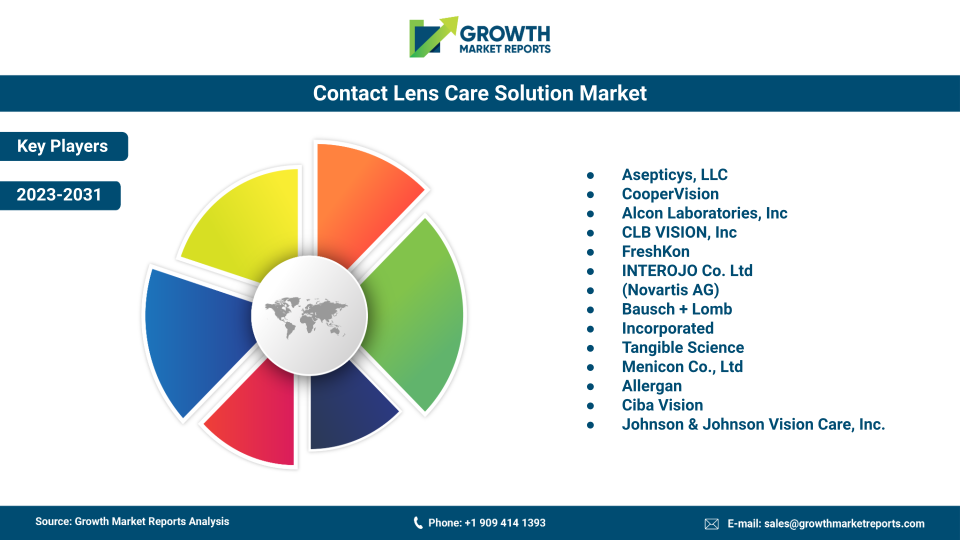
Major players competing in the global contact lens care solution market include Asepticys, LLC; CooperVision; Alcon Laboratories, Inc.; CLB VISION, Inc.; FreshKon; INTEROJO Co. Ltd.; (Novartis AG); Bausch + Lomb, Incorporated; Tangible Science; Menicon Co., Ltd.; Allergan; Ciba Vision; and Johnson & Johnson Vision Care, Inc.

Some of these businesses are involved in adopting numerous market strategies such as merger, acquisition, collaboration, partnership, product launch, R&D activities, and capacity expansion to increase market share and global presence.

For instance, in March 2019, Tangible Science, a global supplier of contact lens solution, announced the launch of a multi-purpose cleaning solution, Tangible Hydra-PEG for the coated lenses. This strategy was adopted to ensure easy cleaning, storage, and disinfection of gas permeable contact lenses.

In May 2019, Asepticys, LLC, a major global supplier of eye care and therapeutics solution, launched its new clinical trial of contact lens solution that would support for rapid disinfection.

 Contact Lens Care Solution Market Key Players

Frequently Asked Questions

Leading companies include Alcon Inc., Bausch + Lomb, Johnson & Johnson Vision Care, CooperVision, Menicon Co., Ltd., Abbott Medical Optics, Novartis AG, ACUVUE, and others.

Challenges include the risk of adverse reactions from improper use, stringent regulatory requirements, and the rising popularity of daily disposable lenses that require minimal care.

North America leads the market, followed by Europe and the rapidly growing Asia Pacific region. Latin America and the Middle East & Africa are emerging markets with significant growth potential.

Primary end-users include individual consumers, hospitals & clinics, and eye care centers, with individual users representing the largest segment.

Popular distribution channels include online stores, optical stores, pharmacies, supermarkets/hypermarkets, and specialty health stores, with online channels gaining significant traction due to convenience and product variety.

Material compatibility is crucial as different lens materials—soft contact lenses, rigid gas permeable (RGP) lenses, and hybrid lenses—require specific care solutions to ensure safety, comfort, and effective cleaning.

The main types include multipurpose solutions, hydrogen peroxide-based solutions, saline solutions, daily cleaners, and specialty products such as rewetting drops and travel kits.

Multipurpose solutions currently hold the largest market share due to their all-in-one functionality, convenience, and effective cleaning and disinfection capabilities.

Key growth drivers include rising eye health awareness, increasing adoption of contact lenses, advancements in lens materials, evolving consumer lifestyles, and a growing geriatric population requiring vision correction.

As of 2024, the global contact lens care solution market is valued at USD 2.25 billion, with steady growth projected through 2033.

Table Of Content

Chapter 1 Executive Summary
Chapter 2 Assumptions and Acronyms Used
Chapter 3 Research Methodology
Chapter 4 Contact Lens Care Solution Market Overview
   4.1 Introduction
      4.1.1 Market Taxonomy
      4.1.2 Market Definition
      4.1.3 Macro-Economic Factors Impacting the Market Growth
   4.2 Contact Lens Care Solution Market Dynamics
      4.2.1 Market Drivers
      4.2.2 Market Restraints
      4.2.3 Market Opportunity
   4.3 Contact Lens Care Solution Market - Supply Chain Analysis
      4.3.1 List of Key Suppliers
      4.3.2 List of Key Distributors
      4.3.3 List of Key Consumers
   4.4 Key Forces Shaping the Contact Lens Care Solution Market
      4.4.1 Bargaining Power of Suppliers
      4.4.2 Bargaining Power of Buyers
      4.4.3 Threat of Substitution
      4.4.4 Threat of New Entrants
      4.4.5 Competitive Rivalry
   4.5 Global Contact Lens Care Solution Market Size & Forecast, 2023-2032
      4.5.1 Contact Lens Care Solution Market Size and Y-o-Y Growth
      4.5.2 Contact Lens Care Solution Market Absolute $ Opportunity

Chapter 5 Global Contact Lens Care Solution Market Analysis and Forecast By Product Type
   5.1 Introduction
      5.1.1 Key Market Trends & Growth Opportunities By Product Type
      5.1.2 Basis Point Share (BPS) Analysis By Product Type
      5.1.3 Absolute $ Opportunity Assessment By Product Type
   5.2 Contact Lens Care Solution Market Size Forecast By Product Type
      5.2.1 Multipurpose Solution
      5.2.2 Hydrogen Peroxide-Based Solution
      5.2.3 Saline Solution
      5.2.4 Daily Cleaner
      5.2.5 Others
   5.3 Market Attractiveness Analysis By Product Type

Chapter 6 Global Contact Lens Care Solution Market Analysis and Forecast By Material Compatibility
   6.1 Introduction
      6.1.1 Key Market Trends & Growth Opportunities By Material Compatibility
      6.1.2 Basis Point Share (BPS) Analysis By Material Compatibility
      6.1.3 Absolute $ Opportunity Assessment By Material Compatibility
   6.2 Contact Lens Care Solution Market Size Forecast By Material Compatibility
      6.2.1 Soft Contact Lenses
      6.2.2 Rigid Gas Permeable Lenses
      6.2.3 Hybrid Lenses
   6.3 Market Attractiveness Analysis By Material Compatibility

Chapter 7 Global Contact Lens Care Solution Market Analysis and Forecast By Distribution Channel
   7.1 Introduction
      7.1.1 Key Market Trends & Growth Opportunities By Distribution Channel
      7.1.2 Basis Point Share (BPS) Analysis By Distribution Channel
      7.1.3 Absolute $ Opportunity Assessment By Distribution Channel
   7.2 Contact Lens Care Solution Market Size Forecast By Distribution Channel
      7.2.1 Online Stores
      7.2.2 Optical Stores
      7.2.3 Pharmacies
      7.2.4 Supermarkets/Hypermarkets
      7.2.5 Others
   7.3 Market Attractiveness Analysis By Distribution Channel

Chapter 8 Global Contact Lens Care Solution Market Analysis and Forecast By End-User
   8.1 Introduction
      8.1.1 Key Market Trends & Growth Opportunities By End-User
      8.1.2 Basis Point Share (BPS) Analysis By End-User
      8.1.3 Absolute $ Opportunity Assessment By End-User
   8.2 Contact Lens Care Solution Market Size Forecast By End-User
      8.2.1 Individual
      8.2.2 Hospitals & Clinics
      8.2.3 Eye Care Centers
   8.3 Market Attractiveness Analysis By End-User

Chapter 9 Global Contact Lens Care Solution Market Analysis and Forecast by Region
   9.1 Introduction
      9.1.1 Key Market Trends & Growth Opportunities By Region
      9.1.2 Basis Point Share (BPS) Analysis By Region
      9.1.3 Absolute $ Opportunity Assessment By Region
   9.2 Contact Lens Care Solution Market Size Forecast By Region
      9.2.1 North America
      9.2.2 Europe
      9.2.3 Asia Pacific
      9.2.4 Latin America
      9.2.5 Middle East & Africa (MEA)
   9.3 Market Attractiveness Analysis By Region

Chapter 10 Coronavirus Disease (COVID-19) Impact 
   10.1 Introduction 
   10.2 Current & Future Impact Analysis 
   10.3 Economic Impact Analysis 
   10.4 Government Policies 
   10.5 Investment Scenario

Chapter 11 North America Contact Lens Care Solution Analysis and Forecast
   11.1 Introduction
   11.2 North America Contact Lens Care Solution Market Size Forecast by Country
      11.2.1 U.S.
      11.2.2 Canada
   11.3 Basis Point Share (BPS) Analysis by Country
   11.4 Absolute $ Opportunity Assessment by Country
   11.5 Market Attractiveness Analysis by Country
   11.6 North America Contact Lens Care Solution Market Size Forecast By Product Type
      11.6.1 Multipurpose Solution
      11.6.2 Hydrogen Peroxide-Based Solution
      11.6.3 Saline Solution
      11.6.4 Daily Cleaner
      11.6.5 Others
   11.7 Basis Point Share (BPS) Analysis By Product Type 
   11.8 Absolute $ Opportunity Assessment By Product Type 
   11.9 Market Attractiveness Analysis By Product Type
   11.10 North America Contact Lens Care Solution Market Size Forecast By Material Compatibility
      11.10.1 Soft Contact Lenses
      11.10.2 Rigid Gas Permeable Lenses
      11.10.3 Hybrid Lenses
   11.11 Basis Point Share (BPS) Analysis By Material Compatibility 
   11.12 Absolute $ Opportunity Assessment By Material Compatibility 
   11.13 Market Attractiveness Analysis By Material Compatibility
   11.14 North America Contact Lens Care Solution Market Size Forecast By Distribution Channel
      11.14.1 Online Stores
      11.14.2 Optical Stores
      11.14.3 Pharmacies
      11.14.4 Supermarkets/Hypermarkets
      11.14.5 Others
   11.15 Basis Point Share (BPS) Analysis By Distribution Channel 
   11.16 Absolute $ Opportunity Assessment By Distribution Channel 
   11.17 Market Attractiveness Analysis By Distribution Channel
   11.18 North America Contact Lens Care Solution Market Size Forecast By End-User
      11.18.1 Individual
      11.18.2 Hospitals & Clinics
      11.18.3 Eye Care Centers
   11.19 Basis Point Share (BPS) Analysis By End-User 
   11.20 Absolute $ Opportunity Assessment By End-User 
   11.21 Market Attractiveness Analysis By End-User

Chapter 12 Europe Contact Lens Care Solution Analysis and Forecast
   12.1 Introduction
   12.2 Europe Contact Lens Care Solution Market Size Forecast by Country
      12.2.1 Germany
      12.2.2 France
      12.2.3 Italy
      12.2.4 U.K.
      12.2.5 Spain
      12.2.6 Russia
      12.2.7 Rest of Europe
   12.3 Basis Point Share (BPS) Analysis by Country
   12.4 Absolute $ Opportunity Assessment by Country
   12.5 Market Attractiveness Analysis by Country
   12.6 Europe Contact Lens Care Solution Market Size Forecast By Product Type
      12.6.1 Multipurpose Solution
      12.6.2 Hydrogen Peroxide-Based Solution
      12.6.3 Saline Solution
      12.6.4 Daily Cleaner
      12.6.5 Others
   12.7 Basis Point Share (BPS) Analysis By Product Type 
   12.8 Absolute $ Opportunity Assessment By Product Type 
   12.9 Market Attractiveness Analysis By Product Type
   12.10 Europe Contact Lens Care Solution Market Size Forecast By Material Compatibility
      12.10.1 Soft Contact Lenses
      12.10.2 Rigid Gas Permeable Lenses
      12.10.3 Hybrid Lenses
   12.11 Basis Point Share (BPS) Analysis By Material Compatibility 
   12.12 Absolute $ Opportunity Assessment By Material Compatibility 
   12.13 Market Attractiveness Analysis By Material Compatibility
   12.14 Europe Contact Lens Care Solution Market Size Forecast By Distribution Channel
      12.14.1 Online Stores
      12.14.2 Optical Stores
      12.14.3 Pharmacies
      12.14.4 Supermarkets/Hypermarkets
      12.14.5 Others
   12.15 Basis Point Share (BPS) Analysis By Distribution Channel 
   12.16 Absolute $ Opportunity Assessment By Distribution Channel 
   12.17 Market Attractiveness Analysis By Distribution Channel
   12.18 Europe Contact Lens Care Solution Market Size Forecast By End-User
      12.18.1 Individual
      12.18.2 Hospitals & Clinics
      12.18.3 Eye Care Centers
   12.19 Basis Point Share (BPS) Analysis By End-User 
   12.20 Absolute $ Opportunity Assessment By End-User 
   12.21 Market Attractiveness Analysis By End-User

Chapter 13 Asia Pacific Contact Lens Care Solution Analysis and Forecast
   13.1 Introduction
   13.2 Asia Pacific Contact Lens Care Solution Market Size Forecast by Country
      13.2.1 China
      13.2.2 Japan
      13.2.3 South Korea
      13.2.4 India
      13.2.5 Australia
      13.2.6 South East Asia (SEA)
      13.2.7 Rest of Asia Pacific (APAC)
   13.3 Basis Point Share (BPS) Analysis by Country
   13.4 Absolute $ Opportunity Assessment by Country
   13.5 Market Attractiveness Analysis by Country
   13.6 Asia Pacific Contact Lens Care Solution Market Size Forecast By Product Type
      13.6.1 Multipurpose Solution
      13.6.2 Hydrogen Peroxide-Based Solution
      13.6.3 Saline Solution
      13.6.4 Daily Cleaner
      13.6.5 Others
   13.7 Basis Point Share (BPS) Analysis By Product Type 
   13.8 Absolute $ Opportunity Assessment By Product Type 
   13.9 Market Attractiveness Analysis By Product Type
   13.10 Asia Pacific Contact Lens Care Solution Market Size Forecast By Material Compatibility
      13.10.1 Soft Contact Lenses
      13.10.2 Rigid Gas Permeable Lenses
      13.10.3 Hybrid Lenses
   13.11 Basis Point Share (BPS) Analysis By Material Compatibility 
   13.12 Absolute $ Opportunity Assessment By Material Compatibility 
   13.13 Market Attractiveness Analysis By Material Compatibility
   13.14 Asia Pacific Contact Lens Care Solution Market Size Forecast By Distribution Channel
      13.14.1 Online Stores
      13.14.2 Optical Stores
      13.14.3 Pharmacies
      13.14.4 Supermarkets/Hypermarkets
      13.14.5 Others
   13.15 Basis Point Share (BPS) Analysis By Distribution Channel 
   13.16 Absolute $ Opportunity Assessment By Distribution Channel 
   13.17 Market Attractiveness Analysis By Distribution Channel
   13.18 Asia Pacific Contact Lens Care Solution Market Size Forecast By End-User
      13.18.1 Individual
      13.18.2 Hospitals & Clinics
      13.18.3 Eye Care Centers
   13.19 Basis Point Share (BPS) Analysis By End-User 
   13.20 Absolute $ Opportunity Assessment By End-User 
   13.21 Market Attractiveness Analysis By End-User

Chapter 14 Latin America Contact Lens Care Solution Analysis and Forecast
   14.1 Introduction
   14.2 Latin America Contact Lens Care Solution Market Size Forecast by Country
      14.2.1 Brazil
      14.2.2 Mexico
      14.2.3 Rest of Latin America (LATAM)
   14.3 Basis Point Share (BPS) Analysis by Country
   14.4 Absolute $ Opportunity Assessment by Country
   14.5 Market Attractiveness Analysis by Country
   14.6 Latin America Contact Lens Care Solution Market Size Forecast By Product Type
      14.6.1 Multipurpose Solution
      14.6.2 Hydrogen Peroxide-Based Solution
      14.6.3 Saline Solution
      14.6.4 Daily Cleaner
      14.6.5 Others
   14.7 Basis Point Share (BPS) Analysis By Product Type 
   14.8 Absolute $ Opportunity Assessment By Product Type 
   14.9 Market Attractiveness Analysis By Product Type
   14.10 Latin America Contact Lens Care Solution Market Size Forecast By Material Compatibility
      14.10.1 Soft Contact Lenses
      14.10.2 Rigid Gas Permeable Lenses
      14.10.3 Hybrid Lenses
   14.11 Basis Point Share (BPS) Analysis By Material Compatibility 
   14.12 Absolute $ Opportunity Assessment By Material Compatibility 
   14.13 Market Attractiveness Analysis By Material Compatibility
   14.14 Latin America Contact Lens Care Solution Market Size Forecast By Distribution Channel
      14.14.1 Online Stores
      14.14.2 Optical Stores
      14.14.3 Pharmacies
      14.14.4 Supermarkets/Hypermarkets
      14.14.5 Others
   14.15 Basis Point Share (BPS) Analysis By Distribution Channel 
   14.16 Absolute $ Opportunity Assessment By Distribution Channel 
   14.17 Market Attractiveness Analysis By Distribution Channel
   14.18 Latin America Contact Lens Care Solution Market Size Forecast By End-User
      14.18.1 Individual
      14.18.2 Hospitals & Clinics
      14.18.3 Eye Care Centers
   14.19 Basis Point Share (BPS) Analysis By End-User 
   14.20 Absolute $ Opportunity Assessment By End-User 
   14.21 Market Attractiveness Analysis By End-User

Chapter 15 Middle East & Africa (MEA) Contact Lens Care Solution Analysis and Forecast
   15.1 Introduction
   15.2 Middle East & Africa (MEA) Contact Lens Care Solution Market Size Forecast by Country
      15.2.1 Saudi Arabia
      15.2.2 South Africa
      15.2.3 UAE
      15.2.4 Rest of Middle East & Africa (MEA)
   15.3 Basis Point Share (BPS) Analysis by Country
   15.4 Absolute $ Opportunity Assessment by Country
   15.5 Market Attractiveness Analysis by Country
   15.6 Middle East & Africa (MEA) Contact Lens Care Solution Market Size Forecast By Product Type
      15.6.1 Multipurpose Solution
      15.6.2 Hydrogen Peroxide-Based Solution
      15.6.3 Saline Solution
      15.6.4 Daily Cleaner
      15.6.5 Others
   15.7 Basis Point Share (BPS) Analysis By Product Type 
   15.8 Absolute $ Opportunity Assessment By Product Type 
   15.9 Market Attractiveness Analysis By Product Type
   15.10 Middle East & Africa (MEA) Contact Lens Care Solution Market Size Forecast By Material Compatibility
      15.10.1 Soft Contact Lenses
      15.10.2 Rigid Gas Permeable Lenses
      15.10.3 Hybrid Lenses
   15.11 Basis Point Share (BPS) Analysis By Material Compatibility 
   15.12 Absolute $ Opportunity Assessment By Material Compatibility 
   15.13 Market Attractiveness Analysis By Material Compatibility
   15.14 Middle East & Africa (MEA) Contact Lens Care Solution Market Size Forecast By Distribution Channel
      15.14.1 Online Stores
      15.14.2 Optical Stores
      15.14.3 Pharmacies
      15.14.4 Supermarkets/Hypermarkets
      15.14.5 Others
   15.15 Basis Point Share (BPS) Analysis By Distribution Channel 
   15.16 Absolute $ Opportunity Assessment By Distribution Channel 
   15.17 Market Attractiveness Analysis By Distribution Channel
   15.18 Middle East & Africa (MEA) Contact Lens Care Solution Market Size Forecast By End-User
      15.18.1 Individual
      15.18.2 Hospitals & Clinics
      15.18.3 Eye Care Centers
   15.19 Basis Point Share (BPS) Analysis By End-User 
   15.20 Absolute $ Opportunity Assessment By End-User 
   15.21 Market Attractiveness Analysis By End-User

Chapter 16 Competition Landscape 
   16.1 Contact Lens Care Solution Market: Competitive Dashboard
   16.2 Global Contact Lens Care Solution Market: Market Share Analysis, 2023
   16.3 Company Profiles (Details – Overview, Financials, Developments, Strategy) 
      16.3.1 Alcon
Bausch + Lomb
Johnson & Johnson Vision Care
CooperVision
Menicon Co., Ltd.
Abbott Medical Optics (AMO)
Novartis AG
CIBA Vision
Ophtecs Corporation
ACUVUE
Clearlab
Avizor
FreshKon
Contamac
Opti-Free
Sauflon Pharmaceuticals
Lapis Lazuli International NV
OCuSOFT Inc.
Regard
Santen Pharmaceutical Co., Ltd.

Methodology

Our Clients

sinopec
Dassault Aviation
Microsoft
General Mills
Nestle SA
Honda Motor Co. Ltd.
Siemens Healthcare
Pfizer