Razor Market Research Report 2033

Segments - by Product Type (Manual Razors, Electric Razors, Disposable Razors, Cartridge Razors, Others), by Blade Material (Stainless Steel, Carbon Steel, Platinum, Others), by End-User (Men, Women, Unisex), by Distribution Channel (Supermarkets/Hypermarkets, Online Stores, Specialty Stores, Convenience Stores, Others)

https://growthmarketreports.com/Debadatta
Author : Debadatta Patel
https://growthmarketreports.com/Vaibhav
Fact-checked by : V. Chandola
https://growthmarketreports.com/Shruti
Editor : Shruti Bhat

Upcoming | Report ID :CG-337 | 4.0 Rating | 67 Reviews | 263 Pages | Format : Docx PDF

Report Description


Razor Market Outlook

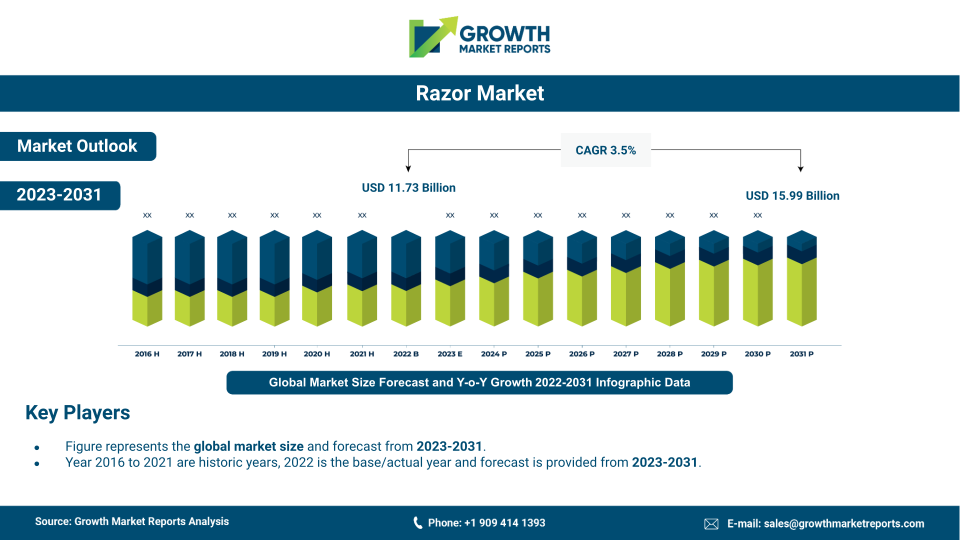
According to our latest research, the global razor market size reached USD 10.7 billion in 2024, with a steady growth trajectory driven by shifting grooming habits and technological advancements. The market is expected to expand at a CAGR of 3.4% from 2025 to 2033, reaching a forecasted value of USD 14.5 billion by 2033. Key growth drivers include the rising demand for personal grooming products, increasing adoption of electric razors, and the growing influence of online retail channels. As per our latest research, the razor industry is experiencing significant transformation, with innovation and evolving consumer preferences at the forefront of market expansion.

The primary growth factor fueling the razor market is the global shift toward personal grooming and self-care, particularly among younger demographics and urban populations. The proliferation of social media and the influence of beauty and grooming trends have heightened consumer awareness and aspirations for a well-groomed appearance. This surge in grooming consciousness is not limited to men; there is a marked rise in demand among women and unisex segments, further broadening the consumer base. The market is also benefiting from the increasing frequency of shaving and grooming routines, as well as the emergence of new product formats tailored to diverse skin types and preferences. These factors collectively contribute to a robust and resilient demand for razors across various geographies.

Technological advancements have played a pivotal role in shaping the razor market landscape. The introduction of electric razors and cartridge-based systems has revolutionized the shaving experience, offering enhanced convenience, precision, and safety. Manufacturers are investing heavily in research and development to introduce innovative features such as flexible blades, ergonomic designs, and skin-sensitive technologies that cater to specific consumer needs. The trend toward sustainability is also gaining traction, with companies developing eco-friendly razors and recyclable blade cartridges to address environmental concerns. These innovations not only attract tech-savvy consumers but also create opportunities for premiumization and brand differentiation in a competitive market.

Another significant growth driver is the evolution of distribution channels. The rapid expansion of e-commerce and online retail platforms has transformed the way consumers purchase razors, providing them with greater convenience, product variety, and competitive pricing. Online channels have enabled brands to reach a wider audience, penetrate emerging markets, and offer personalized shopping experiences through subscription models and digital marketing campaigns. Traditional retail formats such as supermarkets, hypermarkets, and specialty stores continue to play a vital role, especially in regions with lower digital penetration. The synergy between online and offline channels is enhancing product accessibility and driving overall market growth.

In recent years, the introduction of Waterless Shaving Cream has been a game-changer in the grooming industry, particularly for those seeking convenience and efficiency. This innovative product eliminates the need for water, making it ideal for travel and on-the-go grooming. The formulation is designed to provide a smooth and comfortable shave, reducing irritation and leaving the skin feeling refreshed. As consumers increasingly prioritize time-saving solutions, waterless shaving creams are gaining popularity, complementing the rise of electric and cartridge razors. This trend aligns with the broader movement towards versatile and user-friendly grooming products that cater to the fast-paced lifestyles of modern consumers.

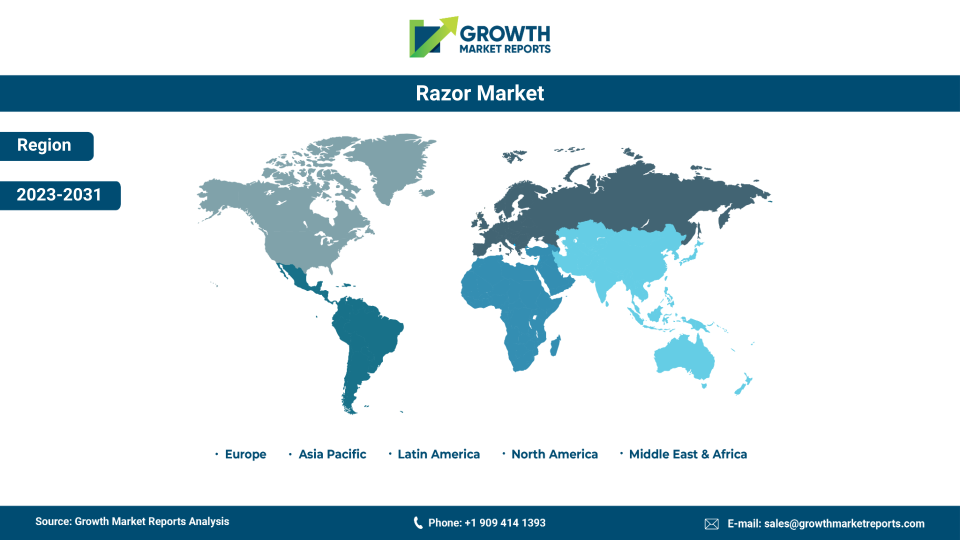
From a regional perspective, Asia Pacific remains the dominant market for razors, accounting for the largest share due to its vast population, rising disposable incomes, and increasing urbanization. North America and Europe are mature markets characterized by high product penetration and a strong inclination toward premium and technologically advanced razors. Emerging economies in Latin America and the Middle East & Africa are witnessing rapid growth, fueled by changing lifestyles, expanding retail infrastructure, and growing awareness of personal grooming. Each region presents unique opportunities and challenges, shaping the competitive strategies of leading market players.

Global Razor Industry Outlook

Product Type Analysis

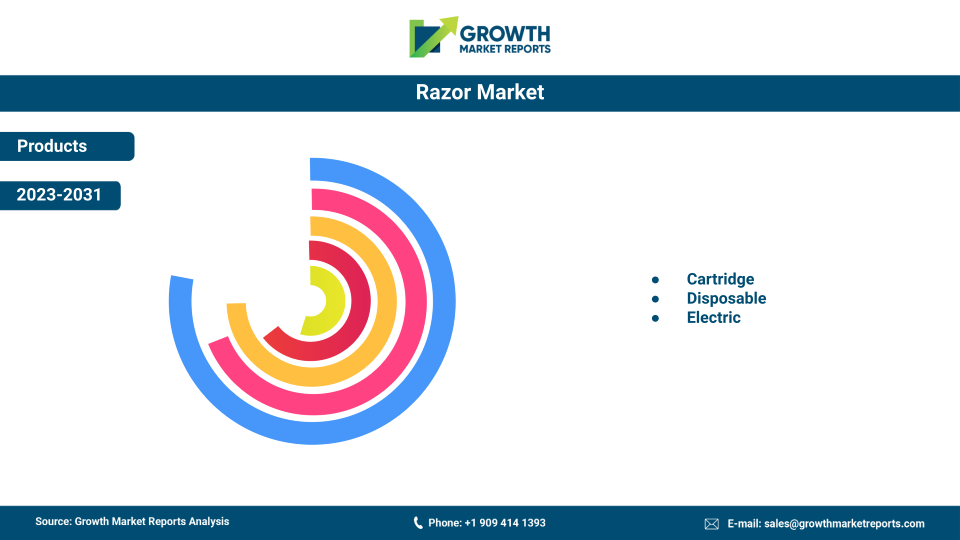
The razor market is segmented by product type into manual razors, electric razors, disposable razors, cartridge razors, and others. Manual razors continue to dominate the market, favored for their affordability, ease of use, and widespread availability. They are particularly popular in developing regions where cost sensitivity remains high, and consumers prefer traditional shaving methods. Despite the advent of advanced technologies, manual razors retain a loyal customer base due to their effectiveness in delivering a close shave and their compatibility with various shaving creams and gels. Brands are continuously innovating within this segment by introducing ergonomic handles, multi-blade systems, and lubricating strips to enhance the shaving experience.

Electric razors represent the fastest-growing segment within the razor market, driven by increasing consumer preference for convenience, speed, and safety. These products are particularly appealing to busy urban professionals and individuals seeking a hassle-free grooming solution. Electric razors offer multiple functionalities, such as wet and dry shaving, adjustable settings, and rechargeable batteries, making them suitable for diverse needs. The integration of advanced features like self-cleaning systems, precision trimmers, and skin-sensitive sensors further differentiates electric razors from traditional counterparts. This segment is also witnessing growth in the female and unisex categories, with manufacturers launching gender-neutral designs and marketing campaigns targeting broader audiences.

The emergence of the Bioplastic Razor is a testament to the industry's commitment to sustainability and innovation. These razors are crafted from bioplastic materials derived from renewable resources, offering an eco-friendly alternative to traditional plastic razors. As environmental concerns continue to influence consumer choices, bioplastic razors are becoming increasingly attractive to those seeking sustainable grooming options. This shift is part of a larger trend towards reducing the carbon footprint of personal care products, with manufacturers exploring biodegradable and recyclable materials. The adoption of bioplastic razors not only addresses environmental issues but also enhances brand reputation among eco-conscious consumers.

Disposable razors occupy a significant share of the global razor market, especially in travel and hospitality sectors, where convenience and hygiene are paramount. These razors are designed for single or limited use, making them ideal for on-the-go consumers and travelers. The low cost and widespread availability of disposable razors contribute to their popularity, particularly in emerging markets. However, growing environmental concerns regarding plastic waste are prompting manufacturers to explore biodegradable materials and sustainable packaging solutions. Despite these challenges, disposable razors remain a staple in personal care routines, supported by aggressive marketing and promotional strategies.

Cartridge razors have carved out a niche in the premium segment of the razor market, offering a blend of convenience, performance, and safety. These razors feature replaceable blade cartridges that provide a consistently smooth shave while minimizing the risk of nicks and cuts. The subscription-based business model, popularized by several direct-to-consumer brands, has further boosted the adoption of cartridge razors by delivering blades directly to consumers' doorsteps at regular intervals. This model enhances customer loyalty and encourages repeat purchases, driving sustained growth in this segment. Innovations such as lubricating strips, pivoting heads, and precision trimmers continue to elevate the user experience and set cartridge razors apart from other product types.

The "others" category includes niche products such as straight razors, safety razors, and specialty grooming tools. While these products represent a smaller share of the market, they cater to specific consumer segments seeking traditional or artisanal shaving experiences. The resurgence of interest in vintage grooming tools and the growing popularity of barbershop culture have contributed to the steady demand for these products. Niche brands are leveraging digital platforms and social media to engage with enthusiasts and build communities around traditional shaving practices. This segment, though limited in scale, adds diversity to the razor market and underscores the importance of catering to varied consumer preferences.

Report Scope

Attributes Details
Report Title Razor Market Research Report 2033
By Product Type Manual Razors, Electric Razors, Disposable Razors, Cartridge Razors, Others
By Blade Material Stainless Steel, Carbon Steel, Platinum, Others
By End-User Men, Women, Unisex
By Distribution Channel Supermarkets/Hypermarkets, Online Stores, Specialty Stores, Convenience Stores, Others
Regions Covered North America, Europe, APAC, Latin America, MEA
Base Year 2024
Historic Data 2018-2023
Forecast Period 2025-2033
Number of Pages 263
Number of Tables & Figures 343
Customization Available Yes, the report can be customized as per your need.

Blade Material Analysis

Blade material is a critical factor influencing the performance, durability, and safety of razors. The razor market is segmented by blade material into stainless steel, carbon steel, platinum, and others. Stainless steel blades dominate the market, renowned for their corrosion resistance, sharpness, and longevity. These blades are widely used across manual, disposable, and cartridge razors, offering a balance of affordability and performance. The durability of stainless steel ensures a smoother shaving experience and reduces the frequency of blade replacement, making it a preferred choice for both consumers and manufacturers. Continuous advancements in metallurgy and blade-coating technologies are further enhancing the quality and lifespan of stainless steel blades.

Carbon steel blades occupy a niche segment within the razor market, valued for their exceptional sharpness and precision. These blades are favored by professional barbers and shaving enthusiasts who prioritize a close, clean shave. However, carbon steel is more prone to rust and corrosion compared to stainless steel, necessitating proper maintenance and storage. Manufacturers are addressing these challenges by applying protective coatings and developing hybrid materials that combine the benefits of both stainless and carbon steel. While carbon steel blades are less prevalent in mass-market products, they remain popular among aficionados of traditional shaving methods and specialty grooming tools.

Platinum-coated blades have gained traction in the premium segment of the razor market, offering superior sharpness, smoothness, and durability. The addition of a platinum coating enhances the blade's resistance to wear and corrosion, resulting in a longer-lasting and more comfortable shaving experience. Platinum blades are commonly used in high-end cartridge and manual razors, appealing to consumers who seek premium quality and are willing to pay a premium price. The rising demand for luxury grooming products and the growing influence of male grooming trends are driving the adoption of platinum blades, particularly in developed markets such as North America and Europe.

The "others" category encompasses a variety of blade materials, including ceramic, titanium, and specialty alloys. These materials are primarily used in niche and specialty razors designed for specific applications or consumer preferences. Ceramic blades, for example, are valued for their hypoallergenic properties and resistance to bacterial growth, making them suitable for sensitive skin. Titanium blades offer exceptional strength and durability, catering to consumers who demand long-lasting performance. While these materials represent a small share of the overall market, they contribute to product differentiation and innovation, allowing brands to cater to diverse consumer needs and preferences.

The choice of blade material is increasingly influenced by sustainability considerations, with manufacturers exploring recyclable and biodegradable options to address environmental concerns. The shift toward eco-friendly materials and sustainable manufacturing practices is expected to gain momentum in the coming years, driven by growing consumer awareness and regulatory pressures. Brands that prioritize sustainability in blade material selection and production processes are likely to gain a competitive edge in the evolving razor market.

End-User Analysis

The razor market is segmented by end-user into men, women, and unisex categories. The men's segment has traditionally dominated the market, accounting for the largest share due to the cultural and social significance of shaving in male grooming routines. MenÂ’s razors are designed to address specific needs such as coarse facial hair, sensitive skin, and precision trimming. Brands invest heavily in product innovation, marketing, and celebrity endorsements to capture the attention of male consumers. The growing trend of beard grooming and the resurgence of barbershop culture have further fueled demand for specialized razors and grooming tools tailored to men.

The womenÂ’s segment represents a rapidly growing opportunity within the razor market, driven by increasing awareness of personal grooming and changing beauty standards. WomenÂ’s razors are designed with features such as curved handles, moisturizing strips, and flexible blades to cater to different body contours and skin sensitivities. The rise of female-centric marketing campaigns and the introduction of gender-specific products have contributed to the expansion of this segment. Additionally, the growing participation of women in the workforce and urbanization are driving demand for convenient and effective grooming solutions. The womenÂ’s segment is expected to witness robust growth, particularly in emerging markets where grooming habits are evolving.

The unisex segment is gaining traction as brands recognize the need for inclusive and gender-neutral grooming solutions. Unisex razors are designed to be versatile, catering to the needs of both men and women. The shift toward inclusivity and diversity in marketing and product development is resonating with younger consumers who prioritize functionality and value over traditional gender norms. Unisex razors are often marketed as all-purpose grooming tools, suitable for facial, body, and sensitive areas. This segment is expected to grow steadily, supported by the rising popularity of minimalist and multi-functional personal care products.

The segmentation by end-user is also influenced by cultural and regional factors, with varying grooming practices and preferences across different geographies. For instance, the prevalence of facial hair grooming among men is higher in Western markets, while body hair removal among women is more common in Asia Pacific and Latin America. Understanding these nuances is crucial for brands seeking to tailor their product offerings and marketing strategies to specific consumer segments. The increasing focus on personalization and customization is expected to drive further innovation in the end-user segment.

The growing demand for inclusive and diverse product offerings is prompting manufacturers to expand their portfolios and develop razors that cater to a wide range of skin types, hair textures, and grooming preferences. The integration of advanced technologies, such as skin-sensitive sensors and customizable blade settings, is enabling brands to deliver personalized grooming experiences. As the razor market continues to evolve, the ability to address the unique needs of different end-user segments will be a key determinant of success.

Distribution Channel Analysis

The razor market is segmented by distribution channel into supermarkets/hypermarkets, online stores, specialty stores, convenience stores, and others. Supermarkets and hypermarkets remain the most prominent distribution channels, accounting for a significant share of global razor sales. These retail formats offer consumers the convenience of one-stop shopping, a wide product assortment, and competitive pricing. The visibility and accessibility of razors in supermarkets and hypermarkets make them the preferred choice for many consumers, particularly in urban areas. Retailers leverage in-store promotions, discounts, and product bundling to drive sales and enhance the shopping experience.

Online stores are experiencing exponential growth as a distribution channel for razors, driven by the proliferation of e-commerce platforms and the increasing adoption of digital shopping. Consumers are drawn to the convenience, product variety, and competitive pricing offered by online retailers. The ability to compare products, read reviews, and access detailed product information empowers consumers to make informed purchase decisions. Subscription-based models, pioneered by several direct-to-consumer brands, have further revolutionized the online razor market by delivering blades and grooming products directly to consumersÂ’ doorsteps on a recurring basis. The COVID-19 pandemic has accelerated the shift toward online shopping, with many consumers continuing to prefer digital channels even as restrictions ease.

Specialty stores, including beauty and grooming boutiques, play a vital role in the razor market, particularly for premium and niche products. These stores offer personalized service, expert advice, and curated product selections that cater to discerning consumers seeking high-quality grooming solutions. Specialty stores are instrumental in building brand loyalty and educating consumers about the benefits of advanced razor technologies and premium materials. The experiential aspect of shopping in specialty stores, combined with exclusive product launches and in-store events, enhances the overall value proposition for consumers.

Convenience stores are an important distribution channel for razors, especially in densely populated urban areas and transit locations. These stores cater to on-the-go consumers who prioritize accessibility and speed. The availability of razors in convenience stores ensures that consumers can purchase grooming products at their convenience, whether during daily commutes or while traveling. The emphasis on single-use and travel-friendly products, such as disposable razors, aligns with the needs of convenience store shoppers. While the share of convenience stores in the overall razor market is relatively smaller compared to other channels, their role in driving impulse purchases and meeting immediate needs is significant.

The "others" category includes pharmacies, department stores, and direct sales channels. Pharmacies are a key distribution point for razors, particularly for consumers seeking dermatologically tested or medical-grade grooming products. Department stores offer a premium shopping experience, often featuring exclusive collaborations and limited-edition products. Direct sales channels, including brand-owned stores and pop-up shops, enable manufacturers to engage directly with consumers and gather valuable feedback. The integration of omnichannel strategies, combining online and offline touchpoints, is becoming increasingly important as brands seek to deliver seamless and personalized shopping experiences across all distribution channels.

Opportunities & Threats

The razor market presents a plethora of opportunities for growth and innovation, particularly in the realms of product development and sustainability. The increasing demand for eco-friendly and sustainable grooming products is prompting manufacturers to explore biodegradable materials, recyclable packaging, and refillable blade systems. Brands that prioritize environmental responsibility are likely to gain a competitive advantage, especially among environmentally conscious consumers. The rise of direct-to-consumer subscription models offers another significant opportunity, enabling brands to build long-term relationships with customers, generate recurring revenue, and gather valuable data on consumer preferences. The expansion of online retail channels and the adoption of digital marketing strategies further enhance the ability of brands to reach new audiences and drive growth in both mature and emerging markets.

Technological innovation remains a key opportunity for differentiation and market expansion in the razor industry. The integration of smart technologies, such as skin-sensitive sensors, AI-driven shaving guidance, and connected devices, is transforming the grooming experience and attracting tech-savvy consumers. The development of razors tailored to specific skin types, hair textures, and grooming preferences enables brands to deliver personalized solutions and address unmet needs. Collaborations with dermatologists, influencers, and barbershops can further enhance brand credibility and drive product adoption. The growing trend toward inclusivity and diversity in product offerings presents an opportunity for brands to cater to a broader consumer base and foster brand loyalty through inclusive marketing and product design.

Despite the numerous opportunities, the razor market faces several restraining factors that could impede growth. Intense competition and price sensitivity, particularly in the manual and disposable razor segments, exert pressure on profit margins and limit the scope for premiumization. The growing popularity of alternative hair removal methods, such as laser treatments, waxing, and depilatory creams, poses a threat to razor sales, especially among younger consumers seeking long-lasting results. Environmental concerns regarding plastic waste and disposable razors are prompting regulatory scrutiny and shifting consumer preferences toward sustainable alternatives. Brands must navigate these challenges by investing in innovation, sustainability, and consumer education to maintain their competitive edge in a rapidly evolving market.

Regional Outlook

Asia Pacific leads the global razor market, accounting for the largest share with a market size of USD 4.2 billion in 2024. The regionÂ’s dominance is attributed to its vast population, rising disposable incomes, and increasing urbanization, particularly in countries such as China, India, and Japan. The growing influence of Western grooming trends, expanding retail infrastructure, and the proliferation of online shopping platforms are driving razor adoption across diverse consumer segments. The Asia Pacific razor market is expected to grow at a robust CAGR of 4.1% through 2033, outpacing other regions due to its untapped potential and evolving consumer preferences. Local and international brands are intensifying their efforts to capture market share by introducing innovative products and leveraging digital marketing strategies tailored to regional tastes.

North America represents a mature and highly competitive razor market, with a market size of USD 2.7 billion in 2024. High product penetration, strong brand loyalty, and the presence of leading global manufacturers characterize the region. The adoption of premium and technologically advanced razors is particularly high among North American consumers, who value convenience, performance, and sustainability. The region is also witnessing a shift toward subscription-based models and direct-to-consumer channels, driven by the popularity of online shopping and personalized grooming solutions. While growth in North America is relatively moderate compared to emerging markets, ongoing innovation and the introduction of sustainable products are expected to drive steady demand.

Europe holds a significant position in the global razor market, with a market size of USD 2.1 billion in 2024. The region is characterized by a strong emphasis on quality, safety, and environmental sustainability, with consumers increasingly seeking eco-friendly and dermatologically tested grooming products. The market is fragmented, with a mix of established brands and niche players catering to diverse preferences. The rising popularity of electric razors, coupled with the resurgence of traditional shaving methods, is shaping the competitive landscape in Europe. Latin America and the Middle East & Africa, with market sizes of USD 1.1 billion and USD 0.6 billion respectively, are emerging as high-growth regions, driven by changing lifestyles, increasing disposable incomes, and expanding retail networks. These regions present significant opportunities for market expansion, particularly for brands that can adapt to local preferences and address unique consumer needs.

Razor Market Statistics

Competitor Outlook

The razor market is highly competitive, characterized by the presence of several global and regional players vying for market share through product innovation, aggressive marketing, and strategic partnerships. Leading companies invest heavily in research and development to introduce advanced features, enhance product performance, and differentiate their offerings in a crowded marketplace. The competitive landscape is further shaped by the entry of direct-to-consumer brands, which leverage digital platforms and subscription models to disrupt traditional distribution channels. The emphasis on sustainability, inclusivity, and personalization is prompting established players to rethink their strategies and adapt to evolving consumer expectations.

Brand loyalty and consumer trust play a critical role in the razor market, with established players leveraging their heritage, reputation, and extensive distribution networks to maintain a competitive edge. Companies are increasingly focusing on building emotional connections with consumers through targeted marketing campaigns, celebrity endorsements, and collaborations with influencers. The rise of niche and artisanal brands is adding diversity to the market, catering to specific consumer segments seeking unique or traditional grooming experiences. The ability to innovate and respond quickly to changing trends is a key differentiator in the competitive landscape.

Mergers, acquisitions, and strategic alliances are common strategies employed by leading players to expand their product portfolios, enter new markets, and strengthen their competitive positions. The integration of sustainability initiatives, such as the development of eco-friendly razors and recyclable packaging, is becoming a focal point for differentiation and brand positioning. Companies are also investing in digital transformation, leveraging data analytics, artificial intelligence, and e-commerce platforms to enhance customer engagement and drive growth. The competitive intensity is expected to remain high, with ongoing innovation and strategic maneuvering shaping the future of the razor market.

Some of the major companies operating in the global razor market include Procter & Gamble (Gillette), Edgewell Personal Care (Schick, Wilkinson Sword), BIC, Philips, Panasonic, HarryÂ’s, Dollar Shave Club, and Feather Safety Razor Co. Procter & Gamble, with its iconic Gillette brand, continues to lead the market through relentless innovation, expansive product lines, and a strong global presence. Edgewell Personal Care, known for its Schick and Wilkinson Sword brands, focuses on technological advancements and sustainability to capture market share. BIC is renowned for its affordable and widely available disposable razors, catering to cost-conscious consumers across the globe.

Philips and Panasonic are key players in the electric razor segment, offering a range of products that combine cutting-edge technology with user-friendly designs. HarryÂ’s and Dollar Shave Club have disrupted the traditional razor market with their direct-to-consumer subscription models, appealing to younger consumers seeking convenience and value. Feather Safety Razor Co. specializes in premium and professional-grade razors, catering to barbers and shaving enthusiasts who prioritize quality and precision. These companies are continuously innovating and expanding their product portfolios to address evolving consumer needs and capture new growth opportunities in the dynamic razor market.

Key Players

  • Gillette
  • Philips
  • Panasonic
  • Braun
  • Schick (Edgewell Personal Care)
  • Harry's
  • Dollar Shave Club
  • BIC
  • Remington
  • Dorco
  • Feather Safety Razor Co.
  • Wahl Clipper Corporation
  • Super-Max
  • Personna (Edgewell Personal Care)
  • Dovo Solingen
  • Lord International
  • Kai Group
  • Barbasol
  • Mühle
  • Parker Safety Razor
Razor Market Overview

Segments

The Razor market has been segmented on the basis of

Product Type

  • Manual Razors
  • Electric Razors
  • Disposable Razors
  • Cartridge Razors
  • Others

Blade Material

  • Stainless Steel
  • Carbon Steel
  • Platinum
  • Others

End-User

  • Men
  • Women
  • Unisex

Distribution Channel

  • Supermarkets/Hypermarkets
  • Online Stores
  • Specialty Stores
  • Convenience Stores
  • Others

Competitive Landscape

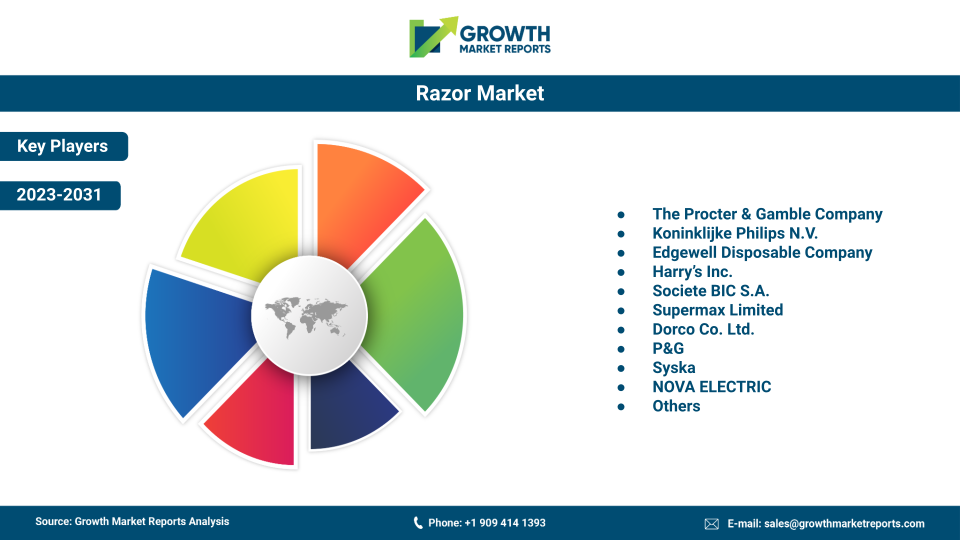
Major players of the razor market are The Procter & Gamble Company, Koninklijke Philips N.V., Edgewell Disposable Company, Harry’s Inc., Societe BIC S.A., Supermax Limited, Dorco Co. Ltd., P&G, Syska, NOVA ELECTRIC, OSCAR RAZOR, kai corporation, American Cutting Edge, MQ Corporation, and Kaili Group.

Companies are engaging in partnerships, collaborations, and expanding their product offerings to expand their market share.

In October 2018, Dorco acquired more than 10% stake in the startup LetsShave Private Ltd. in India to strengthen its footprint in Asia Pacific.

Razor Market Key Players

Frequently Asked Questions

Challenges include intense competition, price sensitivity, the popularity of alternative hair removal methods, and environmental concerns about plastic waste from disposable razors.

Razors are sold through supermarkets/hypermarkets, online stores, specialty stores, convenience stores, and pharmacies. Online channels are experiencing rapid growth due to e-commerce and subscription models.

Sustainability is a growing focus, with brands developing eco-friendly razors, recyclable blade cartridges, and biodegradable materials to address environmental concerns and attract environmentally conscious consumers.

Stainless steel is the most widely used blade material due to its durability and corrosion resistance. Other materials include carbon steel, platinum-coated blades, ceramic, and titanium.

Major companies include Gillette (Procter & Gamble), Schick (Edgewell Personal Care), BIC, Philips, Panasonic, Harry’s, Dollar Shave Club, and Feather Safety Razor Co.

Asia Pacific leads the global razor market, followed by North America and Europe. Latin America and the Middle East & Africa are emerging as high-growth regions.

Key trends include rising demand for personal grooming, technological advancements (such as electric and cartridge razors), the influence of online retail, and a shift toward sustainable and eco-friendly products.

Manual razors continue to dominate the market due to their affordability and effectiveness, but electric razors are the fastest-growing segment, driven by demand for convenience and advanced features.

The razor market is expected to expand at a CAGR of 3.4% from 2025 to 2033, reaching a forecasted value of USD 14.5 billion by 2033.

As of 2024, the global razor market size reached USD 10.7 billion, with continued growth projected in the coming years.

Table Of Content

Chapter 1 Executive Summary
Chapter 2 Assumptions and Acronyms Used
Chapter 3 Research Methodology
Chapter 4 Razor Market Overview
   4.1 Introduction
      4.1.1 Market Taxonomy
      4.1.2 Market Definition
      4.1.3 Macro-Economic Factors Impacting the Market Growth
   4.2 Razor Market Dynamics
      4.2.1 Market Drivers
      4.2.2 Market Restraints
      4.2.3 Market Opportunity
   4.3 Razor Market - Supply Chain Analysis
      4.3.1 List of Key Suppliers
      4.3.2 List of Key Distributors
      4.3.3 List of Key Consumers
   4.4 Key Forces Shaping the Razor Market
      4.4.1 Bargaining Power of Suppliers
      4.4.2 Bargaining Power of Buyers
      4.4.3 Threat of Substitution
      4.4.4 Threat of New Entrants
      4.4.5 Competitive Rivalry
   4.5 Global Razor Market Size & Forecast, 2023-2032
      4.5.1 Razor Market Size and Y-o-Y Growth
      4.5.2 Razor Market Absolute $ Opportunity

Chapter 5 Global Razor Market Analysis and Forecast By Product Type
   5.1 Introduction
      5.1.1 Key Market Trends & Growth Opportunities By Product Type
      5.1.2 Basis Point Share (BPS) Analysis By Product Type
      5.1.3 Absolute $ Opportunity Assessment By Product Type
   5.2 Razor Market Size Forecast By Product Type
      5.2.1 Manual Razors
      5.2.2 Electric Razors
      5.2.3 Disposable Razors
      5.2.4 Cartridge Razors
      5.2.5 Others
   5.3 Market Attractiveness Analysis By Product Type

Chapter 6 Global Razor Market Analysis and Forecast By Blade Material
   6.1 Introduction
      6.1.1 Key Market Trends & Growth Opportunities By Blade Material
      6.1.2 Basis Point Share (BPS) Analysis By Blade Material
      6.1.3 Absolute $ Opportunity Assessment By Blade Material
   6.2 Razor Market Size Forecast By Blade Material
      6.2.1 Stainless Steel
      6.2.2 Carbon Steel
      6.2.3 Platinum
      6.2.4 Others
   6.3 Market Attractiveness Analysis By Blade Material

Chapter 7 Global Razor Market Analysis and Forecast By End-User
   7.1 Introduction
      7.1.1 Key Market Trends & Growth Opportunities By End-User
      7.1.2 Basis Point Share (BPS) Analysis By End-User
      7.1.3 Absolute $ Opportunity Assessment By End-User
   7.2 Razor Market Size Forecast By End-User
      7.2.1 Men
      7.2.2 Women
      7.2.3 Unisex
   7.3 Market Attractiveness Analysis By End-User

Chapter 8 Global Razor Market Analysis and Forecast By Distribution Channel
   8.1 Introduction
      8.1.1 Key Market Trends & Growth Opportunities By Distribution Channel
      8.1.2 Basis Point Share (BPS) Analysis By Distribution Channel
      8.1.3 Absolute $ Opportunity Assessment By Distribution Channel
   8.2 Razor Market Size Forecast By Distribution Channel
      8.2.1 Supermarkets/Hypermarkets
      8.2.2 Online Stores
      8.2.3 Specialty Stores
      8.2.4 Convenience Stores
      8.2.5 Others
   8.3 Market Attractiveness Analysis By Distribution Channel

Chapter 9 Global Razor Market Analysis and Forecast by Region
   9.1 Introduction
      9.1.1 Key Market Trends & Growth Opportunities By Region
      9.1.2 Basis Point Share (BPS) Analysis By Region
      9.1.3 Absolute $ Opportunity Assessment By Region
   9.2 Razor Market Size Forecast By Region
      9.2.1 North America
      9.2.2 Europe
      9.2.3 Asia Pacific
      9.2.4 Latin America
      9.2.5 Middle East & Africa (MEA)
   9.3 Market Attractiveness Analysis By Region

Chapter 10 Coronavirus Disease (COVID-19) Impact 
   10.1 Introduction 
   10.2 Current & Future Impact Analysis 
   10.3 Economic Impact Analysis 
   10.4 Government Policies 
   10.5 Investment Scenario

Chapter 11 North America Razor Analysis and Forecast
   11.1 Introduction
   11.2 North America Razor Market Size Forecast by Country
      11.2.1 U.S.
      11.2.2 Canada
   11.3 Basis Point Share (BPS) Analysis by Country
   11.4 Absolute $ Opportunity Assessment by Country
   11.5 Market Attractiveness Analysis by Country
   11.6 North America Razor Market Size Forecast By Product Type
      11.6.1 Manual Razors
      11.6.2 Electric Razors
      11.6.3 Disposable Razors
      11.6.4 Cartridge Razors
      11.6.5 Others
   11.7 Basis Point Share (BPS) Analysis By Product Type 
   11.8 Absolute $ Opportunity Assessment By Product Type 
   11.9 Market Attractiveness Analysis By Product Type
   11.10 North America Razor Market Size Forecast By Blade Material
      11.10.1 Stainless Steel
      11.10.2 Carbon Steel
      11.10.3 Platinum
      11.10.4 Others
   11.11 Basis Point Share (BPS) Analysis By Blade Material 
   11.12 Absolute $ Opportunity Assessment By Blade Material 
   11.13 Market Attractiveness Analysis By Blade Material
   11.14 North America Razor Market Size Forecast By End-User
      11.14.1 Men
      11.14.2 Women
      11.14.3 Unisex
   11.15 Basis Point Share (BPS) Analysis By End-User 
   11.16 Absolute $ Opportunity Assessment By End-User 
   11.17 Market Attractiveness Analysis By End-User
   11.18 North America Razor Market Size Forecast By Distribution Channel
      11.18.1 Supermarkets/Hypermarkets
      11.18.2 Online Stores
      11.18.3 Specialty Stores
      11.18.4 Convenience Stores
      11.18.5 Others
   11.19 Basis Point Share (BPS) Analysis By Distribution Channel 
   11.20 Absolute $ Opportunity Assessment By Distribution Channel 
   11.21 Market Attractiveness Analysis By Distribution Channel

Chapter 12 Europe Razor Analysis and Forecast
   12.1 Introduction
   12.2 Europe Razor Market Size Forecast by Country
      12.2.1 Germany
      12.2.2 France
      12.2.3 Italy
      12.2.4 U.K.
      12.2.5 Spain
      12.2.6 Russia
      12.2.7 Rest of Europe
   12.3 Basis Point Share (BPS) Analysis by Country
   12.4 Absolute $ Opportunity Assessment by Country
   12.5 Market Attractiveness Analysis by Country
   12.6 Europe Razor Market Size Forecast By Product Type
      12.6.1 Manual Razors
      12.6.2 Electric Razors
      12.6.3 Disposable Razors
      12.6.4 Cartridge Razors
      12.6.5 Others
   12.7 Basis Point Share (BPS) Analysis By Product Type 
   12.8 Absolute $ Opportunity Assessment By Product Type 
   12.9 Market Attractiveness Analysis By Product Type
   12.10 Europe Razor Market Size Forecast By Blade Material
      12.10.1 Stainless Steel
      12.10.2 Carbon Steel
      12.10.3 Platinum
      12.10.4 Others
   12.11 Basis Point Share (BPS) Analysis By Blade Material 
   12.12 Absolute $ Opportunity Assessment By Blade Material 
   12.13 Market Attractiveness Analysis By Blade Material
   12.14 Europe Razor Market Size Forecast By End-User
      12.14.1 Men
      12.14.2 Women
      12.14.3 Unisex
   12.15 Basis Point Share (BPS) Analysis By End-User 
   12.16 Absolute $ Opportunity Assessment By End-User 
   12.17 Market Attractiveness Analysis By End-User
   12.18 Europe Razor Market Size Forecast By Distribution Channel
      12.18.1 Supermarkets/Hypermarkets
      12.18.2 Online Stores
      12.18.3 Specialty Stores
      12.18.4 Convenience Stores
      12.18.5 Others
   12.19 Basis Point Share (BPS) Analysis By Distribution Channel 
   12.20 Absolute $ Opportunity Assessment By Distribution Channel 
   12.21 Market Attractiveness Analysis By Distribution Channel

Chapter 13 Asia Pacific Razor Analysis and Forecast
   13.1 Introduction
   13.2 Asia Pacific Razor Market Size Forecast by Country
      13.2.1 China
      13.2.2 Japan
      13.2.3 South Korea
      13.2.4 India
      13.2.5 Australia
      13.2.6 South East Asia (SEA)
      13.2.7 Rest of Asia Pacific (APAC)
   13.3 Basis Point Share (BPS) Analysis by Country
   13.4 Absolute $ Opportunity Assessment by Country
   13.5 Market Attractiveness Analysis by Country
   13.6 Asia Pacific Razor Market Size Forecast By Product Type
      13.6.1 Manual Razors
      13.6.2 Electric Razors
      13.6.3 Disposable Razors
      13.6.4 Cartridge Razors
      13.6.5 Others
   13.7 Basis Point Share (BPS) Analysis By Product Type 
   13.8 Absolute $ Opportunity Assessment By Product Type 
   13.9 Market Attractiveness Analysis By Product Type
   13.10 Asia Pacific Razor Market Size Forecast By Blade Material
      13.10.1 Stainless Steel
      13.10.2 Carbon Steel
      13.10.3 Platinum
      13.10.4 Others
   13.11 Basis Point Share (BPS) Analysis By Blade Material 
   13.12 Absolute $ Opportunity Assessment By Blade Material 
   13.13 Market Attractiveness Analysis By Blade Material
   13.14 Asia Pacific Razor Market Size Forecast By End-User
      13.14.1 Men
      13.14.2 Women
      13.14.3 Unisex
   13.15 Basis Point Share (BPS) Analysis By End-User 
   13.16 Absolute $ Opportunity Assessment By End-User 
   13.17 Market Attractiveness Analysis By End-User
   13.18 Asia Pacific Razor Market Size Forecast By Distribution Channel
      13.18.1 Supermarkets/Hypermarkets
      13.18.2 Online Stores
      13.18.3 Specialty Stores
      13.18.4 Convenience Stores
      13.18.5 Others
   13.19 Basis Point Share (BPS) Analysis By Distribution Channel 
   13.20 Absolute $ Opportunity Assessment By Distribution Channel 
   13.21 Market Attractiveness Analysis By Distribution Channel

Chapter 14 Latin America Razor Analysis and Forecast
   14.1 Introduction
   14.2 Latin America Razor Market Size Forecast by Country
      14.2.1 Brazil
      14.2.2 Mexico
      14.2.3 Rest of Latin America (LATAM)
   14.3 Basis Point Share (BPS) Analysis by Country
   14.4 Absolute $ Opportunity Assessment by Country
   14.5 Market Attractiveness Analysis by Country
   14.6 Latin America Razor Market Size Forecast By Product Type
      14.6.1 Manual Razors
      14.6.2 Electric Razors
      14.6.3 Disposable Razors
      14.6.4 Cartridge Razors
      14.6.5 Others
   14.7 Basis Point Share (BPS) Analysis By Product Type 
   14.8 Absolute $ Opportunity Assessment By Product Type 
   14.9 Market Attractiveness Analysis By Product Type
   14.10 Latin America Razor Market Size Forecast By Blade Material
      14.10.1 Stainless Steel
      14.10.2 Carbon Steel
      14.10.3 Platinum
      14.10.4 Others
   14.11 Basis Point Share (BPS) Analysis By Blade Material 
   14.12 Absolute $ Opportunity Assessment By Blade Material 
   14.13 Market Attractiveness Analysis By Blade Material
   14.14 Latin America Razor Market Size Forecast By End-User
      14.14.1 Men
      14.14.2 Women
      14.14.3 Unisex
   14.15 Basis Point Share (BPS) Analysis By End-User 
   14.16 Absolute $ Opportunity Assessment By End-User 
   14.17 Market Attractiveness Analysis By End-User
   14.18 Latin America Razor Market Size Forecast By Distribution Channel
      14.18.1 Supermarkets/Hypermarkets
      14.18.2 Online Stores
      14.18.3 Specialty Stores
      14.18.4 Convenience Stores
      14.18.5 Others
   14.19 Basis Point Share (BPS) Analysis By Distribution Channel 
   14.20 Absolute $ Opportunity Assessment By Distribution Channel 
   14.21 Market Attractiveness Analysis By Distribution Channel

Chapter 15 Middle East & Africa (MEA) Razor Analysis and Forecast
   15.1 Introduction
   15.2 Middle East & Africa (MEA) Razor Market Size Forecast by Country
      15.2.1 Saudi Arabia
      15.2.2 South Africa
      15.2.3 UAE
      15.2.4 Rest of Middle East & Africa (MEA)
   15.3 Basis Point Share (BPS) Analysis by Country
   15.4 Absolute $ Opportunity Assessment by Country
   15.5 Market Attractiveness Analysis by Country
   15.6 Middle East & Africa (MEA) Razor Market Size Forecast By Product Type
      15.6.1 Manual Razors
      15.6.2 Electric Razors
      15.6.3 Disposable Razors
      15.6.4 Cartridge Razors
      15.6.5 Others
   15.7 Basis Point Share (BPS) Analysis By Product Type 
   15.8 Absolute $ Opportunity Assessment By Product Type 
   15.9 Market Attractiveness Analysis By Product Type
   15.10 Middle East & Africa (MEA) Razor Market Size Forecast By Blade Material
      15.10.1 Stainless Steel
      15.10.2 Carbon Steel
      15.10.3 Platinum
      15.10.4 Others
   15.11 Basis Point Share (BPS) Analysis By Blade Material 
   15.12 Absolute $ Opportunity Assessment By Blade Material 
   15.13 Market Attractiveness Analysis By Blade Material
   15.14 Middle East & Africa (MEA) Razor Market Size Forecast By End-User
      15.14.1 Men
      15.14.2 Women
      15.14.3 Unisex
   15.15 Basis Point Share (BPS) Analysis By End-User 
   15.16 Absolute $ Opportunity Assessment By End-User 
   15.17 Market Attractiveness Analysis By End-User
   15.18 Middle East & Africa (MEA) Razor Market Size Forecast By Distribution Channel
      15.18.1 Supermarkets/Hypermarkets
      15.18.2 Online Stores
      15.18.3 Specialty Stores
      15.18.4 Convenience Stores
      15.18.5 Others
   15.19 Basis Point Share (BPS) Analysis By Distribution Channel 
   15.20 Absolute $ Opportunity Assessment By Distribution Channel 
   15.21 Market Attractiveness Analysis By Distribution Channel

Chapter 16 Competition Landscape 
   16.1 Razor Market: Competitive Dashboard
   16.2 Global Razor Market: Market Share Analysis, 2023
   16.3 Company Profiles (Details – Overview, Financials, Developments, Strategy) 
      16.3.1 Gillette
Philips
Panasonic
Braun
Schick (Edgewell Personal Care)
Harry's
Dollar Shave Club
BIC
Remington
Dorco
Feather Safety Razor Co.
Wahl Clipper Corporation
Super-Max
Personna (Edgewell Personal Care)
Dovo Solingen
Lord International
Kai Group
Barbasol
Mühle
Parker Safety Razor

Methodology

Our Clients

Honda Motor Co. Ltd.
Dassault Aviation
General Electric
Siemens Healthcare
Microsoft
sinopec
Deloitte
Pfizer