Sun Protection Products Market Research Report 2033

Sun Protection Products Market Research Report 2033

Segments - by Product Type (Sunscreen Creams, Lotions, Gels, Sprays, Wipes, Others), by Formulation (Chemical, Physical, Combination), by SPF Level (SPF 15 and Below, SPF 16-30, SPF 31-50, SPF 50+), by Distribution Channel (Supermarkets/Hypermarkets, Pharmacies & Drug Stores, Online Stores, Specialty Stores, Others), by End User (Men, Women, Children)

https://growthmarketreports.com/Debadatta
Author : Debadatta Patel
https://growthmarketreports.com/Vaibhav
Fact-checked by : V. Chandola
https://growthmarketreports.com/Shruti
Editor : Shruti Bhat

Upcoming | Report ID :CG-245 | 4.9 Rating | 72 Reviews | 253 Pages | Format : Docx PDF

Report Description


Sun Protection Products Market Outlook

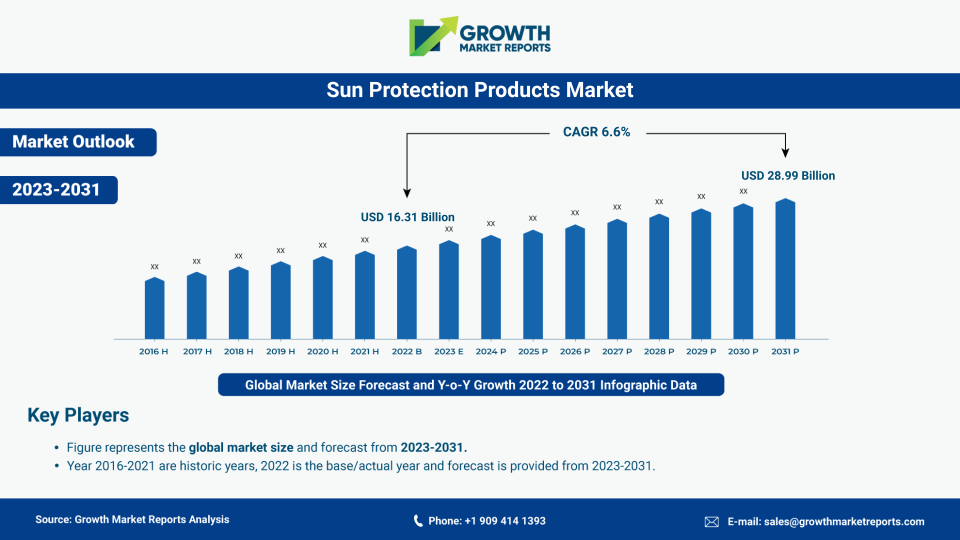
According to our latest research, the global sun protection products market size reached USD 14.7 billion in 2024, reflecting robust demand driven by rising consumer awareness and evolving lifestyle patterns. The market is forecasted to grow at a CAGR of 6.2% from 2025 to 2033, with the total value expected to reach USD 25.1 billion by 2033. This growth is primarily propelled by heightened concerns regarding skin health, increasing incidence of skin cancer, and the proliferation of innovative sun protection formulations that cater to diverse consumer needs.

One of the primary growth factors for the sun protection products market is the escalating awareness of the harmful effects of ultraviolet (UV) radiation. Consumers worldwide are becoming more educated about the risks associated with prolonged sun exposure, such as premature aging, hyperpigmentation, and the increasing prevalence of skin cancer. Campaigns led by health organizations and dermatologists have amplified the importance of daily sun protection, even in regions with moderate sunlight. This growing consciousness has directly translated into greater adoption of sun protection products, not only during outdoor activities but as part of everyday skincare routines. The integration of SPF into daily-use cosmetics and skincare items has further fueled this trend, making sun protection a year-round priority for a broader demographic.

Another significant driver is the ongoing innovation in product formulations and formats within the sun protection products market. Manufacturers are continually investing in research and development to deliver advanced solutions that address consumer concerns such as greasiness, white cast, and skin irritation. The emergence of lightweight, non-comedogenic, and water-resistant sunscreens has expanded the marketÂ’s appeal to individuals with sensitive skin and those leading active lifestyles. Additionally, the introduction of multifunctional products, such as sunscreens with anti-aging or moisturizing properties, has attracted consumers seeking comprehensive skincare solutions. The development of eco-friendly and reef-safe formulations, in response to environmental concerns, has also opened new avenues for market growth, especially in regions with stringent regulations regarding sunscreen ingredients.

The surging popularity of e-commerce and digital platforms has also played a pivotal role in shaping the sun protection products market. Online retail has democratized access to a wide array of sun protection products, enabling brands to reach consumers in remote and underserved regions. Digital marketing campaigns, influencer endorsements, and the availability of product reviews have significantly influenced consumer purchasing behavior. Furthermore, the convenience of home delivery and the ability to compare products online have contributed to the steady rise in online sales. This shift in distribution channels has compelled traditional brick-and-mortar retailers to enhance their offerings and customer experience, ultimately benefiting the overall market by broadening the consumer base and increasing product accessibility.

Sunscreen, a crucial component of sun protection products, has evolved significantly over the years to meet the diverse needs of consumers. As awareness of the harmful effects of UV radiation grows, sunscreen formulations have advanced to offer not only protection but also additional skincare benefits. Modern sunscreens are designed to be lightweight, non-greasy, and suitable for various skin types, including sensitive and acne-prone skin. The incorporation of antioxidants and moisturizing agents in sunscreens has further enhanced their appeal, providing a comprehensive skincare solution that addresses both sun protection and skin health. This evolution reflects the industry's commitment to innovation and consumer satisfaction, ensuring that sunscreen remains a staple in daily skincare routines worldwide.

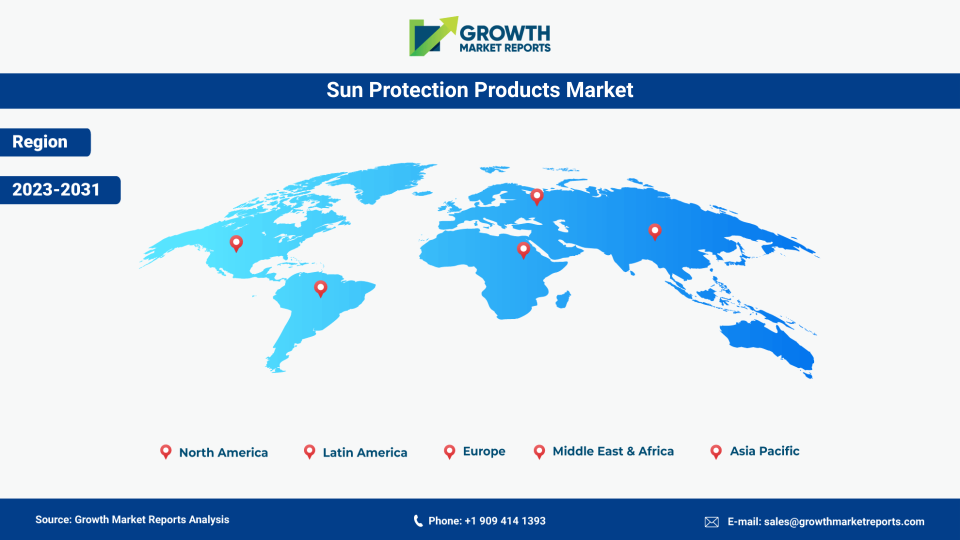
From a regional perspective, the Asia Pacific region has emerged as a dominant force in the sun protection products market, driven by a large population base, rising disposable incomes, and increasing awareness of skincare. North America and Europe continue to exhibit strong demand, supported by established regulatory frameworks and a high prevalence of skin cancer. Meanwhile, Latin America and the Middle East & Africa are witnessing accelerated growth due to changing lifestyles, urbanization, and heightened exposure to global skincare trends. Each region presents unique opportunities and challenges, shaping the competitive landscape and influencing product innovation and marketing strategies across the globe.

Global Sun Protection Products Industry Outlook

Product Type Analysis

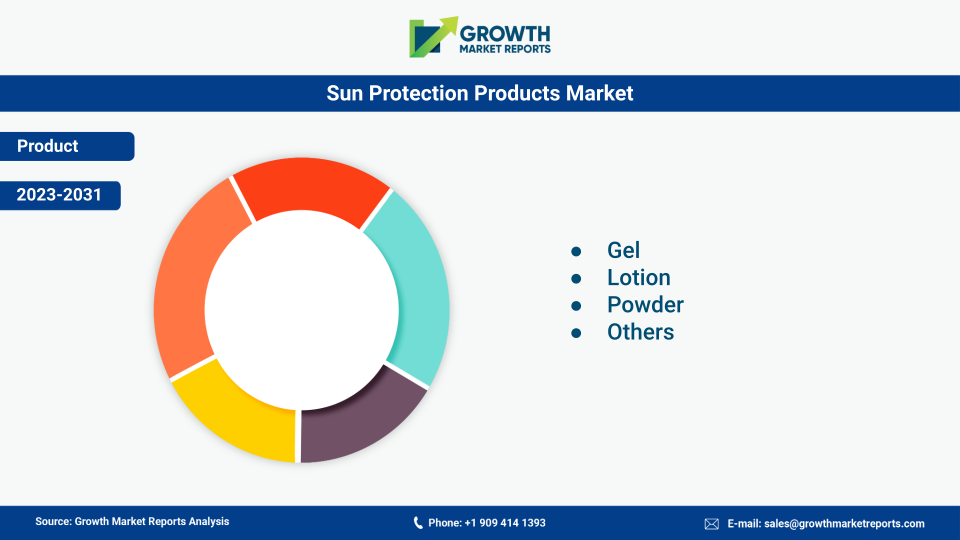
The sun protection products market is segmented by product type into sunscreen creams, lotions, gels, sprays, wipes, and others. Sunscreen creams remain the most widely adopted format, favored for their rich texture and ease of application, particularly among consumers with dry or sensitive skin. These creams often offer higher moisturizing benefits and are commonly chosen for daily facial application. Lotions, on the other hand, are preferred for their lightweight consistency, making them suitable for application on larger body areas and for individuals with normal to oily skin types. The growing demand for products that combine sun protection with skincare benefits has led to the proliferation of creams and lotions infused with antioxidants, vitamins, and hydrating agents, further enhancing their appeal.

Gels and sprays have witnessed a surge in popularity, especially among younger demographics and individuals with active lifestyles. Gel-based sunscreens are highly favored for their non-greasy, fast-absorbing properties, making them ideal for sports enthusiasts and those living in hot, humid climates. Sprays offer unparalleled convenience and are particularly popular for quick reapplication during outdoor activities or while traveling. Their ability to cover hard-to-reach areas and their lightweight feel have made them a preferred choice for families with children. However, concerns regarding inhalation and environmental impact have prompted manufacturers to innovate with safer and more eco-friendly spray formulations.

The role of sunscreen in daily skincare cannot be overstated, especially as consumers become more educated about the cumulative effects of sun exposure. Sunscreen is not just a product for beach days or summer outings; it has become an essential part of everyday life, offering protection against the sun's damaging rays all year round. This shift in consumer behavior is driven by increased awareness of the link between sun exposure and skin aging, as well as the rising incidence of skin cancer. As a result, sunscreen is now available in a variety of formats, from creams and lotions to sprays and sticks, catering to different preferences and lifestyles. This accessibility and versatility have made sunscreen a key player in the broader sun protection products market, contributing to its robust growth and widespread adoption.

Wipes and other novel formats, such as sun protection sticks and powders, are carving a niche in the market by catering to on-the-go consumers and those seeking portability. Wipes are particularly popular for quick touch-ups and for use on children, providing a mess-free application experience. Sun protection sticks and powders are gaining traction among urban consumers who seek easy reapplication without disrupting makeup or daily routines. These innovative formats are often marketed as complementary products to traditional sunscreens, encouraging multi-product usage and increasing overall market penetration.

The “others” category encompasses emerging product types such as sun protection lip balms, after-sun care products, and integrated SPF in daily-use cosmetics. The inclusion of SPF in foundations, moisturizers, and lip care products reflects the growing trend of holistic sun protection, where consumers seek comprehensive coverage throughout their daily regimen. These products are especially popular among women and urban professionals, contributing to the overall growth and diversification of the sun protection products market. As consumer preferences continue to evolve, manufacturers are expected to introduce even more innovative product types to capture untapped market segments.

Report Scope

Attributes Details
Report Title Sun Protection Products Market Research Report 2033
By Product Type Sunscreen Creams, Lotions, Gels, Sprays, Wipes, Others
By Formulation Chemical, Physical, Combination
By SPF Level SPF 15 and Below, SPF 16-30, SPF 31-50, SPF 50+
By Distribution Channel Supermarkets/Hypermarkets, Pharmacies & Drug Stores, Online Stores, Specialty Stores, Others
By End User Men, Women, Children
Regions Covered North America, Europe, APAC, Latin America, MEA
Base Year 2024
Historic Data 2018-2023
Forecast Period 2025-2033
Number of Pages 253
Number of Tables & Figures 279
Customization Available Yes, the report can be customized as per your need.

Formulation Analysis

The sun protection products market is segmented by formulation into chemical, physical, and combination sunscreens. Chemical sunscreens, which use organic compounds to absorb UV radiation, have historically dominated the market due to their lightweight texture and transparency upon application. These formulations are highly favored for their ability to provide broad-spectrum protection without leaving a white residue, making them suitable for daily use and for individuals with darker skin tones. However, increasing scrutiny over potential skin sensitivity and environmental impact has led to a gradual shift in consumer preferences, particularly among health-conscious and eco-aware buyers.

Physical sunscreens, also known as mineral sunscreens, utilize active ingredients such as zinc oxide and titanium dioxide to reflect UV rays. These formulations are gaining significant traction, especially among consumers with sensitive skin, children, and those seeking “clean” or natural skincare solutions. Physical sunscreens are often recommended by dermatologists due to their lower risk of irritation and their immediate effectiveness upon application. The market has witnessed considerable innovation in this segment, with advances in micronization technology enabling the development of lightweight, non-chalky mineral sunscreens that cater to a broader audience.

Combination sunscreens, which blend chemical and physical filters, are increasingly popular for their ability to offer comprehensive protection while addressing the limitations of each individual formulation. These products are designed to provide the broadest possible UV coverage, enhanced photostability, and improved cosmetic elegance. Combination formulations are particularly appealing to consumers who demand high-performance sunscreens for prolonged outdoor exposure, such as athletes, travelers, and outdoor workers. The versatility and efficacy of these products have contributed to their growing market share, especially in regions with high UV indices and stringent regulatory standards.

The formulation segment is also influenced by evolving regulatory frameworks and environmental considerations. Several countries have introduced bans or restrictions on certain chemical sunscreen ingredients due to concerns over coral reef damage and human health risks. This has prompted manufacturers to reformulate products and invest in research to develop safer, more sustainable alternatives. The trend towards “reef-safe” and eco-friendly sunscreens is expected to reshape the competitive landscape, with brands that prioritize transparency, safety, and environmental responsibility gaining a distinct advantage in the sun protection products market.

SPF Level Analysis

The sun protection products market is segmented by SPF level into SPF 15 and below, SPF 16-30, SPF 31-50, and SPF 50+. Products with SPF 15 and below are typically marketed for daily use and for individuals with minimal sun exposure. These products are often incorporated into moisturizers, foundations, and other daily-use cosmetics, providing basic protection against incidental UV exposure. While their market share is relatively modest, they play a crucial role in promoting sun safety as part of everyday skincare routines, particularly in urban environments where prolonged sun exposure is less common.

SPF 16-30 products represent a significant portion of the market, offering a balanced combination of protection and cosmetic appeal. These sunscreens are widely recommended by dermatologists for daily use, as they provide adequate defense against UVB rays while maintaining a lightweight and non-greasy texture. The popularity of SPF 16-30 products is driven by consumer demand for versatile solutions that can be seamlessly integrated into morning skincare routines without compromising comfort or aesthetics. This segment is particularly strong in regions with moderate UV indices and among consumers who prioritize convenience and ease of use.

SPF 31-50 sunscreens are designed for individuals with higher sun exposure, such as outdoor enthusiasts, beachgoers, and those living in regions with intense sunlight. These products offer enhanced protection against both UVA and UVB rays, making them suitable for prolonged outdoor activities and for individuals with fair or sensitive skin. The demand for higher SPF levels has been bolstered by increasing awareness of the cumulative effects of sun damage and the growing prevalence of skin cancer. Manufacturers are responding by developing high-SPF formulations that are lightweight, water-resistant, and suitable for a wide range of skin types.

The SPF 50+ segment is witnessing robust growth, driven by heightened concerns over skin health and the desire for maximum protection. These products are especially popular among parents seeking to protect children, individuals with a history of skin disorders, and those traveling to high-altitude or tropical destinations. The trend towards higher SPF levels is also influenced by regulatory recommendations and public health campaigns advocating for stronger sun protection measures. As consumers become more educated about the importance of broad-spectrum protection, the demand for SPF 50+ products is expected to continue its upward trajectory, contributing significantly to the overall expansion of the sun protection products market.

Distribution Channel Analysis

The distribution channel landscape for sun protection products is diverse, encompassing supermarkets/hypermarkets, pharmacies & drug stores, online stores, specialty stores, and others. Supermarkets and hypermarkets remain the primary sales channel, accounting for a substantial share of the market due to their wide product assortments, competitive pricing, and convenience. These retail outlets are particularly popular in urban and suburban areas, where consumers value the ability to compare multiple brands and benefit from promotional offers. The visibility and accessibility of sun protection products in these stores have played a key role in driving impulse purchases and expanding market reach.

Pharmacies and drug stores are another critical distribution channel, especially for consumers seeking expert advice and access to dermatologist-recommended brands. These outlets are often perceived as more trustworthy, particularly for individuals with sensitive skin or specific medical conditions. The presence of trained staff and the availability of prescription-strength sunscreens further enhance the appeal of pharmacies and drug stores. In many regions, these channels are favored by parents and elderly consumers who prioritize product safety and efficacy over price or convenience.

Online stores have emerged as a dynamic and rapidly growing distribution channel, fueled by the digital transformation of retail and the increasing penetration of smartphones and internet connectivity. E-commerce platforms offer unparalleled convenience, a vast array of product choices, and the ability to access detailed product information and customer reviews. The rise of direct-to-consumer brands and influencer-driven marketing has further accelerated online sales, making this channel particularly attractive to younger, tech-savvy consumers. The COVID-19 pandemic has also contributed to the surge in online purchases, as consumers increasingly seek contactless shopping options and home delivery.

Specialty stores, including beauty boutiques and wellness centers, cater to niche markets and offer a curated selection of premium and specialized sun protection products. These outlets are favored by consumers seeking personalized recommendations, exclusive formulations, and luxury brands. The growing trend towards experiential retail and the increasing demand for high-end skincare solutions have contributed to the expansion of specialty stores in key urban markets. Other distribution channels, such as convenience stores and travel retail, play a supplementary role by targeting specific consumer segments and capitalizing on seasonal demand spikes.

End User Analysis

The sun protection products market is segmented by end user into men, women, and children, each with distinct preferences and purchasing behaviors. Women constitute the largest consumer segment, driven by a strong emphasis on skincare and beauty routines. The integration of sun protection into daily cosmetic products, such as foundations and moisturizers, has made SPF an essential component of womenÂ’s skincare regimens. Marketing campaigns targeting women often emphasize anti-aging benefits, skin brightening, and the prevention of sun-induced pigmentation, further fueling demand in this segment. The proliferation of gender-specific formulations and packaging has also contributed to the growth of the womenÂ’s segment.

Men represent a rapidly expanding segment within the sun protection products market, as shifting perceptions of masculinity and grooming encourage greater adoption of skincare products. The increasing prevalence of outdoor sports and fitness activities among men has heightened awareness of the need for effective sun protection. Manufacturers are responding with products tailored to male preferences, such as non-greasy, sweat-resistant formulations and minimalist packaging. Educational campaigns and endorsements by male influencers and athletes have played a pivotal role in breaking down barriers and driving market penetration among men.

Children are a critical end user group, as their sensitive skin is particularly vulnerable to sun damage. Parents are increasingly prioritizing sun safety for their children, leading to robust demand for pediatric formulations that are gentle, hypoallergenic, and free from harsh chemicals. The market has witnessed the introduction of innovative products such as spray-on sunscreens, wipes, and fun packaging designs that appeal to both children and parents. Regulatory guidelines and pediatrician recommendations have further reinforced the importance of sun protection for children, making this segment a key focus area for manufacturers.

The evolving needs and preferences of each end user segment have prompted manufacturers to diversify their product portfolios and marketing strategies. The growing trend towards personalized skincare and the increasing availability of tailored formulations are expected to drive further segmentation and specialization within the sun protection products market, ensuring sustained growth and innovation across all end user categories.

Opportunities & Threats

The sun protection products market presents a multitude of opportunities for growth and innovation. One of the most promising avenues is the development of multifunctional products that combine sun protection with additional skincare benefits, such as hydration, anti-aging, and skin brightening. Consumers are increasingly seeking all-in-one solutions that simplify their daily routines without compromising on efficacy. The integration of advanced ingredients, such as antioxidants, peptides, and botanical extracts, offers manufacturers the opportunity to differentiate their products and cater to the evolving demands of health-conscious and beauty-oriented consumers. Furthermore, the rising popularity of natural and organic formulations presents a significant growth opportunity, as consumers become more discerning about ingredient safety and environmental impact.

Another key opportunity lies in the expansion of digital and direct-to-consumer sales channels. The proliferation of e-commerce platforms, social media marketing, and influencer collaborations has transformed the way consumers discover and purchase sun protection products. Brands that leverage digital technologies to engage with consumers, provide personalized recommendations, and offer seamless shopping experiences are well-positioned to capture market share. Additionally, the growing demand for sun protection in emerging markets, driven by rising disposable incomes and increasing awareness of skin health, presents a vast untapped potential. Strategic partnerships, localized product offerings, and targeted marketing campaigns can help manufacturers penetrate these high-growth regions and expand their global footprint.

Despite the numerous opportunities, the sun protection products market faces several restraining factors that could impede growth. Regulatory challenges, particularly concerning the safety and environmental impact of certain sunscreen ingredients, have led to increased scrutiny and product reformulation requirements. The introduction of bans on specific chemicals, such as oxybenzone and octinoxate, in regions like Hawaii and parts of Europe, has necessitated significant investment in research and development. Additionally, the prevalence of misinformation and misconceptions regarding sunscreen safety and efficacy poses a challenge for manufacturers, as consumers may be hesitant to adopt new products or switch brands. Addressing these concerns through transparent communication, rigorous testing, and adherence to regulatory standards is essential for sustaining consumer trust and driving long-term market growth.

Regional Outlook

The Asia Pacific region stands out as the largest and fastest-growing market for sun protection products, accounting for approximately 38% of the global market share in 2024, with a market size of around USD 5.6 billion. The regionÂ’s growth is underpinned by a burgeoning middle class, increasing urbanization, and a strong cultural emphasis on skincare and beauty. Countries such as China, Japan, South Korea, and India are witnessing rapid adoption of sun protection products, driven by rising awareness of UV-related skin damage and the influence of global beauty trends. The Asia Pacific market is expected to grow at a CAGR of 7.1% through 2033, outpacing other regions and presenting significant opportunities for both local and international brands.

North America remains a mature yet dynamic market, with a 2024 market size of approximately USD 3.8 billion, representing 26% of the global market. The regionÂ’s growth is fueled by a high prevalence of skin cancer, well-established regulatory frameworks, and strong consumer demand for innovative and high-SPF products. The United States dominates the North American market, supported by widespread dermatological recommendations and a robust retail infrastructure. Canada and Mexico are also contributing to regional growth, driven by increasing awareness and the expansion of distribution channels. The North American market is expected to maintain steady growth, with a focus on premium and specialized formulations.

Europe holds a significant share of the global sun protection products market, with a 2024 market size of USD 3.2 billion, accounting for 22% of the total market. The region benefits from high consumer awareness, stringent regulatory standards, and a strong presence of multinational skincare brands. Southern European countries, such as Spain, Italy, and Greece, exhibit particularly high demand due to their sunny climates and tourism-driven economies. The European market is characterized by a preference for eco-friendly and reef-safe formulations, reflecting growing environmental consciousness among consumers. Meanwhile, Latin America and the Middle East & Africa collectively account for the remaining 14% of the global market, with a combined market size of USD 2.1 billion in 2024. These regions are experiencing accelerated growth due to urbanization, rising disposable incomes, and increasing exposure to global beauty trends, albeit from a lower base compared to Asia Pacific, North America, and Europe.

Sun Protection Products Market Statistics

Competitor Outlook

The sun protection products market is characterized by intense competition and a dynamic landscape shaped by both established multinational corporations and emerging local players. Major companies compete on the basis of product innovation, brand reputation, distribution reach, and marketing strategies. The market is witnessing a continuous influx of new entrants, particularly in the natural and organic segment, which has intensified competition and led to rapid product diversification. Companies are increasingly focusing on research and development to introduce advanced formulations that address evolving consumer needs, such as lightweight textures, water resistance, and multi-functional benefits. Strategic collaborations, mergers, and acquisitions are also common, as companies seek to expand their product portfolios and geographic presence.

Brand loyalty and consumer trust play a pivotal role in shaping the competitive dynamics of the sun protection products market. Established brands leverage their reputation and extensive distribution networks to maintain market leadership, while newer entrants differentiate themselves through unique value propositions, such as clean ingredients, eco-friendly packaging, and personalized skincare solutions. Marketing and promotional activities, including celebrity endorsements, influencer collaborations, and educational campaigns, are critical in driving brand visibility and consumer engagement. The digital transformation of retail has further intensified competition, with companies investing heavily in e-commerce platforms, social media marketing, and direct-to-consumer channels to capture a larger share of the market.

Innovation remains at the forefront of competitive strategy, with companies striving to develop products that offer superior protection, enhanced cosmetic appeal, and minimal environmental impact. The growing demand for reef-safe and biodegradable sunscreens has prompted leading brands to reformulate their products and obtain certifications that appeal to environmentally conscious consumers. Additionally, the integration of advanced technologies, such as encapsulation and nanotechnology, has enabled the development of sunscreens with improved stability, efficacy, and sensory attributes. Companies are also investing in consumer education initiatives to dispel myths and misconceptions about sun protection, thereby fostering informed and loyal customer bases.

Major players in the sun protection products market include L'Oréal Group, Johnson & Johnson, Beiersdorf AG, Shiseido Company, Limited, Unilever, Procter & Gamble, and Estee Lauder Companies Inc.. L'Oréal Group, through its La Roche-Posay and Vichy brands, is renowned for its dermatologist-recommended sunscreens, while Johnson & Johnson’s Neutrogena line is a market leader in the United States. Beiersdorf AG, with its NIVEA Sun brand, commands a strong presence in Europe and emerging markets. Shiseido is a dominant player in the Asia Pacific region, known for its innovative and lightweight formulations tailored to local preferences. Unilever and Procter & Gamble leverage their extensive global distribution networks and diverse product portfolios to capture a broad consumer base. Estee Lauder Companies, through its Clinique and Origins brands, targets the premium segment with high-performance and luxury sun protection solutions.

These companies are continuously investing in research and development to stay ahead of evolving consumer trends and regulatory requirements. Their strategies include the launch of new products, expansion into emerging markets, and the adoption of sustainable practices to address environmental concerns. The competitive landscape is expected to remain dynamic, with ongoing innovation, strategic alliances, and a relentless focus on consumer needs shaping the future of the sun protection products market.

Key Players

  • Johnson & Johnson
  • L'Oréal S.A.
  • Beiersdorf AG
  • Unilever PLC
  • Shiseido Company, Limited
  • Procter & Gamble Co.
  • Estée Lauder Companies Inc.
  • Edgewell Personal Care Company
  • Bayer AG
  • Avon Products, Inc.
  • Clarins Group
  • Coty Inc.
  • Amorepacific Corporation
  • Kao Corporation
  • Revlon, Inc.
  • Himalaya Drug Company
  • Lotus Herbals Pvt. Ltd.
  • Bioderma Laboratories
  • Mentholatum Company
  • La Roche-Posay (L'Oréal Group)
Sun Protection Products Market Overview

Segments

The Sun Protection Products market has been segmented on the basis of

Product Type

  • Sunscreen Creams
  • Lotions
  • Gels
  • Sprays
  • Wipes
  • Others

Formulation

  • Chemical
  • Physical
  • Combination

SPF Level

  • SPF 15 and Below
  • SPF 16-30
  • SPF 31-50
  • SPF 50+

Distribution Channel

  • Supermarkets/Hypermarkets
  • Pharmacies & Drug Stores
  • Online Stores
  • Specialty Stores
  • Others

End User

  • Men
  • Women
  • Children

Competitive Landscape

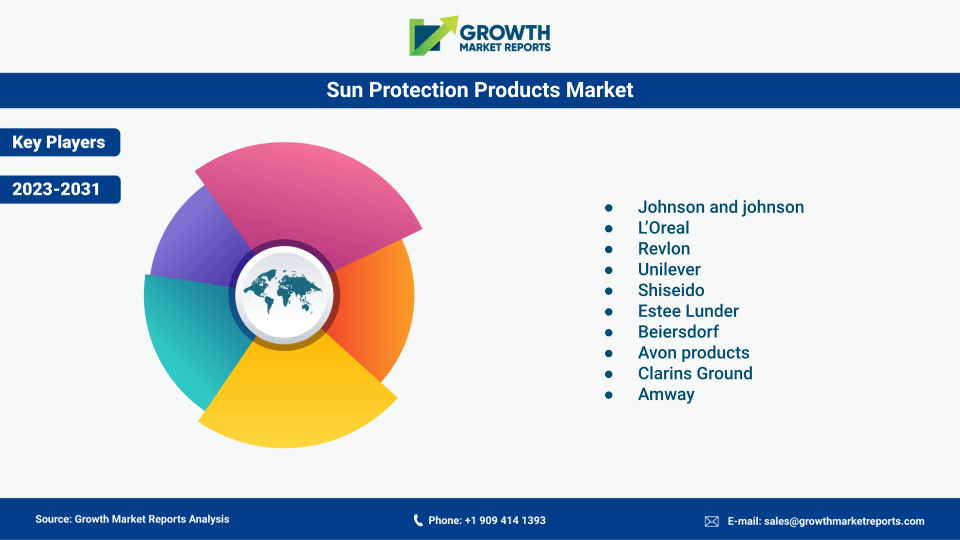
Major players competing in the global sun protection products market include Johnson and johnson, L’Oreal, Revlon, Unilever, Shiseido, Estee Lunder, Beiersdorf, Avon products, Clarins Ground, Amway, Ponds, Edgewell, Personal Care, Mamaearth, and Lotus Herbals.

Some of these companies are engaged in research activities to find new and advanced techniques to develop advanced sun protection products. The design of new products is expected to increase the demand for the products on a large scale.

Mamaearth’s sun protecting products are widely used in India and considered to be providing up to 6 hours protection against harsh UVA and UVB rays. They keep skin moisturized without making the skin appear patchy, due to use of natural ingredients like turmeric, which treats tanned skin and keeps skin glowing and orange oil, which increases the ability of skin to absorb the cream and make it less oily.

Sun Protection Products Market Key Players
 

Frequently Asked Questions

Key companies include Johnson & Johnson, L'Oréal S.A., Beiersdorf AG, Unilever PLC, Shiseido Company, Procter & Gamble, Estée Lauder Companies, Edgewell Personal Care, Bayer AG, Avon Products, Clarins Group, Coty Inc., Amorepacific, Kao Corporation, Revlon, Himalaya Drug Company, Lotus Herbals, Bioderma Laboratories, Mentholatum Company, and La Roche-Posay.

The main end users are women, men, and children. Women are the largest segment, but demand among men and for pediatric products is rising due to increased awareness and targeted formulations.

Sun protection products are sold through supermarkets/hypermarkets, pharmacies & drug stores, online stores, specialty stores, and other channels. Online sales are rapidly increasing due to e-commerce growth.

Asia Pacific is the largest and fastest-growing region, followed by North America and Europe. Latin America and the Middle East & Africa are also experiencing accelerated growth due to urbanization and rising disposable incomes.

SPF levels include SPF 15 and below, SPF 16-30, SPF 31-50, and SPF 50+. Higher SPF products (SPF 31-50 and SPF 50+) are increasingly popular due to heightened awareness of sun damage and skin cancer risks.

The market is segmented into chemical sunscreens, physical (mineral) sunscreens, and combination formulations. Chemical sunscreens dominate, but physical and combination types are gaining traction due to safety and environmental concerns.

Sunscreen creams and lotions are the most widely used, while gels, sprays, wipes, sticks, and powders are gaining popularity for their convenience and suitability for different skin types and lifestyles.

Key growth drivers include increasing awareness of UV radiation risks, rising incidence of skin cancer, innovative product formulations, and the integration of SPF into daily skincare and cosmetics.

The sun protection products market is forecasted to grow at a CAGR of 6.2% from 2025 to 2033, reaching an estimated USD 25.1 billion by 2033.

As of 2024, the global sun protection products market is valued at USD 14.7 billion, with strong demand driven by rising consumer awareness and evolving lifestyle patterns.

Table Of Content

Chapter 1 Executive Summary
Chapter 2 Assumptions and Acronyms Used
Chapter 3 Research Methodology
Chapter 4 Sun Protection Products Market Overview
   4.1 Introduction
      4.1.1 Market Taxonomy
      4.1.2 Market Definition
      4.1.3 Macro-Economic Factors Impacting the Market Growth
   4.2 Sun Protection Products Market Dynamics
      4.2.1 Market Drivers
      4.2.2 Market Restraints
      4.2.3 Market Opportunity
   4.3 Sun Protection Products Market - Supply Chain Analysis
      4.3.1 List of Key Suppliers
      4.3.2 List of Key Distributors
      4.3.3 List of Key Consumers
   4.4 Key Forces Shaping the Sun Protection Products Market
      4.4.1 Bargaining Power of Suppliers
      4.4.2 Bargaining Power of Buyers
      4.4.3 Threat of Substitution
      4.4.4 Threat of New Entrants
      4.4.5 Competitive Rivalry
   4.5 Global Sun Protection Products Market Size & Forecast, 2023-2032
      4.5.1 Sun Protection Products Market Size and Y-o-Y Growth
      4.5.2 Sun Protection Products Market Absolute $ Opportunity

Chapter 5 Global Sun Protection Products Market Analysis and Forecast By Product Type
   5.1 Introduction
      5.1.1 Key Market Trends & Growth Opportunities By Product Type
      5.1.2 Basis Point Share (BPS) Analysis By Product Type
      5.1.3 Absolute $ Opportunity Assessment By Product Type
   5.2 Sun Protection Products Market Size Forecast By Product Type
      5.2.1 Sunscreen Creams
      5.2.2 Lotions
      5.2.3 Gels
      5.2.4 Sprays
      5.2.5 Wipes
      5.2.6 Others
   5.3 Market Attractiveness Analysis By Product Type

Chapter 6 Global Sun Protection Products Market Analysis and Forecast By Formulation
   6.1 Introduction
      6.1.1 Key Market Trends & Growth Opportunities By Formulation
      6.1.2 Basis Point Share (BPS) Analysis By Formulation
      6.1.3 Absolute $ Opportunity Assessment By Formulation
   6.2 Sun Protection Products Market Size Forecast By Formulation
      6.2.1 Chemical
      6.2.2 Physical
      6.2.3 Combination
   6.3 Market Attractiveness Analysis By Formulation

Chapter 7 Global Sun Protection Products Market Analysis and Forecast By SPF Level
   7.1 Introduction
      7.1.1 Key Market Trends & Growth Opportunities By SPF Level
      7.1.2 Basis Point Share (BPS) Analysis By SPF Level
      7.1.3 Absolute $ Opportunity Assessment By SPF Level
   7.2 Sun Protection Products Market Size Forecast By SPF Level
      7.2.1 SPF 15 and Below
      7.2.2 SPF 16-30
      7.2.3 SPF 31-50
      7.2.4 SPF 50+
   7.3 Market Attractiveness Analysis By SPF Level

Chapter 8 Global Sun Protection Products Market Analysis and Forecast By Distribution Channel
   8.1 Introduction
      8.1.1 Key Market Trends & Growth Opportunities By Distribution Channel
      8.1.2 Basis Point Share (BPS) Analysis By Distribution Channel
      8.1.3 Absolute $ Opportunity Assessment By Distribution Channel
   8.2 Sun Protection Products Market Size Forecast By Distribution Channel
      8.2.1 Supermarkets/Hypermarkets
      8.2.2 Pharmacies & Drug Stores
      8.2.3 Online Stores
      8.2.4 Specialty Stores
      8.2.5 Others
   8.3 Market Attractiveness Analysis By Distribution Channel

Chapter 9 Global Sun Protection Products Market Analysis and Forecast By End User
   9.1 Introduction
      9.1.1 Key Market Trends & Growth Opportunities By End User
      9.1.2 Basis Point Share (BPS) Analysis By End User
      9.1.3 Absolute $ Opportunity Assessment By End User
   9.2 Sun Protection Products Market Size Forecast By End User
      9.2.1 Men
      9.2.2 Women
      9.2.3 Children
   9.3 Market Attractiveness Analysis By End User

Chapter 10 Global Sun Protection Products Market Analysis and Forecast by Region
   10.1 Introduction
      10.1.1 Key Market Trends & Growth Opportunities By Region
      10.1.2 Basis Point Share (BPS) Analysis By Region
      10.1.3 Absolute $ Opportunity Assessment By Region
   10.2 Sun Protection Products Market Size Forecast By Region
      10.2.1 North America
      10.2.2 Europe
      10.2.3 Asia Pacific
      10.2.4 Latin America
      10.2.5 Middle East & Africa (MEA)
   10.3 Market Attractiveness Analysis By Region

Chapter 11 Coronavirus Disease (COVID-19) Impact 
   11.1 Introduction 
   11.2 Current & Future Impact Analysis 
   11.3 Economic Impact Analysis 
   11.4 Government Policies 
   11.5 Investment Scenario

Chapter 12 North America Sun Protection Products Analysis and Forecast
   12.1 Introduction
   12.2 North America Sun Protection Products Market Size Forecast by Country
      12.2.1 U.S.
      12.2.2 Canada
   12.3 Basis Point Share (BPS) Analysis by Country
   12.4 Absolute $ Opportunity Assessment by Country
   12.5 Market Attractiveness Analysis by Country
   12.6 North America Sun Protection Products Market Size Forecast By Product Type
      12.6.1 Sunscreen Creams
      12.6.2 Lotions
      12.6.3 Gels
      12.6.4 Sprays
      12.6.5 Wipes
      12.6.6 Others
   12.7 Basis Point Share (BPS) Analysis By Product Type 
   12.8 Absolute $ Opportunity Assessment By Product Type 
   12.9 Market Attractiveness Analysis By Product Type
   12.10 North America Sun Protection Products Market Size Forecast By Formulation
      12.10.1 Chemical
      12.10.2 Physical
      12.10.3 Combination
   12.11 Basis Point Share (BPS) Analysis By Formulation 
   12.12 Absolute $ Opportunity Assessment By Formulation 
   12.13 Market Attractiveness Analysis By Formulation
   12.14 North America Sun Protection Products Market Size Forecast By SPF Level
      12.14.1 SPF 15 and Below
      12.14.2 SPF 16-30
      12.14.3 SPF 31-50
      12.14.4 SPF 50+
   12.15 Basis Point Share (BPS) Analysis By SPF Level 
   12.16 Absolute $ Opportunity Assessment By SPF Level 
   12.17 Market Attractiveness Analysis By SPF Level
   12.18 North America Sun Protection Products Market Size Forecast By Distribution Channel
      12.18.1 Supermarkets/Hypermarkets
      12.18.2 Pharmacies & Drug Stores
      12.18.3 Online Stores
      12.18.4 Specialty Stores
      12.18.5 Others
   12.19 Basis Point Share (BPS) Analysis By Distribution Channel 
   12.20 Absolute $ Opportunity Assessment By Distribution Channel 
   12.21 Market Attractiveness Analysis By Distribution Channel
   12.22 North America Sun Protection Products Market Size Forecast By End User
      12.22.1 Men
      12.22.2 Women
      12.22.3 Children
   12.23 Basis Point Share (BPS) Analysis By End User 
   12.24 Absolute $ Opportunity Assessment By End User 
   12.25 Market Attractiveness Analysis By End User

Chapter 13 Europe Sun Protection Products Analysis and Forecast
   13.1 Introduction
   13.2 Europe Sun Protection Products Market Size Forecast by Country
      13.2.1 Germany
      13.2.2 France
      13.2.3 Italy
      13.2.4 U.K.
      13.2.5 Spain
      13.2.6 Russia
      13.2.7 Rest of Europe
   13.3 Basis Point Share (BPS) Analysis by Country
   13.4 Absolute $ Opportunity Assessment by Country
   13.5 Market Attractiveness Analysis by Country
   13.6 Europe Sun Protection Products Market Size Forecast By Product Type
      13.6.1 Sunscreen Creams
      13.6.2 Lotions
      13.6.3 Gels
      13.6.4 Sprays
      13.6.5 Wipes
      13.6.6 Others
   13.7 Basis Point Share (BPS) Analysis By Product Type 
   13.8 Absolute $ Opportunity Assessment By Product Type 
   13.9 Market Attractiveness Analysis By Product Type
   13.10 Europe Sun Protection Products Market Size Forecast By Formulation
      13.10.1 Chemical
      13.10.2 Physical
      13.10.3 Combination
   13.11 Basis Point Share (BPS) Analysis By Formulation 
   13.12 Absolute $ Opportunity Assessment By Formulation 
   13.13 Market Attractiveness Analysis By Formulation
   13.14 Europe Sun Protection Products Market Size Forecast By SPF Level
      13.14.1 SPF 15 and Below
      13.14.2 SPF 16-30
      13.14.3 SPF 31-50
      13.14.4 SPF 50+
   13.15 Basis Point Share (BPS) Analysis By SPF Level 
   13.16 Absolute $ Opportunity Assessment By SPF Level 
   13.17 Market Attractiveness Analysis By SPF Level
   13.18 Europe Sun Protection Products Market Size Forecast By Distribution Channel
      13.18.1 Supermarkets/Hypermarkets
      13.18.2 Pharmacies & Drug Stores
      13.18.3 Online Stores
      13.18.4 Specialty Stores
      13.18.5 Others
   13.19 Basis Point Share (BPS) Analysis By Distribution Channel 
   13.20 Absolute $ Opportunity Assessment By Distribution Channel 
   13.21 Market Attractiveness Analysis By Distribution Channel
   13.22 Europe Sun Protection Products Market Size Forecast By End User
      13.22.1 Men
      13.22.2 Women
      13.22.3 Children
   13.23 Basis Point Share (BPS) Analysis By End User 
   13.24 Absolute $ Opportunity Assessment By End User 
   13.25 Market Attractiveness Analysis By End User

Chapter 14 Asia Pacific Sun Protection Products Analysis and Forecast
   14.1 Introduction
   14.2 Asia Pacific Sun Protection Products Market Size Forecast by Country
      14.2.1 China
      14.2.2 Japan
      14.2.3 South Korea
      14.2.4 India
      14.2.5 Australia
      14.2.6 South East Asia (SEA)
      14.2.7 Rest of Asia Pacific (APAC)
   14.3 Basis Point Share (BPS) Analysis by Country
   14.4 Absolute $ Opportunity Assessment by Country
   14.5 Market Attractiveness Analysis by Country
   14.6 Asia Pacific Sun Protection Products Market Size Forecast By Product Type
      14.6.1 Sunscreen Creams
      14.6.2 Lotions
      14.6.3 Gels
      14.6.4 Sprays
      14.6.5 Wipes
      14.6.6 Others
   14.7 Basis Point Share (BPS) Analysis By Product Type 
   14.8 Absolute $ Opportunity Assessment By Product Type 
   14.9 Market Attractiveness Analysis By Product Type
   14.10 Asia Pacific Sun Protection Products Market Size Forecast By Formulation
      14.10.1 Chemical
      14.10.2 Physical
      14.10.3 Combination
   14.11 Basis Point Share (BPS) Analysis By Formulation 
   14.12 Absolute $ Opportunity Assessment By Formulation 
   14.13 Market Attractiveness Analysis By Formulation
   14.14 Asia Pacific Sun Protection Products Market Size Forecast By SPF Level
      14.14.1 SPF 15 and Below
      14.14.2 SPF 16-30
      14.14.3 SPF 31-50
      14.14.4 SPF 50+
   14.15 Basis Point Share (BPS) Analysis By SPF Level 
   14.16 Absolute $ Opportunity Assessment By SPF Level 
   14.17 Market Attractiveness Analysis By SPF Level
   14.18 Asia Pacific Sun Protection Products Market Size Forecast By Distribution Channel
      14.18.1 Supermarkets/Hypermarkets
      14.18.2 Pharmacies & Drug Stores
      14.18.3 Online Stores
      14.18.4 Specialty Stores
      14.18.5 Others
   14.19 Basis Point Share (BPS) Analysis By Distribution Channel 
   14.20 Absolute $ Opportunity Assessment By Distribution Channel 
   14.21 Market Attractiveness Analysis By Distribution Channel
   14.22 Asia Pacific Sun Protection Products Market Size Forecast By End User
      14.22.1 Men
      14.22.2 Women
      14.22.3 Children
   14.23 Basis Point Share (BPS) Analysis By End User 
   14.24 Absolute $ Opportunity Assessment By End User 
   14.25 Market Attractiveness Analysis By End User

Chapter 15 Latin America Sun Protection Products Analysis and Forecast
   15.1 Introduction
   15.2 Latin America Sun Protection Products Market Size Forecast by Country
      15.2.1 Brazil
      15.2.2 Mexico
      15.2.3 Rest of Latin America (LATAM)
   15.3 Basis Point Share (BPS) Analysis by Country
   15.4 Absolute $ Opportunity Assessment by Country
   15.5 Market Attractiveness Analysis by Country
   15.6 Latin America Sun Protection Products Market Size Forecast By Product Type
      15.6.1 Sunscreen Creams
      15.6.2 Lotions
      15.6.3 Gels
      15.6.4 Sprays
      15.6.5 Wipes
      15.6.6 Others
   15.7 Basis Point Share (BPS) Analysis By Product Type 
   15.8 Absolute $ Opportunity Assessment By Product Type 
   15.9 Market Attractiveness Analysis By Product Type
   15.10 Latin America Sun Protection Products Market Size Forecast By Formulation
      15.10.1 Chemical
      15.10.2 Physical
      15.10.3 Combination
   15.11 Basis Point Share (BPS) Analysis By Formulation 
   15.12 Absolute $ Opportunity Assessment By Formulation 
   15.13 Market Attractiveness Analysis By Formulation
   15.14 Latin America Sun Protection Products Market Size Forecast By SPF Level
      15.14.1 SPF 15 and Below
      15.14.2 SPF 16-30
      15.14.3 SPF 31-50
      15.14.4 SPF 50+
   15.15 Basis Point Share (BPS) Analysis By SPF Level 
   15.16 Absolute $ Opportunity Assessment By SPF Level 
   15.17 Market Attractiveness Analysis By SPF Level
   15.18 Latin America Sun Protection Products Market Size Forecast By Distribution Channel
      15.18.1 Supermarkets/Hypermarkets
      15.18.2 Pharmacies & Drug Stores
      15.18.3 Online Stores
      15.18.4 Specialty Stores
      15.18.5 Others
   15.19 Basis Point Share (BPS) Analysis By Distribution Channel 
   15.20 Absolute $ Opportunity Assessment By Distribution Channel 
   15.21 Market Attractiveness Analysis By Distribution Channel
   15.22 Latin America Sun Protection Products Market Size Forecast By End User
      15.22.1 Men
      15.22.2 Women
      15.22.3 Children
   15.23 Basis Point Share (BPS) Analysis By End User 
   15.24 Absolute $ Opportunity Assessment By End User 
   15.25 Market Attractiveness Analysis By End User

Chapter 16 Middle East & Africa (MEA) Sun Protection Products Analysis and Forecast
   16.1 Introduction
   16.2 Middle East & Africa (MEA) Sun Protection Products Market Size Forecast by Country
      16.2.1 Saudi Arabia
      16.2.2 South Africa
      16.2.3 UAE
      16.2.4 Rest of Middle East & Africa (MEA)
   16.3 Basis Point Share (BPS) Analysis by Country
   16.4 Absolute $ Opportunity Assessment by Country
   16.5 Market Attractiveness Analysis by Country
   16.6 Middle East & Africa (MEA) Sun Protection Products Market Size Forecast By Product Type
      16.6.1 Sunscreen Creams
      16.6.2 Lotions
      16.6.3 Gels
      16.6.4 Sprays
      16.6.5 Wipes
      16.6.6 Others
   16.7 Basis Point Share (BPS) Analysis By Product Type 
   16.8 Absolute $ Opportunity Assessment By Product Type 
   16.9 Market Attractiveness Analysis By Product Type
   16.10 Middle East & Africa (MEA) Sun Protection Products Market Size Forecast By Formulation
      16.10.1 Chemical
      16.10.2 Physical
      16.10.3 Combination
   16.11 Basis Point Share (BPS) Analysis By Formulation 
   16.12 Absolute $ Opportunity Assessment By Formulation 
   16.13 Market Attractiveness Analysis By Formulation
   16.14 Middle East & Africa (MEA) Sun Protection Products Market Size Forecast By SPF Level
      16.14.1 SPF 15 and Below
      16.14.2 SPF 16-30
      16.14.3 SPF 31-50
      16.14.4 SPF 50+
   16.15 Basis Point Share (BPS) Analysis By SPF Level 
   16.16 Absolute $ Opportunity Assessment By SPF Level 
   16.17 Market Attractiveness Analysis By SPF Level
   16.18 Middle East & Africa (MEA) Sun Protection Products Market Size Forecast By Distribution Channel
      16.18.1 Supermarkets/Hypermarkets
      16.18.2 Pharmacies & Drug Stores
      16.18.3 Online Stores
      16.18.4 Specialty Stores
      16.18.5 Others
   16.19 Basis Point Share (BPS) Analysis By Distribution Channel 
   16.20 Absolute $ Opportunity Assessment By Distribution Channel 
   16.21 Market Attractiveness Analysis By Distribution Channel
   16.22 Middle East & Africa (MEA) Sun Protection Products Market Size Forecast By End User
      16.22.1 Men
      16.22.2 Women
      16.22.3 Children
   16.23 Basis Point Share (BPS) Analysis By End User 
   16.24 Absolute $ Opportunity Assessment By End User 
   16.25 Market Attractiveness Analysis By End User

Chapter 17 Competition Landscape 
   17.1 Sun Protection Products Market: Competitive Dashboard
   17.2 Global Sun Protection Products Market: Market Share Analysis, 2023
   17.3 Company Profiles (Details – Overview, Financials, Developments, Strategy) 
      17.3.1 Johnson & Johnson
L'Oréal S.A.
Beiersdorf AG
Unilever PLC
Shiseido Company, Limited
Procter & Gamble Co.
Estée Lauder Companies Inc.
Edgewell Personal Care Company
Bayer AG
Avon Products, Inc.
Clarins Group
Coty Inc.
Amorepacific Corporation
Kao Corporation
Revlon, Inc.
Himalaya Drug Company
Lotus Herbals Pvt. Ltd.
Bioderma Laboratories
Mentholatum Company
La Roche-Posay (L'Oréal Group)

Methodology

Our Clients

Siemens Healthcare
Pfizer
Deloitte
Nestle SA
Dassault Aviation
Microsoft
General Mills
Honda Motor Co. Ltd.