Safety Switch Market Research Report 2033

Safety Switch Market Research Report 2033

Segments - by Type (Toggle Switches, Push-Button Switches, Key Switches, Rope Pull Switches, Others), by Safety System (Electrical, Mechanical, Electromechanical), by Application (Industrial, Commercial, Residential, Automotive, Energy & Power, Others), by End-User (Manufacturing, Oil & Gas, Healthcare, Food & Beverage, Mining, Others)

https://growthmarketreports.com/Raksha
Author : Raksha Sharma
https://growthmarketreports.com/Vaibhav
Fact-checked by : V. Chandola
https://growthmarketreports.com/Shruti
Editor : Shruti Bhat

Upcoming | Report ID :EP-3287 | 4.2 Rating | 60 Reviews | 273 Pages | Format : Docx PDF

Report Description


Safety Switch Market Outlook

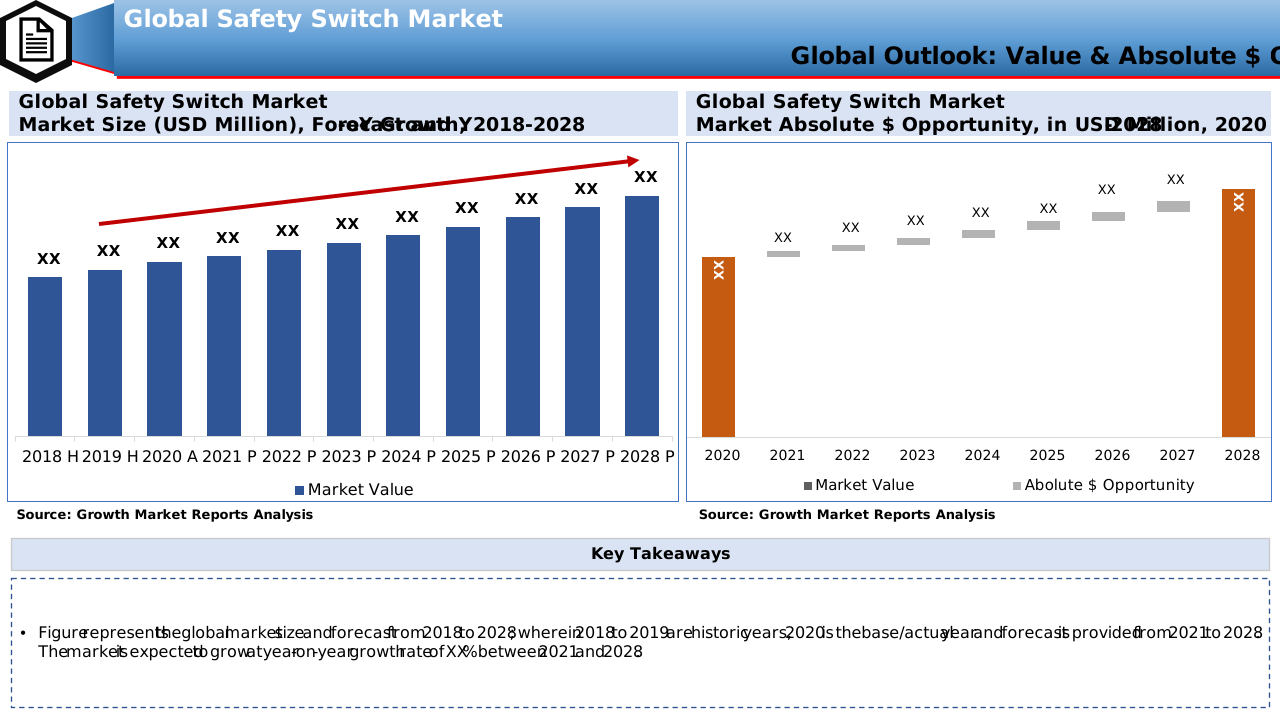
According to our latest research, the global safety switch market size reached USD 2.46 billion in 2024, reflecting robust growth driven by stringent safety regulations and rapid industrial automation across key sectors. The market is expected to expand at a CAGR of 6.2% from 2025 to 2033, with the forecasted market size projected to reach USD 4.24 billion by 2033. This growth is primarily attributed to the increasing emphasis on workplace safety, rising automation in manufacturing, and the integration of advanced safety technologies across various industries. As per the latest research, advancements in safety system designs and the proliferation of Industry 4.0 are further propelling the demand for safety switches globally.

One of the key growth factors for the safety switch market is the escalating implementation of stringent safety regulations by governments and standardization bodies worldwide. These regulations, particularly in developed economies, mandate the deployment of advanced safety systems in industrial settings to minimize workplace hazards and ensure employee protection. As industries strive to comply with these evolving standards, the demand for reliable safety switches, such as toggle, push-button, and key switches, has surged. Furthermore, the growing awareness of occupational safety among employers and employees alike is spurring investments in safeguarding machinery and electrical systems, thereby fueling the adoption of innovative safety switch solutions.

Another significant driver is the rapid pace of industrial automation and digital transformation. The advent of Industry 4.0 has revolutionized manufacturing processes, with smart factories leveraging interconnected devices and automated systems for enhanced productivity. Safety switches play a critical role in these environments by providing fail-safe mechanisms that prevent accidents and equipment damage. The integration of IoT and predictive maintenance technologies with safety switches is also creating new opportunities for manufacturers to offer intelligent, real-time monitoring solutions. This technological evolution is not only improving operational efficiency but also ensuring compliance with safety protocols, which is crucial for maintaining uninterrupted production workflows.

In addition to regulatory and technological factors, the expansion of end-use industries such as automotive, energy, and healthcare is contributing to the steady growth of the safety switch market. In the automotive sector, the increasing complexity of vehicle manufacturing processes necessitates the use of advanced safety systems to protect workers and equipment. Similarly, the energy and power industry is witnessing a surge in safety switch installations due to the rising adoption of renewable energy sources and the modernization of electrical grids. The healthcare and food & beverage sectors are also investing in safety switches to uphold stringent hygiene and safety standards, further boosting market demand across diverse applications.

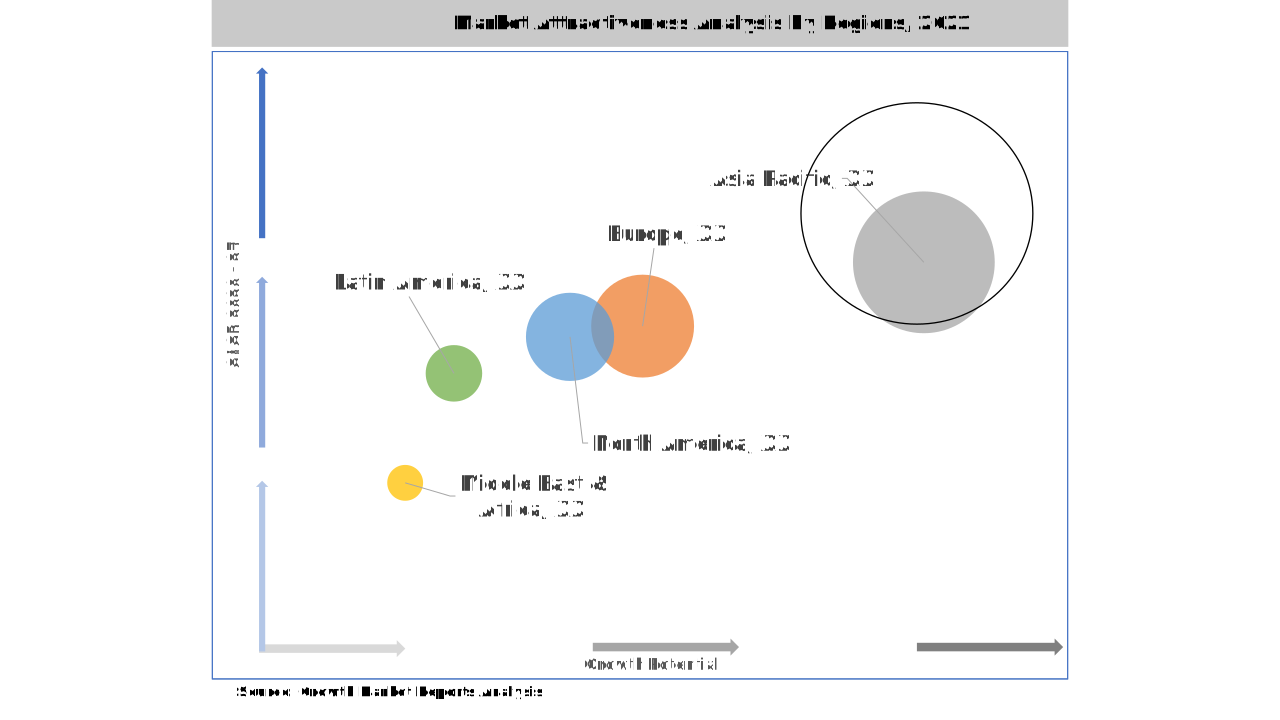
From a regional perspective, Asia Pacific remains the largest and fastest-growing market for safety switches, driven by rapid industrialization, urbanization, and significant investments in infrastructure development. North America and Europe are also prominent markets, benefiting from mature manufacturing sectors and early adoption of advanced safety technologies. Meanwhile, emerging markets in Latin America and the Middle East & Africa are witnessing increased uptake of safety switches as industrial activities expand and safety awareness improves. This diverse regional landscape underscores the global relevance and growth potential of the safety switch market across various geographies.

Global Safety Switch Industry Outlook

Type Analysis

The safety switch market is segmented by type into toggle switches, push-button switches, key switches, rope pull switches, and others, each serving distinct operational needs and safety requirements. Toggle switches are widely used due to their simplicity, reliability, and ease of operation, making them a staple in both industrial and commercial applications. Their robust construction allows them to withstand harsh environments, and they are often employed in machinery where quick and decisive action is required to either engage or disengage electrical circuits. The growing demand for durable and user-friendly safety devices in manufacturing and processing industries continues to drive the adoption of toggle switches globally.

Push-button switches are gaining traction, particularly in environments that require rapid emergency shutdowns or start/stop controls. Their ergonomic design and high visibility make them ideal for critical safety applications, such as emergency stops on assembly lines or conveyor systems. The increasing automation of industrial processes, coupled with the need for quick-response safety mechanisms, is fueling the demand for push-button switches. Manufacturers are also focusing on developing illuminated and color-coded push-button switches to enhance operator awareness and reduce response times during emergencies, further cementing their importance in safety-critical environments.

Key switches offer an added layer of security by requiring authorized access before operation, making them suitable for applications where restricted control is essential. These switches are commonly used in sectors such as healthcare, energy, and transportation, where unauthorized access to critical systems could result in significant safety or security risks. The integration of electronic and digital key mechanisms is further enhancing the reliability and traceability of key switches, aligning with the growing trend towards smart and connected safety solutions. As organizations prioritize both safety and security, the demand for advanced key switch systems is expected to rise steadily.

Rope pull switches are specifically designed for long conveyor systems and hazardous areas where immediate shutdown is necessary along the entire length of the equipment. Their ability to provide continuous emergency stop coverage makes them indispensable in industries such as mining, material handling, and food processing. The ongoing expansion of these industries, particularly in emerging markets, is driving the adoption of rope pull switches. Additionally, advancements in switch durability and resistance to environmental factors such as dust, moisture, and chemicals are enhancing their suitability for challenging industrial settings, further supporting market growth in this segment.

Safety Interlock Switches are another critical component in the safety switch landscape, designed to prevent access to hazardous areas until it is safe to do so. These switches are commonly used in machinery and equipment where access needs to be restricted during operation to avoid accidents. By ensuring that protective barriers cannot be opened while machinery is running, safety interlock switches play a vital role in safeguarding workers. The integration of electronic and digital technologies into these switches is enhancing their functionality, providing real-time data on system status and enabling predictive maintenance. As industries prioritize safety and efficiency, the adoption of advanced safety interlock systems is expected to rise, driven by the need for comprehensive safety solutions.

The "others" category encompasses a range of specialized safety switches, including foot switches and non-contact switches, which cater to niche applications and unique operational requirements. These switches are increasingly being adopted in environments where traditional switches may not be feasible or effective, such as in cleanrooms, hazardous locations, or automated robotic systems. The continuous innovation in switch design, materials, and sensing technologies is enabling manufacturers to address evolving safety challenges across diverse industries. As a result, the type segment of the safety switch market is characterized by a dynamic landscape, with ongoing product development and customization to meet specific customer needs.

Report Scope

Attributes Details
Report Title Safety Switch Market Research Report 2033
By Type Toggle Switches, Push-Button Switches, Key Switches, Rope Pull Switches, Others
By Safety System Electrical, Mechanical, Electromechanical
By Application Industrial, Commercial, Residential, Automotive, Energy & Power, Others
By End-User Manufacturing, Oil & Gas, Healthcare, Food & Beverage, Mining, Others
Regions Covered North America, Europe, APAC, Latin America, MEA
Base Year 2024
Historic Data 2018-2023
Forecast Period 2025-2033
Number of Pages 273
Number of Tables & Figures 331
Customization Available Yes, the report can be customized as per your need.

Safety System Analysis

The safety switch market by safety system is classified into electrical, mechanical, and electromechanical systems, each offering distinct advantages and catering to varied industrial needs. Electrical safety switches are widely used in modern industrial and commercial settings due to their precision, fast response times, and compatibility with automated control systems. These switches are integral to electrical isolation, overload protection, and emergency shutdown operations, ensuring the safety of personnel and equipment. The increasing adoption of smart manufacturing and the integration of IoT devices are driving the demand for advanced electrical safety switches that offer real-time monitoring and diagnostics capabilities.

Mechanical safety switches are preferred in environments where simplicity, reliability, and durability are paramount. These switches operate based on physical movement or contact, making them ideal for applications where electrical systems may be prone to interference or failure. Mechanical safety switches are commonly found in heavy machinery, conveyor systems, and industrial doors, providing a fail-safe mechanism that operates independently of power supply. The robustness of mechanical switches, combined with their ease of installation and maintenance, continues to make them a popular choice in traditional manufacturing and processing industries.

Electromechanical safety switches combine the advantages of electrical and mechanical systems, offering enhanced reliability, versatility, and performance. These switches utilize both electrical contacts and mechanical actuators, enabling them to operate effectively in complex and demanding environments. Electromechanical safety switches are increasingly being adopted in industries such as automotive, energy, and mining, where high performance and fail-safe operation are critical. The growing trend towards automation and the need for integrated safety solutions are driving the development of intelligent electromechanical switches with features such as remote monitoring, diagnostics, and predictive maintenance capabilities.

The choice of safety system is heavily influenced by application requirements, environmental conditions, and regulatory standards. For instance, industries operating in hazardous or explosive environments may favor mechanical or electromechanical switches due to their inherent safety and reliability. Conversely, industries with advanced automation and digitalization initiatives are more likely to adopt electrical safety switches with smart features and connectivity. This diverse landscape underscores the importance of tailored safety solutions that address specific operational challenges while ensuring compliance with global safety standards.

Fixed Switches are integral to many industrial applications, providing a permanent solution for controlling electrical circuits. Unlike portable or temporary switches, fixed switches offer a stable and reliable means of operation, often used in settings where consistent and secure control is required. These switches are designed to withstand harsh environmental conditions, making them suitable for use in a variety of industrial sectors. As industries continue to evolve, the demand for fixed switches that can integrate with modern automation systems is increasing. Manufacturers are focusing on developing fixed switches with enhanced durability and connectivity features, ensuring they meet the rigorous demands of contemporary industrial environments. This focus on innovation is driving the growth of the fixed switch segment in the safety switch market.

As industries continue to evolve and embrace new technologies, the demand for innovative safety systems that combine the best attributes of electrical, mechanical, and electromechanical switches is expected to grow. Manufacturers are investing in research and development to create hybrid solutions that offer superior performance, adaptability, and ease of integration with existing safety infrastructure. This ongoing innovation is not only enhancing workplace safety but also driving the overall growth and competitiveness of the safety switch market.

Application Analysis

The application segment of the safety switch market encompasses industrial, commercial, residential, automotive, energy & power, and others, reflecting the widespread adoption of safety switches across diverse sectors. Industrial applications represent the largest share of the market, driven by the need to protect workers and equipment in manufacturing plants, processing facilities, and warehouses. The increasing automation of industrial processes, coupled with the implementation of stringent safety regulations, is fueling the demand for advanced safety switches that can provide reliable and rapid response in emergency situations. Industries such as automotive manufacturing, electronics, and chemicals are particularly active in deploying comprehensive safety systems to minimize downtime and ensure operational continuity.

In the commercial sector, safety switches are essential for safeguarding electrical systems in offices, retail spaces, and public buildings. The growing focus on building safety codes and the need to protect occupants from electrical hazards are driving the adoption of safety switches in commercial applications. Additionally, the rise of smart buildings and the integration of energy management systems are creating new opportunities for the deployment of intelligent safety switches that offer remote monitoring and control capabilities. As commercial infrastructure continues to expand, particularly in urban areas, the demand for reliable and efficient safety solutions is expected to rise.

Residential applications are witnessing steady growth as homeowners become increasingly aware of the importance of electrical safety. The proliferation of smart home technologies and the growing adoption of home automation systems are contributing to the demand for safety switches that can protect against electrical faults, overloads, and short circuits. Governments and regulatory bodies are also promoting the use of safety switches in residential buildings through updated building codes and safety standards. As a result, manufacturers are developing user-friendly and aesthetically pleasing safety switches that cater to the unique needs of residential customers.

The automotive industry is another key application area, with safety switches playing a crucial role in vehicle manufacturing, assembly lines, and quality control processes. The increasing complexity of automotive production, driven by the rise of electric and autonomous vehicles, is necessitating the use of advanced safety systems to protect workers and ensure product quality. Safety switches are also being integrated into vehicle electrical systems to enhance safety and reliability, particularly in electric vehicles where high-voltage components pose significant risks. The ongoing evolution of automotive technology is expected to drive further innovation and adoption of safety switches in this sector.

In the energy & power sector, safety switches are vital for ensuring the safe operation of electrical grids, substations, and renewable energy installations. The transition towards cleaner energy sources and the modernization of power infrastructure are creating new challenges and opportunities for safety switch manufacturers. Advanced safety switches with features such as arc fault detection, remote monitoring, and predictive maintenance are increasingly being deployed to enhance grid reliability and protect critical assets. As the global demand for energy continues to grow, the role of safety switches in ensuring safe and efficient power distribution will become even more significant.

End-User Analysis

The end-user segment of the safety switch market is categorized into manufacturing, oil & gas, healthcare, food & beverage, mining, and others, each with unique safety requirements and operational challenges. Manufacturing remains the dominant end-user, accounting for a significant share of the market due to the high risk of accidents and machinery-related injuries in industrial settings. The adoption of safety switches in manufacturing is driven by the need to comply with occupational safety regulations, minimize downtime, and protect valuable equipment. As manufacturers embrace automation and smart factory initiatives, the demand for advanced safety switches that can integrate seamlessly with digital control systems is on the rise.

The oil & gas industry is characterized by hazardous operating environments where the risk of explosions, fires, and equipment failure is high. Safety switches are critical in this sector for isolating electrical circuits, preventing unauthorized access, and ensuring the safe operation of drilling rigs, pipelines, and processing facilities. The increasing focus on environmental protection and worker safety, coupled with stringent regulatory requirements, is driving the adoption of robust and reliable safety switch solutions in oil & gas operations. Advanced safety switches with explosion-proof and corrosion-resistant features are particularly in demand, reflecting the unique challenges of this industry.

In the healthcare sector, safety switches are essential for protecting sensitive medical equipment, ensuring patient safety, and maintaining compliance with health and safety standards. Hospitals, clinics, and laboratories rely on safety switches to prevent electrical faults and equipment malfunctions that could jeopardize patient care. The growing adoption of advanced medical technologies and the expansion of healthcare infrastructure are contributing to the increased demand for safety switches in this sector. Manufacturers are responding by developing specialized switches that meet the stringent hygiene and reliability requirements of healthcare environments.

The food & beverage industry faces unique safety challenges related to hygiene, contamination prevention, and equipment safety. Safety switches are used extensively in food processing plants, packaging facilities, and commercial kitchens to ensure the safe operation of machinery and protect workers from accidents. The implementation of food safety regulations and the growing emphasis on automation are driving the adoption of safety switches with features such as washdown resistance and non-contact operation. As the food & beverage industry continues to modernize and expand, the demand for specialized safety switch solutions is expected to grow.

Mining is another critical end-user, with safety switches playing a vital role in protecting workers and equipment in hazardous underground and surface mining operations. The harsh operating conditions and high-risk environment of mining necessitate the use of robust and reliable safety switches that can withstand extreme temperatures, dust, and vibration. The increasing focus on worker safety, environmental protection, and regulatory compliance is driving the adoption of advanced safety switch technologies in the mining sector. As mining activities expand in emerging markets, the demand for durable and high-performance safety switches is expected to increase.

Opportunities & Threats

The safety switch market presents a wealth of opportunities driven by the convergence of technological advancements and evolving industry requirements. One of the most promising opportunities lies in the integration of safety switches with smart and connected devices, leveraging IoT, AI, and predictive analytics to enhance real-time monitoring and diagnostics. This trend is enabling manufacturers to offer value-added solutions that not only improve safety but also optimize maintenance schedules, reduce downtime, and lower operational costs. The growing adoption of Industry 4.0 and the digital transformation of manufacturing processes are expected to create new avenues for innovative safety switch products that cater to the needs of smart factories and automated systems.

Another significant opportunity is the expansion of safety switch applications in emerging markets, particularly in Asia Pacific, Latin America, and the Middle East & Africa. Rapid industrialization, urbanization, and infrastructure development in these regions are driving the demand for advanced safety solutions to protect workers and assets. Governments and regulatory bodies are also playing a crucial role by implementing and enforcing stringent safety standards, creating a favorable environment for market growth. Additionally, the increasing focus on renewable energy, electric vehicles, and sustainable manufacturing practices is opening up new opportunities for safety switch manufacturers to develop specialized products for these high-growth sectors.

Despite the numerous growth opportunities, the safety switch market faces certain restraining factors that could hinder its expansion. One of the primary challenges is the high cost associated with the adoption and integration of advanced safety switch technologies, particularly for small and medium-sized enterprises (SMEs). The complexity of retrofitting existing systems with modern safety switches and the need for specialized training and maintenance can pose significant barriers for resource-constrained organizations. Additionally, the presence of counterfeit and low-quality products in the market can undermine customer confidence and impede the adoption of reliable safety solutions. Addressing these challenges will require concerted efforts from manufacturers, regulators, and industry stakeholders to promote awareness, enhance product quality, and support the adoption of best practices in safety management.

Regional Outlook

The regional analysis of the safety switch market reveals a dynamic and diverse landscape, with Asia Pacific emerging as the largest and fastest-growing region. In 2024, Asia Pacific accounted for approximately USD 1.05 billion of the global market, driven by rapid industrialization, urbanization, and significant investments in manufacturing and infrastructure development. Countries such as China, India, Japan, and South Korea are at the forefront of this growth, with expanding automotive, electronics, and energy sectors fueling the demand for advanced safety solutions. The region is expected to maintain its strong growth trajectory, with a projected CAGR of 7.1% from 2025 to 2033, as industries continue to modernize and adopt cutting-edge safety technologies.

North America remains a mature and technologically advanced market, with a 2024 market size of USD 620 million. The region benefits from a well-established manufacturing base, early adoption of automation and safety standards, and a strong focus on occupational health and safety. The United States and Canada are leading the way in implementing advanced safety systems across various industries, including automotive, oil & gas, and healthcare. The ongoing digital transformation and the integration of IoT and AI technologies are expected to further drive the demand for intelligent safety switches in North America, ensuring the region's continued leadership in safety innovation.

Europe is another key market, contributing USD 520 million in 2024 to the global safety switch market. The region's strong regulatory framework, emphasis on worker safety, and advanced manufacturing sector are driving the adoption of sophisticated safety switch solutions. Germany, the United Kingdom, France, and Italy are among the leading countries investing in automation and safety technologies to enhance productivity and ensure compliance with stringent safety standards. Meanwhile, Latin America and the Middle East & Africa, with market sizes of USD 150 million and USD 120 million respectively in 2024, are witnessing steady growth as industrial activities expand and safety awareness improves. These regions present significant opportunities for market players to tap into emerging markets and address the unique safety challenges faced by local industries.

Safety Switch Market Statistics

Competitor Outlook

The competitive landscape of the safety switch market is characterized by the presence of both global industry leaders and regional players, all vying for market share through innovation, product differentiation, and strategic partnerships. Major companies are focusing on expanding their product portfolios, investing in research and development, and leveraging advanced technologies to offer intelligent and connected safety switch solutions. The market is witnessing increased collaboration between manufacturers and technology providers to develop integrated safety systems that address the evolving needs of end-users across various sectors. Additionally, companies are adopting strategies such as mergers and acquisitions, geographic expansion, and customization of products to strengthen their market position and cater to diverse customer requirements.

Innovation remains a key differentiator in the safety switch market, with leading players continuously introducing new products that incorporate features such as wireless connectivity, remote monitoring, and predictive maintenance capabilities. These advancements are enabling customers to achieve higher levels of safety, operational efficiency, and cost savings. The growing emphasis on sustainability and energy efficiency is also prompting companies to develop eco-friendly safety switch solutions that minimize environmental impact while ensuring compliance with global safety standards. As the market becomes increasingly competitive, companies are prioritizing customer-centric approaches, offering tailored solutions, and providing comprehensive after-sales support to enhance customer satisfaction and loyalty.

Regional players are also making significant contributions to the market by addressing the specific needs and challenges of local industries. These companies often focus on developing cost-effective and robust safety switch solutions that cater to the unique requirements of emerging markets. By leveraging their deep understanding of local regulations, industry practices, and customer preferences, regional players are able to compete effectively with global giants and capture a significant share of the market. The presence of a diverse and competitive ecosystem is fostering innovation, driving product quality improvements, and ensuring that customers have access to a wide range of safety switch options.

Some of the major companies operating in the global safety switch market include Siemens AG, Schneider Electric SE, ABB Ltd., Rockwell Automation, Inc., Eaton Corporation plc, Honeywell International Inc., Omron Corporation, SICK AG, Pilz GmbH & Co. KG, and Banner Engineering Corp. Siemens AG and Schneider Electric SE are renowned for their comprehensive safety switch portfolios and global reach, offering advanced solutions for industrial automation and electrical safety. ABB Ltd. and Rockwell Automation, Inc. are recognized for their focus on innovation and integration of digital technologies, enabling customers to achieve higher levels of safety and operational efficiency. Eaton Corporation plc and Honeywell International Inc. are leaders in developing robust and reliable safety switches for a wide range of applications, including manufacturing, energy, and healthcare.

Omron Corporation, SICK AG, and Pilz GmbH & Co. KG are known for their expertise in sensor technologies and safety automation, providing intelligent safety switch solutions that cater to the needs of modern industries. Banner Engineering Corp. specializes in developing innovative safety switches and sensors for industrial automation, with a strong focus on customer-centric solutions and technical support. These companies are continuously investing in research and development, expanding their product offerings, and strengthening their global presence through strategic partnerships and acquisitions. As the safety switch market continues to evolve, the competitive landscape is expected to remain dynamic, with ongoing innovation and collaboration driving the next wave of growth and transformation.

Key Players

  • ABB Ltd.
  • Siemens AG
  • Schneider Electric SE
  • Eaton Corporation plc
  • Rockwell Automation, Inc.
  • General Electric Company
  • Honeywell International Inc.
  • Mitsubishi Electric Corporation
  • Omron Corporation
  • SICK AG
  • Pilz GmbH & Co. KG
  • Banner Engineering Corp.
  • IDEM Safety Switches
  • Legrand SA
  • Schmersal Group
  • Bernstein AG
  • Panasonic Corporation
  • Fuji Electric Co., Ltd.
  • WEG S.A.
  • Littelfuse, Inc.
Safety Switch Market Overview

Segments

The Safety Switch market has been segmented on the basis of

Type

  • Toggle Switches
  • Push-Button Switches
  • Key Switches
  • Rope Pull Switches
  • Others

Safety System

  • Electrical
  • Mechanical
  • Electromechanical

Application

  • Industrial
  • Commercial
  • Residential
  • Automotive
  • Energy & Power
  • Others

End-User

  • Manufacturing
  • Oil & Gas
  • Healthcare
  • Food & Beverage
  • Mining
  • Others

Competitive Landscape

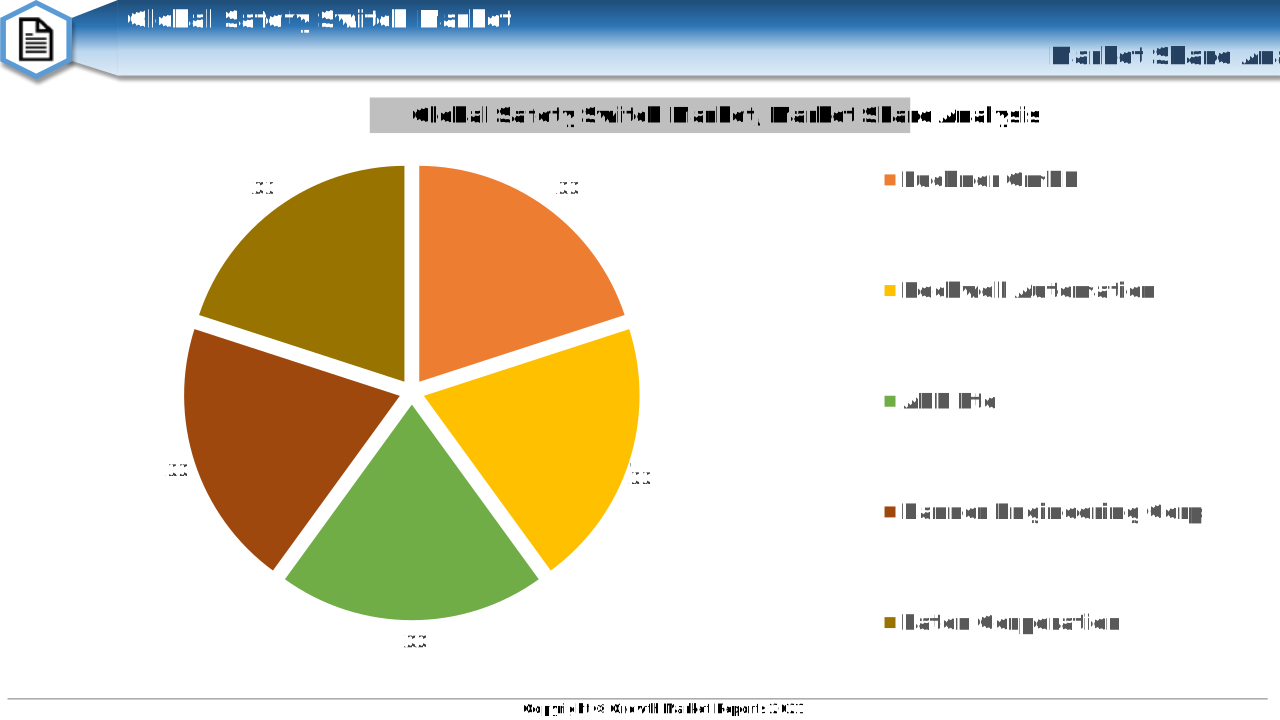
Key players competing in the global safety switch market include Euchner GmbH.; Rockwell Automation.; ABB Ltd.; Banner Engineering Corp.; Eaton Corporation

For instance, ABB announced the acquisition of the General Electric Industrial Solutions group in July 2018. By combining ABB's digital products, USD 2.6 billion transaction adds value to the company and opens up additional opportunities.

Rockwell Automation launched a patented, microprocessor-based improved cable-pull E-stop in July 2017. This device gives continuous access to the E-stop function, allowing to stop the machine with a simple pull of the associated cords.

Safety Switch Market By Key Players

Frequently Asked Questions

Yes, the safety switch market offers customization options to meet the unique operational and regulatory requirements of different industries and applications.

Challenges include high costs of advanced safety switch technologies, complexity of retrofitting existing systems, need for specialized training, and the presence of counterfeit or low-quality products.

Leading companies include Siemens AG, Schneider Electric SE, ABB Ltd., Rockwell Automation, Eaton Corporation, Honeywell International, Omron Corporation, SICK AG, Pilz GmbH & Co. KG, and Banner Engineering Corp.

Major drivers include stringent safety regulations, increasing workplace safety awareness, rapid industrial automation, and technological advancements in safety systems.

Industry 4.0 is driving demand for intelligent, interconnected safety switches with IoT and predictive maintenance features, enhancing real-time monitoring and operational efficiency.

Key end-users include manufacturing, oil & gas, healthcare, food & beverage, mining, automotive, energy & power, and residential and commercial sectors.

The main types of safety switches include toggle switches, push-button switches, key switches, rope pull switches, and other specialized switches like foot and non-contact switches.

Asia Pacific is the largest and fastest-growing region, followed by North America and Europe. Emerging markets in Latin America and the Middle East & Africa are also experiencing increased adoption.

The safety switch market is expected to grow at a CAGR of 6.2% from 2025 to 2033, reaching an estimated USD 4.24 billion by 2033.

As of 2024, the global safety switch market size reached USD 2.46 billion, driven by stringent safety regulations and rapid industrial automation.

Table Of Content

Chapter 1 Executive Summary
Chapter 2 Assumptions and Acronyms Used
Chapter 3 Research Methodology
Chapter 4 Safety Switch Market Overview
   4.1 Introduction
      4.1.1 Market Taxonomy
      4.1.2 Market Definition
      4.1.3 Macro-Economic Factors Impacting the Market Growth
   4.2 Safety Switch Market Dynamics
      4.2.1 Market Drivers
      4.2.2 Market Restraints
      4.2.3 Market Opportunity
   4.3 Safety Switch Market - Supply Chain Analysis
      4.3.1 List of Key Suppliers
      4.3.2 List of Key Distributors
      4.3.3 List of Key Consumers
   4.4 Key Forces Shaping the Safety Switch Market
      4.4.1 Bargaining Power of Suppliers
      4.4.2 Bargaining Power of Buyers
      4.4.3 Threat of Substitution
      4.4.4 Threat of New Entrants
      4.4.5 Competitive Rivalry
   4.5 Global Safety Switch Market Size & Forecast, 2023-2032
      4.5.1 Safety Switch Market Size and Y-o-Y Growth
      4.5.2 Safety Switch Market Absolute $ Opportunity

Chapter 5 Global Safety Switch Market Analysis and Forecast By Type
   5.1 Introduction
      5.1.1 Key Market Trends & Growth Opportunities By Type
      5.1.2 Basis Point Share (BPS) Analysis By Type
      5.1.3 Absolute $ Opportunity Assessment By Type
   5.2 Safety Switch Market Size Forecast By Type
      5.2.1 Toggle Switches
      5.2.2 Push-Button Switches
      5.2.3 Key Switches
      5.2.4 Rope Pull Switches
      5.2.5 Others
   5.3 Market Attractiveness Analysis By Type

Chapter 6 Global Safety Switch Market Analysis and Forecast By Safety System
   6.1 Introduction
      6.1.1 Key Market Trends & Growth Opportunities By Safety System
      6.1.2 Basis Point Share (BPS) Analysis By Safety System
      6.1.3 Absolute $ Opportunity Assessment By Safety System
   6.2 Safety Switch Market Size Forecast By Safety System
      6.2.1 Electrical
      6.2.2 Mechanical
      6.2.3 Electromechanical
   6.3 Market Attractiveness Analysis By Safety System

Chapter 7 Global Safety Switch Market Analysis and Forecast By Application
   7.1 Introduction
      7.1.1 Key Market Trends & Growth Opportunities By Application
      7.1.2 Basis Point Share (BPS) Analysis By Application
      7.1.3 Absolute $ Opportunity Assessment By Application
   7.2 Safety Switch Market Size Forecast By Application
      7.2.1 Industrial
      7.2.2 Commercial
      7.2.3 Residential
      7.2.4 Automotive
      7.2.5 Energy & Power
      7.2.6 Others
   7.3 Market Attractiveness Analysis By Application

Chapter 8 Global Safety Switch Market Analysis and Forecast By End-User
   8.1 Introduction
      8.1.1 Key Market Trends & Growth Opportunities By End-User
      8.1.2 Basis Point Share (BPS) Analysis By End-User
      8.1.3 Absolute $ Opportunity Assessment By End-User
   8.2 Safety Switch Market Size Forecast By End-User
      8.2.1 Manufacturing
      8.2.2 Oil & Gas
      8.2.3 Healthcare
      8.2.4 Food & Beverage
      8.2.5 Mining
      8.2.6 Others
   8.3 Market Attractiveness Analysis By End-User

Chapter 9 Global Safety Switch Market Analysis and Forecast by Region
   9.1 Introduction
      9.1.1 Key Market Trends & Growth Opportunities By Region
      9.1.2 Basis Point Share (BPS) Analysis By Region
      9.1.3 Absolute $ Opportunity Assessment By Region
   9.2 Safety Switch Market Size Forecast By Region
      9.2.1 North America
      9.2.2 Europe
      9.2.3 Asia Pacific
      9.2.4 Latin America
      9.2.5 Middle East & Africa (MEA)
   9.3 Market Attractiveness Analysis By Region

Chapter 10 Coronavirus Disease (COVID-19) Impact 
   10.1 Introduction 
   10.2 Current & Future Impact Analysis 
   10.3 Economic Impact Analysis 
   10.4 Government Policies 
   10.5 Investment Scenario

Chapter 11 North America Safety Switch Analysis and Forecast
   11.1 Introduction
   11.2 North America Safety Switch Market Size Forecast by Country
      11.2.1 U.S.
      11.2.2 Canada
   11.3 Basis Point Share (BPS) Analysis by Country
   11.4 Absolute $ Opportunity Assessment by Country
   11.5 Market Attractiveness Analysis by Country
   11.6 North America Safety Switch Market Size Forecast By Type
      11.6.1 Toggle Switches
      11.6.2 Push-Button Switches
      11.6.3 Key Switches
      11.6.4 Rope Pull Switches
      11.6.5 Others
   11.7 Basis Point Share (BPS) Analysis By Type 
   11.8 Absolute $ Opportunity Assessment By Type 
   11.9 Market Attractiveness Analysis By Type
   11.10 North America Safety Switch Market Size Forecast By Safety System
      11.10.1 Electrical
      11.10.2 Mechanical
      11.10.3 Electromechanical
   11.11 Basis Point Share (BPS) Analysis By Safety System 
   11.12 Absolute $ Opportunity Assessment By Safety System 
   11.13 Market Attractiveness Analysis By Safety System
   11.14 North America Safety Switch Market Size Forecast By Application
      11.14.1 Industrial
      11.14.2 Commercial
      11.14.3 Residential
      11.14.4 Automotive
      11.14.5 Energy & Power
      11.14.6 Others
   11.15 Basis Point Share (BPS) Analysis By Application 
   11.16 Absolute $ Opportunity Assessment By Application 
   11.17 Market Attractiveness Analysis By Application
   11.18 North America Safety Switch Market Size Forecast By End-User
      11.18.1 Manufacturing
      11.18.2 Oil & Gas
      11.18.3 Healthcare
      11.18.4 Food & Beverage
      11.18.5 Mining
      11.18.6 Others
   11.19 Basis Point Share (BPS) Analysis By End-User 
   11.20 Absolute $ Opportunity Assessment By End-User 
   11.21 Market Attractiveness Analysis By End-User

Chapter 12 Europe Safety Switch Analysis and Forecast
   12.1 Introduction
   12.2 Europe Safety Switch Market Size Forecast by Country
      12.2.1 Germany
      12.2.2 France
      12.2.3 Italy
      12.2.4 U.K.
      12.2.5 Spain
      12.2.6 Russia
      12.2.7 Rest of Europe
   12.3 Basis Point Share (BPS) Analysis by Country
   12.4 Absolute $ Opportunity Assessment by Country
   12.5 Market Attractiveness Analysis by Country
   12.6 Europe Safety Switch Market Size Forecast By Type
      12.6.1 Toggle Switches
      12.6.2 Push-Button Switches
      12.6.3 Key Switches
      12.6.4 Rope Pull Switches
      12.6.5 Others
   12.7 Basis Point Share (BPS) Analysis By Type 
   12.8 Absolute $ Opportunity Assessment By Type 
   12.9 Market Attractiveness Analysis By Type
   12.10 Europe Safety Switch Market Size Forecast By Safety System
      12.10.1 Electrical
      12.10.2 Mechanical
      12.10.3 Electromechanical
   12.11 Basis Point Share (BPS) Analysis By Safety System 
   12.12 Absolute $ Opportunity Assessment By Safety System 
   12.13 Market Attractiveness Analysis By Safety System
   12.14 Europe Safety Switch Market Size Forecast By Application
      12.14.1 Industrial
      12.14.2 Commercial
      12.14.3 Residential
      12.14.4 Automotive
      12.14.5 Energy & Power
      12.14.6 Others
   12.15 Basis Point Share (BPS) Analysis By Application 
   12.16 Absolute $ Opportunity Assessment By Application 
   12.17 Market Attractiveness Analysis By Application
   12.18 Europe Safety Switch Market Size Forecast By End-User
      12.18.1 Manufacturing
      12.18.2 Oil & Gas
      12.18.3 Healthcare
      12.18.4 Food & Beverage
      12.18.5 Mining
      12.18.6 Others
   12.19 Basis Point Share (BPS) Analysis By End-User 
   12.20 Absolute $ Opportunity Assessment By End-User 
   12.21 Market Attractiveness Analysis By End-User

Chapter 13 Asia Pacific Safety Switch Analysis and Forecast
   13.1 Introduction
   13.2 Asia Pacific Safety Switch Market Size Forecast by Country
      13.2.1 China
      13.2.2 Japan
      13.2.3 South Korea
      13.2.4 India
      13.2.5 Australia
      13.2.6 South East Asia (SEA)
      13.2.7 Rest of Asia Pacific (APAC)
   13.3 Basis Point Share (BPS) Analysis by Country
   13.4 Absolute $ Opportunity Assessment by Country
   13.5 Market Attractiveness Analysis by Country
   13.6 Asia Pacific Safety Switch Market Size Forecast By Type
      13.6.1 Toggle Switches
      13.6.2 Push-Button Switches
      13.6.3 Key Switches
      13.6.4 Rope Pull Switches
      13.6.5 Others
   13.7 Basis Point Share (BPS) Analysis By Type 
   13.8 Absolute $ Opportunity Assessment By Type 
   13.9 Market Attractiveness Analysis By Type
   13.10 Asia Pacific Safety Switch Market Size Forecast By Safety System
      13.10.1 Electrical
      13.10.2 Mechanical
      13.10.3 Electromechanical
   13.11 Basis Point Share (BPS) Analysis By Safety System 
   13.12 Absolute $ Opportunity Assessment By Safety System 
   13.13 Market Attractiveness Analysis By Safety System
   13.14 Asia Pacific Safety Switch Market Size Forecast By Application
      13.14.1 Industrial
      13.14.2 Commercial
      13.14.3 Residential
      13.14.4 Automotive
      13.14.5 Energy & Power
      13.14.6 Others
   13.15 Basis Point Share (BPS) Analysis By Application 
   13.16 Absolute $ Opportunity Assessment By Application 
   13.17 Market Attractiveness Analysis By Application
   13.18 Asia Pacific Safety Switch Market Size Forecast By End-User
      13.18.1 Manufacturing
      13.18.2 Oil & Gas
      13.18.3 Healthcare
      13.18.4 Food & Beverage
      13.18.5 Mining
      13.18.6 Others
   13.19 Basis Point Share (BPS) Analysis By End-User 
   13.20 Absolute $ Opportunity Assessment By End-User 
   13.21 Market Attractiveness Analysis By End-User

Chapter 14 Latin America Safety Switch Analysis and Forecast
   14.1 Introduction
   14.2 Latin America Safety Switch Market Size Forecast by Country
      14.2.1 Brazil
      14.2.2 Mexico
      14.2.3 Rest of Latin America (LATAM)
   14.3 Basis Point Share (BPS) Analysis by Country
   14.4 Absolute $ Opportunity Assessment by Country
   14.5 Market Attractiveness Analysis by Country
   14.6 Latin America Safety Switch Market Size Forecast By Type
      14.6.1 Toggle Switches
      14.6.2 Push-Button Switches
      14.6.3 Key Switches
      14.6.4 Rope Pull Switches
      14.6.5 Others
   14.7 Basis Point Share (BPS) Analysis By Type 
   14.8 Absolute $ Opportunity Assessment By Type 
   14.9 Market Attractiveness Analysis By Type
   14.10 Latin America Safety Switch Market Size Forecast By Safety System
      14.10.1 Electrical
      14.10.2 Mechanical
      14.10.3 Electromechanical
   14.11 Basis Point Share (BPS) Analysis By Safety System 
   14.12 Absolute $ Opportunity Assessment By Safety System 
   14.13 Market Attractiveness Analysis By Safety System
   14.14 Latin America Safety Switch Market Size Forecast By Application
      14.14.1 Industrial
      14.14.2 Commercial
      14.14.3 Residential
      14.14.4 Automotive
      14.14.5 Energy & Power
      14.14.6 Others
   14.15 Basis Point Share (BPS) Analysis By Application 
   14.16 Absolute $ Opportunity Assessment By Application 
   14.17 Market Attractiveness Analysis By Application
   14.18 Latin America Safety Switch Market Size Forecast By End-User
      14.18.1 Manufacturing
      14.18.2 Oil & Gas
      14.18.3 Healthcare
      14.18.4 Food & Beverage
      14.18.5 Mining
      14.18.6 Others
   14.19 Basis Point Share (BPS) Analysis By End-User 
   14.20 Absolute $ Opportunity Assessment By End-User 
   14.21 Market Attractiveness Analysis By End-User

Chapter 15 Middle East & Africa (MEA) Safety Switch Analysis and Forecast
   15.1 Introduction
   15.2 Middle East & Africa (MEA) Safety Switch Market Size Forecast by Country
      15.2.1 Saudi Arabia
      15.2.2 South Africa
      15.2.3 UAE
      15.2.4 Rest of Middle East & Africa (MEA)
   15.3 Basis Point Share (BPS) Analysis by Country
   15.4 Absolute $ Opportunity Assessment by Country
   15.5 Market Attractiveness Analysis by Country
   15.6 Middle East & Africa (MEA) Safety Switch Market Size Forecast By Type
      15.6.1 Toggle Switches
      15.6.2 Push-Button Switches
      15.6.3 Key Switches
      15.6.4 Rope Pull Switches
      15.6.5 Others
   15.7 Basis Point Share (BPS) Analysis By Type 
   15.8 Absolute $ Opportunity Assessment By Type 
   15.9 Market Attractiveness Analysis By Type
   15.10 Middle East & Africa (MEA) Safety Switch Market Size Forecast By Safety System
      15.10.1 Electrical
      15.10.2 Mechanical
      15.10.3 Electromechanical
   15.11 Basis Point Share (BPS) Analysis By Safety System 
   15.12 Absolute $ Opportunity Assessment By Safety System 
   15.13 Market Attractiveness Analysis By Safety System
   15.14 Middle East & Africa (MEA) Safety Switch Market Size Forecast By Application
      15.14.1 Industrial
      15.14.2 Commercial
      15.14.3 Residential
      15.14.4 Automotive
      15.14.5 Energy & Power
      15.14.6 Others
   15.15 Basis Point Share (BPS) Analysis By Application 
   15.16 Absolute $ Opportunity Assessment By Application 
   15.17 Market Attractiveness Analysis By Application
   15.18 Middle East & Africa (MEA) Safety Switch Market Size Forecast By End-User
      15.18.1 Manufacturing
      15.18.2 Oil & Gas
      15.18.3 Healthcare
      15.18.4 Food & Beverage
      15.18.5 Mining
      15.18.6 Others
   15.19 Basis Point Share (BPS) Analysis By End-User 
   15.20 Absolute $ Opportunity Assessment By End-User 
   15.21 Market Attractiveness Analysis By End-User

Chapter 16 Competition Landscape 
   16.1 Safety Switch Market: Competitive Dashboard
   16.2 Global Safety Switch Market: Market Share Analysis, 2023
   16.3 Company Profiles (Details – Overview, Financials, Developments, Strategy) 
      16.3.1 ABB Ltd.
Siemens AG
Schneider Electric SE
Eaton Corporation plc
Rockwell Automation, Inc.
General Electric Company
Honeywell International Inc.
Mitsubishi Electric Corporation
Omron Corporation
SICK AG
Pilz GmbH & Co. KG
Banner Engineering Corp.
IDEM Safety Switches
Legrand SA
Schmersal Group
Bernstein AG
Panasonic Corporation
Fuji Electric Co., Ltd.
WEG S.A.
Littelfuse, Inc.

Methodology

Our Clients

sinopec
Nestle SA
Dassault Aviation
General Mills
FedEx Logistics
General Electric
Honda Motor Co. Ltd.
Pfizer