Rice Milk Market Research Report 2033

Rice Milk Market Research Report 2033

Segments - by Product Type (Organic Rice Milk, Conventional Rice Milk, Flavored Rice Milk, Unsweetened Rice Milk), by Application (Beverages, Bakery & Confectionery, Breakfast Cereals, Desserts, Others), by Distribution Channel (Supermarkets/Hypermarkets, Convenience Stores, Online Retail, Others), by End-User (Household, Food Service, Industrial)

https://growthmarketreports.com/Anuradha
Author : Anuradha B. More
https://growthmarketreports.com/Vaibhav
Fact-checked by : Vaibhav Chandola
https://growthmarketreports.com/Shruti
Editor : Shruti Bhat

Upcoming | Report ID :FB-4646 | 4.1 Rating | 47 Reviews | 290 Pages | Format : Docx PDF

Report Description


Rice Milk Market Outlook

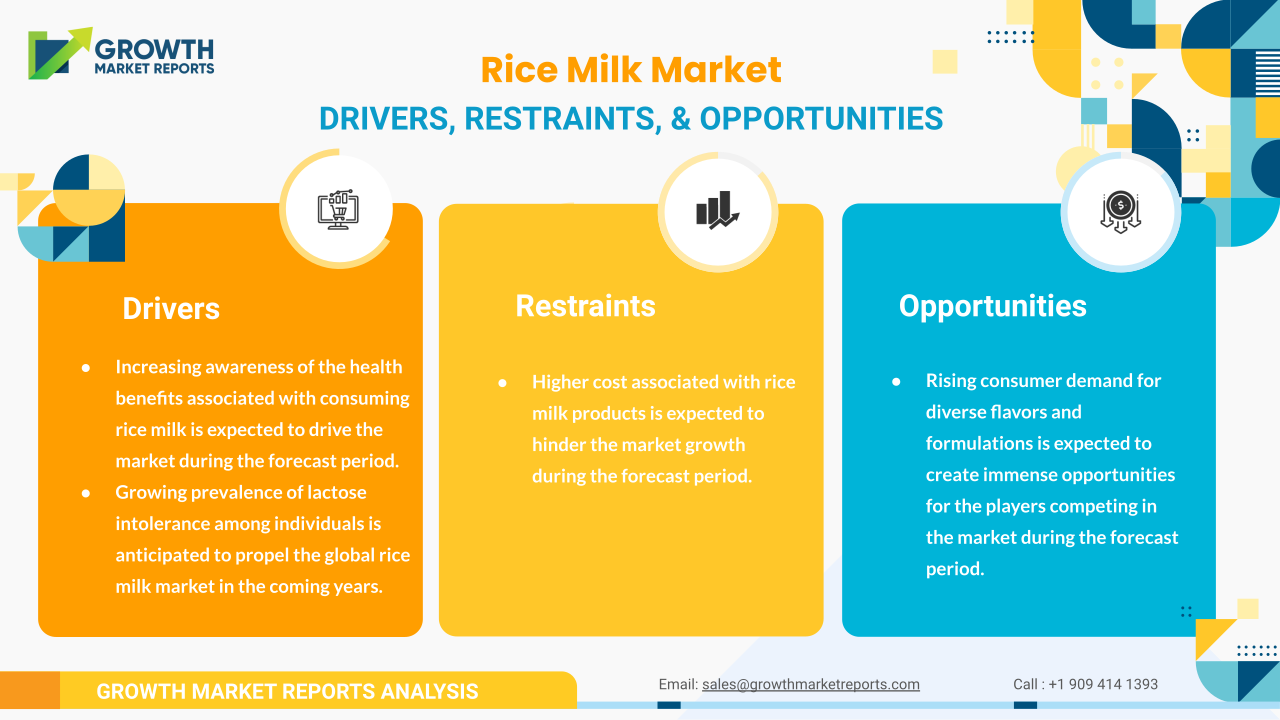
According to our latest research, the global rice milk market size reached USD 1.42 billion in 2024, reflecting a robust demand for plant-based dairy alternatives worldwide. The market is expanding at a CAGR of 9.1% and is projected to reach USD 3.02 billion by 2033. This remarkable growth is primarily driven by increasing consumer awareness regarding lactose intolerance, rising vegan population, and a growing preference for clean-label and allergen-free beverages. The rice milk market continues to evolve as manufacturers introduce innovative flavors and fortification strategies to cater to dynamic consumer needs.

A key growth factor propelling the rice milk market is the rising prevalence of lactose intolerance and dairy allergies among consumers globally. With an estimated 65% of the global population experiencing some degree of lactose malabsorption, rice milk serves as a crucial alternative for those seeking dairy-free options. The product’s hypoallergenic nature, coupled with its light flavor and easy digestibility, has contributed to its widespread adoption. Additionally, rice milk is cholesterol-free and low in saturated fats, making it an attractive choice for health-conscious consumers aiming to reduce their intake of animal-based products and manage cardiovascular risks. The trend towards health and wellness has further encouraged the consumption of rice milk, as consumers look for functional beverages that support their dietary needs without compromising on taste or nutrition.

Another pivotal driver influencing the rice milk market is the surge in veganism and plant-based diets, particularly in developed economies. As more consumers embrace ethical and sustainable lifestyles, the demand for plant-based milk alternatives has soared, with rice milk emerging as a popular choice due to its neutral taste and compatibility with a variety of culinary applications. The environmental benefits of rice cultivation, compared to dairy farming, also resonate with eco-conscious consumers. This shift is further supported by aggressive marketing campaigns, celebrity endorsements, and increasing availability across retail channels. The food industry’s ongoing innovation in product formulations, such as fortified and flavored rice milk variants, is also expanding the consumer base and driving repeat purchases.

Furthermore, the rice milk market is witnessing significant growth due to advancements in processing technologies and the expansion of distribution networks. Manufacturers are leveraging cutting-edge technologies to enhance the nutritional profile, shelf life, and sensory attributes of rice milk. The proliferation of e-commerce platforms and the growing penetration of supermarkets and hypermarkets have made rice milk more accessible to urban and rural consumers alike. Strategic partnerships between food manufacturers and retail giants are facilitating wider product visibility and consumer engagement. These factors, combined with supportive government regulations and labeling standards, are fostering a conducive environment for the rice milk market to flourish over the coming years.

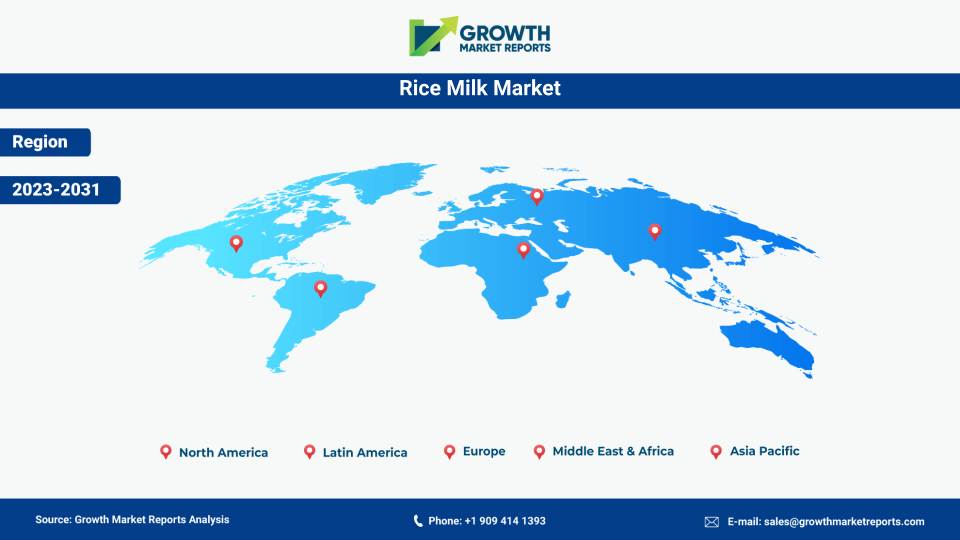
Regionally, Asia Pacific dominates the rice milk market, attributed to the region’s large population base, high prevalence of lactose intolerance, and cultural acceptance of rice-based foods and beverages. Countries such as China, Japan, and Thailand are major contributors, both in terms of production and consumption. North America and Europe are also witnessing rapid growth, driven by rising vegan populations and robust retail infrastructure. Latin America and the Middle East & Africa are emerging markets, with increasing urbanization and dietary diversification fueling demand. The global landscape is characterized by evolving consumer preferences and regional nuances, making it imperative for market players to tailor their strategies accordingly.

Global Rice Milk Industry Outlook

Product Type Analysis

The rice milk market is segmented by product type into Organic Rice Milk, Conventional Rice Milk, Flavored Rice Milk, and Unsweetened Rice Milk, each catering to distinct consumer preferences and dietary requirements. Organic rice milk is gaining traction due to the increasing consumer inclination toward organic and non-GMO products. This segment is particularly favored by health-conscious individuals who seek assurance of minimal chemical residues and sustainable farming practices. The demand for organic rice milk is further bolstered by stringent food safety regulations and certification standards, which enhance consumer trust and willingness to pay a premium. Manufacturers are capitalizing on this trend by expanding their organic product portfolios and securing certifications to differentiate themselves in a competitive market landscape.

Conventional rice milk continues to hold a significant share in the market, primarily due to its affordability and widespread availability across various retail channels. This segment appeals to price-sensitive consumers and households seeking budget-friendly dairy alternatives. Conventional rice milk is often fortified with essential vitamins and minerals to bridge nutritional gaps, making it a viable option for families and individuals with specific dietary needs. The segment’s growth is supported by mass production capabilities and efficient supply chain management, enabling manufacturers to meet the rising demand in both developed and emerging markets. However, the segment faces challenges related to consumer perception of synthetic additives and the growing preference for clean-label products.

Flavored rice milk is rapidly gaining popularity among younger demographics and consumers seeking variety in their beverage choices. The introduction of innovative flavors such as vanilla, chocolate, and strawberry has broadened the appeal of rice milk, making it a versatile ingredient for smoothies, desserts, and breakfast cereals. Flavored rice milk is often marketed as a convenient and enjoyable alternative to traditional dairy-based drinks, with manufacturers investing in attractive packaging and targeted advertising campaigns. The segment’s growth is further fueled by collaborations with foodservice providers and cafes, which incorporate flavored rice milk into their menus to cater to diverse consumer tastes.

Unsweetened rice milk is favored by health-conscious consumers and those managing their sugar intake, such as individuals with diabetes or those following low-carb diets. This segment is witnessing steady growth as consumers become more aware of the health risks associated with excessive sugar consumption. Unsweetened rice milk is often used in cooking and baking applications, where it serves as a neutral base for various recipes. Manufacturers are responding to this demand by offering unsweetened variants with added functional ingredients, such as calcium and vitamin D, to enhance nutritional value. The segment’s growth is also supported by educational campaigns highlighting the benefits of reduced sugar intake and the versatility of unsweetened rice milk in everyday diets.

Report Scope

Attributes Details
Report Title Rice Milk Market Research Report 2033
By Product Type Organic Rice Milk, Conventional Rice Milk, Flavored Rice Milk, Unsweetened Rice Milk
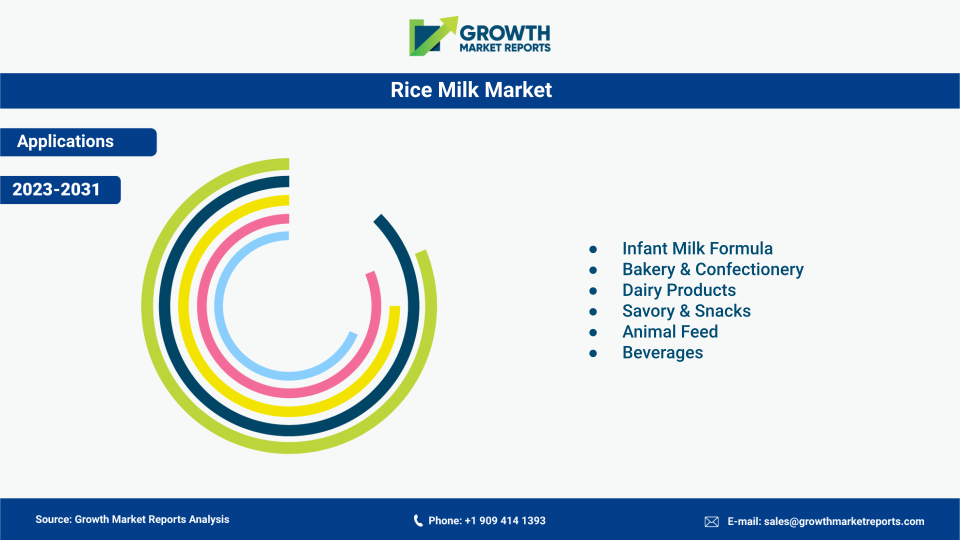
By Application Beverages, Bakery & Confectionery, Breakfast Cereals, Desserts, Others
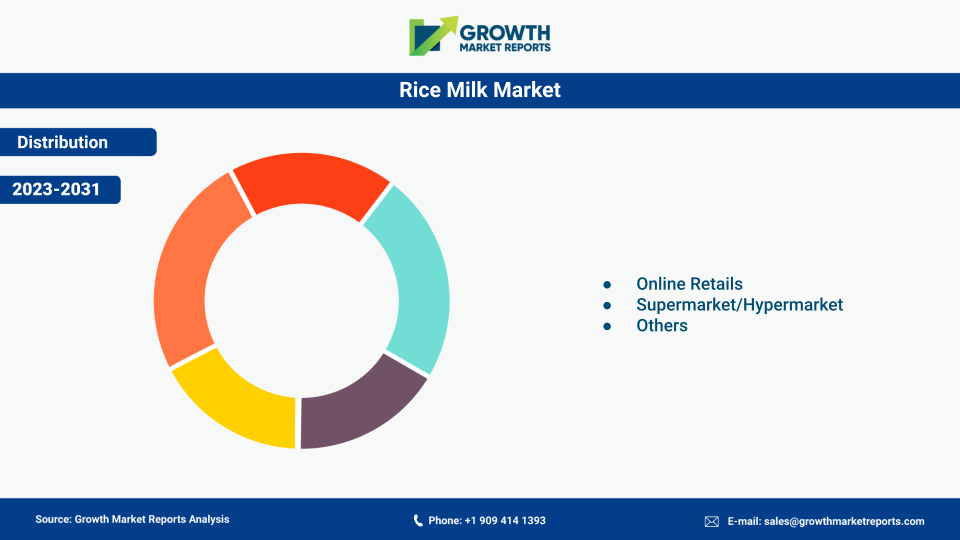
By Distribution Channel Supermarkets/Hypermarkets, Convenience Stores, Online Retail, Others
By End-User Household, Food Service, Industrial
Regions Covered North America, Europe, APAC, Latin America, MEA
Base Year 2024
Historic Data 2018-2023
Forecast Period 2025-2033
Number of Pages 290
Number of Tables & Figures 350
Customization Available Yes, the report can be customized as per your need.

Application Analysis

Rice milk finds diverse applications across the food and beverage industry, with key segments including Beverages, Bakery & Confectionery, Breakfast Cereals, Desserts, and Others. The beverages segment commands the largest share, driven by the rising demand for plant-based drinks among health-conscious consumers. Rice milk is commonly consumed as a standalone beverage or used as a base for smoothies, shakes, and coffee alternatives. The segment’s growth is fueled by the increasing prevalence of lactose intolerance and the shift toward vegan diets, prompting manufacturers to innovate with new flavors and fortified formulations. The beverages segment also benefits from aggressive marketing strategies and collaborations with cafes and foodservice outlets, which enhance product visibility and consumer engagement.

In the bakery and confectionery segment, rice milk is increasingly used as a dairy substitute in the preparation of cakes, cookies, pastries, and chocolates. Its mild flavor and smooth texture make it an ideal ingredient for vegan and allergen-free baked goods, catering to consumers with dietary restrictions. The growing trend of clean-label and gluten-free products has further boosted the adoption of rice milk in this segment. Manufacturers are developing specialized rice milk-based ingredients for industrial bakeries and confectioners, enabling them to create innovative products that meet evolving consumer demands. The segment’s growth is also supported by rising disposable incomes and the expansion of modern retail channels, which facilitate the availability of premium bakery products.

The breakfast cereals segment is witnessing robust growth as consumers seek convenient and nutritious options for their morning meals. Rice milk is often paired with cereals, granola, and muesli, offering a lactose-free and low-fat alternative to traditional cow’s milk. The segment’s expansion is driven by the increasing popularity of plant-based diets and the demand for functional foods that support digestive health and weight management. Manufacturers are leveraging this trend by launching ready-to-eat cereal products with rice milk, targeting busy urban consumers and families. The segment also benefits from strategic partnerships between cereal brands and rice milk producers, which enable cross-promotional opportunities and enhanced product offerings.

Desserts represent another lucrative application area for rice milk, particularly in the production of puddings, ice creams, and custards. The segment’s growth is attributed to the rising demand for dairy-free and allergen-free dessert options among consumers with lactose intolerance and food allergies. Rice milk’s creamy texture and neutral taste make it a versatile ingredient for creating indulgent yet health-conscious desserts. Manufacturers are investing in research and development to enhance the sensory attributes and nutritional profile of rice milk-based desserts, catering to the growing segment of health-conscious and vegan consumers. The segment’s expansion is also supported by the increasing availability of rice milk desserts in supermarkets, specialty stores, and online platforms.

Distribution Channel Analysis

The distribution landscape of the rice milk market is segmented into Supermarkets/Hypermarkets, Convenience Stores, Online Retail, and Others, each playing a pivotal role in shaping consumer access and purchasing behavior. Supermarkets and hypermarkets dominate the distribution channel segment, accounting for the largest share due to their extensive product assortments, competitive pricing, and strategic locations in urban centers. These retail giants offer consumers the convenience of one-stop shopping, facilitating the discovery and trial of new rice milk products. The segment’s growth is further supported by aggressive promotional campaigns, in-store demonstrations, and attractive shelf placements, which enhance product visibility and drive impulse purchases.

Convenience stores are gaining prominence as a preferred distribution channel, particularly in densely populated urban areas and emerging markets. These stores cater to time-constrained consumers seeking quick and easy access to rice milk and other plant-based beverages. The segment’s growth is driven by the increasing trend of on-the-go consumption and the expansion of convenience store chains in both developed and developing regions. Manufacturers are partnering with convenience store operators to launch exclusive product variants and promotional offers, thereby driving brand loyalty and repeat purchases. The segment also benefits from the growing demand for single-serve and ready-to-drink rice milk formats, which align with modern lifestyles.

Online retail is emerging as a transformative force in the rice milk market, offering consumers unparalleled convenience, product variety, and competitive pricing. The segment has witnessed exponential growth in recent years, fueled by the proliferation of e-commerce platforms, improved logistics infrastructure, and changing consumer shopping habits. Online retail enables consumers to access a wide range of rice milk brands and variants, compare prices, and read product reviews before making informed purchase decisions. The segment’s growth is further supported by targeted digital marketing campaigns, subscription models, and doorstep delivery services, which enhance customer engagement and satisfaction. Manufacturers are leveraging online channels to launch new products, gather consumer feedback, and build direct relationships with their customer base.

Other distribution channels, such as specialty stores, health food stores, and foodservice outlets, also contribute to the growth of the rice milk market. These channels cater to niche consumer segments seeking premium, organic, or specialty rice milk products. The segment’s growth is driven by the rising popularity of health and wellness stores, which emphasize natural and functional foods. Foodservice outlets, including cafes, restaurants, and hotels, are incorporating rice milk into their menus to cater to diverse dietary preferences and capitalize on the growing demand for plant-based beverages. The expansion of these alternative channels enhances market penetration and provides consumers with greater choice and accessibility.

End-User Analysis

The rice milk market is segmented by end-user into Household, Food Service, and Industrial, each representing unique consumption patterns and growth drivers. The household segment accounts for the largest share, driven by the rising adoption of plant-based milk alternatives in daily diets. Consumers are increasingly incorporating rice milk into their breakfast routines, beverages, and cooking applications, motivated by health considerations and dietary restrictions. The segment’s growth is further supported by the increasing availability of rice milk in various flavors, formats, and pack sizes, catering to diverse household needs. Manufacturers are targeting households through targeted advertising, recipe suggestions, and value-added product offerings that enhance convenience and versatility.

The food service segment is witnessing robust growth as cafes, restaurants, and catering services respond to the rising demand for dairy-free and vegan menu options. Rice milk is being used as a key ingredient in beverages, desserts, and culinary preparations, enabling foodservice providers to cater to a broader customer base. The segment’s expansion is fueled by the growing trend of out-of-home consumption, urbanization, and the proliferation of specialty cafes and quick-service restaurants. Foodservice operators are collaborating with rice milk manufacturers to develop customized product solutions, exclusive menu items, and promotional campaigns that drive consumer engagement and brand loyalty. The segment also benefits from the increasing focus on sustainability and ethical sourcing in the foodservice industry.

The industrial segment encompasses food and beverage manufacturers that use rice milk as an ingredient in the production of packaged foods, beverages, and functional products. This segment is driven by the growing demand for clean-label, allergen-free, and plant-based ingredients in the food processing industry. Rice milk is used in the formulation of ready-to-drink beverages, meal replacements, bakery products, and dairy alternatives, offering manufacturers a versatile and cost-effective solution for product innovation. The segment’s growth is supported by advancements in food processing technologies, ingredient fortification, and regulatory support for plant-based formulations. Manufacturers are investing in research and development to enhance the functional properties of rice milk and expand its applications across diverse food categories.

Each end-user segment presents unique opportunities and challenges for market players, necessitating tailored product development, marketing, and distribution strategies. The household segment requires a focus on convenience, affordability, and nutritional value, while the foodservice segment demands customization, consistency, and sustainability. The industrial segment, on the other hand, emphasizes ingredient functionality, scalability, and regulatory compliance. By understanding the distinct needs of each end-user group, manufacturers can optimize their product portfolios and drive sustained growth in the rice milk market.

Opportunities & Threats

The rice milk market is poised for significant opportunities as consumer preferences continue to shift toward plant-based and functional beverages. One of the most promising opportunities lies in product innovation, particularly the development of fortified and flavored rice milk variants that cater to specific health needs and taste preferences. Manufacturers can capitalize on the growing demand for functional foods by introducing rice milk products enriched with vitamins, minerals, probiotics, and plant-based proteins. Additionally, the expansion of organic and clean-label rice milk offerings presents a lucrative opportunity to attract health-conscious and environmentally aware consumers. Strategic partnerships with foodservice providers, retail chains, and e-commerce platforms can further enhance market penetration and brand visibility, driving long-term growth.

Another significant opportunity exists in the expansion into emerging markets, where rising urbanization, increasing disposable incomes, and changing dietary habits are fueling demand for dairy alternatives. Market players can leverage localized marketing strategies, product customization, and affordable pricing to capture untapped consumer segments in Asia Pacific, Latin America, and the Middle East & Africa. The adoption of sustainable sourcing and production practices can also differentiate brands and appeal to eco-conscious consumers. Furthermore, advancements in processing technologies and supply chain management can improve product quality, reduce costs, and enhance scalability, enabling manufacturers to meet the growing demand efficiently and sustainably.

Despite the numerous growth opportunities, the rice milk market faces certain restraints, most notably the competition from other plant-based milk alternatives such as almond, soy, and oat milk. These alternatives often offer superior nutritional profiles, taste, and functionality, posing a challenge to rice milk’s market share. Additionally, fluctuations in raw material prices, supply chain disruptions, and regulatory complexities related to labeling and fortification can impact profitability and market expansion. Addressing these challenges requires continuous innovation, investment in quality assurance, and effective marketing strategies to differentiate rice milk products and maintain consumer loyalty in a highly competitive landscape.

Regional Outlook

Asia Pacific leads the global rice milk market, accounting for approximately 41% of the total market size in 2024, with a market value of USD 582 million. The region’s dominance is attributed to the widespread consumption of rice-based foods and beverages, high prevalence of lactose intolerance, and cultural acceptance of plant-based diets. Key markets such as China, Japan, Thailand, and India are driving growth through increased production, innovation, and consumption of rice milk products. The region is also witnessing a surge in demand for organic and fortified rice milk, supported by rising health awareness and government initiatives promoting plant-based nutrition. The presence of leading rice milk manufacturers and a robust supply chain further contribute to the region’s strong market position.

North America is the second-largest market for rice milk, valued at USD 365 million in 2024, and is expected to grow at a CAGR of 8.7% through 2033. The region’s growth is driven by the increasing prevalence of lactose intolerance, the surge in vegan and health-conscious consumers, and the expanding availability of rice milk across retail and foodservice channels. The United States and Canada are witnessing a proliferation of product innovations, including flavored, fortified, and organic rice milk variants. Strategic marketing campaigns, celebrity endorsements, and partnerships with major retail chains are enhancing consumer awareness and driving adoption. The region also benefits from a well-established regulatory framework and a strong focus on clean-label and sustainable products.

Europe is another significant market, with a value of USD 301 million in 2024, driven by the growing demand for plant-based and allergen-free beverages. Countries such as the United Kingdom, Germany, France, and Italy are at the forefront of this trend, supported by rising vegan populations and increasing health consciousness. The region is characterized by a highly fragmented market landscape, with numerous local and international players competing for market share. The adoption of rice milk is further supported by government initiatives promoting healthy eating, sustainability, and food safety. Europe is also witnessing a shift toward premium and organic rice milk products, as consumers seek higher quality and added nutritional benefits. Latin America and the Middle East & Africa are emerging markets, with a combined value of USD 172 million in 2024, and are expected to witness steady growth as urbanization and dietary diversification continue to shape consumer preferences.

Rice Milk Market Statistics

Competitor Outlook

The rice milk market is characterized by intense competition, with both global and regional players vying for market share through product innovation, strategic partnerships, and aggressive marketing. The competitive landscape is shaped by the continuous introduction of new flavors, fortified formulations, and organic variants, as manufacturers seek to differentiate their offerings and meet evolving consumer demands. Leading companies are investing heavily in research and development to enhance the nutritional profile, taste, and shelf life of rice milk products. Additionally, the expansion of distribution networks, including e-commerce platforms and modern retail channels, is enabling market players to reach a broader consumer base and drive sales growth.

Brand positioning and consumer engagement are critical success factors in the rice milk market, with companies leveraging targeted advertising, influencer collaborations, and sustainability initiatives to build brand loyalty and trust. The market is witnessing a growing emphasis on clean-label and transparent sourcing practices, as consumers demand greater accountability and traceability from food manufacturers. Strategic mergers and acquisitions, joint ventures, and licensing agreements are also prevalent, enabling companies to expand their product portfolios, enter new markets, and achieve economies of scale. The competitive dynamics are further influenced by regulatory developments, technological advancements, and shifting consumer preferences, necessitating continuous adaptation and innovation.

Major players in the global rice milk market include Vitasoy International Holdings Limited, The Hain Celestial Group, Inc., Alpro (Danone), Dream (SunOpta Inc.), Pacific Foods of Oregon, Inc., Pureharvest, and Freedom Foods Group Limited. These companies are at the forefront of product innovation, sustainability initiatives, and market expansion efforts. Vitasoy International Holdings Limited, for instance, has established a strong presence in Asia Pacific and is known for its extensive range of plant-based beverages, including rice milk. The Hain Celestial Group, Inc. and Alpro (Danone) are leading players in North America and Europe, respectively, with a focus on organic and fortified rice milk products. Dream (SunOpta Inc.) and Pacific Foods of Oregon, Inc. are recognized for their commitment to clean-label and allergen-free offerings, catering to health-conscious consumers.

These companies are continuously expanding their product portfolios, investing in sustainable sourcing and production practices, and leveraging digital marketing to enhance consumer engagement. Pureharvest and Freedom Foods Group Limited are notable players in the Australian market, known for their organic and non-GMO rice milk products. The competitive landscape is further enriched by the presence of numerous regional and niche players, who are driving innovation and catering to specific consumer segments. The rice milk market is expected to witness continued consolidation, with leading companies pursuing strategic initiatives to strengthen their market position and capitalize on emerging growth opportunities.

Key Players

  • The Hain Celestial Group, Inc.
  • Vitasoy International Holdings Limited
  • Pacific Foods of Oregon, LLC
  • SunOpta Inc.
  • The Bridge S.R.L.
  • Alpro (Danone S.A.)
  • Pureharvest
  • Ricemilk.com
  • Freedom Foods Group Limited
  • Nature’s Choice
  • Riso Scotti S.p.A.
  • Luzhou Bio-Chem Technology Limited
  • Dream (The Hain Celestial Group)
  • Isola Bio S.r.l.
  • Fine Japan Co., Ltd.
  • WhiteWave Foods Company
  • Natumi GmbH
  • EcoMil (Nutriops S.L.)
  • Vegan Milker
  • Good Karma Foods, Inc.
Rice Milk Market Overview

Segments

The Rice Milk market has been segmented on the basis of

Product Type

  • Organic Rice Milk
  • Conventional Rice Milk
  • Flavored Rice Milk
  • Unsweetened Rice Milk

Application

  • Beverages
  • Bakery & Confectionery
  • Breakfast Cereals
  • Desserts
  • Others

Distribution Channel

  • Supermarkets/Hypermarkets
  • Convenience Stores
  • Online Retail
  • Others

End-User

  • Household
  • Food Service
  • Industrial

Competitive Landscape

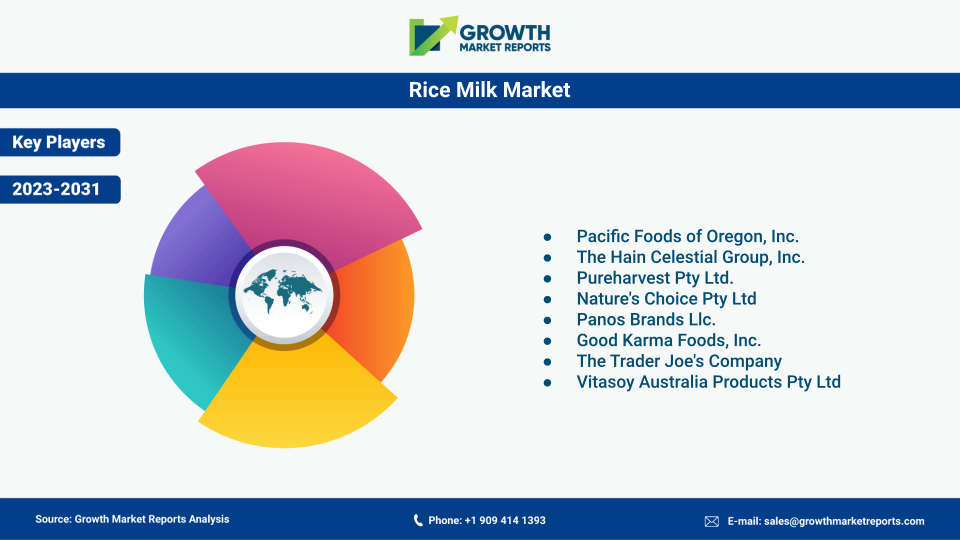
Key players competing in the global rice milk are Dream; Good Karma Foods, Inc.; Nature's Choice Pty Ltd; Pacific Foods of Oregon, Inc.; Panos Brands Llc.; Pureharvest Pty Ltd.; The Hain Celestial Group, Inc.; The Trader Joe's Company; and Vitasoy Australia Products Pty Ltd

These companies are boosting their market share by adopting various strategies such as partnerships, mergers, reduction in production costs, launching new products, and implementing advanced technologies.          

  • In November 2023, Dream, a key producer of organic, natural, and non-GMO plant and fruit-based products, announced the launch of its new rice milk. This organic rice milk, Whole, has a creamy taste and texture similar to dairy milk and contains 8g of total fat per serving. Additionally, they also launched organic rice milk with 2% fat, which has a smooth, creamy mouthfeel and contains 5g of total fat per serving.

Rice Milk Market Key Players

Frequently Asked Questions

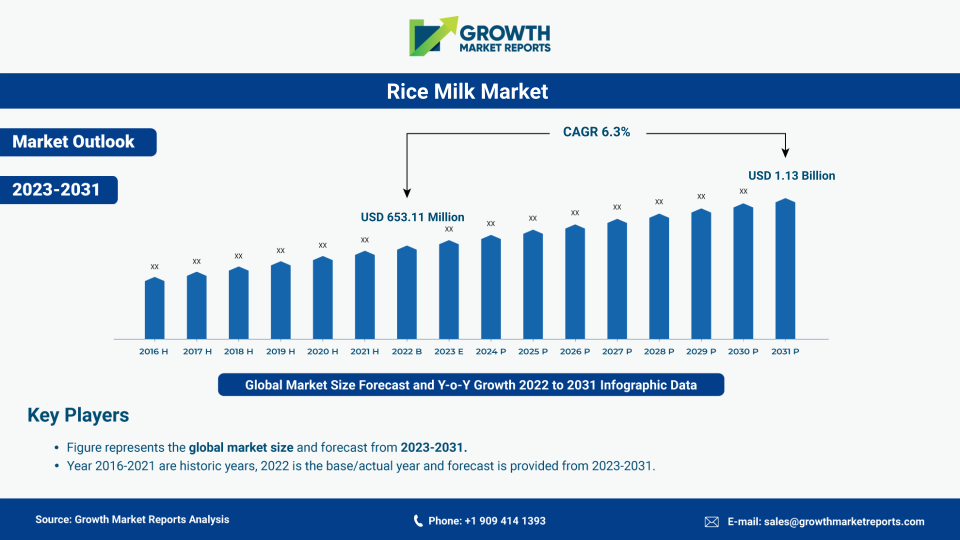
The global rice milk market was valued at 653.11 million in 2022.

The rice milk market is expanding at a CAGR of 6.3% during 2022 – 2031.

The Asia Pacific region is anticipated to hold a major market share of the rice milk market during the forecast period.

Table Of Content

Chapter 1 Executive Summary
Chapter 2 Assumptions and Acronyms Used
Chapter 3 Research Methodology
Chapter 4 Rice Milk Market Overview
   4.1 Introduction
      4.1.1 Market Taxonomy
      4.1.2 Market Definition
      4.1.3 Macro-Economic Factors Impacting the Market Growth
   4.2 Rice Milk Market Dynamics
      4.2.1 Market Drivers
      4.2.2 Market Restraints
      4.2.3 Market Opportunity
   4.3 Rice Milk Market - Supply Chain Analysis
      4.3.1 List of Key Suppliers
      4.3.2 List of Key Distributors
      4.3.3 List of Key Consumers
   4.4 Key Forces Shaping the Rice Milk Market
      4.4.1 Bargaining Power of Suppliers
      4.4.2 Bargaining Power of Buyers
      4.4.3 Threat of Substitution
      4.4.4 Threat of New Entrants
      4.4.5 Competitive Rivalry
   4.5 Global Rice Milk Market Size & Forecast, 2023-2032
      4.5.1 Rice Milk Market Size and Y-o-Y Growth
      4.5.2 Rice Milk Market Absolute $ Opportunity

Chapter 5 Global Rice Milk Market Analysis and Forecast By Product Type
   5.1 Introduction
      5.1.1 Key Market Trends & Growth Opportunities By Product Type
      5.1.2 Basis Point Share (BPS) Analysis By Product Type
      5.1.3 Absolute $ Opportunity Assessment By Product Type
   5.2 Rice Milk Market Size Forecast By Product Type
      5.2.1 Organic Rice Milk
      5.2.2 Conventional Rice Milk
      5.2.3 Flavored Rice Milk
      5.2.4 Unsweetened Rice Milk
   5.3 Market Attractiveness Analysis By Product Type

Chapter 6 Global Rice Milk Market Analysis and Forecast By Application
   6.1 Introduction
      6.1.1 Key Market Trends & Growth Opportunities By Application
      6.1.2 Basis Point Share (BPS) Analysis By Application
      6.1.3 Absolute $ Opportunity Assessment By Application
   6.2 Rice Milk Market Size Forecast By Application
      6.2.1 Beverages
      6.2.2 Bakery & Confectionery
      6.2.3 Breakfast Cereals
      6.2.4 Desserts
      6.2.5 Others
   6.3 Market Attractiveness Analysis By Application

Chapter 7 Global Rice Milk Market Analysis and Forecast By Distribution Channel
   7.1 Introduction
      7.1.1 Key Market Trends & Growth Opportunities By Distribution Channel
      7.1.2 Basis Point Share (BPS) Analysis By Distribution Channel
      7.1.3 Absolute $ Opportunity Assessment By Distribution Channel
   7.2 Rice Milk Market Size Forecast By Distribution Channel
      7.2.1 Supermarkets/Hypermarkets
      7.2.2 Convenience Stores
      7.2.3 Online Retail
      7.2.4 Others
   7.3 Market Attractiveness Analysis By Distribution Channel

Chapter 8 Global Rice Milk Market Analysis and Forecast By End-User
   8.1 Introduction
      8.1.1 Key Market Trends & Growth Opportunities By End-User
      8.1.2 Basis Point Share (BPS) Analysis By End-User
      8.1.3 Absolute $ Opportunity Assessment By End-User
   8.2 Rice Milk Market Size Forecast By End-User
      8.2.1 Household
      8.2.2 Food Service
      8.2.3 Industrial
   8.3 Market Attractiveness Analysis By End-User

Chapter 9 Global Rice Milk Market Analysis and Forecast by Region
   9.1 Introduction
      9.1.1 Key Market Trends & Growth Opportunities By Region
      9.1.2 Basis Point Share (BPS) Analysis By Region
      9.1.3 Absolute $ Opportunity Assessment By Region
   9.2 Rice Milk Market Size Forecast By Region
      9.2.1 North America
      9.2.2 Europe
      9.2.3 Asia Pacific
      9.2.4 Latin America
      9.2.5 Middle East & Africa (MEA)
   9.3 Market Attractiveness Analysis By Region

Chapter 10 Coronavirus Disease (COVID-19) Impact 
   10.1 Introduction 
   10.2 Current & Future Impact Analysis 
   10.3 Economic Impact Analysis 
   10.4 Government Policies 
   10.5 Investment Scenario

Chapter 11 North America Rice Milk Analysis and Forecast
   11.1 Introduction
   11.2 North America Rice Milk Market Size Forecast by Country
      11.2.1 U.S.
      11.2.2 Canada
   11.3 Basis Point Share (BPS) Analysis by Country
   11.4 Absolute $ Opportunity Assessment by Country
   11.5 Market Attractiveness Analysis by Country
   11.6 North America Rice Milk Market Size Forecast By Product Type
      11.6.1 Organic Rice Milk
      11.6.2 Conventional Rice Milk
      11.6.3 Flavored Rice Milk
      11.6.4 Unsweetened Rice Milk
   11.7 Basis Point Share (BPS) Analysis By Product Type 
   11.8 Absolute $ Opportunity Assessment By Product Type 
   11.9 Market Attractiveness Analysis By Product Type
   11.10 North America Rice Milk Market Size Forecast By Application
      11.10.1 Beverages
      11.10.2 Bakery & Confectionery
      11.10.3 Breakfast Cereals
      11.10.4 Desserts
      11.10.5 Others
   11.11 Basis Point Share (BPS) Analysis By Application 
   11.12 Absolute $ Opportunity Assessment By Application 
   11.13 Market Attractiveness Analysis By Application
   11.14 North America Rice Milk Market Size Forecast By Distribution Channel
      11.14.1 Supermarkets/Hypermarkets
      11.14.2 Convenience Stores
      11.14.3 Online Retail
      11.14.4 Others
   11.15 Basis Point Share (BPS) Analysis By Distribution Channel 
   11.16 Absolute $ Opportunity Assessment By Distribution Channel 
   11.17 Market Attractiveness Analysis By Distribution Channel
   11.18 North America Rice Milk Market Size Forecast By End-User
      11.18.1 Household
      11.18.2 Food Service
      11.18.3 Industrial
   11.19 Basis Point Share (BPS) Analysis By End-User 
   11.20 Absolute $ Opportunity Assessment By End-User 
   11.21 Market Attractiveness Analysis By End-User

Chapter 12 Europe Rice Milk Analysis and Forecast
   12.1 Introduction
   12.2 Europe Rice Milk Market Size Forecast by Country
      12.2.1 Germany
      12.2.2 France
      12.2.3 Italy
      12.2.4 U.K.
      12.2.5 Spain
      12.2.6 Russia
      12.2.7 Rest of Europe
   12.3 Basis Point Share (BPS) Analysis by Country
   12.4 Absolute $ Opportunity Assessment by Country
   12.5 Market Attractiveness Analysis by Country
   12.6 Europe Rice Milk Market Size Forecast By Product Type
      12.6.1 Organic Rice Milk
      12.6.2 Conventional Rice Milk
      12.6.3 Flavored Rice Milk
      12.6.4 Unsweetened Rice Milk
   12.7 Basis Point Share (BPS) Analysis By Product Type 
   12.8 Absolute $ Opportunity Assessment By Product Type 
   12.9 Market Attractiveness Analysis By Product Type
   12.10 Europe Rice Milk Market Size Forecast By Application
      12.10.1 Beverages
      12.10.2 Bakery & Confectionery
      12.10.3 Breakfast Cereals
      12.10.4 Desserts
      12.10.5 Others
   12.11 Basis Point Share (BPS) Analysis By Application 
   12.12 Absolute $ Opportunity Assessment By Application 
   12.13 Market Attractiveness Analysis By Application
   12.14 Europe Rice Milk Market Size Forecast By Distribution Channel
      12.14.1 Supermarkets/Hypermarkets
      12.14.2 Convenience Stores
      12.14.3 Online Retail
      12.14.4 Others
   12.15 Basis Point Share (BPS) Analysis By Distribution Channel 
   12.16 Absolute $ Opportunity Assessment By Distribution Channel 
   12.17 Market Attractiveness Analysis By Distribution Channel
   12.18 Europe Rice Milk Market Size Forecast By End-User
      12.18.1 Household
      12.18.2 Food Service
      12.18.3 Industrial
   12.19 Basis Point Share (BPS) Analysis By End-User 
   12.20 Absolute $ Opportunity Assessment By End-User 
   12.21 Market Attractiveness Analysis By End-User

Chapter 13 Asia Pacific Rice Milk Analysis and Forecast
   13.1 Introduction
   13.2 Asia Pacific Rice Milk Market Size Forecast by Country
      13.2.1 China
      13.2.2 Japan
      13.2.3 South Korea
      13.2.4 India
      13.2.5 Australia
      13.2.6 South East Asia (SEA)
      13.2.7 Rest of Asia Pacific (APAC)
   13.3 Basis Point Share (BPS) Analysis by Country
   13.4 Absolute $ Opportunity Assessment by Country
   13.5 Market Attractiveness Analysis by Country
   13.6 Asia Pacific Rice Milk Market Size Forecast By Product Type
      13.6.1 Organic Rice Milk
      13.6.2 Conventional Rice Milk
      13.6.3 Flavored Rice Milk
      13.6.4 Unsweetened Rice Milk
   13.7 Basis Point Share (BPS) Analysis By Product Type 
   13.8 Absolute $ Opportunity Assessment By Product Type 
   13.9 Market Attractiveness Analysis By Product Type
   13.10 Asia Pacific Rice Milk Market Size Forecast By Application
      13.10.1 Beverages
      13.10.2 Bakery & Confectionery
      13.10.3 Breakfast Cereals
      13.10.4 Desserts
      13.10.5 Others
   13.11 Basis Point Share (BPS) Analysis By Application 
   13.12 Absolute $ Opportunity Assessment By Application 
   13.13 Market Attractiveness Analysis By Application
   13.14 Asia Pacific Rice Milk Market Size Forecast By Distribution Channel
      13.14.1 Supermarkets/Hypermarkets
      13.14.2 Convenience Stores
      13.14.3 Online Retail
      13.14.4 Others
   13.15 Basis Point Share (BPS) Analysis By Distribution Channel 
   13.16 Absolute $ Opportunity Assessment By Distribution Channel 
   13.17 Market Attractiveness Analysis By Distribution Channel
   13.18 Asia Pacific Rice Milk Market Size Forecast By End-User
      13.18.1 Household
      13.18.2 Food Service
      13.18.3 Industrial
   13.19 Basis Point Share (BPS) Analysis By End-User 
   13.20 Absolute $ Opportunity Assessment By End-User 
   13.21 Market Attractiveness Analysis By End-User

Chapter 14 Latin America Rice Milk Analysis and Forecast
   14.1 Introduction
   14.2 Latin America Rice Milk Market Size Forecast by Country
      14.2.1 Brazil
      14.2.2 Mexico
      14.2.3 Rest of Latin America (LATAM)
   14.3 Basis Point Share (BPS) Analysis by Country
   14.4 Absolute $ Opportunity Assessment by Country
   14.5 Market Attractiveness Analysis by Country
   14.6 Latin America Rice Milk Market Size Forecast By Product Type
      14.6.1 Organic Rice Milk
      14.6.2 Conventional Rice Milk
      14.6.3 Flavored Rice Milk
      14.6.4 Unsweetened Rice Milk
   14.7 Basis Point Share (BPS) Analysis By Product Type 
   14.8 Absolute $ Opportunity Assessment By Product Type 
   14.9 Market Attractiveness Analysis By Product Type
   14.10 Latin America Rice Milk Market Size Forecast By Application
      14.10.1 Beverages
      14.10.2 Bakery & Confectionery
      14.10.3 Breakfast Cereals
      14.10.4 Desserts
      14.10.5 Others
   14.11 Basis Point Share (BPS) Analysis By Application 
   14.12 Absolute $ Opportunity Assessment By Application 
   14.13 Market Attractiveness Analysis By Application
   14.14 Latin America Rice Milk Market Size Forecast By Distribution Channel
      14.14.1 Supermarkets/Hypermarkets
      14.14.2 Convenience Stores
      14.14.3 Online Retail
      14.14.4 Others
   14.15 Basis Point Share (BPS) Analysis By Distribution Channel 
   14.16 Absolute $ Opportunity Assessment By Distribution Channel 
   14.17 Market Attractiveness Analysis By Distribution Channel
   14.18 Latin America Rice Milk Market Size Forecast By End-User
      14.18.1 Household
      14.18.2 Food Service
      14.18.3 Industrial
   14.19 Basis Point Share (BPS) Analysis By End-User 
   14.20 Absolute $ Opportunity Assessment By End-User 
   14.21 Market Attractiveness Analysis By End-User

Chapter 15 Middle East & Africa (MEA) Rice Milk Analysis and Forecast
   15.1 Introduction
   15.2 Middle East & Africa (MEA) Rice Milk Market Size Forecast by Country
      15.2.1 Saudi Arabia
      15.2.2 South Africa
      15.2.3 UAE
      15.2.4 Rest of Middle East & Africa (MEA)
   15.3 Basis Point Share (BPS) Analysis by Country
   15.4 Absolute $ Opportunity Assessment by Country
   15.5 Market Attractiveness Analysis by Country
   15.6 Middle East & Africa (MEA) Rice Milk Market Size Forecast By Product Type
      15.6.1 Organic Rice Milk
      15.6.2 Conventional Rice Milk
      15.6.3 Flavored Rice Milk
      15.6.4 Unsweetened Rice Milk
   15.7 Basis Point Share (BPS) Analysis By Product Type 
   15.8 Absolute $ Opportunity Assessment By Product Type 
   15.9 Market Attractiveness Analysis By Product Type
   15.10 Middle East & Africa (MEA) Rice Milk Market Size Forecast By Application
      15.10.1 Beverages
      15.10.2 Bakery & Confectionery
      15.10.3 Breakfast Cereals
      15.10.4 Desserts
      15.10.5 Others
   15.11 Basis Point Share (BPS) Analysis By Application 
   15.12 Absolute $ Opportunity Assessment By Application 
   15.13 Market Attractiveness Analysis By Application
   15.14 Middle East & Africa (MEA) Rice Milk Market Size Forecast By Distribution Channel
      15.14.1 Supermarkets/Hypermarkets
      15.14.2 Convenience Stores
      15.14.3 Online Retail
      15.14.4 Others
   15.15 Basis Point Share (BPS) Analysis By Distribution Channel 
   15.16 Absolute $ Opportunity Assessment By Distribution Channel 
   15.17 Market Attractiveness Analysis By Distribution Channel
   15.18 Middle East & Africa (MEA) Rice Milk Market Size Forecast By End-User
      15.18.1 Household
      15.18.2 Food Service
      15.18.3 Industrial
   15.19 Basis Point Share (BPS) Analysis By End-User 
   15.20 Absolute $ Opportunity Assessment By End-User 
   15.21 Market Attractiveness Analysis By End-User

Chapter 16 Competition Landscape 
   16.1 Rice Milk Market: Competitive Dashboard
   16.2 Global Rice Milk Market: Market Share Analysis, 2023
   16.3 Company Profiles (Details – Overview, Financials, Developments, Strategy) 
      16.3.1 The Hain Celestial Group, Inc.
Vitasoy International Holdings Limited
Pacific Foods of Oregon, LLC
SunOpta Inc.
The Bridge S.R.L.
Alpro (Danone S.A.)
Pureharvest
Ricemilk.com
Freedom Foods Group Limited
Nature’s Choice
Riso Scotti S.p.A.
Luzhou Bio-Chem Technology Limited
Dream (The Hain Celestial Group)
Isola Bio S.r.l.
Fine Japan Co., Ltd.
WhiteWave Foods Company
Natumi GmbH
EcoMil (Nutriops S.L.)
Vegan Milker
Good Karma Foods, Inc.

Methodology

Our Clients

Siemens Healthcare
Dassault Aviation
sinopec
General Electric
Pfizer
General Mills
FedEx Logistics
Honda Motor Co. Ltd.