Segments - by Product Type (Unfilled Polyphthalamide, Glass-Filled Polyphthalamide, Mineral-Filled Polyphthalamide, Carbon-Filled Polyphthalamide, Others), by Application (Automotive, Electrical & Electronics, Industrial, Consumer Goods, Healthcare, Others), by End-Use Industry (Automotive, Electrical & Electronics, Industrial Equipment, Consumer Goods, Healthcare, Others)
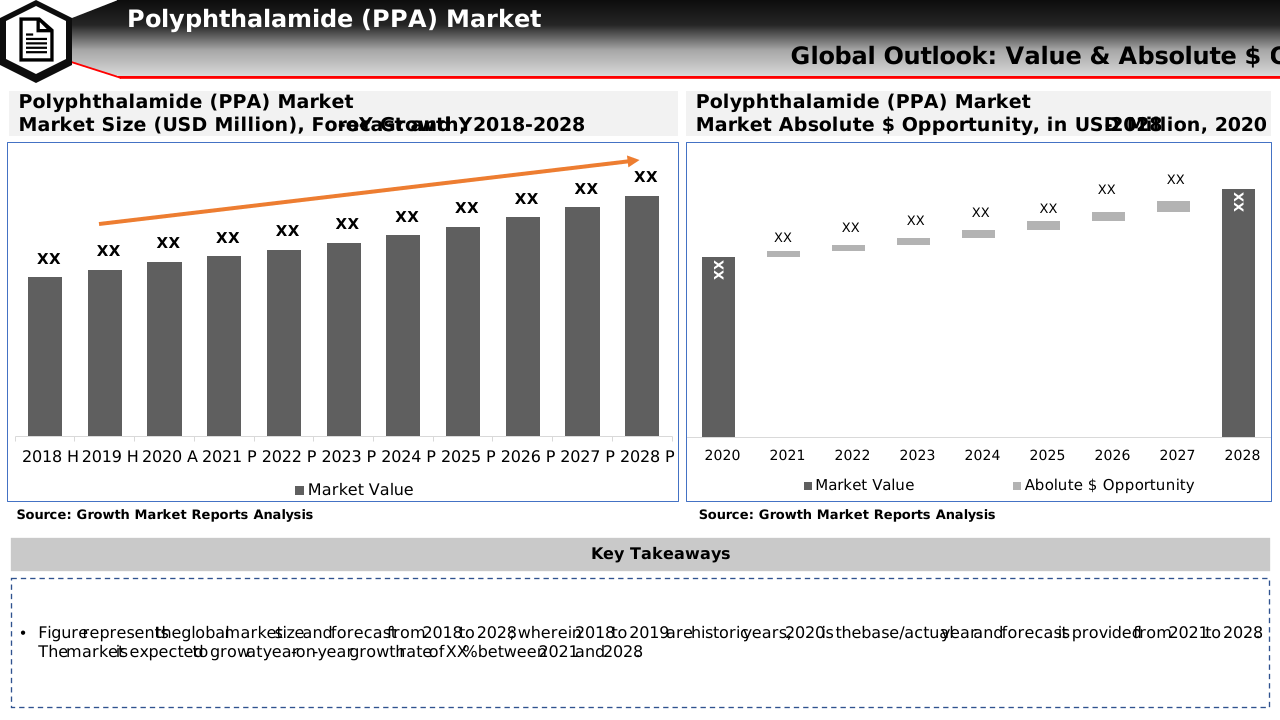
According to our latest research, the global Polyphthalamide (PPA) market size reached USD 1.68 billion in 2024, reflecting robust demand across key end-use industries. The market is experiencing a strong growth trajectory with a CAGR of 6.1% from 2025 to 2033. By 2033, the global Polyphthalamide market is forecasted to reach approximately USD 2.93 billion, driven by increasing utilization in automotive and electrical & electronics applications, as well as advancements in high-performance polymer technology. As per the latest research, the marketÂ’s expansion is underpinned by a growing need for lightweight, durable, and heat-resistant materials in manufacturing and engineering sectors worldwide.
The primary growth driver for the Polyphthalamide market is the surging demand from the automotive sector, where PPAÂ’s exceptional mechanical strength, thermal stability, and chemical resistance are highly valued. Automakers are continuously seeking advanced materials to reduce vehicle weight and improve fuel efficiency without compromising safety or performance. PolyphthalamideÂ’s ability to replace metal components in under-the-hood applications, connectors, and housings has led to its widespread adoption in the automotive industry. Additionally, the rise of electric vehicles (EVs) and hybrid vehicles has further amplified the need for high-performance polymers like PPA, as these vehicles require materials that can withstand higher operating temperatures and stringent electrical insulation requirements. As emission regulations become stricter and the automotive industry shifts towards sustainability, the adoption of Polyphthalamide is expected to accelerate, bolstering market growth over the forecast period.
Another significant growth factor is the increasing application of Polyphthalamide in the electrical and electronics industry. PPAÂ’s excellent dielectric properties, flame retardancy, and dimensional stability make it an ideal choice for manufacturing connectors, switches, sockets, and various electronic components. The ongoing miniaturization of electronic devices and the push for higher efficiency in consumer electronics are fueling the demand for advanced engineering plastics that can endure high voltages and temperatures. Furthermore, the proliferation of 5G technology, IoT devices, and smart appliances is driving innovation in electronic component design, which in turn is boosting the consumption of Polyphthalamide. As manufacturers strive to develop more compact and reliable electronic products, the superior performance characteristics of PPA are expected to play a pivotal role in shaping the future landscape of the electronics industry.
The industrial sector also contributes significantly to the Polyphthalamide marketÂ’s growth, as industries increasingly require materials with enhanced resistance to chemicals, wear, and high temperatures. PPAÂ’s unique combination of properties enables its use in demanding applications such as pump housings, valves, gears, and industrial machinery components. The ongoing trend towards automation, coupled with the need for materials that offer longevity and operational efficiency, is prompting industrial equipment manufacturers to choose Polyphthalamide over conventional polymers. Furthermore, the consumer goods and healthcare sectors are progressively adopting PPA for the production of household appliances, sports equipment, and medical devices, owing to its biocompatibility, durability, and ease of processing. These cross-industry applications underscore the versatility of Polyphthalamide and its growing significance in the global materials market.
From a regional perspective, Asia Pacific continues to dominate the Polyphthalamide market, accounting for the largest share in 2024, primarily due to rapid industrialization, expanding automotive production, and robust growth in the electronics sector. China, Japan, South Korea, and India are at the forefront of this surge, benefiting from favorable government policies, rising investments in infrastructure, and the presence of major automotive and electronics manufacturers. North America and Europe are also key markets, driven by technological advancements, stringent regulatory standards, and a strong focus on sustainability. The Middle East & Africa and Latin America are emerging as promising regions, with increasing investments in industrial and manufacturing sectors. The global Polyphthalamide marketÂ’s regional dynamics are shaped by a combination of economic growth, technological innovation, and evolving end-user demands, ensuring a competitive and vibrant landscape for the foreseeable future.
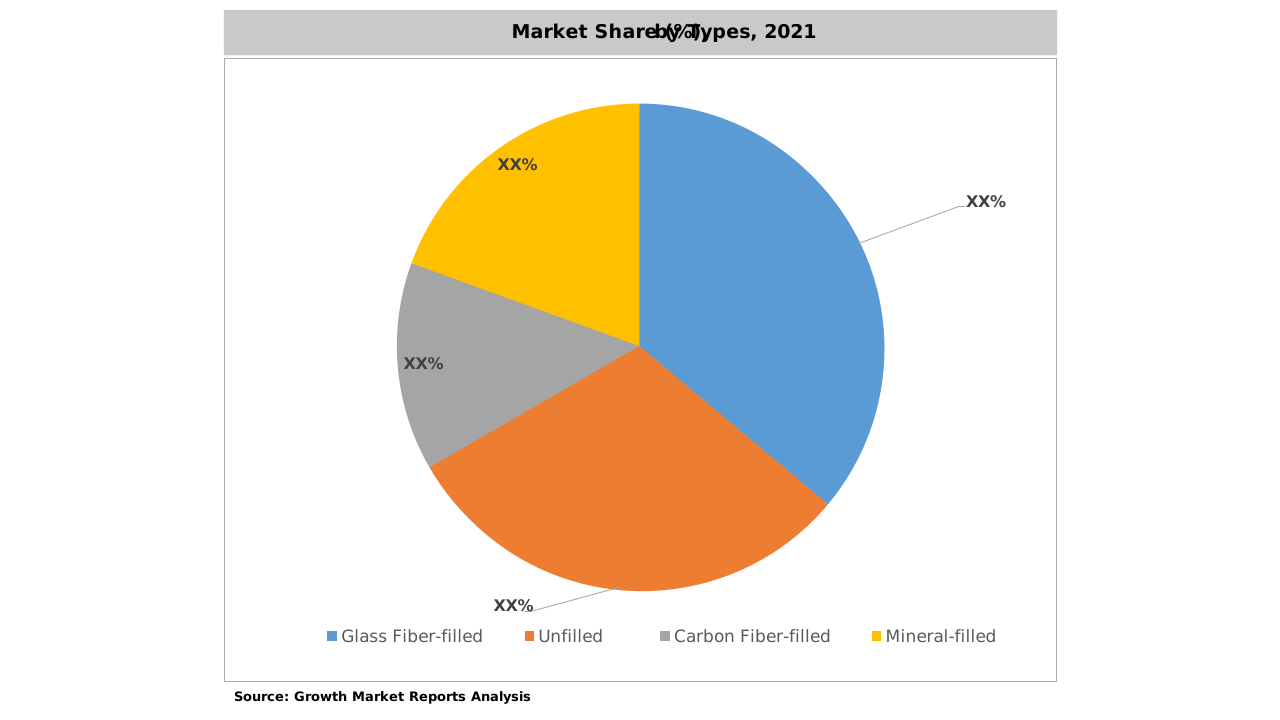
The Polyphthalamide market is segmented by product type into Unfilled Polyphthalamide, Glass-Filled Polyphthalamide, Mineral-Filled Polyphthalamide, Carbon-Filled Polyphthalamide, and Others. Among these, Glass-Filled Polyphthalamide holds the largest share due to its superior mechanical properties and enhanced dimensional stability. Glass-filling significantly improves the strength, stiffness, and heat resistance of PPA, making it suitable for demanding applications in automotive and electrical & electronics industries. The automotive sector, in particular, benefits from glass-filled PPAÂ’s ability to replace metal parts in engine components, reducing overall vehicle weight and improving fuel efficiency. As manufacturers continue to seek advanced materials that offer high performance at a lower cost, the adoption of Glass-Filled Polyphthalamide is expected to remain strong over the forecast period.
High Performance Polyamides, including Polyphthalamide, are at the forefront of material innovation, offering exceptional thermal and mechanical properties that meet the demanding requirements of modern industries. These polyamides are engineered to perform under extreme conditions, making them ideal for applications in automotive, aerospace, and electronics sectors. The versatility of high performance polyamides allows manufacturers to replace traditional materials with lighter, more efficient alternatives, thereby improving product performance and sustainability. As the demand for advanced materials continues to rise, high performance polyamides are set to play a crucial role in driving technological advancements and supporting the shift towards more sustainable manufacturing practices.
Unfilled Polyphthalamide, while offering excellent chemical resistance and inherent flame retardancy, is primarily used in applications where moderate mechanical strength is sufficient. This product type finds its niche in electrical connectors, consumer goods, and certain industrial components. The demand for unfilled PPA is bolstered by its ease of processing and compatibility with various manufacturing techniques, such as injection molding and extrusion. However, its market share is comparatively smaller than filled variants due to the increasing preference for reinforced PPA in high-stress applications. Nonetheless, unfilled PPA remains a vital segment, particularly in industries prioritizing chemical resistance and electrical insulation.
Mineral-Filled Polyphthalamide is gaining traction in applications requiring enhanced dimensional stability, reduced warpage, and improved surface finish. The incorporation of minerals such as talc or wollastonite into the PPA matrix results in materials that are well-suited for precision components in the automotive, electronics, and industrial sectors. Manufacturers value mineral-filled PPA for its cost-effectiveness and ability to maintain performance under varying environmental conditions. As industries continue to demand materials that offer a balance of mechanical properties and processability, the mineral-filled segment is expected to witness steady growth.
Polyphenylene Ether (PPE) is another high-performance polymer that complements the properties of Polyphthalamide in various applications. Known for its excellent dimensional stability, low moisture absorption, and high heat resistance, PPE is widely used in automotive and electrical industries. Its ability to maintain performance under high temperatures and electrical stress makes it an ideal choice for components such as electrical housings, connectors, and under-the-hood automotive parts. As the demand for materials that offer a balance of mechanical strength and thermal stability grows, the integration of PPE with other engineering plastics like Polyphthalamide is expected to enhance the performance of complex assemblies, driving innovation across multiple sectors.
Carbon-Filled Polyphthalamide represents a niche yet rapidly expanding segment within the market. The addition of carbon fibers imparts exceptional strength, stiffness, and electrical conductivity to PPA, making it ideal for specialized applications in automotive, aerospace, and high-performance electronics. As industries push the boundaries of material performance, the demand for carbon-filled PPA is anticipated to rise, particularly in applications requiring lightweight solutions with superior mechanical and thermal properties. The “Others” segment, encompassing specialty blends and custom formulations, caters to unique application requirements and is expected to grow in tandem with advancements in polymer science and engineering.
| Attributes | Details |
| Report Title | Polyphthalamide Market Research Report 2033 |
| By Product Type | Unfilled Polyphthalamide, Glass-Filled Polyphthalamide, Mineral-Filled Polyphthalamide, Carbon-Filled Polyphthalamide, Others |
| By Application | Automotive, Electrical & Electronics, Industrial, Consumer Goods, Healthcare, Others |
| By End-Use Industry | Automotive, Electrical & Electronics, Industrial Equipment, Consumer Goods, Healthcare, Others |
| Regions Covered | North America, Europe, APAC, Latin America, MEA |
| Base Year | 2024 |
| Historic Data | 2018-2023 |
| Forecast Period | 2025-2033 |
| Number of Pages | 276 |
| Number of Tables & Figures | 279 |
| Customization Available | Yes, the report can be customized as per your need. |
The Polyphthalamide market by application is predominantly led by the automotive segment, which accounted for the largest share in 2024. PPAÂ’s high-temperature resistance, mechanical strength, and lightweight properties make it an ideal material for engine components, fuel system parts, and electrical connectors. The automotive industryÂ’s shift towards lightweighting and emissions reduction has intensified the adoption of PPA, as manufacturers seek alternatives to metals and conventional plastics. The proliferation of electric vehicles and advancements in autonomous driving technologies further amplify the need for high-performance polymers capable of withstanding rigorous operating conditions. As the automotive sector continues to innovate, the role of Polyphthalamide in enhancing vehicle efficiency and safety is expected to grow significantly.
In the electrical & electronics segment, Polyphthalamide is widely utilized for manufacturing connectors, circuit breakers, switches, and various electronic housings. Its outstanding dielectric properties, flame resistance, and dimensional stability are critical in ensuring the reliability and safety of electronic devices. The ongoing trend towards miniaturization and integration of electronic components is driving the demand for advanced engineering plastics like PPA. Moreover, the rapid expansion of the consumer electronics market, fueled by the adoption of smart devices and IoT technologies, is creating new opportunities for Polyphthalamide manufacturers. As electronic products become more complex and performance-driven, the demand for high-quality, durable materials such as PPA is expected to surge.
The industrial application segment encompasses a broad range of uses, including pump components, valves, gears, and bearings. Industries such as chemical processing, oil & gas, and manufacturing rely on Polyphthalamide for its resistance to chemicals, wear, and high temperatures. The trend towards automation and the need for reliable, long-lasting materials in industrial machinery are driving the adoption of PPA in this segment. As global industries continue to modernize and invest in advanced manufacturing technologies, the demand for high-performance polymers like Polyphthalamide is projected to increase steadily.
Consumer goods and healthcare applications represent emerging growth areas for the Polyphthalamide market. In consumer goods, PPA is used in the production of kitchen appliances, power tools, and sports equipment, benefiting from its durability and aesthetic appeal. The healthcare sector is increasingly utilizing PPA for medical devices, surgical instruments, and diagnostic equipment, owing to its biocompatibility and resistance to sterilization processes. As consumer preferences shift towards high-quality, long-lasting products, and healthcare regulations become more stringent, the adoption of Polyphthalamide in these sectors is expected to rise, contributing to the overall expansion of the market.
The end-use industry segmentation of the Polyphthalamide market mirrors its application landscape, with the automotive industry leading in terms of consumption and revenue generation. The ongoing transformation in automotive manufacturing, characterized by the adoption of lightweight materials and the integration of advanced electronic systems, is driving the demand for Polyphthalamide. Automakers are leveraging PPAÂ’s unique combination of mechanical and thermal properties to enhance vehicle performance, safety, and fuel efficiency. The increasing production of electric and hybrid vehicles is further boosting the need for high-performance polymers, as these vehicles require materials that can withstand higher operating temperatures and electrical stresses. As the automotive industry continues to evolve, the significance of Polyphthalamide as a critical material is expected to grow.
The electrical & electronics industry constitutes the second-largest end-use segment for Polyphthalamide, driven by the rapid pace of technological innovation and the growing complexity of electronic devices. PPAÂ’s ability to maintain dimensional stability and electrical insulation under demanding conditions makes it indispensable for the production of connectors, sockets, and circuit protection devices. The expansion of the telecommunications sector, coupled with the rollout of 5G networks and smart infrastructure, is creating new growth avenues for Polyphthalamide manufacturers. As electronic devices become more compact and energy-efficient, the demand for advanced engineering plastics like PPA is expected to rise.
Industrial equipment manufacturers are increasingly incorporating Polyphthalamide into their products to enhance performance, durability, and operational efficiency. The materialÂ’s resistance to chemicals, abrasion, and high temperatures makes it suitable for use in pumps, valves, seals, and other critical components. The ongoing trend towards industrial automation and the need for reliable, high-performance materials are expected to drive the adoption of PPA in this segment. As industries strive to improve productivity and reduce maintenance costs, the role of Polyphthalamide in industrial equipment is set to expand.
The consumer goods and healthcare industries, while currently representing smaller shares of the Polyphthalamide market, are poised for significant growth. In the consumer goods sector, the demand for durable, aesthetically pleasing, and lightweight materials is driving the adoption of PPA in products such as home appliances, power tools, and sports equipment. The healthcare industry is increasingly utilizing Polyphthalamide for the production of medical devices, surgical instruments, and diagnostic equipment, owing to its biocompatibility and resistance to sterilization. As these industries continue to innovate and address evolving consumer and regulatory demands, the use of Polyphthalamide is expected to increase, contributing to the marketÂ’s overall growth.
The Polyphthalamide market presents several lucrative opportunities for growth and innovation. One of the most significant opportunities lies in the ongoing trend towards lightweighting in the automotive and aerospace industries. As manufacturers seek to reduce vehicle weight to improve fuel efficiency and meet stringent emission regulations, the demand for high-performance polymers like Polyphthalamide is expected to soar. The development of new PPA grades with enhanced mechanical and thermal properties, as well as improved processability, offers manufacturers the flexibility to meet diverse application requirements. Moreover, the increasing adoption of electric and hybrid vehicles is creating new avenues for Polyphthalamide, particularly in high-voltage components and battery systems. As the automotive industry continues to evolve, the role of Polyphthalamide as a critical material is set to expand, offering significant growth potential for market players.
Another major opportunity for the Polyphthalamide market is the rapid expansion of the electrical and electronics industry. The proliferation of smart devices, IoT technology, and advanced telecommunications infrastructure is driving the demand for high-performance engineering plastics that can withstand high temperatures, electrical stresses, and miniaturization requirements. PolyphthalamideÂ’s unique combination of dielectric properties, flame retardancy, and dimensional stability makes it an ideal choice for electronic connectors, housings, and circuit protection devices. As the electronics industry continues to innovate and integrate new technologies, the demand for Polyphthalamide is expected to rise, creating new growth opportunities for manufacturers and suppliers.
Despite the numerous opportunities, the Polyphthalamide market faces certain restraints that could hinder its growth. One of the primary challenges is the relatively high cost of Polyphthalamide compared to conventional engineering plastics. The complex manufacturing processes and the need for specialized raw materials contribute to the higher production costs of PPA, which can limit its adoption in cost-sensitive applications. Additionally, the market is subject to fluctuations in raw material prices and supply chain disruptions, which can impact production and profitability. As competition intensifies and new materials enter the market, Polyphthalamide manufacturers will need to focus on innovation, cost optimization, and supply chain resilience to maintain their competitive edge and capitalize on emerging opportunities.
The Asia Pacific region remains the largest and fastest-growing market for Polyphthalamide, accounting for approximately 47% of global revenue in 2024, which translates to around USD 790 million. The regionÂ’s dominance is driven by rapid industrialization, expanding automotive and electronics manufacturing, and increasing investments in infrastructure and technology. China leads the market, followed by Japan, South Korea, and India, all of which benefit from favorable government policies, a robust manufacturing base, and rising demand for high-performance materials. The Asia Pacific Polyphthalamide market is projected to grow at a CAGR of 6.8% through 2033, outpacing other regions due to its dynamic economic environment and strong end-user demand.
North America is the second-largest market for Polyphthalamide, with a market size of approximately USD 430 million in 2024. The regionÂ’s growth is supported by technological advancements, stringent regulatory standards, and a strong focus on sustainability and innovation. The United States is the primary contributor, driven by a well-established automotive and electronics industry, as well as significant investments in research and development. The North American market is expected to maintain steady growth, fueled by the ongoing transition towards electric vehicles and the increasing adoption of advanced engineering plastics in various industries. As manufacturers continue to prioritize high-performance materials, the demand for Polyphthalamide in North America is poised to remain robust.
Europe holds a significant share of the global Polyphthalamide market, with a market size of around USD 340 million in 2024. The regionÂ’s growth is driven by the presence of leading automotive and electronics manufacturers, as well as a strong emphasis on sustainability and environmental regulations. Germany, France, and the United Kingdom are key markets, benefiting from advanced manufacturing capabilities and a focus on innovation. The European Polyphthalamide market is expected to grow at a moderate pace, supported by the increasing adoption of lightweight materials in automotive and industrial applications. The Middle East & Africa and Latin America, while currently smaller markets, are expected to experience gradual growth as industrialization and infrastructure development accelerate in these regions.
The global Polyphthalamide market is characterized by intense competition, with several leading players vying for market share through innovation, product development, and strategic collaborations. The competitive landscape is shaped by the presence of multinational chemical companies, specialized polymer manufacturers, and regional players, all striving to meet the evolving demands of end-user industries. Companies are investing heavily in research and development to enhance the performance characteristics of Polyphthalamide, develop new grades, and improve processability. The focus on sustainability and environmental compliance is also prompting manufacturers to explore bio-based and recyclable PPA formulations, further intensifying competition in the market.
Strategic partnerships, mergers, and acquisitions are common strategies employed by key players to expand their product portfolios, strengthen their market presence, and gain access to new technologies and markets. Companies are also investing in capacity expansions and the establishment of production facilities in emerging markets to capitalize on growing demand and reduce supply chain risks. The ability to offer customized solutions and technical support is increasingly becoming a differentiating factor, as customers seek tailored materials to meet specific application requirements. As the market continues to evolve, agility, innovation, and customer-centricity will be critical for companies seeking to maintain a competitive edge.
The Polyphthalamide market is also witnessing the entry of new players, particularly in Asia Pacific, where the rapid growth of end-use industries is creating opportunities for local manufacturers. These new entrants are leveraging cost advantages, proximity to key markets, and government support to establish a foothold in the market. However, established players continue to dominate the high-value segments, thanks to their extensive technical expertise, strong brand reputation, and global distribution networks. As competition intensifies, companies will need to focus on continuous innovation, operational efficiency, and strategic partnerships to sustain growth and profitability.
Some of the major companies operating in the global Polyphthalamide market include Solvay S.A., BASF SE, Evonik Industries AG, Arkema Group, EMS-Chemie Holding AG, DuPont de Nemours, Inc., Mitsui Chemicals, Inc., SABIC, and Toray Industries, Inc. These companies are at the forefront of innovation, offering a wide range of PPA grades and solutions tailored to diverse industry needs. Solvay S.A. is known for its high-performance specialty polymers, including advanced PPA grades for automotive and electronics applications. BASF SE and DuPont de Nemours, Inc. are global leaders with extensive R&D capabilities and a strong focus on sustainability. EMS-Chemie Holding AG and Arkema Group are recognized for their technical expertise and customer-centric approach, providing customized solutions for complex applications. Mitsui Chemicals, Inc., SABIC, and Toray Industries, Inc. are prominent players in the Asia Pacific region, leveraging their manufacturing capabilities and market knowledge to drive growth. As the market continues to evolve, these companies are expected to play a pivotal role in shaping the future of the Polyphthalamide industry through innovation, collaboration, and strategic investments.
The Polyphthalamide market has been segmented on the basis of
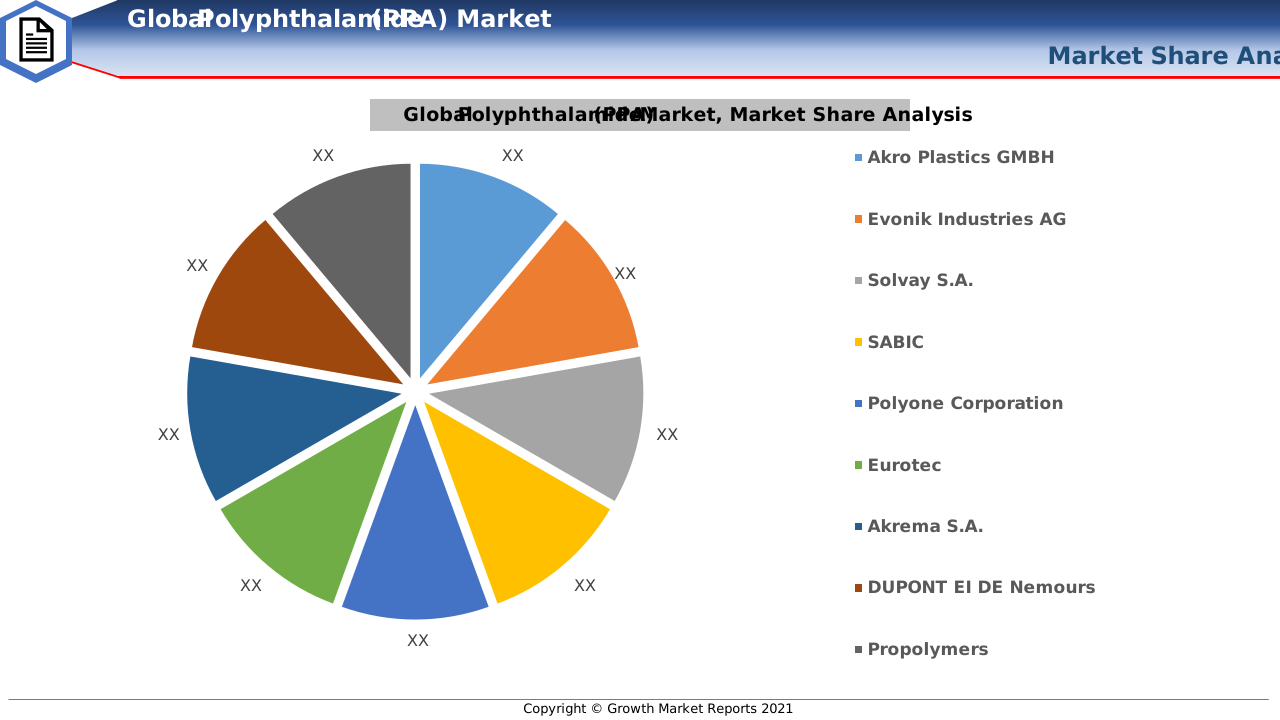
Key players competing in the polyphthalamide market include Akro Plastics GMBH, Evonik Industries AG, Solvay S.A., SABIC, Polyone Corporation, Eurotec, Akrema S.A., DUPONT EI DE Nemours & Co., and Propolymers. Some of these players are focusing on several market strategies such as mergers, acquisitions, partnerships, collaborations, capacity expansion, and product launches to enhance their market shares. For instance,
In August 2015, Evonik Industries introduced new glass-fiber reinforced Polyphthalamide molding compound VESTAMID HTplus ® M1035 P1 for automotive applications.
Yes, the Polyphthalamide market research report offers customization options to meet specific client needs, including tailored data, analysis, and insights.
Key players include Solvay S.A., BASF SE, Evonik Industries AG, Arkema Group, EMS-Chemie Holding AG, DuPont de Nemours, Inc., Mitsui Chemicals, Inc., SABIC, Toray Industries, Inc., and several others known for innovation and extensive product portfolios.
Major challenges include the relatively high cost of PPA compared to conventional plastics, raw material price fluctuations, and supply chain disruptions. Manufacturers must focus on innovation, cost optimization, and supply chain resilience to remain competitive.
Key trends include lightweighting in automotive and aerospace, the rise of electric vehicles, miniaturization in electronics, and the development of advanced PPA grades. Opportunities exist in expanding applications, especially in electric vehicles, 5G, IoT, and smart devices.
Asia Pacific dominates the market, accounting for about 47% of global revenue in 2024, led by China, Japan, South Korea, and India. North America and Europe are also significant markets, with growth driven by technological advancements and regulatory standards.
PPA is favored for its high mechanical strength, thermal stability, chemical resistance, and excellent dielectric properties. In automotive, it helps reduce vehicle weight and improve fuel efficiency, while in electronics, it ensures safety, reliability, and miniaturization of components.
The main types of Polyphthalamide are Unfilled Polyphthalamide, Glass-Filled Polyphthalamide, Mineral-Filled Polyphthalamide, Carbon-Filled Polyphthalamide, and specialty blends. Glass-Filled PPA holds the largest market share due to its enhanced strength and dimensional stability.
The automotive industry is the primary driver, followed by electrical & electronics, industrial equipment, consumer goods, and healthcare. The shift towards lightweight, durable, and heat-resistant materials in these sectors is fueling PPA demand.
The global Polyphthalamide market reached USD 1.68 billion in 2024 and is projected to grow at a CAGR of 6.1% from 2025 to 2033, reaching approximately USD 2.93 billion by 2033, driven by rising demand in automotive, electronics, and industrial sectors.
Polyphthalamide (PPA) is a high-performance engineering thermoplastic known for its mechanical strength, thermal stability, and chemical resistance. It is primarily used in automotive, electrical & electronics, industrial, consumer goods, and healthcare applications, replacing metals and conventional plastics in demanding environments.