Segments - by Product Type (Purified Terephthalic Acid, Crude Terephthalic Acid), by Application (Polyester Fiber, PET Resins, Films, Coatings, Others), by End-Use Industry (Textiles, Packaging, Automotive, Electronics, Others)
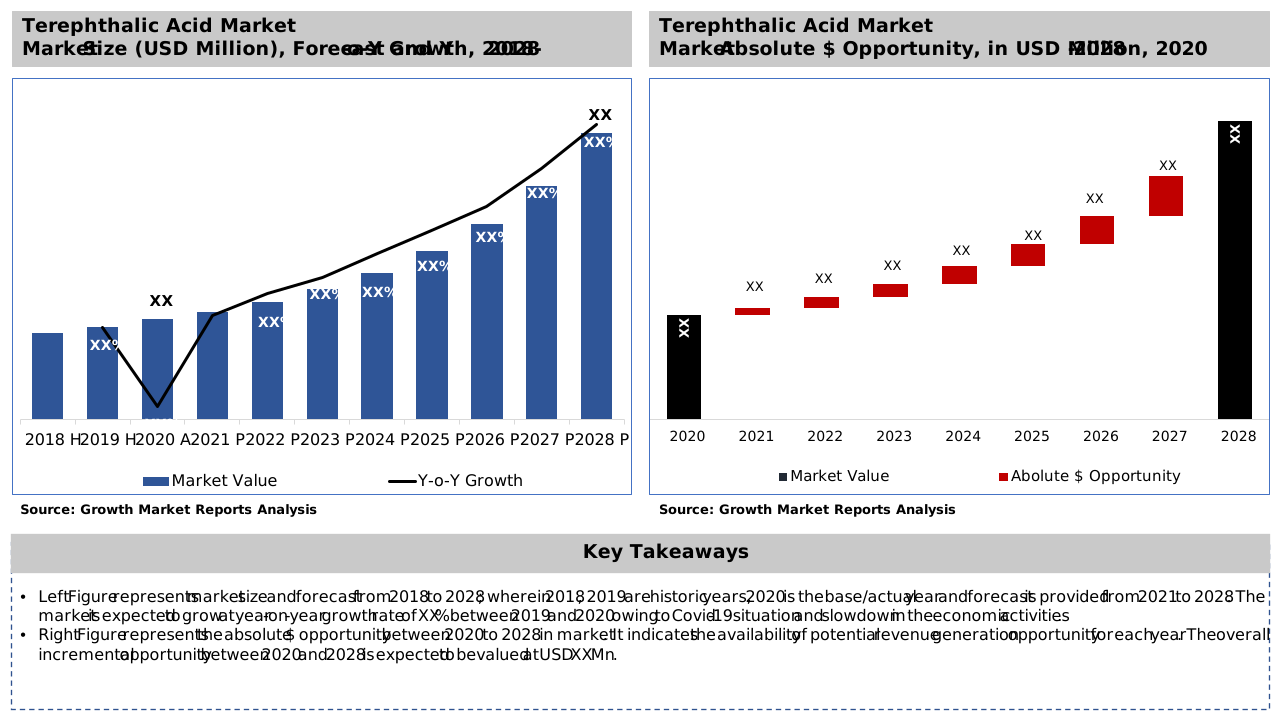
According to our latest research, the global terephthalic acid market size reached USD 58.4 billion in 2024, reflecting robust demand across key end-use industries. The market is projected to grow at a CAGR of 5.7% during the forecast period, reaching USD 95.7 billion by 2033. This expansion is primarily driven by increasing consumption of polyester fibers and PET resins, which are essential for textiles, packaging, and beverage industries. The steady shift towards sustainable packaging solutions and the rising demand for lightweight materials in automotive and electronics sectors further bolster market growth.
The terephthalic acid market is experiencing significant growth due to the surging global demand for polyester fibers, which are extensively used in the textile industry. As fashion and apparel industries continue to expand, particularly in emerging economies, the need for high-quality, durable, and cost-effective fibers has intensified. Terephthalic acid, as a key raw material in the production of polyester, is witnessing heightened consumption rates. Furthermore, the textile industry's transition towards eco-friendly and recyclable materials is expected to favor the use of terephthalic acid, especially as manufacturers seek to reduce their carbon footprint and align with stringent environmental regulations.
Another major growth factor for the terephthalic acid market is the expanding utilization of PET (polyethylene terephthalate) resins in packaging applications. With the global food and beverage industry emphasizing product safety, shelf-life extension, and lightweight packaging, PET resins derived from terephthalic acid have become the material of choice. The proliferation of bottled water, carbonated beverages, and ready-to-eat food packaging has further accelerated the consumption of terephthalic acid. Additionally, the growing trend towards recycling PET bottles and the increasing adoption of circular economy principles are expected to stimulate the demand for purified terephthalic acid, which is crucial for producing high-quality recycled PET products.
Technological advancements and innovations in terephthalic acid production processes are also contributing to market growth. The development of energy-efficient and environmentally friendly manufacturing techniques has enabled producers to enhance yield and reduce production costs. In addition, the emergence of bio-based terephthalic acid, derived from renewable feedstocks, is gaining traction as companies and consumers alike seek sustainable alternatives to conventional petrochemical-based products. The integration of advanced catalysts and purification technologies is further optimizing the quality and consistency of terephthalic acid, thereby expanding its application scope across various industries.
Regionally, the Asia Pacific dominates the terephthalic acid market, accounting for the largest share due to the presence of major textile manufacturing hubs such as China, India, and Southeast Asian countries. These regions benefit from abundant raw material availability, cost-effective labor, and robust infrastructure, making them attractive destinations for terephthalic acid production and consumption. North America and Europe also represent significant market shares, driven by strong demand for PET packaging and automotive applications. However, the Middle East & Africa and Latin America are emerging as promising markets, supported by rapid industrialization, urbanization, and investments in local manufacturing capabilities.
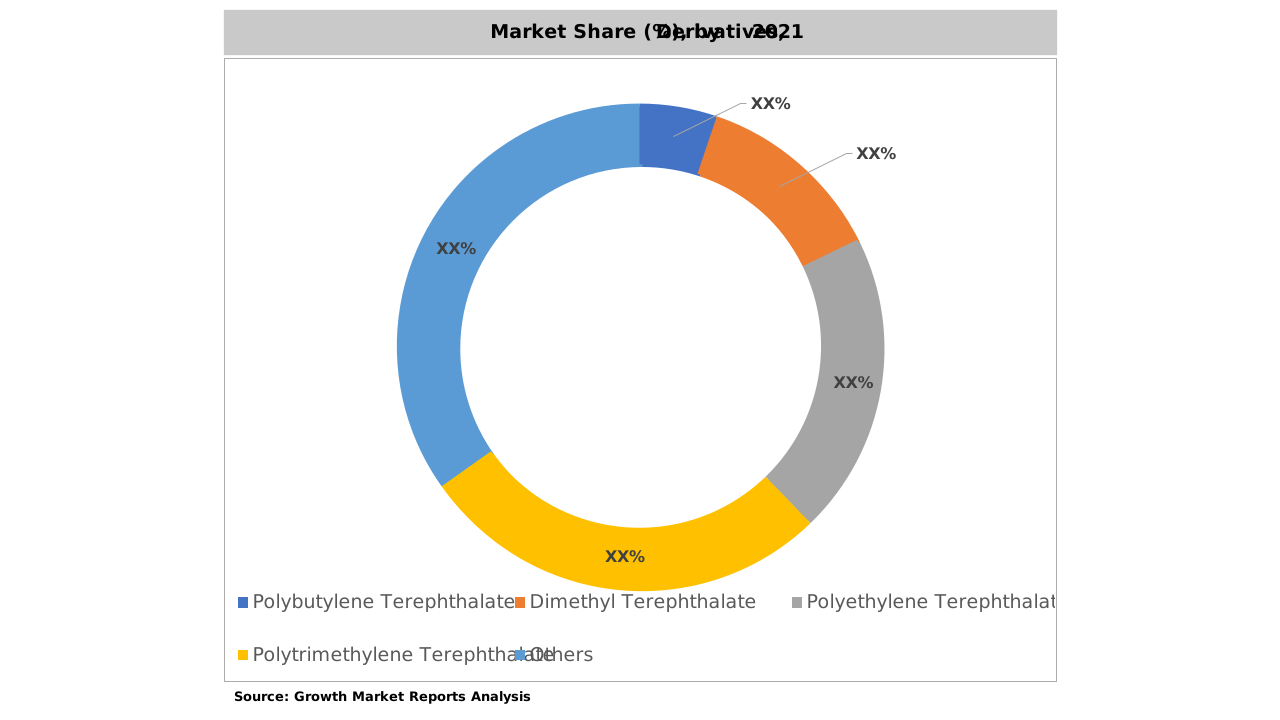
The terephthalic acid market is segmented by product type into purified terephthalic acid (PTA) and crude terephthalic acid (CTA). Purified terephthalic acid dominates the market, accounting for the majority of global consumption. PTA is the preferred choice for high-performance applications such as polyester fiber and PET resin production due to its superior purity, which ensures optimal product quality and performance. The demand for PTA is further fueled by its extensive use in the textile and packaging industries, where manufacturers prioritize consistency and reliability in raw materials. The increasing adoption of advanced purification technologies is expected to further strengthen PTA’s market position, as producers seek to meet the stringent quality requirements of downstream industries.
Crude terephthalic acid, on the other hand, serves as an intermediate product and is primarily utilized in applications where ultra-high purity is not a critical requirement. While CTA is less prominent than PTA, it still holds relevance in certain industrial processes, particularly in regions where cost constraints and lower-grade applications prevail. The market for CTA is influenced by the availability of feedstock, regional production capacities, and the economic feasibility of purification processes. However, as global industries shift towards higher quality standards and more demanding end-use applications, the share of crude terephthalic acid is expected to decline gradually in favor of PTA.
The pricing dynamics within the product type segment are shaped by fluctuations in raw material costs, particularly paraxylene, which is the primary feedstock for terephthalic acid production. Volatility in crude oil prices and supply chain disruptions can impact the cost structure of both PTA and CTA, influencing market competitiveness and profit margins. Producers are increasingly focusing on backward integration and strategic partnerships with raw material suppliers to mitigate risks and ensure a stable supply chain for both product types.
Environmental considerations are also playing a pivotal role in shaping the product type segment. With growing regulatory pressure to minimize environmental impact, manufacturers are investing in cleaner production processes and waste management systems. The development of bio-based PTA, derived from renewable resources, is gaining momentum as a sustainable alternative to conventional petrochemical-based products. This trend is expected to create new growth opportunities within the product type segment, particularly for companies that can successfully commercialize bio-based terephthalic acid at competitive costs.
| Attributes | Details |
| Report Title | Terephthalic Acid Market Research Report 2033 |
| By Product Type | Purified Terephthalic Acid, Crude Terephthalic Acid |
| By Application | Polyester Fiber, PET Resins, Films, Coatings, Others |
| By End-Use Industry | Textiles, Packaging, Automotive, Electronics, Others |
| Regions Covered | North America, Europe, APAC, Latin America, MEA |
| Base Year | 2024 |
| Historic Data | 2018-2023 |
| Forecast Period | 2025-2033 |
| Number of Pages | 297 |
| Number of Tables & Figures | 345 |
| Customization Available | Yes, the report can be customized as per your need. |
The application segment of the terephthalic acid market is broadly categorized into polyester fiber, PET resins, films, coatings, and others. Polyester fiber remains the largest application area, driven by its widespread use in textiles, apparel, home furnishings, and industrial fabrics. The global shift towards affordable, lightweight, and durable fabrics has propelled the demand for polyester fiber, making it a cornerstone of the terephthalic acid market. The versatility of polyester, coupled with its recyclability and ease of processing, ensures sustained demand for terephthalic acid as a key raw material in fiber production.
PET resins represent another significant application segment, particularly in the packaging industry. The exceptional clarity, strength, and chemical resistance of PET make it ideal for manufacturing bottles, containers, and films used in food and beverage packaging. The surge in demand for bottled water, soft drinks, and convenience foods has directly contributed to the growing consumption of terephthalic acid for PET resin production. Furthermore, the increasing emphasis on sustainable packaging solutions and the rising adoption of recycled PET are expected to drive future growth in this segment.
Terephthalic acid is also used in the production of films and coatings, where it imparts desirable properties such as toughness, chemical resistance, and dimensional stability. These films are widely utilized in the electronics, automotive, and packaging industries for applications ranging from insulation materials to protective coatings. The growing trend towards miniaturization and lightweighting in electronics and automotive sectors is anticipated to boost the demand for high-performance films and coatings, thereby supporting the growth of the terephthalic acid market.
Other applications of terephthalic acid include its use in specialty chemicals, adhesives, and engineering plastics. While these segments represent a smaller share of the overall market, they offer lucrative growth opportunities, particularly in niche industrial applications. The ongoing research and development efforts aimed at expanding the functional properties of terephthalic acid are expected to create new avenues for market expansion, as manufacturers seek to diversify their product portfolios and cater to emerging industry needs.
The end-use industry segment of the terephthalic acid market comprises textiles, packaging, automotive, electronics, and others. The textile industry is the largest consumer of terephthalic acid, primarily due to its extensive use in polyester fiber production. Rapid urbanization, rising disposable incomes, and changing fashion trends have fueled the growth of the textile sector, particularly in emerging economies such as China, India, and Southeast Asia. The increasing preference for synthetic fibers over natural fibers, driven by their superior durability and cost-effectiveness, has further strengthened the demand for terephthalic acid in this segment.
Packaging is another major end-use industry for terephthalic acid, with PET resins being the material of choice for a wide range of packaging applications. The global shift towards lightweight, recyclable, and food-safe packaging materials has accelerated the adoption of PET in the food and beverage, personal care, and pharmaceutical industries. As companies strive to meet consumer demands for sustainable packaging and comply with evolving regulatory standards, the role of terephthalic acid in the packaging industry is expected to expand further.
The automotive industry represents a growing end-use segment for terephthalic acid, particularly in the production of lightweight components and high-performance engineering plastics. The increasing focus on fuel efficiency, emission reduction, and vehicle weight optimization has driven the adoption of advanced materials such as PET and polyester composites. Terephthalic acid, as a key raw material for these materials, is poised to benefit from the ongoing transformation of the automotive sector towards sustainability and innovation.
In the electronics industry, terephthalic acid is utilized in the manufacture of films, insulation materials, and specialty plastics used in electronic devices, displays, and circuit boards. The rapid proliferation of consumer electronics, coupled with the demand for miniaturized and high-performance components, is expected to drive the consumption of terephthalic acid in this segment. Other end-use industries, including construction, adhesives, and specialty chemicals, also contribute to the overall demand for terephthalic acid, albeit to a lesser extent.
The terephthalic acid market presents a multitude of opportunities, particularly in the realm of sustainable and bio-based product development. As environmental concerns and regulatory pressures intensify, there is a growing demand for eco-friendly alternatives to conventional petrochemical-based terephthalic acid. The development and commercialization of bio-based terephthalic acid, derived from renewable feedstocks such as biomass and agricultural waste, offer significant growth potential for market players. Companies that invest in research and innovation to enhance the efficiency and scalability of bio-based production processes are likely to gain a competitive edge and capture emerging market segments focused on sustainability.
Another key opportunity lies in the expansion of recycling initiatives and the adoption of circular economy principles within the terephthalic acid market. The increasing emphasis on PET recycling, driven by both regulatory mandates and consumer preferences, is expected to boost the demand for high-purity terephthalic acid used in the production of recycled PET (rPET). Technological advancements in depolymerization and purification processes are enabling more efficient recovery and reuse of terephthalic acid from post-consumer PET waste. This trend not only supports environmental sustainability but also creates new revenue streams for manufacturers, as recycled terephthalic acid finds applications in a wide range of industries.
Despite the promising growth prospects, the terephthalic acid market faces certain restraining factors, particularly in the form of raw material price volatility and environmental regulations. The production of terephthalic acid is heavily dependent on paraxylene, a derivative of crude oil. Fluctuations in crude oil prices can significantly impact the cost structure and profitability of terephthalic acid producers. Additionally, stringent environmental regulations governing emissions, waste management, and energy consumption pose compliance challenges, especially for traditional petrochemical-based manufacturing processes. Companies must invest in cleaner technologies and sustainable practices to mitigate these risks and ensure long-term market viability.
The Asia Pacific region leads the global terephthalic acid market, accounting for approximately 63% of the total market size in 2024, which translates to around USD 36.8 billion. This dominance is attributed to the region’s robust textile and packaging industries, particularly in China, India, and Southeast Asia. China alone represents the largest producer and consumer of terephthalic acid, supported by its vast manufacturing infrastructure and favorable government policies. The region’s high population density, rapid urbanization, and rising disposable incomes further drive the demand for polyester-based products, solidifying Asia Pacific’s leadership in the market.
North America and Europe collectively account for a significant share of the terephthalic acid market, with North America representing approximately USD 8.7 billion and Europe contributing USD 7.9 billion in 2024. The demand in these regions is primarily driven by the packaging, automotive, and electronics industries. The increasing focus on sustainability, recycling, and regulatory compliance has led to the adoption of advanced production technologies and the development of bio-based and recycled terephthalic acid products. North America is expected to witness a moderate CAGR of 4.2% during the forecast period, while Europe is projected to grow at a similar pace, supported by innovation and investments in sustainable manufacturing.
The Middle East & Africa and Latin America are emerging as promising markets, with a combined market size of approximately USD 5 billion in 2024. These regions are experiencing rapid industrialization, urbanization, and infrastructure development, which are driving the demand for polyester fibers, PET resins, and related products. The establishment of new manufacturing facilities, coupled with investments in local production capabilities, is expected to accelerate market growth in these regions. The Middle East & Africa, in particular, is poised for above-average growth, with a projected CAGR of 6.3% through 2033, as governments and private sector players focus on diversifying their economies and developing downstream industries.
The global terephthalic acid market is characterized by intense competition, with a mix of multinational corporations and regional players vying for market share. The competitive landscape is shaped by factors such as production capacity, technological innovation, product quality, and cost efficiency. Leading companies are investing heavily in research and development to enhance production processes, improve product purity, and reduce environmental impact. Strategic partnerships, mergers, and acquisitions are common strategies employed by market participants to strengthen their market position and expand their geographic footprint. The increasing focus on sustainability and the development of bio-based terephthalic acid products are also influencing competitive dynamics, as companies seek to differentiate themselves in a rapidly evolving market.
Market leaders benefit from integrated supply chains, backward integration into raw material production, and large-scale manufacturing capabilities. These advantages enable them to achieve economies of scale, maintain competitive pricing, and ensure consistent product quality. In contrast, smaller regional players often compete on the basis of cost, flexibility, and proximity to end-use industries. The ability to adapt to changing market trends, regulatory requirements, and customer preferences is critical for sustained success in the terephthalic acid market. Additionally, companies that prioritize environmental stewardship and corporate social responsibility are likely to enhance their brand reputation and attract environmentally conscious customers.
Innovation remains a key differentiator in the terephthalic acid market, with leading companies investing in advanced catalysts, purification technologies, and bio-based production methods. The development of high-performance terephthalic acid products tailored to specific end-use applications is enabling manufacturers to capture new market segments and create value-added offerings. The integration of digital technologies and data analytics is also enhancing operational efficiency, supply chain management, and customer engagement, further strengthening the competitive position of market leaders.
Some of the major companies operating in the global terephthalic acid market include Reliance Industries Limited, Sinopec, Indorama Ventures, BP plc, SABIC, Eastman Chemical Company, Mitsubishi Chemical Corporation, Lotte Chemical Corporation, and Alpek S.A.B. de C.V. These companies are known for their extensive production capacities, global distribution networks, and strong focus on innovation. Reliance Industries Limited and Sinopec are among the largest producers of purified terephthalic acid, leveraging their integrated operations and access to raw materials to maintain market leadership. Indorama Ventures and Alpek S.A.B. de C.V. are prominent players in PET resin production, with a significant presence in the Americas and Asia.
BP plc and SABIC have established themselves as pioneers in sustainable and bio-based terephthalic acid production, investing in research and development to create environmentally friendly alternatives to conventional products. Eastman Chemical Company and Mitsubishi Chemical Corporation are recognized for their advanced manufacturing technologies and high-quality product offerings, catering to diverse end-use industries. Lotte Chemical Corporation is a key player in the Asia Pacific region, known for its strong focus on innovation and customer-centric solutions. Collectively, these companies are shaping the future of the terephthalic acid market through continuous investment, strategic collaborations, and a commitment to sustainability.
The Terephthalic Acid market has been segmented on the basis of
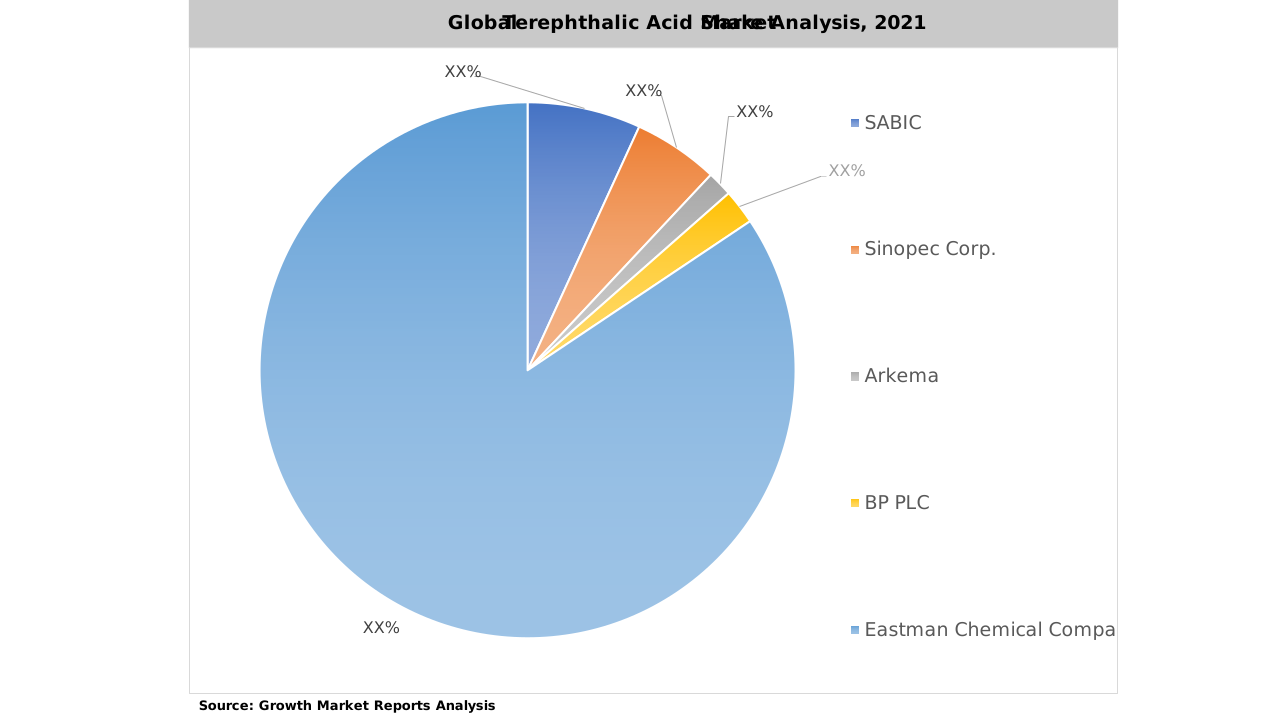
The key players competing in the terephthalic acid market are SABIC; Sinopec Corp.; Arkema; BP PLC; and Eastman Chemical Company.
Yes, the terephthalic acid market research report offers customization options to meet specific business or research needs.
Major companies include Reliance Industries Limited, SABIC, Indorama Ventures, Eastman Chemical Company, Mitsubishi Chemical Corporation, Sinopec, BP plc, Alpek S.A.B. de C.V., and Lotte Chemical Corporation, among others.
Sustainability is driving demand for bio-based terephthalic acid and recycled PET products. Companies are investing in eco-friendly production methods, recycling initiatives, and circular economy principles to reduce environmental impact and comply with regulations.
Major challenges include raw material price volatility (especially paraxylene, derived from crude oil), stringent environmental regulations, and the need for cleaner, more sustainable production processes.
Asia Pacific dominates the global terephthalic acid market, accounting for approximately 63% of the total market size in 2024, mainly due to strong textile and packaging industries in China, India, and Southeast Asia.
Key trends include the shift towards sustainable and recyclable packaging, increasing use of lightweight materials in automotive and electronics, technological advancements in production processes, and the rise of bio-based terephthalic acid derived from renewable resources.
The largest consumers are the textile industry (for polyester fibers), packaging industry (for PET resins), automotive sector (for lightweight materials), and electronics industry (for films and coatings).
The market is segmented into purified terephthalic acid (PTA) and crude terephthalic acid (CTA). PTA dominates due to its high purity and is mainly used in polyester fiber and PET resin production, while CTA is used in applications where ultra-high purity is not required.
The global terephthalic acid market reached USD 58.4 billion in 2024 and is projected to grow at a CAGR of 5.7%, reaching USD 95.7 billion by 2033. Growth is driven by increasing demand in textiles, packaging, automotive, and electronics industries.
Terephthalic acid is an organic compound primarily used as a raw material in the production of polyester fibers and PET (polyethylene terephthalate) resins. These materials are widely used in textiles, packaging (such as bottles and containers), automotive parts, electronics, films, and coatings.