Non-fungible Token Market Research Report 2033

Non-fungible Token Market Research Report 2033

Segments - by Component (Platform, Services), by Type (Digital Art, Collectibles, Gaming, Music, Sports, Utility, Others), by Application (Trading, Art, Gaming, Utilities, Others), by End-User (Individual, Enterprises)

https://growthmarketreports.com/Raksha
Author : Raksha Sharma
https://growthmarketreports.com/Vaibhav
Fact-checked by : V. Chandola
https://growthmarketreports.com/Shruti
Editor : Shruti Bhat

Upcoming | Report ID :ICT-SE-4583 | 4.9 Rating | 21 Reviews | 286 Pages | Format : Docx PDF

Report Description


Non-fungible Token (NFT) Market Outlook

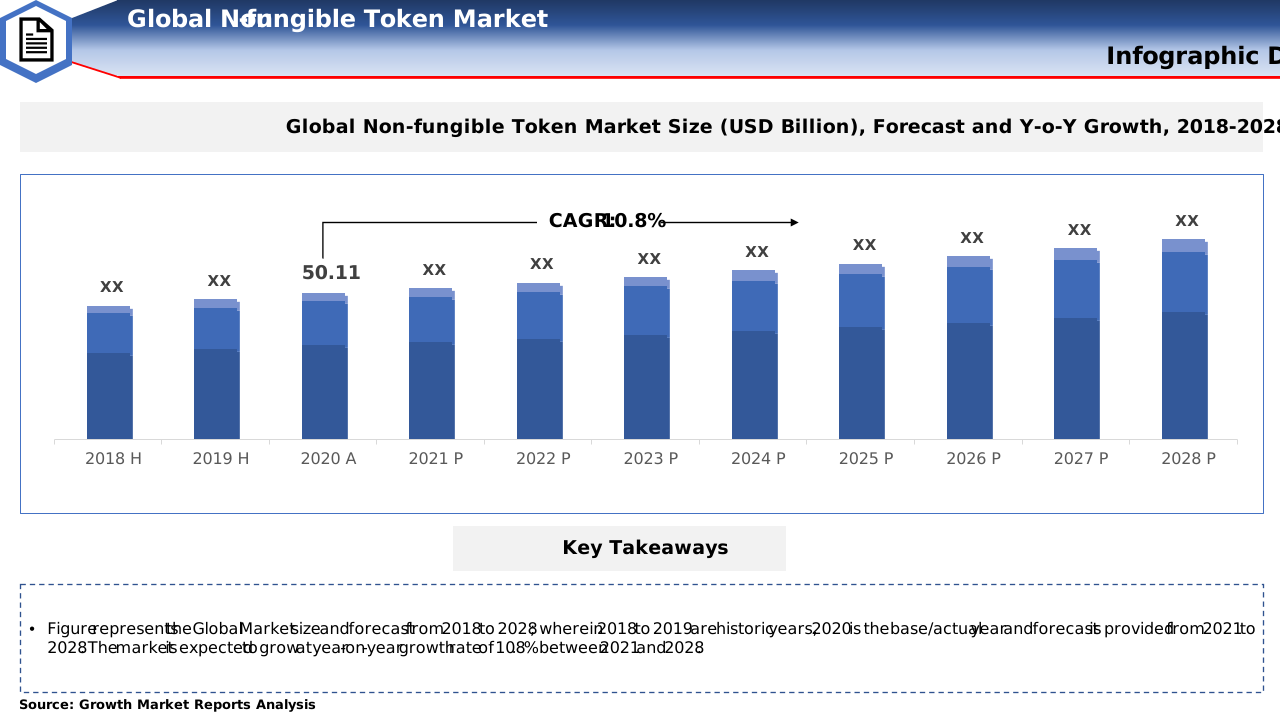
According to our latest research, the global Non-fungible Token (NFT) market size reached USD 3.6 billion in 2024, driven by increasing adoption across digital art, gaming, and collectibles segments. The market is projected to grow at a robust CAGR of 19.4% from 2025 to 2033, reaching a forecasted value of USD 15.5 billion by 2033. This remarkable growth trajectory is fueled by the expanding use cases of NFTs in various industries, the proliferation of blockchain technology, and a surge in demand for digital ownership and authenticity solutions.

The rapid evolution of the NFT market is primarily attributed to the growing awareness and acceptance of digital assets as legitimate stores of value and mediums of exchange. The integration of blockchain technology has enabled the creation of unique, verifiable digital tokens that can represent ownership of digital art, music, collectibles, and even virtual real estate. This technological advancement has not only democratized access to digital assets for creators and consumers worldwide but has also established new revenue streams for artists, musicians, and content creators. Additionally, the ability of NFTs to provide provenance, scarcity, and authenticity has significantly increased their appeal, especially among collectors and investors seeking to diversify their portfolios in the digital age.

Another significant growth factor for the Non-fungible Token market is the increasing utility of NFTs in gaming and virtual environments. Blockchain-based games and metaverse platforms are leveraging NFTs to enable players to own, trade, and monetize in-game assets, thereby creating new economic models within the gaming ecosystem. This trend is further amplified by the rising popularity of play-to-earn models, where gamers can earn real-world value through their in-game achievements and activities. The integration of NFTs in these environments is not only enhancing user engagement but also fostering community-driven economies, which is expected to contribute substantially to the overall market expansion in the coming years.

The NFT market is also benefiting from the growing involvement of mainstream brands, celebrities, and sports organizations. High-profile endorsements and collaborations have propelled NFTs into the global spotlight, attracting both retail and institutional investors. Companies across various sectors, including fashion, sports, and entertainment, are launching NFT-based campaigns to engage with their audiences, drive brand loyalty, and unlock new monetization avenues. These initiatives have led to a surge in NFT adoption beyond the traditional crypto community, further solidifying the market's growth prospects for the foreseeable future.

As the NFT market continues to evolve, platforms like NFTplace are emerging as pivotal players in the digital asset ecosystem. NFTplace offers a unique marketplace where artists, collectors, and enthusiasts can interact seamlessly, facilitating the buying, selling, and trading of NFTs with enhanced security and user experience. The platform's commitment to innovation and community engagement has positioned it as a leader in the space, attracting a diverse range of users who are keen to explore the potential of digital ownership. By integrating cutting-edge blockchain technology, NFTplace ensures that transactions are transparent and efficient, further enhancing the trust and reliability of the NFT ecosystem.

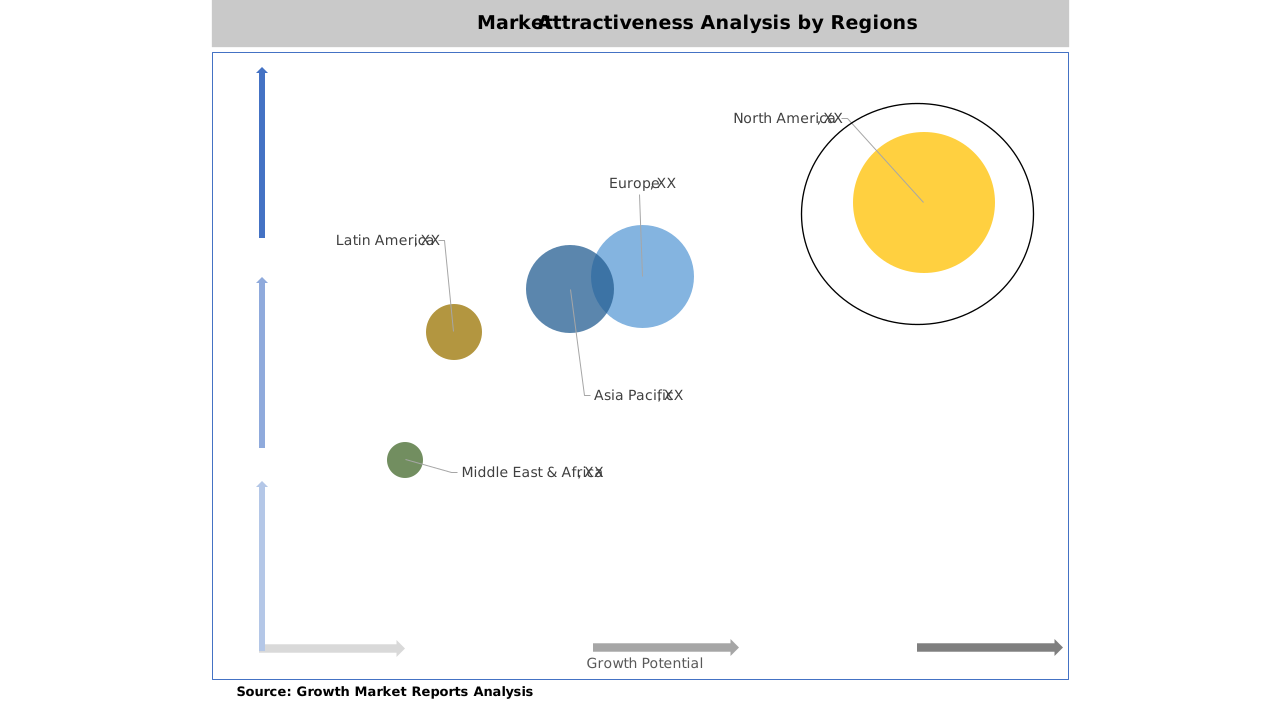
Regionally, North America continues to dominate the NFT market, accounting for the largest share due to its advanced digital infrastructure, strong presence of blockchain startups, and high disposable incomes. However, the Asia Pacific region is emerging as the fastest-growing market, driven by a tech-savvy population, increasing internet penetration, and rising interest in digital assets among millennials and Generation Z. Europe is also witnessing significant growth, particularly in countries like the United Kingdom, Germany, and France, where regulatory frameworks are evolving to accommodate the burgeoning NFT ecosystem. Meanwhile, Latin America and the Middle East & Africa are gradually catching up, with local artists and creators leveraging NFTs to reach global audiences and monetize their work in innovative ways.

Global Non-fungible Token Industry Outlook

Component Analysis

The Component segment of the Non-fungible Token market is bifurcated into platforms and services, each playing a crucial role in the overall ecosystem. NFT platforms, which include marketplaces and infrastructure providers, serve as the backbone of the NFT economy by enabling the creation, minting, trading, and management of digital assets. These platforms are continuously enhancing their functionalities to offer seamless user experiences, support multiple blockchain networks, and ensure the security and authenticity of transactions. The proliferation of user-friendly platforms has significantly lowered the entry barriers for both creators and collectors, thereby driving mass adoption and market growth.

On the other hand, the services segment encompasses consulting, integration, maintenance, and support services that are essential for the smooth operation and scalability of NFT projects. As the NFT market matures, enterprises and individual creators are increasingly seeking specialized services to navigate the complexities of blockchain technology, smart contracts, and regulatory compliance. Service providers are offering end-to-end solutions, including strategy development, platform integration, and post-launch support, to help clients maximize the value of their NFT initiatives. This trend is particularly pronounced among enterprises looking to leverage NFTs for brand engagement, customer loyalty programs, and digital asset management.

The interplay between platforms and services is fostering a vibrant and dynamic NFT ecosystem. While platforms are focusing on innovation and user acquisition, service providers are addressing the technical and operational challenges associated with NFT adoption. This symbiotic relationship is expected to intensify as the market evolves, with both segments playing complementary roles in driving the next phase of growth. Moreover, the emergence of white-label solutions and API integrations is enabling businesses of all sizes to launch their own NFT platforms with minimal investment and technical expertise, further democratizing access to the NFT economy.

Looking ahead, the component landscape is poised for significant transformation as new technologies and business models emerge. The integration of artificial intelligence, augmented reality, and decentralized finance (DeFi) functionalities into NFT platforms is expected to unlock new use cases and revenue streams. Additionally, the growing emphasis on interoperability and cross-chain compatibility will enable seamless asset transfers and liquidity across different blockchain networks, enhancing the overall value proposition for users and stakeholders in the NFT market.

Report Scope

Attributes Details
Report Title Non-fungible Token Market Research Report 2033
By Component Platform, Services
By Type Digital Art, Collectibles, Gaming, Music, Sports, Utility, Others
By Application Trading, Art, Gaming, Utilities, Others
By End-User Individual, Enterprises
Regions Covered North America, Europe, APAC, Latin America, MEA
Base Year 2024
Historic Data 2018-2023
Forecast Period 2025-2033
Number of Pages 286
Number of Tables & Figures 275
Customization Available Yes, the report can be customized as per your need.

Type Analysis

The Type segment of the Non-fungible Token market is highly diverse, encompassing digital art, collectibles, gaming, music, sports, utility, and other emerging categories. Digital art has been at the forefront of the NFT revolution, with artists leveraging blockchain technology to tokenize their work and reach global audiences without intermediaries. The ability to prove ownership and authenticity has addressed longstanding challenges in the art world, such as forgery and provenance, thereby attracting significant interest from collectors, investors, and galleries. High-profile NFT art sales have garnered widespread media attention, further fueling demand and innovation in this segment.

Collectibles represent another major category within the NFT market, with digital trading cards, virtual pets, and rare digital items gaining popularity among enthusiasts and investors alike. The scarcity and uniqueness of NFT-based collectibles have created vibrant secondary markets, where users can buy, sell, and trade assets with ease. This segment is particularly appealing to younger demographics, who are accustomed to digital ownership and value the social status associated with owning rare or exclusive items. The integration of gamification elements and community-driven experiences is further enhancing the appeal of NFT collectibles, driving sustained growth in this segment.

The gaming industry has emerged as a key driver of NFT adoption, with blockchain-based games and metaverse platforms integrating NFTs to enable true ownership and monetization of in-game assets. Players can now buy, sell, and trade virtual items such as skins, weapons, and avatars, creating new economic opportunities and business models within the gaming ecosystem. The rise of play-to-earn games, where users can earn real-world value through their in-game achievements, is attracting a diverse and global user base, further expanding the reach and impact of NFTs in the gaming sector.

Music and sports are also witnessing rapid adoption of NFTs, with artists, athletes, and organizations leveraging digital tokens to engage with fans, monetize content, and create unique experiences. Musicians are releasing limited edition tracks, albums, and concert tickets as NFTs, while sports teams are launching digital collectibles, memorabilia, and fan engagement initiatives. The utility segment, which includes NFTs used for access control, event tickets, and membership programs, is gaining traction as businesses explore new ways to leverage blockchain technology for customer engagement and loyalty. This diversification of NFT types is expected to drive sustained market growth and innovation in the years ahead.

Application Analysis

The Application segment of the Non-fungible Token market is characterized by a wide range of use cases, including trading, art, gaming, utilities, and other emerging applications. Trading remains the most prominent application, with NFT marketplaces facilitating the buying, selling, and exchange of digital assets across various categories. These platforms provide liquidity, price discovery, and transparency, enabling users to participate in the NFT economy with confidence. The rise of decentralized exchanges and peer-to-peer trading platforms is further democratizing access to NFTs, allowing users to transact directly without intermediaries.

Art continues to be a major application area for NFTs, with digital artists leveraging blockchain technology to tokenize their work and reach global audiences. NFT-based art platforms are providing creators with new monetization opportunities, while collectors benefit from provable ownership and authenticity. The integration of smart contracts is enabling innovative revenue-sharing models, such as royalties on secondary sales, which ensure that artists continue to benefit from the appreciation of their work over time. This has led to a surge in creativity and experimentation within the digital art community, driving sustained growth in this application segment.

Gaming is another significant application of NFTs, with blockchain-based games and metaverse platforms enabling players to own, trade, and monetize in-game assets. NFTs are transforming the gaming industry by introducing new economic models, such as play-to-earn and player-driven marketplaces, which empower users to generate real-world value from their gaming activities. The integration of NFTs is also enhancing user engagement and retention, as players are incentivized to participate in virtual economies and build lasting communities around their favorite games.

Utility applications of NFTs are gaining momentum as businesses explore new ways to leverage digital tokens for access control, event tickets, membership programs, and more. NFTs are being used to provide exclusive access to content, experiences, and communities, creating new opportunities for customer engagement and loyalty. Other emerging applications include virtual real estate, intellectual property rights management, and supply chain tracking, which highlight the versatility and potential of NFTs across diverse industries. As the market continues to evolve, the application landscape is expected to expand further, unlocking new value propositions and revenue streams for stakeholders.

End-User Analysis

The End-User segment of the Non-fungible Token market is broadly categorized into individuals and enterprises, each with distinct adoption drivers and use cases. Individual users, including artists, collectors, gamers, and enthusiasts, have been at the forefront of NFT adoption, leveraging digital tokens to create, buy, sell, and trade unique assets. The ability to prove ownership, authenticity, and scarcity has resonated strongly with individuals seeking to participate in the digital economy and express their creativity. The rise of user-friendly platforms and marketplaces has further lowered the barriers to entry, enabling a diverse and global user base to engage with NFTs.

Enterprises are increasingly recognizing the potential of NFTs to drive brand engagement, customer loyalty, and digital asset management. Companies across sectors such as fashion, sports, entertainment, and retail are launching NFT-based campaigns to connect with their audiences and unlock new monetization avenues. Enterprises are also exploring the use of NFTs for supply chain tracking, intellectual property management, and employee recognition programs, highlighting the versatility and business value of digital tokens. The growing involvement of large organizations is expected to drive mainstream adoption and institutional investment in the NFT market.

The interplay between individual and enterprise users is fostering a dynamic and collaborative NFT ecosystem. While individuals drive creativity, innovation, and community engagement, enterprises bring scale, resources, and marketing power to the market. This synergy is creating new opportunities for collaboration, co-creation, and value exchange, which are expected to accelerate the growth and maturation of the NFT industry in the coming years. The increasing availability of enterprise-grade NFT solutions and integration services is further facilitating adoption among businesses of all sizes.

Looking ahead, the end-user landscape is poised for significant transformation as new use cases and business models emerge. The convergence of NFTs with other emerging technologies, such as artificial intelligence, augmented reality, and decentralized finance, is expected to unlock new opportunities for both individuals and enterprises. As the market continues to evolve, stakeholders will need to navigate regulatory, technical, and operational challenges to realize the full potential of NFTs and drive sustainable growth in the digital economy.

Opportunities & Threats

The Non-fungible Token market presents a wealth of opportunities for innovation, value creation, and economic empowerment. The growing adoption of NFTs across diverse industries is unlocking new revenue streams for creators, businesses, and investors, while enabling greater transparency, efficiency, and security in digital transactions. The ability to tokenize and monetize unique digital assets is democratizing access to the global economy, empowering individuals and communities to participate in the creation and exchange of value. The integration of NFTs with emerging technologies, such as artificial intelligence, augmented reality, and decentralized finance, is expected to drive further innovation and expand the range of use cases and applications in the coming years.

Another significant opportunity lies in the development of interoperable and scalable NFT platforms that can support cross-chain asset transfers, liquidity, and composability. The emergence of decentralized marketplaces, white-label solutions, and API integrations is enabling businesses of all sizes to launch their own NFT initiatives with minimal investment and technical expertise. This democratization of access is expected to accelerate market growth and foster a vibrant and inclusive NFT ecosystem. Additionally, the growing involvement of mainstream brands, celebrities, and sports organizations is driving mainstream adoption and institutional investment, further solidifying the market's growth prospects.

Despite the tremendous opportunities, the NFT market faces several challenges and threats that could hinder its growth and sustainability. Regulatory uncertainty, intellectual property concerns, and the risk of fraud and scams are significant restraining factors that need to be addressed to build trust and confidence in the market. The volatility of cryptocurrency prices, high transaction fees, and environmental concerns associated with energy-intensive blockchain networks are also potential headwinds. Market participants will need to navigate these challenges by adopting best practices, enhancing transparency, and collaborating with regulators and industry stakeholders to ensure the long-term success and resilience of the NFT ecosystem.

Regional Outlook

North America remains the largest and most mature market for Non-fungible Tokens, accounting for approximately 41% of the global market share in 2024, with a market size of around USD 1.48 billion. This dominance is driven by the region's advanced digital infrastructure, strong presence of blockchain startups, and high levels of consumer awareness and disposable income. The United States, in particular, is home to several leading NFT platforms, marketplaces, and service providers, as well as a vibrant community of artists, creators, and collectors. The region's regulatory environment is gradually evolving to accommodate the unique characteristics of NFTs, with policymakers and industry stakeholders working together to establish clear guidelines and standards.

The Asia Pacific region is emerging as the fastest-growing market for NFTs, with a projected CAGR of 23.1% from 2025 to 2033. The market size for Asia Pacific reached approximately USD 950 million in 2024, driven by a tech-savvy population, increasing internet penetration, and rising interest in digital assets among millennials and Generation Z. Countries such as China, Japan, South Korea, and Singapore are at the forefront of NFT adoption, with local artists, gaming companies, and tech startups leveraging blockchain technology to create innovative products and services. The region's vibrant digital culture, coupled with government initiatives to promote blockchain innovation, is expected to drive sustained growth and investment in the NFT market over the next decade.

Europe is also witnessing significant growth in the NFT market, with a market size of approximately USD 720 million in 2024. The region is characterized by a diverse and dynamic ecosystem of artists, creators, and enterprises, particularly in countries such as the United Kingdom, Germany, France, and the Netherlands. European regulators are taking a proactive approach to address legal and regulatory challenges associated with NFTs, with a focus on consumer protection, intellectual property rights, and anti-money laundering measures. Meanwhile, Latin America and the Middle East & Africa are gradually catching up, with local artists and creators leveraging NFTs to reach global audiences and monetize their work in innovative ways. The combined market size for these regions was estimated at USD 450 million in 2024, with significant growth potential in the coming years as digital infrastructure and blockchain adoption continue to improve.

Non-fungible Token Market Statistics

Competitor Outlook

The competitive landscape of the Non-fungible Token market is characterized by a diverse array of players, including NFT marketplaces, blockchain infrastructure providers, service companies, and enterprise solution vendors. The market is highly dynamic and rapidly evolving, with new entrants and innovative business models continually reshaping the competitive environment. Leading NFT platforms are focusing on enhancing user experience, expanding their product offerings, and integrating advanced technologies to differentiate themselves and capture market share. Strategic partnerships, acquisitions, and collaborations are common strategies employed by key players to strengthen their market position and accelerate growth.

NFT marketplaces such as OpenSea, Rarible, Foundation, and SuperRare have established themselves as industry leaders, offering robust platforms for the creation, minting, and trading of digital assets. These platforms are investing heavily in security, scalability, and interoperability to support a growing user base and a diverse range of NFT types and applications. Blockchain infrastructure providers, such as Ethereum, Flow, and Polygon, play a critical role in enabling the underlying technology and ensuring the security, transparency, and efficiency of NFT transactions. Service companies, including consulting firms, integration providers, and legal advisors, are offering specialized solutions to help clients navigate the complexities of the NFT landscape and maximize the value of their digital assets.

The entry of mainstream brands, celebrities, and sports organizations into the NFT market has intensified competition and driven mainstream adoption. Companies such as Nike, Adidas, and the NBA have launched high-profile NFT campaigns and partnerships, leveraging their brand equity and fan base to create unique digital experiences and drive engagement. These initiatives have not only expanded the reach and impact of NFTs but have also attracted institutional investors and venture capital into the market. The growing involvement of large enterprises is expected to drive further innovation, consolidation, and professionalization of the NFT industry in the coming years.

Some of the major companies operating in the Non-fungible Token market include OpenSea, Rarible, Foundation, SuperRare, Nifty Gateway, Mintable, Zora, and MakersPlace. OpenSea is the largest NFT marketplace by trading volume, offering a wide range of digital assets across art, collectibles, gaming, and utility categories. Rarible is known for its decentralized governance model and community-driven approach, while Foundation and SuperRare focus on high-quality digital art and curated collections. Nifty Gateway specializes in limited edition drops and celebrity collaborations, while Mintable and Zora offer user-friendly platforms for NFT creation and trading. MakersPlace is renowned for its focus on digital art and partnerships with leading artists and galleries. These companies are continuously innovating and expanding their offerings to capture new opportunities and address the evolving needs of creators, collectors, and enterprises in the rapidly growing NFT market.

Key Players

  • OpenSea
  • Rarible
  • SuperRare
  • Foundation
  • Nifty Gateway
  • Zora
  • Mintable
  • KnownOrigin
  • BakerySwap
  • Enjin
  • Axie Infinity
  • NBA Top Shot
  • Sorare
  • Decentraland
  • CryptoPunks (Larva Labs)
  • MakersPlace
  • AtomicMarket
  • WAX
  • Async Art
  • ThetaDrop
Non-fungible Token Market Overview

Segments

The Non-fungible Token market has been segmented on the basis of

Component

  • Platform
  • Services

Type

  • Digital Art
  • Collectibles
  • Gaming
  • Music
  • Sports
  • Utility
  • Others

Application

  • Trading
  • Art
  • Gaming
  • Utilities
  • Others

End-User

  • Individual
  • Enterprises

Competitive Landscape

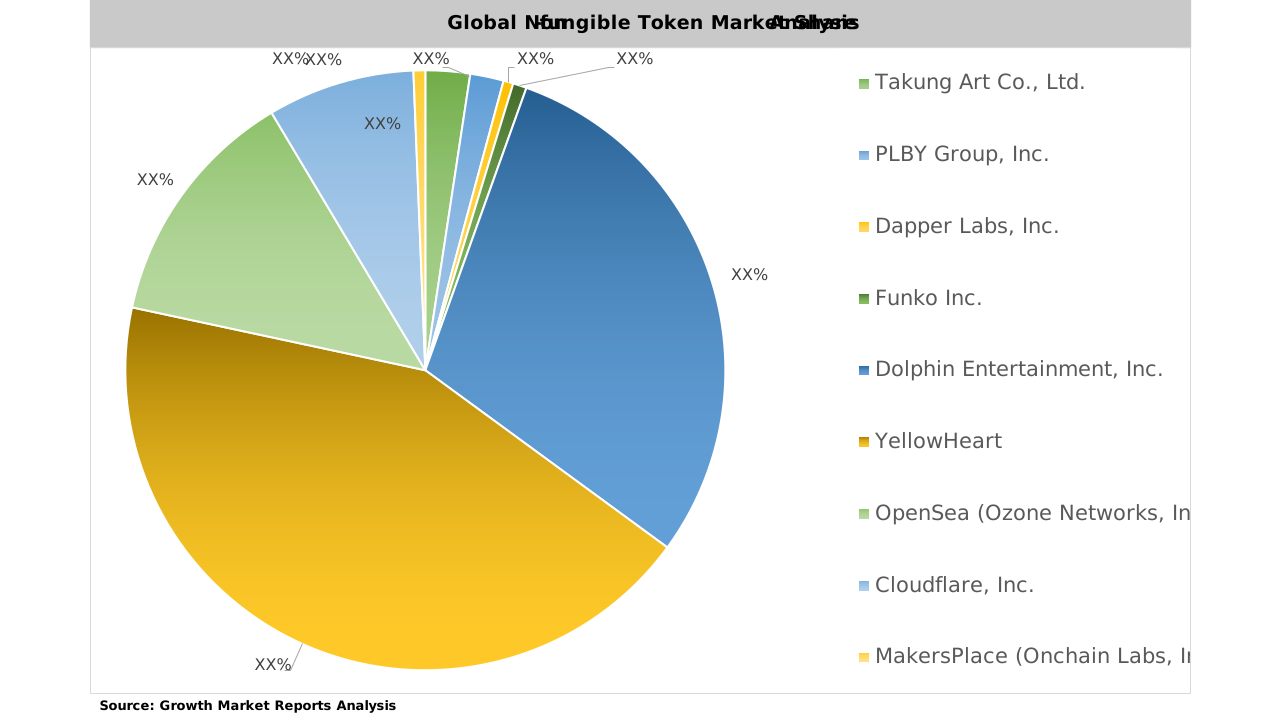
Key players competing in the global non-fungible token market are Takung Art Co., Ltd.; PLBY Group, Inc.; Dapper Labs, Inc.; Funko Inc.; Dolphin Entertainment, Inc.; YellowHeart; OpenSea (Ozone Networks, Inc.); Cloudflare, Inc.; and MakersPlace (Onchain Labs, Inc.)

In order to improve their market position and extend their client base, these organizations are adopting a number of organic and inorganic growth tactics. PLBY Group, Inc., for example, launched Rabbitars, a new NFT initiative in October 2021. The business joined the blockchain and NFT industry to deliver Playboy's new membership options. It debuted Liquid Summer, a collection of digital artworks developed in partnership with Slimesunday, as its inaugural NFT release. This collection was sold out in 3 minutes after being disseminated through Nifty portals. Vendor initiatives such as these are propelling the market.

Global Non Fungible Token Market Key Players

Frequently Asked Questions

Key trends include integration of artificial intelligence, augmented reality, decentralized finance (DeFi), interoperability between blockchains, and the rise of white-label NFT solutions and API integrations.

NFTs enable true digital ownership, monetization of in-game assets, royalties for artists, and new fan engagement models in music and sports, creating innovative revenue streams and business models.

Major NFT platforms include OpenSea, Rarible, Foundation, SuperRare, Nifty Gateway, Mintable, Zora, and MakersPlace. Other notable players are KnownOrigin, BakerySwap, Enjin, Axie Infinity, NBA Top Shot, Sorare, Decentraland, CryptoPunks, AtomicMarket, WAX, Async Art, and ThetaDrop.

Opportunities include new revenue streams, democratized access to digital assets, and integration with emerging technologies. Challenges involve regulatory uncertainty, intellectual property issues, fraud risks, cryptocurrency volatility, and environmental concerns.

NFTs are adopted by individuals (artists, collectors, gamers, enthusiasts) and enterprises (brands, sports organizations, entertainment companies, and retailers) for purposes like digital asset management, brand engagement, and customer loyalty.

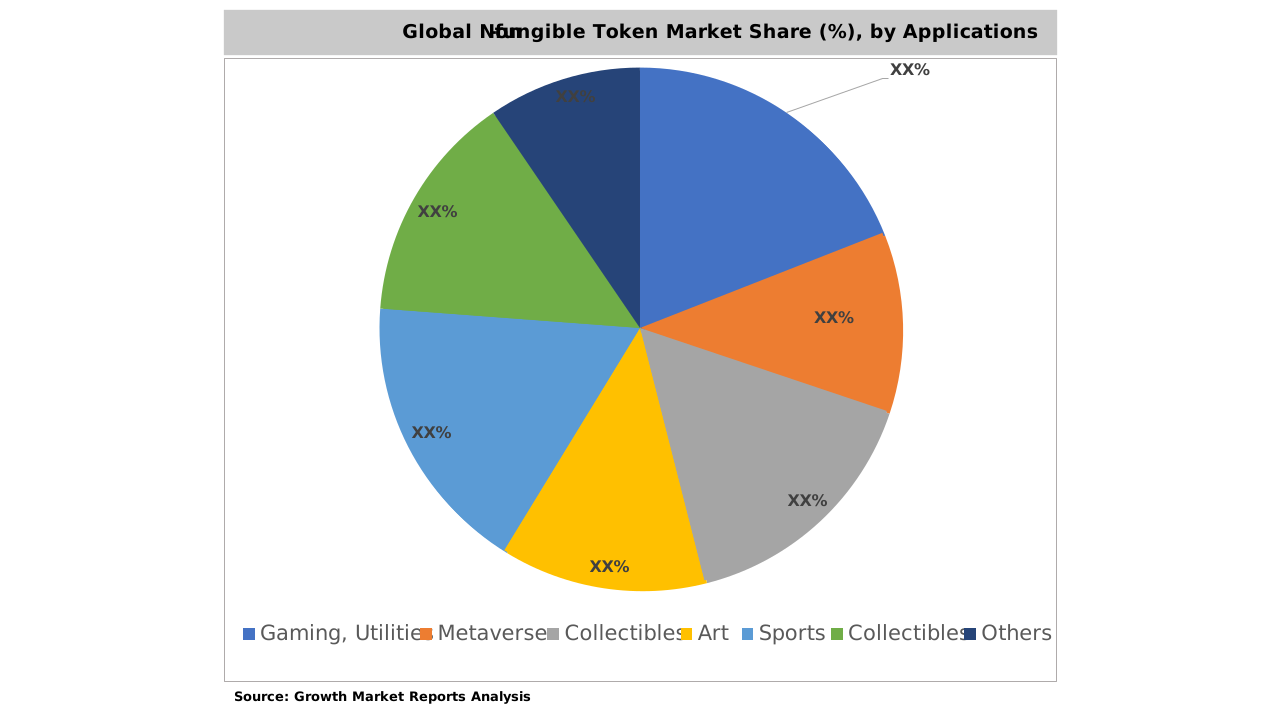
NFTs are used in digital art, collectibles, gaming, music, sports, utility, and more. Applications include trading, art, gaming, utilities (like event tickets and memberships), and emerging uses such as virtual real estate and intellectual property management.

The NFT market is divided into platforms (marketplaces and infrastructure providers) and services (consulting, integration, maintenance, and support), both crucial for enabling NFT creation, trading, and management.

North America dominates the NFT market with about 41% share, followed by rapid growth in Asia Pacific, and significant activity in Europe, Latin America, and the Middle East & Africa.

Key growth drivers include increasing adoption of NFTs in digital art, gaming, and collectibles, expanding use cases across industries, the proliferation of blockchain technology, and rising demand for digital ownership and authenticity.

The global Non-fungible Token (NFT) market reached USD 3.6 billion in 2024 and is projected to grow at a CAGR of 19.4% from 2025 to 2033, reaching USD 15.5 billion by 2033.

Table Of Content

Chapter 1 Executive Summary
Chapter 2 Assumptions and Acronyms Used
Chapter 3 Research Methodology
Chapter 4 Non-fungible Token Market Overview
   4.1 Introduction
      4.1.1 Market Taxonomy
      4.1.2 Market Definition
      4.1.3 Macro-Economic Factors Impacting the Market Growth
   4.2 Non-fungible Token Market Dynamics
      4.2.1 Market Drivers
      4.2.2 Market Restraints
      4.2.3 Market Opportunity
   4.3 Non-fungible Token Market - Supply Chain Analysis
      4.3.1 List of Key Suppliers
      4.3.2 List of Key Distributors
      4.3.3 List of Key Consumers
   4.4 Key Forces Shaping the Non-fungible Token Market
      4.4.1 Bargaining Power of Suppliers
      4.4.2 Bargaining Power of Buyers
      4.4.3 Threat of Substitution
      4.4.4 Threat of New Entrants
      4.4.5 Competitive Rivalry
   4.5 Global Non-fungible Token Market Size & Forecast, 2023-2032
      4.5.1 Non-fungible Token Market Size and Y-o-Y Growth
      4.5.2 Non-fungible Token Market Absolute $ Opportunity

Chapter 5 Global Non-fungible Token Market Analysis and Forecast By Component
   5.1 Introduction
      5.1.1 Key Market Trends & Growth Opportunities By Component
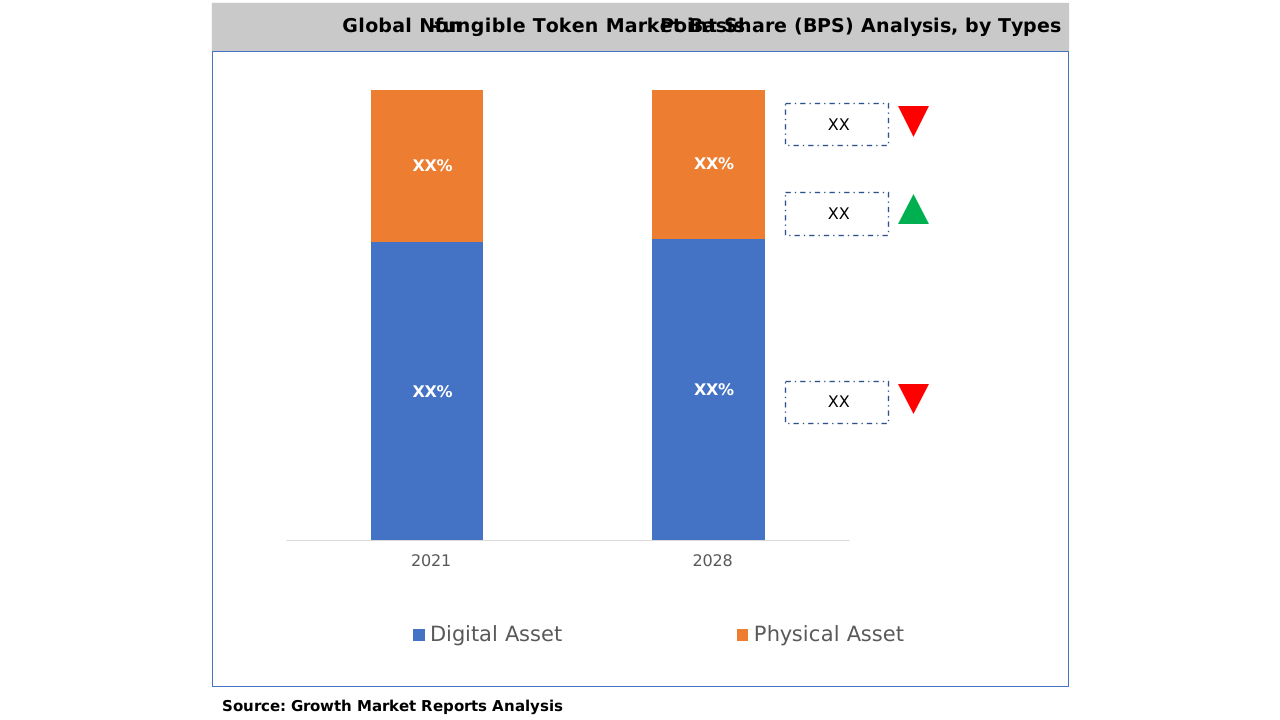
      5.1.2 Basis Point Share (BPS) Analysis By Component
      5.1.3 Absolute $ Opportunity Assessment By Component
   5.2 Non-fungible Token Market Size Forecast By Component
      5.2.1 Platform
      5.2.2 Services
   5.3 Market Attractiveness Analysis By Component

Chapter 6 Global Non-fungible Token Market Analysis and Forecast By Type
   6.1 Introduction
      6.1.1 Key Market Trends & Growth Opportunities By Type
      6.1.2 Basis Point Share (BPS) Analysis By Type
      6.1.3 Absolute $ Opportunity Assessment By Type
   6.2 Non-fungible Token Market Size Forecast By Type
      6.2.1 Digital Art
      6.2.2 Collectibles
      6.2.3 Gaming
      6.2.4 Music
      6.2.5 Sports
      6.2.6 Utility
      6.2.7 Others
   6.3 Market Attractiveness Analysis By Type

Chapter 7 Global Non-fungible Token Market Analysis and Forecast By Application
   7.1 Introduction
      7.1.1 Key Market Trends & Growth Opportunities By Application
      7.1.2 Basis Point Share (BPS) Analysis By Application
      7.1.3 Absolute $ Opportunity Assessment By Application
   7.2 Non-fungible Token Market Size Forecast By Application
      7.2.1 Trading
      7.2.2 Art
      7.2.3 Gaming
      7.2.4 Utilities
      7.2.5 Others
   7.3 Market Attractiveness Analysis By Application

Chapter 8 Global Non-fungible Token Market Analysis and Forecast By End-User
   8.1 Introduction
      8.1.1 Key Market Trends & Growth Opportunities By End-User
      8.1.2 Basis Point Share (BPS) Analysis By End-User
      8.1.3 Absolute $ Opportunity Assessment By End-User
   8.2 Non-fungible Token Market Size Forecast By End-User
      8.2.1 Individual
      8.2.2 Enterprises
   8.3 Market Attractiveness Analysis By End-User

Chapter 9 Global Non-fungible Token Market Analysis and Forecast by Region
   9.1 Introduction
      9.1.1 Key Market Trends & Growth Opportunities By Region
      9.1.2 Basis Point Share (BPS) Analysis By Region
      9.1.3 Absolute $ Opportunity Assessment By Region
   9.2 Non-fungible Token Market Size Forecast By Region
      9.2.1 North America
      9.2.2 Europe
      9.2.3 Asia Pacific
      9.2.4 Latin America
      9.2.5 Middle East & Africa (MEA)
   9.3 Market Attractiveness Analysis By Region

Chapter 10 Coronavirus Disease (COVID-19) Impact 
   10.1 Introduction 
   10.2 Current & Future Impact Analysis 
   10.3 Economic Impact Analysis 
   10.4 Government Policies 
   10.5 Investment Scenario

Chapter 11 North America Non-fungible Token Analysis and Forecast
   11.1 Introduction
   11.2 North America Non-fungible Token Market Size Forecast by Country
      11.2.1 U.S.
      11.2.2 Canada
   11.3 Basis Point Share (BPS) Analysis by Country
   11.4 Absolute $ Opportunity Assessment by Country
   11.5 Market Attractiveness Analysis by Country
   11.6 North America Non-fungible Token Market Size Forecast By Component
      11.6.1 Platform
      11.6.2 Services
   11.7 Basis Point Share (BPS) Analysis By Component 
   11.8 Absolute $ Opportunity Assessment By Component 
   11.9 Market Attractiveness Analysis By Component
   11.10 North America Non-fungible Token Market Size Forecast By Type
      11.10.1 Digital Art
      11.10.2 Collectibles
      11.10.3 Gaming
      11.10.4 Music
      11.10.5 Sports
      11.10.6 Utility
      11.10.7 Others
   11.11 Basis Point Share (BPS) Analysis By Type 
   11.12 Absolute $ Opportunity Assessment By Type 
   11.13 Market Attractiveness Analysis By Type
   11.14 North America Non-fungible Token Market Size Forecast By Application
      11.14.1 Trading
      11.14.2 Art
      11.14.3 Gaming
      11.14.4 Utilities
      11.14.5 Others
   11.15 Basis Point Share (BPS) Analysis By Application 
   11.16 Absolute $ Opportunity Assessment By Application 
   11.17 Market Attractiveness Analysis By Application
   11.18 North America Non-fungible Token Market Size Forecast By End-User
      11.18.1 Individual
      11.18.2 Enterprises
   11.19 Basis Point Share (BPS) Analysis By End-User 
   11.20 Absolute $ Opportunity Assessment By End-User 
   11.21 Market Attractiveness Analysis By End-User

Chapter 12 Europe Non-fungible Token Analysis and Forecast
   12.1 Introduction
   12.2 Europe Non-fungible Token Market Size Forecast by Country
      12.2.1 Germany
      12.2.2 France
      12.2.3 Italy
      12.2.4 U.K.
      12.2.5 Spain
      12.2.6 Russia
      12.2.7 Rest of Europe
   12.3 Basis Point Share (BPS) Analysis by Country
   12.4 Absolute $ Opportunity Assessment by Country
   12.5 Market Attractiveness Analysis by Country
   12.6 Europe Non-fungible Token Market Size Forecast By Component
      12.6.1 Platform
      12.6.2 Services
   12.7 Basis Point Share (BPS) Analysis By Component 
   12.8 Absolute $ Opportunity Assessment By Component 
   12.9 Market Attractiveness Analysis By Component
   12.10 Europe Non-fungible Token Market Size Forecast By Type
      12.10.1 Digital Art
      12.10.2 Collectibles
      12.10.3 Gaming
      12.10.4 Music
      12.10.5 Sports
      12.10.6 Utility
      12.10.7 Others
   12.11 Basis Point Share (BPS) Analysis By Type 
   12.12 Absolute $ Opportunity Assessment By Type 
   12.13 Market Attractiveness Analysis By Type
   12.14 Europe Non-fungible Token Market Size Forecast By Application
      12.14.1 Trading
      12.14.2 Art
      12.14.3 Gaming
      12.14.4 Utilities
      12.14.5 Others
   12.15 Basis Point Share (BPS) Analysis By Application 
   12.16 Absolute $ Opportunity Assessment By Application 
   12.17 Market Attractiveness Analysis By Application
   12.18 Europe Non-fungible Token Market Size Forecast By End-User
      12.18.1 Individual
      12.18.2 Enterprises
   12.19 Basis Point Share (BPS) Analysis By End-User 
   12.20 Absolute $ Opportunity Assessment By End-User 
   12.21 Market Attractiveness Analysis By End-User

Chapter 13 Asia Pacific Non-fungible Token Analysis and Forecast
   13.1 Introduction
   13.2 Asia Pacific Non-fungible Token Market Size Forecast by Country
      13.2.1 China
      13.2.2 Japan
      13.2.3 South Korea
      13.2.4 India
      13.2.5 Australia
      13.2.6 South East Asia (SEA)
      13.2.7 Rest of Asia Pacific (APAC)
   13.3 Basis Point Share (BPS) Analysis by Country
   13.4 Absolute $ Opportunity Assessment by Country
   13.5 Market Attractiveness Analysis by Country
   13.6 Asia Pacific Non-fungible Token Market Size Forecast By Component
      13.6.1 Platform
      13.6.2 Services
   13.7 Basis Point Share (BPS) Analysis By Component 
   13.8 Absolute $ Opportunity Assessment By Component 
   13.9 Market Attractiveness Analysis By Component
   13.10 Asia Pacific Non-fungible Token Market Size Forecast By Type
      13.10.1 Digital Art
      13.10.2 Collectibles
      13.10.3 Gaming
      13.10.4 Music
      13.10.5 Sports
      13.10.6 Utility
      13.10.7 Others
   13.11 Basis Point Share (BPS) Analysis By Type 
   13.12 Absolute $ Opportunity Assessment By Type 
   13.13 Market Attractiveness Analysis By Type
   13.14 Asia Pacific Non-fungible Token Market Size Forecast By Application
      13.14.1 Trading
      13.14.2 Art
      13.14.3 Gaming
      13.14.4 Utilities
      13.14.5 Others
   13.15 Basis Point Share (BPS) Analysis By Application 
   13.16 Absolute $ Opportunity Assessment By Application 
   13.17 Market Attractiveness Analysis By Application
   13.18 Asia Pacific Non-fungible Token Market Size Forecast By End-User
      13.18.1 Individual
      13.18.2 Enterprises
   13.19 Basis Point Share (BPS) Analysis By End-User 
   13.20 Absolute $ Opportunity Assessment By End-User 
   13.21 Market Attractiveness Analysis By End-User

Chapter 14 Latin America Non-fungible Token Analysis and Forecast
   14.1 Introduction
   14.2 Latin America Non-fungible Token Market Size Forecast by Country
      14.2.1 Brazil
      14.2.2 Mexico
      14.2.3 Rest of Latin America (LATAM)
   14.3 Basis Point Share (BPS) Analysis by Country
   14.4 Absolute $ Opportunity Assessment by Country
   14.5 Market Attractiveness Analysis by Country
   14.6 Latin America Non-fungible Token Market Size Forecast By Component
      14.6.1 Platform
      14.6.2 Services
   14.7 Basis Point Share (BPS) Analysis By Component 
   14.8 Absolute $ Opportunity Assessment By Component 
   14.9 Market Attractiveness Analysis By Component
   14.10 Latin America Non-fungible Token Market Size Forecast By Type
      14.10.1 Digital Art
      14.10.2 Collectibles
      14.10.3 Gaming
      14.10.4 Music
      14.10.5 Sports
      14.10.6 Utility
      14.10.7 Others
   14.11 Basis Point Share (BPS) Analysis By Type 
   14.12 Absolute $ Opportunity Assessment By Type 
   14.13 Market Attractiveness Analysis By Type
   14.14 Latin America Non-fungible Token Market Size Forecast By Application
      14.14.1 Trading
      14.14.2 Art
      14.14.3 Gaming
      14.14.4 Utilities
      14.14.5 Others
   14.15 Basis Point Share (BPS) Analysis By Application 
   14.16 Absolute $ Opportunity Assessment By Application 
   14.17 Market Attractiveness Analysis By Application
   14.18 Latin America Non-fungible Token Market Size Forecast By End-User
      14.18.1 Individual
      14.18.2 Enterprises
   14.19 Basis Point Share (BPS) Analysis By End-User 
   14.20 Absolute $ Opportunity Assessment By End-User 
   14.21 Market Attractiveness Analysis By End-User

Chapter 15 Middle East & Africa (MEA) Non-fungible Token Analysis and Forecast
   15.1 Introduction
   15.2 Middle East & Africa (MEA) Non-fungible Token Market Size Forecast by Country
      15.2.1 Saudi Arabia
      15.2.2 South Africa
      15.2.3 UAE
      15.2.4 Rest of Middle East & Africa (MEA)
   15.3 Basis Point Share (BPS) Analysis by Country
   15.4 Absolute $ Opportunity Assessment by Country
   15.5 Market Attractiveness Analysis by Country
   15.6 Middle East & Africa (MEA) Non-fungible Token Market Size Forecast By Component
      15.6.1 Platform
      15.6.2 Services
   15.7 Basis Point Share (BPS) Analysis By Component 
   15.8 Absolute $ Opportunity Assessment By Component 
   15.9 Market Attractiveness Analysis By Component
   15.10 Middle East & Africa (MEA) Non-fungible Token Market Size Forecast By Type
      15.10.1 Digital Art
      15.10.2 Collectibles
      15.10.3 Gaming
      15.10.4 Music
      15.10.5 Sports
      15.10.6 Utility
      15.10.7 Others
   15.11 Basis Point Share (BPS) Analysis By Type 
   15.12 Absolute $ Opportunity Assessment By Type 
   15.13 Market Attractiveness Analysis By Type
   15.14 Middle East & Africa (MEA) Non-fungible Token Market Size Forecast By Application
      15.14.1 Trading
      15.14.2 Art
      15.14.3 Gaming
      15.14.4 Utilities
      15.14.5 Others
   15.15 Basis Point Share (BPS) Analysis By Application 
   15.16 Absolute $ Opportunity Assessment By Application 
   15.17 Market Attractiveness Analysis By Application
   15.18 Middle East & Africa (MEA) Non-fungible Token Market Size Forecast By End-User
      15.18.1 Individual
      15.18.2 Enterprises
   15.19 Basis Point Share (BPS) Analysis By End-User 
   15.20 Absolute $ Opportunity Assessment By End-User 
   15.21 Market Attractiveness Analysis By End-User

Chapter 16 Competition Landscape 
   16.1 Non-fungible Token Market: Competitive Dashboard
   16.2 Global Non-fungible Token Market: Market Share Analysis, 2023
   16.3 Company Profiles (Details – Overview, Financials, Developments, Strategy) 
      16.3.1 OpenSea
Rarible
SuperRare
Foundation
Nifty Gateway
Zora
Mintable
KnownOrigin
BakerySwap
Enjin
Axie Infinity
NBA Top Shot
Sorare
Decentraland
CryptoPunks (Larva Labs)
MakersPlace
AtomicMarket
WAX
Async Art
ThetaDrop

Methodology

Our Clients

General Mills
Siemens Healthcare
Deloitte
Dassault Aviation
Pfizer
FedEx Logistics
Honda Motor Co. Ltd.
Nestle SA