Next Generation Storage Market Research Report 2033

Next Generation Storage Market Research Report 2033

Segments - by Storage Architecture (File Storage, Object Storage, Block Storage), by Technology (Solid State Storage, Hybrid Storage, Cloud Storage, Software-defined Storage, All-flash Arrays, Hard Disk Drives, Others), by Storage System (Direct-Attached Storage, Network-Attached Storage, Storage Area Network), by Deployment Mode (On-Premises, Cloud, Hybrid), by End-User (BFSI, Healthcare, IT and Telecommunications, Government, Media and Entertainment, Retail, Manufacturing, Others), by Enterprise Size (Small and Medium Enterprises, Large Enterprises)

https://growthmarketreports.com/Raksha
Author : Raksha Sharma
https://growthmarketreports.com/Vaibhav
Fact-checked by : V. Chandola
https://growthmarketreports.com/Rucha
Editor : Rucha Phatak

Upcoming | Report ID :CM-1194 | 4.9 Rating | 59 Reviews | 268 Pages | Format : Docx PDF

Report Description


Next Generation Storage Market Outlook

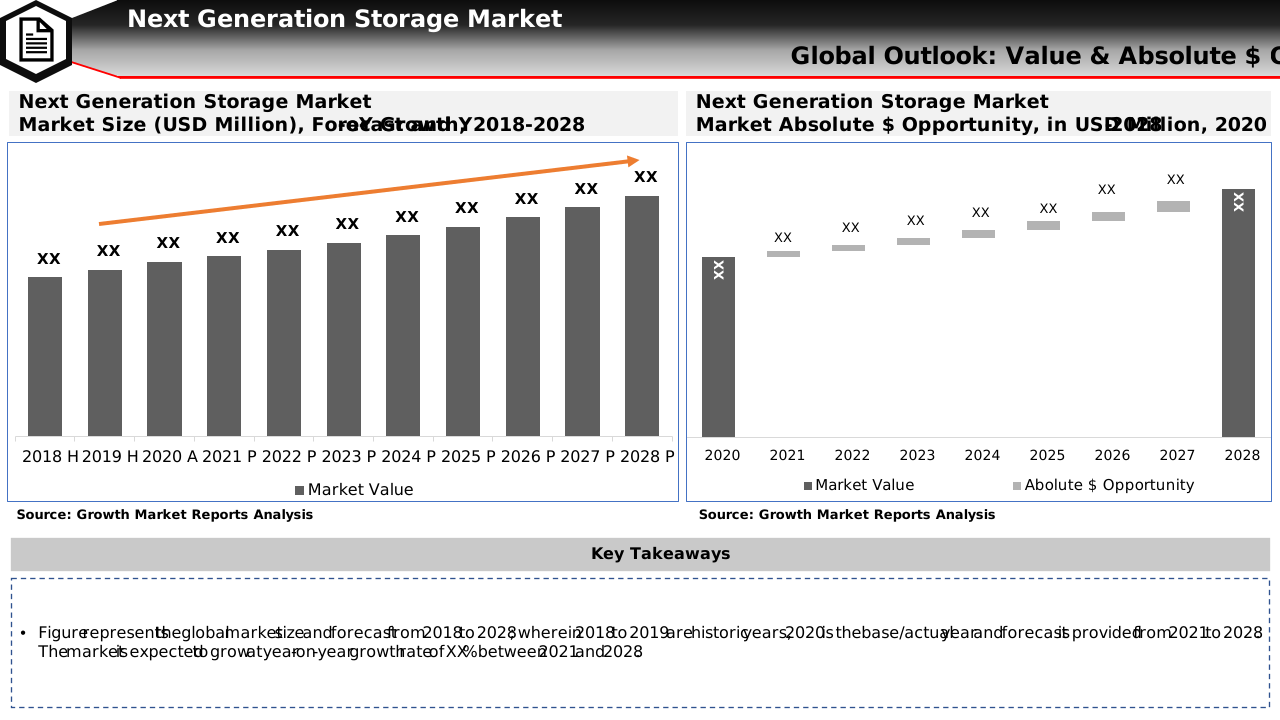
As per our latest research, the Next Generation Storage market size reached USD 73.2 billion in 2024, with the sector demonstrating robust momentum fueled by the exponential growth of digital data and the increasing adoption of cloud-based solutions. The market is projected to expand at a CAGR of 10.7% from 2025 to 2033, reaching a forecasted market size of USD 181.8 billion by 2033. This growth is primarily attributed to the rising demand for high-performance, scalable, and secure storage solutions across various industries that are rapidly digitizing their operations.

The key growth driver for the Next Generation Storage market is the unprecedented surge in data generation from emerging technologies such as artificial intelligence, Internet of Things (IoT), big data analytics, and edge computing. Enterprises are increasingly leveraging these technologies to gain actionable insights, resulting in the creation of massive volumes of structured and unstructured data. Traditional storage solutions are proving inadequate in terms of scalability, speed, and agility, prompting organizations to shift towards next generation storage architectures that offer enhanced performance, reliability, and cost-efficiency. The proliferation of cloud computing and the need for real-time data access and processing further amplify the demand for advanced storage technologies.

Another significant factor propelling the growth of the Next Generation Storage market is the heightened emphasis on data security and regulatory compliance. With the introduction of stringent data protection laws such as GDPR and CCPA, organizations are compelled to adopt storage solutions that ensure data integrity, confidentiality, and availability. Next generation storage systems come equipped with robust encryption, access control, and disaster recovery features, making them highly attractive for industries handling sensitive information, such as banking, healthcare, and government. The rapid digital transformation initiatives across sectors are accelerating the replacement of legacy storage systems with modern, scalable, and secure alternatives.

Furthermore, the evolution of storage technologies such as all-flash arrays, software-defined storage, and hybrid cloud storage is revolutionizing the market landscape. These technologies offer a unique blend of high-speed data access, scalability, and flexibility, enabling enterprises to efficiently manage their growing data volumes while optimizing costs. The integration of artificial intelligence and machine learning into storage management is also enhancing automation and predictive maintenance, reducing operational complexities and downtime. As organizations prioritize business continuity and agility, the adoption of next generation storage solutions is expected to witness sustained growth throughout the forecast period.

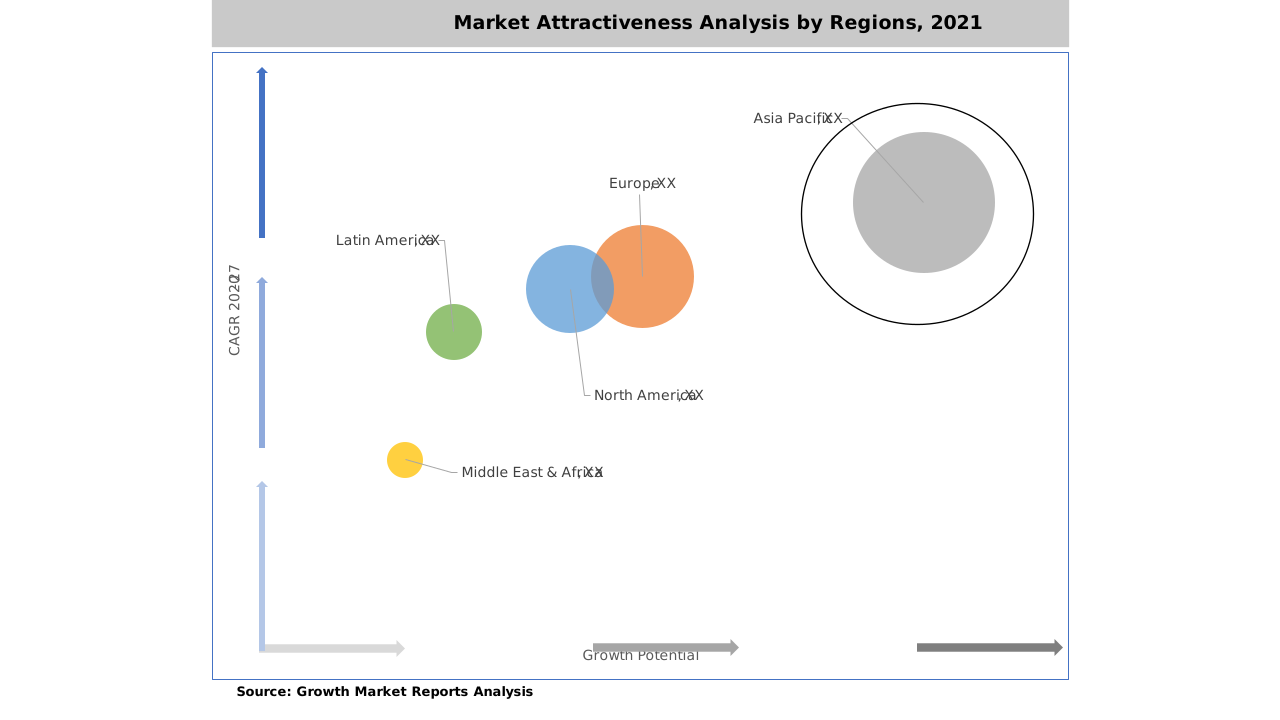
From a regional perspective, North America currently dominates the Next Generation Storage market due to its early adoption of advanced technologies, strong presence of leading storage vendors, and significant investments in digital infrastructure. However, Asia Pacific is anticipated to exhibit the highest growth rate, driven by rapid industrialization, increasing IT spending, and the expanding digital ecosystem in countries like China, India, and Japan. Europe and Latin America are also witnessing steady growth, supported by digital transformation initiatives and rising awareness about data management best practices. The Middle East & Africa region is gradually catching up, propelled by government-led smart city projects and growing enterprise IT investments.

Global Next Generation Storage Industry Outlook

Storage Architecture Analysis

The Next Generation Storage market is segmented by storage architecture into file storage, object storage, and block storage, each catering to distinct data management requirements. File storage remains a staple for organizations managing large volumes of unstructured data such as documents, images, and videos. Its hierarchical structure and ease of use make it suitable for collaborative environments and content repositories. However, as businesses seek greater scalability and flexibility, the limitations of file storage in handling massive, distributed datasets are becoming apparent, leading to the growing adoption of more advanced architectures.

Object storage is rapidly gaining traction, particularly among enterprises dealing with big data analytics, cloud-native applications, and IoT workloads. Its flat address space, metadata-rich design, and scalability make it ideal for storing and retrieving vast amounts of unstructured data across geographically dispersed locations. Object storage is also highly resilient and cost-effective, supporting features such as erasure coding and automated tiering. As organizations increasingly migrate workloads to the cloud and embrace digital transformation, the demand for object storage is expected to surge, driving significant market growth.

Block storage, known for its high performance and low latency, is the preferred choice for mission-critical applications such as databases, virtual machines, and transactional systems. It offers granular control over data and supports high-speed input/output operations, making it indispensable for enterprises that require consistent, predictable storage performance. The rise of all-flash arrays and NVMe-based block storage solutions is further enhancing the appeal of block storage, enabling organizations to meet the stringent performance requirements of modern workloads.

The interplay between these storage architectures is shaping the evolution of the Next Generation Storage market. Many enterprises are adopting a hybrid approach, leveraging the strengths of file, object, and block storage to address diverse data management needs. The integration of software-defined storage platforms is enabling seamless interoperability between different architectures, providing organizations with the agility to dynamically allocate resources and optimize storage costs. As data volumes continue to grow and use cases become more complex, the demand for flexible, scalable, and high-performance storage architectures will remain a key market driver.

Report Scope

Attributes Details
Report Title Next Generation Storage Market Research Report 2033
By Storage Architecture File Storage, Object Storage, Block Storage
By Technology Solid State Storage, Hybrid Storage, Cloud Storage, Software-defined Storage, All-flash Arrays, Hard Disk Drives, Others
By Storage System Direct-Attached Storage, Network-Attached Storage, Storage Area Network
By Deployment Mode On-Premises, Cloud, Hybrid
By End-User BFSI, Healthcare, IT and Telecommunications, Government, Media and Entertainment, Retail, Manufacturing, Others
By Enterprise Size Small and Medium Enterprises, Large Enterprises
Regions Covered North America, Europe, APAC, Latin America, MEA
Base Year 2024
Historic Data 2018-2023
Forecast Period 2025-2033
Number of Pages 268
Number of Tables & Figures 384
Customization Available Yes, the report can be customized as per your need.

Technology Analysis

The technology landscape of the Next Generation Storage market is characterized by rapid innovation and the emergence of high-performance storage solutions. Solid state storage, including SSDs and NVMe drives, has revolutionized the industry by offering superior speed, reliability, and energy efficiency compared to traditional hard disk drives (HDDs). Enterprises are increasingly replacing HDDs with SSDs to accelerate application performance, reduce latency, and lower total cost of ownership. The declining cost of flash memory and advancements in storage density are further boosting the adoption of solid state storage across various sectors.

Hybrid storage solutions, which combine the speed of SSDs with the cost-effectiveness of HDDs, are gaining popularity among organizations seeking to balance performance and budget constraints. These solutions automatically tier data based on usage patterns, ensuring that frequently accessed data resides on high-speed storage while less critical data is stored on more economical media. Hybrid storage is particularly appealing for enterprises with diverse workloads and fluctuating performance requirements, enabling them to optimize storage resources without compromising on efficiency.

Cloud storage continues to be a major growth engine for the market, driven by the increasing adoption of cloud computing and the need for scalable, on-demand storage capacity. Cloud storage offers unmatched flexibility, allowing organizations to scale storage resources up or down based on business needs. It also supports remote collaboration, disaster recovery, and data backup, making it an essential component of modern IT strategies. The proliferation of multi-cloud and hybrid cloud environments is further fueling the demand for cloud storage solutions that offer seamless integration, security, and management capabilities.

Software-defined storage (SDS) and all-flash arrays represent the cutting edge of storage technology, enabling organizations to abstract storage management from underlying hardware and achieve unprecedented levels of automation, scalability, and agility. SDS solutions allow enterprises to manage heterogeneous storage resources through a unified software layer, reducing complexity and operational overhead. All-flash arrays, on the other hand, deliver ultra-high performance and reliability, making them ideal for latency-sensitive applications and real-time analytics. As enterprises continue to prioritize digital innovation and operational efficiency, the adoption of these advanced storage technologies is expected to accelerate.

Storage System Analysis

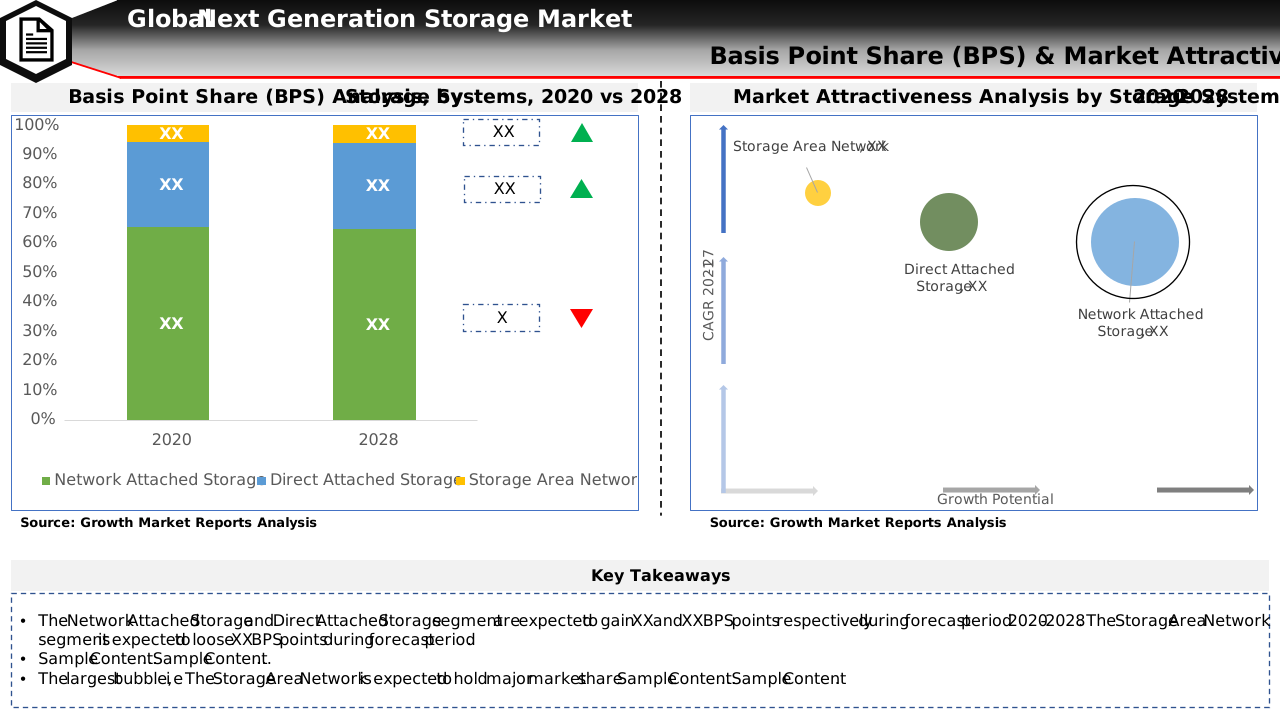
The Next Generation Storage market is segmented by storage system into direct-attached storage (DAS), network-attached storage (NAS), and storage area network (SAN), each offering unique advantages for different use cases. Direct-attached storage is favored for its simplicity, low cost, and high performance, making it suitable for small businesses and specific applications that do not require shared access. However, its scalability and manageability limitations have led larger enterprises to adopt more sophisticated storage systems.

Network-attached storage (NAS) provides centralized, file-based storage accessible over a network, enabling multiple users and devices to share data efficiently. NAS systems are widely used in collaborative environments, media and entertainment, and backup and archiving applications. Their ease of deployment, scalability, and support for multiple protocols make them a popular choice for organizations seeking to streamline data management and enhance productivity. The integration of advanced features such as deduplication, replication, and cloud connectivity is further expanding the appeal of NAS solutions.

Storage area network (SAN) solutions are designed for high-performance, block-level storage in large-scale enterprise environments. SANs offer superior speed, reliability, and scalability, making them ideal for mission-critical applications such as databases, virtualization, and enterprise resource planning (ERP) systems. The adoption of fibre channel, iSCSI, and NVMe-over-Fabrics technologies is driving the evolution of SAN architectures, enabling organizations to meet the demanding requirements of modern data centers.

The growing complexity of enterprise IT environments is prompting organizations to adopt a mix of DAS, NAS, and SAN systems to address diverse storage needs. The emergence of unified storage platforms that support multiple protocols and deployment models is enabling seamless integration and management of heterogeneous storage resources. As businesses continue to generate and consume data at an unprecedented pace, the demand for flexible, scalable, and high-performance storage systems will remain a key driver of market growth.

Deployment Mode Analysis

Deployment mode plays a critical role in shaping the adoption patterns of the Next Generation Storage market. On-premises storage remains the preferred choice for organizations with stringent data security, compliance, and performance requirements. Enterprises in regulated industries such as banking, healthcare, and government continue to invest in on-premises solutions to maintain control over sensitive data and ensure business continuity. However, the high upfront costs and complexity of managing on-premises infrastructure are prompting many organizations to explore alternative deployment models.

Cloud-based storage is witnessing rapid adoption, driven by its flexibility, scalability, and cost-effectiveness. Cloud storage allows organizations to eliminate capital expenditures, reduce operational overhead, and access storage resources on demand. The ability to support remote work, disaster recovery, and global collaboration is making cloud storage an integral part of modern IT strategies. Leading cloud service providers are continuously enhancing their offerings with advanced security, automation, and analytics features, further driving market growth.

The rise of hybrid deployment models is transforming the storage landscape, enabling organizations to combine the best of both on-premises and cloud environments. Hybrid storage solutions provide the agility to dynamically allocate workloads based on performance, security, and cost considerations. They also support seamless data mobility, backup, and disaster recovery across multiple environments. As enterprises seek to modernize their IT infrastructure and optimize resource utilization, the adoption of hybrid storage models is expected to accelerate.

The choice of deployment mode is increasingly influenced by factors such as data sovereignty, regulatory compliance, and business agility. Organizations are adopting a strategic approach to storage deployment, leveraging a mix of on-premises, cloud, and hybrid solutions to meet evolving business needs. The integration of automation, artificial intelligence, and machine learning into storage management is further simplifying deployment and operation, enabling organizations to achieve greater efficiency and resilience.

End-User Analysis

The Next Generation Storage market serves a diverse range of end-users, each with unique data management requirements and challenges. The BFSI sector is one of the largest adopters of advanced storage solutions, driven by the need to manage massive volumes of transactional data, ensure regulatory compliance, and protect sensitive customer information. Next generation storage systems enable financial institutions to achieve high performance, reliability, and security, supporting critical applications such as online banking, payment processing, and fraud detection.

The healthcare industry is experiencing rapid digital transformation, with the proliferation of electronic health records, medical imaging, and telemedicine driving the demand for scalable, secure, and high-performance storage solutions. Next generation storage technologies enable healthcare providers to store, access, and analyze large volumes of patient data in real time, improving clinical decision-making and patient outcomes. The integration of artificial intelligence and machine learning into healthcare storage is further enhancing diagnostic accuracy and operational efficiency.

The IT and telecommunications sector is at the forefront of digital innovation, generating and processing vast amounts of data from cloud services, IoT devices, and network infrastructure. Next generation storage solutions are critical for supporting high-speed data access, real-time analytics, and seamless service delivery. The adoption of software-defined storage, all-flash arrays, and cloud storage is enabling IT and telecom companies to achieve greater agility, scalability, and cost optimization.

Other key end-users such as government, media and entertainment, retail, and manufacturing are also driving significant demand for next generation storage solutions. Government agencies require secure, compliant storage for citizen data and mission-critical applications. Media and entertainment companies need high-speed storage for content creation, editing, and distribution. Retailers are leveraging advanced storage to support omni-channel operations and personalized customer experiences. Manufacturers are deploying next generation storage to enable smart factories, predictive maintenance, and supply chain optimization.

Enterprise Size Analysis

The Next Generation Storage market is segmented by enterprise size into small and medium enterprises (SMEs) and large enterprises, each exhibiting distinct adoption patterns. Large enterprises are the primary adopters of advanced storage solutions, driven by the need to manage massive, complex, and mission-critical data environments. These organizations have the resources to invest in high-performance, scalable, and secure storage infrastructure, enabling them to support digital transformation initiatives, business continuity, and regulatory compliance.

Small and medium enterprises (SMEs), while traditionally constrained by limited budgets and IT expertise, are increasingly recognizing the value of next generation storage solutions in driving business growth and competitiveness. The availability of affordable, easy-to-deploy storage options such as cloud storage, hybrid storage, and software-defined storage is enabling SMEs to access enterprise-grade capabilities without significant upfront investment. This democratization of advanced storage technology is leveling the playing field and empowering SMEs to participate in the digital economy.

The adoption of next generation storage solutions by SMEs is being facilitated by the rise of managed services, pay-as-you-go pricing models, and user-friendly management interfaces. Vendors are increasingly tailoring their offerings to meet the specific needs of SMEs, providing scalable, flexible, and cost-effective storage solutions that can grow with the business. As SMEs continue to digitize their operations and embrace data-driven decision-making, the demand for next generation storage is expected to rise steadily.

The enterprise size segment is also witnessing increased collaboration between large enterprises and SMEs, particularly in supply chain management, data sharing, and digital ecosystems. This interconnectedness is driving the need for interoperable, secure, and scalable storage solutions that can support diverse workloads and collaboration models. As digital transformation accelerates across organizations of all sizes, the adoption of next generation storage solutions will remain a key enabler of business innovation and resilience.

Opportunities & Threats

The Next Generation Storage market presents significant opportunities for growth, driven by the ongoing digital transformation across industries, the proliferation of data-intensive applications, and the emergence of new business models. The increasing adoption of artificial intelligence, machine learning, and big data analytics is creating new use cases and demand for high-performance, scalable storage solutions. Vendors that can innovate and deliver differentiated offerings, such as intelligent storage management, automated tiering, and predictive analytics, stand to capture significant market share. The rise of edge computing and 5G networks is also opening up new opportunities for storage solutions that can support real-time data processing and low-latency applications at the network edge.

Another major opportunity lies in the expansion of cloud and hybrid storage models, which are enabling organizations to achieve greater agility, scalability, and cost optimization. The growing acceptance of multi-cloud strategies and the need for seamless data mobility across on-premises and cloud environments are driving demand for interoperable, flexible storage solutions. As data privacy and security concerns continue to rise, there is also a significant opportunity for vendors to differentiate themselves by offering robust encryption, access control, and compliance features. The increasing focus on sustainability and energy efficiency is prompting organizations to seek storage solutions that reduce power consumption and environmental impact, creating new avenues for innovation and growth.

Despite the positive outlook, the Next Generation Storage market faces several restraining factors that could impact its growth trajectory. One of the primary challenges is the high initial investment required for deploying advanced storage solutions, particularly for small and medium enterprises with limited budgets. The complexity of integrating next generation storage systems with existing IT infrastructure and legacy applications can also pose significant hurdles, leading to longer deployment cycles and increased operational risk. Additionally, concerns around data security, privacy, and regulatory compliance remain top of mind for organizations, particularly in highly regulated industries. Vendors must address these challenges by offering flexible deployment models, simplified management interfaces, and comprehensive support services to drive broader adoption.

Regional Outlook

North America continues to lead the Next Generation Storage market, accounting for the largest share with a market size of USD 29.4 billion in 2024. The region's dominance is attributed to its early adoption of advanced storage technologies, strong presence of leading vendors, and significant investments in digital infrastructure. The United States, in particular, is a major contributor, driven by the rapid digitization of industries, widespread adoption of cloud computing, and the proliferation of data-intensive applications. Canada is also witnessing steady growth, supported by government initiatives to promote digital transformation and innovation.

Asia Pacific is emerging as the fastest-growing region in the Next Generation Storage market, with a projected CAGR of 13.2% from 2025 to 2033. The region's market size reached USD 18.7 billion in 2024, driven by rapid industrialization, increasing IT spending, and the expanding digital ecosystem in countries such as China, India, Japan, and South Korea. The growing adoption of cloud services, smart city initiatives, and digital government programs are fueling demand for scalable, secure, and high-performance storage solutions. As enterprises in the region continue to digitize their operations and embrace emerging technologies, the Asia Pacific market is expected to witness sustained growth and attract significant investments.

Europe and Latin America are also making significant strides in the Next Generation Storage market, with market sizes of USD 14.6 billion and USD 5.2 billion respectively in 2024. Europe is benefiting from the widespread adoption of data protection regulations, digital transformation initiatives, and the presence of leading technology providers. Latin America, while still in the early stages of adoption, is witnessing growing demand for advanced storage solutions, driven by increasing IT investments and the need for improved data management capabilities. The Middle East & Africa region, with a market size of USD 5.3 billion in 2024, is gradually catching up, supported by government-led digital initiatives and the expansion of enterprise IT infrastructure.

Next Generation Storage Market Statistics

Competitor Outlook

The Next Generation Storage market is highly competitive, characterized by the presence of both established technology giants and innovative startups. The market landscape is shaped by continuous innovation, strategic partnerships, mergers and acquisitions, and aggressive investments in research and development. Leading vendors are focusing on expanding their product portfolios, enhancing interoperability, and delivering value-added services to capture a larger share of the market. The increasing complexity of enterprise IT environments and the growing demand for customized storage solutions are driving vendors to offer flexible, scalable, and integrated offerings that address diverse customer needs.

Competition in the Next Generation Storage market is intensifying as vendors strive to differentiate themselves through technological innovation, performance, and customer support. The rapid evolution of storage technologies, such as all-flash arrays, software-defined storage, and cloud-based solutions, is creating new opportunities and challenges for market players. Vendors are investing heavily in artificial intelligence, machine learning, and automation to enhance storage management, improve operational efficiency, and deliver predictive analytics capabilities. The ability to offer end-to-end solutions that integrate seamlessly with existing IT infrastructure is becoming a key differentiator in the market.

The competitive landscape is also characterized by a strong focus on partnerships and ecosystem development. Leading vendors are collaborating with cloud service providers, system integrators, and technology partners to deliver integrated, interoperable solutions that address the evolving needs of enterprises. Strategic alliances are enabling vendors to expand their market reach, accelerate innovation, and enhance customer value. The rise of open-source storage platforms and community-driven innovation is further intensifying competition, driving vendors to continuously innovate and improve their offerings.

Major companies operating in the Next Generation Storage market include Dell Technologies, Hewlett Packard Enterprise (HPE), IBM Corporation, NetApp, Pure Storage, Hitachi Vantara, Western Digital, Huawei Technologies, and Toshiba Corporation. Dell Technologies is a market leader, offering a comprehensive portfolio of storage solutions spanning all-flash arrays, software-defined storage, and cloud-integrated systems. HPE is known for its innovative storage platforms and strong focus on hybrid cloud and AI-driven management. IBM leverages its expertise in enterprise IT and AI to deliver advanced storage solutions for mission-critical applications. NetApp and Pure Storage are recognized for their high-performance, scalable, and cloud-ready storage offerings. Hitachi Vantara, Western Digital, Huawei, and Toshiba are also key players, each bringing unique strengths in storage hardware, software, and integration capabilities.

These companies are continuously investing in research and development to stay ahead of the competition and address emerging customer needs. They are also expanding their global footprint through strategic partnerships, acquisitions, and channel development initiatives. The competitive dynamics of the Next Generation Storage market are expected to intensify as new entrants and disruptive technologies emerge, driving further innovation and value creation for customers.

Key Players

  • Dell Technologies
  • Hewlett Packard Enterprise (HPE)
  • IBM Corporation
  • NetApp
  • Pure Storage
  • Hitachi Vantara
  • Huawei Technologies
  • Toshiba Corporation
  • Western Digital Corporation
  • Micron Technology
  • Fujitsu
  • Seagate Technology
  • Samsung Electronics
  • Oracle Corporation
  • Infinidat
  • Violin Systems
  • Quantum Corporation
  • Tintri
  • DataDirect Networks (DDN)
  • Inspur Group
Next Generation Storage Market Overview

Segments

The Next Generation Storage market has been segmented on the basis of

Storage Architecture

  • File Storage
  • Object Storage
  • Block Storage

Technology

  • Solid State Storage
  • Hybrid Storage
  • Cloud Storage
  • Software-defined Storage
  • All-flash Arrays
  • Hard Disk Drives
  • Others

Storage System

  • Direct-Attached Storage
  • Network-Attached Storage
  • Storage Area Network

Deployment Mode

  • On-Premises
  • Cloud
  • Hybrid

End-User

  • BFSI
  • Healthcare
  • IT and Telecommunications
  • Government
  • Media and Entertainment
  • Retail
  • Manufacturing
  • Others

Enterprise Size

  • Small and Medium Enterprises
  • Large Enterprises

Competitive Landscape

Key players competing in the global next generation storage market include Pure Storage, Inc.; Quantum Corporation; Toshiba Corporation; Hitachi, Ltd.; Dell Inc.; Tintri Inc.; Netgear Inc.; Scality; NetApp, Inc.; IBM Corporation; Drobo, Inc.; Nutanix, Inc.; Western Digital Corporation; Fujitsu Ltd.; VMware, Inc.; and Inspur. Some of these players are engaged in several market strategies such as mergers, acquisitions, partnerships, collaborations, capacity expansion, and product launches to enhance their market shares.
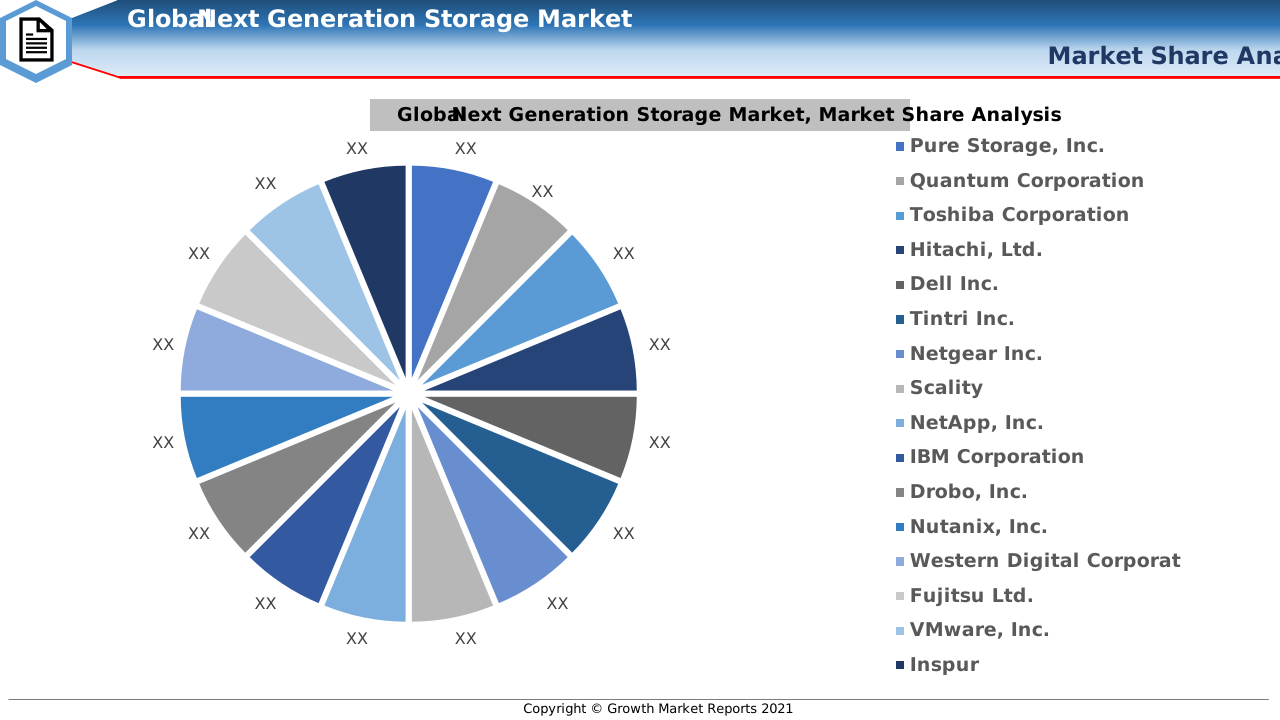
 

Next Generation Storage Market by Key players

Frequently Asked Questions

SMEs are increasingly adopting affordable and easy-to-deploy solutions like cloud storage, hybrid storage, and software-defined storage, supported by managed services and pay-as-you-go pricing models.

Key players include Dell Technologies, Hewlett Packard Enterprise (HPE), IBM Corporation, NetApp, Pure Storage, Hitachi Vantara, Huawei Technologies, Toshiba Corporation, Western Digital, and others.

Opportunities include digital transformation, AI/ML adoption, edge computing, and demand for cloud/hybrid storage. Challenges involve high initial investments, integration complexity, and data security and compliance concerns.

Major end-users include BFSI, healthcare, IT and telecommunications, government, media and entertainment, retail, and manufacturing sectors.

North America leads the market, with Asia Pacific emerging as the fastest-growing region due to rapid industrialization and digital transformation in countries like China, India, and Japan.

Deployment modes include on-premises, cloud, and hybrid storage solutions. Hybrid models are increasingly popular for their flexibility and ability to balance performance, security, and cost.

Key technologies include solid state storage (SSDs, NVMe), hybrid storage, cloud storage, software-defined storage (SDS), all-flash arrays, and traditional hard disk drives (HDDs).

The market is segmented into file storage, object storage, and block storage. Object storage is gaining traction for big data and cloud-native applications, while block storage is preferred for high-performance, mission-critical workloads.

Key growth drivers include the exponential increase in digital data, adoption of cloud-based solutions, demand for high-performance and secure storage, and the rise of technologies like AI, IoT, and big data analytics.

The Next Generation Storage market reached USD 73.2 billion in 2024 and is projected to grow at a CAGR of 10.7% from 2025 to 2033, reaching USD 181.8 billion by 2033.

Table Of Content

Chapter 1 Executive Summary
Chapter 2 Assumptions and Acronyms Used
Chapter 3 Research Methodology
Chapter 4 Next Generation Storage Market Overview
   4.1 Introduction
      4.1.1 Market Taxonomy
      4.1.2 Market Definition
      4.1.3 Macro-Economic Factors Impacting the Market Growth
   4.2 Next Generation Storage Market Dynamics
      4.2.1 Market Drivers
      4.2.2 Market Restraints
      4.2.3 Market Opportunity
   4.3 Next Generation Storage Market - Supply Chain Analysis
      4.3.1 List of Key Suppliers
      4.3.2 List of Key Distributors
      4.3.3 List of Key Consumers
   4.4 Key Forces Shaping the Next Generation Storage Market
      4.4.1 Bargaining Power of Suppliers
      4.4.2 Bargaining Power of Buyers
      4.4.3 Threat of Substitution
      4.4.4 Threat of New Entrants
      4.4.5 Competitive Rivalry
   4.5 Global Next Generation Storage Market Size & Forecast, 2023-2032
      4.5.1 Next Generation Storage Market Size and Y-o-Y Growth
      4.5.2 Next Generation Storage Market Absolute $ Opportunity

Chapter 5 Global Next Generation Storage Market Analysis and Forecast By Storage Architecture
   5.1 Introduction
      5.1.1 Key Market Trends & Growth Opportunities By Storage Architecture
      5.1.2 Basis Point Share (BPS) Analysis By Storage Architecture
      5.1.3 Absolute $ Opportunity Assessment By Storage Architecture
   5.2 Next Generation Storage Market Size Forecast By Storage Architecture
      5.2.1 File Storage
      5.2.2 Object Storage
      5.2.3 Block Storage
   5.3 Market Attractiveness Analysis By Storage Architecture

Chapter 6 Global Next Generation Storage Market Analysis and Forecast By Technology
   6.1 Introduction
      6.1.1 Key Market Trends & Growth Opportunities By Technology
      6.1.2 Basis Point Share (BPS) Analysis By Technology
      6.1.3 Absolute $ Opportunity Assessment By Technology
   6.2 Next Generation Storage Market Size Forecast By Technology
      6.2.1 Solid State Storage
      6.2.2 Hybrid Storage
      6.2.3 Cloud Storage
      6.2.4 Software-defined Storage
      6.2.5 All-flash Arrays
      6.2.6 Hard Disk Drives
      6.2.7 Others
   6.3 Market Attractiveness Analysis By Technology

Chapter 7 Global Next Generation Storage Market Analysis and Forecast By Storage System
   7.1 Introduction
      7.1.1 Key Market Trends & Growth Opportunities By Storage System
      7.1.2 Basis Point Share (BPS) Analysis By Storage System
      7.1.3 Absolute $ Opportunity Assessment By Storage System
   7.2 Next Generation Storage Market Size Forecast By Storage System
      7.2.1 Direct-Attached Storage
      7.2.2 Network-Attached Storage
      7.2.3 Storage Area Network
   7.3 Market Attractiveness Analysis By Storage System

Chapter 8 Global Next Generation Storage Market Analysis and Forecast By Deployment Mode
   8.1 Introduction
      8.1.1 Key Market Trends & Growth Opportunities By Deployment Mode
      8.1.2 Basis Point Share (BPS) Analysis By Deployment Mode
      8.1.3 Absolute $ Opportunity Assessment By Deployment Mode
   8.2 Next Generation Storage Market Size Forecast By Deployment Mode
      8.2.1 On-Premises
      8.2.2 Cloud
      8.2.3 Hybrid
   8.3 Market Attractiveness Analysis By Deployment Mode

Chapter 9 Global Next Generation Storage Market Analysis and Forecast By End-User
   9.1 Introduction
      9.1.1 Key Market Trends & Growth Opportunities By End-User
      9.1.2 Basis Point Share (BPS) Analysis By End-User
      9.1.3 Absolute $ Opportunity Assessment By End-User
   9.2 Next Generation Storage Market Size Forecast By End-User
      9.2.1 BFSI
      9.2.2 Healthcare
      9.2.3 IT and Telecommunications
      9.2.4 Government
      9.2.5 Media and Entertainment
      9.2.6 Retail
      9.2.7 Manufacturing
      9.2.8 Others
   9.3 Market Attractiveness Analysis By End-User

Chapter 10 Global Next Generation Storage Market Analysis and Forecast By Enterprise Size
   10.1 Introduction
      10.1.1 Key Market Trends & Growth Opportunities By Enterprise Size
      10.1.2 Basis Point Share (BPS) Analysis By Enterprise Size
      10.1.3 Absolute $ Opportunity Assessment By Enterprise Size
   10.2 Next Generation Storage Market Size Forecast By Enterprise Size
      10.2.1 Small and Medium Enterprises
      10.2.2 Large Enterprises
   10.3 Market Attractiveness Analysis By Enterprise Size

Chapter 11 Global Next Generation Storage Market Analysis and Forecast by Region
   11.1 Introduction
      11.1.1 Key Market Trends & Growth Opportunities By Region
      11.1.2 Basis Point Share (BPS) Analysis By Region
      11.1.3 Absolute $ Opportunity Assessment By Region
   11.2 Next Generation Storage Market Size Forecast By Region
      11.2.1 North America
      11.2.2 Europe
      11.2.3 Asia Pacific
      11.2.4 Latin America
      11.2.5 Middle East & Africa (MEA)
   11.3 Market Attractiveness Analysis By Region

Chapter 12 Coronavirus Disease (COVID-19) Impact 
   12.1 Introduction 
   12.2 Current & Future Impact Analysis 
   12.3 Economic Impact Analysis 
   12.4 Government Policies 
   12.5 Investment Scenario

Chapter 13 North America Next Generation Storage Analysis and Forecast
   13.1 Introduction
   13.2 North America Next Generation Storage Market Size Forecast by Country
      13.2.1 U.S.
      13.2.2 Canada
   13.3 Basis Point Share (BPS) Analysis by Country
   13.4 Absolute $ Opportunity Assessment by Country
   13.5 Market Attractiveness Analysis by Country
   13.6 North America Next Generation Storage Market Size Forecast By Storage Architecture
      13.6.1 File Storage
      13.6.2 Object Storage
      13.6.3 Block Storage
   13.7 Basis Point Share (BPS) Analysis By Storage Architecture 
   13.8 Absolute $ Opportunity Assessment By Storage Architecture 
   13.9 Market Attractiveness Analysis By Storage Architecture
   13.10 North America Next Generation Storage Market Size Forecast By Technology
      13.10.1 Solid State Storage
      13.10.2 Hybrid Storage
      13.10.3 Cloud Storage
      13.10.4 Software-defined Storage
      13.10.5 All-flash Arrays
      13.10.6 Hard Disk Drives
      13.10.7 Others
   13.11 Basis Point Share (BPS) Analysis By Technology 
   13.12 Absolute $ Opportunity Assessment By Technology 
   13.13 Market Attractiveness Analysis By Technology
   13.14 North America Next Generation Storage Market Size Forecast By Storage System
      13.14.1 Direct-Attached Storage
      13.14.2 Network-Attached Storage
      13.14.3 Storage Area Network
   13.15 Basis Point Share (BPS) Analysis By Storage System 
   13.16 Absolute $ Opportunity Assessment By Storage System 
   13.17 Market Attractiveness Analysis By Storage System
   13.18 North America Next Generation Storage Market Size Forecast By Deployment Mode
      13.18.1 On-Premises
      13.18.2 Cloud
      13.18.3 Hybrid
   13.19 Basis Point Share (BPS) Analysis By Deployment Mode 
   13.20 Absolute $ Opportunity Assessment By Deployment Mode 
   13.21 Market Attractiveness Analysis By Deployment Mode
   13.22 North America Next Generation Storage Market Size Forecast By End-User
      13.22.1 BFSI
      13.22.2 Healthcare
      13.22.3 IT and Telecommunications
      13.22.4 Government
      13.22.5 Media and Entertainment
      13.22.6 Retail
      13.22.7 Manufacturing
      13.22.8 Others
   13.23 Basis Point Share (BPS) Analysis By End-User 
   13.24 Absolute $ Opportunity Assessment By End-User 
   13.25 Market Attractiveness Analysis By End-User
   13.26 North America Next Generation Storage Market Size Forecast By Enterprise Size
      13.26.1 Small and Medium Enterprises
      13.26.2 Large Enterprises
   13.27 Basis Point Share (BPS) Analysis By Enterprise Size 
   13.28 Absolute $ Opportunity Assessment By Enterprise Size 
   13.29 Market Attractiveness Analysis By Enterprise Size

Chapter 14 Europe Next Generation Storage Analysis and Forecast
   14.1 Introduction
   14.2 Europe Next Generation Storage Market Size Forecast by Country
      14.2.1 Germany
      14.2.2 France
      14.2.3 Italy
      14.2.4 U.K.
      14.2.5 Spain
      14.2.6 Russia
      14.2.7 Rest of Europe
   14.3 Basis Point Share (BPS) Analysis by Country
   14.4 Absolute $ Opportunity Assessment by Country
   14.5 Market Attractiveness Analysis by Country
   14.6 Europe Next Generation Storage Market Size Forecast By Storage Architecture
      14.6.1 File Storage
      14.6.2 Object Storage
      14.6.3 Block Storage
   14.7 Basis Point Share (BPS) Analysis By Storage Architecture 
   14.8 Absolute $ Opportunity Assessment By Storage Architecture 
   14.9 Market Attractiveness Analysis By Storage Architecture
   14.10 Europe Next Generation Storage Market Size Forecast By Technology
      14.10.1 Solid State Storage
      14.10.2 Hybrid Storage
      14.10.3 Cloud Storage
      14.10.4 Software-defined Storage
      14.10.5 All-flash Arrays
      14.10.6 Hard Disk Drives
      14.10.7 Others
   14.11 Basis Point Share (BPS) Analysis By Technology 
   14.12 Absolute $ Opportunity Assessment By Technology 
   14.13 Market Attractiveness Analysis By Technology
   14.14 Europe Next Generation Storage Market Size Forecast By Storage System
      14.14.1 Direct-Attached Storage
      14.14.2 Network-Attached Storage
      14.14.3 Storage Area Network
   14.15 Basis Point Share (BPS) Analysis By Storage System 
   14.16 Absolute $ Opportunity Assessment By Storage System 
   14.17 Market Attractiveness Analysis By Storage System
   14.18 Europe Next Generation Storage Market Size Forecast By Deployment Mode
      14.18.1 On-Premises
      14.18.2 Cloud
      14.18.3 Hybrid
   14.19 Basis Point Share (BPS) Analysis By Deployment Mode 
   14.20 Absolute $ Opportunity Assessment By Deployment Mode 
   14.21 Market Attractiveness Analysis By Deployment Mode
   14.22 Europe Next Generation Storage Market Size Forecast By End-User
      14.22.1 BFSI
      14.22.2 Healthcare
      14.22.3 IT and Telecommunications
      14.22.4 Government
      14.22.5 Media and Entertainment
      14.22.6 Retail
      14.22.7 Manufacturing
      14.22.8 Others
   14.23 Basis Point Share (BPS) Analysis By End-User 
   14.24 Absolute $ Opportunity Assessment By End-User 
   14.25 Market Attractiveness Analysis By End-User
   14.26 Europe Next Generation Storage Market Size Forecast By Enterprise Size
      14.26.1 Small and Medium Enterprises
      14.26.2 Large Enterprises
   14.27 Basis Point Share (BPS) Analysis By Enterprise Size 
   14.28 Absolute $ Opportunity Assessment By Enterprise Size 
   14.29 Market Attractiveness Analysis By Enterprise Size

Chapter 15 Asia Pacific Next Generation Storage Analysis and Forecast
   15.1 Introduction
   15.2 Asia Pacific Next Generation Storage Market Size Forecast by Country
      15.2.1 China
      15.2.2 Japan
      15.2.3 South Korea
      15.2.4 India
      15.2.5 Australia
      15.2.6 South East Asia (SEA)
      15.2.7 Rest of Asia Pacific (APAC)
   15.3 Basis Point Share (BPS) Analysis by Country
   15.4 Absolute $ Opportunity Assessment by Country
   15.5 Market Attractiveness Analysis by Country
   15.6 Asia Pacific Next Generation Storage Market Size Forecast By Storage Architecture
      15.6.1 File Storage
      15.6.2 Object Storage
      15.6.3 Block Storage
   15.7 Basis Point Share (BPS) Analysis By Storage Architecture 
   15.8 Absolute $ Opportunity Assessment By Storage Architecture 
   15.9 Market Attractiveness Analysis By Storage Architecture
   15.10 Asia Pacific Next Generation Storage Market Size Forecast By Technology
      15.10.1 Solid State Storage
      15.10.2 Hybrid Storage
      15.10.3 Cloud Storage
      15.10.4 Software-defined Storage
      15.10.5 All-flash Arrays
      15.10.6 Hard Disk Drives
      15.10.7 Others
   15.11 Basis Point Share (BPS) Analysis By Technology 
   15.12 Absolute $ Opportunity Assessment By Technology 
   15.13 Market Attractiveness Analysis By Technology
   15.14 Asia Pacific Next Generation Storage Market Size Forecast By Storage System
      15.14.1 Direct-Attached Storage
      15.14.2 Network-Attached Storage
      15.14.3 Storage Area Network
   15.15 Basis Point Share (BPS) Analysis By Storage System 
   15.16 Absolute $ Opportunity Assessment By Storage System 
   15.17 Market Attractiveness Analysis By Storage System
   15.18 Asia Pacific Next Generation Storage Market Size Forecast By Deployment Mode
      15.18.1 On-Premises
      15.18.2 Cloud
      15.18.3 Hybrid
   15.19 Basis Point Share (BPS) Analysis By Deployment Mode 
   15.20 Absolute $ Opportunity Assessment By Deployment Mode 
   15.21 Market Attractiveness Analysis By Deployment Mode
   15.22 Asia Pacific Next Generation Storage Market Size Forecast By End-User
      15.22.1 BFSI
      15.22.2 Healthcare
      15.22.3 IT and Telecommunications
      15.22.4 Government
      15.22.5 Media and Entertainment
      15.22.6 Retail
      15.22.7 Manufacturing
      15.22.8 Others
   15.23 Basis Point Share (BPS) Analysis By End-User 
   15.24 Absolute $ Opportunity Assessment By End-User 
   15.25 Market Attractiveness Analysis By End-User
   15.26 Asia Pacific Next Generation Storage Market Size Forecast By Enterprise Size
      15.26.1 Small and Medium Enterprises
      15.26.2 Large Enterprises
   15.27 Basis Point Share (BPS) Analysis By Enterprise Size 
   15.28 Absolute $ Opportunity Assessment By Enterprise Size 
   15.29 Market Attractiveness Analysis By Enterprise Size

Chapter 16 Latin America Next Generation Storage Analysis and Forecast
   16.1 Introduction
   16.2 Latin America Next Generation Storage Market Size Forecast by Country
      16.2.1 Brazil
      16.2.2 Mexico
      16.2.3 Rest of Latin America (LATAM)
   16.3 Basis Point Share (BPS) Analysis by Country
   16.4 Absolute $ Opportunity Assessment by Country
   16.5 Market Attractiveness Analysis by Country
   16.6 Latin America Next Generation Storage Market Size Forecast By Storage Architecture
      16.6.1 File Storage
      16.6.2 Object Storage
      16.6.3 Block Storage
   16.7 Basis Point Share (BPS) Analysis By Storage Architecture 
   16.8 Absolute $ Opportunity Assessment By Storage Architecture 
   16.9 Market Attractiveness Analysis By Storage Architecture
   16.10 Latin America Next Generation Storage Market Size Forecast By Technology
      16.10.1 Solid State Storage
      16.10.2 Hybrid Storage
      16.10.3 Cloud Storage
      16.10.4 Software-defined Storage
      16.10.5 All-flash Arrays
      16.10.6 Hard Disk Drives
      16.10.7 Others
   16.11 Basis Point Share (BPS) Analysis By Technology 
   16.12 Absolute $ Opportunity Assessment By Technology 
   16.13 Market Attractiveness Analysis By Technology
   16.14 Latin America Next Generation Storage Market Size Forecast By Storage System
      16.14.1 Direct-Attached Storage
      16.14.2 Network-Attached Storage
      16.14.3 Storage Area Network
   16.15 Basis Point Share (BPS) Analysis By Storage System 
   16.16 Absolute $ Opportunity Assessment By Storage System 
   16.17 Market Attractiveness Analysis By Storage System
   16.18 Latin America Next Generation Storage Market Size Forecast By Deployment Mode
      16.18.1 On-Premises
      16.18.2 Cloud
      16.18.3 Hybrid
   16.19 Basis Point Share (BPS) Analysis By Deployment Mode 
   16.20 Absolute $ Opportunity Assessment By Deployment Mode 
   16.21 Market Attractiveness Analysis By Deployment Mode
   16.22 Latin America Next Generation Storage Market Size Forecast By End-User
      16.22.1 BFSI
      16.22.2 Healthcare
      16.22.3 IT and Telecommunications
      16.22.4 Government
      16.22.5 Media and Entertainment
      16.22.6 Retail
      16.22.7 Manufacturing
      16.22.8 Others
   16.23 Basis Point Share (BPS) Analysis By End-User 
   16.24 Absolute $ Opportunity Assessment By End-User 
   16.25 Market Attractiveness Analysis By End-User
   16.26 Latin America Next Generation Storage Market Size Forecast By Enterprise Size
      16.26.1 Small and Medium Enterprises
      16.26.2 Large Enterprises
   16.27 Basis Point Share (BPS) Analysis By Enterprise Size 
   16.28 Absolute $ Opportunity Assessment By Enterprise Size 
   16.29 Market Attractiveness Analysis By Enterprise Size

Chapter 17 Middle East & Africa (MEA) Next Generation Storage Analysis and Forecast
   17.1 Introduction
   17.2 Middle East & Africa (MEA) Next Generation Storage Market Size Forecast by Country
      17.2.1 Saudi Arabia
      17.2.2 South Africa
      17.2.3 UAE
      17.2.4 Rest of Middle East & Africa (MEA)
   17.3 Basis Point Share (BPS) Analysis by Country
   17.4 Absolute $ Opportunity Assessment by Country
   17.5 Market Attractiveness Analysis by Country
   17.6 Middle East & Africa (MEA) Next Generation Storage Market Size Forecast By Storage Architecture
      17.6.1 File Storage
      17.6.2 Object Storage
      17.6.3 Block Storage
   17.7 Basis Point Share (BPS) Analysis By Storage Architecture 
   17.8 Absolute $ Opportunity Assessment By Storage Architecture 
   17.9 Market Attractiveness Analysis By Storage Architecture
   17.10 Middle East & Africa (MEA) Next Generation Storage Market Size Forecast By Technology
      17.10.1 Solid State Storage
      17.10.2 Hybrid Storage
      17.10.3 Cloud Storage
      17.10.4 Software-defined Storage
      17.10.5 All-flash Arrays
      17.10.6 Hard Disk Drives
      17.10.7 Others
   17.11 Basis Point Share (BPS) Analysis By Technology 
   17.12 Absolute $ Opportunity Assessment By Technology 
   17.13 Market Attractiveness Analysis By Technology
   17.14 Middle East & Africa (MEA) Next Generation Storage Market Size Forecast By Storage System
      17.14.1 Direct-Attached Storage
      17.14.2 Network-Attached Storage
      17.14.3 Storage Area Network
   17.15 Basis Point Share (BPS) Analysis By Storage System 
   17.16 Absolute $ Opportunity Assessment By Storage System 
   17.17 Market Attractiveness Analysis By Storage System
   17.18 Middle East & Africa (MEA) Next Generation Storage Market Size Forecast By Deployment Mode
      17.18.1 On-Premises
      17.18.2 Cloud
      17.18.3 Hybrid
   17.19 Basis Point Share (BPS) Analysis By Deployment Mode 
   17.20 Absolute $ Opportunity Assessment By Deployment Mode 
   17.21 Market Attractiveness Analysis By Deployment Mode
   17.22 Middle East & Africa (MEA) Next Generation Storage Market Size Forecast By End-User
      17.22.1 BFSI
      17.22.2 Healthcare
      17.22.3 IT and Telecommunications
      17.22.4 Government
      17.22.5 Media and Entertainment
      17.22.6 Retail
      17.22.7 Manufacturing
      17.22.8 Others
   17.23 Basis Point Share (BPS) Analysis By End-User 
   17.24 Absolute $ Opportunity Assessment By End-User 
   17.25 Market Attractiveness Analysis By End-User
   17.26 Middle East & Africa (MEA) Next Generation Storage Market Size Forecast By Enterprise Size
      17.26.1 Small and Medium Enterprises
      17.26.2 Large Enterprises
   17.27 Basis Point Share (BPS) Analysis By Enterprise Size 
   17.28 Absolute $ Opportunity Assessment By Enterprise Size 
   17.29 Market Attractiveness Analysis By Enterprise Size

Chapter 18 Competition Landscape 
   18.1 Next Generation Storage Market: Competitive Dashboard
   18.2 Global Next Generation Storage Market: Market Share Analysis, 2023
   18.3 Company Profiles (Details – Overview, Financials, Developments, Strategy) 
      18.3.1 Dell Technologies
Hewlett Packard Enterprise (HPE)
IBM Corporation
NetApp
Pure Storage
Hitachi Vantara
Huawei Technologies
Toshiba Corporation
Western Digital Corporation
Micron Technology
Fujitsu
Seagate Technology
Samsung Electronics
Oracle Corporation
Infinidat
Violin Systems
Quantum Corporation
Tintri
DataDirect Networks (DDN)
Inspur Group

Methodology

Our Clients

Siemens Healthcare
sinopec
Honda Motor Co. Ltd.
The John Holland Group
General Mills
General Electric
Pfizer
Microsoft