Metrology Services Market Research Report 2033

Metrology Services Market Research Report 2033

Segments - by Service Type (Calibration Services, Testing Services, Inspection Services, Others), by Application (Automotive, Aerospace & Defense, Industrial, Electronics, Power Generation, Healthcare, Others), by Offering (Onsite Services, Offsite Services), by End-User (Manufacturing, Research & Development, Government, Others)

https://growthmarketreports.com/Raksha
Author : Raksha Sharma
https://growthmarketreports.com/Vaibhav
Fact-checked by : V. Chandola
https://growthmarketreports.com/Rucha
Editor : Rucha Phatak

Upcoming | Report ID :CM-5146 | 4.5 Rating | 81 Reviews | 284 Pages | Format : Docx PDF

Report Description


Metrology Services Market Outlook

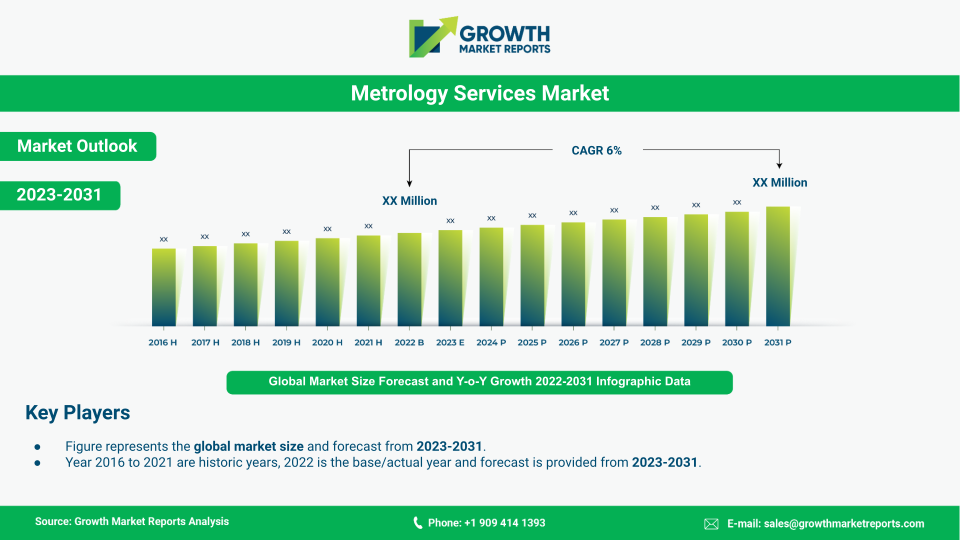
According to our latest research, the global Metrology Services market size reached USD 11.8 billion in 2024, reflecting the sectorÂ’s robust expansion driven by technological advancements and growing industrial quality requirements. The market is expected to exhibit a CAGR of 7.2% from 2025 to 2033, projecting a value of USD 22.1 billion by 2033. This growth trajectory is underpinned by the increasing adoption of precision measurement solutions across automotive, aerospace, and manufacturing sectors, as well as the integration of digital technologies and automation in metrology processes.

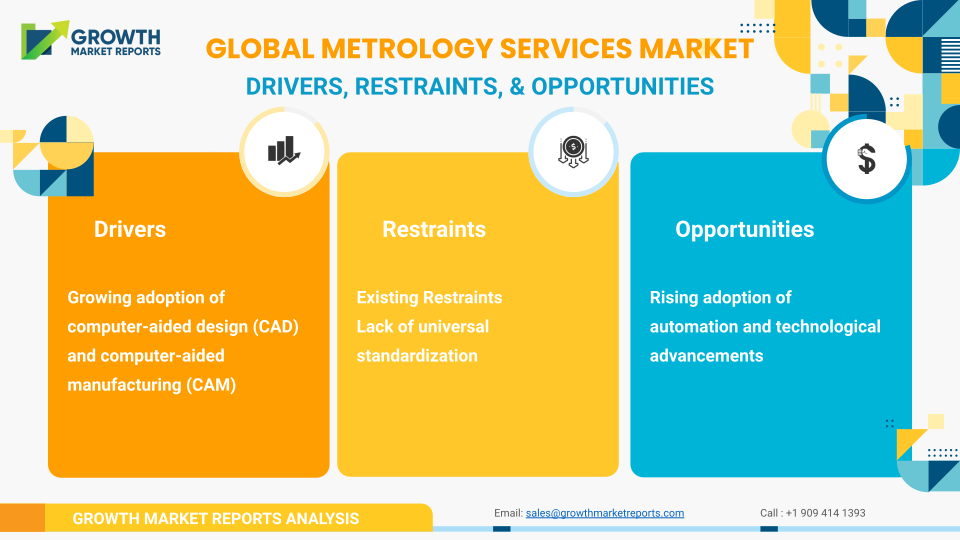
The primary growth driver for the Metrology Services market is the escalating demand for high-precision measurement in critical industries such as automotive, aerospace, and electronics. As manufacturing processes become increasingly complex and product tolerances tighten, the need for accurate and reliable measurement solutions has never been more pronounced. The proliferation of automated manufacturing lines, coupled with the integration of Industry 4.0 principles, has compelled manufacturers to invest in advanced metrology services to ensure product quality and compliance with stringent industry standards. Moreover, the rise of additive manufacturing and the growing trend towards miniaturization in electronics are further amplifying the need for sophisticated metrology solutions, driving steady market growth.

Another significant factor propelling the Metrology Services market is the rapid evolution of digital metrology technologies, including 3D scanning, coordinate measuring machines (CMMs), and non-contact measurement systems. These innovations enable faster, more accurate, and non-destructive testing, which is increasingly favored in sectors where downtime and production errors can be costly. The digital transformation of metrology services also facilitates better data management and integration into enterprise resource planning (ERP) and manufacturing execution systems (MES), enhancing traceability and process optimization. The shift towards cloud-based metrology solutions and remote monitoring capabilities is further broadening the scope of service offerings and expanding the marketÂ’s reach, particularly among small and medium enterprises seeking cost-effective quality assurance solutions.

The growing focus on regulatory compliance and quality certifications across industries is another major catalyst for the Metrology Services market. Governments and industry bodies worldwide are enforcing stricter standards for product safety, reliability, and environmental sustainability, necessitating comprehensive testing, inspection, and calibration services. This is particularly evident in sectors such as healthcare, power generation, and aerospace, where the margin for error is minimal. The increasing prevalence of international trade and the globalization of supply chains also necessitate harmonized measurement standards, further fueling demand for professional metrology services. As a result, service providers are continuously expanding their capabilities and geographic footprint to cater to the evolving needs of a diverse and global clientele.

Industrial Metrology plays a crucial role in the advancement of the Metrology Services market, particularly in sectors that demand high precision and accuracy. As industries like automotive and aerospace push the boundaries of innovation, the need for precise measurement tools becomes paramount. Industrial Metrology provides the foundational technology that ensures components and assemblies meet exacting standards, thereby reducing waste and enhancing efficiency. This sector is witnessing a surge in demand as companies strive to maintain competitive advantage through superior product quality and compliance with international standards. The integration of Industrial Metrology into production lines not only enhances quality control but also supports the seamless transition to smart manufacturing environments.

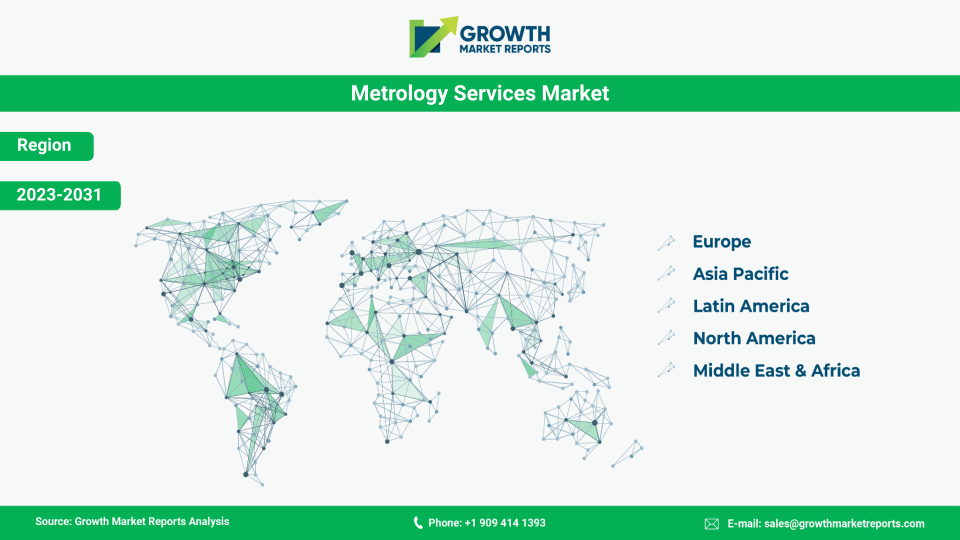
From a regional perspective, Asia Pacific is emerging as the most dynamic market for metrology services, driven by rapid industrialization, expanding manufacturing bases, and significant investments in infrastructure and technology. China, Japan, South Korea, and India are leading the charge, supported by robust automotive, electronics, and aerospace sectors. North America and Europe continue to represent mature markets with high adoption rates of advanced metrology solutions, particularly in high-precision industries. Meanwhile, Latin America and the Middle East & Africa are witnessing gradual growth, fueled by increasing industrial activities and the adoption of international quality standards. The regional landscape is characterized by a mix of global leaders and local service providers, each vying for a share of the burgeoning market.

Global Metrology Services Industry Outlook

Service Type Analysis

The Service Type segment of the Metrology Services market comprises calibration services, testing services, inspection services, and other specialized offerings. Calibration services form the backbone of this segment, accounting for a significant share due to the critical need for maintaining the accuracy and reliability of measurement instruments across industries. As manufacturing processes become more sophisticated, the frequency and complexity of calibration requirements have increased, driving demand for both onsite and offsite calibration solutions. The proliferation of automated and digitally controlled equipment has also necessitated regular calibration to ensure optimal performance and compliance with industry standards, further bolstering the growth of this sub-segment.

Inline Metrology is emerging as a transformative force in the Metrology Services market, offering real-time measurement solutions that integrate seamlessly into production processes. This approach allows for continuous monitoring and immediate feedback, which is essential in high-speed manufacturing environments. Inline Metrology systems are particularly beneficial in reducing production downtime and minimizing defects, as they enable instant detection and correction of deviations. The adoption of these systems is growing across industries such as automotive and electronics, where precision and speed are critical. By embedding metrology directly into the production line, manufacturers can achieve higher efficiency and ensure consistent product quality, thereby enhancing overall operational performance.

Testing services represent another crucial component of the Metrology Services market, driven by the need for comprehensive material and component analysis in industries such as aerospace, automotive, and electronics. These services encompass a wide range of tests, including mechanical, thermal, electrical, and environmental assessments, aimed at verifying product integrity, durability, and safety. The advent of advanced testing technologies, such as non-destructive testing (NDT) and 3D scanning, has expanded the scope and precision of metrology testing services, enabling faster and more accurate defect detection. As regulatory requirements become more stringent and product complexity increases, the demand for specialized testing services is expected to grow steadily over the forecast period.

Inspection services are equally vital within the Metrology Services market, particularly in sectors where product quality and compliance are paramount. These services involve detailed examination and verification of components, assemblies, and finished products to ensure they meet specified tolerances and standards. The increasing adoption of automated inspection systems, such as vision-based and laser scanning technologies, is enhancing the efficiency and accuracy of inspection processes. This trend is especially prominent in high-volume manufacturing environments, where rapid and reliable inspection is essential to minimize production downtime and reduce the risk of costly recalls. The integration of real-time data analytics and machine learning into inspection services is further elevating the value proposition for end-users.

Coordinate Measuring Services are at the forefront of precision measurement solutions, providing critical support to industries that require exact dimensional analysis. These services utilize advanced technologies such as Coordinate Measuring Machines (CMMs) to deliver highly accurate measurements of complex geometries. As manufacturing processes become more intricate, the demand for Coordinate Measuring Services is on the rise, particularly in sectors like aerospace and defense, where precision is non-negotiable. These services not only ensure compliance with stringent quality standards but also facilitate the development of innovative products by providing detailed insights into component specifications. The ability to offer precise and reliable measurements makes Coordinate Measuring Services an indispensable part of modern manufacturing operations.

Beyond the primary service types, the "Others" category in the Metrology Services market includes specialized offerings such as consulting, training, and certification services. These ancillary services are gaining traction as organizations seek to upskill their workforce, optimize measurement processes, and achieve industry certifications. The growing emphasis on continuous improvement and operational excellence is prompting companies to engage metrology service providers for tailored consulting and training solutions. This segment is expected to witness steady growth, particularly among small and medium enterprises striving to enhance their competitiveness in an increasingly quality-driven market landscape.

Report Scope

Attributes Details
Report Title Metrology Services Market Research Report 2033
By Service Type Calibration Services, Testing Services, Inspection Services, Others
By Application Automotive, Aerospace & Defense, Industrial, Electronics, Power Generation, Healthcare, Others
By Offering Onsite Services, Offsite Services
By End-User Manufacturing, Research & Development, Government, Others
Regions Covered North America, Europe, APAC, Latin America, MEA
Base Year 2024
Historic Data 2018-2023
Forecast Period 2025-2033
Number of Pages 284
Number of Tables & Figures 284
Customization Available Yes, the report can be customized as per your need.

Application Analysis

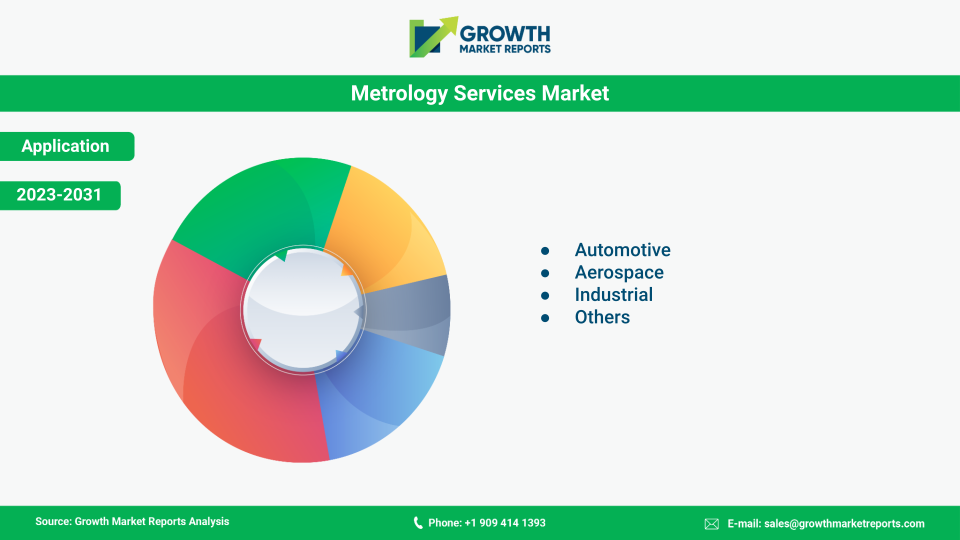
The Application segment of the Metrology Services market is broad and diverse, encompassing industries such as automotive, aerospace & defense, industrial, electronics, power generation, healthcare, and others. The automotive sector stands out as the largest application area, driven by the relentless pursuit of precision, safety, and innovation. As automakers increasingly adopt advanced manufacturing techniques and lightweight materials, the demand for high-precision metrology services has surged. From component-level inspections to full-vehicle measurements, metrology services play a pivotal role in ensuring product quality, reducing defects, and accelerating time-to-market for new vehicle models. The shift towards electric vehicles and autonomous driving technologies is further amplifying the need for sophisticated measurement solutions in this sector.

Aerospace & defense is another critical application area for the Metrology Services market, characterized by stringent quality and safety requirements. The complexity and precision demanded in the manufacturing of aircraft components, engines, and assemblies necessitate the use of advanced metrology solutions for inspection, testing, and calibration. The increasing adoption of composite materials and additive manufacturing in aerospace production has introduced new measurement challenges, driving innovation in metrology services. Service providers are leveraging cutting-edge technologies such as laser trackers, portable CMMs, and 3D scanning to deliver accurate and reliable measurement solutions tailored to the unique needs of aerospace manufacturers.

The industrial and electronics sectors are also significant contributors to the Metrology Services market, driven by the growing complexity of products and the need for miniaturization. In industrial applications, metrology services are essential for maintaining process control, optimizing production efficiency, and ensuring compliance with industry standards. The electronics industry, in particular, demands ultra-high precision measurement solutions to support the development of increasingly compact and complex devices. The rise of smart manufacturing and the Internet of Things (IoT) is further driving demand for integrated metrology services that enable real-time monitoring and quality assurance across the production lifecycle.

Power generation and healthcare represent emerging application areas within the Metrology Services market. In power generation, metrology services are crucial for the inspection and maintenance of critical infrastructure, such as turbines, generators, and transmission systems. Accurate measurement and testing are essential for ensuring operational efficiency, safety, and regulatory compliance. In the healthcare sector, metrology services support the development and manufacturing of medical devices, implants, and diagnostic equipment, where precision and reliability are paramount. As regulatory requirements in healthcare continue to evolve, the demand for specialized metrology solutions is expected to increase, creating new growth opportunities for service providers.

Offering Analysis

The Offering segment of the Metrology Services market is divided into onsite and offsite services, each catering to distinct customer needs and operational requirements. Onsite services involve the deployment of metrology experts and equipment directly at the clientÂ’s location, enabling immediate measurement, calibration, and inspection activities. This approach is particularly advantageous for large-scale manufacturing facilities and industries where equipment mobility is limited or where rapid response times are critical. Onsite services offer the benefit of minimizing equipment downtime and ensuring seamless integration with existing production processes, making them highly sought after in time-sensitive and high-volume manufacturing environments.

Offsite services, on the other hand, involve the transportation of components or equipment to specialized metrology laboratories for detailed analysis and testing. This model is favored for applications that require highly specialized equipment, controlled environments, or extended testing procedures. Offsite services are often more cost-effective for small and medium enterprises that may not have the resources to invest in in-house metrology capabilities. The growing trend towards outsourcing non-core activities and focusing on core competencies is driving the adoption of offsite metrology services, particularly among companies seeking to optimize operational efficiency and reduce capital expenditures.

The choice between onsite and offsite services is influenced by several factors, including the complexity of measurement requirements, the criticality of equipment, and the need for rapid turnaround times. As industries continue to evolve and embrace digital transformation, the demand for hybrid service models that combine the flexibility of onsite services with the specialized capabilities of offsite laboratories is expected to rise. Service providers are responding by expanding their service portfolios and investing in mobile metrology units and advanced remote monitoring technologies to deliver comprehensive and responsive solutions to their clients.

The integration of digital technologies and automation is also transforming the Offering landscape within the Metrology Services market. The adoption of cloud-based data management platforms, real-time analytics, and remote diagnostic tools is enabling service providers to deliver more efficient, accurate, and scalable solutions. These advancements are particularly beneficial for clients with geographically dispersed operations or those operating in highly regulated industries. As the market continues to mature, the ability to offer flexible, technology-driven service models will be a key differentiator for leading metrology service providers.

End-User Analysis

The End-User segment of the Metrology Services market encompasses manufacturing, research & development, government, and other sectors. Manufacturing remains the dominant end-user, accounting for the largest share of market demand. The relentless pursuit of quality, efficiency, and innovation in manufacturing processes has made metrology services indispensable for maintaining competitive advantage. From automotive and aerospace to electronics and industrial equipment, manufacturers rely on metrology services to ensure product conformity, reduce defects, and comply with industry standards. The ongoing digital transformation of manufacturing, characterized by the adoption of smart factories and advanced automation, is further amplifying the need for integrated and data-driven metrology solutions.

Research & development (R&D) is another key end-user segment, driven by the need for high-precision measurement and testing in the development of new products, materials, and technologies. R&D organizations, including corporate research centers, academic institutions, and independent laboratories, require advanced metrology services to support innovation and accelerate time-to-market for new solutions. The increasing complexity of R&D activities, particularly in fields such as materials science, nanotechnology, and biotechnology, is driving demand for specialized metrology expertise and cutting-edge measurement technologies. Service providers are responding by offering tailored solutions and collaborative partnerships to address the unique challenges of the R&D landscape.

Government agencies and regulatory bodies also represent a significant end-user group within the Metrology Services market. These organizations play a critical role in setting and enforcing measurement standards, conducting inspections, and ensuring public safety and compliance with national and international regulations. Metrology services are essential for supporting regulatory activities in sectors such as healthcare, environmental monitoring, energy, and transportation. The growing emphasis on standardization, traceability, and quality assurance in public sector initiatives is driving increased investment in metrology infrastructure and services, creating new growth opportunities for service providers.

Beyond the primary end-user segments, the "Others" category includes sectors such as education, defense, and utilities, each with unique measurement and testing requirements. As the importance of precision measurement continues to grow across diverse industries, the demand for customized metrology solutions tailored to the specific needs of these sectors is expected to rise. Service providers are increasingly focusing on developing industry-specific expertise and expanding their service portfolios to capture emerging opportunities in these niche markets.

Opportunities & Threats

The Metrology Services market presents a wealth of opportunities for growth and innovation, particularly in the context of digital transformation and the adoption of Industry 4.0 principles. The integration of advanced technologies such as artificial intelligence, machine learning, and the Internet of Things (IoT) into metrology services is enabling the development of smart measurement solutions that offer real-time insights, predictive maintenance, and enhanced process optimization. These advancements are opening up new avenues for service providers to deliver value-added solutions that go beyond traditional measurement and testing, positioning them as strategic partners in their clientsÂ’ digital transformation journeys. The growing demand for cloud-based metrology platforms and remote monitoring capabilities further underscores the marketÂ’s potential for technology-driven growth.

Another significant opportunity lies in the expansion of metrology services into emerging markets and high-growth sectors such as healthcare, renewable energy, and additive manufacturing. As these industries evolve and adopt more complex and innovative production processes, the need for specialized metrology services is expected to increase. Service providers that can offer tailored solutions and demonstrate industry-specific expertise will be well-positioned to capture a larger share of these burgeoning markets. Additionally, the increasing emphasis on sustainability and environmental compliance is driving demand for metrology services that support energy efficiency, waste reduction, and regulatory adherence, creating new growth opportunities for forward-thinking service providers.

Despite the numerous opportunities, the Metrology Services market faces several challenges and restraining factors that could impact its growth trajectory. One of the primary threats is the high cost of advanced metrology equipment and technologies, which can be prohibitive for small and medium enterprises, limiting their ability to access cutting-edge measurement solutions. Additionally, the shortage of skilled metrology professionals and the complexity of integrating new technologies into existing workflows can pose significant barriers to adoption. Service providers must invest in workforce development, training, and change management initiatives to address these challenges and ensure the successful implementation of advanced metrology solutions across industries.

Regional Outlook

The regional distribution of the Metrology Services market reflects varying levels of industrialization, technological adoption, and regulatory frameworks across the globe. Asia Pacific leads the market with a revenue contribution of approximately USD 4.1 billion in 2024, driven by rapid industrial growth in China, Japan, South Korea, and India. The region is expected to maintain its dominance over the forecast period, supported by a CAGR of 8.3%, as governments and private enterprises continue to invest in advanced manufacturing technologies and quality assurance infrastructure. The automotive, electronics, and aerospace sectors are the primary drivers of metrology services demand in Asia Pacific, with increasing adoption of digital and automated measurement solutions.

North America represents the second-largest regional market, with a market size of USD 3.2 billion in 2024. The regionÂ’s growth is underpinned by the presence of leading metrology service providers, high adoption rates of advanced technologies, and a strong focus on regulatory compliance and quality standards. The United States accounts for the majority of market share within North America, driven by robust demand from the aerospace, automotive, and healthcare sectors. Canada and Mexico are also witnessing steady growth, supported by expanding manufacturing activities and increasing investments in quality assurance solutions.

Europe holds a significant share of the Metrology Services market, with a market size of USD 2.8 billion in 2024. The region is characterized by a mature industrial base, stringent regulatory frameworks, and a strong emphasis on innovation and sustainability. Germany, the United Kingdom, France, and Italy are the primary contributors to regional market growth, particularly in the automotive, aerospace, and industrial sectors. The adoption of Industry 4.0 technologies and the growing focus on digital transformation are expected to drive further expansion of metrology services in Europe. Meanwhile, Latin America and the Middle East & Africa collectively account for approximately USD 1.7 billion in 2024, with growth driven by increasing industrialization, infrastructure development, and the adoption of international quality standards in key sectors such as energy, mining, and healthcare.

Metrology Services Market Statistics

Competitor Outlook

The Metrology Services market is characterized by intense competition, with a diverse mix of global players, regional specialists, and niche service providers vying for market share. The competitive landscape is shaped by continuous innovation, technological advancements, and the ability to deliver comprehensive, value-added solutions tailored to the evolving needs of clients across industries. Leading companies are investing heavily in research and development to expand their service portfolios, enhance measurement accuracy, and integrate digital technologies into their offerings. The emergence of strategic partnerships, mergers and acquisitions, and collaborative ventures is further intensifying competition and driving market consolidation.

Global leaders in the Metrology Services market are distinguished by their extensive geographic presence, broad service portfolios, and strong customer relationships. These companies leverage their scale and expertise to deliver end-to-end solutions, including calibration, testing, inspection, consulting, and training services. They are also at the forefront of digital transformation, investing in cloud-based platforms, data analytics, and remote monitoring technologies to enhance service delivery and customer engagement. Regional and local players, on the other hand, focus on developing specialized expertise and building strong relationships with clients in specific industries or geographic markets. This dual approach enables the market to cater to a wide range of customer needs and preferences.

Key players in the Metrology Services market include Hexagon AB, Carl Zeiss AG, Nikon Metrology, Renishaw plc, FARO Technologies Inc., Mitutoyo Corporation, SGS SA, Trescal, Intertek Group plc, and Bureau Veritas. These companies are recognized for their commitment to innovation, quality, and customer service. For example, Hexagon AB and Carl Zeiss AG are renowned for their advanced measurement technologies and comprehensive service offerings, while Nikon Metrology and FARO Technologies are leaders in 3D scanning and portable measurement solutions. SGS SA and Bureau Veritas are prominent in the testing, inspection, and certification space, leveraging their global networks and industry expertise to serve clients across multiple sectors.

In addition to the major players, the Metrology Services market is home to a vibrant ecosystem of regional and niche service providers, each offering unique capabilities and specialized expertise. These companies often focus on serving specific industries, such as automotive, aerospace, or healthcare, and are known for their agility, responsiveness, and deep industry knowledge. The growing demand for customized and industry-specific metrology solutions is creating opportunities for these players to differentiate themselves and capture market share. As the market continues to evolve, the ability to innovate, adapt to changing customer needs, and deliver high-quality, technology-driven services will be critical for sustained success in the competitive landscape of the Metrology Services market.

Key Players

  • Hexagon AB
  • Carl Zeiss AG
  • Nikon Metrology NV
  • FARO Technologies Inc.
  • Renishaw plc
  • Mitutoyo Corporation
  • Creaform Inc.
  • Perceptron Inc.
  • KLA Corporation
  • Applied Materials Inc.
  • GOM GmbH
  • Bruker Corporation
  • Jenoptik AG
  • Automated Precision Inc. (API)
  • Metrologic Group
  • InnovMetric Software Inc.
  • WENZEL Group GmbH & Co. KG
  • Tokyo Seimitsu Co., Ltd.
  • Carmar Accuracy Co., Ltd.
  • CyberOptics Corporation
Metrology Services Market Overview

Segments

The Metrology Services market has been segmented on the basis of

Service Type

  • Calibration Services
  • Testing Services
  • Inspection Services
  • Others

Application

  • Automotive
  • Aerospace & Defense
  • Industrial
  • Electronics
  • Power Generation
  • Healthcare
  • Others

Offering

  • Onsite Services
  • Offsite Services

End-User

  • Manufacturing
  • Research & Development
  • Government
  • Others

Competitive Landscape

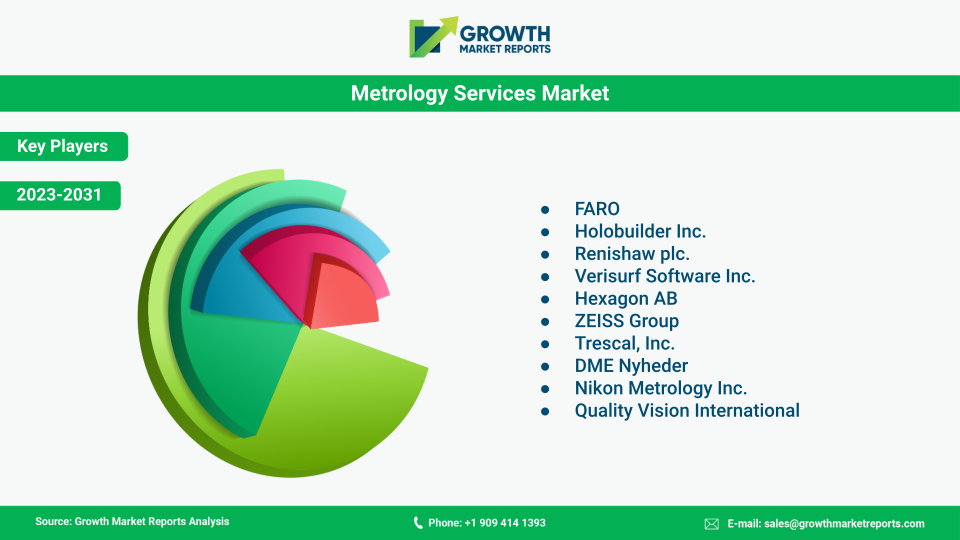
Players in the global metrology services market include FARO; Holobuilder Inc.; Renishaw plc.; Verisurf Software Inc.; Hexagon AB; ZEISS Group; Trescal, Inc.; DME Nyheder; Nikon Metrology Inc.; and Quality Vision International. These companies adopted strategies such as acquisitions, partnerships, collaboration, mergers, and product launches to gain market share. For instance,

  • In June 2021, FARO acquired Holobuilder Inc. to integrate the photogrammetry-based 3D facility. The latter’s technology platform offers general contractors, a solution that captures and virtually manages construction progress using off 360° cameras.
  • In November 2021, Renishaw plc. entered into an agreement with Verisurf Software Inc., to synchronize measuring machine (CMM) software from Renishaw plc.

Global Metrology Services Market Key Players

Frequently Asked Questions

Opportunities include the integration of AI, IoT, and cloud-based solutions, expansion into emerging markets and sectors like healthcare and renewable energy, and the growing demand for sustainability and regulatory compliance support.

Onsite services involve deploying experts and equipment at the client’s location for immediate measurement and calibration, ideal for large-scale or time-sensitive operations. Offsite services are performed in specialized labs and are suitable for complex or extended testing, often preferred by small and medium enterprises.

Major companies include Hexagon AB, Carl Zeiss AG, Nikon Metrology, FARO Technologies Inc., Renishaw plc, Mitutoyo Corporation, SGS SA, Trescal, Intertek Group plc, and Bureau Veritas.

Major challenges include the high cost of advanced metrology equipment, shortage of skilled professionals, and the complexity of integrating new technologies into existing workflows.

Asia Pacific is the fastest-growing and largest market, led by China, Japan, South Korea, and India. North America and Europe are mature markets with high adoption rates, while Latin America and the Middle East & Africa are experiencing gradual growth.

Digital technologies like 3D scanning, coordinate measuring machines (CMMs), cloud-based platforms, and remote monitoring are enabling faster, more accurate, and non-destructive testing, as well as better data management and integration with ERP/MES systems.

Metrology services include calibration services, testing services, inspection services, and specialized offerings such as consulting, training, and certification.

The automotive sector is the largest user, followed by aerospace & defense, industrial, electronics, power generation, and healthcare industries.

Key growth drivers include increasing demand for high-precision measurement in industries like automotive, aerospace, and electronics, the adoption of digital technologies and automation, and stricter regulatory compliance requirements.

The global Metrology Services market reached USD 11.8 billion in 2024 and is projected to grow at a CAGR of 7.2% from 2025 to 2033, reaching an estimated value of USD 22.1 billion by 2033.

Table Of Content

Chapter 1 Executive Summary
Chapter 2 Assumptions and Acronyms Used
Chapter 3 Research Methodology
Chapter 4 Metrology Services Market Overview
   4.1 Introduction
      4.1.1 Market Taxonomy
      4.1.2 Market Definition
      4.1.3 Macro-Economic Factors Impacting the Market Growth
   4.2 Metrology Services Market Dynamics
      4.2.1 Market Drivers
      4.2.2 Market Restraints
      4.2.3 Market Opportunity
   4.3 Metrology Services Market - Supply Chain Analysis
      4.3.1 List of Key Suppliers
      4.3.2 List of Key Distributors
      4.3.3 List of Key Consumers
   4.4 Key Forces Shaping the Metrology Services Market
      4.4.1 Bargaining Power of Suppliers
      4.4.2 Bargaining Power of Buyers
      4.4.3 Threat of Substitution
      4.4.4 Threat of New Entrants
      4.4.5 Competitive Rivalry
   4.5 Global Metrology Services Market Size & Forecast, 2023-2032
      4.5.1 Metrology Services Market Size and Y-o-Y Growth
      4.5.2 Metrology Services Market Absolute $ Opportunity

Chapter 5 Global Metrology Services Market Analysis and Forecast By Service Type
   5.1 Introduction
      5.1.1 Key Market Trends & Growth Opportunities By Service Type
      5.1.2 Basis Point Share (BPS) Analysis By Service Type
      5.1.3 Absolute $ Opportunity Assessment By Service Type
   5.2 Metrology Services Market Size Forecast By Service Type
      5.2.1 Calibration Services
      5.2.2 Testing Services
      5.2.3 Inspection Services
      5.2.4 Others
   5.3 Market Attractiveness Analysis By Service Type

Chapter 6 Global Metrology Services Market Analysis and Forecast By Application
   6.1 Introduction
      6.1.1 Key Market Trends & Growth Opportunities By Application
      6.1.2 Basis Point Share (BPS) Analysis By Application
      6.1.3 Absolute $ Opportunity Assessment By Application
   6.2 Metrology Services Market Size Forecast By Application
      6.2.1 Automotive
      6.2.2 Aerospace & Defense
      6.2.3 Industrial
      6.2.4 Electronics
      6.2.5 Power Generation
      6.2.6 Healthcare
      6.2.7 Others
   6.3 Market Attractiveness Analysis By Application

Chapter 7 Global Metrology Services Market Analysis and Forecast By Offering
   7.1 Introduction
      7.1.1 Key Market Trends & Growth Opportunities By Offering
      7.1.2 Basis Point Share (BPS) Analysis By Offering
      7.1.3 Absolute $ Opportunity Assessment By Offering
   7.2 Metrology Services Market Size Forecast By Offering
      7.2.1 Onsite Services
      7.2.2 Offsite Services
   7.3 Market Attractiveness Analysis By Offering

Chapter 8 Global Metrology Services Market Analysis and Forecast By End-User
   8.1 Introduction
      8.1.1 Key Market Trends & Growth Opportunities By End-User
      8.1.2 Basis Point Share (BPS) Analysis By End-User
      8.1.3 Absolute $ Opportunity Assessment By End-User
   8.2 Metrology Services Market Size Forecast By End-User
      8.2.1 Manufacturing
      8.2.2 Research & Development
      8.2.3 Government
      8.2.4 Others
   8.3 Market Attractiveness Analysis By End-User

Chapter 9 Global Metrology Services Market Analysis and Forecast by Region
   9.1 Introduction
      9.1.1 Key Market Trends & Growth Opportunities By Region
      9.1.2 Basis Point Share (BPS) Analysis By Region
      9.1.3 Absolute $ Opportunity Assessment By Region
   9.2 Metrology Services Market Size Forecast By Region
      9.2.1 North America
      9.2.2 Europe
      9.2.3 Asia Pacific
      9.2.4 Latin America
      9.2.5 Middle East & Africa (MEA)
   9.3 Market Attractiveness Analysis By Region

Chapter 10 Coronavirus Disease (COVID-19) Impact 
   10.1 Introduction 
   10.2 Current & Future Impact Analysis 
   10.3 Economic Impact Analysis 
   10.4 Government Policies 
   10.5 Investment Scenario

Chapter 11 North America Metrology Services Analysis and Forecast
   11.1 Introduction
   11.2 North America Metrology Services Market Size Forecast by Country
      11.2.1 U.S.
      11.2.2 Canada
   11.3 Basis Point Share (BPS) Analysis by Country
   11.4 Absolute $ Opportunity Assessment by Country
   11.5 Market Attractiveness Analysis by Country
   11.6 North America Metrology Services Market Size Forecast By Service Type
      11.6.1 Calibration Services
      11.6.2 Testing Services
      11.6.3 Inspection Services
      11.6.4 Others
   11.7 Basis Point Share (BPS) Analysis By Service Type 
   11.8 Absolute $ Opportunity Assessment By Service Type 
   11.9 Market Attractiveness Analysis By Service Type
   11.10 North America Metrology Services Market Size Forecast By Application
      11.10.1 Automotive
      11.10.2 Aerospace & Defense
      11.10.3 Industrial
      11.10.4 Electronics
      11.10.5 Power Generation
      11.10.6 Healthcare
      11.10.7 Others
   11.11 Basis Point Share (BPS) Analysis By Application 
   11.12 Absolute $ Opportunity Assessment By Application 
   11.13 Market Attractiveness Analysis By Application
   11.14 North America Metrology Services Market Size Forecast By Offering
      11.14.1 Onsite Services
      11.14.2 Offsite Services
   11.15 Basis Point Share (BPS) Analysis By Offering 
   11.16 Absolute $ Opportunity Assessment By Offering 
   11.17 Market Attractiveness Analysis By Offering
   11.18 North America Metrology Services Market Size Forecast By End-User
      11.18.1 Manufacturing
      11.18.2 Research & Development
      11.18.3 Government
      11.18.4 Others
   11.19 Basis Point Share (BPS) Analysis By End-User 
   11.20 Absolute $ Opportunity Assessment By End-User 
   11.21 Market Attractiveness Analysis By End-User

Chapter 12 Europe Metrology Services Analysis and Forecast
   12.1 Introduction
   12.2 Europe Metrology Services Market Size Forecast by Country
      12.2.1 Germany
      12.2.2 France
      12.2.3 Italy
      12.2.4 U.K.
      12.2.5 Spain
      12.2.6 Russia
      12.2.7 Rest of Europe
   12.3 Basis Point Share (BPS) Analysis by Country
   12.4 Absolute $ Opportunity Assessment by Country
   12.5 Market Attractiveness Analysis by Country
   12.6 Europe Metrology Services Market Size Forecast By Service Type
      12.6.1 Calibration Services
      12.6.2 Testing Services
      12.6.3 Inspection Services
      12.6.4 Others
   12.7 Basis Point Share (BPS) Analysis By Service Type 
   12.8 Absolute $ Opportunity Assessment By Service Type 
   12.9 Market Attractiveness Analysis By Service Type
   12.10 Europe Metrology Services Market Size Forecast By Application
      12.10.1 Automotive
      12.10.2 Aerospace & Defense
      12.10.3 Industrial
      12.10.4 Electronics
      12.10.5 Power Generation
      12.10.6 Healthcare
      12.10.7 Others
   12.11 Basis Point Share (BPS) Analysis By Application 
   12.12 Absolute $ Opportunity Assessment By Application 
   12.13 Market Attractiveness Analysis By Application
   12.14 Europe Metrology Services Market Size Forecast By Offering
      12.14.1 Onsite Services
      12.14.2 Offsite Services
   12.15 Basis Point Share (BPS) Analysis By Offering 
   12.16 Absolute $ Opportunity Assessment By Offering 
   12.17 Market Attractiveness Analysis By Offering
   12.18 Europe Metrology Services Market Size Forecast By End-User
      12.18.1 Manufacturing
      12.18.2 Research & Development
      12.18.3 Government
      12.18.4 Others
   12.19 Basis Point Share (BPS) Analysis By End-User 
   12.20 Absolute $ Opportunity Assessment By End-User 
   12.21 Market Attractiveness Analysis By End-User

Chapter 13 Asia Pacific Metrology Services Analysis and Forecast
   13.1 Introduction
   13.2 Asia Pacific Metrology Services Market Size Forecast by Country
      13.2.1 China
      13.2.2 Japan
      13.2.3 South Korea
      13.2.4 India
      13.2.5 Australia
      13.2.6 South East Asia (SEA)
      13.2.7 Rest of Asia Pacific (APAC)
   13.3 Basis Point Share (BPS) Analysis by Country
   13.4 Absolute $ Opportunity Assessment by Country
   13.5 Market Attractiveness Analysis by Country
   13.6 Asia Pacific Metrology Services Market Size Forecast By Service Type
      13.6.1 Calibration Services
      13.6.2 Testing Services
      13.6.3 Inspection Services
      13.6.4 Others
   13.7 Basis Point Share (BPS) Analysis By Service Type 
   13.8 Absolute $ Opportunity Assessment By Service Type 
   13.9 Market Attractiveness Analysis By Service Type
   13.10 Asia Pacific Metrology Services Market Size Forecast By Application
      13.10.1 Automotive
      13.10.2 Aerospace & Defense
      13.10.3 Industrial
      13.10.4 Electronics
      13.10.5 Power Generation
      13.10.6 Healthcare
      13.10.7 Others
   13.11 Basis Point Share (BPS) Analysis By Application 
   13.12 Absolute $ Opportunity Assessment By Application 
   13.13 Market Attractiveness Analysis By Application
   13.14 Asia Pacific Metrology Services Market Size Forecast By Offering
      13.14.1 Onsite Services
      13.14.2 Offsite Services
   13.15 Basis Point Share (BPS) Analysis By Offering 
   13.16 Absolute $ Opportunity Assessment By Offering 
   13.17 Market Attractiveness Analysis By Offering
   13.18 Asia Pacific Metrology Services Market Size Forecast By End-User
      13.18.1 Manufacturing
      13.18.2 Research & Development
      13.18.3 Government
      13.18.4 Others
   13.19 Basis Point Share (BPS) Analysis By End-User 
   13.20 Absolute $ Opportunity Assessment By End-User 
   13.21 Market Attractiveness Analysis By End-User

Chapter 14 Latin America Metrology Services Analysis and Forecast
   14.1 Introduction
   14.2 Latin America Metrology Services Market Size Forecast by Country
      14.2.1 Brazil
      14.2.2 Mexico
      14.2.3 Rest of Latin America (LATAM)
   14.3 Basis Point Share (BPS) Analysis by Country
   14.4 Absolute $ Opportunity Assessment by Country
   14.5 Market Attractiveness Analysis by Country
   14.6 Latin America Metrology Services Market Size Forecast By Service Type
      14.6.1 Calibration Services
      14.6.2 Testing Services
      14.6.3 Inspection Services
      14.6.4 Others
   14.7 Basis Point Share (BPS) Analysis By Service Type 
   14.8 Absolute $ Opportunity Assessment By Service Type 
   14.9 Market Attractiveness Analysis By Service Type
   14.10 Latin America Metrology Services Market Size Forecast By Application
      14.10.1 Automotive
      14.10.2 Aerospace & Defense
      14.10.3 Industrial
      14.10.4 Electronics
      14.10.5 Power Generation
      14.10.6 Healthcare
      14.10.7 Others
   14.11 Basis Point Share (BPS) Analysis By Application 
   14.12 Absolute $ Opportunity Assessment By Application 
   14.13 Market Attractiveness Analysis By Application
   14.14 Latin America Metrology Services Market Size Forecast By Offering
      14.14.1 Onsite Services
      14.14.2 Offsite Services
   14.15 Basis Point Share (BPS) Analysis By Offering 
   14.16 Absolute $ Opportunity Assessment By Offering 
   14.17 Market Attractiveness Analysis By Offering
   14.18 Latin America Metrology Services Market Size Forecast By End-User
      14.18.1 Manufacturing
      14.18.2 Research & Development
      14.18.3 Government
      14.18.4 Others
   14.19 Basis Point Share (BPS) Analysis By End-User 
   14.20 Absolute $ Opportunity Assessment By End-User 
   14.21 Market Attractiveness Analysis By End-User

Chapter 15 Middle East & Africa (MEA) Metrology Services Analysis and Forecast
   15.1 Introduction
   15.2 Middle East & Africa (MEA) Metrology Services Market Size Forecast by Country
      15.2.1 Saudi Arabia
      15.2.2 South Africa
      15.2.3 UAE
      15.2.4 Rest of Middle East & Africa (MEA)
   15.3 Basis Point Share (BPS) Analysis by Country
   15.4 Absolute $ Opportunity Assessment by Country
   15.5 Market Attractiveness Analysis by Country
   15.6 Middle East & Africa (MEA) Metrology Services Market Size Forecast By Service Type
      15.6.1 Calibration Services
      15.6.2 Testing Services
      15.6.3 Inspection Services
      15.6.4 Others
   15.7 Basis Point Share (BPS) Analysis By Service Type 
   15.8 Absolute $ Opportunity Assessment By Service Type 
   15.9 Market Attractiveness Analysis By Service Type
   15.10 Middle East & Africa (MEA) Metrology Services Market Size Forecast By Application
      15.10.1 Automotive
      15.10.2 Aerospace & Defense
      15.10.3 Industrial
      15.10.4 Electronics
      15.10.5 Power Generation
      15.10.6 Healthcare
      15.10.7 Others
   15.11 Basis Point Share (BPS) Analysis By Application 
   15.12 Absolute $ Opportunity Assessment By Application 
   15.13 Market Attractiveness Analysis By Application
   15.14 Middle East & Africa (MEA) Metrology Services Market Size Forecast By Offering
      15.14.1 Onsite Services
      15.14.2 Offsite Services
   15.15 Basis Point Share (BPS) Analysis By Offering 
   15.16 Absolute $ Opportunity Assessment By Offering 
   15.17 Market Attractiveness Analysis By Offering
   15.18 Middle East & Africa (MEA) Metrology Services Market Size Forecast By End-User
      15.18.1 Manufacturing
      15.18.2 Research & Development
      15.18.3 Government
      15.18.4 Others
   15.19 Basis Point Share (BPS) Analysis By End-User 
   15.20 Absolute $ Opportunity Assessment By End-User 
   15.21 Market Attractiveness Analysis By End-User

Chapter 16 Competition Landscape 
   16.1 Metrology Services Market: Competitive Dashboard
   16.2 Global Metrology Services Market: Market Share Analysis, 2023
   16.3 Company Profiles (Details – Overview, Financials, Developments, Strategy) 
      16.3.1 Hexagon AB
Carl Zeiss AG
Nikon Metrology NV
FARO Technologies Inc.
Renishaw plc
Mitutoyo Corporation
Creaform Inc.
Perceptron Inc.
KLA Corporation
Applied Materials Inc.
GOM GmbH
Bruker Corporation
Jenoptik AG
Automated Precision Inc. (API)
Metrologic Group
InnovMetric Software Inc.
WENZEL Group GmbH & Co. KG
Tokyo Seimitsu Co., Ltd.
Carmar Accuracy Co., Ltd.
CyberOptics Corporation

Methodology

Our Clients

Honda Motor Co. Ltd.
sinopec
Microsoft
General Mills
Dassault Aviation
General Electric
Siemens Healthcare
Nestle SA