Segments - by Component (Hardware, Software, Services), by Technology (Selective Laser Melting, Electron Beam Melting, Direct Metal Laser Sintering, Binder Jetting, Others), by Application (Aerospace & Defense, Automotive, Healthcare, Industrial, Consumer Electronics, Energy, Others), by End-User (Industrial, Commercial, Academic & Research Institutes, Others)
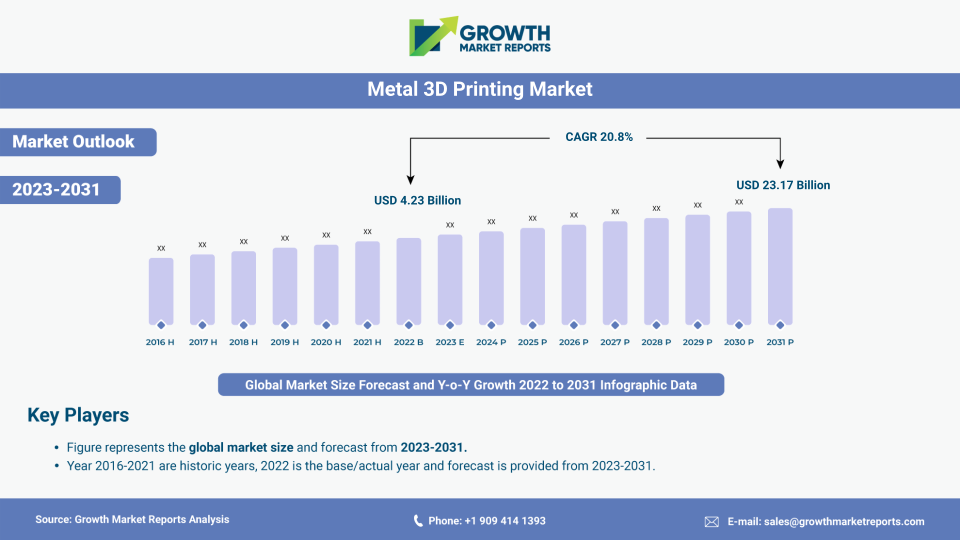
According to our latest research, the global metal 3D printing market size reached USD 5.6 billion in 2024, demonstrating robust growth driven by technological advancements and rising adoption across industries. The market is forecasted to expand at a remarkable CAGR of 21.4% from 2025 to 2033, reaching a projected value of USD 38.5 billion by 2033. This impressive trajectory is fueled by increased demand for lightweight components, customization capabilities, and efficiency improvements in manufacturing processes. The integration of metal 3D printing into sectors such as aerospace, automotive, and healthcare is a primary growth catalyst, reflecting a broader trend toward digital transformation in manufacturing.
One of the most significant growth factors for the metal 3D printing market is the surging demand for complex and lightweight components, particularly in the aerospace and automotive sectors. Manufacturers in these industries are increasingly leveraging metal additive manufacturing to produce parts that are not only lighter but also exhibit enhanced mechanical properties and design flexibility. The ability to create intricate geometries that are impossible or prohibitively expensive with traditional manufacturing methods is a compelling value proposition. As a result, companies are investing heavily in research and development to optimize printing processes and materials, further accelerating the adoption of metal 3D printing technologies.
Another pivotal driver is the ongoing advancements in metal 3D printing hardware and software. Innovations such as improved laser systems, enhanced powder bed fusion technologies, and sophisticated simulation software are enabling higher throughput, greater precision, and reduced material waste. The emergence of new metal alloys and composite materials tailored for additive manufacturing is expanding the range of possible applications, from high-performance aerospace components to patient-specific medical implants. Additionally, the integration of artificial intelligence and machine learning into 3D printing software is improving print quality, process monitoring, and predictive maintenance, making metal 3D printing more reliable and cost-effective.
The rising emphasis on sustainability and the circular economy is also contributing to the growth of the metal 3D printing market. Additive manufacturing offers significant environmental benefits, including reduced material usage, lower energy consumption, and minimized waste compared to subtractive manufacturing processes. Companies are increasingly adopting metal 3D printing to support their sustainability goals, particularly in industries where material costs and environmental impact are critical considerations. Furthermore, the capability to produce parts on-demand and closer to the point of use reduces the need for large inventories and long supply chains, aligning with global trends toward more sustainable and resilient manufacturing ecosystems.
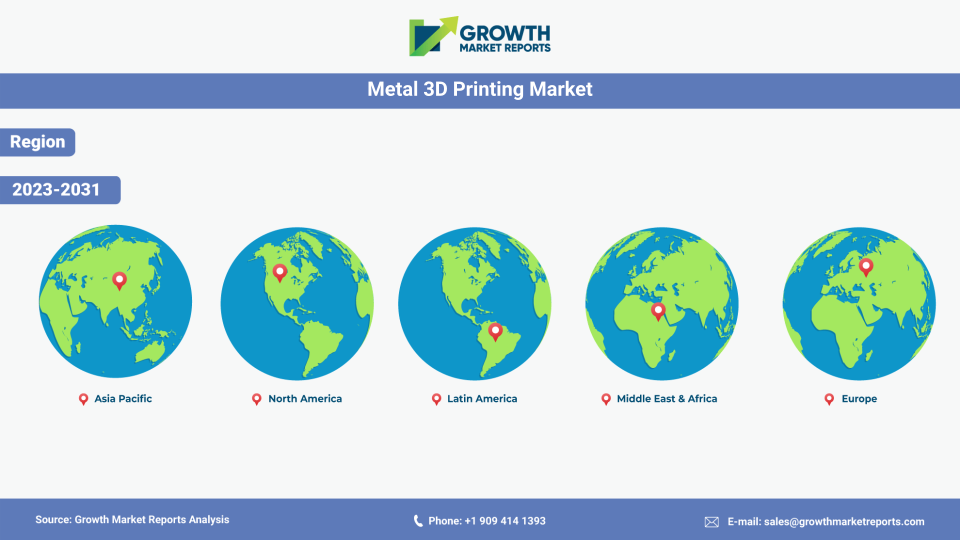
From a regional perspective, North America currently leads the global metal 3D printing market, accounting for the largest share in 2024, followed closely by Europe and Asia Pacific. The dominance of North America is attributed to strong investments in research and development, a robust industrial base, and the presence of major market players. Europe is also witnessing significant growth, driven by government initiatives to promote advanced manufacturing and the adoption of Industry 4.0 technologies. Meanwhile, Asia Pacific is emerging as a high-growth region, propelled by rapid industrialization, increasing investments in additive manufacturing, and the expansion of end-use industries such as automotive and electronics. The regional dynamics are expected to evolve further as emerging economies ramp up their adoption of metal 3D printing technologies.
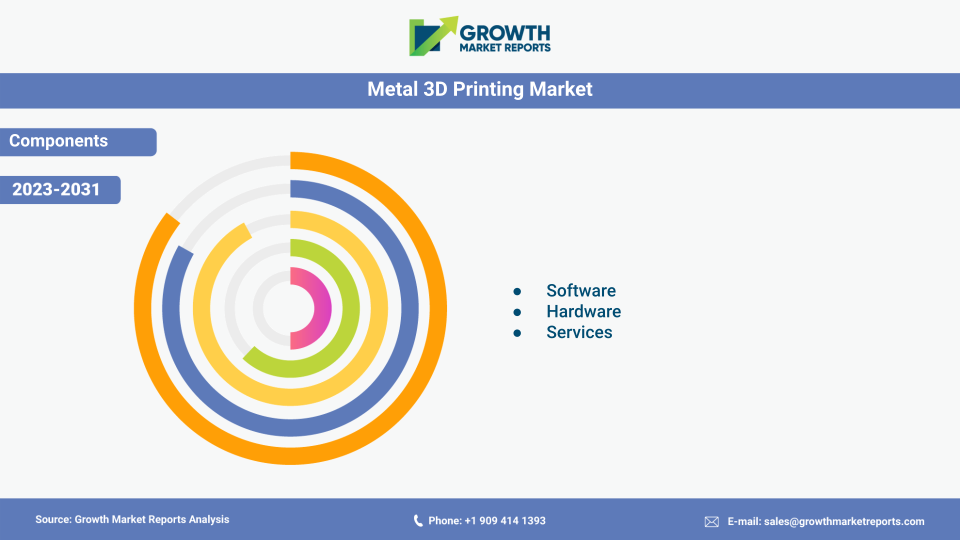
The metal 3D printing market by component is segmented into hardware, software, and services, each playing a crucial role in the overall ecosystem. Hardware remains the dominant segment, comprising 3D printers, metal powders, and related equipment. The continuous evolution of printer architecture, laser technology, and build platforms has enabled higher throughput, improved precision, and greater scalability. Advanced hardware solutions are being designed to cater to both prototyping and large-scale production, addressing the diverse needs of industries ranging from aerospace to healthcare. The hardware segment is expected to maintain its leadership position, supported by ongoing investments in R&D and the introduction of next-generation printing systems.
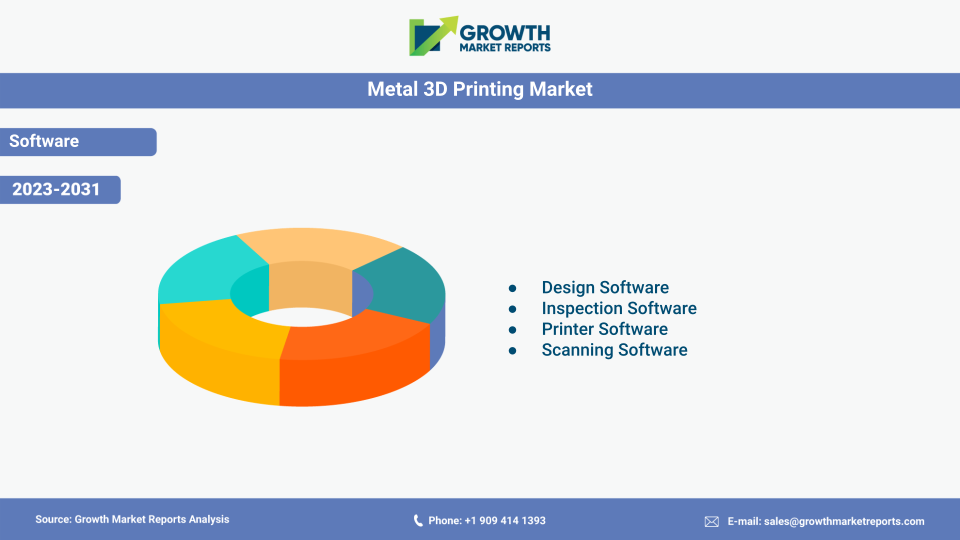
The software component is equally vital, encompassing design, simulation, and process control tools that optimize the additive manufacturing workflow. The integration of sophisticated CAD/CAM software, topology optimization, and real-time monitoring systems has significantly enhanced print quality and repeatability. Software advancements are enabling users to design more complex geometries, predict potential defects, and streamline post-processing operations. As the complexity of metal 3D printing applications increases, demand for robust and user-friendly software solutions is set to rise, driving innovation and differentiation within the market.
Services form the third key component of the metal 3D printing market, including consulting, prototyping, maintenance, training, and post-processing. The growing complexity of additive manufacturing processes has created a strong demand for specialized services, particularly among new adopters and small- to medium-sized enterprises (SMEs) lacking in-house expertise. Service providers are offering end-to-end solutions, from design optimization and material selection to quality assurance and certification. This segment is expected to witness substantial growth as companies increasingly outsource non-core activities to focus on their core competencies.
The interplay between hardware, software, and services is shaping the future landscape of the metal 3D printing market. Companies are increasingly seeking integrated solutions that combine cutting-edge hardware, intelligent software, and comprehensive services to maximize efficiency and return on investment. The convergence of these components is fostering the development of holistic additive manufacturing ecosystems, enabling seamless workflows and accelerating time-to-market for innovative products. As the market matures, collaboration among hardware manufacturers, software developers, and service providers will be critical to unlocking the full potential of metal 3D printing.
| Attributes | Details |
| Report Title | Metal 3D Printing Market Research Report 2033 |
| By Component | Hardware, Software, Services |
| By Technology | Selective Laser Melting, Electron Beam Melting, Direct Metal Laser Sintering, Binder Jetting, Others |
| By Application | Aerospace & Defense, Automotive, Healthcare, Industrial, Consumer Electronics, Energy, Others |
| By End-User | Industrial, Commercial, Academic & Research Institutes, Others |
| Regions Covered | North America, Europe, APAC, Latin America, MEA |
| Base Year | 2024 |
| Historic Data | 2018-2023 |
| Forecast Period | 2025-2033 |
| Number of Pages | 261 |
| Number of Tables & Figures | 380 |
| Customization Available | Yes, the report can be customized as per your need. |
The metal 3D printing market is characterized by a diverse array of technologies, each with unique advantages and application areas. Selective Laser Melting (SLM) and Direct Metal Laser Sintering (DMLS) are among the most widely adopted technologies, utilizing high-powered lasers to fuse metal powders layer by layer. These techniques are renowned for their ability to produce high-density, mechanically robust components with complex geometries, making them ideal for aerospace, medical, and automotive applications. The ongoing refinement of laser systems, powder handling, and build chamber environments is enhancing the reliability and scalability of SLM and DMLS, driving their widespread adoption.
Electron Beam Melting (EBM) represents another significant technology in the metal 3D printing market. Unlike laser-based methods, EBM employs an electron beam to melt metal powders in a vacuum environment, resulting in parts with excellent material properties and minimal residual stress. EBM is particularly well-suited for producing titanium and high-temperature alloys used in aerospace and medical implants. The technology’s ability to process reactive materials safely and efficiently is a key differentiator, although it requires substantial capital investment and specialized expertise.
Binder Jetting is an emerging technology that offers distinct advantages in terms of speed and scalability. This process involves depositing a liquid binding agent onto a bed of metal powder, followed by post-processing steps such as sintering or infiltration to achieve the final part properties. Binder jetting is gaining traction for applications requiring high production volumes and cost efficiency, such as automotive components and industrial tooling. The development of new binder chemistries and sintering techniques is expanding the range of compatible materials and enhancing part performance.
Other technologies, including Laser Metal Deposition (LMD), Directed Energy Deposition (DED), and hybrid manufacturing systems, are also contributing to the growth of the metal 3D printing market. These methods offer unique capabilities, such as the ability to repair or add features to existing components, produce large-scale structures, and combine additive and subtractive processes in a single platform. The ongoing innovation and diversification of metal 3D printing technologies are enabling manufacturers to address a broader spectrum of applications, from rapid prototyping to full-scale production.
The metal 3D printing market serves a wide range of applications, with aerospace and defense emerging as the leading segment. The need for lightweight, high-strength, and complex components in aircraft, satellites, and defense systems has driven significant investment in metal additive manufacturing. The ability to produce parts with optimized geometries, reduced weight, and improved fuel efficiency is a major advantage for aerospace manufacturers. Additionally, metal 3D printing enables rapid prototyping and on-demand production of replacement parts, reducing lead times and inventory costs.
The automotive industry is another major adopter of metal 3D printing technologies. Automakers are leveraging additive manufacturing to produce prototypes, custom parts, and low-volume production runs. The technology is particularly valuable for manufacturing lightweight components, such as engine parts, brackets, and heat exchangers, that contribute to improved vehicle performance and fuel efficiency. As electric vehicles (EVs) and autonomous vehicles (AVs) gain traction, the demand for customized and high-performance metal components is expected to rise, further propelling market growth.
Healthcare is a rapidly growing application segment within the metal 3D printing market. The ability to create patient-specific implants, surgical instruments, and prosthetics with precise anatomical fit and biocompatibility is transforming medical device manufacturing. Metal 3D printing enables the production of complex lattice structures that promote bone integration and reduce implant weight. The customization capabilities of additive manufacturing are particularly beneficial for orthopedic, dental, and craniofacial applications, where individualized solutions are essential for optimal patient outcomes.
Beyond aerospace, automotive, and healthcare, the metal 3D printing market is witnessing increasing adoption in industrial, consumer electronics, and energy sectors. Manufacturers are utilizing metal additive manufacturing to produce tooling, molds, and end-use parts with enhanced performance and reduced lead times. The energy industry is exploring metal 3D printing for components used in turbines, pumps, and heat exchangers, where durability and efficiency are paramount. As the technology matures, the range of applications is expected to expand further, unlocking new opportunities across diverse industries.
The metal 3D printing market by end-user is primarily segmented into industrial, commercial, academic & research institutes, and others. The industrial segment constitutes the largest share, driven by the widespread adoption of metal additive manufacturing in sectors such as aerospace, automotive, and healthcare. Industrial users are leveraging 3D printing to streamline production processes, reduce material waste, and accelerate product development cycles. The ability to produce complex, high-performance parts on-demand is enabling manufacturers to respond more effectively to market demands and maintain a competitive edge.
Commercial end-users are increasingly adopting metal 3D printing for prototyping, product customization, and small-batch production. The flexibility and cost-effectiveness of additive manufacturing make it an attractive option for businesses seeking to differentiate their products and shorten time-to-market. Commercial applications span a wide range of industries, from consumer electronics and jewelry to sporting goods and fashion accessories. As the cost of metal 3D printing continues to decline and the range of available materials expands, commercial adoption is expected to accelerate further.
Academic and research institutes play a critical role in advancing the metal 3D printing market through fundamental research, materials development, and technology validation. Universities and research organizations are collaborating with industry partners to develop new alloys, optimize printing processes, and explore novel applications for metal additive manufacturing. These efforts are driving innovation and knowledge transfer, supporting the commercialization of cutting-edge technologies and the development of a skilled workforce.
Other end-users, including government agencies and non-profit organizations, are also contributing to the growth of the metal 3D printing market. Government initiatives aimed at promoting advanced manufacturing, supporting SMEs, and fostering innovation are providing a supportive environment for the adoption of metal 3D printing. Non-profit organizations are leveraging additive manufacturing for humanitarian and development projects, such as producing medical devices and infrastructure components in resource-constrained settings. The diverse end-user base underscores the broad applicability and transformative potential of metal 3D printing technologies.
The metal 3D printing market is poised for substantial growth, presenting a wealth of opportunities for stakeholders across the value chain. One of the most significant opportunities lies in the expansion of application areas, particularly in emerging industries such as renewable energy, electronics, and construction. The ability to produce customized, high-performance metal parts on-demand is opening new avenues for innovation and value creation. Companies that invest in developing specialized materials, advanced printing systems, and integrated software solutions are well-positioned to capture a larger share of the market. Additionally, the trend toward digital manufacturing and Industry 4.0 is creating opportunities for the integration of metal 3D printing with other advanced technologies, such as robotics, artificial intelligence, and the Internet of Things (IoT), further enhancing efficiency and productivity.
Another major opportunity for the metal 3D printing market is the growing emphasis on sustainability and circular economy principles. Additive manufacturing enables resource-efficient production, reduced material waste, and lower energy consumption compared to traditional manufacturing methods. Companies that adopt metal 3D printing to support their sustainability goals can differentiate themselves in the marketplace and respond to increasing regulatory and consumer demands for environmentally responsible products. The development of closed-loop recycling systems for metal powders and the use of renewable energy sources in additive manufacturing processes are additional areas of opportunity that can drive long-term growth and competitiveness.
Despite the promising outlook, the metal 3D printing market faces several restraining factors that could hinder its growth trajectory. High initial capital investment and operating costs remain significant barriers to adoption, particularly for small and medium-sized enterprises (SMEs). The complexity of metal additive manufacturing processes, including material handling, process control, and post-processing, requires specialized expertise and infrastructure. Furthermore, the lack of standardized testing, certification, and quality assurance protocols poses challenges for the widespread adoption of metal 3D printing in safety-critical industries such as aerospace and healthcare. Addressing these challenges through collaborative efforts among industry stakeholders, regulatory bodies, and research institutions will be essential to unlocking the full potential of the market.
Regionally, North America dominates the metal 3D printing market, accounting for approximately USD 2.1 billion in revenue in 2024. This leadership position is underpinned by strong investments in research and development, a well-established industrial base, and the presence of major market players. The United States is at the forefront of adoption, driven by the aerospace, defense, and automotive sectors, as well as an active startup ecosystem. Canada is also making significant strides, particularly in the healthcare and energy industries. The region’s focus on innovation, coupled with supportive government initiatives, is expected to sustain its growth momentum over the forecast period.
Europe is the second-largest market, with a value of USD 1.6 billion in 2024, and is projected to grow at a CAGR of 22.1% through 2033. The region benefits from a strong manufacturing heritage, a skilled workforce, and robust government support for advanced manufacturing technologies. Germany, the United Kingdom, and France are leading adopters, with significant investments in aerospace, automotive, and healthcare applications. The European Union’s focus on digital transformation and sustainability is fostering the adoption of metal 3D printing, particularly among small and medium-sized enterprises (SMEs) seeking to enhance competitiveness and reduce environmental impact.
The Asia Pacific region is emerging as a high-growth market, with revenues reaching USD 1.3 billion in 2024. China, Japan, and South Korea are driving regional growth, supported by rapid industrialization, increasing investments in additive manufacturing, and the expansion of end-use industries such as automotive, electronics, and healthcare. The region’s large population, growing middle class, and rising demand for customized products are creating significant opportunities for metal 3D printing. Government initiatives aimed at promoting advanced manufacturing and supporting local innovation are further accelerating market adoption. As Asia Pacific continues to industrialize and innovate, it is expected to become an increasingly important player in the global metal 3D printing landscape.
The metal 3D printing market is characterized by intense competition, with a mix of established players and innovative startups vying for market share. The competitive landscape is shaped by continuous technological advancements, strategic partnerships, and mergers and acquisitions. Leading companies are investing heavily in research and development to introduce next-generation printing systems, develop new materials, and enhance software capabilities. The focus is on delivering integrated solutions that address the diverse needs of end-users, from prototyping to large-scale production. Companies are also expanding their global footprint through partnerships, acquisitions, and the establishment of regional manufacturing facilities to better serve local markets.
Innovation is a key differentiator in the metal 3D printing market, with companies striving to develop proprietary technologies that offer superior performance, reliability, and cost-effectiveness. The introduction of hybrid manufacturing systems, multi-material printing capabilities, and advanced process monitoring solutions is enabling manufacturers to address more complex and demanding applications. Intellectual property protection and the development of industry standards are critical factors influencing competitive dynamics, as companies seek to safeguard their innovations and ensure interoperability across platforms.
Customer-centric strategies are also shaping the competitive landscape, with companies focusing on providing comprehensive support services, training, and consulting to help customers maximize the value of their investments. The growing complexity of metal additive manufacturing processes has created a strong demand for end-to-end solutions that encompass hardware, software, materials, and services. Leading players are differentiating themselves by offering tailored solutions, rapid prototyping services, and flexible financing options to address the unique needs of different industries and customer segments.
Some of the major companies operating in the metal 3D printing market include 3D Systems Corporation, EOS GmbH, GE Additive, SLM Solutions, Renishaw plc, ExOne Company, Desktop Metal, HP Inc., and Stratasys Ltd. 3D Systems is renowned for its broad portfolio of metal 3D printers and materials, catering to a wide range of industries. EOS GmbH is a pioneer in laser-based metal additive manufacturing, with a strong focus on innovation and quality. GE Additive leverages its expertise in industrial engineering to deliver advanced metal 3D printing solutions for aerospace, healthcare, and energy applications. SLM Solutions specializes in selective laser melting technology, offering high-performance systems for demanding applications. Renishaw is recognized for its precision engineering and commitment to research and development.
ExOne Company, now part of Desktop Metal, is a leader in binder jetting technology, providing scalable solutions for industrial production. Desktop Metal has rapidly emerged as a disruptive force in the market, focusing on accessible, office-friendly metal 3D printing systems. HP Inc. is leveraging its expertise in digital printing to develop innovative metal additive manufacturing technologies, targeting high-volume production applications. Stratasys, while traditionally focused on polymer 3D printing, is expanding its presence in the metal segment through strategic partnerships and acquisitions. These companies are at the forefront of the metal 3D printing market, driving innovation, shaping industry standards, and enabling the next wave of digital manufacturing transformation.
The Metal 3D Printing market has been segmented on the basis of
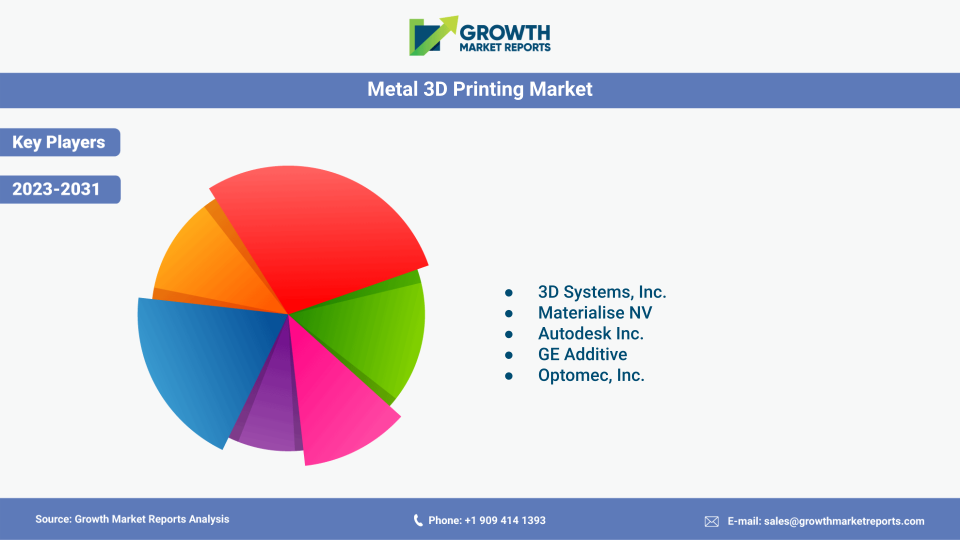
Key players competing in the global metal 3D printing market include 3D Systems, Inc.; Materialise NV; Autodesk Inc.; GE Additive; and Optomec, Inc.
Some of these players are using several market strategies such as acquisitions, merger, collaborations, partnerships, capacity expansion, and product launches to enhance their market shares and to generate revenue and raise their production line of the business in the coming years.
For instance, GE Additive (U.S.) purchased Arcam AB to increase the service as well as solution offerings to the customers In August 2017.
Opportunities include expansion into new industries like renewable energy and construction, development of specialized materials and integrated solutions, and integration with Industry 4.0 technologies such as AI and IoT.
Major players include 3D Systems Corporation, EOS GmbH, GE Additive, SLM Solutions, Renishaw plc, ExOne Company, Desktop Metal, HP Inc., and Stratasys Ltd.
Key challenges include high initial investment and operating costs, complexity of processes, need for specialized expertise, and lack of standardized testing and certification protocols.
Metal 3D printing supports sustainability by reducing material usage, lowering energy consumption, minimizing waste, and enabling localized, on-demand production, aligning with circular economy principles.
The market is segmented into hardware (3D printers, metal powders), software (design, simulation, process control), and services (consulting, prototyping, maintenance, training, post-processing).
North America leads the market, followed by Europe and Asia Pacific. The United States, Germany, China, Japan, and South Korea are prominent contributors.
Metal 3D printing offers benefits such as the ability to create complex and lightweight components, customization, reduced material waste, improved efficiency, and on-demand production.
Major technologies include Selective Laser Melting (SLM), Direct Metal Laser Sintering (DMLS), Electron Beam Melting (EBM), Binder Jetting, Laser Metal Deposition (LMD), and Directed Energy Deposition (DED).
Key industries driving adoption include aerospace & defense, automotive, healthcare, industrial manufacturing, consumer electronics, and energy.
The global metal 3D printing market reached USD 5.6 billion in 2024 and is projected to grow at a CAGR of 21.4% from 2025 to 2033, reaching USD 38.5 billion by 2033.