Segments - by Service Type (Contract Drafting, Review and Management, Compliance Assistance, Litigation Support, E-discovery, Intellectual Property Services, Others), by Location (Onshore, Offshore), by End-User (Law Firms, Corporations, Others), by Deployment Mode (Cloud-based, On-premises)
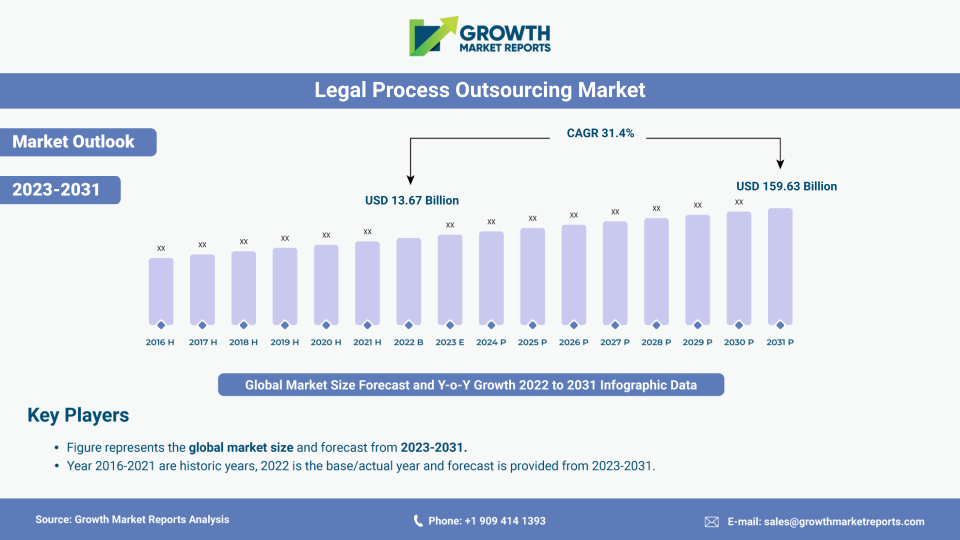
According to our latest research, the global Legal Process Outsourcing (LPO) market size reached USD 15.8 billion in 2024, driven by the increasing demand for cost-efficient legal solutions and the growing complexity of legal operations worldwide. The market is experiencing robust momentum, registering a CAGR of 22.5% from 2025 to 2033. By leveraging this impressive growth rate, the Legal Process Outsourcing market is forecasted to attain a value of USD 83.2 billion by 2033. This surge is primarily attributed to the rise in cross-border transactions, the proliferation of digital transformation in legal services, and the escalating need for specialized legal expertise at reduced operational costs.
One of the core growth factors propelling the Legal Process Outsourcing market is the increasing pressure on law firms and corporate legal departments to optimize their operational costs while maintaining high service quality. As legal fees continue to escalate, businesses are turning to LPO providers to handle routine and labor-intensive tasks such as contract management, legal research, and document review. This strategic shift allows in-house legal teams to focus on more complex and value-driven activities, thereby improving efficiency and productivity. Moreover, the adoption of advanced technologies such as AI, machine learning, and automation tools has further streamlined legal workflows, enabling LPO providers to deliver faster and more accurate results for their clients.
Another significant driver is the globalization of business operations, which has led to an upsurge in cross-border legal requirements. Multinational corporations are increasingly seeking LPO solutions to navigate the intricate landscape of international regulations, compliance norms, and intellectual property laws. The ability of LPO firms to offer multilingual support, round-the-clock services, and jurisdiction-specific expertise has made them indispensable partners for businesses operating on a global scale. Additionally, the pandemic-induced shift towards remote work has accelerated the adoption of cloud-based legal solutions, further fueling the demand for Legal Process Outsourcing services across different geographies.
The evolving regulatory environment is also fostering the growth of the Legal Process Outsourcing market. Governments and regulatory bodies are continuously updating legal frameworks, compelling organizations to stay abreast of compliance requirements. LPO providers play a crucial role in helping companies manage compliance risks by offering specialized services such as regulatory monitoring, risk assessment, and compliance audits. Furthermore, the increasing complexity of litigation and the surge in e-discovery requests have amplified the need for expert litigation support services, thereby expanding the scope of LPO offerings.
In recent years, the demand for Legal Services has significantly increased, driven by the complexities of modern business operations and the need for specialized legal expertise. Legal services encompass a wide range of activities, from contract negotiation and compliance management to litigation support and intellectual property protection. As businesses navigate the intricacies of regulatory frameworks and cross-border transactions, the role of legal services becomes indispensable. Companies are increasingly seeking comprehensive legal solutions that not only address immediate legal challenges but also provide strategic guidance for long-term growth and risk management. This trend is further amplified by the integration of technology into legal services, enabling more efficient and effective legal processes.
Regionally, the Asia Pacific has emerged as a dominant hub for LPO activities, owing to its large pool of skilled legal professionals, cost advantages, and favorable business environment. Countries such as India and the Philippines are particularly prominent, serving as offshore centers for legal process outsourcing for clients based in North America and Europe. Meanwhile, North America remains the largest consumer of LPO services, driven by the high volume of legal work and the growing trend of legal departments outsourcing non-core activities. Europe is also witnessing steady growth, with increasing adoption among law firms and corporations seeking to enhance operational efficiency and reduce legal expenditure.
The service type segment of the Legal Process Outsourcing market encompasses a diverse range of offerings, including contract drafting, review and management, compliance assistance, litigation support, e-discovery, intellectual property services, and several others. Among these, contract drafting, review, and management services constitute a significant share of the market, as organizations routinely require meticulous handling of legal agreements and documentation. The growing complexity of commercial contracts, coupled with the need for risk mitigation, has led to an increased reliance on LPO providers for these services. By leveraging specialized expertise and advanced contract lifecycle management tools, LPO firms are able to deliver high-quality, cost-effective solutions that enable clients to streamline their contract processes and ensure regulatory compliance.
Compliance assistance is another rapidly expanding segment, driven by the ever-evolving regulatory landscape across various industries. Businesses are under constant pressure to comply with local, national, and international laws, making it imperative to have access to up-to-date regulatory intelligence and compliance management solutions. LPO providers offer tailored compliance services, including regulatory monitoring, policy development, and training, which help organizations proactively manage compliance risks and avoid costly penalties. The increasing focus on data privacy and security, particularly in the wake of regulations such as GDPR and CCPA, has further heightened the demand for compliance-related LPO services.
Litigation support and e-discovery services have also witnessed substantial growth, fueled by the rising volume of electronic data and the increasing complexity of legal disputes. LPO firms employ sophisticated e-discovery tools and analytics platforms to manage large-scale document review, data collection, and case analysis. This not only accelerates the litigation process but also enhances accuracy and reduces costs for law firms and corporate clients. Intellectual property services, encompassing patent searches, trademark filings, and IP portfolio management, are gaining traction as companies seek to protect their innovations in a competitive global marketplace.
Other specialized services within the LPO market include legal research, due diligence, and paralegal support, each catering to the unique needs of law firms and corporate legal departments. The ability of LPO providers to offer a comprehensive suite of services under one roof has made them preferred partners for organizations seeking to outsource both routine and complex legal tasks. As the legal industry continues to evolve, the scope and sophistication of LPO service offerings are expected to expand further, driven by technological advancements and changing client expectations.
| Attributes | Details |
| Report Title | Legal Process Outsourcing Market Research Report 2033 |
| By Service Type | Contract Drafting, Review and Management, Compliance Assistance, Litigation Support, E-discovery, Intellectual Property Services, Others |
| By Location | Onshore, Offshore |
| By End-User | Law Firms, Corporations, Others |
| By Deployment Mode | Cloud-based, On-premises |
| Regions Covered | North America, Europe, APAC, Latin America, MEA |
| Base Year | 2024 |
| Historic Data | 2018-2023 |
| Forecast Period | 2025-2033 |
| Number of Pages | 297 |
| Number of Tables & Figures | 312 |
| Customization Available | Yes, the report can be customized as per your need. |
The location segment of the Legal Process Outsourcing market is broadly categorized into onshore and offshore services. Offshore LPO, particularly in countries like India, the Philippines, and South Africa, has gained significant traction due to the substantial cost savings it offers. These locations provide access to a vast talent pool of qualified legal professionals who can deliver high-quality services at a fraction of the cost compared to developed markets. Offshore LPO providers have developed robust infrastructure and security protocols to handle sensitive legal information, ensuring data confidentiality and compliance with international standards.
The advent of Online Legal Services has revolutionized the way legal assistance is accessed and delivered. With the proliferation of digital platforms, individuals and businesses can now obtain legal advice and services remotely, breaking down geographical barriers and enhancing accessibility. Online legal services offer a wide array of solutions, from document drafting and legal consultations to dispute resolution and compliance checks, all facilitated through user-friendly interfaces. This digital transformation in the legal sector not only provides convenience and cost savings but also democratizes access to legal expertise, making it available to a broader audience. As technology continues to evolve, online legal services are poised to become an integral part of the legal landscape, offering innovative solutions to meet the diverse needs of clients.
Onshore LPO, on the other hand, involves outsourcing legal processes to service providers within the same country or region as the client. This model is particularly favored by organizations that require close collaboration, cultural alignment, and adherence to local legal frameworks. Onshore LPO providers are often better equipped to handle jurisdiction-specific legal work, manage client relationships, and provide faster turnaround times. While onshore services may come at a higher cost compared to offshore alternatives, they offer greater control and oversight, making them suitable for complex or high-stakes legal matters.
The choice between onshore and offshore LPO is influenced by several factors, including the nature of the legal work, data security requirements, regulatory considerations, and client preferences. Many organizations are adopting a hybrid approach, leveraging both onshore and offshore resources to optimize costs and access specialized expertise. For instance, routine document review and legal research may be outsourced to offshore teams, while sensitive litigation support or compliance work is handled by onshore providers. This flexible model enables clients to balance cost efficiency with quality and risk management.
The growing acceptance of remote work and digital collaboration tools has further blurred the lines between onshore and offshore LPO services. Clients now have the flexibility to engage with legal professionals from around the world, regardless of geographic boundaries. As technology continues to advance, the distinction between onshore and offshore LPO is expected to become less pronounced, with providers focusing on delivering seamless, integrated solutions that cater to the evolving needs of global clients.
The end-user segment of the Legal Process Outsourcing market is primarily divided into law firms, corporations, and others, each with distinct outsourcing requirements and preferences. Law firms represent a significant share of the LPO market, as they increasingly seek to enhance operational efficiency and focus on high-value legal work. By outsourcing routine tasks such as document review, legal research, and paralegal support, law firms can reduce overhead costs, improve turnaround times, and allocate resources more effectively. This trend is particularly pronounced among mid-sized and large law firms, which face mounting pressure to deliver cost-effective services without compromising quality.
Corporations, especially those with large in-house legal departments, are also major consumers of LPO services. The growing complexity of corporate legal operations, coupled with the need to manage regulatory compliance, intellectual property, and cross-border transactions, has driven organizations to seek external support from LPO providers. By leveraging specialized expertise and scalable resources, corporations can address fluctuating legal workloads, mitigate risks, and achieve greater agility in their legal operations. The adoption of LPO solutions is particularly prevalent in industries such as banking, finance, healthcare, and technology, where legal requirements are both extensive and dynamic.
Other end-users of LPO services include government agencies, non-profit organizations, and academic institutions, each with unique legal needs and challenges. Government agencies often require support for regulatory compliance, litigation, and policy development, while non-profits may seek assistance with grant management, contract drafting, and legal research. Academic institutions, on the other hand, may engage LPO providers for intellectual property management, research support, and regulatory compliance. The ability of LPO firms to offer tailored solutions that address the specific requirements of diverse end-users has contributed to the widespread adoption of legal process outsourcing across various sectors.
The evolving expectations of end-users are reshaping the LPO market, with clients increasingly demanding customized, technology-enabled solutions that deliver measurable value. LPO providers are responding by investing in advanced analytics, automation, and AI-driven tools that enhance service delivery and enable data-driven decision-making. As end-users continue to prioritize efficiency, cost savings, and quality, the Legal Process Outsourcing market is poised for sustained growth and innovation in the coming years.
The deployment mode segment of the Legal Process Outsourcing market is segmented into cloud-based and on-premises solutions, each offering distinct advantages and considerations for clients. Cloud-based LPO solutions have gained significant popularity in recent years, driven by their scalability, flexibility, and cost-effectiveness. By leveraging cloud infrastructure, LPO providers can offer clients on-demand access to legal services, seamless collaboration, and secure data storage. Cloud-based platforms also enable real-time communication, document sharing, and workflow automation, enhancing the overall efficiency and responsiveness of legal operations.
One of the key benefits of cloud-based LPO is the ability to support remote work and distributed teams, a trend that has accelerated in the wake of the COVID-19 pandemic. Clients can engage with legal professionals from anywhere in the world, facilitating cross-border collaboration and enabling round-the-clock service delivery. Additionally, cloud-based solutions offer robust security features, including encryption, multi-factor authentication, and compliance with international data protection standards, ensuring the confidentiality and integrity of sensitive legal information.
On-premises LPO solutions, while less prevalent than cloud-based alternatives, remain a preferred choice for organizations with stringent data security and regulatory requirements. By maintaining control over their IT infrastructure and legal data, clients can ensure compliance with industry-specific regulations and internal policies. On-premises deployment is particularly common among government agencies, financial institutions, and large corporations that handle highly sensitive or classified information. While on-premises solutions may involve higher upfront costs and maintenance requirements, they offer greater control and customization options for clients with complex legal needs.
The choice between cloud-based and on-premises LPO solutions is influenced by factors such as organizational size, regulatory environment, IT capabilities, and risk tolerance. Many clients are adopting a hybrid approach, combining the benefits of both deployment models to achieve optimal flexibility, security, and cost efficiency. As technology continues to evolve, the adoption of cloud-based LPO solutions is expected to outpace on-premises alternatives, driven by the growing demand for agile, scalable, and future-ready legal services.
The Legal Process Outsourcing market presents a wealth of opportunities for growth and innovation, particularly as organizations seek to navigate the complexities of an evolving legal landscape. One of the most significant opportunities lies in the integration of advanced technologies such as artificial intelligence, machine learning, and natural language processing into LPO services. These technologies have the potential to revolutionize legal workflows by automating routine tasks, enhancing document review accuracy, and enabling predictive analytics for case outcomes. LPO providers that invest in technology-driven solutions are well-positioned to deliver greater value to clients, improve operational efficiency, and differentiate themselves in a competitive market.
Another promising opportunity is the expansion of LPO services into new verticals and geographies. As businesses continue to globalize, there is a growing demand for jurisdiction-specific legal expertise, multilingual support, and cross-border compliance solutions. LPO providers can capitalize on this trend by expanding their service offerings, establishing partnerships with local law firms, and investing in talent development across emerging markets. Additionally, the increasing focus on data privacy and cybersecurity presents an opportunity for LPO firms to offer specialized services in regulatory compliance, risk assessment, and data protection, catering to the evolving needs of clients in highly regulated industries.
Despite the numerous opportunities, the Legal Process Outsourcing market also faces several restraining factors that could hinder its growth. One of the primary challenges is the concern over data security and confidentiality, particularly when outsourcing sensitive legal work to offshore providers. Clients may be apprehensive about sharing proprietary information, intellectual property, or classified documents with external vendors, especially in regions with differing legal frameworks and data protection laws. To address these concerns, LPO providers must invest in robust security protocols, obtain relevant certifications, and establish transparent communication channels with clients. Additionally, the risk of quality control issues, cultural differences, and communication barriers may pose challenges for organizations seeking to outsource complex or high-stakes legal work.
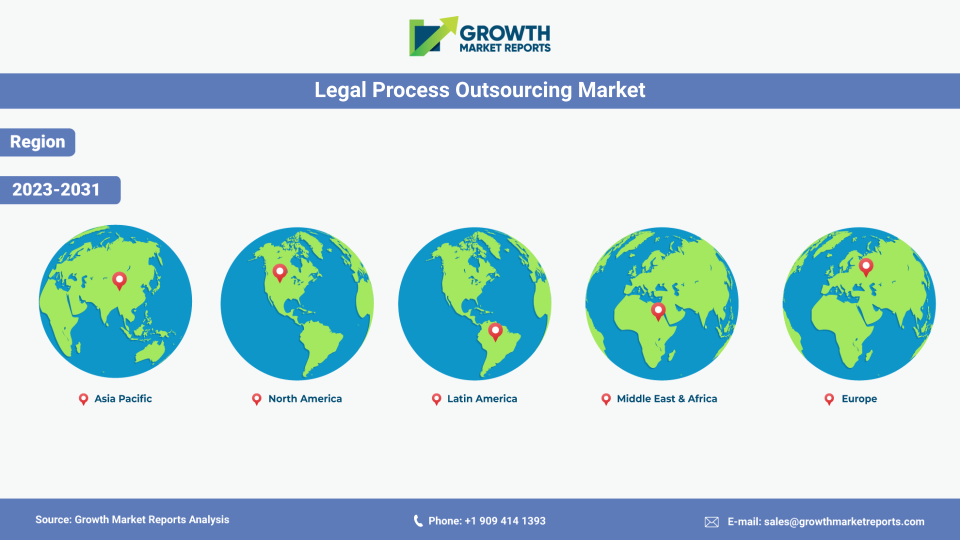
The regional analysis of the Legal Process Outsourcing market reveals distinct trends and growth patterns across major geographies. North America remains the largest market for LPO services, accounting for approximately USD 6.5 billion in 2024. This dominance is attributed to the high volume of legal work, the widespread adoption of technology-driven solutions, and the presence of leading law firms and corporate legal departments. The United States, in particular, is a major consumer of LPO services, driven by the need to manage complex litigation, regulatory compliance, and intellectual property portfolios. The region is expected to maintain steady growth, with a projected CAGR of 20.8% through 2033.
Asia Pacific has emerged as a key hub for Legal Process Outsourcing, with a market size of USD 5.2 billion in 2024. Countries such as India and the Philippines are leading providers of offshore LPO services, offering cost-effective solutions and access to a large pool of skilled legal professionals. The region's competitive advantage lies in its ability to deliver high-quality services at lower costs, making it an attractive destination for clients from North America and Europe. The Asia Pacific LPO market is forecasted to grow at a remarkable CAGR of 25.3% from 2025 to 2033, driven by increasing investments in legal technology, talent development, and infrastructure.
Europe is also witnessing significant growth in the Legal Process Outsourcing market, with a market size of USD 2.8 billion in 2024. The region's growth is fueled by the increasing adoption of LPO solutions among law firms and corporations seeking to enhance operational efficiency and reduce legal costs. The implementation of stringent data protection regulations, such as the General Data Protection Regulation (GDPR), has further heightened the demand for compliance-related LPO services. Meanwhile, Latin America and the Middle East & Africa are emerging as promising markets, with growing awareness of the benefits of legal process outsourcing and increasing investments in legal infrastructure. Collectively, these regions account for USD 1.3 billion in 2024, with strong potential for future growth as organizations seek to optimize their legal operations and navigate complex regulatory environments.
The competitive landscape of the Legal Process Outsourcing market is characterized by the presence of a diverse array of global, regional, and niche players, each striving to capture a larger share of this rapidly expanding market. The industry is marked by intense competition, with providers differentiating themselves through service quality, technological innovation, pricing strategies, and domain expertise. Leading LPO firms are continuously investing in advanced technologies such as artificial intelligence, machine learning, and automation to enhance their service offerings and improve operational efficiency. The integration of technology has become a key differentiator, enabling providers to deliver faster, more accurate, and cost-effective solutions to clients.
Strategic partnerships, mergers, and acquisitions are common strategies employed by major players to expand their geographic footprint, diversify their service portfolios, and strengthen their market position. Many LPO providers are forming alliances with law firms, technology vendors, and consulting firms to offer end-to-end legal solutions that cater to the evolving needs of clients. Additionally, the focus on talent development and continuous training is paramount, as the industry requires a deep understanding of legal principles, regulatory frameworks, and emerging technologies. Providers that can attract, retain, and upskill top legal talent are better positioned to deliver high-quality services and build long-term client relationships.
The market is also witnessing the entry of new players, particularly technology-driven startups that offer innovative solutions in areas such as contract management, e-discovery, and compliance. These entrants are leveraging cloud-based platforms, AI-powered analytics, and automation tools to disrupt traditional legal processes and deliver superior value to clients. While established players enjoy the advantage of scale, reputation, and client relationships, new entrants are challenging the status quo by offering agile, flexible, and technology-enabled solutions. The dynamic nature of the LPO market ensures that competition remains fierce, driving continuous innovation and improvement across the industry.
Some of the major companies operating in the Legal Process Outsourcing market include Clutch Group, UnitedLex Corporation, Integreon, QuisLex, Elevate Services, Pangea3 (a Thomson Reuters company), Mindcrest, Inc., CPA Global, and Infosys BPM. Clutch Group is renowned for its expertise in litigation support and compliance services, serving a diverse clientele across multiple industries. UnitedLex Corporation offers a comprehensive suite of legal services, leveraging advanced technology and domain expertise to deliver transformative solutions. Integreon is a leading provider of contract management, document review, and legal research services, with a strong presence in North America, Europe, and Asia Pacific.
QuisLex specializes in complex legal processes, including litigation support, contract management, and regulatory compliance, serving both law firms and corporate clients. Elevate Services is recognized for its innovative approach to legal service delivery, combining technology, consulting, and managed services to drive operational excellence. Pangea3, a Thomson Reuters company, offers a wide range of LPO services, including intellectual property, e-discovery, and compliance solutions, with a focus on quality and client satisfaction. Mindcrest, Inc. is known for its expertise in legal research, contract drafting, and compliance assistance, catering to clients in the United States, United Kingdom, and India. CPA Global and Infosys BPM are also prominent players, offering end-to-end legal process outsourcing solutions to clients worldwide.
These companies are continuously evolving their service offerings to meet the changing needs of the legal industry, investing in technology, talent, and strategic partnerships to maintain their competitive edge. The ability to deliver high-quality, technology-enabled legal solutions will be a key success factor for LPO providers in the years to come. As the market continues to grow and mature, we expect to see further consolidation, innovation, and specialization, with leading players setting new benchmarks for service excellence and client value in the Legal Process Outsourcing market.
The Legal Process Outsourcing market has been segmented on the basis of
Some of the key players in the global legal process outsourcing market are UnitedLex Corporation, Integreon, Inc., Elevate Services Inc., Pangea3 LLC, QuisLex Inc., Mindcrest Inc., Clutch Group, and Axiom Law.
Companies are investing heavily on improving their service offerings such as compliance management. Additionally, they are also focusing on expanding their services to contract management and other corporate services.
Moreover, they are actively engaged to adopt new tools and various business strategies such as target marketing to strengthen their position in the market. They are keen on expanding their service portfolio to offer unique services at affordable costs.
Key players include Clutch Group, UnitedLex Corporation, Integreon, QuisLex, Elevate Services, Pangea3 (a Thomson Reuters company), Mindcrest Inc., CPA Global, Infosys BPM, Clifford Chance LLP, Cognizant, Evalueserve, HCL Technologies, Legal Advantage LLC, LegalBase, Wipro, Capgemini, Morae Global, Deloitte, EY, and PwC.
Major challenges include concerns over data security and confidentiality, quality control issues, cultural and communication barriers, and compliance with varying international data protection laws.
The primary end-users include law firms, corporations (especially those with large in-house legal departments), government agencies, non-profit organizations, and academic institutions.
Technology, especially AI, machine learning, cloud computing, and automation, is streamlining legal workflows, improving accuracy, enabling remote work, and enhancing the scalability and security of LPO services.
Onshore LPO involves outsourcing legal work to providers within the same country or region, offering better cultural alignment and jurisdiction-specific expertise. Offshore LPO refers to outsourcing to providers in other countries, typically for significant cost savings and access to a large talent pool.
LPO providers offer a range of services including contract drafting, review and management, compliance assistance, litigation support, e-discovery, intellectual property services, legal research, due diligence, and paralegal support.
Asia Pacific is a dominant hub for LPO activities, with countries like India and the Philippines serving as major offshore centers. North America is the largest consumer of LPO services, while Europe is experiencing steady growth due to increasing adoption among law firms and corporations.
Key growth drivers include the need for cost-efficient legal solutions, increasing complexity of legal operations, globalization of business, rising cross-border transactions, adoption of advanced technologies like AI and automation, and evolving regulatory requirements.
The global Legal Process Outsourcing market reached USD 15.8 billion in 2024 and is projected to grow at a CAGR of 22.5% from 2025 to 2033, reaching an estimated value of USD 83.2 billion by 2033.
Legal Process Outsourcing (LPO) refers to the practice of law firms and corporations outsourcing legal services such as contract management, legal research, document review, compliance assistance, and litigation support to external service providers, often in offshore locations, to reduce costs and improve efficiency.