Segments - by Component (Software, Services), by Deployment Mode (On-Premises, Cloud-Based), by Organization Size (Large Enterprises, Small and Medium Enterprises), by End-User (BFSI, Government and Public Sector, Healthcare, Legal, IT and Telecommunications, Energy and Utilities, Others)
According to our latest research, the global e-discovery market size reached USD 15.2 billion in 2024, propelled by a robust demand for digital data management and compliance solutions. The market is anticipated to experience a steady compound annual growth rate (CAGR) of 8.7% from 2025 to 2033, culminating in a projected value of USD 32.1 billion by the end of the forecast period. This sustained growth is primarily driven by the exponential increase in electronically stored information (ESI), heightened regulatory scrutiny, and the growing necessity for efficient litigation support across industries.
One of the principal factors fueling the expansion of the e-discovery market is the surging volume of digital data generated by enterprises worldwide. As organizations increasingly digitize their operations, the need for advanced e-discovery solutions to manage, analyze, and extract relevant information for legal proceedings becomes imperative. The rapid adoption of cloud computing, collaboration tools, and mobile devices has further contributed to the complexity and scale of data, necessitating robust e-discovery platforms that can operate seamlessly across diverse data sources. Moreover, the proliferation of social media, instant messaging applications, and remote work environments has created new challenges and opportunities for the e-discovery ecosystem, compelling vendors to innovate and deliver more sophisticated, AI-driven solutions.
Regulatory compliance and the evolving legal landscape also play a pivotal role in shaping the growth trajectory of the e-discovery market. With governments and regulatory bodies worldwide imposing stringent data retention and privacy mandates, organizations are under increasing pressure to ensure transparency, accountability, and defensibility in their data management practices. Laws such as the General Data Protection Regulation (GDPR), California Consumer Privacy Act (CCPA), and other jurisdiction-specific requirements have heightened the stakes for non-compliance, driving enterprises to invest in comprehensive e-discovery tools that facilitate timely and accurate information retrieval. This trend is particularly pronounced in industries such as BFSI, healthcare, and government, where the consequences of non-compliance can be severe.
Technological advancements and the integration of artificial intelligence (AI) and machine learning (ML) have further accelerated the adoption of e-discovery solutions. Modern e-discovery platforms leverage AI-powered analytics, predictive coding, and natural language processing to automate document review, reduce manual effort, and enhance the accuracy of data identification and classification. These innovations not only improve operational efficiency but also enable organizations to respond swiftly to legal requests and investigations. The ongoing evolution of AI and automation is expected to unlock new avenues for growth, making e-discovery an indispensable component of enterprise risk management and legal strategy.
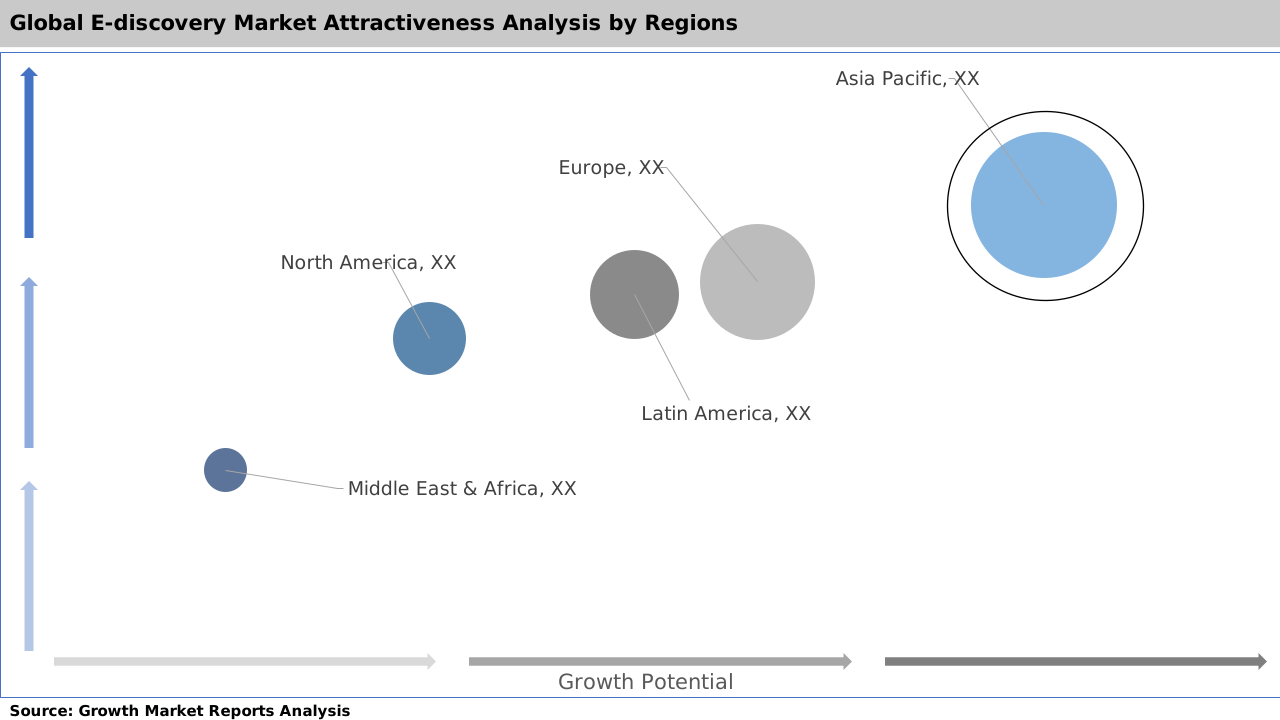
From a regional perspective, North America continues to dominate the e-discovery market, accounting for the largest share in 2024, driven by the presence of major technology providers, a mature legal infrastructure, and high awareness of compliance requirements. Europe follows closely, buoyed by stringent data protection regulations and a growing emphasis on corporate governance. The Asia Pacific region, while still emerging, is witnessing the fastest growth, fueled by rapid digital transformation, increasing cross-border litigation, and rising investments in legal technology. Latin America and the Middle East & Africa are also experiencing gradual adoption, supported by expanding regulatory frameworks and the globalization of business operations.
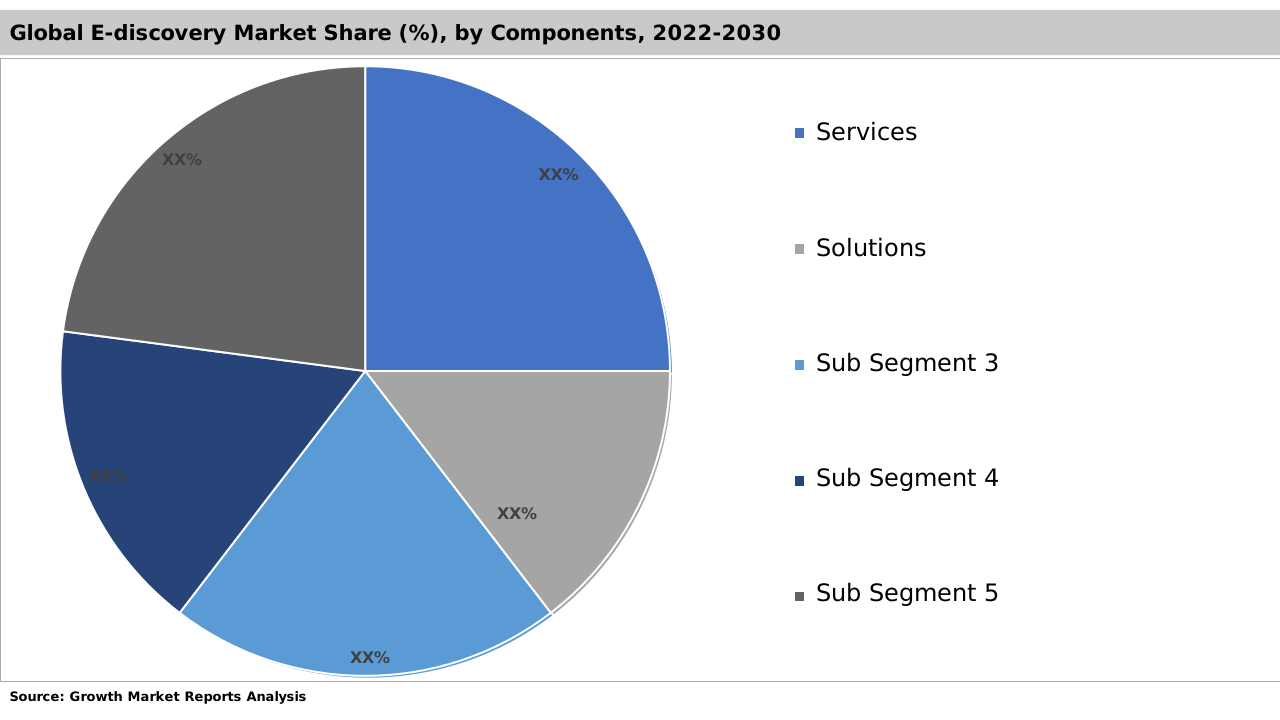
The e-discovery market by component is broadly segmented into software and services, each playing a critical role in the overall ecosystem. The software segment encompasses a wide array of solutions, including data collection, processing, review, analysis, and presentation tools. These platforms are designed to streamline the end-to-end e-discovery process, enabling organizations to efficiently manage vast volumes of electronic data and comply with legal requirements. With the advent of cloud-based offerings and AI-driven analytics, e-discovery software has evolved to deliver greater scalability, flexibility, and accuracy, making it the preferred choice for enterprises seeking to modernize their legal and compliance workflows.
Services, on the other hand, constitute a significant portion of the e-discovery market, encompassing consulting, implementation, training, support, and managed services. As e-discovery projects often involve complex, multi-jurisdictional data environments and evolving legal standards, organizations frequently rely on specialized service providers for expert guidance and hands-on assistance. These services are particularly valuable for organizations with limited in-house expertise or resources, enabling them to navigate the intricacies of e-discovery, mitigate risks, and ensure defensibility in legal proceedings. The growing trend of outsourcing e-discovery functions to third-party vendors has further fueled the demand for managed services, which offer end-to-end support and cost efficiencies.
The interplay between software and services is increasingly characterized by integration and collaboration, with vendors offering bundled solutions that combine advanced technology with expert support. This holistic approach enables organizations to derive maximum value from their e-discovery investments, leveraging the strengths of both components to address diverse use cases and compliance challenges. As the market matures, we anticipate a continued convergence of software and services, driven by customer demand for seamless, end-to-end solutions that simplify the e-discovery lifecycle and reduce operational burdens.
Innovation within the component segment is also being shaped by the rise of automation and AI. Leading e-discovery software platforms now incorporate features such as predictive coding, sentiment analysis, and automated redaction, significantly reducing the time and cost associated with manual document review. Service providers are similarly leveraging AI-powered tools to enhance the efficiency and accuracy of their offerings, from early case assessment to data mapping and legal hold management. As organizations seek to stay ahead of regulatory and technological changes, the demand for integrated, intelligent e-discovery solutions is expected to remain robust.
| Attributes | Details |
| Report Title | E-discovery Market Research Report 2033 |
| By Component | Software, Services |
| By Deployment Mode | On-Premises, Cloud-Based |
| By Organization Size | Large Enterprises, Small and Medium Enterprises |
| By End-User | BFSI, Government and Public Sector, Healthcare, Legal, IT and Telecommunications, Energy and Utilities, Others |
| Regions Covered | North America, Europe, APAC, Latin America, MEA |
| Base Year | 2024 |
| Historic Data | 2018-2023 |
| Forecast Period | 2025-2033 |
| Number of Pages | 267 |
| Number of Tables & Figures | 364 |
| Customization Available | Yes, the report can be customized as per your need. |
Deployment mode is a crucial consideration in the e-discovery market, with organizations choosing between on-premises and cloud-based solutions based on their specific requirements, risk tolerance, and IT infrastructure. The on-premises segment has traditionally dominated the market, particularly among large enterprises and regulated industries that prioritize data security, control, and compliance. On-premises deployments offer organizations the ability to maintain direct oversight of their data, implement customized security protocols, and ensure compliance with jurisdiction-specific regulations. However, these solutions often entail significant upfront investments in hardware, software, and maintenance, as well as ongoing resource commitments.
The shift towards cloud-based e-discovery solutions has accelerated in recent years, driven by the need for scalability, flexibility, and cost efficiency. Cloud-based platforms enable organizations to access advanced e-discovery capabilities on demand, without the burden of managing complex IT infrastructure. This deployment mode is particularly attractive to small and medium enterprises (SMEs), as well as organizations with distributed or remote workforces, as it facilitates seamless collaboration, data sharing, and remote access. Moreover, cloud-based solutions offer enhanced disaster recovery, automatic updates, and the ability to scale resources dynamically in response to fluctuating workloads.
Security and compliance remain top concerns for organizations considering cloud-based e-discovery, but advancements in encryption, access controls, and regulatory certifications have helped to mitigate these risks. Leading vendors now offer robust security features and compliance assurances, enabling organizations to confidently migrate sensitive legal and compliance functions to the cloud. The growing adoption of hybrid deployment models, which combine the strengths of both on-premises and cloud-based solutions, reflects the evolving needs of the market and the desire for greater flexibility and control.
Looking ahead, the cloud-based segment is expected to outpace on-premises solutions in terms of growth, driven by ongoing digital transformation initiatives, the proliferation of cloud-native applications, and the increasing complexity of data environments. As organizations continue to embrace remote work and digital collaboration, the demand for agile, scalable, and secure e-discovery solutions will remain a key driver of market expansion.
The e-discovery market serves organizations of all sizes, from large enterprises with complex, global operations to small and medium enterprises (SMEs) seeking cost-effective compliance solutions. Large enterprises have historically been the primary adopters of e-discovery technologies, owing to their substantial data volumes, frequent involvement in litigation, and stringent regulatory obligations. These organizations require robust, scalable platforms that can handle diverse data sources, support multi-jurisdictional cases, and integrate with existing IT and legal infrastructure. As a result, they often invest in comprehensive, enterprise-grade e-discovery solutions, complemented by managed services and expert consulting.
SMEs are increasingly recognizing the importance of e-discovery in managing legal risks, ensuring compliance, and protecting their reputations. While smaller organizations may not face the same scale or complexity of e-discovery challenges as their larger counterparts, they are nonetheless subject to the same regulatory requirements and potential litigation risks. Cloud-based e-discovery solutions have emerged as a game-changer for SMEs, offering affordable, scalable, and user-friendly platforms that can be tailored to their specific needs. The availability of subscription-based pricing models and self-service tools has further lowered the barriers to adoption, enabling SMEs to access advanced e-discovery capabilities without significant upfront investments.
The growing awareness of data privacy, cybersecurity, and regulatory compliance is prompting organizations of all sizes to prioritize e-discovery as a core component of their risk management strategy. As data volumes continue to rise and legal requirements become more complex, the demand for flexible, scalable, and cost-effective e-discovery solutions is expected to increase across the board. Vendors are responding to this trend by developing modular platforms, customizable workflows, and industry-specific solutions that cater to the unique needs of different organization sizes.
The convergence of AI, automation, and cloud computing is further democratizing access to e-discovery technology, leveling the playing field for organizations of all sizes. By leveraging these innovations, SMEs can now compete more effectively with larger enterprises, ensuring compliance, reducing legal costs, and safeguarding their interests in an increasingly complex regulatory environment.
The e-discovery market serves a diverse array of end-users, each with distinct requirements, challenges, and regulatory environments. The banking, financial services, and insurance (BFSI) sector represents one of the largest and most dynamic segments, driven by stringent compliance mandates, frequent litigation, and the need to manage vast amounts of sensitive customer data. E-discovery solutions in this sector are tailored to support regulatory investigations, fraud detection, and dispute resolution, enabling financial institutions to respond swiftly and effectively to legal and compliance requests.
Government and public sector organizations are also significant consumers of e-discovery technology, given their responsibility for managing public records, responding to Freedom of Information Act (FOIA) requests, and ensuring transparency and accountability. These organizations require e-discovery platforms that can handle large-scale data collections, support complex workflows, and adhere to strict security and privacy standards. The growing emphasis on digital government initiatives and open data policies is further driving the adoption of e-discovery solutions in this sector.
The healthcare industry faces unique e-discovery challenges, including the need to comply with regulations such as the Health Insurance Portability and Accountability Act (HIPAA), manage electronic health records (EHRs), and protect patient privacy. E-discovery platforms in this sector are designed to support secure data collection, redaction, and review, enabling healthcare providers to respond to legal requests while safeguarding sensitive information. The rise of telemedicine, remote care, and digital health technologies is adding new layers of complexity to the e-discovery landscape, necessitating innovative solutions that can address emerging risks and opportunities.
Legal firms remain at the forefront of e-discovery adoption, leveraging advanced technology to streamline case preparation, evidence review, and litigation support. E-discovery platforms enable legal professionals to manage large volumes of electronic evidence, collaborate with clients and co-counsel, and ensure the defensibility of their processes. The integration of AI and predictive analytics is transforming the legal sector, enabling faster, more accurate document review and reducing the time and cost associated with traditional discovery methods.
Other key end-users include IT and telecommunications companies, energy and utilities, and a range of industries facing complex regulatory and legal environments. Each of these sectors requires tailored e-discovery solutions that address their specific data types, compliance requirements, and operational challenges. As the market continues to evolve, we expect to see increased specialization and customization of e-discovery platforms to meet the unique needs of different end-user segments.
The e-discovery market presents significant opportunities for growth and innovation, particularly in the areas of artificial intelligence, automation, and cloud computing. As organizations grapple with ever-increasing data volumes and complexity, the demand for intelligent, scalable e-discovery solutions is expected to surge. Vendors that can deliver advanced analytics, predictive coding, and seamless integration with other enterprise systems will be well-positioned to capture market share. The rise of remote work and digital collaboration is also creating new opportunities for e-discovery providers, as organizations seek to manage and secure data across distributed environments. Additionally, the growing focus on data privacy and regulatory compliance is driving demand for solutions that can automate compliance monitoring, risk assessment, and reporting, enabling organizations to stay ahead of evolving legal requirements.
Another key opportunity lies in the expansion of e-discovery into emerging markets and industries. As digital transformation accelerates in regions such as Asia Pacific, Latin America, and the Middle East & Africa, organizations are increasingly recognizing the importance of e-discovery in managing legal risks and ensuring compliance. Vendors that can offer localized solutions, language support, and region-specific expertise will be well-positioned to capitalize on this trend. The development of industry-specific e-discovery platforms, tailored to the unique needs of sectors such as healthcare, energy, and government, also represents a significant growth opportunity. By addressing the specific challenges and requirements of different industries, e-discovery providers can differentiate their offerings and unlock new revenue streams.
Despite these opportunities, the e-discovery market faces several restraining factors, including concerns around data security, privacy, and the complexity of managing cross-border data flows. Organizations are increasingly wary of the risks associated with storing and processing sensitive legal data in the cloud, particularly in light of high-profile data breaches and evolving regulatory requirements. The complexity of managing data across multiple jurisdictions, each with its own legal and compliance standards, can also pose significant challenges for organizations and e-discovery providers alike. Addressing these concerns will require ongoing investment in security, compliance, and risk management capabilities, as well as close collaboration between vendors, regulators, and end-users.
North America remains the largest and most mature market for e-discovery, accounting for approximately USD 7.5 billion in revenue in 2024. The region's dominance is underpinned by the presence of leading technology providers, a well-established legal infrastructure, and high levels of awareness around compliance and data privacy. The United States, in particular, is a key driver of growth, with organizations across industries investing heavily in advanced e-discovery solutions to manage litigation risks, regulatory investigations, and data privacy obligations. Canada is also witnessing increased adoption, supported by evolving data protection laws and a growing focus on digital transformation.
Europe is the second-largest market, with revenues reaching USD 3.8 billion in 2024. The region's growth is fueled by stringent data protection regulations such as the GDPR, which have heightened the importance of e-discovery in ensuring compliance and managing cross-border data flows. The United Kingdom, Germany, and France are leading adopters, driven by robust legal frameworks and a strong emphasis on corporate governance. The European market is characterized by a high degree of fragmentation, with organizations seeking localized solutions that address the unique legal and linguistic requirements of different countries.
Asia Pacific is the fastest-growing region in the e-discovery market, with a projected CAGR of 11.2% from 2025 to 2033. The region's growth is driven by rapid digitalization, increasing cross-border litigation, and rising investments in legal technology. Key markets such as China, Japan, India, and Australia are witnessing significant adoption, supported by expanding regulatory frameworks and the globalization of business operations. Latin America and the Middle East & Africa are also experiencing gradual growth, with revenues of USD 2.1 billion and USD 1.8 billion respectively in 2024, as organizations in these regions increasingly recognize the value of e-discovery in managing legal and compliance risks.
The e-discovery market is characterized by intense competition, rapid technological innovation, and a dynamic vendor landscape. Leading players are continually investing in research and development to enhance their product offerings, integrate advanced analytics and AI capabilities, and expand their global footprint. The market is dominated by a mix of established technology providers, specialized e-discovery vendors, and emerging startups, each vying for a share of the growing demand for digital legal solutions. Strategic partnerships, mergers and acquisitions, and the development of integrated, end-to-end platforms are common strategies employed by market leaders to strengthen their competitive position and address evolving customer needs.
Innovation is a key differentiator in the e-discovery market, with vendors racing to deliver solutions that offer greater scalability, automation, and intelligence. The integration of AI and machine learning into e-discovery platforms has revolutionized document review, data classification, and predictive analytics, enabling organizations to reduce manual effort, improve accuracy, and accelerate case resolution. Cloud-based deployment models are also gaining traction, offering customers greater flexibility, cost efficiency, and the ability to scale resources dynamically in response to changing workloads. As the market continues to evolve, we expect to see further convergence between e-discovery, compliance, and risk management platforms, as organizations seek holistic solutions that address their broader legal and regulatory challenges.
Customer-centricity is another hallmark of the competitive landscape, with vendors focusing on delivering tailored solutions, responsive support, and value-added services. The growing demand for managed services, consulting, and training reflects the complexity of e-discovery projects and the need for expert guidance. Vendors that can offer seamless integration with existing IT and legal infrastructure, as well as support for emerging data sources and workflows, will be well-positioned to capture market share. The ability to address industry-specific requirements, such as healthcare compliance or financial regulations, is also a key differentiator in an increasingly specialized market.
Major companies operating in the e-discovery market include Relativity, OpenText, Nuix, Exterro, Logikcull, IBM, Microsoft, Thomson Reuters, Deloitte, and Ricoh. Relativity is renowned for its flagship platform, RelativityOne, which offers advanced analytics, AI-powered review, and cloud-based deployment. OpenText provides a comprehensive suite of e-discovery solutions, including EnCase and Axcelerate, designed to support end-to-end legal and compliance workflows. Nuix specializes in data processing and investigation, leveraging advanced analytics to enable rapid, accurate information retrieval. Exterro focuses on legal GRC (governance, risk, and compliance), offering integrated solutions for e-discovery, privacy, and incident response. Logikcull is known for its user-friendly, cloud-based platform tailored to SMEs and legal teams seeking cost-effective e-discovery capabilities.
IBM and Microsoft have also made significant inroads into the e-discovery market, leveraging their expertise in cloud computing, AI, and enterprise software to deliver scalable, integrated solutions. Thomson Reuters and Deloitte offer a combination of technology and consulting services, enabling organizations to address complex legal and compliance challenges. Ricoh provides managed e-discovery services, supporting clients with data collection, processing, and review across diverse industries. The competitive landscape is further enriched by a host of regional and niche players, each bringing unique strengths and capabilities to the market. As the demand for e-discovery continues to grow, we expect to see ongoing innovation, consolidation, and differentiation among leading vendors.
The E-discovery market has been segmented on the basis of
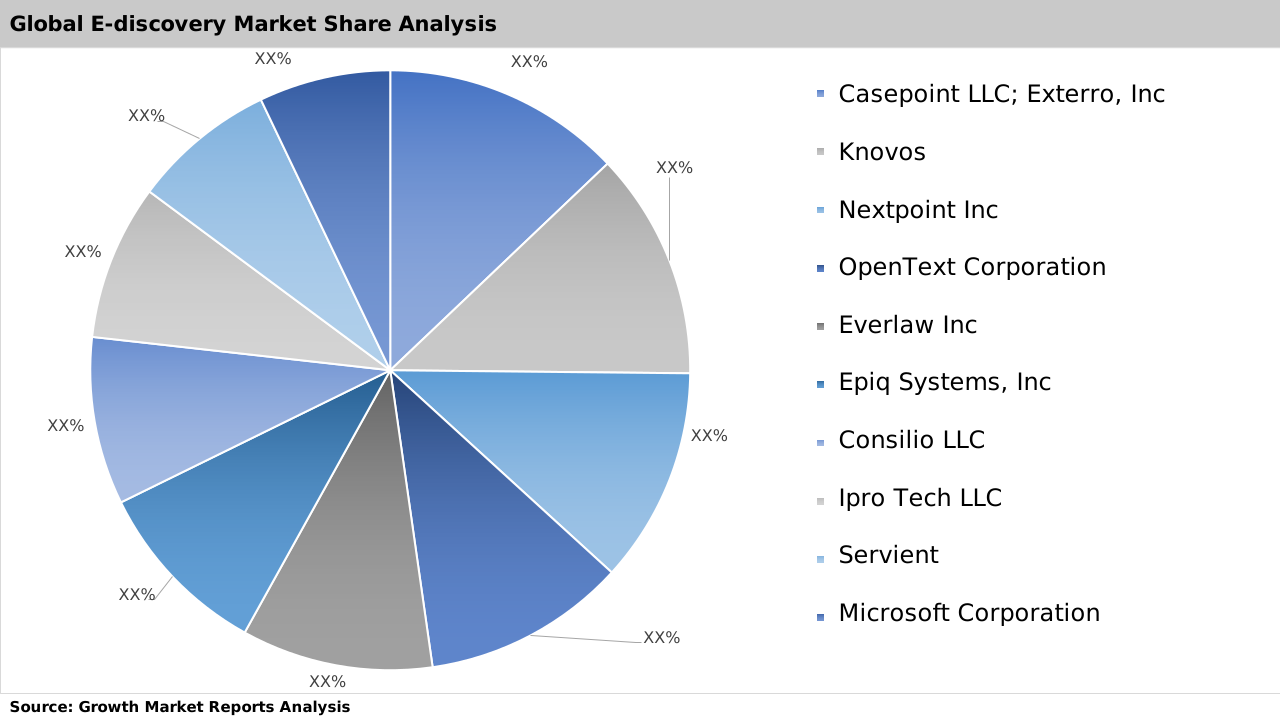
Key players competing in the global e-discovery market are Casepoint LLC; Exterro, Inc; Knovos; Nextpoint Inc; OpenText Corporation; Everlaw Inc; Epiq Systems, Inc; Consilio LLC; Ipro Tech LLC; Servient; Microsoft Corporation; International Business Machines Corporation; CS DISCO Inc.; KLDiscovery Limited; and Nuix Limited.
Existing key player partnerships and cooperation are projected to have a substantial influence on the future competitive environment. Relativity and Proofpoint announced their collaboration on May 10, 2021, with the goal of integrating Proofpoint's business preservation and compliance solutions with Relativity's AI-enabled communication monitoring product, Relativity Trace.
Key players competing in the global e-discovery market are Casepoint LLC; Exterro, Inc; Knovos; Nextpoint Inc; OpenText Corporation; Everlaw Inc; Epiq Systems, Inc; Consilio LLC; Ipro Tech LLC; Servient; Microsoft Corporation; International Business Machines Corporation; CS DISCO Inc.; KLDiscovery Limited; and Nuix Limited.
Asia Pacific is expected to constitute a key share of the market during the forecast period.
The global E-discovery market is expanding at a CAGR of 8.9% during the forecast period, 2021–2030.
Increasing utilization of the internet of Things (IoT)-enabled devices is expected to drive the market.
The global E-discovery market size was valued at USD 10.2 billion in 2021.