Segments - by Component (Software, Services), by Deployment Mode (Cloud-Based, On-Premises), by Organization Size (Large Enterprises, Small and Medium Enterprises), by Application (Portfolio Management, Compliance Management, Reporting and Analytics, Risk Management, Others), by End-User (Asset Managers, Banks, Pension Funds, Insurance Companies, Others)
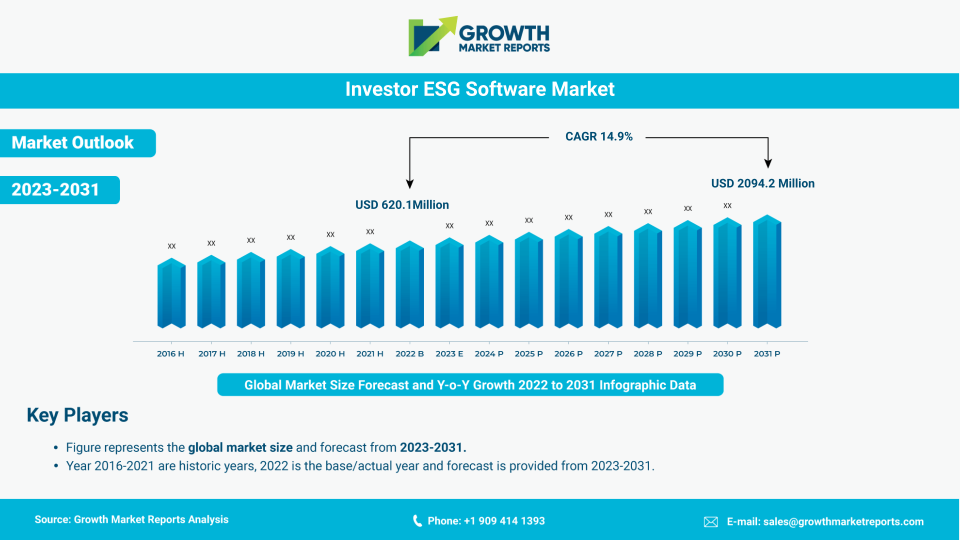
According to our latest research, the global Investor ESG Software market size reached USD 1.98 billion in 2024, reflecting robust adoption and integration across financial institutions worldwide. The market is expected to expand at a CAGR of 13.7% from 2025 to 2033, projecting a significant increase to USD 6.28 billion by 2033. This growth is primarily driven by the escalating demand for transparency in environmental, social, and governance (ESG) practices, as well as increased regulatory scrutiny and investor awareness on sustainability and ethical investing.
The primary growth factor for the Investor ESG Software market is the global shift towards sustainable finance and responsible investing. Investors, asset managers, and financial institutions are increasingly seeking tools to integrate ESG metrics into their investment decision-making processes. This shift is fueled by growing evidence that ESG-compliant portfolios often outperform traditional portfolios in terms of risk-adjusted returns, particularly during periods of market volatility. The proliferation of ESG reporting standards and frameworks, such as the Task Force on Climate-related Financial Disclosures (TCFD) and the Global Reporting Initiative (GRI), has further necessitated the adoption of sophisticated ESG software platforms. These platforms enable organizations to collect, analyze, and report ESG data efficiently, thus facilitating compliance and enhancing stakeholder trust.
Another significant driver is the evolving regulatory landscape across major economies. Governments and regulatory bodies in regions such as North America, Europe, and Asia Pacific are mandating stricter ESG disclosures and integrating sustainability considerations into financial regulations. For instance, the European Union’s Sustainable Finance Disclosure Regulation (SFDR) and the US Securities and Exchange Commission’s (SEC) proposed ESG disclosure requirements are compelling financial institutions to upgrade their ESG data management capabilities. As a result, the demand for advanced ESG software solutions that can automate compliance, streamline reporting, and ensure data accuracy has surged, propelling the market forward.
Technological advancements and the integration of artificial intelligence (AI) and machine learning (ML) within ESG software platforms are also catalyzing market expansion. These technologies enable real-time data aggregation, predictive analytics, and automated risk assessment, providing investors with actionable insights into ESG risks and opportunities. Furthermore, the increasing availability of cloud-based ESG software has democratized access for small and medium-sized enterprises (SMEs), allowing them to participate in sustainable investing initiatives. The growing emphasis on digital transformation within the financial services sector is expected to continue driving innovation and adoption in the Investor ESG Software market over the forecast period.
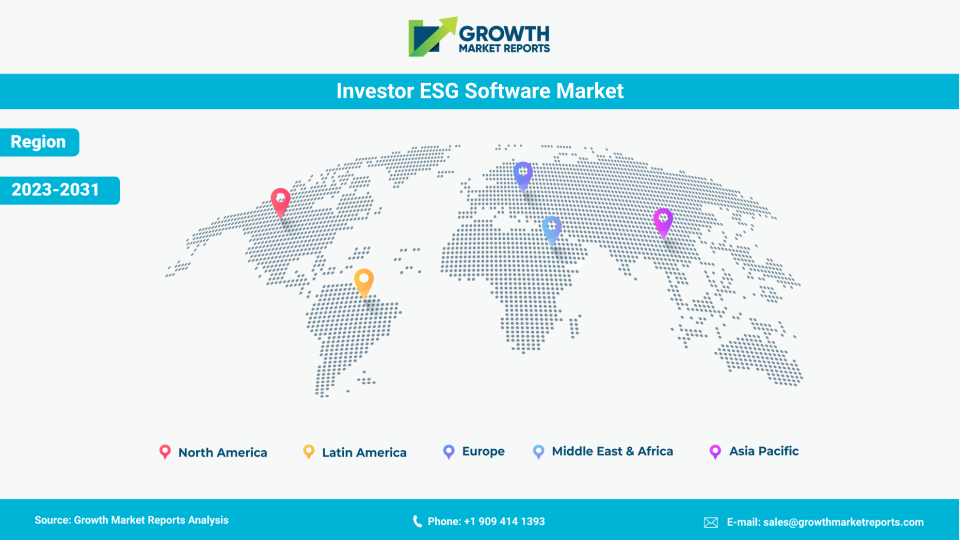
Regionally, North America and Europe dominate the Investor ESG Software market, accounting for a combined market share of over 65% in 2024. These regions benefit from mature financial markets, progressive regulatory frameworks, and high investor awareness regarding ESG issues. However, the Asia Pacific region is emerging as a significant growth engine, driven by rapid economic development, increasing foreign investments, and a growing focus on sustainable finance. Latin America and the Middle East & Africa are also witnessing steady growth, albeit from a smaller base, as local regulators and investors begin to prioritize ESG integration in investment strategies.
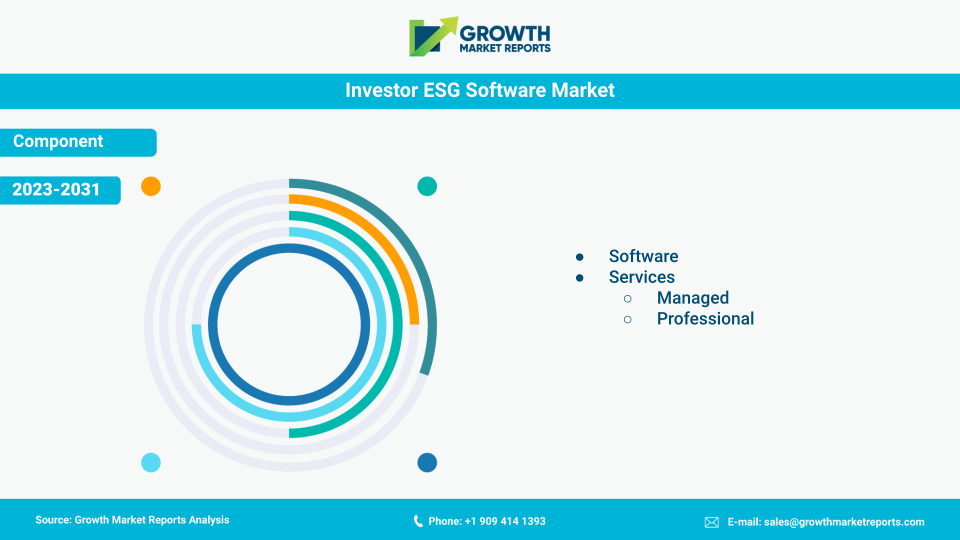
The Investor ESG Software market is segmented by component into Software and Services, each playing a vital role in supporting ESG integration across the investment value chain. The software segment, which includes platforms for data management, analytics, and reporting, accounted for the largest market share in 2024. This dominance is attributed to the increasing need for automated and scalable solutions capable of handling vast volumes of ESG data from multiple sources. Modern ESG software platforms are designed to aggregate data from internal and external sources, apply advanced analytics, and generate comprehensive reports that comply with global standards. These capabilities are essential for asset managers and institutional investors seeking to incorporate ESG factors into portfolio construction and risk management processes.
The services segment, which encompasses consulting, implementation, training, and support, is also witnessing robust growth. As ESG regulations and standards evolve, organizations often require expert guidance to navigate the complexities of compliance and best practices. Service providers offer tailored solutions to help clients assess their ESG readiness, develop implementation roadmaps, and optimize software utilization. Additionally, ongoing support and training services are critical for ensuring that users can fully leverage the capabilities of their ESG software investments. The growing complexity of ESG requirements and the need for specialized expertise are expected to drive continued demand for services in the coming years.
Software vendors are increasingly focusing on developing modular and customizable solutions that cater to the diverse needs of different end-users, from asset managers to pension funds. These platforms often feature integration capabilities with existing portfolio management and risk assessment tools, enabling seamless workflows and data interoperability. The trend towards open APIs and cloud-native architectures is further enhancing the flexibility and scalability of ESG software, making it easier for organizations to adapt to changing regulatory requirements and business needs. As a result, the software segment is expected to maintain its leadership position throughout the forecast period, supported by continuous innovation and product development.
On the services front, partnerships between software vendors and consulting firms are becoming increasingly common. Such collaborations enable the delivery of end-to-end ESG solutions, from strategy development and software implementation to ongoing monitoring and reporting. This integrated approach is particularly valuable for organizations with limited internal resources or expertise in ESG matters. Furthermore, the rise of managed services and outsourced ESG data management is providing additional growth opportunities for service providers, as organizations seek to reduce operational burdens and focus on core investment activities.
| Attributes | Details |
| Report Title | Investor ESG Software Market Research Report 2033 |
| By Component | Software, Services |
| By Deployment Mode | Cloud-Based, On-Premises |
| By Organization Size | Large Enterprises, Small and Medium Enterprises |
| By Application | Portfolio Management, Compliance Management, Reporting and Analytics, Risk Management, Others |
| By End-User | Asset Managers, Banks, Pension Funds, Insurance Companies, Others |
| Regions Covered | North America, Europe, APAC, Latin America, MEA |
| Base Year | 2024 |
| Historic Data | 2018-2023 |
| Forecast Period | 2025-2033 |
| Number of Pages | 291 |
| Number of Tables & Figures | 264 |
| Customization Available | Yes, the report can be customized as per your need. |
The Investor ESG Software market is segmented by deployment mode into Cloud-Based and On-Premises solutions. Cloud-based deployment has emerged as the preferred choice for a majority of organizations, accounting for over 68% of the market share in 2024. The adoption of cloud-based ESG software is driven by its inherent advantages, including scalability, flexibility, and cost-effectiveness. Cloud platforms enable organizations to access ESG data and analytics from anywhere, facilitate real-time collaboration, and rapidly scale resources in response to changing business requirements. Moreover, the subscription-based pricing models typical of cloud solutions lower the barriers to entry, making advanced ESG tools accessible to a broader range of users, including SMEs.
On-premises deployment, while less prevalent, remains important for organizations with stringent data security and regulatory compliance requirements. Financial institutions in highly regulated markets, such as banking and insurance, often prefer on-premises solutions to maintain full control over sensitive ESG data. These deployments offer enhanced customization and integration capabilities, allowing organizations to tailor the software to their specific workflows and security protocols. However, the higher upfront costs and ongoing maintenance requirements associated with on-premises solutions can be a deterrent, particularly for smaller organizations with limited IT resources.
The rapid evolution of cloud technologies, coupled with growing concerns about data privacy and cybersecurity, has led to increased investment in hybrid deployment models. These models combine the scalability and accessibility of the cloud with the security and control of on-premises infrastructure. Hybrid solutions are particularly attractive to large enterprises and multinational organizations operating in multiple jurisdictions with varying regulatory requirements. By offering the best of both worlds, hybrid deployment models are expected to gain traction in the Investor ESG Software market over the forecast period.
As organizations continue to prioritize digital transformation and remote work capabilities, cloud-based ESG software is likely to maintain its dominance. Vendors are investing in advanced security features, such as encryption and multi-factor authentication, to address concerns about data protection in the cloud. Additionally, the integration of artificial intelligence and machine learning capabilities within cloud platforms is enhancing the value proposition of cloud-based ESG software, enabling real-time analytics and automated insights that support more informed investment decisions.
The Investor ESG Software market is segmented by organization size into Large Enterprises and Small and Medium Enterprises (SMEs). Large enterprises accounted for the majority of market revenue in 2024, driven by their substantial investment capacities, complex portfolios, and heightened regulatory scrutiny. These organizations typically manage diverse asset classes and operate in multiple jurisdictions, necessitating sophisticated ESG software platforms capable of handling large-scale data aggregation, analytics, and reporting. Large enterprises are also more likely to have dedicated ESG teams and resources, enabling them to fully leverage the advanced features offered by leading software vendors.
Small and medium enterprises are increasingly recognizing the importance of ESG integration, both to meet investor expectations and to comply with emerging regulations. The availability of affordable, cloud-based ESG software solutions has significantly lowered the barriers to entry for SMEs, enabling them to participate in sustainable investing initiatives previously dominated by larger players. Many software vendors now offer scalable, modular solutions tailored to the needs and budgets of SMEs, facilitating the adoption of ESG best practices across the investment ecosystem.
The growing emphasis on supply chain sustainability and responsible business practices is also driving ESG software adoption among SMEs. As large enterprises increasingly require their suppliers and business partners to demonstrate ESG compliance, SMEs are investing in software solutions that enable them to track, measure, and report on key ESG metrics. This trend is expected to accelerate as regulatory requirements and investor expectations continue to evolve, further expanding the addressable market for ESG software vendors.
Despite the progress, SMEs often face challenges related to limited internal expertise and resources for ESG data management and reporting. To address these challenges, many vendors and service providers offer training, support, and consulting services designed specifically for SMEs. These services help smaller organizations navigate the complexities of ESG integration, maximize the value of their software investments, and build credibility with investors and stakeholders. As awareness and adoption continue to grow, SMEs are expected to play an increasingly important role in the future growth of the Investor ESG Software market.
The Investor ESG Software market is segmented by application into Portfolio Management, Compliance Management, Reporting and Analytics, Risk Management, and Others. Portfolio management represents one of the largest and fastest-growing application areas, as investors seek to integrate ESG factors into investment strategies and asset allocation decisions. ESG software platforms enable portfolio managers to assess the sustainability performance of individual assets, construct diversified portfolios aligned with ESG criteria, and monitor performance against benchmarks. The ability to incorporate real-time ESG data into investment workflows is increasingly viewed as a competitive differentiator in the asset management industry.
Compliance management is another critical application, driven by the proliferation of ESG regulations and disclosure requirements across global markets. ESG software platforms automate the process of collecting, validating, and reporting ESG data in accordance with various international standards and frameworks. This automation not only reduces the administrative burden on compliance teams but also minimizes the risk of errors and omissions that could result in regulatory penalties. As regulatory scrutiny intensifies, the demand for robust compliance management solutions is expected to remain strong.
Reporting and analytics are at the core of ESG software functionality, providing organizations with the tools to generate comprehensive, accurate, and timely ESG reports for internal and external stakeholders. Advanced analytics capabilities, such as predictive modeling and scenario analysis, enable users to identify ESG risks and opportunities, assess the potential impact on portfolio performance, and make informed investment decisions. The increasing importance of transparency and accountability in ESG reporting is driving continuous innovation in this segment, with vendors investing in user-friendly dashboards, customizable templates, and real-time data visualization tools.
Risk management is an emerging application area, as investors and regulators recognize the material impact of ESG risks on financial performance. ESG software platforms help organizations identify, assess, and mitigate risks related to climate change, social issues, and governance practices. By integrating ESG risk analysis into enterprise risk management frameworks, organizations can enhance resilience, protect asset values, and fulfill fiduciary responsibilities. Other applications, such as stakeholder engagement and supply chain management, are also gaining traction as organizations seek to build comprehensive ESG strategies that address the full spectrum of sustainability challenges and opportunities.
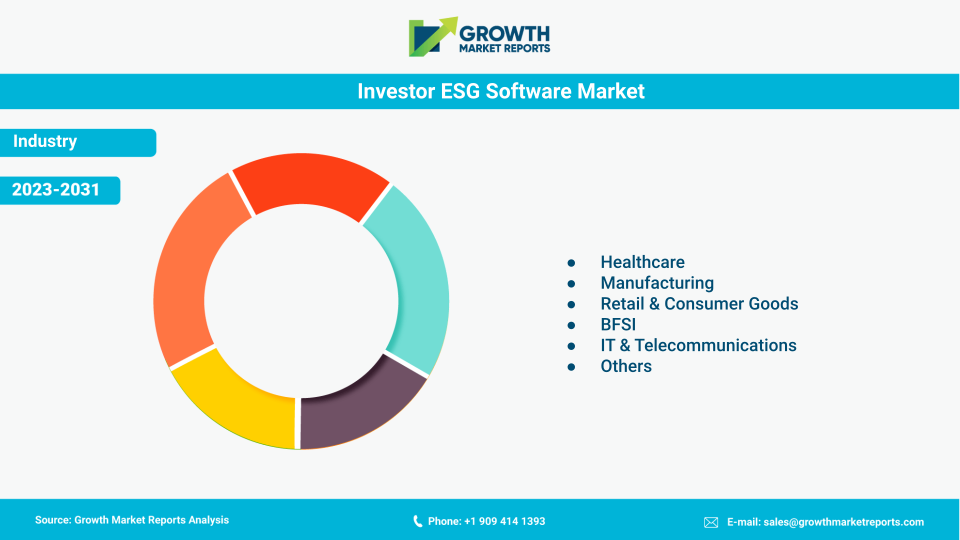
The Investor ESG Software market is segmented by end-user into Asset Managers, Banks, Pension Funds, Insurance Companies, and Others. Asset managers represent the largest end-user segment, accounting for over 40% of the market share in 2024. The growing demand for ESG integration in asset management is driven by client preferences, regulatory requirements, and the pursuit of long-term value creation. ESG software platforms enable asset managers to embed sustainability considerations into investment processes, engage with portfolio companies on ESG issues, and report progress to clients and regulators.
Banks are increasingly adopting ESG software to support sustainable lending, risk assessment, and regulatory compliance. As financial institutions face mounting pressure to align lending and investment activities with global sustainability goals, ESG software platforms provide the necessary tools to evaluate client ESG performance, manage reputational risks, and demonstrate compliance with emerging regulations. The integration of ESG metrics into credit risk assessment and loan origination processes is expected to drive continued adoption among banks worldwide.
Pension funds and insurance companies are also significant end-users of ESG software, driven by their long-term investment horizons and fiduciary responsibilities. These institutions are increasingly incorporating ESG criteria into investment policies, asset allocation decisions, and risk management frameworks. ESG software platforms help pension funds and insurers assess the sustainability performance of portfolio holdings, engage with investee companies, and fulfill reporting obligations to beneficiaries and regulators. The growing emphasis on climate risk disclosure and responsible investment is expected to sustain demand in these segments.
Other end-users, such as sovereign wealth funds, private equity firms, and family offices, are also embracing ESG software to support sustainable investment strategies and enhance stakeholder engagement. As the market matures, ESG software vendors are developing specialized solutions tailored to the unique needs and challenges of different end-user segments. This trend is expected to drive continued innovation and differentiation in the Investor ESG Software market over the forecast period.
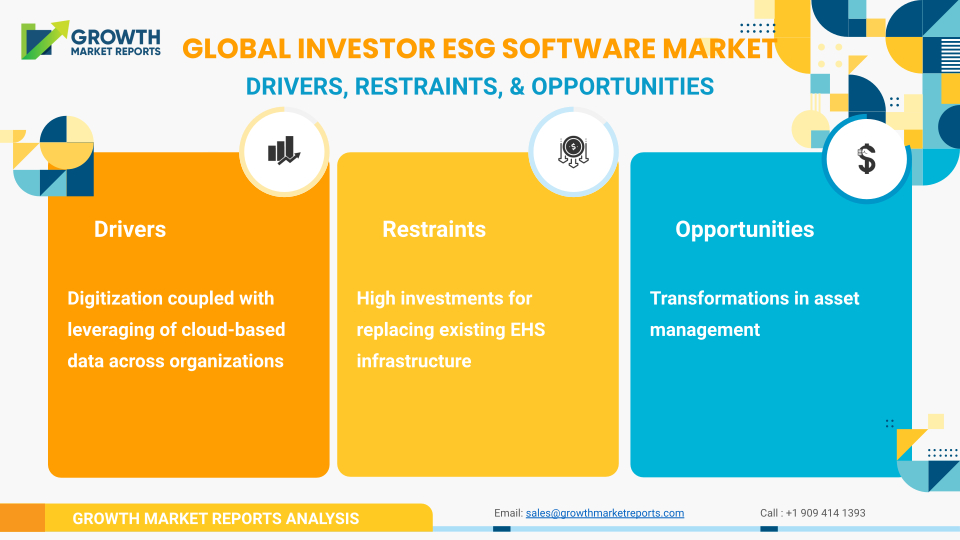
The Investor ESG Software market presents substantial opportunities for growth and innovation, driven by the global transition towards sustainable finance and responsible investing. One of the most significant opportunities lies in the integration of artificial intelligence and machine learning capabilities within ESG software platforms. These technologies enable real-time data aggregation, advanced analytics, and predictive modeling, providing investors with actionable insights into ESG risks and opportunities. The ability to automate data collection, validation, and reporting processes also enhances efficiency and accuracy, reducing operational costs and enabling organizations to focus on value-added activities. As ESG data sources and reporting standards continue to proliferate, the demand for intelligent, adaptive software solutions is expected to accelerate, creating new avenues for product development and differentiation.
Another major opportunity is the expansion of ESG software adoption among small and medium enterprises (SMEs) and emerging markets. The availability of affordable, cloud-based solutions has democratized access to advanced ESG tools, enabling organizations of all sizes to participate in sustainable investing initiatives. Vendors that can offer scalable, user-friendly platforms tailored to the unique needs of SMEs and organizations in developing regions stand to capture significant market share. Additionally, the increasing emphasis on supply chain sustainability and responsible business practices is driving demand for ESG software solutions that enable organizations to monitor, assess, and report on the ESG performance of suppliers and business partners. This trend is expected to drive continued growth and innovation in the market as organizations seek to build comprehensive, end-to-end ESG strategies.
Despite the numerous growth opportunities, the Investor ESG Software market faces several challenges and restraining factors. One of the primary threats is the lack of standardization in ESG data and reporting frameworks. The proliferation of different standards, metrics, and disclosure requirements across regions and industries creates complexity and confusion for organizations seeking to implement ESG software solutions. This lack of harmonization can result in inconsistent data, increased compliance costs, and difficulties in benchmarking performance. Additionally, concerns about data privacy, cybersecurity, and the integrity of ESG data sources pose ongoing risks for market participants. Addressing these challenges will require continued collaboration among regulators, industry stakeholders, and technology providers to develop standardized, interoperable solutions that support the global adoption of ESG best practices.
North America remains the largest regional market for Investor ESG Software, accounting for approximately 38% of global revenue in 2024, or USD 752 million. The region’s dominance is attributed to the presence of mature financial markets, progressive regulatory frameworks, and high investor awareness regarding ESG issues. The United States, in particular, has seen a surge in ESG software adoption among asset managers, banks, and institutional investors, driven by increasing client demand and the growing integration of ESG factors into investment decision-making processes. The implementation of new ESG disclosure requirements by the US Securities and Exchange Commission (SEC) is expected to further accelerate market growth in the coming years.
Europe follows closely, with a market share of around 30% in 2024, or USD 594 million. The region is characterized by a strong regulatory environment, exemplified by the European Union’s Sustainable Finance Disclosure Regulation (SFDR) and the Non-Financial Reporting Directive (NFRD). These regulations have compelled financial institutions to invest in advanced ESG data management and reporting solutions, driving robust demand for ESG software. The increasing focus on climate risk disclosure, green finance, and sustainable investment practices is expected to sustain double-digit growth in the European market, with a projected CAGR of 14.2% from 2025 to 2033.
The Asia Pacific region is emerging as a key growth engine for the Investor ESG Software market, with a market size of USD 396 million in 2024 and a projected CAGR of 15.6% through 2033. Rapid economic development, increasing foreign investments, and a growing focus on sustainable finance are driving ESG software adoption across major markets such as China, Japan, Australia, and India. Local regulators are introducing new ESG disclosure requirements, while investors and asset managers are seeking tools to integrate sustainability considerations into investment strategies. Latin America and the Middle East & Africa, though smaller in terms of market size, are witnessing steady growth as local stakeholders embrace ESG integration and reporting best practices.
The Investor ESG Software market is characterized by a highly competitive landscape, with a mix of established technology vendors, specialized ESG software providers, and global consulting firms vying for market share. The market is witnessing a wave of innovation, as vendors invest in artificial intelligence, machine learning, and cloud technologies to enhance the functionality, scalability, and user experience of their platforms. Strategic partnerships, mergers and acquisitions, and product launches are common strategies employed by leading players to expand their offerings and reach new customer segments. The increasing demand for integrated, end-to-end ESG solutions is driving consolidation in the market, with larger vendors acquiring niche players to strengthen their capabilities and broaden their portfolios.
Key players in the market are differentiating themselves through product innovation, domain expertise, and customer-centric approaches. Leading vendors offer modular, customizable platforms that cater to the diverse needs of asset managers, banks, pension funds, and insurance companies. These platforms often feature advanced analytics, real-time data aggregation, and seamless integration with existing investment and risk management systems. Vendors are also investing in user-friendly interfaces, intuitive dashboards, and mobile capabilities to enhance accessibility and user engagement. The ability to support multiple ESG frameworks and reporting standards is increasingly viewed as a critical differentiator, as organizations seek to comply with evolving regulatory requirements across different jurisdictions.
Customer support, training, and consulting services are essential components of the competitive landscape, as organizations seek expert guidance to maximize the value of their ESG software investments. Leading vendors offer comprehensive service portfolios, including implementation, customization, ongoing support, and managed services. These offerings are particularly valuable for organizations with limited internal resources or expertise in ESG data management and reporting. The rise of managed services and outsourced ESG data management is providing additional growth opportunities for service providers, as organizations seek to reduce operational burdens and focus on core investment activities.
Major companies operating in the Investor ESG Software market include MSCI Inc., Bloomberg L.P., FactSet Research Systems Inc., Refinitiv (a London Stock Exchange Group company), ISS ESG, Wolters Kluwer, Workiva Inc., Enablon (a Wolters Kluwer business), and EcoVadis. These companies offer a wide range of ESG data, analytics, and reporting solutions tailored to the needs of institutional investors and financial institutions. For example, MSCI and Bloomberg provide comprehensive ESG ratings, data feeds, and analytics platforms that enable investors to assess the sustainability performance of portfolio companies and comply with regulatory requirements. FactSet and Refinitiv offer integrated ESG data management and reporting tools designed to streamline compliance and enhance portfolio management capabilities.
ISS ESG specializes in ESG research, ratings, and analytics, supporting asset managers and institutional investors in integrating sustainability considerations into investment processes. Wolters Kluwer and Workiva focus on regulatory compliance, offering software solutions that automate ESG data collection, validation, and reporting in accordance with global standards. Enablon and EcoVadis provide specialized platforms for supply chain sustainability and responsible sourcing, enabling organizations to monitor and assess the ESG performance of suppliers and business partners. The competitive landscape is expected to remain dynamic, with ongoing innovation, strategic partnerships, and market consolidation shaping the future of the Investor ESG Software market.
The Investor ESG Software market has been segmented on the basis of
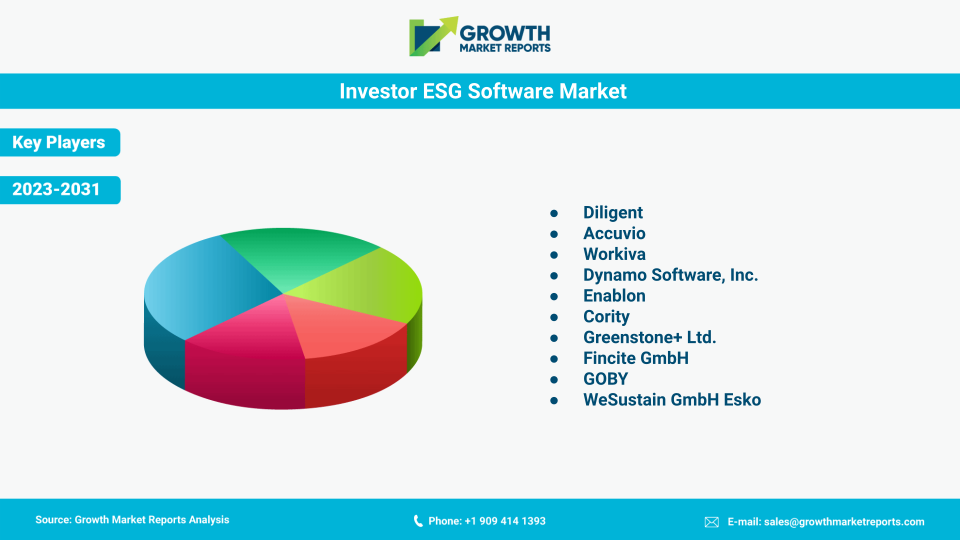
Key players competing in the investor ESG software market are Diligent; Accuvio; Workiva; Dynamo Software, Inc.; Enablon; Cority; Greenstone+ Ltd.; Fincite GmbH; GOBY; WeSustain GmbH Esko; FactSet Research Systems Inc.; Refinitiv; Novisto Inc.; Wolters Kluwer; and Isomterix.
These companies adopted development strategies including mergers, acquisitions, partnerships, collaboration, product launches, and production expansion to expand their consumer base worldwide. The competitive landscape covers key insights into growth strategies adopted by major market players.
On September 20, 2022, Cority a leading software provider announced the acquisition of a leading French sustainability focused consultancy and platform provider firm, Reporting 21.
In 2021, EY and Enablon built an ESG management reporting cloud platform for end-to-end reporting and management of ESG data.
Challenges include the lack of standardization in ESG data and reporting frameworks, data privacy and cybersecurity concerns, and the complexity of complying with diverse global regulations. Addressing these issues requires collaboration among regulators, industry stakeholders, and technology providers.
Key players include MSCI Inc., Bloomberg L.P., FactSet Research Systems Inc., Refinitiv, ISS ESG, Wolters Kluwer, Workiva Inc., Enablon, EcoVadis, Sphera, Diligent, Nasdaq OneReport, Greenstone, Arabesque S-Ray, Truvalue Labs, Persefoni, Datamaran, Measurabl, Novisto, and MetricStream.
Major trends include the integration of artificial intelligence and machine learning for real-time analytics, the rise of cloud-based platforms for SMEs, and increasing focus on supply chain sustainability. Opportunities exist in expanding ESG software adoption among SMEs and emerging markets, as well as developing solutions that address evolving regulatory requirements.
Key applications include portfolio management, compliance management, reporting and analytics, and risk management. These tools help organizations integrate ESG factors into investment strategies, automate compliance, generate reports, and identify ESG-related risks and opportunities.
Primary end-users include asset managers, banks, pension funds, insurance companies, and other institutional investors. Asset managers represent the largest segment, but adoption is also growing among banks, pension funds, and insurance companies due to regulatory and fiduciary pressures.
Investor ESG Software can be deployed via cloud-based or on-premises solutions. Cloud-based deployment is preferred by most organizations due to its scalability, flexibility, and cost-effectiveness, while on-premises solutions are chosen by organizations with strict data security and regulatory requirements.
Investor ESG Software solutions are typically segmented into software and services. The software includes platforms for ESG data management, analytics, and reporting, while services encompass consulting, implementation, training, and ongoing support to help organizations maximize the value of their ESG investments.
North America and Europe are the leading regions, accounting for over 65% of the market share in 2024. North America holds about 38% of global revenue, while Europe has around 30%. The Asia Pacific region is emerging as a fast-growing market due to rapid economic development and increasing focus on sustainable finance.
The global Investor ESG Software market reached USD 1.98 billion in 2024 and is expected to grow at a CAGR of 13.7% from 2025 to 2033, reaching approximately USD 6.28 billion by 2033. This growth is driven by increased demand for ESG transparency, regulatory pressures, and investor awareness of sustainable investing.
Investor ESG Software refers to digital platforms and tools that help investors, asset managers, and financial institutions collect, analyze, and report data related to environmental, social, and governance (ESG) criteria. It is important because it enables organizations to integrate ESG factors into investment decisions, comply with regulatory requirements, and demonstrate transparency and accountability to stakeholders.