Industrial Electric Heating Element Market Research Report 2033

Industrial Electric Heating Element Market Research Report 2033

Segments - by Product Type (Tubular Heating Elements, Cartridge Heating Elements, Band Heating Elements, Immersion Heating Elements, Strip Heating Elements, Others), by Application (Chemical & Petrochemical, Oil & Gas, Power Generation, Food & Beverage, Automotive, HVAC, Others), by Material (Metal, Ceramic, Composite, Others), by End-User (Industrial, Commercial, Residential)

https://growthmarketreports.com/Raksha
Author : Raksha Sharma
https://growthmarketreports.com/Vaibhav
Fact-checked by : V. Chandola
https://growthmarketreports.com/Shruti
Editor : Shruti Bhat

Upcoming | Report ID :EP-2613 | 4.3 Rating | 22 Reviews | 292 Pages | Format : Docx PDF

Report Description


Industrial Electric Heating Element Market Outlook

According to our latest research, the industrial electric heating element market size reached USD 4.96 billion in 2024, reflecting robust expansion across multiple sectors. The market is projected to grow at a CAGR of 5.3% during the forecast period, with the total market size expected to reach USD 7.89 billion by 2033. This growth is primarily driven by the increasing adoption of electric heating solutions in industrial processes, energy-efficient manufacturing, and stringent regulatory mandates for emission reduction. As per our latest research, the marketÂ’s upward trajectory is underpinned by technological advancements, growing investments in industrial automation, and a rising demand for precision temperature control across diverse end-user industries.

One of the core growth drivers for the industrial electric heating element market is the rapid pace of industrialization and urbanization globally. As industries such as chemical & petrochemical, oil & gas, power generation, and food & beverage expand their production capacities, the need for efficient and reliable heating solutions becomes paramount. Electric heating elements offer superior energy efficiency, precise temperature regulation, and enhanced safety compared to traditional heating methods, making them increasingly attractive to manufacturers. Furthermore, the shift towards sustainable manufacturing practices is pushing industries to replace fossil-fuel-based heating systems with electric alternatives, which not only reduce carbon emissions but also help companies comply with evolving environmental regulations.

Technological innovation is another significant factor propelling the industrial electric heating element market. The integration of smart technologies, such as IoT-enabled heating elements and advanced control systems, has revolutionized industrial heating by enabling real-time monitoring, predictive maintenance, and improved process efficiency. Manufacturers are investing in research and development to create heating elements with enhanced durability, faster response times, and compatibility with various industrial fluids and gases. This trend is further supported by the emergence of advanced materials, such as ceramics and composites, which offer superior thermal conductivity and resistance to harsh environments, thereby extending the operational lifespan of heating elements and reducing maintenance costs.

The growing emphasis on energy conservation and cost optimization is also fueling the adoption of electric heating elements in industrial settings. As energy prices fluctuate and environmental concerns intensify, industries are increasingly seeking heating solutions that minimize energy consumption without compromising process performance. Electric heating elements, with their ability to deliver targeted and uniform heat, help reduce energy wastage and operational expenses. Moreover, government incentives and subsidies for energy-efficient technologies are encouraging manufacturers to upgrade their heating infrastructure, further boosting market growth. The trend towards electrification in sectors such as automotive and HVAC is also contributing to the sustained demand for advanced heating elements.

From a regional perspective, the Asia Pacific region dominates the industrial electric heating element market, accounting for a significant share of global revenues in 2024. This leadership is attributed to the rapid industrial expansion in countries such as China, India, and Japan, coupled with substantial investments in manufacturing and infrastructure development. North America and Europe also represent lucrative markets, driven by stringent environmental regulations, technological advancements, and the presence of established industrial bases. Meanwhile, the Middle East & Africa and Latin America are witnessing steady growth, supported by ongoing industrialization and the modernization of energy infrastructure. The regional landscape is expected to evolve further as emerging economies continue to invest in energy-efficient and sustainable manufacturing solutions.

Tubular Heater technology has been a cornerstone in the industrial electric heating element market, known for its versatility and efficiency. These heaters are designed to provide uniform heat distribution, making them ideal for a wide range of applications, from chemical processing to power generation. Their robust construction allows them to withstand high temperatures and harsh environments, which is crucial for industries that demand reliable and consistent heating solutions. The ability to customize tubular heaters to fit specific industrial requirements further enhances their appeal, allowing for seamless integration into existing systems and processes. As industries continue to prioritize energy efficiency and sustainability, the demand for tubular heaters is expected to rise, driven by their proven track record in reducing energy consumption and operational costs.

Global Industrial Electric Heating Element Industry Outlook

Product Type Analysis

The product type segmentation of the industrial electric heating element market includes tubular heating elements, cartridge heating elements, band heating elements, immersion heating elements, strip heating elements, and others. Among these, tubular heating elements hold the largest market share due to their versatility, durability, and widespread application across various industries. These elements are particularly favored in high-temperature processes and environments requiring robust and reliable heating solutions. Tubular heating elements are extensively used in chemical processing, oil & gas, and power generation, where their ability to withstand harsh operating conditions and deliver consistent heat output is paramount. Additionally, their modular design allows for easy customization and integration into different equipment configurations, further enhancing their appeal.

Cartridge heating elements are gaining traction in applications requiring localized and precise heating, such as plastic molding, packaging, and food processing. Their compact size, rapid heat-up capability, and efficient energy transfer make them ideal for use in confined spaces and critical process zones. Manufacturers are focusing on developing cartridge heaters with advanced insulation materials and temperature control features to address the evolving needs of end-users. The growing demand for miniaturized and high-performance heating solutions in electronics and medical device manufacturing is also contributing to the rising adoption of cartridge heating elements.

Band heating elements, commonly used for heating cylindrical surfaces such as pipes, barrels, and tanks, are witnessing increased demand in the plastics and packaging industries. Their ability to provide uniform heat distribution and maintain precise temperature control is crucial for processes involving sensitive materials. Recent advancements in band heater technology, such as the use of high-temperature alloys and improved insulation, have enhanced their efficiency and longevity. As industries strive to optimize process performance and reduce downtime, the adoption of advanced band heating elements is expected to rise steadily.

Immersion heating elements play a vital role in applications involving direct heating of liquids and gases, such as water heating, oil heating, and chemical processing. Their direct contact with the medium ensures rapid and efficient heat transfer, making them indispensable in industries where process speed and energy efficiency are critical. Innovations in immersion heater design, including corrosion-resistant coatings and smart control systems, are driving their adoption in sectors such as food & beverage, pharmaceuticals, and wastewater treatment. Strip heating elements, on the other hand, are preferred for surface heating applications, including drying, curing, and de-icing. Their flat and flexible design allows for easy installation on various surfaces, making them suitable for a wide range of industrial processes.

Report Scope

Attributes Details
Report Title Industrial Electric Heating Element Market Research Report 2033
By Product Type Tubular Heating Elements, Cartridge Heating Elements, Band Heating Elements, Immersion Heating Elements, Strip Heating Elements, Others
By Application Chemical & Petrochemical, Oil & Gas, Power Generation, Food & Beverage, Automotive, HVAC, Others
By Material Metal, Ceramic, Composite, Others
By End-User Industrial, Commercial, Residential
Regions Covered North America, Europe, APAC, Latin America, MEA
Base Year 2024
Historic Data 2018-2023
Forecast Period 2025-2033
Number of Pages 292
Number of Tables & Figures 367
Customization Available Yes, the report can be customized as per your need.

Application Analysis

The application segment of the industrial electric heating element market encompasses chemical & petrochemical, oil & gas, power generation, food & beverage, automotive, HVAC, and others. The chemical & petrochemical industry represents the largest application segment, driven by the need for precise temperature control in processes such as distillation, polymerization, and chemical synthesis. Electric heating elements are preferred in this sector due to their ability to deliver consistent and controllable heat, which is essential for maintaining product quality and process safety. The increasing adoption of advanced materials and automation technologies in chemical manufacturing is further boosting the demand for high-performance heating elements.

In the oil & gas sector, electric heating elements are extensively used for applications such as pipeline heating, tank heating, and process heating. The ability to prevent freezing, maintain fluid viscosity, and ensure safe operation in hazardous environments makes electric heating elements indispensable in this industry. As oil & gas companies strive to improve operational efficiency and reduce environmental impact, the adoption of electric heating solutions is expected to increase. The power generation sector also relies heavily on electric heating elements for applications such as boiler heating, turbine preheating, and auxiliary heating. The shift towards renewable energy sources and the modernization of power plants are creating new opportunities for electric heating element manufacturers.

The food & beverage industry is another significant application area, where electric heating elements are used for processes such as baking, sterilization, drying, and pasteurization. The emphasis on food safety, quality control, and energy efficiency is driving the adoption of advanced heating solutions in this sector. Manufacturers are developing heating elements with food-grade materials and precise temperature control capabilities to meet the stringent requirements of the food processing industry. The automotive sector is also witnessing growing demand for electric heating elements, particularly in electric vehicles (EVs), battery heating, and component testing. The ongoing electrification of the automotive industry and the push for energy-efficient mobility solutions are expected to fuel market growth in this segment.

HVAC (Heating, Ventilation, and Air Conditioning) applications represent a rapidly growing segment in the industrial electric heating element market. The increasing focus on energy-efficient building systems and the integration of smart technologies in HVAC solutions are driving the demand for advanced electric heating elements. These elements are used in air heaters, duct heaters, and heat exchangers to provide precise and efficient temperature control in commercial and industrial buildings. The trend towards green buildings and sustainable infrastructure is expected to further accelerate the adoption of electric heating elements in HVAC applications. Other emerging application areas, such as electronics manufacturing, pharmaceuticals, and renewable energy, are also contributing to the marketÂ’s expansion.

Material Analysis

The material segment of the industrial electric heating element market is categorized into metal, ceramic, composite, and others. Metal heating elements, particularly those made from alloys such as nichrome, stainless steel, and Incoloy, dominate the market due to their excellent thermal conductivity, durability, and resistance to oxidation. These materials are widely used in high-temperature industrial processes where reliability and longevity are critical. Metal heating elements are favored for their ability to withstand repeated thermal cycling and harsh operating conditions, making them suitable for applications in chemical processing, power generation, and heavy manufacturing.

Ceramic heating elements have gained significant traction in recent years, owing to their superior thermal efficiency, rapid heat-up times, and resistance to chemical corrosion. Ceramics such as silicon carbide and aluminum oxide are used to manufacture heating elements for applications requiring high temperatures and precise temperature control. Ceramic elements are particularly popular in industries such as electronics, glass manufacturing, and laboratory equipment, where contamination-free heating and energy efficiency are paramount. The development of advanced ceramic materials with enhanced mechanical strength and thermal stability is further expanding their application scope.

Composite heating elements, which combine the benefits of different materials, are emerging as a promising segment in the industrial electric heating element market. These elements are engineered to provide optimal performance in demanding environments by leveraging the unique properties of metals, ceramics, and polymers. Composite heating elements offer improved thermal conductivity, resistance to thermal shock, and reduced energy consumption, making them ideal for applications in aerospace, automotive, and renewable energy. The growing emphasis on lightweight and energy-efficient heating solutions is driving research and development in composite materials, leading to the introduction of innovative products in the market.

Other materials, such as glass and polymer-based heating elements, are also being explored for specialized applications requiring specific performance characteristics. For instance, glass heating elements are used in laboratory and analytical equipment, where transparency and chemical inertness are essential. Polymer-based heating elements, on the other hand, are finding applications in flexible and wearable heating devices. The continuous advancement in material science and manufacturing technologies is expected to drive further innovation in the industrial electric heating element market, enabling the development of next-generation heating solutions tailored to diverse industrial needs.

End-User Analysis

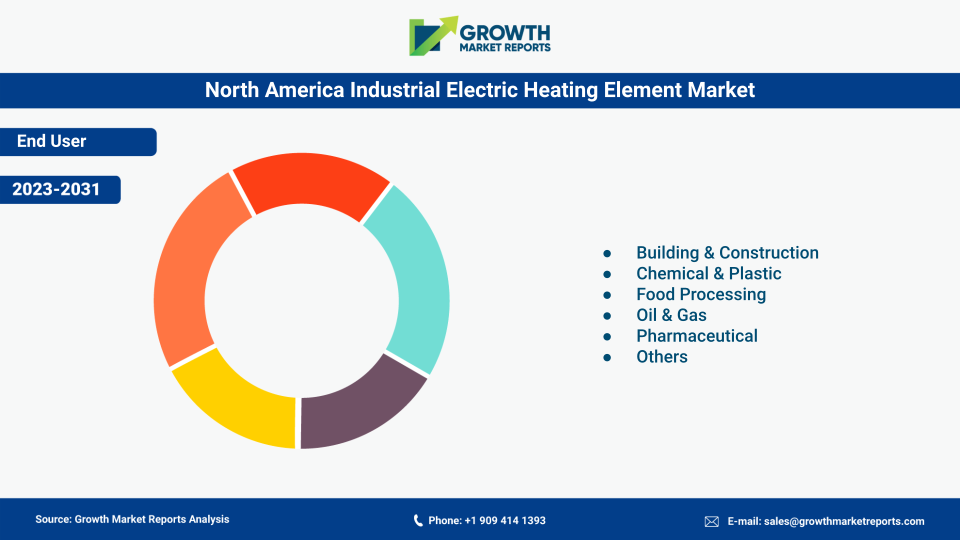
The end-user segmentation of the industrial electric heating element market includes industrial, commercial, and residential sectors. The industrial segment holds the largest share of the market, driven by the extensive use of electric heating elements in manufacturing, processing, and production facilities. Industries such as chemical & petrochemical, oil & gas, power generation, and automotive rely heavily on electric heating solutions to ensure process efficiency, product quality, and regulatory compliance. The adoption of automation, digitalization, and energy-efficient technologies in industrial operations is further boosting the demand for advanced heating elements. As industries continue to modernize their infrastructure and adopt smart manufacturing practices, the industrial segment is expected to maintain its dominance in the market.

The commercial sector is witnessing steady growth in the adoption of electric heating elements, particularly in applications such as HVAC systems, water heating, and food service equipment. The increasing focus on energy conservation and sustainability in commercial buildings is driving the demand for efficient and reliable heating solutions. Electric heating elements are preferred in commercial settings due to their ease of installation, precise temperature control, and low maintenance requirements. The trend towards green buildings, smart infrastructure, and integrated building management systems is expected to create new opportunities for electric heating element manufacturers in the commercial segment.

The residential segment, while smaller compared to industrial and commercial sectors, is experiencing growing demand for electric heating elements in applications such as water heaters, space heaters, and kitchen appliances. The rising adoption of electric heating solutions in residential buildings is driven by factors such as increasing urbanization, changing consumer preferences, and government incentives for energy-efficient home appliances. The development of compact, user-friendly, and aesthetically appealing heating elements is attracting residential consumers, particularly in regions with cold climates and high energy costs. The ongoing transition towards electrification in the residential sector is expected to support market growth in this segment.

Overall, the end-user landscape of the industrial electric heating element market is characterized by diverse and evolving requirements across different sectors. Manufacturers are focusing on developing customized heating solutions that address the specific needs of industrial, commercial, and residential customers. The integration of smart technologies, energy-efficient designs, and advanced materials is enabling the creation of next-generation heating elements that deliver superior performance, reliability, and sustainability. As end-users increasingly prioritize efficiency, safety, and environmental responsibility, the demand for innovative electric heating solutions is expected to rise across all segments.

Opportunities & Threats

The industrial electric heating element market presents a wealth of opportunities for growth and innovation. One of the most significant opportunities lies in the integration of smart technologies and IoT-enabled heating elements. As industries embrace digital transformation, the demand for intelligent heating solutions that offer real-time monitoring, remote control, and predictive maintenance is on the rise. Manufacturers can capitalize on this trend by developing heating elements with embedded sensors, wireless connectivity, and advanced control algorithms. These smart solutions not only enhance process efficiency and reliability but also enable data-driven decision-making and proactive maintenance, reducing downtime and operational costs for end-users.

Another key opportunity in the market is the expansion into emerging economies, where rapid industrialization and infrastructure development are driving the demand for advanced heating solutions. Countries in Asia Pacific, Latin America, and the Middle East & Africa are investing heavily in manufacturing, energy, and transportation sectors, creating new avenues for electric heating element manufacturers. Additionally, the growing focus on sustainability and energy efficiency presents opportunities for the development of eco-friendly heating elements that minimize energy consumption and carbon emissions. Manufacturers can differentiate themselves by offering products that comply with stringent environmental regulations and support green manufacturing initiatives.

Despite the promising growth prospects, the industrial electric heating element market faces several restraining factors. One of the primary challenges is the volatility in raw material prices, particularly for metals and advanced ceramics. Fluctuations in the cost of key materials can impact the profitability of manufacturers and lead to price instability in the market. Additionally, the presence of alternative heating technologies, such as gas-fired and infrared heaters, poses a competitive threat, especially in regions where electricity costs are high. The need for continuous innovation, compliance with evolving regulatory standards, and the management of supply chain complexities are other critical challenges that market participants must address to sustain growth and competitiveness.

Regional Outlook

The Asia Pacific region commands the largest share of the global industrial electric heating element market, with revenues reaching approximately USD 2.13 billion in 2024. The regionÂ’s dominance is driven by the rapid industrialization of countries such as China, India, Japan, and South Korea, which are investing heavily in manufacturing, chemical processing, and infrastructure development. The increasing adoption of energy-efficient technologies, government initiatives to promote sustainable manufacturing, and the growing demand for electric heating solutions in emerging industries are fueling market growth in Asia Pacific. The region is expected to maintain a robust CAGR of 6.1% through 2033, outpacing other global markets.

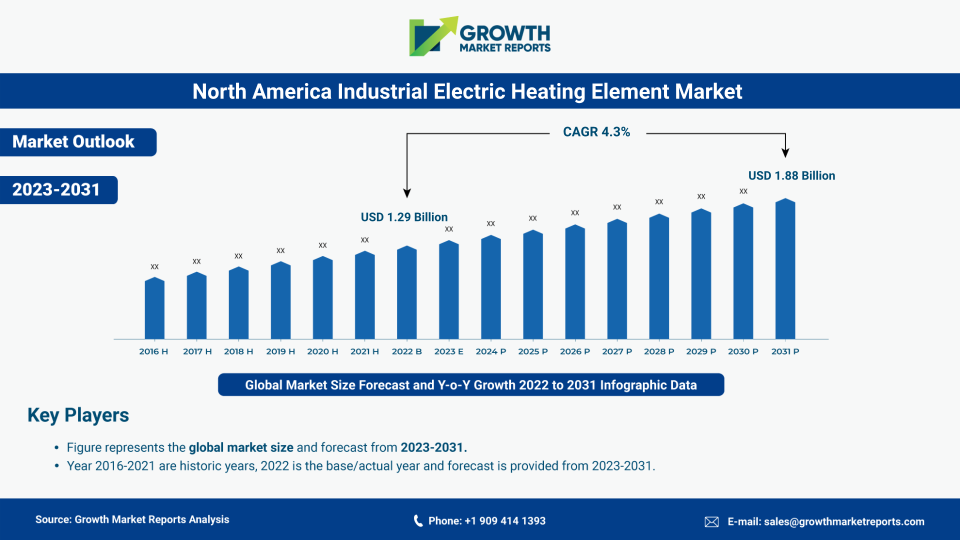
North America is another significant market for industrial electric heating elements, with a market size of approximately USD 1.18 billion in 2024. The regionÂ’s growth is supported by the presence of a well-established industrial base, technological advancements, and stringent environmental regulations that encourage the adoption of energy-efficient heating solutions. The United States and Canada are leading markets in North America, driven by investments in automation, smart manufacturing, and the modernization of energy infrastructure. The region is also witnessing increased demand for electric heating elements in the automotive and HVAC sectors, where the focus on electrification and sustainability is driving innovation.

Europe holds a substantial share of the global industrial electric heating element market, with revenues reaching USD 1.05 billion in 2024. The market is characterized by the presence of leading manufacturers, advanced research and development capabilities, and a strong emphasis on energy efficiency and environmental sustainability. Countries such as Germany, the United Kingdom, France, and Italy are at the forefront of adopting advanced heating technologies in industrial and commercial applications. The European market is expected to grow steadily, supported by government policies promoting green manufacturing and the increasing adoption of electric heating solutions in renewable energy and smart building projects. The Middle East & Africa and Latin America, with market sizes of USD 0.37 billion and USD 0.23 billion respectively in 2024, are witnessing gradual growth, driven by ongoing industrialization and infrastructure modernization.

Industrial Electric Heating Element Market Statistics

Competitor Outlook

The industrial electric heating element market is highly competitive, with a mix of global giants and regional players vying for market share. The competitive landscape is characterized by continuous innovation, strategic partnerships, and a focus on product differentiation. Leading companies are investing heavily in research and development to create advanced heating solutions that meet the evolving needs of end-users. The integration of smart technologies, energy-efficient designs, and advanced materials is enabling manufacturers to offer products with enhanced performance, reliability, and sustainability. Additionally, companies are expanding their global footprint through mergers, acquisitions, and collaborations to tap into emerging markets and strengthen their distribution networks.

Product innovation is a key differentiator in the market, with manufacturers focusing on developing heating elements with improved thermal efficiency, faster response times, and longer operational lifespans. The adoption of IoT-enabled and programmable heating elements is gaining momentum, as industries seek solutions that offer real-time monitoring, remote control, and predictive maintenance capabilities. Companies are also prioritizing the use of eco-friendly materials and manufacturing processes to align with global sustainability goals and regulatory requirements. The ability to provide customized heating solutions tailored to specific industrial applications is another important factor driving competitiveness in the market.

The market is witnessing increased collaboration between heating element manufacturers and end-user industries to co-develop application-specific solutions. Such partnerships enable companies to gain deeper insights into customer requirements and deliver products that address unique operational challenges. The focus on after-sales service, technical support, and value-added solutions is also shaping the competitive landscape, as companies strive to build long-term relationships with customers and enhance brand loyalty. The rise of digital marketing, e-commerce platforms, and online distribution channels is further transforming the way companies engage with customers and expand their market reach.

Major players in the industrial electric heating element market include Watlow Electric Manufacturing Company, Chromalox Inc., Tempco Electric Heater Corporation, NIBE Industrier AB, Zoppas Industries S.p.A., and Thermowatt S.p.A. Watlow is renowned for its innovative thermal solutions and extensive product portfolio, catering to diverse industries such as semiconductor, energy, and medical equipment. Chromalox specializes in advanced electric heating technologies, offering a wide range of products for industrial process heating and temperature control. Tempco is known for its custom-engineered heating solutions and strong focus on customer service. NIBE Industrier AB and Zoppas Industries are leading European manufacturers with a global presence, while Thermowatt is recognized for its expertise in heating elements for household and industrial applications. These companies are at the forefront of innovation, continuously expanding their offerings and strengthening their market positions through strategic initiatives and customer-centric approaches.

Key Players

  • Watlow Electric Manufacturing Company
  • NIBE Industrier AB
  • Chromalox Inc.
  • Tempco Electric Heater Corporation
  • Thermowatt S.p.A.
  • Zoppas Industries Group
  • Durex Industries
  • OMEGA Engineering Inc.
  • Tutco Heating Solutions Group
  • Indeeco
  • Backer Hotwatt Inc.
  • Minco Products Inc.
  • Friedr. Freek GmbH
  • Rama Corporation
  • Elmatic (Cardiff) Ltd.
  • Heatrex, Inc.
  • Wattco Inc.
  • Electrotherm (India) Ltd.
  • Thermocoax Group
  • Headway Electric Heat Components Co., Ltd.
Industrial Electric Heating Element Market Overview

Segments

The Industrial Electric Heating Element market has been segmented on the basis of

Product Type

  • Tubular Heating Elements
  • Cartridge Heating Elements
  • Band Heating Elements
  • Immersion Heating Elements
  • Strip Heating Elements
  • Others

Application

  • Chemical & Petrochemical
  • Oil & Gas
  • Power Generation
  • Food & Beverage
  • Automotive
  • HVAC
  • Others

Material

  • Metal
  • Ceramic
  • Composite
  • Others

End-User

  • Industrial
  • Commercial
  • Residential

Competitive Landscape

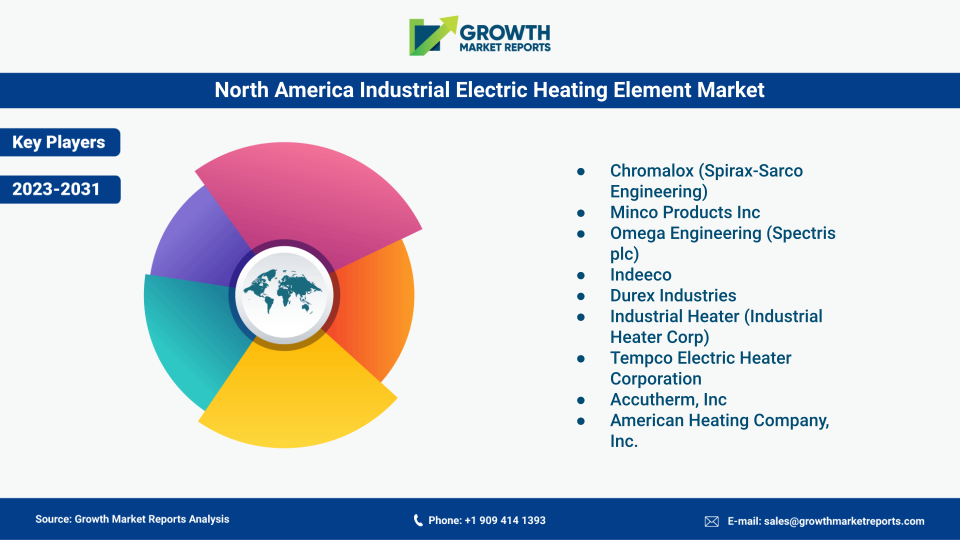
  • Top players in the market include Chromalox (Spirax-Sarco Engineering), Minco Products Inc, Omega Engineering (Spectris plc), Indeeco, Durex Industries, Industrial Heater (Industrial Heater Corp), Tempco Electric Heater Corporation, Accutherm, Inc, American Heating Company, Inc., Hotset GmbH, NIBE Industrier AB, and Rama Corporation. These companies are considered as key manufacturers of Industrial Electric Heating Element based on their revenue, research development.
  • The players are adopting key strategies such as acquisition, collaborations, and geographical expansion where potential opportunity for the industrial electric heating element market.

Industrial Electric Heating Element Market Key Players

Frequently Asked Questions

Emerging trends include the adoption of smart and IoT-enabled heating solutions, expansion into emerging economies, focus on sustainability and energy efficiency, and the development of customized, application-specific heating elements.

Major companies include Watlow Electric Manufacturing Company, Chromalox Inc., Tempco Electric Heater Corporation, NIBE Industrier AB, Zoppas Industries S.p.A., and Thermowatt S.p.A., among others.

Key challenges include raw material price volatility, competition from alternative heating technologies (like gas-fired and infrared heaters), regulatory compliance, and supply chain complexities.

The integration of IoT-enabled heating elements and advanced control systems allows for real-time monitoring, predictive maintenance, and improved process efficiency, driving innovation and adoption.

Common materials include metals (such as nichrome, stainless steel, Incoloy), ceramics (like silicon carbide, aluminum oxide), composites, and specialized materials like glass and polymers.

The chemical & petrochemical industry is the largest user, followed by oil & gas, power generation, food & beverage, automotive, and HVAC sectors.

The main product types are tubular heating elements, cartridge heating elements, band heating elements, immersion heating elements, strip heating elements, and others. Tubular heating elements hold the largest market share.

Asia Pacific leads the market, particularly China, India, and Japan, due to rapid industrialization and infrastructure investment. North America and Europe also hold significant shares, driven by technological innovation and environmental regulations.

Key growth drivers include increased industrialization, demand for energy-efficient manufacturing, regulatory mandates for emission reduction, technological advancements, and the adoption of automation and precision temperature control.

As of 2024, the industrial electric heating element market is valued at USD 4.96 billion and is projected to reach USD 7.89 billion by 2033, growing at a CAGR of 5.3%.

Table Of Content

Chapter 1 Executive Summary
Chapter 2 Assumptions and Acronyms Used
Chapter 3 Research Methodology
Chapter 4 Industrial Electric Heating Element Market Overview
   4.1 Introduction
      4.1.1 Market Taxonomy
      4.1.2 Market Definition
      4.1.3 Macro-Economic Factors Impacting the Market Growth
   4.2 Industrial Electric Heating Element Market Dynamics
      4.2.1 Market Drivers
      4.2.2 Market Restraints
      4.2.3 Market Opportunity
   4.3 Industrial Electric Heating Element Market - Supply Chain Analysis
      4.3.1 List of Key Suppliers
      4.3.2 List of Key Distributors
      4.3.3 List of Key Consumers
   4.4 Key Forces Shaping the Industrial Electric Heating Element Market
      4.4.1 Bargaining Power of Suppliers
      4.4.2 Bargaining Power of Buyers
      4.4.3 Threat of Substitution
      4.4.4 Threat of New Entrants
      4.4.5 Competitive Rivalry
   4.5 Global Industrial Electric Heating Element Market Size & Forecast, 2023-2032
      4.5.1 Industrial Electric Heating Element Market Size and Y-o-Y Growth
      4.5.2 Industrial Electric Heating Element Market Absolute $ Opportunity

Chapter 5 Global Industrial Electric Heating Element Market Analysis and Forecast By Product Type
   5.1 Introduction
      5.1.1 Key Market Trends & Growth Opportunities By Product Type
      5.1.2 Basis Point Share (BPS) Analysis By Product Type
      5.1.3 Absolute $ Opportunity Assessment By Product Type
   5.2 Industrial Electric Heating Element Market Size Forecast By Product Type
      5.2.1 Tubular Heating Elements
      5.2.2 Cartridge Heating Elements
      5.2.3 Band Heating Elements
      5.2.4 Immersion Heating Elements
      5.2.5 Strip Heating Elements
      5.2.6 Others
   5.3 Market Attractiveness Analysis By Product Type

Chapter 6 Global Industrial Electric Heating Element Market Analysis and Forecast By Application
   6.1 Introduction
      6.1.1 Key Market Trends & Growth Opportunities By Application
      6.1.2 Basis Point Share (BPS) Analysis By Application
      6.1.3 Absolute $ Opportunity Assessment By Application
   6.2 Industrial Electric Heating Element Market Size Forecast By Application
      6.2.1 Chemical & Petrochemical
      6.2.2 Oil & Gas
      6.2.3 Power Generation
      6.2.4 Food & Beverage
      6.2.5 Automotive
      6.2.6 HVAC
      6.2.7 Others
   6.3 Market Attractiveness Analysis By Application

Chapter 7 Global Industrial Electric Heating Element Market Analysis and Forecast By Material
   7.1 Introduction
      7.1.1 Key Market Trends & Growth Opportunities By Material
      7.1.2 Basis Point Share (BPS) Analysis By Material
      7.1.3 Absolute $ Opportunity Assessment By Material
   7.2 Industrial Electric Heating Element Market Size Forecast By Material
      7.2.1 Metal
      7.2.2 Ceramic
      7.2.3 Composite
      7.2.4 Others
   7.3 Market Attractiveness Analysis By Material

Chapter 8 Global Industrial Electric Heating Element Market Analysis and Forecast By End-User
   8.1 Introduction
      8.1.1 Key Market Trends & Growth Opportunities By End-User
      8.1.2 Basis Point Share (BPS) Analysis By End-User
      8.1.3 Absolute $ Opportunity Assessment By End-User
   8.2 Industrial Electric Heating Element Market Size Forecast By End-User
      8.2.1 Industrial
      8.2.2 Commercial
      8.2.3 Residential
   8.3 Market Attractiveness Analysis By End-User

Chapter 9 Global Industrial Electric Heating Element Market Analysis and Forecast by Region
   9.1 Introduction
      9.1.1 Key Market Trends & Growth Opportunities By Region
      9.1.2 Basis Point Share (BPS) Analysis By Region
      9.1.3 Absolute $ Opportunity Assessment By Region
   9.2 Industrial Electric Heating Element Market Size Forecast By Region
      9.2.1 North America
      9.2.2 Europe
      9.2.3 Asia Pacific
      9.2.4 Latin America
      9.2.5 Middle East & Africa (MEA)
   9.3 Market Attractiveness Analysis By Region

Chapter 10 Coronavirus Disease (COVID-19) Impact 
   10.1 Introduction 
   10.2 Current & Future Impact Analysis 
   10.3 Economic Impact Analysis 
   10.4 Government Policies 
   10.5 Investment Scenario

Chapter 11 North America Industrial Electric Heating Element Analysis and Forecast
   11.1 Introduction
   11.2 North America Industrial Electric Heating Element Market Size Forecast by Country
      11.2.1 U.S.
      11.2.2 Canada
   11.3 Basis Point Share (BPS) Analysis by Country
   11.4 Absolute $ Opportunity Assessment by Country
   11.5 Market Attractiveness Analysis by Country
   11.6 North America Industrial Electric Heating Element Market Size Forecast By Product Type
      11.6.1 Tubular Heating Elements
      11.6.2 Cartridge Heating Elements
      11.6.3 Band Heating Elements
      11.6.4 Immersion Heating Elements
      11.6.5 Strip Heating Elements
      11.6.6 Others
   11.7 Basis Point Share (BPS) Analysis By Product Type 
   11.8 Absolute $ Opportunity Assessment By Product Type 
   11.9 Market Attractiveness Analysis By Product Type
   11.10 North America Industrial Electric Heating Element Market Size Forecast By Application
      11.10.1 Chemical & Petrochemical
      11.10.2 Oil & Gas
      11.10.3 Power Generation
      11.10.4 Food & Beverage
      11.10.5 Automotive
      11.10.6 HVAC
      11.10.7 Others
   11.11 Basis Point Share (BPS) Analysis By Application 
   11.12 Absolute $ Opportunity Assessment By Application 
   11.13 Market Attractiveness Analysis By Application
   11.14 North America Industrial Electric Heating Element Market Size Forecast By Material
      11.14.1 Metal
      11.14.2 Ceramic
      11.14.3 Composite
      11.14.4 Others
   11.15 Basis Point Share (BPS) Analysis By Material 
   11.16 Absolute $ Opportunity Assessment By Material 
   11.17 Market Attractiveness Analysis By Material
   11.18 North America Industrial Electric Heating Element Market Size Forecast By End-User
      11.18.1 Industrial
      11.18.2 Commercial
      11.18.3 Residential
   11.19 Basis Point Share (BPS) Analysis By End-User 
   11.20 Absolute $ Opportunity Assessment By End-User 
   11.21 Market Attractiveness Analysis By End-User

Chapter 12 Europe Industrial Electric Heating Element Analysis and Forecast
   12.1 Introduction
   12.2 Europe Industrial Electric Heating Element Market Size Forecast by Country
      12.2.1 Germany
      12.2.2 France
      12.2.3 Italy
      12.2.4 U.K.
      12.2.5 Spain
      12.2.6 Russia
      12.2.7 Rest of Europe
   12.3 Basis Point Share (BPS) Analysis by Country
   12.4 Absolute $ Opportunity Assessment by Country
   12.5 Market Attractiveness Analysis by Country
   12.6 Europe Industrial Electric Heating Element Market Size Forecast By Product Type
      12.6.1 Tubular Heating Elements
      12.6.2 Cartridge Heating Elements
      12.6.3 Band Heating Elements
      12.6.4 Immersion Heating Elements
      12.6.5 Strip Heating Elements
      12.6.6 Others
   12.7 Basis Point Share (BPS) Analysis By Product Type 
   12.8 Absolute $ Opportunity Assessment By Product Type 
   12.9 Market Attractiveness Analysis By Product Type
   12.10 Europe Industrial Electric Heating Element Market Size Forecast By Application
      12.10.1 Chemical & Petrochemical
      12.10.2 Oil & Gas
      12.10.3 Power Generation
      12.10.4 Food & Beverage
      12.10.5 Automotive
      12.10.6 HVAC
      12.10.7 Others
   12.11 Basis Point Share (BPS) Analysis By Application 
   12.12 Absolute $ Opportunity Assessment By Application 
   12.13 Market Attractiveness Analysis By Application
   12.14 Europe Industrial Electric Heating Element Market Size Forecast By Material
      12.14.1 Metal
      12.14.2 Ceramic
      12.14.3 Composite
      12.14.4 Others
   12.15 Basis Point Share (BPS) Analysis By Material 
   12.16 Absolute $ Opportunity Assessment By Material 
   12.17 Market Attractiveness Analysis By Material
   12.18 Europe Industrial Electric Heating Element Market Size Forecast By End-User
      12.18.1 Industrial
      12.18.2 Commercial
      12.18.3 Residential
   12.19 Basis Point Share (BPS) Analysis By End-User 
   12.20 Absolute $ Opportunity Assessment By End-User 
   12.21 Market Attractiveness Analysis By End-User

Chapter 13 Asia Pacific Industrial Electric Heating Element Analysis and Forecast
   13.1 Introduction
   13.2 Asia Pacific Industrial Electric Heating Element Market Size Forecast by Country
      13.2.1 China
      13.2.2 Japan
      13.2.3 South Korea
      13.2.4 India
      13.2.5 Australia
      13.2.6 South East Asia (SEA)
      13.2.7 Rest of Asia Pacific (APAC)
   13.3 Basis Point Share (BPS) Analysis by Country
   13.4 Absolute $ Opportunity Assessment by Country
   13.5 Market Attractiveness Analysis by Country
   13.6 Asia Pacific Industrial Electric Heating Element Market Size Forecast By Product Type
      13.6.1 Tubular Heating Elements
      13.6.2 Cartridge Heating Elements
      13.6.3 Band Heating Elements
      13.6.4 Immersion Heating Elements
      13.6.5 Strip Heating Elements
      13.6.6 Others
   13.7 Basis Point Share (BPS) Analysis By Product Type 
   13.8 Absolute $ Opportunity Assessment By Product Type 
   13.9 Market Attractiveness Analysis By Product Type
   13.10 Asia Pacific Industrial Electric Heating Element Market Size Forecast By Application
      13.10.1 Chemical & Petrochemical
      13.10.2 Oil & Gas
      13.10.3 Power Generation
      13.10.4 Food & Beverage
      13.10.5 Automotive
      13.10.6 HVAC
      13.10.7 Others
   13.11 Basis Point Share (BPS) Analysis By Application 
   13.12 Absolute $ Opportunity Assessment By Application 
   13.13 Market Attractiveness Analysis By Application
   13.14 Asia Pacific Industrial Electric Heating Element Market Size Forecast By Material
      13.14.1 Metal
      13.14.2 Ceramic
      13.14.3 Composite
      13.14.4 Others
   13.15 Basis Point Share (BPS) Analysis By Material 
   13.16 Absolute $ Opportunity Assessment By Material 
   13.17 Market Attractiveness Analysis By Material
   13.18 Asia Pacific Industrial Electric Heating Element Market Size Forecast By End-User
      13.18.1 Industrial
      13.18.2 Commercial
      13.18.3 Residential
   13.19 Basis Point Share (BPS) Analysis By End-User 
   13.20 Absolute $ Opportunity Assessment By End-User 
   13.21 Market Attractiveness Analysis By End-User

Chapter 14 Latin America Industrial Electric Heating Element Analysis and Forecast
   14.1 Introduction
   14.2 Latin America Industrial Electric Heating Element Market Size Forecast by Country
      14.2.1 Brazil
      14.2.2 Mexico
      14.2.3 Rest of Latin America (LATAM)
   14.3 Basis Point Share (BPS) Analysis by Country
   14.4 Absolute $ Opportunity Assessment by Country
   14.5 Market Attractiveness Analysis by Country
   14.6 Latin America Industrial Electric Heating Element Market Size Forecast By Product Type
      14.6.1 Tubular Heating Elements
      14.6.2 Cartridge Heating Elements
      14.6.3 Band Heating Elements
      14.6.4 Immersion Heating Elements
      14.6.5 Strip Heating Elements
      14.6.6 Others
   14.7 Basis Point Share (BPS) Analysis By Product Type 
   14.8 Absolute $ Opportunity Assessment By Product Type 
   14.9 Market Attractiveness Analysis By Product Type
   14.10 Latin America Industrial Electric Heating Element Market Size Forecast By Application
      14.10.1 Chemical & Petrochemical
      14.10.2 Oil & Gas
      14.10.3 Power Generation
      14.10.4 Food & Beverage
      14.10.5 Automotive
      14.10.6 HVAC
      14.10.7 Others
   14.11 Basis Point Share (BPS) Analysis By Application 
   14.12 Absolute $ Opportunity Assessment By Application 
   14.13 Market Attractiveness Analysis By Application
   14.14 Latin America Industrial Electric Heating Element Market Size Forecast By Material
      14.14.1 Metal
      14.14.2 Ceramic
      14.14.3 Composite
      14.14.4 Others
   14.15 Basis Point Share (BPS) Analysis By Material 
   14.16 Absolute $ Opportunity Assessment By Material 
   14.17 Market Attractiveness Analysis By Material
   14.18 Latin America Industrial Electric Heating Element Market Size Forecast By End-User
      14.18.1 Industrial
      14.18.2 Commercial
      14.18.3 Residential
   14.19 Basis Point Share (BPS) Analysis By End-User 
   14.20 Absolute $ Opportunity Assessment By End-User 
   14.21 Market Attractiveness Analysis By End-User

Chapter 15 Middle East & Africa (MEA) Industrial Electric Heating Element Analysis and Forecast
   15.1 Introduction
   15.2 Middle East & Africa (MEA) Industrial Electric Heating Element Market Size Forecast by Country
      15.2.1 Saudi Arabia
      15.2.2 South Africa
      15.2.3 UAE
      15.2.4 Rest of Middle East & Africa (MEA)
   15.3 Basis Point Share (BPS) Analysis by Country
   15.4 Absolute $ Opportunity Assessment by Country
   15.5 Market Attractiveness Analysis by Country
   15.6 Middle East & Africa (MEA) Industrial Electric Heating Element Market Size Forecast By Product Type
      15.6.1 Tubular Heating Elements
      15.6.2 Cartridge Heating Elements
      15.6.3 Band Heating Elements
      15.6.4 Immersion Heating Elements
      15.6.5 Strip Heating Elements
      15.6.6 Others
   15.7 Basis Point Share (BPS) Analysis By Product Type 
   15.8 Absolute $ Opportunity Assessment By Product Type 
   15.9 Market Attractiveness Analysis By Product Type
   15.10 Middle East & Africa (MEA) Industrial Electric Heating Element Market Size Forecast By Application
      15.10.1 Chemical & Petrochemical
      15.10.2 Oil & Gas
      15.10.3 Power Generation
      15.10.4 Food & Beverage
      15.10.5 Automotive
      15.10.6 HVAC
      15.10.7 Others
   15.11 Basis Point Share (BPS) Analysis By Application 
   15.12 Absolute $ Opportunity Assessment By Application 
   15.13 Market Attractiveness Analysis By Application
   15.14 Middle East & Africa (MEA) Industrial Electric Heating Element Market Size Forecast By Material
      15.14.1 Metal
      15.14.2 Ceramic
      15.14.3 Composite
      15.14.4 Others
   15.15 Basis Point Share (BPS) Analysis By Material 
   15.16 Absolute $ Opportunity Assessment By Material 
   15.17 Market Attractiveness Analysis By Material
   15.18 Middle East & Africa (MEA) Industrial Electric Heating Element Market Size Forecast By End-User
      15.18.1 Industrial
      15.18.2 Commercial
      15.18.3 Residential
   15.19 Basis Point Share (BPS) Analysis By End-User 
   15.20 Absolute $ Opportunity Assessment By End-User 
   15.21 Market Attractiveness Analysis By End-User

Chapter 16 Competition Landscape 
   16.1 Industrial Electric Heating Element Market: Competitive Dashboard
   16.2 Global Industrial Electric Heating Element Market: Market Share Analysis, 2023
   16.3 Company Profiles (Details – Overview, Financials, Developments, Strategy) 
      16.3.1 Watlow Electric Manufacturing Company
NIBE Industrier AB
Chromalox Inc.
Tempco Electric Heater Corporation
Thermowatt S.p.A.
Zoppas Industries Group
Durex Industries
OMEGA Engineering Inc.
Tutco Heating Solutions Group
Indeeco
Backer Hotwatt Inc.
Minco Products Inc.
Friedr. Freek GmbH
Rama Corporation
Elmatic (Cardiff) Ltd.
Heatrex, Inc.
Wattco Inc.
Electrotherm (India) Ltd.
Thermocoax Group
Headway Electric Heat Components Co., Ltd.

Methodology

Our Clients

Microsoft
General Electric
General Mills
Nestle SA
Siemens Healthcare
FedEx Logistics
Deloitte
Honda Motor Co. Ltd.