In Vitro Diagnostics (IVD) Market Research Report 2033

In Vitro Diagnostics (IVD) Market Research Report 2033

Segments - by Product Type (Instruments, Reagents & Kits, Software & Services), by Technology (Immunoassay, Clinical Chemistry, Molecular Diagnostics, Hematology, Microbiology, Coagulation, Others), by Application (Infectious Diseases, Oncology, Cardiology, Diabetes, Autoimmune Diseases, Others), by End-User (Hospitals, Diagnostic Laboratories, Academic & Research Institutes, Home Care, Others)

https://growthmarketreports.com/raksha
Author : Raksha Sharma
https://growthmarketreports.com/Vaibhav
Fact-checked by : V. Chandola
https://growthmarketreports.com/Shruti
Editor : Shruti Bhat

Upcoming | Report ID :HC-2838 | 4.5 Rating | 5 Reviews | 252 Pages | Format : Docx PDF

Report Description


In Vitro Diagnostics (IVD) Market Outlook

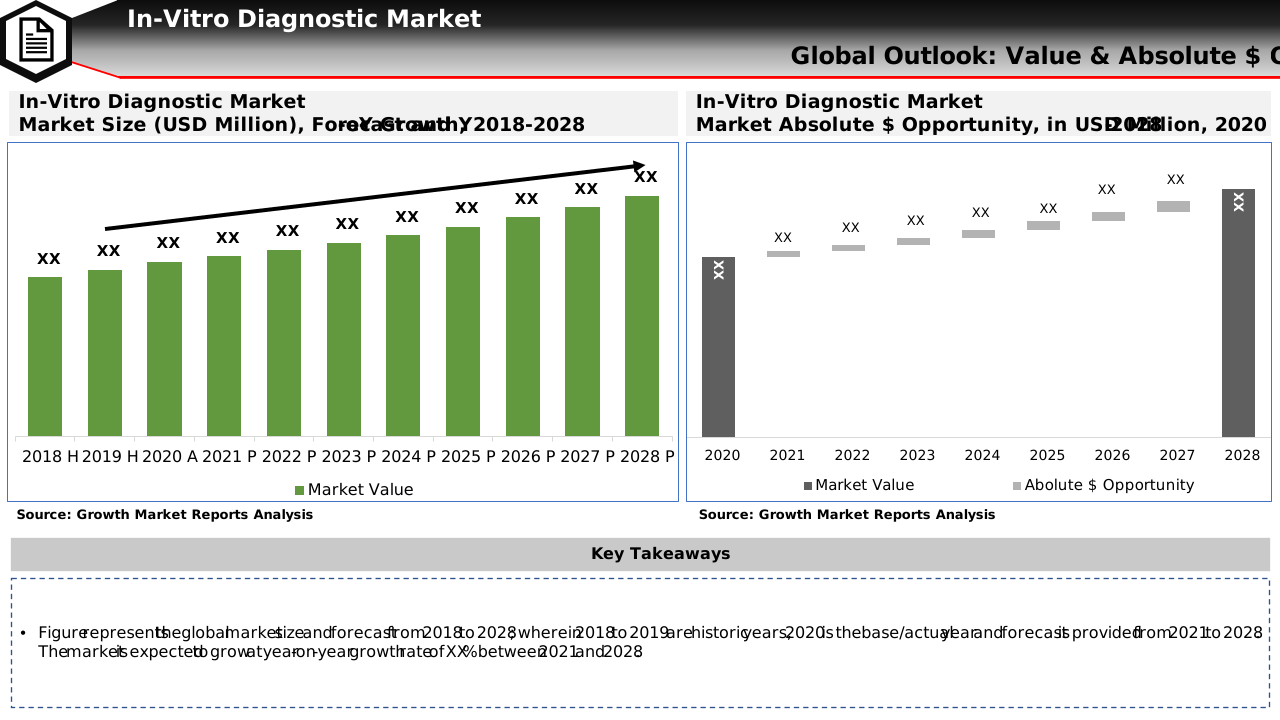
According to our latest research, the global In Vitro Diagnostics (IVD) market size reached USD 98.7 billion in 2024, reflecting robust demand across healthcare systems worldwide. The market is experiencing a steady expansion, registering a CAGR of 5.7% from 2025 to 2033. By the end of the forecast period in 2033, the IVD market is projected to achieve a value of USD 162.1 billion. This growth is primarily driven by technological advancements, increasing prevalence of chronic and infectious diseases, and the rising importance of early and precise diagnosis in patient management.

A significant growth factor for the In Vitro Diagnostics (IVD) market is the increasing global burden of chronic diseases such as cancer, diabetes, and cardiovascular conditions. As populations age and lifestyles change, the incidence of these diseases is rising, necessitating more frequent and accurate diagnostic testing. Early detection and continuous monitoring are critical for effective disease management, boosting demand for IVD products and services. Furthermore, the COVID-19 pandemic has elevated the role of IVD in healthcare systems, with molecular diagnostics and rapid antigen tests becoming central to public health responses. This heightened awareness and integration of IVD solutions into routine care are expected to sustain market growth even as the pandemic subsides.

Another driving force is the rapid technological innovation within the IVD sector. The development of advanced diagnostic platforms, such as next-generation sequencing, digital PCR, and high-throughput immunoassays, has enabled faster, more sensitive, and more specific detection of a wide range of diseases. Integration of artificial intelligence and machine learning into IVD software is enhancing data analysis and interpretation, reducing human error, and facilitating more personalized medicine approaches. These innovations are encouraging healthcare providers to adopt new diagnostic modalities, further expanding the marketÂ’s reach and utility across various clinical settings.

The expanding application of IVD in point-of-care (POC) testing and home care settings is also propelling market growth. The shift towards decentralized healthcare, driven by patient preference for convenience and rapid results, is leading to increased adoption of portable and user-friendly diagnostic tools. This trend is particularly evident in diabetes management, infectious disease screening, and chronic disease monitoring, where timely interventions can significantly improve outcomes. The ongoing development of POC technologies and their integration into telemedicine platforms are expected to broaden access to diagnostics and fuel market expansion in both developed and emerging markets.

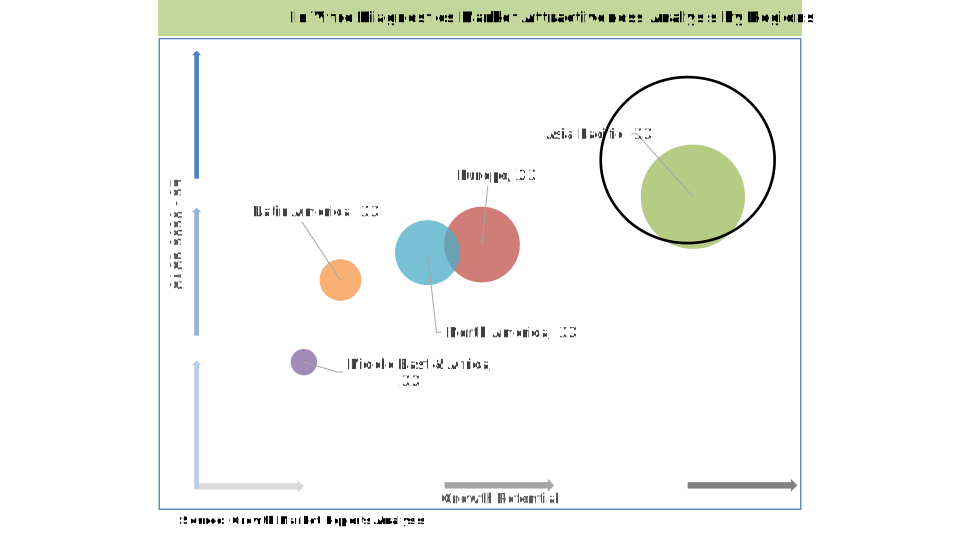
From a regional perspective, North America currently dominates the In Vitro Diagnostics (IVD) market due to its advanced healthcare infrastructure, high healthcare expenditure, and strong presence of major industry players. Europe follows closely, benefitting from supportive regulatory frameworks and significant investments in healthcare innovation. However, the Asia Pacific region is anticipated to exhibit the fastest growth over the forecast period. This acceleration is attributed to rising healthcare awareness, growing investments in healthcare infrastructure, and increasing demand for advanced diagnostic solutions in populous countries such as China and India. Latin America and the Middle East & Africa are also poised for steady growth, supported by improving healthcare access and government initiatives to enhance disease surveillance and management.

In-vitro Diagnostics Enzymes play a pivotal role in the functionality of many diagnostic tests, acting as biological catalysts that facilitate biochemical reactions necessary for accurate and efficient testing. These enzymes are crucial in various assays, including those used in clinical chemistry and molecular diagnostics, where they aid in the detection and quantification of specific analytes. The demand for high-quality enzymes is increasing as the complexity and precision of diagnostic tests continue to evolve. Manufacturers are focusing on developing enzymes that offer enhanced stability and activity, which are essential for the reliability and sensitivity of in-vitro diagnostic tests. As the market grows, the innovation in enzyme technology is expected to further enhance the capabilities of diagnostic platforms, ensuring more accurate and timely results for patient care.

Global In Vitro Diagnostics (IVD) Industry Outlook

Product Type Analysis

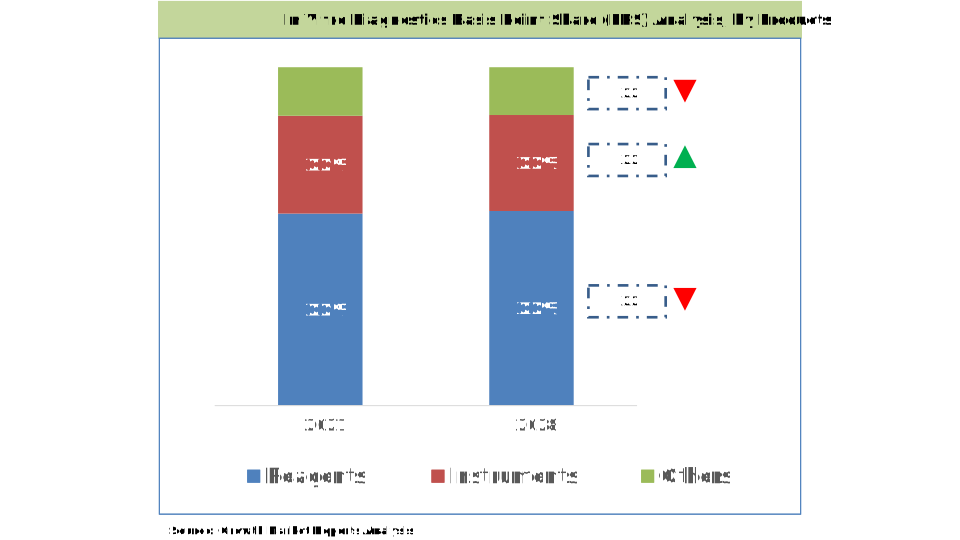
The Product Type segment of the In Vitro Diagnostics (IVD) market is broadly categorized into Instruments, Reagents & Kits, and Software & Services. Among these, Reagents & Kits continue to command the largest market share, accounting for over 60% of the global revenue in 2024. The dominance of this segment is attributed to the recurring nature of reagent purchases, as they are essential consumables for every diagnostic test performed. The growing adoption of advanced assays and the increasing frequency of diagnostic testing in both clinical and research settings further propel the demand for reagents and kits. Manufacturers are focusing on developing highly sensitive and specific reagents to cater to the evolving needs of precision medicine and complex disease diagnostics.

Instruments represent another crucial component of the IVD market, encompassing a wide range of analyzers, automated platforms, and point-of-care devices. The demand for sophisticated diagnostic instruments is on the rise, driven by the need for high-throughput testing, automation, and integration with laboratory information systems. Hospitals and large diagnostic laboratories are investing in state-of-the-art instruments to enhance workflow efficiency, reduce turnaround times, and ensure accuracy in test results. The trend towards miniaturized and portable instruments is also gaining momentum, particularly in decentralized and home care settings, enabling broader access to diagnostic services.

The Software & Services segment is emerging as a key growth area within the IVD market. As the volume and complexity of diagnostic data increase, laboratories and healthcare providers are increasingly relying on advanced software solutions for data management, analysis, and interpretation. Integration of artificial intelligence and machine learning algorithms into IVD software is enhancing diagnostic accuracy, supporting clinical decision-making, and enabling personalized treatment strategies. Additionally, service offerings such as instrument maintenance, calibration, and training are becoming essential for ensuring optimal performance and compliance with regulatory standards.

The interplay between these product types is shaping the competitive landscape of the IVD market. Companies are increasingly offering bundled solutions that combine instruments, reagents, and software to provide comprehensive diagnostic platforms. This approach not only streamlines procurement and maintenance for end-users but also fosters long-term customer relationships. The ongoing evolution of product offerings, driven by technological innovation and customer feedback, is expected to further diversify the market and create new growth opportunities across all product segments.

IVD Quality Control is an integral aspect of the in-vitro diagnostics industry, ensuring the accuracy, reliability, and consistency of diagnostic test results. Quality control measures are implemented across various stages of the diagnostic process, from the development and manufacturing of test kits to their application in clinical settings. These controls are essential for maintaining the integrity of test results, particularly in high-stakes environments such as hospitals and diagnostic laboratories. Companies are investing in advanced quality control systems that incorporate real-time monitoring and data analytics to detect and rectify anomalies promptly. As regulatory standards become more stringent, the emphasis on robust quality control processes is expected to intensify, driving innovation and setting new benchmarks for excellence in the IVD sector.

Report Scope

Attributes Details
Report Title In Vitro Diagnostics (IVD) Market Market Research Report 2033
By Product Type Instruments, Reagents & Kits, Software & Services
By Technology Immunoassay, Clinical Chemistry, Molecular Diagnostics, Hematology, Microbiology, Coagulation, Others
By Application Infectious Diseases, Oncology, Cardiology, Diabetes, Autoimmune Diseases, Others
By End-User Hospitals, Diagnostic Laboratories, Academic & Research Institutes, Home Care, Others
Regions Covered North America, Europe, APAC, Latin America, MEA
Base Year 2024
Historic Data 2018-2023
Forecast Period 2025-2033
Number of Pages 252
Number of Tables & Figures 378
Customization Available Yes, the report can be customized as per your need.

Technology Analysis

The Technology segment of the In Vitro Diagnostics (IVD) market encompasses a diverse array of diagnostic methodologies, including Immunoassay, Clinical Chemistry, Molecular Diagnostics, Hematology, Microbiology, Coagulation, and others. Immunoassay technologies hold a prominent position, widely utilized for detecting infectious diseases, hormones, and tumor markers due to their high sensitivity and specificity. The continuous development of automated immunoassay analyzers and multiplex platforms has significantly enhanced throughput and efficiency in clinical laboratories, supporting the growing demand for rapid and reliable diagnostic solutions.

Clinical Chemistry remains a foundational technology in the IVD market, extensively used for routine testing of blood and other body fluids to assess organ function, metabolic status, and disease progression. The adoption of automated chemistry analyzers and integration with laboratory information systems have streamlined workflows, reduced manual errors, and improved result accuracy. Innovations in reagent formulations and detection methods are further expanding the test menu and enhancing the clinical utility of clinical chemistry platforms.

Molecular Diagnostics is one of the fastest-growing sub-segments, driven by the increasing need for precise and early detection of infectious diseases, genetic disorders, and cancer. The advent of technologies such as real-time PCR, next-generation sequencing, and digital PCR has revolutionized molecular diagnostics, enabling detection of minute quantities of nucleic acids with high accuracy. The COVID-19 pandemic accelerated the adoption of molecular diagnostic tests, highlighting their critical role in disease surveillance and outbreak management. Ongoing research and development efforts are focused on making these technologies more accessible, cost-effective, and user-friendly for broader clinical application.

Other key technologies, such as Hematology, Microbiology, and Coagulation, continue to play vital roles in disease diagnosis and management. Hematology analyzers are indispensable for diagnosing blood disorders, while microbiology platforms are essential for identifying pathogens and guiding antimicrobial therapy. Coagulation testing is crucial for managing patients with bleeding or thrombotic disorders. The evolution of these technologies towards greater automation, connectivity, and integration with digital health platforms is enhancing their value proposition and expanding their adoption across various healthcare settings.

Application Analysis

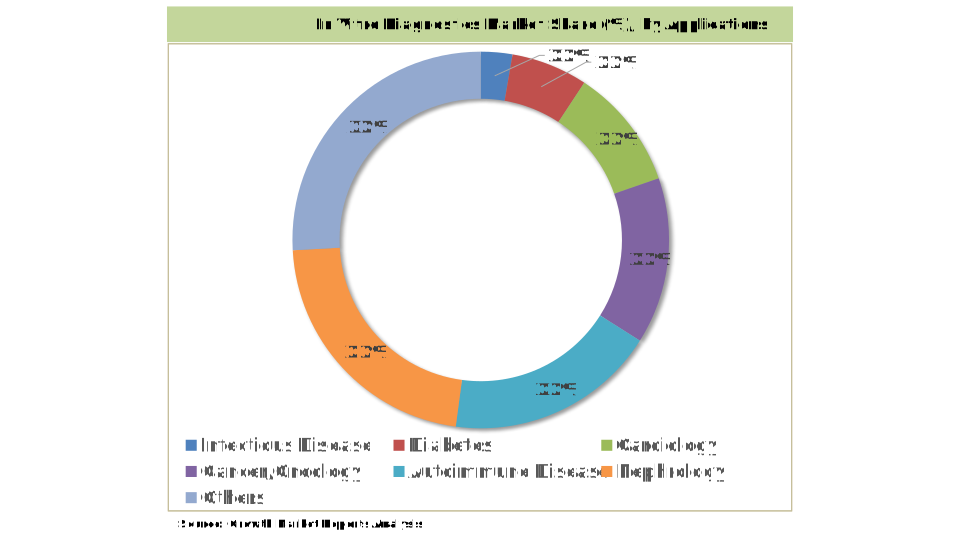
The Application segment of the In Vitro Diagnostics (IVD) market is led by Infectious Diseases, which accounted for the largest share in 2024 due to the sustained impact of the COVID-19 pandemic and the ongoing burden of diseases such as HIV, hepatitis, and tuberculosis. The demand for rapid, accurate, and scalable diagnostic tests for infectious agents remains high, driving continuous innovation in assay development and testing platforms. Public health initiatives and increased funding for disease surveillance are further supporting the growth of this application segment.

Oncology is another rapidly expanding application area, fueled by the rising incidence of cancer worldwide and the growing emphasis on early detection and personalized treatment. IVD plays a critical role in cancer screening, diagnosis, prognosis, and monitoring of treatment response. Advances in molecular diagnostics and biomarker discovery are enabling the development of highly specific assays for various cancer types, facilitating more targeted and effective therapies. The integration of liquid biopsy technologies and companion diagnostics is further enhancing the clinical utility of IVD in oncology.

Cardiology and Diabetes applications are also significant contributors to the IVD market. Cardiac biomarker testing is essential for the rapid diagnosis and management of acute coronary syndromes, heart failure, and other cardiovascular conditions. The increasing prevalence of diabetes, coupled with the need for regular monitoring of blood glucose and HbA1c levels, is driving demand for reliable and user-friendly diagnostic tools. Innovations in point-of-care testing and continuous glucose monitoring are transforming disease management and improving patient outcomes in these areas.

Other important application segments include Autoimmune Diseases and a range of miscellaneous conditions where IVD plays a pivotal role in diagnosis and monitoring. The expanding test menu and the development of multiplex assays capable of detecting multiple analytes simultaneously are enhancing the versatility and value of IVD solutions. As healthcare systems worldwide prioritize preventive care and personalized medicine, the application landscape for IVD is expected to become increasingly diverse and dynamic.

End-User Analysis

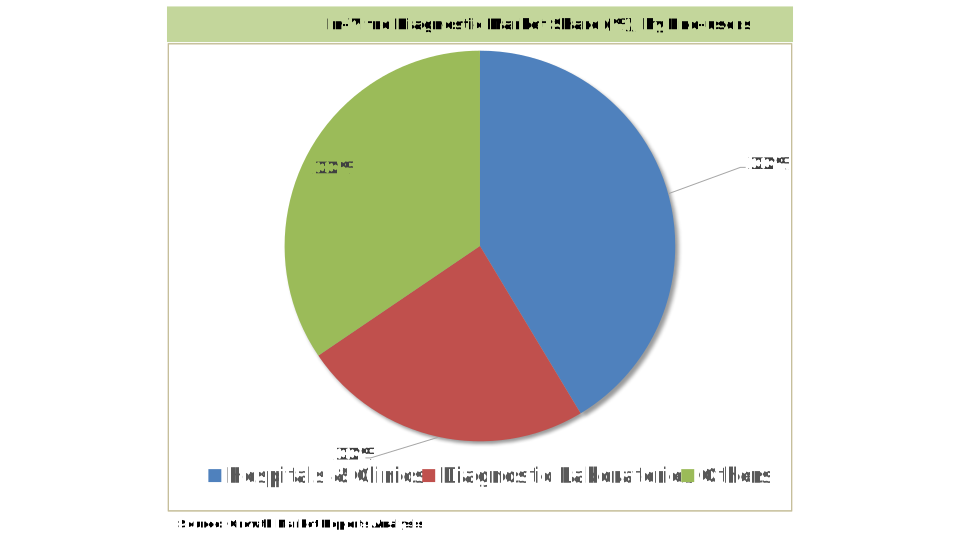
The End-User landscape of the In Vitro Diagnostics (IVD) market is diverse, with Hospitals representing the largest segment in 2024. Hospitals rely heavily on a broad spectrum of IVD tests for patient diagnosis, treatment planning, and monitoring. The integration of advanced diagnostic platforms into hospital laboratories is enhancing efficiency, reducing turnaround times, and improving patient outcomes. The growing adoption of point-of-care testing within hospital settings is further expanding the role of IVD in acute and critical care scenarios.

Diagnostic Laboratories are a key pillar of the IVD market, providing specialized testing services to hospitals, clinics, and individual patients. These laboratories are at the forefront of adopting cutting-edge technologies and automation to handle high test volumes and deliver rapid, accurate results. The trend towards laboratory consolidation and the emergence of large reference laboratories are reshaping the competitive landscape, driving investments in state-of-the-art equipment and digital solutions for seamless data management and reporting.

Academic & Research Institutes constitute another important end-user segment, utilizing IVD technologies for clinical research, biomarker discovery, and translational studies. The collaboration between academic institutions and industry players is fostering innovation and accelerating the development of novel diagnostic assays. Research grants and government funding are supporting the adoption of advanced IVD platforms in academic settings, contributing to the overall growth of the market.

Home Care is an emerging segment, gaining traction as patients seek greater convenience and autonomy in managing their health. The proliferation of user-friendly, portable diagnostic devices is enabling home-based testing for conditions such as diabetes, infectious diseases, and chronic disease monitoring. Telemedicine integration and remote patient monitoring are further enhancing the utility of home care diagnostics, reducing the burden on healthcare facilities and empowering patients to take proactive control of their health. Other end-users, including clinics and specialty care centers, also contribute to the expanding reach of IVD solutions across the healthcare continuum.

Opportunities & Threats

The In Vitro Diagnostics (IVD) market presents significant opportunities for growth and innovation. One of the most promising opportunities lies in the expansion of point-of-care testing and home-based diagnostics. The shift towards decentralized healthcare, driven by patient preferences and advances in portable diagnostic technologies, is opening new avenues for market penetration, particularly in underserved and remote areas. The integration of IVD solutions with telemedicine platforms and digital health ecosystems is further amplifying this trend, enabling real-time data sharing, remote consultations, and personalized care. Companies that can develop reliable, affordable, and user-friendly point-of-care tests are well-positioned to capitalize on this growing demand and expand their market share.

Another major opportunity is the increasing focus on personalized medicine and companion diagnostics. As the understanding of disease biology deepens and the demand for targeted therapies grows, there is a rising need for diagnostic tests that can identify specific biomarkers and guide treatment decisions. The development of multiplex assays, next-generation sequencing panels, and liquid biopsy technologies is enabling more precise and comprehensive disease profiling. Strategic collaborations between diagnostic companies, pharmaceutical firms, and research institutions are accelerating the development and commercialization of companion diagnostics, creating new revenue streams and enhancing the clinical value of IVD solutions.

Despite these opportunities, the IVD market faces several restraining factors, the most notable being the stringent regulatory environment and the complexity of reimbursement policies. Regulatory approvals for new diagnostic products can be time-consuming and costly, particularly in regions with rigorous standards such as the United States and Europe. Navigating the evolving landscape of regulatory requirements and ensuring compliance with quality standards is a significant challenge for manufacturers. Additionally, reimbursement policies for diagnostic tests vary widely across countries and payers, impacting the adoption and accessibility of innovative IVD solutions. Addressing these regulatory and reimbursement hurdles is essential for sustaining market growth and fostering innovation.

Regional Outlook

North America remains the largest regional market for In Vitro Diagnostics (IVD), accounting for approximately USD 41.2 billion in 2024. The regionÂ’s market leadership is underpinned by advanced healthcare infrastructure, high healthcare spending, and the presence of leading industry players. The United States, in particular, is a key contributor, with widespread adoption of cutting-edge diagnostic technologies and a strong focus on research and development. The regionÂ’s robust regulatory framework and favorable reimbursement landscape further support market growth, while ongoing investments in digital health and personalized medicine are expected to drive continued innovation and expansion.

Europe is the second-largest market, with a value of USD 28.9 billion in 2024. The region benefits from a well-established healthcare system, supportive regulatory policies, and significant investments in healthcare innovation. Countries such as Germany, the United Kingdom, and France are at the forefront of adopting advanced IVD solutions, particularly in the areas of molecular diagnostics and oncology. The European market is also characterized by strong collaboration between public and private sectors, fostering research and development and facilitating the introduction of novel diagnostic products. The region is expected to maintain steady growth over the forecast period, supported by ongoing initiatives to enhance disease surveillance and preventive care.

The Asia Pacific region is poised for the fastest growth, with a market size of USD 18.6 billion in 2024 and a projected CAGR of 8.2% from 2025 to 2033. Rapid economic development, rising healthcare awareness, and increasing investments in healthcare infrastructure are driving demand for advanced diagnostic solutions in countries such as China, India, and Japan. Government initiatives to improve healthcare access and disease management, coupled with a large and aging population, are further fueling market expansion. The regionÂ’s dynamic market environment and growing focus on innovation make it a key area of interest for global IVD manufacturers seeking to expand their footprint.

In Vitro Diagnostics (IVD) Market Statistics

Competitor Outlook

The In Vitro Diagnostics (IVD) market is highly competitive, characterized by the presence of several multinational corporations, regional players, and emerging startups. The competitive landscape is shaped by continuous innovation, strategic partnerships, and mergers and acquisitions aimed at expanding product portfolios and geographic reach. Leading companies are investing heavily in research and development to introduce next-generation diagnostic platforms, enhance assay performance, and integrate digital technologies into their offerings. The focus on delivering comprehensive solutions that combine instruments, reagents, and software is driving differentiation and fostering long-term customer relationships in a crowded marketplace.

Product innovation and technological advancement are central to maintaining a competitive edge in the IVD market. Companies are leveraging advances in molecular biology, immunology, and data analytics to develop more sensitive, specific, and user-friendly diagnostic tests. The integration of artificial intelligence and machine learning into IVD software is enabling more accurate data interpretation and personalized clinical decision-making. Strategic collaborations with pharmaceutical companies and research institutions are facilitating the development of companion diagnostics and expanding the clinical utility of IVD solutions. The ability to respond quickly to emerging health threats, such as the COVID-19 pandemic, has also become a key differentiator, with companies that can rapidly scale up production and distribution gaining a competitive advantage.

The market also features a growing number of regional and local players, particularly in emerging markets such as Asia Pacific and Latin America. These companies are focusing on developing cost-effective and locally relevant diagnostic solutions to address the unique healthcare needs of their regions. Partnerships with government agencies and non-governmental organizations are enabling broader access to diagnostics and supporting public health initiatives. The increasing emphasis on point-of-care testing and home-based diagnostics is creating opportunities for new entrants and niche players to carve out a share of the market.

Major companies operating in the In Vitro Diagnostics (IVD) market include Roche Diagnostics, Abbott Laboratories, Siemens Healthineers, Danaher Corporation (Beckman Coulter), Thermo Fisher Scientific, Bio-Rad Laboratories, Becton, Dickinson and Company (BD), bioMérieux, Sysmex Corporation, and Ortho Clinical Diagnostics. Roche Diagnostics is recognized for its leadership in molecular diagnostics and immunoassays, offering a comprehensive portfolio of products and solutions. Abbott Laboratories is a key player in point-of-care testing, with a strong presence in both developed and emerging markets. Siemens Healthineers and Danaher Corporation are known for their advanced laboratory automation and clinical chemistry platforms, while Thermo Fisher Scientific excels in molecular and specialty diagnostics. Bio-Rad Laboratories and BD are prominent in hematology and microbiology, offering innovative solutions for disease diagnosis and monitoring. bioMérieux specializes in infectious disease diagnostics, and Sysmex Corporation is a global leader in hematology analyzers. Ortho Clinical Diagnostics focuses on immunohematology and clinical chemistry, serving a broad range of healthcare providers worldwide. These companies are at the forefront of driving innovation, expanding market reach, and shaping the future of the IVD industry through strategic investments and collaborations.

Key Players

  • Roche Diagnostics
  • Abbott Laboratories
  • Siemens Healthineers
  • Danaher Corporation
  • Thermo Fisher Scientific
  • BioMérieux
  • Becton, Dickinson and Company (BD)
  • Sysmex Corporation
  • Ortho Clinical Diagnostics
  • QuidelOrtho Corporation
  • Hologic, Inc.
  • Qiagen N.V.
  • Bio-Rad Laboratories
  • Agilent Technologies
  • Illumina, Inc.
  • Grifols, S.A.
  • PerkinElmer, Inc.
  • Mindray Medical International
  • Randox Laboratories
  • Fujirebio (H.U. Group Holdings)
In Vitro Diagnostics (IVD) Market Overview

Segments

The In Vitro Diagnostics (IVD) market has been segmented on the basis of

Product Type

  • Instruments
  • Reagents & Kits
  • Software & Services

Technology

  • Immunoassay
  • Clinical Chemistry
  • Molecular Diagnostics
  • Hematology
  • Microbiology
  • Coagulation
  • Others

Application

  • Infectious Diseases
  • Oncology
  • Cardiology
  • Diabetes
  • Autoimmune Diseases
  • Others

End-User

  • Hospitals
  • Diagnostic Laboratories
  • Academic & Research Institutes
  • Home Care
  • Others

Competitive Landscape

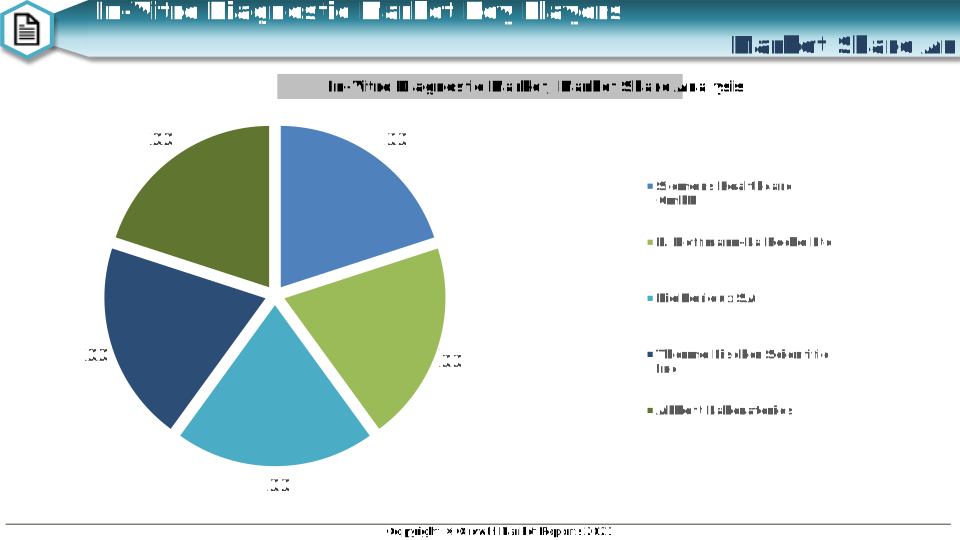
Key players competing in the in-vitro diagnostic market include Siemens Healthcare GmbH; F. Hoffmann-La Roche Ltd; BioMérieux SA; Thermo Fischer Scientific Inc; Abbott Laboratories.

Some of these players are focusing on business strategies including partnerships, collaborations, capacity expansion, and product launches to increase their market shares.

Global In Vitro Diagnostic Market Share

Frequently Asked Questions

Major companies include Roche Diagnostics, Abbott Laboratories, Siemens Healthineers, Danaher Corporation, Thermo Fisher Scientific, BioMérieux, Becton Dickinson (BD), Sysmex Corporation, Ortho Clinical Diagnostics, and others.

Opportunities include the expansion of point-of-care and home diagnostics, and the rise of personalized medicine. Challenges involve stringent regulatory requirements and complex reimbursement policies.

The Asia Pacific region is anticipated to experience the fastest growth, driven by rising healthcare awareness, investments in infrastructure, and increasing demand in countries like China and India.

Hospitals are the largest end-users, followed by Diagnostic Laboratories, Academic & Research Institutes, Home Care, and specialty clinics.

Infectious Diseases lead the application segment, followed by Oncology, Cardiology, Diabetes, and Autoimmune Diseases, driven by the need for rapid and accurate diagnostics.

Major technologies include Immunoassay, Clinical Chemistry, Molecular Diagnostics, Hematology, Microbiology, and Coagulation, with Immunoassay and Molecular Diagnostics seeing significant innovation and adoption.

Reagents & Kits hold the largest share, accounting for over 60% of global revenue in 2024, due to their recurring use in diagnostic testing.

Key growth drivers include technological advancements, the rising prevalence of chronic and infectious diseases, increased importance of early and precise diagnosis, and the expansion of point-of-care and home-based testing.

The IVD market is expected to grow at a CAGR of 5.7% from 2025 to 2033, reaching an estimated value of USD 162.1 billion by 2033.

As of 2024, the global In Vitro Diagnostics (IVD) market size reached USD 98.7 billion, reflecting strong demand across healthcare systems worldwide.

Table Of Content

Chapter 1 Executive Summary
Chapter 2 Assumptions and Acronyms Used
Chapter 3 Research Methodology
Chapter 4 In Vitro Diagnostics (IVD) Market Overview
   4.1 Introduction
      4.1.1 Market Taxonomy
      4.1.2 Market Definition
      4.1.3 Macro-Economic Factors Impacting the Market Growth
   4.2 In Vitro Diagnostics (IVD) Market Dynamics
      4.2.1 Market Drivers
      4.2.2 Market Restraints
      4.2.3 Market Opportunity
   4.3 In Vitro Diagnostics (IVD) Market - Supply Chain Analysis
      4.3.1 List of Key Suppliers
      4.3.2 List of Key Distributors
      4.3.3 List of Key Consumers
   4.4 Key Forces Shaping the In Vitro Diagnostics (IVD) Market
      4.4.1 Bargaining Power of Suppliers
      4.4.2 Bargaining Power of Buyers
      4.4.3 Threat of Substitution
      4.4.4 Threat of New Entrants
      4.4.5 Competitive Rivalry
   4.5 Global In Vitro Diagnostics (IVD) Market Size & Forecast, 2023-2032
      4.5.1 In Vitro Diagnostics (IVD) Market Size and Y-o-Y Growth
      4.5.2 In Vitro Diagnostics (IVD) Market Absolute $ Opportunity

Chapter 5 Global In Vitro Diagnostics (IVD) Market Analysis and Forecast By Product Type
   5.1 Introduction
      5.1.1 Key Market Trends & Growth Opportunities By Product Type
      5.1.2 Basis Point Share (BPS) Analysis By Product Type
      5.1.3 Absolute $ Opportunity Assessment By Product Type
   5.2 In Vitro Diagnostics (IVD) Market Size Forecast By Product Type
      5.2.1 Instruments
      5.2.2 Reagents & Kits
      5.2.3 Software & Services
   5.3 Market Attractiveness Analysis By Product Type

Chapter 6 Global In Vitro Diagnostics (IVD) Market Analysis and Forecast By Technology
   6.1 Introduction
      6.1.1 Key Market Trends & Growth Opportunities By Technology
      6.1.2 Basis Point Share (BPS) Analysis By Technology
      6.1.3 Absolute $ Opportunity Assessment By Technology
   6.2 In Vitro Diagnostics (IVD) Market Size Forecast By Technology
      6.2.1 Immunoassay
      6.2.2 Clinical Chemistry
      6.2.3 Molecular Diagnostics
      6.2.4 Hematology
      6.2.5 Microbiology
      6.2.6 Coagulation
      6.2.7 Others
   6.3 Market Attractiveness Analysis By Technology

Chapter 7 Global In Vitro Diagnostics (IVD) Market Analysis and Forecast By Application
   7.1 Introduction
      7.1.1 Key Market Trends & Growth Opportunities By Application
      7.1.2 Basis Point Share (BPS) Analysis By Application
      7.1.3 Absolute $ Opportunity Assessment By Application
   7.2 In Vitro Diagnostics (IVD) Market Size Forecast By Application
      7.2.1 Infectious Diseases
      7.2.2 Oncology
      7.2.3 Cardiology
      7.2.4 Diabetes
      7.2.5 Autoimmune Diseases
      7.2.6 Others
   7.3 Market Attractiveness Analysis By Application

Chapter 8 Global In Vitro Diagnostics (IVD) Market Analysis and Forecast By End-User
   8.1 Introduction
      8.1.1 Key Market Trends & Growth Opportunities By End-User
      8.1.2 Basis Point Share (BPS) Analysis By End-User
      8.1.3 Absolute $ Opportunity Assessment By End-User
   8.2 In Vitro Diagnostics (IVD) Market Size Forecast By End-User
      8.2.1 Hospitals
      8.2.2 Diagnostic Laboratories
      8.2.3 Academic & Research Institutes
      8.2.4 Home Care
      8.2.5 Others
   8.3 Market Attractiveness Analysis By End-User

Chapter 9 Global In Vitro Diagnostics (IVD) Market Analysis and Forecast by Region
   9.1 Introduction
      9.1.1 Key Market Trends & Growth Opportunities By Region
      9.1.2 Basis Point Share (BPS) Analysis By Region
      9.1.3 Absolute $ Opportunity Assessment By Region
   9.2 In Vitro Diagnostics (IVD) Market Size Forecast By Region
      9.2.1 North America
      9.2.2 Europe
      9.2.3 Asia Pacific
      9.2.4 Latin America
      9.2.5 Middle East & Africa (MEA)
   9.3 Market Attractiveness Analysis By Region

Chapter 10 Coronavirus Disease (COVID-19) Impact 
   10.1 Introduction 
   10.2 Current & Future Impact Analysis 
   10.3 Economic Impact Analysis 
   10.4 Government Policies 
   10.5 Investment Scenario

Chapter 11 North America In Vitro Diagnostics (IVD) Analysis and Forecast
   11.1 Introduction
   11.2 North America In Vitro Diagnostics (IVD) Market Size Forecast by Country
      11.2.1 U.S.
      11.2.2 Canada
   11.3 Basis Point Share (BPS) Analysis by Country
   11.4 Absolute $ Opportunity Assessment by Country
   11.5 Market Attractiveness Analysis by Country
   11.6 North America In Vitro Diagnostics (IVD) Market Size Forecast By Product Type
      11.6.1 Instruments
      11.6.2 Reagents & Kits
      11.6.3 Software & Services
   11.7 Basis Point Share (BPS) Analysis By Product Type 
   11.8 Absolute $ Opportunity Assessment By Product Type 
   11.9 Market Attractiveness Analysis By Product Type
   11.10 North America In Vitro Diagnostics (IVD) Market Size Forecast By Technology
      11.10.1 Immunoassay
      11.10.2 Clinical Chemistry
      11.10.3 Molecular Diagnostics
      11.10.4 Hematology
      11.10.5 Microbiology
      11.10.6 Coagulation
      11.10.7 Others
   11.11 Basis Point Share (BPS) Analysis By Technology 
   11.12 Absolute $ Opportunity Assessment By Technology 
   11.13 Market Attractiveness Analysis By Technology
   11.14 North America In Vitro Diagnostics (IVD) Market Size Forecast By Application
      11.14.1 Infectious Diseases
      11.14.2 Oncology
      11.14.3 Cardiology
      11.14.4 Diabetes
      11.14.5 Autoimmune Diseases
      11.14.6 Others
   11.15 Basis Point Share (BPS) Analysis By Application 
   11.16 Absolute $ Opportunity Assessment By Application 
   11.17 Market Attractiveness Analysis By Application
   11.18 North America In Vitro Diagnostics (IVD) Market Size Forecast By End-User
      11.18.1 Hospitals
      11.18.2 Diagnostic Laboratories
      11.18.3 Academic & Research Institutes
      11.18.4 Home Care
      11.18.5 Others
   11.19 Basis Point Share (BPS) Analysis By End-User 
   11.20 Absolute $ Opportunity Assessment By End-User 
   11.21 Market Attractiveness Analysis By End-User

Chapter 12 Europe In Vitro Diagnostics (IVD) Analysis and Forecast
   12.1 Introduction
   12.2 Europe In Vitro Diagnostics (IVD) Market Size Forecast by Country
      12.2.1 Germany
      12.2.2 France
      12.2.3 Italy
      12.2.4 U.K.
      12.2.5 Spain
      12.2.6 Russia
      12.2.7 Rest of Europe
   12.3 Basis Point Share (BPS) Analysis by Country
   12.4 Absolute $ Opportunity Assessment by Country
   12.5 Market Attractiveness Analysis by Country
   12.6 Europe In Vitro Diagnostics (IVD) Market Size Forecast By Product Type
      12.6.1 Instruments
      12.6.2 Reagents & Kits
      12.6.3 Software & Services
   12.7 Basis Point Share (BPS) Analysis By Product Type 
   12.8 Absolute $ Opportunity Assessment By Product Type 
   12.9 Market Attractiveness Analysis By Product Type
   12.10 Europe In Vitro Diagnostics (IVD) Market Size Forecast By Technology
      12.10.1 Immunoassay
      12.10.2 Clinical Chemistry
      12.10.3 Molecular Diagnostics
      12.10.4 Hematology
      12.10.5 Microbiology
      12.10.6 Coagulation
      12.10.7 Others
   12.11 Basis Point Share (BPS) Analysis By Technology 
   12.12 Absolute $ Opportunity Assessment By Technology 
   12.13 Market Attractiveness Analysis By Technology
   12.14 Europe In Vitro Diagnostics (IVD) Market Size Forecast By Application
      12.14.1 Infectious Diseases
      12.14.2 Oncology
      12.14.3 Cardiology
      12.14.4 Diabetes
      12.14.5 Autoimmune Diseases
      12.14.6 Others
   12.15 Basis Point Share (BPS) Analysis By Application 
   12.16 Absolute $ Opportunity Assessment By Application 
   12.17 Market Attractiveness Analysis By Application
   12.18 Europe In Vitro Diagnostics (IVD) Market Size Forecast By End-User
      12.18.1 Hospitals
      12.18.2 Diagnostic Laboratories
      12.18.3 Academic & Research Institutes
      12.18.4 Home Care
      12.18.5 Others
   12.19 Basis Point Share (BPS) Analysis By End-User 
   12.20 Absolute $ Opportunity Assessment By End-User 
   12.21 Market Attractiveness Analysis By End-User

Chapter 13 Asia Pacific In Vitro Diagnostics (IVD) Analysis and Forecast
   13.1 Introduction
   13.2 Asia Pacific In Vitro Diagnostics (IVD) Market Size Forecast by Country
      13.2.1 China
      13.2.2 Japan
      13.2.3 South Korea
      13.2.4 India
      13.2.5 Australia
      13.2.6 South East Asia (SEA)
      13.2.7 Rest of Asia Pacific (APAC)
   13.3 Basis Point Share (BPS) Analysis by Country
   13.4 Absolute $ Opportunity Assessment by Country
   13.5 Market Attractiveness Analysis by Country
   13.6 Asia Pacific In Vitro Diagnostics (IVD) Market Size Forecast By Product Type
      13.6.1 Instruments
      13.6.2 Reagents & Kits
      13.6.3 Software & Services
   13.7 Basis Point Share (BPS) Analysis By Product Type 
   13.8 Absolute $ Opportunity Assessment By Product Type 
   13.9 Market Attractiveness Analysis By Product Type
   13.10 Asia Pacific In Vitro Diagnostics (IVD) Market Size Forecast By Technology
      13.10.1 Immunoassay
      13.10.2 Clinical Chemistry
      13.10.3 Molecular Diagnostics
      13.10.4 Hematology
      13.10.5 Microbiology
      13.10.6 Coagulation
      13.10.7 Others
   13.11 Basis Point Share (BPS) Analysis By Technology 
   13.12 Absolute $ Opportunity Assessment By Technology 
   13.13 Market Attractiveness Analysis By Technology
   13.14 Asia Pacific In Vitro Diagnostics (IVD) Market Size Forecast By Application
      13.14.1 Infectious Diseases
      13.14.2 Oncology
      13.14.3 Cardiology
      13.14.4 Diabetes
      13.14.5 Autoimmune Diseases
      13.14.6 Others
   13.15 Basis Point Share (BPS) Analysis By Application 
   13.16 Absolute $ Opportunity Assessment By Application 
   13.17 Market Attractiveness Analysis By Application
   13.18 Asia Pacific In Vitro Diagnostics (IVD) Market Size Forecast By End-User
      13.18.1 Hospitals
      13.18.2 Diagnostic Laboratories
      13.18.3 Academic & Research Institutes
      13.18.4 Home Care
      13.18.5 Others
   13.19 Basis Point Share (BPS) Analysis By End-User 
   13.20 Absolute $ Opportunity Assessment By End-User 
   13.21 Market Attractiveness Analysis By End-User

Chapter 14 Latin America In Vitro Diagnostics (IVD) Analysis and Forecast
   14.1 Introduction
   14.2 Latin America In Vitro Diagnostics (IVD) Market Size Forecast by Country
      14.2.1 Brazil
      14.2.2 Mexico
      14.2.3 Rest of Latin America (LATAM)
   14.3 Basis Point Share (BPS) Analysis by Country
   14.4 Absolute $ Opportunity Assessment by Country
   14.5 Market Attractiveness Analysis by Country
   14.6 Latin America In Vitro Diagnostics (IVD) Market Size Forecast By Product Type
      14.6.1 Instruments
      14.6.2 Reagents & Kits
      14.6.3 Software & Services
   14.7 Basis Point Share (BPS) Analysis By Product Type 
   14.8 Absolute $ Opportunity Assessment By Product Type 
   14.9 Market Attractiveness Analysis By Product Type
   14.10 Latin America In Vitro Diagnostics (IVD) Market Size Forecast By Technology
      14.10.1 Immunoassay
      14.10.2 Clinical Chemistry
      14.10.3 Molecular Diagnostics
      14.10.4 Hematology
      14.10.5 Microbiology
      14.10.6 Coagulation
      14.10.7 Others
   14.11 Basis Point Share (BPS) Analysis By Technology 
   14.12 Absolute $ Opportunity Assessment By Technology 
   14.13 Market Attractiveness Analysis By Technology
   14.14 Latin America In Vitro Diagnostics (IVD) Market Size Forecast By Application
      14.14.1 Infectious Diseases
      14.14.2 Oncology
      14.14.3 Cardiology
      14.14.4 Diabetes
      14.14.5 Autoimmune Diseases
      14.14.6 Others
   14.15 Basis Point Share (BPS) Analysis By Application 
   14.16 Absolute $ Opportunity Assessment By Application 
   14.17 Market Attractiveness Analysis By Application
   14.18 Latin America In Vitro Diagnostics (IVD) Market Size Forecast By End-User
      14.18.1 Hospitals
      14.18.2 Diagnostic Laboratories
      14.18.3 Academic & Research Institutes
      14.18.4 Home Care
      14.18.5 Others
   14.19 Basis Point Share (BPS) Analysis By End-User 
   14.20 Absolute $ Opportunity Assessment By End-User 
   14.21 Market Attractiveness Analysis By End-User

Chapter 15 Middle East & Africa (MEA) In Vitro Diagnostics (IVD) Analysis and Forecast
   15.1 Introduction
   15.2 Middle East & Africa (MEA) In Vitro Diagnostics (IVD) Market Size Forecast by Country
      15.2.1 Saudi Arabia
      15.2.2 South Africa
      15.2.3 UAE
      15.2.4 Rest of Middle East & Africa (MEA)
   15.3 Basis Point Share (BPS) Analysis by Country
   15.4 Absolute $ Opportunity Assessment by Country
   15.5 Market Attractiveness Analysis by Country
   15.6 Middle East & Africa (MEA) In Vitro Diagnostics (IVD) Market Size Forecast By Product Type
      15.6.1 Instruments
      15.6.2 Reagents & Kits
      15.6.3 Software & Services
   15.7 Basis Point Share (BPS) Analysis By Product Type 
   15.8 Absolute $ Opportunity Assessment By Product Type 
   15.9 Market Attractiveness Analysis By Product Type
   15.10 Middle East & Africa (MEA) In Vitro Diagnostics (IVD) Market Size Forecast By Technology
      15.10.1 Immunoassay
      15.10.2 Clinical Chemistry
      15.10.3 Molecular Diagnostics
      15.10.4 Hematology
      15.10.5 Microbiology
      15.10.6 Coagulation
      15.10.7 Others
   15.11 Basis Point Share (BPS) Analysis By Technology 
   15.12 Absolute $ Opportunity Assessment By Technology 
   15.13 Market Attractiveness Analysis By Technology
   15.14 Middle East & Africa (MEA) In Vitro Diagnostics (IVD) Market Size Forecast By Application
      15.14.1 Infectious Diseases
      15.14.2 Oncology
      15.14.3 Cardiology
      15.14.4 Diabetes
      15.14.5 Autoimmune Diseases
      15.14.6 Others
   15.15 Basis Point Share (BPS) Analysis By Application 
   15.16 Absolute $ Opportunity Assessment By Application 
   15.17 Market Attractiveness Analysis By Application
   15.18 Middle East & Africa (MEA) In Vitro Diagnostics (IVD) Market Size Forecast By End-User
      15.18.1 Hospitals
      15.18.2 Diagnostic Laboratories
      15.18.3 Academic & Research Institutes
      15.18.4 Home Care
      15.18.5 Others
   15.19 Basis Point Share (BPS) Analysis By End-User 
   15.20 Absolute $ Opportunity Assessment By End-User 
   15.21 Market Attractiveness Analysis By End-User

Chapter 16 Competition Landscape 
   16.1 In Vitro Diagnostics (IVD) Market: Competitive Dashboard
   16.2 Global In Vitro Diagnostics (IVD) Market: Market Share Analysis, 2023
   16.3 Company Profiles (Details – Overview, Financials, Developments, Strategy) 
      16.3.1 Roche Diagnostics
Abbott Laboratories
Siemens Healthineers
Danaher Corporation
Thermo Fisher Scientific
BioMérieux
Becton, Dickinson and Company (BD)
Sysmex Corporation
Ortho Clinical Diagnostics
QuidelOrtho Corporation
Hologic, Inc.
Qiagen N.V.
Bio-Rad Laboratories
Agilent Technologies
Illumina, Inc.
Grifols, S.A.
PerkinElmer, Inc.
Mindray Medical International
Randox Laboratories
Fujirebio (H.U. Group Holdings)

Methodology

Our Clients

Nestle SA
Deloitte
General Electric
Siemens Healthcare
FedEx Logistics
Honda Motor Co. Ltd.
sinopec
General Mills