Segments - by Product Type (Instruments, Reagents & Kits, Software & Services), by Technology (Immunoassay, Clinical Chemistry, Molecular Diagnostics, Hematology, Microbiology, Coagulation, Others), by Application (Infectious Diseases, Oncology, Cardiology, Diabetes, Autoimmune Diseases, Nephrology, Others), by End-User (Hospitals, Diagnostic Laboratories, Academic & Research Institutes, Home Care, Others)
According to our latest research, the global In-Vitro Diagnostics (IVD) market size reached USD 118.7 billion in 2024, reflecting robust demand across healthcare systems worldwide. The market is projected to grow at a CAGR of 5.3% from 2025 to 2033, reaching a forecasted value of USD 189.3 billion by 2033. This steady growth trajectory is primarily driven by technological advancements, rising prevalence of chronic and infectious diseases, and the increasing emphasis on personalized medicine.
A major growth driver for the In-Vitro Diagnostics market is the increasing burden of chronic and infectious diseases across both developed and developing regions. The rising incidence of conditions such as diabetes, cancer, cardiovascular diseases, and infectious outbreaks like influenza and COVID-19 has underscored the critical need for early and accurate diagnostic solutions. Governments and healthcare providers are investing heavily in diagnostic infrastructure to enable early detection, timely intervention, and improved patient outcomes. Furthermore, the growing geriatric population, which is more susceptible to chronic illnesses, is expected to further fuel the demand for advanced IVD solutions. These factors collectively contribute to the sustained expansion of the global IVD market.
Technological innovation stands at the forefront of market growth, with rapid advancements in molecular diagnostics, next-generation sequencing, and point-of-care testing reshaping the landscape of in-vitro diagnostics. The integration of artificial intelligence, automation, and digital health platforms has enhanced the accuracy, speed, and efficiency of diagnostic procedures. Companies are focusing on developing user-friendly, cost-effective, and portable diagnostic devices that can be deployed in diverse settings, including remote and resource-limited areas. The adoption of multiplex assays and companion diagnostics is also rising, enabling more precise and personalized treatment strategies. These technological breakthroughs are not only expanding the scope of IVD applications but also making diagnostics more accessible to a broader population base.
Another significant growth factor is the increasing emphasis on preventive healthcare and the shift towards personalized medicine. Healthcare systems worldwide are moving from reactive to proactive approaches, emphasizing early detection and risk assessment to reduce the burden of disease and healthcare costs. IVD plays a pivotal role in this paradigm shift by providing critical information for disease screening, monitoring, and therapeutic decision-making. The growing awareness among patients and healthcare professionals regarding the benefits of regular diagnostic testing, coupled with supportive government policies and reimbursement frameworks, is further propelling market growth. The emergence of home-based testing and self-monitoring solutions is also contributing to the democratization of diagnostics, making it easier for individuals to manage their health proactively.
In Vitro Diagnostics Quality Control is an essential component in ensuring the reliability and accuracy of diagnostic tests. As the demand for in-vitro diagnostics continues to grow, maintaining high standards of quality control becomes increasingly important. This involves rigorous testing and validation processes to ensure that diagnostic instruments and reagents perform consistently and accurately. Quality control measures are critical in minimizing errors, ensuring patient safety, and maintaining the credibility of diagnostic results. With the integration of advanced technologies and automation, laboratories are able to implement more sophisticated quality control protocols, enhancing the overall reliability of in-vitro diagnostics. As healthcare systems continue to evolve, the emphasis on quality control will remain a cornerstone in the delivery of accurate and dependable diagnostic services.
From a regional perspective, North America continues to dominate the global In-Vitro Diagnostics market due to its advanced healthcare infrastructure, high adoption of innovative diagnostic technologies, and significant investments in research and development. However, the Asia Pacific region is witnessing the fastest growth, driven by rising healthcare expenditure, improving diagnostic capabilities, and increasing awareness about early disease detection. Europe remains a key market, supported by favorable regulatory policies and a strong focus on preventive healthcare. Meanwhile, emerging markets in Latin America and the Middle East & Africa are gradually catching up, fueled by expanding healthcare access and government initiatives aimed at strengthening diagnostic services. This dynamic regional landscape presents ample opportunities for market players to expand their footprint and cater to diverse patient populations.
The Product Type segment of the In-Vitro Diagnostics market encompasses instruments, reagents & kits, and software & services, each playing a crucial role in the diagnostic process. Instruments, such as analyzers and automated platforms, are the backbone of modern laboratories, enabling high-throughput and precise testing. The demand for advanced instruments is rising due to the increasing complexity of diagnostic tests and the need for automation to enhance laboratory efficiency. Manufacturers are focusing on developing compact, user-friendly, and cost-effective instruments that cater to both centralized and decentralized testing environments. The integration of connectivity features and data management capabilities is further enhancing the value proposition of diagnostic instruments, making them indispensable in clinical settings.
Reagents & kits represent the largest revenue-generating sub-segment within the product type category. These consumables are essential for conducting a wide range of diagnostic assays, including immunoassays, molecular tests, and clinical chemistry analyses. The continuous launch of new and improved reagents & kits, tailored for specific diseases and applications, is a key factor driving segment growth. The COVID-19 pandemic, for instance, spurred a surge in demand for molecular and antigen testing kits, highlighting the critical role of reagents in pandemic preparedness and response. Companies are investing in the development of multiplex kits and point-of-care solutions to address evolving market needs, further boosting the growth of this segment.
Infectious Disease In-Vitro Diagnostics play a pivotal role in the rapid identification and management of infectious diseases. The ability to quickly and accurately diagnose infections is crucial in controlling outbreaks and preventing the spread of disease. In-vitro diagnostics for infectious diseases encompass a wide range of tests, including molecular assays, antigen detection, and serological tests, each providing valuable insights into the presence and progression of infections. The recent advancements in diagnostic technologies have significantly improved the sensitivity and specificity of these tests, enabling healthcare providers to make informed decisions swiftly. As global health challenges continue to emerge, the development and deployment of effective infectious disease diagnostics will be vital in safeguarding public health and enhancing disease surveillance capabilities.
Software & services are gaining prominence in the In-Vitro Diagnostics market as laboratories and healthcare providers increasingly adopt digital solutions for data management, workflow automation, and remote diagnostics. Laboratory Information Management Systems (LIMS), data analytics platforms, and telemedicine integration are transforming the way diagnostic information is collected, analyzed, and shared. These solutions enhance operational efficiency, ensure regulatory compliance, and enable real-time decision-making. The growing trend of cloud-based diagnostics and interoperability with electronic health records (EHRs) is expected to drive further adoption of software & services in the IVD space. As healthcare systems continue to digitize, the importance of robust and secure software solutions will only increase.
The interplay between instruments, reagents & kits, and software & services is creating a synergistic ecosystem that enhances the overall value proposition of in-vitro diagnostics. Manufacturers are increasingly offering bundled solutions that combine hardware, consumables, and digital platforms to provide end-to-end diagnostic capabilities. This integrated approach not only improves diagnostic accuracy and turnaround times but also simplifies procurement and support processes for healthcare providers. As the demand for comprehensive diagnostic solutions grows, companies that can offer a seamless combination of instruments, reagents, and software are likely to gain a competitive edge in the market.
| Attributes | Details |
| Report Title | In-Vitro Diagnostics Market Research Report 2033 |
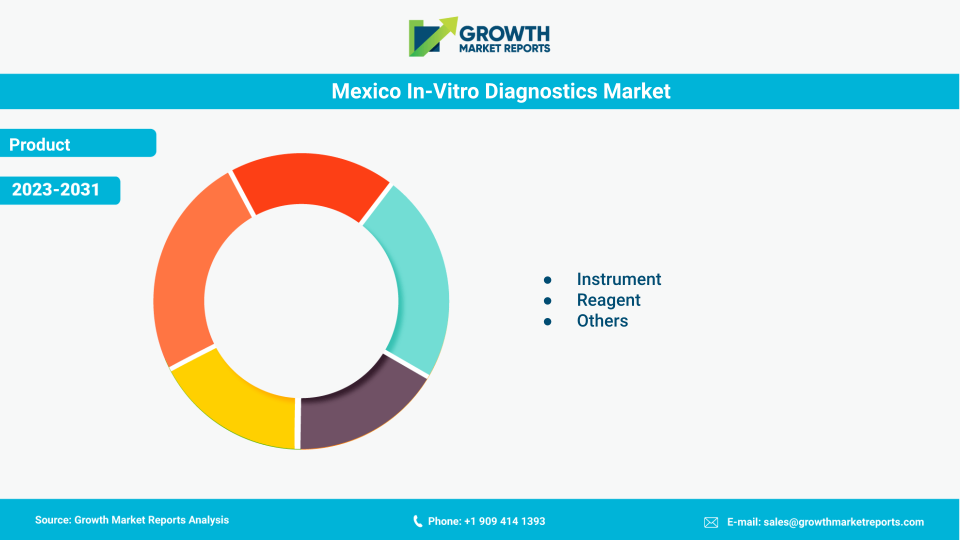
| By Product Type | Instruments, Reagents & Kits, Software & Services |
| By Technology | Immunoassay, Clinical Chemistry, Molecular Diagnostics, Hematology, Microbiology, Coagulation, Others |
| By Application | Infectious Diseases, Oncology, Cardiology, Diabetes, Autoimmune Diseases, Nephrology, Others |
| By End-User | Hospitals, Diagnostic Laboratories, Academic & Research Institutes, Home Care, Others |
| Regions Covered | North America, Europe, APAC, Latin America, MEA |
| Base Year | 2024 |
| Historic Data | 2018-2023 |
| Forecast Period | 2025-2033 |
| Number of Pages | 269 |
| Number of Tables & Figures | 325 |
| Customization Available | Yes, the report can be customized as per your need. |
The Technology segment in the In-Vitro Diagnostics market includes immunoassay, clinical chemistry, molecular diagnostics, hematology, microbiology, coagulation, and other emerging technologies. Immunoassay remains one of the most widely used technologies, owing to its versatility, sensitivity, and broad application across various disease areas. It is extensively employed for the detection of infectious diseases, hormone levels, and cancer biomarkers. Continuous advancements in immunoassay platforms, such as chemiluminescence and enzyme-linked immunosorbent assays (ELISA), have enhanced throughput and accuracy, making them indispensable in both clinical and research settings. The demand for rapid, point-of-care immunoassays is also rising, driven by the need for timely diagnosis and treatment initiation.
Clinical chemistry is another cornerstone of the IVD market, enabling the quantitative analysis of biochemical markers in blood and other body fluids. This technology is fundamental for the diagnosis and monitoring of conditions such as diabetes, kidney disease, and cardiovascular disorders. Automation and miniaturization have revolutionized clinical chemistry analyzers, allowing for higher test volumes, reduced turnaround times, and improved reliability. The integration of advanced sensors and connectivity features is further enhancing the capabilities of clinical chemistry platforms, supporting the trend towards decentralized and near-patient testing. As healthcare systems strive for efficiency and cost-effectiveness, the role of clinical chemistry in routine diagnostics remains critical.
Molecular diagnostics has emerged as the fastest-growing technology segment, driven by the increasing prevalence of infectious diseases, cancer, and genetic disorders. Techniques such as polymerase chain reaction (PCR), next-generation sequencing (NGS), and digital PCR are enabling highly sensitive and specific detection of pathogens, genetic mutations, and biomarkers. The COVID-19 pandemic accelerated the adoption of molecular diagnostics, highlighting its importance in outbreak management and surveillance. Ongoing innovations in sample preparation, assay design, and multiplexing capabilities are expanding the applications of molecular diagnostics beyond infectious diseases to areas such as oncology, pharmacogenomics, and prenatal testing. The growing focus on precision medicine is expected to further boost the adoption of molecular diagnostic technologies.
Other technologies, including hematology, microbiology, coagulation, and emerging platforms such as biosensors and microfluidics, are also contributing to the diversification of the IVD market. Hematology analyzers are essential for the diagnosis of blood disorders, while microbiology platforms enable the identification and susceptibility testing of bacterial and fungal pathogens. Coagulation testing is critical for managing patients with bleeding or thrombotic disorders. The development of integrated, multifunctional analyzers that combine multiple testing modalities is gaining traction, offering laboratories greater flexibility and cost savings. As diagnostic needs evolve, the continued innovation and convergence of technologies will play a pivotal role in shaping the future of in-vitro diagnostics.
The Application segment of the In-Vitro Diagnostics market covers a broad spectrum of clinical areas, including infectious diseases, oncology, cardiology, diabetes, autoimmune diseases, nephrology, and others. Infectious diseases remain the largest application area, driven by the ongoing threat of emerging pathogens and the need for rapid, accurate diagnosis. The recent COVID-19 pandemic underscored the critical importance of robust diagnostic infrastructure for outbreak management and public health surveillance. In addition to respiratory infections, there is a growing focus on sexually transmitted infections, hepatitis, and hospital-acquired infections, further expanding the demand for infectious disease diagnostics.
Oncology is another rapidly growing application area, fueled by the rising incidence of cancer and the shift towards personalized treatment approaches. In-vitro diagnostics play a pivotal role in cancer screening, diagnosis, prognosis, and therapy selection. The adoption of molecular and genetic testing is enabling the identification of specific mutations and biomarkers, guiding targeted therapies and improving patient outcomes. Liquid biopsy and companion diagnostics are gaining momentum, offering non-invasive and real-time monitoring of disease progression and treatment response. As cancer care becomes increasingly personalized, the demand for advanced IVD solutions in oncology is expected to surge.
Cardiology and diabetes represent significant application areas, given the global burden of cardiovascular diseases and metabolic disorders. In-vitro diagnostics enable the early detection, risk stratification, and monitoring of conditions such as myocardial infarction, heart failure, and diabetes mellitus. Biomarker-based assays, point-of-care testing, and continuous glucose monitoring systems are transforming the management of these chronic diseases, enabling timely intervention and improved patient adherence. The integration of IVD with digital health platforms and remote monitoring solutions is further enhancing the ability of healthcare providers to deliver personalized and proactive care.
Other application areas, including autoimmune diseases, nephrology, and emerging fields such as neurology and reproductive health, are also witnessing increased adoption of in-vitro diagnostics. The development of specialized assays and multiplex panels is enabling the simultaneous detection of multiple biomarkers, improving diagnostic accuracy and efficiency. As healthcare systems strive to address a broader range of diseases and patient needs, the versatility and adaptability of IVD solutions will continue to drive their integration into routine clinical practice.
The End-User segment of the In-Vitro Diagnostics market is characterized by a diverse array of healthcare providers, including hospitals, diagnostic laboratories, academic & research institutes, home care settings, and others. Hospitals represent the largest end-user category, given their central role in patient care and access to comprehensive diagnostic services. The increasing complexity of clinical cases, rising patient volumes, and the need for rapid turnaround times are driving hospitals to invest in advanced IVD platforms and automation solutions. The integration of diagnostics with electronic medical records and clinical decision support systems is further enhancing the efficiency and quality of care in hospital settings.
Diagnostic laboratories, both independent and hospital-based, are critical stakeholders in the IVD ecosystem, performing high-throughput testing and supporting a wide range of clinical specialties. The trend towards laboratory consolidation and centralization is driving the adoption of automated analyzers, multiplex assays, and digital workflow solutions. Laboratories are also expanding their test menus to include molecular, genetic, and specialty assays, catering to the evolving needs of healthcare providers and patients. The growing demand for reference laboratory services, particularly in emerging markets, is expected to further boost the role of diagnostic laboratories in the IVD market.
Academic & research institutes play a vital role in advancing the science of in-vitro diagnostics through basic and translational research. These institutions are often at the forefront of developing and validating new diagnostic technologies, biomarkers, and testing methodologies. Collaborative partnerships between academia, industry, and healthcare providers are accelerating the translation of research findings into clinically relevant diagnostic solutions. The availability of research funding and access to biobanks and patient cohorts are key enablers for innovation in this segment.
Home care and point-of-care settings are emerging as important end-user segments, driven by the growing demand for decentralized and patient-centric diagnostic solutions. The rise of chronic diseases, aging populations, and the need for remote monitoring have spurred the development of portable, easy-to-use diagnostic devices that can be operated outside traditional laboratory environments. Home-based testing for glucose, coagulation, and infectious diseases is gaining popularity, empowering patients to manage their health proactively. The integration of digital health tools and telemedicine platforms is further expanding the reach and impact of IVD in home care settings.
The In-Vitro Diagnostics market presents significant opportunities for growth and innovation, particularly in the areas of personalized medicine, digital health integration, and emerging markets. The shift towards precision diagnostics and targeted therapies is creating demand for companion diagnostics and biomarker-based assays, enabling tailored treatment approaches and improved patient outcomes. The convergence of IVD with digital health technologies, such as artificial intelligence, big data analytics, and remote monitoring, is opening new avenues for real-time disease surveillance, predictive analytics, and population health management. Companies that can harness these trends and develop integrated, patient-centric solutions are well-positioned to capture emerging opportunities and drive market expansion.
Another major opportunity lies in the expansion of diagnostic access in underserved and resource-limited regions. The development of affordable, portable, and easy-to-use diagnostic devices is enabling the decentralization of testing and bringing essential healthcare services closer to patients. Public-private partnerships, government initiatives, and international collaborations are supporting the deployment of diagnostic infrastructure in low- and middle-income countries, addressing critical gaps in disease detection and management. The growing emphasis on preventive healthcare and early diagnosis is expected to further drive the adoption of IVD solutions in these markets, unlocking new growth potential for industry players.
Despite the promising outlook, the In-Vitro Diagnostics market faces several restraining factors, including stringent regulatory requirements, reimbursement challenges, and pricing pressures. The process of obtaining regulatory approvals for new diagnostic products can be time-consuming and costly, particularly in highly regulated markets such as the United States and Europe. Reimbursement policies for diagnostic tests are often complex and vary by region, impacting the adoption and affordability of new technologies. Additionally, intense competition and the commoditization of certain test categories are exerting downward pressure on prices and profit margins. Companies must navigate these challenges by focusing on innovation, value-based solutions, and strategic partnerships to sustain growth and profitability.
North America remains the largest regional market for In-Vitro Diagnostics, with a market size of approximately USD 42.3 billion in 2024, accounting for over a third of the global market. The region's dominance is attributed to its advanced healthcare infrastructure, high adoption of innovative diagnostic technologies, and significant investments in research and development. The presence of leading market players, favorable reimbursement policies, and a strong focus on preventive healthcare further support market growth. The United States, in particular, is a key driver of innovation, with a robust ecosystem of academic institutions, biotechnology companies, and healthcare providers.
Europe is the second-largest market, with a market size of around USD 32.1 billion in 2024. The region is characterized by a strong emphasis on quality standards, regulatory compliance, and universal healthcare access. Countries such as Germany, the United Kingdom, and France are leading adopters of advanced diagnostic technologies, supported by well-established healthcare systems and government initiatives to promote early disease detection. The European market is expected to grow at a CAGR of 4.8% over the forecast period, driven by ongoing investments in digital health, molecular diagnostics, and personalized medicine.
The Asia Pacific region is witnessing the fastest growth, with a market size of USD 26.5 billion in 2024 and a projected CAGR of 7.1% from 2025 to 2033. Rapid urbanization, rising healthcare expenditure, and increasing awareness about early disease detection are fueling demand for IVD solutions in countries such as China, India, and Japan. The expansion of healthcare access, government initiatives to strengthen diagnostic infrastructure, and the entry of multinational companies are further accelerating market growth. Latin America and the Middle East & Africa are also experiencing steady growth, supported by improving healthcare systems and efforts to address unmet diagnostic needs. Collectively, these regional dynamics present a diverse and evolving landscape for the global IVD market.
The global In-Vitro Diagnostics market is highly competitive, with a mix of established multinational corporations and emerging players vying for market share. Leading companies are investing heavily in research and development to introduce innovative products, expand their portfolios, and address evolving clinical needs. Strategic collaborations, mergers and acquisitions, and geographic expansion are common strategies employed to strengthen market presence and drive growth. The competitive landscape is characterized by rapid technological advancements, regulatory scrutiny, and an increasing focus on value-based healthcare solutions.
Key players in the IVD market are differentiating themselves through the development of integrated diagnostic platforms, companion diagnostics, and digital health solutions. The ability to offer comprehensive, end-to-end diagnostic capabilities is becoming a critical success factor, as healthcare providers seek to streamline workflows and improve patient outcomes. Companies are also focusing on enhancing user experience, reducing turnaround times, and ensuring data security and compliance. The shift towards decentralized and point-of-care testing is driving innovation in portable and easy-to-use devices, catering to the needs of both developed and emerging markets.
The competitive environment is further shaped by the entry of new players, particularly in the molecular diagnostics and digital health segments. Start-ups and smaller companies are leveraging cutting-edge technologies, such as artificial intelligence, machine learning, and next-generation sequencing, to disrupt traditional diagnostic paradigms. Collaborations with academic institutions, healthcare providers, and technology companies are fostering innovation and accelerating the development of novel diagnostic solutions. The ability to adapt to changing market dynamics, regulatory requirements, and customer preferences will be crucial for sustained success in this competitive landscape.
Major companies in the global In-Vitro Diagnostics market include Roche Diagnostics, Abbott Laboratories, Siemens Healthineers, Danaher Corporation (Beckman Coulter), Becton, Dickinson and Company (BD), bioMérieux, Thermo Fisher Scientific, Sysmex Corporation, and Bio-Rad Laboratories. Roche Diagnostics is a market leader, recognized for its extensive portfolio of molecular, immunoassay, and clinical chemistry solutions. Abbott Laboratories is known for its innovative point-of-care and rapid diagnostic products, while Siemens Healthineers offers a comprehensive range of laboratory automation and imaging solutions. Danaher Corporation, through its Beckman Coulter subsidiary, is a key player in clinical chemistry and immunoassay platforms. Becton, Dickinson and Company (BD) is renowned for its expertise in microbiology and hematology diagnostics. bioMérieux specializes in microbiology and infectious disease diagnostics, while Thermo Fisher Scientific is a leader in molecular and specialty diagnostics. Sysmex Corporation is a global player in hematology and laboratory automation, and Bio-Rad Laboratories is recognized for its expertise in quality control and molecular diagnostics. These companies are continuously innovating to maintain their competitive edge and address the evolving needs of the global healthcare landscape.
The In-Vitro Diagnostics market has been segmented on the basis of
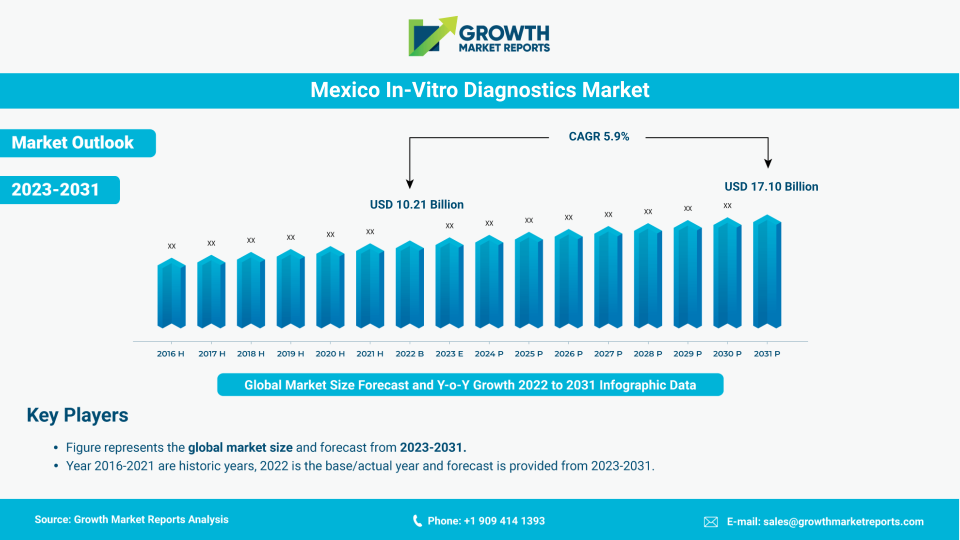
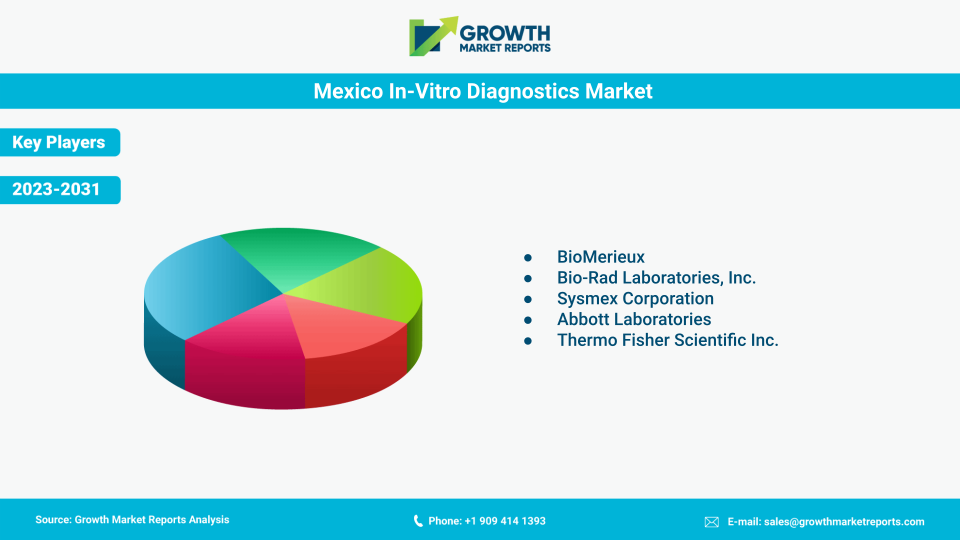
Key players competing in the Mexico in-vitro diagnostics market include BioMerieux, Bio-Rad Laboratories, Inc., Sysmex Corporation, Abbott Laboratories, Thermo Fisher Scientific Inc.
Some of these players are using several market strategies such as acquisitions, merger, collaborations, partnerships, capacity expansion, and product launches to enhance their market shares and to generate revenue and raise their production line of the business in the coming year.
Technological innovation is driving the development of user-friendly, portable, and cost-effective diagnostic devices, as well as the integration of artificial intelligence, automation, and digital health platforms, making diagnostics more accurate, efficient, and accessible.
Major players include Roche Diagnostics, Abbott Laboratories, Siemens Healthineers, Danaher Corporation (Beckman Coulter), Thermo Fisher Scientific, bioMérieux, Becton, Dickinson and Company (BD), Sysmex Corporation, and Bio-Rad Laboratories.
Opportunities include growth in personalized medicine, digital health integration, and expanding access in emerging markets. Challenges include stringent regulatory requirements, reimbursement complexities, and pricing pressures.
Key end-users include hospitals, diagnostic laboratories, academic & research institutes, and home care settings. Hospitals and laboratories are the largest users, while home care and point-of-care settings are rapidly growing segments.
IVD is primarily used for infectious diseases, oncology, cardiology, diabetes, autoimmune diseases, nephrology, and emerging fields such as neurology and reproductive health.
Common technologies include immunoassay, clinical chemistry, molecular diagnostics, hematology, microbiology, and coagulation. Emerging trends involve rapid point-of-care testing, next-generation sequencing, digital health integration, and multiplex assays.
The main product types are instruments (such as analyzers and automation platforms), reagents & kits (including immunoassays and molecular tests), and software & services (like Laboratory Information Management Systems and data analytics platforms).
North America is the largest regional market due to advanced healthcare infrastructure and high adoption of innovative technologies. The Asia Pacific region is witnessing the fastest growth, driven by rising healthcare expenditure and improving diagnostic capabilities.
Key growth drivers include technological advancements, rising prevalence of chronic and infectious diseases, increasing emphasis on personalized and preventive medicine, and the growing geriatric population.
The global In-Vitro Diagnostics (IVD) market reached USD 118.7 billion in 2024 and is projected to grow at a CAGR of 5.3% from 2025 to 2033, reaching an estimated value of USD 189.3 billion by 2033.