In Vitro Diagnostics Market Research Report 2033

In Vitro Diagnostics Market Research Report 2033

Segments - by Product Type (Instruments, Reagents & Kits, Software & Services), by Technology (Immunoassay, Clinical Chemistry, Molecular Diagnostics, Hematology, Microbiology, Coagulation, Others), by Application (Infectious Diseases, Oncology, Cardiology, Diabetes, Autoimmune Diseases, Nephrology, Others), by End User (Hospitals, Diagnostic Laboratories, Academic & Research Institutes, Home Care, Others)

https://growthmarketreports.com/raksha
Author : Raksha Sharma
https://growthmarketreports.com/Vaibhav
Fact-checked by : V. Chandola
https://growthmarketreports.com/Shruti
Editor : Shruti Bhat

Upcoming | Report ID :HC-1886 | 4.3 Rating | 39 Reviews | 288 Pages | Format : Docx PDF

Report Description


In Vitro Diagnostics (IVD) Market Outlook

According to our latest research, the global In Vitro Diagnostics (IVD) market size reached USD 98.5 billion in 2024, and is set to grow at a robust CAGR of 5.6% during the forecast period from 2025 to 2033. By 2033, the market is expected to reach approximately USD 168.1 billion, underpinned by rising prevalence of chronic and infectious diseases, technological advancements, and growing demand for personalized medicine. The IVD market is experiencing sustained growth due to increasing healthcare expenditure, rapid adoption of advanced diagnostic technologies, and a strong focus on early disease detection and prevention.

One of the primary growth factors driving the In Vitro Diagnostics (IVD) market is the rising global burden of chronic and infectious diseases, such as diabetes, cancer, cardiovascular disorders, and respiratory infections. The increasing incidence of these diseases has led to heightened demand for accurate, rapid, and minimally invasive diagnostic solutions. As healthcare systems worldwide shift towards preventive care and early diagnosis, the adoption of IVD technologies is expanding rapidly. The COVID-19 pandemic further accelerated this trend, as governments and healthcare providers invested heavily in diagnostic infrastructure, particularly in molecular diagnostics and point-of-care testing. This momentum has continued post-pandemic, with ongoing investments in laboratory automation, digital health integration, and advanced biomarker discovery further boosting market growth.

Technological innovation remains a pivotal driver for the IVD market. The integration of artificial intelligence, machine learning, and big data analytics into diagnostic platforms has significantly improved the accuracy, efficiency, and speed of diagnostic tests. Innovations such as next-generation sequencing (NGS), high-throughput PCR systems, and multiplex assays have enabled comprehensive analysis of complex diseases, supporting the development of personalized and precision medicine. Furthermore, the increasing availability of user-friendly, portable, and automated diagnostic instruments is facilitating the decentralization of testing, allowing for broader access to diagnostics in both developed and emerging markets. These technological advancements are not only enhancing diagnostic capabilities but also reducing turnaround times, thereby improving patient outcomes and supporting broader healthcare objectives.

Another notable growth factor is the expanding role of IVD in population health management and public health initiatives. Governments and healthcare organizations are leveraging advanced diagnostic tools to monitor disease outbreaks, conduct large-scale screening programs, and implement targeted interventions. The rise of companion diagnostics, which guide treatment decisions based on individual patient profiles, is also contributing to market expansion. Additionally, the increasing adoption of home-based and self-testing kits is empowering patients and reducing the burden on healthcare facilities. These trends are being reinforced by favorable reimbursement policies, regulatory support for innovative diagnostic products, and strategic collaborations between industry players and academic institutions. As a result, the IVD market is poised for sustained growth, with significant opportunities emerging across various application areas and end-user segments.

In Vitro Diagnostics (IVD) play a crucial role in the healthcare ecosystem by enabling the detection and monitoring of diseases through the analysis of biological samples. These diagnostics are essential for early disease detection, which can significantly improve patient outcomes by allowing for timely intervention and treatment. The integration of IVD into routine healthcare practices has been accelerated by technological advancements, making diagnostics more accessible and efficient. As the demand for personalized medicine grows, IVD technologies continue to evolve, offering more precise and tailored diagnostic solutions that cater to individual patient needs.

From a regional perspective, North America continues to dominate the IVD market, driven by advanced healthcare infrastructure, high healthcare spending, and strong presence of leading diagnostic companies. However, the Asia Pacific region is emerging as a key growth engine, fueled by rising healthcare awareness, improving access to diagnostics, and increasing government investments in healthcare modernization. Europe maintains a significant market share, supported by robust research and development activities and widespread adoption of innovative diagnostic technologies. Meanwhile, Latin America and the Middle East & Africa are witnessing steady growth, albeit from a smaller base, as efforts to strengthen healthcare systems and expand diagnostic capabilities gain momentum. Overall, the global IVD market is characterized by dynamic regional trends, with each region presenting unique opportunities and challenges for market participants.

Global In Vitro Diagnostics Industry Outlook

Product Type Analysis

The In Vitro Diagnostics (IVD) market by product type is segmented into Instruments, Reagents & Kits, and Software & Services. Among these, reagents & kits account for the largest share of the market, as they are consumables required for every diagnostic procedure and are regularly replenished. The high volume of tests conducted globally, particularly for infectious diseases and chronic conditions, drives the recurring demand for reagents and kits. These products are central to the functioning of diagnostic platforms and are subject to ongoing innovation, with manufacturers focusing on developing more sensitive, specific, and multiplexed reagents to enable comprehensive disease profiling. The growth in molecular diagnostics and immunoassays has further propelled the demand for specialized reagents and kits, making this segment a critical revenue generator for the industry.

Instruments represent the second largest segment and are essential for conducting a wide variety of diagnostic tests. The market for IVD instruments is characterized by rapid technological advancements, including the development of fully automated, high-throughput analyzers, portable point-of-care devices, and integrated platforms that combine multiple testing modalities. The adoption of these advanced instruments is particularly prominent in hospital laboratories, reference labs, and academic research centers, where efficiency, accuracy, and scalability are paramount. Leading manufacturers are investing in the integration of artificial intelligence and connectivity features to enhance instrument performance, workflow management, and data analytics. The rising demand for decentralized testing and the need for rapid, actionable results are further driving innovation in this segment.

The significance of In Vitro Diagnostics extends beyond individual patient care, as they are integral to public health initiatives and population health management. By facilitating large-scale screening and surveillance, IVDs help in the early detection of outbreaks and in the management of infectious diseases. This capability is particularly important in the context of global health challenges, where rapid and accurate diagnostics can prevent the spread of diseases and save lives. The ongoing development of point-of-care and home-based IVD solutions is further enhancing the ability to conduct widespread testing, making healthcare more accessible and responsive.

The Software & Services segment, while relatively smaller in market share, is witnessing the fastest growth due to the digital transformation of healthcare and diagnostics. Diagnostic software solutions are increasingly being used for data management, test interpretation, laboratory information systems (LIS), and remote monitoring. The integration of cloud-based platforms and interoperability with electronic health records (EHRs) is enhancing the value proposition of software solutions, enabling seamless data sharing and supporting personalized medicine initiatives. Services such as instrument maintenance, calibration, training, and consulting are also becoming more critical as laboratories seek to optimize operations and comply with stringent regulatory requirements. The increasing complexity of diagnostic workflows and growing emphasis on quality assurance are expected to sustain the growth of this segment in the coming years.

Overall, the product type segmentation highlights the multifaceted nature of the IVD market, with each segment playing a distinct role in supporting diagnostic workflows and improving patient care. While reagents & kits will continue to dominate in terms of volume and recurring revenue, the rising adoption of advanced instruments and software solutions is expected to drive value-based growth. Manufacturers are increasingly focusing on offering integrated solutions that combine reagents, instruments, and software to deliver end-to-end diagnostic capabilities, streamline laboratory operations, and enhance clinical decision-making.

Report Scope

Attributes Details
Report Title In Vitro Diagnostics Market Research Report 2033
By Product Type Instruments, Reagents & Kits, Software & Services
By Technology Immunoassay, Clinical Chemistry, Molecular Diagnostics, Hematology, Microbiology, Coagulation, Others
By Application Infectious Diseases, Oncology, Cardiology, Diabetes, Autoimmune Diseases, Nephrology, Others
By End User Hospitals, Diagnostic Laboratories, Academic & Research Institutes, Home Care, Others
Regions Covered North America, Europe, APAC, Latin America, MEA
Base Year 2024
Historic Data 2018-2023
Forecast Period 2025-2033
Number of Pages 288
Number of Tables & Figures 348
Customization Available Yes, the report can be customized as per your need.

Technology Analysis

The IVD market is segmented by technology into Immunoassay, Clinical Chemistry, Molecular Diagnostics, Hematology, Microbiology, Coagulation, and Others. Immunoassay remains the largest and most widely adopted technology, owing to its versatility, high sensitivity, and broad application in areas such as infectious disease testing, oncology, and hormone analysis. The development of automated immunoassay analyzers and the introduction of high-throughput platforms have significantly improved testing efficiency and accuracy. Furthermore, the emergence of novel biomarkers and the increasing use of multiplex immunoassays are enabling comprehensive disease screening and monitoring, further expanding the scope of this technology.

In Vitro Diagnostics are also pivotal in advancing research and development within the healthcare sector. By providing critical data and insights, IVDs support the discovery of new biomarkers and the development of innovative therapies. This is particularly relevant in the field of oncology, where IVDs are used to identify genetic mutations and tailor treatments to the molecular profile of individual tumors. The collaboration between diagnostic companies and research institutions is fostering innovation, leading to the creation of next-generation diagnostic tools that are more accurate, efficient, and capable of supporting personalized treatment strategies.

Molecular diagnostics is the fastest-growing technology segment, driven by the growing demand for precision medicine, early disease detection, and the management of complex diseases such as cancer and genetic disorders. Molecular techniques, including polymerase chain reaction (PCR), next-generation sequencing (NGS), and digital PCR, offer unparalleled sensitivity and specificity, enabling the detection of minute quantities of nucleic acids and facilitating personalized treatment strategies. The COVID-19 pandemic accelerated the adoption of molecular diagnostics, particularly for infectious disease testing, and this momentum has continued with the expansion of applications in oncology, pharmacogenomics, and rare disease diagnosis. Ongoing advancements in automation, miniaturization, and cost reduction are expected to further propel the growth of this segment.

Clinical chemistry remains a foundational technology in the IVD market, widely utilized for routine blood and urine tests, metabolic panels, and monitoring of chronic diseases such as diabetes and cardiovascular disorders. The segment benefits from continuous innovation in assay development, automation of analyzers, and integration with laboratory information systems. The increasing prevalence of lifestyle-related diseases and the growing emphasis on preventive healthcare are sustaining demand for clinical chemistry tests. Leading players are focusing on enhancing assay accuracy, reducing turnaround times, and expanding test menus to address evolving clinical needs.

Hematology, microbiology, and coagulation technologies also play critical roles in the IVD landscape. Hematology analyzers are essential for complete blood count (CBC) testing and the diagnosis of blood disorders, while microbiology platforms are central to the identification and characterization of pathogens. The growing threat of antimicrobial resistance and the need for rapid, accurate pathogen detection are driving investments in advanced microbiology solutions, including mass spectrometry and molecular-based assays. Coagulation testing is crucial for the management of bleeding and thrombotic disorders, with ongoing innovation focused on enhancing test accuracy and automation. Collectively, these technology segments underscore the diversity and complexity of the IVD market, with each technology offering unique benefits and addressing specific clinical challenges.

Application Analysis

The IVD market by application is segmented into Infectious Diseases, Oncology, Cardiology, Diabetes, Autoimmune Diseases, Nephrology, and Others. Infectious diseases represent the largest application area, accounting for a significant share of the global market. The high prevalence of infectious diseases, ongoing threat of pandemics, and the need for rapid, accurate diagnosis have fueled demand for a wide range of IVD tests, including molecular assays, immunoassays, and rapid antigen tests. The expansion of point-of-care testing and home-based diagnostics is further supporting the growth of this segment, enabling timely identification and management of infectious diseases in diverse settings.

Oncology is another major application area, driven by the rising incidence of cancer and the increasing adoption of precision medicine approaches. IVD technologies are playing a pivotal role in cancer screening, diagnosis, prognosis, and treatment monitoring. The development of liquid biopsy assays, companion diagnostics, and multiplexed biomarker panels is enabling non-invasive, real-time assessment of tumor profiles and guiding targeted therapy decisions. The integration of genomics and proteomics into oncology diagnostics is further expanding the scope and impact of IVD solutions in cancer care. As healthcare systems prioritize early detection and personalized treatment, the demand for advanced oncology diagnostics is expected to continue its upward trajectory.

Cardiology and diabetes applications are also significant contributors to the IVD market, reflecting the global burden of cardiovascular diseases and metabolic disorders. Diagnostic tests for cardiac biomarkers, lipid profiles, glucose monitoring, and HbA1c are essential for the diagnosis, risk stratification, and management of these chronic conditions. The increasing prevalence of lifestyle-related risk factors, aging populations, and the shift towards preventive healthcare are driving sustained demand for IVD solutions in these areas. Manufacturers are focusing on developing rapid, user-friendly tests that enable early intervention and support ongoing disease management.

Autoimmune diseases and nephrology represent growing application areas, as advances in immunology and molecular diagnostics enable more accurate and comprehensive assessment of these complex conditions. The increasing awareness of autoimmune disorders, coupled with the development of novel biomarkers and targeted therapies, is supporting the expansion of IVD applications in this field. Nephrology diagnostics, including tests for kidney function, glomerular filtration rate (GFR), and urinary biomarkers, are critical for the early detection and management of kidney diseases. Collectively, the diverse application areas of IVD underscore the market's central role in supporting a wide range of clinical needs and improving patient outcomes.

End User Analysis

The IVD market by end user is segmented into Hospitals, Diagnostic Laboratories, Academic & Research Institutes, Home Care, and Others. Hospitals represent the largest end-user segment, driven by their central role in acute care, disease diagnosis, and treatment monitoring. The integration of advanced IVD technologies into hospital laboratories supports comprehensive diagnostic services, enabling clinicians to make informed decisions and deliver timely interventions. Hospitals benefit from economies of scale, access to state-of-the-art equipment, and the ability to conduct a wide range of tests under one roof. The increasing adoption of automated analyzers, digital pathology, and integrated laboratory information systems is further enhancing the efficiency and effectiveness of hospital-based diagnostics.

Diagnostic laboratories, including reference labs and independent testing centers, are another key end-user segment, accounting for a significant share of the IVD market. These facilities specialize in high-volume testing, offering a broad menu of diagnostic services to hospitals, clinics, and other healthcare providers. The outsourcing of laboratory services is a growing trend, as healthcare systems seek to optimize resource utilization and reduce operational costs. Diagnostic laboratories are at the forefront of adopting cutting-edge technologies, such as next-generation sequencing, digital PCR, and multiplex assays, to deliver fast, accurate, and cost-effective diagnostic solutions. The increasing complexity of diagnostic workflows and the need for quality assurance are driving investments in laboratory automation, data analytics, and compliance management.

Academic & research institutes play a vital role in advancing IVD technologies through basic and translational research, clinical trials, and the development of novel biomarkers and diagnostic platforms. These institutions collaborate closely with industry partners, government agencies, and healthcare providers to drive innovation and address unmet clinical needs. The growing emphasis on precision medicine, genomics, and translational research is supporting the expansion of IVD applications in academic settings. Funding from public and private sources, as well as strategic partnerships, is enabling academic institutions to contribute to the development and validation of next-generation diagnostic solutions.

The home care segment is witnessing rapid growth, driven by the increasing adoption of point-of-care and self-testing kits for chronic disease management, infectious disease screening, and wellness monitoring. Advances in device miniaturization, connectivity, and user-friendly interfaces are enabling patients to conduct a wide range of diagnostic tests in the comfort of their homes. The COVID-19 pandemic accelerated the shift towards home-based diagnostics, highlighting the importance of remote monitoring and telehealth integration. As healthcare systems prioritize patient-centric care and seek to reduce the burden on hospitals, the demand for home-based IVD solutions is expected to rise steadily. The "Others" segment, including clinics, ambulatory care centers, and specialty care providers, also contributes to market growth by expanding access to diagnostic services in diverse healthcare settings.

Opportunities & Threats

The In Vitro Diagnostics (IVD) market presents a wealth of opportunities for growth and innovation. One of the most promising opportunities lies in the expansion of personalized and precision medicine, which relies heavily on advanced diagnostic tools to tailor treatments to individual patient profiles. The increasing availability of high-throughput sequencing, multiplex assays, and digital pathology solutions is enabling healthcare providers to deliver targeted therapies, improve patient outcomes, and reduce healthcare costs. Emerging markets, particularly in Asia Pacific and Latin America, offer significant growth potential due to rising healthcare investments, improving diagnostic infrastructure, and increasing awareness of preventive healthcare. The integration of artificial intelligence, machine learning, and big data analytics into diagnostic platforms is also creating new avenues for innovation, enabling the development of predictive models, decision support systems, and automated test interpretation tools. These advancements are expected to drive the next wave of growth in the IVD market, supporting the shift towards value-based care and population health management.

Another major opportunity for market participants is the increasing adoption of point-of-care and home-based diagnostics, which are transforming the delivery of healthcare services. The development of portable, user-friendly diagnostic devices is enabling rapid, on-site testing in diverse settings, including primary care clinics, emergency departments, and remote or resource-limited areas. This trend is being reinforced by the growing demand for self-testing and remote monitoring solutions, particularly for chronic disease management and infectious disease screening. The expansion of telehealth and digital health ecosystems is further supporting the integration of IVD solutions into patient-centric care models. Manufacturers that can develop reliable, affordable, and interoperable point-of-care and home testing solutions are well-positioned to capitalize on this growing market segment. Strategic collaborations between industry players, healthcare providers, and technology companies are expected to accelerate the development and adoption of next-generation diagnostic solutions.

Despite the numerous opportunities, the IVD market faces several challenges and threats that could restrain growth. Regulatory complexity and variability across regions remain significant barriers to market entry and product commercialization. Stringent approval processes, evolving compliance requirements, and the need for extensive clinical validation can delay product launches and increase development costs. Reimbursement challenges, particularly for novel and high-cost diagnostic tests, can also limit market adoption and impact profitability. Additionally, concerns regarding data privacy, cybersecurity, and interoperability present ongoing risks as diagnostic platforms become increasingly digital and connected. Market participants must navigate these challenges by investing in robust regulatory strategies, engaging with stakeholders, and prioritizing quality assurance and data security in product development.

Regional Outlook

North America remains the dominant region in the IVD market, accounting for approximately USD 38.7 billion in market size in 2024. The region benefits from advanced healthcare infrastructure, high adoption of innovative diagnostic technologies, and a strong presence of leading industry players. The United States, in particular, is a major contributor to market growth, driven by significant investments in research and development, favorable reimbursement policies, and a proactive approach to disease screening and prevention. Canada also contributes to regional growth, supported by government initiatives to improve healthcare access and expand diagnostic capabilities. The North American market is expected to maintain steady growth, with a projected CAGR of around 5.2% through 2033.

Europe holds the second largest share of the global IVD market, with a market size of approximately USD 27.6 billion in 2024. The region is characterized by a strong focus on research and innovation, robust regulatory frameworks, and widespread adoption of advanced diagnostic solutions. Key markets such as Germany, the United Kingdom, France, and Italy are driving regional growth, supported by government funding for healthcare modernization, public health initiatives, and collaborative research programs. The increasing emphasis on personalized medicine, early disease detection, and chronic disease management is sustaining demand for IVD solutions across Europe. The region is also witnessing growing investments in digital health and laboratory automation, further enhancing the efficiency and effectiveness of diagnostic services.

The Asia Pacific region is emerging as a major growth engine for the IVD market, with a market size of approximately USD 22.4 billion in 2024 and a projected CAGR of 7.4% through 2033. Rapid economic development, rising healthcare awareness, and increasing government investments in healthcare infrastructure are driving market expansion in countries such as China, India, Japan, and South Korea. The region is witnessing a surge in demand for diagnostic services due to the growing prevalence of infectious and chronic diseases, urbanization, and expanding middle-class populations. Efforts to improve healthcare access, expand laboratory networks, and promote preventive care are further supporting market growth. The Asia Pacific market presents significant opportunities for industry participants, particularly in the development and commercialization of affordable, scalable, and user-friendly diagnostic solutions tailored to local needs.

In Vitro Diagnostics Market Statistics

Competitor Outlook

The global IVD market is highly competitive, with a diverse landscape comprising multinational corporations, regional players, and emerging startups. The market is characterized by intense competition, rapid technological innovation, and frequent product launches. Leading companies are investing heavily in research and development to expand their product portfolios, enhance test accuracy and efficiency, and address emerging clinical needs. Strategic mergers and acquisitions, partnerships, and collaborations are common as companies seek to strengthen their market positions, access new technologies, and expand their geographic reach. The competitive landscape is further shaped by regulatory dynamics, reimbursement policies, and evolving customer preferences, requiring companies to remain agile and responsive to market trends.

Major players in the IVD market are focusing on the development of integrated solutions that combine reagents, instruments, and software to deliver comprehensive diagnostic capabilities. The integration of artificial intelligence, machine learning, and data analytics into diagnostic platforms is enabling companies to offer value-added services, such as automated test interpretation, predictive modeling, and workflow optimization. Companies are also prioritizing the development of point-of-care and home-based diagnostic solutions to address the growing demand for decentralized testing and patient-centric care. The ability to deliver reliable, affordable, and scalable solutions is increasingly becoming a key differentiator in the competitive landscape.

The IVD market is also witnessing the entry of new players, particularly in the molecular diagnostics and digital health segments. Startups and technology companies are leveraging advances in genomics, proteomics, and informatics to develop innovative diagnostic platforms and disrupt traditional business models. These new entrants are attracting significant investment and forming strategic partnerships with established players to accelerate product development and commercialization. The dynamic nature of the market is fostering a culture of innovation and collaboration, driving the continuous evolution of diagnostic technologies and services.

Some of the major companies operating in the global IVD market include Roche Diagnostics, Abbott Laboratories, Siemens Healthineers, Danaher Corporation (Beckman Coulter), Thermo Fisher Scientific, Becton, Dickinson and Company (BD), Bio-Rad Laboratories, bioMérieux, Sysmex Corporation, and Ortho Clinical Diagnostics. Roche Diagnostics is a global leader, renowned for its comprehensive portfolio of molecular diagnostics, immunoassays, and clinical chemistry solutions. Abbott Laboratories is another key player, with a strong focus on point-of-care testing, diabetes care, and infectious disease diagnostics. Siemens Healthineers is recognized for its advanced automation solutions, integrated laboratory systems, and digital health platforms. Danaher Corporation, through its Beckman Coulter subsidiary, is a major provider of clinical chemistry, immunoassay, and hematology solutions, while Thermo Fisher Scientific is a leader in molecular diagnostics, life sciences, and laboratory automation.

Becton, Dickinson and Company (BD) is a prominent player in microbiology, molecular diagnostics, and point-of-care testing, with a strong emphasis on innovation and quality assurance. Bio-Rad Laboratories specializes in life science research and clinical diagnostics, offering a wide range of instruments, reagents, and software solutions. bioMérieux is a global leader in microbiology and infectious disease diagnostics, known for its advanced culture-based and molecular testing platforms. Sysmex Corporation is a major provider of hematology and urinalysis solutions, with a strong presence in Asia and global markets. Ortho Clinical Diagnostics focuses on immunohematology and clinical chemistry, delivering high-performance solutions for transfusion medicine and laboratory testing. These companies are at the forefront of innovation, shaping the future of the IVD market through continuous investment in research, technology, and customer engagement.

Key Players

  • Roche Diagnostics
  • Abbott Laboratories
  • Siemens Healthineers
  • Danaher Corporation
  • Thermo Fisher Scientific
  • BioMérieux
  • Becton, Dickinson and Company (BD)
  • Sysmex Corporation
  • Ortho Clinical Diagnostics
  • QuidelOrtho Corporation
  • Hologic, Inc.
  • Qiagen N.V.
  • Bio-Rad Laboratories
  • PerkinElmer, Inc.
  • Agilent Technologies
  • Illumina, Inc.
  • Grifols, S.A.
  • Mindray Medical International
  • Fujirebio
  • Randox Laboratories
In Vitro Diagnostics Market Overview

Segments

The In Vitro Diagnostics market has been segmented on the basis of

Product Type

  • Instruments
  • Reagents & Kits
  • Software & Services

Technology

  • Immunoassay
  • Clinical Chemistry
  • Molecular Diagnostics
  • Hematology
  • Microbiology
  • Coagulation
  • Others

Application

  • Infectious Diseases
  • Oncology
  • Cardiology
  • Diabetes
  • Autoimmune Diseases
  • Nephrology
  • Others

End User

  • Hospitals
  • Diagnostic Laboratories
  • Academic & Research Institutes
  • Home Care
  • Others

Competitive Landscape

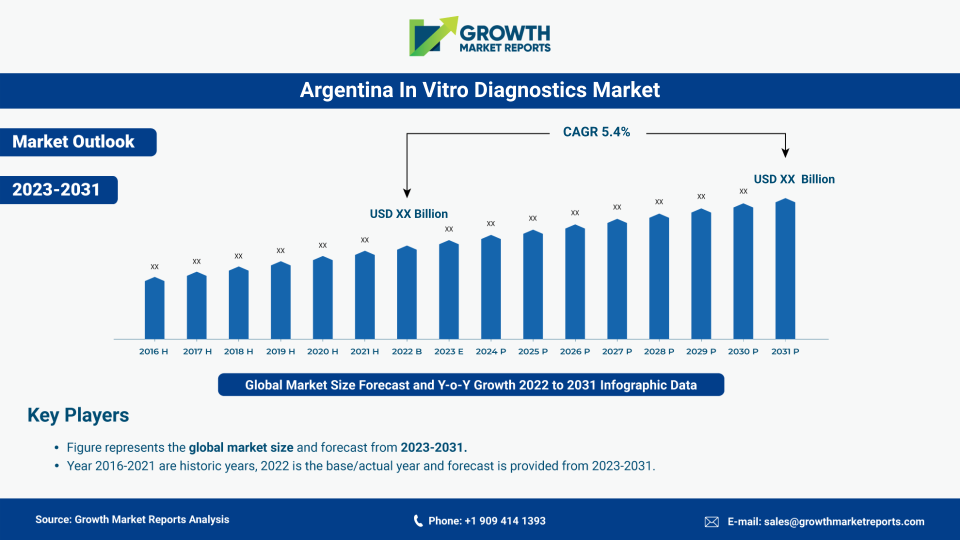
Key players competing in the Argentina in vitro diagnostics market include Thermo Fisher Scientific Inc.; Roche Diagnostics; Danaher Crop.; BioMerieux; ARKRAY Inc.; Abbott Laboratories; Becton, Dickinson and Company; QIAGEN; Siemens AG; and Bio-Rad Laboratories Inc.

Some of these players are using several market strategies such as acquisitions, merger, collaborations, partnerships, capacity expansion, and product launches to enhance their market shares and to generate revenue and raise their production line of the business in the coming year.
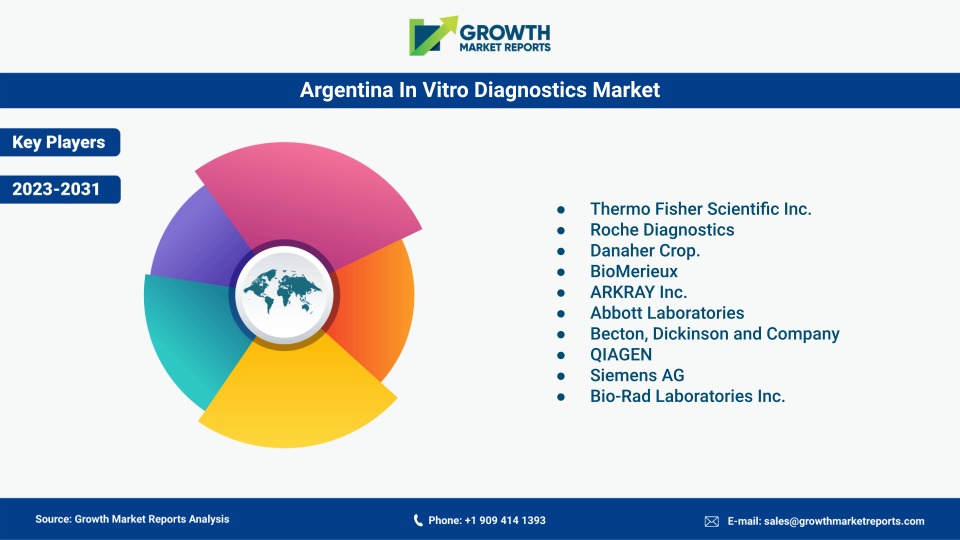

Argentina In Vitro Diagnostics Market Key Players

Frequently Asked Questions

Major companies include Roche Diagnostics, Abbott Laboratories, Siemens Healthineers, Danaher Corporation (Beckman Coulter), Thermo Fisher Scientific, Becton, Dickinson and Company (BD), Bio-Rad Laboratories, bioMérieux, Sysmex Corporation, and Ortho Clinical Diagnostics.

The market faces challenges such as regulatory complexity, reimbursement issues, data privacy and cybersecurity concerns, and the need for extensive clinical validation for new products.

Opportunities include the expansion of personalized and precision medicine, growth in emerging markets, adoption of point-of-care and home-based diagnostics, and integration of AI and big data analytics into diagnostic platforms.

North America leads the IVD market, followed by Europe and the Asia Pacific region. Asia Pacific is the fastest-growing region due to rising healthcare investments and improving diagnostic infrastructure.

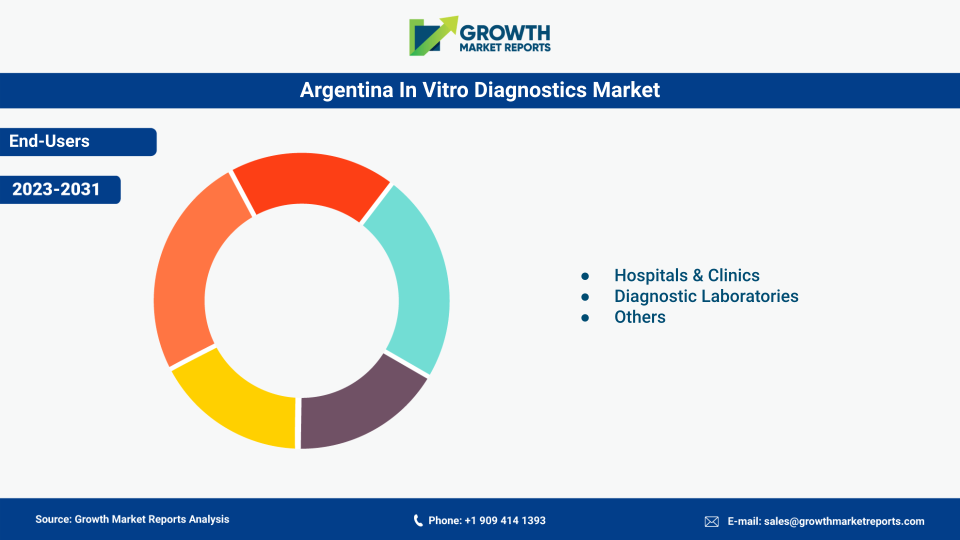
The main end users are hospitals, diagnostic laboratories, academic & research institutes, and home care settings, with hospitals being the largest segment.

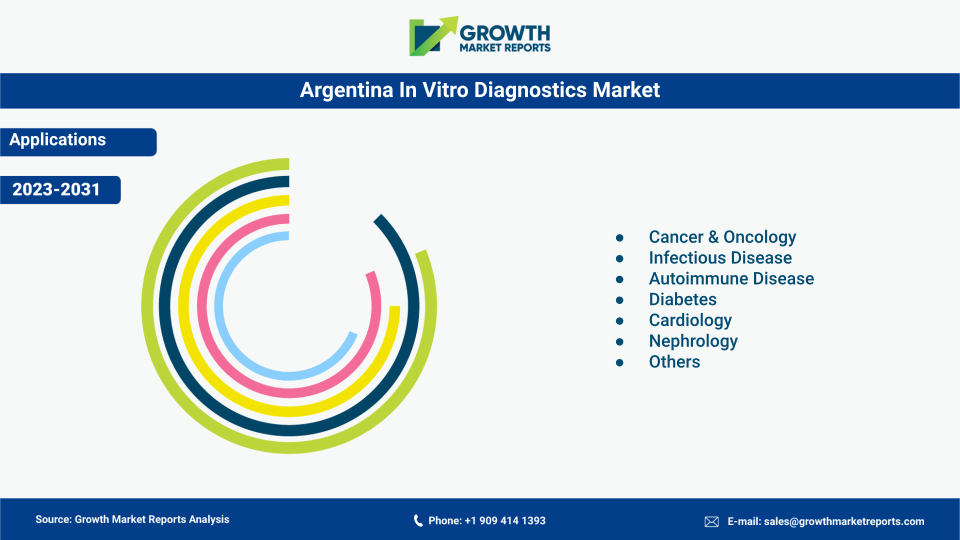
Infectious diseases represent the largest application area, followed by oncology, cardiology, diabetes, autoimmune diseases, and nephrology.

The main technologies include Immunoassay, Clinical Chemistry, Molecular Diagnostics, Hematology, Microbiology, and Coagulation. Immunoassay is the most widely adopted, while Molecular Diagnostics is the fastest-growing segment.

Reagents & kits account for the largest share of the IVD market, driven by their recurring demand for diagnostic procedures and ongoing innovation in test sensitivity and specificity.

Key growth drivers include the rising prevalence of chronic and infectious diseases, technological advancements in diagnostics, increasing demand for personalized medicine, and higher healthcare expenditure worldwide.

As of 2024, the global In Vitro Diagnostics (IVD) market size reached USD 98.5 billion and is projected to grow to approximately USD 168.1 billion by 2033.

Table Of Content

Chapter 1 Executive Summary
Chapter 2 Assumptions and Acronyms Used
Chapter 3 Research Methodology
Chapter 4 In Vitro Diagnostics Market Overview
   4.1 Introduction
      4.1.1 Market Taxonomy
      4.1.2 Market Definition
      4.1.3 Macro-Economic Factors Impacting the Market Growth
   4.2 In Vitro Diagnostics Market Dynamics
      4.2.1 Market Drivers
      4.2.2 Market Restraints
      4.2.3 Market Opportunity
   4.3 In Vitro Diagnostics Market - Supply Chain Analysis
      4.3.1 List of Key Suppliers
      4.3.2 List of Key Distributors
      4.3.3 List of Key Consumers
   4.4 Key Forces Shaping the In Vitro Diagnostics Market
      4.4.1 Bargaining Power of Suppliers
      4.4.2 Bargaining Power of Buyers
      4.4.3 Threat of Substitution
      4.4.4 Threat of New Entrants
      4.4.5 Competitive Rivalry
   4.5 Global In Vitro Diagnostics Market Size & Forecast, 2023-2032
      4.5.1 In Vitro Diagnostics Market Size and Y-o-Y Growth
      4.5.2 In Vitro Diagnostics Market Absolute $ Opportunity

Chapter 5 Global In Vitro Diagnostics Market Analysis and Forecast By Product Type
   5.1 Introduction
      5.1.1 Key Market Trends & Growth Opportunities By Product Type
      5.1.2 Basis Point Share (BPS) Analysis By Product Type
      5.1.3 Absolute $ Opportunity Assessment By Product Type
   5.2 In Vitro Diagnostics Market Size Forecast By Product Type
      5.2.1 Instruments
      5.2.2 Reagents & Kits
      5.2.3 Software & Services
   5.3 Market Attractiveness Analysis By Product Type

Chapter 6 Global In Vitro Diagnostics Market Analysis and Forecast By Technology
   6.1 Introduction
      6.1.1 Key Market Trends & Growth Opportunities By Technology
      6.1.2 Basis Point Share (BPS) Analysis By Technology
      6.1.3 Absolute $ Opportunity Assessment By Technology
   6.2 In Vitro Diagnostics Market Size Forecast By Technology
      6.2.1 Immunoassay
      6.2.2 Clinical Chemistry
      6.2.3 Molecular Diagnostics
      6.2.4 Hematology
      6.2.5 Microbiology
      6.2.6 Coagulation
      6.2.7 Others
   6.3 Market Attractiveness Analysis By Technology

Chapter 7 Global In Vitro Diagnostics Market Analysis and Forecast By Application
   7.1 Introduction
      7.1.1 Key Market Trends & Growth Opportunities By Application
      7.1.2 Basis Point Share (BPS) Analysis By Application
      7.1.3 Absolute $ Opportunity Assessment By Application
   7.2 In Vitro Diagnostics Market Size Forecast By Application
      7.2.1 Infectious Diseases
      7.2.2 Oncology
      7.2.3 Cardiology
      7.2.4 Diabetes
      7.2.5 Autoimmune Diseases
      7.2.6 Nephrology
      7.2.7 Others
   7.3 Market Attractiveness Analysis By Application

Chapter 8 Global In Vitro Diagnostics Market Analysis and Forecast By End User
   8.1 Introduction
      8.1.1 Key Market Trends & Growth Opportunities By End User
      8.1.2 Basis Point Share (BPS) Analysis By End User
      8.1.3 Absolute $ Opportunity Assessment By End User
   8.2 In Vitro Diagnostics Market Size Forecast By End User
      8.2.1 Hospitals
      8.2.2 Diagnostic Laboratories
      8.2.3 Academic & Research Institutes
      8.2.4 Home Care
      8.2.5 Others
   8.3 Market Attractiveness Analysis By End User

Chapter 9 Global In Vitro Diagnostics Market Analysis and Forecast by Region
   9.1 Introduction
      9.1.1 Key Market Trends & Growth Opportunities By Region
      9.1.2 Basis Point Share (BPS) Analysis By Region
      9.1.3 Absolute $ Opportunity Assessment By Region
   9.2 In Vitro Diagnostics Market Size Forecast By Region
      9.2.1 North America
      9.2.2 Europe
      9.2.3 Asia Pacific
      9.2.4 Latin America
      9.2.5 Middle East & Africa (MEA)
   9.3 Market Attractiveness Analysis By Region

Chapter 10 Coronavirus Disease (COVID-19) Impact 
   10.1 Introduction 
   10.2 Current & Future Impact Analysis 
   10.3 Economic Impact Analysis 
   10.4 Government Policies 
   10.5 Investment Scenario

Chapter 11 North America In Vitro Diagnostics Analysis and Forecast
   11.1 Introduction
   11.2 North America In Vitro Diagnostics Market Size Forecast by Country
      11.2.1 U.S.
      11.2.2 Canada
   11.3 Basis Point Share (BPS) Analysis by Country
   11.4 Absolute $ Opportunity Assessment by Country
   11.5 Market Attractiveness Analysis by Country
   11.6 North America In Vitro Diagnostics Market Size Forecast By Product Type
      11.6.1 Instruments
      11.6.2 Reagents & Kits
      11.6.3 Software & Services
   11.7 Basis Point Share (BPS) Analysis By Product Type 
   11.8 Absolute $ Opportunity Assessment By Product Type 
   11.9 Market Attractiveness Analysis By Product Type
   11.10 North America In Vitro Diagnostics Market Size Forecast By Technology
      11.10.1 Immunoassay
      11.10.2 Clinical Chemistry
      11.10.3 Molecular Diagnostics
      11.10.4 Hematology
      11.10.5 Microbiology
      11.10.6 Coagulation
      11.10.7 Others
   11.11 Basis Point Share (BPS) Analysis By Technology 
   11.12 Absolute $ Opportunity Assessment By Technology 
   11.13 Market Attractiveness Analysis By Technology
   11.14 North America In Vitro Diagnostics Market Size Forecast By Application
      11.14.1 Infectious Diseases
      11.14.2 Oncology
      11.14.3 Cardiology
      11.14.4 Diabetes
      11.14.5 Autoimmune Diseases
      11.14.6 Nephrology
      11.14.7 Others
   11.15 Basis Point Share (BPS) Analysis By Application 
   11.16 Absolute $ Opportunity Assessment By Application 
   11.17 Market Attractiveness Analysis By Application
   11.18 North America In Vitro Diagnostics Market Size Forecast By End User
      11.18.1 Hospitals
      11.18.2 Diagnostic Laboratories
      11.18.3 Academic & Research Institutes
      11.18.4 Home Care
      11.18.5 Others
   11.19 Basis Point Share (BPS) Analysis By End User 
   11.20 Absolute $ Opportunity Assessment By End User 
   11.21 Market Attractiveness Analysis By End User

Chapter 12 Europe In Vitro Diagnostics Analysis and Forecast
   12.1 Introduction
   12.2 Europe In Vitro Diagnostics Market Size Forecast by Country
      12.2.1 Germany
      12.2.2 France
      12.2.3 Italy
      12.2.4 U.K.
      12.2.5 Spain
      12.2.6 Russia
      12.2.7 Rest of Europe
   12.3 Basis Point Share (BPS) Analysis by Country
   12.4 Absolute $ Opportunity Assessment by Country
   12.5 Market Attractiveness Analysis by Country
   12.6 Europe In Vitro Diagnostics Market Size Forecast By Product Type
      12.6.1 Instruments
      12.6.2 Reagents & Kits
      12.6.3 Software & Services
   12.7 Basis Point Share (BPS) Analysis By Product Type 
   12.8 Absolute $ Opportunity Assessment By Product Type 
   12.9 Market Attractiveness Analysis By Product Type
   12.10 Europe In Vitro Diagnostics Market Size Forecast By Technology
      12.10.1 Immunoassay
      12.10.2 Clinical Chemistry
      12.10.3 Molecular Diagnostics
      12.10.4 Hematology
      12.10.5 Microbiology
      12.10.6 Coagulation
      12.10.7 Others
   12.11 Basis Point Share (BPS) Analysis By Technology 
   12.12 Absolute $ Opportunity Assessment By Technology 
   12.13 Market Attractiveness Analysis By Technology
   12.14 Europe In Vitro Diagnostics Market Size Forecast By Application
      12.14.1 Infectious Diseases
      12.14.2 Oncology
      12.14.3 Cardiology
      12.14.4 Diabetes
      12.14.5 Autoimmune Diseases
      12.14.6 Nephrology
      12.14.7 Others
   12.15 Basis Point Share (BPS) Analysis By Application 
   12.16 Absolute $ Opportunity Assessment By Application 
   12.17 Market Attractiveness Analysis By Application
   12.18 Europe In Vitro Diagnostics Market Size Forecast By End User
      12.18.1 Hospitals
      12.18.2 Diagnostic Laboratories
      12.18.3 Academic & Research Institutes
      12.18.4 Home Care
      12.18.5 Others
   12.19 Basis Point Share (BPS) Analysis By End User 
   12.20 Absolute $ Opportunity Assessment By End User 
   12.21 Market Attractiveness Analysis By End User

Chapter 13 Asia Pacific In Vitro Diagnostics Analysis and Forecast
   13.1 Introduction
   13.2 Asia Pacific In Vitro Diagnostics Market Size Forecast by Country
      13.2.1 China
      13.2.2 Japan
      13.2.3 South Korea
      13.2.4 India
      13.2.5 Australia
      13.2.6 South East Asia (SEA)
      13.2.7 Rest of Asia Pacific (APAC)
   13.3 Basis Point Share (BPS) Analysis by Country
   13.4 Absolute $ Opportunity Assessment by Country
   13.5 Market Attractiveness Analysis by Country
   13.6 Asia Pacific In Vitro Diagnostics Market Size Forecast By Product Type
      13.6.1 Instruments
      13.6.2 Reagents & Kits
      13.6.3 Software & Services
   13.7 Basis Point Share (BPS) Analysis By Product Type 
   13.8 Absolute $ Opportunity Assessment By Product Type 
   13.9 Market Attractiveness Analysis By Product Type
   13.10 Asia Pacific In Vitro Diagnostics Market Size Forecast By Technology
      13.10.1 Immunoassay
      13.10.2 Clinical Chemistry
      13.10.3 Molecular Diagnostics
      13.10.4 Hematology
      13.10.5 Microbiology
      13.10.6 Coagulation
      13.10.7 Others
   13.11 Basis Point Share (BPS) Analysis By Technology 
   13.12 Absolute $ Opportunity Assessment By Technology 
   13.13 Market Attractiveness Analysis By Technology
   13.14 Asia Pacific In Vitro Diagnostics Market Size Forecast By Application
      13.14.1 Infectious Diseases
      13.14.2 Oncology
      13.14.3 Cardiology
      13.14.4 Diabetes
      13.14.5 Autoimmune Diseases
      13.14.6 Nephrology
      13.14.7 Others
   13.15 Basis Point Share (BPS) Analysis By Application 
   13.16 Absolute $ Opportunity Assessment By Application 
   13.17 Market Attractiveness Analysis By Application
   13.18 Asia Pacific In Vitro Diagnostics Market Size Forecast By End User
      13.18.1 Hospitals
      13.18.2 Diagnostic Laboratories
      13.18.3 Academic & Research Institutes
      13.18.4 Home Care
      13.18.5 Others
   13.19 Basis Point Share (BPS) Analysis By End User 
   13.20 Absolute $ Opportunity Assessment By End User 
   13.21 Market Attractiveness Analysis By End User

Chapter 14 Latin America In Vitro Diagnostics Analysis and Forecast
   14.1 Introduction
   14.2 Latin America In Vitro Diagnostics Market Size Forecast by Country
      14.2.1 Brazil
      14.2.2 Mexico
      14.2.3 Rest of Latin America (LATAM)
   14.3 Basis Point Share (BPS) Analysis by Country
   14.4 Absolute $ Opportunity Assessment by Country
   14.5 Market Attractiveness Analysis by Country
   14.6 Latin America In Vitro Diagnostics Market Size Forecast By Product Type
      14.6.1 Instruments
      14.6.2 Reagents & Kits
      14.6.3 Software & Services
   14.7 Basis Point Share (BPS) Analysis By Product Type 
   14.8 Absolute $ Opportunity Assessment By Product Type 
   14.9 Market Attractiveness Analysis By Product Type
   14.10 Latin America In Vitro Diagnostics Market Size Forecast By Technology
      14.10.1 Immunoassay
      14.10.2 Clinical Chemistry
      14.10.3 Molecular Diagnostics
      14.10.4 Hematology
      14.10.5 Microbiology
      14.10.6 Coagulation
      14.10.7 Others
   14.11 Basis Point Share (BPS) Analysis By Technology 
   14.12 Absolute $ Opportunity Assessment By Technology 
   14.13 Market Attractiveness Analysis By Technology
   14.14 Latin America In Vitro Diagnostics Market Size Forecast By Application
      14.14.1 Infectious Diseases
      14.14.2 Oncology
      14.14.3 Cardiology
      14.14.4 Diabetes
      14.14.5 Autoimmune Diseases
      14.14.6 Nephrology
      14.14.7 Others
   14.15 Basis Point Share (BPS) Analysis By Application 
   14.16 Absolute $ Opportunity Assessment By Application 
   14.17 Market Attractiveness Analysis By Application
   14.18 Latin America In Vitro Diagnostics Market Size Forecast By End User
      14.18.1 Hospitals
      14.18.2 Diagnostic Laboratories
      14.18.3 Academic & Research Institutes
      14.18.4 Home Care
      14.18.5 Others
   14.19 Basis Point Share (BPS) Analysis By End User 
   14.20 Absolute $ Opportunity Assessment By End User 
   14.21 Market Attractiveness Analysis By End User

Chapter 15 Middle East & Africa (MEA) In Vitro Diagnostics Analysis and Forecast
   15.1 Introduction
   15.2 Middle East & Africa (MEA) In Vitro Diagnostics Market Size Forecast by Country
      15.2.1 Saudi Arabia
      15.2.2 South Africa
      15.2.3 UAE
      15.2.4 Rest of Middle East & Africa (MEA)
   15.3 Basis Point Share (BPS) Analysis by Country
   15.4 Absolute $ Opportunity Assessment by Country
   15.5 Market Attractiveness Analysis by Country
   15.6 Middle East & Africa (MEA) In Vitro Diagnostics Market Size Forecast By Product Type
      15.6.1 Instruments
      15.6.2 Reagents & Kits
      15.6.3 Software & Services
   15.7 Basis Point Share (BPS) Analysis By Product Type 
   15.8 Absolute $ Opportunity Assessment By Product Type 
   15.9 Market Attractiveness Analysis By Product Type
   15.10 Middle East & Africa (MEA) In Vitro Diagnostics Market Size Forecast By Technology
      15.10.1 Immunoassay
      15.10.2 Clinical Chemistry
      15.10.3 Molecular Diagnostics
      15.10.4 Hematology
      15.10.5 Microbiology
      15.10.6 Coagulation
      15.10.7 Others
   15.11 Basis Point Share (BPS) Analysis By Technology 
   15.12 Absolute $ Opportunity Assessment By Technology 
   15.13 Market Attractiveness Analysis By Technology
   15.14 Middle East & Africa (MEA) In Vitro Diagnostics Market Size Forecast By Application
      15.14.1 Infectious Diseases
      15.14.2 Oncology
      15.14.3 Cardiology
      15.14.4 Diabetes
      15.14.5 Autoimmune Diseases
      15.14.6 Nephrology
      15.14.7 Others
   15.15 Basis Point Share (BPS) Analysis By Application 
   15.16 Absolute $ Opportunity Assessment By Application 
   15.17 Market Attractiveness Analysis By Application
   15.18 Middle East & Africa (MEA) In Vitro Diagnostics Market Size Forecast By End User
      15.18.1 Hospitals
      15.18.2 Diagnostic Laboratories
      15.18.3 Academic & Research Institutes
      15.18.4 Home Care
      15.18.5 Others
   15.19 Basis Point Share (BPS) Analysis By End User 
   15.20 Absolute $ Opportunity Assessment By End User 
   15.21 Market Attractiveness Analysis By End User

Chapter 16 Competition Landscape 
   16.1 In Vitro Diagnostics Market: Competitive Dashboard
   16.2 Global In Vitro Diagnostics Market: Market Share Analysis, 2023
   16.3 Company Profiles (Details – Overview, Financials, Developments, Strategy) 
      16.3.1 Roche Diagnostics
Abbott Laboratories
Siemens Healthineers
Danaher Corporation
Thermo Fisher Scientific
BioMérieux
Becton, Dickinson and Company (BD)
Sysmex Corporation
Ortho Clinical Diagnostics
QuidelOrtho Corporation
Hologic, Inc.
Qiagen N.V.
Bio-Rad Laboratories
PerkinElmer, Inc.
Agilent Technologies
Illumina, Inc.
Grifols, S.A.
Mindray Medical International
Fujirebio
Randox Laboratories

Methodology

Our Clients

The John Holland Group
Pfizer
Siemens Healthcare
General Mills
Dassault Aviation
FedEx Logistics
Nestle SA
Deloitte