Gaming Streaming Market Research Report 2033

Gaming Streaming Market Research Report 2033

Segments - by Component (Hardware, Software, Services), by Streaming Type (Live Streaming, On-Demand Streaming), by Platform (PC, Console, Mobile, Smart TV, Others), by Revenue Model (Subscription, Advertisement, Pay-Per-View, Others), by End-User (Individual Gamers, Professional Gamers, Esports Organizations, Others)

https://growthmarketreports.com/Debadatta
Author : Debadatta Patel
https://growthmarketreports.com/Vaibhav
Fact-checked by : V. Chandola
https://growthmarketreports.com/Shruti
Editor : Shruti Bhat

Upcoming | Report ID :CG-2929 | 4.1 Rating | 52 Reviews | 296 Pages | Format : Docx PDF

Report Description


Gaming Streaming Market Outlook

According to our latest research, the global gaming streaming market size stood at USD 14.7 billion in 2024, demonstrating robust momentum driven by the expanding digital entertainment ecosystem. The market is projected to reach USD 70.2 billion by 2033, reflecting a remarkable CAGR of 18.9% over the forecast period. This surge is primarily attributed to the increasing popularity of live and on-demand gaming content, technological advancements in streaming infrastructure, and the growing engagement of both casual and professional gamers worldwide. The proliferation of high-speed internet and the widespread adoption of smart devices are further accelerating the growth trajectory of the gaming streaming market.

One of the most significant growth drivers for the gaming streaming market is the rising consumer appetite for immersive and interactive digital experiences. As gaming evolves from a solitary pastime to a communal activity, platforms that enable real-time interaction between streamers and viewers are gaining immense traction. The integration of advanced features such as real-time chat, viewer polls, and virtual gifting has transformed the streaming ecosystem, fostering deeper engagement and community building. Furthermore, the emergence of cloud gaming and cross-platform compatibility is making gaming content more accessible, encouraging broader participation across geographies and demographics. This democratization of content creation and consumption is setting the stage for sustained market expansion.

Another pivotal factor fueling the gaming streaming market is the increasing professionalism and monetization opportunities within the esports and gaming influencer landscape. Esports tournaments, professional gamers, and content creators are attracting substantial investments from brands and advertisers eager to tap into the highly engaged gaming audience. The rise of dedicated streaming platforms, sponsorship deals, and advertising revenues is enabling gamers to pursue streaming as a viable career path. This commercialization of gaming content is not only driving innovation in content delivery and monetization models but also fostering the formation of professional esports organizations and leagues, further amplifying the market’s growth potential.

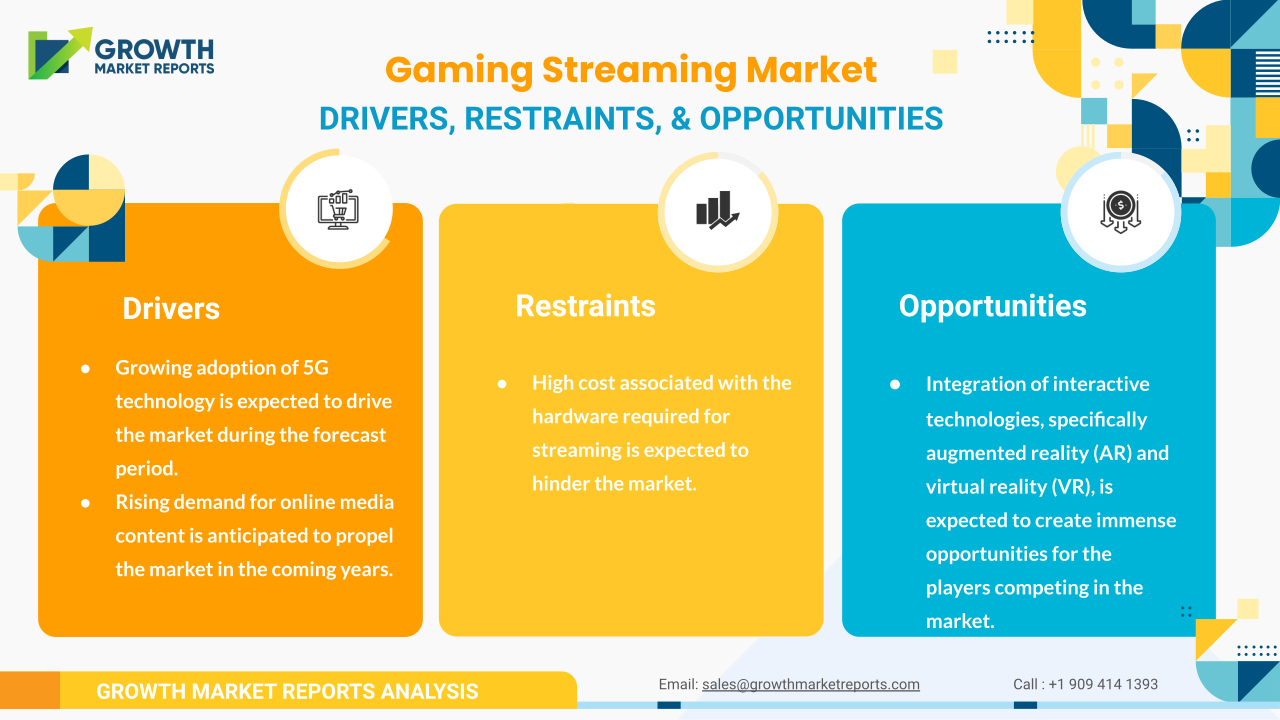
Technological advancements are also playing a crucial role in shaping the gaming streaming market. The deployment of 5G networks, improvements in video compression algorithms, and the advent of edge computing are significantly enhancing the quality and reliability of streaming services. These innovations are enabling seamless, low-latency streaming experiences even in regions with previously limited connectivity. Additionally, the integration of artificial intelligence and machine learning is optimizing content recommendations, personalizing viewer experiences, and automating moderation, thereby improving user satisfaction and retention. As technology continues to evolve, it is expected to unlock new opportunities for both content creators and consumers, driving further market growth.

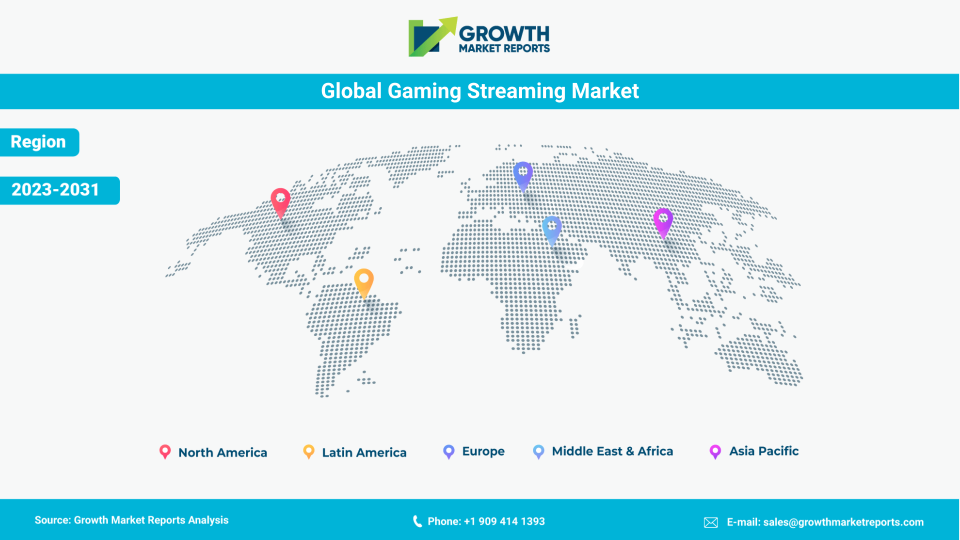
From a regional perspective, the Asia Pacific region is emerging as the dominant force in the gaming streaming market, accounting for the largest share in 2024. This is primarily due to the region’s massive gamer population, rapid digitalization, and the presence of leading streaming platforms. North America and Europe are also significant contributors, benefiting from high disposable incomes, advanced technological infrastructure, and a mature esports ecosystem. Meanwhile, Latin America and the Middle East & Africa are witnessing accelerated growth, propelled by increasing internet penetration and the rising popularity of mobile gaming. As regional markets continue to evolve, localized content and platform customization will become key differentiators for sustained success.

Global Gaming Streaming Industry Outlook

Component Analysis

The gaming streaming market is segmented by component into hardware, software, and services, each playing a distinct yet interdependent role in shaping the industry landscape. Hardware forms the foundation of the streaming ecosystem, encompassing devices such as gaming PCs, consoles, capture cards, webcams, microphones, and high-performance routers. The continual advancement in GPU and CPU technologies, coupled with the growing affordability of streaming equipment, has democratized access to high-quality streaming setups. As a result, both amateur and professional streamers can now deliver content with superior visual and audio fidelity, enhancing viewer engagement and satisfaction.

On the software front, the market is witnessing rapid innovation with the proliferation of streaming applications, broadcasting tools, and content management platforms. Leading software solutions such as OBS Studio, XSplit, and Streamlabs are empowering creators with powerful features including real-time overlays, scene transitions, chat integration, and analytics dashboards. The integration of artificial intelligence and machine learning algorithms is further augmenting software capabilities, enabling automated moderation, personalized content recommendations, and advanced audience analytics. This software-driven evolution is making it easier for streamers to manage their channels, interact with viewers, and optimize their content for maximum reach and impact.

The services segment encompasses a wide array of offerings, ranging from cloud-based streaming services and content delivery networks to technical support, training, and monetization consulting. As the demand for seamless, low-latency streaming experiences grows, service providers are investing heavily in infrastructure upgrades, including edge computing and distributed server networks. Additionally, professional services such as channel management, audience development, and sponsorship acquisition are becoming increasingly important, especially for aspiring professional gamers and esports organizations. These services not only enhance the quality of streaming experiences but also enable content creators to focus on their core competencies while maximizing their revenue potential.

The interplay between hardware, software, and services is fostering a synergistic ecosystem that is driving the overall growth of the gaming streaming market. Innovations in one component often catalyze advancements in others, creating a virtuous cycle of technological progress and market expansion. For instance, improvements in hardware capabilities enable more sophisticated software features, which in turn drive demand for specialized services. This dynamic interplay is expected to continue fueling the evolution of the gaming streaming landscape, offering new opportunities for stakeholders across the value chain.

Looking ahead, the component segment is poised for sustained growth, driven by ongoing investments in research and development, strategic partnerships, and the continuous emergence of new technologies. As consumer expectations for high-quality, interactive streaming experiences continue to rise, companies that can deliver integrated, end-to-end solutions spanning hardware, software, and services will be well-positioned to capture a larger share of the burgeoning gaming streaming market.

Report Scope

Attributes Details
Report Title Gaming Streaming Market Research Report 2033
By Component Hardware, Software, Services
By Streaming Type Live Streaming, On-Demand Streaming
By Platform PC, Console, Mobile, Smart TV, Others
By Revenue Model Subscription, Advertisement, Pay-Per-View, Others
By End-User Individual Gamers, Professional Gamers, Esports Organizations, Others
Regions Covered North America, Europe, APAC, Latin America, MEA
Base Year 2024
Historic Data 2018-2023
Forecast Period 2025-2033
Number of Pages 296
Number of Tables & Figures 379
Customization Available Yes, the report can be customized as per your need.

Streaming Type Analysis

The gaming streaming market is bifurcated by streaming type into live streaming and on-demand streaming, each catering to distinct user preferences and content consumption patterns. Live streaming dominates the market, offering real-time interaction between streamers and viewers, which is a key driver of community engagement and loyalty. Platforms like Twitch, YouTube Gaming, and Facebook Gaming have capitalized on this trend by providing robust tools for live broadcasting, chat moderation, and audience engagement. The immediacy and authenticity of live streaming make it particularly appealing for esports tournaments, gameplay walkthroughs, and influencer-driven content, where real-time feedback and participation are highly valued.

On-demand streaming, on the other hand, caters to viewers seeking flexibility and convenience in their content consumption. This segment includes pre-recorded gameplay videos, highlights, tutorials, and reviews, which can be accessed at any time. On-demand content is particularly popular among users with busy schedules or those looking to revisit specific moments from live streams. The rise of content archiving and video-on-demand (VOD) features on major platforms has further fueled the growth of this segment, enabling creators to maximize the lifespan and reach of their content. Additionally, on-demand streaming is instrumental in attracting new audiences who may not be available to watch live broadcasts.

The interplay between live and on-demand streaming is creating a dynamic content ecosystem that caters to a diverse range of viewer preferences. Many successful streamers leverage a hybrid approach, broadcasting live sessions while simultaneously curating on-demand content for later consumption. This strategy not only maximizes audience reach but also diversifies revenue streams through advertisements, sponsorships, and direct viewer contributions. As platforms continue to enhance their content management and discovery features, the lines between live and on-demand streaming are becoming increasingly blurred, offering new opportunities for content creators and advertisers alike.

Technological advancements are further enhancing the quality and accessibility of both live and on-demand streaming experiences. The deployment of ultra-low latency streaming protocols, adaptive bitrate technologies, and advanced video compression algorithms is enabling seamless, high-definition streaming across a wide range of devices and network conditions. These innovations are particularly important for live streaming, where even minor delays can impact viewer engagement and satisfaction. Meanwhile, improvements in content indexing, search, and recommendation engines are making it easier for users to discover and access on-demand content tailored to their interests.

Looking forward, both live and on-demand streaming segments are expected to witness robust growth, driven by evolving consumer preferences, technological innovation, and the ongoing expansion of the global gaming audience. Platforms that can offer a seamless, integrated experience across both streaming types will be well-positioned to capture a larger share of the growing gaming streaming market.

Platform Analysis

The gaming streaming market is segmented by platform into PC, console, mobile, smart TV, and others, reflecting the diverse ways in which users access and engage with gaming content. PCs have traditionally been the platform of choice for both streamers and viewers, offering superior processing power, customization options, and compatibility with a wide range of peripherals and streaming software. The flexibility and performance advantages of PCs make them ideal for high-quality, professional-grade streaming, particularly in the esports and influencer segments.

Consoles, including popular systems like PlayStation, Xbox, and Nintendo Switch, are also playing an increasingly important role in the gaming streaming ecosystem. Many modern consoles are equipped with built-in streaming capabilities, allowing users to broadcast gameplay directly to major platforms with minimal setup. This ease of use, combined with the growing popularity of console-exclusive titles and esports competitions, is driving increased adoption of console-based streaming among both casual and professional gamers. Furthermore, console manufacturers are investing in partnerships with leading streaming platforms to enhance integration and user experience.

Mobile devices represent one of the fastest-growing segments within the gaming streaming market, driven by the proliferation of smartphones and tablets, as well as the increasing popularity of mobile gaming titles. The accessibility and convenience of mobile devices make them an attractive option for both content creators and viewers, particularly in emerging markets where PC and console ownership may be limited. Advances in mobile hardware, network connectivity, and streaming applications are enabling high-quality, low-latency streaming experiences on the go, further expanding the reach of gaming content.

Smart TVs and other connected devices are also gaining traction as platforms for gaming streaming. The integration of streaming apps and gaming services into smart TV ecosystems is making it easier for users to access and enjoy gaming content from the comfort of their living rooms. This trend is particularly pronounced in markets with high smart TV penetration, where consumers are seeking seamless, multi-screen entertainment experiences. Additionally, the emergence of dedicated streaming devices and set-top boxes is further diversifying the platform landscape, offering new opportunities for content distribution and monetization.

The “others” category encompasses a variety of emerging platforms, including virtual reality (VR) headsets, augmented reality (AR) devices, and wearable technology, which are poised to play an increasingly important role in the future of gaming streaming. As these technologies mature and gain mainstream adoption, they are expected to unlock new forms of interactive and immersive content, further expanding the boundaries of the gaming streaming market.

Revenue Model Analysis

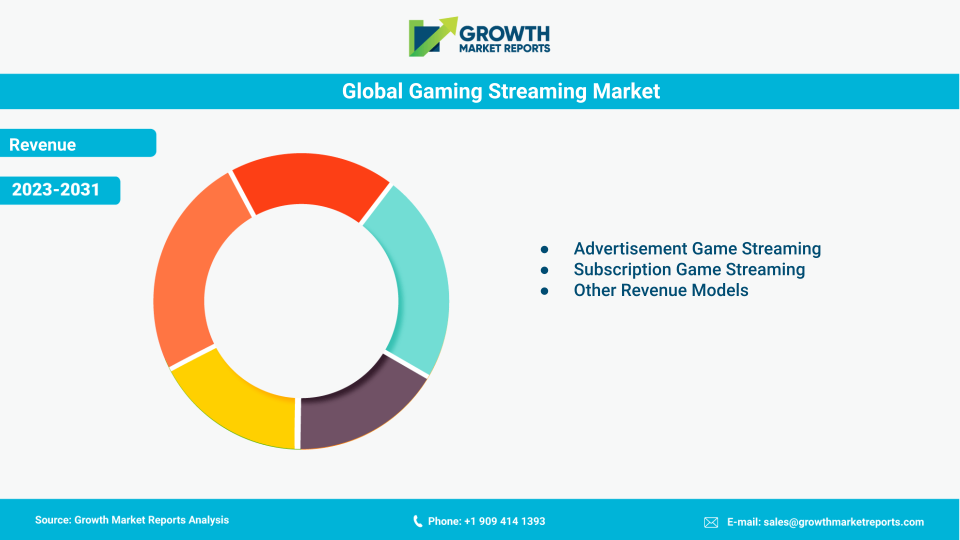
The gaming streaming market is characterized by a diverse array of revenue models, including subscription, advertisement, pay-per-view, and others, each offering unique value propositions for platforms, content creators, and viewers. Subscription-based models are gaining significant traction, enabling users to access premium content, ad-free experiences, and exclusive features in exchange for a recurring fee. Leading platforms such as Twitch Prime and YouTube Gaming offer tiered subscription packages, providing additional revenue streams for both platforms and creators while fostering viewer loyalty and engagement.

Advertising remains a cornerstone of the gaming streaming revenue model, accounting for a substantial share of overall market revenues. Platforms monetize their large, engaged audiences through a variety of ad formats, including display ads, video pre-rolls, sponsored content, and branded integrations. The highly targeted nature of gaming audiences makes them particularly attractive to advertisers seeking to reach young, tech-savvy consumers. As advertising technologies become more sophisticated, platforms are leveraging data analytics and machine learning to deliver personalized, contextually relevant ads, maximizing both viewer satisfaction and advertiser ROI.

Pay-per-view models are also emerging as a viable revenue stream, particularly for premium events such as esports tournaments, exclusive gameplay reveals, and special collaborations. This model allows platforms and creators to monetize high-value content on a per-event basis, generating incremental revenue while offering viewers the flexibility to pay only for the content they wish to access. Pay-per-view is particularly well-suited to professional esports organizations and event organizers, who can leverage the model to monetize large-scale, live events with global reach.

The “others” category encompasses a range of alternative monetization strategies, including virtual gifting, merchandise sales, crowdfunding, and affiliate marketing. Virtual gifting, in particular, has gained popularity as a way for viewers to support their favorite streamers through the purchase of digital goods and in-stream currency. Merchandise sales and crowdfunding platforms such as Patreon provide additional avenues for content creators to diversify their income streams and build deeper relationships with their audiences. As the market continues to evolve, innovative revenue models are expected to emerge, driven by changing consumer preferences and technological advancements.

The diversity of revenue models in the gaming streaming market is creating a vibrant and competitive ecosystem, enabling platforms and creators to tailor their monetization strategies to their unique audiences and content offerings. Companies that can effectively leverage multiple revenue streams while delivering value to both viewers and advertisers will be well-positioned to capitalize on the growing opportunities in the gaming streaming market.

End-User Analysis

The gaming streaming market serves a broad spectrum of end-users, including individual gamers, professional gamers, esports organizations, and others. Individual gamers represent the largest and most diverse segment, encompassing casual players, hobbyists, and aspiring content creators. The accessibility of streaming platforms and the availability of affordable hardware and software have empowered millions of individuals to share their gaming experiences with global audiences. For many, streaming is a means of self-expression, community building, and personal branding, with the potential to generate supplementary income through advertising, subscriptions, and virtual gifting.

Professional gamers and influencers constitute a rapidly growing segment within the gaming streaming market. These individuals have built substantial followings through their exceptional gameplay skills, charismatic personalities, and consistent content creation. Professional gamers often participate in esports tournaments, collaborate with brands, and monetize their channels through sponsorships and exclusive content deals. The rise of gaming influencers has transformed the dynamics of digital marketing, with brands increasingly leveraging their reach and authenticity to connect with highly engaged gaming audiences.

Esports organizations play a pivotal role in the gaming streaming ecosystem, acting as both content creators and aggregators. These organizations manage professional teams, host tournaments, and produce high-quality, broadcast-grade content for global audiences. The growing popularity of esports has led to the formation of structured leagues, franchised teams, and multi-million-dollar prize pools, attracting investments from traditional sports franchises, media companies, and venture capitalists. Esports organizations are also at the forefront of innovation in content production, leveraging advanced broadcasting technologies and data analytics to enhance viewer experiences and engagement.

The “others” category includes a wide range of stakeholders, such as game developers, publishers, educational institutions, and non-profit organizations, who are leveraging gaming streaming platforms for various purposes. Game developers and publishers use streaming to promote new releases, gather player feedback, and build communities around their titles. Educational institutions are increasingly incorporating gaming and streaming into their curricula, exploring opportunities for skill development, digital literacy, and career pathways in the gaming industry. Non-profit organizations are harnessing the power of gaming streaming to raise awareness and funds for charitable causes, demonstrating the versatility and impact of the medium.

The diverse end-user landscape is a testament to the broad appeal and transformative potential of the gaming streaming market. As the ecosystem continues to evolve, platforms and service providers must adapt to the unique needs and preferences of each end-user segment, offering tailored solutions and value-added services to drive engagement, loyalty, and long-term growth.

Opportunities & Threats

The gaming streaming market is brimming with opportunities, driven by the rapid expansion of the global gaming audience and the convergence of gaming, entertainment, and social media. One of the most promising opportunities lies in the integration of emerging technologies such as virtual reality, augmented reality, and cloud gaming, which have the potential to redefine the streaming experience. The adoption of immersive technologies will enable content creators to deliver more interactive and engaging experiences, attracting new audiences and unlocking new revenue streams. Additionally, the growing interest in gamification, social commerce, and user-generated content is creating fertile ground for innovation and differentiation in the highly competitive streaming landscape.

Another significant opportunity for growth in the gaming streaming market is the expansion into untapped and underpenetrated regions. As internet penetration and smartphone adoption continue to rise in emerging markets, there is a substantial opportunity to onboard new users and content creators. Localized content, language support, and culturally relevant programming will be key to capturing the attention of diverse audiences and fostering long-term engagement. Strategic partnerships with telecom operators, device manufacturers, and payment providers can further accelerate market entry and expansion, enabling platforms to scale rapidly and efficiently in high-growth regions.

Despite the numerous opportunities, the gaming streaming market faces several restraining factors and threats that could impact its growth trajectory. Chief among these is the intensifying competition among platforms, which is driving up customer acquisition costs and putting pressure on margins. The proliferation of streaming platforms has led to audience fragmentation, making it increasingly challenging for creators to build and retain large, loyal followings. Additionally, issues related to copyright infringement, content moderation, and data privacy pose significant regulatory and reputational risks for platforms and creators alike. Addressing these challenges will require ongoing investment in technology, talent, and compliance, as well as proactive engagement with regulators, industry stakeholders, and user communities.

Regional Outlook

The Asia Pacific region leads the global gaming streaming market, accounting for approximately USD 5.3 billion in 2024 and projected to maintain a strong CAGR of 21.2% through 2033. This dominance is driven by the region’s vast population of gamers, rapid digital infrastructure development, and the widespread adoption of mobile devices. Countries such as China, South Korea, and Japan are at the forefront, boasting vibrant esports ecosystems, leading streaming platforms, and a culture that embraces gaming as mainstream entertainment. Local platforms like Douyu, Huya, and Bilibili have established themselves as market leaders, offering tailored content and features that resonate with regional audiences.

North America is another key market, with a market size of USD 4.1 billion in 2024. The region benefits from high disposable incomes, advanced broadband infrastructure, and a mature gaming and esports industry. Major platforms such as Twitch, YouTube Gaming, and Facebook Gaming have their roots in North America, driving innovation in content delivery, monetization, and community engagement. The region’s strong culture of gaming influencers, sponsorship deals, and esports tournaments continues to attract investments from brands, media companies, and venture capitalists, further fueling market growth.

Europe holds a significant share of the gaming streaming market, with a market size of USD 3.1 billion in 2024. The region is characterized by a diverse and sophisticated gaming audience, a strong tradition of esports, and robust regulatory frameworks. Leading European countries include the United Kingdom, Germany, France, and the Nordics, each with its own unique gaming culture and preferences. The region is witnessing increased collaboration between gaming companies, broadcasters, and telecom operators to deliver high-quality, localized content and experiences. Meanwhile, Latin America and the Middle East & Africa are emerging as high-growth regions, with combined market sizes of USD 2.2 billion in 2024. These regions are benefiting from rising internet penetration, the popularity of mobile gaming, and the entry of global and local streaming platforms. As these markets mature, tailored content and innovative business models will be essential to capturing and retaining audiences.

Gaming Streaming Market Statistics

Competitor Outlook

The global gaming streaming market is characterized by intense competition, rapid innovation, and a constantly evolving landscape of platforms, content creators, and service providers. The market is dominated by a handful of major platforms, each vying for user attention, content exclusivity, and advertising dollars. These platforms are investing heavily in technology, content acquisition, and community development to differentiate themselves and capture a larger share of the growing market. The competitive landscape is further complicated by the entry of new players, strategic partnerships, and mergers and acquisitions, all of which are reshaping the dynamics of the industry.

Twitch, owned by Amazon, remains the undisputed leader in the gaming streaming market, boasting the largest user base, the most extensive content library, and a vibrant community of streamers and viewers. The platform’s robust feature set, including real-time chat, interactive overlays, and monetization tools, has set the standard for the industry. YouTube Gaming, a division of Google, is another major player, leveraging its massive video platform and global reach to attract both creators and viewers. Facebook Gaming is rapidly gaining ground, leveraging the social network’s vast user base and sophisticated advertising infrastructure to drive growth.

In the Asia Pacific region, platforms such as Douyu, Huya, and Bilibili are leading the charge, offering localized content, innovative features, and strong community engagement. These platforms have established themselves as dominant players in China and are expanding their reach into other Asian markets. Other notable competitors include Microsoft’s Mixer (now integrated into Facebook Gaming), Caffeine, and Trovo, each offering unique value propositions and targeting specific segments of the gaming audience. The competitive landscape is further enriched by the presence of niche platforms, esports organizers, and technology providers, all contributing to the vibrancy and dynamism of the market.

Major companies in the gaming streaming market include Amazon (Twitch), Google (YouTube Gaming), Meta Platforms (Facebook Gaming), Huya Inc., Douyu International Holdings, Bilibili Inc., Caffeine, and Trovo. Amazon’s Twitch continues to lead in terms of market share, user engagement, and revenue, while Google’s YouTube Gaming leverages its vast video infrastructure and search capabilities to attract a global audience. Meta’s Facebook Gaming is focusing on social integration and mobile-first strategies to capture emerging markets. Huya, Douyu, and Bilibili are dominating the Chinese market, with plans for international expansion and diversification of content offerings.

These companies are continuously innovating to stay ahead of the competition, investing in technology upgrades, exclusive content deals, and community engagement initiatives. Strategic partnerships with game developers, esports organizations, and advertisers are enabling them to diversify their revenue streams and enhance their value propositions. As the gaming streaming market continues to evolve, companies that can deliver seamless, high-quality, and interactive experiences while fostering vibrant communities will be best positioned to succeed in this dynamic and rapidly growing industry.

Key Players

  • Twitch
  • YouTube Gaming
  • Facebook Gaming
  • Huya
  • DouYu
  • Nimo TV
  • Caffeine
  • Trovo
  • Bigo Live
  • Mildom
  • AfreecaTV
  • Steam Broadcasting
  • DLive
  • Smashcast
  • Hitbox
  • Cube TV
  • Vimeo Livestream
  • Mobcrush
  • Mixer (legacy)
  • Game.tv
Gaming Streaming Market Overview

Segments

The Gaming Streaming market has been segmented on the basis of

Component

  • Hardware
  • Software
  • Services

Streaming Type

  • Live Streaming
  • On-Demand Streaming

Platform

  • PC
  • Console
  • Mobile
  • Smart TV
  • Others

Revenue Model

  • Subscription
  • Advertisement
  • Pay-Per-View
  • Others

End-User

  • Individual Gamers
  • Professional Gamers
  • Esports Organizations
  • Others

Competitive Landscape

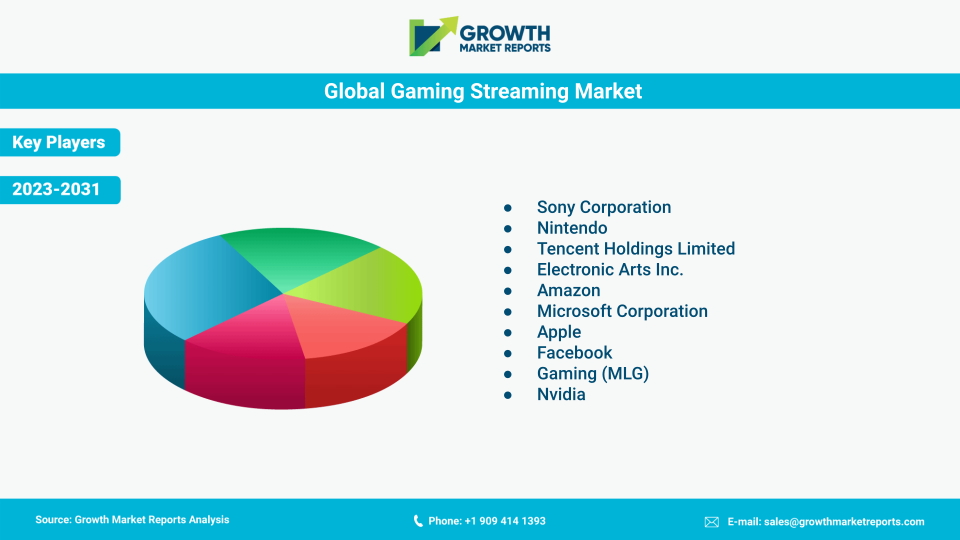
Key players competing in the global gaming streaming market are AfreecaTV; Amazon; Apple; Dlive; Douyu; Electronic Arts Inc.; Facebook; Gaming (MLG); GosuGamers; Huya; Major League; Microsoft Corporation; Nintendo; Nvidia; Parsec Cloud; SAMSUNG; Sony Corporation; Tencent Holdings Limited; and Vortex Cloud Gaming.

These companies are expanding their market share by implementing various strategies, such as partnerships, acquisitions, mergers, launching software products, and leveraging advanced AI technologies.  

  • On July 1, 2022, SAMSUNG, a multinational corporation specializing in consumer electronics and major appliances, introduced the Samsung Gaming Hub. This platform is currently being deployed to all 2022 Samsung Smart TVs, offering premier game streaming content and gameplay experiences without requiring additional hardware or downloads. The Samsung Gaming Hub serves as a comprehensive game streaming discovery platform, enabling users to explore and engage in games from esteemed partners, such as Xbox, NVIDIA GeForce NOW, Google Stadia, Utomik, and Amazon Luna.

Gaming Streaming Market Key Players

Frequently Asked Questions

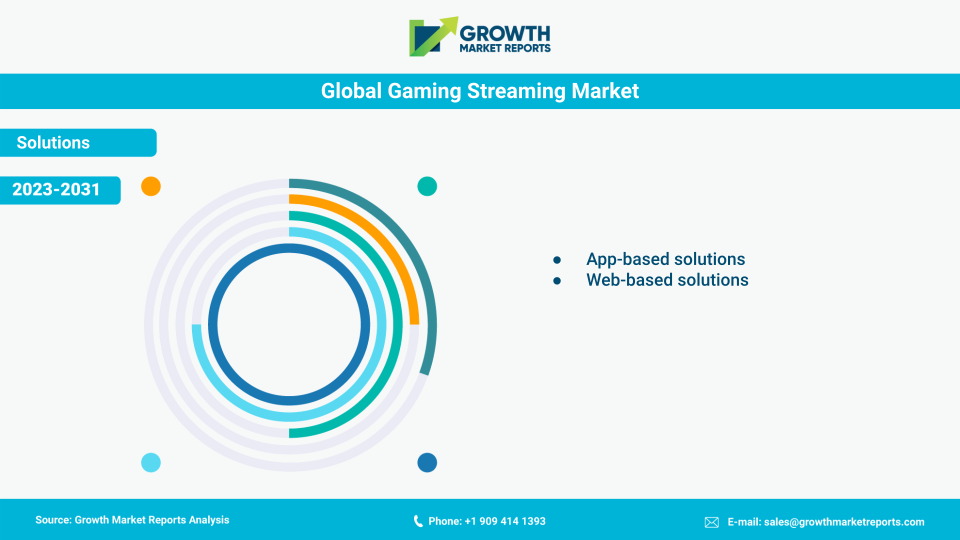
The in-app solutions segment is expected to hold a key share of the gaming streaming market in the coming years.

The global gaming streaming market is driven by technological progress, an expanding community of content creators, the widespread appeal of e-sports, and the changing preferences of a diverse and involved audience.

Countries in Asia Pacific are expected to lead the global gaming streaming market.

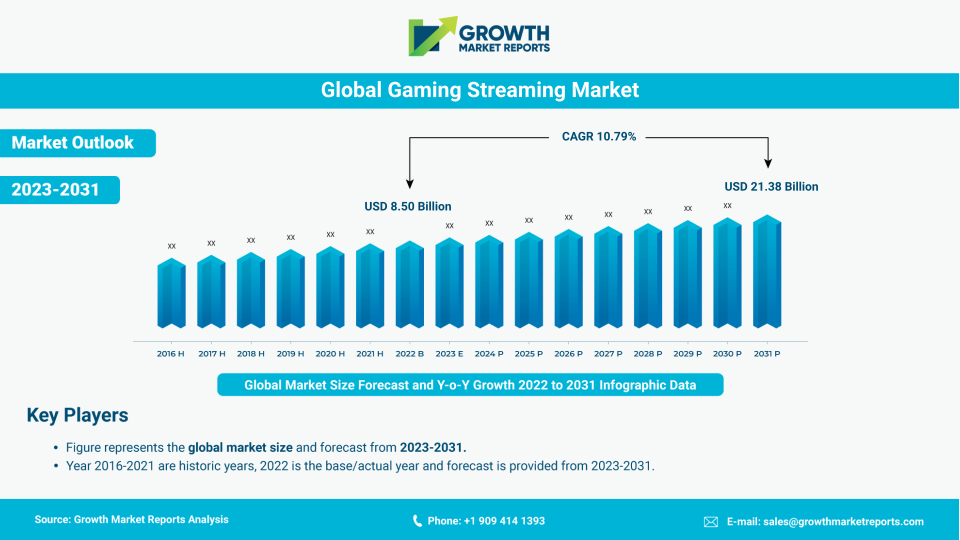
The gaming streaming market is projected to expand at a Compound Annual Growth Rate (CAGR) of 10.79% throughout the projected period.

The gaming streaming market is anticipated to reach a value of USD 21.38 Billion by 2031.

Table Of Content

Chapter 1 Executive Summary
Chapter 2 Assumptions and Acronyms Used
Chapter 3 Research Methodology
Chapter 4 Gaming Streaming Market Overview
   4.1 Introduction
      4.1.1 Market Taxonomy
      4.1.2 Market Definition
      4.1.3 Macro-Economic Factors Impacting the Market Growth
   4.2 Gaming Streaming Market Dynamics
      4.2.1 Market Drivers
      4.2.2 Market Restraints
      4.2.3 Market Opportunity
   4.3 Gaming Streaming Market - Supply Chain Analysis
      4.3.1 List of Key Suppliers
      4.3.2 List of Key Distributors
      4.3.3 List of Key Consumers
   4.4 Key Forces Shaping the Gaming Streaming Market
      4.4.1 Bargaining Power of Suppliers
      4.4.2 Bargaining Power of Buyers
      4.4.3 Threat of Substitution
      4.4.4 Threat of New Entrants
      4.4.5 Competitive Rivalry
   4.5 Global Gaming Streaming Market Size & Forecast, 2023-2032
      4.5.1 Gaming Streaming Market Size and Y-o-Y Growth
      4.5.2 Gaming Streaming Market Absolute $ Opportunity

Chapter 5 Global Gaming Streaming Market Analysis and Forecast By Component
   5.1 Introduction
      5.1.1 Key Market Trends & Growth Opportunities By Component
      5.1.2 Basis Point Share (BPS) Analysis By Component
      5.1.3 Absolute $ Opportunity Assessment By Component
   5.2 Gaming Streaming Market Size Forecast By Component
      5.2.1 Hardware
      5.2.2 Software
      5.2.3 Services
   5.3 Market Attractiveness Analysis By Component

Chapter 6 Global Gaming Streaming Market Analysis and Forecast By Streaming Type
   6.1 Introduction
      6.1.1 Key Market Trends & Growth Opportunities By Streaming Type
      6.1.2 Basis Point Share (BPS) Analysis By Streaming Type
      6.1.3 Absolute $ Opportunity Assessment By Streaming Type
   6.2 Gaming Streaming Market Size Forecast By Streaming Type
      6.2.1 Live Streaming
      6.2.2 On-Demand Streaming
   6.3 Market Attractiveness Analysis By Streaming Type

Chapter 7 Global Gaming Streaming Market Analysis and Forecast By Platform
   7.1 Introduction
      7.1.1 Key Market Trends & Growth Opportunities By Platform
      7.1.2 Basis Point Share (BPS) Analysis By Platform
      7.1.3 Absolute $ Opportunity Assessment By Platform
   7.2 Gaming Streaming Market Size Forecast By Platform
      7.2.1 PC
      7.2.2 Console
      7.2.3 Mobile
      7.2.4 Smart TV
      7.2.5 Others
   7.3 Market Attractiveness Analysis By Platform

Chapter 8 Global Gaming Streaming Market Analysis and Forecast By Revenue Model
   8.1 Introduction
      8.1.1 Key Market Trends & Growth Opportunities By Revenue Model
      8.1.2 Basis Point Share (BPS) Analysis By Revenue Model
      8.1.3 Absolute $ Opportunity Assessment By Revenue Model
   8.2 Gaming Streaming Market Size Forecast By Revenue Model
      8.2.1 Subscription
      8.2.2 Advertisement
      8.2.3 Pay-Per-View
      8.2.4 Others
   8.3 Market Attractiveness Analysis By Revenue Model

Chapter 9 Global Gaming Streaming Market Analysis and Forecast By End-User
   9.1 Introduction
      9.1.1 Key Market Trends & Growth Opportunities By End-User
      9.1.2 Basis Point Share (BPS) Analysis By End-User
      9.1.3 Absolute $ Opportunity Assessment By End-User
   9.2 Gaming Streaming Market Size Forecast By End-User
      9.2.1 Individual Gamers
      9.2.2 Professional Gamers
      9.2.3 Esports Organizations
      9.2.4 Others
   9.3 Market Attractiveness Analysis By End-User

Chapter 10 Global Gaming Streaming Market Analysis and Forecast by Region
   10.1 Introduction
      10.1.1 Key Market Trends & Growth Opportunities By Region
      10.1.2 Basis Point Share (BPS) Analysis By Region
      10.1.3 Absolute $ Opportunity Assessment By Region
   10.2 Gaming Streaming Market Size Forecast By Region
      10.2.1 North America
      10.2.2 Europe
      10.2.3 Asia Pacific
      10.2.4 Latin America
      10.2.5 Middle East & Africa (MEA)
   10.3 Market Attractiveness Analysis By Region

Chapter 11 Coronavirus Disease (COVID-19) Impact 
   11.1 Introduction 
   11.2 Current & Future Impact Analysis 
   11.3 Economic Impact Analysis 
   11.4 Government Policies 
   11.5 Investment Scenario

Chapter 12 North America Gaming Streaming Analysis and Forecast
   12.1 Introduction
   12.2 North America Gaming Streaming Market Size Forecast by Country
      12.2.1 U.S.
      12.2.2 Canada
   12.3 Basis Point Share (BPS) Analysis by Country
   12.4 Absolute $ Opportunity Assessment by Country
   12.5 Market Attractiveness Analysis by Country
   12.6 North America Gaming Streaming Market Size Forecast By Component
      12.6.1 Hardware
      12.6.2 Software
      12.6.3 Services
   12.7 Basis Point Share (BPS) Analysis By Component 
   12.8 Absolute $ Opportunity Assessment By Component 
   12.9 Market Attractiveness Analysis By Component
   12.10 North America Gaming Streaming Market Size Forecast By Streaming Type
      12.10.1 Live Streaming
      12.10.2 On-Demand Streaming
   12.11 Basis Point Share (BPS) Analysis By Streaming Type 
   12.12 Absolute $ Opportunity Assessment By Streaming Type 
   12.13 Market Attractiveness Analysis By Streaming Type
   12.14 North America Gaming Streaming Market Size Forecast By Platform
      12.14.1 PC
      12.14.2 Console
      12.14.3 Mobile
      12.14.4 Smart TV
      12.14.5 Others
   12.15 Basis Point Share (BPS) Analysis By Platform 
   12.16 Absolute $ Opportunity Assessment By Platform 
   12.17 Market Attractiveness Analysis By Platform
   12.18 North America Gaming Streaming Market Size Forecast By Revenue Model
      12.18.1 Subscription
      12.18.2 Advertisement
      12.18.3 Pay-Per-View
      12.18.4 Others
   12.19 Basis Point Share (BPS) Analysis By Revenue Model 
   12.20 Absolute $ Opportunity Assessment By Revenue Model 
   12.21 Market Attractiveness Analysis By Revenue Model
   12.22 North America Gaming Streaming Market Size Forecast By End-User
      12.22.1 Individual Gamers
      12.22.2 Professional Gamers
      12.22.3 Esports Organizations
      12.22.4 Others
   12.23 Basis Point Share (BPS) Analysis By End-User 
   12.24 Absolute $ Opportunity Assessment By End-User 
   12.25 Market Attractiveness Analysis By End-User

Chapter 13 Europe Gaming Streaming Analysis and Forecast
   13.1 Introduction
   13.2 Europe Gaming Streaming Market Size Forecast by Country
      13.2.1 Germany
      13.2.2 France
      13.2.3 Italy
      13.2.4 U.K.
      13.2.5 Spain
      13.2.6 Russia
      13.2.7 Rest of Europe
   13.3 Basis Point Share (BPS) Analysis by Country
   13.4 Absolute $ Opportunity Assessment by Country
   13.5 Market Attractiveness Analysis by Country
   13.6 Europe Gaming Streaming Market Size Forecast By Component
      13.6.1 Hardware
      13.6.2 Software
      13.6.3 Services
   13.7 Basis Point Share (BPS) Analysis By Component 
   13.8 Absolute $ Opportunity Assessment By Component 
   13.9 Market Attractiveness Analysis By Component
   13.10 Europe Gaming Streaming Market Size Forecast By Streaming Type
      13.10.1 Live Streaming
      13.10.2 On-Demand Streaming
   13.11 Basis Point Share (BPS) Analysis By Streaming Type 
   13.12 Absolute $ Opportunity Assessment By Streaming Type 
   13.13 Market Attractiveness Analysis By Streaming Type
   13.14 Europe Gaming Streaming Market Size Forecast By Platform
      13.14.1 PC
      13.14.2 Console
      13.14.3 Mobile
      13.14.4 Smart TV
      13.14.5 Others
   13.15 Basis Point Share (BPS) Analysis By Platform 
   13.16 Absolute $ Opportunity Assessment By Platform 
   13.17 Market Attractiveness Analysis By Platform
   13.18 Europe Gaming Streaming Market Size Forecast By Revenue Model
      13.18.1 Subscription
      13.18.2 Advertisement
      13.18.3 Pay-Per-View
      13.18.4 Others
   13.19 Basis Point Share (BPS) Analysis By Revenue Model 
   13.20 Absolute $ Opportunity Assessment By Revenue Model 
   13.21 Market Attractiveness Analysis By Revenue Model
   13.22 Europe Gaming Streaming Market Size Forecast By End-User
      13.22.1 Individual Gamers
      13.22.2 Professional Gamers
      13.22.3 Esports Organizations
      13.22.4 Others
   13.23 Basis Point Share (BPS) Analysis By End-User 
   13.24 Absolute $ Opportunity Assessment By End-User 
   13.25 Market Attractiveness Analysis By End-User

Chapter 14 Asia Pacific Gaming Streaming Analysis and Forecast
   14.1 Introduction
   14.2 Asia Pacific Gaming Streaming Market Size Forecast by Country
      14.2.1 China
      14.2.2 Japan
      14.2.3 South Korea
      14.2.4 India
      14.2.5 Australia
      14.2.6 South East Asia (SEA)
      14.2.7 Rest of Asia Pacific (APAC)
   14.3 Basis Point Share (BPS) Analysis by Country
   14.4 Absolute $ Opportunity Assessment by Country
   14.5 Market Attractiveness Analysis by Country
   14.6 Asia Pacific Gaming Streaming Market Size Forecast By Component
      14.6.1 Hardware
      14.6.2 Software
      14.6.3 Services
   14.7 Basis Point Share (BPS) Analysis By Component 
   14.8 Absolute $ Opportunity Assessment By Component 
   14.9 Market Attractiveness Analysis By Component
   14.10 Asia Pacific Gaming Streaming Market Size Forecast By Streaming Type
      14.10.1 Live Streaming
      14.10.2 On-Demand Streaming
   14.11 Basis Point Share (BPS) Analysis By Streaming Type 
   14.12 Absolute $ Opportunity Assessment By Streaming Type 
   14.13 Market Attractiveness Analysis By Streaming Type
   14.14 Asia Pacific Gaming Streaming Market Size Forecast By Platform
      14.14.1 PC
      14.14.2 Console
      14.14.3 Mobile
      14.14.4 Smart TV
      14.14.5 Others
   14.15 Basis Point Share (BPS) Analysis By Platform 
   14.16 Absolute $ Opportunity Assessment By Platform 
   14.17 Market Attractiveness Analysis By Platform
   14.18 Asia Pacific Gaming Streaming Market Size Forecast By Revenue Model
      14.18.1 Subscription
      14.18.2 Advertisement
      14.18.3 Pay-Per-View
      14.18.4 Others
   14.19 Basis Point Share (BPS) Analysis By Revenue Model 
   14.20 Absolute $ Opportunity Assessment By Revenue Model 
   14.21 Market Attractiveness Analysis By Revenue Model
   14.22 Asia Pacific Gaming Streaming Market Size Forecast By End-User
      14.22.1 Individual Gamers
      14.22.2 Professional Gamers
      14.22.3 Esports Organizations
      14.22.4 Others
   14.23 Basis Point Share (BPS) Analysis By End-User 
   14.24 Absolute $ Opportunity Assessment By End-User 
   14.25 Market Attractiveness Analysis By End-User

Chapter 15 Latin America Gaming Streaming Analysis and Forecast
   15.1 Introduction
   15.2 Latin America Gaming Streaming Market Size Forecast by Country
      15.2.1 Brazil
      15.2.2 Mexico
      15.2.3 Rest of Latin America (LATAM)
   15.3 Basis Point Share (BPS) Analysis by Country
   15.4 Absolute $ Opportunity Assessment by Country
   15.5 Market Attractiveness Analysis by Country
   15.6 Latin America Gaming Streaming Market Size Forecast By Component
      15.6.1 Hardware
      15.6.2 Software
      15.6.3 Services
   15.7 Basis Point Share (BPS) Analysis By Component 
   15.8 Absolute $ Opportunity Assessment By Component 
   15.9 Market Attractiveness Analysis By Component
   15.10 Latin America Gaming Streaming Market Size Forecast By Streaming Type
      15.10.1 Live Streaming
      15.10.2 On-Demand Streaming
   15.11 Basis Point Share (BPS) Analysis By Streaming Type 
   15.12 Absolute $ Opportunity Assessment By Streaming Type 
   15.13 Market Attractiveness Analysis By Streaming Type
   15.14 Latin America Gaming Streaming Market Size Forecast By Platform
      15.14.1 PC
      15.14.2 Console
      15.14.3 Mobile
      15.14.4 Smart TV
      15.14.5 Others
   15.15 Basis Point Share (BPS) Analysis By Platform 
   15.16 Absolute $ Opportunity Assessment By Platform 
   15.17 Market Attractiveness Analysis By Platform
   15.18 Latin America Gaming Streaming Market Size Forecast By Revenue Model
      15.18.1 Subscription
      15.18.2 Advertisement
      15.18.3 Pay-Per-View
      15.18.4 Others
   15.19 Basis Point Share (BPS) Analysis By Revenue Model 
   15.20 Absolute $ Opportunity Assessment By Revenue Model 
   15.21 Market Attractiveness Analysis By Revenue Model
   15.22 Latin America Gaming Streaming Market Size Forecast By End-User
      15.22.1 Individual Gamers
      15.22.2 Professional Gamers
      15.22.3 Esports Organizations
      15.22.4 Others
   15.23 Basis Point Share (BPS) Analysis By End-User 
   15.24 Absolute $ Opportunity Assessment By End-User 
   15.25 Market Attractiveness Analysis By End-User

Chapter 16 Middle East & Africa (MEA) Gaming Streaming Analysis and Forecast
   16.1 Introduction
   16.2 Middle East & Africa (MEA) Gaming Streaming Market Size Forecast by Country
      16.2.1 Saudi Arabia
      16.2.2 South Africa
      16.2.3 UAE
      16.2.4 Rest of Middle East & Africa (MEA)
   16.3 Basis Point Share (BPS) Analysis by Country
   16.4 Absolute $ Opportunity Assessment by Country
   16.5 Market Attractiveness Analysis by Country
   16.6 Middle East & Africa (MEA) Gaming Streaming Market Size Forecast By Component
      16.6.1 Hardware
      16.6.2 Software
      16.6.3 Services
   16.7 Basis Point Share (BPS) Analysis By Component 
   16.8 Absolute $ Opportunity Assessment By Component 
   16.9 Market Attractiveness Analysis By Component
   16.10 Middle East & Africa (MEA) Gaming Streaming Market Size Forecast By Streaming Type
      16.10.1 Live Streaming
      16.10.2 On-Demand Streaming
   16.11 Basis Point Share (BPS) Analysis By Streaming Type 
   16.12 Absolute $ Opportunity Assessment By Streaming Type 
   16.13 Market Attractiveness Analysis By Streaming Type
   16.14 Middle East & Africa (MEA) Gaming Streaming Market Size Forecast By Platform
      16.14.1 PC
      16.14.2 Console
      16.14.3 Mobile
      16.14.4 Smart TV
      16.14.5 Others
   16.15 Basis Point Share (BPS) Analysis By Platform 
   16.16 Absolute $ Opportunity Assessment By Platform 
   16.17 Market Attractiveness Analysis By Platform
   16.18 Middle East & Africa (MEA) Gaming Streaming Market Size Forecast By Revenue Model
      16.18.1 Subscription
      16.18.2 Advertisement
      16.18.3 Pay-Per-View
      16.18.4 Others
   16.19 Basis Point Share (BPS) Analysis By Revenue Model 
   16.20 Absolute $ Opportunity Assessment By Revenue Model 
   16.21 Market Attractiveness Analysis By Revenue Model
   16.22 Middle East & Africa (MEA) Gaming Streaming Market Size Forecast By End-User
      16.22.1 Individual Gamers
      16.22.2 Professional Gamers
      16.22.3 Esports Organizations
      16.22.4 Others
   16.23 Basis Point Share (BPS) Analysis By End-User 
   16.24 Absolute $ Opportunity Assessment By End-User 
   16.25 Market Attractiveness Analysis By End-User

Chapter 17 Competition Landscape 
   17.1 Gaming Streaming Market: Competitive Dashboard
   17.2 Global Gaming Streaming Market: Market Share Analysis, 2023
   17.3 Company Profiles (Details – Overview, Financials, Developments, Strategy) 
      17.3.1 Twitch
YouTube Gaming
Facebook Gaming
Huya
DouYu
Nimo TV
Caffeine
Trovo
Bigo Live
Mildom
AfreecaTV
Steam Broadcasting
DLive
Smashcast
Hitbox
Cube TV
Vimeo Livestream
Mobcrush
Mixer (legacy)
Game.tv

Methodology

Our Clients

Nestle SA
Pfizer
The John Holland Group
FedEx Logistics
General Mills
Honda Motor Co. Ltd.
General Electric
Dassault Aviation