Freeze Drying Equipment Market Research Report 2033

Freeze Drying Equipment Market Research Report 2033

Segments - by Product Type (Bench-top Freeze Dryers, Laboratory Freeze Dryers, Industrial Freeze Dryers, Mobile Freeze Dryers, Others), by Application (Pharmaceuticals & Biotechnology, Food Processing, Surgical Procedures, Research & Development, Others), by End-User (Pharmaceutical Companies, Food & Beverage Companies, Research Institutes, Hospitals & Clinics, Others)

https://growthmarketreports.com/Anuradha
Author : Anuradha B. More
https://growthmarketreports.com/Vaibhav
Fact-checked by : Vaibhav Chandola
https://growthmarketreports.com/Shruti
Editor : Shruti Bhat

Upcoming | Report ID :FB-3779 | 4.5 Rating | 91 Reviews | 257 Pages | Format : Docx PDF

Report Description


Freeze Drying Equipment Market Outlook

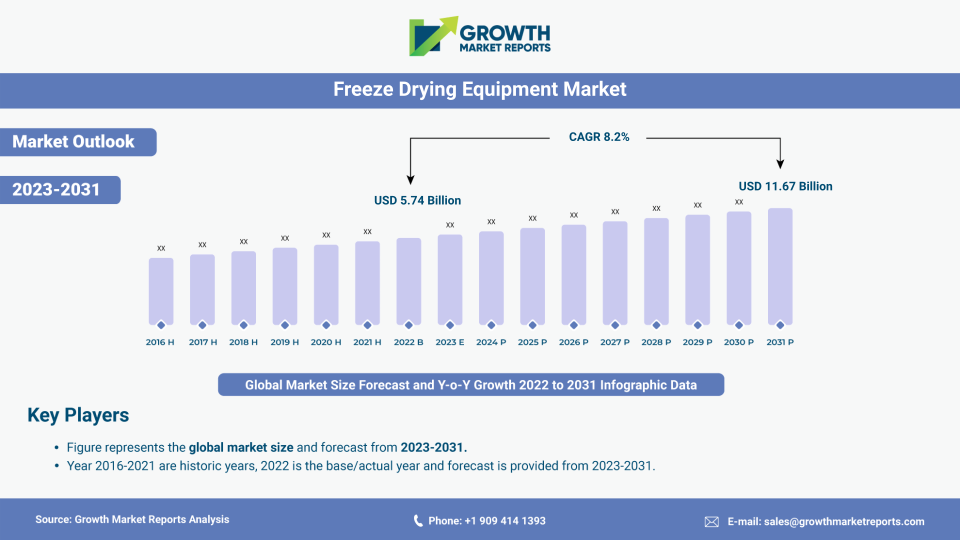
According to our latest research, the global freeze drying equipment market size reached USD 2.45 billion in 2024, reflecting robust adoption across key sectors. The market is experiencing a healthy growth trajectory, registering a CAGR of 8.7% from 2025 to 2033. By the end of 2033, the freeze drying equipment market is anticipated to attain a value of USD 5.19 billion. This impressive expansion is driven by the increasing demand for lyophilized products in pharmaceuticals, food processing, and biotechnology, as well as technological advancements that are enhancing the efficiency and scalability of freeze drying processes.

A primary growth factor for the freeze drying equipment market is the surging need for preservation solutions in the pharmaceutical and biotechnology industries. The growing prevalence of biopharmaceuticals, vaccines, and injectables, which require stringent stability and shelf-life standards, has significantly fueled the adoption of advanced freeze drying equipment. The ability of freeze drying, or lyophilization, to maintain the structural integrity and potency of sensitive biological materials is a critical advantage, especially as the pharmaceutical sector pivots towards more complex biologics and personalized medicines. Additionally, the COVID-19 pandemic underscored the necessity for reliable preservation and distribution methods for vaccines and therapeutics, further catalyzing market growth.

Technological innovation remains at the heart of the freeze drying equipment market’s expansion. Manufacturers are investing heavily in automation, process optimization, and energy-efficient designs to meet the evolving requirements of end-users. Integration of smart sensors, real-time monitoring, and advanced control systems has enabled precise regulation of freeze drying cycles, ensuring consistent product quality while minimizing operational costs. The emergence of mobile and modular freeze dryers is also opening new avenues for small-to-medium enterprises and research institutions, democratizing access to high-performance lyophilization technology. These advancements are not only enhancing throughput but also reducing downtime and maintenance, making freeze drying more accessible and attractive across industries.

Another significant driver is the increasing application of freeze drying in the food processing sector. With consumers demanding safer, longer-lasting, and nutrient-rich food products, food manufacturers are turning to freeze drying as a preferred method for preserving fruits, vegetables, dairy, and ready-to-eat meals. The technique’s ability to retain flavor, texture, and nutritional value, while eliminating the need for chemical preservatives, aligns perfectly with the growing trend towards clean-label and organic food products. Moreover, the expanding global trade of freeze-dried foods, coupled with the rise of e-commerce, is creating lucrative opportunities for freeze drying equipment manufacturers to cater to diverse market needs.

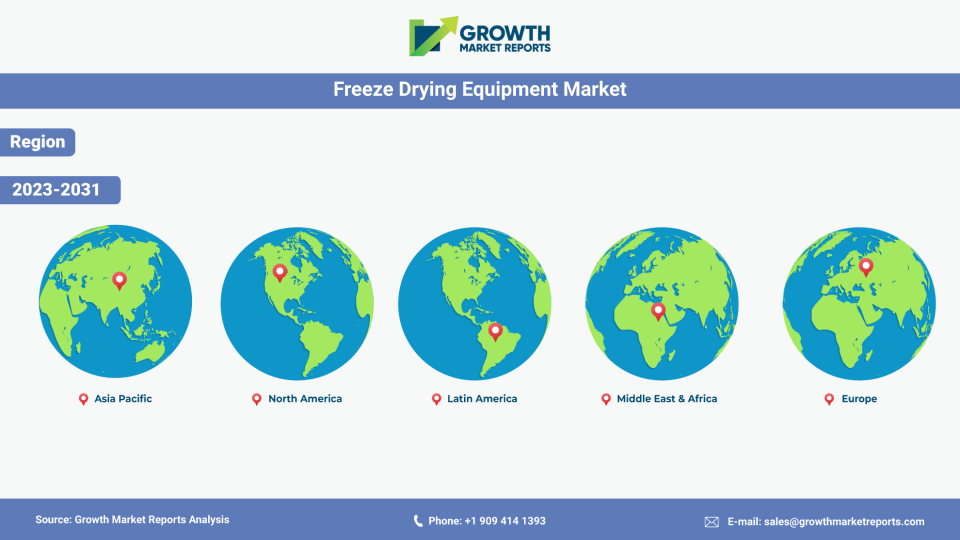
Regionally, North America continues to dominate the freeze drying equipment market, accounting for the largest share in 2024. This leadership is attributed to the presence of major pharmaceutical and biotechnology companies, robust R&D investments, and a well-established food processing industry. Europe follows closely, driven by stringent regulatory standards for product safety and quality. Meanwhile, the Asia Pacific region is witnessing the fastest growth, propelled by rapid industrialization, expanding healthcare infrastructure, and increasing investments in pharmaceutical manufacturing. Latin America and the Middle East & Africa are also emerging as promising markets, supported by growing awareness and adoption of advanced preservation technologies.

Global Freeze Drying Equipment Industry Outlook

Product Type Analysis

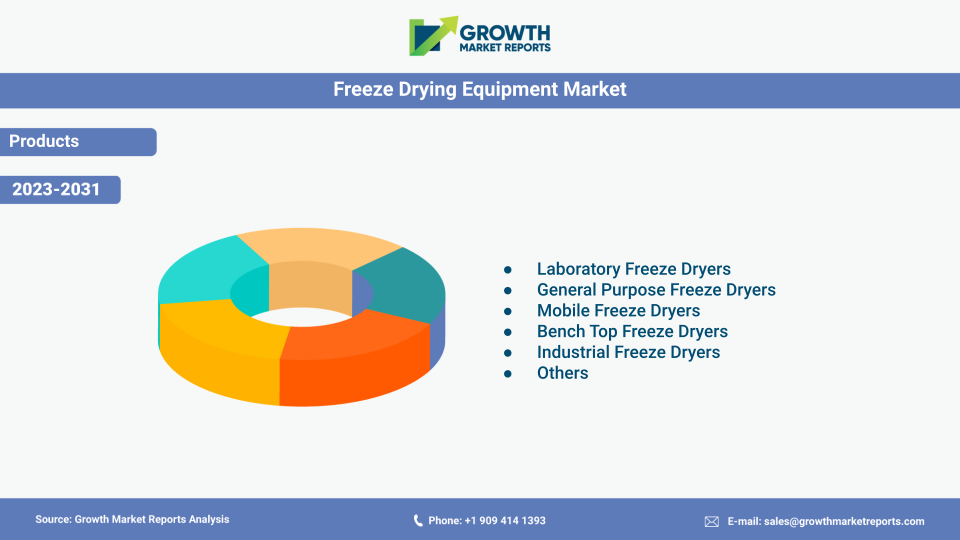
The freeze drying equipment market is segmented by product type into bench-top freeze dryers, laboratory freeze dryers, industrial freeze dryers, mobile freeze dryers, and others. Bench-top freeze dryers are widely used in academic and research laboratories due to their compact size and cost-effectiveness. These units are particularly favored for small-batch processing and pilot-scale studies, providing researchers with the flexibility to experiment with various formulations and protocols. The demand for bench-top freeze dryers is bolstered by the increasing focus on R&D activities in pharmaceuticals, biotechnology, and food sciences, where precise control over drying parameters is essential for reproducible results.

Laboratory freeze dryers occupy a significant share of the market, primarily driven by their application in pharmaceutical and clinical research settings. These systems offer advanced features such as programmable cycles, automated controls, and high-throughput capabilities, making them ideal for the development and validation of new drug formulations. The integration of laboratory freeze dryers with analytical instruments and data management systems has further enhanced their utility, enabling seamless workflow automation and regulatory compliance. As the demand for personalized medicines and biologics grows, laboratory freeze dryers are expected to witness sustained adoption, particularly in emerging markets with expanding research infrastructure.

Industrial freeze dryers represent the largest segment in terms of revenue, owing to their extensive use in large-scale pharmaceutical manufacturing, food processing, and biotechnology production. These systems are designed for high-volume, continuous operation, offering robust performance, scalability, and energy efficiency. Industrial freeze dryers are equipped with advanced features such as vacuum control, automated loading and unloading, and real-time process monitoring, ensuring consistent product quality and operational reliability. The rising demand for mass production of lyophilized drugs, vaccines, and food products is driving investments in industrial-scale freeze drying equipment, especially among contract manufacturing organizations and multinational corporations.

Mobile freeze dryers are gaining traction, particularly in field applications, disaster relief operations, and remote research stations. These portable units offer flexibility and convenience, enabling on-site preservation of biological samples, food, and pharmaceuticals in challenging environments. Mobile freeze dryers are increasingly being adopted by military, humanitarian, and environmental organizations for rapid deployment and emergency response. The development of lightweight, energy-efficient, and user-friendly mobile freeze dryers is expected to expand their market presence, catering to niche applications that require mobility and adaptability.

The "others" category includes specialized freeze drying equipment designed for unique applications such as tissue engineering, cosmetics, and nutraceuticals. These systems are tailored to specific process requirements, offering customized solutions for end-users with specialized needs. As new applications for freeze drying emerge in sectors such as regenerative medicine and high-value nutraceuticals, the demand for innovative and application-specific equipment is expected to rise, contributing to the overall growth of the freeze drying equipment market.

Report Scope

Attributes Details
Report Title Freeze Drying Equipment Market Research Report 2033
By Product Type Bench-top Freeze Dryers, Laboratory Freeze Dryers, Industrial Freeze Dryers, Mobile Freeze Dryers, Others
By Application Pharmaceuticals & Biotechnology, Food Processing, Surgical Procedures, Research & Development, Others
By End-User Pharmaceutical Companies, Food & Beverage Companies, Research Institutes, Hospitals & Clinics, Others
Regions Covered North America, Europe, APAC, Latin America, MEA
Base Year 2024
Historic Data 2018-2023
Forecast Period 2025-2033
Number of Pages 257
Number of Tables & Figures 367
Customization Available Yes, the report can be customized as per your need.

Application Analysis

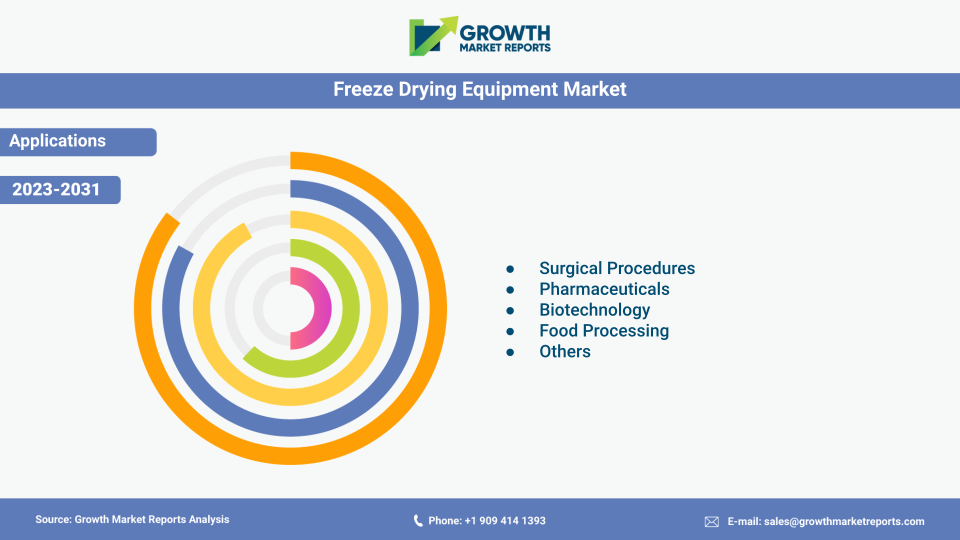
The application landscape of the freeze drying equipment market is diverse, encompassing pharmaceuticals & biotechnology, food processing, surgical procedures, research & development, and others. The pharmaceuticals & biotechnology segment commands the largest share, driven by the critical need for stable and long-lasting drug formulations. Lyophilization is the preferred method for preserving vaccines, antibiotics, hormones, and complex biologics, ensuring their efficacy and safety throughout the supply chain. The increasing prevalence of chronic diseases, coupled with the rise of personalized medicine and biologics, is fueling the demand for advanced freeze drying solutions in this segment.

Food processing is another major application area, where freeze drying is valued for its ability to preserve the taste, color, texture, and nutritional content of food products. The technique is widely used in the production of instant coffee, fruits, vegetables, dairy products, and ready-to-eat meals. The growing consumer preference for healthy, convenient, and preservative-free food options is driving food manufacturers to invest in state-of-the-art freeze drying equipment. Additionally, the expanding global trade of freeze-dried foods, supported by advancements in packaging and logistics, is creating new growth opportunities for equipment providers.

In surgical procedures, freeze drying plays a vital role in the preparation of biological grafts, implants, and wound care products. The ability to sterilize and preserve tissues, bones, and medical devices without compromising their structural integrity is a significant advantage, particularly in orthopedic, dental, and reconstructive surgeries. The increasing adoption of regenerative medicine and tissue engineering is expected to boost the demand for freeze drying equipment in surgical applications, as healthcare providers seek reliable and efficient preservation solutions.

Research & development is a rapidly expanding application segment, with freeze drying equipment being extensively used in academic institutions, government laboratories, and private research organizations. The versatility of freeze drying in preserving biological samples, reagents, and experimental compounds makes it an indispensable tool for scientific discovery and innovation. The growing emphasis on translational research, drug discovery, and biotechnology advancements is driving the adoption of freeze drying equipment in R&D settings, particularly in emerging economies with burgeoning scientific communities.

The "others" application segment encompasses a wide range of niche uses, including cosmetics, nutraceuticals, and environmental testing. As new applications for freeze drying continue to emerge, equipment manufacturers are developing specialized solutions to cater to these evolving market needs. The ability to customize freeze drying processes for unique products and applications is expected to drive further growth in this segment, as end-users seek tailored solutions to address their specific challenges.

End-User Analysis

The freeze drying equipment market is segmented by end-user into pharmaceutical companies, food & beverage companies, research institutes, hospitals & clinics, and others. Pharmaceutical companies represent the largest end-user segment, accounting for a substantial share of market revenue. These organizations rely heavily on freeze drying equipment for the production of stable and effective drug formulations, vaccines, and biologics. The increasing complexity of pharmaceutical products, coupled with stringent regulatory requirements for product safety and quality, is driving continuous investments in state-of-the-art freeze drying technologies among pharmaceutical manufacturers.

Food & beverage companies are another significant end-user group, leveraging freeze drying equipment to produce high-quality, shelf-stable food products. The growing demand for convenient and nutritious food options, along with the rise of clean-label and organic products, is prompting food manufacturers to adopt advanced freeze drying solutions. The ability to preserve the natural flavor, color, and nutritional value of food products without the use of chemical preservatives is a key differentiator, positioning freeze drying as a preferred method for premium food brands and health-conscious consumers.

Research institutes constitute a vital end-user segment, utilizing freeze drying equipment for a wide range of scientific and industrial research applications. These institutions require reliable and flexible freeze drying solutions to support their research activities in pharmaceuticals, biotechnology, food science, and environmental studies. The increasing emphasis on translational research, innovation, and technology commercialization is driving the adoption of advanced freeze drying equipment in research settings, particularly in regions with strong government support for scientific development.

Hospitals & clinics are emerging as important end-users of freeze drying equipment, particularly for the preservation of biological samples, tissues, and medical devices. The growing adoption of regenerative medicine, tissue engineering, and advanced wound care therapies is creating new opportunities for freeze drying equipment providers to cater to the unique needs of healthcare institutions. The ability to ensure the sterility and safety of preserved materials is a critical requirement, driving hospitals and clinics to invest in high-performance freeze drying solutions.

The "others" end-user category includes a diverse range of organizations, such as cosmetic manufacturers, nutraceutical producers, and environmental testing laboratories. As the applications of freeze drying continue to expand into new sectors, equipment manufacturers are developing customized solutions to address the specific needs of these end-users. The ability to offer tailored freeze drying equipment for specialized applications is expected to drive further growth in this segment, as organizations seek innovative solutions to enhance product quality and operational efficiency.

Opportunities & Threats

The freeze drying equipment market is brimming with opportunities, particularly as technological advancements continue to reshape the landscape. The integration of automation, IoT, and artificial intelligence into freeze drying systems is enabling real-time monitoring, predictive maintenance, and process optimization, significantly enhancing operational efficiency and product quality. These innovations are not only reducing labor costs and human error but also enabling manufacturers to scale their operations and meet the growing demand for high-quality lyophilized products. Furthermore, the increasing focus on sustainability and energy efficiency is driving the development of eco-friendly freeze drying solutions, creating new opportunities for equipment providers to differentiate themselves in a competitive market.

Emerging markets in Asia Pacific, Latin America, and the Middle East & Africa present significant growth opportunities for freeze drying equipment manufacturers. Rapid industrialization, expanding healthcare infrastructure, and rising investments in pharmaceutical and food processing industries are driving the adoption of advanced preservation technologies in these regions. The growing middle-class population, increasing healthcare expenditure, and rising awareness of the benefits of freeze-dried products are further fueling market growth. Equipment manufacturers that can offer cost-effective, scalable, and user-friendly solutions tailored to the unique needs of these markets are well-positioned to capitalize on these emerging opportunities.

Despite the promising outlook, the freeze drying equipment market faces several restraining factors. High initial capital investment and operational costs associated with freeze drying equipment can be a significant barrier, particularly for small and medium-sized enterprises. The complexity of freeze drying processes, coupled with the need for skilled operators and stringent regulatory compliance, can also pose challenges for end-users. Additionally, the availability of alternative preservation methods, such as spray drying and vacuum drying, may limit the widespread adoption of freeze drying equipment in certain applications. Addressing these challenges through technological innovation, cost reduction, and comprehensive training programs will be critical for sustaining market growth.

Regional Outlook

North America continues to lead the global freeze drying equipment market, accounting for USD 950 million in revenue in 2024. The region’s dominance is underpinned by the presence of major pharmaceutical and biotechnology companies, robust research and development infrastructure, and a well-established food processing industry. The United States, in particular, is a major contributor to market growth, with leading manufacturers and research institutions driving continuous innovation in freeze drying technologies. The region is also characterized by stringent regulatory standards for product safety and quality, further supporting the adoption of advanced freeze drying equipment across various industries.

Europe holds the second-largest share of the freeze drying equipment market, with a market size of USD 670 million in 2024. The region’s growth is driven by increasing investments in pharmaceutical manufacturing, biotechnology research, and food processing. Countries such as Germany, France, and the United Kingdom are at the forefront of technological innovation, with a strong focus on sustainability and energy efficiency. The European market is expected to grow at a steady CAGR of 7.9% through 2033, supported by favorable government policies, rising healthcare expenditure, and a growing demand for high-quality, preservative-free food products.

The Asia Pacific region is emerging as the fastest-growing market for freeze drying equipment, with a market value of USD 540 million in 2024. Rapid industrialization, expanding healthcare infrastructure, and increasing investments in pharmaceutical and food processing industries are driving market growth in countries such as China, India, Japan, and South Korea. The region’s large population base, rising disposable incomes, and growing awareness of the benefits of freeze-dried products are further fueling demand. The Asia Pacific market is projected to register a CAGR of 10.5% through 2033, outpacing other regions and creating significant opportunities for equipment manufacturers and suppliers.

Freeze Drying Equipment Market Statistics

Competitor Outlook

The freeze drying equipment market is characterized by intense competition, with a diverse mix of global and regional players vying for market share. Leading companies are focusing on technological innovation, product differentiation, and strategic partnerships to strengthen their market position and expand their product portfolios. The competitive landscape is marked by continuous investments in research and development, aimed at enhancing the efficiency, scalability, and sustainability of freeze drying solutions. Companies are also leveraging digital technologies, such as IoT and AI, to offer smart, connected freeze drying systems that deliver real-time monitoring, predictive maintenance, and process optimization capabilities.

Mergers and acquisitions are a common strategy among key players, enabling them to broaden their technological capabilities, enter new markets, and achieve economies of scale. Collaborations with pharmaceutical companies, food manufacturers, and research institutions are also prevalent, facilitating the development of customized solutions tailored to specific industry needs. The competitive landscape is further shaped by the entry of new players, particularly in emerging markets, who are introducing cost-effective and innovative freeze drying equipment to cater to the growing demand from small and medium-sized enterprises.

Major companies operating in the freeze drying equipment market include GEA Group AG, SP Industries, Inc., Labconco Corporation, Millrock Technology, Inc., Martin Christ Gefriertrocknungsanlagen GmbH, and Azbil Telstar, S.L. These companies are recognized for their extensive product portfolios, strong R&D capabilities, and global distribution networks. GEA Group AG is renowned for its advanced industrial freeze drying solutions, catering to large-scale pharmaceutical and food processing applications. SP Industries, Inc. offers a comprehensive range of laboratory and pilot-scale freeze dryers, with a strong focus on automation and process optimization.

Labconco Corporation and Millrock Technology, Inc. are known for their innovative bench-top and laboratory freeze dryers, designed to meet the needs of research institutions and small-scale manufacturers. Martin Christ Gefriertrocknungsanlagen GmbH and Azbil Telstar, S.L. are prominent players in the European market, offering a wide range of freeze drying equipment for pharmaceutical, biotechnology, and food processing applications. These companies are continuously investing in product development, quality assurance, and customer support to maintain their competitive edge in the global market.

In summary, the freeze drying equipment market is poised for significant growth, driven by technological advancements, expanding applications, and increasing demand from key end-user industries. Leading companies are leveraging innovation, strategic partnerships, and market expansion strategies to capitalize on emerging opportunities and address the evolving needs of their customers. As the market continues to evolve, the ability to offer high-performance, cost-effective, and sustainable freeze drying solutions will be critical for success in this dynamic and competitive industry.

Key Players

  • GEA Group
  • SP Industries, Inc.
  • Azbil Telstar, S.L.
  • Millrock Technology, Inc.
  • Labconco Corporation
  • Martin Christ Gefriertrocknungsanlagen GmbH
  • IMA S.p.A.
  • Tofflon Science and Technology Co., Ltd.
  • HOF Sonderanlagenbau GmbH
  • MechaTech Systems Ltd.
  • Cuddon Freeze Dry
  • Harvest Right
  • OPTIMA Packaging Group GmbH
  • Freezedry Specialties, Inc.
  • Lyophilization Systems India Pvt Ltd (LSIPL)
  • Shanghai Tianfeng Pharmaceutical Machinery Co., Ltd.
  • ZIRBUS Technology GmbH
  • Thermo Fisher Scientific Inc.
  • Biopharma Process Systems Ltd.
  • Praj Industries Limited
Freeze Drying Equipment Market Overview

Segments

The Freeze Drying Equipment market has been segmented on the basis of

Product Type

  • Bench-top Freeze Dryers
  • Laboratory Freeze Dryers
  • Industrial Freeze Dryers
  • Mobile Freeze Dryers
  • Others

Application

  • Pharmaceuticals & Biotechnology
  • Food Processing
  • Surgical Procedures
  • Research & Development
  • Others

End-User

  • Pharmaceutical Companies
  • Food & Beverage Companies
  • Research Institutes
  • Hospitals & Clinics
  • Others

Competitive Landscape

Key players competing in the global freeze drying equipment market are Azbil Corp.; Labconco Corp.; GEA Group; and Tofflon Science and Technology Co., Ltd. As part of their efforts to expand their client base and acquire a competitive advantage over competitors, manufacturers operating in the market have adopted various strategic initiatives, such as partnerships, collaborations, and mergers & acquisitions.

Moreover, companies are focusing on investment in R&D for development and launching of new products to maintain their competitive positions in the market.

Freeze Drying Equipment Market Key Players

Frequently Asked Questions

Leading manufacturers include GEA Group AG, SP Industries, Inc., Labconco Corporation, Millrock Technology, Inc., Martin Christ Gefriertrocknungsanlagen GmbH, Azbil Telstar, S.L., and others.

Challenges include high initial investment and operational costs, process complexity, need for skilled operators, regulatory compliance, and competition from alternative preservation methods.

Key advancements include automation, IoT integration, real-time monitoring, energy-efficient designs, and the development of mobile and modular freeze dryers.

Major end-users are pharmaceutical companies, food & beverage companies, research institutes, hospitals & clinics, and others such as cosmetic and nutraceutical manufacturers.

Primary applications include pharmaceuticals & biotechnology, food processing, surgical procedures, research & development, and niche uses such as cosmetics and nutraceuticals.

North America leads the market, followed by Europe and the rapidly growing Asia Pacific region.

The main types include bench-top freeze dryers, laboratory freeze dryers, industrial freeze dryers, mobile freeze dryers, and specialized equipment for niche applications.

Key industries driving demand include pharmaceuticals, biotechnology, food processing, and research & development.

The freeze drying equipment market is expected to grow at a CAGR of 8.7% from 2025 to 2033.

As of 2024, the global freeze drying equipment market is valued at USD 2.45 billion.

Table Of Content

Chapter 1 Executive Summary
Chapter 2 Assumptions and Acronyms Used
Chapter 3 Research Methodology
Chapter 4 Freeze Drying Equipment Market Overview
   4.1 Introduction
      4.1.1 Market Taxonomy
      4.1.2 Market Definition
      4.1.3 Macro-Economic Factors Impacting the Market Growth
   4.2 Freeze Drying Equipment Market Dynamics
      4.2.1 Market Drivers
      4.2.2 Market Restraints
      4.2.3 Market Opportunity
   4.3 Freeze Drying Equipment Market - Supply Chain Analysis
      4.3.1 List of Key Suppliers
      4.3.2 List of Key Distributors
      4.3.3 List of Key Consumers
   4.4 Key Forces Shaping the Freeze Drying Equipment Market
      4.4.1 Bargaining Power of Suppliers
      4.4.2 Bargaining Power of Buyers
      4.4.3 Threat of Substitution
      4.4.4 Threat of New Entrants
      4.4.5 Competitive Rivalry
   4.5 Global Freeze Drying Equipment Market Size & Forecast, 2023-2032
      4.5.1 Freeze Drying Equipment Market Size and Y-o-Y Growth
      4.5.2 Freeze Drying Equipment Market Absolute $ Opportunity

Chapter 5 Global Freeze Drying Equipment Market Analysis and Forecast By Product Type
   5.1 Introduction
      5.1.1 Key Market Trends & Growth Opportunities By Product Type
      5.1.2 Basis Point Share (BPS) Analysis By Product Type
      5.1.3 Absolute $ Opportunity Assessment By Product Type
   5.2 Freeze Drying Equipment Market Size Forecast By Product Type
      5.2.1 Bench-top Freeze Dryers
      5.2.2 Laboratory Freeze Dryers
      5.2.3 Industrial Freeze Dryers
      5.2.4 Mobile Freeze Dryers
      5.2.5 Others
   5.3 Market Attractiveness Analysis By Product Type

Chapter 6 Global Freeze Drying Equipment Market Analysis and Forecast By Application
   6.1 Introduction
      6.1.1 Key Market Trends & Growth Opportunities By Application
      6.1.2 Basis Point Share (BPS) Analysis By Application
      6.1.3 Absolute $ Opportunity Assessment By Application
   6.2 Freeze Drying Equipment Market Size Forecast By Application
      6.2.1 Pharmaceuticals & Biotechnology
      6.2.2 Food Processing
      6.2.3 Surgical Procedures
      6.2.4 Research & Development
      6.2.5 Others
   6.3 Market Attractiveness Analysis By Application

Chapter 7 Global Freeze Drying Equipment Market Analysis and Forecast By End-User
   7.1 Introduction
      7.1.1 Key Market Trends & Growth Opportunities By End-User
      7.1.2 Basis Point Share (BPS) Analysis By End-User
      7.1.3 Absolute $ Opportunity Assessment By End-User
   7.2 Freeze Drying Equipment Market Size Forecast By End-User
      7.2.1 Pharmaceutical Companies
      7.2.2 Food & Beverage Companies
      7.2.3 Research Institutes
      7.2.4 Hospitals & Clinics
      7.2.5 Others
   7.3 Market Attractiveness Analysis By End-User

Chapter 8 Global Freeze Drying Equipment Market Analysis and Forecast by Region
   8.1 Introduction
      8.1.1 Key Market Trends & Growth Opportunities By Region
      8.1.2 Basis Point Share (BPS) Analysis By Region
      8.1.3 Absolute $ Opportunity Assessment By Region
   8.2 Freeze Drying Equipment Market Size Forecast By Region
      8.2.1 North America
      8.2.2 Europe
      8.2.3 Asia Pacific
      8.2.4 Latin America
      8.2.5 Middle East & Africa (MEA)
   8.3 Market Attractiveness Analysis By Region

Chapter 9 Coronavirus Disease (COVID-19) Impact 
   9.1 Introduction 
   9.2 Current & Future Impact Analysis 
   9.3 Economic Impact Analysis 
   9.4 Government Policies 
   9.5 Investment Scenario

Chapter 10 North America Freeze Drying Equipment Analysis and Forecast
   10.1 Introduction
   10.2 North America Freeze Drying Equipment Market Size Forecast by Country
      10.2.1 U.S.
      10.2.2 Canada
   10.3 Basis Point Share (BPS) Analysis by Country
   10.4 Absolute $ Opportunity Assessment by Country
   10.5 Market Attractiveness Analysis by Country
   10.6 North America Freeze Drying Equipment Market Size Forecast By Product Type
      10.6.1 Bench-top Freeze Dryers
      10.6.2 Laboratory Freeze Dryers
      10.6.3 Industrial Freeze Dryers
      10.6.4 Mobile Freeze Dryers
      10.6.5 Others
   10.7 Basis Point Share (BPS) Analysis By Product Type 
   10.8 Absolute $ Opportunity Assessment By Product Type 
   10.9 Market Attractiveness Analysis By Product Type
   10.10 North America Freeze Drying Equipment Market Size Forecast By Application
      10.10.1 Pharmaceuticals & Biotechnology
      10.10.2 Food Processing
      10.10.3 Surgical Procedures
      10.10.4 Research & Development
      10.10.5 Others
   10.11 Basis Point Share (BPS) Analysis By Application 
   10.12 Absolute $ Opportunity Assessment By Application 
   10.13 Market Attractiveness Analysis By Application
   10.14 North America Freeze Drying Equipment Market Size Forecast By End-User
      10.14.1 Pharmaceutical Companies
      10.14.2 Food & Beverage Companies
      10.14.3 Research Institutes
      10.14.4 Hospitals & Clinics
      10.14.5 Others
   10.15 Basis Point Share (BPS) Analysis By End-User 
   10.16 Absolute $ Opportunity Assessment By End-User 
   10.17 Market Attractiveness Analysis By End-User

Chapter 11 Europe Freeze Drying Equipment Analysis and Forecast
   11.1 Introduction
   11.2 Europe Freeze Drying Equipment Market Size Forecast by Country
      11.2.1 Germany
      11.2.2 France
      11.2.3 Italy
      11.2.4 U.K.
      11.2.5 Spain
      11.2.6 Russia
      11.2.7 Rest of Europe
   11.3 Basis Point Share (BPS) Analysis by Country
   11.4 Absolute $ Opportunity Assessment by Country
   11.5 Market Attractiveness Analysis by Country
   11.6 Europe Freeze Drying Equipment Market Size Forecast By Product Type
      11.6.1 Bench-top Freeze Dryers
      11.6.2 Laboratory Freeze Dryers
      11.6.3 Industrial Freeze Dryers
      11.6.4 Mobile Freeze Dryers
      11.6.5 Others
   11.7 Basis Point Share (BPS) Analysis By Product Type 
   11.8 Absolute $ Opportunity Assessment By Product Type 
   11.9 Market Attractiveness Analysis By Product Type
   11.10 Europe Freeze Drying Equipment Market Size Forecast By Application
      11.10.1 Pharmaceuticals & Biotechnology
      11.10.2 Food Processing
      11.10.3 Surgical Procedures
      11.10.4 Research & Development
      11.10.5 Others
   11.11 Basis Point Share (BPS) Analysis By Application 
   11.12 Absolute $ Opportunity Assessment By Application 
   11.13 Market Attractiveness Analysis By Application
   11.14 Europe Freeze Drying Equipment Market Size Forecast By End-User
      11.14.1 Pharmaceutical Companies
      11.14.2 Food & Beverage Companies
      11.14.3 Research Institutes
      11.14.4 Hospitals & Clinics
      11.14.5 Others
   11.15 Basis Point Share (BPS) Analysis By End-User 
   11.16 Absolute $ Opportunity Assessment By End-User 
   11.17 Market Attractiveness Analysis By End-User

Chapter 12 Asia Pacific Freeze Drying Equipment Analysis and Forecast
   12.1 Introduction
   12.2 Asia Pacific Freeze Drying Equipment Market Size Forecast by Country
      12.2.1 China
      12.2.2 Japan
      12.2.3 South Korea
      12.2.4 India
      12.2.5 Australia
      12.2.6 South East Asia (SEA)
      12.2.7 Rest of Asia Pacific (APAC)
   12.3 Basis Point Share (BPS) Analysis by Country
   12.4 Absolute $ Opportunity Assessment by Country
   12.5 Market Attractiveness Analysis by Country
   12.6 Asia Pacific Freeze Drying Equipment Market Size Forecast By Product Type
      12.6.1 Bench-top Freeze Dryers
      12.6.2 Laboratory Freeze Dryers
      12.6.3 Industrial Freeze Dryers
      12.6.4 Mobile Freeze Dryers
      12.6.5 Others
   12.7 Basis Point Share (BPS) Analysis By Product Type 
   12.8 Absolute $ Opportunity Assessment By Product Type 
   12.9 Market Attractiveness Analysis By Product Type
   12.10 Asia Pacific Freeze Drying Equipment Market Size Forecast By Application
      12.10.1 Pharmaceuticals & Biotechnology
      12.10.2 Food Processing
      12.10.3 Surgical Procedures
      12.10.4 Research & Development
      12.10.5 Others
   12.11 Basis Point Share (BPS) Analysis By Application 
   12.12 Absolute $ Opportunity Assessment By Application 
   12.13 Market Attractiveness Analysis By Application
   12.14 Asia Pacific Freeze Drying Equipment Market Size Forecast By End-User
      12.14.1 Pharmaceutical Companies
      12.14.2 Food & Beverage Companies
      12.14.3 Research Institutes
      12.14.4 Hospitals & Clinics
      12.14.5 Others
   12.15 Basis Point Share (BPS) Analysis By End-User 
   12.16 Absolute $ Opportunity Assessment By End-User 
   12.17 Market Attractiveness Analysis By End-User

Chapter 13 Latin America Freeze Drying Equipment Analysis and Forecast
   13.1 Introduction
   13.2 Latin America Freeze Drying Equipment Market Size Forecast by Country
      13.2.1 Brazil
      13.2.2 Mexico
      13.2.3 Rest of Latin America (LATAM)
   13.3 Basis Point Share (BPS) Analysis by Country
   13.4 Absolute $ Opportunity Assessment by Country
   13.5 Market Attractiveness Analysis by Country
   13.6 Latin America Freeze Drying Equipment Market Size Forecast By Product Type
      13.6.1 Bench-top Freeze Dryers
      13.6.2 Laboratory Freeze Dryers
      13.6.3 Industrial Freeze Dryers
      13.6.4 Mobile Freeze Dryers
      13.6.5 Others
   13.7 Basis Point Share (BPS) Analysis By Product Type 
   13.8 Absolute $ Opportunity Assessment By Product Type 
   13.9 Market Attractiveness Analysis By Product Type
   13.10 Latin America Freeze Drying Equipment Market Size Forecast By Application
      13.10.1 Pharmaceuticals & Biotechnology
      13.10.2 Food Processing
      13.10.3 Surgical Procedures
      13.10.4 Research & Development
      13.10.5 Others
   13.11 Basis Point Share (BPS) Analysis By Application 
   13.12 Absolute $ Opportunity Assessment By Application 
   13.13 Market Attractiveness Analysis By Application
   13.14 Latin America Freeze Drying Equipment Market Size Forecast By End-User
      13.14.1 Pharmaceutical Companies
      13.14.2 Food & Beverage Companies
      13.14.3 Research Institutes
      13.14.4 Hospitals & Clinics
      13.14.5 Others
   13.15 Basis Point Share (BPS) Analysis By End-User 
   13.16 Absolute $ Opportunity Assessment By End-User 
   13.17 Market Attractiveness Analysis By End-User

Chapter 14 Middle East & Africa (MEA) Freeze Drying Equipment Analysis and Forecast
   14.1 Introduction
   14.2 Middle East & Africa (MEA) Freeze Drying Equipment Market Size Forecast by Country
      14.2.1 Saudi Arabia
      14.2.2 South Africa
      14.2.3 UAE
      14.2.4 Rest of Middle East & Africa (MEA)
   14.3 Basis Point Share (BPS) Analysis by Country
   14.4 Absolute $ Opportunity Assessment by Country
   14.5 Market Attractiveness Analysis by Country
   14.6 Middle East & Africa (MEA) Freeze Drying Equipment Market Size Forecast By Product Type
      14.6.1 Bench-top Freeze Dryers
      14.6.2 Laboratory Freeze Dryers
      14.6.3 Industrial Freeze Dryers
      14.6.4 Mobile Freeze Dryers
      14.6.5 Others
   14.7 Basis Point Share (BPS) Analysis By Product Type 
   14.8 Absolute $ Opportunity Assessment By Product Type 
   14.9 Market Attractiveness Analysis By Product Type
   14.10 Middle East & Africa (MEA) Freeze Drying Equipment Market Size Forecast By Application
      14.10.1 Pharmaceuticals & Biotechnology
      14.10.2 Food Processing
      14.10.3 Surgical Procedures
      14.10.4 Research & Development
      14.10.5 Others
   14.11 Basis Point Share (BPS) Analysis By Application 
   14.12 Absolute $ Opportunity Assessment By Application 
   14.13 Market Attractiveness Analysis By Application
   14.14 Middle East & Africa (MEA) Freeze Drying Equipment Market Size Forecast By End-User
      14.14.1 Pharmaceutical Companies
      14.14.2 Food & Beverage Companies
      14.14.3 Research Institutes
      14.14.4 Hospitals & Clinics
      14.14.5 Others
   14.15 Basis Point Share (BPS) Analysis By End-User 
   14.16 Absolute $ Opportunity Assessment By End-User 
   14.17 Market Attractiveness Analysis By End-User

Chapter 15 Competition Landscape 
   15.1 Freeze Drying Equipment Market: Competitive Dashboard
   15.2 Global Freeze Drying Equipment Market: Market Share Analysis, 2023
   15.3 Company Profiles (Details – Overview, Financials, Developments, Strategy) 
      15.3.1 GEA Group
SP Industries, Inc.
Azbil Telstar, S.L.
Millrock Technology, Inc.
Labconco Corporation
Martin Christ Gefriertrocknungsanlagen GmbH
IMA S.p.A.
Tofflon Science and Technology Co., Ltd.
HOF Sonderanlagenbau GmbH
MechaTech Systems Ltd.
Cuddon Freeze Dry
Harvest Right
OPTIMA Packaging Group GmbH
Freezedry Specialties, Inc.
Lyophilization Systems India Pvt Ltd (LSIPL)
Shanghai Tianfeng Pharmaceutical Machinery Co., Ltd.
ZIRBUS Technology GmbH
Thermo Fisher Scientific Inc.
Biopharma Process Systems Ltd.
Praj Industries Limited

Methodology

Our Clients

Nestle SA
Siemens Healthcare
Honda Motor Co. Ltd.
General Mills
FedEx Logistics
sinopec
Microsoft
The John Holland Group