Biotechnology Market Research Report 2033

Biotechnology Market Research Report 2033

Segments - by Product Type (Instruments, Reagents, Software, Services), by Application (Healthcare, Agriculture, Industrial Processing, Environmental, Food and Beverage, Others), by Technology (DNA Sequencing, PCR Technology, Cell Culture, Nanobiotechnology, Chromatography, Others), by End-User (Pharmaceutical & Biotechnology Companies, Academic & Research Institutes, Hospitals & Diagnostic Centers, Others)

https://growthmarketreports.com/raksha
Author : Raksha Sharma
https://growthmarketreports.com/Vaibhav
Fact-checked by : V. Chandola
https://growthmarketreports.com/Shruti
Editor : Shruti Bhat

Upcoming | Report ID :HC-3185 | 4.7 Rating | 81 Reviews | 274 Pages | Format : Docx PDF

Report Description


Biotechnology Market Outlook

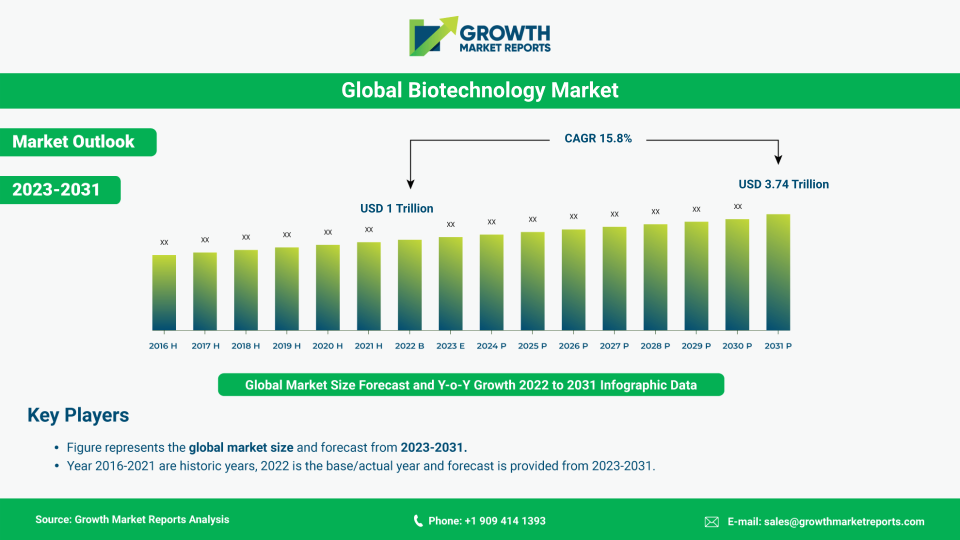
According to our latest research, the global biotechnology market size reached USD 1,350.7 billion in 2024, reflecting robust expansion across diverse sectors. Driven by accelerated innovation and widespread adoption, the market is projected to advance at a CAGR of 13.2% from 2025 to 2033. By the end of 2033, the biotechnology market is forecasted to attain a valuation of USD 3,841.5 billion. The primary growth factor fueling this trajectory is the surge in demand for advanced healthcare solutions, sustainable agricultural practices, and novel bioprocessing technologies, as per our latest research insights.

One of the most significant growth drivers for the biotechnology market is the relentless pursuit of innovation in healthcare and life sciences. With the global population aging and the prevalence of chronic diseases rising, there is an increasing need for targeted therapeutics, personalized medicine, and advanced diagnostic tools. Biotechnology companies are leveraging cutting-edge technologies such as gene editing, DNA sequencing, and bioinformatics to develop next-generation drugs, vaccines, and diagnostic kits. The COVID-19 pandemic further accelerated investments in biotechnology, highlighting the sector’s vital role in rapid vaccine development and disease surveillance. As the healthcare sector continues to prioritize precision medicine and regenerative therapies, biotechnology is positioned at the forefront of medical advancements, driving substantial market growth.

Another crucial factor contributing to the biotechnology market’s expansion is its transformative impact on agriculture and food production. Modern biotechnological techniques, including genetically modified organisms (GMOs), molecular breeding, and microbial fermentation, are revolutionizing crop yields, pest resistance, and nutritional content. These innovations are essential for addressing global food security challenges, especially in the face of climate change and a growing population. The adoption of sustainable agricultural practices, such as biofertilizers and biopesticides, is further propelling market growth by reducing environmental impact and enhancing productivity. The integration of biotechnology in the food and beverage sector also extends to the development of alternative proteins and functional foods, catering to shifting consumer preferences toward health and sustainability.

The industrial and environmental applications of biotechnology represent another dynamic growth avenue. Biotechnology enables the production of bio-based chemicals, enzymes, and biofuels, offering eco-friendly alternatives to traditional industrial processes. Environmental biotechnology is gaining momentum as governments and industries seek sustainable solutions for waste management, pollution control, and resource recovery. The deployment of bioremediation techniques and the engineering of microorganisms to degrade pollutants are becoming standard practices in environmental management. These innovations are not only mitigating environmental risks but also unlocking new revenue streams for biotechnology firms. As regulatory frameworks evolve to support green technologies, the industrial and environmental segments are expected to witness accelerated adoption and investment.

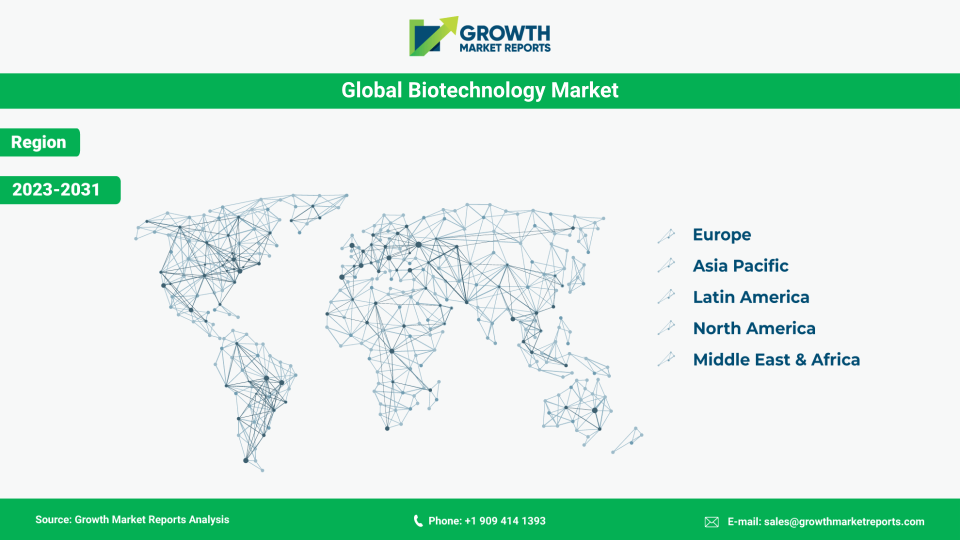
From a regional perspective, North America continues to dominate the biotechnology market, supported by a strong ecosystem of research institutions, academic centers, and industry leaders. The United States, in particular, is home to a vibrant biotechnology sector, driven by significant R&D investments, favorable regulatory policies, and a robust venture capital landscape. Europe follows closely, with countries like Germany, the United Kingdom, and Switzerland leading in innovation and commercialization of biotechnological products. The Asia Pacific region is emerging as a key growth engine, fueled by rising healthcare expenditures, government support, and a burgeoning talent pool in countries such as China, India, and Japan. Latin America and the Middle East & Africa are also witnessing increased activity, albeit at a more gradual pace, as they focus on capacity building and technology transfer.

Global Biotechnology Industry Outlook

Product Type Analysis

The biotechnology market by product type is segmented into instruments, reagents, software, and services, each playing a pivotal role in driving industry growth. Instruments, such as sequencing machines, PCR systems, and imaging devices, form the backbone of biotechnology research and clinical applications. The demand for advanced instruments is surging due to the increasing complexity of biological research and the need for high-throughput, automated solutions. Leading manufacturers are continuously innovating to offer compact, user-friendly, and cost-effective instruments that cater to both large-scale laboratories and smaller research settings. The integration of artificial intelligence and machine learning into these instruments is further enhancing their analytical capabilities, enabling researchers to derive deeper insights from complex biological data.

Reagents constitute another critical segment, encompassing enzymes, antibodies, nucleotides, and chemicals used in various biotechnological processes. The reagents market is experiencing robust growth, driven by the proliferation of molecular diagnostics, genomics, and proteomics applications. As research protocols become more sophisticated, there is a growing need for high-quality, reliable reagents that ensure reproducibility and accuracy. Manufacturers are focusing on developing specialized reagents tailored for specific applications, such as next-generation sequencing and cell culture, to meet the diverse needs of end-users. The rise of contract research organizations (CROs) and contract manufacturing organizations (CMOs) is also boosting demand for bulk reagents and custom formulations.

Software solutions are increasingly integral to the biotechnology ecosystem, enabling data management, analysis, and visualization for a wide array of applications. Bioinformatics platforms, laboratory information management systems (LIMS), and data analytics tools are empowering researchers to handle large datasets generated by high-throughput experiments. The adoption of cloud-based software and artificial intelligence-driven analytics is streamlining workflows, improving collaboration, and accelerating discovery processes. As the volume and complexity of biological data continue to grow, the demand for robust, scalable, and secure software solutions is expected to rise, making this segment a key enabler of market expansion.

Services, including research, consulting, contract manufacturing, and technical support, represent a vital component of the biotechnology market. The outsourcing trend is gaining momentum as companies seek to optimize costs, access specialized expertise, and accelerate time-to-market for new products. Service providers are expanding their offerings to include end-to-end solutions, from early-stage research and development to regulatory compliance and commercialization support. The growing complexity of biotechnological processes necessitates specialized services in areas such as genomics, proteomics, and cell therapy manufacturing. As the competitive landscape intensifies, service providers are differentiating themselves through innovation, quality, and customer-centric approaches.

Report Scope

Attributes Details
Report Title Biotechnology Market Research Report 2033
By Product Type Instruments, Reagents, Software, Services
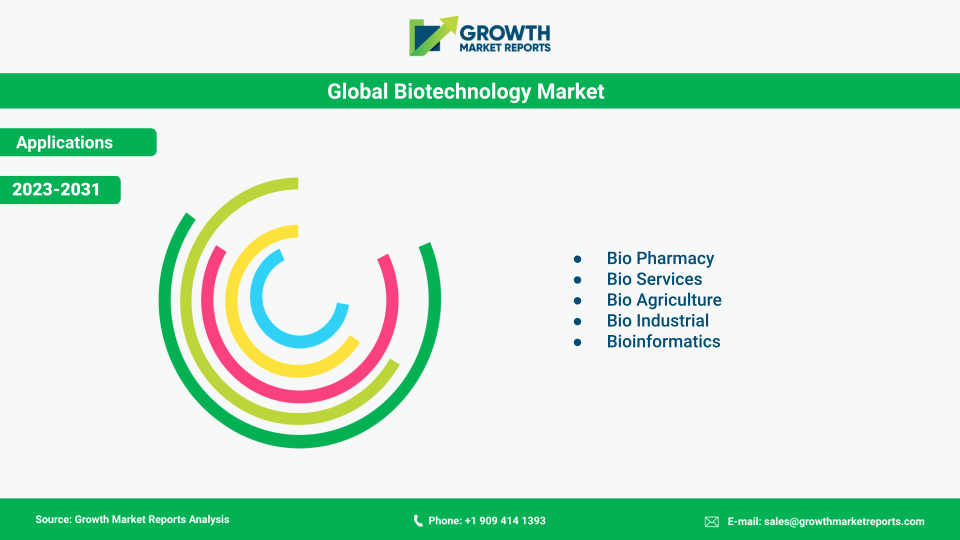
By Application Healthcare, Agriculture, Industrial Processing, Environmental, Food and Beverage, Others
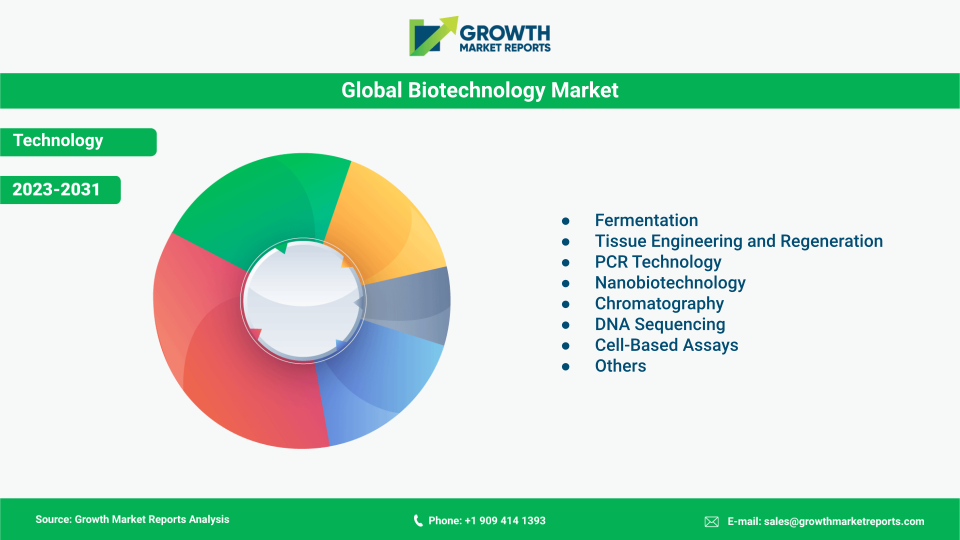
By Technology DNA Sequencing, PCR Technology, Cell Culture, Nanobiotechnology, Chromatography, Others
By End-User Pharmaceutical & Biotechnology Companies, Academic & Research Institutes, Hospitals & Diagnostic Centers, Others
Regions Covered North America, Europe, APAC, Latin America, MEA
Base Year 2024
Historic Data 2018-2023
Forecast Period 2025-2033
Number of Pages 274
Number of Tables & Figures 321
Customization Available Yes, the report can be customized as per your need.

Application Analysis

Healthcare remains the largest application segment in the biotechnology market, encompassing drug development, diagnostics, and personalized medicine. The relentless pursuit of novel therapeutics and advanced diagnostics is driving significant investments in biotechnological research and development. Biopharmaceuticals, including monoclonal antibodies, recombinant proteins, and gene therapies, are transforming the treatment landscape for a wide range of diseases, from cancer to rare genetic disorders. The integration of biotechnology in diagnostics is enabling earlier and more accurate disease detection, paving the way for targeted interventions and improved patient outcomes. As healthcare systems worldwide prioritize value-based care and precision medicine, the healthcare application segment is expected to maintain its dominance and drive substantial market growth.

Agriculture is another key application area, where biotechnology is revolutionizing crop production, pest management, and livestock breeding. The adoption of genetically modified crops, molecular markers, and microbial inoculants is enhancing crop yields, resilience, and nutritional value. Biotechnology is also playing a crucial role in developing drought-resistant and pest-tolerant varieties, addressing the challenges posed by climate change and resource scarcity. The application of biotechnology in animal husbandry is improving disease resistance, productivity, and animal welfare. As global food demand rises, biotechnology-driven innovations are becoming indispensable for ensuring food security and sustainability.

Industrial processing applications of biotechnology encompass the production of bio-based chemicals, enzymes, and biofuels. These innovations are providing sustainable alternatives to traditional petrochemical processes, reducing environmental impact and dependence on fossil fuels. Industrial biotechnology is enabling the efficient conversion of biomass into valuable products, such as bioplastics, bioethanol, and specialty chemicals. The adoption of enzymatic processes is improving the efficiency and selectivity of industrial reactions, leading to cost savings and reduced waste generation. As industries worldwide embrace sustainability goals, the industrial processing segment is poised for significant growth.

Environmental applications of biotechnology are gaining prominence as governments and industries seek solutions for pollution control, waste management, and resource recovery. Bioremediation techniques, leveraging microorganisms to degrade pollutants and restore ecosystems, are being widely adopted in soil and water treatment projects. Biotechnology is also enabling the development of biosensors for real-time environmental monitoring and early detection of contaminants. The integration of biotechnology in environmental management is not only mitigating ecological risks but also creating new opportunities for value creation through the recovery of valuable resources from waste streams.

The food and beverage industry is leveraging biotechnology to develop functional foods, alternative proteins, and enhanced flavors. The use of microbial fermentation, enzyme technology, and metabolic engineering is enabling the production of healthier, more sustainable food products. Biotechnology is also facilitating the development of allergen-free and fortified foods, catering to diverse consumer preferences and dietary requirements. As the demand for plant-based and clean-label products rises, biotechnology is playing a pivotal role in shaping the future of the food and beverage industry.

Technology Analysis

DNA sequencing technology is at the forefront of the biotechnology revolution, enabling the rapid and cost-effective analysis of genetic information. The advent of next-generation sequencing (NGS) platforms has democratized access to genomic data, fueling advances in personalized medicine, disease research, and evolutionary biology. DNA sequencing is being widely adopted in clinical diagnostics, agriculture, and environmental monitoring, providing unprecedented insights into genetic diversity, disease mechanisms, and ecosystem dynamics. As sequencing costs continue to decline and analytical tools become more sophisticated, DNA sequencing is expected to remain a cornerstone technology in the biotechnology market.

Polymerase chain reaction (PCR) technology is another foundational tool, enabling the amplification and detection of specific DNA or RNA sequences. PCR is indispensable in molecular diagnostics, forensic analysis, and genetic research. The development of real-time PCR and digital PCR platforms has enhanced sensitivity, specificity, and throughput, making PCR a versatile technology for a wide range of applications. The COVID-19 pandemic underscored the critical role of PCR in infectious disease diagnostics, driving significant investments in PCR instrumentation and reagent development. As molecular diagnostics continue to evolve, PCR technology is expected to maintain its relevance and expand its application scope.

Cell culture technology is essential for the production of biopharmaceuticals, vaccines, and regenerative medicine products. Advances in cell culture techniques, including the development of serum-free media, 3D culture systems, and automated bioreactors, are improving scalability, reproducibility, and product quality. Cell culture is also enabling breakthroughs in stem cell research, tissue engineering, and personalized medicine. The increasing demand for biologics and cell-based therapies is driving investments in cell culture infrastructure, process optimization, and quality control. As the biopharmaceutical industry continues to expand, cell culture technology is poised for sustained growth and innovation.

Nanobiotechnology is an emerging field that combines nanotechnology and biotechnology to develop novel diagnostic, therapeutic, and delivery systems. Nanoparticles, nanosensors, and nanocarriers are being engineered to improve drug delivery, enhance imaging resolution, and enable targeted therapies. Nanobiotechnology is also facilitating the development of biosensors for early disease detection and environmental monitoring. The convergence of nanotechnology and biotechnology is unlocking new possibilities for precision medicine, minimally invasive diagnostics, and advanced therapeutics. As research in this field accelerates, nanobiotechnology is expected to become a key driver of innovation in the biotechnology market.

Chromatography technology is widely used in biotechnology for the separation, purification, and analysis of biomolecules. High-performance liquid chromatography (HPLC), gas chromatography (GC), and other advanced techniques are enabling the efficient isolation of proteins, nucleic acids, and small molecules. Chromatography is essential for quality control, process optimization, and regulatory compliance in biopharmaceutical manufacturing and research. The development of automated, high-throughput chromatography systems is improving efficiency and scalability, supporting the growth of the biotechnology market. As demand for purified biomolecules increases, chromatography technology will continue to play a critical role in research and production workflows.

End-User Analysis

Pharmaceutical and biotechnology companies are the primary end-users of biotechnology products and services, accounting for a significant share of market demand. These companies are at the forefront of drug discovery, development, and commercialization, leveraging biotechnology to develop innovative therapeutics, vaccines, and diagnostics. The increasing complexity of drug development processes, coupled with stringent regulatory requirements, is driving investments in advanced biotechnological tools and services. Pharmaceutical and biotechnology firms are also forming strategic partnerships with academic institutions, contract research organizations, and technology providers to accelerate innovation and bring new products to market more efficiently.

Academic and research institutes play a crucial role in advancing fundamental and applied biotechnology research. These institutions are hubs of innovation, driving discoveries in genomics, proteomics, synthetic biology, and other emerging fields. Academic partnerships with industry stakeholders are fostering technology transfer, commercialization, and the development of new applications. Government funding and grant programs are supporting research initiatives, infrastructure development, and talent training in biotechnology. As the boundaries between academia and industry continue to blur, academic and research institutes are expected to remain key contributors to the biotechnology market’s growth and evolution.

Hospitals and diagnostic centers are increasingly adopting biotechnology solutions to enhance patient care, disease detection, and treatment outcomes. The integration of molecular diagnostics, genetic testing, and personalized medicine into clinical workflows is transforming healthcare delivery. Hospitals are investing in state-of-the-art laboratory infrastructure, bioinformatics platforms, and specialized staff training to keep pace with technological advancements. The growing prevalence of chronic diseases, infectious outbreaks, and the need for early diagnosis are driving demand for biotechnological products and services in the clinical setting. As healthcare systems prioritize precision medicine and value-based care, hospitals and diagnostic centers will play an expanding role as end-users in the biotechnology market.

Other end-users, including government agencies, environmental organizations, and food and beverage companies, are also contributing to biotechnology market growth. Government agencies are leveraging biotechnology for public health surveillance, environmental monitoring, and biosecurity initiatives. Environmental organizations are adopting biotechnological solutions for pollution control, resource recovery, and ecosystem restoration. The food and beverage industry is utilizing biotechnology to develop functional foods, improve food safety, and enhance product quality. As the scope of biotechnology applications broadens, the diversity of end-users is expected to increase, driving further market expansion.

Opportunities & Threats

The biotechnology market is ripe with opportunities, particularly in the realm of personalized medicine and precision therapeutics. Advances in genomics, proteomics, and bioinformatics are enabling the development of tailored therapies that address individual patient needs, improving efficacy and reducing adverse effects. The growing availability of genetic data, coupled with the decreasing cost of sequencing technologies, is paving the way for widespread adoption of personalized healthcare solutions. Biotechnology companies that invest in innovative platforms, data analytics, and patient-centric approaches are well-positioned to capitalize on these opportunities. The expansion of biopharmaceutical pipelines, the emergence of cell and gene therapies, and the increasing focus on rare diseases are creating new avenues for growth and differentiation.

Another major opportunity lies in the intersection of biotechnology and sustainability. The urgent need to address climate change, resource scarcity, and environmental degradation is driving demand for bio-based solutions across industries. Biotechnology is enabling the development of sustainable agricultural practices, renewable energy sources, and eco-friendly industrial processes. Companies that harness the power of synthetic biology, metabolic engineering, and microbial fermentation can create value-added products with reduced environmental impact. The transition to a bioeconomy, supported by favorable regulatory frameworks and public-private partnerships, is opening up new markets and revenue streams for biotechnology innovators. As sustainability becomes a core business imperative, biotechnology is poised to play a central role in shaping a greener, more resilient future.

Despite the promising outlook, the biotechnology market faces significant restrainers, including regulatory complexity and high development costs. The stringent regulatory requirements governing biotechnology products, especially in healthcare and agriculture, can lead to lengthy approval timelines and increased compliance costs. Navigating the regulatory landscape requires substantial investments in clinical trials, quality control, and documentation. Intellectual property protection, data privacy, and bioethical considerations add further layers of complexity. Small and mid-sized companies, in particular, may face resource constraints that limit their ability to bring innovative products to market. Addressing these challenges will require collaborative efforts among industry stakeholders, regulators, and policymakers to streamline processes and foster an enabling environment for innovation.

Regional Outlook

North America remains the global leader in the biotechnology market, with a market size of USD 520.4 billion in 2024. The region’s dominance is underpinned by a strong innovation ecosystem, extensive R&D investments, and a supportive regulatory framework. The United States, in particular, is home to a large concentration of biotechnology companies, research institutions, and venture capital firms. The presence of world-class universities and a skilled workforce further enhances North America’s competitive advantage. The region’s focus on personalized medicine, biopharmaceuticals, and advanced diagnostics is driving sustained growth, with a projected CAGR of 12.8% through 2033.

Europe is the second-largest biotechnology market, with a market size of USD 340.2 billion in 2024. The region benefits from a collaborative research environment, strong government support, and a robust regulatory infrastructure. Countries such as Germany, the United Kingdom, and Switzerland are at the forefront of biotechnology innovation, with significant contributions to healthcare, agriculture, and industrial applications. The European Union’s emphasis on sustainability, green technologies, and cross-border collaborations is fostering a vibrant biotechnology sector. The region is also witnessing increased activity in synthetic biology, regenerative medicine, and bio-based manufacturing, positioning Europe as a key player in the global market.

The Asia Pacific region is emerging as a high-growth biotechnology market, with a market size of USD 270.5 billion in 2024. The region’s growth is driven by rising healthcare expenditures, expanding research capabilities, and proactive government initiatives. China, India, and Japan are leading the charge, investing in biotechnology infrastructure, talent development, and commercialization efforts. The Asia Pacific market is characterized by a dynamic startup ecosystem, increasing foreign direct investment, and growing demand for advanced healthcare solutions. As the region continues to prioritize innovation and capacity building, it is expected to achieve the fastest CAGR of 14.7% from 2025 to 2033, narrowing the gap with North America and Europe.

Biotechnology Market Statistics

Competitor Outlook

The competitive landscape of the biotechnology market is characterized by intense innovation, strategic alliances, and a diverse mix of global and regional players. Leading companies are investing heavily in research and development to maintain their technological edge and expand their product portfolios. Mergers and acquisitions, partnerships, and licensing agreements are common strategies employed to accelerate market entry, access new technologies, and enhance capabilities. The rapid pace of scientific advancements and the convergence of biotechnology with digital technologies are fostering a climate of collaboration and competition. Companies are also focusing on geographic expansion, regulatory compliance, and customer engagement to strengthen their market presence.

Intellectual property (IP) management is a critical aspect of competitive strategy in the biotechnology market. Companies are actively building robust IP portfolios to protect their innovations, secure market exclusivity, and generate licensing revenues. The complexity of biotechnological inventions, coupled with evolving patent laws, necessitates sophisticated IP management practices. Leading players are leveraging their IP assets to negotiate strategic partnerships, attract investment, and deter competition. The competitive dynamics are further influenced by regulatory approvals, clinical trial outcomes, and market access strategies, underscoring the importance of agility and adaptability in the biotechnology sector.

The rise of startups and emerging companies is adding dynamism to the biotechnology market. These players are often at the forefront of disruptive innovation, developing novel platforms, therapies, and diagnostics. Venture capital funding, government grants, and incubator programs are supporting the growth of early-stage companies. Collaborations with established industry leaders, academic institutions, and contract research organizations are enabling startups to scale their operations and accelerate commercialization. The increasing role of digital health, artificial intelligence, and data analytics is creating new opportunities for entrants to differentiate themselves and capture market share.

Major companies operating in the biotechnology market include Amgen Inc., Genentech (a member of the Roche Group), Gilead Sciences, Biogen Inc., Novo Nordisk, Thermo Fisher Scientific, Merck KGaA, Agilent Technologies, Illumina Inc., and Bio-Rad Laboratories. Amgen Inc. is renowned for its leadership in biopharmaceuticals, focusing on innovative therapies for oncology, nephrology, and inflammatory diseases. Genentech, a pioneer in recombinant DNA technology, continues to drive advancements in cancer and immunology. Gilead Sciences is a leader in antiviral therapeutics, with a strong portfolio in HIV, hepatitis, and COVID-19 treatments. Biogen Inc. specializes in neurology and rare diseases, while Novo Nordisk is a global leader in diabetes care and hormone therapies.

Thermo Fisher Scientific and Agilent Technologies are dominant players in the instruments, reagents, and analytical services segment, providing comprehensive solutions for research, diagnostics, and manufacturing. Illumina Inc. is a leader in DNA sequencing and genomics, enabling breakthroughs in personalized medicine and genetic research. Merck KGaA and Bio-Rad Laboratories offer a wide range of products and services for life sciences, clinical diagnostics, and environmental applications. These companies are distinguished by their commitment to innovation, global reach, and customer-centric approaches. Their strategic investments in R&D, digital transformation, and sustainability are shaping the future of the biotechnology market, ensuring continued leadership and competitiveness in a rapidly evolving industry.

Key Players

  • Johnson & Johnson
  • Roche Holding AG
  • Pfizer Inc.
  • Novartis AG
  • Merck & Co., Inc.
  • AbbVie Inc.
  • Amgen Inc.
  • Gilead Sciences, Inc.
  • Sanofi S.A.
  • Bristol-Myers Squibb Company
  • Biogen Inc.
  • Regeneron Pharmaceuticals, Inc.
  • Eli Lilly and Company
  • GlaxoSmithKline plc
  • AstraZeneca plc
  • Bayer AG
  • Vertex Pharmaceuticals Incorporated
  • CSL Limited
  • Moderna, Inc.
  • Genmab A/S
Biotechnology Market Overview

Segments

The Biotechnology market has been segmented on the basis of

Product Type

  • Instruments
  • Reagents
  • Software
  • Services

Application

  • Healthcare
  • Agriculture
  • Industrial Processing
  • Environmental
  • Food and Beverage
  • Others

Technology

  • DNA Sequencing
  • PCR Technology
  • Cell Culture
  • Nanobiotechnology
  • Chromatography
  • Others

End-User

  • Pharmaceutical & Biotechnology Companies
  • Academic & Research Institutes
  • Hospitals & Diagnostic Centers
  • Others

Competitive Landscape

The major players are Agilent Technologies, BioGen Medical Instruments, Danaher, F. Hoffmann-La Roche, Abbott Laboratories Illumina, Merk, Perkin Elmer, Qiagen, and Thermofisher Scientific, Amgen, Bio-Rad Laboratories. To maintain and strengthen their positions in the market, these players engaged in the initiatives such as merges and acquisitions and new product launches.
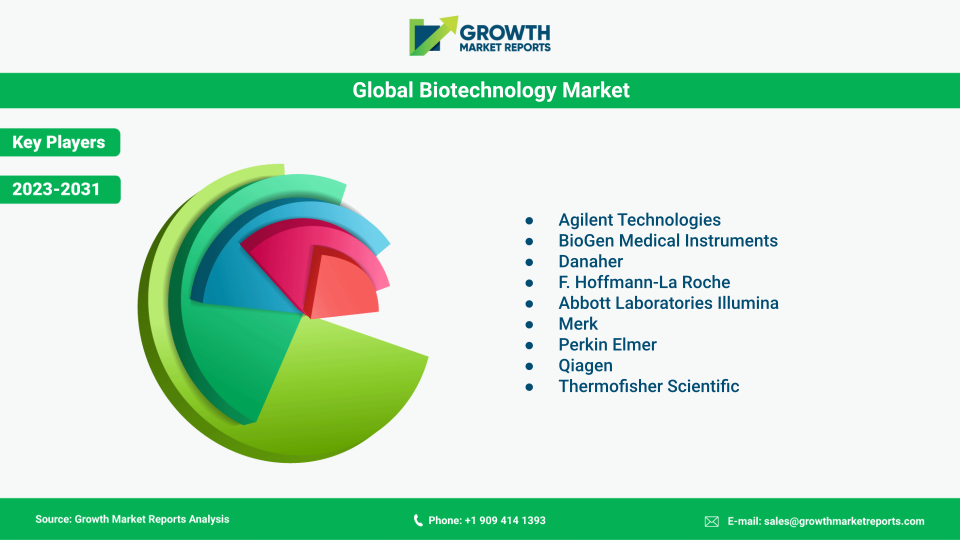

Biotechnology Market Key Players

Frequently Asked Questions

Biotechnology enables the development of sustainable agricultural practices, renewable energy sources, eco-friendly industrial processes, and environmental management solutions such as bioremediation and biosensors.

Leading companies include Amgen Inc., Genentech (Roche Group), Gilead Sciences, Biogen Inc., Novo Nordisk, Thermo Fisher Scientific, Merck KGaA, Agilent Technologies, Illumina Inc., and Bio-Rad Laboratories, among others.

Major challenges include regulatory complexity, high development and compliance costs, intellectual property management, and the need for significant R&D investment.

Primary end-users include pharmaceutical and biotechnology companies, academic and research institutes, hospitals and diagnostic centers, as well as government agencies and food & beverage companies.

Key technologies include DNA sequencing, PCR technology, cell culture, nanobiotechnology, and chromatography, each enabling advances in research, diagnostics, and production.

Major applications include healthcare (drug development, diagnostics, personalized medicine), agriculture (GMOs, pest management), industrial processing (biofuels, bioplastics), environmental management (bioremediation, biosensors), and food and beverage (functional foods, alternative proteins).

Key growth drivers include rising demand for advanced healthcare solutions, sustainable agriculture, novel bioprocessing technologies, and increased investments in R&D and innovation.

North America leads the biotechnology market, followed by Europe and the Asia Pacific region. The Asia Pacific is expected to have the fastest CAGR through 2033.

The biotechnology market is expected to grow at a CAGR of 13.2% from 2025 to 2033, reaching an estimated value of USD 3,841.5 billion by 2033.

As of 2024, the global biotechnology market size reached USD 1,350.7 billion, reflecting robust growth across various sectors.

Table Of Content

Chapter 1 Executive Summary
Chapter 2 Assumptions and Acronyms Used
Chapter 3 Research Methodology
Chapter 4 Biotechnology Market Overview
   4.1 Introduction
      4.1.1 Market Taxonomy
      4.1.2 Market Definition
      4.1.3 Macro-Economic Factors Impacting the Market Growth
   4.2 Biotechnology Market Dynamics
      4.2.1 Market Drivers
      4.2.2 Market Restraints
      4.2.3 Market Opportunity
   4.3 Biotechnology Market - Supply Chain Analysis
      4.3.1 List of Key Suppliers
      4.3.2 List of Key Distributors
      4.3.3 List of Key Consumers
   4.4 Key Forces Shaping the Biotechnology Market
      4.4.1 Bargaining Power of Suppliers
      4.4.2 Bargaining Power of Buyers
      4.4.3 Threat of Substitution
      4.4.4 Threat of New Entrants
      4.4.5 Competitive Rivalry
   4.5 Global Biotechnology Market Size & Forecast, 2023-2032
      4.5.1 Biotechnology Market Size and Y-o-Y Growth
      4.5.2 Biotechnology Market Absolute $ Opportunity

Chapter 5 Global Biotechnology Market Analysis and Forecast By Product Type
   5.1 Introduction
      5.1.1 Key Market Trends & Growth Opportunities By Product Type
      5.1.2 Basis Point Share (BPS) Analysis By Product Type
      5.1.3 Absolute $ Opportunity Assessment By Product Type
   5.2 Biotechnology Market Size Forecast By Product Type
      5.2.1 Instruments
      5.2.2 Reagents
      5.2.3 Software
      5.2.4 Services
   5.3 Market Attractiveness Analysis By Product Type

Chapter 6 Global Biotechnology Market Analysis and Forecast By Application
   6.1 Introduction
      6.1.1 Key Market Trends & Growth Opportunities By Application
      6.1.2 Basis Point Share (BPS) Analysis By Application
      6.1.3 Absolute $ Opportunity Assessment By Application
   6.2 Biotechnology Market Size Forecast By Application
      6.2.1 Healthcare
      6.2.2 Agriculture
      6.2.3 Industrial Processing
      6.2.4 Environmental
      6.2.5 Food and Beverage
      6.2.6 Others
   6.3 Market Attractiveness Analysis By Application

Chapter 7 Global Biotechnology Market Analysis and Forecast By Technology
   7.1 Introduction
      7.1.1 Key Market Trends & Growth Opportunities By Technology
      7.1.2 Basis Point Share (BPS) Analysis By Technology
      7.1.3 Absolute $ Opportunity Assessment By Technology
   7.2 Biotechnology Market Size Forecast By Technology
      7.2.1 DNA Sequencing
      7.2.2 PCR Technology
      7.2.3 Cell Culture
      7.2.4 Nanobiotechnology
      7.2.5 Chromatography
      7.2.6 Others
   7.3 Market Attractiveness Analysis By Technology

Chapter 8 Global Biotechnology Market Analysis and Forecast By End-User
   8.1 Introduction
      8.1.1 Key Market Trends & Growth Opportunities By End-User
      8.1.2 Basis Point Share (BPS) Analysis By End-User
      8.1.3 Absolute $ Opportunity Assessment By End-User
   8.2 Biotechnology Market Size Forecast By End-User
      8.2.1 Pharmaceutical & Biotechnology Companies
      8.2.2 Academic & Research Institutes
      8.2.3 Hospitals & Diagnostic Centers
      8.2.4 Others
   8.3 Market Attractiveness Analysis By End-User

Chapter 9 Global Biotechnology Market Analysis and Forecast by Region
   9.1 Introduction
      9.1.1 Key Market Trends & Growth Opportunities By Region
      9.1.2 Basis Point Share (BPS) Analysis By Region
      9.1.3 Absolute $ Opportunity Assessment By Region
   9.2 Biotechnology Market Size Forecast By Region
      9.2.1 North America
      9.2.2 Europe
      9.2.3 Asia Pacific
      9.2.4 Latin America
      9.2.5 Middle East & Africa (MEA)
   9.3 Market Attractiveness Analysis By Region

Chapter 10 Coronavirus Disease (COVID-19) Impact 
   10.1 Introduction 
   10.2 Current & Future Impact Analysis 
   10.3 Economic Impact Analysis 
   10.4 Government Policies 
   10.5 Investment Scenario

Chapter 11 North America Biotechnology Analysis and Forecast
   11.1 Introduction
   11.2 North America Biotechnology Market Size Forecast by Country
      11.2.1 U.S.
      11.2.2 Canada
   11.3 Basis Point Share (BPS) Analysis by Country
   11.4 Absolute $ Opportunity Assessment by Country
   11.5 Market Attractiveness Analysis by Country
   11.6 North America Biotechnology Market Size Forecast By Product Type
      11.6.1 Instruments
      11.6.2 Reagents
      11.6.3 Software
      11.6.4 Services
   11.7 Basis Point Share (BPS) Analysis By Product Type 
   11.8 Absolute $ Opportunity Assessment By Product Type 
   11.9 Market Attractiveness Analysis By Product Type
   11.10 North America Biotechnology Market Size Forecast By Application
      11.10.1 Healthcare
      11.10.2 Agriculture
      11.10.3 Industrial Processing
      11.10.4 Environmental
      11.10.5 Food and Beverage
      11.10.6 Others
   11.11 Basis Point Share (BPS) Analysis By Application 
   11.12 Absolute $ Opportunity Assessment By Application 
   11.13 Market Attractiveness Analysis By Application
   11.14 North America Biotechnology Market Size Forecast By Technology
      11.14.1 DNA Sequencing
      11.14.2 PCR Technology
      11.14.3 Cell Culture
      11.14.4 Nanobiotechnology
      11.14.5 Chromatography
      11.14.6 Others
   11.15 Basis Point Share (BPS) Analysis By Technology 
   11.16 Absolute $ Opportunity Assessment By Technology 
   11.17 Market Attractiveness Analysis By Technology
   11.18 North America Biotechnology Market Size Forecast By End-User
      11.18.1 Pharmaceutical & Biotechnology Companies
      11.18.2 Academic & Research Institutes
      11.18.3 Hospitals & Diagnostic Centers
      11.18.4 Others
   11.19 Basis Point Share (BPS) Analysis By End-User 
   11.20 Absolute $ Opportunity Assessment By End-User 
   11.21 Market Attractiveness Analysis By End-User

Chapter 12 Europe Biotechnology Analysis and Forecast
   12.1 Introduction
   12.2 Europe Biotechnology Market Size Forecast by Country
      12.2.1 Germany
      12.2.2 France
      12.2.3 Italy
      12.2.4 U.K.
      12.2.5 Spain
      12.2.6 Russia
      12.2.7 Rest of Europe
   12.3 Basis Point Share (BPS) Analysis by Country
   12.4 Absolute $ Opportunity Assessment by Country
   12.5 Market Attractiveness Analysis by Country
   12.6 Europe Biotechnology Market Size Forecast By Product Type
      12.6.1 Instruments
      12.6.2 Reagents
      12.6.3 Software
      12.6.4 Services
   12.7 Basis Point Share (BPS) Analysis By Product Type 
   12.8 Absolute $ Opportunity Assessment By Product Type 
   12.9 Market Attractiveness Analysis By Product Type
   12.10 Europe Biotechnology Market Size Forecast By Application
      12.10.1 Healthcare
      12.10.2 Agriculture
      12.10.3 Industrial Processing
      12.10.4 Environmental
      12.10.5 Food and Beverage
      12.10.6 Others
   12.11 Basis Point Share (BPS) Analysis By Application 
   12.12 Absolute $ Opportunity Assessment By Application 
   12.13 Market Attractiveness Analysis By Application
   12.14 Europe Biotechnology Market Size Forecast By Technology
      12.14.1 DNA Sequencing
      12.14.2 PCR Technology
      12.14.3 Cell Culture
      12.14.4 Nanobiotechnology
      12.14.5 Chromatography
      12.14.6 Others
   12.15 Basis Point Share (BPS) Analysis By Technology 
   12.16 Absolute $ Opportunity Assessment By Technology 
   12.17 Market Attractiveness Analysis By Technology
   12.18 Europe Biotechnology Market Size Forecast By End-User
      12.18.1 Pharmaceutical & Biotechnology Companies
      12.18.2 Academic & Research Institutes
      12.18.3 Hospitals & Diagnostic Centers
      12.18.4 Others
   12.19 Basis Point Share (BPS) Analysis By End-User 
   12.20 Absolute $ Opportunity Assessment By End-User 
   12.21 Market Attractiveness Analysis By End-User

Chapter 13 Asia Pacific Biotechnology Analysis and Forecast
   13.1 Introduction
   13.2 Asia Pacific Biotechnology Market Size Forecast by Country
      13.2.1 China
      13.2.2 Japan
      13.2.3 South Korea
      13.2.4 India
      13.2.5 Australia
      13.2.6 South East Asia (SEA)
      13.2.7 Rest of Asia Pacific (APAC)
   13.3 Basis Point Share (BPS) Analysis by Country
   13.4 Absolute $ Opportunity Assessment by Country
   13.5 Market Attractiveness Analysis by Country
   13.6 Asia Pacific Biotechnology Market Size Forecast By Product Type
      13.6.1 Instruments
      13.6.2 Reagents
      13.6.3 Software
      13.6.4 Services
   13.7 Basis Point Share (BPS) Analysis By Product Type 
   13.8 Absolute $ Opportunity Assessment By Product Type 
   13.9 Market Attractiveness Analysis By Product Type
   13.10 Asia Pacific Biotechnology Market Size Forecast By Application
      13.10.1 Healthcare
      13.10.2 Agriculture
      13.10.3 Industrial Processing
      13.10.4 Environmental
      13.10.5 Food and Beverage
      13.10.6 Others
   13.11 Basis Point Share (BPS) Analysis By Application 
   13.12 Absolute $ Opportunity Assessment By Application 
   13.13 Market Attractiveness Analysis By Application
   13.14 Asia Pacific Biotechnology Market Size Forecast By Technology
      13.14.1 DNA Sequencing
      13.14.2 PCR Technology
      13.14.3 Cell Culture
      13.14.4 Nanobiotechnology
      13.14.5 Chromatography
      13.14.6 Others
   13.15 Basis Point Share (BPS) Analysis By Technology 
   13.16 Absolute $ Opportunity Assessment By Technology 
   13.17 Market Attractiveness Analysis By Technology
   13.18 Asia Pacific Biotechnology Market Size Forecast By End-User
      13.18.1 Pharmaceutical & Biotechnology Companies
      13.18.2 Academic & Research Institutes
      13.18.3 Hospitals & Diagnostic Centers
      13.18.4 Others
   13.19 Basis Point Share (BPS) Analysis By End-User 
   13.20 Absolute $ Opportunity Assessment By End-User 
   13.21 Market Attractiveness Analysis By End-User

Chapter 14 Latin America Biotechnology Analysis and Forecast
   14.1 Introduction
   14.2 Latin America Biotechnology Market Size Forecast by Country
      14.2.1 Brazil
      14.2.2 Mexico
      14.2.3 Rest of Latin America (LATAM)
   14.3 Basis Point Share (BPS) Analysis by Country
   14.4 Absolute $ Opportunity Assessment by Country
   14.5 Market Attractiveness Analysis by Country
   14.6 Latin America Biotechnology Market Size Forecast By Product Type
      14.6.1 Instruments
      14.6.2 Reagents
      14.6.3 Software
      14.6.4 Services
   14.7 Basis Point Share (BPS) Analysis By Product Type 
   14.8 Absolute $ Opportunity Assessment By Product Type 
   14.9 Market Attractiveness Analysis By Product Type
   14.10 Latin America Biotechnology Market Size Forecast By Application
      14.10.1 Healthcare
      14.10.2 Agriculture
      14.10.3 Industrial Processing
      14.10.4 Environmental
      14.10.5 Food and Beverage
      14.10.6 Others
   14.11 Basis Point Share (BPS) Analysis By Application 
   14.12 Absolute $ Opportunity Assessment By Application 
   14.13 Market Attractiveness Analysis By Application
   14.14 Latin America Biotechnology Market Size Forecast By Technology
      14.14.1 DNA Sequencing
      14.14.2 PCR Technology
      14.14.3 Cell Culture
      14.14.4 Nanobiotechnology
      14.14.5 Chromatography
      14.14.6 Others
   14.15 Basis Point Share (BPS) Analysis By Technology 
   14.16 Absolute $ Opportunity Assessment By Technology 
   14.17 Market Attractiveness Analysis By Technology
   14.18 Latin America Biotechnology Market Size Forecast By End-User
      14.18.1 Pharmaceutical & Biotechnology Companies
      14.18.2 Academic & Research Institutes
      14.18.3 Hospitals & Diagnostic Centers
      14.18.4 Others
   14.19 Basis Point Share (BPS) Analysis By End-User 
   14.20 Absolute $ Opportunity Assessment By End-User 
   14.21 Market Attractiveness Analysis By End-User

Chapter 15 Middle East & Africa (MEA) Biotechnology Analysis and Forecast
   15.1 Introduction
   15.2 Middle East & Africa (MEA) Biotechnology Market Size Forecast by Country
      15.2.1 Saudi Arabia
      15.2.2 South Africa
      15.2.3 UAE
      15.2.4 Rest of Middle East & Africa (MEA)
   15.3 Basis Point Share (BPS) Analysis by Country
   15.4 Absolute $ Opportunity Assessment by Country
   15.5 Market Attractiveness Analysis by Country
   15.6 Middle East & Africa (MEA) Biotechnology Market Size Forecast By Product Type
      15.6.1 Instruments
      15.6.2 Reagents
      15.6.3 Software
      15.6.4 Services
   15.7 Basis Point Share (BPS) Analysis By Product Type 
   15.8 Absolute $ Opportunity Assessment By Product Type 
   15.9 Market Attractiveness Analysis By Product Type
   15.10 Middle East & Africa (MEA) Biotechnology Market Size Forecast By Application
      15.10.1 Healthcare
      15.10.2 Agriculture
      15.10.3 Industrial Processing
      15.10.4 Environmental
      15.10.5 Food and Beverage
      15.10.6 Others
   15.11 Basis Point Share (BPS) Analysis By Application 
   15.12 Absolute $ Opportunity Assessment By Application 
   15.13 Market Attractiveness Analysis By Application
   15.14 Middle East & Africa (MEA) Biotechnology Market Size Forecast By Technology
      15.14.1 DNA Sequencing
      15.14.2 PCR Technology
      15.14.3 Cell Culture
      15.14.4 Nanobiotechnology
      15.14.5 Chromatography
      15.14.6 Others
   15.15 Basis Point Share (BPS) Analysis By Technology 
   15.16 Absolute $ Opportunity Assessment By Technology 
   15.17 Market Attractiveness Analysis By Technology
   15.18 Middle East & Africa (MEA) Biotechnology Market Size Forecast By End-User
      15.18.1 Pharmaceutical & Biotechnology Companies
      15.18.2 Academic & Research Institutes
      15.18.3 Hospitals & Diagnostic Centers
      15.18.4 Others
   15.19 Basis Point Share (BPS) Analysis By End-User 
   15.20 Absolute $ Opportunity Assessment By End-User 
   15.21 Market Attractiveness Analysis By End-User

Chapter 16 Competition Landscape 
   16.1 Biotechnology Market: Competitive Dashboard
   16.2 Global Biotechnology Market: Market Share Analysis, 2023
   16.3 Company Profiles (Details – Overview, Financials, Developments, Strategy) 
      16.3.1 Johnson & Johnson
Roche Holding AG
Pfizer Inc.
Novartis AG
Merck & Co., Inc.
AbbVie Inc.
Amgen Inc.
Gilead Sciences, Inc.
Sanofi S.A.
Bristol-Myers Squibb Company
Biogen Inc.
Regeneron Pharmaceuticals, Inc.
Eli Lilly and Company
GlaxoSmithKline plc
AstraZeneca plc
Bayer AG
Vertex Pharmaceuticals Incorporated
CSL Limited
Moderna, Inc.
Genmab A/S

Methodology

Our Clients

sinopec
Deloitte
Microsoft
Nestle SA
FedEx Logistics
Honda Motor Co. Ltd.
General Mills
Pfizer