Segments - by Product Type (PTFE Films, PVDF Films, FEP Films, ETFE Films, PFA Films, Others), by Application (Electrical & Electronics, Automotive & Aerospace, Industrial, Packaging, Construction, Others), by End-Use Industry (Chemical Processing, Food & Beverage, Pharmaceuticals, Renewable Energy, Others)
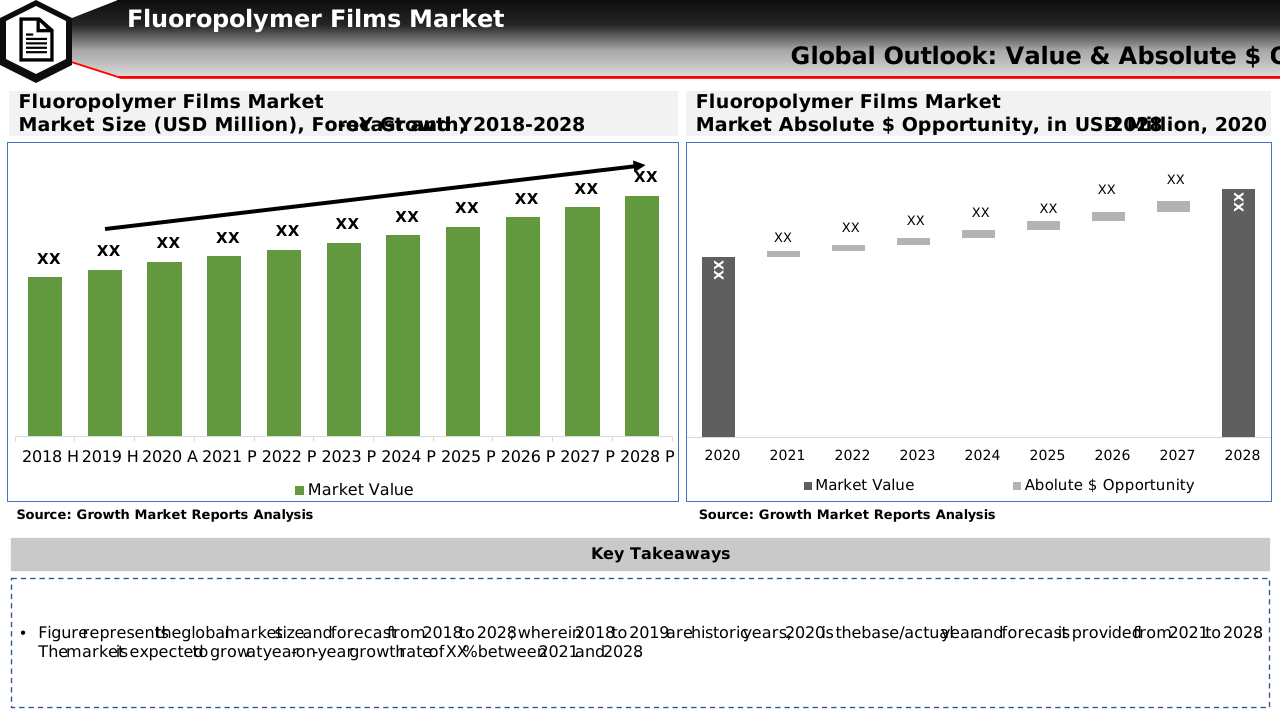
According to our latest research, the global fluoro polymer films market size reached USD 2.4 billion in 2024, reflecting robust demand across diverse end-use industries. The market is poised to grow at a CAGR of 6.9% during the forecast period, with projections indicating a value of USD 4.5 billion by 2033. This remarkable growth trajectory is primarily driven by the increasing adoption of fluoro polymer films in high-performance applications, particularly within the electronics, automotive, and renewable energy sectors. The unique properties of these films, such as chemical resistance, thermal stability, and superior electrical insulation, are key factors fueling their widespread utilization globally.
A primary growth driver for the fluoro polymer films market is the escalating demand from the electrical and electronics industry. With the proliferation of advanced electronic devices, there is a heightened need for materials that can withstand harsh operating environments while ensuring optimal performance. Fluoro polymer films, especially PTFE and PVDF variants, offer exceptional dielectric properties and stability under extreme temperatures, making them indispensable in the manufacturing of wires, cables, and flexible printed circuits. Furthermore, the rapid evolution of consumer electronics and the ongoing miniaturization trend have compelled manufacturers to seek reliable insulation and protection solutions, thereby bolstering demand for these high-performance films.
Another significant factor propelling market expansion is the increasing application of fluoro polymer films in the automotive and aerospace sectors. As these industries prioritize lightweight, durable, and high-temperature-resistant materials to enhance fuel efficiency and performance, fluoro polymer films have emerged as a preferred choice. Their ability to resist chemicals, UV radiation, and mechanical stress makes them ideal for applications such as gaskets, seals, and protective linings in vehicle components and aircraft systems. The ongoing shift towards electric vehicles and the integration of advanced driver-assistance systems (ADAS) are further amplifying the need for reliable insulating and protective materials, thereby creating lucrative opportunities for market participants.
Sustainability trends and regulatory pressures are also shaping the growth dynamics of the fluoro polymer films market. Industries such as food and beverage, pharmaceuticals, and renewable energy are increasingly adopting these films due to their non-reactive nature, safety compliance, and ability to maintain product integrity. In solar panel manufacturing, for instance, ETFE and FEP films are widely used for their excellent light transmission and weatherability, contributing to the longevity and efficiency of photovoltaic modules. As global efforts to reduce environmental impact intensify, manufacturers are focusing on developing recyclable and eco-friendly fluoro polymer films, further expanding the marketÂ’s potential.
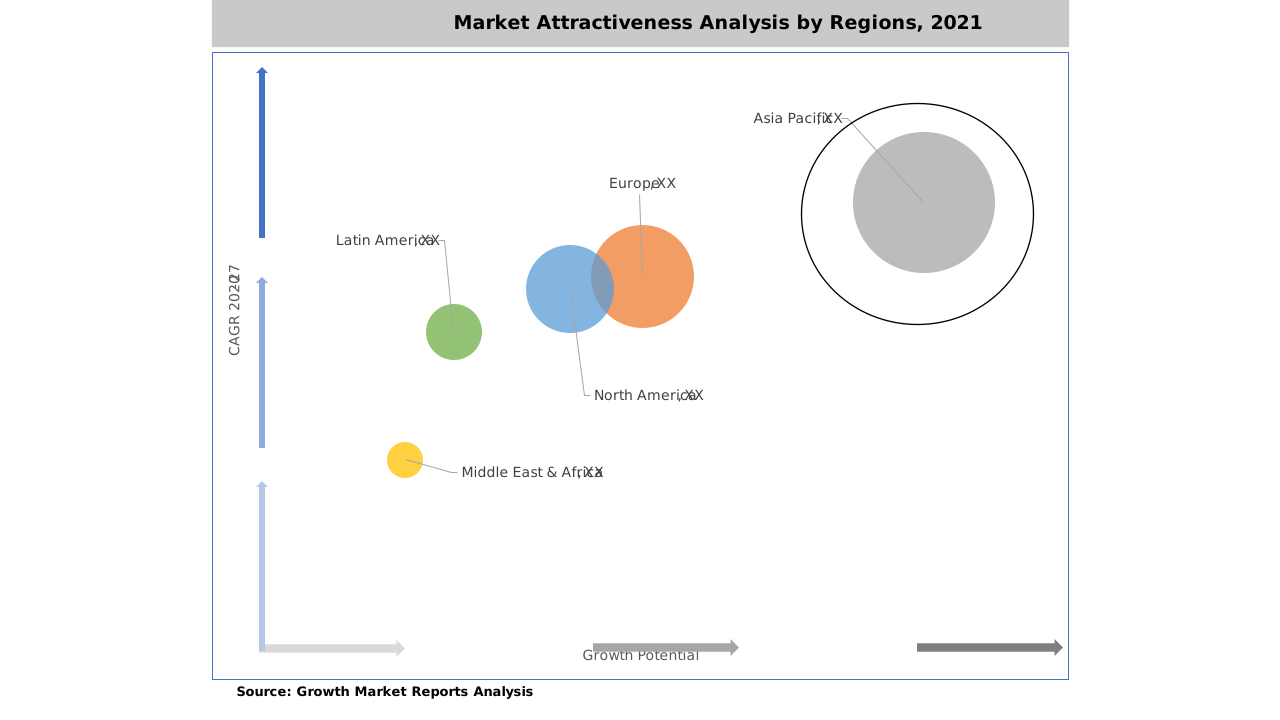
From a regional perspective, Asia Pacific dominates the global market, accounting for the largest share in 2024, driven by rapid industrialization, expanding electronics manufacturing hubs, and growing investments in renewable energy infrastructure. North America and Europe follow closely, supported by technological advancements and stringent quality standards in automotive, aerospace, and healthcare sectors. Latin America and the Middle East & Africa are witnessing gradual growth, supported by infrastructural developments and increasing adoption in niche applications. The competitive landscape is characterized by innovation, strategic partnerships, and capacity expansions as key players vie to strengthen their market position and cater to evolving industry demands.
The fluoro polymer films market is segmented by product type into PTFE Films, PVDF Films, FEP Films, ETFE Films, PFA Films, and Others. Among these, PTFE (Polytetrafluoroethylene) films hold the largest market share due to their exceptional chemical inertness, high-temperature resistance, and low friction properties. PTFE films are widely used in applications requiring non-stick surfaces, electrical insulation, and high-performance gaskets. Their versatility allows them to cater to diverse industries such as electronics, automotive, and chemical processing. The demand for PTFE films is further augmented by their use in advanced manufacturing processes, including membrane filtration and composite fabrication, where durability and performance are paramount.
PVDF (Polyvinylidene Fluoride) films are gaining significant traction, particularly in the renewable energy and construction sectors. Their excellent UV resistance, mechanical strength, and piezoelectric properties make them ideal for photovoltaic back sheets, architectural coatings, and lithium-ion battery separators. The growing adoption of solar energy solutions and the expansion of green building initiatives are key factors driving the demand for PVDF films. Additionally, their ability to withstand harsh outdoor environments without degradation enhances their appeal in long-term infrastructure projects, further consolidating their market position.
Fluoropolymer Coating is another critical area of interest within the fluoro polymer films market, particularly due to its application in enhancing the durability and performance of various products. These coatings are renowned for their ability to provide a non-stick, corrosion-resistant surface, which is essential in industries ranging from cookware to industrial machinery. The electronics sector, in particular, benefits from fluoropolymer coatings, as they offer excellent dielectric properties and thermal stability, ensuring that electronic components remain protected under extreme conditions. As industries continue to push the boundaries of performance and efficiency, the role of fluoropolymer coatings in delivering high-quality, long-lasting solutions is becoming increasingly significant.
FEP (Fluorinated Ethylene Propylene) and ETFE (Ethylene Tetrafluoroethylene) films are distinguished by their outstanding transparency, flexibility, and resistance to environmental stress cracking. FEP films are extensively used in wire insulation, medical devices, and chemical processing equipment, benefiting from their non-stick and non-reactive nature. ETFE films, on the other hand, are renowned for their use in architectural applications, such as roofing membranes and greenhouses, due to their lightweight and self-cleaning properties. The increasing focus on sustainable construction and energy-efficient building materials is expected to drive the adoption of ETFE films in the coming years.
PFA (Perfluoroalkoxy Alkane) films and other specialty fluoro polymer films cater to niche applications that demand superior purity, flexibility, and processability. PFA films are commonly employed in semiconductor manufacturing, pharmaceutical packaging, and high-purity fluid handling systems. Their ability to maintain integrity under aggressive chemical exposure and high temperatures makes them indispensable in critical environments. As technological advancements continue to push the boundaries of material performance, the development of novel fluoro polymer film formulations is anticipated to unlock new opportunities across emerging applications, thereby fueling overall market growth.
The competitive landscape within the product type segment is characterized by ongoing research and development efforts aimed at enhancing film properties and expanding application scope. Manufacturers are investing in advanced processing technologies, such as extrusion and calendaring, to achieve superior film uniformity, thickness control, and surface finish. Strategic collaborations with end-user industries and the introduction of value-added product variants, such as anti-static or conductive films, are further differentiating market players and driving product innovation. As end-user requirements become increasingly sophisticated, the ability to deliver customized and high-performance fluoro polymer films will remain a critical success factor for industry participants.
PTFE Coated Fiberglass Fabric is making waves in the market due to its remarkable combination of strength and flexibility. This material is widely used in applications that require a durable yet lightweight solution, such as conveyor belts, architectural structures, and industrial insulation. The coating of PTFE on fiberglass fabric enhances its chemical resistance and thermal stability, making it suitable for use in harsh environments. In the construction industry, PTFE coated fiberglass fabric is favored for its ability to withstand weathering and UV exposure, contributing to the longevity of building facades and roofing systems. As the demand for advanced materials continues to grow, the versatility and performance of PTFE coated fiberglass fabric make it a valuable asset in various sectors.
| Attributes | Details |
| Report Title | Fluoro polymer Films Market Research Report 2033 |
| By Product Type | PTFE Films, PVDF Films, FEP Films, ETFE Films, PFA Films, Others |
| By Application | Electrical & Electronics, Automotive & Aerospace, Industrial, Packaging, Construction, Others |
| By End-Use Industry | Chemical Processing, Food & Beverage, Pharmaceuticals, Renewable Energy, Others |
| Regions Covered | North America, Europe, APAC, Latin America, MEA |
| Base Year | 2024 |
| Historic Data | 2018-2023 |
| Forecast Period | 2025-2033 |
| Number of Pages | 282 |
| Number of Tables & Figures | 309 |
| Customization Available | Yes, the report can be customized as per your need. |
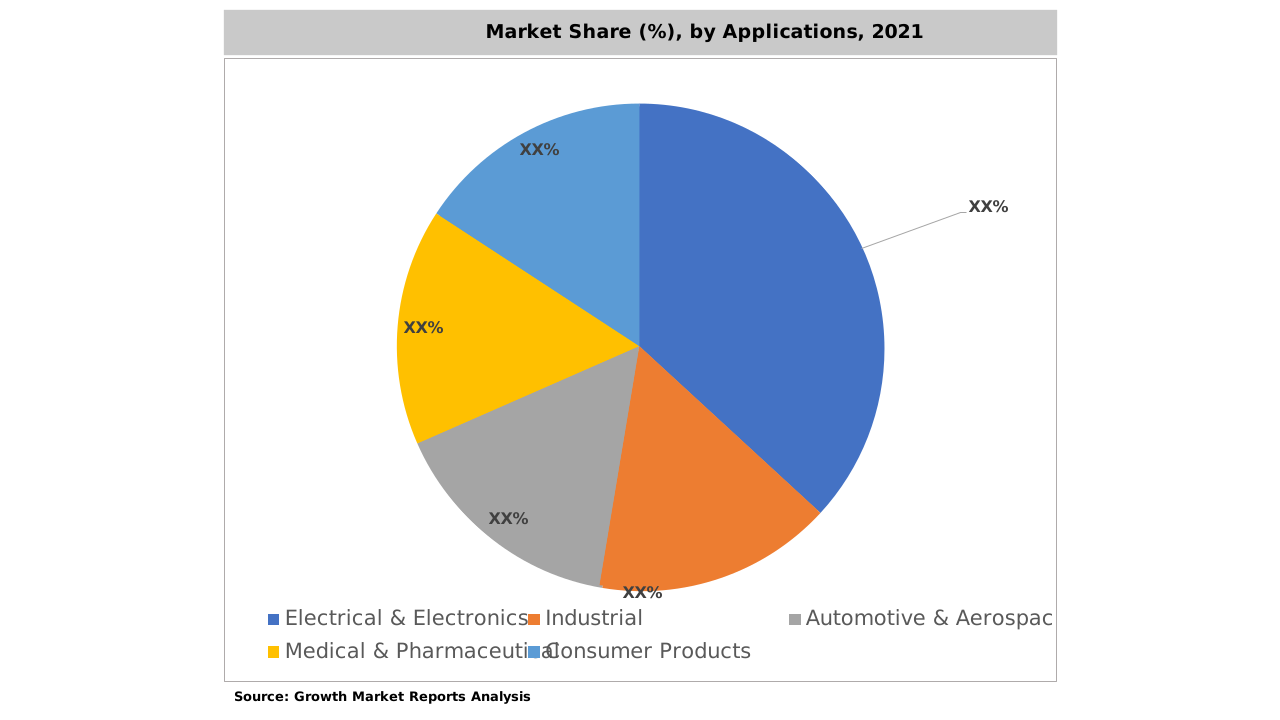
The application landscape of the fluoro polymer films market is diverse, encompassing electrical and electronics, automotive and aerospace, industrial, packaging, construction, and other specialized uses. The electrical and electronics segment represents the largest share, driven by the growing demand for high-performance insulating materials in a rapidly digitizing world. Fluoro polymer films are integral to the production of flexible circuits, cable insulation, and electronic substrates, where their dielectric strength and thermal stability ensure reliable operation of sensitive components. As the proliferation of smart devices, 5G networks, and IoT technologies accelerates, the need for advanced insulation and protection solutions is expected to surge, reinforcing the dominance of this application segment.
The automotive and aerospace segment is experiencing robust growth, underpinned by the industry's shift towards lightweighting, electrification, and enhanced safety standards. Fluoro polymer films are utilized in a variety of automotive components, including fuel hoses, gaskets, and wire harnesses, where resistance to chemicals, heat, and abrasion is essential. In the aerospace sector, these films are employed in insulation blankets, seals, and composite structures, contributing to improved fuel efficiency and operational reliability. The ongoing transition to electric vehicles and the adoption of advanced driver-assistance systems are further amplifying the demand for specialized fluoro polymer films, as manufacturers seek to optimize performance and regulatory compliance.
Industrial applications of fluoro polymer films span a wide range of processes, from chemical processing and filtration to semiconductor manufacturing and fluid handling. The films' ability to withstand aggressive chemicals, high pressures, and extreme temperatures makes them indispensable in environments where conventional materials would fail. In the chemical processing sector, for instance, fluoro polymer films are used as linings for tanks, pipes, and reactors, ensuring long-term durability and safety. The semiconductor industry relies on ultra-pure films for wafer processing and cleanroom environments, where contamination control is critical. As industrial processes become more complex and demanding, the adoption of advanced fluoro polymer films is expected to rise steadily.
Packaging and construction represent additional high-growth application areas for fluoro polymer films. In packaging, these films provide exceptional barrier properties, chemical resistance, and non-stick surfaces, making them ideal for food, pharmaceutical, and specialty packaging solutions. The construction industry leverages ETFE and PVDF films for roofing membranes, facades, and protective coatings, benefiting from their lightweight, weather-resistant, and self-cleaning characteristics. As sustainability and energy efficiency gain prominence in building design, the demand for innovative fluoro polymer film solutions is anticipated to increase, particularly in green building and infrastructure projects.
Other applications of fluoro polymer films include medical devices, membranes for fuel cells, and specialty textiles, reflecting the versatility and adaptability of these materials. The ongoing development of new formulations and processing techniques is enabling the penetration of fluoro polymer films into emerging application areas, such as flexible electronics, wearable devices, and advanced filtration systems. As end-user industries continue to evolve and diversify, the ability of fluoro polymer films to deliver superior performance, reliability, and safety will remain a key driver of market growth across all application segments.
The fluoro polymer films market is segmented by end-use industry into chemical processing, food and beverage, pharmaceuticals, renewable energy, and others. The chemical processing industry commands a significant share, owing to the critical need for materials that can resist harsh chemicals, high pressures, and extreme temperatures. Fluoro polymer films are widely used as linings, gaskets, and membranes in chemical reactors, storage tanks, and pipelines, ensuring operational safety and longevity. Their non-reactive nature and ability to maintain structural integrity under aggressive conditions make them indispensable in this sector. As chemical processing operations become more sophisticated and regulations more stringent, the demand for high-performance fluoro polymer films is expected to remain robust.
The food and beverage industry is another major consumer of fluoro polymer films, leveraging their non-stick, non-toxic, and barrier properties for packaging and processing applications. These films are used in conveyor belts, release liners, and protective coatings, ensuring food safety, hygiene, and product shelf life. The growing emphasis on food quality, contamination prevention, and regulatory compliance is driving the adoption of fluoro polymer films in this sector. Additionally, the trend towards convenience foods and ready-to-eat meals is fueling demand for innovative packaging solutions that can withstand various processing conditions while preserving product integrity.
In the pharmaceutical industry, fluoro polymer films play a crucial role in ensuring the safety, efficacy, and stability of medical products. They are used in blister packaging, sterile barrier systems, and medical device components, benefiting from their chemical inertness, biocompatibility, and resistance to sterilization processes. The increasing focus on patient safety, regulatory compliance, and the development of advanced drug delivery systems is driving the adoption of high-quality fluoro polymer films in pharmaceutical applications. As the industry continues to innovate and expand, the need for reliable and high-performance packaging and component materials is expected to grow.
The renewable energy sector, particularly solar and wind power, is emerging as a significant growth driver for the fluoro polymer films market. ETFE and FEP films are extensively used in photovoltaic modules, wind turbine blades, and protective coatings, offering superior weatherability, light transmission, and durability. The global shift towards clean energy and the expansion of solar and wind power installations are creating new opportunities for market participants. As governments and industries prioritize sustainability and environmental responsibility, the adoption of advanced fluoro polymer films in renewable energy applications is set to accelerate, contributing to the overall market expansion.
Other end-use industries, such as textiles, water treatment, and advanced manufacturing, are also incorporating fluoro polymer films to address specific performance requirements. The versatility and adaptability of these films enable their application in a wide range of specialized processes, from protective clothing and filtration membranes to high-purity fluid handling systems. As technological advancements continue to drive innovation across end-use industries, the demand for customized and high-performance fluoro polymer film solutions is expected to increase, further diversifying the market landscape.
The fluoro polymer films market presents significant opportunities for growth, particularly in emerging applications and geographic regions. The ongoing transition to renewable energy, coupled with government incentives and investments in solar and wind power infrastructure, is creating substantial demand for high-performance films in photovoltaic modules and turbine components. Additionally, the rapid expansion of the electronics and automotive industries in Asia Pacific and other developing regions is opening new avenues for market penetration. The increasing focus on sustainability and environmental responsibility is driving the development of recyclable and eco-friendly fluoro polymer films, enabling manufacturers to address regulatory requirements and enhance their competitive advantage.
Technological advancements and product innovation represent another major opportunity for market participants. The development of novel film formulations with enhanced properties, such as improved transparency, conductivity, and antimicrobial functionality, is enabling the penetration of fluoro polymer films into emerging application areas. Strategic collaborations with end-user industries, research institutions, and technology providers are facilitating the co-creation of customized solutions tailored to specific performance requirements. Furthermore, the adoption of advanced manufacturing processes, such as precision extrusion and multilayer film technology, is enhancing product quality, consistency, and scalability, positioning manufacturers to capitalize on evolving industry trends.
Despite the positive outlook, the fluoro polymer films market faces certain restraining factors that could impact growth. The high cost of raw materials and complex manufacturing processes can pose challenges for market participants, particularly in price-sensitive applications and regions. Environmental concerns related to the production, disposal, and recycling of fluoro polymer films are prompting regulatory scrutiny and the need for sustainable alternatives. Additionally, competition from alternative materials, such as high-performance thermoplastics and composites, may limit market expansion in certain segments. Addressing these challenges will require ongoing investment in research and development, process optimization, and the adoption of circular economy principles to ensure long-term market sustainability.
The Asia Pacific region leads the global fluoro polymer films market, accounting for approximately 42% of the total market value in 2024, translating to USD 1.0 billion. This dominance is driven by rapid industrialization, the presence of major electronics and automotive manufacturing hubs, and robust investments in renewable energy infrastructure. Countries such as China, Japan, South Korea, and India are at the forefront, leveraging advanced manufacturing capabilities and favorable government policies to support market growth. The region is expected to maintain its leadership position throughout the forecast period, with a projected CAGR of 7.4% from 2025 to 2033, underpinned by ongoing infrastructure development and technological innovation.
In North America, the market size reached USD 660 million in 2024, supported by strong demand from the automotive, aerospace, and healthcare sectors. The region benefits from a well-established industrial base, stringent quality standards, and a focus on research and development. The United States, in particular, is a key contributor, with leading manufacturers investing in product innovation and capacity expansion to cater to evolving industry requirements. The adoption of advanced materials in electric vehicles, renewable energy, and high-performance electronics is expected to drive steady market growth in North America over the forecast period.
Europe accounted for USD 520 million of the global market in 2024, characterized by a strong emphasis on sustainability, regulatory compliance, and technological advancement. The region's automotive, aerospace, and construction industries are major consumers of fluoro polymer films, benefiting from their performance, durability, and safety attributes. Germany, France, and the United Kingdom are leading markets within Europe, supported by robust R&D activities and a focus on green building initiatives. While growth in Europe is expected to be moderate compared to Asia Pacific, the region remains a key innovation hub and a vital market for high-value applications.
The fluoro polymer films market is characterized by intense competition, with both global and regional players vying for market share through product innovation, capacity expansion, and strategic partnerships. Leading companies are investing heavily in research and development to enhance film properties, develop new formulations, and expand the application scope of their products. The focus on sustainability, recyclability, and compliance with environmental regulations is prompting manufacturers to explore alternative materials and eco-friendly processing technologies. The ability to deliver customized solutions tailored to specific end-user requirements is emerging as a key differentiator in the competitive landscape.
Strategic collaborations and mergers and acquisitions are common strategies employed by major players to strengthen their market position and expand their geographic footprint. Partnerships with end-user industries, research institutions, and technology providers are facilitating the co-creation of innovative solutions and accelerating the commercialization of new products. Capacity expansions, particularly in high-growth regions such as Asia Pacific, are enabling companies to meet rising demand and optimize supply chain efficiency. The competitive environment is further intensified by the entry of new players, technological advancements, and the increasing adoption of digitalization and automation in manufacturing processes.
The market is also witnessing a trend towards vertical integration, with manufacturers seeking to control the entire value chain from raw material sourcing to finished product delivery. This approach enables companies to ensure quality consistency, reduce costs, and enhance supply chain resilience. The adoption of advanced manufacturing techniques, such as precision extrusion and multilayer film technology, is enabling the production of high-quality films with superior performance characteristics. As customer requirements become more sophisticated and application-specific, the ability to offer value-added services, technical support, and rapid customization is becoming increasingly important for market success.
Some of the major companies operating in the global fluoro polymer films market include 3M Company, Saint-Gobain, Daikin Industries Ltd., The Chemours Company, Asahi Glass Co. Ltd. (AGC), Solvay S.A., and Honeywell International Inc. These industry leaders are known for their extensive product portfolios, strong R&D capabilities, and global distribution networks. For instance, 3M Company and Saint-Gobain are recognized for their innovative PTFE and FEP film solutions, catering to a wide range of high-performance applications. Daikin Industries and AGC are prominent players in the Asia Pacific region, leveraging advanced manufacturing facilities and strategic partnerships to drive market growth.
The Chemours Company and Solvay S.A. are at the forefront of product innovation, focusing on the development of sustainable and high-performance fluoro polymer films for emerging applications in renewable energy, electronics, and healthcare. Honeywell International Inc. is known for its expertise in specialty films and advanced materials, serving diverse industries with tailored solutions. These companies are continuously expanding their product offerings, investing in capacity enhancements, and exploring new market opportunities to maintain their competitive edge. The collaborative efforts between manufacturers, end-users, and research organizations are expected to drive further innovation and growth in the global fluoro polymer films market over the forecast period.
The Fluoro polymer Films market has been segmented on the basis of
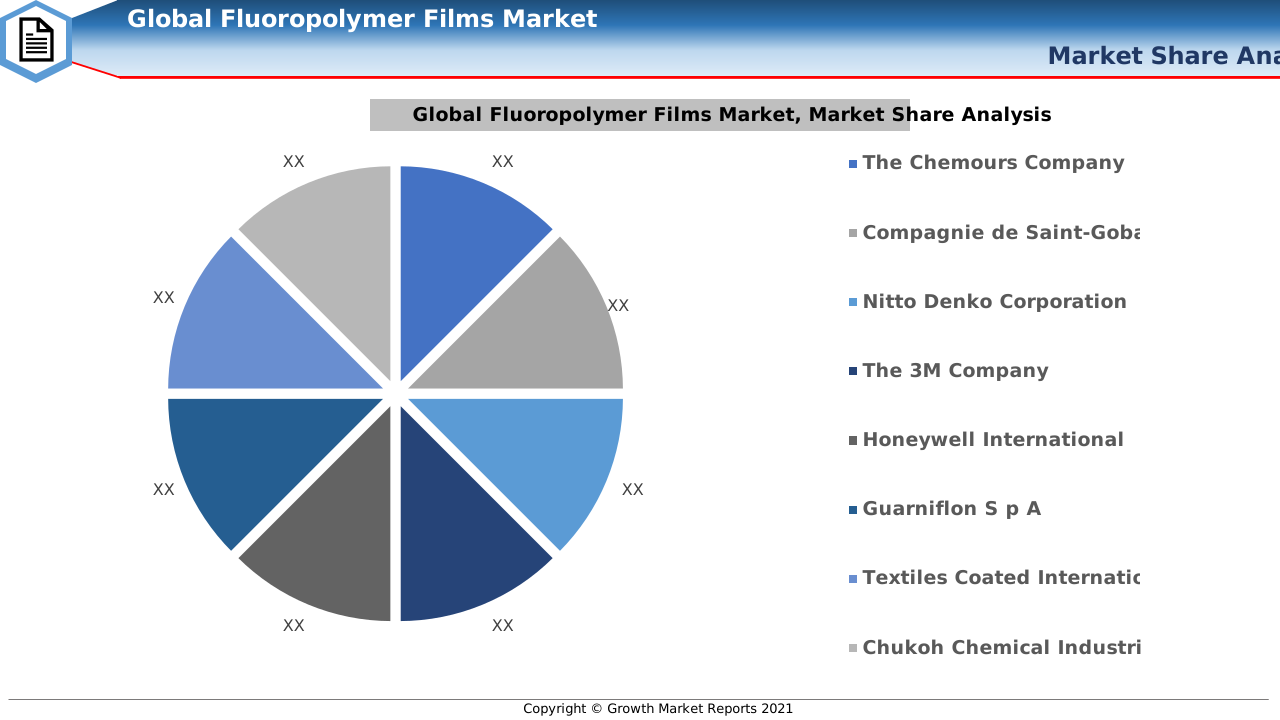
The fluoropolymer film market is highly competitive and major market players include The Chemours Company, Compagnie de Saint-Gobain S.A., Nitto Denko Corporation, The 3M Company, Honeywell International, Guarniflon S p A, Textiles Coated International (TCI), and Chukoh Chemical Industries.
Companies are engaging in mergers, acquisitions, and partnerships to extend their market share. Moreover they are focusing on expanding their product portfolio to leverage their market position.
Sustainability trends are driving the development of recyclable and eco-friendly fluoro polymer films, with increasing adoption in industries focused on safety, compliance, and reducing environmental impact.
Challenges include high raw material costs, complex manufacturing processes, environmental concerns regarding production and disposal, and competition from alternative materials.
Major companies include 3M Company, Saint-Gobain, Daikin Industries Ltd., The Chemours Company, Asahi Glass Co. Ltd. (AGC), Solvay S.A., and Honeywell International Inc.
Growth opportunities include increasing adoption in renewable energy (solar and wind), expansion in Asia Pacific, development of recyclable and eco-friendly films, and technological advancements in film properties.
Asia Pacific leads the global market, accounting for approximately 42% of the total market value in 2024, driven by rapid industrialization and strong electronics and automotive sectors.
The market is segmented into electrical & electronics, automotive & aerospace, industrial, packaging, construction, and other specialized uses.
PTFE films are popular due to their exceptional chemical inertness, high-temperature resistance, low friction, and versatility across various industries such as electronics, automotive, and chemical processing.
The main types are PTFE Films, PVDF Films, FEP Films, ETFE Films, PFA Films, and other specialty films.
Key industries driving demand include electrical & electronics, automotive & aerospace, renewable energy, chemical processing, food & beverage, and pharmaceuticals.
As of 2024, the global fluoro polymer films market size reached USD 2.4 billion, with projections to grow to USD 4.5 billion by 2033.