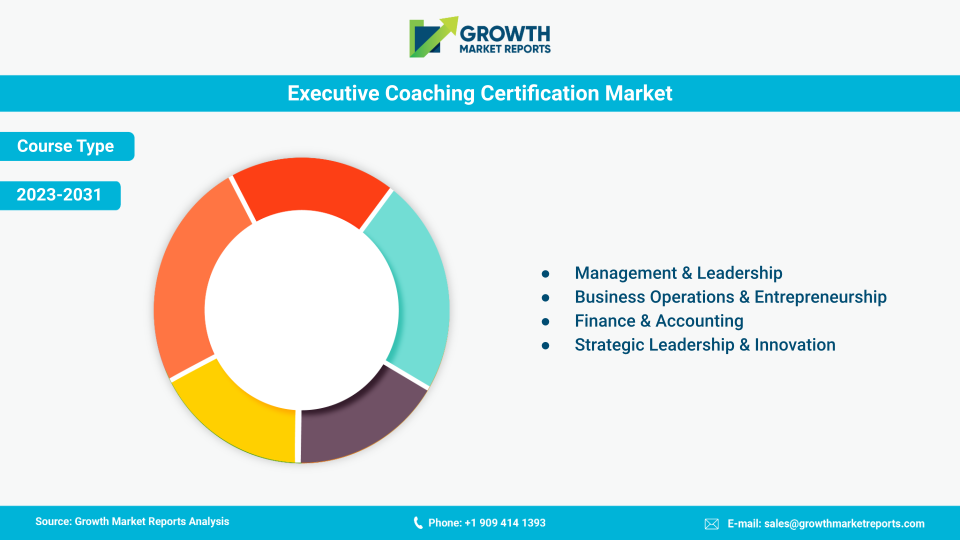
Segments - by Program Type (ICF Accredited, EMCC Accredited, In-house Corporate Programs, University-affiliated Programs, Others), by Delivery Mode (Online, Offline, Blended), by End User (Individual Professionals, Corporate Organizations, Educational Institutions, Others), by Application (Leadership Development, Career Transition, Performance Enhancement, Others)
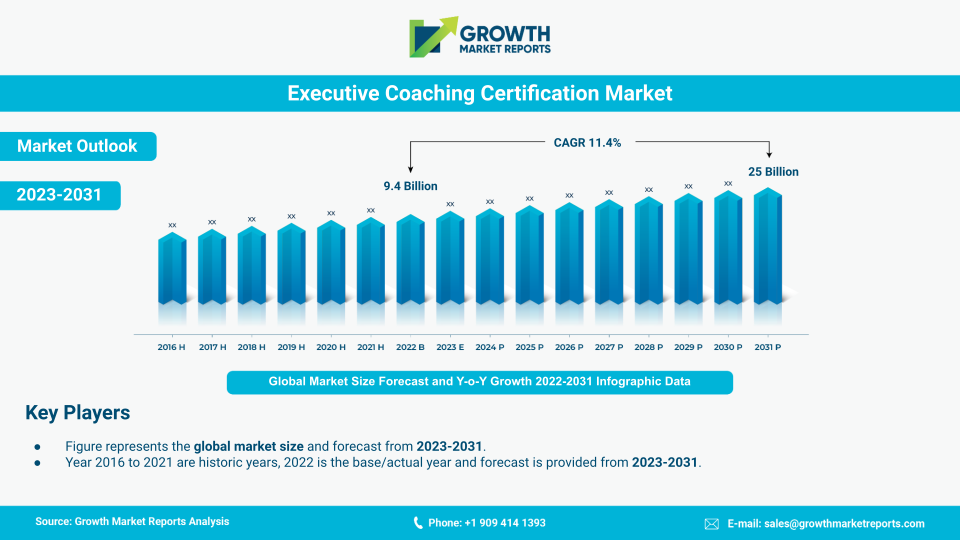
According to our latest research, the Executive Coaching Certification market size reached USD 3.4 billion globally in 2024. The market is experiencing robust expansion, registering a CAGR of 8.2% from 2025 to 2033. By the end of 2033, the market is projected to attain a value of USD 6.6 billion. This impressive growth trajectory is primarily driven by the increasing recognition of executive coaching as a critical tool for leadership development, organizational effectiveness, and talent retention across industries worldwide.
A significant growth factor for the executive coaching certification market is the heightened emphasis on leadership development within organizations. As businesses navigate the complexities of digital transformation, globalization, and evolving workplace dynamics, the demand for skilled leaders who can drive change and foster innovation has surged. Executive coaching certifications, particularly those accredited by globally recognized bodies such as ICF and EMCC, are increasingly seen as essential credentials for professionals aspiring to advance into leadership roles. Organizations are investing in certified executive coaches to support their leaders in enhancing emotional intelligence, strategic thinking, and decision-making capabilities, which directly contributes to improved business outcomes and competitive advantage.
Another pivotal driver is the growing adoption of coaching culture within corporate organizations. Multinational corporations, as well as small and medium enterprises, are integrating executive coaching into their talent management and organizational development strategies. This trend is further bolstered by the proliferation of in-house corporate coaching programs and university-affiliated executive coaching certifications, which offer tailored curricula aligned with specific business objectives. The flexibility of delivery modes—ranging from online and offline to blended formats—has also played a crucial role in democratizing access to executive coaching certification programs, thereby expanding the market’s reach to a broader audience, including remote and international professionals.
Moreover, the rise in career transitions and the increasing need for performance enhancement among professionals are fueling the demand for executive coaching certification. In todayÂ’s dynamic employment landscape, individuals are seeking certifications to differentiate themselves, build credibility, and transition seamlessly into new roles or industries. Executive coaching certification programs, especially those that emphasize career transition and performance enhancement, are witnessing a surge in enrollments. This trend is not only prevalent among individual professionals but also among educational institutions and corporate organizations aiming to empower their workforce with advanced coaching competencies.
From a regional perspective, North America continues to dominate the executive coaching certification market, accounting for the largest share in 2024, followed by Europe and Asia Pacific. The regionÂ’s leadership can be attributed to the strong presence of established certification bodies, a mature coaching industry, and a high level of organizational investment in leadership development. EuropeÂ’s market is also expanding steadily, driven by regulatory support and the increasing penetration of coaching culture in both public and private sectors. Meanwhile, Asia Pacific is emerging as a lucrative market, with rapid economic development, a burgeoning middle class, and a growing awareness of the benefits of executive coaching certification among professionals and organizations alike.
In the realm of professional development, Credentialing and Certification for Financial Professionals have become increasingly significant. As financial markets evolve and regulatory requirements become more stringent, the need for professionals to demonstrate their expertise and commitment to ethical standards is paramount. Credentialing not only enhances the credibility of financial professionals but also provides them with a competitive edge in the industry. This trend is mirrored in the executive coaching sector, where certification serves as a testament to a coach's skills and adherence to industry standards. Just as financial professionals seek to validate their expertise through credentialing, executive coaches are pursuing certifications to establish their authority and trustworthiness in guiding leaders through complex business landscapes.
The executive coaching certification market is segmented by program type into ICF Accredited, EMCC Accredited, In-house Corporate Programs, University-affiliated Programs, and Others. ICF Accredited programs currently hold the largest market share, reflecting the global recognition and credibility of the International Coaching Federation (ICF) as a gold standard in coaching certification. ICFÂ’s rigorous accreditation process, comprehensive curriculum, and global network of credentialed coaches have made it the preferred choice for professionals seeking to establish themselves as certified executive coaches. The growing demand for ICF-accredited programs is further fueled by corporate organizations that prioritize hiring coaches with internationally recognized credentials to ensure quality and consistency in leadership development initiatives.
EMCC Accredited programs are also gaining significant traction, particularly in Europe and emerging markets. The European Mentoring and Coaching Council (EMCC) is renowned for its robust accreditation framework and emphasis on ethical standards and professional development. EMCC-accredited programs appeal to professionals who value a European perspective on coaching and seek to align themselves with a global community of practitioners. The increasing collaboration between EMCC and academic institutions, as well as the expansion of EMCCÂ’s footprint into Asia Pacific and Latin America, are contributing to the segmentÂ’s steady growth.
In-house Corporate Programs represent a dynamic and rapidly expanding segment within the executive coaching certification market. Many large organizations are developing bespoke coaching certification programs to cultivate internal coaching capabilities and foster a coaching culture. These programs are tailored to the unique needs and strategic objectives of the organization, ensuring that internal coaches are equipped with the skills and knowledge necessary to drive performance and organizational change. The flexibility and customization offered by in-house programs make them particularly attractive to corporations seeking to embed coaching as a core component of their talent management strategy.
University-affiliated Programs are increasingly popular among professionals seeking academic rigor and recognition. These programs combine the latest research in leadership, psychology, and organizational behavior with practical coaching methodologies. The involvement of renowned faculty and access to academic resources enhance the credibility and appeal of university-affiliated executive coaching certifications. As higher education institutions continue to expand their executive education offerings, this segment is expected to witness sustained growth, particularly in regions with a strong tradition of academic excellence.
The Others segment encompasses a diverse range of certification programs offered by independent coaching organizations, industry associations, and niche providers. These programs often focus on specialized areas such as diversity and inclusion coaching, wellness coaching, or sector-specific leadership coaching. While the market share of this segment is relatively smaller, the growing demand for specialized coaching expertise is expected to drive innovation and diversification within the executive coaching certification market.
| Attributes | Details |
| Report Title | Executive Coaching Certification Market Research Report 2033 |
| By Program Type | ICF Accredited, EMCC Accredited, In-house Corporate Programs, University-affiliated Programs, Others |
| By Delivery Mode | Online, Offline, Blended |
| By End User | Individual Professionals, Corporate Organizations, Educational Institutions, Others |
| By Application | Leadership Development, Career Transition, Performance Enhancement, Others |
| Regions Covered | North America, Europe, APAC, Latin America, MEA |
| Base Year | 2024 |
| Historic Data | 2018-2023 |
| Forecast Period | 2025-2033 |
| Number of Pages | 268 |
| Number of Tables & Figures | 389 |
| Customization Available | Yes, the report can be customized as per your need. |
The executive coaching certification market is segmented by delivery mode into Online, Offline, and Blended formats. Online delivery has emerged as the dominant mode, accounting for the largest share of the market in 2024. The rapid advancement of digital learning technologies, coupled with the increasing acceptance of remote and virtual learning, has transformed the landscape of executive coaching certification. Online programs offer unparalleled flexibility, accessibility, and scalability, enabling professionals from diverse geographies to enroll in world-class certification courses without the constraints of location or time. The integration of interactive learning platforms, virtual coaching labs, and real-time feedback mechanisms has further enhanced the effectiveness and appeal of online executive coaching certification.
Offline or traditional classroom-based programs continue to hold relevance, particularly among professionals who value face-to-face interaction, experiential learning, and networking opportunities. These programs are often preferred by organizations that prioritize immersive learning experiences and direct engagement with faculty and peers. While the market share of offline programs has declined in recent years due to the rise of digital learning, they remain an important segment, especially in regions with limited internet connectivity or a strong preference for in-person training.
Blended delivery mode, which combines the best elements of online and offline learning, is gaining significant traction in the executive coaching certification market. Blended programs offer a flexible and holistic learning experience, allowing participants to benefit from the convenience of online modules while also engaging in face-to-face workshops, coaching simulations, and peer learning sessions. This approach is particularly effective for executive coaching certification, where the development of interpersonal skills, self-awareness, and practical coaching competencies is critical. The growing adoption of blended delivery models by leading certification providers is expected to drive innovation and enhance the overall quality of executive coaching certification programs.
In addition to traditional certifications, the OCPP Certification is gaining traction among professionals seeking to specialize in niche areas of coaching. This certification focuses on equipping coaches with the skills necessary to address specific organizational challenges, such as operational efficiency and process improvement. As businesses increasingly prioritize lean operations and continuous improvement, the demand for coaches with OCPP Certification is on the rise. This mirrors the broader trend in the executive coaching certification market, where specialized programs are becoming more prevalent. By obtaining OCPP Certification, coaches can offer targeted interventions that align with organizational goals, thereby enhancing their value proposition and expanding their client base.
The shift toward digital and blended learning is also being driven by the evolving needs of todayÂ’s workforce. As professionals seek to balance work, learning, and personal commitments, the demand for flexible and accessible certification programs has surged. Certification providers are responding by investing in advanced learning management systems, AI-powered coaching platforms, and mobile learning solutions to deliver personalized and engaging learning experiences. This trend is expected to accelerate further as organizations and individuals continue to prioritize lifelong learning and professional development in a rapidly changing business environment.
Despite the advantages of online and blended learning, challenges such as digital fatigue, lack of personal connection, and varying levels of digital literacy remain. Certification providers must continuously innovate and adapt their delivery models to address these challenges and ensure that learners receive a high-quality, engaging, and impactful executive coaching certification experience. The ongoing evolution of delivery modes will be a key factor shaping the future of the executive coaching certification market.
The executive coaching certification market is segmented by end user into Individual Professionals, Corporate Organizations, Educational Institutions, and Others. Individual professionals constitute a significant portion of the market, driven by the growing recognition of executive coaching certification as a valuable credential for career advancement, personal development, and professional credibility. Professionals from diverse backgrounds, including HR, management, consulting, and entrepreneurship, are enrolling in certification programs to enhance their coaching skills, expand their career opportunities, and differentiate themselves in a competitive job market. The increasing availability of flexible and affordable certification options has further fueled the participation of individual professionals in the executive coaching certification market.
Corporate organizations represent a major end user segment, accounting for a substantial share of the executive coaching certification market. As organizations strive to build high-performing leadership teams and foster a culture of continuous learning and development, the demand for certified executive coaches has soared. Many corporations are sponsoring their employees to pursue executive coaching certification or developing in-house certification programs to cultivate internal coaching talent. The integration of executive coaching into leadership development, talent management, and succession planning strategies is driving sustained investment in certification programs by corporate organizations across industries.
Educational institutions, including universities, business schools, and professional training institutes, are increasingly recognizing the value of executive coaching certification in preparing students and faculty for leadership roles. Many institutions are partnering with accreditation bodies and certification providers to offer specialized executive coaching certification programs as part of their executive education and leadership development portfolios. These programs not only enhance the employability and career prospects of graduates but also contribute to the overall reputation and competitiveness of the institution.
The Others segment includes government agencies, non-profit organizations, and industry associations that are leveraging executive coaching certification to enhance organizational effectiveness, drive social impact, and support community leadership development. While this segment represents a smaller share of the market, the growing emphasis on leadership and coaching skills in the public and non-profit sectors is expected to create new opportunities for certification providers.
The diverse and expanding end user base underscores the broad applicability and relevance of executive coaching certification across sectors and industries. As the market continues to evolve, certification providers must tailor their offerings to meet the unique needs and expectations of different end user segments, ensuring that executive coaching certification remains a valuable and impactful tool for leadership development and organizational success.
The executive coaching certification market is segmented by application into Leadership Development, Career Transition, Performance Enhancement, and Others. Leadership development remains the primary application, accounting for the largest share of the market in 2024. Organizations across industries are increasingly investing in executive coaching certification to develop effective, agile, and resilient leaders who can navigate complex business challenges and drive organizational growth. Certified executive coaches play a critical role in supporting leaders to enhance their self-awareness, emotional intelligence, strategic thinking, and decision-making capabilities, thereby contributing to improved leadership effectiveness and business performance.
Career transition is an emerging application area that is gaining momentum in the executive coaching certification market. As professionals seek to navigate career changes, transitions to new industries, or advancement to higher leadership roles, the demand for specialized coaching support has increased. Certification programs that focus on career transition equip coaches with the skills and tools necessary to guide clients through the complexities of career planning, job search, and personal branding. The growing trend of career mobility and the rise of the gig economy are expected to further drive demand for executive coaching certification in this application segment.
Performance enhancement is another key application of executive coaching certification, particularly in high-performance organizations and industries where continuous improvement and excellence are paramount. Certified executive coaches work with individuals and teams to identify performance gaps, set goals, and develop action plans to achieve peak performance. The application of evidence-based coaching methodologies, performance metrics, and feedback mechanisms has made executive coaching certification an essential tool for organizations seeking to optimize employee productivity, engagement, and retention.
The Others application segment includes areas such as diversity and inclusion coaching, wellness coaching, and organizational change management. As organizations increasingly recognize the importance of holistic leadership development, the demand for specialized executive coaching certification programs in these areas is on the rise. Certification providers are responding by developing niche programs that address specific organizational challenges and opportunities, thereby expanding the scope and impact of executive coaching certification.
The diverse range of applications highlights the versatility and value of executive coaching certification in addressing the evolving needs of professionals and organizations. As the market continues to grow, the development of innovative and specialized certification programs will be critical to sustaining market momentum and meeting the changing demands of end users.
The executive coaching certification market is poised for significant opportunities over the forecast period, driven by the increasing adoption of coaching culture in organizations, the expansion of digital learning platforms, and the growing emphasis on lifelong learning and professional development. The proliferation of online and blended certification programs has democratized access to executive coaching certification, enabling professionals from diverse backgrounds and geographies to acquire world-class coaching credentials. The integration of advanced technologies such as AI, data analytics, and virtual reality into certification programs is enhancing the learning experience and enabling personalized, scalable, and impactful coaching interventions. These technological advancements are expected to create new growth avenues for certification providers and drive innovation in program design, delivery, and assessment.
Another major opportunity lies in the growing demand for specialized executive coaching certification programs tailored to emerging leadership challenges such as digital transformation, diversity and inclusion, and sustainability. As organizations grapple with complex and rapidly evolving business environments, the need for coaches with expertise in these areas is increasing. Certification providers that can develop and deliver specialized programs addressing these critical issues will be well-positioned to capture new market segments and differentiate themselves in a competitive landscape. Additionally, the expansion of executive coaching certification into emerging markets such as Asia Pacific and Latin America presents significant growth potential, driven by rising economic development, increasing investment in leadership development, and growing awareness of the benefits of coaching.
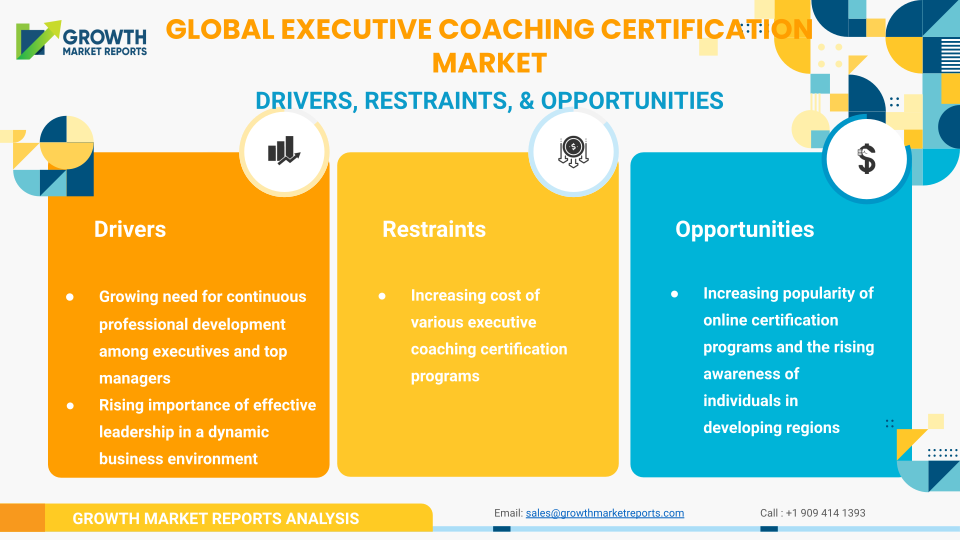
Despite the positive outlook, the executive coaching certification market faces several restraining factors, including the high cost of certification programs, varying quality standards, and regulatory challenges. The cost of obtaining internationally recognized certification can be prohibitive for many professionals, particularly in developing regions. Additionally, the lack of standardized accreditation and quality assurance mechanisms across certification providers can lead to inconsistencies in program quality and outcomes. Regulatory barriers and differences in professional recognition across countries may also hinder market growth and limit the mobility of certified executive coaches. Addressing these challenges will be critical for sustaining market momentum and ensuring the long-term success of the executive coaching certification industry.
Regionally, North America remains the largest market for executive coaching certification, accounting for approximately USD 1.3 billion in market size in 2024. The regionÂ’s dominance is underpinned by a mature coaching industry, strong presence of leading certification bodies such as ICF and EMCC, and a high level of organizational investment in leadership development and coaching. The United States, in particular, is a key driver of market growth, with a large pool of certified coaches, established coaching networks, and a culture that values professional development and credentialing. The market in North America is expected to continue growing at a steady pace, supported by ongoing innovation in program delivery and increasing demand for executive coaching certification among both individual professionals and corporate organizations.
Europe is the second-largest market, with a market size of USD 950 million in 2024. The region is characterized by a strong tradition of coaching and mentoring, robust regulatory frameworks, and active engagement by professional bodies such as EMCC and ICF. The adoption of executive coaching certification is widespread across both public and private sectors, with particular emphasis on ethical standards, professional development, and cross-cultural competencies. The European market is expected to grow at a CAGR of 7.8% during the forecast period, driven by increasing investment in leadership development, expansion of university-affiliated certification programs, and growing demand for specialized coaching expertise.
The Asia Pacific region is emerging as a high-growth market, with a market size of USD 720 million in 2024 and a projected CAGR of 10.1% through 2033. Rapid economic development, increasing investment in human capital, and rising awareness of the benefits of executive coaching certification are driving market expansion in countries such as China, India, Japan, and Australia. The growing presence of multinational corporations, expansion of digital learning infrastructure, and increasing participation of professionals in certification programs are expected to propel market growth in Asia Pacific. Meanwhile, Latin America and Middle East & Africa are smaller but steadily growing markets, with market sizes of USD 270 million and USD 160 million respectively in 2024. These regions are witnessing increased adoption of executive coaching certification as organizations seek to enhance leadership capabilities and drive organizational performance in a competitive global landscape.
The competitive landscape of the executive coaching certification market is characterized by the presence of a diverse mix of global accreditation bodies, independent certification providers, universities, and corporate training organizations. Market leaders such as the International Coaching Federation (ICF), European Mentoring and Coaching Council (EMCC), and Center for Credentialing & Education (CCE) set the benchmark for quality, ethical standards, and professional development in executive coaching certification. These organizations have established rigorous accreditation processes, extensive global networks, and comprehensive professional development resources, making them the preferred choice for professionals and organizations seeking credible and recognized coaching credentials.
In addition to these global bodies, a growing number of universities and business schools are entering the executive coaching certification market, offering specialized programs that combine academic rigor with practical coaching methodologies. These institutions leverage their reputation, faculty expertise, and research capabilities to attract professionals seeking high-quality, research-based coaching education. The entry of universities into the market has intensified competition and raised the bar for program quality, curriculum innovation, and learner outcomes.
Corporate training organizations and consulting firms are also playing an increasingly important role in the executive coaching certification market. Many of these organizations offer in-house certification programs tailored to the specific needs and objectives of corporate clients. The ability to customize program content, delivery format, and assessment criteria has made corporate training providers attractive partners for organizations seeking to build internal coaching capabilities and foster a coaching culture. The rise of digital learning platforms and AI-powered coaching solutions has further expanded the competitive landscape, enabling new entrants to offer scalable, accessible, and personalized certification programs.
Key players in the executive coaching certification market include the International Coaching Federation (ICF), European Mentoring and Coaching Council (EMCC), Center for Credentialing & Education (CCE), Association for Coaching (AC), and the International Association of Coaching (IAC). These organizations are recognized for their commitment to professional standards, ethical conduct, and continuous professional development. Leading universities such as Columbia University, Harvard University, and Henley Business School have also established themselves as prominent providers of executive coaching certification, offering programs that integrate academic research, experiential learning, and global best practices.
In summary, the executive coaching certification market is highly competitive and dynamic, with a diverse array of players vying for market share. The ongoing evolution of certification standards, delivery models, and program content will continue to shape the competitive landscape and drive innovation in the industry. As the market expands, strategic partnerships, investment in digital learning technologies, and a focus on specialized and high-impact certification programs will be key differentiators for market leaders.
The Executive Coaching Certification market has been segmented on the basis of
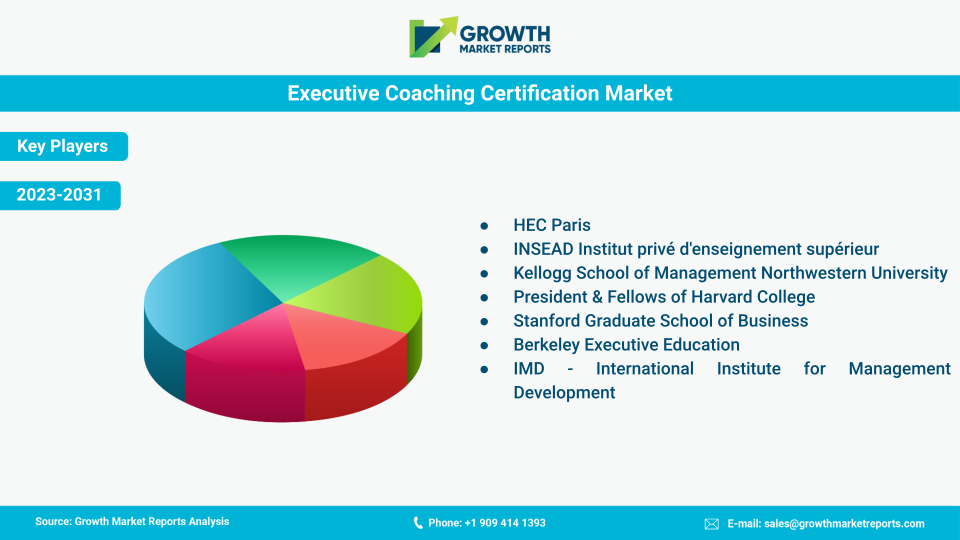
Key players competing in the global executive coaching certification market are HEC Paris; INSEAD Institut privé d'enseignement supérieur; Kellogg School of Management Northwestern University; President & Fellows of Harvard College; Stanford Graduate School of Business; Berkeley Executive Education; and IMD - International Institute for Management Development.
These prominent companies in the global market adopted a range of growth strategies including collaboration, mergers, acquisitions, and partnerships, to expand their consumer base worldwide. Further, they develop and enhance their leadership skills coaching programs, through online, offline, hybrid coaching, and ICF executive coaching. For instance,
Trends include the rise of digital and blended learning, integration of AI and advanced technologies, growing demand for specialized certifications, and expansion into emerging markets like Asia Pacific and Latin America.
Challenges include the high cost of certification, varying quality standards, lack of standardized accreditation, and regulatory differences across countries.
Key players include the International Coaching Federation (ICF), European Mentoring and Coaching Council (EMCC), Center for Credentialing & Education (CCE), Association for Coaching (AC), International Association of Coaching (IAC), and prominent universities like Columbia and Harvard.
North America is the largest market, followed by Europe and Asia Pacific. North America benefits from a mature coaching industry and strong presence of leading certification bodies.
Executive coaching certification is primarily used for leadership development, career transition, performance enhancement, and specialized areas such as diversity and inclusion or wellness coaching.
The main end users are individual professionals, corporate organizations, educational institutions, and others such as government agencies and non-profits.
Executive coaching certification is delivered through online, offline (classroom-based), and blended formats. Online delivery is currently the most dominant mode due to its flexibility and accessibility.
ICF Accredited programs hold the largest market share, followed by EMCC Accredited, In-house Corporate Programs, University-affiliated Programs, and specialized certifications from independent providers.
Key growth drivers include the increasing emphasis on leadership development, the adoption of coaching culture in organizations, the rise in career transitions, and the demand for performance enhancement among professionals.
The executive coaching certification market reached USD 3.4 billion globally in 2024 and is expected to grow at a CAGR of 8.2% from 2025 to 2033, reaching USD 6.6 billion by 2033.