Enterprise Content Management Market Research Report 2033

Enterprise Content Management Market Research Report 2033

Segments - by Component (Solutions, Services), by Deployment Mode (On-Premises, Cloud), by Organization Size (Large Enterprises, Small and Medium Enterprises), by Application (Document Management, Workflow Management, Record Management, Case Management, Digital Asset Management, Others), by End-User (BFSI, Healthcare, Government, Retail, Manufacturing, IT and Telecommunications, Others)

https://growthmarketreports.com/Raksha
Author : Raksha Sharma
https://growthmarketreports.com/Vaibhav
Fact-checked by : V. Chandola
https://growthmarketreports.com/Shruti
Editor : Shruti Bhat

Upcoming | Report ID :ICT-SE-2897 | 4.9 Rating | 75 Reviews | 262 Pages | Format : Docx PDF

Report Description


Enterprise Content Management Market Outlook

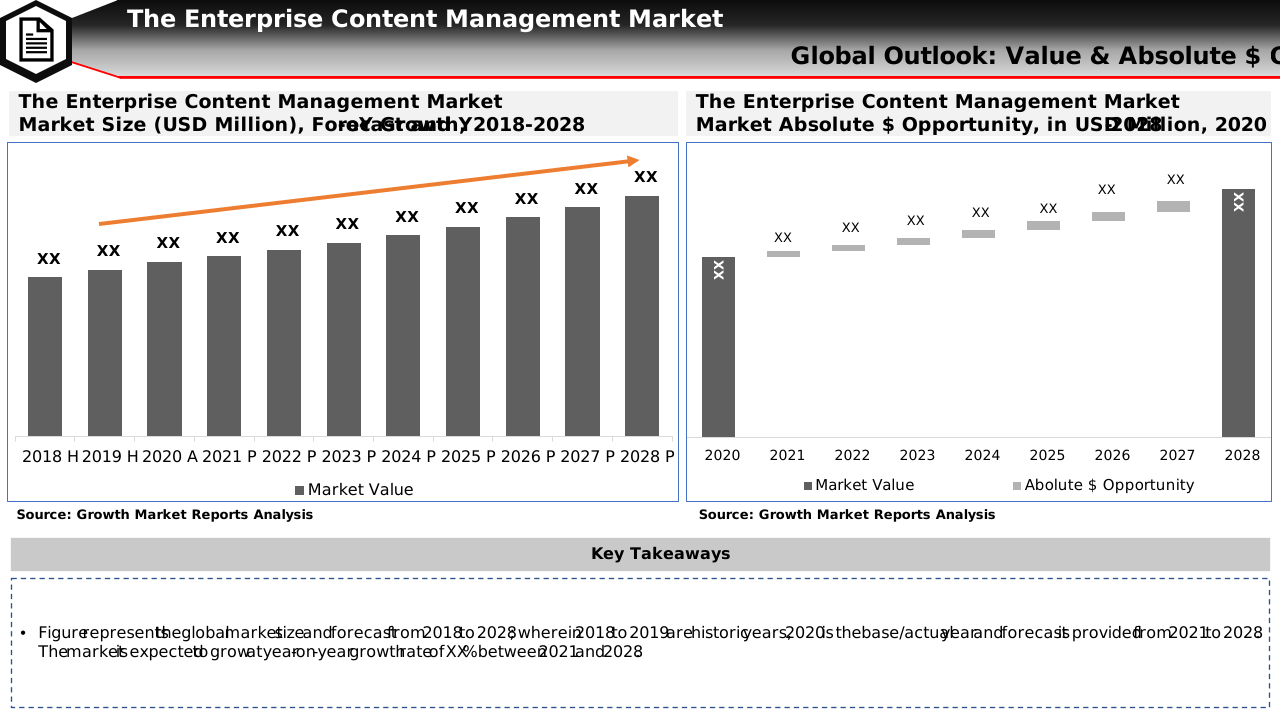
According to our latest research, the global Enterprise Content Management (ECM) market size reached USD 26.7 billion in 2024, demonstrating robust expansion driven by digital transformation initiatives across industries. The market is expected to grow at a CAGR of 13.2% from 2025 to 2033, reaching a projected value of USD 82.7 billion by the end of the forecast period. This growth is primarily fueled by increasing demands for efficient document management, regulatory compliance, and the ongoing shift towards cloud-based solutions.

The rapid adoption of digital technologies across enterprises is a key growth factor propelling the Enterprise Content Management market. Organizations are increasingly recognizing the need to manage the ever-growing volume of structured and unstructured data. Modern ECM solutions offer advanced features such as automated workflow management, intelligent search, and seamless integration with other business applications, which streamline operations and improve productivity. The proliferation of remote and hybrid work models post-pandemic has further accentuated the necessity for robust ECM platforms, enabling secure access and collaboration on critical documents regardless of location. As businesses continue to digitize their processes, the demand for scalable and flexible ECM solutions is expected to surge.

Another significant driver for the ECM market is the stringent regulatory landscape governing data privacy and record-keeping, especially in sectors like BFSI, healthcare, and government. Compliance with regulations such as GDPR, HIPAA, and SOX necessitates the implementation of secure, auditable, and transparent content management systems. ECM platforms facilitate comprehensive audit trails, access controls, and data lifecycle management, ensuring organizations meet legal obligations and mitigate risks associated with data breaches or non-compliance. The increasing frequency of cyber threats and data leaks has further underscored the importance of robust ECM systems, prompting organizations to invest in advanced security features and data governance capabilities.

Technological advancements, particularly in artificial intelligence, machine learning, and cloud computing, are reshaping the ECM landscape. AI-powered ECM solutions are enabling intelligent document classification, automated content extraction, and predictive analytics, transforming how organizations manage and leverage their information assets. Cloud-based ECM deployments are gaining traction due to their scalability, cost-effectiveness, and ease of integration with existing IT infrastructure. Furthermore, the growing trend towards mobile-first strategies and the integration of ECM platforms with collaboration tools like Microsoft Teams and Slack are enhancing user experience and driving market growth. These innovations are enabling organizations to unlock greater value from their content, improve decision-making, and maintain a competitive edge.

From a regional perspective, North America continues to dominate the Enterprise Content Management market due to the high adoption rate of advanced technologies, presence of major ECM vendors, and stringent regulatory requirements. However, the Asia Pacific region is witnessing the fastest growth, driven by rapid digitalization, expanding IT infrastructure, and increasing awareness of the benefits of ECM solutions among enterprises. Europe also holds a significant market share, supported by robust data protection regulations and strong demand from industries such as BFSI, healthcare, and government. As emerging markets in Latin America and the Middle East & Africa accelerate their digital transformation journeys, the global ECM market is poised for sustained growth throughout the forecast period.

As the landscape of Enterprise Content Management evolves, the role of Enterprise Content Search is becoming increasingly pivotal. This feature is essential for organizations aiming to enhance their information retrieval processes, allowing users to efficiently locate and access relevant content across vast repositories. Enterprise Content Search capabilities are being integrated with advanced ECM solutions, leveraging artificial intelligence to provide more accurate and contextually relevant search results. This not only improves user productivity but also supports better decision-making by ensuring that critical information is readily accessible. As organizations continue to accumulate large volumes of data, the demand for sophisticated search functionalities within ECM platforms is expected to grow, making Enterprise Content Search a key differentiator in the market.

Global Enterprise Content Management Industry Outlook

Component Analysis

The Enterprise Content Management market by component is broadly segmented into solutions and services. ECM solutions encompass a comprehensive suite of software tools designed to capture, manage, store, and deliver content across an organization. These solutions include document management, workflow automation, records management, digital asset management, and case management, among others. The growing complexity of business processes and the need for seamless information flow are driving the adoption of integrated ECM solutions. Organizations are seeking platforms that not only centralize content but also enable collaboration, version control, and compliance with regulatory standards. As a result, ECM solutions are evolving to offer enhanced usability, scalability, and interoperability with other enterprise systems.

On the services front, the ECM market includes consulting, system integration, training, support, and maintenance services. These services play a pivotal role in ensuring the successful deployment and optimal utilization of ECM solutions. Consulting services assist organizations in assessing their content management needs and formulating strategies for digital transformation. System integration services focus on the seamless implementation of ECM platforms within existing IT environments, addressing challenges related to data migration, legacy system integration, and customization. Training and support services are essential for user adoption and ongoing system performance, helping organizations maximize their return on investment in ECM technologies.

The demand for managed services is also on the rise, particularly among small and medium enterprises (SMEs) that may lack the in-house expertise to manage complex ECM environments. Managed services providers offer end-to-end management of ECM platforms, including system monitoring, security updates, and troubleshooting, allowing organizations to focus on core business activities. The growing trend towards outsourcing non-core IT functions is expected to further boost the demand for ECM services, especially as organizations aim to reduce operational costs and improve service quality.

Overall, while ECM solutions account for the largest share of the market, the services segment is anticipated to witness the highest growth rate during the forecast period. This is attributed to the increasing complexity of ECM deployments, the need for ongoing support and optimization, and the shift towards managed and cloud-based service models. As organizations continue to prioritize digital transformation and information governance, the demand for comprehensive ECM solutions and services will remain strong.

Report Scope

Attributes Details
Report Title Enterprise Content Management Market Research Report 2033
By Component Solutions, Services
By Deployment Mode On-Premises, Cloud
By Organization Size Large Enterprises, Small and Medium Enterprises
By Application Document Management, Workflow Management, Record Management, Case Management, Digital Asset Management, Others
By End-User BFSI, Healthcare, Government, Retail, Manufacturing, IT and Telecommunications, Others
Regions Covered North America, Europe, APAC, Latin America, MEA
Base Year 2024
Historic Data 2018-2023
Forecast Period 2025-2033
Number of Pages 262
Number of Tables & Figures 308
Customization Available Yes, the report can be customized as per your need.

Deployment Mode Analysis

The deployment mode segment of the Enterprise Content Management market is divided into on-premises and cloud deployments. Traditionally, on-premises ECM solutions have been the preferred choice for organizations with stringent data security, compliance, and customization requirements. On-premises deployments offer complete control over data and system configurations, making them ideal for highly regulated industries such as banking, healthcare, and government. However, these deployments typically involve significant upfront investment in hardware, software, and IT resources, as well as ongoing maintenance and upgrade costs.

In recent years, there has been a marked shift towards cloud-based ECM solutions, driven by the need for greater agility, scalability, and cost-effectiveness. Cloud deployments eliminate the need for large capital expenditures, offering a subscription-based pricing model that aligns with operational budgets. Organizations benefit from automatic software updates, enhanced disaster recovery capabilities, and the ability to scale resources up or down based on business needs. Cloud-based ECM platforms also facilitate remote access and collaboration, making them particularly attractive in the era of hybrid and remote work.

Hybrid deployment models are also gaining traction, allowing organizations to leverage the benefits of both on-premises and cloud environments. Hybrid ECM solutions enable organizations to store sensitive or mission-critical data on-premises while leveraging the scalability and flexibility of the cloud for less sensitive content. This approach addresses concerns related to data sovereignty, compliance, and latency, while supporting business continuity and disaster recovery initiatives. As organizations increasingly adopt hybrid IT strategies, demand for hybrid ECM solutions is expected to grow.

Overall, while on-premises deployments continue to hold significant market share, especially among large enterprises and regulated sectors, the cloud segment is projected to witness the highest growth rate during the forecast period. The ongoing shift towards cloud-first strategies, combined with advancements in cloud security and integration capabilities, is expected to drive widespread adoption of cloud-based ECM platforms. Vendors are responding by enhancing their cloud offerings with advanced features, robust security controls, and seamless integration with other enterprise applications.

Organization Size Analysis

The Enterprise Content Management market is segmented by organization size into large enterprises and small and medium enterprises (SMEs). Large enterprises have traditionally been the primary adopters of ECM solutions, driven by their complex organizational structures, vast volumes of data, and stringent regulatory requirements. These organizations require robust, scalable ECM platforms capable of managing diverse content types, supporting multiple business units, and integrating with a wide range of enterprise applications. Large enterprises also tend to have the financial resources and IT expertise necessary to implement and maintain sophisticated ECM systems.

However, the adoption of ECM solutions among SMEs is accelerating rapidly, fueled by the increasing availability of affordable, cloud-based ECM platforms. SMEs are recognizing the value of ECM in improving operational efficiency, enhancing collaboration, and ensuring compliance with industry regulations. Cloud-based ECM solutions, with their low upfront costs, ease of deployment, and minimal IT infrastructure requirements, are particularly well-suited to the needs of SMEs. These solutions enable smaller organizations to compete more effectively by streamlining business processes, improving information accessibility, and reducing risks associated with manual document management.

The growing emphasis on digital transformation across all organization sizes is driving demand for ECM solutions that are flexible, scalable, and easy to use. Vendors are responding by offering modular ECM platforms that can be tailored to the specific needs and budgets of organizations of all sizes. This includes offering industry-specific solutions, pre-configured templates, and intuitive user interfaces that facilitate rapid adoption and minimize training requirements. As digital content continues to proliferate, both large enterprises and SMEs are expected to increase their investments in ECM technologies.

Overall, while large enterprises currently account for the majority of ECM market revenue, the SME segment is projected to register the highest growth rate during the forecast period. This trend is being driven by the democratization of ECM technology, the growing importance of compliance and information governance, and the increasing recognition of the strategic value of effective content management. As ECM solutions become more accessible and user-friendly, adoption among SMEs is expected to accelerate, further expanding the overall market.

Application Analysis

The application segment of the Enterprise Content Management market encompasses a diverse range of use cases, including document management, workflow management, record management, case management, digital asset management, and others. Document management remains the largest application area, as organizations seek to digitize, organize, and secure vast volumes of business-critical documents. Modern document management solutions offer features such as version control, automated indexing, full-text search, and secure access controls, enabling organizations to improve productivity, reduce storage costs, and comply with regulatory requirements.

Workflow management is another key application area, enabling organizations to automate and optimize business processes involving multiple stakeholders and complex approval chains. ECM platforms with robust workflow management capabilities facilitate the design, execution, and monitoring of workflows, reducing manual intervention, minimizing errors, and accelerating decision-making. Automated workflows are particularly valuable in industries such as BFSI, healthcare, and manufacturing, where process efficiency and compliance are paramount.

Record management is essential for organizations that must retain and manage records in accordance with legal, regulatory, and corporate policies. ECM platforms provide comprehensive record management capabilities, including retention scheduling, disposition management, and audit trails, ensuring organizations can demonstrate compliance and respond effectively to audits or legal inquiries. The growing focus on data privacy and information governance is driving increased investment in record management solutions.

Case management and digital asset management are also gaining prominence as organizations seek to manage complex, case-based processes and rich media assets more effectively. Case management solutions enable organizations to track and manage cases from initiation to resolution, integrating content, communications, and workflows in a unified platform. Digital asset management is increasingly important for organizations with large volumes of multimedia content, such as marketing agencies, media companies, and retailers. These solutions facilitate the storage, organization, retrieval, and distribution of digital assets, supporting brand consistency and accelerating time-to-market.

Other applications of ECM include email management, web content management, and knowledge management, reflecting the diverse and evolving needs of modern enterprises. As organizations continue to digitize their operations and seek new ways to leverage information assets, the range of ECM applications is expected to expand, driving further market growth and innovation.

End-User Analysis

The Enterprise Content Management market serves a wide array of end-users, including BFSI, healthcare, government, retail, manufacturing, IT and telecommunications, and others. The BFSI sector is one of the largest adopters of ECM solutions, driven by the need for secure document management, regulatory compliance, and efficient workflow automation. ECM platforms help financial institutions manage customer records, loan documents, and compliance reports, while ensuring data security and auditability. The increasing adoption of digital banking and the growing complexity of financial regulations are further fueling demand for ECM in this sector.

In the healthcare industry, ECM solutions are critical for managing electronic health records (EHRs), patient information, and regulatory documentation. Healthcare organizations face stringent requirements for data privacy, security, and accessibility, making robust ECM platforms essential for compliance with regulations such as HIPAA. ECM solutions enable healthcare providers to streamline administrative processes, improve patient care coordination, and reduce operational costs by digitizing and automating document-intensive workflows.

Government agencies are also significant users of ECM solutions, leveraging these platforms to manage vast volumes of public records, legal documents, and correspondence. ECM systems support transparency, accountability, and efficiency in government operations, while ensuring compliance with records management and data protection regulations. The ongoing digitization of public services and the need for secure, accessible information are driving continued investment in ECM technologies within the public sector.

Retail, manufacturing, and IT & telecommunications sectors are increasingly adopting ECM solutions to manage supply chain documents, product information, marketing assets, and customer communications. In retail, ECM platforms support omnichannel strategies by centralizing content and enabling consistent customer experiences across digital and physical channels. Manufacturers use ECM solutions to manage technical documentation, quality records, and compliance certificates, while IT and telecommunications companies leverage ECM to streamline project management, contract administration, and knowledge sharing.

Other end-users, including education, legal, and energy sectors, are also recognizing the value of ECM in improving operational efficiency, reducing risks, and supporting digital transformation initiatives. As the benefits of effective content management become more widely understood, adoption across diverse industries is expected to increase, further expanding the addressable market for ECM vendors.

Opportunities & Threats

The Enterprise Content Management market presents significant opportunities for growth, driven by the ongoing digital transformation of businesses worldwide. The proliferation of enterprise data, coupled with the increasing need for regulatory compliance, is prompting organizations to invest in advanced ECM solutions. The integration of artificial intelligence and machine learning into ECM platforms is enabling intelligent automation, predictive analytics, and enhanced content discovery, unlocking new value for organizations. As businesses seek to leverage data as a strategic asset, demand for ECM solutions that offer actionable insights and support data-driven decision-making is expected to rise. Additionally, the growing adoption of cloud-based ECM platforms is opening up new markets, particularly among SMEs and organizations in emerging economies.

Another major opportunity lies in the expansion of ECM applications beyond traditional document management. The rise of remote and hybrid work models is driving demand for ECM platforms that support seamless collaboration, mobile access, and integration with popular productivity tools. Vendors that can offer flexible, user-friendly, and scalable ECM solutions are well-positioned to capitalize on these trends. The increasing emphasis on information governance, data privacy, and cybersecurity is also creating opportunities for vendors to differentiate their offerings through advanced security features, compliance capabilities, and industry-specific solutions. As organizations continue to navigate the complexities of digital transformation, the role of ECM as a foundational technology is expected to grow.

Despite these opportunities, the ECM market faces certain restraining factors. One of the primary challenges is the complexity and cost associated with implementing and maintaining ECM solutions, particularly for large enterprises with legacy systems and diverse content repositories. Integration with existing IT infrastructure, data migration, and change management can pose significant hurdles, leading to delays and cost overruns. Additionally, concerns around data security, privacy, and compliance in cloud-based ECM deployments may hinder adoption, especially in highly regulated industries. To overcome these challenges, vendors must focus on simplifying deployment, offering robust support services, and addressing industry-specific requirements.

Regional Outlook

From a regional perspective, North America leads the Enterprise Content Management market, accounting for approximately USD 9.8 billion of the global revenue in 2024. The region's dominance is attributed to the high adoption rate of digital technologies, the presence of leading ECM vendors, and stringent regulatory requirements across sectors such as BFSI, healthcare, and government. The United States is the largest contributor to regional growth, driven by ongoing investments in digital transformation, cloud computing, and information governance. Canada is also witnessing increased adoption of ECM solutions, particularly in the public sector and healthcare industry.

Europe holds a significant share of the global ECM market, with revenues reaching USD 7.1 billion in 2024. The region's growth is supported by robust data protection regulations, such as GDPR, and strong demand from industries including BFSI, healthcare, and manufacturing. European organizations are increasingly investing in ECM solutions to enhance operational efficiency, ensure compliance, and support digital business initiatives. The United Kingdom, Germany, and France are among the leading markets in the region, while Eastern European countries are catching up as digital transformation accelerates across the continent.

The Asia Pacific region is the fastest-growing market for ECM, with a projected CAGR of 16.4% during the forecast period. The region generated USD 5.2 billion in ECM revenue in 2024, driven by rapid digitalization, expanding IT infrastructure, and increasing awareness of ECM benefits among enterprises. China, Japan, and India are leading the adoption of ECM solutions, supported by government initiatives, growing enterprise IT spending, and the need for efficient information management. As organizations in Asia Pacific continue to embrace digital transformation, the region is expected to emerge as a major growth engine for the global ECM market. Latin America and the Middle East & Africa are also witnessing steady growth, albeit from a smaller base, as organizations in these regions prioritize digitalization and compliance.

Enterprise Content Management Market Statistics

Competitor Outlook

The Enterprise Content Management market is highly competitive, characterized by the presence of several global and regional players offering a wide range of solutions and services. The competitive landscape is shaped by ongoing innovation, strategic partnerships, mergers and acquisitions, and a relentless focus on customer needs. Leading ECM vendors are investing heavily in research and development to enhance their product offerings with advanced features such as AI-powered automation, predictive analytics, and seamless integration with third-party applications. Cloud-based ECM platforms are a key area of innovation, enabling vendors to offer scalable, flexible, and cost-effective solutions that address the evolving needs of modern enterprises.

Market leaders are also focusing on vertical-specific solutions, tailoring their offerings to the unique requirements of industries such as BFSI, healthcare, government, and manufacturing. This approach enables vendors to differentiate themselves in a crowded marketplace and address the specific pain points of their target customers. Strategic alliances and partnerships with technology providers, system integrators, and consulting firms are further strengthening vendors' market positions and expanding their reach. In addition, vendors are enhancing their service portfolios with consulting, training, and managed services to support successful ECM deployments and maximize customer value.

The competitive dynamics of the ECM market are also influenced by the emergence of new entrants and niche players offering innovative, cloud-native, and AI-driven solutions. These companies are challenging established vendors by offering agile, user-friendly, and cost-effective platforms that cater to the needs of SMEs and organizations undergoing digital transformation. As the market evolves, competition is expected to intensify, driving further innovation and consolidation.

Some of the major companies operating in the Enterprise Content Management market include IBM Corporation, Microsoft Corporation, OpenText Corporation, Hyland Software, Oracle Corporation, Laserfiche, Box, Inc., Newgen Software, M-Files, and DocuWare. IBM and Microsoft are recognized for their comprehensive ECM platforms, robust cloud capabilities, and strong presence across multiple industries. OpenText and Hyland Software are known for their industry-specific solutions and deep expertise in information management. Oracle offers a broad portfolio of content management and collaboration tools, while Laserfiche and M-Files are noted for their user-friendly, flexible ECM platforms.

Box, Inc. has established itself as a leader in cloud-based ECM, focusing on secure file sharing, collaboration, and workflow automation. Newgen Software and DocuWare are prominent players in the mid-market segment, offering scalable ECM solutions tailored to the needs of SMEs and specific verticals. These companies are continuously enhancing their platforms with new features, integrations, and security capabilities to stay ahead in a rapidly evolving market. As digital transformation accelerates and organizations seek to unlock greater value from their information assets, the competitive landscape of the ECM market is expected to remain dynamic, with innovation and customer-centricity as key differentiators.

Key Players

  • IBM Corporation
  • Microsoft Corporation
  • OpenText Corporation
  • Oracle Corporation
  • Hyland Software
  • M-Files Corporation
  • Laserfiche
  • Box, Inc.
  • Alfresco Software
  • DocuWare GmbH
  • Newgen Software Technologies
  • Xerox Corporation
  • Everteam
  • SER Group
  • Micro Focus International
  • Epicor Software Corporation
  • Kyocera Document Solutions
  • Konica Minolta, Inc.
  • DocStar (Epicor)
  • Objective Corporation
Enterprise Content Management Market Overview

Segments

The Enterprise Content Management market has been segmented on the basis of

Component

  • Solutions
  • Services

Deployment Mode

  • On-Premises
  • Cloud

Organization Size

  • Large Enterprises
  • Small and Medium Enterprises

Application

  • Document Management
  • Workflow Management
  • Record Management
  • Case Management
  • Digital Asset Management
  • Others

End-User

  • BFSI
  • Healthcare
  • Government
  • Retail
  • Manufacturing
  • IT and Telecommunications
  • Others

Competitive Landscape

Key players competing in the cloud enterprise management market include OpenText Corporation; IBM Corporation; Oracle Corporation; Capgemini SE; Xerox Corporation.

Some of these players are focusing on business strategies including partnerships, collaborations, capacity expansion, and product launches to increase their market shares. For instance

On in June 2018 Adaptive Lab acquired by Capgemini that assists organizations in adapting to new technologies and the resulting adjustments in consumer behavior.
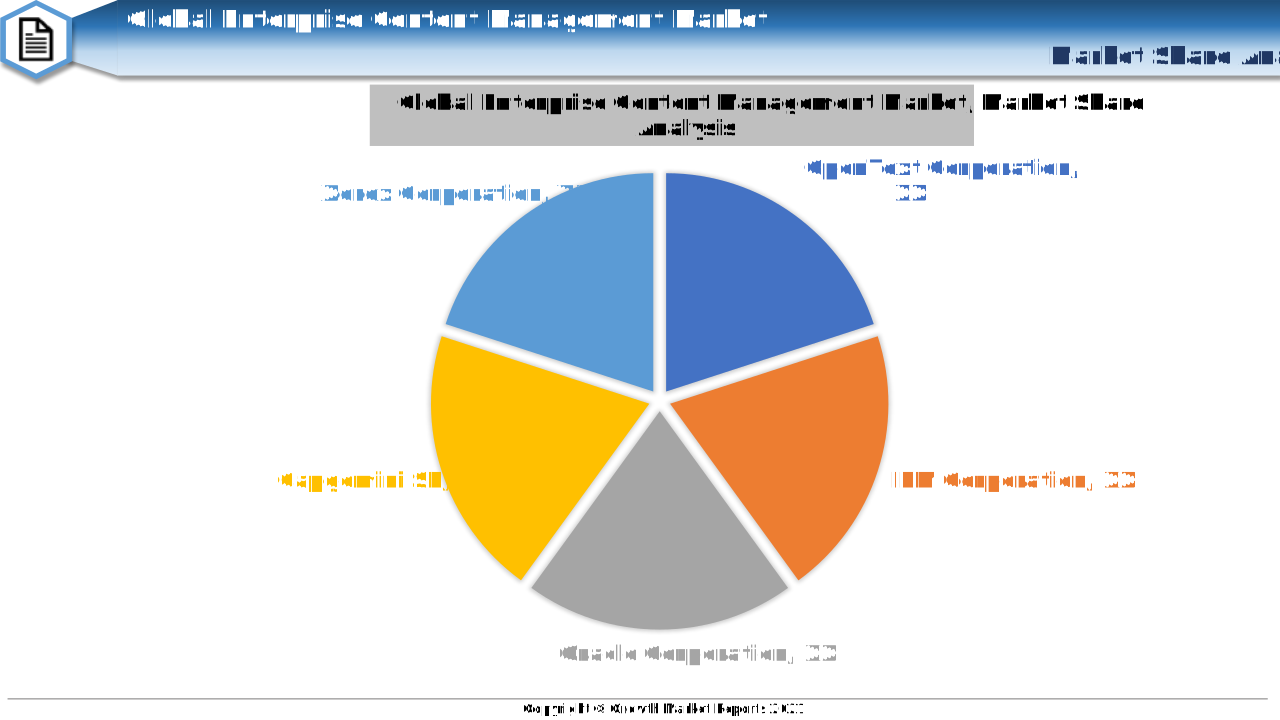

Enterprise Content Management Market By Key Players

Frequently Asked Questions

Major challenges include the complexity and cost of implementation, integration with legacy systems, data migration, change management, and concerns about data security and compliance in cloud-based deployments, especially for large enterprises and regulated industries.

Key players include IBM Corporation, Microsoft Corporation, OpenText Corporation, Oracle Corporation, Hyland Software, M-Files Corporation, Laserfiche, Box, Inc., Alfresco Software, DocuWare GmbH, Newgen Software Technologies, Xerox Corporation, and others.

North America leads the ECM market due to high technology adoption and regulatory requirements, while Asia Pacific is the fastest-growing region driven by rapid digitalization and expanding IT infrastructure. Europe also holds a significant share, supported by strong data protection regulations.

Key trends include the integration of artificial intelligence and machine learning for intelligent automation, the rise of cloud-based and mobile-first ECM platforms, increased focus on cybersecurity and compliance, and the expansion of ECM applications beyond traditional document management.

The largest adopters include BFSI (banking, financial services, and insurance), healthcare, government, retail, manufacturing, and IT & telecommunications. These sectors require robust document management, compliance, and workflow automation.

ECM solutions can be deployed on-premises, in the cloud, or using a hybrid model. Cloud-based ECM is gaining popularity due to its scalability, cost-effectiveness, and support for remote work, while on-premises deployments remain common in highly regulated industries.

ECM solutions are broadly segmented into software tools (such as document management, workflow automation, records management, digital asset management, and case management) and services (including consulting, system integration, training, support, and managed services).

Key drivers include digital transformation initiatives, increasing demand for efficient document management, regulatory compliance requirements (such as GDPR and HIPAA), the shift toward cloud-based solutions, and the need for secure remote collaboration in hybrid work environments.

The global Enterprise Content Management market reached USD 26.7 billion in 2024 and is projected to grow at a CAGR of 13.2% from 2025 to 2033, reaching an estimated value of USD 82.7 billion by the end of the forecast period.

Enterprise Content Management (ECM) refers to a suite of software solutions and services that help organizations capture, manage, store, and deliver content and documents across the enterprise. ECM is important because it streamlines business processes, improves productivity, ensures regulatory compliance, and enhances data security by managing both structured and unstructured data efficiently.

Table Of Content

Chapter 1 Executive Summary
Chapter 2 Assumptions and Acronyms Used
Chapter 3 Research Methodology
Chapter 4 Enterprise Content Management Market Overview
   4.1 Introduction
      4.1.1 Market Taxonomy
      4.1.2 Market Definition
      4.1.3 Macro-Economic Factors Impacting the Market Growth
   4.2 Enterprise Content Management Market Dynamics
      4.2.1 Market Drivers
      4.2.2 Market Restraints
      4.2.3 Market Opportunity
   4.3 Enterprise Content Management Market - Supply Chain Analysis
      4.3.1 List of Key Suppliers
      4.3.2 List of Key Distributors
      4.3.3 List of Key Consumers
   4.4 Key Forces Shaping the Enterprise Content Management Market
      4.4.1 Bargaining Power of Suppliers
      4.4.2 Bargaining Power of Buyers
      4.4.3 Threat of Substitution
      4.4.4 Threat of New Entrants
      4.4.5 Competitive Rivalry
   4.5 Global Enterprise Content Management Market Size & Forecast, 2023-2032
      4.5.1 Enterprise Content Management Market Size and Y-o-Y Growth
      4.5.2 Enterprise Content Management Market Absolute $ Opportunity

Chapter 5 Global Enterprise Content Management Market Analysis and Forecast By Component
   5.1 Introduction
      5.1.1 Key Market Trends & Growth Opportunities By Component
      5.1.2 Basis Point Share (BPS) Analysis By Component
      5.1.3 Absolute $ Opportunity Assessment By Component
   5.2 Enterprise Content Management Market Size Forecast By Component
      5.2.1 Solutions
      5.2.2 Services
   5.3 Market Attractiveness Analysis By Component

Chapter 6 Global Enterprise Content Management Market Analysis and Forecast By Deployment Mode
   6.1 Introduction
      6.1.1 Key Market Trends & Growth Opportunities By Deployment Mode
      6.1.2 Basis Point Share (BPS) Analysis By Deployment Mode
      6.1.3 Absolute $ Opportunity Assessment By Deployment Mode
   6.2 Enterprise Content Management Market Size Forecast By Deployment Mode
      6.2.1 On-Premises
      6.2.2 Cloud
   6.3 Market Attractiveness Analysis By Deployment Mode

Chapter 7 Global Enterprise Content Management Market Analysis and Forecast By Organization Size
   7.1 Introduction
      7.1.1 Key Market Trends & Growth Opportunities By Organization Size
      7.1.2 Basis Point Share (BPS) Analysis By Organization Size
      7.1.3 Absolute $ Opportunity Assessment By Organization Size
   7.2 Enterprise Content Management Market Size Forecast By Organization Size
      7.2.1 Large Enterprises
      7.2.2 Small and Medium Enterprises
   7.3 Market Attractiveness Analysis By Organization Size

Chapter 8 Global Enterprise Content Management Market Analysis and Forecast By Application
   8.1 Introduction
      8.1.1 Key Market Trends & Growth Opportunities By Application
      8.1.2 Basis Point Share (BPS) Analysis By Application
      8.1.3 Absolute $ Opportunity Assessment By Application
   8.2 Enterprise Content Management Market Size Forecast By Application
      8.2.1 Document Management
      8.2.2 Workflow Management
      8.2.3 Record Management
      8.2.4 Case Management
      8.2.5 Digital Asset Management
      8.2.6 Others
   8.3 Market Attractiveness Analysis By Application

Chapter 9 Global Enterprise Content Management Market Analysis and Forecast By End-User
   9.1 Introduction
      9.1.1 Key Market Trends & Growth Opportunities By End-User
      9.1.2 Basis Point Share (BPS) Analysis By End-User
      9.1.3 Absolute $ Opportunity Assessment By End-User
   9.2 Enterprise Content Management Market Size Forecast By End-User
      9.2.1 BFSI
      9.2.2 Healthcare
      9.2.3 Government
      9.2.4 Retail
      9.2.5 Manufacturing
      9.2.6 IT and Telecommunications
      9.2.7 Others
   9.3 Market Attractiveness Analysis By End-User

Chapter 10 Global Enterprise Content Management Market Analysis and Forecast by Region
   10.1 Introduction
      10.1.1 Key Market Trends & Growth Opportunities By Region
      10.1.2 Basis Point Share (BPS) Analysis By Region
      10.1.3 Absolute $ Opportunity Assessment By Region
   10.2 Enterprise Content Management Market Size Forecast By Region
      10.2.1 North America
      10.2.2 Europe
      10.2.3 Asia Pacific
      10.2.4 Latin America
      10.2.5 Middle East & Africa (MEA)
   10.3 Market Attractiveness Analysis By Region

Chapter 11 Coronavirus Disease (COVID-19) Impact 
   11.1 Introduction 
   11.2 Current & Future Impact Analysis 
   11.3 Economic Impact Analysis 
   11.4 Government Policies 
   11.5 Investment Scenario

Chapter 12 North America Enterprise Content Management Analysis and Forecast
   12.1 Introduction
   12.2 North America Enterprise Content Management Market Size Forecast by Country
      12.2.1 U.S.
      12.2.2 Canada
   12.3 Basis Point Share (BPS) Analysis by Country
   12.4 Absolute $ Opportunity Assessment by Country
   12.5 Market Attractiveness Analysis by Country
   12.6 North America Enterprise Content Management Market Size Forecast By Component
      12.6.1 Solutions
      12.6.2 Services
   12.7 Basis Point Share (BPS) Analysis By Component 
   12.8 Absolute $ Opportunity Assessment By Component 
   12.9 Market Attractiveness Analysis By Component
   12.10 North America Enterprise Content Management Market Size Forecast By Deployment Mode
      12.10.1 On-Premises
      12.10.2 Cloud
   12.11 Basis Point Share (BPS) Analysis By Deployment Mode 
   12.12 Absolute $ Opportunity Assessment By Deployment Mode 
   12.13 Market Attractiveness Analysis By Deployment Mode
   12.14 North America Enterprise Content Management Market Size Forecast By Organization Size
      12.14.1 Large Enterprises
      12.14.2 Small and Medium Enterprises
   12.15 Basis Point Share (BPS) Analysis By Organization Size 
   12.16 Absolute $ Opportunity Assessment By Organization Size 
   12.17 Market Attractiveness Analysis By Organization Size
   12.18 North America Enterprise Content Management Market Size Forecast By Application
      12.18.1 Document Management
      12.18.2 Workflow Management
      12.18.3 Record Management
      12.18.4 Case Management
      12.18.5 Digital Asset Management
      12.18.6 Others
   12.19 Basis Point Share (BPS) Analysis By Application 
   12.20 Absolute $ Opportunity Assessment By Application 
   12.21 Market Attractiveness Analysis By Application
   12.22 North America Enterprise Content Management Market Size Forecast By End-User
      12.22.1 BFSI
      12.22.2 Healthcare
      12.22.3 Government
      12.22.4 Retail
      12.22.5 Manufacturing
      12.22.6 IT and Telecommunications
      12.22.7 Others
   12.23 Basis Point Share (BPS) Analysis By End-User 
   12.24 Absolute $ Opportunity Assessment By End-User 
   12.25 Market Attractiveness Analysis By End-User

Chapter 13 Europe Enterprise Content Management Analysis and Forecast
   13.1 Introduction
   13.2 Europe Enterprise Content Management Market Size Forecast by Country
      13.2.1 Germany
      13.2.2 France
      13.2.3 Italy
      13.2.4 U.K.
      13.2.5 Spain
      13.2.6 Russia
      13.2.7 Rest of Europe
   13.3 Basis Point Share (BPS) Analysis by Country
   13.4 Absolute $ Opportunity Assessment by Country
   13.5 Market Attractiveness Analysis by Country
   13.6 Europe Enterprise Content Management Market Size Forecast By Component
      13.6.1 Solutions
      13.6.2 Services
   13.7 Basis Point Share (BPS) Analysis By Component 
   13.8 Absolute $ Opportunity Assessment By Component 
   13.9 Market Attractiveness Analysis By Component
   13.10 Europe Enterprise Content Management Market Size Forecast By Deployment Mode
      13.10.1 On-Premises
      13.10.2 Cloud
   13.11 Basis Point Share (BPS) Analysis By Deployment Mode 
   13.12 Absolute $ Opportunity Assessment By Deployment Mode 
   13.13 Market Attractiveness Analysis By Deployment Mode
   13.14 Europe Enterprise Content Management Market Size Forecast By Organization Size
      13.14.1 Large Enterprises
      13.14.2 Small and Medium Enterprises
   13.15 Basis Point Share (BPS) Analysis By Organization Size 
   13.16 Absolute $ Opportunity Assessment By Organization Size 
   13.17 Market Attractiveness Analysis By Organization Size
   13.18 Europe Enterprise Content Management Market Size Forecast By Application
      13.18.1 Document Management
      13.18.2 Workflow Management
      13.18.3 Record Management
      13.18.4 Case Management
      13.18.5 Digital Asset Management
      13.18.6 Others
   13.19 Basis Point Share (BPS) Analysis By Application 
   13.20 Absolute $ Opportunity Assessment By Application 
   13.21 Market Attractiveness Analysis By Application
   13.22 Europe Enterprise Content Management Market Size Forecast By End-User
      13.22.1 BFSI
      13.22.2 Healthcare
      13.22.3 Government
      13.22.4 Retail
      13.22.5 Manufacturing
      13.22.6 IT and Telecommunications
      13.22.7 Others
   13.23 Basis Point Share (BPS) Analysis By End-User 
   13.24 Absolute $ Opportunity Assessment By End-User 
   13.25 Market Attractiveness Analysis By End-User

Chapter 14 Asia Pacific Enterprise Content Management Analysis and Forecast
   14.1 Introduction
   14.2 Asia Pacific Enterprise Content Management Market Size Forecast by Country
      14.2.1 China
      14.2.2 Japan
      14.2.3 South Korea
      14.2.4 India
      14.2.5 Australia
      14.2.6 South East Asia (SEA)
      14.2.7 Rest of Asia Pacific (APAC)
   14.3 Basis Point Share (BPS) Analysis by Country
   14.4 Absolute $ Opportunity Assessment by Country
   14.5 Market Attractiveness Analysis by Country
   14.6 Asia Pacific Enterprise Content Management Market Size Forecast By Component
      14.6.1 Solutions
      14.6.2 Services
   14.7 Basis Point Share (BPS) Analysis By Component 
   14.8 Absolute $ Opportunity Assessment By Component 
   14.9 Market Attractiveness Analysis By Component
   14.10 Asia Pacific Enterprise Content Management Market Size Forecast By Deployment Mode
      14.10.1 On-Premises
      14.10.2 Cloud
   14.11 Basis Point Share (BPS) Analysis By Deployment Mode 
   14.12 Absolute $ Opportunity Assessment By Deployment Mode 
   14.13 Market Attractiveness Analysis By Deployment Mode
   14.14 Asia Pacific Enterprise Content Management Market Size Forecast By Organization Size
      14.14.1 Large Enterprises
      14.14.2 Small and Medium Enterprises
   14.15 Basis Point Share (BPS) Analysis By Organization Size 
   14.16 Absolute $ Opportunity Assessment By Organization Size 
   14.17 Market Attractiveness Analysis By Organization Size
   14.18 Asia Pacific Enterprise Content Management Market Size Forecast By Application
      14.18.1 Document Management
      14.18.2 Workflow Management
      14.18.3 Record Management
      14.18.4 Case Management
      14.18.5 Digital Asset Management
      14.18.6 Others
   14.19 Basis Point Share (BPS) Analysis By Application 
   14.20 Absolute $ Opportunity Assessment By Application 
   14.21 Market Attractiveness Analysis By Application
   14.22 Asia Pacific Enterprise Content Management Market Size Forecast By End-User
      14.22.1 BFSI
      14.22.2 Healthcare
      14.22.3 Government
      14.22.4 Retail
      14.22.5 Manufacturing
      14.22.6 IT and Telecommunications
      14.22.7 Others
   14.23 Basis Point Share (BPS) Analysis By End-User 
   14.24 Absolute $ Opportunity Assessment By End-User 
   14.25 Market Attractiveness Analysis By End-User

Chapter 15 Latin America Enterprise Content Management Analysis and Forecast
   15.1 Introduction
   15.2 Latin America Enterprise Content Management Market Size Forecast by Country
      15.2.1 Brazil
      15.2.2 Mexico
      15.2.3 Rest of Latin America (LATAM)
   15.3 Basis Point Share (BPS) Analysis by Country
   15.4 Absolute $ Opportunity Assessment by Country
   15.5 Market Attractiveness Analysis by Country
   15.6 Latin America Enterprise Content Management Market Size Forecast By Component
      15.6.1 Solutions
      15.6.2 Services
   15.7 Basis Point Share (BPS) Analysis By Component 
   15.8 Absolute $ Opportunity Assessment By Component 
   15.9 Market Attractiveness Analysis By Component
   15.10 Latin America Enterprise Content Management Market Size Forecast By Deployment Mode
      15.10.1 On-Premises
      15.10.2 Cloud
   15.11 Basis Point Share (BPS) Analysis By Deployment Mode 
   15.12 Absolute $ Opportunity Assessment By Deployment Mode 
   15.13 Market Attractiveness Analysis By Deployment Mode
   15.14 Latin America Enterprise Content Management Market Size Forecast By Organization Size
      15.14.1 Large Enterprises
      15.14.2 Small and Medium Enterprises
   15.15 Basis Point Share (BPS) Analysis By Organization Size 
   15.16 Absolute $ Opportunity Assessment By Organization Size 
   15.17 Market Attractiveness Analysis By Organization Size
   15.18 Latin America Enterprise Content Management Market Size Forecast By Application
      15.18.1 Document Management
      15.18.2 Workflow Management
      15.18.3 Record Management
      15.18.4 Case Management
      15.18.5 Digital Asset Management
      15.18.6 Others
   15.19 Basis Point Share (BPS) Analysis By Application 
   15.20 Absolute $ Opportunity Assessment By Application 
   15.21 Market Attractiveness Analysis By Application
   15.22 Latin America Enterprise Content Management Market Size Forecast By End-User
      15.22.1 BFSI
      15.22.2 Healthcare
      15.22.3 Government
      15.22.4 Retail
      15.22.5 Manufacturing
      15.22.6 IT and Telecommunications
      15.22.7 Others
   15.23 Basis Point Share (BPS) Analysis By End-User 
   15.24 Absolute $ Opportunity Assessment By End-User 
   15.25 Market Attractiveness Analysis By End-User

Chapter 16 Middle East & Africa (MEA) Enterprise Content Management Analysis and Forecast
   16.1 Introduction
   16.2 Middle East & Africa (MEA) Enterprise Content Management Market Size Forecast by Country
      16.2.1 Saudi Arabia
      16.2.2 South Africa
      16.2.3 UAE
      16.2.4 Rest of Middle East & Africa (MEA)
   16.3 Basis Point Share (BPS) Analysis by Country
   16.4 Absolute $ Opportunity Assessment by Country
   16.5 Market Attractiveness Analysis by Country
   16.6 Middle East & Africa (MEA) Enterprise Content Management Market Size Forecast By Component
      16.6.1 Solutions
      16.6.2 Services
   16.7 Basis Point Share (BPS) Analysis By Component 
   16.8 Absolute $ Opportunity Assessment By Component 
   16.9 Market Attractiveness Analysis By Component
   16.10 Middle East & Africa (MEA) Enterprise Content Management Market Size Forecast By Deployment Mode
      16.10.1 On-Premises
      16.10.2 Cloud
   16.11 Basis Point Share (BPS) Analysis By Deployment Mode 
   16.12 Absolute $ Opportunity Assessment By Deployment Mode 
   16.13 Market Attractiveness Analysis By Deployment Mode
   16.14 Middle East & Africa (MEA) Enterprise Content Management Market Size Forecast By Organization Size
      16.14.1 Large Enterprises
      16.14.2 Small and Medium Enterprises
   16.15 Basis Point Share (BPS) Analysis By Organization Size 
   16.16 Absolute $ Opportunity Assessment By Organization Size 
   16.17 Market Attractiveness Analysis By Organization Size
   16.18 Middle East & Africa (MEA) Enterprise Content Management Market Size Forecast By Application
      16.18.1 Document Management
      16.18.2 Workflow Management
      16.18.3 Record Management
      16.18.4 Case Management
      16.18.5 Digital Asset Management
      16.18.6 Others
   16.19 Basis Point Share (BPS) Analysis By Application 
   16.20 Absolute $ Opportunity Assessment By Application 
   16.21 Market Attractiveness Analysis By Application
   16.22 Middle East & Africa (MEA) Enterprise Content Management Market Size Forecast By End-User
      16.22.1 BFSI
      16.22.2 Healthcare
      16.22.3 Government
      16.22.4 Retail
      16.22.5 Manufacturing
      16.22.6 IT and Telecommunications
      16.22.7 Others
   16.23 Basis Point Share (BPS) Analysis By End-User 
   16.24 Absolute $ Opportunity Assessment By End-User 
   16.25 Market Attractiveness Analysis By End-User

Chapter 17 Competition Landscape 
   17.1 Enterprise Content Management Market: Competitive Dashboard
   17.2 Global Enterprise Content Management Market: Market Share Analysis, 2023
   17.3 Company Profiles (Details – Overview, Financials, Developments, Strategy) 
      17.3.1 IBM Corporation
Microsoft Corporation
OpenText Corporation
Oracle Corporation
Hyland Software
M-Files Corporation
Laserfiche
Box, Inc.
Alfresco Software
DocuWare GmbH
Newgen Software Technologies
Xerox Corporation
Everteam
SER Group
Micro Focus International
Epicor Software Corporation
Kyocera Document Solutions
Konica Minolta, Inc.
DocStar (Epicor)
Objective Corporation

Methodology

Our Clients

Honda Motor Co. Ltd.
The John Holland Group
Deloitte
Dassault Aviation
FedEx Logistics
Pfizer
General Electric
Microsoft