E-cigarettes Market Research Report 2033

E-cigarettes Market Research Report 2033

Segments - by Product Type (Disposable E-cigarettes, Rechargeable E-cigarettes, Modular E-cigarettes), by Flavor (Tobacco, Menthol, Fruit, Chocolate, Others), by Battery Mode (Automatic E-cigarettes, Manual E-cigarettes), by Distribution Channel (Online Retail, Specialty Stores, Supermarkets/Hypermarkets, Others)

https://growthmarketreports.com/Debadatta
Author : Debadatta Patel
https://growthmarketreports.com/Vaibhav
Fact-checked by : V. Chandola
https://growthmarketreports.com/Shruti
Editor : Shruti Bhat

Upcoming | Report ID :CG-1945 | 4.2 Rating | 48 Reviews | 297 Pages | Format : Docx PDF

Report Description


E-cigarettes Market Outlook

According to our latest research, the global e-cigarettes market size has reached USD 25.7 billion in 2024, demonstrating robust expansion driven by rising consumer interest in alternatives to traditional tobacco products. The market is projected to grow at a CAGR of 13.2% during the forecast period, reaching USD 68.7 billion by 2033. This growth trajectory is primarily attributed to increasing health awareness, ongoing product innovation, and the rapid proliferation of distribution channels. The evolving regulatory landscape and shifting consumer preferences are further shaping the dynamics of the e-cigarettes sector, making it one of the most dynamic segments within the broader nicotine delivery market.

The e-cigarettes market is experiencing significant growth due to a confluence of factors, chief among them being the rising awareness about the health risks associated with conventional smoking. As consumers become more informed about the dangers of combustible tobacco, many are seeking less harmful alternatives, and e-cigarettes are increasingly positioned as a viable option. The availability of a variety of flavors and customizable vaping experiences further enhances the appeal, particularly among younger demographics who are drawn to novel and technologically advanced products. In addition, the growing body of research suggesting that e-cigarettes may offer a reduced-risk profile compared to traditional cigarettes is also driving adoption, despite ongoing debates within the medical community.

Technological advancements have played a pivotal role in the expansion of the e-cigarettes market. Manufacturers are continuously investing in research and development to introduce new device formats, improve battery longevity, and enhance user experience. Modular and rechargeable e-cigarettes, for instance, have gained traction due to their convenience and cost-efficiency over time. The integration of smart features, such as Bluetooth connectivity and app-based usage tracking, is transforming the way consumers interact with these products. This wave of innovation is not only attracting existing smokers but is also enticing new users who are interested in the lifestyle and customization aspects of vaping. The competitive landscape is thus marked by rapid product cycles and a constant push towards differentiation.

Another significant growth factor is the expansion of distribution channels, particularly the surge in online retail. E-commerce platforms have made e-cigarettes more accessible to a global audience, enabling consumers to explore a wider range of options and benefit from competitive pricing. Specialty stores and supermarkets are also expanding their offerings, providing consumers with the convenience of purchasing e-cigarettes alongside other daily necessities. This omnichannel approach is crucial for market penetration, especially in regions where regulatory constraints may limit physical retail availability. Furthermore, aggressive marketing strategies and influencer-driven promotions on social media platforms are amplifying product visibility and consumer engagement.

Regionally, the e-cigarettes market exhibits distinct growth patterns, with North America and Europe leading in terms of market share and innovation. North America, particularly the United States, is characterized by high adoption rates, a mature regulatory framework, and a strong presence of leading brands. Europe follows closely, benefiting from progressive tobacco harm reduction policies and a receptive consumer base. Meanwhile, the Asia Pacific region is emerging as a lucrative market, driven by rising disposable incomes, urbanization, and changing lifestyle preferences. However, the regulatory environment remains a critical factor influencing market growth in these regions, with some countries imposing restrictions while others actively promote tobacco alternatives.

The emergence of Heat-not-Burn products is reshaping the landscape of nicotine delivery systems, offering a novel alternative to traditional smoking and vaping. These devices heat tobacco to a temperature that releases nicotine-containing vapor without combustion, thereby reducing the harmful byproducts associated with burning tobacco. As a result, Heat-not-Burn products are gaining traction among consumers who seek a more authentic tobacco experience with potentially lower health risks. This innovation is particularly appealing in markets where regulatory pressures on vaping are intensifying, providing an additional avenue for tobacco harm reduction. The growing interest in Heat-not-Burn technology underscores the industry's commitment to diversifying product offerings and addressing the evolving needs of health-conscious consumers.

Global E-cigarettes Industry Outlook

Product Type Analysis

The product type segment of the e-cigarettes market is broadly categorized into disposable e-cigarettes, rechargeable e-cigarettes, and modular e-cigarettes. Disposable e-cigarettes, known for their convenience and ease of use, have witnessed a surge in popularity, particularly among first-time users and those seeking a hassle-free vaping experience. These products require no maintenance or charging, making them ideal for on-the-go consumption. However, environmental concerns related to single-use plastics and battery waste are prompting manufacturers to explore more sustainable alternatives. Despite these challenges, disposable e-cigarettes continue to capture a significant share of the market, especially in regions with stringent regulations on refillable devices.

Rechargeable e-cigarettes, on the other hand, are gaining traction among regular users who prioritize cost-effectiveness and environmental sustainability. These devices typically feature replaceable cartridges or refillable tanks, allowing consumers to experiment with different flavors and nicotine strengths. The ability to recharge the device extends its lifespan, reducing the overall cost of ownership compared to disposables. Manufacturers are focusing on enhancing battery performance and incorporating user-friendly features to improve the overall vaping experience. As a result, rechargeable e-cigarettes are increasingly viewed as a long-term solution for individuals seeking to transition away from traditional smoking.

Modular e-cigarettes represent the most technologically advanced segment, offering extensive customization options for experienced vapers. These devices allow users to modify various components, such as coils, tanks, and batteries, to tailor the vaping experience to their preferences. The modularity appeals to hobbyists and enthusiasts who value performance, flavor intensity, and vapor production. While the initial investment for modular e-cigarettes is typically higher, the ability to upgrade and personalize the device ensures sustained user engagement. The segment is also witnessing the integration of smart technologies, such as digital displays and connectivity features, further enhancing the appeal among tech-savvy consumers.

The competitive dynamics within the product type segment are shaped by ongoing innovation and shifting consumer preferences. Manufacturers are investing in research and development to address concerns related to safety, battery life, and environmental impact. Regulatory compliance is another critical consideration, as authorities in various regions impose standards on product design, labeling, and ingredients. Companies that can effectively balance user convenience, product safety, and sustainability are likely to gain a competitive edge in this evolving market. Overall, the product type segment remains a key driver of growth and differentiation within the global e-cigarettes market.

Report Scope

Attributes Details
Report Title E-cigarettes Market Research Report 2033
By Product Type Disposable E-cigarettes, Rechargeable E-cigarettes, Modular E-cigarettes
By Flavor Tobacco, Menthol, Fruit, Chocolate, Others
By Battery Mode Automatic E-cigarettes, Manual E-cigarettes
By Distribution Channel Online Retail, Specialty Stores, Supermarkets/Hypermarkets, Others
Regions Covered North America, Europe, APAC, Latin America, MEA
Base Year 2024
Historic Data 2018-2023
Forecast Period 2025-2033
Number of Pages 297
Number of Tables & Figures 279
Customization Available Yes, the report can be customized as per your need.

Flavor Analysis

Flavor offerings play a crucial role in shaping consumer preferences and driving the growth of the e-cigarettes market. The primary flavor categories include tobacco, menthol, fruit, chocolate, and a diverse array of other options. Tobacco-flavored e-cigarettes remain popular among traditional smokers transitioning to vaping, as they provide a familiar taste profile that eases the switch. These flavors are often marketed as a reduced-risk alternative, targeting adults seeking to quit combustible cigarettes without sacrificing the sensory experience. However, regulatory scrutiny over flavored products, particularly those appealing to youth, is prompting manufacturers to adopt responsible marketing practices and develop adult-oriented formulations.

Menthol flavors have established a strong foothold in the e-cigarettes market, catering to consumers who prefer a cooling sensation and a distinctive taste. The popularity of menthol is especially notable in regions where menthol cigarettes are prevalent, providing a seamless transition for existing users. Regulatory actions, such as flavor bans in certain jurisdictions, have impacted the availability of menthol products, compelling companies to innovate with compliant alternatives. Despite these challenges, menthol remains a staple in the product portfolios of leading brands, reflecting its enduring appeal among adult consumers.

Fruit flavors represent one of the fastest-growing segments within the e-cigarettes market, attracting a broad demographic that includes both new and experienced vapers. The wide variety of fruit-inspired options, ranging from single-flavor profiles to complex blends, enhances the sensory appeal and encourages experimentation. This segment is particularly popular among younger adults, who are drawn to the vibrant and refreshing taste experiences. However, the proliferation of fruit flavors has also sparked regulatory concerns regarding youth access and initiation, prompting calls for stricter oversight and age verification measures.

Chocolate and other unique flavors, such as dessert, beverage, and spice-inspired options, contribute to the diversification of the e-cigarettes market. These flavors cater to niche segments and consumers seeking novelty and indulgence in their vaping experience. The ability to offer limited-edition and seasonal flavors further drives consumer engagement and brand loyalty. Manufacturers are leveraging advanced flavor formulation technologies to replicate authentic taste profiles while ensuring compliance with safety standards. As the market continues to evolve, flavor innovation remains a key differentiator and a critical factor in influencing purchase decisions.

Battery Mode Analysis

The battery mode segment of the e-cigarettes market is divided into automatic and manual e-cigarettes, each offering distinct advantages and catering to different user preferences. Automatic e-cigarettes are designed for ease of use, activating the heating element upon inhalation without the need for manual intervention. This user-friendly approach appeals to beginners and those seeking a seamless transition from traditional smoking. The simplicity of operation, coupled with consistent vapor production, has made automatic e-cigarettes a popular choice in both disposable and rechargeable formats. Manufacturers are focusing on enhancing battery efficiency and safety features to further improve the user experience.

Manual e-cigarettes, in contrast, require users to press a button to activate the heating element, offering greater control over vapor production and device performance. This mode is favored by experienced vapers who prioritize customization and seek to optimize their vaping sessions. Manual devices often feature adjustable settings, such as variable wattage and temperature control, enabling users to fine-tune their experience according to personal preferences. The ability to regulate power output and vapor density is particularly appealing to hobbyists and enthusiasts, driving demand for advanced manual e-cigarette models.

The choice between automatic and manual e-cigarettes is influenced by factors such as convenience, performance, and user expertise. While automatic devices are associated with simplicity and accessibility, manual devices offer a higher degree of personalization and control. Manufacturers are responding to these diverse needs by introducing hybrid models that combine the benefits of both modes, providing users with the flexibility to switch between automatic and manual operation. This trend reflects the broader shift towards user-centric design and the growing emphasis on enhancing the overall vaping experience.

Battery life and charging capabilities are critical considerations in the battery mode segment, as they directly impact device usability and consumer satisfaction. Advances in battery technology, such as the adoption of high-capacity lithium-ion cells and fast-charging solutions, are enabling longer usage times and reducing downtime. Safety remains a top priority, with manufacturers implementing features such as overcharge protection, short-circuit prevention, and temperature monitoring. As regulatory standards evolve, compliance with battery safety requirements is becoming increasingly important, influencing product development and market positioning.

Distribution Channel Analysis

Distribution channels play a pivotal role in the growth and accessibility of the e-cigarettes market, with online retail, specialty stores, supermarkets/hypermarkets, and other channels contributing to the overall landscape. Online retail has emerged as a dominant channel, offering consumers unparalleled convenience, a wide selection of products, and competitive pricing. E-commerce platforms enable brands to reach a global audience, facilitate direct-to-consumer sales, and leverage digital marketing strategies to drive engagement. The growth of online retail is further supported by the increasing adoption of age verification technologies and secure payment solutions, ensuring compliance with regulatory requirements.

Specialty stores, including vape shops and dedicated e-cigarette outlets, remain a critical component of the distribution ecosystem. These stores offer personalized service, expert advice, and the opportunity for consumers to sample products before making a purchase. The in-store experience is particularly valuable for new users seeking guidance on device selection, flavor options, and usage techniques. Specialty stores also serve as hubs for community engagement, hosting events, workshops, and product demonstrations that foster brand loyalty and consumer education. Despite the rise of online retail, the physical presence of specialty stores continues to drive market growth, especially in regions with established vaping cultures.

Supermarkets and hypermarkets are expanding their e-cigarette offerings, capitalizing on the growing mainstream acceptance of vaping products. These retail giants provide consumers with the convenience of purchasing e-cigarettes alongside other household items, increasing product visibility and accessibility. The integration of e-cigarettes into mainstream retail channels reflects the normalization of vaping and the broadening of the target consumer base. Supermarkets and hypermarkets are also leveraging their extensive distribution networks to negotiate favorable terms with manufacturers, resulting in competitive pricing and promotional campaigns that stimulate demand.

Other distribution channels, such as convenience stores, gas stations, and pharmacies, contribute to the widespread availability of e-cigarettes. These outlets cater to impulse buyers and individuals seeking immediate access to vaping products. The diverse distribution landscape ensures that e-cigarettes are accessible to consumers across different geographies, lifestyles, and purchasing preferences. Manufacturers are adopting omnichannel strategies to maximize reach and optimize the consumer journey, integrating online and offline touchpoints to deliver a seamless shopping experience. As the market matures, the effectiveness of distribution strategies will remain a key determinant of brand success and market share.

Opportunities & Threats

The e-cigarettes market presents a multitude of opportunities for stakeholders across the value chain. One of the most promising avenues is the ongoing shift towards harm reduction in tobacco consumption. As public health agencies and policymakers increasingly recognize the potential of e-cigarettes as a less harmful alternative to combustible tobacco, there is a growing emphasis on integrating vaping products into smoking cessation programs. This shift is creating opportunities for manufacturers to collaborate with healthcare providers, develop medically-endorsed products, and participate in public health initiatives. The expansion of product portfolios to include nicotine-free and herbal options further broadens the market, catering to health-conscious consumers and those seeking to reduce or eliminate nicotine intake.

Another significant opportunity lies in technological innovation and product differentiation. The rapid pace of advancement in battery technology, flavor formulation, and device design is enabling manufacturers to introduce next-generation e-cigarettes that offer enhanced performance, safety, and user experience. The integration of smart features, such as Bluetooth connectivity, usage tracking, and personalized recommendations, is creating new avenues for consumer engagement and data-driven marketing. Companies that invest in research and development, prioritize user-centric design, and adapt to evolving consumer preferences are well-positioned to capture market share and drive long-term growth. The rise of e-commerce and digital marketing also presents opportunities for brands to build direct relationships with consumers, gather feedback, and tailor offerings to specific segments.

Despite the positive outlook, the e-cigarettes market faces several restraining factors, with regulatory uncertainty being the most significant. The evolving legal landscape, characterized by varying regulations across regions, poses challenges for manufacturers in terms of product compliance, marketing restrictions, and distribution limitations. Flavor bans, advertising restrictions, and age verification requirements are impacting market dynamics and influencing consumer behavior. Additionally, ongoing debates regarding the long-term health effects of vaping and the potential for youth initiation are prompting calls for stricter oversight and research. Companies must navigate these challenges by adopting transparent practices, investing in compliance, and engaging with regulators to shape balanced policies that protect public health while supporting innovation and consumer choice.

Regional Outlook

North America remains the largest regional market for e-cigarettes, accounting for approximately USD 10.4 billion in 2024, or about 40% of global market share. The regionÂ’s growth is fueled by high consumer awareness, a mature retail infrastructure, and supportive regulatory frameworks that promote harm reduction. The United States is the primary contributor, with a well-established network of specialty stores, online retailers, and mainstream outlets. The region is also characterized by strong brand presence and ongoing product innovation, with leading companies investing in research and development to address evolving consumer needs. Despite regulatory challenges, such as flavor bans and marketing restrictions, North America is expected to maintain a robust growth trajectory, supported by increasing adoption among adult smokers and ex-smokers.

Europe is the second-largest market, with a market size of USD 8.2 billion in 2024. The regionÂ’s growth is underpinned by progressive public health policies, widespread consumer acceptance, and a favorable regulatory environment that encourages the use of tobacco alternatives. Countries such as the United Kingdom, France, and Germany are at the forefront of market expansion, driven by high rates of smoking cessation and a vibrant ecosystem of specialty stores and online platforms. Europe is expected to register a CAGR of 12.5% through 2033, reaching an estimated market size of USD 23.7 billion. The regionÂ’s emphasis on harm reduction and consumer safety is fostering innovation and attracting new entrants, further intensifying competition and driving market growth.

The Asia Pacific region is emerging as a high-growth market, with a current market size of USD 4.6 billion in 2024. Rapid urbanization, rising disposable incomes, and increasing health awareness are driving demand for e-cigarettes, particularly in countries such as China, Japan, and South Korea. The regionÂ’s growth potential is further supported by the expansion of distribution networks and the proliferation of online retail channels. However, regulatory uncertainty and varying levels of market maturity across countries present challenges for manufacturers seeking to establish a strong foothold. Despite these hurdles, Asia Pacific is expected to witness the fastest growth rate among all regions, with a projected CAGR of 15.8% through 2033. The regionÂ’s dynamic consumer base and evolving regulatory landscape offer significant opportunities for market participants willing to adapt to local preferences and compliance requirements.

E-cigarettes Market Statistics

Competitor Outlook

The competitive landscape of the global e-cigarettes market is characterized by intense rivalry, rapid innovation, and a constant quest for differentiation. Leading companies are investing heavily in research and development to introduce new products, enhance device performance, and expand flavor offerings. The market is marked by a mix of established tobacco companies, specialized vaping firms, and emerging startups, each vying for market share through strategic partnerships, acquisitions, and brand-building initiatives. The ability to navigate regulatory challenges, adapt to shifting consumer preferences, and leverage digital marketing channels is critical for sustaining competitive advantage in this dynamic market.

Product innovation remains a key driver of competition, with companies focusing on enhancing battery life, improving safety features, and integrating smart technologies into their devices. The introduction of modular and customizable e-cigarettes is enabling brands to cater to a diverse range of consumer needs, from beginners seeking simplicity to experienced vapers demanding advanced performance. Flavor innovation is another focal point, with manufacturers developing unique and compliant formulations to attract and retain customers. The ongoing debate over the health impacts of vaping is prompting companies to invest in clinical research and transparency initiatives, aiming to build trust and credibility among consumers and regulators alike.

Distribution strategies are also shaping the competitive dynamics of the e-cigarettes market. Companies are adopting omnichannel approaches, combining online retail, specialty stores, and mainstream outlets to maximize reach and accessibility. Strategic collaborations with retailers, influencers, and healthcare providers are enabling brands to strengthen their market presence and enhance consumer engagement. The rise of e-commerce is facilitating direct-to-consumer sales, enabling brands to gather valuable data, personalize marketing efforts, and foster long-term relationships with customers. As the market continues to evolve, the ability to deliver a seamless and differentiated consumer experience will be a critical determinant of success.

Among the major companies in the global e-cigarettes market are British American Tobacco plc, Japan Tobacco Inc., Philip Morris International Inc., Altria Group, Inc., Imperial Brands PLC, JUUL Labs, Inc., NJOY LLC, and RELX Technology. British American Tobacco plc is a global leader with a broad portfolio of vaping products, strong R&D capabilities, and a presence in over 180 markets. Japan Tobacco Inc. is known for its focus on innovation and product quality, leveraging its expertise in tobacco and nicotine delivery systems. Philip Morris International Inc. is at the forefront of the smoke-free transformation, investing in next-generation devices and harm reduction initiatives. JUUL Labs, Inc. has played a pivotal role in popularizing pod-based e-cigarettes, while RELX Technology is a leading player in the Asia Pacific region, known for its sleek design and technology-driven approach.

These companies are continuously expanding their product portfolios, enhancing distribution networks, and engaging in strategic partnerships to strengthen their market positions. The competitive landscape is expected to remain dynamic, with ongoing consolidation, new entrants, and evolving consumer trends shaping the future of the global e-cigarettes market. As regulatory frameworks mature and consumer preferences evolve, companies that prioritize innovation, compliance, and consumer engagement will be best positioned to capture growth opportunities and drive long-term success.

Key Players

  • JUUL Labs, Inc.
  • British American Tobacco plc
  • Imperial Brands plc
  • Altria Group, Inc.
  • Japan Tobacco Inc.
  • Philip Morris International Inc.
  • Shenzhen IVPS Technology Co., Ltd. (SMOK)
  • Shenzhen Smoore Technology Limited (Vaporesso)
  • RELX Technology Co., Ltd.
  • Shenzhen KangerTech Technology Co., Ltd.
  • Shenzhen Innokin Technology Co., Ltd.
  • Shenzhen Joyetech Co., Ltd.
  • Shenzhen Geekvape Technology Co., Ltd.
  • Shenzhen Aspire Technology Co., Ltd.
  • NJOY LLC
  • Turning Point Brands, Inc.
  • MCIG, Inc.
  • VaporFi (part of International Vapor Group)
  • Vuse (Reynolds American Inc.)
  • Blu (Fontem Ventures, subsidiary of Imperial Brands)
E-cigarettes Market Overview

Segments

The E-cigarettes market has been segmented on the basis of

Product Type

  • Disposable E-cigarettes
  • Rechargeable E-cigarettes
  • Modular E-cigarettes

Flavor

  • Tobacco
  • Menthol
  • Fruit
  • Chocolate
  • Others

Battery Mode

  • Automatic E-cigarettes
  • Manual E-cigarettes

Distribution Channel

  • Online Retail
  • Specialty Stores
  • Supermarkets/Hypermarkets
  • Others

Competitive Landscape

Key players competing in the North America e-cigarettes market include British American Tobacco; International Vapor Group; NicQuid; Philips Morris International Inc.; Altria Group, Inc.; Imperial Brands; Japan Tobacco Inc.; JUUL Labs, Inc.; R.J. Reynolds Vapor Company; Shenzhen KangerTech Technology Co., Ltd.; and Shenzhen IVPS Technology Co., Ltd. Some of these players are engaged in several market strategies such as mergers, acquisitions, partnerships, collaborations, capacity expansion, and product launches to enhance their market shares.
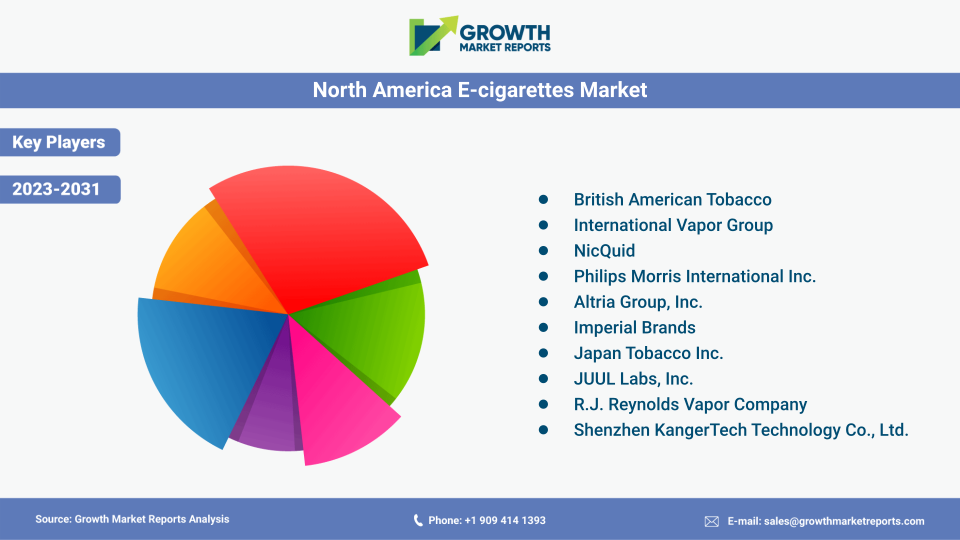

North America E-cigarettes Market Key Players

Frequently Asked Questions

Yes, the E-cigarettes Market Research Report 2033 can be customized according to specific client needs.

Opportunities include harm reduction initiatives, technological innovation, and expanding product portfolios. Threats involve regulatory uncertainty, flavor bans, marketing restrictions, and ongoing health debates.

Key players include JUUL Labs, Inc., British American Tobacco plc, Imperial Brands plc, Altria Group, Inc., Japan Tobacco Inc., Philip Morris International Inc., RELX Technology, and others.

North America and Europe are the leading regions, with North America accounting for about 40% of the global market share in 2024. The Asia Pacific region is emerging as the fastest-growing market.

E-cigarettes are distributed through online retail, specialty stores, supermarkets/hypermarkets, and other channels like convenience stores and gas stations, with online retail seeing significant growth.

Flavors such as tobacco, menthol, fruit, chocolate, and others play a crucial role in attracting consumers, with fruit and menthol flavors being particularly popular among younger demographics and transitioning smokers.

The main product types are disposable e-cigarettes, rechargeable e-cigarettes, and modular e-cigarettes, each catering to different user needs and preferences.

Key growth factors include increasing health awareness, ongoing product innovation, rapid expansion of distribution channels, and shifting consumer preferences towards less harmful nicotine delivery methods.

The e-cigarettes market is expected to grow at a CAGR of 13.2% from 2025 to 2033, reaching USD 68.7 billion by 2033.

The global e-cigarettes market size reached USD 25.7 billion in 2024, driven by rising consumer interest in alternatives to traditional tobacco products.

Table Of Content

Chapter 1 Executive Summary
Chapter 2 Assumptions and Acronyms Used
Chapter 3 Research Methodology
Chapter 4 E-cigarettes Market Overview
   4.1 Introduction
      4.1.1 Market Taxonomy
      4.1.2 Market Definition
      4.1.3 Macro-Economic Factors Impacting the Market Growth
   4.2 E-cigarettes Market Dynamics
      4.2.1 Market Drivers
      4.2.2 Market Restraints
      4.2.3 Market Opportunity
   4.3 E-cigarettes Market - Supply Chain Analysis
      4.3.1 List of Key Suppliers
      4.3.2 List of Key Distributors
      4.3.3 List of Key Consumers
   4.4 Key Forces Shaping the E-cigarettes Market
      4.4.1 Bargaining Power of Suppliers
      4.4.2 Bargaining Power of Buyers
      4.4.3 Threat of Substitution
      4.4.4 Threat of New Entrants
      4.4.5 Competitive Rivalry
   4.5 Global E-cigarettes Market Size & Forecast, 2023-2032
      4.5.1 E-cigarettes Market Size and Y-o-Y Growth
      4.5.2 E-cigarettes Market Absolute $ Opportunity

Chapter 5 Global E-cigarettes Market Analysis and Forecast By Product Type
   5.1 Introduction
      5.1.1 Key Market Trends & Growth Opportunities By Product Type
      5.1.2 Basis Point Share (BPS) Analysis By Product Type
      5.1.3 Absolute $ Opportunity Assessment By Product Type
   5.2 E-cigarettes Market Size Forecast By Product Type
      5.2.1 Disposable E-cigarettes
      5.2.2 Rechargeable E-cigarettes
      5.2.3 Modular E-cigarettes
   5.3 Market Attractiveness Analysis By Product Type

Chapter 6 Global E-cigarettes Market Analysis and Forecast By Flavor
   6.1 Introduction
      6.1.1 Key Market Trends & Growth Opportunities By Flavor
      6.1.2 Basis Point Share (BPS) Analysis By Flavor
      6.1.3 Absolute $ Opportunity Assessment By Flavor
   6.2 E-cigarettes Market Size Forecast By Flavor
      6.2.1 Tobacco
      6.2.2 Menthol
      6.2.3 Fruit
      6.2.4 Chocolate
      6.2.5 Others
   6.3 Market Attractiveness Analysis By Flavor

Chapter 7 Global E-cigarettes Market Analysis and Forecast By Battery Mode
   7.1 Introduction
      7.1.1 Key Market Trends & Growth Opportunities By Battery Mode
      7.1.2 Basis Point Share (BPS) Analysis By Battery Mode
      7.1.3 Absolute $ Opportunity Assessment By Battery Mode
   7.2 E-cigarettes Market Size Forecast By Battery Mode
      7.2.1 Automatic E-cigarettes
      7.2.2 Manual E-cigarettes
   7.3 Market Attractiveness Analysis By Battery Mode

Chapter 8 Global E-cigarettes Market Analysis and Forecast By Distribution Channel
   8.1 Introduction
      8.1.1 Key Market Trends & Growth Opportunities By Distribution Channel
      8.1.2 Basis Point Share (BPS) Analysis By Distribution Channel
      8.1.3 Absolute $ Opportunity Assessment By Distribution Channel
   8.2 E-cigarettes Market Size Forecast By Distribution Channel
      8.2.1 Online Retail
      8.2.2 Specialty Stores
      8.2.3 Supermarkets/Hypermarkets
      8.2.4 Others
   8.3 Market Attractiveness Analysis By Distribution Channel

Chapter 9 Global E-cigarettes Market Analysis and Forecast by Region
   9.1 Introduction
      9.1.1 Key Market Trends & Growth Opportunities By Region
      9.1.2 Basis Point Share (BPS) Analysis By Region
      9.1.3 Absolute $ Opportunity Assessment By Region
   9.2 E-cigarettes Market Size Forecast By Region
      9.2.1 North America
      9.2.2 Europe
      9.2.3 Asia Pacific
      9.2.4 Latin America
      9.2.5 Middle East & Africa (MEA)
   9.3 Market Attractiveness Analysis By Region

Chapter 10 Coronavirus Disease (COVID-19) Impact 
   10.1 Introduction 
   10.2 Current & Future Impact Analysis 
   10.3 Economic Impact Analysis 
   10.4 Government Policies 
   10.5 Investment Scenario

Chapter 11 North America E-cigarettes Analysis and Forecast
   11.1 Introduction
   11.2 North America E-cigarettes Market Size Forecast by Country
      11.2.1 U.S.
      11.2.2 Canada
   11.3 Basis Point Share (BPS) Analysis by Country
   11.4 Absolute $ Opportunity Assessment by Country
   11.5 Market Attractiveness Analysis by Country
   11.6 North America E-cigarettes Market Size Forecast By Product Type
      11.6.1 Disposable E-cigarettes
      11.6.2 Rechargeable E-cigarettes
      11.6.3 Modular E-cigarettes
   11.7 Basis Point Share (BPS) Analysis By Product Type 
   11.8 Absolute $ Opportunity Assessment By Product Type 
   11.9 Market Attractiveness Analysis By Product Type
   11.10 North America E-cigarettes Market Size Forecast By Flavor
      11.10.1 Tobacco
      11.10.2 Menthol
      11.10.3 Fruit
      11.10.4 Chocolate
      11.10.5 Others
   11.11 Basis Point Share (BPS) Analysis By Flavor 
   11.12 Absolute $ Opportunity Assessment By Flavor 
   11.13 Market Attractiveness Analysis By Flavor
   11.14 North America E-cigarettes Market Size Forecast By Battery Mode
      11.14.1 Automatic E-cigarettes
      11.14.2 Manual E-cigarettes
   11.15 Basis Point Share (BPS) Analysis By Battery Mode 
   11.16 Absolute $ Opportunity Assessment By Battery Mode 
   11.17 Market Attractiveness Analysis By Battery Mode
   11.18 North America E-cigarettes Market Size Forecast By Distribution Channel
      11.18.1 Online Retail
      11.18.2 Specialty Stores
      11.18.3 Supermarkets/Hypermarkets
      11.18.4 Others
   11.19 Basis Point Share (BPS) Analysis By Distribution Channel 
   11.20 Absolute $ Opportunity Assessment By Distribution Channel 
   11.21 Market Attractiveness Analysis By Distribution Channel

Chapter 12 Europe E-cigarettes Analysis and Forecast
   12.1 Introduction
   12.2 Europe E-cigarettes Market Size Forecast by Country
      12.2.1 Germany
      12.2.2 France
      12.2.3 Italy
      12.2.4 U.K.
      12.2.5 Spain
      12.2.6 Russia
      12.2.7 Rest of Europe
   12.3 Basis Point Share (BPS) Analysis by Country
   12.4 Absolute $ Opportunity Assessment by Country
   12.5 Market Attractiveness Analysis by Country
   12.6 Europe E-cigarettes Market Size Forecast By Product Type
      12.6.1 Disposable E-cigarettes
      12.6.2 Rechargeable E-cigarettes
      12.6.3 Modular E-cigarettes
   12.7 Basis Point Share (BPS) Analysis By Product Type 
   12.8 Absolute $ Opportunity Assessment By Product Type 
   12.9 Market Attractiveness Analysis By Product Type
   12.10 Europe E-cigarettes Market Size Forecast By Flavor
      12.10.1 Tobacco
      12.10.2 Menthol
      12.10.3 Fruit
      12.10.4 Chocolate
      12.10.5 Others
   12.11 Basis Point Share (BPS) Analysis By Flavor 
   12.12 Absolute $ Opportunity Assessment By Flavor 
   12.13 Market Attractiveness Analysis By Flavor
   12.14 Europe E-cigarettes Market Size Forecast By Battery Mode
      12.14.1 Automatic E-cigarettes
      12.14.2 Manual E-cigarettes
   12.15 Basis Point Share (BPS) Analysis By Battery Mode 
   12.16 Absolute $ Opportunity Assessment By Battery Mode 
   12.17 Market Attractiveness Analysis By Battery Mode
   12.18 Europe E-cigarettes Market Size Forecast By Distribution Channel
      12.18.1 Online Retail
      12.18.2 Specialty Stores
      12.18.3 Supermarkets/Hypermarkets
      12.18.4 Others
   12.19 Basis Point Share (BPS) Analysis By Distribution Channel 
   12.20 Absolute $ Opportunity Assessment By Distribution Channel 
   12.21 Market Attractiveness Analysis By Distribution Channel

Chapter 13 Asia Pacific E-cigarettes Analysis and Forecast
   13.1 Introduction
   13.2 Asia Pacific E-cigarettes Market Size Forecast by Country
      13.2.1 China
      13.2.2 Japan
      13.2.3 South Korea
      13.2.4 India
      13.2.5 Australia
      13.2.6 South East Asia (SEA)
      13.2.7 Rest of Asia Pacific (APAC)
   13.3 Basis Point Share (BPS) Analysis by Country
   13.4 Absolute $ Opportunity Assessment by Country
   13.5 Market Attractiveness Analysis by Country
   13.6 Asia Pacific E-cigarettes Market Size Forecast By Product Type
      13.6.1 Disposable E-cigarettes
      13.6.2 Rechargeable E-cigarettes
      13.6.3 Modular E-cigarettes
   13.7 Basis Point Share (BPS) Analysis By Product Type 
   13.8 Absolute $ Opportunity Assessment By Product Type 
   13.9 Market Attractiveness Analysis By Product Type
   13.10 Asia Pacific E-cigarettes Market Size Forecast By Flavor
      13.10.1 Tobacco
      13.10.2 Menthol
      13.10.3 Fruit
      13.10.4 Chocolate
      13.10.5 Others
   13.11 Basis Point Share (BPS) Analysis By Flavor 
   13.12 Absolute $ Opportunity Assessment By Flavor 
   13.13 Market Attractiveness Analysis By Flavor
   13.14 Asia Pacific E-cigarettes Market Size Forecast By Battery Mode
      13.14.1 Automatic E-cigarettes
      13.14.2 Manual E-cigarettes
   13.15 Basis Point Share (BPS) Analysis By Battery Mode 
   13.16 Absolute $ Opportunity Assessment By Battery Mode 
   13.17 Market Attractiveness Analysis By Battery Mode
   13.18 Asia Pacific E-cigarettes Market Size Forecast By Distribution Channel
      13.18.1 Online Retail
      13.18.2 Specialty Stores
      13.18.3 Supermarkets/Hypermarkets
      13.18.4 Others
   13.19 Basis Point Share (BPS) Analysis By Distribution Channel 
   13.20 Absolute $ Opportunity Assessment By Distribution Channel 
   13.21 Market Attractiveness Analysis By Distribution Channel

Chapter 14 Latin America E-cigarettes Analysis and Forecast
   14.1 Introduction
   14.2 Latin America E-cigarettes Market Size Forecast by Country
      14.2.1 Brazil
      14.2.2 Mexico
      14.2.3 Rest of Latin America (LATAM)
   14.3 Basis Point Share (BPS) Analysis by Country
   14.4 Absolute $ Opportunity Assessment by Country
   14.5 Market Attractiveness Analysis by Country
   14.6 Latin America E-cigarettes Market Size Forecast By Product Type
      14.6.1 Disposable E-cigarettes
      14.6.2 Rechargeable E-cigarettes
      14.6.3 Modular E-cigarettes
   14.7 Basis Point Share (BPS) Analysis By Product Type 
   14.8 Absolute $ Opportunity Assessment By Product Type 
   14.9 Market Attractiveness Analysis By Product Type
   14.10 Latin America E-cigarettes Market Size Forecast By Flavor
      14.10.1 Tobacco
      14.10.2 Menthol
      14.10.3 Fruit
      14.10.4 Chocolate
      14.10.5 Others
   14.11 Basis Point Share (BPS) Analysis By Flavor 
   14.12 Absolute $ Opportunity Assessment By Flavor 
   14.13 Market Attractiveness Analysis By Flavor
   14.14 Latin America E-cigarettes Market Size Forecast By Battery Mode
      14.14.1 Automatic E-cigarettes
      14.14.2 Manual E-cigarettes
   14.15 Basis Point Share (BPS) Analysis By Battery Mode 
   14.16 Absolute $ Opportunity Assessment By Battery Mode 
   14.17 Market Attractiveness Analysis By Battery Mode
   14.18 Latin America E-cigarettes Market Size Forecast By Distribution Channel
      14.18.1 Online Retail
      14.18.2 Specialty Stores
      14.18.3 Supermarkets/Hypermarkets
      14.18.4 Others
   14.19 Basis Point Share (BPS) Analysis By Distribution Channel 
   14.20 Absolute $ Opportunity Assessment By Distribution Channel 
   14.21 Market Attractiveness Analysis By Distribution Channel

Chapter 15 Middle East & Africa (MEA) E-cigarettes Analysis and Forecast
   15.1 Introduction
   15.2 Middle East & Africa (MEA) E-cigarettes Market Size Forecast by Country
      15.2.1 Saudi Arabia
      15.2.2 South Africa
      15.2.3 UAE
      15.2.4 Rest of Middle East & Africa (MEA)
   15.3 Basis Point Share (BPS) Analysis by Country
   15.4 Absolute $ Opportunity Assessment by Country
   15.5 Market Attractiveness Analysis by Country
   15.6 Middle East & Africa (MEA) E-cigarettes Market Size Forecast By Product Type
      15.6.1 Disposable E-cigarettes
      15.6.2 Rechargeable E-cigarettes
      15.6.3 Modular E-cigarettes
   15.7 Basis Point Share (BPS) Analysis By Product Type 
   15.8 Absolute $ Opportunity Assessment By Product Type 
   15.9 Market Attractiveness Analysis By Product Type
   15.10 Middle East & Africa (MEA) E-cigarettes Market Size Forecast By Flavor
      15.10.1 Tobacco
      15.10.2 Menthol
      15.10.3 Fruit
      15.10.4 Chocolate
      15.10.5 Others
   15.11 Basis Point Share (BPS) Analysis By Flavor 
   15.12 Absolute $ Opportunity Assessment By Flavor 
   15.13 Market Attractiveness Analysis By Flavor
   15.14 Middle East & Africa (MEA) E-cigarettes Market Size Forecast By Battery Mode
      15.14.1 Automatic E-cigarettes
      15.14.2 Manual E-cigarettes
   15.15 Basis Point Share (BPS) Analysis By Battery Mode 
   15.16 Absolute $ Opportunity Assessment By Battery Mode 
   15.17 Market Attractiveness Analysis By Battery Mode
   15.18 Middle East & Africa (MEA) E-cigarettes Market Size Forecast By Distribution Channel
      15.18.1 Online Retail
      15.18.2 Specialty Stores
      15.18.3 Supermarkets/Hypermarkets
      15.18.4 Others
   15.19 Basis Point Share (BPS) Analysis By Distribution Channel 
   15.20 Absolute $ Opportunity Assessment By Distribution Channel 
   15.21 Market Attractiveness Analysis By Distribution Channel

Chapter 16 Competition Landscape 
   16.1 E-cigarettes Market: Competitive Dashboard
   16.2 Global E-cigarettes Market: Market Share Analysis, 2023
   16.3 Company Profiles (Details – Overview, Financials, Developments, Strategy) 
      16.3.1 JUUL Labs, Inc.
British American Tobacco plc
Imperial Brands plc
Altria Group, Inc.
Japan Tobacco Inc.
Philip Morris International Inc.
Shenzhen IVPS Technology Co., Ltd. (SMOK)
Shenzhen Smoore Technology Limited (Vaporesso)
RELX Technology Co., Ltd.
Shenzhen KangerTech Technology Co., Ltd.
Shenzhen Innokin Technology Co., Ltd.
Shenzhen Joyetech Co., Ltd.
Shenzhen Geekvape Technology Co., Ltd.
Shenzhen Aspire Technology Co., Ltd.
NJOY LLC
Turning Point Brands, Inc.
MCIG, Inc.
VaporFi (part of International Vapor Group)
Vuse (Reynolds American Inc.)
Blu (Fontem Ventures, subsidiary of Imperial Brands)

Methodology

Our Clients

Nestle SA
Deloitte
sinopec
Pfizer
Siemens Healthcare
General Electric
General Mills
Dassault Aviation