Segments - By Type (Entry-class, High-end-class, Medium-class), By Function (Prime Lenses, Zoom Lenses), By Resolution (2K, 4K, Others), By Focal Length (Medium Telephoto (70–135 mm), Normal (35–70 mm), Telephoto (>135 mm), and Wide-angle (14–35 mm)), By End-user (Amateur, Professional), By Sensor Size (Full Frame, Super 35/APS-C), By Sales Revenue (Rental and Sales), and Region (North America, Europe, Asia Pacific, Latin America, and Middle East & Africa) - Global Industry Analysis, Growth, Share, Size, Trends, and Forecast 2020 – 2027
Segments - By Type (Entry-class, High-end-class, Medium-class), By Function (Prime Lenses, Zoom Lenses), By Resolution (2K, 4K, Others), By Focal Length (Medium Telephoto (70–135 mm), Normal (35–70 mm), Telephoto (>135 mm), and Wide-angle (14–35 mm)), By End-user (Amateur, Professional), By Sensor Size (Full Frame, Super 35/APS-C), By Sales Revenue (Rental and Sales), and Region (North America, Europe, Asia Pacific, Latin America, and Middle East & Africa) - Global Industry Analysis, Growth, Share, Size, Trends, and Forecast 2020 – 2027
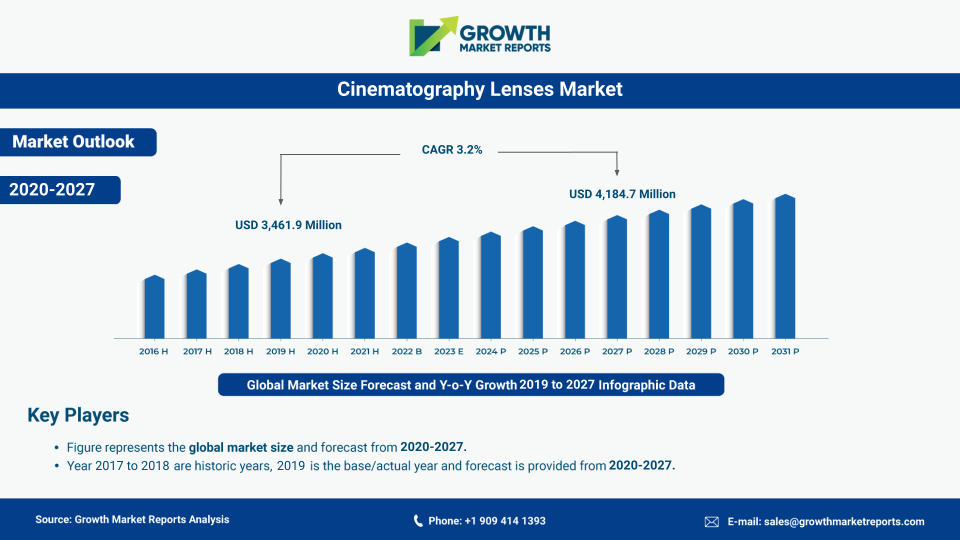
The Global Cinematography Lenses market was valued at USD 3,461.9 million in 2019 and is projected to reach USD 4,184.7 million by 2027, expanding at a CAGR of 3.2% during the forecast period 2020-2027.
Cinematography is the art and craft of making motion pictures by capturing and presenting story visually. Technically, it is the art and science of recording light, electronically and chemically into an image sensor and film, respectively.
Cinematography lenses are widely used by filmmakers owing to their advantages and benefits. These lenses are excellent at focusing on the subject and provide precise and smoother images and videos than the still lenses used for focusing. Cinematography lenses are made up of high-quality optical glass. These lenses are produced with utmost perfection and adhere to standard that increase their cost.
Several parameters such as focal length, resolution, function, sensor size, and type of lens need to be considered before choosing the lens. These parameters are mapped on the basis of the application of lens by filmmakers.
Cinematography Lenses MarketMarket Dynamics
The global cinematography lenses market is driven by the factors such as increasing demand for full-frame cinematography lenses, rapid growth of the film industry, high demand for the production of 3D animated movies & TV content.
Growing popularity of movies among people has increased the focus of film makers on the production of films and cinema. The advent of new technology in the film industry and increasing adoption of technology for creating visual effects in cinematography have boosted the demand for cinematography lenses.
Various factors such as on-screen visual elements, lighting, composing, camera motion, framing, camera angles, lens choices, zoom, depth of field, focus, color, exposure, and filtration settings help in creating superior cinematography, which entails the use of advanced lenses.
This, in turn, is expected to propel the demand for cinematography lenses. Moreover, rise in the demand for 3D movies has propelled the adoption of advanced lenses, which is expected to boost the need for cinematography lenses during the forecast period.
Rising consumer demand for watching films based on trending topics and advanced technology for entertainment is expected to propel the need for advanced lenses used in the production of documentaries, movies, series, and short films to capture images and videos in high clarity.
Professional filmmaking and production units require various equipment, such as lighting systems, sound systems, and cameras for the production of films.
Growing number of small and medium cinema production firms globally is expected to drive the demand for cinematography lenses for their production units and facility. Rise in usage of advanced cinematography lenses by filmmakers is expected to propel the market growth during the forecast period.
Cinematography lenses allow the changing of aperture to improve the control to provide superior quality of videos. Advantages and benefits offered by cinema lenses increase the cost of products. Moreover, additional costs associated with the products for regular maintenance and cleaning are moderately high.
The cost of these lens is decided on the basis of its specifications, size, and features offered by the lens. Thus, the high cost of cinematography lenses is expected to hinder the market growth during the forecast period.
Cinematography Lenses Market Segmental Outlook
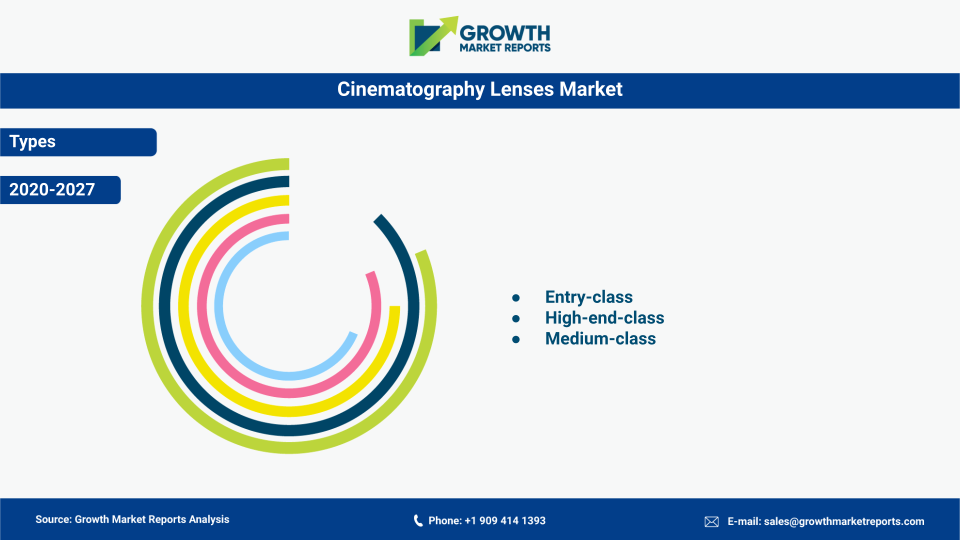
By type, the cinematography lenses market has been segmented into entry-class, high-end-class, and medium-class. The high-end class segment held a significant market share in 2019 and is expected to expand at a significant CAGR during the forecast period.
The segmental growth is attributed to the rising adoption of high-end lenses for shooting short films, documentaries, and vlogs. Moreover, increasing number of professional cinematographers across the globe is anticipated to contribute to the segmental growth.
By function, the global cinematography lenses market has been segmented into prime lenses and zoom lenses. The zoom lenses segment is projected to expand at a substantial CAGR during the forecast period. Rising number of films and increasing investment in the production of films are some of the major factors driving the growth of the market.
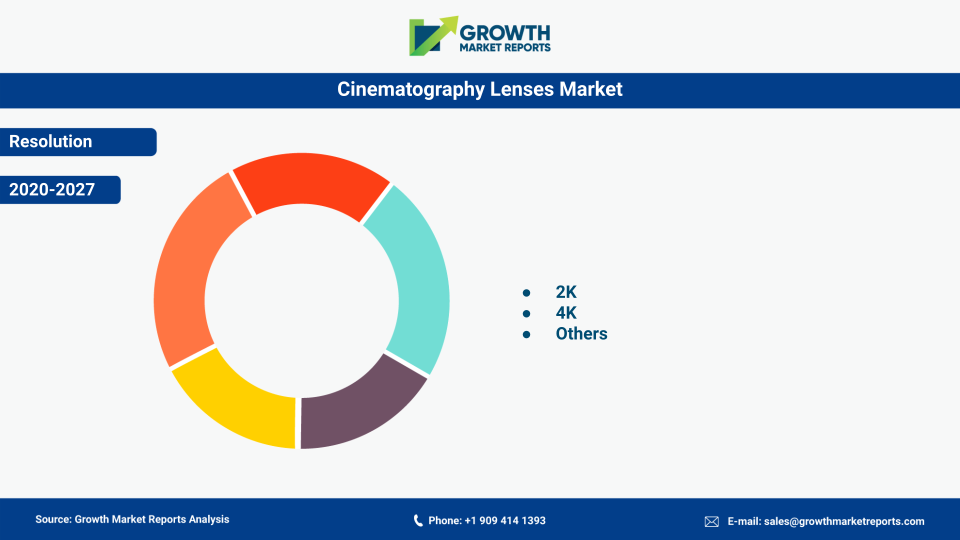
By resolution, the cinematography lenses market has been divided into 2K, 4K, and others. The 4K segment held a considerable share of the market in 2019. Introduction of advanced technology and rising demand for high-resolution films has led to the adoption of the 4K technology.
The rise in the movie theaters and cinema projectors has resulted in the rising adoption of 4K technologies, which in turn contributes to the adoption of 4K technologies.
Based on focal length, the cinematography lenses market has been categorized into medium telephoto (70–135 mm), normal (35–70 mm), telephoto (>135 mm), and wide-angle (14–35 mm). The wide-angle (14–35 mm) segment is anticipated to expand at a moderate CAGR during the forecast period.
Adoption of wide-angle lenses for shooting films to obtain a deep depth of field and increased focus of the lens are some of the major factors contributing to the rising adoption of the wide-angle lens.
On the basis of end-user, the market has been classified into amateur and professional. The amateur segment held a substantial market share in 2019 and is anticipated to expand at a moderate CAGR during the forecast period, 2020–2027.
Availability of variety of lenses and increasing adoption of cinematography as a hobby has led to the rise in the number of amateur cinematographers, thereby boosting the demand for the cinematography lenses.
By sensor size, the market has been segmented into full frame and super 35/APS-C. The full frame segment held a considerable market share in 2019; however, the super 35/APS-C is expected to expand at a highest CAGR during the forecast period.
Increasing demand for the super 35/APS-C sensor-based camera owing to its ability to produce high quality images is driving the adoption of super 35/APS-C cinematography lenses.
Based on sales revenue, the global cinematography lenses market has been categorized into sales and rental. The rental segment dominated the market in 2019 and is expected to continue its dominance during the forecast period.
Rental services are low in costs and offers a wide range of new lenses at low prices. Thus, most of the end-users prefer lenses on a rental basis, thereby spurring the segmental growth.
Cinematography Lenses Market Regional Outlook
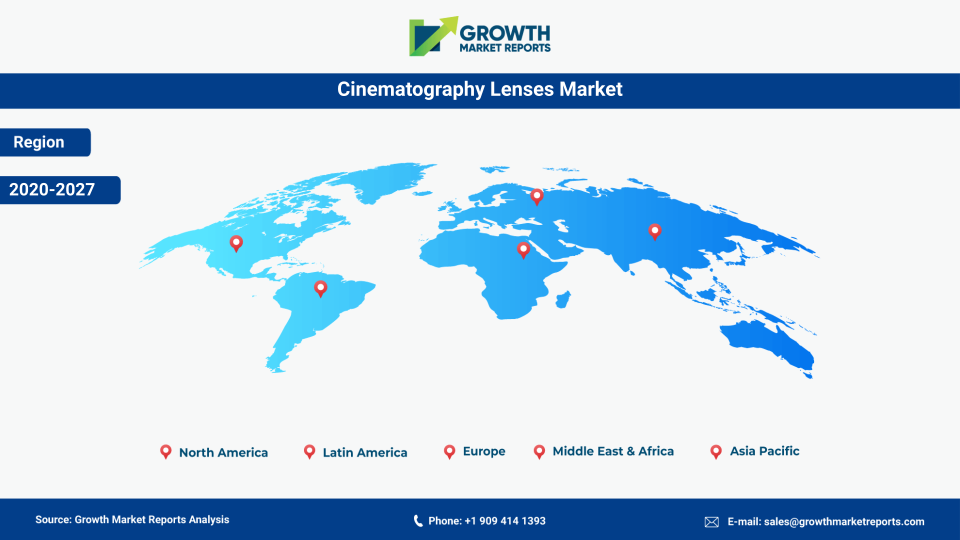
In terms of regions, the global cinematography lenses market is fragmented into North America, Europe, Asia Pacific, Latin America, and Middle East & Africa. The market in Asia Pacific is projected to hold significant market share during the forecast period, followed by North America.
The regional growth is attributed to the rising popularity of the film production and strong presence of the market players in this region.
Key Benefits for Industry Participants & Stakeholders
In-depth Analysis of the Global Cinematography Lenses Market
Historical, Current and Projected Market Size in terms of Value
Potential & Niche Segments and Regions Exhibiting Promising Growth Covered
Industry Drivers, Restraints and Opportunities Covered in the Study
Recent Industry Trends and Developments
Competitive Landscape & Strategies of Key Players
Neutral Perspective on Global Cinematography Lenses Market Performance
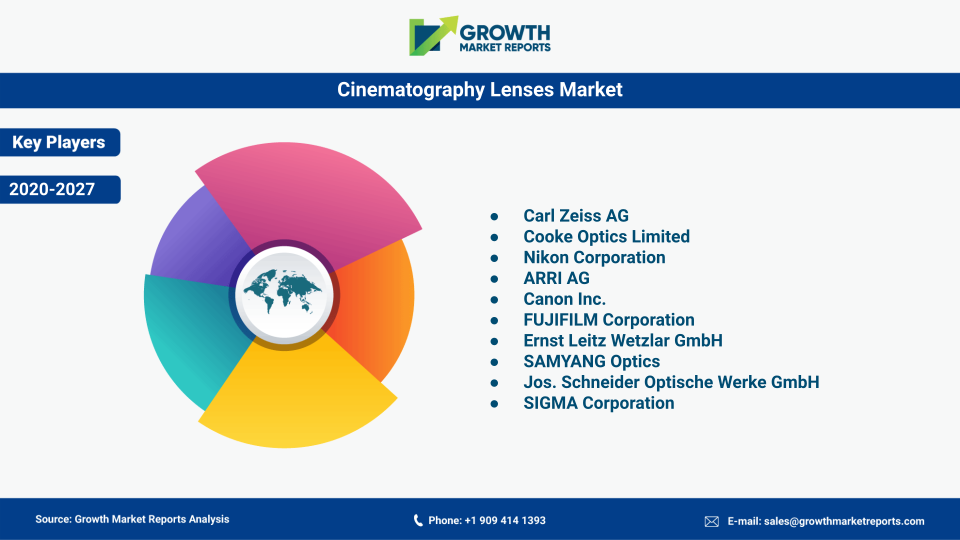
Key players in the market include Canon Inc., Nikon Corporation, Sony Corporation, FUJIFILM Corporation, and Carl Zeiss AG among others. These companies are considered as key manufacturers of Cinematography Lenses based on their revenue, research & development (R&D) activities, regional presence, and supply chain management system.
The players are adopting key strategies such as merger, acquisition, and geographical expansion in order to strengthen their market position.
For instance, on July 1, 2020, Carl Zeiss AG added three full frame, high-speed lenses to the high-end ZEISS Supreme Prime series of cine lenses. These lenses include 18 mm T1.5, 40 mm T1.5, and 200 mm T2.2, which closed the gap between the 35 and 50 millimeter focal length.
On April 20, 2020, Canon Inc. announced the launch of the CINE-SERVO 25-250mm T2.95-3.95 (CN10x25 IAS S), a CINE-SERVO cinema lens designed for the use with 4K cameras.
On September 5, 2019, FUJIFILM Corporation launched Premista80-250mmT2.9-3.5 telephoto zoom lens, which is a second zoom cinema lens in the Premista Series with high resolution and rich gradation with high dynamic range (HDR).
Chapter 1 Executive Summary Chapter 2 Assumptions and Acronyms Used Chapter 3 Research Methodology Chapter 4 Cinematography Lenses Market Overview 4.1 Introduction 4.1.1 Market Taxonomy 4.1.2 Market Definition 4.1.3 Macro-Economic Factors Impacting the Market Growth 4.2 Cinematography Lenses Market Dynamics 4.2.1 Market Drivers 4.2.2 Market Restraints 4.2.3 Market Opportunity 4.3 Cinematography Lenses Market - Supply Chain Analysis 4.3.1 List of Key Suppliers 4.3.2 List of Key Distributors 4.3.3 List of Key Consumers 4.4 Key Forces Shaping the Cinematography Lenses Market 4.4.1 Bargaining Power of Suppliers 4.4.2 Bargaining Power of Buyers 4.4.3 Threat of Substitution 4.4.4 Threat of New Entrants 4.4.5 Competitive Rivalry 4.5 Global Cinematography Lenses Market Size & Forecast, 2017-2027 4.5.1 Cinematography Lenses Market Size and Y-o-Y Growth 4.5.2 Cinematography Lenses Market Absolute $ Opportunity 4.6 Technology Roadmap Overview 4.7 Latest Introductions in Lens Technology 4.8 New Product Launches (Past Five Years) Chapter 5 Global Cinematography Lenses Market Analysis and Forecast By Type 5.1 Introduction 5.1.1 Key Market Trends & Growth Opportunities By Type 5.1.2 Basis Point Share (BPS) Analysis By Type 5.1.3 Absolute $ Opportunity Assessment By Type 5.2 Cinematography Lenses Market Size Forecast By Type 5.2.1 Entry-class 5.2.2 Medium-class 5.2.3 High-end-class 5.3 Market Attractiveness Analysis By Type Chapter 6 Global Cinematography Lenses Market Analysis and Forecast By Function 6.1 Introduction 6.1.1 Key Market Trends & Growth Opportunities By Function 6.1.2 Basis Point Share (BPS) Analysis By Function 6.1.3 Absolute $ Opportunity Assessment By Function 6.2 Cinematography Lenses Market Size Forecast By Function 6.2.1 Prime Lenses 6.2.2 Zoom Lenses 6.3 Market Attractiveness Analysis By Function Chapter 7 Global Cinematography Lenses Market Analysis and Forecast By Resolution 7.1 Introduction 7.1.1 Key Market Trends & Growth Opportunities By Resolution 7.1.2 Basis Point Share (BPS) Analysis By Resolution 7.1.3 Absolute $ Opportunity Assessment By Resolution 7.2 Cinematography Lenses Market Size Forecast By Resolution 7.2.1 2K 7.2.2 4K 7.2.3 Others(6K and 8K) 7.3 Market Attractiveness Analysis By Resolution Chapter 8 Global Cinematography Lenses Market Analysis and Forecast By Focal Length 8.1 Introduction 8.1.1 Key Market Trends & Growth Opportunities By Focal Length 8.1.2 Basis Point Share (BPS) Analysis By Focal Length 8.1.3 Absolute $ Opportunity Assessment By Focal Length 8.2 Cinematography Lenses Market Size Forecast By Focal Length 8.2.1 Wide-angle (14–35 mm) 8.2.2 Normal (35–70 mm) 8.2.3 Medium Telephoto (70–135 mm) 8.2.4 Telephoto (>135 mm) 8.3 Market Attractiveness Analysis By Focal Length Chapter 9 Global Cinematography Lenses Market Analysis and Forecast By End-user 9.1 Introduction 9.1.1 Key Market Trends & Growth Opportunities By End-user 9.1.2 Basis Point Share (BPS) Analysis By End-user 9.1.3 Absolute $ Opportunity Assessment By End-user 9.2 Cinematography Lenses Market Size Forecast By End-user 9.2.1 Amateur 9.2.2 Professional 9.3 Market Attractiveness Analysis By End-user Chapter 10 Global Cinematography Lenses Market Analysis and Forecast By Sensor Size 10.1 Introduction 10.1.1 Key Market Trends & Growth Opportunities By Sensor Size 10.1.2 Basis Point Share (BPS) Analysis By Sensor Size 10.1.3 Absolute $ Opportunity Assessment By Sensor Size 10.2 Cinematography Lenses Market Size Forecast By Sensor Size 10.2.1 Full Frame 10.2.2 Super 35/APS-C 10.3 Market Attractiveness Analysis By Sensor Size Chapter 11 Global Cinematography Lenses Market Analysis and Forecast By Sales Revenue 11.1 Introduction 11.1.1 Key Market Trends & Growth Opportunities By Sales Revenue 11.1.2 Basis Point Share (BPS) Analysis By Sales Revenue 11.1.3 Absolute $ Opportunity Assessment By Sales Revenue 11.2 Cinematography Lenses Market Size Forecast By Sales Revenue 11.2.1 Sales 11.2.2 Rental 11.3 Market Attractiveness Analysis By Sales Revenue Chapter 12 Global Cinematography Lenses Market Analysis and Forecast by Region 12.1 Introduction 12.1.1 Key Market Trends & Growth Opportunities by Region 12.1.2 Basis Point Share (BPS) Analysis by Region 12.1.3 Absolute $ Opportunity Assessment by Region 12.2 Cinematography Lenses Market Size Forecast by Region 12.2.1 North America 12.2.2 Europe 12.2.3 Asia Pacific 12.2.4 Latin America 12.2.5 Middle East & Africa (MEA) 12.3 Market Attractiveness Analysis by Region Chapter 13 Coronavirus Disease (COVID-19) Impact 13.1 Introduction 13.2 Current & Future Impact Analysis 13.3 Economic Impact Analysis 13.4 Government Policies 13.5 Investment Scenario Chapter 14 North America Cinematography Lenses Analysis and Forecast 14.1 Introduction 14.2 North America Cinematography Lenses Market Size Forecast by Country 14.2.1 U.S. 14.2.2 Canada 14.3 Basis Point Share (BPS) Analysis by Country 14.4 Absolute $ Opportunity Assessment by Country 14.5 Market Attractiveness Analysis by Country 14.6 North America Cinematography Lenses Market Size Forecast By Type 14.6.1 Entry-class 14.6.2 Medium-class 14.6.3 High-end-class 14.7 Basis Point Share (BPS) Analysis By Type 14.8 Absolute $ Opportunity Assessment By Type 14.9 Market Attractiveness Analysis By Type 14.10 North America Cinematography Lenses Market Size Forecast By Function 14.10.1 Prime Lenses 14.10.2 Zoom Lenses 14.11 Basis Point Share (BPS) Analysis By Function 14.12 Absolute $ Opportunity Assessment By Function 14.13 Market Attractiveness Analysis By Function 14.14 North America Cinematography Lenses Market Size Forecast By Resolution 14.14.1 2K 14.14.2 4K 14.14.3 Others(6K and 8K) 14.15 Basis Point Share (BPS) Analysis By Resolution 14.16 Absolute $ Opportunity Assessment By Resolution 14.17 Market Attractiveness Analysis By Resolution 14.18 North America Cinematography Lenses Market Size Forecast By Focal Length 14.18.1 Wide-angle (14–35 mm) 14.18.2 Normal (35–70 mm) 14.18.3 Medium Telephoto (70–135 mm) 14.18.4 Telephoto (>135 mm) 14.19 Basis Point Share (BPS) Analysis By Focal Length 14.20 Absolute $ Opportunity Assessment By Focal Length 14.21 Market Attractiveness Analysis By Focal Length 14.22 North America Cinematography Lenses Market Size Forecast By End-user 14.22.1 Amateur 14.22.2 Professional 14.23 Basis Point Share (BPS) Analysis By End-user 14.24 Absolute $ Opportunity Assessment By End-user 14.25 Market Attractiveness Analysis By End-user 14.26 North America Cinematography Lenses Market Size Forecast By Sensor Size 14.26.1 Full Frame 14.26.2 Super 35/APS-C 14.27 Basis Point Share (BPS) Analysis By Sensor Size 14.28 Absolute $ Opportunity Assessment By Sensor Size 14.29 Market Attractiveness Analysis By Sensor Size 14.30 North America Cinematography Lenses Market Size Forecast By Sales Revenue 14.30.1 Sales 14.30.2 Rental 14.31 Basis Point Share (BPS) Analysis By Sales Revenue 14.32 Absolute $ Opportunity Assessment By Sales Revenue 14.33 Market Attractiveness Analysis By Sales Revenue Chapter 15 Europe Cinematography Lenses Analysis and Forecast 15.1 Introduction 15.2 Europe Cinematography Lenses Market Size Forecast by Country 15.2.1 Germany 15.2.2 France 15.2.3 Italy 15.2.4 U.K. 15.2.5 Spain 15.2.6 Russia 15.2.7 Rest of Europe 15.3 Basis Point Share (BPS) Analysis by Country 15.4 Absolute $ Opportunity Assessment by Country 15.5 Market Attractiveness Analysis by Country 15.6 Europe Cinematography Lenses Market Size Forecast By Type 15.6.1 Entry-class 15.6.2 Medium-class 15.6.3 High-end-class 15.7 Basis Point Share (BPS) Analysis By Type 15.8 Absolute $ Opportunity Assessment By Type 15.9 Market Attractiveness Analysis By Type 15.10 Europe Cinematography Lenses Market Size Forecast By Function 15.10.1 Prime Lenses 15.10.2 Zoom Lenses 15.11 Basis Point Share (BPS) Analysis By Function 15.12 Absolute $ Opportunity Assessment By Function 15.13 Market Attractiveness Analysis By Function 15.14 Europe Cinematography Lenses Market Size Forecast By Resolution 15.14.1 2K 15.14.2 4K 15.14.3 Others(6K and 8K) 15.15 Basis Point Share (BPS) Analysis By Resolution 15.16 Absolute $ Opportunity Assessment By Resolution 15.17 Market Attractiveness Analysis By Resolution 15.18 Europe Cinematography Lenses Market Size Forecast By Focal Length 15.18.1 Wide-angle (14–35 mm) 15.18.2 Normal (35–70 mm) 15.18.3 Medium Telephoto (70–135 mm) 15.18.4 Telephoto (>135 mm) 15.19 Basis Point Share (BPS) Analysis By Focal Length 15.20 Absolute $ Opportunity Assessment By Focal Length 15.21 Market Attractiveness Analysis By Focal Length 15.22 Europe Cinematography Lenses Market Size Forecast By End-user 15.22.1 Amateur 15.22.2 Professional 15.23 Basis Point Share (BPS) Analysis By End-user 15.24 Absolute $ Opportunity Assessment By End-user 15.25 Market Attractiveness Analysis By End-user 15.26 Europe Cinematography Lenses Market Size Forecast By Sensor Size 15.26.1 Full Frame 15.26.2 Super 35/APS-C 15.27 Basis Point Share (BPS) Analysis By Sensor Size 15.28 Absolute $ Opportunity Assessment By Sensor Size 15.29 Market Attractiveness Analysis By Sensor Size 15.30 Europe Cinematography Lenses Market Size Forecast By Sales Revenue 15.30.1 Sales 15.30.2 Rental 15.31 Basis Point Share (BPS) Analysis By Sales Revenue 15.32 Absolute $ Opportunity Assessment By Sales Revenue 15.33 Market Attractiveness Analysis By Sales Revenue Chapter 16 Asia Pacific Cinematography Lenses Analysis and Forecast 16.1 Introduction 16.2 Asia Pacific Cinematography Lenses Market Size Forecast by Country 16.2.1 China 16.2.2 Japan 16.2.3 South Korea 16.2.4 India 16.2.5 Australia 16.2.6 South East Asia (SEA) 16.2.7 Rest of Asia Pacific (APAC) 16.3 Basis Point Share (BPS) Analysis by Country 16.4 Absolute $ Opportunity Assessment by Country 16.5 Market Attractiveness Analysis by Country 16.6 Asia Pacific Cinematography Lenses Market Size Forecast By Type 16.6.1 Entry-class 16.6.2 Medium-class 16.6.3 High-end-class 16.7 Basis Point Share (BPS) Analysis By Type 16.8 Absolute $ Opportunity Assessment By Type 16.9 Market Attractiveness Analysis By Type 16.10 Asia Pacific Cinematography Lenses Market Size Forecast By Function 16.10.1 Prime Lenses 16.10.2 Zoom Lenses 16.11 Basis Point Share (BPS) Analysis By Function 16.12 Absolute $ Opportunity Assessment By Function 16.13 Market Attractiveness Analysis By Function 16.14 Asia Pacific Cinematography Lenses Market Size Forecast By Resolution 16.14.1 2K 16.14.2 4K 16.14.3 Others(6K and 8K) 16.15 Basis Point Share (BPS) Analysis By Resolution 16.16 Absolute $ Opportunity Assessment By Resolution 16.17 Market Attractiveness Analysis By Resolution 16.18 Asia Pacific Cinematography Lenses Market Size Forecast By Focal Length 16.18.1 Wide-angle (14–35 mm) 16.18.2 Normal (35–70 mm) 16.18.3 Medium Telephoto (70–135 mm) 16.18.4 Telephoto (>135 mm) 16.19 Basis Point Share (BPS) Analysis By Focal Length 16.20 Absolute $ Opportunity Assessment By Focal Length 16.21 Market Attractiveness Analysis By Focal Length 16.22 Asia Pacific Cinematography Lenses Market Size Forecast By End-user 16.22.1 Amateur 16.22.2 Professional 16.23 Basis Point Share (BPS) Analysis By End-user 16.24 Absolute $ Opportunity Assessment By End-user 16.25 Market Attractiveness Analysis By End-user 16.26 Asia Pacific Cinematography Lenses Market Size Forecast By Sensor Size 16.26.1 Full Frame 16.26.2 Super 35/APS-C 16.27 Basis Point Share (BPS) Analysis By Sensor Size 16.28 Absolute $ Opportunity Assessment By Sensor Size 16.29 Market Attractiveness Analysis By Sensor Size 16.30 Asia Pacific Cinematography Lenses Market Size Forecast By Sales Revenue 16.30.1 Sales 16.30.2 Rental 16.31 Basis Point Share (BPS) Analysis By Sales Revenue 16.32 Absolute $ Opportunity Assessment By Sales Revenue 16.33 Market Attractiveness Analysis By Sales Revenue Chapter 17 Latin America Cinematography Lenses Analysis and Forecast 17.1 Introduction 17.2 Latin America Cinematography Lenses Market Size Forecast by Country 17.2.1 Brazil 17.2.2 Mexico 17.2.3 Rest of Latin America (LATAM) 17.3 Basis Point Share (BPS) Analysis by Country 17.4 Absolute $ Opportunity Assessment by Country 17.5 Market Attractiveness Analysis by Country 17.6 Latin America Cinematography Lenses Market Size Forecast By Type 17.6.1 Entry-class 17.6.2 Medium-class 17.6.3 High-end-class 17.7 Basis Point Share (BPS) Analysis By Type 17.8 Absolute $ Opportunity Assessment By Type 17.9 Market Attractiveness Analysis By Type 17.10 Latin America Cinematography Lenses Market Size Forecast By Function 17.10.1 Prime Lenses 17.10.2 Zoom Lenses 17.11 Basis Point Share (BPS) Analysis By Function 17.12 Absolute $ Opportunity Assessment By Function 17.13 Market Attractiveness Analysis By Function 17.14 Latin America Cinematography Lenses Market Size Forecast By Resolution 17.14.1 2K 17.14.2 4K 17.14.3 Others(6K and 8K) 17.15 Basis Point Share (BPS) Analysis By Resolution 17.16 Absolute $ Opportunity Assessment By Resolution 17.17 Market Attractiveness Analysis By Resolution 17.18 Latin America Cinematography Lenses Market Size Forecast By Focal Length 17.18.1 Wide-angle (14–35 mm) 17.18.2 Normal (35–70 mm) 17.18.3 Medium Telephoto (70–135 mm) 17.18.4 Telephoto (>135 mm) 17.19 Basis Point Share (BPS) Analysis By Focal Length 17.20 Absolute $ Opportunity Assessment By Focal Length 17.21 Market Attractiveness Analysis By Focal Length 17.22 Latin America Cinematography Lenses Market Size Forecast By End-user 17.22.1 Amateur 17.22.2 Professional 17.23 Basis Point Share (BPS) Analysis By End-user 17.24 Absolute $ Opportunity Assessment By End-user 17.25 Market Attractiveness Analysis By End-user 17.26 Latin America Cinematography Lenses Market Size Forecast By Sensor Size 17.26.1 Full Frame 17.26.2 Super 35/APS-C 17.27 Basis Point Share (BPS) Analysis By Sensor Size 17.28 Absolute $ Opportunity Assessment By Sensor Size 17.29 Market Attractiveness Analysis By Sensor Size 17.30 Latin America Cinematography Lenses Market Size Forecast By Sales Revenue 17.30.1 Sales 17.30.2 Rental 17.31 Basis Point Share (BPS) Analysis By Sales Revenue 17.32 Absolute $ Opportunity Assessment By Sales Revenue 17.33 Market Attractiveness Analysis By Sales Revenue Chapter 18 Middle East & Africa (MEA) Cinematography Lenses Analysis and Forecast 18.1 Introduction 18.2 Middle East & Africa (MEA) Cinematography Lenses Market Size Forecast by Country 18.2.1 Saudi Arabia 18.2.2 South Africa 18.2.3 UAE 18.2.4 Rest of Middle East & Africa (MEA) 18.3 Basis Point Share (BPS) Analysis by Country 18.4 Absolute $ Opportunity Assessment by Country 18.5 Market Attractiveness Analysis by Country 18.6 Middle East & Africa (MEA) Cinematography Lenses Market Size Forecast By Type 18.6.1 Entry-class 18.6.2 Medium-class 18.6.3 High-end-class 18.7 Basis Point Share (BPS) Analysis By Type 18.8 Absolute $ Opportunity Assessment By Type 18.9 Market Attractiveness Analysis By Type 18.10 Middle East & Africa (MEA) Cinematography Lenses Market Size Forecast By Function 18.10.1 Prime Lenses 18.10.2 Zoom Lenses 18.11 Basis Point Share (BPS) Analysis By Function 18.12 Absolute $ Opportunity Assessment By Function 18.13 Market Attractiveness Analysis By Function 18.14 Middle East & Africa (MEA) Cinematography Lenses Market Size Forecast By Resolution 18.14.1 2K 18.14.2 4K 18.14.3 Others(6K and 8K) 18.15 Basis Point Share (BPS) Analysis By Resolution 18.16 Absolute $ Opportunity Assessment By Resolution 18.17 Market Attractiveness Analysis By Resolution 18.18 Middle East & Africa (MEA) Cinematography Lenses Market Size Forecast By Focal Length 18.18.1 Wide-angle (14–35 mm) 18.18.2 Normal (35–70 mm) 18.18.3 Medium Telephoto (70–135 mm) 18.18.4 Telephoto (>135 mm) 18.19 Basis Point Share (BPS) Analysis By Focal Length 18.20 Absolute $ Opportunity Assessment By Focal Length 18.21 Market Attractiveness Analysis By Focal Length 18.22 Middle East & Africa (MEA) Cinematography Lenses Market Size Forecast By End-user 18.22.1 Amateur 18.22.2 Professional 18.23 Basis Point Share (BPS) Analysis By End-user 18.24 Absolute $ Opportunity Assessment By End-user 18.25 Market Attractiveness Analysis By End-user 18.26 Middle East & Africa (MEA) Cinematography Lenses Market Size Forecast By Sensor Size 18.26.1 Full Frame 18.26.2 Super 35/APS-C 18.27 Basis Point Share (BPS) Analysis By Sensor Size 18.28 Absolute $ Opportunity Assessment By Sensor Size 18.29 Market Attractiveness Analysis By Sensor Size 18.30 Middle East & Africa (MEA) Cinematography Lenses Market Size Forecast By Sales Revenue 18.30.1 Sales 18.30.2 Rental 18.31 Basis Point Share (BPS) Analysis By Sales Revenue 18.32 Absolute $ Opportunity Assessment By Sales Revenue 18.33 Market Attractiveness Analysis By Sales Revenue Chapter 19 Competition Landscape 19.1 Cinematography Lenses Market: Competitive Dashboard 19.2 Global Cinematography Lenses Market: Market Share Analysis, 2019 19.3 Company Profiles (Details – Overview, Financials, Developments, Strategy) 19.3.1 Carl Zeiss AG 19.3.2 Cooke Optics Limited 19.3.3 Nikon Corporation 19.3.4 ARRI AG 19.3.5 Canon Inc. 19.3.6 FUJIFILM Corporation 19.3.7 Ernst Leitz Wetzlar GmbH 19.3.8 SAMYANG Optics 19.3.9 Jos. Schneider Optische Werke GmbH 19.3.10 SIGMA Corporation 19.3.11 Sony Corporation 19.3.12 Kenko Tokina Co., Ltd.
Ask for Research To Be Focused On Specific Regions or Segments
Receive Data As Per Your Format and Definition
Companies Profiled based on Your Requirements
Breaking Down Competitive Landscape as per Your Requirements
Any Level of Customization
Our Clients
Client Testinomials
We needed a highly accurate and precise report, which Growth Market Reports delivered promptly. The company compiled information from a wide array of reliable agencies and sourcess.It is extremely satisfactory to be working with you. Strategy Head of Major Tech Company
We were very pleased to contact Growth Market Reports as they tailored reports precisely as per our requirements. As we are dealing with the aerospace and defense industry, we need reports of high accuracy and substantial quality. Major Player in Defense Industry
Extremely delighted to have a well-crafted report on “Global Packaging Solutions Market Research Report” from your team. Thank you for providing me with all our requirements and for incorporating our suggestions. CMO of Leading Packaging Company from USA
I had a good experience working with Growth Market Reports as they were very open to all constructive changes in the report. I found that the report had its charm embedded with ample of data. Founder and Managing Partner of Major Korean Company
Our company has been working with Growth Market Reports for some years now and we are very happy with the quality of the reports provided by the company.I, on behalf of my organization, would like to thank you for offering professional reports. Global Consulting Firm
The base year considered for the global cinematography lenses market report is 2019. The complete analysis period is 2017 to 2027, wherein, 2017 & 2018 are the historic years and the forecast is provided from 2020 to 2027.
The market is driven by the factors such as increasing demand for full-frame cinematography lenses, rapid growth of the film industry, high demand for the production of 3D animated movies & TV content.
The global cinematography lenses market report provides the additional data such as overview of latest introductions in lens technology and information related to the new product launches over past five years.
According to the GROWTH MARKET REPORTS report, the market from cinematography lenses is likely to register a CAGR of 3.2% during forecast period 2020-2027, with an anticipated valuation of USD 4,184.7 million by the end of the 2027.











 Request For Customization
 Enquiry Before Buying
 Speak With Analyst