Segments - by Product Type (Built-in Dishwashers, Freestanding Dishwashers, Compact Dishwashers, Others), by Application (Residential, Commercial), by Distribution Channel (Online Stores, Specialty Stores, Supermarkets/Hypermarkets, Others), by Capacity (Small, Medium, Large)
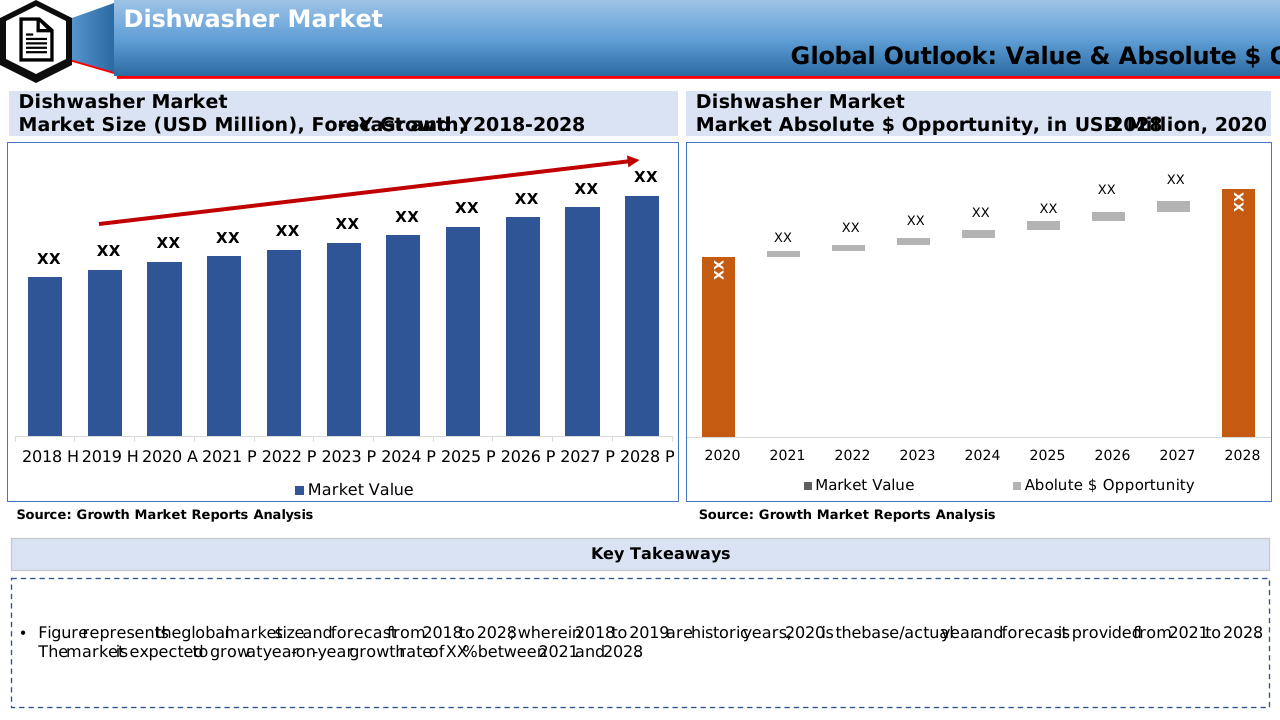
According to our latest research, the global dishwasher market size reached USD 8.9 billion in 2024, demonstrating robust growth driven by evolving consumer lifestyles and rising adoption of smart home appliances. The market is expected to register a CAGR of 6.1% during the forecast period, with projections indicating a value of USD 15.2 billion by 2033. This growth trajectory is primarily fueled by increasing urbanization, heightened awareness of hygiene, and technological advancements in dishwasher design and functionality.
One of the primary growth factors for the dishwasher market is the significant shift in consumer behavior towards convenience-oriented living. As urban populations swell and dual-income households become more prevalent, the demand for automated home appliances like dishwashers has soared. Consumers are increasingly seeking products that save time and reduce manual labor, and dishwashers fit seamlessly into this narrative, offering efficient cleaning solutions with minimal human intervention. The integration of energy-efficient technologies and water-saving features has further bolstered the adoption of dishwashers, as environmentally conscious consumers look for sustainable household solutions. Additionally, manufacturers are investing in research and development to introduce innovative features such as smart connectivity, voice control, and customizable wash cycles, all of which are resonating strongly with tech-savvy buyers.
The commercial sector is another pivotal driver of growth in the dishwasher market. Restaurants, hotels, cafes, and catering services are increasingly relying on commercial-grade dishwashers to maintain high standards of cleanliness and comply with stringent health regulations. The post-pandemic era has heightened the focus on hygiene and sanitation, prompting foodservice establishments to upgrade or replace existing dishwashing equipment with more advanced, efficient, and reliable models. This trend is particularly pronounced in developed regions where the hospitality industry is experiencing a resurgence, but is also gaining traction in emerging markets as local businesses modernize their operations to meet global standards. The growing commercial application of dishwashers is expected to sustain market momentum over the forecast period.
Another crucial growth factor is the expansion of distribution channels, particularly the rise of online retail platforms. The proliferation of e-commerce has made it easier for consumers to access a wide variety of dishwasher models, compare features and prices, and read customer reviews before making a purchase. Online channels offer attractive discounts, flexible payment options, and convenient home delivery, which are especially appealing to younger, digitally native consumers. In addition to online stores, specialty retailers and supermarkets/hypermarkets continue to play a significant role in driving sales, providing consumers with the opportunity to experience products firsthand and benefit from expert guidance. The synergy between physical and digital retail channels is creating a dynamic marketplace that supports sustained growth in dishwasher adoption.
The rise of smart home appliances has also introduced new components like the Countertop Dishwasher Control IC, which plays a crucial role in enhancing the functionality and efficiency of modern dishwashers. This integrated circuit is designed to manage various operational aspects of countertop dishwashers, ensuring optimal performance and energy efficiency. As consumers increasingly demand appliances that offer convenience and advanced features, the integration of such control ICs has become essential. These components help in regulating water usage, controlling wash cycles, and enabling connectivity features, thereby aligning with the growing trend of smart, connected home environments. The advancement in control IC technology is a testament to the ongoing innovation in the dishwasher market, catering to tech-savvy consumers who prioritize both performance and sustainability.
Regionally, Europe has maintained its dominance in the global dishwasher market, accounting for the largest share in 2024, followed closely by North America. High household penetration rates, a well-established retail infrastructure, and strong consumer preference for premium appliances have underpinned market growth in these regions. Meanwhile, the Asia Pacific market is emerging as a key growth engine, driven by rapid urbanization, rising disposable incomes, and increased awareness of modern kitchen appliances. Countries such as China, India, and Japan are witnessing robust demand, supported by aggressive marketing campaigns and localized product offerings. The Middle East & Africa and Latin America are also showing promising growth prospects, albeit from a lower base, as urban lifestyles and purchasing power continue to evolve.
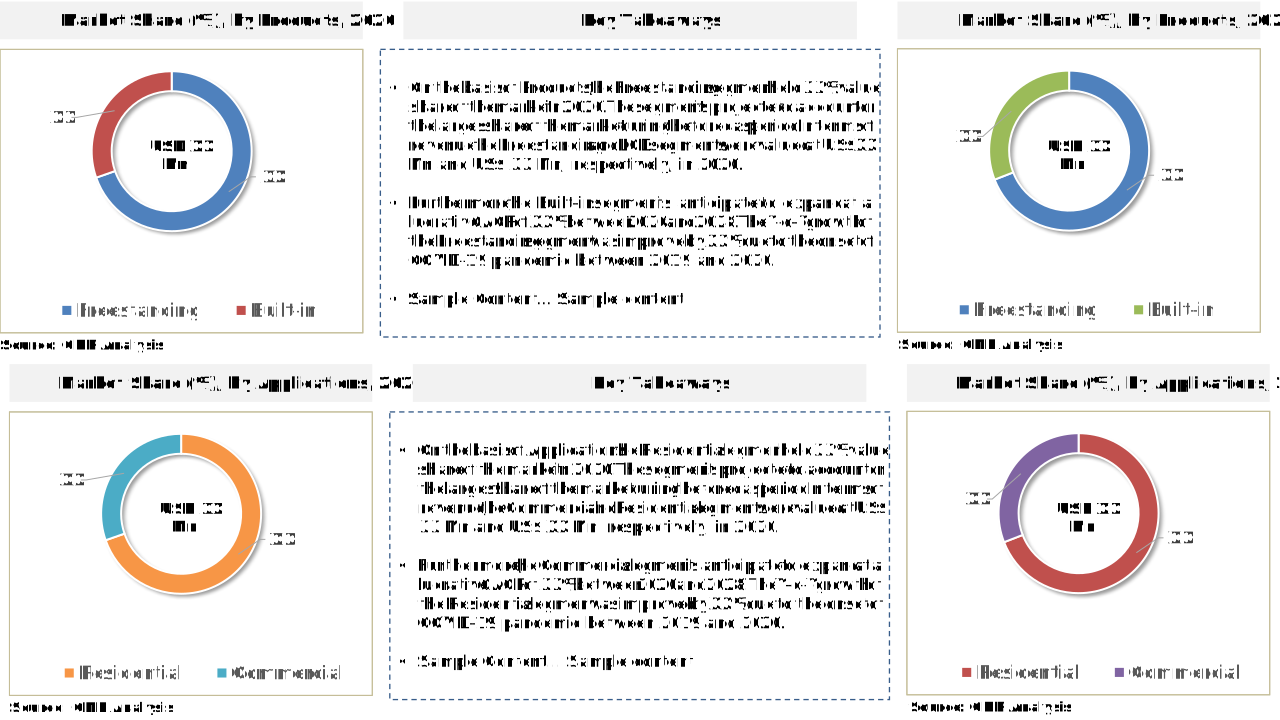
The dishwasher market is segmented by product type into built-in dishwashers, freestanding dishwashers, compact dishwashers, and others. Built-in dishwashers remain the preferred choice among consumers seeking seamless integration with modern kitchen layouts. These appliances are typically installed under kitchen counters and offer a sleek, space-saving solution that aligns with contemporary interior design trends. Built-in models are often equipped with advanced features such as multiple wash programs, adjustable racks, and smart connectivity, making them highly attractive to tech-savvy homeowners. The growing trend of modular kitchens, particularly in urban areas, is further propelling demand for built-in dishwashers, as homeowners prioritize both functionality and aesthetics in their kitchen spaces.
Freestanding dishwashers represent another significant segment, appealing to consumers who prioritize flexibility and ease of installation. Unlike built-in models, freestanding dishwashers can be placed anywhere with access to water and drainage, making them ideal for renters or those who frequently relocate. This segment has seen notable innovation in recent years, with manufacturers introducing compact designs, noise reduction technologies, and energy-efficient features. Freestanding dishwashers are particularly popular in regions where kitchen renovations are less common or where space constraints limit the feasibility of built-in appliances. The ability to move the appliance as needed and the relatively lower upfront cost are key factors driving the popularity of freestanding dishwashers.
Compact dishwashers have carved out a niche in the market, catering to small households, apartments, and urban dwellings where space is at a premium. These models are designed to offer the same cleaning efficiency as their larger counterparts, but in a smaller footprint. Compact dishwashers are often portable and can be placed on countertops or tucked into tight spaces, making them ideal for singles, couples, or small families. The rising trend of micro-apartments and co-living spaces, especially in densely populated cities, is fueling demand for compact dishwashers. Manufacturers are responding by introducing innovative designs that maximize capacity and efficiency while minimizing water and energy consumption.
The "others" category encompasses specialized dishwashers, such as drawer-type models and industrial variants designed for heavy-duty use in commercial settings. Drawer dishwashers offer unique flexibility, allowing users to run smaller loads independently, which is particularly beneficial for households with varying dishwashing needs. Industrial dishwashers, on the other hand, are engineered for rapid, high-capacity cleaning and are widely used in restaurants, hotels, and institutional kitchens. The demand for these specialized products is expected to grow as both residential and commercial customers seek tailored solutions that address their specific requirements. Overall, product diversification and continuous innovation are key trends shaping the competitive landscape of the dishwasher market.
| Attributes | Details |
| Report Title | Dishwasher Market Research Report 2033 |
| By Product Type | Built-in Dishwashers, Freestanding Dishwashers, Compact Dishwashers, Others |
| By Application | Residential, Commercial |
| By Distribution Channel | Online Stores, Specialty Stores, Supermarkets/Hypermarkets, Others |
| By Capacity | Small, Medium, Large |
| Regions Covered | North America, Europe, APAC, Latin America, MEA |
| Base Year | 2024 |
| Historic Data | 2018-2023 |
| Forecast Period | 2025-2033 |
| Number of Pages | 294 |
| Number of Tables & Figures | 316 |
| Customization Available | Yes, the report can be customized as per your need. |
The application segment of the dishwasher market is broadly categorized into residential and commercial uses. The residential segment continues to dominate the market, accounting for the majority of dishwasher sales in 2024. This dominance is driven by rising consumer awareness of the benefits of dishwashers, including time savings, improved hygiene, and reduced water usage. As more households transition to modern kitchen appliances, the demand for dishwashers is expected to grow steadily, particularly in urban areas where busy lifestyles leave little time for manual dishwashing. The proliferation of smart home technology has further enhanced the appeal of residential dishwashers, with features such as remote monitoring, energy usage tracking, and integration with home automation systems becoming increasingly common.
In recent years, the introduction of the Multifunction Dishwasher Drawer has revolutionized the way consumers approach dishwashing. This innovative product offers unparalleled flexibility, allowing users to wash smaller loads independently, which is particularly advantageous for households with varying dishwashing needs. The multifunctionality of these drawers means they can be used simultaneously or separately, providing a tailored dishwashing experience that conserves water and energy. As urban living spaces become more compact, the demand for space-efficient, versatile appliances like the dishwasher drawer is on the rise. Manufacturers are responding by incorporating advanced features such as adjustable racks and smart connectivity, making these drawers an attractive option for modern kitchens. The multifunction dishwasher drawer exemplifies the industry's shift towards customizable and user-friendly solutions, meeting the diverse needs of contemporary consumers.
Within the residential segment, there is a notable shift towards premium and feature-rich models, as consumers become more discerning and willing to invest in appliances that offer superior performance and convenience. Manufacturers are responding by introducing dishwashers with advanced functionalities, such as customizable wash cycles, eco-friendly modes, and noise reduction technologies. The trend towards open-plan living and kitchen-dining integration has also influenced product design, with a growing emphasis on aesthetics, compactness, and quiet operation. As a result, the residential dishwasher market is characterized by intense competition and rapid innovation, with brands vying to differentiate themselves through unique value propositions.
The commercial segment, while smaller in absolute terms, is experiencing faster growth as businesses in the hospitality, foodservice, and institutional sectors increasingly recognize the value of automated dishwashing solutions. Commercial dishwashers are designed to handle large volumes of dishes quickly and efficiently, making them indispensable in environments where hygiene and turnaround time are critical. The adoption of commercial dishwashers is being driven by factors such as stricter health regulations, labor shortages, and the need to optimize operational efficiency. In addition to traditional restaurants and hotels, commercial dishwashers are finding applications in schools, hospitals, corporate cafeterias, and catering services, broadening the addressable market for manufacturers.
The impact of the COVID-19 pandemic has been particularly pronounced in the commercial segment, with heightened awareness of cleanliness and sanitation prompting many businesses to upgrade their dishwashing equipment. As the hospitality industry rebounds and new foodservice establishments open, demand for commercial dishwashers is expected to remain strong. Manufacturers are capitalizing on this trend by offering customizable solutions tailored to the specific needs of different business types, such as undercounter models for small cafes and conveyor-type dishwashers for large institutions. The ongoing evolution of the commercial dishwasher market underscores the importance of innovation, reliability, and after-sales support in maintaining a competitive edge.
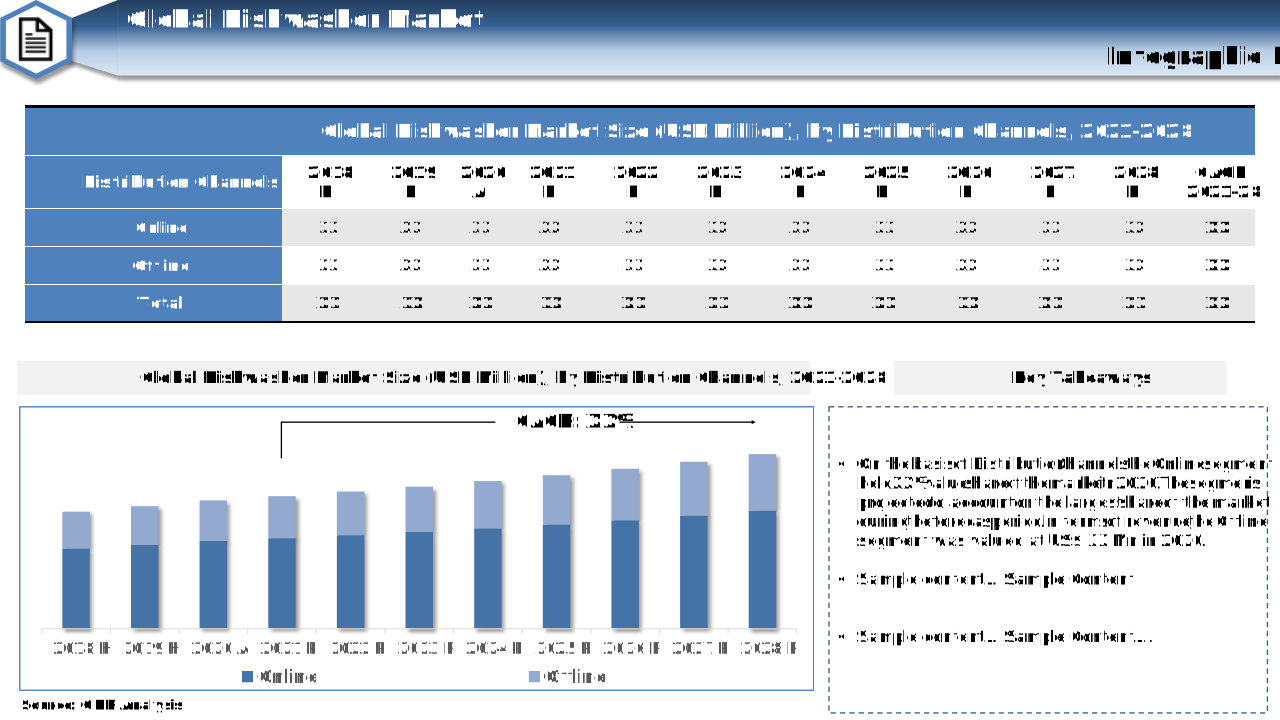
Distribution channels play a pivotal role in shaping the growth trajectory of the dishwasher market. Online stores have emerged as a major sales channel, driven by the increasing penetration of e-commerce and the growing preference for digital shopping among consumers. The convenience of browsing a wide range of products, comparing features and prices, and reading customer reviews has made online platforms highly attractive. Moreover, online stores often offer exclusive deals, easy financing options, and doorstep delivery, further incentivizing consumers to make purchases digitally. The COVID-19 pandemic accelerated this trend, with many consumers turning to online channels for their appliance needs, a behavior that is expected to persist in the coming years.
Specialty stores continue to play a critical role in the dishwasher market, particularly for consumers seeking expert advice and personalized service. These stores typically offer a curated selection of high-quality appliances, along with knowledgeable staff who can guide customers through the purchasing process. Specialty stores are especially popular among buyers looking for premium or customized solutions, as they provide the opportunity to see and experience products firsthand. The ability to offer installation services, product demonstrations, and after-sales support gives specialty retailers a competitive edge, particularly in the high-value segment of the market.
Supermarkets and hypermarkets represent another important distribution channel, offering consumers the convenience of purchasing dishwashers alongside other household goods. These large-format retailers benefit from high foot traffic and the ability to showcase a diverse range of products in a single location. Supermarkets and hypermarkets are particularly effective in reaching price-sensitive customers, as they often feature promotional offers and bundle deals that make dishwashers more accessible to a wider audience. The presence of well-known brands and the assurance of after-sales service further enhance the appeal of this channel.
The "others" category includes independent appliance dealers, department stores, and direct-to-consumer sales through manufacturer websites. These channels cater to niche segments and often focus on providing a personalized shopping experience. Independent dealers, for example, may offer specialized products or cater to specific customer preferences, while manufacturer websites allow brands to engage directly with consumers and build long-term relationships. The diversification of distribution channels is a key trend in the dishwasher market, as manufacturers seek to maximize their reach and adapt to changing consumer behaviors. A multi-channel approach is increasingly seen as essential for capturing market share and driving sustained growth.
Capacity is a critical consideration for consumers when selecting a dishwasher, as it directly impacts the appliance's ability to meet household or business needs. The market is segmented into small, medium, and large capacity dishwashers, each catering to distinct user requirements. Small capacity dishwashers, typically designed for 6 to 8 place settings, are ideal for singles, couples, or small families living in apartments or homes with limited kitchen space. These models are often compact and portable, making them suitable for urban dwellers who prioritize space efficiency. The growing trend of micro-apartments and compact living spaces in major cities is driving demand for small capacity dishwashers, with manufacturers responding by introducing innovative designs that maximize utility without compromising performance.
Medium capacity dishwashers, which generally accommodate 9 to 12 place settings, are the most popular segment among average-sized households. These models strike a balance between size and functionality, offering sufficient capacity for daily use while remaining compact enough to fit into standard kitchen layouts. Medium capacity dishwashers are favored for their versatility, as they can handle the dishwashing needs of most families without occupying excessive space. Manufacturers are enhancing this segment with features such as adjustable racks, energy-efficient wash cycles, and quiet operation, making them an attractive option for a broad range of consumers.
Large capacity dishwashers, capable of handling 13 or more place settings, are designed for larger households or commercial establishments with high-volume dishwashing requirements. These models are typically equipped with powerful motors, multiple spray arms, and advanced cleaning technologies to ensure thorough cleaning of large loads. Large capacity dishwashers are particularly popular in multi-generational households, shared living arrangements, and businesses such as restaurants and hotels. The ability to wash more dishes in a single cycle translates to time and energy savings, making these models a preferred choice for users with demanding needs. As the trend towards larger homes and open-plan kitchens continues, demand for large capacity dishwashers is expected to grow.
Manufacturers are increasingly focusing on offering flexible capacity options, with adjustable racks and modular designs that allow users to customize the dishwasher's interior to suit their specific needs. This flexibility is particularly valuable in households with varying dishwashing requirements or in commercial settings where load sizes may fluctuate. The emphasis on capacity optimization, combined with advancements in energy and water efficiency, is shaping the future of dishwasher design and driving innovation across all segments. As consumer preferences evolve, the ability to offer a diverse range of capacity options will be a key differentiator for brands competing in the global dishwasher market.
The dishwasher market is poised for significant opportunities over the coming years, driven by rapid technological advancements and shifting consumer preferences. The integration of smart technologies, such as Wi-Fi connectivity, voice control, and AI-powered wash cycles, is opening up new avenues for product differentiation and value creation. Manufacturers that invest in research and development to introduce innovative features and enhance user experience are well-positioned to capture a larger share of the market. Additionally, the growing emphasis on sustainability and environmental responsibility presents opportunities for brands to develop energy- and water-efficient dishwashers that appeal to eco-conscious consumers. The expansion of distribution channels, particularly in emerging markets, offers further growth potential as rising incomes and urbanization drive demand for modern home appliances.
Another key opportunity lies in the untapped potential of emerging economies, where dishwasher penetration rates remain relatively low compared to developed markets. As urbanization accelerates and disposable incomes rise in regions such as Asia Pacific, Latin America, and the Middle East & Africa, there is significant scope for market expansion. Strategic partnerships with local distributors, targeted marketing campaigns, and the introduction of affordable, entry-level models can help manufacturers establish a strong foothold in these high-growth markets. The increasing adoption of dishwashers in the commercial sector, particularly in the hospitality and foodservice industries, also presents lucrative opportunities for manufacturers specializing in high-capacity and industrial-grade appliances.
Despite these opportunities, the dishwasher market faces several restraining factors that could impede growth. High initial costs and the perception of dishwashers as luxury items remain significant barriers, particularly in price-sensitive markets. Additionally, concerns about water and energy consumption, as well as the availability of space in smaller kitchens, can deter potential buyers. The need for regular maintenance and the availability of after-sales service are also important considerations that can influence purchasing decisions. Addressing these challenges through product innovation, consumer education, and enhanced service offerings will be essential for manufacturers seeking to sustain long-term growth in the global dishwasher market.
Europe continues to lead the global dishwasher market, with a market size of USD 2.9 billion in 2024, accounting for approximately 32.5% of the global share. The region's dominance is attributed to high household penetration rates, a mature retail infrastructure, and strong consumer preference for premium kitchen appliances. Countries such as Germany, France, the United Kingdom, and Italy are at the forefront of dishwasher adoption, driven by high disposable incomes and a well-established culture of convenience-oriented living. The European market is also characterized by stringent energy efficiency regulations, which have spurred innovation and the development of eco-friendly dishwasher models. As sustainability becomes an increasingly important consideration for consumers, manufacturers are focusing on enhancing the energy and water efficiency of their products to align with regional preferences.
North America holds the second-largest share of the global dishwasher market, with a market size of USD 2.6 billion in 2024. The United States and Canada are the primary contributors to regional growth, driven by a strong culture of home ownership, high kitchen appliance penetration rates, and a growing preference for smart home solutions. The North American market is characterized by a high degree of product innovation, with manufacturers competing on features such as connectivity, noise reduction, and customizability. The region is expected to register a CAGR of 5.8% during the forecast period, supported by ongoing urbanization, rising disposable incomes, and the increasing adoption of dishwashers in the commercial sector.
The Asia Pacific region is emerging as the fastest-growing market for dishwashers, with a market size of USD 1.8 billion in 2024 and a projected CAGR of 8.2% from 2025 to 2033. Rapid urbanization, rising middle-class incomes, and changing consumer lifestyles are driving demand for modern kitchen appliances in countries such as China, India, and Japan. The growing awareness of hygiene and the increasing influence of Western lifestyles are further fueling adoption, particularly among younger consumers. Local manufacturers are introducing affordable, compact models tailored to the needs of urban dwellers, while international brands are expanding their presence through strategic partnerships and localized marketing efforts. The Asia Pacific market is expected to play a pivotal role in shaping the future growth trajectory of the global dishwasher market.
The global dishwasher market is characterized by intense competition, with a mix of established multinational corporations and emerging regional players vying for market share. The competitive landscape is shaped by continuous innovation, aggressive marketing strategies, and a strong focus on product differentiation. Leading brands are investing heavily in research and development to introduce advanced features, improve energy and water efficiency, and enhance user experience. The integration of smart technologies, such as IoT connectivity and AI-powered wash cycles, has become a key battleground, as manufacturers seek to capitalize on the growing demand for smart home appliances. In addition to product innovation, companies are focusing on expanding their distribution networks, strengthening after-sales service, and building strong brand equity to maintain a competitive edge.
Mergers and acquisitions, strategic partnerships, and collaborations are common strategies employed by market leaders to enhance their product portfolios and expand their geographic reach. For example, leading appliance manufacturers are partnering with technology companies to integrate advanced connectivity features into their dishwashers, while others are acquiring regional players to gain access to new markets and customer segments. The emphasis on sustainability and environmental responsibility is also shaping competitive dynamics, with brands racing to develop eco-friendly models that comply with stringent regulatory standards and appeal to environmentally conscious consumers. The ability to offer a diverse range of products, cater to different customer needs, and provide exceptional after-sales support is increasingly seen as critical to long-term success in the dishwasher market.
The competitive landscape is further characterized by the presence of several major companies, including Whirlpool Corporation, Bosch Siemens Hausgeräte GmbH (BSH), Electrolux AB, LG Electronics Inc., and Samsung Electronics Co., Ltd. Whirlpool Corporation is a global leader known for its wide range of innovative and energy-efficient dishwashers, catering to both residential and commercial customers. Bosch Siemens Hausgeräte GmbH (BSH) is renowned for its high-quality, technologically advanced appliances that emphasize energy efficiency and user-friendly features. Electrolux AB offers a comprehensive portfolio of dishwashers, with a strong focus on design, performance, and sustainability. LG Electronics Inc. and Samsung Electronics Co., Ltd. are at the forefront of integrating smart technology and connectivity into their dishwasher offerings, appealing to tech-savvy consumers seeking seamless integration with other smart home devices.
In addition to these global giants, several regional and niche players are making significant inroads in the market by offering specialized products and targeting specific customer segments. For example, Miele & Cie. KG is known for its premium, high-performance dishwashers that cater to luxury consumers, while Haier Group Corporation is expanding its presence in emerging markets with affordable, compact models tailored to local needs. The competitive landscape is expected to remain dynamic, with ongoing innovation, strategic alliances, and a relentless focus on customer satisfaction driving the evolution of the global dishwasher market.
The Dishwasher market has been segmented on the basis of
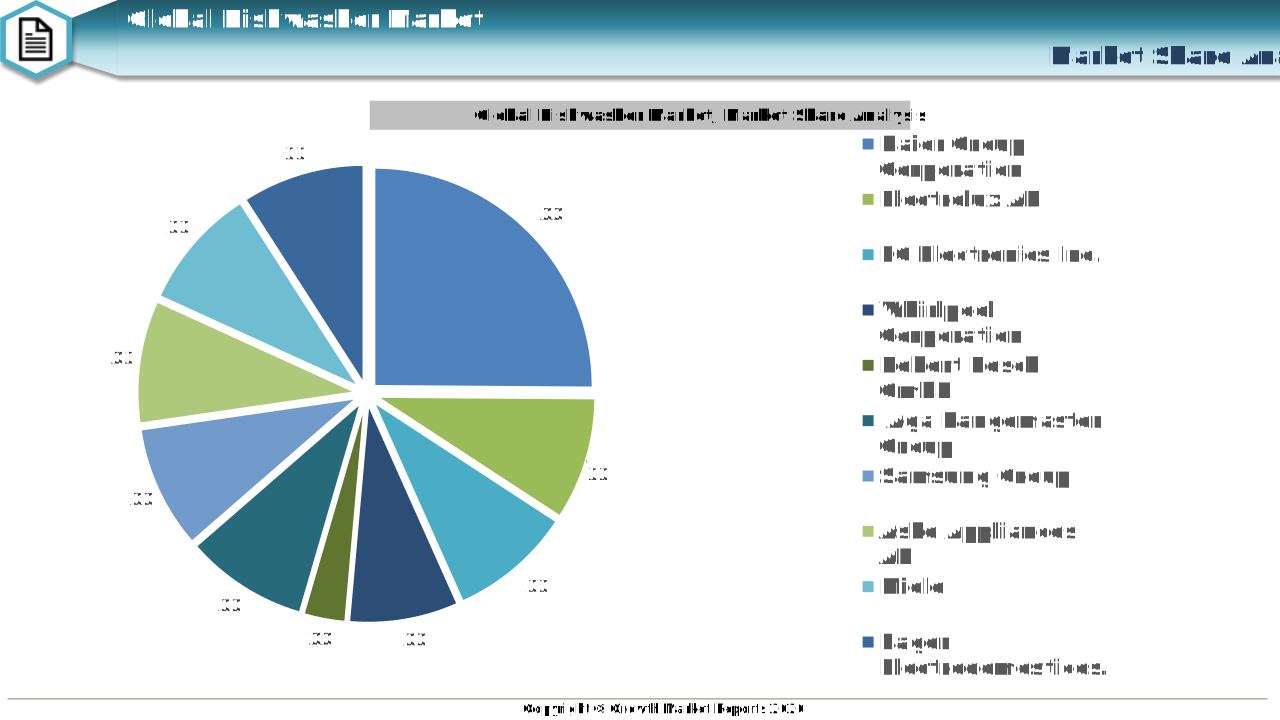
Some of the leading manufacturers in the global dishwasher market are Haier Group Corporation, Electrolux AB, LG Electronics Inc., Whirlpool Corporation, Robert Bosch GmbH, Aga Rangemaster Group, Samsung Group, Asko Appliances AB, Miele, and Fagor Electrodomésticos.
The key players are engaging in mergers and acquisitions to improve their product offering and market share. For instance, June 2016, Haier Group Corporation acquired home appliance division of General Electric for USD 5.6 Billion. This move increased the market share of the former company and helped it to increase its product offering.
Dishwashers are available in small, medium, and large capacities. Small models suit singles or couples, medium ones are ideal for average households, and large dishwashers are best for big families or commercial use.
Major players include Whirlpool Corporation, Bosch (BSH Hausgeräte GmbH), Electrolux AB, LG Electronics, Samsung Electronics, Miele & Cie. KG, Haier Group Corporation, and others.
Opportunities include the adoption of smart technologies, growth in emerging markets, and demand for energy-efficient models. Challenges include high initial costs, space constraints, and concerns about water and energy consumption.
Dishwashers are sold through online stores, specialty retailers, supermarkets/hypermarkets, and other channels such as independent dealers and manufacturer websites. Online sales are growing rapidly due to e-commerce expansion.
The commercial sector, including restaurants, hotels, and catering services, is increasingly adopting advanced dishwashers to meet hygiene standards and improve operational efficiency, fueling market growth.
Key growth drivers include urbanization, rising awareness of hygiene, technological advancements, increased demand for convenience, and the integration of energy-efficient and smart features.
The market is segmented into built-in dishwashers, freestanding dishwashers, compact dishwashers, and others (such as drawer-type and industrial models).
Europe holds the largest share of the global dishwasher market, followed by North America. The Asia Pacific region is the fastest-growing market, driven by rapid urbanization and rising disposable incomes.
The global dishwasher market is expected to register a CAGR of 6.1% from 2025 to 2033, reaching an estimated value of USD 15.2 billion by 2033.
As of 2024, the global dishwasher market size reached USD 8.9 billion, with strong growth driven by changing consumer lifestyles and increased adoption of smart home appliances.