Segments - by Product Type (Vertical Rotisserie Ovens, Horizontal Rotisserie Ovens, Countertop Rotisserie Ovens, Commercial Rotisserie Ovens, Others), by Application (Commercial, Household, Others), by Distribution Channel (Online Stores, Supermarkets/Hypermarkets, Specialty Stores, Others), by End-User (Restaurants, Hotels, Catering Services, Others)
According to our latest research, the global rotisserie oven market size reached USD 1.34 billion in 2024, reflecting strong demand across commercial and household sectors. The market is projected to expand at a robust CAGR of 6.2% from 2025 to 2033, with the total value forecasted to reach USD 2.29 billion by 2033. This significant growth is driven by rising consumer preference for roasted and grilled food, technological advancements in kitchen appliances, and the increasing adoption of energy-efficient cooking solutions globally.
One of the primary growth factors for the rotisserie oven market is the evolving consumer lifestyle, particularly the growing inclination towards healthy eating and home-cooked meals. As consumers become increasingly health-conscious, there is a marked shift from deep-fried foods to roasted and grilled options, which are perceived as healthier alternatives. Rotisserie ovens offer a convenient solution for preparing low-fat meals, retaining natural flavors and nutrients. This trend is further supported by the proliferation of cooking shows, social media food influencers, and culinary education, which have collectively spurred interest in home-based gourmet cooking. As a result, both established brands and new entrants are focusing on product innovation, offering advanced rotisserie ovens with features such as digital controls, programmable settings, and multi-functionality, thus broadening the market's appeal.
Another pivotal driver for the rotisserie oven market is the rapid expansion of the foodservice industry, especially in emerging economies. Restaurants, hotels, and catering services are increasingly investing in commercial rotisserie ovens to meet the rising demand for roasted meats and poultry dishes. The commercial segment benefits from the ability of rotisserie ovens to deliver consistent quality, higher throughput, and operational efficiency. Furthermore, the global tourism and hospitality boom has led to a surge in quick-service restaurants and buffet-style dining, where rotisserie-cooked offerings are highly popular. This, in turn, has spurred manufacturers to design heavy-duty and high-capacity ovens tailored for commercial applications, thus fueling market growth across both developed and developing regions.
Technological advancements and product diversification are also contributing substantially to the growth of the rotisserie oven market. Manufacturers are leveraging smart technologies to introduce ovens with Wi-Fi connectivity, remote monitoring, and energy-efficient heating mechanisms. These innovations not only enhance user convenience but also align with global sustainability goals by reducing energy consumption. The integration of advanced safety features, self-cleaning mechanisms, and modular designs has further elevated the consumer experience. Additionally, the availability of rotisserie ovens in various sizes and price ranges has made them accessible to a wider demographic, spanning urban households, small food outlets, and large-scale commercial kitchens. These factors collectively underpin the sustained expansion of the market.
Regionally, the rotisserie oven market exhibits diverse growth patterns, with North America and Europe traditionally dominating due to high consumer spending power and established foodservice industries. However, Asia Pacific is emerging as a key growth engine, driven by rapid urbanization, rising disposable incomes, and a burgeoning middle-class population. Latin America and the Middle East & Africa are also witnessing steady growth, propelled by expanding hospitality sectors and changing food consumption habits. The regional outlook remains positive, with robust demand anticipated across both mature and developing markets, supported by ongoing product innovation and strategic expansion initiatives by leading manufacturers.
The rotisserie oven market is segmented by product type into vertical rotisserie ovens, horizontal rotisserie ovens, countertop rotisserie ovens, commercial rotisserie ovens, and others. Vertical rotisserie ovens are gaining traction, particularly in household settings, due to their compact design and efficient heat distribution. These ovens are ideal for small to medium-sized families and are often favored for their ease of use and ability to evenly cook a variety of meats and vegetables. Manufacturers are focusing on enhancing the aesthetic appeal and functionality of vertical rotisserie ovens, integrating features such as adjustable skewers, transparent doors, and automated rotation mechanisms. This segment is expected to witness steady growth, driven by increasing consumer preference for space-saving kitchen appliances.
Horizontal rotisserie ovens, on the other hand, are predominantly used in commercial settings, such as restaurants and catering services, where larger quantities of food need to be prepared efficiently. These ovens offer superior capacity and are designed to handle bulk cooking, making them a staple in the foodservice industry. The demand for horizontal rotisserie ovens is further bolstered by the growing popularity of rotisserie-style cuisine in quick-service restaurants and buffet chains. Manufacturers are investing in the development of high-performance horizontal ovens with advanced temperature control, multiple spit options, and durable construction to cater to the rigorous demands of commercial kitchens. As a result, this segment continues to command a significant share of the market.
Countertop rotisserie ovens represent a versatile segment, appealing to both residential and small-scale commercial users. These ovens are lauded for their portability, ease of installation, and multi-functionality, often doubling as convection or toaster ovens. The countertop segment is witnessing robust growth, particularly in urban areas where kitchen space is at a premium. Innovations in this category are centered around user-friendly interfaces, energy efficiency, and enhanced safety features. The rising trend of compact living spaces and the increasing number of nuclear families are expected to drive sustained demand for countertop rotisserie ovens over the forecast period.
Commercial rotisserie ovens, encompassing both vertical and horizontal configurations, are engineered for high-volume operations and are a critical asset in the foodservice sector. These ovens are characterized by their robust construction, large capacity, and advanced automation features, enabling operators to deliver consistent quality at scale. The commercial segment is experiencing strong growth, fueled by the proliferation of fast-casual dining establishments and the global expansion of restaurant chains. Technological advancements, such as programmable cooking cycles, self-cleaning systems, and energy-efficient heating elements, are further enhancing the appeal of commercial rotisserie ovens among professional chefs and restaurateurs.
The "others" category includes specialty rotisserie ovens designed for niche applications, such as outdoor grilling or mobile food trucks. These ovens are typically tailored to specific culinary requirements and are gaining popularity among food entrepreneurs seeking to differentiate their offerings. The ongoing trend of experiential dining and the rise of food festivals and pop-up kitchens are expected to create new opportunities for specialty rotisserie ovens. Overall, the product type segment remains highly dynamic, with continuous innovation and customization driving market expansion.
| Attributes | Details |
| Report Title | Rotisserie Oven Market Research Report 2033 |
| By Product Type | Vertical Rotisserie Ovens, Horizontal Rotisserie Ovens, Countertop Rotisserie Ovens, Commercial Rotisserie Ovens, Others |
| By Application | Commercial, Household, Others |
| By Distribution Channel | Online Stores, Supermarkets/Hypermarkets, Specialty Stores, Others |
| By End-User | Restaurants, Hotels, Catering Services, Others |
| Regions Covered | North America, Europe, APAC, Latin America, MEA |
| Base Year | 2024 |
| Historic Data | 2018-2023 |
| Forecast Period | 2025-2033 |
| Number of Pages | 280 |
| Number of Tables & Figures | 280 |
| Customization Available | Yes, the report can be customized as per your need. |
The rotisserie oven market by application is segmented into commercial, household, and others. The commercial application segment dominates the market, accounting for a substantial share of global revenue. This dominance is attributed to the widespread adoption of rotisserie ovens in restaurants, hotels, and catering services, where efficiency, consistency, and high output are paramount. Commercial establishments rely on rotisserie ovens to meet the growing demand for roasted and grilled menu items, which are increasingly favored by health-conscious consumers. The ability to cook large volumes of food with minimal supervision and energy consumption makes these ovens indispensable in high-traffic foodservice environments.
In the household segment, the adoption of rotisserie ovens is being propelled by changing consumer preferences and the desire for convenient, healthy cooking solutions. Modern households are increasingly opting for appliances that offer versatility, ease of use, and the ability to prepare restaurant-quality meals at home. Rotisserie ovens are particularly popular among families seeking to reduce their reliance on takeout and processed foods. Manufacturers are responding to this trend by introducing compact, aesthetically pleasing models equipped with smart features and intuitive controls. The household segment is expected to witness steady growth, supported by rising disposable incomes, urbanization, and the influence of culinary media.
The "others" application segment encompasses institutional users such as schools, hospitals, and corporate cafeterias, where rotisserie ovens are utilized to prepare nutritious meals for large groups. This segment, while smaller in comparison to commercial and household applications, is gaining traction as organizations prioritize employee and student wellness. The adoption of rotisserie ovens in institutional settings is driven by the need for efficient, large-scale meal preparation and the growing emphasis on healthy eating initiatives. As awareness of the benefits of rotisserie cooking continues to spread, this segment is poised for incremental growth over the forecast period.
The application landscape of the rotisserie oven market is characterized by a strong focus on customization and adaptability. Manufacturers are tailoring their product offerings to meet the specific needs of different user groups, from high-capacity ovens for commercial kitchens to compact, multifunctional models for home use. This approach not only enhances customer satisfaction but also expands the addressable market for rotisserie ovens. The ongoing shift towards healthy, home-cooked meals and the increasing demand for convenient cooking solutions are expected to drive sustained growth across all application segments.
The rotisserie oven market is segmented by distribution channel into online stores, supermarkets/hypermarkets, specialty stores, and others. Online stores have emerged as a significant distribution channel, offering consumers the convenience of browsing and purchasing a wide range of rotisserie ovens from the comfort of their homes. The rapid growth of e-commerce platforms, coupled with attractive discounts, detailed product information, and customer reviews, has fueled the adoption of online channels. Manufacturers and retailers are increasingly leveraging digital marketing strategies and direct-to-consumer sales models to expand their reach and enhance customer engagement. The online segment is expected to register the highest CAGR during the forecast period, driven by the ongoing digital transformation of the retail sector.
Supermarkets and hypermarkets remain a popular distribution channel, particularly in developed regions where organized retail infrastructure is well-established. These outlets offer consumers the advantage of hands-on product evaluation, immediate availability, and personalized assistance from sales staff. The presence of leading brands and the ability to compare multiple models under one roof make supermarkets and hypermarkets a preferred choice for many buyers. Retailers are also investing in in-store demonstrations and promotional campaigns to drive sales of rotisserie ovens. Despite the rise of online channels, brick-and-mortar retail continues to play a crucial role in the overall market landscape.
Specialty stores, which focus exclusively on kitchen appliances and culinary equipment, cater to discerning consumers seeking expert advice and high-quality products. These stores often stock a curated selection of premium rotisserie ovens, including the latest models with advanced features. The personalized service and in-depth product knowledge offered by specialty retailers are highly valued by customers, particularly those making significant investments in kitchen upgrades. The specialty store segment is expected to maintain steady growth, supported by rising consumer interest in gourmet cooking and the increasing popularity of home renovation projects.
The "others" distribution channel includes departmental stores, direct sales, and local appliance dealers. While these channels account for a smaller share of the market, they play an important role in reaching customers in semi-urban and rural areas where access to large retail formats or e-commerce platforms may be limited. Manufacturers are exploring partnerships with regional distributors and leveraging localized marketing strategies to penetrate untapped markets. The diversification of distribution channels is a key trend in the rotisserie oven market, enabling companies to cater to a broad spectrum of consumers and maximize market penetration.
The end-user segmentation of the rotisserie oven market includes restaurants, hotels, catering services, and others. Restaurants represent the largest end-user segment, driven by the widespread popularity of rotisserie-cooked dishes and the need for efficient, high-capacity cooking solutions. Rotisserie ovens enable restaurants to offer a diverse menu, improve kitchen productivity, and deliver consistent quality, which is critical in a highly competitive foodservice landscape. The rising trend of open-kitchen concepts and live cooking demonstrations has further increased the visibility and appeal of rotisserie ovens in restaurant settings. Manufacturers are responding by developing ovens with enhanced aesthetics, customizable features, and advanced automation to meet the evolving needs of restaurant operators.
Hotels are another significant end-user, utilizing rotisserie ovens to cater to the diverse culinary preferences of guests. The ability to prepare large quantities of roasted meats and vegetables with minimal labor makes rotisserie ovens an attractive investment for hotel kitchens, banquet halls, and event venues. The growing emphasis on gourmet dining experiences and the increasing number of international hotel chains are driving demand for high-performance rotisserie ovens. Manufacturers are focusing on developing energy-efficient, easy-to-maintain models that can seamlessly integrate with existing kitchen infrastructure, thereby enhancing operational efficiency and reducing costs.
Catering services constitute a rapidly growing end-user segment, fueled by the rising demand for event catering, corporate functions, and private parties. Rotisserie ovens are valued for their portability, versatility, and ability to deliver freshly cooked, flavorful dishes in a variety of settings. The catering industry is increasingly seeking compact, mobile rotisserie ovens that can be easily transported and set up at off-site locations. Innovations in oven design, such as lightweight materials, modular components, and quick assembly features, are catering to the specific needs of catering service providers. This segment is expected to witness robust growth, supported by the ongoing trend of experiential dining and the increasing popularity of outdoor events.
The "others" end-user category includes institutional users such as schools, hospitals, and corporate cafeterias, where rotisserie ovens are employed to prepare nutritious meals for large groups. The adoption of rotisserie ovens in institutional settings is driven by the need for efficient, high-volume meal preparation and the growing emphasis on healthy eating initiatives. As organizations prioritize employee and student wellness, the demand for rotisserie ovens in this segment is expected to rise steadily over the forecast period.
The rotisserie oven market presents numerous opportunities for growth and innovation, particularly in the areas of product development and technological advancement. The increasing demand for smart kitchen appliances has opened up new avenues for manufacturers to integrate IoT-enabled features, such as remote monitoring, voice control, and automated cooking programs. These innovations not only enhance user convenience but also align with the growing trend of connected homes. Furthermore, the rising popularity of plant-based diets and alternative protein sources presents an opportunity for manufacturers to develop rotisserie ovens specifically designed for vegetarian and vegan cooking. By catering to diverse dietary preferences and leveraging emerging technologies, companies can differentiate their offerings and capture a larger share of the market.
Another significant opportunity lies in the expansion of distribution networks and the penetration of untapped markets, particularly in emerging economies. The rapid urbanization and increasing disposable incomes in regions such as Asia Pacific and Latin America are creating a burgeoning middle-class population with a growing appetite for modern kitchen appliances. Manufacturers can capitalize on this trend by partnering with local distributors, investing in targeted marketing campaigns, and offering affordable, entry-level models tailored to the needs of price-sensitive consumers. Additionally, the rise of online retail and direct-to-consumer sales channels provides an effective platform for reaching a wider audience and building brand loyalty. By adopting a multi-channel distribution strategy, companies can maximize their market reach and drive sustained growth.
Despite the positive outlook, the rotisserie oven market faces certain restraining factors, most notably the high initial cost of advanced models and the prevalence of low-cost substitutes. Price sensitivity remains a significant barrier, particularly in developing regions where consumers may be reluctant to invest in premium kitchen appliances. Moreover, the availability of alternative cooking devices, such as air fryers and conventional ovens, poses a threat to market growth by offering similar functionality at a lower price point. Manufacturers must address these challenges by focusing on cost optimization, value-added features, and effective consumer education to highlight the unique benefits of rotisserie ovens.
North America remains the largest regional market for rotisserie ovens, with a market size of USD 480 million in 2024, accounting for approximately 35.8% of the global total. The region's dominance is attributed to high consumer spending power, a well-established foodservice industry, and a strong culture of home cooking. The United States, in particular, is a major contributor, driven by the widespread popularity of rotisserie chicken and grilled foods. The presence of leading manufacturers, extensive retail networks, and a high degree of product innovation further reinforce North America's leadership position in the global market.
Europe is the second-largest market, with a value of USD 340 million in 2024, representing 25.4% of the global market. The region's growth is fueled by a robust hospitality sector, rising health consciousness, and the increasing adoption of energy-efficient kitchen appliances. Countries such as Germany, France, and the United Kingdom are at the forefront, driven by strong culinary traditions and a growing demand for gourmet home-cooked meals. The European market is expected to grow at a CAGR of 5.8% through 2033, supported by ongoing product innovation and favorable regulatory policies promoting energy efficiency.
The Asia Pacific region is emerging as a key growth engine for the rotisserie oven market, with a market size of USD 310 million in 2024 and a projected CAGR of 7.4% during the forecast period. Rapid urbanization, rising disposable incomes, and a burgeoning middle-class population are driving demand for modern kitchen appliances across countries such as China, India, and Japan. The increasing influence of Western culinary trends and the proliferation of quick-service restaurants are further boosting market growth in the region. Latin America and the Middle East & Africa collectively account for the remaining market share, with steady growth anticipated as the hospitality and foodservice sectors continue to expand.
The rotisserie oven market is characterized by intense competition, with a mix of established global brands and emerging regional players vying for market share. Leading companies are focusing on product innovation, strategic partnerships, and mergers and acquisitions to strengthen their market position and expand their global footprint. The competitive landscape is marked by continuous investment in research and development, with manufacturers striving to introduce advanced features, enhance energy efficiency, and improve user experience. Differentiation through design, functionality, and after-sales service is a key strategy employed by market leaders to attract and retain customers in an increasingly crowded marketplace.
Innovation remains at the forefront of competitive strategies, with companies leveraging smart technologies, sustainable materials, and modular designs to cater to evolving consumer preferences. The integration of IoT-enabled features, such as remote monitoring and automated cooking programs, is gaining traction among tech-savvy consumers and professional chefs alike. Additionally, manufacturers are investing in eco-friendly production processes and recyclable materials to align with global sustainability initiatives and meet the growing demand for green appliances. Price competitiveness is another critical factor, particularly in emerging markets where affordability is a key consideration for consumers.
Distribution and branding are also pivotal in shaping the competitive dynamics of the rotisserie oven market. Leading companies are expanding their distribution networks, both online and offline, to reach a wider audience and enhance brand visibility. Strategic collaborations with retailers, e-commerce platforms, and regional distributors are enabling manufacturers to penetrate untapped markets and respond swiftly to changing consumer demands. Marketing initiatives, including celebrity endorsements, cooking demonstrations, and social media campaigns, are being employed to build brand loyalty and drive product adoption.
Among the major players in the global rotisserie oven market are Hobart Corporation, The Middleby Corporation, Alto-Shaam Inc., Hamilton Beach Brands Holding Company, Ronco Holdings Inc., Breville Group Limited, and Electrolux AB. Hobart Corporation is renowned for its high-performance commercial ovens, catering primarily to the foodservice industry with a focus on durability and advanced automation. The Middleby Corporation offers a diverse portfolio of commercial kitchen equipment, including innovative rotisserie ovens designed for efficiency and scalability. Alto-Shaam Inc. is recognized for its energy-efficient, easy-to-maintain ovens that are widely used in hotels and catering services. Hamilton Beach Brands and Ronco Holdings cater to the household segment, offering user-friendly, affordable models with a strong emphasis on design and functionality. Breville Group and Electrolux AB are prominent in both residential and commercial markets, leveraging cutting-edge technology and global distribution networks to maintain their competitive edge.
These companies are continually investing in research and development to introduce next-generation rotisserie ovens that address the evolving needs of consumers and professional chefs. Strategic acquisitions, product launches, and geographic expansion remain central to their growth strategies. As the market continues to evolve, the competitive landscape is expected to witness further consolidation, with leading players leveraging their technological prowess, brand equity, and distribution capabilities to capture a larger share of the global rotisserie oven market.
The Rotisserie Oven market has been segmented on the basis of
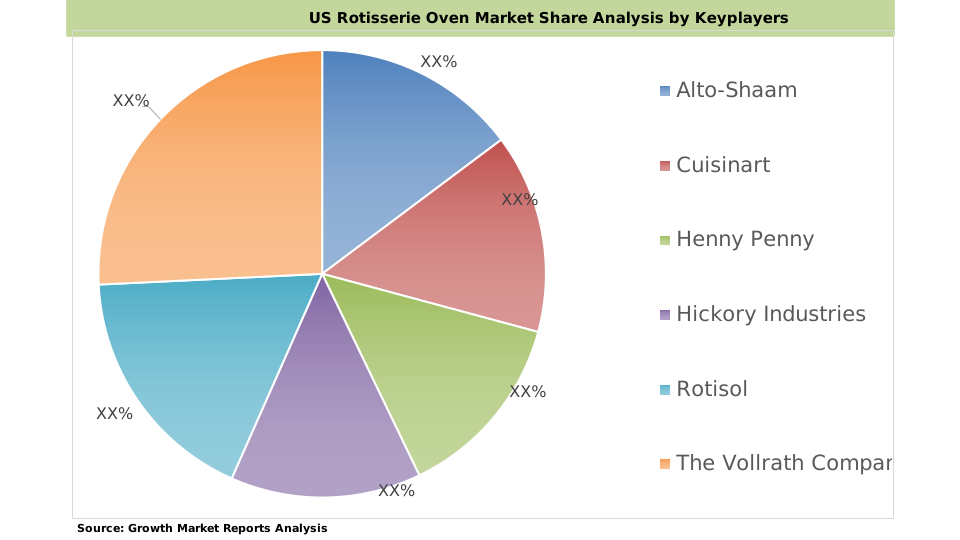
Major manufactures include, Alto-Shaam, Henny Penny, Hickory Industries, and The Vollrath Company.
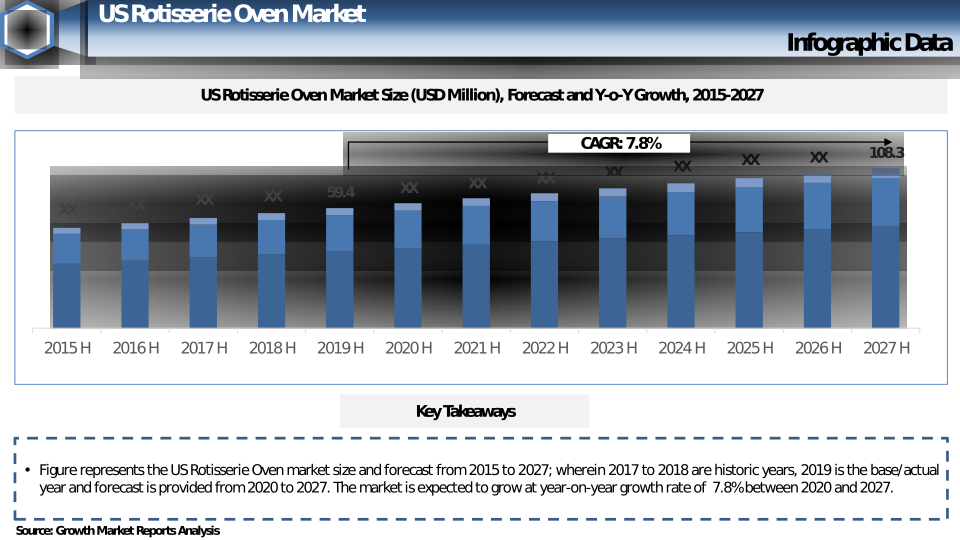
The base year considered for the US rotisserie oven market report is 2019. The complete analysis period is 2017 to 2027, wherein, 2017 & 2018 are the historic years and the forecast is provided from 2020 to 2027.
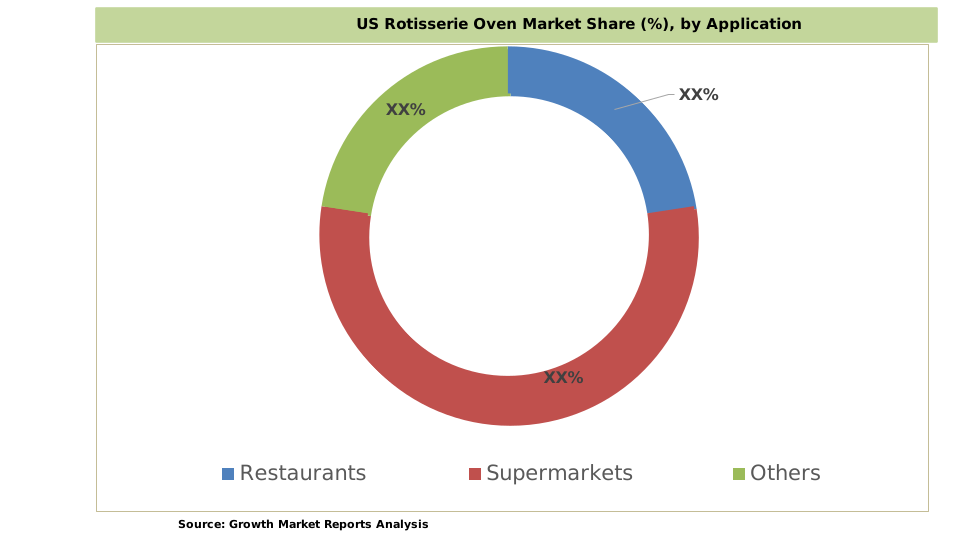
Restaurants, supermarkets, and others are the key application that are driving the US rotisserie oven market.
The market is expected to decline in-between 2019 and 2020 owing to the adverse effect of COVID-19 pandemic. Disruptive supply chain and country lockdown conditions have forced the manufacturers for temporarily suspension of production which is resulting to declining sales.
The increase in disposable income and boom in economies, and rising number of food joints across multiple areas such as malls, supermarkets, fast food joints, and others is expected to boost the market.
Factors such as competitive strength and market positioning are key areas considered while selecting top companies to be profiled.
Company Market Share (in % for base year 2019) for rotisserie oven market is available in final report.
According to this Growth Market Reports report, the market from US rotisserie oven is likely to register a CAGR of 7.8% during forecast period 2020-2027, with an anticipated to reach USD 108.3 million by the end of the 2027.
Yes, the report covers product specific information such as pricing of the product.
Additional company profiles can be provided on request.