Digital Camcorders Market Research Report 2033

Digital Camcorders Market Research Report 2033

Segments - by Product Type (Professional Camcorders, Consumer Camcorders, Pocket Camcorders, Action Camcorders), by Resolution (Standard Definition, High Definition, Ultra High Definition/4K), by Distribution Channel (Online Stores, Specialty Stores, Supermarkets/Hypermarkets, Others), by End-User (Individual, Commercial, Educational, Others)

https://growthmarketreports.com/Debadatta
Author : Debadatta Patel
https://growthmarketreports.com/Vaibhav
Fact-checked by : V. Chandola
https://growthmarketreports.com/Shruti
Editor : Shruti Bhat

Upcoming | Report ID :CG-280 | 4.1 Rating | 87 Reviews | 257 Pages | Format : Docx PDF

Report Description


Digital Camcorders Market Outlook

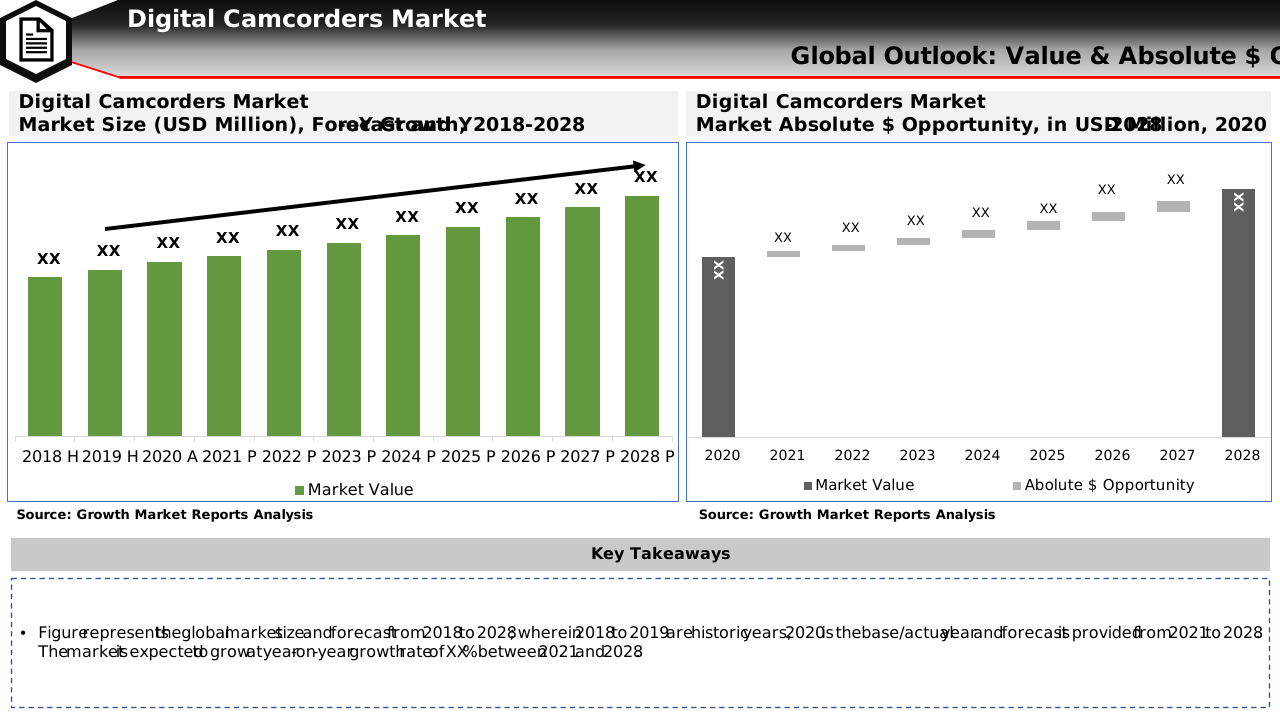
As per our latest research, the global digital camcorders market size reached USD 3.42 billion in 2024, reflecting a steady demand across both consumer and professional segments. The market is projected to grow at a CAGR of 4.1% from 2025 to 2033, reaching a forecasted value of USD 4.87 billion by 2033. This growth is propelled by the continual integration of advanced imaging technologies, rising content creation trends, and the proliferation of high-resolution video requirements across industries.

One of the primary growth factors for the digital camcorders market is the ongoing evolution in video technology, particularly the transition from high definition (HD) to ultra-high definition (UHD/4K) formats. Content creators, filmmakers, and broadcasters are increasingly demanding devices that can capture high-quality visuals with enhanced clarity and color accuracy. This demand is further amplified by the popularity of social media platforms and streaming services, which require content that meets professional standards. As manufacturers introduce camcorders with improved sensors, low-light capabilities, and AI-powered features, the market continues to attract both individual enthusiasts and commercial enterprises looking to enhance their video production quality.

Another significant driver is the expanding application of digital camcorders beyond traditional entertainment and film production. Educational institutions are leveraging camcorders for remote learning, lecture recording, and virtual classroom creation, especially in the wake of the global shift toward hybrid and online education models. Similarly, the commercial sector utilizes digital camcorders for corporate training, marketing, and live event broadcasting. The adaptability of these devices, combined with user-friendly interfaces and wireless connectivity options, has made them indispensable across various non-entertainment domains, further fueling market expansion.

The rapid rise of action and pocket camcorders has also contributed to market growth. These compact and durable devices cater to adventure enthusiasts, sports professionals, and vloggers who require portable yet robust equipment capable of capturing dynamic footage in challenging environments. The integration of waterproofing, shock resistance, and wireless streaming features has made action camcorders particularly popular among younger demographics and travel content creators. This trend is expected to continue as manufacturers innovate with features such as stabilization, 360-degree recording, and direct-to-cloud uploads, thus broadening the consumer base for digital camcorders.

Regionally, Asia Pacific remains a dominant force in the digital camcorders market, driven by high population density, increasing disposable incomes, and a burgeoning youth population keen on content creation. North America and Europe also exhibit strong demand, supported by robust media and entertainment industries and a high adoption rate of advanced technologies. Meanwhile, emerging markets in Latin America and the Middle East & Africa are witnessing gradual growth, primarily due to improving internet infrastructure and rising interest in digital media. The global nature of content consumption and production continues to shape the regional dynamics of the digital camcorders market, with each region contributing uniquely to overall growth.

Global Digital Camcorders Industry Outlook

Product Type Analysis

The digital camcorders market is segmented by product type into professional camcorders, consumer camcorders, pocket camcorders, and action camcorders, each serving distinct user bases and applications. Professional camcorders cater primarily to filmmakers, broadcasters, and production studios requiring advanced features such as interchangeable lenses, large sensors, and extensive manual controls. These devices are designed for high-end video production, offering superior image quality, durability, and compatibility with professional audio equipment. The demand for professional camcorders is sustained by the growing need for cinematic content in advertising, cinema, and television, as well as the rise of independent filmmakers seeking affordable yet capable tools for their projects.

Consumer camcorders, on the other hand, target everyday users, families, and hobbyists who seek reliable and easy-to-use devices for personal documentation, travel, and special occasions. These camcorders are characterized by their compact form factors, intuitive interfaces, and integrated editing features that allow users to quickly capture and share memories. The affordability and accessibility of consumer camcorders make them a popular choice for non-professional videographers, particularly in regions with expanding middle-class populations. Manufacturers continue to enhance these products with features such as touchscreens, Wi-Fi connectivity, and direct social media integration to cater to the evolving needs of modern consumers.

Pocket camcorders represent a growing segment driven by the demand for ultra-portable recording solutions. These devices are favored by vloggers, journalists, and travelers who require lightweight equipment that can be easily carried and operated on the go. Despite their small size, pocket camcorders now offer impressive video quality, often supporting HD or even 4K resolution, along with features such as image stabilization and built-in microphones. The trend toward mobile content creation and real-time sharing has accelerated the adoption of pocket camcorders, especially among younger demographics and digital nomads.

Action camcorders have carved out a unique niche within the digital camcorders market, appealing to adventure sports enthusiasts, outdoor explorers, and documentary filmmakers. These rugged devices are designed to withstand extreme conditions, featuring waterproof, dustproof, and shock-resistant casings. Action camcorders often come equipped with wide-angle lenses, slow-motion recording, and mounting accessories for helmets, bikes, and drones. Their popularity is closely tied to the rise of action sports, travel vlogging, and immersive video experiences. As manufacturers continue to innovate with features like voice control, GPS tracking, and live streaming, action camcorders are expected to maintain robust growth within the overall market.

Report Scope

Attributes Details
Report Title Digital Camcorders Market Research Report 2033
By Product Type Professional Camcorders, Consumer Camcorders, Pocket Camcorders, Action Camcorders
By Resolution Standard Definition, High Definition, Ultra High Definition/4K
By Distribution Channel Online Stores, Specialty Stores, Supermarkets/Hypermarkets, Others
By End-User Individual, Commercial, Educational, Others
Regions Covered North America, Europe, APAC, Latin America, MEA
Base Year 2024
Historic Data 2018-2023
Forecast Period 2025-2033
Number of Pages 257
Number of Tables & Figures 354
Customization Available Yes, the report can be customized as per your need.

Resolution Analysis

Resolution is a critical factor in the digital camcorders market, with segments including Standard Definition (SD), High Definition (HD), and Ultra High Definition/4K. SD camcorders, once the industry standard, have seen declining demand as consumers and professionals alike shift toward higher resolution formats. However, SD devices still find relevance in certain educational and entry-level applications where budget constraints and basic recording needs prevail. Their affordability and simplicity continue to attract institutions and users in developing regions where HD infrastructure may not be fully established.

The HD camcorder segment remains a significant contributor to market revenue, offering a balance between video quality and cost. HD camcorders are widely used in education, corporate training, event coverage, and personal documentation, providing clear and detailed visuals suitable for most mainstream applications. The widespread availability of HD displays and streaming platforms has reinforced the demand for HD content, making these camcorders a popular choice across various end-user segments. Manufacturers have responded by introducing HD models with enhanced features such as optical zoom, built-in editing tools, and improved battery life to meet diverse user requirements.

The most dynamic growth is observed in the Ultra High Definition/4K camcorder segment, which caters to professional videographers, filmmakers, and tech-savvy consumers seeking the highest possible image fidelity. 4K camcorders deliver exceptional clarity, color depth, and detail, enabling content creators to produce cinematic-quality videos for broadcast, cinema, and online platforms. The proliferation of 4K-capable displays, projectors, and streaming services has further accelerated the adoption of UHD camcorders. Advanced features such as high frame rate recording, HDR support, and AI-powered autofocus are increasingly standard in this segment, driving both innovation and competition among manufacturers.

As the demand for immersive and interactive content grows, the market is witnessing the emergence of camcorders with even higher resolutions and specialized recording capabilities, such as 360-degree and VR-ready devices. While these ultra-premium products currently occupy a niche within the market, they represent the next frontier in digital video technology. The ongoing evolution of resolution standards underscores the importance of continuous product development and differentiation in the digital camcorders market, as users seek devices that can keep pace with rapidly changing content consumption trends.

Distribution Channel Analysis

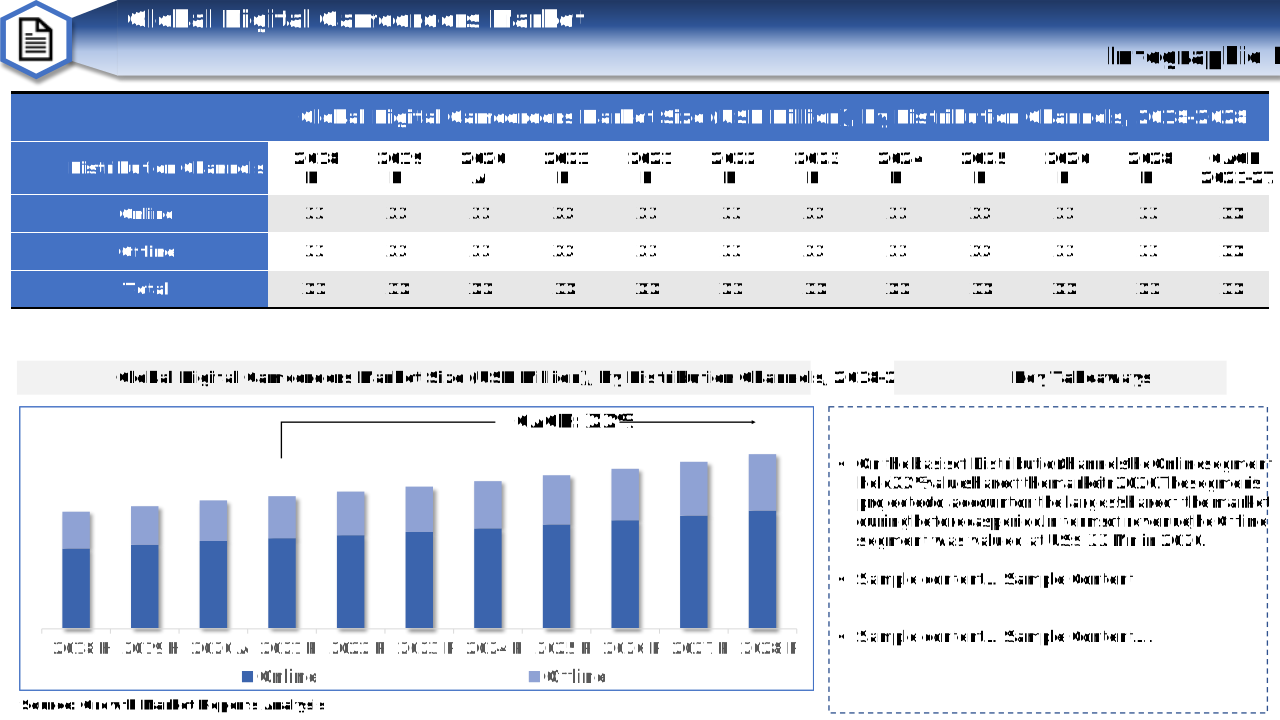
The distribution channel landscape for digital camcorders includes online stores, specialty stores, supermarkets/hypermarkets, and other retail outlets. Online stores have emerged as a dominant distribution channel, driven by the convenience of home delivery, extensive product selection, and competitive pricing. E-commerce platforms like Amazon, Best Buy, and regional marketplaces have made it easier for consumers to research, compare, and purchase digital camcorders, often supplemented by user reviews and expert recommendations. The digital shift in retail has been further accelerated by the COVID-19 pandemic, which prompted a surge in online shopping for electronics and personal devices.

Specialty stores, including camera shops and electronics retailers, continue to play a crucial role in the digital camcorders market by offering personalized service, expert advice, and hands-on product demonstrations. These outlets cater particularly to professional videographers, enthusiasts, and first-time buyers who value in-depth product knowledge and after-sales support. Specialty stores often stock a curated selection of high-end camcorders, accessories, and complementary equipment, creating a comprehensive shopping experience for discerning customers. The ability to test devices and receive tailored recommendations remains a key differentiator for this channel.

Supermarkets and hypermarkets contribute to market accessibility by stocking entry-level and mid-range camcorders alongside other consumer electronics. These retail giants leverage their extensive reach and foot traffic to target casual buyers and families seeking affordable recording solutions for everyday use. While the product range in supermarkets may be more limited compared to specialty stores or online platforms, the convenience of one-stop shopping and frequent promotional offers help drive sales among price-sensitive consumers. The presence of camcorders in these outlets also increases product visibility and awareness among a broader audience.

Other distribution channels, such as direct sales, educational suppliers, and corporate procurement, cater to specific end-user segments with unique requirements. Direct sales models, often employed by leading manufacturers, enable organizations and institutions to procure customized camcorder solutions tailored to their operational needs. Educational suppliers provide bulk purchasing options for schools, universities, and training centers, while corporate procurement channels address the needs of businesses conducting large-scale video production or documentation. The diversity of distribution channels ensures that digital camcorders remain accessible to a wide range of customers, each with distinct purchasing preferences and priorities.

End-User Analysis

The end-user landscape of the digital camcorders market encompasses individual, commercial, educational, and other segments, each driving demand through unique use cases and expectations. Individual users include hobbyists, families, travelers, and vloggers who utilize camcorders for personal documentation, creative projects, and social media content creation. This segment is characterized by a preference for user-friendly devices with intuitive interfaces, lightweight designs, and integrated sharing features. The rise of platforms like YouTube, TikTok, and Instagram has spurred a new generation of content creators, further boosting demand for affordable and portable camcorders tailored to individual needs.

Commercial end-users represent a diverse group spanning media and entertainment, advertising, corporate communications, and event management. These organizations require robust camcorders capable of delivering professional-grade video quality, reliability, and compatibility with advanced editing and broadcasting systems. The commercial segment is driven by the growing importance of video in marketing, brand storytelling, and live event coverage, as well as the increasing reliance on remote collaboration and virtual meetings. As businesses invest in high-quality video production to engage audiences and enhance internal communication, the demand for advanced camcorders continues to rise.

Educational institutions constitute a significant and growing segment within the digital camcorders market, leveraging these devices for lecture recording, online classes, student projects, and campus events. The shift toward hybrid and remote learning models has underscored the importance of high-quality video content in education, prompting schools, colleges, and universities to upgrade their recording equipment. Digital camcorders offer the versatility, durability, and ease of use required for diverse educational applications, from classroom instruction to extracurricular activities. The availability of budget-friendly models and bulk purchasing options further supports adoption in the education sector.

Other end-users include government agencies, non-profit organizations, research institutions, and healthcare providers, each utilizing camcorders for specialized applications such as documentation, training, field research, and telemedicine. The adaptability of digital camcorders to various operational environments and recording needs makes them a valuable tool across multiple sectors. As technology continues to evolve, manufacturers are expected to introduce new features and form factors tailored to the specific requirements of these diverse end-user groups, ensuring sustained market relevance and growth.

Opportunities & Threats

The digital camcorders market presents several compelling opportunities for growth and innovation. One of the most significant is the ongoing convergence of camcorder technology with emerging digital trends such as artificial intelligence, cloud connectivity, and augmented reality. Manufacturers have the opportunity to differentiate their products by integrating AI-powered features like real-time scene detection, automatic editing, and voice control, enhancing user experience and productivity. The rise of cloud-based storage and streaming solutions also opens new avenues for seamless content sharing and collaboration, appealing to both individual and commercial users. Additionally, the growing demand for immersive video experiences, including 360-degree and VR-ready content, presents a lucrative opportunity for manufacturers willing to invest in cutting-edge research and development.

Another key opportunity lies in expanding market reach through targeted product development and localization strategies. As emerging markets in Asia Pacific, Latin America, and Africa experience rising internet penetration and digital literacy, there is significant potential to introduce affordable and durable camcorders tailored to local needs. Partnerships with educational institutions, government agencies, and non-profit organizations can further drive adoption in under-served regions, while customized marketing campaigns can raise awareness among new user segments. The increasing popularity of e-learning, remote work, and digital storytelling across the globe provides a fertile ground for market expansion, especially for brands that can offer value-added services and support.

Despite these opportunities, the digital camcorders market faces notable threats and restrainers. The most prominent challenge is the growing competition from smartphones and other multi-functional devices equipped with advanced camera technology. As smartphones increasingly offer high-resolution video recording, stabilization, and editing capabilities, many consumers opt for these convenient, all-in-one solutions over dedicated camcorders. This trend has led to a decline in demand for entry-level and consumer camcorders, particularly in developed markets. To remain competitive, camcorder manufacturers must focus on delivering unique value propositions, such as superior optical performance, specialized features, and professional-grade reliability, that cannot be easily replicated by smartphones.

Regional Outlook

The regional distribution of the digital camcorders market reveals distinct trends and growth drivers across major geographies. Asia Pacific leads the market, accounting for approximately USD 1.23 billion in 2024, driven by a large and youthful population, increasing disposable incomes, and a thriving digital content ecosystem. Countries like China, Japan, South Korea, and India are at the forefront of content creation, media production, and technology adoption, fueling robust demand for both consumer and professional camcorders. The region is expected to maintain a CAGR of 4.8% through 2033, supported by government initiatives to promote digital literacy and ongoing investments in internet infrastructure.

North America remains a significant market, contributing around USD 0.98 billion in 2024, underpinned by a mature media and entertainment industry, high consumer purchasing power, and rapid adoption of technological innovations. The United States and Canada are home to leading broadcasters, film studios, and a vibrant community of independent content creators. The region's early adoption of UHD/4K technology and advanced video production tools ensures sustained demand for high-performance camcorders. Furthermore, the increasing use of digital video in education, corporate training, and live events continues to drive market growth, albeit at a slightly lower CAGR compared to Asia Pacific.

Europe accounts for an estimated USD 0.74 billion in 2024, with strong demand from countries such as Germany, the United Kingdom, and France. The region benefits from a rich cultural heritage in film and broadcasting, as well as a high level of digital literacy and internet penetration. European consumers and businesses prioritize quality and innovation, driving adoption of advanced camcorder features and eco-friendly designs. Meanwhile, Latin America and the Middle East & Africa collectively contributed approximately USD 0.47 billion in 2024, with growth fueled by improving access to digital technology and rising interest in content creation. While these regions face challenges related to affordability and infrastructure, they represent promising markets for future expansion as economic conditions improve and digital transformation accelerates.

Digital Camcorders Market Statistics

Competitor Outlook

The competitive landscape of the digital camcorders market is characterized by intense rivalry among established global brands and a growing number of innovative entrants. Leading manufacturers compete on the basis of technological innovation, product quality, brand reputation, and after-sales support. The market is marked by frequent product launches, with companies introducing new models equipped with cutting-edge features such as 4K recording, AI-driven enhancements, wireless connectivity, and ruggedized designs. As consumer preferences evolve and new use cases emerge, competitors are compelled to invest heavily in research and development to maintain their technological edge and capture market share.

Mergers, acquisitions, and strategic partnerships are common strategies employed by key players to expand their product portfolios, enter new markets, and enhance their distribution networks. Collaborations with content creators, educational institutions, and corporate clients enable manufacturers to develop tailored solutions that address specific user needs. The rise of e-commerce has also transformed the competitive dynamics, allowing smaller brands and direct-to-consumer startups to challenge established incumbents by offering niche products and personalized customer experiences. As competition intensifies, companies are increasingly focusing on sustainability, user experience, and value-added services to differentiate themselves in a crowded marketplace.

The rapid pace of technological advancement presents both opportunities and challenges for market participants. While innovation drives growth and attracts new customers, it also raises the bar for product quality and performance, necessitating continuous investment in R&D. Companies that can successfully anticipate and respond to emerging trends, such as AI integration, 360-degree recording, and cloud-based workflows, are well-positioned to capitalize on future market opportunities. At the same time, the threat of technological obsolescence and shifting consumer preferences requires a proactive approach to product lifecycle management and customer engagement.

Major companies in the digital camcorders market include Sony Corporation, Panasonic Corporation, Canon Inc., JVC Kenwood Corporation, and GoPro Inc. Sony and Panasonic are renowned for their extensive portfolios of both professional and consumer camcorders, leveraging decades of expertise in imaging technology and global distribution networks. Canon is a leading player in the professional and broadcast segments, known for its high-quality optics and advanced video features. JVC Kenwood offers a diverse range of camcorders targeting both entry-level and professional users, while GoPro has established itself as the market leader in action camcorders, renowned for its rugged designs and innovative mounting solutions. These companies continue to shape the market through ongoing product development, strategic partnerships, and a relentless focus on customer needs, ensuring their continued relevance and leadership in the evolving digital camcorders landscape.

Key Players

  • Sony Corporation
  • Canon Inc.
  • Panasonic Corporation
  • Samsung Electronics Co., Ltd.
  • JVC Kenwood Corporation
  • GoPro, Inc.
  • Nikon Corporation
  • Blackmagic Design Pty Ltd.
  • Sharp Corporation
  • Olympus Corporation
  • Fujifilm Holdings Corporation
  • Toshiba Corporation
  • Hitachi, Ltd.
  • Ricoh Company, Ltd.
  • RED Digital Cinema
  • Arri AG
  • Hikvision Digital Technology Co., Ltd.
  • Zhejiang Dahua Technology Co., Ltd.
  • FLIR Systems, Inc.
  • AEE Technology Inc.
Digital Camcorders Market Overview

Segments

The Digital Camcorders market has been segmented on the basis of

Product Type

  • Professional Camcorders
  • Consumer Camcorders
  • Pocket Camcorders
  • Action Camcorders

Resolution

  • Standard Definition
  • High Definition
  • Ultra High Definition/4K

Distribution Channel

  • Online Stores
  • Specialty Stores
  • Supermarkets/Hypermarkets
  • Others

End-User

  • Individual
  • Commercial
  • Educational
  • Others

Competitive Landscape

Key industry players of the Digtal Camcoders market include Canon, Sony, Nikon, Pentax, Olympus, Fujifilm, Samsung, Panasonic, JVC, Arri, Blackmagic, RED, Phantom, and Kinefinity.

Major industry players are engaging in partnerships with collaborations to increase and improve the product portfolio.
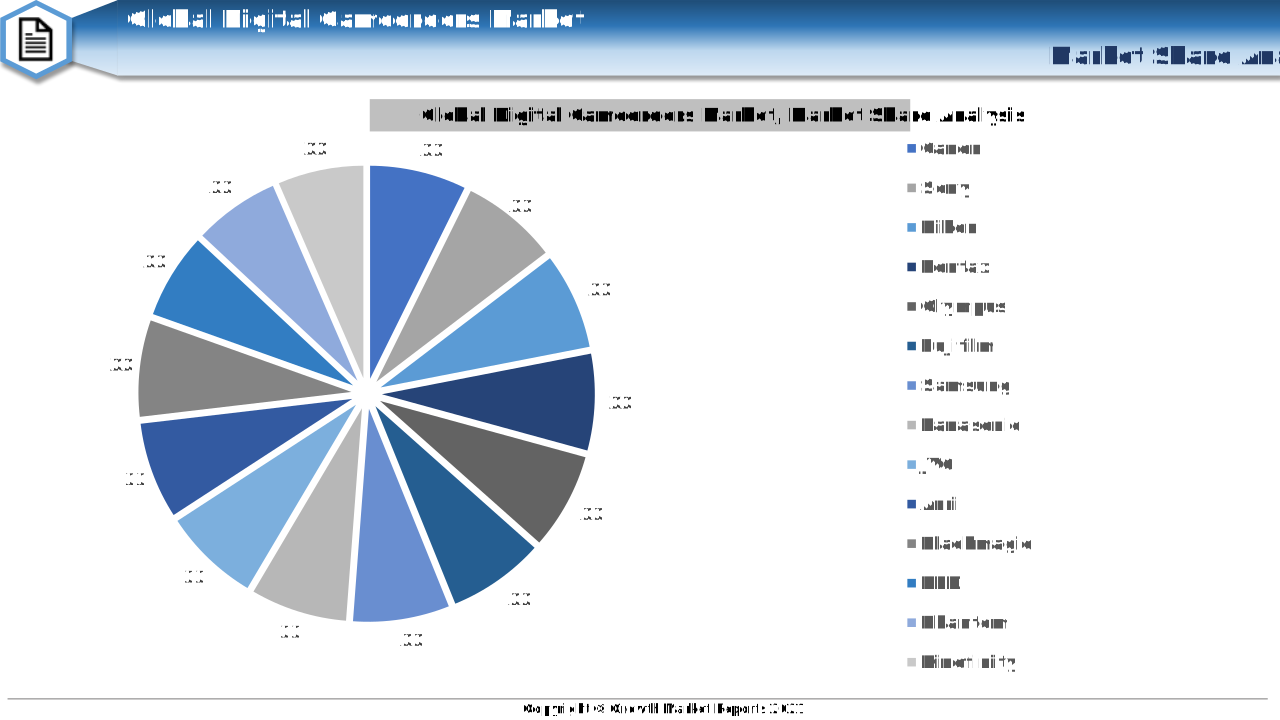
 

Digital Camcorders Market By Key Players

Frequently Asked Questions

Resolution is a critical factor, with growing demand for HD and UHD/4K camcorders for superior video quality. While SD camcorders remain relevant for budget and basic needs, UHD/4K models are increasingly popular among professionals and tech-savvy consumers.

Key players include Sony Corporation, Canon Inc., Panasonic Corporation, Samsung Electronics, JVC Kenwood, GoPro, Nikon, Blackmagic Design, Sharp, Olympus, Fujifilm, Toshiba, Hitachi, Ricoh, RED Digital Cinema, Arri AG, Hikvision, Dahua Technology, FLIR Systems, and AEE Technology.

Opportunities include AI integration, cloud connectivity, immersive video (360-degree/VR), and expansion in emerging markets. Threats include competition from smartphones with advanced camera features and the need for continuous innovation.

End-users include individuals (hobbyists, families, vloggers), commercial organizations (media, corporate, event management), educational institutions, and other sectors such as government and healthcare.

Online stores are the dominant distribution channel, offering convenience and variety. Specialty stores provide expert advice and demonstrations, while supermarkets/hypermarkets target casual buyers. Other channels include direct sales and educational suppliers.

Trends include the shift from HD to UHD/4K recording, integration of AI-powered features, improved low-light performance, wireless connectivity, stabilization, 360-degree recording, and direct-to-cloud uploads.

Asia Pacific is the dominant region, followed by North America and Europe. Emerging markets in Latin America and the Middle East & Africa are also experiencing gradual growth due to improved internet infrastructure and rising digital media interest.

The market is segmented into professional camcorders, consumer camcorders, pocket camcorders, and action camcorders, each catering to different user needs and applications.

Key growth drivers include the integration of advanced imaging technologies, rising trends in content creation, increasing demand for high-resolution video, and the adoption of camcorders in education, corporate, and commercial sectors.

The global digital camcorders market reached USD 3.42 billion in 2024 and is projected to grow at a CAGR of 4.1% from 2025 to 2033, reaching USD 4.87 billion by 2033.

Table Of Content

Chapter 1 Executive Summary
Chapter 2 Assumptions and Acronyms Used
Chapter 3 Research Methodology
Chapter 4 Digital Camcorders Market Overview
   4.1 Introduction
      4.1.1 Market Taxonomy
      4.1.2 Market Definition
      4.1.3 Macro-Economic Factors Impacting the Market Growth
   4.2 Digital Camcorders Market Dynamics
      4.2.1 Market Drivers
      4.2.2 Market Restraints
      4.2.3 Market Opportunity
   4.3 Digital Camcorders Market - Supply Chain Analysis
      4.3.1 List of Key Suppliers
      4.3.2 List of Key Distributors
      4.3.3 List of Key Consumers
   4.4 Key Forces Shaping the Digital Camcorders Market
      4.4.1 Bargaining Power of Suppliers
      4.4.2 Bargaining Power of Buyers
      4.4.3 Threat of Substitution
      4.4.4 Threat of New Entrants
      4.4.5 Competitive Rivalry
   4.5 Global Digital Camcorders Market Size & Forecast, 2023-2032
      4.5.1 Digital Camcorders Market Size and Y-o-Y Growth
      4.5.2 Digital Camcorders Market Absolute $ Opportunity

Chapter 5 Global Digital Camcorders Market Analysis and Forecast By Product Type
   5.1 Introduction
      5.1.1 Key Market Trends & Growth Opportunities By Product Type
      5.1.2 Basis Point Share (BPS) Analysis By Product Type
      5.1.3 Absolute $ Opportunity Assessment By Product Type
   5.2 Digital Camcorders Market Size Forecast By Product Type
      5.2.1 Professional Camcorders
      5.2.2 Consumer Camcorders
      5.2.3 Pocket Camcorders
      5.2.4 Action Camcorders
   5.3 Market Attractiveness Analysis By Product Type

Chapter 6 Global Digital Camcorders Market Analysis and Forecast By Resolution
   6.1 Introduction
      6.1.1 Key Market Trends & Growth Opportunities By Resolution
      6.1.2 Basis Point Share (BPS) Analysis By Resolution
      6.1.3 Absolute $ Opportunity Assessment By Resolution
   6.2 Digital Camcorders Market Size Forecast By Resolution
      6.2.1 Standard Definition
      6.2.2 High Definition
      6.2.3 Ultra High Definition/4K
   6.3 Market Attractiveness Analysis By Resolution

Chapter 7 Global Digital Camcorders Market Analysis and Forecast By Distribution Channel
   7.1 Introduction
      7.1.1 Key Market Trends & Growth Opportunities By Distribution Channel
      7.1.2 Basis Point Share (BPS) Analysis By Distribution Channel
      7.1.3 Absolute $ Opportunity Assessment By Distribution Channel
   7.2 Digital Camcorders Market Size Forecast By Distribution Channel
      7.2.1 Online Stores
      7.2.2 Specialty Stores
      7.2.3 Supermarkets/Hypermarkets
      7.2.4 Others
   7.3 Market Attractiveness Analysis By Distribution Channel

Chapter 8 Global Digital Camcorders Market Analysis and Forecast By End-User
   8.1 Introduction
      8.1.1 Key Market Trends & Growth Opportunities By End-User
      8.1.2 Basis Point Share (BPS) Analysis By End-User
      8.1.3 Absolute $ Opportunity Assessment By End-User
   8.2 Digital Camcorders Market Size Forecast By End-User
      8.2.1 Individual
      8.2.2 Commercial
      8.2.3 Educational
      8.2.4 Others
   8.3 Market Attractiveness Analysis By End-User

Chapter 9 Global Digital Camcorders Market Analysis and Forecast by Region
   9.1 Introduction
      9.1.1 Key Market Trends & Growth Opportunities By Region
      9.1.2 Basis Point Share (BPS) Analysis By Region
      9.1.3 Absolute $ Opportunity Assessment By Region
   9.2 Digital Camcorders Market Size Forecast By Region
      9.2.1 North America
      9.2.2 Europe
      9.2.3 Asia Pacific
      9.2.4 Latin America
      9.2.5 Middle East & Africa (MEA)
   9.3 Market Attractiveness Analysis By Region

Chapter 10 Coronavirus Disease (COVID-19) Impact 
   10.1 Introduction 
   10.2 Current & Future Impact Analysis 
   10.3 Economic Impact Analysis 
   10.4 Government Policies 
   10.5 Investment Scenario

Chapter 11 North America Digital Camcorders Analysis and Forecast
   11.1 Introduction
   11.2 North America Digital Camcorders Market Size Forecast by Country
      11.2.1 U.S.
      11.2.2 Canada
   11.3 Basis Point Share (BPS) Analysis by Country
   11.4 Absolute $ Opportunity Assessment by Country
   11.5 Market Attractiveness Analysis by Country
   11.6 North America Digital Camcorders Market Size Forecast By Product Type
      11.6.1 Professional Camcorders
      11.6.2 Consumer Camcorders
      11.6.3 Pocket Camcorders
      11.6.4 Action Camcorders
   11.7 Basis Point Share (BPS) Analysis By Product Type 
   11.8 Absolute $ Opportunity Assessment By Product Type 
   11.9 Market Attractiveness Analysis By Product Type
   11.10 North America Digital Camcorders Market Size Forecast By Resolution
      11.10.1 Standard Definition
      11.10.2 High Definition
      11.10.3 Ultra High Definition/4K
   11.11 Basis Point Share (BPS) Analysis By Resolution 
   11.12 Absolute $ Opportunity Assessment By Resolution 
   11.13 Market Attractiveness Analysis By Resolution
   11.14 North America Digital Camcorders Market Size Forecast By Distribution Channel
      11.14.1 Online Stores
      11.14.2 Specialty Stores
      11.14.3 Supermarkets/Hypermarkets
      11.14.4 Others
   11.15 Basis Point Share (BPS) Analysis By Distribution Channel 
   11.16 Absolute $ Opportunity Assessment By Distribution Channel 
   11.17 Market Attractiveness Analysis By Distribution Channel
   11.18 North America Digital Camcorders Market Size Forecast By End-User
      11.18.1 Individual
      11.18.2 Commercial
      11.18.3 Educational
      11.18.4 Others
   11.19 Basis Point Share (BPS) Analysis By End-User 
   11.20 Absolute $ Opportunity Assessment By End-User 
   11.21 Market Attractiveness Analysis By End-User

Chapter 12 Europe Digital Camcorders Analysis and Forecast
   12.1 Introduction
   12.2 Europe Digital Camcorders Market Size Forecast by Country
      12.2.1 Germany
      12.2.2 France
      12.2.3 Italy
      12.2.4 U.K.
      12.2.5 Spain
      12.2.6 Russia
      12.2.7 Rest of Europe
   12.3 Basis Point Share (BPS) Analysis by Country
   12.4 Absolute $ Opportunity Assessment by Country
   12.5 Market Attractiveness Analysis by Country
   12.6 Europe Digital Camcorders Market Size Forecast By Product Type
      12.6.1 Professional Camcorders
      12.6.2 Consumer Camcorders
      12.6.3 Pocket Camcorders
      12.6.4 Action Camcorders
   12.7 Basis Point Share (BPS) Analysis By Product Type 
   12.8 Absolute $ Opportunity Assessment By Product Type 
   12.9 Market Attractiveness Analysis By Product Type
   12.10 Europe Digital Camcorders Market Size Forecast By Resolution
      12.10.1 Standard Definition
      12.10.2 High Definition
      12.10.3 Ultra High Definition/4K
   12.11 Basis Point Share (BPS) Analysis By Resolution 
   12.12 Absolute $ Opportunity Assessment By Resolution 
   12.13 Market Attractiveness Analysis By Resolution
   12.14 Europe Digital Camcorders Market Size Forecast By Distribution Channel
      12.14.1 Online Stores
      12.14.2 Specialty Stores
      12.14.3 Supermarkets/Hypermarkets
      12.14.4 Others
   12.15 Basis Point Share (BPS) Analysis By Distribution Channel 
   12.16 Absolute $ Opportunity Assessment By Distribution Channel 
   12.17 Market Attractiveness Analysis By Distribution Channel
   12.18 Europe Digital Camcorders Market Size Forecast By End-User
      12.18.1 Individual
      12.18.2 Commercial
      12.18.3 Educational
      12.18.4 Others
   12.19 Basis Point Share (BPS) Analysis By End-User 
   12.20 Absolute $ Opportunity Assessment By End-User 
   12.21 Market Attractiveness Analysis By End-User

Chapter 13 Asia Pacific Digital Camcorders Analysis and Forecast
   13.1 Introduction
   13.2 Asia Pacific Digital Camcorders Market Size Forecast by Country
      13.2.1 China
      13.2.2 Japan
      13.2.3 South Korea
      13.2.4 India
      13.2.5 Australia
      13.2.6 South East Asia (SEA)
      13.2.7 Rest of Asia Pacific (APAC)
   13.3 Basis Point Share (BPS) Analysis by Country
   13.4 Absolute $ Opportunity Assessment by Country
   13.5 Market Attractiveness Analysis by Country
   13.6 Asia Pacific Digital Camcorders Market Size Forecast By Product Type
      13.6.1 Professional Camcorders
      13.6.2 Consumer Camcorders
      13.6.3 Pocket Camcorders
      13.6.4 Action Camcorders
   13.7 Basis Point Share (BPS) Analysis By Product Type 
   13.8 Absolute $ Opportunity Assessment By Product Type 
   13.9 Market Attractiveness Analysis By Product Type
   13.10 Asia Pacific Digital Camcorders Market Size Forecast By Resolution
      13.10.1 Standard Definition
      13.10.2 High Definition
      13.10.3 Ultra High Definition/4K
   13.11 Basis Point Share (BPS) Analysis By Resolution 
   13.12 Absolute $ Opportunity Assessment By Resolution 
   13.13 Market Attractiveness Analysis By Resolution
   13.14 Asia Pacific Digital Camcorders Market Size Forecast By Distribution Channel
      13.14.1 Online Stores
      13.14.2 Specialty Stores
      13.14.3 Supermarkets/Hypermarkets
      13.14.4 Others
   13.15 Basis Point Share (BPS) Analysis By Distribution Channel 
   13.16 Absolute $ Opportunity Assessment By Distribution Channel 
   13.17 Market Attractiveness Analysis By Distribution Channel
   13.18 Asia Pacific Digital Camcorders Market Size Forecast By End-User
      13.18.1 Individual
      13.18.2 Commercial
      13.18.3 Educational
      13.18.4 Others
   13.19 Basis Point Share (BPS) Analysis By End-User 
   13.20 Absolute $ Opportunity Assessment By End-User 
   13.21 Market Attractiveness Analysis By End-User

Chapter 14 Latin America Digital Camcorders Analysis and Forecast
   14.1 Introduction
   14.2 Latin America Digital Camcorders Market Size Forecast by Country
      14.2.1 Brazil
      14.2.2 Mexico
      14.2.3 Rest of Latin America (LATAM)
   14.3 Basis Point Share (BPS) Analysis by Country
   14.4 Absolute $ Opportunity Assessment by Country
   14.5 Market Attractiveness Analysis by Country
   14.6 Latin America Digital Camcorders Market Size Forecast By Product Type
      14.6.1 Professional Camcorders
      14.6.2 Consumer Camcorders
      14.6.3 Pocket Camcorders
      14.6.4 Action Camcorders
   14.7 Basis Point Share (BPS) Analysis By Product Type 
   14.8 Absolute $ Opportunity Assessment By Product Type 
   14.9 Market Attractiveness Analysis By Product Type
   14.10 Latin America Digital Camcorders Market Size Forecast By Resolution
      14.10.1 Standard Definition
      14.10.2 High Definition
      14.10.3 Ultra High Definition/4K
   14.11 Basis Point Share (BPS) Analysis By Resolution 
   14.12 Absolute $ Opportunity Assessment By Resolution 
   14.13 Market Attractiveness Analysis By Resolution
   14.14 Latin America Digital Camcorders Market Size Forecast By Distribution Channel
      14.14.1 Online Stores
      14.14.2 Specialty Stores
      14.14.3 Supermarkets/Hypermarkets
      14.14.4 Others
   14.15 Basis Point Share (BPS) Analysis By Distribution Channel 
   14.16 Absolute $ Opportunity Assessment By Distribution Channel 
   14.17 Market Attractiveness Analysis By Distribution Channel
   14.18 Latin America Digital Camcorders Market Size Forecast By End-User
      14.18.1 Individual
      14.18.2 Commercial
      14.18.3 Educational
      14.18.4 Others
   14.19 Basis Point Share (BPS) Analysis By End-User 
   14.20 Absolute $ Opportunity Assessment By End-User 
   14.21 Market Attractiveness Analysis By End-User

Chapter 15 Middle East & Africa (MEA) Digital Camcorders Analysis and Forecast
   15.1 Introduction
   15.2 Middle East & Africa (MEA) Digital Camcorders Market Size Forecast by Country
      15.2.1 Saudi Arabia
      15.2.2 South Africa
      15.2.3 UAE
      15.2.4 Rest of Middle East & Africa (MEA)
   15.3 Basis Point Share (BPS) Analysis by Country
   15.4 Absolute $ Opportunity Assessment by Country
   15.5 Market Attractiveness Analysis by Country
   15.6 Middle East & Africa (MEA) Digital Camcorders Market Size Forecast By Product Type
      15.6.1 Professional Camcorders
      15.6.2 Consumer Camcorders
      15.6.3 Pocket Camcorders
      15.6.4 Action Camcorders
   15.7 Basis Point Share (BPS) Analysis By Product Type 
   15.8 Absolute $ Opportunity Assessment By Product Type 
   15.9 Market Attractiveness Analysis By Product Type
   15.10 Middle East & Africa (MEA) Digital Camcorders Market Size Forecast By Resolution
      15.10.1 Standard Definition
      15.10.2 High Definition
      15.10.3 Ultra High Definition/4K
   15.11 Basis Point Share (BPS) Analysis By Resolution 
   15.12 Absolute $ Opportunity Assessment By Resolution 
   15.13 Market Attractiveness Analysis By Resolution
   15.14 Middle East & Africa (MEA) Digital Camcorders Market Size Forecast By Distribution Channel
      15.14.1 Online Stores
      15.14.2 Specialty Stores
      15.14.3 Supermarkets/Hypermarkets
      15.14.4 Others
   15.15 Basis Point Share (BPS) Analysis By Distribution Channel 
   15.16 Absolute $ Opportunity Assessment By Distribution Channel 
   15.17 Market Attractiveness Analysis By Distribution Channel
   15.18 Middle East & Africa (MEA) Digital Camcorders Market Size Forecast By End-User
      15.18.1 Individual
      15.18.2 Commercial
      15.18.3 Educational
      15.18.4 Others
   15.19 Basis Point Share (BPS) Analysis By End-User 
   15.20 Absolute $ Opportunity Assessment By End-User 
   15.21 Market Attractiveness Analysis By End-User

Chapter 16 Competition Landscape 
   16.1 Digital Camcorders Market: Competitive Dashboard
   16.2 Global Digital Camcorders Market: Market Share Analysis, 2023
   16.3 Company Profiles (Details – Overview, Financials, Developments, Strategy) 
      16.3.1 Sony Corporation
Canon Inc.
Panasonic Corporation
Samsung Electronics Co., Ltd.
JVC Kenwood Corporation
GoPro, Inc.
Nikon Corporation
Blackmagic Design Pty Ltd.
Sharp Corporation
Olympus Corporation
Fujifilm Holdings Corporation
Toshiba Corporation
Hitachi, Ltd.
Ricoh Company, Ltd.
RED Digital Cinema
Arri AG
Hikvision Digital Technology Co., Ltd.
Zhejiang Dahua Technology Co., Ltd.
FLIR Systems, Inc.
AEE Technology Inc.

Methodology

Our Clients

Deloitte
FedEx Logistics
Pfizer
The John Holland Group
Dassault Aviation
Nestle SA
General Mills
Microsoft