Electronic Soap Dispenser Market Research Report 2033

Electronic Soap Dispenser Market Research Report 2033

Segments - by Product Type (Wall-Mounted, Countertop, Others), by Operation (Automatic, Manual), by Capacity (Below 500 ml, 500-1000 ml, Above 1000 ml), by Application (Residential, Commercial, Institutional, Others), by Distribution Channel (Online, Offline)

https://growthmarketreports.com/Debadatta
Author : Debadatta Patel
https://growthmarketreports.com/Vaibhav
Fact-checked by : V. Chandola
https://growthmarketreports.com/Shruti
Editor : Shruti Bhat

Upcoming | Report ID :CG-289 | 4.6 Rating | 25 Reviews | 265 Pages | Format : Docx PDF

Report Description


Electronic Soap Dispenser Market Outlook

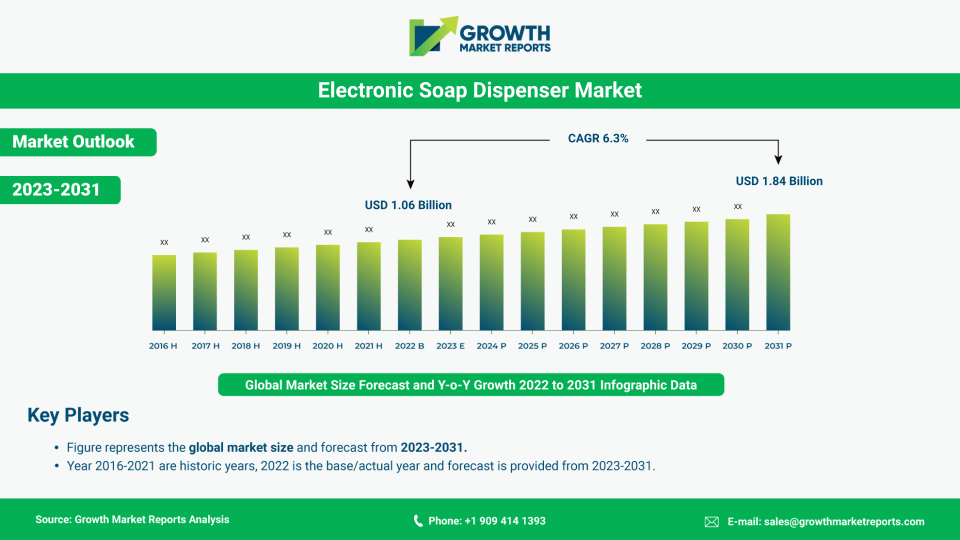
According to our latest research findings, the global electronic soap dispenser market size reached USD 1.45 billion in 2024, propelled by increasing hygiene awareness and technological advancements in public and private sanitation solutions. The market is anticipated to grow at a robust CAGR of 7.2% from 2025 to 2033, with the market size forecasted to reach USD 2.73 billion by 2033. This impressive growth trajectory is primarily attributed to heightened demand for touchless hygiene solutions across commercial, institutional, and residential sectors, reflecting a paradigm shift in consumer preferences toward automation and infection control as per our latest research.

The primary growth driver for the electronic soap dispenser market is the rising global awareness regarding hygiene and sanitation, particularly in the aftermath of the COVID-19 pandemic. The heightened focus on minimizing cross-contamination and the spread of infectious diseases has led to a significant surge in the adoption of touchless and automatic soap dispensing solutions. Public spaces such as airports, hospitals, shopping malls, and schools are increasingly being equipped with electronic soap dispensers to ensure a higher standard of hygiene. This trend is further supported by governmental regulations and guidelines emphasizing the importance of hand hygiene in public and commercial settings. The growing integration of smart technologies, such as IoT-enabled dispensers that monitor usage and refill requirements, is also playing a pivotal role in market expansion.

Another crucial growth factor is the rapid urbanization and the expansion of commercial infrastructure worldwide. As urban populations grow and commercial real estate flourishes, there is a parallel increase in the number of facilities requiring advanced hygiene solutions. The hospitality sector, in particular, has embraced electronic soap dispensers as part of their commitment to guest safety and satisfaction. Additionally, the rising disposable income among consumers, especially in emerging economies, is driving the adoption of premium and technologically advanced bathroom accessories, including electronic soap dispensers. Manufacturers are responding to this demand by offering products with enhanced aesthetics, varied capacities, and customizable features, thereby broadening their consumer base and stimulating market growth.

Technological innovation is another significant catalyst for the electronic soap dispenser market. The integration of sensor-based technologies has made these dispensers more efficient, reliable, and user-friendly. Innovations such as adjustable dispensing volumes, battery-operated and rechargeable models, and compatibility with various liquid soaps and sanitizers have increased the versatility and appeal of electronic soap dispensers. Furthermore, the proliferation of smart homes and the growing trend of home automation have led to increased adoption of electronic soap dispensers in residential settings. These advancements not only enhance user convenience but also contribute to water and soap conservation, aligning with global sustainability initiatives.

Regionally, Asia Pacific is emerging as a dominant force in the electronic soap dispenser market, driven by rapid urbanization, burgeoning middle-class populations, and increased infrastructure development in countries like China and India. North America and Europe continue to lead in terms of technological adoption and regulatory stringency, ensuring high penetration rates in commercial and institutional applications. Meanwhile, the Middle East & Africa and Latin America are witnessing steady growth due to rising investments in healthcare and hospitality sectors. Each region presents unique opportunities and challenges, but the overarching trend is a universal shift toward touchless, automated hygiene solutions across the globe.

Global Electronic Soap Dispenser Industry Outlook

Product Type Analysis

The electronic soap dispenser market is segmented by product type into wall-mounted, countertop, and others, each catering to distinct consumer needs and installation preferences. Wall-mounted dispensers hold the largest share in the market, primarily due to their widespread adoption in high-traffic public and commercial environments such as airports, hospitals, and shopping malls. These dispensers are favored for their space-saving design, ease of installation, and ability to maintain hygiene standards by minimizing physical contact. The robust demand for wall-mounted units is further fueled by regulatory mandates in many countries that require the installation of touchless hygiene solutions in public facilities. Manufacturers are continuously innovating to enhance the durability, design, and functionality of wall-mounted dispensers, integrating features such as anti-drip mechanisms and vandal-resistant materials.

Countertop electronic soap dispensers are gaining traction, particularly in residential and small-office settings where flexibility and aesthetics are prioritized. These dispensers offer the advantage of portability and ease of relocation, making them ideal for environments with changing spatial requirements. The residential sector, in particular, has witnessed a surge in demand for countertop models, driven by the growing trend of home automation and the desire for stylish, user-friendly bathroom accessories. Manufacturers are responding by offering a wide variety of designs, finishes, and capacities to cater to diverse consumer preferences. The integration of rechargeable batteries and USB charging options has further enhanced the appeal of countertop dispensers, making them a popular choice for modern households.

Other product types, including freestanding and custom-designed dispensers, cater to niche applications and specific customer requirements. These variants are often used in luxury hotels, spas, and high-end commercial establishments where aesthetics and brand differentiation play a crucial role. Customization options, such as branding and the use of premium materials, allow businesses to align their hygiene solutions with their overall interior design and corporate image. Although the market share of these specialized dispensers is relatively smaller compared to wall-mounted and countertop variants, their higher price points and premium positioning contribute significantly to the overall market value.

The competitive landscape within the product type segment is characterized by continuous innovation and product differentiation. Leading manufacturers are investing in research and development to introduce advanced features such as touchless operation, adjustable dispensing volumes, and compatibility with a wide range of liquid soaps and sanitizers. The emphasis on user convenience, durability, and sustainability is driving the development of dispensers with longer battery life, easy maintenance, and eco-friendly materials. As consumer awareness regarding hygiene and environmental impact grows, the demand for technologically advanced and sustainable electronic soap dispensers is expected to rise, further fueling market growth across all product types.

Report Scope

Attributes Details
Report Title Electronic Soap Dispenser Market Research Report 2033
By Product Type Wall-Mounted, Countertop, Others
By Operation Automatic, Manual
By Capacity Below 500 ml, 500-1000 ml, Above 1000 ml
By Application Residential, Commercial, Institutional, Others
By Distribution Channel Online, Offline
Regions Covered North America, Europe, APAC, Latin America, MEA
Base Year 2024
Historic Data 2018-2023
Forecast Period 2025-2033
Number of Pages 265
Number of Tables & Figures 310
Customization Available Yes, the report can be customized as per your need.

Operation Analysis

The operation segment of the electronic soap dispenser market is bifurcated into automatic and manual dispensers, with automatic dispensers dominating the market due to their superior hygiene and convenience. Automatic dispensers utilize infrared sensors or other advanced detection technologies to dispense soap without the need for physical contact, significantly reducing the risk of cross-contamination. This feature has become increasingly vital in the post-pandemic era, where public health and safety are paramount concerns. The widespread adoption of automatic dispensers in hospitals, airports, restaurants, and other high-traffic environments is a testament to their effectiveness in promoting hand hygiene and infection control. The integration of smart technologies, such as IoT connectivity and real-time usage monitoring, is further enhancing the functionality and appeal of automatic dispensers.

Manual electronic soap dispensers, while less prevalent than their automatic counterparts, continue to find favor in certain applications where cost considerations and user preferences play a significant role. These dispensers typically feature push-button or lever mechanisms that control the dispensing of soap, offering a more affordable alternative to fully automatic models. Manual dispensers are often preferred in residential settings, small businesses, and institutions with limited budgets or lower traffic volumes. Despite their lower adoption rate, manufacturers are focusing on improving the design, durability, and ease of use of manual dispensers to cater to a diverse customer base. The availability of hybrid models that combine manual and automatic features is also expanding the operational choices available to consumers.

The ongoing shift toward automation and touchless technology is expected to drive the dominance of automatic dispensers in the coming years. Innovations in sensor technology, power efficiency, and dispenser reliability are making automatic models more accessible and affordable for a broader range of applications. Additionally, the growing emphasis on sustainability and resource conservation is leading to the development of dispensers with adjustable dispensing volumes and eco-friendly materials. These advancements not only enhance user experience but also contribute to the reduction of soap and water wastage, aligning with global environmental initiatives.

Despite the clear advantages of automatic dispensers, certain challenges remain, such as higher initial costs, maintenance requirements, and the need for regular battery replacement or recharging. However, the long-term benefits in terms of hygiene, user satisfaction, and operational efficiency are expected to outweigh these concerns, driving continued investment and innovation in the automatic dispenser segment. As consumer expectations evolve and the demand for advanced hygiene solutions grows, the operation segment will remain a key focus area for manufacturers and stakeholders in the electronic soap dispenser market.

Capacity Analysis

The capacity segment of the electronic soap dispenser market is categorized into below 500 ml, 500-1000 ml, and above 1000 ml, each serving distinct usage scenarios and customer needs. Dispensers with a capacity below 500 ml are primarily designed for residential and low-traffic environments where frequent refilling is not a significant concern. These compact models are favored for their portability, ease of installation, and suitability for small bathrooms and kitchens. The growing trend of home automation and the increasing adoption of electronic soap dispensers in residential settings are driving demand for low-capacity models. Manufacturers are focusing on enhancing the design, aesthetics, and user-friendliness of these dispensers to appeal to style-conscious homeowners.

The 500-1000 ml capacity range represents the most popular and widely adopted segment, particularly in commercial and institutional settings. Dispensers in this category offer an optimal balance between capacity and size, reducing the frequency of refills while maintaining a compact footprint. This makes them ideal for high-traffic environments such as offices, schools, hospitals, and shopping malls, where consistent and reliable soap dispensing is essential. The versatility of 500-1000 ml dispensers, combined with their compatibility with various liquid soaps and sanitizers, has made them the preferred choice for facility managers and business owners seeking efficient and cost-effective hygiene solutions.

Dispensers with a capacity above 1000 ml cater to environments with exceptionally high usage rates, such as large commercial complexes, airports, and stadiums. These high-capacity models are designed to minimize maintenance and refill intervals, ensuring uninterrupted service even during peak usage periods. The robust construction and advanced features of these dispensers, such as tamper-resistant locks and real-time refill alerts, make them suitable for demanding applications where reliability and durability are paramount. Although the market share of high-capacity dispensers is smaller compared to other segments, their higher price points and specialized applications contribute significantly to overall market revenue.

The capacity segment is witnessing continuous innovation, with manufacturers introducing modular and customizable dispenser designs that allow users to adjust capacity based on their specific needs. The integration of smart technologies, such as IoT-enabled monitoring and automated refill alerts, is further enhancing the efficiency and convenience of electronic soap dispensers across all capacity ranges. As the demand for advanced hygiene solutions continues to grow, the capacity segment will remain a key area of focus for product development and market expansion.

Application Analysis

The application segment of the electronic soap dispenser market is divided into residential, commercial, institutional, and others, reflecting the diverse range of end-users and usage scenarios. The commercial segment holds the largest market share, driven by the widespread adoption of electronic soap dispensers in offices, restaurants, hotels, shopping malls, and other public spaces. The need to maintain high hygiene standards and comply with regulatory requirements has made electronic soap dispensers a standard fixture in commercial bathrooms and washrooms. The hospitality industry, in particular, has embraced these dispensers as part of their commitment to guest safety and satisfaction, further fueling market growth.

The institutional segment, comprising schools, hospitals, government buildings, and other public institutions, is another significant contributor to market demand. The emphasis on infection control and public health, particularly in healthcare and educational settings, has led to increased investment in touchless hygiene solutions. Electronic soap dispensers are being installed in large numbers to minimize the risk of cross-contamination and promote hand hygiene among students, patients, and staff. Government initiatives and funding for public health infrastructure are also playing a crucial role in driving the adoption of electronic soap dispensers in institutional applications.

The residential segment, while smaller in terms of market share, is experiencing rapid growth due to rising consumer awareness and the increasing trend of home automation. Homeowners are increasingly investing in electronic soap dispensers as part of their efforts to create safer and more hygienic living environments. The availability of stylish, compact, and easy-to-install models has made electronic soap dispensers an attractive addition to modern bathrooms and kitchens. The growing influence of lifestyle trends, such as smart homes and connected devices, is further accelerating the adoption of electronic soap dispensers in residential settings.

Other applications, including industrial and specialized environments, account for a smaller share of the market but offer significant growth potential. Industrial facilities, laboratories, and food processing plants require advanced hygiene solutions to comply with stringent safety and quality standards. Electronic soap dispensers with specialized features, such as chemical-resistant materials and high-capacity reservoirs, are being developed to cater to these niche applications. As hygiene and safety regulations continue to evolve, the application segment is expected to witness further diversification and innovation.

Distribution Channel Analysis

The distribution channel segment of the electronic soap dispenser market is categorized into online and offline channels, each playing a vital role in reaching diverse customer segments. Offline channels, including specialty stores, supermarkets, hypermarkets, and authorized distributors, have traditionally dominated the market. These channels offer the advantage of physical product inspection, immediate purchase, and after-sales support, making them the preferred choice for institutional and commercial buyers. The ability to provide personalized recommendations and installation services further enhances the appeal of offline channels, particularly for large-scale projects and bulk purchases.

Online distribution channels are witnessing rapid growth, driven by the increasing penetration of e-commerce platforms and changing consumer shopping habits. The convenience of online shopping, coupled with a wide selection of products, competitive pricing, and doorstep delivery, has made e-commerce an attractive option for both residential and commercial customers. Leading manufacturers and retailers are investing in user-friendly websites, mobile apps, and digital marketing strategies to capture the growing online customer base. The availability of detailed product information, customer reviews, and comparison tools is empowering consumers to make informed purchasing decisions, further boosting online sales.

The COVID-19 pandemic has accelerated the shift toward online distribution, as lockdowns and social distancing measures limited access to physical stores. The surge in online purchases of hygiene products, including electronic soap dispensers, has prompted manufacturers to strengthen their digital presence and expand their online offerings. Strategic partnerships with leading e-commerce platforms and logistics providers are enabling manufacturers to reach new markets and customer segments more efficiently.

Despite the growth of online channels, offline distribution remains critical for certain customer segments, particularly those requiring customized solutions, bulk orders, or after-sales support. The coexistence of online and offline channels is creating a dynamic and competitive distribution landscape, with manufacturers adopting omnichannel strategies to maximize market reach and customer satisfaction. As digital transformation continues to reshape the retail landscape, the distribution channel segment will remain a key area of innovation and investment in the electronic soap dispenser market.

Opportunities & Threats

The electronic soap dispenser market presents significant opportunities for growth and innovation, driven by evolving consumer preferences, technological advancements, and increasing regulatory focus on hygiene and safety. The integration of smart technologies, such as IoT-enabled dispensers that monitor usage patterns and provide real-time refill alerts, offers manufacturers the opportunity to differentiate their products and capture new market segments. The growing trend of home automation and connected devices is creating new avenues for product development, with consumers seeking integrated solutions that enhance convenience, efficiency, and sustainability. Additionally, the expanding commercial and institutional infrastructure in emerging markets presents untapped opportunities for market expansion, as businesses and governments invest in advanced hygiene solutions to meet rising standards and regulatory requirements.

Another key opportunity lies in the development of eco-friendly and sustainable electronic soap dispensers. As environmental awareness grows, consumers and businesses are increasingly seeking products that minimize waste, reduce energy consumption, and use recyclable materials. Manufacturers that prioritize sustainability in product design and manufacturing processes are well-positioned to capture a growing segment of environmentally conscious customers. The development of dispensers compatible with biodegradable soaps and sanitizers, as well as features that optimize soap and water usage, can further enhance market appeal and contribute to long-term growth. Strategic collaborations with soap manufacturers and hygiene solution providers can also create synergies and expand the value proposition for end-users.

Despite the numerous opportunities, the electronic soap dispenser market faces certain restraining factors that could hinder growth. High initial costs and maintenance requirements, particularly for advanced automatic models, may deter price-sensitive customers and limit adoption in certain segments. Technical issues such as sensor malfunctions, battery failures, and compatibility challenges with different soap formulations can also impact user experience and satisfaction. Additionally, intense competition among manufacturers and the proliferation of low-cost, generic products may lead to price erosion and margin pressures. Addressing these challenges through continuous innovation, quality assurance, and customer education will be essential for sustained market growth.

Regional Outlook

Asia Pacific is emerging as the fastest-growing region in the electronic soap dispenser market, with a market size of USD 450 million in 2024 and a projected CAGR of 8.5% through 2033. The region's rapid urbanization, expanding middle-class population, and significant investments in commercial and public infrastructure are driving demand for advanced hygiene solutions. Countries such as China, India, and Japan are leading the adoption of electronic soap dispensers in both commercial and residential sectors. Government initiatives to improve public health and sanitation, coupled with increasing consumer awareness, are further fueling market growth. The presence of local manufacturers and the availability of cost-effective products are also contributing to the region's strong performance.

North America remains a key market for electronic soap dispensers, with a market size of USD 390 million in 2024, driven by high standards of hygiene, technological innovation, and stringent regulatory requirements. The United States and Canada are at the forefront of adoption, particularly in commercial and institutional settings such as hospitals, schools, and corporate offices. The region's advanced infrastructure, high disposable income, and strong emphasis on public health have made electronic soap dispensers a standard fixture in many public and private facilities. The growing trend of smart homes and connected devices is also driving adoption in the residential segment. North America's mature market landscape and focus on innovation are expected to support steady growth in the coming years.

Europe holds a significant share of the global electronic soap dispenser market, with a market size of USD 340 million in 2024, supported by robust healthcare infrastructure, regulatory mandates, and a strong focus on sustainability. Countries such as Germany, the United Kingdom, and France are leading the adoption of advanced hygiene solutions in both commercial and institutional applications. The region's emphasis on environmental sustainability and resource conservation is driving demand for eco-friendly and energy-efficient dispensers. Strategic partnerships between manufacturers and public health organizations are also contributing to market growth. The Middle East & Africa and Latin America, while smaller in terms of market size, are witnessing steady growth due to rising investments in healthcare, hospitality, and public infrastructure. As regional markets continue to evolve, tailored strategies and localized product offerings will be essential for capturing growth opportunities and addressing unique market challenges.

Electronic Soap Dispenser Market Statistics

Competitor Outlook

The electronic soap dispenser market is characterized by intense competition, with a mix of established global players and emerging regional manufacturers vying for market share. The competitive landscape is shaped by continuous innovation, product differentiation, and a strong focus on quality, reliability, and user experience. Leading companies are investing heavily in research and development to introduce advanced features such as touchless operation, adjustable dispensing volumes, and IoT connectivity. The emphasis on sustainability and eco-friendly design is also driving product innovation, as manufacturers seek to align their offerings with evolving consumer preferences and regulatory requirements. Strategic collaborations, mergers and acquisitions, and partnerships with soap manufacturers and hygiene solution providers are common strategies employed to expand product portfolios and enhance market presence.

In addition to technological innovation, brand reputation and customer service play a critical role in the competitive dynamics of the electronic soap dispenser market. Companies that prioritize quality assurance, responsive customer support, and comprehensive after-sales services are better positioned to build long-term relationships and foster customer loyalty. The ability to offer customized solutions and cater to specific industry requirements, such as healthcare, hospitality, and education, is another key differentiator in the market. As competition intensifies, manufacturers are also focusing on cost optimization and operational efficiency to maintain profitability and sustain growth.

The rise of e-commerce and digital marketing has created new opportunities for market players to reach a broader customer base and enhance brand visibility. Leading manufacturers are leveraging online platforms to showcase their products, provide detailed information, and engage with customers through interactive content and reviews. The shift toward omnichannel strategies, combining online and offline distribution, is enabling companies to maximize market reach and deliver a seamless customer experience. As digital transformation continues to reshape the competitive landscape, companies that embrace innovation and agility will be best positioned to capitalize on emerging opportunities.

Some of the major companies operating in the electronic soap dispenser market include Sloan Valve Company, GOJO Industries, Inc., Kimberly-Clark Corporation, TOTO Ltd., Simplehuman LLC, Bobrick Washroom Equipment, Inc., and Dettol (Reckitt Benckiser Group plc). These companies are known for their extensive product portfolios, strong brand recognition, and commitment to innovation. Sloan Valve Company and TOTO Ltd. are recognized for their advanced sensor technology and durable designs, catering to both commercial and institutional clients. GOJO Industries, Inc. and Kimberly-Clark Corporation focus on comprehensive hygiene solutions, offering a wide range of dispensers compatible with their proprietary soap and sanitizer formulations. Simplehuman LLC is renowned for its stylish and user-friendly dispensers, targeting the premium residential market. Bobrick Washroom Equipment, Inc. and Dettol have established a strong presence in both commercial and residential segments, leveraging their extensive distribution networks and customer-centric approach.

These leading players are continuously expanding their product offerings, investing in sustainable manufacturing practices, and exploring new markets to maintain their competitive edge. The focus on strategic partnerships, digital transformation, and customer engagement is expected to drive further innovation and growth in the electronic soap dispenser market. As consumer expectations and regulatory requirements continue to evolve, companies that prioritize quality, innovation, and sustainability will be well-positioned to lead the market and capture emerging opportunities.

Key Players

  • Simplehuman
  • TOTO Ltd.
  • GOJO Industries, Inc.
  • Kohler Co.
  • Sloan Valve Company
  • ASI American Specialties, Inc.
  • Bobrick Washroom Equipment, Inc.
  • Umbra
  • Lovair
  • Orchids International
  • Dolphy India Pvt. Ltd.
  • SVAVO
  • Rubbermaid Commercial Products
  • Euronics Industries Pvt. Ltd.
  • Brightwell Dispensers Ltd.
  • Jofel Industrial S.A.
  • DELABIE
  • Saraya Co., Ltd.
  • Kutol Products Company
  • Alpine Industries
Electronic Soap Dispenser Market Overview

Segments

The Electronic Soap Dispenser market has been segmented on the basis of

Product Type

  • Wall-Mounted
  • Countertop
  • Others

Operation

  • Automatic
  • Manual

Capacity

  • Below 500 ml
  • 500-1000 ml
  • Above 1000 ml

Application

  • Residential
  • Commercial
  • Institutional
  • Others

Distribution Channel

  • Online
  • Offline

Competitive Landscape

Major players of the market are Toto Ltd., American Specialties, Inc., Umbra, Simplehuman, ORCHIDS INTERNATIONAL, TOSHI Automatic Systems Pvt. Ltd., Bobrick Washroom Equipment, Inc., Shenzhen City Svavo Bathroom Products Co., Ltd., ZAF ENTERPRISES, Lovair, DELABIE, Euronics Industries Pvt Ltd., Dolphy India Private Limited, Technocrats Security System Private Limited., Sloan Valve Company, TDL Hygiene, VWR International, LLC., VOLA., and Cannon Hygiene Limited.

Companies are engaging in partnership, collaboration, and merges. Moreover, the companies are focusing on expanding their product portfolio to expand their expand share.

  • In March 2019, Shenzhen SVAVO Intelligent Technology Co. Ltd. launched a table top touch less foaming soap dispenser V-370 for bathrooms, kitchens, and laundry and is available in three different colours, which are black, white, and nickel.
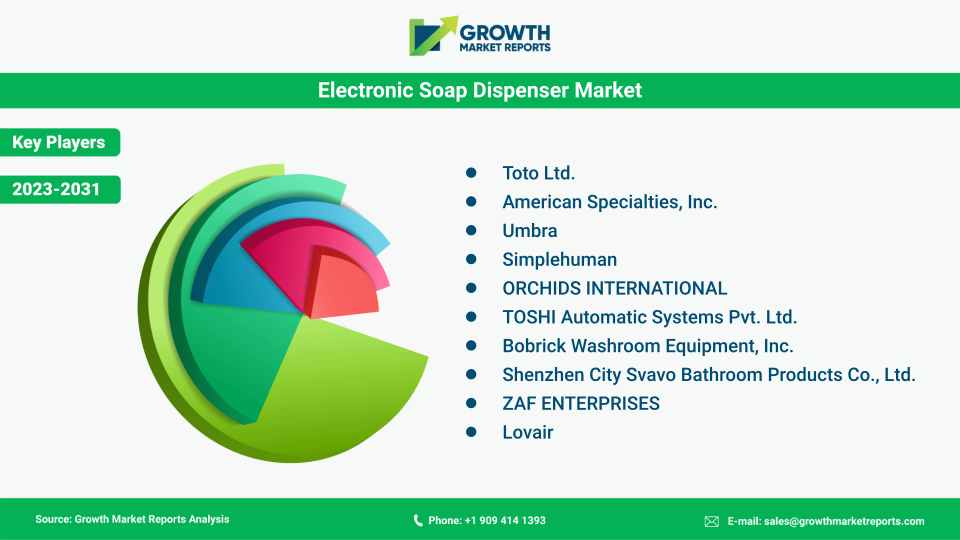

Electronic Soap Dispenser Market Key Players

Frequently Asked Questions

Key players include Sloan Valve Company, GOJO Industries, Kimberly-Clark Corporation, TOTO Ltd., Simplehuman LLC, Bobrick Washroom Equipment, Dettol, and others.

Opportunities include smart technology integration, eco-friendly designs, and expanding into emerging markets. Challenges involve high initial costs, maintenance, and competition from low-cost products.

They are sold through both offline channels (specialty stores, distributors) and online channels (e-commerce platforms), with online sales growing rapidly due to changing consumer habits.

Electronic soap dispensers are used in residential, commercial, and institutional settings, with the commercial segment (offices, hotels, malls) holding the largest market share.

Dispensers with a 500-1000 ml capacity are most widely adopted, especially in commercial and institutional settings, due to their balance of size and refill frequency.

Automatic dispensers use sensors for touchless operation, reducing cross-contamination, while manual dispensers require physical contact, making them more affordable but less hygienic.

The market offers wall-mounted, countertop, freestanding, and custom-designed dispensers, with wall-mounted models being the most popular in commercial and public spaces.

Asia Pacific is the fastest-growing region, driven by urbanization and infrastructure development, while North America and Europe lead in technological adoption and regulatory standards.

Key growth drivers include increased hygiene awareness post-COVID-19, demand for touchless solutions, technological advancements like IoT-enabled dispensers, and expanding commercial infrastructure.

The global electronic soap dispenser market reached USD 1.45 billion in 2024 and is expected to grow at a CAGR of 7.2% from 2025 to 2033, reaching USD 2.73 billion by 2033.

Table Of Content

Chapter 1 Executive Summary
Chapter 2 Assumptions and Acronyms Used
Chapter 3 Research Methodology
Chapter 4 Electronic Soap Dispenser Market Overview
   4.1 Introduction
      4.1.1 Market Taxonomy
      4.1.2 Market Definition
      4.1.3 Macro-Economic Factors Impacting the Market Growth
   4.2 Electronic Soap Dispenser Market Dynamics
      4.2.1 Market Drivers
      4.2.2 Market Restraints
      4.2.3 Market Opportunity
   4.3 Electronic Soap Dispenser Market - Supply Chain Analysis
      4.3.1 List of Key Suppliers
      4.3.2 List of Key Distributors
      4.3.3 List of Key Consumers
   4.4 Key Forces Shaping the Electronic Soap Dispenser Market
      4.4.1 Bargaining Power of Suppliers
      4.4.2 Bargaining Power of Buyers
      4.4.3 Threat of Substitution
      4.4.4 Threat of New Entrants
      4.4.5 Competitive Rivalry
   4.5 Global Electronic Soap Dispenser Market Size & Forecast, 2023-2032
      4.5.1 Electronic Soap Dispenser Market Size and Y-o-Y Growth
      4.5.2 Electronic Soap Dispenser Market Absolute $ Opportunity

Chapter 5 Global Electronic Soap Dispenser Market Analysis and Forecast By Product Type
   5.1 Introduction
      5.1.1 Key Market Trends & Growth Opportunities By Product Type
      5.1.2 Basis Point Share (BPS) Analysis By Product Type
      5.1.3 Absolute $ Opportunity Assessment By Product Type
   5.2 Electronic Soap Dispenser Market Size Forecast By Product Type
      5.2.1 Wall-Mounted
      5.2.2 Countertop
      5.2.3 Others
   5.3 Market Attractiveness Analysis By Product Type

Chapter 6 Global Electronic Soap Dispenser Market Analysis and Forecast By Operation
   6.1 Introduction
      6.1.1 Key Market Trends & Growth Opportunities By Operation
      6.1.2 Basis Point Share (BPS) Analysis By Operation
      6.1.3 Absolute $ Opportunity Assessment By Operation
   6.2 Electronic Soap Dispenser Market Size Forecast By Operation
      6.2.1 Automatic
      6.2.2 Manual
   6.3 Market Attractiveness Analysis By Operation

Chapter 7 Global Electronic Soap Dispenser Market Analysis and Forecast By Capacity
   7.1 Introduction
      7.1.1 Key Market Trends & Growth Opportunities By Capacity
      7.1.2 Basis Point Share (BPS) Analysis By Capacity
      7.1.3 Absolute $ Opportunity Assessment By Capacity
   7.2 Electronic Soap Dispenser Market Size Forecast By Capacity
      7.2.1 Below 500 ml
      7.2.2 500-1000 ml
      7.2.3 Above 1000 ml
   7.3 Market Attractiveness Analysis By Capacity

Chapter 8 Global Electronic Soap Dispenser Market Analysis and Forecast By Application
   8.1 Introduction
      8.1.1 Key Market Trends & Growth Opportunities By Application
      8.1.2 Basis Point Share (BPS) Analysis By Application
      8.1.3 Absolute $ Opportunity Assessment By Application
   8.2 Electronic Soap Dispenser Market Size Forecast By Application
      8.2.1 Residential
      8.2.2 Commercial
      8.2.3 Institutional
      8.2.4 Others
   8.3 Market Attractiveness Analysis By Application

Chapter 9 Global Electronic Soap Dispenser Market Analysis and Forecast By Distribution Channel
   9.1 Introduction
      9.1.1 Key Market Trends & Growth Opportunities By Distribution Channel
      9.1.2 Basis Point Share (BPS) Analysis By Distribution Channel
      9.1.3 Absolute $ Opportunity Assessment By Distribution Channel
   9.2 Electronic Soap Dispenser Market Size Forecast By Distribution Channel
      9.2.1 Online
      9.2.2 Offline
   9.3 Market Attractiveness Analysis By Distribution Channel

Chapter 10 Global Electronic Soap Dispenser Market Analysis and Forecast by Region
   10.1 Introduction
      10.1.1 Key Market Trends & Growth Opportunities By Region
      10.1.2 Basis Point Share (BPS) Analysis By Region
      10.1.3 Absolute $ Opportunity Assessment By Region
   10.2 Electronic Soap Dispenser Market Size Forecast By Region
      10.2.1 North America
      10.2.2 Europe
      10.2.3 Asia Pacific
      10.2.4 Latin America
      10.2.5 Middle East & Africa (MEA)
   10.3 Market Attractiveness Analysis By Region

Chapter 11 Coronavirus Disease (COVID-19) Impact 
   11.1 Introduction 
   11.2 Current & Future Impact Analysis 
   11.3 Economic Impact Analysis 
   11.4 Government Policies 
   11.5 Investment Scenario

Chapter 12 North America Electronic Soap Dispenser Analysis and Forecast
   12.1 Introduction
   12.2 North America Electronic Soap Dispenser Market Size Forecast by Country
      12.2.1 U.S.
      12.2.2 Canada
   12.3 Basis Point Share (BPS) Analysis by Country
   12.4 Absolute $ Opportunity Assessment by Country
   12.5 Market Attractiveness Analysis by Country
   12.6 North America Electronic Soap Dispenser Market Size Forecast By Product Type
      12.6.1 Wall-Mounted
      12.6.2 Countertop
      12.6.3 Others
   12.7 Basis Point Share (BPS) Analysis By Product Type 
   12.8 Absolute $ Opportunity Assessment By Product Type 
   12.9 Market Attractiveness Analysis By Product Type
   12.10 North America Electronic Soap Dispenser Market Size Forecast By Operation
      12.10.1 Automatic
      12.10.2 Manual
   12.11 Basis Point Share (BPS) Analysis By Operation 
   12.12 Absolute $ Opportunity Assessment By Operation 
   12.13 Market Attractiveness Analysis By Operation
   12.14 North America Electronic Soap Dispenser Market Size Forecast By Capacity
      12.14.1 Below 500 ml
      12.14.2 500-1000 ml
      12.14.3 Above 1000 ml
   12.15 Basis Point Share (BPS) Analysis By Capacity 
   12.16 Absolute $ Opportunity Assessment By Capacity 
   12.17 Market Attractiveness Analysis By Capacity
   12.18 North America Electronic Soap Dispenser Market Size Forecast By Application
      12.18.1 Residential
      12.18.2 Commercial
      12.18.3 Institutional
      12.18.4 Others
   12.19 Basis Point Share (BPS) Analysis By Application 
   12.20 Absolute $ Opportunity Assessment By Application 
   12.21 Market Attractiveness Analysis By Application
   12.22 North America Electronic Soap Dispenser Market Size Forecast By Distribution Channel
      12.22.1 Online
      12.22.2 Offline
   12.23 Basis Point Share (BPS) Analysis By Distribution Channel 
   12.24 Absolute $ Opportunity Assessment By Distribution Channel 
   12.25 Market Attractiveness Analysis By Distribution Channel

Chapter 13 Europe Electronic Soap Dispenser Analysis and Forecast
   13.1 Introduction
   13.2 Europe Electronic Soap Dispenser Market Size Forecast by Country
      13.2.1 Germany
      13.2.2 France
      13.2.3 Italy
      13.2.4 U.K.
      13.2.5 Spain
      13.2.6 Russia
      13.2.7 Rest of Europe
   13.3 Basis Point Share (BPS) Analysis by Country
   13.4 Absolute $ Opportunity Assessment by Country
   13.5 Market Attractiveness Analysis by Country
   13.6 Europe Electronic Soap Dispenser Market Size Forecast By Product Type
      13.6.1 Wall-Mounted
      13.6.2 Countertop
      13.6.3 Others
   13.7 Basis Point Share (BPS) Analysis By Product Type 
   13.8 Absolute $ Opportunity Assessment By Product Type 
   13.9 Market Attractiveness Analysis By Product Type
   13.10 Europe Electronic Soap Dispenser Market Size Forecast By Operation
      13.10.1 Automatic
      13.10.2 Manual
   13.11 Basis Point Share (BPS) Analysis By Operation 
   13.12 Absolute $ Opportunity Assessment By Operation 
   13.13 Market Attractiveness Analysis By Operation
   13.14 Europe Electronic Soap Dispenser Market Size Forecast By Capacity
      13.14.1 Below 500 ml
      13.14.2 500-1000 ml
      13.14.3 Above 1000 ml
   13.15 Basis Point Share (BPS) Analysis By Capacity 
   13.16 Absolute $ Opportunity Assessment By Capacity 
   13.17 Market Attractiveness Analysis By Capacity
   13.18 Europe Electronic Soap Dispenser Market Size Forecast By Application
      13.18.1 Residential
      13.18.2 Commercial
      13.18.3 Institutional
      13.18.4 Others
   13.19 Basis Point Share (BPS) Analysis By Application 
   13.20 Absolute $ Opportunity Assessment By Application 
   13.21 Market Attractiveness Analysis By Application
   13.22 Europe Electronic Soap Dispenser Market Size Forecast By Distribution Channel
      13.22.1 Online
      13.22.2 Offline
   13.23 Basis Point Share (BPS) Analysis By Distribution Channel 
   13.24 Absolute $ Opportunity Assessment By Distribution Channel 
   13.25 Market Attractiveness Analysis By Distribution Channel

Chapter 14 Asia Pacific Electronic Soap Dispenser Analysis and Forecast
   14.1 Introduction
   14.2 Asia Pacific Electronic Soap Dispenser Market Size Forecast by Country
      14.2.1 China
      14.2.2 Japan
      14.2.3 South Korea
      14.2.4 India
      14.2.5 Australia
      14.2.6 South East Asia (SEA)
      14.2.7 Rest of Asia Pacific (APAC)
   14.3 Basis Point Share (BPS) Analysis by Country
   14.4 Absolute $ Opportunity Assessment by Country
   14.5 Market Attractiveness Analysis by Country
   14.6 Asia Pacific Electronic Soap Dispenser Market Size Forecast By Product Type
      14.6.1 Wall-Mounted
      14.6.2 Countertop
      14.6.3 Others
   14.7 Basis Point Share (BPS) Analysis By Product Type 
   14.8 Absolute $ Opportunity Assessment By Product Type 
   14.9 Market Attractiveness Analysis By Product Type
   14.10 Asia Pacific Electronic Soap Dispenser Market Size Forecast By Operation
      14.10.1 Automatic
      14.10.2 Manual
   14.11 Basis Point Share (BPS) Analysis By Operation 
   14.12 Absolute $ Opportunity Assessment By Operation 
   14.13 Market Attractiveness Analysis By Operation
   14.14 Asia Pacific Electronic Soap Dispenser Market Size Forecast By Capacity
      14.14.1 Below 500 ml
      14.14.2 500-1000 ml
      14.14.3 Above 1000 ml
   14.15 Basis Point Share (BPS) Analysis By Capacity 
   14.16 Absolute $ Opportunity Assessment By Capacity 
   14.17 Market Attractiveness Analysis By Capacity
   14.18 Asia Pacific Electronic Soap Dispenser Market Size Forecast By Application
      14.18.1 Residential
      14.18.2 Commercial
      14.18.3 Institutional
      14.18.4 Others
   14.19 Basis Point Share (BPS) Analysis By Application 
   14.20 Absolute $ Opportunity Assessment By Application 
   14.21 Market Attractiveness Analysis By Application
   14.22 Asia Pacific Electronic Soap Dispenser Market Size Forecast By Distribution Channel
      14.22.1 Online
      14.22.2 Offline
   14.23 Basis Point Share (BPS) Analysis By Distribution Channel 
   14.24 Absolute $ Opportunity Assessment By Distribution Channel 
   14.25 Market Attractiveness Analysis By Distribution Channel

Chapter 15 Latin America Electronic Soap Dispenser Analysis and Forecast
   15.1 Introduction
   15.2 Latin America Electronic Soap Dispenser Market Size Forecast by Country
      15.2.1 Brazil
      15.2.2 Mexico
      15.2.3 Rest of Latin America (LATAM)
   15.3 Basis Point Share (BPS) Analysis by Country
   15.4 Absolute $ Opportunity Assessment by Country
   15.5 Market Attractiveness Analysis by Country
   15.6 Latin America Electronic Soap Dispenser Market Size Forecast By Product Type
      15.6.1 Wall-Mounted
      15.6.2 Countertop
      15.6.3 Others
   15.7 Basis Point Share (BPS) Analysis By Product Type 
   15.8 Absolute $ Opportunity Assessment By Product Type 
   15.9 Market Attractiveness Analysis By Product Type
   15.10 Latin America Electronic Soap Dispenser Market Size Forecast By Operation
      15.10.1 Automatic
      15.10.2 Manual
   15.11 Basis Point Share (BPS) Analysis By Operation 
   15.12 Absolute $ Opportunity Assessment By Operation 
   15.13 Market Attractiveness Analysis By Operation
   15.14 Latin America Electronic Soap Dispenser Market Size Forecast By Capacity
      15.14.1 Below 500 ml
      15.14.2 500-1000 ml
      15.14.3 Above 1000 ml
   15.15 Basis Point Share (BPS) Analysis By Capacity 
   15.16 Absolute $ Opportunity Assessment By Capacity 
   15.17 Market Attractiveness Analysis By Capacity
   15.18 Latin America Electronic Soap Dispenser Market Size Forecast By Application
      15.18.1 Residential
      15.18.2 Commercial
      15.18.3 Institutional
      15.18.4 Others
   15.19 Basis Point Share (BPS) Analysis By Application 
   15.20 Absolute $ Opportunity Assessment By Application 
   15.21 Market Attractiveness Analysis By Application
   15.22 Latin America Electronic Soap Dispenser Market Size Forecast By Distribution Channel
      15.22.1 Online
      15.22.2 Offline
   15.23 Basis Point Share (BPS) Analysis By Distribution Channel 
   15.24 Absolute $ Opportunity Assessment By Distribution Channel 
   15.25 Market Attractiveness Analysis By Distribution Channel

Chapter 16 Middle East & Africa (MEA) Electronic Soap Dispenser Analysis and Forecast
   16.1 Introduction
   16.2 Middle East & Africa (MEA) Electronic Soap Dispenser Market Size Forecast by Country
      16.2.1 Saudi Arabia
      16.2.2 South Africa
      16.2.3 UAE
      16.2.4 Rest of Middle East & Africa (MEA)
   16.3 Basis Point Share (BPS) Analysis by Country
   16.4 Absolute $ Opportunity Assessment by Country
   16.5 Market Attractiveness Analysis by Country
   16.6 Middle East & Africa (MEA) Electronic Soap Dispenser Market Size Forecast By Product Type
      16.6.1 Wall-Mounted
      16.6.2 Countertop
      16.6.3 Others
   16.7 Basis Point Share (BPS) Analysis By Product Type 
   16.8 Absolute $ Opportunity Assessment By Product Type 
   16.9 Market Attractiveness Analysis By Product Type
   16.10 Middle East & Africa (MEA) Electronic Soap Dispenser Market Size Forecast By Operation
      16.10.1 Automatic
      16.10.2 Manual
   16.11 Basis Point Share (BPS) Analysis By Operation 
   16.12 Absolute $ Opportunity Assessment By Operation 
   16.13 Market Attractiveness Analysis By Operation
   16.14 Middle East & Africa (MEA) Electronic Soap Dispenser Market Size Forecast By Capacity
      16.14.1 Below 500 ml
      16.14.2 500-1000 ml
      16.14.3 Above 1000 ml
   16.15 Basis Point Share (BPS) Analysis By Capacity 
   16.16 Absolute $ Opportunity Assessment By Capacity 
   16.17 Market Attractiveness Analysis By Capacity
   16.18 Middle East & Africa (MEA) Electronic Soap Dispenser Market Size Forecast By Application
      16.18.1 Residential
      16.18.2 Commercial
      16.18.3 Institutional
      16.18.4 Others
   16.19 Basis Point Share (BPS) Analysis By Application 
   16.20 Absolute $ Opportunity Assessment By Application 
   16.21 Market Attractiveness Analysis By Application
   16.22 Middle East & Africa (MEA) Electronic Soap Dispenser Market Size Forecast By Distribution Channel
      16.22.1 Online
      16.22.2 Offline
   16.23 Basis Point Share (BPS) Analysis By Distribution Channel 
   16.24 Absolute $ Opportunity Assessment By Distribution Channel 
   16.25 Market Attractiveness Analysis By Distribution Channel

Chapter 17 Competition Landscape 
   17.1 Electronic Soap Dispenser Market: Competitive Dashboard
   17.2 Global Electronic Soap Dispenser Market: Market Share Analysis, 2023
   17.3 Company Profiles (Details – Overview, Financials, Developments, Strategy) 
      17.3.1 Simplehuman
TOTO Ltd.
GOJO Industries, Inc.
Kohler Co.
Sloan Valve Company
ASI American Specialties, Inc.
Bobrick Washroom Equipment, Inc.
Umbra
Lovair
Orchids International
Dolphy India Pvt. Ltd.
SVAVO
Rubbermaid Commercial Products
Euronics Industries Pvt. Ltd.
Brightwell Dispensers Ltd.
Jofel Industrial S.A.
DELABIE
Saraya Co., Ltd.
Kutol Products Company
Alpine Industries

Methodology

Our Clients

Microsoft
Honda Motor Co. Ltd.
FedEx Logistics
sinopec
Dassault Aviation
Nestle SA
Pfizer
Deloitte