Segments - by Component (Software, Services), by Deployment Mode (On-Premises, Cloud), by Application (Brand Management, Asset Analytics, Content Management, Compliance & Risk Management, Others), by Enterprise Size (Small and Medium Enterprises, Large Enterprises), by End-User (Supermarkets/Hypermarkets, Specialty Stores, E-commerce, Department Stores, Others)
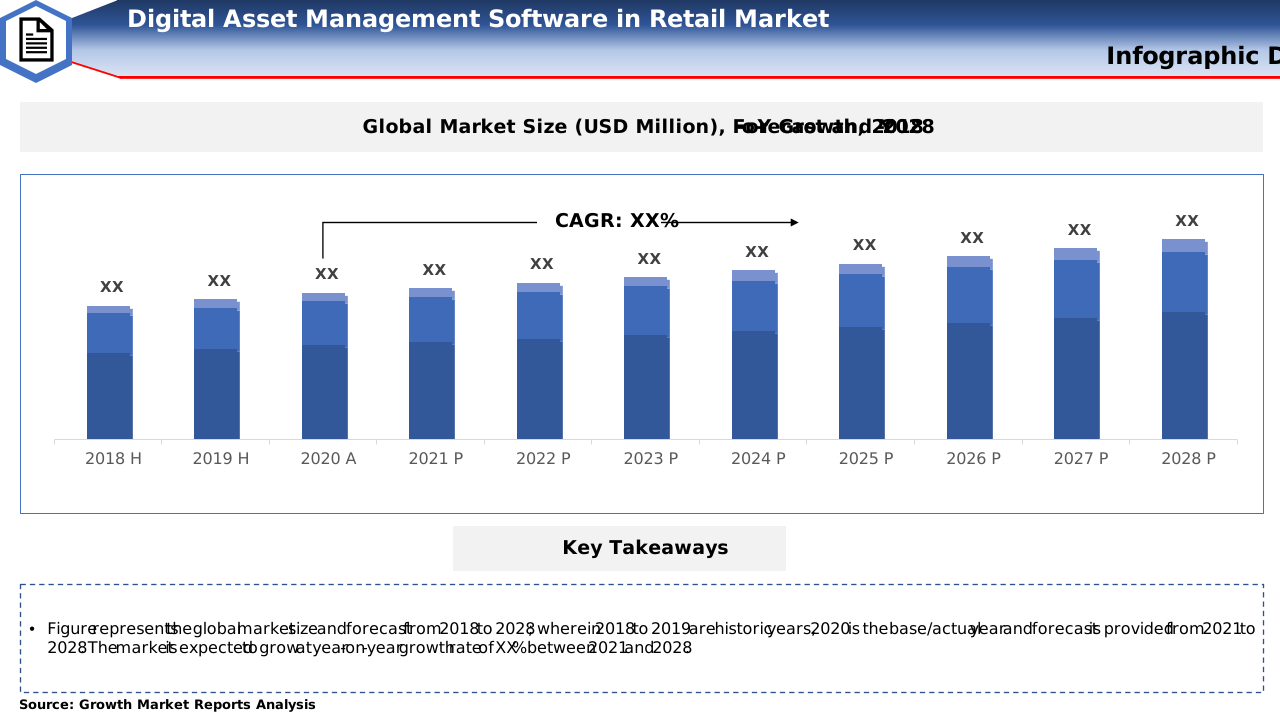
According to our latest research, the global Digital Asset Management Software in Retail market size reached USD 2.41 billion in 2024, reflecting robust adoption across the retail ecosystem. The market is expected to exhibit a CAGR of 15.2% from 2025 to 2033, with the total market value projected to climb to USD 7.94 billion by 2033. This exceptional growth is driven by the increasing need for centralized digital asset control, the proliferation of omnichannel retail strategies, and the growing emphasis on brand consistency in a highly competitive retail landscape. As per our latest research, these factors are catalyzing the rapid expansion and technological advancement of digital asset management software within the retail sector globally.
The primary growth factor for the Digital Asset Management Software in Retail market is the exponential surge in digital content creation and usage among retailers. With the rise of e-commerce, social media marketing, and personalized customer engagement, retailers are generating vast volumes of digital assets—including images, videos, product catalogs, and promotional materials. Managing, organizing, and distributing these assets efficiently has become a critical challenge. Digital asset management (DAM) software provides a centralized repository, enabling retailers to streamline workflows, ensure brand consistency, and accelerate time-to-market for campaigns. The growing complexity of digital marketing strategies and the need for real-time asset access across multiple teams further amplify the demand for advanced DAM solutions in retail.
Another significant driver is the shift towards omnichannel retailing, which necessitates seamless coordination of digital assets across various touchpoints such as online stores, mobile apps, in-store displays, and social platforms. Retailers are increasingly investing in DAM software to support unified customer experiences and to maintain consistent branding regardless of the channel. The integration of artificial intelligence and machine learning within DAM solutions is also elevating their value proposition, enabling automated tagging, content personalization, and predictive analytics. These technological advancements not only enhance operational efficiency but also empower retailers to derive actionable insights from asset usage patterns, thereby optimizing marketing strategies and improving return on investment.
Additionally, regulatory compliance and data security considerations are compelling retailers to adopt sophisticated DAM systems. With tightening regulations around data privacy and digital rights management, retailers must ensure that their digital assets are stored, shared, and utilized in accordance with legal requirements. DAM software offers robust access controls, audit trails, and encryption features to safeguard sensitive content and intellectual property. The increasing frequency of cyber threats and data breaches has heightened awareness around the need for secure digital asset management, further propelling market growth. As retailers continue to expand their digital footprint, the need for compliance-ready and secure DAM platforms will remain a top priority.
Regionally, North America dominates the Digital Asset Management Software in Retail market, accounting for the largest market share in 2024. This leadership is attributed to the presence of major retail chains, advanced IT infrastructure, and a high degree of digitalization in marketing operations. Europe follows closely, driven by stringent data protection regulations and a strong emphasis on brand management. The Asia Pacific region is witnessing the fastest growth, fueled by rapid e-commerce expansion, increasing smartphone penetration, and the digital transformation initiatives of retailers in emerging economies such as China and India. Latin America and the Middle East & Africa are also showing promising growth trajectories, supported by rising digital adoption and investments in retail technology.
The Digital Asset Management Software in Retail market is segmented by component into software and services, each playing a critical role in the marketÂ’s overall growth and adoption. The software segment constitutes the backbone of DAM solutions, encompassing core functionalities such as asset storage, metadata management, workflow automation, and advanced search capabilities. Retailers increasingly rely on DAM software to centralize their digital assets, streamline marketing operations, and maintain brand consistency across multiple channels. The software landscape is rapidly evolving, with vendors introducing AI-powered features, enhanced user interfaces, and seamless integrations with other retail technologies such as content management systems and customer relationship management platforms. As retailers prioritize digital transformation, the demand for robust, scalable, and feature-rich DAM software continues to surge.
In the media and entertainment industry, Digital Asset Management in Media and Entertainment plays a crucial role in organizing and distributing vast amounts of digital content. With the increasing demand for high-quality video content, images, and audio files, media companies are turning to advanced DAM solutions to streamline their workflows and enhance content delivery. These systems not only help in managing the lifecycle of digital assets but also ensure compliance with copyright and licensing agreements. As media consumption continues to grow across various platforms, the need for efficient asset management becomes even more critical, enabling companies to maintain brand consistency and improve audience engagement.
On the other hand, the services segment, which includes consulting, implementation, training, and support, is gaining traction as retailers seek expert guidance to maximize the value of their DAM investments. Successful deployment of DAM software requires a deep understanding of retail-specific workflows, asset taxonomy, and integration requirements. Service providers play a pivotal role in customizing solutions, migrating legacy assets, and ensuring smooth onboarding for end-users. Additionally, ongoing support and maintenance services are essential for addressing technical issues, implementing software updates, and optimizing system performance. As the DAM market matures, the services segment is expected to witness steady growth, with retailers increasingly opting for managed services and long-term partnerships with solution providers.
The interplay between software and services is particularly evident in large-scale retail deployments, where complex asset ecosystems demand tailored solutions and comprehensive support. Retailers often engage with vendors that offer end-to-end capabilities, from software licensing to post-implementation services. This integrated approach not only accelerates time-to-value but also reduces the risk of project delays and cost overruns. As the competitive landscape intensifies, DAM vendors are differentiating themselves by expanding their service portfolios and investing in customer success initiatives. The convergence of software innovation and service excellence is poised to drive sustained growth in the component segment.
Furthermore, the rise of cloud-based DAM solutions has transformed the component dynamics, enabling retailers to access software and services on a subscription basis. This shift towards Software-as-a-Service (SaaS) models offers greater flexibility, scalability, and cost-effectiveness, particularly for small and medium enterprises (SMEs) with limited IT resources. Cloud-based DAM platforms also facilitate remote collaboration, automated updates, and seamless integration with other cloud-native retail applications. As retailers embrace digital-first strategies, the demand for cloud-based software and associated services is expected to outpace traditional on-premises deployments, reshaping the competitive landscape and value proposition of DAM solutions in retail.
| Attributes | Details |
| Report Title | Digital Asset Management Software in Retail Market Research Report 2033 |
| By Component | Software, Services |
| By Deployment Mode | On-Premises, Cloud |
| By Application | Brand Management, Asset Analytics, Content Management, Compliance & Risk Management, Others |
| By Enterprise Size | Small and Medium Enterprises, Large Enterprises |
| By End-User | Supermarkets/Hypermarkets, Specialty Stores, E-commerce, Department Stores, Others |
| Regions Covered | North America, Europe, APAC, Latin America, MEA |
| Base Year | 2024 |
| Historic Data | 2018-2023 |
| Forecast Period | 2025-2033 |
| Number of Pages | 264 |
| Number of Tables & Figures | 366 |
| Customization Available | Yes, the report can be customized as per your need. |
Deployment mode is a crucial consideration for retailers evaluating digital asset management solutions, with the market segmented into on-premises and cloud-based deployments. On-premises DAM solutions have historically been favored by large retailers with stringent data security requirements and significant IT infrastructure. These solutions offer complete control over data storage, customization, and integration with internal systems. Retailers operating in highly regulated environments or dealing with sensitive intellectual property often opt for on-premises deployments to mitigate compliance risks and safeguard proprietary assets. However, the high upfront costs, maintenance responsibilities, and scalability limitations associated with on-premises solutions are prompting retailers to explore alternative deployment models.
Cloud-based DAM solutions are rapidly gaining momentum, driven by the need for agility, scalability, and cost efficiency in retail operations. The cloud deployment model allows retailers to access DAM software via the internet, eliminating the need for extensive on-site infrastructure and reducing capital expenditures. Cloud-based platforms support remote collaboration, real-time asset sharing, and seamless integration with other cloud-native retail applications. The subscription-based pricing model is particularly attractive to small and medium enterprises, enabling them to leverage enterprise-grade DAM capabilities without significant financial outlays. As retailers prioritize digital transformation and business continuity, the adoption of cloud-based DAM solutions is expected to accelerate, outpacing on-premises deployments in the coming years.
The hybrid deployment model is emerging as a viable option for retailers seeking to balance the benefits of both on-premises and cloud-based solutions. Hybrid DAM deployments enable retailers to store sensitive assets on-premises while leveraging the cloud for less critical content and collaborative workflows. This approach offers flexibility, cost optimization, and enhanced data security, addressing the unique needs of multi-location and omnichannel retailers. As data privacy regulations evolve and cyber threats become more sophisticated, the ability to tailor deployment strategies to specific risk profiles is becoming increasingly important. DAM vendors are responding by offering flexible deployment options and robust security features to meet the diverse requirements of retail clients.
Digital Asset Risk Management is becoming increasingly important as organizations recognize the potential vulnerabilities associated with their digital assets. With the rise of cyber threats and data breaches, businesses are prioritizing risk management strategies to protect their intellectual property and sensitive information. Implementing robust DAM systems with integrated risk management features allows companies to monitor asset usage, enforce access controls, and ensure compliance with data protection regulations. By proactively identifying and mitigating risks, organizations can safeguard their digital assets and maintain trust with their stakeholders. As the digital landscape evolves, the focus on asset risk management will continue to grow, driving innovation in DAM solutions.
The choice of deployment mode also influences the total cost of ownership, system scalability, and integration complexity. Retailers must carefully assess their organizational needs, IT capabilities, and regulatory obligations when selecting a DAM deployment model. The trend towards cloud adoption is expected to continue, driven by advancements in cloud security, performance, and interoperability. As the retail landscape becomes more dynamic and data-driven, the deployment mode segment will remain a key differentiator in the competitive DAM market.
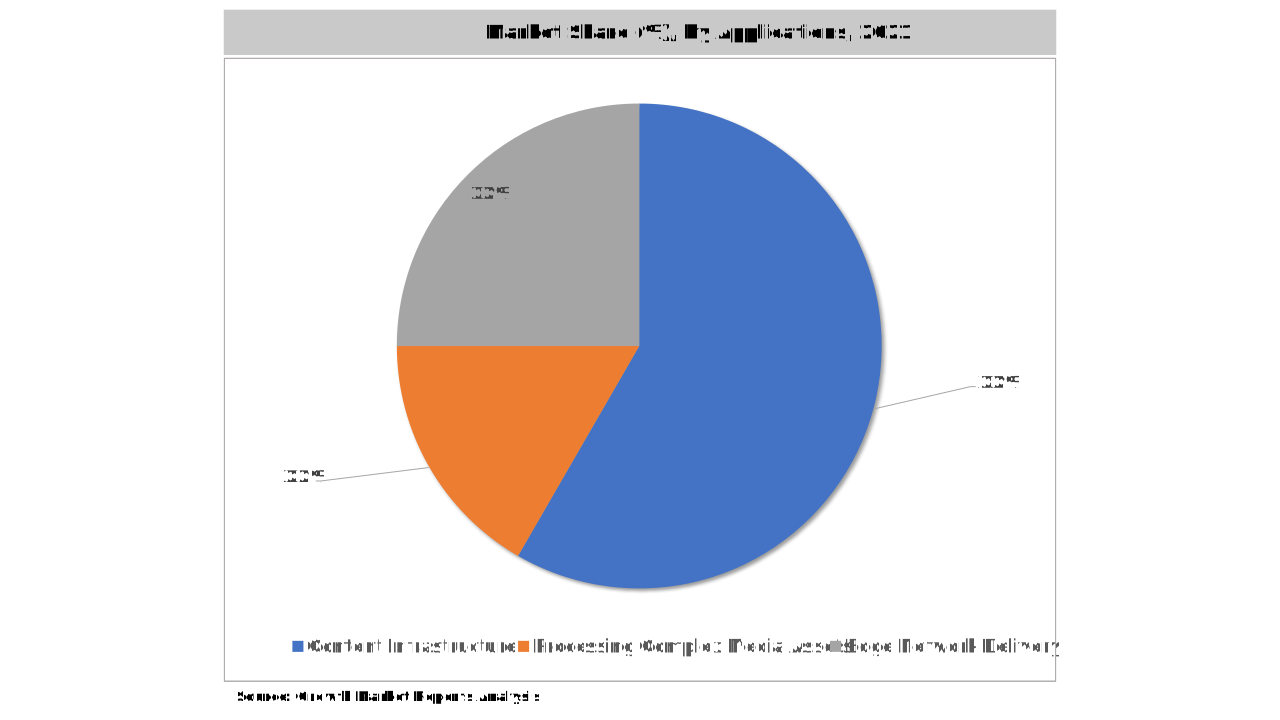
The application segment of the Digital Asset Management Software in Retail market encompasses a wide range of use cases, including brand management, asset analytics, content management, compliance and risk management, and others. Brand management remains a primary application, as retailers strive to maintain consistent brand messaging and visual identity across multiple channels. DAM software streamlines the creation, approval, and distribution of brand assets, ensuring that marketing materials adhere to established guidelines and resonate with target audiences. The ability to track asset usage and monitor brand compliance is particularly valuable for retailers with distributed teams and franchise networks, enabling centralized control and oversight.
Asset analytics is an emerging application area, leveraging DAM platforms to derive actionable insights from asset performance data. Retailers can analyze asset usage patterns, engagement metrics, and conversion rates to optimize content strategies and maximize return on investment. Advanced analytics capabilities, powered by artificial intelligence and machine learning, enable predictive modeling, automated tagging, and personalized content recommendations. By harnessing the power of data-driven decision-making, retailers can enhance customer experiences, improve campaign effectiveness, and drive revenue growth. The integration of asset analytics with other retail systems, such as CRM and e-commerce platforms, further amplifies the value of DAM solutions.
Content management is another critical application, encompassing the organization, storage, and retrieval of diverse digital assets. Retailers rely on DAM software to manage product images, videos, catalogs, and promotional materials, ensuring that content is easily accessible and up-to-date. Workflow automation features facilitate collaboration among creative, marketing, and merchandising teams, reducing manual effort and accelerating content production cycles. As the volume and complexity of digital assets continue to grow, the need for scalable and intuitive content management solutions becomes increasingly pronounced. DAM platforms are evolving to support rich media formats, advanced search capabilities, and integration with content delivery networks, enabling retailers to deliver compelling and consistent experiences across all customer touchpoints.
Compliance and risk management applications are gaining prominence as retailers navigate a complex regulatory landscape. DAM software provides robust access controls, audit trails, and digital rights management features to ensure that assets are used in accordance with legal and contractual requirements. Retailers can track asset licenses, manage expiration dates, and enforce usage restrictions, mitigating the risk of copyright infringement and regulatory penalties. The ability to demonstrate compliance through detailed reporting and documentation is particularly valuable in highly regulated markets. As data privacy and intellectual property concerns intensify, the demand for compliance-ready DAM solutions is expected to rise, driving innovation and adoption in this application segment.
The Digital Asset Management Software in Retail market is segmented by enterprise size into small and medium enterprises (SMEs) and large enterprises, each with distinct needs and adoption patterns. Large enterprises, including multinational retail chains and department stores, represent a significant share of the market due to their extensive asset ecosystems, complex workflows, and stringent compliance requirements. These organizations require robust, scalable DAM solutions capable of supporting high volumes of digital assets, multi-location operations, and integration with enterprise resource planning (ERP) and customer relationship management (CRM) systems. The emphasis on brand consistency, operational efficiency, and regulatory compliance drives large-scale investments in advanced DAM platforms and associated services.
Small and medium enterprises are increasingly recognizing the value of DAM software in streamlining marketing operations, enhancing brand visibility, and supporting business growth. The proliferation of cloud-based DAM solutions has democratized access to enterprise-grade capabilities, enabling SMEs to compete with larger players in the digital marketplace. Subscription-based pricing models, intuitive user interfaces, and pre-configured workflows make DAM adoption more accessible and cost-effective for smaller retailers. As SMEs embrace digital marketing strategies and expand their online presence, the demand for scalable, easy-to-use DAM solutions is expected to rise, driving market growth in this segment.
The needs of SMEs and large enterprises often differ in terms of customization, integration, and support requirements. Large retailers typically seek highly configurable solutions with advanced security features, workflow automation, and analytics capabilities. They may also require dedicated support teams, custom integrations, and long-term service agreements to ensure seamless operations. In contrast, SMEs prioritize ease of use, rapid deployment, and affordability, often opting for out-of-the-box solutions with minimal customization. DAM vendors are responding by offering tiered product offerings, modular architectures, and flexible pricing plans to cater to the diverse needs of retail clients across the enterprise size spectrum.
The growing importance of digital assets in driving customer engagement, sales, and brand loyalty is prompting retailers of all sizes to invest in DAM software. As the competitive landscape evolves and digital transformation accelerates, the ability to efficiently manage, distribute, and analyze digital assets will become a key differentiator for retailers. The enterprise size segment is expected to witness dynamic growth, with both SMEs and large enterprises contributing to the overall expansion of the DAM market in retail.
The end-user segment of the Digital Asset Management Software in Retail market includes supermarkets/hypermarkets, specialty stores, e-commerce platforms, department stores, and others, each with unique requirements and adoption drivers. Supermarkets and hypermarkets, characterized by large-scale operations, diverse product assortments, and extensive marketing campaigns, are major adopters of DAM solutions. These retailers leverage DAM software to centralize asset management, streamline promotional workflows, and ensure brand consistency across multiple locations and channels. The ability to quickly access, update, and distribute digital assets is critical for executing time-sensitive campaigns and maintaining a competitive edge in the fast-paced retail environment.
Specialty stores, which focus on specific product categories or niche markets, utilize DAM software to enhance brand storytelling, personalize customer experiences, and differentiate themselves from competitors. The emphasis on curated content, high-quality visuals, and targeted marketing campaigns drives the adoption of DAM solutions among specialty retailers. E-commerce platforms, representing one of the fastest-growing end-user segments, rely heavily on DAM software to manage vast volumes of product images, videos, and marketing materials. The integration of DAM with e-commerce and content management systems enables seamless content delivery, personalized recommendations, and optimized customer journeys, contributing to higher conversion rates and customer satisfaction.
Department stores, with their broad product offerings and multi-channel presence, face unique challenges in managing digital assets across various categories and brands. DAM software provides a centralized platform for organizing, categorizing, and distributing assets, facilitating collaboration among merchandising, marketing, and creative teams. The ability to track asset usage, monitor compliance, and generate performance reports is particularly valuable for department stores seeking to optimize marketing spend and improve operational efficiency. Other end-users, including franchise networks, pop-up stores, and direct-to-consumer brands, are also embracing DAM solutions to support their digital transformation initiatives and drive business growth.
The end-user segment is characterized by diverse adoption patterns, influenced by factors such as organizational size, digital maturity, and market positioning. DAM vendors are tailoring their offerings to address the specific needs of different retail segments, providing industry-specific templates, integration capabilities, and support services. As retailers continue to expand their digital footprint and invest in customer-centric strategies, the demand for flexible, scalable, and industry-specific DAM solutions will remain strong across all end-user categories.
The Digital Asset Management Software in Retail market presents significant opportunities for growth and innovation, driven by the ongoing digital transformation of the retail sector. The proliferation of digital channels, personalized marketing, and omnichannel retailing is creating new demand for advanced DAM solutions that can support complex asset ecosystems and dynamic customer journeys. Retailers are increasingly seeking integrated platforms that combine DAM with content management, analytics, and marketing automation, enabling end-to-end visibility and control over digital assets. The adoption of artificial intelligence, machine learning, and cloud technologies is opening up new possibilities for automated asset tagging, content personalization, and predictive analytics, enhancing the value proposition of DAM solutions and driving market expansion.
Another major opportunity lies in the growing focus on data privacy, security, and regulatory compliance. As retailers navigate a complex and evolving regulatory landscape, the need for compliance-ready DAM solutions is becoming increasingly pronounced. Vendors that can offer robust security features, audit trails, and digital rights management capabilities are well-positioned to capture market share and differentiate themselves from competitors. The rise of global e-commerce, cross-border retailing, and digital supply chains is also creating new opportunities for DAM vendors to expand their reach and address the unique challenges of international asset management. Strategic partnerships, product innovation, and industry-specific solutions will be key drivers of success in this dynamic and rapidly evolving market.
Despite the strong growth prospects, the market faces several restraining factors, including high implementation costs, integration complexities, and resistance to change among traditional retailers. Deploying DAM software often requires significant upfront investment in technology, training, and process reengineering, which can be a barrier for small and medium enterprises with limited resources. Integration with existing IT systems, legacy platforms, and third-party applications can also pose technical challenges and increase project risk. Additionally, organizational resistance to new technologies and changes in workflow can slow down adoption and limit the realization of benefits. Addressing these challenges will require a concerted effort from DAM vendors, service providers, and retailers to deliver value-driven solutions, comprehensive support, and effective change management strategies.
North America continues to lead the Digital Asset Management Software in Retail market, accounting for the largest share with a market value of USD 1.08 billion in 2024. The regionÂ’s dominance is driven by the presence of major retail chains, advanced digital infrastructure, and a strong culture of innovation in marketing technology. The United States, in particular, is a hotbed of DAM adoption, with retailers investing heavily in digital transformation, omnichannel strategies, and customer experience initiatives. Canada is also witnessing increased adoption, supported by government incentives and a growing emphasis on data privacy and security. The North American market is expected to maintain a steady CAGR of 13.8% through 2033, reflecting sustained investment in retail technology and digital asset management.
Europe is the second-largest regional market, with a value of USD 670 million in 2024, driven by stringent data protection regulations, a mature retail sector, and a strong focus on brand management. Countries such as the United Kingdom, Germany, and France are at the forefront of DAM adoption, leveraging advanced solutions to support multi-channel retailing, compliance, and customer engagement. The European market is characterized by a high degree of customization, integration, and service orientation, with retailers seeking tailored solutions to address unique regulatory and operational requirements. The region is expected to exhibit a CAGR of 14.5% over the forecast period, fueled by ongoing digitalization and the expansion of e-commerce.
The Asia Pacific region is emerging as the fastest-growing market, with a value of USD 420 million in 2024 and a projected CAGR of 18.4% through 2033. Rapid e-commerce growth, increasing smartphone penetration, and digital transformation initiatives in countries such as China, India, Japan, and South Korea are driving DAM adoption among retailers. The region is characterized by a dynamic retail landscape, diverse consumer preferences, and a growing emphasis on personalized marketing. As retailers in Asia Pacific invest in digital infrastructure and customer-centric strategies, the demand for scalable, cloud-based DAM solutions is expected to surge, creating significant growth opportunities for vendors. Latin America and the Middle East & Africa are also showing promising growth, with market values of USD 160 million and USD 80 million respectively in 2024, supported by rising digital adoption, investments in retail technology, and increasing awareness of the benefits of DAM software.
The competitive landscape of the Digital Asset Management Software in Retail market is characterized by intense rivalry, rapid innovation, and a diverse mix of global and regional players. Leading DAM vendors are continually enhancing their product offerings with advanced features such as artificial intelligence, machine learning, and cloud integration to differentiate themselves and capture market share. The market is also witnessing increased consolidation, with major players acquiring niche vendors to expand their capabilities, enter new geographic markets, and address emerging customer needs. Strategic partnerships, alliances, and collaborations are common, enabling vendors to offer end-to-end solutions, streamline implementations, and deliver greater value to retail clients.
The competitive landscape is further shaped by the rise of industry-specific DAM solutions tailored to the unique requirements of retail, e-commerce, and omnichannel marketing. Vendors are investing in research and development to deliver flexible, scalable, and user-friendly platforms that support a wide range of retail use cases, from brand management to compliance and asset analytics. Customer success, support services, and training are becoming key differentiators, as retailers seek long-term partnerships and expert guidance to maximize the value of their DAM investments. The growing importance of data privacy, security, and regulatory compliance is prompting vendors to enhance their security features, audit capabilities, and integration with legal and compliance systems.
Major companies in the Digital Asset Management Software in Retail market include Adobe Systems Incorporated, Aprimo LLC, Bynder, Widen Enterprises, OpenText Corporation, MediaBeacon Inc., Canto Inc., Celum, Northplains Systems, and Brandfolder Inc. Adobe Systems is a market leader, offering the Adobe Experience Manager platform, which combines DAM with content management, analytics, and marketing automation. Aprimo LLC is known for its cloud-based DAM solutions, focusing on workflow automation, brand management, and asset analytics. Bynder and Widen Enterprises are recognized for their user-friendly interfaces, robust integrations, and strong customer support, catering to both large enterprises and SMEs.
OpenText Corporation and MediaBeacon Inc. are prominent players in the enterprise segment, offering highly configurable, scalable DAM platforms with advanced security and compliance features. Canto Inc. and Celum are gaining traction among mid-sized retailers, providing intuitive, cloud-based solutions with rapid deployment capabilities. Northplains Systems and Brandfolder Inc. are known for their industry-specific offerings, integration capabilities, and focus on customer success. These companies are continuously investing in product innovation, strategic partnerships, and global expansion to strengthen their market position and address the evolving needs of retail clients.
The competitive outlook for the Digital Asset Management Software in Retail market is expected to remain dynamic, with ongoing innovation, market consolidation, and the emergence of new players. As retailers continue to prioritize digital transformation, omnichannel strategies, and customer-centric marketing, the demand for advanced, flexible, and secure DAM solutions will drive competition and shape the future of the market. Vendors that can deliver comprehensive, value-driven solutions and exceptional customer experiences will be well-positioned to succeed in this rapidly evolving landscape.
The Digital Asset Management Software in Retail market has been segmented on the basis of
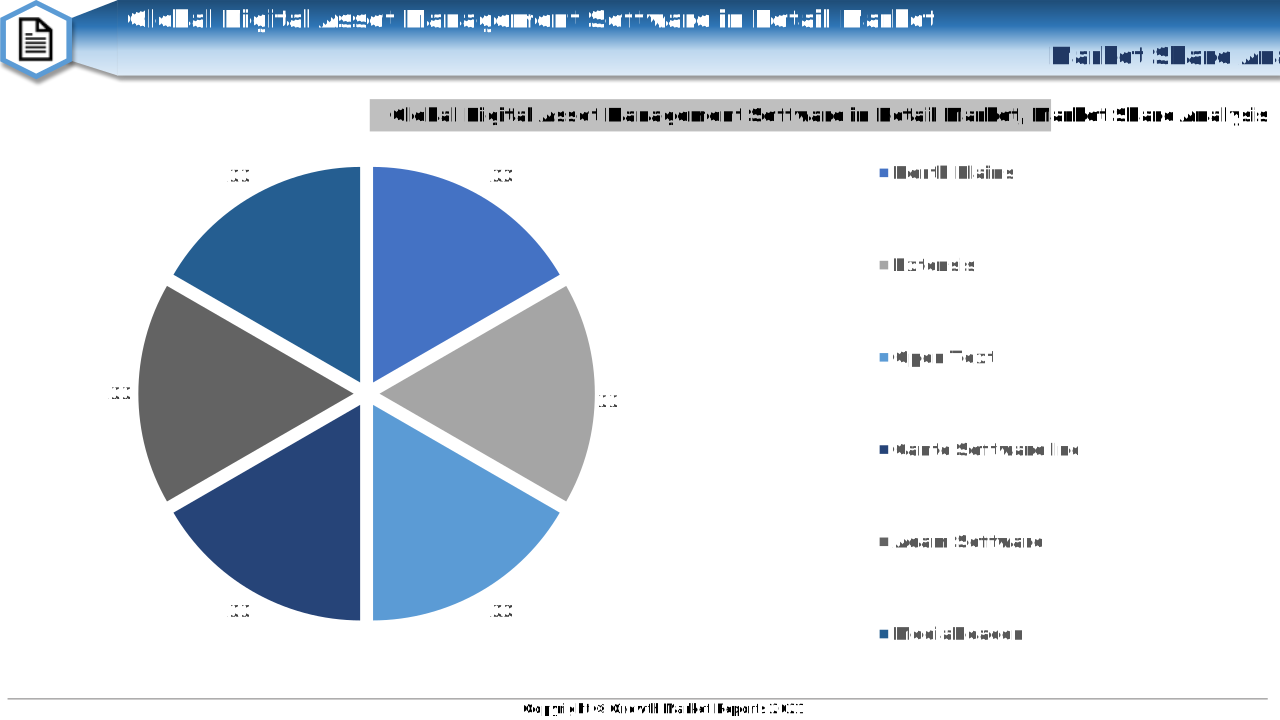
Some of the major players competing in the global digital asset management software in retail market are North Plains, Extensis, Open Text, Canto Software Inc., Adam Software, and MediaBeacon. These major companies are actively engaged in various market strategies including mergers, product launches, and expansion of production units to diversify their business operation and increase their existing consumer base.
Large enterprises require highly configurable, scalable DAM solutions with advanced security and integration, while SMEs prioritize ease of use, affordability, and rapid deployment, often opting for cloud-based solutions.
Deployment modes include on-premises, cloud-based, and hybrid. Cloud-based DAM is trending due to its flexibility, scalability, and lower upfront costs, especially among SMEs.
DAM solutions offer features like robust access controls, audit trails, encryption, and digital rights management to help retailers comply with data privacy regulations and protect sensitive digital assets.
Challenges include high implementation costs, integration complexities with existing systems, and resistance to change among traditional retail organizations.
Key players include Adobe Systems Incorporated, OpenText Corporation, Canto Inc., Bynder BV, Widen Enterprises, MediaBeacon, Aprimo LLC, Northplains Systems, Brandfolder Inc., and others.
DAM software is used for brand management, asset analytics, content management, compliance and risk management, and more. It helps retailers maintain brand consistency, optimize marketing, and ensure regulatory compliance.
North America leads the market, followed by Europe and Asia Pacific. North America benefits from advanced IT infrastructure and major retail chains, while Asia Pacific is the fastest-growing region due to rapid e-commerce expansion and digital transformation.
Cloud-based DAM solutions offer scalability, cost-effectiveness, remote collaboration, and subscription-based pricing, making them attractive for SMEs. On-premises DAM provides greater control and security, favored by large retailers with strict compliance needs.
Key growth drivers include the exponential increase in digital content creation, the rise of omnichannel retail strategies, the need for centralized asset control, and a growing emphasis on brand consistency and regulatory compliance.
The global Digital Asset Management (DAM) Software in Retail market is expected to reach USD 7.94 billion by 2033, growing from USD 2.41 billion in 2024 at a CAGR of 15.2%.