Contract Lifecycle Management Software Market Research Report 2033

Contract Lifecycle Management Software Market Research Report 2033

Segments - by Component (Software, Services), by Deployment Mode (On-Premises, Cloud), by Organization Size (Large Enterprises, Small and Medium Enterprises), by Industry Vertical (BFSI, Healthcare, IT and Telecommunications, Manufacturing, Retail, Government, Others)

https://growthmarketreports.com/Raksha
Author : Raksha Sharma
https://growthmarketreports.com/Vaibhav
Fact-checked by : V. Chandola
https://growthmarketreports.com/Shruti
Editor : Shruti Bhat

Upcoming | Report ID :ICT-SE-5124 | 4.9 Rating | 78 Reviews | 271 Pages | Format : Docx PDF

Report Description


Contract Lifecycle Management Software Market Outlook

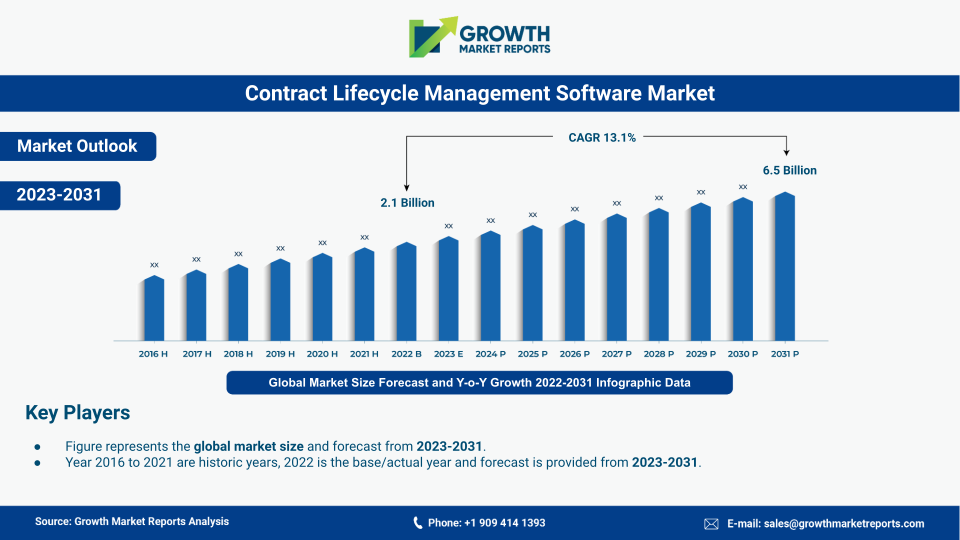
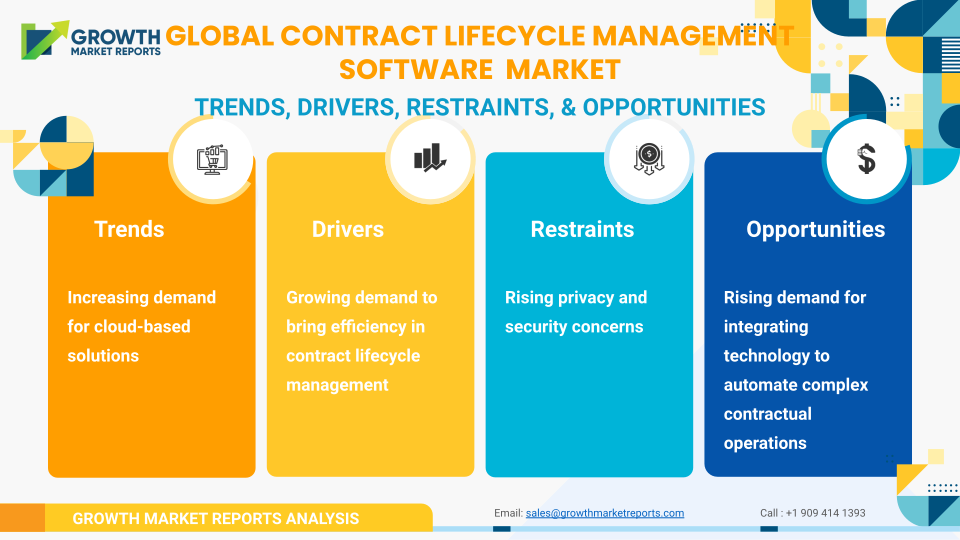
According to our latest research, the global Contract Lifecycle Management Software market size reached USD 2.47 billion in 2024, with a robust compound annual growth rate (CAGR) of 13.2% observed over the past year. The market is projected to expand significantly, reaching USD 6.55 billion by 2033 as organizations worldwide increasingly prioritize digital transformation and compliance management in contract processes. The rapid adoption of cloud-based solutions and the growing need for automation in contract management are the primary drivers fueling this impressive growth trajectory.

One of the most significant growth factors for the Contract Lifecycle Management Software market is the mounting pressure on organizations to enhance compliance, mitigate risks, and streamline contract processes. As regulatory requirements become more stringent across industries such as BFSI, healthcare, and government, organizations are compelled to adopt advanced contract management solutions to ensure transparency and accountability. The ability of these platforms to centralize contract storage, automate approval workflows, and provide real-time analytics enables businesses to minimize errors, reduce operational costs, and improve negotiation outcomes. Moreover, the increasing frequency of audits and the need for secure, auditable contract repositories further underscore the importance of robust contract lifecycle management solutions.

Another pivotal driver is the rapid digitization and automation of business operations, especially in the wake of the COVID-19 pandemic. Organizations have accelerated their digital transformation journeys, seeking solutions that can facilitate remote collaboration and contract execution. Contract Lifecycle Management Software offers seamless integration with existing enterprise systems such as ERP and CRM, enabling end-to-end visibility and control over the entire contract lifecycle. The adoption of artificial intelligence and machine learning within these platforms is also enhancing contract analytics, risk assessment, and obligation tracking, thereby delivering greater value to end-users. The shift towards cloud-based deployment models further amplifies market growth by offering scalability, flexibility, and cost efficiencies.

In addition to compliance and digitization, the growing complexity of business relationships and global supply chains is driving demand for sophisticated contract management solutions. Enterprises are managing an ever-increasing volume of contracts with diverse stakeholders, including suppliers, customers, and partners across multiple geographies. Contract Lifecycle Management Software enables organizations to standardize contract templates, enforce business rules, and monitor contract performance in real time. This not only reduces cycle times but also enhances strategic decision-making by providing actionable insights into contract terms, renewal dates, and financial obligations. As businesses expand internationally, the ability to manage multi-jurisdictional contracts and adhere to local regulations becomes a critical competitive advantage.

Contract Management Software plays a crucial role in modernizing the way organizations handle their contractual obligations. By leveraging advanced technologies, these software solutions streamline the entire contract lifecycle, from creation and negotiation to execution and renewal. This not only enhances operational efficiency but also ensures compliance with legal and regulatory standards. As businesses continue to expand globally, the ability to manage contracts effectively becomes a strategic asset, allowing organizations to mitigate risks, optimize resources, and maintain strong relationships with stakeholders. The integration of Contract Management Software with other enterprise systems further amplifies its value, providing a holistic view of contractual commitments and facilitating informed decision-making.

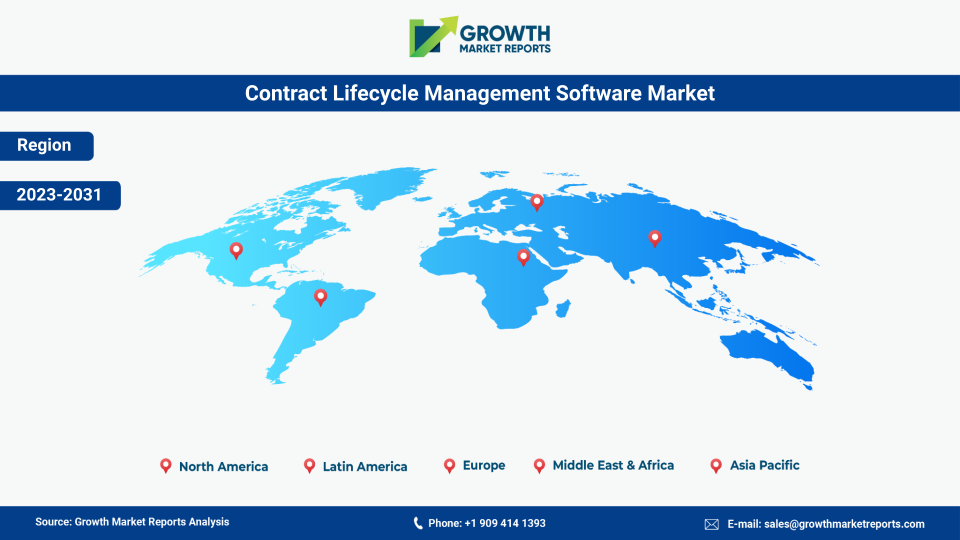
From a regional perspective, North America currently holds the largest share of the Contract Lifecycle Management Software market, driven by early technology adoption, stringent compliance requirements, and the presence of major industry players. However, the Asia Pacific region is emerging as the fastest-growing market, fueled by rapid economic development, increasing investments in IT infrastructure, and the proliferation of small and medium enterprises. Europe also demonstrates substantial growth, particularly in sectors such as BFSI and manufacturing, where regulatory compliance and operational efficiency are paramount. As organizations across all regions seek to enhance contract governance and optimize business processes, the demand for advanced contract lifecycle management solutions is expected to surge in the coming years.

Global Contract Lifecycle Management Software Industry Outlook

Component Analysis

The Component segment of the Contract Lifecycle Management Software market is bifurcated into software and services, each playing a vital role in the comprehensive adoption of contract management solutions. The software segment dominates the market, accounting for the majority of the revenue share in 2024. This dominance is attributed to the increasing demand for centralized platforms that automate and streamline the entire contract lifecycle, from initiation through negotiation, approval, execution, and renewal. Modern contract lifecycle management software solutions are equipped with advanced features such as electronic signatures, document versioning, automated alerts, and AI-powered analytics, which significantly enhance operational efficiency and reduce manual intervention. As organizations strive to minimize risks and ensure compliance, the adoption of robust software platforms is expected to remain strong.

On the other hand, the services segment, which includes consulting, implementation, training, and support, is witnessing steady growth as organizations seek to maximize the value of their contract management investments. The complexity of integrating contract lifecycle management software with existing enterprise systems necessitates expert guidance and tailored implementation strategies. Service providers offer end-to-end support, from needs assessment and process mapping to system customization and user training. This ensures a smooth transition and rapid realization of benefits for end-users. As enterprises increasingly recognize the importance of ongoing support and system optimization, the demand for professional services is anticipated to rise, particularly among large organizations with complex contract portfolios.

The interplay between software and services is crucial for the successful deployment and adoption of contract lifecycle management solutions. While software provides the technological backbone for automating contract processes, services ensure that the solution is tailored to the unique requirements of each organization. This includes configuring workflows, integrating with third-party applications, and establishing governance frameworks that align with regulatory and business objectives. As the market matures, vendors are increasingly offering bundled solutions that combine software licenses with value-added services, enabling organizations to achieve faster time-to-value and greater return on investment.

Looking ahead, the evolution of the Component segment will be shaped by technological advancements and changing customer expectations. The integration of artificial intelligence, machine learning, and blockchain technologies into contract lifecycle management software is expected to drive innovation and deliver new capabilities, such as predictive analytics, automated risk scoring, and smart contract execution. Service providers will play a pivotal role in guiding organizations through this technological transformation, offering expertise in solution design, change management, and continuous improvement. As organizations continue to prioritize agility and resilience, the demand for comprehensive software and service offerings in the contract lifecycle management market will remain robust.

Report Scope

Attributes Details
Report Title Contract Lifecycle Management Software Market Research Report 2033
By Component Software, Services
By Deployment Mode On-Premises, Cloud
By Organization Size Large Enterprises, Small and Medium Enterprises
By Industry Vertical BFSI, Healthcare, IT and Telecommunications, Manufacturing, Retail, Government, Others
Regions Covered North America, Europe, APAC, Latin America, MEA
Base Year 2024
Historic Data 2018-2023
Forecast Period 2025-2033
Number of Pages 271
Number of Tables & Figures 305
Customization Available Yes, the report can be customized as per your need.

Deployment Mode Analysis

The Deployment Mode segment in the Contract Lifecycle Management Software market is categorized into on-premises and cloud-based solutions, each offering distinct benefits and considerations for organizations. Traditionally, on-premises deployment dominated the market, especially among large enterprises and heavily regulated industries such as BFSI and healthcare. On-premises solutions provide organizations with greater control over data security, customization, and compliance, which is critical for managing sensitive contract information. However, this deployment mode often entails significant upfront capital investments, ongoing maintenance costs, and the need for dedicated IT resources, which can be a barrier for small and medium enterprises.

In recent years, cloud-based deployment has gained significant traction, emerging as the preferred choice for organizations seeking scalability, flexibility, and cost efficiencies. Cloud-based contract lifecycle management software offers numerous advantages, including rapid deployment, seamless updates, and the ability to access contract data from anywhere, at any time. This is particularly beneficial for organizations with distributed teams and remote workforces, as it enables real-time collaboration and document sharing. The subscription-based pricing model of cloud solutions also lowers the barrier to entry for small and medium enterprises, allowing them to leverage advanced contract management capabilities without substantial upfront investments.

The shift towards cloud deployment is further accelerated by advancements in data security, privacy, and regulatory compliance offered by leading cloud service providers. Organizations are increasingly confident in the ability of cloud platforms to safeguard sensitive contract data through encryption, access controls, and compliance certifications. Additionally, the integration of artificial intelligence and machine learning capabilities within cloud-based solutions is enhancing contract analytics, risk assessment, and process automation, delivering greater value to end-users. As a result, cloud deployment is expected to witness the highest growth rate during the forecast period, outpacing on-premises solutions in terms of adoption and market share.

Despite the growing popularity of cloud-based solutions, on-premises deployment remains relevant for organizations with unique security, compliance, or customization requirements. Some enterprises, particularly in government and defense sectors, continue to prefer on-premises solutions to maintain full control over their IT infrastructure and data. Vendors are responding to this demand by offering hybrid deployment models that combine the benefits of both on-premises and cloud solutions, enabling organizations to tailor their contract management approach to specific business needs. As the market evolves, the ability to offer flexible deployment options will be a key differentiator for contract lifecycle management software providers.

Organization Size Analysis

The Organization Size segment of the Contract Lifecycle Management Software market encompasses large enterprises and small and medium enterprises (SMEs), each with distinct adoption drivers and challenges. Large enterprises represent the largest market share, driven by their complex contract portfolios, global operations, and stringent compliance requirements. These organizations manage thousands of contracts across multiple departments, business units, and geographies, necessitating robust contract management solutions that offer advanced features such as automated workflows, integration with enterprise systems, and real-time analytics. Large enterprises also have the resources to invest in comprehensive software platforms and professional services, ensuring successful implementation and ongoing optimization.

Small and medium enterprises, while traditionally slower to adopt contract lifecycle management solutions, are emerging as a significant growth segment in recent years. The proliferation of cloud-based and subscription-based solutions has lowered the barrier to entry for SMEs, enabling them to leverage advanced contract management capabilities without significant upfront investments. SMEs are increasingly recognizing the benefits of automating contract processes, reducing manual errors, and improving compliance with regulatory requirements. As these organizations expand their operations and engage in more complex business relationships, the need for scalable and user-friendly contract management solutions becomes paramount.

The adoption drivers for large enterprises and SMEs differ in terms of scale, complexity, and resource availability. Large enterprises prioritize integration with existing IT infrastructure, customization, and advanced analytics, while SMEs focus on ease of use, affordability, and rapid deployment. Vendors are responding to these diverse needs by offering modular and scalable solutions that can be tailored to the unique requirements of each customer segment. This includes user-friendly interfaces, pre-configured templates, and flexible pricing models that cater to the varying budgets and technical capabilities of organizations of all sizes.

Looking forward, the growth of the Organization Size segment will be influenced by the increasing digital maturity of SMEs and the ongoing digital transformation initiatives of large enterprises. As contract management becomes a strategic priority for organizations of all sizes, the demand for flexible, scalable, and cost-effective solutions is expected to rise. Vendors that can effectively address the unique needs of both large enterprises and SMEs will be well-positioned to capture a larger share of the contract lifecycle management software market.

Industry Vertical Analysis

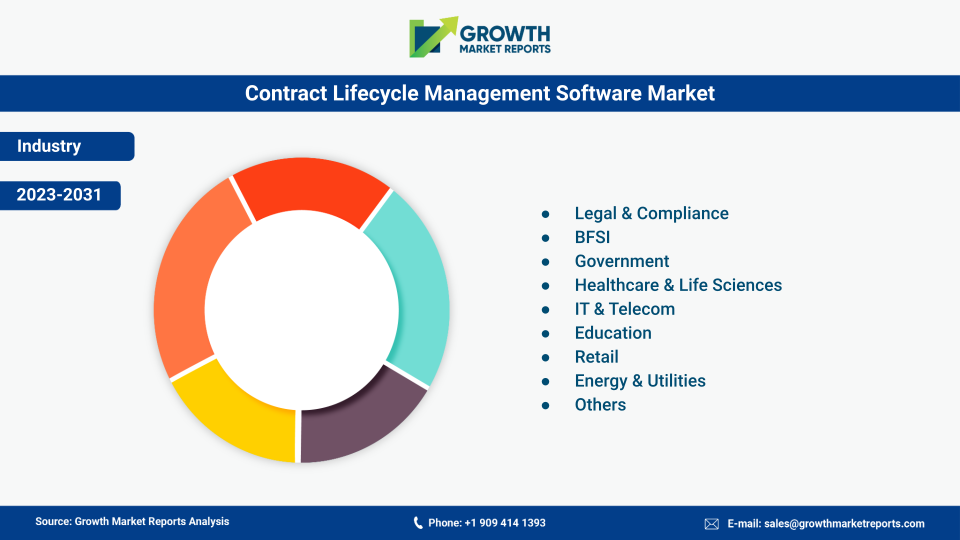
The Industry Vertical segment of the Contract Lifecycle Management Software market includes BFSI, healthcare, IT and telecommunications, manufacturing, retail, government, and others, each exhibiting unique adoption patterns and growth drivers. The BFSI sector leads in terms of market share, driven by the need for stringent compliance, risk management, and operational efficiency. Financial institutions manage a vast array of contracts related to loans, investments, procurement, and partnerships, necessitating robust contract management solutions that offer centralized storage, automated workflows, and real-time monitoring. The ability to ensure regulatory compliance and audit readiness is a critical factor driving adoption in this sector.

The healthcare industry is another major adopter of contract lifecycle management software, driven by the need to manage contracts with suppliers, insurers, service providers, and regulatory bodies. Healthcare organizations face complex regulatory requirements related to patient privacy, data security, and billing, making contract management a critical function. Advanced contract management solutions enable healthcare providers to automate contract creation, approval, and renewal processes, reducing administrative burdens and improving compliance. The integration of contract management software with electronic health records (EHR) and other healthcare IT systems further enhances operational efficiency and patient care.

In the IT and telecommunications sector, the rapid pace of technological innovation, global operations, and complex supplier relationships drive the demand for advanced contract management solutions. Organizations in this sector manage a diverse range of contracts, including licensing agreements, service level agreements, and partnership contracts, requiring robust tools for document management, version control, and performance monitoring. The ability to automate contract processes and gain real-time insights into contract status and obligations is a key competitive advantage in this fast-paced industry.

Manufacturing, retail, and government sectors also represent significant growth opportunities for the contract lifecycle management software market. Manufacturers benefit from automated contract workflows that streamline procurement, supplier management, and compliance with industry standards. Retailers use contract management solutions to manage supplier agreements, franchise contracts, and lease agreements, improving operational efficiency and reducing risks. Government agencies, facing increasing scrutiny and regulatory oversight, leverage contract management software to ensure transparency, accountability, and compliance with procurement regulations. As organizations across all industry verticals seek to enhance contract governance and optimize business processes, the demand for advanced contract lifecycle management solutions is expected to grow.

Opportunities & Threats

The Contract Lifecycle Management Software market presents a multitude of opportunities for vendors, service providers, and end-users alike. One of the most promising opportunities lies in the integration of artificial intelligence and machine learning capabilities within contract management platforms. These technologies enable advanced analytics, predictive risk assessment, automated compliance monitoring, and intelligent contract drafting, significantly enhancing the value proposition for end-users. Vendors that can offer AI-powered solutions are well-positioned to capture a larger share of the market, particularly among organizations seeking to gain a competitive edge through data-driven decision-making and process automation.

Another key opportunity is the expansion of contract lifecycle management solutions into emerging markets, particularly in the Asia Pacific and Latin America regions. Rapid economic development, increasing investments in IT infrastructure, and the proliferation of small and medium enterprises are driving demand for advanced contract management solutions in these regions. Vendors that can offer localized solutions, support multiple languages, and comply with regional regulations will be well-positioned to capitalize on this growing market. Additionally, the trend towards remote work and digital collaboration is creating new opportunities for cloud-based contract management solutions that enable real-time access and collaboration from anywhere in the world.

Despite the numerous opportunities, the Contract Lifecycle Management Software market faces several restraining factors that could impede growth. One of the primary challenges is the complexity and cost of implementing contract management solutions, particularly for small and medium enterprises with limited resources. The need for integration with existing enterprise systems, customization, and user training can result in lengthy and costly deployment cycles. Additionally, concerns related to data security, privacy, and regulatory compliance may hinder adoption, especially in highly regulated industries. Vendors must address these challenges by offering user-friendly, scalable, and cost-effective solutions that minimize implementation barriers and deliver tangible value to end-users.

Regional Outlook

The global Contract Lifecycle Management Software market is characterized by significant regional variations in adoption, growth drivers, and market dynamics. North America currently dominates the market, accounting for approximately 38% of global revenues in 2024, or about USD 940 million. The regionÂ’s leadership is driven by early adoption of advanced technologies, stringent regulatory requirements, and the presence of major industry players such as Icertis, Coupa Software, and DocuSign. The United States, in particular, is a key contributor to market growth, with organizations across BFSI, healthcare, and government sectors prioritizing digital transformation and compliance management.

Europe represents the second-largest regional market, with a market size of USD 670 million in 2024, driven by strong demand from BFSI, manufacturing, and public sector organizations. The region is characterized by a highly regulated business environment, with organizations seeking to ensure compliance with GDPR, eIDAS, and other regulatory frameworks. The United Kingdom, Germany, and France are the leading markets within Europe, with a growing focus on contract digitization, risk management, and operational efficiency. The region is expected to witness a steady CAGR of 11.8% during the forecast period, supported by ongoing digital transformation initiatives and increasing investments in IT infrastructure.

The Asia Pacific region is emerging as the fastest-growing market, with a market size of USD 480 million in 2024 and a projected CAGR of 16.5% through 2033. Rapid economic development, increasing adoption of cloud-based solutions, and the proliferation of small and medium enterprises are driving demand for contract lifecycle management software in countries such as China, India, Japan, and Australia. The regionÂ’s growth is further supported by government initiatives to promote digitalization and improve regulatory compliance across industries. Latin America and the Middle East & Africa represent smaller but rapidly growing markets, with increasing investments in technology and a growing recognition of the benefits of contract management solutions. As organizations across all regions seek to enhance contract governance and optimize business processes, the demand for advanced contract lifecycle management solutions is expected to surge.

Contract Lifecycle Management Software Market Statistics

Competitor Outlook

The Contract Lifecycle Management Software market is highly competitive, with a diverse mix of global, regional, and niche players vying for market share. The competitive landscape is characterized by continuous innovation, strategic partnerships, and mergers and acquisitions as vendors seek to expand their product portfolios and enhance their market presence. Leading vendors are investing heavily in research and development to incorporate advanced features such as artificial intelligence, machine learning, blockchain, and predictive analytics into their platforms. This not only differentiates their offerings but also enables them to address the evolving needs of organizations across various industries and geographies.

One of the key trends shaping the competitive landscape is the shift towards cloud-based and subscription-based business models. Vendors are increasingly offering software-as-a-service (SaaS) solutions that provide scalability, flexibility, and cost efficiencies for organizations of all sizes. This has intensified competition among vendors, as new entrants and established players alike strive to capture a larger share of the growing market. Additionally, vendors are focusing on enhancing user experience, integration capabilities, and industry-specific functionalities to cater to the unique requirements of different customer segments. The ability to offer end-to-end solutions, including software, services, and support, is a critical success factor in this competitive market.

Strategic partnerships and collaborations are also playing a pivotal role in shaping the competitive landscape. Vendors are partnering with technology providers, system integrators, and consulting firms to expand their reach, enhance product capabilities, and deliver comprehensive solutions to end-users. Mergers and acquisitions are further consolidating the market, with leading players acquiring niche vendors to gain access to new technologies, customer segments, and geographic markets. This trend is expected to continue as vendors seek to strengthen their market position and capitalize on emerging opportunities in the contract lifecycle management software market.

Some of the major companies in the Contract Lifecycle Management Software market include Icertis, Coupa Software, DocuSign, SAP Ariba, Agiloft, Conga, SirionLabs, ContractWorks, Zycus, and CLM Matrix. Icertis is recognized as a global leader, offering a robust, AI-powered contract management platform that serves large enterprises across multiple industries. Coupa Software and DocuSign are also prominent players, known for their comprehensive contract management and e-signature solutions that integrate seamlessly with existing enterprise systems. SAP Ariba and Agiloft are renowned for their strong presence in procurement and supply chain contract management, catering to the unique needs of manufacturing and retail organizations.

Conga and SirionLabs are notable for their focus on advanced analytics, automation, and integration capabilities, enabling organizations to optimize contract performance and mitigate risks. ContractWorks and Zycus offer user-friendly, scalable solutions that cater to the needs of small and medium enterprises, while CLM Matrix specializes in providing contract management solutions for government and public sector organizations. These companies are continuously enhancing their product offerings through innovation, strategic partnerships, and customer-centric approaches, ensuring that they remain at the forefront of the rapidly evolving contract lifecycle management software market.

Key Players

  • Icertis
  • DocuSign
  • Conga
  • SAP Ariba
  • Agiloft
  • Coupa Software
  • SirionLabs
  • ContractWorks
  • Ironclad
  • JAGGAER
  • Oracle
  • CLM Matrix (Mitratech)
  • Zycus
  • Symfact
  • SpringCM (now part of DocuSign)
  • Exari (now part of Coupa)
  • Contract Logix
  • Onit
  • LinkSquares
  • Malbek
Contract Lifecycle Management Software Market Overview

Segments

The Contract Lifecycle Management Software market has been segmented on the basis of

Component

  • Software
  • Services

Deployment Mode

  • On-Premises
  • Cloud

Organization Size

  • Large Enterprises
  • Small and Medium Enterprises

Industry Vertical

  • BFSI
  • Healthcare
  • IT and Telecommunications
  • Manufacturing
  • Retail
  • Government
  • Others

Competitive Landscape

The competitive landscape of the global contract lifecycle management software market report provides key insights into the growth strategies and development initiatives implemented by the key players in the market.

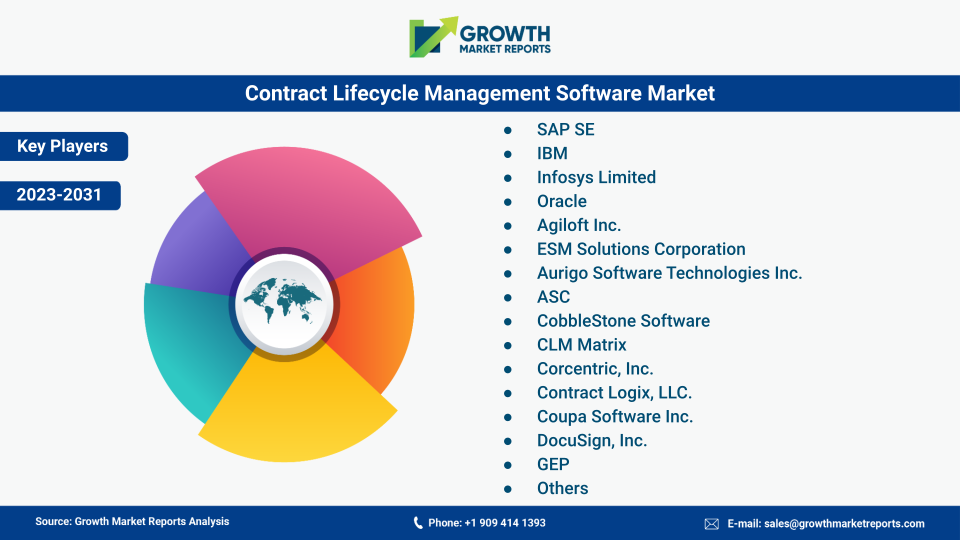
Key players competing in the global contract lifecycle management software market are SAP SE; IBM; Infosys Limited; Oracle; Agiloft Inc.; ESM Solutions Corporation; Aurigo Software Technologies Inc.; ASC; CobbleStone Software; CLM Matrix; Corcentric, Inc.; Contract Logix, LLC.; Coupa Software Inc.; DocuSign, Inc.; GEP; Koch Industries, Inc.; Concord; Conga; I Contracts; Great Minds Software; Icertis; Model N; JAGGAER; Newgen Software Technologies Limited; Infor.; ISG; Ivalua Inc.; Optimus BT, Inc.; Synertrade Inc.; EASY SOFTWARE AG; Zycus Inc.; SecureDocs, Inc.; SpringCM; Trackado; and Wolters Kluwer N.V.

With the help of various business development strategies such as mergers, acquisitions, partnerships, collaboration, new product launches, and upgrades to existing solutions with advanced technology, these companies are expanding their consumer base to become prominent players in the market.

  • On July 20, 2022, Agiloft Inc. one of the key providers of CLM solutions globally, announced a strategic partnership with Mainspring Consulting Group, a leading innovative business services and solutions provider for the middle office. The partnership is aimed at expanding Agiloft’s AI-driven, Contract Lifecycle Management Suite across several high-growth sectors. The strategic partnership is expected to help new and existing customers save on purchasing, bring more efficiency in sales cycles, and compliance optimization.
  • On October 31, 2022, Icertis, a global innovative CLM solutions provider announced securing USD150 million in funding from Silicon Valley Bank. The funding is comprised of a revolving credit facility and convertible financing. It is expected to enable Icertis to improve its leadership position in the highly competitive CLM software category, by adding technologies such as AI, ML, and blockchain to its offerings, to provide unique solutions to its customers.

Global Contract Lifecycle Management Software Market Key Players

Frequently Asked Questions

Challenges include the complexity and cost of implementation, especially for SMEs, integration with legacy systems, user training, and concerns about data security and regulatory compliance. Vendors must address these issues with scalable, secure, and user-friendly solutions.

Key players include Icertis, DocuSign, Coupa Software, SAP Ariba, Agiloft, Conga, SirionLabs, ContractWorks, Zycus, CLM Matrix, Ironclad, JAGGAER, Oracle, Symfact, SpringCM, Exari, Contract Logix, Onit, LinkSquares, and Malbek.

Recent trends include the integration of artificial intelligence and machine learning for advanced analytics, predictive risk assessment, and automated compliance monitoring. Cloud-based deployment, blockchain, and smart contract execution are also shaping the market.

North America currently leads the market, followed by Europe. The Asia Pacific region is the fastest-growing, driven by rapid economic development, IT investments, and the proliferation of SMEs. Latin America and the Middle East & Africa are also experiencing steady growth.

Large enterprises typically require advanced features, integration with existing IT systems, and customization due to complex contract portfolios. SMEs are increasingly adopting CLM solutions thanks to affordable, user-friendly, and cloud-based options that reduce manual errors and improve compliance.

CLM software can be deployed either on-premises or via the cloud. While on-premises solutions offer greater control and customization, cloud-based CLM is gaining popularity due to its scalability, flexibility, lower upfront costs, and support for remote collaboration.

The largest adopters include BFSI (banking, financial services, and insurance), healthcare, IT and telecommunications, manufacturing, retail, and government sectors, all of which require robust contract management for compliance, risk management, and operational efficiency.

Key growth drivers include the need for enhanced compliance and risk mitigation, rapid digitization and automation of business processes, the adoption of cloud-based solutions, and the increasing complexity of business relationships and global supply chains.

The global Contract Lifecycle Management Software market reached USD 2.47 billion in 2024 and is projected to grow at a CAGR of 13.2%, reaching USD 6.55 billion by 2033. This growth is driven by digital transformation, increased compliance needs, and the adoption of cloud-based solutions.

Contract Lifecycle Management (CLM) Software is a digital solution that automates and streamlines the entire contract process—from initiation and negotiation to approval, execution, and renewal. It helps organizations improve compliance, reduce risks, and enhance operational efficiency by centralizing contract storage, automating workflows, and providing real-time analytics.

Table Of Content

Chapter 1 Executive Summary
Chapter 2 Assumptions and Acronyms Used
Chapter 3 Research Methodology
Chapter 4 Contract Lifecycle Management Software Market Overview
   4.1 Introduction
      4.1.1 Market Taxonomy
      4.1.2 Market Definition
      4.1.3 Macro-Economic Factors Impacting the Market Growth
   4.2 Contract Lifecycle Management Software Market Dynamics
      4.2.1 Market Drivers
      4.2.2 Market Restraints
      4.2.3 Market Opportunity
   4.3 Contract Lifecycle Management Software Market - Supply Chain Analysis
      4.3.1 List of Key Suppliers
      4.3.2 List of Key Distributors
      4.3.3 List of Key Consumers
   4.4 Key Forces Shaping the Contract Lifecycle Management Software Market
      4.4.1 Bargaining Power of Suppliers
      4.4.2 Bargaining Power of Buyers
      4.4.3 Threat of Substitution
      4.4.4 Threat of New Entrants
      4.4.5 Competitive Rivalry
   4.5 Global Contract Lifecycle Management Software Market Size & Forecast, 2023-2032
      4.5.1 Contract Lifecycle Management Software Market Size and Y-o-Y Growth
      4.5.2 Contract Lifecycle Management Software Market Absolute $ Opportunity

Chapter 5 Global Contract Lifecycle Management Software Market Analysis and Forecast By Component
   5.1 Introduction
      5.1.1 Key Market Trends & Growth Opportunities By Component
      5.1.2 Basis Point Share (BPS) Analysis By Component
      5.1.3 Absolute $ Opportunity Assessment By Component
   5.2 Contract Lifecycle Management Software Market Size Forecast By Component
      5.2.1 Software
      5.2.2 Services
   5.3 Market Attractiveness Analysis By Component

Chapter 6 Global Contract Lifecycle Management Software Market Analysis and Forecast By Deployment Mode
   6.1 Introduction
      6.1.1 Key Market Trends & Growth Opportunities By Deployment Mode
      6.1.2 Basis Point Share (BPS) Analysis By Deployment Mode
      6.1.3 Absolute $ Opportunity Assessment By Deployment Mode
   6.2 Contract Lifecycle Management Software Market Size Forecast By Deployment Mode
      6.2.1 On-Premises
      6.2.2 Cloud
   6.3 Market Attractiveness Analysis By Deployment Mode

Chapter 7 Global Contract Lifecycle Management Software Market Analysis and Forecast By Organization Size
   7.1 Introduction
      7.1.1 Key Market Trends & Growth Opportunities By Organization Size
      7.1.2 Basis Point Share (BPS) Analysis By Organization Size
      7.1.3 Absolute $ Opportunity Assessment By Organization Size
   7.2 Contract Lifecycle Management Software Market Size Forecast By Organization Size
      7.2.1 Large Enterprises
      7.2.2 Small and Medium Enterprises
   7.3 Market Attractiveness Analysis By Organization Size

Chapter 8 Global Contract Lifecycle Management Software Market Analysis and Forecast By Industry Vertical
   8.1 Introduction
      8.1.1 Key Market Trends & Growth Opportunities By Industry Vertical
      8.1.2 Basis Point Share (BPS) Analysis By Industry Vertical
      8.1.3 Absolute $ Opportunity Assessment By Industry Vertical
   8.2 Contract Lifecycle Management Software Market Size Forecast By Industry Vertical
      8.2.1 BFSI
      8.2.2 Healthcare
      8.2.3 IT and Telecommunications
      8.2.4 Manufacturing
      8.2.5 Retail
      8.2.6 Government
      8.2.7 Others
   8.3 Market Attractiveness Analysis By Industry Vertical

Chapter 9 Global Contract Lifecycle Management Software Market Analysis and Forecast by Region
   9.1 Introduction
      9.1.1 Key Market Trends & Growth Opportunities By Region
      9.1.2 Basis Point Share (BPS) Analysis By Region
      9.1.3 Absolute $ Opportunity Assessment By Region
   9.2 Contract Lifecycle Management Software Market Size Forecast By Region
      9.2.1 North America
      9.2.2 Europe
      9.2.3 Asia Pacific
      9.2.4 Latin America
      9.2.5 Middle East & Africa (MEA)
   9.3 Market Attractiveness Analysis By Region

Chapter 10 Coronavirus Disease (COVID-19) Impact 
   10.1 Introduction 
   10.2 Current & Future Impact Analysis 
   10.3 Economic Impact Analysis 
   10.4 Government Policies 
   10.5 Investment Scenario

Chapter 11 North America Contract Lifecycle Management Software Analysis and Forecast
   11.1 Introduction
   11.2 North America Contract Lifecycle Management Software Market Size Forecast by Country
      11.2.1 U.S.
      11.2.2 Canada
   11.3 Basis Point Share (BPS) Analysis by Country
   11.4 Absolute $ Opportunity Assessment by Country
   11.5 Market Attractiveness Analysis by Country
   11.6 North America Contract Lifecycle Management Software Market Size Forecast By Component
      11.6.1 Software
      11.6.2 Services
   11.7 Basis Point Share (BPS) Analysis By Component 
   11.8 Absolute $ Opportunity Assessment By Component 
   11.9 Market Attractiveness Analysis By Component
   11.10 North America Contract Lifecycle Management Software Market Size Forecast By Deployment Mode
      11.10.1 On-Premises
      11.10.2 Cloud
   11.11 Basis Point Share (BPS) Analysis By Deployment Mode 
   11.12 Absolute $ Opportunity Assessment By Deployment Mode 
   11.13 Market Attractiveness Analysis By Deployment Mode
   11.14 North America Contract Lifecycle Management Software Market Size Forecast By Organization Size
      11.14.1 Large Enterprises
      11.14.2 Small and Medium Enterprises
   11.15 Basis Point Share (BPS) Analysis By Organization Size 
   11.16 Absolute $ Opportunity Assessment By Organization Size 
   11.17 Market Attractiveness Analysis By Organization Size
   11.18 North America Contract Lifecycle Management Software Market Size Forecast By Industry Vertical
      11.18.1 BFSI
      11.18.2 Healthcare
      11.18.3 IT and Telecommunications
      11.18.4 Manufacturing
      11.18.5 Retail
      11.18.6 Government
      11.18.7 Others
   11.19 Basis Point Share (BPS) Analysis By Industry Vertical 
   11.20 Absolute $ Opportunity Assessment By Industry Vertical 
   11.21 Market Attractiveness Analysis By Industry Vertical

Chapter 12 Europe Contract Lifecycle Management Software Analysis and Forecast
   12.1 Introduction
   12.2 Europe Contract Lifecycle Management Software Market Size Forecast by Country
      12.2.1 Germany
      12.2.2 France
      12.2.3 Italy
      12.2.4 U.K.
      12.2.5 Spain
      12.2.6 Russia
      12.2.7 Rest of Europe
   12.3 Basis Point Share (BPS) Analysis by Country
   12.4 Absolute $ Opportunity Assessment by Country
   12.5 Market Attractiveness Analysis by Country
   12.6 Europe Contract Lifecycle Management Software Market Size Forecast By Component
      12.6.1 Software
      12.6.2 Services
   12.7 Basis Point Share (BPS) Analysis By Component 
   12.8 Absolute $ Opportunity Assessment By Component 
   12.9 Market Attractiveness Analysis By Component
   12.10 Europe Contract Lifecycle Management Software Market Size Forecast By Deployment Mode
      12.10.1 On-Premises
      12.10.2 Cloud
   12.11 Basis Point Share (BPS) Analysis By Deployment Mode 
   12.12 Absolute $ Opportunity Assessment By Deployment Mode 
   12.13 Market Attractiveness Analysis By Deployment Mode
   12.14 Europe Contract Lifecycle Management Software Market Size Forecast By Organization Size
      12.14.1 Large Enterprises
      12.14.2 Small and Medium Enterprises
   12.15 Basis Point Share (BPS) Analysis By Organization Size 
   12.16 Absolute $ Opportunity Assessment By Organization Size 
   12.17 Market Attractiveness Analysis By Organization Size
   12.18 Europe Contract Lifecycle Management Software Market Size Forecast By Industry Vertical
      12.18.1 BFSI
      12.18.2 Healthcare
      12.18.3 IT and Telecommunications
      12.18.4 Manufacturing
      12.18.5 Retail
      12.18.6 Government
      12.18.7 Others
   12.19 Basis Point Share (BPS) Analysis By Industry Vertical 
   12.20 Absolute $ Opportunity Assessment By Industry Vertical 
   12.21 Market Attractiveness Analysis By Industry Vertical

Chapter 13 Asia Pacific Contract Lifecycle Management Software Analysis and Forecast
   13.1 Introduction
   13.2 Asia Pacific Contract Lifecycle Management Software Market Size Forecast by Country
      13.2.1 China
      13.2.2 Japan
      13.2.3 South Korea
      13.2.4 India
      13.2.5 Australia
      13.2.6 South East Asia (SEA)
      13.2.7 Rest of Asia Pacific (APAC)
   13.3 Basis Point Share (BPS) Analysis by Country
   13.4 Absolute $ Opportunity Assessment by Country
   13.5 Market Attractiveness Analysis by Country
   13.6 Asia Pacific Contract Lifecycle Management Software Market Size Forecast By Component
      13.6.1 Software
      13.6.2 Services
   13.7 Basis Point Share (BPS) Analysis By Component 
   13.8 Absolute $ Opportunity Assessment By Component 
   13.9 Market Attractiveness Analysis By Component
   13.10 Asia Pacific Contract Lifecycle Management Software Market Size Forecast By Deployment Mode
      13.10.1 On-Premises
      13.10.2 Cloud
   13.11 Basis Point Share (BPS) Analysis By Deployment Mode 
   13.12 Absolute $ Opportunity Assessment By Deployment Mode 
   13.13 Market Attractiveness Analysis By Deployment Mode
   13.14 Asia Pacific Contract Lifecycle Management Software Market Size Forecast By Organization Size
      13.14.1 Large Enterprises
      13.14.2 Small and Medium Enterprises
   13.15 Basis Point Share (BPS) Analysis By Organization Size 
   13.16 Absolute $ Opportunity Assessment By Organization Size 
   13.17 Market Attractiveness Analysis By Organization Size
   13.18 Asia Pacific Contract Lifecycle Management Software Market Size Forecast By Industry Vertical
      13.18.1 BFSI
      13.18.2 Healthcare
      13.18.3 IT and Telecommunications
      13.18.4 Manufacturing
      13.18.5 Retail
      13.18.6 Government
      13.18.7 Others
   13.19 Basis Point Share (BPS) Analysis By Industry Vertical 
   13.20 Absolute $ Opportunity Assessment By Industry Vertical 
   13.21 Market Attractiveness Analysis By Industry Vertical

Chapter 14 Latin America Contract Lifecycle Management Software Analysis and Forecast
   14.1 Introduction
   14.2 Latin America Contract Lifecycle Management Software Market Size Forecast by Country
      14.2.1 Brazil
      14.2.2 Mexico
      14.2.3 Rest of Latin America (LATAM)
   14.3 Basis Point Share (BPS) Analysis by Country
   14.4 Absolute $ Opportunity Assessment by Country
   14.5 Market Attractiveness Analysis by Country
   14.6 Latin America Contract Lifecycle Management Software Market Size Forecast By Component
      14.6.1 Software
      14.6.2 Services
   14.7 Basis Point Share (BPS) Analysis By Component 
   14.8 Absolute $ Opportunity Assessment By Component 
   14.9 Market Attractiveness Analysis By Component
   14.10 Latin America Contract Lifecycle Management Software Market Size Forecast By Deployment Mode
      14.10.1 On-Premises
      14.10.2 Cloud
   14.11 Basis Point Share (BPS) Analysis By Deployment Mode 
   14.12 Absolute $ Opportunity Assessment By Deployment Mode 
   14.13 Market Attractiveness Analysis By Deployment Mode
   14.14 Latin America Contract Lifecycle Management Software Market Size Forecast By Organization Size
      14.14.1 Large Enterprises
      14.14.2 Small and Medium Enterprises
   14.15 Basis Point Share (BPS) Analysis By Organization Size 
   14.16 Absolute $ Opportunity Assessment By Organization Size 
   14.17 Market Attractiveness Analysis By Organization Size
   14.18 Latin America Contract Lifecycle Management Software Market Size Forecast By Industry Vertical
      14.18.1 BFSI
      14.18.2 Healthcare
      14.18.3 IT and Telecommunications
      14.18.4 Manufacturing
      14.18.5 Retail
      14.18.6 Government
      14.18.7 Others
   14.19 Basis Point Share (BPS) Analysis By Industry Vertical 
   14.20 Absolute $ Opportunity Assessment By Industry Vertical 
   14.21 Market Attractiveness Analysis By Industry Vertical

Chapter 15 Middle East & Africa (MEA) Contract Lifecycle Management Software Analysis and Forecast
   15.1 Introduction
   15.2 Middle East & Africa (MEA) Contract Lifecycle Management Software Market Size Forecast by Country
      15.2.1 Saudi Arabia
      15.2.2 South Africa
      15.2.3 UAE
      15.2.4 Rest of Middle East & Africa (MEA)
   15.3 Basis Point Share (BPS) Analysis by Country
   15.4 Absolute $ Opportunity Assessment by Country
   15.5 Market Attractiveness Analysis by Country
   15.6 Middle East & Africa (MEA) Contract Lifecycle Management Software Market Size Forecast By Component
      15.6.1 Software
      15.6.2 Services
   15.7 Basis Point Share (BPS) Analysis By Component 
   15.8 Absolute $ Opportunity Assessment By Component 
   15.9 Market Attractiveness Analysis By Component
   15.10 Middle East & Africa (MEA) Contract Lifecycle Management Software Market Size Forecast By Deployment Mode
      15.10.1 On-Premises
      15.10.2 Cloud
   15.11 Basis Point Share (BPS) Analysis By Deployment Mode 
   15.12 Absolute $ Opportunity Assessment By Deployment Mode 
   15.13 Market Attractiveness Analysis By Deployment Mode
   15.14 Middle East & Africa (MEA) Contract Lifecycle Management Software Market Size Forecast By Organization Size
      15.14.1 Large Enterprises
      15.14.2 Small and Medium Enterprises
   15.15 Basis Point Share (BPS) Analysis By Organization Size 
   15.16 Absolute $ Opportunity Assessment By Organization Size 
   15.17 Market Attractiveness Analysis By Organization Size
   15.18 Middle East & Africa (MEA) Contract Lifecycle Management Software Market Size Forecast By Industry Vertical
      15.18.1 BFSI
      15.18.2 Healthcare
      15.18.3 IT and Telecommunications
      15.18.4 Manufacturing
      15.18.5 Retail
      15.18.6 Government
      15.18.7 Others
   15.19 Basis Point Share (BPS) Analysis By Industry Vertical 
   15.20 Absolute $ Opportunity Assessment By Industry Vertical 
   15.21 Market Attractiveness Analysis By Industry Vertical

Chapter 16 Competition Landscape 
   16.1 Contract Lifecycle Management Software Market: Competitive Dashboard
   16.2 Global Contract Lifecycle Management Software Market: Market Share Analysis, 2023
   16.3 Company Profiles (Details – Overview, Financials, Developments, Strategy) 
      16.3.1 Icertis
DocuSign
Conga
SAP Ariba
Agiloft
Coupa Software
SirionLabs
ContractWorks
Ironclad
JAGGAER
Oracle
CLM Matrix (Mitratech)
Zycus
Symfact
SpringCM (now part of DocuSign)
Exari (now part of Coupa)
Contract Logix
Onit
LinkSquares
Malbek

Methodology

Our Clients

sinopec
General Mills
Deloitte
The John Holland Group
Siemens Healthcare
Pfizer
Nestle SA
FedEx Logistics