Segments - by Light Type (LED, Fluorescent, Incandescent, Others), by Aircraft Type (Narrow-Body, Wide-Body, Regional, Business Jets), by Application (Cabin Lighting, Cockpit Lighting, Reading Lights, Lavatory Lights, Others), by End-User (OEM, Aftermarket)
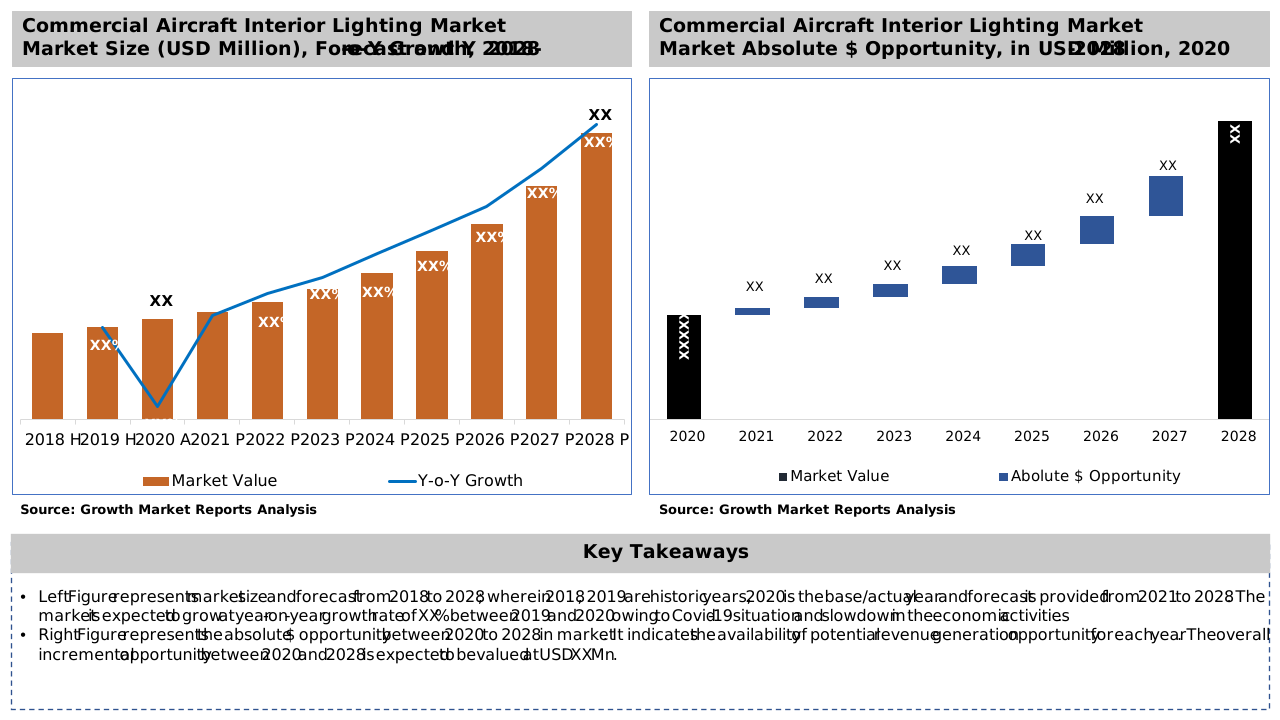
According to our latest research, the global commercial aircraft interior lighting market size reached USD 1.45 billion in 2024. The market is witnessing robust expansion, registering a compound annual growth rate (CAGR) of 6.3% from 2025 to 2033. By the end of 2033, the market is forecasted to attain a value of USD 2.51 billion. This growth is primarily driven by the increasing demand for enhanced passenger experience, rapid advancements in LED technology, and the ongoing expansion of commercial aviation fleets worldwide.
The surge in global air travel, coupled with rising expectations for comfort and ambiance, is a significant growth factor for the commercial aircraft interior lighting market. Airlines are increasingly focusing on passenger-centric strategies, investing in advanced lighting systems that improve in-cabin aesthetics, mood, and comfort. Lighting is now recognized as a key differentiator in the competitive airline industry, with dynamic and customizable lighting schemes being used to reflect brand identity and influence passenger well-being. Additionally, the growing trend of long-haul flights has intensified the need for lighting systems that can mitigate jet lag and enhance passenger relaxation, further propelling market growth.
Technological advancements, particularly the adoption of LED and smart lighting solutions, are transforming the commercial aircraft interior lighting market. LED lighting systems offer superior energy efficiency, longer lifespan, and greater design flexibility compared to traditional lighting types. Airlines are embracing these solutions not only to reduce operational costs but also to minimize environmental impact by lowering carbon emissions. The integration of smart lighting controls, including color-changing and intensity-adjustable systems, is enabling airlines to provide tailored lighting experiences for different flight phases, such as boarding, meal service, and sleep periods. This technological evolution is expected to continue driving market expansion throughout the forecast period.
Another critical growth driver is the robust aftermarket segment, fueled by the need for retrofitting older aircraft with modern lighting systems. As airlines strive to maintain fleet modernization and comply with evolving regulatory standards, the demand for advanced interior lighting upgrades is on the rise. The aftermarket provides significant revenue opportunities for lighting manufacturers and service providers, as airlines seek to enhance the passenger experience and extend the operational life of their existing fleets. Furthermore, the increasing frequency of aircraft deliveries and the growing number of low-cost carriers in emerging markets are contributing to the overall demand for innovative interior lighting solutions.
From a regional perspective, North America remains the dominant market for commercial aircraft interior lighting, owing to the presence of major aircraft manufacturers, a large commercial fleet, and early adoption of advanced technologies. However, the Asia Pacific region is rapidly emerging as a key growth hub, driven by the expansion of airline networks, rising middle-class populations, and significant investments in aviation infrastructure. Europe also holds a substantial market share, supported by stringent regulatory standards and a strong focus on sustainability. Latin America and the Middle East & Africa are expected to witness steady growth, fueled by increasing air travel demand and fleet modernization initiatives.
The commercial aircraft interior lighting market is segmented by light type into LED, fluorescent, incandescent, and others. Among these, LED lighting has emerged as the clear market leader, accounting for the majority of revenue in 2024. The transition from traditional lighting technologies to LEDs is driven by their superior energy efficiency, lower maintenance requirements, and extended operational life. Airlines are increasingly replacing older fluorescent and incandescent lighting systems with LEDs to achieve significant cost savings and reduce downtime associated with frequent bulb replacements. The ability of LED systems to offer customizable color temperatures and dynamic lighting effects further enhances their appeal, making them the preferred choice for both new aircraft and retrofit projects.
Aircraft Cockpit Lighting plays a crucial role in ensuring pilot safety and operational efficiency. Modern cockpit lighting systems are designed to provide optimal visibility while minimizing glare and reflection on instrument panels. The integration of LED technology in cockpit lighting has improved reliability, reduced power consumption, and enabled the use of color-coded lighting for enhanced situational awareness. As cockpit designs evolve to incorporate advanced avionics and digital displays, the demand for specialized lighting solutions that support pilot performance and comfort is expected to grow.
Fluorescent lighting, which once dominated aircraft interiors, is gradually being phased out in favor of more energy-efficient alternatives. While fluorescent lights are still present in some older aircraft, their market share is steadily declining due to their shorter lifespan, higher energy consumption, and environmental concerns related to mercury content. However, in certain cost-sensitive segments and regional aircraft, fluorescent lighting continues to be used, primarily due to lower upfront costs and established supply chains. The market for fluorescent lighting is expected to shrink further as regulatory pressures and sustainability goals push airlines toward greener technologies.
Incandescent lighting represents a small and diminishing segment of the commercial aircraft interior lighting market. These lights, though offering warm color temperatures, are highly inefficient and prone to frequent failures, resulting in increased maintenance costs. The aviation industryÂ’s focus on operational efficiency and environmental responsibility has accelerated the transition away from incandescent lighting. As a result, their use is now largely confined to legacy aircraft and niche applications, with minimal adoption in new aircraft deliveries.
The "others" category includes emerging lighting technologies such as OLEDs (organic light-emitting diodes) and fiber optic lighting. While still in the early stages of adoption, these technologies hold promise for future applications due to their potential for ultra-thin, flexible lighting panels and unique design possibilities. OLEDs, in particular, offer uniform illumination and can be integrated into curved surfaces, opening new avenues for innovative cabin designs. As research and development efforts progress, it is anticipated that these advanced lighting types will capture a greater share of the market, especially in premium cabin segments and next-generation aircraft.
Overall, the dominance of LED lighting in the commercial aircraft interior lighting market is expected to intensify over the forecast period, with ongoing innovations in smart lighting controls and human-centric lighting solutions. The shift towards sustainable and energy-efficient lighting technologies aligns with broader industry trends and regulatory mandates, ensuring continued growth and transformation within this segment.
Passenger Service Unit Reading Light is a vital component of in-flight passenger comfort, offering personal illumination for reading and other activities. The shift towards LED-based reading lights has enabled airlines to offer adjustable brightness, focused beams, and energy-efficient operation. These lights are increasingly integrated into seat designs, with controls that allow passengers to customize their lighting experience. The trend towards premium seating and personalized amenities is driving further innovation in this application segment, with features such as touch controls, color temperature adjustment, and anti-glare technology becoming more common.
| Attributes | Details |
| Report Title | Commercial Aircraft Interior Lighting Market Research Report 2033 |
| By Light Type | LED, Fluorescent, Incandescent, Others |
| By Aircraft Type | Narrow-Body, Wide-Body, Regional, Business Jets |
| By Application | Cabin Lighting, Cockpit Lighting, Reading Lights, Lavatory Lights, Others |
| By End-User | OEM, Aftermarket |
| Regions Covered | North America, Europe, APAC, Latin America, MEA |
| Base Year | 2024 |
| Historic Data | 2018-2023 |
| Forecast Period | 2025-2033 |
| Number of Pages | 278 |
| Number of Tables & Figures | 281 |
| Customization Available | Yes, the report can be customized as per your need. |
The commercial aircraft interior lighting market is further segmented by aircraft type, including narrow-body, wide-body, regional, and business jets. Narrow-body aircraft constitute the largest segment, reflecting their widespread use in short- and medium-haul routes across the globe. The high production rates of narrow-body models like the Boeing 737 and Airbus A320 families, coupled with frequent cabin upgrades, drive substantial demand for advanced interior lighting systems. Airlines operating narrow-body fleets are particularly focused on optimizing cabin ambiance and passenger comfort, leveraging lighting solutions to differentiate their service offerings in highly competitive markets.
Wide-body aircraft represent the second-largest segment, primarily serving long-haul international routes. These aircraft typically feature more complex and customizable lighting systems, designed to enhance passenger comfort during extended flights. Wide-body cabins often incorporate dynamic mood lighting, color-changing LEDs, and zoned lighting controls to simulate natural daylight cycles and reduce the effects of jet lag. The premium cabins in wide-body aircraft, such as business and first class, are equipped with sophisticated lighting features that create a luxurious and restful environment. The demand for innovative lighting solutions in this segment is further fueled by the introduction of next-generation wide-body models and the ongoing trend of fleet modernization among major airlines.
Regional jets, which operate on shorter routes and serve secondary airports, also contribute significantly to the commercial aircraft interior lighting market. While these aircraft typically have simpler cabin layouts, there is a growing emphasis on enhancing passenger experience through improved lighting. Regional airlines are increasingly investing in LED upgrades and smart lighting controls to provide a consistent and comfortable environment, aligning with the standards set by larger carriers. The expansion of regional air travel, particularly in emerging markets, is expected to sustain demand for interior lighting solutions in this segment.
Business jets, though representing a smaller share of the market, are characterized by high customization and premium lighting requirements. Owners and operators of business jets prioritize bespoke lighting solutions that reflect personal preferences and brand identities. Advanced lighting technologies, including OLED panels, fiber optics, and smart controls, are increasingly being adopted to create unique and luxurious cabin environments. The business jet segment is also at the forefront of integrating human-centric lighting, which adapts to circadian rhythms and enhances passenger well-being during long flights. As the demand for private and corporate aviation grows, the market for specialized interior lighting in business jets is expected to expand at a steady pace.
In summary, each aircraft type segment presents distinct opportunities and challenges for lighting manufacturers, with narrow-body and wide-body aircraft driving the bulk of market demand. The push for fleet modernization, enhanced passenger experience, and regulatory compliance will continue to shape the adoption of advanced interior lighting solutions across all aircraft categories.
Aircraft Lighting is an integral part of the overall passenger experience, influencing mood, comfort, and safety. The dominance of LED lighting in the commercial aircraft interior lighting market is expected to intensify over the forecast period, with ongoing innovations in smart lighting controls and human-centric lighting solutions. The shift towards sustainable and energy-efficient lighting technologies aligns with broader industry trends and regulatory mandates, ensuring continued growth and transformation within this segment. Airlines are increasingly investing in sophisticated lighting systems that offer customizable color schemes, adjustable brightness, and dynamic effects to create a welcoming and comfortable atmosphere.
The commercial aircraft interior lighting market is segmented by application into cabin lighting, cockpit lighting, reading lights, lavatory lights, and others. Cabin lighting represents the largest and most dynamic application segment, accounting for a significant portion of market revenue in 2024. Airlines are increasingly investing in sophisticated cabin lighting systems that offer customizable color schemes, adjustable brightness, and dynamic effects to create a welcoming and comfortable atmosphere. Cabin lighting plays a crucial role in influencing passenger mood, reducing fatigue, and enhancing the overall flight experience. The adoption of mood lighting, which simulates natural daylight cycles and supports circadian rhythms, is particularly prevalent in long-haul and premium cabins.
Cockpit lighting is another essential application, with a strong emphasis on safety, functionality, and ergonomics. Modern cockpit lighting systems are designed to provide optimal visibility for pilots while minimizing glare and reflection on instrument panels. The integration of LED technology in cockpit lighting has improved reliability, reduced power consumption, and enabled the use of color-coded lighting for enhanced situational awareness. As cockpit designs evolve to incorporate advanced avionics and digital displays, the demand for specialized lighting solutions that support pilot performance and comfort is expected to grow.
Reading lights are a staple feature in commercial aircraft cabins, catering to individual passenger needs for personal illumination. The shift towards LED-based reading lights has enabled airlines to offer adjustable brightness, focused beams, and energy-efficient operation. Reading lights are increasingly integrated into seat designs, with controls that allow passengers to customize their lighting experience. The trend towards premium seating and personalized amenities is driving further innovation in this application segment, with features such as touch controls, color temperature adjustment, and anti-glare technology becoming more common.
Lavatory lights, while representing a smaller share of the market, are critical for passenger safety and comfort. Airlines are upgrading lavatory lighting systems to improve visibility, hygiene, and accessibility. The use of motion sensors, antimicrobial coatings, and LED technology is enhancing the functionality and energy efficiency of lavatory lights. As airlines retrofit older aircraft and introduce new cabin layouts, the demand for innovative lavatory lighting solutions is expected to increase, particularly in premium and long-haul segments.
The "others" category encompasses a range of specialized lighting applications, including emergency lighting, signage, and accent lighting for galleys, entryways, and overhead bins. These applications are essential for ensuring passenger safety, facilitating efficient cabin operations, and enhancing the overall aesthetic appeal of the aircraft interior. The integration of smart controls and connectivity features is enabling airlines to manage and monitor lighting systems more effectively, contributing to improved operational efficiency and passenger satisfaction. As airlines continue to prioritize innovation and differentiation, the market for advanced lighting applications is poised for sustained growth.
The commercial aircraft interior lighting market is segmented by end-user into OEM (original equipment manufacturer) and aftermarket. The OEM segment dominates the market, driven by the high volume of new aircraft deliveries and the integration of advanced lighting systems during the manufacturing process. Aircraft manufacturers are collaborating closely with lighting suppliers to develop customized solutions that meet airline specifications and regulatory requirements. The incorporation of state-of-the-art lighting technologies in new aircraft models is a key selling point, enabling airlines to enhance passenger experience, improve operational efficiency, and differentiate their brand in a competitive market.
The aftermarket segment is experiencing robust growth, fueled by the need to retrofit and upgrade existing aircraft fleets with modern lighting systems. Airlines are increasingly investing in aftermarket solutions to extend the operational life of their aircraft, comply with evolving regulatory standards, and meet rising passenger expectations for comfort and ambiance. The aftermarket provides significant revenue opportunities for lighting manufacturers, MRO (maintenance, repair, and overhaul) providers, and service companies. Upgrades typically involve the replacement of outdated fluorescent or incandescent lights with energy-efficient LEDs, as well as the integration of smart lighting controls and human-centric lighting features.
The aftermarket segment is also benefiting from the trend towards cabin reconfigurations and the introduction of new seating layouts, which often require customized lighting solutions. Airlines are leveraging aftermarket services to refresh cabin interiors, enhance brand identity, and respond to changing market dynamics. The growing prevalence of leasing arrangements and aircraft ownership transfers is further contributing to the demand for aftermarket lighting upgrades, as operators seek to maximize asset value and ensure regulatory compliance.
Both OEM and aftermarket segments are characterized by intense competition, with suppliers vying to secure long-term contracts and preferred supplier status with major airlines and aircraft manufacturers. The ability to offer innovative, reliable, and cost-effective lighting solutions is a key differentiator in this market. Strategic partnerships, mergers and acquisitions, and investments in research and development are common strategies employed by leading players to strengthen their market position and expand their product portfolios.
In summary, while the OEM segment continues to drive the bulk of market revenue, the aftermarket presents significant growth opportunities, particularly as airlines prioritize fleet modernization and passenger experience enhancements. The interplay between these two segments will shape the future trajectory of the commercial aircraft interior lighting market, with innovation and customization remaining central themes.
The commercial aircraft interior lighting market is poised for substantial growth, presenting numerous opportunities for industry stakeholders. One of the most significant opportunities lies in the adoption of smart and human-centric lighting systems. These advanced solutions leverage sensors, connectivity, and software to deliver personalized lighting experiences that adapt to passenger needs and flight phases. Airlines are increasingly interested in deploying lighting systems that support circadian rhythms, reduce jet lag, and enhance overall well-being, especially on long-haul flights. The integration of Internet of Things (IoT) technologies and wireless controls is enabling real-time monitoring and management of lighting systems, opening new avenues for operational efficiency and predictive maintenance.
Another major opportunity is the expansion of the aftermarket segment, driven by the need to retrofit older aircraft with modern lighting technologies. As airlines seek to extend the service life of their fleets and comply with evolving regulatory standards, the demand for energy-efficient, environmentally friendly lighting upgrades is on the rise. The growing prevalence of low-cost carriers and the expansion of air travel in emerging markets are further fueling demand for affordable and scalable lighting solutions. Additionally, the increasing focus on sustainability and carbon footprint reduction is encouraging airlines to invest in LED and other green lighting technologies, creating new growth prospects for manufacturers and service providers.
Despite these opportunities, the commercial aircraft interior lighting market faces several restraining factors. One of the primary challenges is the high cost associated with the development and integration of advanced lighting systems. Airlines, particularly those operating in cost-sensitive markets, may be reluctant to invest in premium lighting solutions due to budget constraints and uncertain return on investment. Furthermore, the complex regulatory landscape governing aviation safety and certification can pose barriers to the adoption of new lighting technologies, requiring extensive testing and compliance procedures. Supply chain disruptions, fluctuating raw material prices, and the cyclical nature of the aviation industry also present risks that could impact market growth and profitability.
North America continues to lead the commercial aircraft interior lighting market, with a market size of USD 480 million in 2024. This region benefits from the presence of major aircraft manufacturers, a large commercial fleet, and early adoption of advanced lighting technologies. The United States, in particular, is a key driver of market growth, supported by strong investments in aviation infrastructure, fleet modernization, and regulatory compliance. The region's focus on enhancing passenger experience and operational efficiency is fueling demand for innovative lighting solutions, with a projected CAGR of 5.8% through 2033.
Europe holds the second-largest market share, valued at USD 390 million in 2024. The region is characterized by stringent regulatory standards, a strong emphasis on sustainability, and a robust aftermarket segment. European airlines are at the forefront of adopting energy-efficient and environmentally friendly lighting technologies, driven by regulatory mandates and corporate sustainability goals. The presence of leading aircraft manufacturers and suppliers, coupled with a mature airline industry, ensures steady demand for advanced interior lighting solutions. The market in Europe is expected to grow at a moderate pace, supported by fleet modernization initiatives and ongoing investments in passenger comfort enhancements.
The Asia Pacific region is emerging as a key growth hub, with a market size of USD 330 million in 2024 and the highest projected CAGR of 7.2% through 2033. Rapid urbanization, rising middle-class populations, and the expansion of airline networks are driving significant growth in air travel across countries such as China, India, and Southeast Asia. Airlines in the region are investing heavily in new aircraft deliveries and cabin upgrades, creating substantial opportunities for interior lighting suppliers. The expansion of low-cost carriers and the increasing focus on passenger experience are further contributing to market growth. Latin America and the Middle East & Africa, with market sizes of USD 130 million and USD 120 million respectively in 2024, are expected to witness steady growth, supported by fleet expansion and infrastructure investments.
The competitive landscape of the commercial aircraft interior lighting market is characterized by the presence of several global and regional players, each vying for market share through innovation, strategic partnerships, and product differentiation. Leading companies are investing heavily in research and development to introduce cutting-edge lighting solutions that meet the evolving needs of airlines and passengers. The market is marked by intense competition, with suppliers striving to secure long-term contracts with major aircraft manufacturers and airlines. Key competitive factors include product reliability, energy efficiency, customization capabilities, and compliance with stringent aviation regulations.
Mergers and acquisitions are a common strategy among market leaders seeking to expand their product portfolios and strengthen their global presence. Companies are also forming strategic alliances with aircraft manufacturers, MRO providers, and technology firms to enhance their value proposition and accelerate the adoption of advanced lighting systems. The ability to offer integrated solutions, combining lighting with other cabin systems such as in-flight entertainment and connectivity, is emerging as a key differentiator in the market. As airlines prioritize fleet modernization and passenger experience, suppliers that can deliver innovative, cost-effective, and scalable lighting solutions are well-positioned for growth.
The market is also witnessing the entry of new players, particularly in the aftermarket segment, where barriers to entry are relatively lower. These companies are leveraging niche expertise, flexible manufacturing capabilities, and competitive pricing to capture market share. However, established players continue to dominate the OEM segment, benefiting from long-standing relationships with aircraft manufacturers and a strong track record of product performance and reliability. The ongoing trend towards digitalization and smart cabin solutions is expected to drive further consolidation and collaboration within the industry.
Some of the major companies operating in the commercial aircraft interior lighting market include Collins Aerospace (a Raytheon Technologies company), Diehl Stiftung & Co. KG, Honeywell International Inc., STG Aerospace, Astronics Corporation, Safran SA, Luminator Aerospace, Soderberg Manufacturing Company Inc., and Bruce Aerospace. Collins Aerospace is renowned for its comprehensive portfolio of advanced lighting solutions, including LED and smart lighting systems for both OEM and aftermarket applications. Diehl Stiftung & Co. KG is a leading provider of integrated cabin lighting systems, offering innovative solutions that enhance passenger comfort and operational efficiency. Honeywell International Inc. is recognized for its expertise in cockpit and cabin lighting, leveraging its extensive experience in avionics and aerospace systems.
STG Aerospace specializes in emergency and cabin lighting solutions, with a strong focus on energy efficiency and regulatory compliance. Astronics Corporation is a key player in the development of intelligent lighting systems, providing customized solutions for commercial, business, and military aircraft. Safran SA, through its subsidiary Zodiac Aerospace, offers a wide range of interior lighting products, including mood lighting, reading lights, and signage. Luminator Aerospace and Bruce Aerospace are also prominent suppliers, known for their innovative designs and commitment to quality. These companies are continuously expanding their product offerings and global reach through strategic investments, partnerships, and acquisitions, ensuring their leadership in the rapidly evolving commercial aircraft interior lighting market.
The Commercial Aircraft Interior Lighting market has been segmented on the basis of
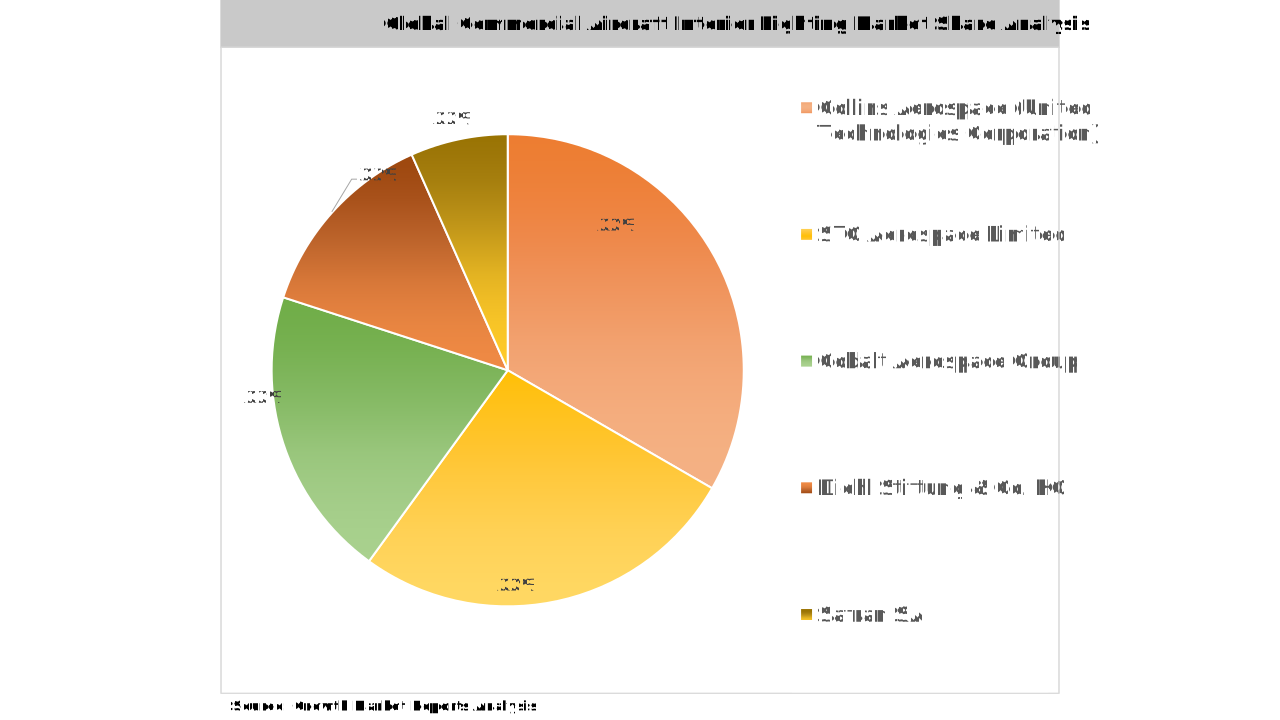
Key players competing in the Commercial Aircraft Interior Lighting market are Collins Aerospace (United Technologies Corporation); STG Aerospace Limited; Cobalt Aerospace Group; Diehl Stiftung & Co. KG; and Safran SA.
Product innovation plays an important role for the present key players to enhance their market share. Moreover, long-term contracts from original equipment’s manufacturers help companies to maintain stable growth with the increasing aircraft orders.
Trends include the adoption of smart and human-centric lighting, integration of IoT and wireless controls, sustainability initiatives, and increased demand for customizable and energy-efficient solutions.
Major companies include Collins Aerospace, Diehl Stiftung & Co. KG, Honeywell International Inc., STG Aerospace, Astronics Corporation, Safran SA, Luminator Aerospace, and Bruce Aerospace.
Challenges include high costs of advanced lighting systems, complex regulatory requirements, supply chain disruptions, and fluctuating raw material prices.
The aftermarket segment is growing rapidly as airlines retrofit older aircraft with modern, energy-efficient lighting systems to enhance passenger experience and comply with regulations.
Major applications include cabin lighting, cockpit lighting, reading lights, lavatory lights, and specialized lighting such as emergency and accent lighting.
North America leads the market, followed by Europe and Asia Pacific, with APAC showing the fastest growth due to expanding airline networks and rising air travel demand.
Key growth drivers include increasing demand for enhanced passenger experience, advancements in LED and smart lighting technologies, fleet modernization, and expansion of global air travel.
LED lighting is the dominant technology, favored for its energy efficiency, long lifespan, and design flexibility.
The market is expected to grow at a compound annual growth rate (CAGR) of 6.3% from 2025 to 2033.
As of 2024, the global commercial aircraft interior lighting market is valued at USD 1.45 billion.