Aviation Market Research Report 2033

Aviation Market Research Report 2033

Segments - by Type (Commercial Aviation, Military Aviation, General Aviation), by Component (Aircraft, Avionics, Engines, Systems, Services), by Application (Passenger Transport, Cargo Transport, Military Operations, Others), by End-User (Airlines, Government & Defense, Private Operators, Others)

https://growthmarketreports.com/Raksha
Author : Raksha Sharma
https://growthmarketreports.com/Vaibhav
Fact-checked by : V. Chandola
https://growthmarketreports.com/Shruti
Editor : Shruti Bhat

Upcoming | Report ID :AD-1158 | 4.4 Rating | 36 Reviews | 266 Pages | Format : Docx PDF

Report Description


Aviation Market Outlook

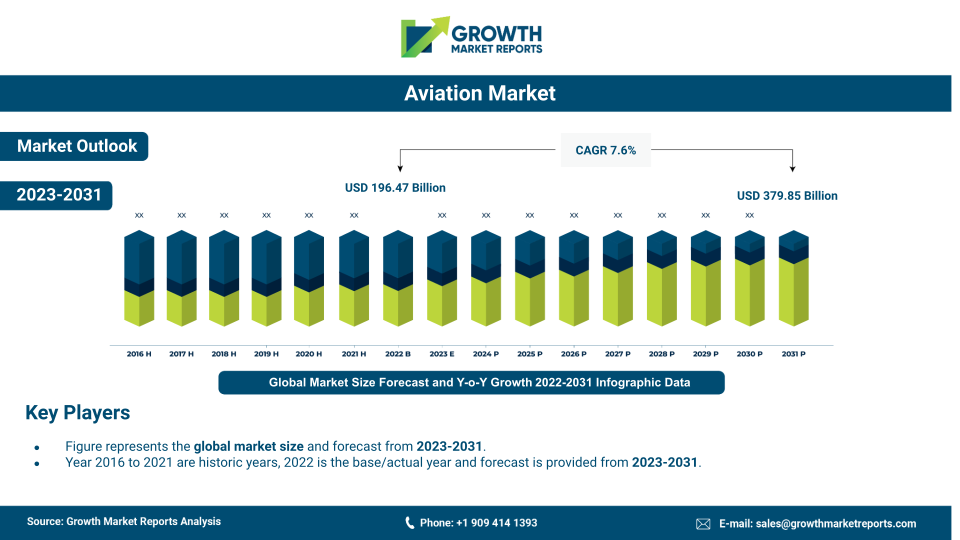
According to our latest research, the global aviation market size reached USD 702.1 billion in 2024, reflecting a robust recovery and expansion post-pandemic. The market is poised to grow at a CAGR of 5.8% from 2025 to 2033, projecting a total value of USD 1,175.2 billion by 2033. This dynamic growth trajectory is primarily driven by surging passenger demand, rapid technological advancements, and substantial investments in fleet modernization and sustainable aviation initiatives worldwide.

One of the primary growth factors for the aviation market is the substantial rebound in global air travel demand, particularly in emerging economies. As international borders reopen and travel restrictions ease, there has been an unprecedented surge in both business and leisure travel. This resurgence is further bolstered by increasing disposable incomes, urbanization, and expanding middle-class populations, especially across Asia Pacific and Latin America. Airlines are responding by increasing capacity, introducing new routes, and investing in next-generation aircraft to enhance passenger comfort and operational efficiency. Additionally, the ongoing recovery in tourism and the proliferation of low-cost carriers are making air travel more accessible to a broader demographic, further fueling market growth.

Technological innovation is another critical driver in the aviation market. The industry is witnessing accelerated adoption of advanced avionics, fuel-efficient engines, and digital solutions such as artificial intelligence, predictive maintenance, and real-time data analytics. These innovations are not only improving operational efficiency and safety but also reducing environmental impact, aligning with global sustainability goals. The development of electric and hybrid aircraft, alongside the integration of sustainable aviation fuels (SAF), is reshaping the market landscape. Furthermore, the rise of unmanned aerial vehicles (UAVs) and urban air mobility (UAM) concepts is expanding the scope of aviation beyond conventional passenger and cargo transport, opening new avenues for growth and investment.

Governmental and regulatory support also plays a pivotal role in shaping the aviation market. Many countries are investing in airport infrastructure modernization, airspace management, and security enhancements to accommodate growing air traffic volumes. Strategic partnerships between airlines, manufacturers, and technology providers are fostering innovation and driving down operational costs. Moreover, defense spending is on the rise, with governments procuring advanced military aircraft and upgrading existing fleets to address evolving security challenges. These factors collectively underpin the sustained growth and resilience of the global aviation market.

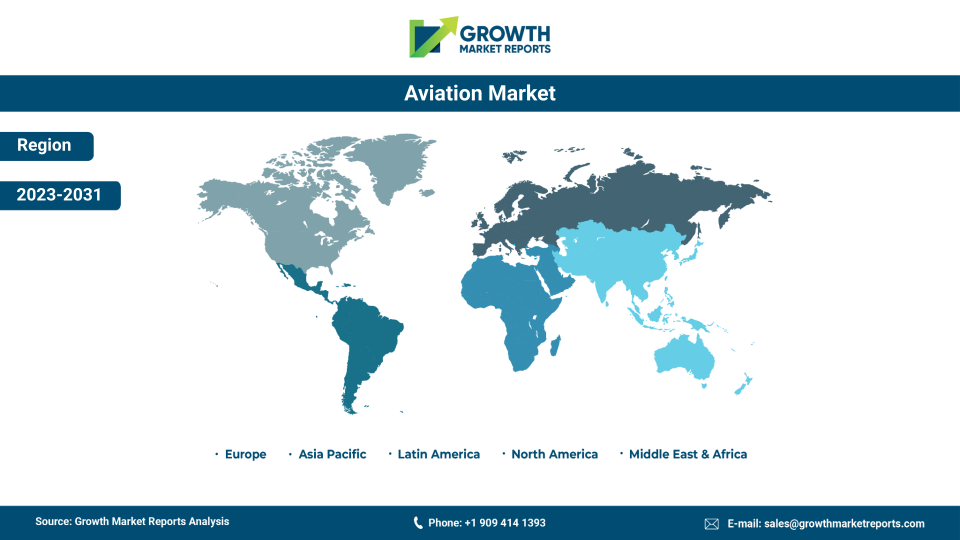
Regionally, Asia Pacific continues to dominate the aviation market, accounting for the largest share in 2024, followed by North America and Europe. The Asia Pacific region is witnessing rapid fleet expansion, significant investments in airport infrastructure, and a burgeoning middle class eager to travel. North America remains a mature yet highly innovative market, driven by technological advancements, a strong defense sector, and robust airline profitability. Europe, meanwhile, is focusing on sustainability and regulatory compliance, particularly in the context of environmental standards and emissions reduction. Latin America and the Middle East & Africa are emerging as high-growth regions, supported by economic development, tourism, and strategic geographic positioning for global connectivity.

Global Aviation Industry Outlook

Type Analysis

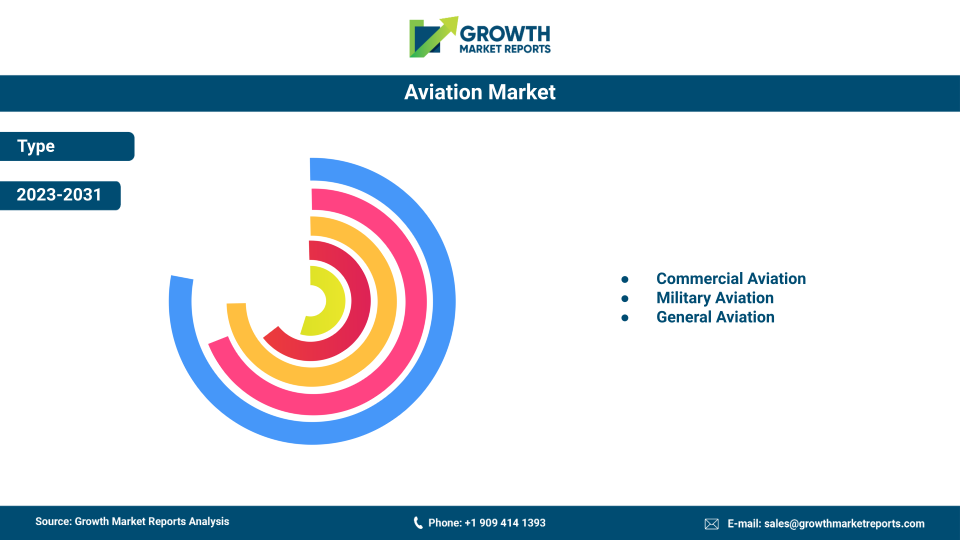
The aviation market is segmented by type into Commercial Aviation, Military Aviation, and General Aviation. Each of these segments plays a distinct role in shaping the overall market dynamics. Commercial aviation, encompassing both passenger and cargo airlines, represents the largest share of the market, driven by the relentless growth in global air travel and the increasing need for efficient logistics solutions. The demand for new, fuel-efficient aircraft and the expansion of airline networks are key factors propelling this segment. Airlines are increasingly investing in wide-body and narrow-body aircraft to cater to both short-haul and long-haul routes, ensuring optimal fleet utilization and cost efficiency.

Military aviation remains a significant segment, underpinned by rising defense budgets and the need for advanced aerial platforms to address modern security threats. Governments worldwide are procuring next-generation fighter jets, surveillance aircraft, and unmanned aerial vehicles to enhance national security and defense capabilities. The integration of cutting-edge technologies such as stealth, electronic warfare, and network-centric operations is transforming military aviation, making it a critical component of national defense strategies. Additionally, ongoing geopolitical tensions and regional conflicts are driving sustained investments in military aviation, ensuring long-term growth prospects for this segment.

General aviation, which includes private jets, charter flights, and recreational aircraft, is experiencing renewed interest, particularly among high-net-worth individuals and corporate clients. The flexibility, convenience, and time-saving benefits of private aviation are attracting a growing clientele, especially in regions with limited commercial airline connectivity. The proliferation of fractional ownership models and on-demand charter services is democratizing access to general aviation, further expanding its market base. Moreover, advancements in avionics and aircraft design are enhancing safety, comfort, and operational efficiency, making general aviation an increasingly attractive option for business and leisure travel.

The interplay between commercial, military, and general aviation segments creates a dynamic and resilient market ecosystem. While commercial aviation drives volume and revenue, military aviation ensures technological leadership and strategic security, and general aviation caters to niche demands and personalized services. The synergies among these segments foster innovation, investment, and cross-sector collaboration, underpinning the sustained growth and evolution of the global aviation market.

Report Scope

Attributes Details
Report Title Aviation Market Research Report 2033
By Type Commercial Aviation, Military Aviation, General Aviation
By Component Aircraft, Avionics, Engines, Systems, Services
By Application Passenger Transport, Cargo Transport, Military Operations, Others
By End-User Airlines, Government & Defense, Private Operators, Others
Regions Covered North America, Europe, APAC, Latin America, MEA
Base Year 2024
Historic Data 2018-2023
Forecast Period 2025-2033
Number of Pages 266
Number of Tables & Figures 343
Customization Available Yes, the report can be customized as per your need.

Component Analysis

The aviation market by component is categorized into Aircraft, Avionics, Engines, Systems, and Services. Aircraft, as the core asset, constitute the largest revenue share, reflecting the high capital investment required for fleet acquisition and modernization. The ongoing replacement of aging aircraft with new-generation models featuring advanced materials, aerodynamics, and fuel efficiency is a key driver in this segment. Manufacturers are prioritizing lightweight composites, improved cabin designs, and enhanced safety features to meet regulatory standards and passenger expectations.

Avionics represent a rapidly growing component segment, driven by the increasing complexity and sophistication of modern aircraft. Advanced avionics systems, including flight management, navigation, communication, and surveillance technologies, are essential for ensuring safe and efficient operations. The integration of digital cockpit displays, autopilot systems, and real-time data analytics is revolutionizing aircraft operations, enhancing situational awareness, and reducing pilot workload. Moreover, the adoption of satellite-based navigation and next-generation air traffic management systems is enabling seamless global connectivity and operational efficiency.

Engines are another critical component, with ongoing advancements focused on improving fuel efficiency, reducing emissions, and enhancing reliability. The development of high-bypass turbofan engines, geared turbofans, and hybrid-electric propulsion systems is addressing both economic and environmental imperatives. Engine manufacturers are investing heavily in research and development to deliver products that meet stringent regulatory requirements while minimizing operating costs. The demand for engine maintenance, repair, and overhaul (MRO) services is also rising, reflecting the need for lifecycle support and operational readiness.

Systems and services constitute the backbone of aviation operations, encompassing everything from flight control and landing gear to maintenance, training, and support services. The increasing complexity of modern aircraft necessitates comprehensive systems integration and robust support infrastructure. Airlines and operators are outsourcing non-core functions to specialized service providers, enabling them to focus on core competencies and improve operational efficiency. The growth of digital MRO platforms, predictive maintenance solutions, and training simulators is further enhancing the reliability and safety of aviation operations, contributing to the overall market expansion.

Application Analysis

The aviation market by application is segmented into Passenger Transport, Cargo Transport, Military Operations, and Others. Passenger transport remains the dominant application, accounting for the majority of market revenue. The resurgence in global tourism, business travel, and urbanization is driving sustained demand for passenger flights across all regions. Airlines are expanding their fleets, optimizing route networks, and introducing innovative in-flight services to attract and retain customers. The growing preference for direct, non-stop flights and the proliferation of low-cost carriers are reshaping the competitive landscape, making air travel more accessible and affordable.

Cargo transport is emerging as a critical growth area, fueled by the boom in e-commerce, global trade, and supply chain optimization. The need for rapid, reliable, and secure delivery of goods is driving investments in dedicated freighter aircraft, cargo handling infrastructure, and digital logistics platforms. Airlines and logistics providers are leveraging advanced tracking, automation, and data analytics to enhance shipment visibility, reduce transit times, and improve customer satisfaction. The integration of drones and unmanned cargo aircraft is also opening new possibilities for last-mile delivery and remote area connectivity.

Military operations represent a significant application segment, encompassing a wide range of missions such as surveillance, reconnaissance, airlift, and combat. The modernization of military fleets, adoption of multi-role aircraft, and integration of unmanned systems are transforming the operational capabilities of defense forces worldwide. The need for rapid deployment, interoperability, and mission flexibility is driving investments in advanced platforms, sensors, and communication systems. Military aviation also plays a vital role in humanitarian assistance, disaster response, and peacekeeping operations, highlighting its strategic importance beyond traditional defense roles.

Other applications, including medical evacuation, aerial firefighting, search and rescue, and law enforcement, contribute to the diverse utility of aviation assets. These specialized missions require tailored aircraft configurations, equipment, and training to meet unique operational requirements. The growing incidence of natural disasters, public health emergencies, and security threats is underscoring the value of aviation in providing timely and effective response capabilities. The versatility and adaptability of aviation assets make them indispensable in addressing a wide range of societal needs, further expanding the market’s scope and relevance.

End-User Analysis

The aviation market by end-user is segmented into Airlines, Government & Defense, Private Operators, and Others. Airlines represent the largest end-user group, driving demand for new aircraft, maintenance services, and technological upgrades. The competitive landscape is characterized by a mix of legacy carriers, low-cost airlines, and regional operators, each pursuing distinct strategies to capture market share. Airlines are investing in fleet renewal, digital transformation, and customer experience enhancements to differentiate themselves and achieve sustainable growth. Strategic alliances, code-sharing agreements, and joint ventures are also prevalent, enabling airlines to expand their global reach and optimize resource utilization.

Government and defense entities constitute a significant end-user segment, with a focus on national security, public safety, and emergency response. Governments are investing in advanced military aircraft, surveillance systems, and air traffic management solutions to enhance operational readiness and resilience. Defense procurement programs, offset agreements, and technology transfers are fostering collaboration between public and private sectors, driving innovation and capability development. In addition to defense applications, government agencies are also leveraging aviation assets for law enforcement, border security, disaster relief, and environmental monitoring.

Private operators, including corporate flight departments, charter companies, and high-net-worth individuals, are driving growth in the general aviation segment. The demand for personalized, flexible, and time-efficient travel solutions is fueling investments in business jets, turboprops, and helicopters. Private operators are increasingly adopting digital booking platforms, fractional ownership models, and on-demand charter services to cater to diverse customer preferences. The integration of advanced avionics, connectivity solutions, and luxury amenities is enhancing the value proposition of private aviation, attracting a growing clientele across regions.

Other end-users, such as cargo carriers, medical evacuation providers, and specialized service operators, contribute to the diversity and resilience of the aviation market. These entities play a critical role in supporting essential services, humanitarian missions, and niche market segments. The ability to customize aircraft configurations, operational procedures, and support services enables these end-users to address unique challenges and opportunities. The ongoing evolution of end-user requirements is driving continuous innovation and adaptation across the aviation value chain, ensuring sustained market growth and relevance.

Opportunities & Threats

The aviation market is replete with opportunities, particularly in the areas of digital transformation and sustainability. The adoption of advanced technologies such as artificial intelligence, blockchain, and the Internet of Things (IoT) is revolutionizing aircraft operations, maintenance, and passenger experience. Airlines and operators are leveraging predictive analytics, real-time monitoring, and automation to optimize fleet performance, reduce downtime, and enhance safety. The shift towards sustainable aviation fuels, electric and hybrid aircraft, and carbon offset programs is creating new growth avenues while addressing environmental concerns. Emerging markets, particularly in Asia Pacific, Africa, and Latin America, offer significant untapped potential, driven by rising incomes, urbanization, and infrastructure development. Strategic partnerships, mergers and acquisitions, and cross-sector collaborations are enabling market players to expand their capabilities, access new markets, and drive innovation.

Another key opportunity lies in the expansion of urban air mobility and unmanned aerial systems. The development of electric vertical takeoff and landing (eVTOL) aircraft, autonomous drones, and air taxi services is set to transform urban transportation and logistics. Regulatory support, technological advancements, and investment inflows are accelerating the commercialization of these novel solutions, creating new business models and revenue streams. The integration of digital platforms, smart infrastructure, and seamless connectivity is enhancing the scalability and viability of urban air mobility initiatives. As cities grow and congestion intensifies, the demand for efficient, sustainable, and flexible air transportation solutions will continue to rise, presenting substantial opportunities for innovation and market expansion.

Despite the myriad opportunities, the aviation market faces several restraining factors, chief among them being regulatory challenges and environmental concerns. Stringent emissions standards, noise regulations, and safety requirements impose significant compliance costs and operational constraints on market players. The volatility of fuel prices, geopolitical tensions, and macroeconomic uncertainties further exacerbate market risks. Additionally, the industry’s reliance on complex global supply chains makes it vulnerable to disruptions, as evidenced by recent pandemic-induced shocks. Addressing these challenges requires proactive risk management, strategic investments in sustainability, and continuous engagement with regulatory authorities to ensure long-term resilience and competitiveness.

Regional Outlook

Asia Pacific emerged as the largest regional market in 2024, with a market size of approximately USD 265.7 billion, accounting for over one-third of the global aviation market. The region’s rapid economic growth, expanding middle class, and increasing urbanization are driving sustained demand for air travel and cargo services. Major economies such as China, India, and Southeast Asian nations are investing heavily in airport infrastructure, fleet expansion, and digital transformation to accommodate rising passenger and freight volumes. The proliferation of low-cost carriers and the development of new routes are making air travel more accessible, while government initiatives to promote tourism and regional connectivity are further boosting market growth.

North America remains a mature yet highly dynamic aviation market, with a market size of USD 210.4 billion in 2024. The region is characterized by a robust airline industry, advanced technological capabilities, and strong defense spending. The United States, in particular, leads in innovation, digitalization, and sustainability initiatives, with airlines and manufacturers investing in next-generation aircraft, sustainable aviation fuels, and digital maintenance solutions. The region is also a key hub for business aviation, cargo transport, and urban air mobility development. North America is expected to grow at a CAGR of 4.2% through 2033, driven by ongoing fleet modernization, infrastructure upgrades, and regulatory support for sustainable aviation.

Europe, with a market size of USD 150.3 billion in 2024, is focusing on sustainability, regulatory compliance, and technological innovation. The European Union’s ambitious climate targets, emissions trading schemes, and investments in green aviation technologies are shaping the regional market landscape. Airlines and manufacturers are collaborating on the development of electric and hybrid aircraft, sustainable fuels, and digital solutions to enhance operational efficiency and reduce environmental impact. The region’s diverse airline landscape, strong tourism sector, and strategic geographic positioning for intercontinental connectivity further underpin its market significance. Latin America and the Middle East & Africa, with market sizes of USD 45.6 billion and USD 30.1 billion respectively, are emerging as high-growth regions, supported by economic development, tourism, and infrastructure investments. These regions offer significant untapped potential, particularly in underserved markets and remote areas, contributing to the overall resilience and diversity of the global aviation market.

Aviation Market Statistics

Competitor Outlook

The global aviation market is characterized by intense competition, technological innovation, and a complex ecosystem of manufacturers, airlines, service providers, and technology companies. The competitive landscape is shaped by the presence of a few dominant players in aircraft manufacturing, such as Boeing and Airbus, alongside a multitude of regional and niche manufacturers. These companies are continuously investing in research and development to deliver next-generation aircraft that meet evolving customer and regulatory requirements. The rivalry between major OEMs drives innovation, cost efficiency, and product differentiation, benefiting airlines and end-users alike. In addition to aircraft manufacturers, engine suppliers such as General Electric, Rolls-Royce, and Pratt & Whitney play a pivotal role in shaping market dynamics through technological advancements and lifecycle support services.

Airlines form the backbone of the aviation market, competing on the basis of network coverage, service quality, operational efficiency, and customer experience. The rise of low-cost carriers, regional airlines, and new entrants is intensifying competition, prompting incumbents to innovate and adapt. Strategic alliances, code-sharing agreements, and mergers and acquisitions are prevalent, enabling airlines to expand their global footprint, optimize resource utilization, and enhance competitiveness. The increasing adoption of digital technologies, data analytics, and customer-centric solutions is transforming airline operations, enabling personalized services, dynamic pricing, and real-time engagement.

Service providers, including maintenance, repair, and overhaul (MRO) companies, avionics suppliers, and training organizations, are integral to the aviation value chain. The demand for comprehensive lifecycle support, predictive maintenance, and digital MRO solutions is driving growth and consolidation in this segment. Technology companies specializing in artificial intelligence, cybersecurity, and connectivity solutions are also entering the aviation market, offering innovative products and services that enhance safety, efficiency, and passenger experience. The convergence of traditional aviation expertise with digital capabilities is creating new opportunities for collaboration, value creation, and differentiation.

Major companies operating in the aviation market include Boeing, Airbus, Lockheed Martin, General Electric, Rolls-Royce, Pratt & Whitney, Raytheon Technologies, Safran, Embraer, and Bombardier. Boeing and Airbus dominate the commercial aircraft segment, with extensive product portfolios, global supply chains, and strong customer relationships. Lockheed Martin, Raytheon Technologies, and Northrop Grumman are leaders in the military aviation segment, offering advanced platforms, systems, and services for defense applications. Engine manufacturers such as General Electric, Rolls-Royce, and Pratt & Whitney are at the forefront of propulsion technology, delivering high-performance engines for commercial, military, and business aviation. Embraer and Bombardier are prominent players in the regional and business aviation segments, known for their innovation, reliability, and customer-centric approach. These companies are continuously investing in research, sustainability, and digital transformation to maintain their competitive edge and drive long-term growth in the global aviation market.

Key Players

  • Boeing
  • Airbus
  • Lockheed Martin
  • Raytheon Technologies
  • Northrop Grumman
  • General Electric Aviation
  • Safran
  • Rolls-Royce Holdings
  • Honeywell Aerospace
  • Embraer
  • Bombardier Aerospace
  • Leonardo S.p.A.
  • BAE Systems
  • Mitsubishi Heavy Industries
  • Textron Aviation
  • Dassault Aviation
  • Spirit AeroSystems
  • Gulfstream Aerospace
  • China Aviation Industry Corporation (AVIC)
  • United Aircraft Corporation (UAC)
Aviation Market Overview

Segments

The Aviation market has been segmented on the basis of

Type

  • Commercial Aviation
  • Military Aviation
  • General Aviation

Component

  • Aircraft
  • Avionics
  • Engines
  • Systems
  • Services

Application

  • Passenger Transport
  • Cargo Transport
  • Military Operations
  • Others

End-User

  • Airlines
  • Government & Defense
  • Private Operators
  • Others

Competitive Landscape

Key players competing in the aviation market include The Boeing Company, Airbus SE, Lockheed Martin Corporation, Textron Inc., and Embraer S.A.

Some of these players are using several market strategies such as mergers, acquisitions, partnerships, collaborations, capacity expansion, and product launches to enhance their market shares. For instance,

  • In January 2021, FedEx Express declared an order for 12 Boeing 767 freighters and 12 Boeing 777 freighters. The total value of the order is USD 6.6 billion at list prices.

  • In June 2020, the US Civil Air Patrol (CAP) declared that it had selected Textron Aviation to provide 17 Cessna piston engine aircraft consisting of 11 Skyhawk 172S, five Skylane 182T, and one Turbo Stationair HD T206HD aircraft. The aircraft is supposed to be used for disaster relief, search and rescue, and homeland security missions and others.

  • In April 2020, Lockheed Martin declared that it was awarded a USD 4.7 billion contract modification for 78 F-35 Lightning II Joint Strike Fighters. The contract includes 48 conventional takeoff and landing F-35As for the US Air Force, 14 short takeoff and vertical landing F-35Bs for the Marine Corps, and 16 carrier-borne F-35C stealth fighters.
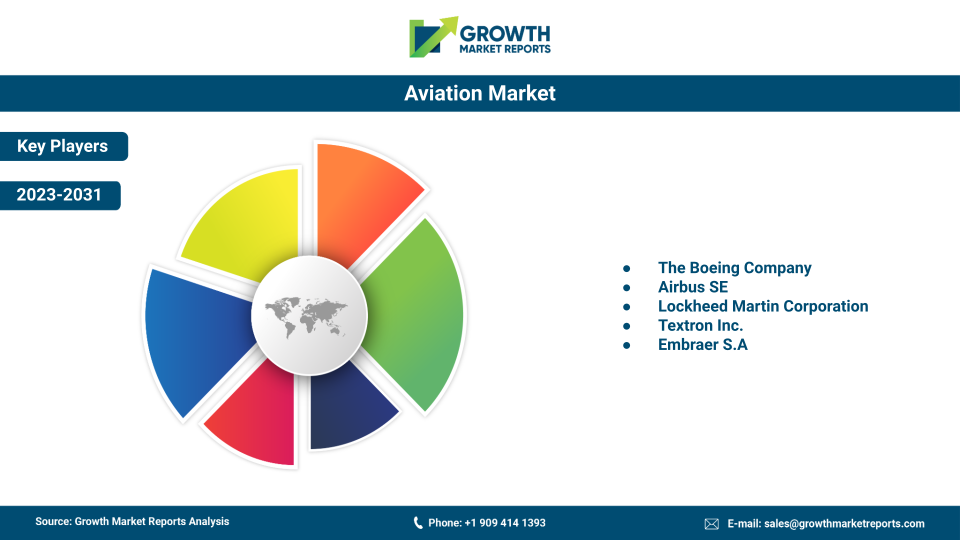

    Aviation Market Key Players

Frequently Asked Questions

End-users include airlines, government & defense, private operators, and others such as cargo carriers and specialized service providers.

Aviation applications include passenger transport, cargo transport, military operations, and specialized services such as medical evacuation, firefighting, and law enforcement.

Opportunities include digital transformation, sustainable aviation, urban air mobility, and expansion in emerging markets. Threats involve regulatory challenges, environmental concerns, fuel price volatility, and supply chain disruptions.

Major players include Boeing, Airbus, Lockheed Martin, Raytheon Technologies, Northrop Grumman, General Electric Aviation, Rolls-Royce, Pratt & Whitney, Embraer, and Bombardier.

Technological innovation is accelerating adoption of advanced avionics, fuel-efficient engines, AI, predictive maintenance, and sustainable aviation fuels, improving efficiency and reducing environmental impact.

The aviation market is segmented into Commercial Aviation, Military Aviation, and General Aviation, each playing a distinct role in market dynamics.

Asia Pacific is the largest regional market, accounting for over one-third of the global aviation market in 2024, driven by economic growth, urbanization, and expanding middle class.

Key growth drivers include surging passenger demand, rapid technological advancements, investments in fleet modernization, and sustainable aviation initiatives.

The aviation market is expected to grow at a CAGR of 5.8% from 2025 to 2033, reaching a projected value of USD 1,175.2 billion by 2033.

As of 2024, the global aviation market size reached USD 702.1 billion, reflecting strong recovery and growth after the pandemic.

Table Of Content

Chapter 1 Executive Summary
Chapter 2 Assumptions and Acronyms Used
Chapter 3 Research Methodology
Chapter 4 Aviation Market Overview
   4.1 Introduction
      4.1.1 Market Taxonomy
      4.1.2 Market Definition
      4.1.3 Macro-Economic Factors Impacting the Market Growth
   4.2 Aviation Market Dynamics
      4.2.1 Market Drivers
      4.2.2 Market Restraints
      4.2.3 Market Opportunity
   4.3 Aviation Market - Supply Chain Analysis
      4.3.1 List of Key Suppliers
      4.3.2 List of Key Distributors
      4.3.3 List of Key Consumers
   4.4 Key Forces Shaping the Aviation Market
      4.4.1 Bargaining Power of Suppliers
      4.4.2 Bargaining Power of Buyers
      4.4.3 Threat of Substitution
      4.4.4 Threat of New Entrants
      4.4.5 Competitive Rivalry
   4.5 Global Aviation Market Size & Forecast, 2023-2032
      4.5.1 Aviation Market Size and Y-o-Y Growth
      4.5.2 Aviation Market Absolute $ Opportunity

Chapter 5 Global Aviation Market Analysis and Forecast By Type
   5.1 Introduction
      5.1.1 Key Market Trends & Growth Opportunities By Type
      5.1.2 Basis Point Share (BPS) Analysis By Type
      5.1.3 Absolute $ Opportunity Assessment By Type
   5.2 Aviation Market Size Forecast By Type
      5.2.1 Commercial Aviation
      5.2.2 Military Aviation
      5.2.3 General Aviation
   5.3 Market Attractiveness Analysis By Type

Chapter 6 Global Aviation Market Analysis and Forecast By Component
   6.1 Introduction
      6.1.1 Key Market Trends & Growth Opportunities By Component
      6.1.2 Basis Point Share (BPS) Analysis By Component
      6.1.3 Absolute $ Opportunity Assessment By Component
   6.2 Aviation Market Size Forecast By Component
      6.2.1 Aircraft
      6.2.2 Avionics
      6.2.3 Engines
      6.2.4 Systems
      6.2.5 Services
   6.3 Market Attractiveness Analysis By Component

Chapter 7 Global Aviation Market Analysis and Forecast By Application
   7.1 Introduction
      7.1.1 Key Market Trends & Growth Opportunities By Application
      7.1.2 Basis Point Share (BPS) Analysis By Application
      7.1.3 Absolute $ Opportunity Assessment By Application
   7.2 Aviation Market Size Forecast By Application
      7.2.1 Passenger Transport
      7.2.2 Cargo Transport
      7.2.3 Military Operations
      7.2.4 Others
   7.3 Market Attractiveness Analysis By Application

Chapter 8 Global Aviation Market Analysis and Forecast By End-User
   8.1 Introduction
      8.1.1 Key Market Trends & Growth Opportunities By End-User
      8.1.2 Basis Point Share (BPS) Analysis By End-User
      8.1.3 Absolute $ Opportunity Assessment By End-User
   8.2 Aviation Market Size Forecast By End-User
      8.2.1 Airlines
      8.2.2 Government & Defense
      8.2.3 Private Operators
      8.2.4 Others
   8.3 Market Attractiveness Analysis By End-User

Chapter 9 Global Aviation Market Analysis and Forecast by Region
   9.1 Introduction
      9.1.1 Key Market Trends & Growth Opportunities By Region
      9.1.2 Basis Point Share (BPS) Analysis By Region
      9.1.3 Absolute $ Opportunity Assessment By Region
   9.2 Aviation Market Size Forecast By Region
      9.2.1 North America
      9.2.2 Europe
      9.2.3 Asia Pacific
      9.2.4 Latin America
      9.2.5 Middle East & Africa (MEA)
   9.3 Market Attractiveness Analysis By Region

Chapter 10 Coronavirus Disease (COVID-19) Impact 
   10.1 Introduction 
   10.2 Current & Future Impact Analysis 
   10.3 Economic Impact Analysis 
   10.4 Government Policies 
   10.5 Investment Scenario

Chapter 11 North America Aviation Analysis and Forecast
   11.1 Introduction
   11.2 North America Aviation Market Size Forecast by Country
      11.2.1 U.S.
      11.2.2 Canada
   11.3 Basis Point Share (BPS) Analysis by Country
   11.4 Absolute $ Opportunity Assessment by Country
   11.5 Market Attractiveness Analysis by Country
   11.6 North America Aviation Market Size Forecast By Type
      11.6.1 Commercial Aviation
      11.6.2 Military Aviation
      11.6.3 General Aviation
   11.7 Basis Point Share (BPS) Analysis By Type 
   11.8 Absolute $ Opportunity Assessment By Type 
   11.9 Market Attractiveness Analysis By Type
   11.10 North America Aviation Market Size Forecast By Component
      11.10.1 Aircraft
      11.10.2 Avionics
      11.10.3 Engines
      11.10.4 Systems
      11.10.5 Services
   11.11 Basis Point Share (BPS) Analysis By Component 
   11.12 Absolute $ Opportunity Assessment By Component 
   11.13 Market Attractiveness Analysis By Component
   11.14 North America Aviation Market Size Forecast By Application
      11.14.1 Passenger Transport
      11.14.2 Cargo Transport
      11.14.3 Military Operations
      11.14.4 Others
   11.15 Basis Point Share (BPS) Analysis By Application 
   11.16 Absolute $ Opportunity Assessment By Application 
   11.17 Market Attractiveness Analysis By Application
   11.18 North America Aviation Market Size Forecast By End-User
      11.18.1 Airlines
      11.18.2 Government & Defense
      11.18.3 Private Operators
      11.18.4 Others
   11.19 Basis Point Share (BPS) Analysis By End-User 
   11.20 Absolute $ Opportunity Assessment By End-User 
   11.21 Market Attractiveness Analysis By End-User

Chapter 12 Europe Aviation Analysis and Forecast
   12.1 Introduction
   12.2 Europe Aviation Market Size Forecast by Country
      12.2.1 Germany
      12.2.2 France
      12.2.3 Italy
      12.2.4 U.K.
      12.2.5 Spain
      12.2.6 Russia
      12.2.7 Rest of Europe
   12.3 Basis Point Share (BPS) Analysis by Country
   12.4 Absolute $ Opportunity Assessment by Country
   12.5 Market Attractiveness Analysis by Country
   12.6 Europe Aviation Market Size Forecast By Type
      12.6.1 Commercial Aviation
      12.6.2 Military Aviation
      12.6.3 General Aviation
   12.7 Basis Point Share (BPS) Analysis By Type 
   12.8 Absolute $ Opportunity Assessment By Type 
   12.9 Market Attractiveness Analysis By Type
   12.10 Europe Aviation Market Size Forecast By Component
      12.10.1 Aircraft
      12.10.2 Avionics
      12.10.3 Engines
      12.10.4 Systems
      12.10.5 Services
   12.11 Basis Point Share (BPS) Analysis By Component 
   12.12 Absolute $ Opportunity Assessment By Component 
   12.13 Market Attractiveness Analysis By Component
   12.14 Europe Aviation Market Size Forecast By Application
      12.14.1 Passenger Transport
      12.14.2 Cargo Transport
      12.14.3 Military Operations
      12.14.4 Others
   12.15 Basis Point Share (BPS) Analysis By Application 
   12.16 Absolute $ Opportunity Assessment By Application 
   12.17 Market Attractiveness Analysis By Application
   12.18 Europe Aviation Market Size Forecast By End-User
      12.18.1 Airlines
      12.18.2 Government & Defense
      12.18.3 Private Operators
      12.18.4 Others
   12.19 Basis Point Share (BPS) Analysis By End-User 
   12.20 Absolute $ Opportunity Assessment By End-User 
   12.21 Market Attractiveness Analysis By End-User

Chapter 13 Asia Pacific Aviation Analysis and Forecast
   13.1 Introduction
   13.2 Asia Pacific Aviation Market Size Forecast by Country
      13.2.1 China
      13.2.2 Japan
      13.2.3 South Korea
      13.2.4 India
      13.2.5 Australia
      13.2.6 South East Asia (SEA)
      13.2.7 Rest of Asia Pacific (APAC)
   13.3 Basis Point Share (BPS) Analysis by Country
   13.4 Absolute $ Opportunity Assessment by Country
   13.5 Market Attractiveness Analysis by Country
   13.6 Asia Pacific Aviation Market Size Forecast By Type
      13.6.1 Commercial Aviation
      13.6.2 Military Aviation
      13.6.3 General Aviation
   13.7 Basis Point Share (BPS) Analysis By Type 
   13.8 Absolute $ Opportunity Assessment By Type 
   13.9 Market Attractiveness Analysis By Type
   13.10 Asia Pacific Aviation Market Size Forecast By Component
      13.10.1 Aircraft
      13.10.2 Avionics
      13.10.3 Engines
      13.10.4 Systems
      13.10.5 Services
   13.11 Basis Point Share (BPS) Analysis By Component 
   13.12 Absolute $ Opportunity Assessment By Component 
   13.13 Market Attractiveness Analysis By Component
   13.14 Asia Pacific Aviation Market Size Forecast By Application
      13.14.1 Passenger Transport
      13.14.2 Cargo Transport
      13.14.3 Military Operations
      13.14.4 Others
   13.15 Basis Point Share (BPS) Analysis By Application 
   13.16 Absolute $ Opportunity Assessment By Application 
   13.17 Market Attractiveness Analysis By Application
   13.18 Asia Pacific Aviation Market Size Forecast By End-User
      13.18.1 Airlines
      13.18.2 Government & Defense
      13.18.3 Private Operators
      13.18.4 Others
   13.19 Basis Point Share (BPS) Analysis By End-User 
   13.20 Absolute $ Opportunity Assessment By End-User 
   13.21 Market Attractiveness Analysis By End-User

Chapter 14 Latin America Aviation Analysis and Forecast
   14.1 Introduction
   14.2 Latin America Aviation Market Size Forecast by Country
      14.2.1 Brazil
      14.2.2 Mexico
      14.2.3 Rest of Latin America (LATAM)
   14.3 Basis Point Share (BPS) Analysis by Country
   14.4 Absolute $ Opportunity Assessment by Country
   14.5 Market Attractiveness Analysis by Country
   14.6 Latin America Aviation Market Size Forecast By Type
      14.6.1 Commercial Aviation
      14.6.2 Military Aviation
      14.6.3 General Aviation
   14.7 Basis Point Share (BPS) Analysis By Type 
   14.8 Absolute $ Opportunity Assessment By Type 
   14.9 Market Attractiveness Analysis By Type
   14.10 Latin America Aviation Market Size Forecast By Component
      14.10.1 Aircraft
      14.10.2 Avionics
      14.10.3 Engines
      14.10.4 Systems
      14.10.5 Services
   14.11 Basis Point Share (BPS) Analysis By Component 
   14.12 Absolute $ Opportunity Assessment By Component 
   14.13 Market Attractiveness Analysis By Component
   14.14 Latin America Aviation Market Size Forecast By Application
      14.14.1 Passenger Transport
      14.14.2 Cargo Transport
      14.14.3 Military Operations
      14.14.4 Others
   14.15 Basis Point Share (BPS) Analysis By Application 
   14.16 Absolute $ Opportunity Assessment By Application 
   14.17 Market Attractiveness Analysis By Application
   14.18 Latin America Aviation Market Size Forecast By End-User
      14.18.1 Airlines
      14.18.2 Government & Defense
      14.18.3 Private Operators
      14.18.4 Others
   14.19 Basis Point Share (BPS) Analysis By End-User 
   14.20 Absolute $ Opportunity Assessment By End-User 
   14.21 Market Attractiveness Analysis By End-User

Chapter 15 Middle East & Africa (MEA) Aviation Analysis and Forecast
   15.1 Introduction
   15.2 Middle East & Africa (MEA) Aviation Market Size Forecast by Country
      15.2.1 Saudi Arabia
      15.2.2 South Africa
      15.2.3 UAE
      15.2.4 Rest of Middle East & Africa (MEA)
   15.3 Basis Point Share (BPS) Analysis by Country
   15.4 Absolute $ Opportunity Assessment by Country
   15.5 Market Attractiveness Analysis by Country
   15.6 Middle East & Africa (MEA) Aviation Market Size Forecast By Type
      15.6.1 Commercial Aviation
      15.6.2 Military Aviation
      15.6.3 General Aviation
   15.7 Basis Point Share (BPS) Analysis By Type 
   15.8 Absolute $ Opportunity Assessment By Type 
   15.9 Market Attractiveness Analysis By Type
   15.10 Middle East & Africa (MEA) Aviation Market Size Forecast By Component
      15.10.1 Aircraft
      15.10.2 Avionics
      15.10.3 Engines
      15.10.4 Systems
      15.10.5 Services
   15.11 Basis Point Share (BPS) Analysis By Component 
   15.12 Absolute $ Opportunity Assessment By Component 
   15.13 Market Attractiveness Analysis By Component
   15.14 Middle East & Africa (MEA) Aviation Market Size Forecast By Application
      15.14.1 Passenger Transport
      15.14.2 Cargo Transport
      15.14.3 Military Operations
      15.14.4 Others
   15.15 Basis Point Share (BPS) Analysis By Application 
   15.16 Absolute $ Opportunity Assessment By Application 
   15.17 Market Attractiveness Analysis By Application
   15.18 Middle East & Africa (MEA) Aviation Market Size Forecast By End-User
      15.18.1 Airlines
      15.18.2 Government & Defense
      15.18.3 Private Operators
      15.18.4 Others
   15.19 Basis Point Share (BPS) Analysis By End-User 
   15.20 Absolute $ Opportunity Assessment By End-User 
   15.21 Market Attractiveness Analysis By End-User

Chapter 16 Competition Landscape 
   16.1 Aviation Market: Competitive Dashboard
   16.2 Global Aviation Market: Market Share Analysis, 2023
   16.3 Company Profiles (Details – Overview, Financials, Developments, Strategy) 
      16.3.1 Boeing
Airbus
Lockheed Martin
Raytheon Technologies
Northrop Grumman
General Electric Aviation
Safran
Rolls-Royce Holdings
Honeywell Aerospace
Embraer
Bombardier Aerospace
Leonardo S.p.A.
BAE Systems
Mitsubishi Heavy Industries
Textron Aviation
Dassault Aviation
Spirit AeroSystems
Gulfstream Aerospace
China Aviation Industry Corporation (AVIC)
United Aircraft Corporation (UAC)

Methodology

Our Clients

Nestle SA
The John Holland Group
Dassault Aviation
Pfizer
Honda Motor Co. Ltd.
sinopec
General Electric
Deloitte