Segments - by Seat Type (Economy Class, Premium Economy Class, Business Class, First Class), by Component (Structure, Foam, Upholstery, Actuators, Others), by End-User (OEM, Aftermarket, MRO), by Aircraft Type (Narrow Body, Wide Body, Regional Jets, Business Jets)
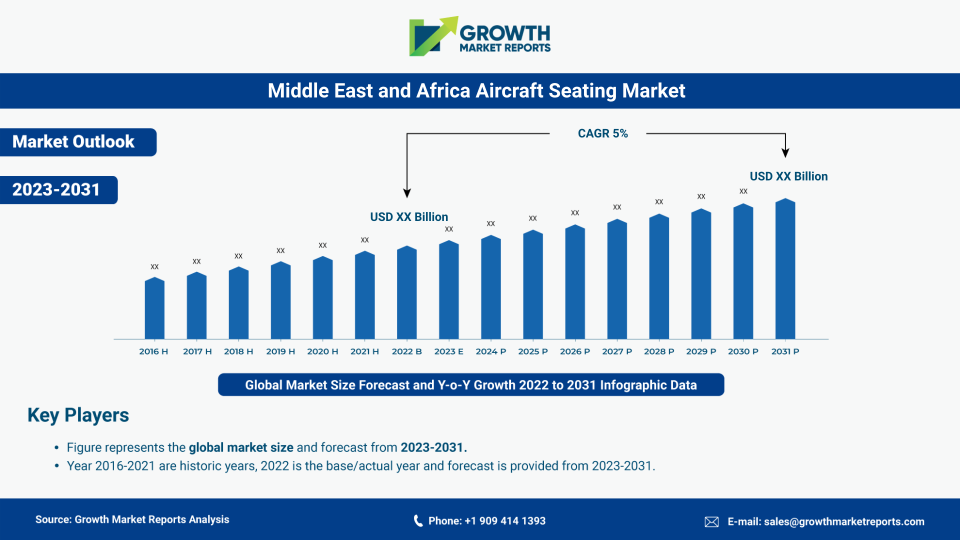
According to our latest research, the global aircraft seating market size reached USD 6.2 billion in 2024, with robust demand driven by the resurgence of air travel and ongoing fleet modernization initiatives. The market is forecasted to expand at a CAGR of 5.8% from 2025 to 2033, reaching a projected value of USD 10.3 billion by 2033. This growth trajectory is underpinned by rising passenger expectations for comfort, increased investments in premium seating solutions, and the continuous evolution of aircraft interiors to maximize airline profitability and operational efficiency.
The primary growth driver for the aircraft seating market is the steady recovery and expansion of the global aviation sector, particularly in the wake of the pandemic-induced downturn. Airlines are ramping up their fleet renewal programs, focusing on fuel-efficient and technologically advanced aircraft, which in turn necessitates the procurement of new and innovative seating solutions. Additionally, as airlines compete to differentiate themselves, there is a heightened emphasis on enhancing passenger comfort and experience, leading to increased adoption of premium economy, business, and first-class seating. The integration of advanced materials and ergonomic designs is also contributing to weight reduction and fuel efficiency, further incentivizing airlines to invest in modern seating configurations.
Another significant growth factor is the rising demand for aftermarket upgrades and retrofitting of existing aircraft. With the average age of commercial aircraft fleets increasing, airlines are prioritizing cabin refurbishments to maintain competitiveness and comply with evolving safety and comfort regulations. This trend is particularly pronounced in regions where regulatory frameworks are becoming more stringent, and where passenger expectations are rising in tandem with disposable incomes. The aftermarket segment is thus witnessing robust growth, as airlines seek to balance cost-effectiveness with the imperative to deliver a superior in-flight experience.
Technological advancements in materials science and manufacturing processes are also catalyzing the evolution of the aircraft seating market. The adoption of lightweight composite materials, innovative foam technologies, and modular designs is enabling manufacturers to offer seats that are not only more comfortable but also easier to maintain and customize. Furthermore, the integration of smart features such as in-seat power, connectivity, and personalized entertainment systems is reshaping the value proposition for both airlines and passengers. These innovations are driving up the average value per seat, contributing to the overall growth of the market.
From a regional perspective, Asia Pacific is emerging as a powerhouse in the aircraft seating market, buoyed by rapid growth in air passenger traffic, burgeoning middle-class populations, and aggressive fleet expansion by regional carriers. North America and Europe continue to lead in terms of technological innovation and premium segment adoption, while the Middle East is becoming a hub for luxury air travel, driving demand for high-end seating solutions. Latin America and Africa, though smaller in market share, are witnessing steady growth as regional connectivity improves and new airlines enter the market. This diverse regional landscape underscores the global nature of the aircraft seating industry and the varied opportunities it presents.
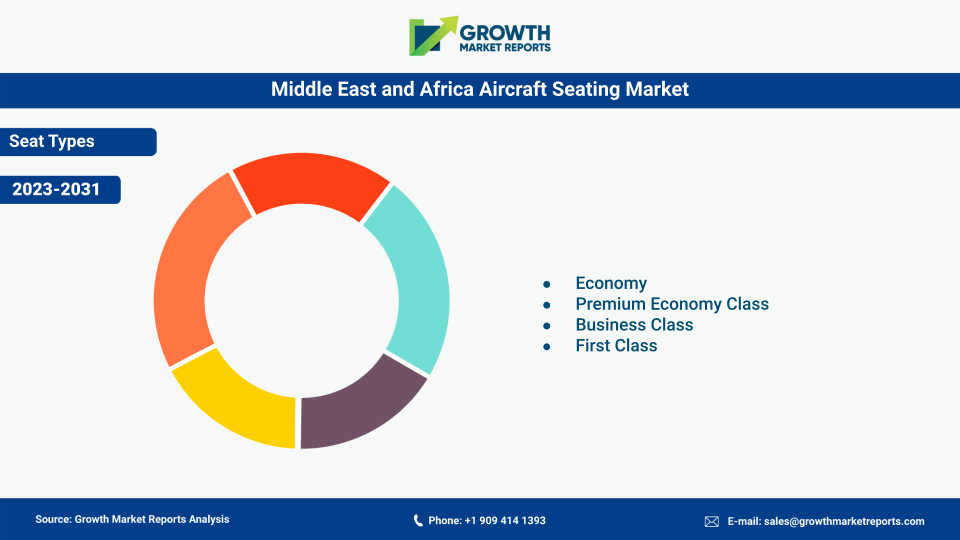
The aircraft seating market is distinctly segmented by seat type, encompassing economy class, premium economy class, business class, and first class. Among these, economy class seats continue to dominate in terms of volume, reflecting the mass-market nature of most commercial airline operations. However, the value contribution from premium economy, business, and first-class segments is rising rapidly. Airlines are increasingly recognizing the revenue potential of premium seating, which offers higher yields and stronger brand differentiation. The proliferation of hybrid and low-cost carriers is also shaping the evolution of seat types, with many introducing enhanced economy offerings to capture a broader customer base.
Premium economy class is witnessing particularly strong growth, as it strikes a balance between affordability and comfort. Passengers are increasingly willing to pay a premium for additional legroom, recline, and enhanced amenities, especially on long-haul routes. This has led airlines to reconfigure cabin layouts, often at the expense of traditional business class sections. Business class, meanwhile, remains a critical battleground for full-service carriers, with innovations such as lie-flat beds, direct aisle access, and privacy partitions becoming standard features. First-class seating, though limited in deployment, continues to set the benchmark for luxury and exclusivity, with some airlines introducing suites and private cabins.
The evolution of seat types is also influenced by changing passenger demographics and travel patterns. Millennials and Gen Z travelers, who prioritize value and experience, are driving demand for customizable seating options and enhanced inflight connectivity. At the same time, the resurgence of business travel is prompting airlines to invest in business class upgrades, including wellness-focused features such as adjustable lumbar support and massage functions. The competitive landscape is thus characterized by a constant push for innovation, as airlines seek to optimize cabin density while maximizing passenger satisfaction.
Regulatory considerations are also shaping the aircraft seating market by seat type. Authorities are increasingly mandating minimum seat pitch and width standards to ensure passenger safety and comfort, particularly in the densely packed economy class segment. Compliance with these regulations necessitates ongoing investment in seat redesign and certification, further driving market growth. The interplay between regulatory requirements and commercial imperatives is leading to a more sophisticated and segmented approach to cabin design, with airlines leveraging seat type differentiation as a key strategic lever.
Looking ahead, the seat type segment is poised for continued innovation, with modular and reconfigurable seating solutions gaining traction. These allow airlines to adapt cabin layouts to changing demand patterns, optimizing revenue per flight. The integration of smart technologies, such as biometric authentication and personalized inflight services, is also set to transform the passenger experience across all seat types. As airlines strive to balance cost, comfort, and operational efficiency, the seat type segment will remain a focal point for investment and differentiation in the aircraft seating market.
| Attributes | Details |
| Report Title | Aircraft Seating Market Research Report 2033 |
| By Seat Type | Economy Class, Premium Economy Class, Business Class, First Class |
| By Component | Structure, Foam, Upholstery, Actuators, Others |
| By End-User | OEM, Aftermarket, MRO |
| By Aircraft Type | Narrow Body, Wide Body, Regional Jets, Business Jets |
| Regions Covered | North America, Europe, APAC, Latin America, MEA |
| Countries Covered | North America (United States, Canada), Europe (Germany, France, Italy, United Kingdom, Spain, Russia, Rest of Europe), Asia Pacific (China, Japan, South Korea, India, Australia, South East Asia (SEA), Rest of Asia Pacific), Latin America (Mexico, Brazil, Rest of Latin America), Middle East & Africa (Saudi Arabia, South Africa, United Arab Emirates, Rest of Middle East & Africa) |
| Base Year | 2024 |
| Historic Data | 2018-2023 |
| Forecast Period | 2025-2033 |
| Number of Pages | 295 |
| Number of Tables & Figures | 263 |
| Customization Available | Yes, the report can be customized as per your need. |
The aircraft seating market is intricately segmented by component, including structure, foam, upholstery, actuators, and others. The structure segment represents the core frame of the seat, typically constructed from lightweight yet durable materials such as aluminum alloys and advanced composites. Continuous innovation in structural design is aimed at reducing weight, improving durability, and enhancing crashworthiness. Manufacturers are leveraging finite element analysis and advanced simulation tools to optimize seat structures, balancing the need for strength with the imperative to minimize fuel consumption and emissions.
Foam is another critical component, directly impacting passenger comfort and seat ergonomics. Advances in foam technology have led to the development of high-resilience, low-weight materials that retain their shape over extended periods of use. Memory foams, gel-infused foams, and other proprietary blends are increasingly being adopted to provide superior support and pressure distribution. The choice of foam also influences compliance with flammability and toxicity regulations, necessitating ongoing research and development to meet evolving safety standards. As airlines prioritize passenger well-being, the foam segment is seeing sustained investment and innovation.
Upholstery is a visible and tactile component that plays a significant role in shaping the passenger experience. Airlines are moving towards premium textiles, leather, and synthetic materials that combine aesthetics with durability and ease of maintenance. Anti-microbial and stain-resistant finishes are becoming standard, reflecting heightened awareness of hygiene and cleanliness in the post-pandemic era. Customization options, such as color schemes, branding, and stitching patterns, allow airlines to reinforce their identity and create a distinctive cabin ambiance. The upholstery segment is thus at the intersection of functionality, safety, and brand differentiation.
Actuators and other mechanical or electronic components are increasingly integral to modern aircraft seats, particularly in premium segments. These systems enable features such as motorized recline, seat adjustments, lumbar support, and even massage functions. The integration of actuators is closely linked to the trend towards smart and connected cabins, where passengers can control their seating environment via touchscreen interfaces or mobile apps. Reliability, weight, and energy efficiency are key considerations in actuator selection, with manufacturers investing in miniaturization and advanced control systems to enhance performance and reduce maintenance requirements.
Other components, including tray tables, armrests, in-seat power outlets, and inflight entertainment systems, are also critical to the overall value proposition of aircraft seating. The modularization of these components enables easier maintenance and upgrades, allowing airlines to refresh cabin interiors without extensive downtime. As the aircraft seating market evolves, the component segment will continue to be a hotbed of innovation, with a focus on enhancing passenger comfort, operational efficiency, and regulatory compliance.
The aircraft seating market is segmented by end-user into OEM (Original Equipment Manufacturer), aftermarket, and MRO (Maintenance, Repair, and Overhaul). The OEM segment dominates in terms of value, driven by the continuous delivery of new aircraft to meet rising global demand. Aircraft manufacturers such as Boeing and Airbus are working closely with seat suppliers to integrate cutting-edge seating solutions into new models, with a focus on weight reduction, passenger comfort, and compliance with the latest regulatory standards. The OEM channel is characterized by long-term contracts, rigorous certification processes, and a high degree of customization to meet airline specifications.
The aftermarket segment is experiencing robust growth, fueled by the need for cabin refurbishments, upgrades, and retrofits. Airlines are increasingly investing in seat replacements and enhancements to extend the operational life of their fleets and maintain competitiveness in a crowded market. Aftermarket sales are particularly strong in regions with older fleets, where airlines seek to align their cabins with evolving passenger expectations and regulatory requirements. The aftermarket channel also benefits from shorter lead times and greater flexibility compared to OEM procurement, enabling airlines to respond rapidly to changing market dynamics.
MRO providers play a critical role in the aircraft seating ecosystem, offering a range of services from routine maintenance and repairs to comprehensive overhauls and modifications. The MRO segment is becoming increasingly sophisticated, with providers leveraging digital technologies and predictive analytics to optimize maintenance schedules and minimize aircraft downtime. As cabin configurations become more complex and technologically advanced, the demand for specialized MRO services is rising. Partnerships between seat manufacturers and MRO providers are also becoming more common, enabling seamless integration of upgrades and ensuring compliance with safety and quality standards.
The interplay between OEM, aftermarket, and MRO segments is shaping the competitive landscape of the aircraft seating market. Airlines are adopting a lifecycle approach to seat procurement and maintenance, balancing initial capital expenditures with ongoing operational costs. The emergence of leasing models and pay-per-use arrangements is also influencing end-user behavior, with airlines seeking to align their spending with actual utilization and revenue generation. As the market matures, end-user preferences are expected to shift towards more flexible and cost-effective solutions, driving innovation across all segments.
Looking ahead, the end-user segment will continue to evolve in response to changing market dynamics, regulatory pressures, and technological advancements. OEMs will remain critical for new aircraft deliveries, while the aftermarket and MRO segments will play an increasingly important role in supporting fleet modernization and operational efficiency. The integration of digital platforms and data analytics will further enhance the value proposition for end-users, enabling more proactive and predictive management of aircraft seating assets.
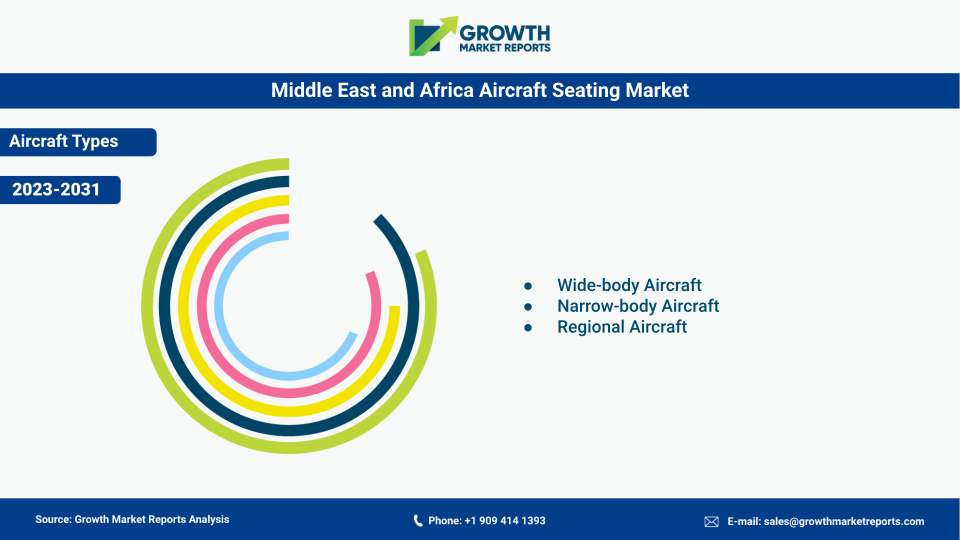
The aircraft seating market is segmented by aircraft type into narrow body, wide body, regional jets, and business jets. Narrow body aircraft represent the largest segment by volume, reflecting their widespread use on short and medium-haul routes. The ongoing shift towards single-aisle aircraft, driven by their operational flexibility and cost efficiency, is fueling demand for lightweight and space-optimized seating solutions. Airlines operating narrow body fleets are increasingly investing in cabin densification strategies, which involve optimizing seat layouts to maximize passenger capacity without compromising comfort.
Wide body aircraft, while accounting for a smaller share of total deliveries, represent a significant value segment due to their deployment on long-haul and premium routes. The seating configurations in wide body aircraft are typically more complex, with a higher proportion of business and first-class seats. Airlines are leveraging the spacious interiors of wide body jets to introduce innovative seating concepts, such as suites, mini-cabins, and social spaces. The wide body segment is also a key focus for premium carriers in regions such as the Middle East and Asia Pacific, where luxury and exclusivity are central to the brand proposition.
Regional jets occupy a niche segment of the aircraft seating market, serving short-haul and regional routes that connect secondary cities and remote destinations. The seating requirements for regional jets are distinct, with a focus on lightweight, space-efficient designs that can accommodate high-frequency operations and rapid turnarounds. As regional air travel continues to grow, particularly in emerging markets, demand for cost-effective and easily maintainable seating solutions is rising. Manufacturers are responding with modular and reconfigurable seat designs that can be tailored to the unique needs of regional carriers.
Business jets represent the pinnacle of luxury and customization in the aircraft seating market. Owners and operators of business jets demand bespoke seating solutions that reflect their personal preferences and corporate branding. The emphasis is on comfort, privacy, and advanced functionality, with features such as fully flat beds, conference tables, and integrated entertainment systems becoming standard. The business jet segment is also characterized by rapid innovation, as manufacturers compete to deliver the most exclusive and technologically advanced cabin environments. As corporate travel rebounds and private aviation gains popularity, the business jet segment is poised for sustained growth.
The aircraft type segment is thus a key determinant of market dynamics, influencing seat design, material selection, and feature integration. Airlines and operators are increasingly seeking tailored solutions that align with their operational profiles and customer demographics. The ability to offer differentiated seating across aircraft types is becoming a critical competitive advantage for seat manufacturers, driving ongoing investment in research, development, and customization capabilities.
The aircraft seating market presents a host of opportunities for stakeholders across the value chain. One of the most significant opportunities lies in the ongoing digital transformation of the aviation industry. The integration of smart technologies into aircraft seats, such as IoT-enabled sensors, personalized entertainment systems, and wireless charging, is opening up new revenue streams and enhancing passenger engagement. Airlines are increasingly leveraging data collected from connected seats to optimize cabin layouts, personalize services, and improve operational efficiency. This trend is expected to accelerate as passengers demand more seamless and technologically advanced inflight experiences, creating fertile ground for innovation and differentiation.
Another major opportunity is the growing emphasis on sustainability and environmental responsibility within the aviation sector. Airlines and seat manufacturers are investing in eco-friendly materials, recyclable components, and energy-efficient manufacturing processes to reduce the environmental footprint of aircraft interiors. The adoption of lightweight composites and bio-based foams is helping to lower fuel consumption and emissions, while circular economy principles are being applied to seat life cycle management. Regulatory pressures and consumer expectations are converging to make sustainability a key competitive differentiator, offering significant growth potential for companies that can deliver green seating solutions without compromising on performance or cost.
Despite the positive outlook, the aircraft seating market faces several restraining factors that could temper growth. One of the primary challenges is the high cost and complexity of certification and regulatory compliance. Aircraft seats must meet stringent safety, flammability, and crashworthiness standards, which require extensive testing and documentation. The certification process can be time-consuming and costly, particularly for new designs and materials. Additionally, supply chain disruptions, fluctuations in raw material prices, and geopolitical uncertainties can impact production timelines and profitability. As airlines remain highly cost-sensitive, especially in the wake of recent economic challenges, pricing pressures and margin erosion remain persistent threats for seat manufacturers and suppliers.
The regional distribution of the aircraft seating market reflects the broader dynamics of the global aviation industry. North America remains the largest market, accounting for approximately USD 2.1 billion in 2024, driven by the presence of major airlines, OEMs, and a mature MRO ecosystem. The region is characterized by high adoption rates of premium seating solutions and a strong focus on innovation and passenger experience. Airlines in North America are leading the way in cabin reconfiguration and retrofitting, with a particular emphasis on business and first-class upgrades. The aftermarket and MRO segments are especially vibrant, supported by a large installed base of commercial aircraft and a robust regulatory framework.
Europe is another key market, with a 2024 value of around USD 1.6 billion. The region is home to several leading seat manufacturers and benefits from strong demand for both OEM and aftermarket solutions. European airlines are at the forefront of sustainability initiatives, driving the adoption of lightweight and eco-friendly seating materials. Regulatory harmonization across the European Union is facilitating cross-border collaboration and innovation, while the region's diverse airline landscape supports a wide range of seat types and configurations. The European aircraft seating market is expected to grow at a steady pace, with a projected CAGR of 5.2% through 2033.
Asia Pacific is the fastest-growing region, with a market size of USD 1.3 billion in 2024 and a projected CAGR of 7.1% through 2033. Rapid urbanization, rising disposable incomes, and the proliferation of low-cost carriers are fueling air travel demand across the region. Airlines are investing heavily in fleet expansion and cabin modernization, creating significant opportunities for seat manufacturers and suppliers. The region is also witnessing the emergence of new OEMs and MRO providers, further boosting market growth. While Latin America and Middle East & Africa are smaller markets, valued at USD 0.7 billion and USD 0.5 billion respectively in 2024, they are experiencing steady growth as regional connectivity improves and new entrants stimulate competition.
The competitive landscape of the aircraft seating market is characterized by a mix of established global players and innovative new entrants, all vying for market share through product differentiation, technological innovation, and strategic partnerships. Leading companies are investing heavily in research and development to stay ahead of evolving passenger preferences and regulatory requirements. The focus is on delivering seats that combine comfort, durability, and advanced functionality, while also meeting stringent weight and safety standards. Collaboration with airlines, OEMs, and MRO providers is common, enabling manufacturers to tailor solutions to specific customer needs and streamline the certification process.
Mergers, acquisitions, and joint ventures are shaping the competitive dynamics of the market, as players seek to expand their product portfolios and global footprints. The integration of digital technologies and smart features is emerging as a key battleground, with companies racing to offer the most connected and customizable seating solutions. Sustainability is also becoming a critical differentiator, with manufacturers developing eco-friendly materials and processes to align with airline and passenger expectations. The ability to offer end-to-end solutions, from design and manufacturing to installation and maintenance, is increasingly important in securing long-term contracts and building customer loyalty.
The market is also witnessing the entry of niche players specializing in high-end and bespoke seating solutions, particularly in the business and first-class segments. These companies are leveraging advanced manufacturing techniques, such as 3D printing and additive manufacturing, to deliver highly customized and rapidly deployable products. The rise of modular and reconfigurable seating concepts is enabling greater flexibility and operational efficiency, further intensifying competition. As airlines continue to prioritize passenger experience and operational performance, the pressure on seat manufacturers to innovate and deliver value-added solutions will only increase.
Among the major companies in the aircraft seating market are Recaro Aircraft Seating GmbH & Co. KG, Safran S.A., Collins Aerospace (a unit of Raytheon Technologies), Geven S.p.A., and Jamco Corporation. Recaro is renowned for its lightweight and ergonomic seat designs, with a strong focus on sustainability and passenger comfort. Safran is a global leader in aerospace interiors, offering a comprehensive range of seating solutions for all aircraft types and segments. Collins Aerospace is at the forefront of integrating smart and connected features into aircraft seats, enhancing both passenger experience and airline operational efficiency. Geven and Jamco are recognized for their innovative designs and strong presence in the regional and business jet segments.
Other notable players include Aviointeriors S.p.A., Zodiac Aerospace (now part of Safran), Thompson Aero Seating, and Acro Aircraft Seating. These companies are distinguished by their agility and ability to deliver customized seating solutions for a diverse range of airline customers. The competitive landscape is further enriched by a network of suppliers, technology partners, and MRO providers, all contributing to the ongoing evolution of the aircraft seating market. As the industry continues to recover and grow, the ability to anticipate and respond to changing market dynamics will be critical to long-term success.
The Aircraft Seating market has been segmented on the basis of
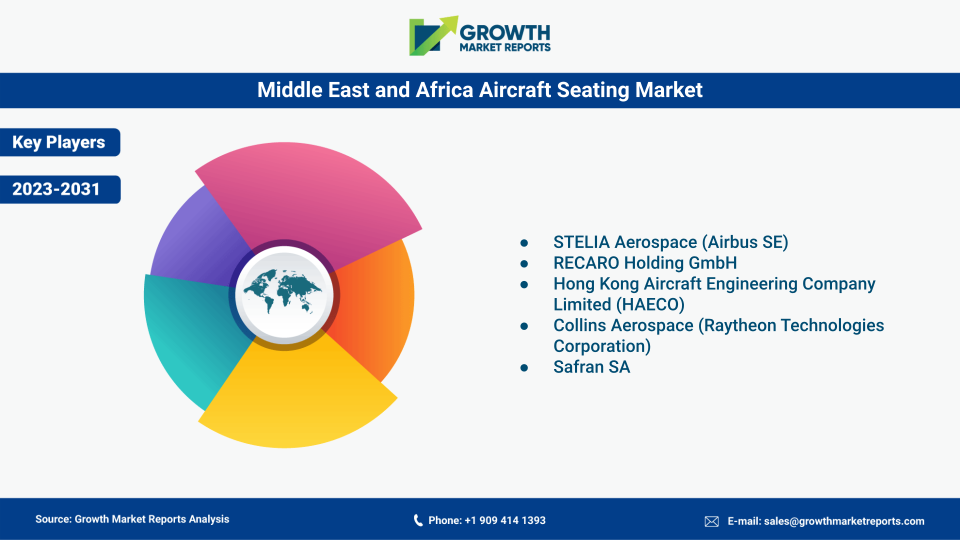
Some of the prominent players in the market are STELIA Aerospace (Airbus SE), RECARO Holding GmbH, Hong Kong Aircraft Engineering Company Limited (HAECO), Collins Aerospace (Raytheon Technologies Corporation), and Safran SA
Key challenges include high certification and regulatory compliance costs, supply chain disruptions, raw material price fluctuations, and pricing pressures due to airline cost sensitivity.
Major players include Recaro Aircraft Seating, Safran S.A., Collins Aerospace, Geven S.p.A., Jamco Corporation, Aviointeriors, Thompson Aero Seating, and Acro Aircraft Seating.
Opportunities include the integration of smart technologies, IoT-enabled seats, sustainable and eco-friendly materials, and modular designs for flexible cabin configurations.
Key components include the seat structure, foam, upholstery, actuators, and additional features like tray tables, armrests, and in-seat entertainment systems.
Asia Pacific is the fastest-growing region, while North America and Europe lead in premium segment adoption and technological innovation. The Middle East is notable for luxury seating demand.
Technological advancements such as lightweight composite materials, ergonomic designs, modular seating, and smart features like in-seat power and personalized entertainment are transforming the market.
Premium economy, business, and first-class seats are seeing rapid value growth, with premium economy particularly strong due to its balance of affordability and comfort.
Major growth drivers include the recovery of the aviation sector, increased investments in premium seating, ongoing fleet renewals, rising passenger expectations for comfort, and advancements in seating technology and materials.
The aircraft seating market is expected to grow at a CAGR of 5.8% from 2025 to 2033, reaching USD 10.3 billion by 2033.
As of 2024, the global aircraft seating market size reached USD 6.2 billion, driven by the resurgence of air travel and fleet modernization.