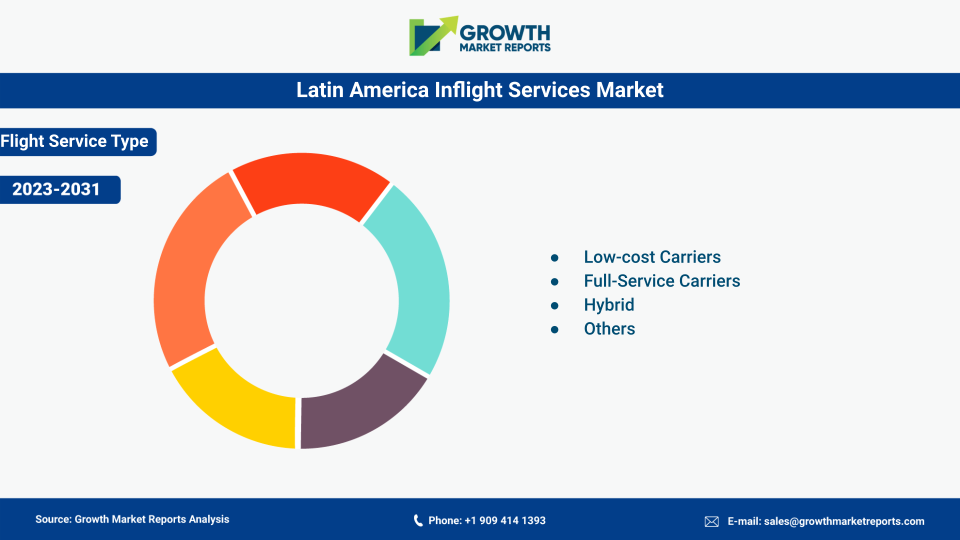
Segments - by Service Type (Food & Beverage, Entertainment, Connectivity, Duty-Free Shopping, Others), by Class (Economy Class, Business Class, First Class), by Provider (Airline Operators, Outsourced Service Providers), by Aircraft Type (Narrow Body, Wide Body, Regional Jets, Business Jets)
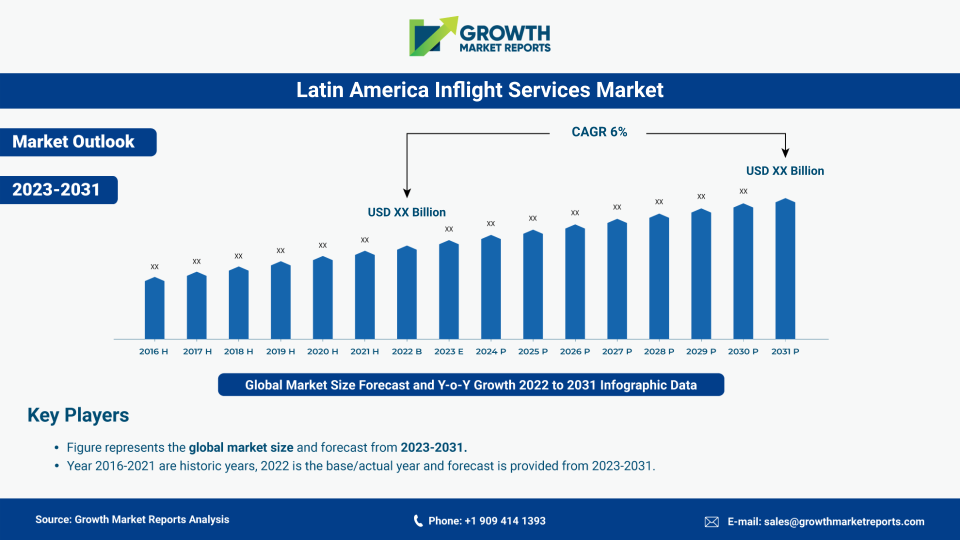
According to our latest research, the global inflight services market size reached USD 21.8 billion in 2024, reflecting a robust demand for enhanced passenger experiences and value-added offerings across the aviation sector. The market is projected to grow at a CAGR of 7.3% from 2025 to 2033, reaching an estimated USD 41.1 billion by 2033. This significant growth trajectory is driven by factors such as increasing air passenger traffic, evolving consumer expectations, and technological advancements in inflight connectivity and entertainment. As airlines compete to differentiate themselves in a highly competitive landscape, the emphasis on premium and personalized inflight services has become a critical growth lever, shaping the future of the industry.
One of the primary growth factors fueling the inflight services market is the continuous rise in global air travel. The steady increase in disposable incomes, rapid urbanization, and the proliferation of low-cost carriers have collectively contributed to higher passenger volumes, particularly in emerging markets. Airlines are responding to this surge by expanding their route networks and upgrading their inflight service portfolios to cater to a more diverse and discerning customer base. Enhanced food and beverage options, innovative entertainment systems, and seamless connectivity solutions are now considered essential elements of the overall travel experience, directly influencing customer satisfaction and airline loyalty. This evolving passenger expectation is compelling airlines to invest significantly in the modernization and diversification of their inflight service offerings.
Technological innovation is another crucial driver shaping the inflight services market. The integration of advanced inflight entertainment (IFE) systems, high-speed Wi-Fi, and digital payment solutions has transformed the way airlines deliver value to passengers. The proliferation of personal electronic devices has led to a demand for tailored digital content and uninterrupted connectivity, even at cruising altitudes. Airlines are increasingly partnering with technology providers to offer streaming services, real-time communication, and interactive platforms that enhance engagement and personalization. Furthermore, the adoption of data analytics and artificial intelligence enables airlines to better understand passenger preferences and optimize service delivery, ensuring a more customized and memorable inflight experience.
The inflight services market is also being shaped by changing dietary preferences, health consciousness, and sustainability concerns among travelers. Airlines are introducing healthier meal options, catering to special dietary requirements, and embracing eco-friendly packaging to align with the values of modern consumers. The trend towards sustainability is prompting airlines to source locally produced ingredients and minimize food waste, which not only enhances the passenger experience but also supports corporate social responsibility initiatives. Additionally, the growing demand for duty-free shopping and premium services in business and first-class cabins is driving incremental revenue opportunities for both airline operators and outsourced service providers.
Regionally, Asia Pacific stands out as the fastest-growing market for inflight services, driven by burgeoning middle-class populations, increasing international travel, and aggressive fleet expansions by regional carriers. North America and Europe continue to dominate in terms of market share, benefiting from established aviation infrastructure and high adoption rates of advanced inflight technologies. Meanwhile, the Middle East is emerging as a key growth hub, with flagship carriers investing heavily in luxury and personalized inflight offerings to attract premium clientele. These regional dynamics underscore the importance of localized strategies and targeted investments to capture growth opportunities and address unique customer needs across different geographies.
Within the inflight services market, the segmentation by service type reveals a dynamic landscape characterized by continuous innovation and evolving passenger expectations. Food & Beverage remains the largest segment, accounting for a substantial portion of airline ancillary revenues. Airlines are increasingly focusing on menu diversification, offering gourmet meals, regional cuisines, and special dietary options to cater to the varied tastes and health requirements of passengers. The integration of celebrity chefs and partnerships with renowned food brands has elevated the quality and perception of inflight dining, transforming it from a mere necessity to a memorable aspect of the travel experience. Furthermore, sustainability initiatives, such as eco-friendly packaging and locally sourced ingredients, are gaining traction, reflecting the growing consumer demand for responsible and ethical consumption.
Inflight Entertainment (IFE) has evolved significantly over the past decade, transitioning from basic seat-back screens to sophisticated, on-demand multimedia platforms. The proliferation of personal electronic devices and the expectation for high-quality digital content have driven airlines to invest in state-of-the-art IFE systems. Passengers now have access to a wide array of movies, TV shows, games, and music, often curated to reflect regional preferences and cultural diversity. The integration of streaming services and interactive features has further enhanced engagement, allowing passengers to personalize their entertainment experience. As competition intensifies, airlines are leveraging IFE as a key differentiator, using it to boost customer satisfaction and encourage repeat business.
Connectivity is rapidly emerging as one of the most sought-after inflight services, particularly among business travelers and younger demographics. High-speed Wi-Fi, real-time messaging, and seamless access to social media platforms are now considered essential components of the modern travel experience. Airlines are partnering with leading technology providers to deploy satellite-based connectivity solutions that offer reliable, uninterrupted internet access throughout the flight. The ability to work, communicate, and stay entertained while airborne not only enhances passenger convenience but also opens up new revenue streams through tiered pricing models and value-added services. As technology continues to advance, the scope and quality of inflight connectivity are expected to improve, further driving market growth.
Duty-Free Shopping represents another lucrative segment within the inflight services market, offering passengers the convenience of shopping for luxury goods, cosmetics, and exclusive merchandise during their journey. Airlines are leveraging digital catalogs, personalized recommendations, and pre-order options to enhance the shopping experience and boost ancillary revenues. The integration of secure payment gateways and loyalty programs has further incentivized passengers to make inflight purchases, contributing to the overall profitability of airline operations. This segment is particularly popular on long-haul international routes, where passengers have more time and inclination to browse and shop for exclusive products.
The Others category encompasses a range of value-added services, including wellness offerings, premium amenities, and personalized assistance. Airlines are introducing innovative services such as inflight yoga, spa treatments, and sleep enhancement kits to cater to the evolving needs of travelers. The emphasis on health, comfort, and well-being reflects the broader trend towards holistic travel experiences, positioning airlines as providers of not just transportation but comprehensive lifestyle solutions. As passenger expectations continue to evolve, the scope and diversity of inflight services are likely to expand, creating new opportunities for differentiation and revenue generation.
| Attributes | Details |
| Report Title | Inflight Services Market Research Report 2033 |
| By Service Type | Food & Beverage, Entertainment, Connectivity, Duty-Free Shopping, Others |
| By Class | Economy Class, Business Class, First Class |
| By Provider | Airline Operators, Outsourced Service Providers |
| By Aircraft Type | Narrow Body, Wide Body, Regional Jets, Business Jets |
| Regions Covered | North America, Europe, APAC, Latin America, MEA |
| Base Year | 2024 |
| Historic Data | 2018-2023 |
| Forecast Period | 2025-2033 |
| Number of Pages | 284 |
| Number of Tables & Figures | 353 |
| Customization Available | Yes, the report can be customized as per your need. |
The segmentation of the inflight services market by class highlights the varying expectations and service standards across different passenger segments. Economy Class represents the largest share of total passenger volume, driving significant demand for cost-effective yet high-quality inflight services. Airlines are increasingly focusing on enhancing the value proposition for economy travelers by offering improved meal options, complimentary beverages, and access to basic entertainment systems. The introduction of buy-on-board models and customizable service packages allows passengers to tailor their experience according to their preferences and budget. Despite the price sensitivity of this segment, the emphasis on comfort, convenience, and personalization remains paramount, prompting airlines to continuously innovate and refine their economy class offerings.
Business Class is characterized by a strong emphasis on premium services, comfort, and exclusivity. Passengers in this segment expect a higher standard of inflight dining, personalized entertainment options, and superior connectivity solutions. Airlines are investing in luxurious seating, increased privacy, and attentive service to differentiate their business class product and attract high-yield customers. The integration of advanced IFE systems, gourmet meal selections, and priority access to duty-free shopping further enhances the value proposition for business travelers. As corporate travel rebounds and competition intensifies, the ability to deliver a seamless and memorable business class experience has become a key differentiator for airlines seeking to capture market share in this lucrative segment.
First Class represents the pinnacle of inflight luxury, catering to a niche segment of affluent travelers seeking unparalleled comfort, privacy, and personalized service. Airlines are redefining the first-class experience by offering private suites, fine dining prepared by world-class chefs, and exclusive amenities such as spa treatments and chauffeur services. The focus on bespoke experiences and attention to detail sets first class apart, creating a sense of exclusivity and prestige that resonates with discerning passengers. While the overall share of first-class seats is relatively small, the high margins and brand value associated with this segment make it a strategic priority for leading airlines, particularly on long-haul and flagship routes.
The segmentation by class also underscores the importance of flexibility and adaptability in service delivery. Airlines are increasingly adopting hybrid models that blur the lines between traditional class distinctions, offering premium economy and customizable service bundles to cater to the diverse needs of modern travelers. This approach allows airlines to maximize revenue opportunities while ensuring that passengers across all classes receive a consistent and high-quality inflight experience. The ability to anticipate and respond to evolving passenger expectations is critical to sustaining growth and competitiveness in the inflight services market.
Ultimately, the segmentation by class reflects the broader trends shaping the aviation industry, including the democratization of air travel, the rise of experiential consumption, and the growing importance of personalization. By aligning their inflight service strategies with the unique needs and preferences of each passenger segment, airlines can enhance customer satisfaction, drive loyalty, and unlock new sources of revenue in an increasingly competitive market environment.
The inflight services market is segmented by provider into airline operators and outsourced service providers, each playing a distinct role in the delivery of value-added services to passengers. Airline operators traditionally manage a significant portion of inflight services in-house, leveraging their brand reputation and operational expertise to ensure consistency and quality. By maintaining direct control over service delivery, airlines can tailor offerings to align with their brand identity and customer expectations. This approach is particularly prevalent among full-service carriers and flagship airlines, which prioritize premium service standards and customer satisfaction as key differentiators in a competitive market.
However, the increasing complexity and specialization required to deliver high-quality inflight services have led many airlines to partner with outsourced service providers. These third-party companies bring expertise in areas such as catering, entertainment, and connectivity, enabling airlines to access the latest innovations and best practices without the need for significant capital investment. Outsourcing allows airlines to focus on their core competencies while benefiting from the scale, efficiency, and flexibility offered by specialized service providers. This trend is particularly pronounced among low-cost carriers and regional airlines, which seek to optimize costs and streamline operations by leveraging external partnerships.
The relationship between airline operators and outsourced service providers is evolving, with a growing emphasis on collaboration, innovation, and value creation. Airlines are increasingly seeking integrated solutions that combine multiple service elements, such as bundled food and entertainment packages or seamless connectivity and shopping experiences. This holistic approach enables airlines to deliver a more cohesive and personalized inflight experience, enhancing customer satisfaction and driving ancillary revenues. The ability to adapt to changing passenger preferences and technological advancements is a key success factor for both airlines and service providers in this dynamic market.
Quality assurance and regulatory compliance are critical considerations in the provider landscape. Airlines and outsourced service providers must adhere to stringent safety, hygiene, and service standards to ensure the well-being and satisfaction of passengers. The COVID-19 pandemic has heightened awareness of health and safety protocols, prompting both airlines and service providers to implement enhanced cleaning procedures, contactless services, and digital solutions to minimize physical interaction and ensure passenger confidence. The ability to demonstrate a commitment to safety and quality is increasingly viewed as a competitive advantage in the post-pandemic era.
Looking ahead, the provider landscape is expected to become increasingly collaborative and innovation-driven, with airlines and service providers working together to co-create differentiated and value-added inflight services. The integration of digital technologies, data analytics, and artificial intelligence will play a pivotal role in shaping the future of service delivery, enabling real-time personalization, predictive maintenance, and continuous improvement. As the inflight services market continues to evolve, the ability to forge strategic partnerships and leverage complementary capabilities will be essential to capturing growth opportunities and sustaining long-term competitiveness.
The inflight services market is further segmented by aircraft type, encompassing narrow body, wide body, regional jets, and business jets. Narrow body aircraft represent the largest share of the global commercial fleet, primarily serving short- and medium-haul routes. The high frequency of narrow body flights and the large volume of economy class passengers drive significant demand for cost-effective and efficient inflight services. Airlines operating narrow body aircraft are focused on optimizing service delivery, minimizing turnaround times, and enhancing the value proposition for price-sensitive travelers. The adoption of buy-on-board models, pre-packaged meals, and simplified entertainment options reflects the unique operational and commercial dynamics of this segment.
Wide body aircraft are typically deployed on long-haul and international routes, where passenger expectations for comfort, entertainment, and premium services are significantly higher. The larger cabin space and extended flight durations provide airlines with greater flexibility to offer a comprehensive range of inflight services, including multi-course dining, advanced entertainment systems, and luxury amenities. Wide body aircraft are often equipped with multiple service classes, allowing airlines to cater to a diverse passenger base and maximize ancillary revenue opportunities. The ability to deliver a seamless and differentiated inflight experience is particularly critical on long-haul flights, where service quality directly influences customer satisfaction and loyalty.
Regional jets serve shorter, point-to-point routes, often connecting smaller cities and secondary airports. The inflight services offered on regional jets are typically more limited, reflecting the shorter flight durations and smaller cabin sizes. However, airlines are increasingly recognizing the importance of consistency and quality across their entire fleet, prompting investments in upgraded seating, enhanced catering, and basic entertainment options for regional jet passengers. The ability to deliver a positive and memorable experience, even on short-haul flights, is essential to building brand loyalty and capturing market share in competitive regional markets.
Business jets represent a niche but highly lucrative segment of the inflight services market, catering to corporate clients, high-net-worth individuals, and VIP travelers. The focus in this segment is on bespoke, personalized service, with an emphasis on privacy, exclusivity, and attention to detail. Business jet operators offer a wide range of customizable inflight services, including gourmet dining, premium beverages, on-demand entertainment, and concierge support. The ability to anticipate and exceed the expectations of discerning clients is a key differentiator in the business jet market, driving demand for innovative and tailored service solutions.
The segmentation by aircraft type underscores the importance of flexibility, adaptability, and innovation in the delivery of inflight services. Airlines and service providers must tailor their offerings to the unique operational, commercial, and passenger dynamics of each aircraft type, ensuring a consistent and high-quality experience across the entire fleet. The ability to leverage technology, optimize processes, and deliver value-added services in a cost-effective manner will be critical to sustaining growth and competitiveness in the evolving inflight services market.
The inflight services market presents significant opportunities for growth, innovation, and value creation. One of the most promising opportunities lies in the integration of digital technologies and data-driven personalization. Airlines can leverage passenger data to offer tailored recommendations, dynamic pricing, and personalized service bundles that enhance the overall travel experience and drive ancillary revenues. The adoption of mobile apps, digital wallets, and contactless payment solutions enables seamless transactions and real-time engagement, creating new touchpoints for customer interaction and loyalty building. Furthermore, the growing demand for sustainable and eco-friendly inflight services presents opportunities for airlines to differentiate themselves through responsible sourcing, waste reduction, and environmental stewardship.
Another key opportunity in the inflight services market is the expansion of premium and value-added offerings, particularly in business and first-class cabins. As global travel rebounds and corporate budgets recover, airlines have the opportunity to capture high-yield customers by investing in luxury amenities, exclusive partnerships, and bespoke experiences. The rise of experiential consumption and the desire for unique, memorable journeys create a fertile environment for innovation in inflight dining, entertainment, and wellness services. Additionally, the increasing popularity of duty-free shopping and onboard retail presents opportunities for airlines to diversify their revenue streams and enhance the overall value proposition for passengers.
Despite these opportunities, the inflight services market faces several restraining factors, most notably the ongoing pressure to balance cost efficiency with service quality. Airlines operate in a highly competitive and cost-sensitive environment, where margins are often thin and operational constraints are significant. The need to optimize costs without compromising the passenger experience presents a persistent challenge, particularly for low-cost carriers and regional operators. Additionally, regulatory requirements, safety standards, and health protocols impose additional complexity and compliance costs on inflight service delivery. The ability to navigate these challenges while maintaining a focus on innovation, quality, and customer satisfaction will be critical to sustaining growth and competitiveness in the inflight services market.
The regional analysis of the inflight services market reveals distinct trends and growth dynamics across major geographies. Asia Pacific has emerged as the fastest-growing region, with a market size of USD 6.2 billion in 2024, driven by rapid urbanization, rising disposable incomes, and the expansion of both full-service and low-cost carriers. The region is projected to witness a CAGR of 9.2% through 2033, outpacing other regions as airlines invest in fleet modernization, route expansion, and service innovation to cater to a burgeoning middle-class population. The increasing adoption of digital technologies and the growing demand for personalized, value-added services are shaping the competitive landscape in Asia Pacific, creating opportunities for both local and international service providers.
North America remains the largest regional market for inflight services, with a market size of USD 7.8 billion in 2024. The region benefits from a mature aviation industry, high passenger volumes, and a strong culture of innovation and customer service. Airlines in North America are at the forefront of adopting advanced inflight entertainment and connectivity solutions, leveraging technology to enhance the passenger experience and drive ancillary revenues. The emphasis on premium services, loyalty programs, and personalized offerings is particularly pronounced in the business and first-class segments, where competition for high-yield customers is intense. The region's strong regulatory framework and focus on safety and quality further support the growth and development of the inflight services market.
Europe accounts for a significant share of the global inflight services market, with a market size of USD 5.1 billion in 2024. The region is characterized by a diverse mix of full-service, low-cost, and regional carriers, each with distinct service strategies and customer profiles. European airlines are investing in sustainability, health, and wellness initiatives, reflecting the evolving preferences of environmentally conscious and health-aware travelers. The integration of digital solutions, such as mobile ordering and interactive entertainment platforms, is enhancing the passenger experience and creating new opportunities for engagement and revenue generation. Meanwhile, the Middle East & Africa and Latin America are emerging as growth markets, with airlines in these regions investing in premium services and fleet expansion to capture new customer segments and capitalize on rising travel demand.
The competitive landscape of the inflight services market is characterized by intense rivalry, continuous innovation, and a dynamic interplay between airline operators, outsourced service providers, and technology companies. Leading airlines are investing heavily in the modernization and diversification of their inflight service portfolios, seeking to differentiate themselves through premium offerings, personalized experiences, and seamless digital integration. The ability to anticipate and respond to evolving passenger expectations is a key success factor, prompting airlines to forge strategic partnerships with catering companies, entertainment providers, and technology firms to deliver integrated and value-added solutions. The focus on customer satisfaction, loyalty, and brand differentiation is driving a wave of innovation and investment across the industry.
Outsourced service providers play a critical role in the delivery of inflight services, offering airlines access to specialized expertise, scale, and operational efficiency. Leading catering companies, such as Gate Gourmet and LSG Sky Chefs, are leveraging their global networks and culinary expertise to deliver high-quality, diverse, and customizable meal options to airlines worldwide. Entertainment and connectivity providers, such as Panasonic Avionics and Gogo, are at the forefront of technological innovation, enabling airlines to offer state-of-the-art IFE systems and high-speed Wi-Fi solutions that enhance the passenger experience and create new revenue opportunities. The ability to collaborate, innovate, and deliver consistent quality is essential to sustaining competitiveness in the outsourced services segment.
Technology companies are increasingly shaping the future of inflight services, driving the adoption of digital platforms, data analytics, and artificial intelligence to enable real-time personalization, predictive maintenance, and continuous improvement. The integration of mobile apps, digital payment solutions, and interactive entertainment platforms is transforming the way airlines engage with passengers and deliver value throughout the travel journey. The ability to leverage technology to enhance service delivery, optimize operations, and drive ancillary revenues is becoming a critical differentiator for both airlines and service providers in the inflight services market.
Some of the major companies operating in the inflight services market include LSG Sky Chefs, Gate Gourmet, DO & CO, dnata, Panasonic Avionics, Gogo, Thales Group, and SATS Ltd. LSG Sky Chefs and Gate Gourmet are global leaders in inflight catering, offering a wide range of culinary solutions and value-added services to airlines worldwide. DO & CO is renowned for its premium catering and hospitality services, particularly in the business and first-class segments. dnata provides comprehensive inflight catering, retail, and logistics solutions, supporting airlines in delivering high-quality and efficient service. Panasonic Avionics, Gogo, and Thales Group are at the forefront of inflight entertainment and connectivity, enabling airlines to offer cutting-edge digital experiences and seamless connectivity to passengers. SATS Ltd is a leading provider of food solutions and gateway services in Asia, supporting airlines in delivering consistent and high-quality inflight services across the region.
These companies are continuously investing in innovation, sustainability, and digital transformation to stay ahead in a rapidly evolving market. Strategic partnerships, mergers and acquisitions, and collaborative ventures are increasingly common as companies seek to expand their capabilities, enhance their service portfolios, and capture new growth opportunities. The ability to anticipate and respond to changing market dynamics, customer preferences, and technological advancements will be critical to sustaining long-term competitiveness and growth in the inflight services market.
The Inflight Services market has been segmented on the basis of
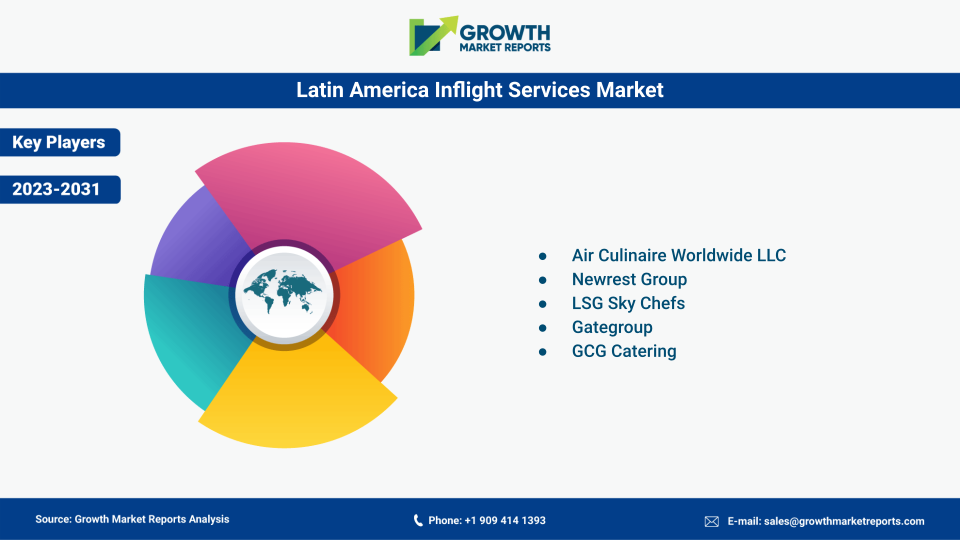
Key players competing in the Latin America inflight services market include Air Culinaire Worldwide LLC; Newrest Group; LSG Sky Chefs; gategroup; GCG Catering.
Consumers in Latin America demand ethically produced and nutritious food items which caterers and carriers bear in mind when designing value addition and service distinction.
Catering companies also consider the tastes of economy class passengers when creating menus, as economy class flights are growing increasingly popular among individuals in the region.
Opportunities include leveraging digital technologies for personalization, expanding premium and value-added offerings, investing in sustainability, and increasing ancillary revenues through services like duty-free shopping and onboard retail.
Key challenges include balancing cost efficiency with service quality, regulatory compliance, health and safety protocols, and the need for continuous innovation to meet evolving passenger expectations.
Economy class focuses on cost-effective quality, business class emphasizes premium and personalized services, while first class offers luxury, exclusivity, and bespoke experiences. Airlines are also introducing hybrid and premium economy models.
Major companies include LSG Sky Chefs, Gate Gourmet, DO & CO, dnata, Panasonic Avionics, Gogo, Thales Group, SATS Ltd, and several leading regional catering and service providers.
Airlines are focusing on menu diversification, healthier meal options, special dietary requirements, eco-friendly packaging, and partnerships with celebrity chefs to enhance inflight dining experiences.
Technological innovations like advanced IFE systems, high-speed Wi-Fi, digital payment solutions, and data analytics are transforming inflight services, enabling personalized experiences and seamless connectivity for passengers.
Major inflight services include Food & Beverage, Inflight Entertainment (IFE), Connectivity (Wi-Fi and messaging), Duty-Free Shopping, and other value-added services such as wellness and premium amenities.
North America is the largest regional market, followed by Europe and Asia Pacific. Asia Pacific is the fastest-growing region, while the Middle East is emerging as a key growth hub.
The inflight services market is expected to grow at a CAGR of 7.3% from 2025 to 2033, reaching an estimated USD 41.1 billion by 2033.
As of 2024, the global inflight services market size reached USD 21.8 billion, with strong demand for enhanced passenger experiences and value-added offerings across the aviation sector.