Segments - by Type (Main Landing Gear, Nose Landing Gear), by Platform (Fixed Wing, Rotary Wing), by Aircraft Type (Narrow-Body, Wide-Body, Regional, Business Jets, Others), by Component (Actuator, Brake System, Wheel & Tire, Strut, Others), by End-User (OEM, Aftermarket)
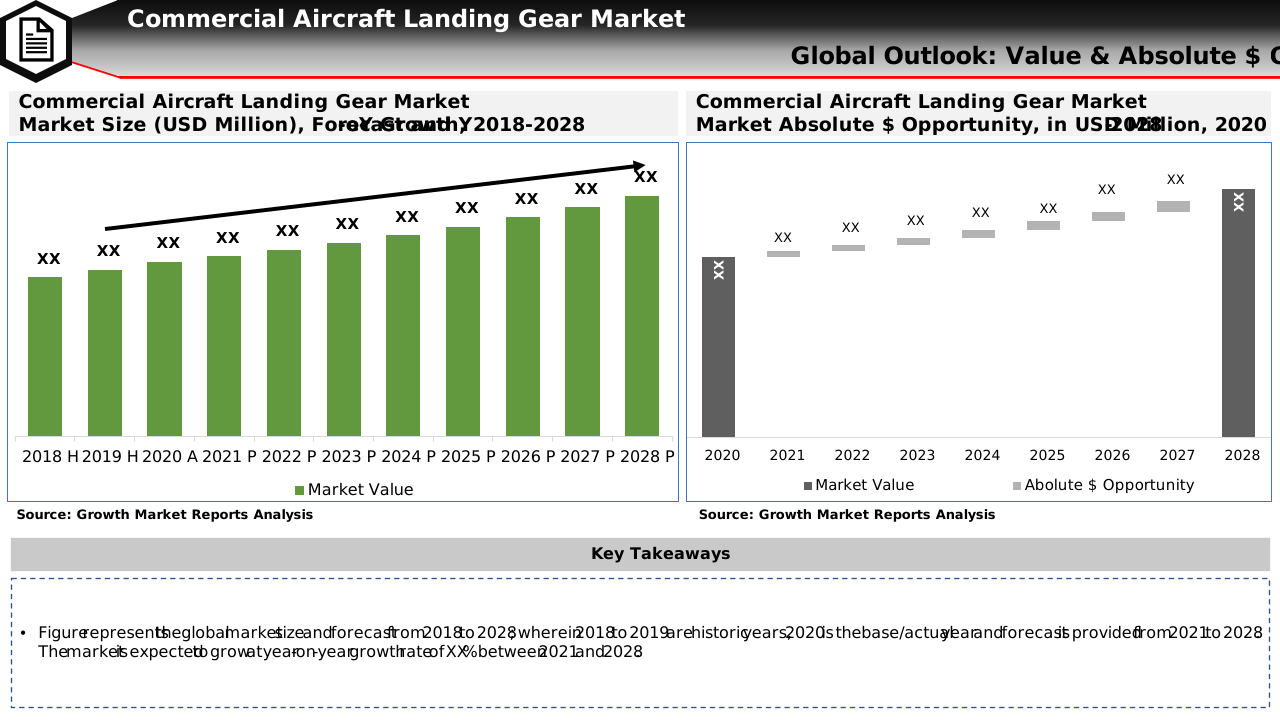
According to our latest research, the global commercial aircraft landing gear market size reached USD 8.6 billion in 2024, reflecting robust demand driven by increasing air travel and fleet modernization initiatives. The market is projected to expand at a CAGR of 6.2% from 2025 to 2033, reaching an estimated USD 14.8 billion by 2033. Key growth factors include surging commercial aircraft deliveries, technological advancements in lightweight and durable landing gear systems, and a strong focus on fuel efficiency and safety enhancements across the aviation sector.
A primary growth driver for the commercial aircraft landing gear market is the accelerated rate of global air passenger traffic, which is compelling airlines to modernize and expand their fleets. The International Air Transport Association (IATA) reports a consistent rise in passenger numbers, especially in emerging economies, prompting airlines to invest in next-generation aircraft equipped with advanced landing gear systems. Additionally, the need to replace aging aircraft with newer models that comply with stricter environmental and safety regulations is catalyzing demand for innovative landing gear solutions. These trends are further reinforced by the increasing frequency of long-haul flights, which require robust, reliable, and lightweight landing gear to enhance operational efficiency and reduce maintenance costs over the aircraftÂ’s lifecycle.
Technological advancements are playing a pivotal role in shaping the commercial aircraft landing gear market landscape. Modern landing gear systems are incorporating advanced materials such as carbon composites and titanium alloys, significantly reducing weight while maintaining structural integrity and durability. The integration of smart sensors and real-time health monitoring systems within landing gear assemblies is also gaining traction, enabling predictive maintenance and minimizing unscheduled downtime. These technological innovations not only enhance safety and reliability but also contribute to the overall reduction of operational costs for airlines. Furthermore, manufacturers are increasingly focusing on modular designs and additive manufacturing techniques, streamlining production processes and facilitating rapid customization to meet diverse airline requirements.
Another critical factor fueling market expansion is the growing emphasis on sustainability and environmental stewardship within the aviation industry. Regulatory bodies worldwide are imposing stringent norms to curb carbon emissions and improve fuel efficiency, prompting aircraft OEMs and suppliers to develop landing gear systems that support these objectives. The adoption of lightweight landing gear components directly contributes to lower fuel consumption and reduced greenhouse gas emissions, aligning with global sustainability targets. Additionally, the increasing demand for aftermarket services, including retrofitting and upgrading of landing gear in existing aircraft, is further bolstering market growth as operators seek to extend the operational life of their fleets while adhering to evolving regulatory standards.
From a regional perspective, Asia Pacific is emerging as the fastest-growing market for commercial aircraft landing gear, driven by rapid urbanization, economic growth, and substantial investments in aviation infrastructure. North America and Europe continue to dominate in terms of market share, owing to established aerospace industries, high aircraft production rates, and a strong presence of leading OEMs and suppliers. Meanwhile, the Middle East and Latin America are witnessing steady growth, fueled by expanding airline networks and increased focus on tourism and business travel. These regional dynamics are expected to shape the competitive landscape of the commercial aircraft landing gear market over the forecast period, with manufacturers increasingly tailoring their offerings to cater to specific regional requirements and regulatory environments.
The commercial aircraft landing gear market is segmented by type into main landing gear and nose landing gear, each playing a vital role in aircraft safety and performance. Main landing gear systems, typically bearing the majority of the aircraftÂ’s weight during landing and takeoff, dominate the market owing to their complex design and critical load-bearing responsibilities. These systems are engineered to withstand immense stresses and are subject to rigorous certification standards, making them a focal point for innovation and technological upgrades. The adoption of advanced materials and sophisticated shock absorption mechanisms in main landing gear assemblies is enhancing durability and lifespan, thereby reducing long-term maintenance expenses for operators.
Nose landing gear, though smaller in size compared to main landing gear, is equally essential for steering and maneuvering the aircraft during taxiing, takeoff, and landing. The segment is witnessing significant advancements in terms of lightweight construction and integration of electronic steering systems, which improve handling and reduce pilot workload. As airlines increasingly demand aircraft with enhanced ground maneuverability and safety features, manufacturers are investing in the development of nose landing gear systems with improved reliability and lower maintenance requirements. This trend is particularly pronounced in narrow-body and regional aircraft, where operational efficiency and turnaround time are critical competitive factors.
The interplay between main and nose landing gear segments is also influenced by the growing trend towards multi-role and multi-mission aircraft, necessitating landing gear systems that can adapt to varying operational profiles. Manufacturers are responding by offering modular and customizable landing gear solutions, enabling airlines to optimize aircraft performance for specific routes and missions. Additionally, the incorporation of advanced braking systems and anti-skid technologies in both main and nose landing gear is enhancing safety during adverse weather conditions and high-traffic airport operations. These innovations are expected to drive sustained growth in both segments, as airlines prioritize safety, reliability, and operational flexibility.
The Landing Gear Retraction Actuator is another crucial component in the aircraft landing gear assembly, responsible for the smooth and efficient retraction and extension of the landing gear during flight operations. This actuator must withstand significant mechanical stresses and operate flawlessly under varying environmental conditions. As the aviation industry moves towards more sustainable and efficient aircraft designs, there is a growing emphasis on developing actuators that are not only robust and reliable but also lightweight and energy-efficient. Manufacturers are exploring the use of advanced materials and innovative engineering techniques to enhance the performance of retraction actuators, ensuring they meet the rigorous demands of modern aviation while contributing to overall fuel savings and reduced emissions. The integration of smart technologies into actuators is also enabling more precise control and monitoring, further enhancing the safety and efficiency of aircraft operations.
Furthermore, the increasing adoption of electric taxiing systems, which leverage the nose landing gear to enable aircraft movement on the ground without engine power, is poised to revolutionize ground operations and reduce fuel consumption. This emerging technology is attracting significant interest from both airlines and airport operators, as it promises to lower operating costs and minimize environmental impact. As regulatory pressures mount and sustainability becomes a key industry priority, the demand for advanced main and nose landing gear systems equipped with such innovations is set to rise, offering lucrative opportunities for manufacturers and suppliers in the years ahead.
| Attributes | Details |
| Report Title | Commercial Aircraft Landing Gear Market Research Report 2033 |
| By Type | Main Landing Gear, Nose Landing Gear |
| By Platform | Fixed Wing, Rotary Wing |
| By Aircraft Type | Narrow-Body, Wide-Body, Regional, Business Jets, Others |
| By Component | Actuator, Brake System, Wheel & Tire, Strut, Others |
| By End-User | OEM, Aftermarket |
| Regions Covered | North America, Europe, APAC, Latin America, MEA |
| Base Year | 2024 |
| Historic Data | 2018-2023 |
| Forecast Period | 2025-2033 |
| Number of Pages | 293 |
| Number of Tables & Figures | 278 |
| Customization Available | Yes, the report can be customized as per your need. |
The commercial aircraft landing gear market is further segmented by platform into fixed wing and rotary wing aircraft, each with distinct operational requirements and design considerations. Fixed wing aircraft, which include the majority of commercial airliners, represent the largest share of the market due to their widespread use in passenger and cargo transportation. The landing gear systems for fixed wing platforms are engineered for high durability, efficient shock absorption, and compatibility with a variety of runway conditions, ensuring safe and reliable operations across diverse environments. The continuous introduction of next-generation fixed wing aircraft, featuring advanced aerodynamics and lightweight structures, is driving demand for innovative landing gear solutions that complement these advancements.
Rotary wing aircraft, encompassing commercial helicopters and tiltrotors, constitute a smaller but rapidly growing segment of the landing gear market. The unique operational profiles of rotary wing platforms, which often involve vertical takeoff and landing (VTOL) and operations in challenging terrains, necessitate specialized landing gear systems with enhanced flexibility and shock absorption capabilities. Manufacturers are focusing on the development of lightweight, retractable, and energy-absorbing landing gear for rotary wing aircraft to meet the evolving needs of operators in sectors such as offshore transportation, emergency medical services, and urban air mobility. The increasing adoption of advanced materials and digital monitoring systems is further enhancing the performance and reliability of landing gear in this segment.
The growth trajectory of both fixed wing and rotary wing segments is influenced by the broader trends of fleet expansion, aircraft modernization, and the integration of smart technologies. In the fixed wing segment, the demand for larger, more efficient aircraft with extended range capabilities is prompting OEMs to collaborate closely with landing gear suppliers to develop systems that optimize weight, strength, and maintenance intervals. Meanwhile, the rotary wing segment is experiencing a surge in demand for lightweight and compact landing gear, driven by the proliferation of urban air mobility solutions and unmanned aerial vehicles (UAVs) for commercial applications.
Additionally, the increasing focus on safety and regulatory compliance across both platforms is fueling investments in advanced testing and certification processes for landing gear systems. Manufacturers are leveraging digital simulation and predictive analytics to enhance the design, testing, and maintenance of landing gear assemblies, ensuring compliance with stringent international standards. As the aviation industry continues to evolve, the ability to offer platform-specific, technologically advanced landing gear solutions will be a key differentiator for market players, driving sustained growth and innovation across both fixed wing and rotary wing segments.
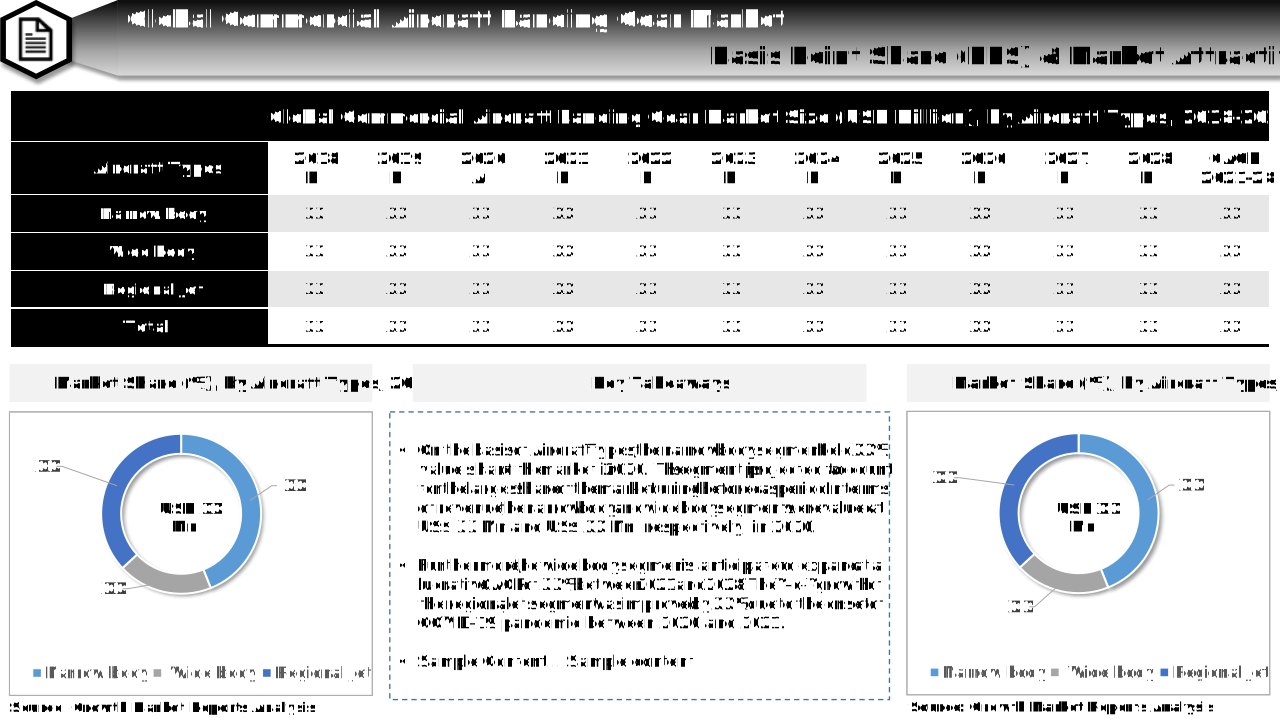
The commercial aircraft landing gear market is segmented by aircraft type into narrow-body, wide-body, regional, business jets, and others, each presenting distinct demand dynamics and growth opportunities. Narrow-body aircraft, which dominate short- to medium-haul routes, account for the largest share of the market due to their high production volumes and widespread adoption by low-cost carriers and full-service airlines alike. The ongoing replacement of older narrow-body models with fuel-efficient, next-generation aircraft is driving significant investments in advanced landing gear systems that offer improved weight savings, durability, and maintenance efficiency. Manufacturers are responding by developing modular and scalable landing gear solutions tailored to the evolving needs of this high-volume segment.
Wide-body aircraft, primarily used for long-haul and international routes, represent a significant portion of the market in terms of value, given the complexity and size of their landing gear systems. The demand for wide-body landing gear is closely tied to the expansion of intercontinental air travel and the introduction of new, larger aircraft models by leading OEMs. These landing gear systems are engineered to withstand higher loads and more frequent cycles, necessitating the use of advanced materials and robust design methodologies. The integration of real-time health monitoring and predictive maintenance capabilities is becoming increasingly common in wide-body landing gear, enabling operators to maximize aircraft availability and minimize operational disruptions.
Regional aircraft and business jets, while constituting smaller market segments, are experiencing steady growth driven by rising demand for point-to-point connectivity, corporate travel, and charter services. The landing gear requirements for these aircraft types are characterized by a focus on lightweight construction, compact design, and ease of maintenance, reflecting the operational realities of frequent, short-haul flights and smaller airport infrastructure. Manufacturers are leveraging advanced manufacturing techniques and materials to deliver landing gear solutions that meet the specific performance and cost requirements of regional and business jet operators.
The "others" category, which includes specialized aircraft such as cargo planes and military derivatives used for commercial purposes, also contributes to market growth. These aircraft often operate in challenging environments and require landing gear systems with enhanced ruggedness and adaptability. As the air cargo and specialized aviation segments continue to expand, driven by e-commerce growth and evolving logistics needs, the demand for customized landing gear solutions is expected to rise, presenting new opportunities for innovation and market penetration.
The commercial aircraft landing gear market is segmented by component into actuator, brake system, wheel & tire, strut, and others, each playing a critical role in the overall functionality and safety of the landing gear assembly. Actuators, responsible for the deployment and retraction of landing gear, are witnessing increasing demand for electric and electro-hydraulic variants that offer improved reliability, reduced weight, and enhanced energy efficiency. The shift towards more electric aircraft architectures is driving innovation in actuator technologies, with manufacturers focusing on integrating smart sensors and real-time monitoring capabilities to support predictive maintenance and minimize operational downtime.
Brake systems are another vital component, ensuring safe deceleration and stopping of the aircraft during landing and taxiing operations. The adoption of advanced carbon brake technologies is gaining momentum, offering significant weight savings, improved heat dissipation, and extended service life compared to traditional steel brakes. Additionally, the integration of electronic braking systems and anti-skid controls is enhancing safety and performance, particularly in challenging runway conditions. As airlines seek to optimize operational efficiency and reduce maintenance costs, the demand for state-of-the-art brake systems is expected to remain strong across all aircraft segments.
Wheels and tires, though often overlooked, are essential for safe ground operations and must withstand high loads, rapid acceleration, and repeated cycles of landing and takeoff. The market is witnessing a trend towards the use of advanced composite materials and innovative tread designs, which improve durability, reduce weight, and enhance resistance to wear and tear. Manufacturers are also focusing on developing real-time tire pressure monitoring systems, enabling operators to proactively address maintenance issues and prevent costly delays or incidents.
Struts, which absorb and dissipate the energy generated during landing, are critical for ensuring passenger comfort and structural integrity of the aircraft. The use of high-strength alloys and advanced damping mechanisms is enhancing the performance and longevity of struts, reducing the frequency of replacements and associated maintenance costs. The "others" segment, encompassing components such as sensors, control systems, and hydraulic lines, is also experiencing growth as manufacturers integrate more sophisticated electronics and digital technologies into landing gear assemblies. These advancements are driving a holistic approach to landing gear design, prioritizing safety, efficiency, and ease of maintenance.
The commercial aircraft landing gear market is segmented by end-user into OEM (original equipment manufacturer) and aftermarket, each representing distinct demand drivers and growth trajectories. The OEM segment, which involves the supply of landing gear systems for new aircraft production, constitutes the largest share of the market due to the ongoing replacement of aging fleets and the introduction of new aircraft models by leading manufacturers. OEMs are increasingly collaborating with landing gear suppliers to develop integrated, lightweight, and modular systems that align with the latest aircraft designs and performance requirements. The focus on reducing assembly time, streamlining logistics, and ensuring seamless integration with other aircraft systems is driving innovation and competitiveness within the OEM segment.
The aftermarket segment, encompassing maintenance, repair, and overhaul (MRO) services, is experiencing robust growth as airlines seek to extend the operational life of their fleets and comply with evolving safety and regulatory standards. The increasing complexity of modern landing gear systems, coupled with the need for regular inspections and component replacements, is fueling demand for specialized MRO providers with expertise in advanced materials, digital diagnostics, and predictive maintenance. The trend towards outsourcing MRO activities to third-party specialists is gaining momentum, enabling airlines to focus on core operations while ensuring optimal fleet reliability and safety.
The interplay between OEM and aftermarket segments is further influenced by the growing adoption of digital technologies and data-driven maintenance practices. Manufacturers and MRO providers are leveraging big data analytics, IoT-enabled sensors, and cloud-based platforms to monitor landing gear performance in real-time, identify potential issues before they escalate, and optimize maintenance schedules. This shift towards predictive and condition-based maintenance is reducing unscheduled downtime, lowering operational costs, and enhancing overall safety and reliability for operators.
Additionally, the increasing prevalence of leasing arrangements and fleet management services is shaping demand patterns within both OEM and aftermarket segments. Lessors and fleet operators are prioritizing landing gear solutions that offer flexibility, ease of maintenance, and compatibility with a wide range of aircraft models, driving manufacturers to develop standardized and interchangeable components. As the aviation industry continues to evolve, the ability to offer comprehensive, end-to-end landing gear solutions that address the needs of both OEMs and aftermarket customers will be a key differentiator for market players.
The commercial aircraft landing gear market presents significant opportunities for growth and innovation, particularly in the areas of technological advancement and sustainability. The ongoing shift towards lightweight materials such as carbon composites and titanium alloys offers manufacturers the chance to develop landing gear systems that deliver substantial weight savings, improved fuel efficiency, and reduced environmental impact. The integration of smart sensors, real-time health monitoring, and predictive maintenance capabilities is another major opportunity, enabling operators to optimize maintenance practices, reduce downtime, and enhance safety. As regulatory bodies impose stricter emissions and safety standards, manufacturers that can deliver landing gear solutions aligned with these requirements are well-positioned to capture a larger share of the market.
The rapid expansion of emerging markets, particularly in Asia Pacific and the Middle East, offers lucrative opportunities for landing gear suppliers to tap into new customer bases and establish long-term partnerships with regional airlines and OEMs. The increasing adoption of electric and hybrid-electric aircraft, as well as the emergence of urban air mobility solutions, is creating demand for specialized landing gear systems capable of supporting novel operational profiles and environments. Additionally, the growth of the aftermarket segment, driven by rising demand for MRO services and fleet modernization initiatives, presents opportunities for companies to diversify their offerings and generate recurring revenue streams through service contracts, upgrades, and retrofits.
Despite these opportunities, the commercial aircraft landing gear market faces several restraining factors and threats that could impact growth prospects. One of the primary challenges is the high cost and complexity associated with the development, certification, and integration of advanced landing gear systems. Stringent regulatory requirements, coupled with the need for extensive testing and validation, can result in lengthy development cycles and increased time-to-market for new products. Additionally, the cyclical nature of the aviation industry, characterized by fluctuations in aircraft orders and deliveries, can create uncertainty and disrupt demand patterns for landing gear suppliers. The ongoing volatility in raw material prices and supply chain disruptions, exacerbated by geopolitical tensions and global events, further adds to the operational risks faced by manufacturers in this market.
North America continues to lead the commercial aircraft landing gear market, accounting for approximately 35% of the global market share in 2024, which translates to a market value of around USD 3.0 billion. The regionÂ’s dominance is underpinned by the presence of major aircraft manufacturers, a mature aviation infrastructure, and a high rate of fleet modernization initiatives. The United States, in particular, is a key hub for research and development in advanced landing gear technologies, with leading OEMs and suppliers investing heavily in innovation and digitalization. The strong focus on safety, regulatory compliance, and operational efficiency is driving sustained demand for state-of-the-art landing gear systems across both commercial and regional airline segments.
Europe represents the second-largest market, with a share of approximately 28% in 2024, or about USD 2.4 billion. The regionÂ’s robust aerospace industry, coupled with the presence of leading aircraft OEMs and tier-one suppliers, is fostering a highly competitive landscape for landing gear manufacturers. The European market is characterized by a strong emphasis on sustainability, with regulatory bodies such as the European Union Aviation Safety Agency (EASA) driving the adoption of lightweight, fuel-efficient landing gear solutions. The increasing focus on reducing carbon emissions and enhancing operational efficiency is prompting airlines and MRO providers to invest in advanced technologies and digital maintenance platforms, further stimulating market growth.
Asia Pacific is emerging as the fastest-growing region in the commercial aircraft landing gear market, with a projected CAGR of 7.5% from 2025 to 2033. The region accounted for approximately 22% of the global market in 2024, equivalent to USD 1.9 billion. Rapid urbanization, rising disposable incomes, and significant investments in aviation infrastructure are fueling air travel demand and driving aircraft deliveries across key markets such as China, India, and Southeast Asia. Local airlines are expanding their fleets and modernizing existing aircraft to cater to growing passenger volumes, creating substantial opportunities for landing gear suppliers. The increasing presence of regional MRO providers and the establishment of local manufacturing facilities are further enhancing the regionÂ’s competitiveness and attractiveness as a destination for landing gear investments.
The competitive landscape of the commercial aircraft landing gear market is characterized by the presence of a mix of global giants and specialized players, each vying for market leadership through innovation, strategic partnerships, and a focus on quality and reliability. The market is highly consolidated, with a handful of major companies controlling a significant share of the global market, particularly in the OEM segment. These industry leaders leverage their extensive R&D capabilities, strong customer relationships, and global supply chains to maintain a competitive edge and respond rapidly to evolving market demands. At the same time, the aftermarket segment is witnessing the emergence of specialized MRO providers and independent suppliers, offering tailored maintenance solutions and value-added services to airline operators worldwide.
Innovation remains a key differentiator in the commercial aircraft landing gear market, with leading companies investing heavily in the development of advanced materials, digital technologies, and smart maintenance solutions. The integration of IoT-enabled sensors, predictive analytics, and real-time health monitoring systems is enabling manufacturers to offer comprehensive, data-driven solutions that enhance safety, reduce downtime, and optimize lifecycle costs for operators. Strategic collaborations and joint ventures with aircraft OEMs, airlines, and technology providers are also becoming increasingly common, as companies seek to expand their product portfolios, access new markets, and accelerate the adoption of next-generation landing gear technologies.
Supply chain management and operational efficiency are critical success factors for market players, given the complexity and scale of landing gear manufacturing and maintenance activities. Companies are focusing on streamlining production processes, optimizing inventory management, and mitigating risks associated with raw material price volatility and supply chain disruptions. The ongoing trend towards vertical integration, whereby leading manufacturers acquire or partner with key suppliers, is further enhancing their ability to deliver high-quality, cost-effective landing gear solutions on a global scale.
Major companies operating in the commercial aircraft landing gear market include Safran Landing Systems, Collins Aerospace (a Raytheon Technologies company), Liebherr-Aerospace, Héroux-Devtek Inc., and Triumph Group, Inc. Safran Landing Systems is a global leader in landing gear design, manufacturing, and MRO services, renowned for its focus on innovation, sustainability, and customer-centric solutions. Collins Aerospace offers a comprehensive portfolio of landing gear systems and components, leveraging its extensive engineering expertise and global support network to serve a diverse customer base. Liebherr-Aerospace is recognized for its advanced landing gear technologies and strong presence in both OEM and aftermarket segments, while Héroux-Devtek specializes in the design, development, and support of landing gear solutions for commercial, regional, and business aircraft. Triumph Group, Inc. is a key supplier of landing gear assemblies, components, and MRO services, with a strong focus on quality, reliability, and operational excellence.
These industry leaders are continuously investing in research and development, digital transformation, and strategic partnerships to strengthen their market positions and capitalize on emerging opportunities. Their commitment to innovation, quality, and customer satisfaction is driving the evolution of the commercial aircraft landing gear market, ensuring that operators have access to the most advanced, reliable, and efficient landing gear solutions available. As the market continues to grow and evolve, competition is expected to intensify, with new entrants and disruptive technologies challenging established players and reshaping the industry landscape for years to come.
The Commercial Aircraft Landing Gear market has been segmented on the basis of
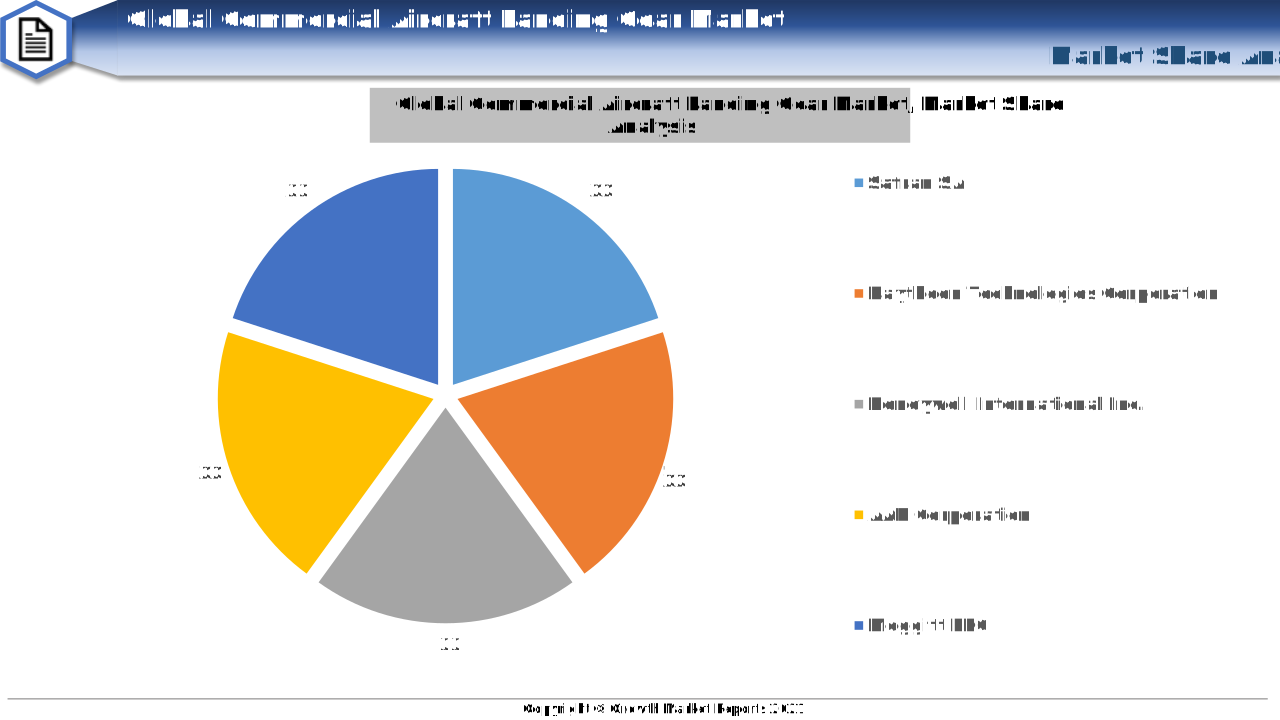
Key players competing in the commercial aircraft landing gear market include Safran SA; Raytheon Technologies Corporation; Honeywell International Inc.; AAR Corporation; and Meggitt PLC.
The aftermarket segment is growing due to increased demand for maintenance, repair, and overhaul (MRO) services, fleet modernization, and retrofitting of landing gear to extend aircraft operational life and comply with evolving regulations.
Sustainability is driving the adoption of lightweight materials and fuel-efficient designs, as well as the integration of systems that reduce carbon emissions and support global environmental targets.
Key challenges include high development and certification costs, stringent regulatory requirements, supply chain disruptions, raw material price volatility, and the cyclical nature of the aviation industry.
Major companies include Safran Landing Systems, Collins Aerospace, Liebherr Group, Héroux-Devtek Inc., Triumph Group, Inc., UTC Aerospace Systems, GKN Aerospace, Magellan Aerospace, and others.
The market is segmented by aircraft type into narrow-body, wide-body, regional, business jets, and others. By platform, it is divided into fixed wing and rotary wing aircraft, each with unique operational requirements.
Technological innovations such as the use of carbon composites and titanium alloys, integration of smart sensors, real-time health monitoring, and modular designs are reducing weight, improving durability, and enabling predictive maintenance.
The market is segmented into main landing gear, which bears most of the aircraft's weight, and nose landing gear, essential for steering and maneuvering during taxiing, takeoff, and landing.
North America leads the market with about 35% share, followed by Europe at 28%. Asia Pacific is the fastest-growing region, with a projected CAGR of 7.5% from 2025 to 2033, driven by rapid urbanization and aviation infrastructure investments.
Key growth drivers include increasing air travel, fleet modernization, technological advancements in lightweight and durable landing gear systems, and a strong focus on fuel efficiency and safety enhancements.
The global commercial aircraft landing gear market reached USD 8.6 billion in 2024 and is projected to grow at a CAGR of 6.2% from 2025 to 2033, reaching approximately USD 14.8 billion by 2033.