Aerospace Plastics Market Report 2025-2034

Aerospace Plastics Market Report 2025-2034

Segments - by Polymer Type (Polyetheretherketone (PEEK), Polycarbonate (PC), Polyamide (PA), Polymethyl Methacrylate (PMMA), Polyphenylene Sulfide (PPS), Others), by Application (Aerostructure, Cabin Interiors, Propulsion Systems, Equipment, Components & Systems, Others), by Aircraft Type (Commercial Aircraft, Military Aircraft, General Aviation, Others)

https://growthmarketreports.com/Raksha
Author : Raksha Sharma
https://growthmarketreports.com/Vaibhav
Fact-checked by : V. Chandola
https://growthmarketreports.com/Shruti
Editor : Shruti Bhat

Last Updated : Jun, 2026 | Report ID :AD-2887 | 4.3 Rating | 68 Reviews | 251 Pages | Format : Docx PDF

Report Description

This report is updated with the latest market data and insights as of June 2026. Base year: 2025  |  Forecast period: 2026-2034


Aerospace Plastics Market Outlook

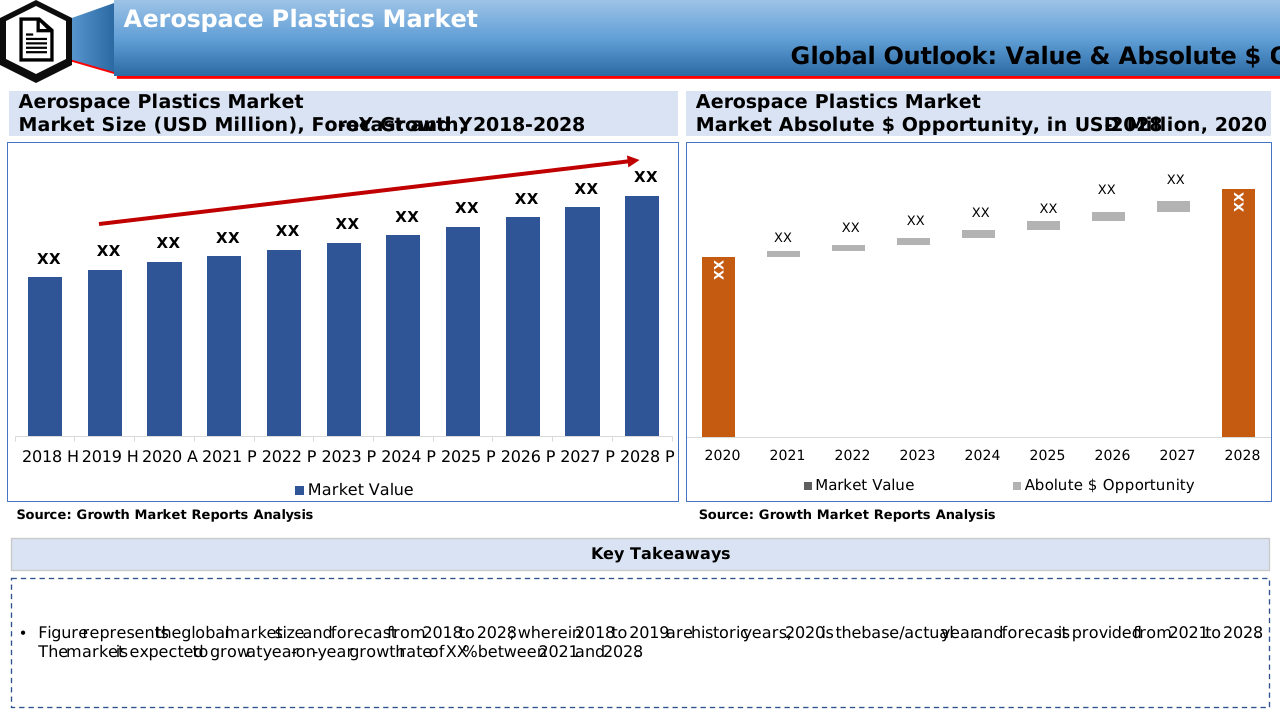
According to our latest research, the global aerospace plastics market size reached USD 1.63 billion in 2025, with the industry demonstrating robust expansion driven by technological advancements and the rising adoption of lightweight materials in aircraft manufacturing. The market is projected to grow at a CAGR of 6.1% from 2026 to 2034, reaching a forecasted value of USD 2.78 billion by 2034. The primary driver for this growth is the increasing demand for fuel-efficient and lightweight aircraft, coupled with the aerospace industry's continuous innovation in material science and engineering. Historical data from 2019 to 2024 confirms a consistent upward trend, reflecting both recovery from pandemic-era disruptions and structural tailwinds from fleet modernization and new aircraft programs.

Global Aerospace Plastics Market Size Forecast 2025-2034, USD Billion

One of the significant growth factors propelling the aerospace plastics market is the relentless pursuit of weight reduction in aircraft to enhance fuel efficiency and reduce operational costs. Aerospace plastics, with their superior strength-to-weight ratio, have become indispensable for manufacturers seeking to replace traditional metal components. The integration of advanced polymers such as polyetheretherketone (PEEK), polycarbonate (PC), and polyamide (PA) has enabled the production of aircraft components that are not only lighter but also exhibit excellent resistance to corrosion, chemicals, and high temperatures. This material evolution is crucial for both commercial and military aircraft, where every kilogram saved translates into significant cost savings and environmental benefits over the aircraft's lifecycle. The broader universe of aerospace raw materials is undergoing a parallel transformation, with polymers claiming a steadily larger share versus aluminum and titanium alloys.

Another critical driver is the stringent regulatory landscape governing emissions and safety standards in the aerospace sector. Regulatory bodies such as the Federal Aviation Administration (FAA) and the European Union Aviation Safety Agency (EASA) have imposed rigorous standards for aircraft performance, safety, and environmental impact. These regulations have accelerated the adoption of aerospace plastics, as these materials contribute to compliance by enabling lighter, more durable, and safer aircraft designs. Furthermore, the rising trend of aircraft modernization and fleet renewal programs among airlines and defense agencies worldwide is fueling the demand for innovative plastic materials that offer enhanced performance and design flexibility. The parallel growth of high-performance aerospace thermoplastics is reinforcing this regulatory tailwind, with thermoplastic composites offering faster processing cycles and improved recyclability compared with thermoset alternatives.

The growing focus on sustainability and recyclability in the aerospace industry is also shaping the trajectory of the aerospace plastics market. Manufacturers are increasingly investing in the development of bio-based and recyclable polymers to align with global sustainability goals and reduce the environmental footprint of aircraft production. The shift towards sustainable aviation is fostering partnerships across the supply chain, encouraging research and development in advanced composite materials, and opening new avenues for market players to differentiate their offerings. As airlines and aircraft manufacturers prioritize green initiatives, the demand for eco-friendly aerospace plastics is expected to witness significant growth over the 2026-2034 forecast period.

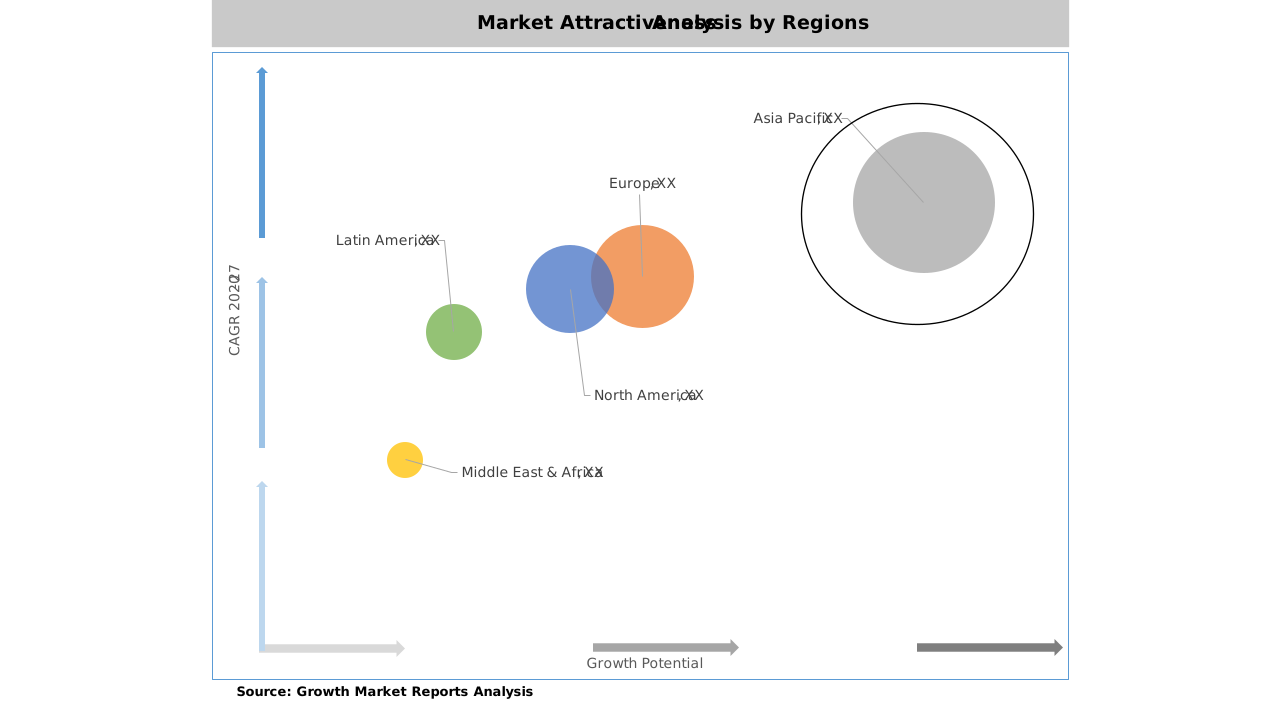
Regionally, North America continues to dominate the aerospace plastics market, owing to the presence of major aircraft manufacturers, robust R&D infrastructure, and high defense spending. However, the Asia Pacific region is emerging as a lucrative market, supported by expanding commercial aviation sectors in China and India, increasing investments in aerospace manufacturing, and favorable government policies. Europe also holds a substantial share, driven by the presence of leading aerospace OEMs and a strong focus on innovation and sustainability. The regional outlook for the aerospace plastics market remains positive, with each region contributing uniquely to the industry's overall growth dynamics through the forecast horizon to 2034.

Engineering plastics are becoming increasingly significant in the aerospace industry due to their versatile properties and ability to enhance aircraft performance. These materials, which include high-performance polymers like PEEK and polycarbonate, are known for their exceptional strength-to-weight ratios, thermal stability, and resistance to harsh environmental conditions. As the aerospace sector continues to push the boundaries of innovation, engineering plastics are at the forefront, offering solutions that not only meet stringent safety and regulatory standards but also contribute to the overall efficiency and sustainability of modern aircraft designs. Their growing overlap with advanced aerospace composites is generating hybrid material architectures that deliver performance benefits neither family of materials could achieve independently.

Polymer Type Analysis

The polymer type segment is a cornerstone of the aerospace plastics market, with materials such as polyetheretherketone (PEEK), polycarbonate (PC), polyamide (PA), polymethyl methacrylate (PMMA), and polyphenylene sulfide (PPS) leading the way in terms of adoption and innovation. PEEK stands out for its exceptional mechanical properties, chemical resistance, and ability to withstand high temperatures, making it a preferred choice for critical aircraft components. Its application in engine parts, brackets, and electrical insulation has grown substantially, driven by the need for materials that can endure extreme conditions without compromising performance. PEEK accounted for approximately 28.5% of the global market in 2025, reflecting its premium positioning. The high cost of PEEK remains a challenge, prompting ongoing research into cost-effective production methods and alternative high-performance polymers.

Aerospace Plastics Market Share by Polymer Type 2025

Polycarbonate (PC) is another prominent polymer in the aerospace plastics market, valued for its transparency, impact resistance, and lightweight nature. PC held approximately 22% of the polymer segment in 2025 and is extensively used in the manufacturing of aircraft windows, canopies, and lighting systems, where optical clarity and durability are paramount. The ability of polycarbonate to be easily molded into complex shapes further enhances its appeal for cabin interior applications and cockpit instrumentation. As the demand for passenger comfort and safety rises, the use of polycarbonate in innovative cabin designs and advanced lighting solutions is expected to increase, contributing to the overall growth of the aerospace plastics market through 2034.

Polyamide (PA), commonly known as nylon, is widely utilized in aerospace applications due to its excellent wear resistance, low friction, and good mechanical strength. PA held around 18.5% of the market in 2025 and is often used for bearings, bushings, and fasteners in both commercial and military aircraft. Its versatility and cost-effectiveness make it a popular choice for secondary structural components and interior fittings. The ongoing development of reinforced and specialty polyamides, such as glass-filled and carbon-filled variants, is expanding the scope of PA applications in the aerospace industry, particularly in areas where higher strength and durability are required.

Polymethyl methacrylate (PMMA), also known as acrylic, is renowned for its optical clarity, weatherability, and lightweight properties. PMMA represented roughly 12% of the global aerospace plastics market in 2025 and is predominantly used in the production of aircraft windows, canopies, and external lighting covers. Its ability to transmit light efficiently while offering excellent resistance to UV radiation and environmental stress makes it ideal for exterior and interior glazing applications. The demand for PMMA is expected to remain strong as aircraft designs evolve to incorporate larger windows and innovative lighting features that enhance passenger experience and safety. The broader shift toward advanced structural materials also encompasses aerospace sandwich panels, where PMMA and PC face sheets are increasingly paired with lightweight core materials for interior partitions and cargo liners.

Polyphenylene sulfide (PPS) and other specialty polymers are gaining traction in the aerospace plastics market for their unique properties, including high thermal stability, flame retardancy, and resistance to chemicals and solvents. PPS accounted for approximately 10.5% of the market in 2025 and is particularly suitable for under-the-hood applications, electrical connectors, and structural parts that require long-term performance in harsh environments. The remaining 8.5% of the market is served by other specialty polymers including polyetherimide (PEI), polysulfone (PSU), and liquid crystal polymers (LCP), all of which are finding growing roles in next-generation aircraft programs. The expansion of the aerospace plastics market is closely linked to ongoing advancements in polymer technology, with manufacturers investing in new grades and formulations to meet the evolving needs of the aerospace sector.

Report Scope

Attributes Details
Report Title Aerospace Plastics Market Research Report 2025-2034
By Polymer Type Polyetheretherketone (PEEK), Polycarbonate (PC), Polyamide (PA), Polymethyl Methacrylate (PMMA), Polyphenylene Sulfide (PPS), Others
By Application Aerostructure, Cabin Interiors, Propulsion Systems, Equipment, Components & Systems, Others
By Aircraft Type Commercial Aircraft, Military Aircraft, General Aviation, Others
Regions Covered North America, Europe, APAC, Latin America, MEA
Base Year 2025
Historic Data 2019-2024
Forecast Period 2026-2034
Number of Pages 251
Number of Tables & Figures 321
Customization Available Yes, the report can be customized as per your need.

Application Analysis

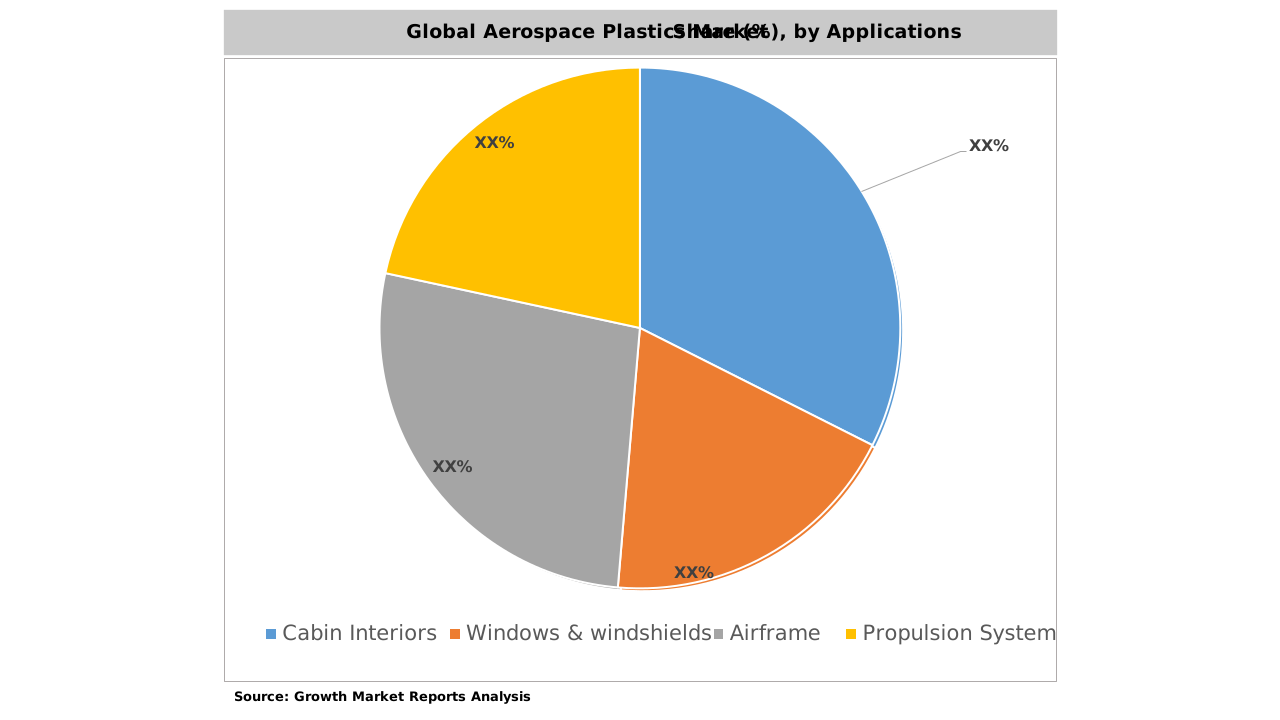
The application segment of the aerospace plastics market encompasses a wide range of uses, including aerostructure, cabin interiors, propulsion systems, equipment, components & systems, and other specialized areas. Aerostructure applications represent a significant share of the market, as plastics are increasingly replacing metals in primary and secondary structural components. The use of advanced polymers in fuselage panels, wing assemblies, and control surfaces enables manufacturers to achieve substantial weight savings, improve fuel efficiency, and reduce maintenance costs. The adoption of aerospace plastics in aerostructures is expected to accelerate further through 2034 as design philosophies shift towards greater integration of composite materials and modular construction techniques. This trajectory runs parallel to broader growth in aerospace-grade composite manufacturing, where polymer matrices form the backbone of structural fiber-reinforced systems.

Cabin interiors constitute another major application area for aerospace plastics, driven by the need for lightweight, aesthetically pleasing, and durable materials that enhance passenger comfort and safety. Plastics are extensively used in seat frames, overhead bins, wall panels, and lavatory modules, offering designers the flexibility to create innovative layouts and incorporate advanced features such as antimicrobial surfaces and integrated lighting. The trend towards premium cabin experiences in commercial aviation, coupled with stringent fire, smoke, and toxicity (FST) regulations, is fueling the demand for high-performance plastics that meet safety and regulatory requirements while enabling creative design solutions.

Propulsion systems, including engine components, nacelles, and exhaust systems, are increasingly utilizing aerospace plastics to achieve superior performance under extreme operating conditions. High-temperature polymers such as PEEK and PPS are particularly valued for their ability to maintain mechanical integrity and resist degradation in the presence of heat, vibration, and aggressive chemicals. The use of plastics in propulsion systems not only contributes to weight reduction but also enhances reliability and extends the service life of critical components. As engine designs evolve to meet higher efficiency and lower emission targets, the role of advanced plastics in propulsion systems is expected to expand significantly over the 2026-2034 period.

The equipment, components, and systems segment includes a diverse array of applications, ranging from avionics housings and electrical connectors to hydraulic systems and landing gear components. Aerospace plastics offer excellent electrical insulation, dimensional stability, and resistance to environmental factors, making them ideal for use in sensitive electronic and mechanical systems. The integration of plastics in these applications supports the miniaturization of components, improves system performance, and facilitates easier maintenance and repair. The ongoing digitization and electrification of aircraft systems are anticipated to drive further growth in this segment, as manufacturers seek materials that can keep pace with technological advancements.

Other specialized applications of aerospace plastics include cargo systems, emergency equipment, and exterior lighting covers, where the unique properties of polymers provide critical advantages in terms of weight, durability, and design flexibility. The versatility of aerospace plastics allows manufacturers to tailor material properties to specific performance requirements, enabling the development of customized solutions for niche applications. As the aerospace industry continues to innovate and diversify, the range of applications for aerospace plastics is expected to broaden, creating new opportunities for market growth and differentiation. The use of high-performance woven and nonwoven polymer materials in specialized areas also overlaps with the growth of aerospace fabrics, where textile-form polymers serve roles in insulation blankets, cargo liners, and fire barriers.

Aircraft Type Analysis

The aircraft type segment of the aerospace plastics market is categorized into commercial aircraft, military aircraft, general aviation, and others. Commercial aircraft represent the largest share of the market, driven by the ongoing expansion of global air travel, the introduction of new aircraft models, and the increasing emphasis on operational efficiency. Airlines and aircraft manufacturers are investing heavily in the adoption of lightweight materials to reduce fuel consumption, lower emissions, and enhance passenger experience. The use of aerospace plastics in commercial aircraft spans a wide range of applications, from structural components and cabin interiors to avionics and propulsion systems, reflecting the material's versatility and performance benefits. As of 2025, the continued ramp-up of Boeing's 737 MAX and 787 programs, alongside Airbus's A320neo and A350 families, is sustaining strong demand across polymer types.

Military aircraft constitute a significant segment of the aerospace plastics market, with demand driven by defense modernization programs, the development of advanced fighter jets, and the need for high-performance materials that can withstand extreme operational environments. Aerospace plastics are used extensively in military aircraft for applications such as radar domes, missile components, and electronic housings, where lightweight, durability, and resistance to harsh conditions are essential. The increasing focus on stealth technology and unmanned aerial vehicles (UAVs) is further boosting the adoption of advanced polymers in military aviation, as these materials enable the design of complex, aerodynamically optimized structures with reduced radar signatures. Defense budget expansions in the United States, Europe, and the Indo-Pacific region are providing a durable demand floor for high-performance aerospace plastics in military applications through 2034.

General aviation, encompassing business jets, private aircraft, and light aircraft, is also contributing to the growth of the aerospace plastics market. The rising popularity of private and corporate aviation, coupled with advancements in aircraft design and manufacturing, is driving the demand for lightweight, cost-effective, and aesthetically appealing materials. Aerospace plastics are used in various general aviation applications, including interior fittings, instrument panels, and exterior fairings, where they offer a balance of performance, durability, and design flexibility. The growing market for electric and hybrid aircraft in the general aviation sector is expected to further stimulate demand for innovative plastic materials that support new propulsion technologies and lightweight construction.

Other aircraft types, such as helicopters, drones, and urban air mobility (UAM) vehicles, represent niche but rapidly growing segments of the aerospace plastics market. The unique operational requirements of these platforms, including vertical takeoff and landing (VTOL), high maneuverability, and compact design, necessitate the use of advanced materials that can deliver exceptional strength, lightweight, and resistance to environmental factors. Aerospace plastics are increasingly being adopted in these segments for applications such as rotor blades, fuselage panels, and avionics enclosures, enabling manufacturers to push the boundaries of design and performance. The UAM sector in particular is forecast to become a meaningful incremental demand source for high-performance polymers by the end of the forecast period in 2034.

The aircraft type segment is characterized by a dynamic interplay of technological innovation, regulatory requirements, and market demand, with each segment presenting unique opportunities and challenges for aerospace plastics manufacturers. As the aerospace industry evolves to meet the demands of a rapidly changing global landscape, the role of plastics in enabling next-generation aircraft designs and performance enhancements is set to become even more prominent.

Opportunities & Threats

The aerospace plastics market presents a multitude of opportunities for growth and innovation, driven by the ongoing evolution of aircraft design and manufacturing processes. One of the most significant opportunities lies in the development of next-generation polymers and composite materials that offer enhanced performance characteristics, such as higher strength-to-weight ratios, improved thermal stability, and superior resistance to environmental factors. Manufacturers that invest in research and development to create advanced materials tailored to the specific needs of the aerospace industry are well-positioned to capture a larger share of the market as it grows from USD 1.63 billion in 2025 toward USD 2.78 billion in 2034. Additionally, the increasing adoption of additive manufacturing (3D printing) in aerospace production presents new avenues for the use of plastics in complex, customized components, reducing lead times and enabling greater design flexibility.

Another key opportunity is the growing emphasis on sustainability and environmental responsibility within the aerospace sector. The development of bio-based and recyclable plastics offers the potential to reduce the environmental footprint of aircraft manufacturing and operation, aligning with global efforts to achieve carbon neutrality and promote circular economy principles. Companies that can offer sustainable materials and solutions are likely to gain a competitive edge, particularly as airlines and aircraft manufacturers face increasing pressure to meet regulatory and consumer expectations for green aviation. Furthermore, the expansion of the aerospace industry in emerging markets, particularly in the Asia Pacific region, which is projected to grow at a CAGR of 7.6% from 2026 to 2034, presents significant growth prospects for aerospace plastics suppliers seeking to tap into new customer bases and diversify their revenue streams.

Despite the numerous opportunities, the aerospace plastics market faces several restraining factors that could hinder its growth trajectory. One of the primary challenges is the high cost of advanced polymers, such as PEEK and PPS, which can limit their adoption in cost-sensitive applications and smaller aircraft programs. The complexity of certification and regulatory approval processes for new materials also poses a barrier to entry, as manufacturers must demonstrate compliance with stringent safety and performance standards before new polymer grades can be specified on commercial or military aircraft programs. Additionally, the volatility of raw material prices and supply chain disruptions, highlighted by geopolitical tensions and trade policy uncertainty as of 2025, can impact the availability and affordability of aerospace plastics. Addressing these challenges will require continued investment in innovation, supply chain resilience, and collaboration across the aerospace value chain.

Regional Outlook

North America remains the dominant region in the aerospace plastics market, accounting for approximately 40% of the global market value in 2025, or around USD 0.65 billion. The presence of leading aircraft manufacturers such as Boeing and Lockheed Martin, coupled with a robust ecosystem of suppliers, research institutions, and regulatory bodies, underpins the region's leadership in aerospace innovation and material adoption. The United States, in particular, is at the forefront of aerospace plastics development, driven by high defense spending, ongoing fleet modernization initiatives, and a strong focus on sustainability and technological advancement. North America is forecast to maintain its dominant position through 2034, though its share may ease modestly as Asia Pacific expands its contribution.

Aerospace Plastics Market Regional Share 2025

Europe holds a significant share of the aerospace plastics market, with countries such as Germany, France, and the United Kingdom playing pivotal roles in aerospace manufacturing and research. The region accounted for approximately 28.5% of the global market in 2025, valued at USD 0.46 billion. The presence of major aerospace OEMs like Airbus and a well-established network of suppliers and research organizations contribute to the region's strong market position. Europe is also a leader in sustainability initiatives, with a growing emphasis on the development and adoption of bio-based and recyclable plastics to reduce the environmental impact of aircraft production and operation. Regulatory pressure from the European Green Deal and EASA's evolving material standards is expected to drive particularly strong demand for sustainable polymer grades in the European market through the forecast period.

The Asia Pacific region is emerging as a key growth engine for the aerospace plastics market, with a market share of approximately 22.5% in 2025, or USD 0.37 billion. The region is expected to register the highest CAGR of 7.6% from 2026 to 2034, driven by rapid expansion in commercial aviation, increasing investments in aerospace manufacturing infrastructure, and supportive government policies. China and India are at the forefront of this growth, with rising demand for new aircraft, the establishment of domestic aerospace supply chains, and a focus on technological self-reliance. Latin America and the Middle East & Africa together account for the remaining approximately 9% of the global market in 2025, with both regions presenting growing long-term opportunities as aviation infrastructure investment accelerates and new aircraft orders are placed by regional carriers.

Competitor Outlook

The competitive landscape of the aerospace plastics market is characterized by the presence of a mix of global giants and specialized players, all striving to innovate and capture a larger share of this rapidly evolving industry. The market is moderately consolidated, with a few key players dominating the high-performance polymer segment, while numerous regional and niche manufacturers compete in specific application areas. Companies are increasingly focusing on strategic collaborations, mergers and acquisitions, and investment in research and development to strengthen their product portfolios and enhance their market positions. The drive towards sustainability and lightweighting has intensified competition, with firms racing to develop new materials and solutions that meet the stringent requirements of the aerospace sector as the market advances through its 2026-2034 growth phase.

Technological innovation is a critical differentiator in the aerospace plastics market, with leading players investing heavily in the development of next-generation polymers, composite materials, and manufacturing processes. The adoption of additive manufacturing, automation, and digitalization is enabling companies to offer customized solutions, reduce production costs, and accelerate time-to-market for new products. Intellectual property and proprietary technology play a significant role in shaping the competitive dynamics, as companies seek to protect their innovations and establish long-term partnerships with aircraft manufacturers and suppliers.

Supply chain management and global reach are also key factors influencing competitiveness in the aerospace plastics market. Companies with integrated supply chains, robust distribution networks, and strong relationships with OEMs and tier suppliers are better positioned to respond to market demands and mitigate the risks associated with raw material price volatility and supply disruptions. The ability to offer comprehensive technical support, certification expertise, and value-added services further enhances the competitive advantage of leading players, enabling them to build lasting customer relationships and secure repeat business in a highly regulated industry.

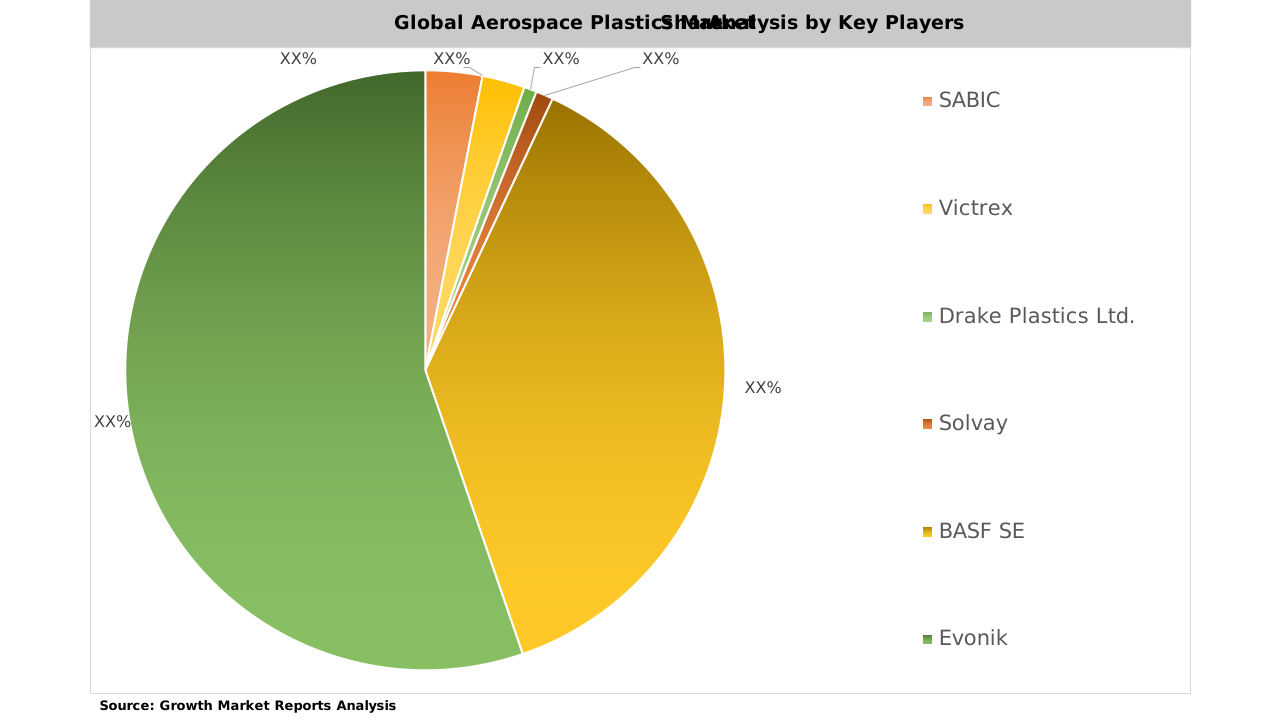
Among the major companies operating in the aerospace plastics market are SABIC, Victrex plc, Solvay S.A., Evonik Industries AG, Hexcel Corporation, Ensinger GmbH, Drake Plastics Ltd., Toray Industries, Inc., and Teijin Limited. SABIC is renowned for its extensive portfolio of high-performance thermoplastics and its focus on sustainability and innovation. Victrex plc is a global leader in PEEK polymers, offering advanced solutions for aerospace applications that require exceptional strength and thermal stability. Solvay S.A. is a key player in specialty polymers, with a strong emphasis on research and development and a broad range of products tailored to the aerospace sector.

Evonik Industries AG and Hexcel Corporation are recognized for their expertise in advanced materials and composite solutions, supporting the aerospace industry's transition to lightweight, high-performance components. Ensinger GmbH and Drake Plastics Ltd. specialize in the production of high-precision plastic components and semi-finished products, catering to the specific needs of aerospace manufacturers. Toray Industries, Inc. and Teijin Limited are global leaders in carbon fiber-reinforced plastics and advanced composite materials, playing a vital role in the development of next-generation aircraft structures and systems. Covestro AG and DuPont de Nemours, Inc. round out the competitive field with broad portfolios spanning polycarbonates, high-performance films, and specialty engineering resins that serve multiple aerospace application categories. Celanese Corporation and Avient Corporation are also notable contributors, particularly in compounded and specialty polymer solutions for demanding structural and interior applications.

The competitive landscape is expected to evolve rapidly as new entrants, technological advancements, and changing market dynamics reshape the aerospace plastics industry through 2034. Companies that can anticipate and respond to emerging trends, invest in innovation, and build strong partnerships across the value chain will be best positioned to capitalize on the growth opportunities in this dynamic and high-potential market.

Key Players

  • BASF SE
  • SABIC
  • Victrex plc
  • Evonik Industries AG
  • Hexcel Corporation
  • Solvay S.A.
  • Drake Plastics Ltd.
  • Ensinger GmbH
  • Toray Industries, Inc.
  • Teijin Limited
  • Rochling Group
  • Saint-Gobain Performance Plastics
  • Covestro AG
  • DuPont de Nemours, Inc.
  • Celanese Corporation
  • Avient Corporation
  • Mitsubishi Chemical Advanced Materials
  • Trinseo PLC

Segments

The Aerospace Plastics market has been segmented on the basis of

Polymer Type

  • Polyetheretherketone (PEEK)
  • Polycarbonate (PC)
  • Polyamide (PA)
  • Polymethyl Methacrylate (PMMA)
  • Polyphenylene Sulfide (PPS)
  • Others

Application

  • Aerostructure
  • Cabin Interiors
  • Propulsion Systems
  • Equipment
  • Components & Systems
  • Others

Aircraft Type

  • Commercial Aircraft
  • Military Aircraft
  • General Aviation
  • Others

Frequently Asked Questions

Regulatory bodies including the FAA, EASA, and national civil aviation authorities impose rigorous material qualification, fire, smoke, and toxicity (FST) standards, and lifecycle safety requirements that directly shape material selection in aerospace programs. While these standards create barriers to entry and extend development cycles, they also incentivize the adoption of advanced plastics that demonstrably outperform metals and legacy materials in safety and durability metrics. As of 2025, updated FAA and EASA guidance on sustainable aviation materials is further accelerating the qualification of bio-based and recyclable polymers.

Commercial aircraft account for the largest share of aerospace plastics consumption, driven by new single-aisle and wide-body platforms from Boeing and Airbus. Military aircraft represent a significant segment, with demand fueled by stealth technology, UAV proliferation, and advanced fighter programs. General aviation including business jets and light aircraft is a growing segment. Rotorcraft, drones, and emerging urban air mobility vehicles are the fastest-expanding niche categories for aerospace plastics adoption.

Leading players include Victrex plc, SABIC, Solvay S.A., BASF SE, Evonik Industries AG, Hexcel Corporation, Toray Industries Inc., Teijin Limited, Covestro AG, DuPont de Nemours Inc., Celanese Corporation, Ensinger GmbH, Rochling Group, Saint-Gobain Performance Plastics, Avient Corporation, Mitsubishi Chemical Advanced Materials, Trinseo PLC, and Drake Plastics Ltd. These companies compete on material innovation, certification expertise, supply chain integration, and sustainability credentials.

Sustainability has become a strategic priority across the aerospace supply chain as of 2025. Airlines and OEMs face mounting pressure to reduce lifecycle carbon footprints, driving demand for bio-based polymers, recyclable thermoplastics, and closed-loop manufacturing processes. Regulatory frameworks in Europe and North America are increasingly mandating end-of-life material recovery, pushing suppliers to invest in recyclable grades of PEEK, PA, and PC. This trend is reshaping product development roadmaps and creating differentiation opportunities for suppliers with credible green credentials.

Key opportunities include the development of next-generation high-performance polymers, integration of additive manufacturing for complex components, growth of the urban air mobility and drone sectors, and demand for sustainable bio-based and recyclable polymers. Challenges include the high cost of specialty polymers like PEEK, lengthy regulatory certification timelines, raw material price volatility, and supply chain vulnerabilities exposed by geopolitical disruptions.

North America dominates with approximately 40% of the global market in 2025 (around USD 0.65 billion), driven by Boeing, Lockheed Martin, and a robust defense sector. Europe holds about 28.5% (around USD 0.46 billion), supported by Airbus and strong sustainability mandates. Asia Pacific represents roughly 22.5% and is the fastest-growing region, with a projected CAGR of 7.6% from 2026 to 2034, led by China and India.

Aerospace plastics are used across aerostructures (fuselage panels, wing assemblies, control surfaces), cabin interiors (seat frames, overhead bins, wall panels), propulsion systems (nacelles, engine brackets, exhaust components), and equipment, components and systems (avionics housings, electrical connectors, hydraulic components). Emerging applications include drone airframes, urban air mobility structures, and advanced cargo systems.

PEEK (polyetheretherketone) leads the market with approximately 28.5% share in 2025, valued for its exceptional thermal stability and mechanical strength. Polycarbonate (PC) follows at around 22%, widely used in windows and cabin components. Polyamide (PA) holds about 18.5%, favored for bearings and fasteners. PMMA accounts for roughly 12%, predominantly in glazing, while PPS represents around 10.5%, valued for high-temperature structural uses.

The primary growth drivers include the aerospace industry's relentless focus on weight reduction and fuel efficiency, stricter emissions and safety regulations from bodies such as the FAA and EASA, accelerating fleet modernization programs worldwide, rising air passenger traffic particularly in Asia Pacific, and increasing investment in next-generation aircraft platforms such as narrow-body jets and urban air mobility vehicles.

The global aerospace plastics market reached USD 1.63 billion in 2025 and is projected to grow at a CAGR of 6.1% from 2026 to 2034, reaching approximately USD 2.78 billion by 2034. This growth is underpinned by rising demand for fuel-efficient aircraft, rapid fleet expansion, and continuous advancements in high-performance polymer science.

Table Of Content

Chapter 1 Executive Summary
Chapter 2 Assumptions and Acronyms Used
Chapter 3 Research Methodology
Chapter 4 Aerospace Plastics Market Overview
   4.1 Introduction
      4.1.1 Market Taxonomy
      4.1.2 Market Definition
      4.1.3 Macro-Economic Factors Impacting the Market Growth
   4.2 Aerospace Plastics Market Dynamics
      4.2.1 Market Drivers
      4.2.2 Market Restraints
      4.2.3 Market Opportunity
   4.3 Aerospace Plastics Market - Supply Chain Analysis
      4.3.1 List of Key Suppliers
      4.3.2 List of Key Distributors
      4.3.3 List of Key Consumers
   4.4 Key Forces Shaping the Aerospace Plastics Market
      4.4.1 Bargaining Power of Suppliers
      4.4.2 Bargaining Power of Buyers
      4.4.3 Threat of Substitution
      4.4.4 Threat of New Entrants
      4.4.5 Competitive Rivalry
   4.5 Global Aerospace Plastics Market Size & Forecast, 2023-2032
      4.5.1 Aerospace Plastics Market Size and Y-o-Y Growth
      4.5.2 Aerospace Plastics Market Absolute $ Opportunity

Chapter 5 Global Aerospace Plastics Market Analysis and Forecast By Polymer Type
   5.1 Introduction
      5.1.1 Key Market Trends & Growth Opportunities By Polymer Type
      5.1.2 Basis Point Share (BPS) Analysis By Polymer Type
      5.1.3 Absolute $ Opportunity Assessment By Polymer Type
   5.2 Aerospace Plastics Market Size Forecast By Polymer Type
      5.2.1 Polyetheretherketone (PEEK)
      5.2.2 Polycarbonate (PC)
      5.2.3 Polyamide (PA)
      5.2.4 Polymethyl Methacrylate (PMMA)
      5.2.5 Polyphenylene Sulfide (PPS)
      5.2.6 Others
   5.3 Market Attractiveness Analysis By Polymer Type

Chapter 6 Global Aerospace Plastics Market Analysis and Forecast By Application
   6.1 Introduction
      6.1.1 Key Market Trends & Growth Opportunities By Application
      6.1.2 Basis Point Share (BPS) Analysis By Application
      6.1.3 Absolute $ Opportunity Assessment By Application
   6.2 Aerospace Plastics Market Size Forecast By Application
      6.2.1 Aerostructure
      6.2.2 Cabin Interiors
      6.2.3 Propulsion Systems
      6.2.4 Equipment
      6.2.5 Components & Systems
      6.2.6 Others
   6.3 Market Attractiveness Analysis By Application

Chapter 7 Global Aerospace Plastics Market Analysis and Forecast By Aircraft Type
   7.1 Introduction
      7.1.1 Key Market Trends & Growth Opportunities By Aircraft Type
      7.1.2 Basis Point Share (BPS) Analysis By Aircraft Type
      7.1.3 Absolute $ Opportunity Assessment By Aircraft Type
   7.2 Aerospace Plastics Market Size Forecast By Aircraft Type
      7.2.1 Commercial Aircraft
      7.2.2 Military Aircraft
      7.2.3 General Aviation
      7.2.4 Others
   7.3 Market Attractiveness Analysis By Aircraft Type

Chapter 8 Global Aerospace Plastics Market Analysis and Forecast by Region
   8.1 Introduction
      8.1.1 Key Market Trends & Growth Opportunities By Region
      8.1.2 Basis Point Share (BPS) Analysis By Region
      8.1.3 Absolute $ Opportunity Assessment By Region
   8.2 Aerospace Plastics Market Size Forecast By Region
      8.2.1 North America
      8.2.2 Europe
      8.2.3 Asia Pacific
      8.2.4 Latin America
      8.2.5 Middle East & Africa (MEA)
   8.3 Market Attractiveness Analysis By Region

Chapter 9 Coronavirus Disease (COVID-19) Impact 
   9.1 Introduction 
   9.2 Current & Future Impact Analysis 
   9.3 Economic Impact Analysis 
   9.4 Government Policies 
   9.5 Investment Scenario

Chapter 10 North America Aerospace Plastics Analysis and Forecast
   10.1 Introduction
   10.2 North America Aerospace Plastics Market Size Forecast by Country
      10.2.1 U.S.
      10.2.2 Canada
   10.3 Basis Point Share (BPS) Analysis by Country
   10.4 Absolute $ Opportunity Assessment by Country
   10.5 Market Attractiveness Analysis by Country
   10.6 North America Aerospace Plastics Market Size Forecast By Polymer Type
      10.6.1 Polyetheretherketone (PEEK)
      10.6.2 Polycarbonate (PC)
      10.6.3 Polyamide (PA)
      10.6.4 Polymethyl Methacrylate (PMMA)
      10.6.5 Polyphenylene Sulfide (PPS)
      10.6.6 Others
   10.7 Basis Point Share (BPS) Analysis By Polymer Type 
   10.8 Absolute $ Opportunity Assessment By Polymer Type 
   10.9 Market Attractiveness Analysis By Polymer Type
   10.10 North America Aerospace Plastics Market Size Forecast By Application
      10.10.1 Aerostructure
      10.10.2 Cabin Interiors
      10.10.3 Propulsion Systems
      10.10.4 Equipment
      10.10.5 Components & Systems
      10.10.6 Others
   10.11 Basis Point Share (BPS) Analysis By Application 
   10.12 Absolute $ Opportunity Assessment By Application 
   10.13 Market Attractiveness Analysis By Application
   10.14 North America Aerospace Plastics Market Size Forecast By Aircraft Type
      10.14.1 Commercial Aircraft
      10.14.2 Military Aircraft
      10.14.3 General Aviation
      10.14.4 Others
   10.15 Basis Point Share (BPS) Analysis By Aircraft Type 
   10.16 Absolute $ Opportunity Assessment By Aircraft Type 
   10.17 Market Attractiveness Analysis By Aircraft Type

Chapter 11 Europe Aerospace Plastics Analysis and Forecast
   11.1 Introduction
   11.2 Europe Aerospace Plastics Market Size Forecast by Country
      11.2.1 Germany
      11.2.2 France
      11.2.3 Italy
      11.2.4 U.K.
      11.2.5 Spain
      11.2.6 Russia
      11.2.7 Rest of Europe
   11.3 Basis Point Share (BPS) Analysis by Country
   11.4 Absolute $ Opportunity Assessment by Country
   11.5 Market Attractiveness Analysis by Country
   11.6 Europe Aerospace Plastics Market Size Forecast By Polymer Type
      11.6.1 Polyetheretherketone (PEEK)
      11.6.2 Polycarbonate (PC)
      11.6.3 Polyamide (PA)
      11.6.4 Polymethyl Methacrylate (PMMA)
      11.6.5 Polyphenylene Sulfide (PPS)
      11.6.6 Others
   11.7 Basis Point Share (BPS) Analysis By Polymer Type 
   11.8 Absolute $ Opportunity Assessment By Polymer Type 
   11.9 Market Attractiveness Analysis By Polymer Type
   11.10 Europe Aerospace Plastics Market Size Forecast By Application
      11.10.1 Aerostructure
      11.10.2 Cabin Interiors
      11.10.3 Propulsion Systems
      11.10.4 Equipment
      11.10.5 Components & Systems
      11.10.6 Others
   11.11 Basis Point Share (BPS) Analysis By Application 
   11.12 Absolute $ Opportunity Assessment By Application 
   11.13 Market Attractiveness Analysis By Application
   11.14 Europe Aerospace Plastics Market Size Forecast By Aircraft Type
      11.14.1 Commercial Aircraft
      11.14.2 Military Aircraft
      11.14.3 General Aviation
      11.14.4 Others
   11.15 Basis Point Share (BPS) Analysis By Aircraft Type 
   11.16 Absolute $ Opportunity Assessment By Aircraft Type 
   11.17 Market Attractiveness Analysis By Aircraft Type

Chapter 12 Asia Pacific Aerospace Plastics Analysis and Forecast
   12.1 Introduction
   12.2 Asia Pacific Aerospace Plastics Market Size Forecast by Country
      12.2.1 China
      12.2.2 Japan
      12.2.3 South Korea
      12.2.4 India
      12.2.5 Australia
      12.2.6 South East Asia (SEA)
      12.2.7 Rest of Asia Pacific (APAC)
   12.3 Basis Point Share (BPS) Analysis by Country
   12.4 Absolute $ Opportunity Assessment by Country
   12.5 Market Attractiveness Analysis by Country
   12.6 Asia Pacific Aerospace Plastics Market Size Forecast By Polymer Type
      12.6.1 Polyetheretherketone (PEEK)
      12.6.2 Polycarbonate (PC)
      12.6.3 Polyamide (PA)
      12.6.4 Polymethyl Methacrylate (PMMA)
      12.6.5 Polyphenylene Sulfide (PPS)
      12.6.6 Others
   12.7 Basis Point Share (BPS) Analysis By Polymer Type 
   12.8 Absolute $ Opportunity Assessment By Polymer Type 
   12.9 Market Attractiveness Analysis By Polymer Type
   12.10 Asia Pacific Aerospace Plastics Market Size Forecast By Application
      12.10.1 Aerostructure
      12.10.2 Cabin Interiors
      12.10.3 Propulsion Systems
      12.10.4 Equipment
      12.10.5 Components & Systems
      12.10.6 Others
   12.11 Basis Point Share (BPS) Analysis By Application 
   12.12 Absolute $ Opportunity Assessment By Application 
   12.13 Market Attractiveness Analysis By Application
   12.14 Asia Pacific Aerospace Plastics Market Size Forecast By Aircraft Type
      12.14.1 Commercial Aircraft
      12.14.2 Military Aircraft
      12.14.3 General Aviation
      12.14.4 Others
   12.15 Basis Point Share (BPS) Analysis By Aircraft Type 
   12.16 Absolute $ Opportunity Assessment By Aircraft Type 
   12.17 Market Attractiveness Analysis By Aircraft Type

Chapter 13 Latin America Aerospace Plastics Analysis and Forecast
   13.1 Introduction
   13.2 Latin America Aerospace Plastics Market Size Forecast by Country
      13.2.1 Brazil
      13.2.2 Mexico
      13.2.3 Rest of Latin America (LATAM)
   13.3 Basis Point Share (BPS) Analysis by Country
   13.4 Absolute $ Opportunity Assessment by Country
   13.5 Market Attractiveness Analysis by Country
   13.6 Latin America Aerospace Plastics Market Size Forecast By Polymer Type
      13.6.1 Polyetheretherketone (PEEK)
      13.6.2 Polycarbonate (PC)
      13.6.3 Polyamide (PA)
      13.6.4 Polymethyl Methacrylate (PMMA)
      13.6.5 Polyphenylene Sulfide (PPS)
      13.6.6 Others
   13.7 Basis Point Share (BPS) Analysis By Polymer Type 
   13.8 Absolute $ Opportunity Assessment By Polymer Type 
   13.9 Market Attractiveness Analysis By Polymer Type
   13.10 Latin America Aerospace Plastics Market Size Forecast By Application
      13.10.1 Aerostructure
      13.10.2 Cabin Interiors
      13.10.3 Propulsion Systems
      13.10.4 Equipment
      13.10.5 Components & Systems
      13.10.6 Others
   13.11 Basis Point Share (BPS) Analysis By Application 
   13.12 Absolute $ Opportunity Assessment By Application 
   13.13 Market Attractiveness Analysis By Application
   13.14 Latin America Aerospace Plastics Market Size Forecast By Aircraft Type
      13.14.1 Commercial Aircraft
      13.14.2 Military Aircraft
      13.14.3 General Aviation
      13.14.4 Others
   13.15 Basis Point Share (BPS) Analysis By Aircraft Type 
   13.16 Absolute $ Opportunity Assessment By Aircraft Type 
   13.17 Market Attractiveness Analysis By Aircraft Type

Chapter 14 Middle East & Africa (MEA) Aerospace Plastics Analysis and Forecast
   14.1 Introduction
   14.2 Middle East & Africa (MEA) Aerospace Plastics Market Size Forecast by Country
      14.2.1 Saudi Arabia
      14.2.2 South Africa
      14.2.3 UAE
      14.2.4 Rest of Middle East & Africa (MEA)
   14.3 Basis Point Share (BPS) Analysis by Country
   14.4 Absolute $ Opportunity Assessment by Country
   14.5 Market Attractiveness Analysis by Country
   14.6 Middle East & Africa (MEA) Aerospace Plastics Market Size Forecast By Polymer Type
      14.6.1 Polyetheretherketone (PEEK)
      14.6.2 Polycarbonate (PC)
      14.6.3 Polyamide (PA)
      14.6.4 Polymethyl Methacrylate (PMMA)
      14.6.5 Polyphenylene Sulfide (PPS)
      14.6.6 Others
   14.7 Basis Point Share (BPS) Analysis By Polymer Type 
   14.8 Absolute $ Opportunity Assessment By Polymer Type 
   14.9 Market Attractiveness Analysis By Polymer Type
   14.10 Middle East & Africa (MEA) Aerospace Plastics Market Size Forecast By Application
      14.10.1 Aerostructure
      14.10.2 Cabin Interiors
      14.10.3 Propulsion Systems
      14.10.4 Equipment
      14.10.5 Components & Systems
      14.10.6 Others
   14.11 Basis Point Share (BPS) Analysis By Application 
   14.12 Absolute $ Opportunity Assessment By Application 
   14.13 Market Attractiveness Analysis By Application
   14.14 Middle East & Africa (MEA) Aerospace Plastics Market Size Forecast By Aircraft Type
      14.14.1 Commercial Aircraft
      14.14.2 Military Aircraft
      14.14.3 General Aviation
      14.14.4 Others
   14.15 Basis Point Share (BPS) Analysis By Aircraft Type 
   14.16 Absolute $ Opportunity Assessment By Aircraft Type 
   14.17 Market Attractiveness Analysis By Aircraft Type

Chapter 15 Competition Landscape 
   15.1 Aerospace Plastics Market: Competitive Dashboard
   15.2 Global Aerospace Plastics Market: Market Share Analysis, 2023
   15.3 Company Profiles (Details – Overview, Financials, Developments, Strategy) 
      15.3.1 BASF SE
      15.3.2 SABIC
      15.3.3 Victrex plc
      15.3.4 Evonik Industries AG
      15.3.5 Hexcel Corporation
      15.3.6 Solvay S.A.
      15.3.7 Ensinger GmbH
      15.3.8 Toray Industries, Inc.
      15.3.9 Teijin Limited
      15.3.10 Rochling Group
      15.3.11 Saint-Gobain Performance Plastics
      15.3.12 Covestro AG
      15.3.13 DuPont de Nemours, Inc.
      15.3.14 Celanese Corporation
      15.3.15 Avient Corporation
      15.3.16 Mitsubishi Chemical Advanced Materials
      15.3.17 Trinseo PLC
      15.3.18 Drake Plastics Ltd.

Methodology

Our Clients

Dassault Aviation
The John Holland Group
FedEx Logistics
Microsoft
General Electric
Nestle SA
Honda Motor Co. Ltd.
Siemens Healthcare