Carbon Fiber Market Research Report 2033

Carbon Fiber Market Research Report 2033

Segments - by Product Type (Virgin Carbon Fiber, Recycled Carbon Fiber), by Raw Material (Polyacrylonitrile (PAN), Pitch, Rayon), by Application (Aerospace & Defense, Automotive, Wind Energy, Sporting Goods, Construction, Marine, Electrical & Electronics, Others), by End-Use Industry (Aerospace, Automotive, Energy, Construction, Sporting Goods, Others)

https://growthmarketreports.com/Raksha
Author : Raksha Sharma
https://growthmarketreports.com/Vaibhav
Fact-checked by : V. Chandola
https://growthmarketreports.com/Shruti
Editor : Shruti Bhat

Upcoming | Report ID :MC-2694 | 4.2 Rating | 50 Reviews | 265 Pages | Format : Docx PDF

Report Description


Carbon Fiber Market Outlook

As per the latest research conducted in 2025, the global carbon fiber market size in 2024 stood at USD 4.7 billion, demonstrating robust growth supported by increasing demand across multiple industries. The market is projected to expand at a CAGR of 10.2% from 2025 to 2033, reaching an estimated USD 12.3 billion by the end of the forecast period. This impressive growth trajectory is primarily driven by the surging adoption of lightweight and high-strength materials in aerospace, automotive, wind energy, and construction sectors worldwide. The rising focus on fuel efficiency, sustainability, and advanced manufacturing technologies further accelerates the market’s upward momentum.

The carbon fiber market is experiencing significant growth due to the escalating demand for lightweight materials in the aerospace and automotive industries. With stricter emission regulations and the global movement towards sustainability, manufacturers are increasingly opting for carbon fiber composites to reduce vehicle and aircraft weight, thereby enhancing fuel efficiency and reducing carbon footprints. The unique combination of high tensile strength, low weight, and exceptional chemical resistance makes carbon fiber an ideal choice for next-generation vehicles and aircraft. Moreover, ongoing advancements in carbon fiber manufacturing processes have led to cost reductions and improved material properties, further broadening its application scope and making it more accessible for mass-market adoption.

Another key growth factor is the rapid expansion of wind energy and renewable power generation infrastructure. Carbon fiber’s superior mechanical properties, such as high stiffness-to-weight ratio and excellent fatigue resistance, make it indispensable for manufacturing large wind turbine blades. As governments and private players invest heavily in renewable energy projects to meet global decarbonization targets, the demand for high-performance materials like carbon fiber is set to surge. Additionally, the construction and sporting goods industries are increasingly leveraging carbon fiber for its durability and design flexibility, opening new avenues for market growth. The proliferation of advanced composite technologies in these segments further reinforces the market’s positive outlook.

The integration of recycled carbon fiber is another significant trend contributing to market expansion. Environmental concerns and the need for cost-effective, sustainable solutions have driven research and development in recycling technologies. Recycled carbon fiber is being adopted in automotive, electronics, and consumer goods sectors, offering a balance between performance and sustainability. This shift not only addresses end-of-life product management but also helps manufacturers comply with evolving environmental regulations. The growing ecosystem for recycled carbon fiber is expected to unlock new market opportunities, especially as circular economy principles gain traction across global industries.

Regionally, the Asia Pacific market is emerging as a dominant force, propelled by rapid industrialization, expanding automotive production, and significant investments in renewable energy infrastructure. Countries such as China, Japan, and South Korea are at the forefront, benefiting from strong manufacturing bases and government support for high-tech industries. North America and Europe continue to maintain substantial market shares, driven by advanced aerospace and automotive industries, as well as a strong focus on research and innovation. Meanwhile, Latin America, the Middle East, and Africa are witnessing gradual growth, supported by increasing investments in infrastructure and energy projects. The global distribution of carbon fiber demand reflects a dynamic interplay of technological advancement, regulatory frameworks, and shifting industrial priorities.

Global Carbon Fiber Industry Outlook

Product Type Analysis

The carbon fiber market is segmented by product type into virgin carbon fiber and recycled carbon fiber, with each category exhibiting distinct growth patterns and application profiles. Virgin carbon fiber, produced directly from precursor materials such as polyacrylonitrile (PAN), pitch, or rayon, dominates the market due to its superior mechanical properties, consistency, and widespread use in high-performance applications. Industries such as aerospace, automotive, and wind energy rely heavily on virgin carbon fiber for critical components where strength, durability, and reliability are paramount. Continuous advancements in production technologies have improved the cost-effectiveness and scalability of virgin carbon fiber, enabling broader adoption across new sectors.

Recycled carbon fiber, on the other hand, is gaining traction as sustainability becomes a central concern for manufacturers and end-users. The recycling process involves reclaiming carbon fibers from end-of-life composite products or manufacturing scrap, providing an environmentally friendly and cost-efficient alternative to virgin fiber. While recycled carbon fiber typically exhibits lower mechanical properties compared to its virgin counterpart, ongoing improvements in recycling technology are narrowing this gap. Automotive, electronics, and consumer goods industries are increasingly incorporating recycled carbon fiber into non-structural and semi-structural applications, driven by both regulatory pressures and consumer demand for eco-friendly products.

The market dynamics between virgin and recycled carbon fiber are also influenced by pricing and supply chain considerations. Virgin carbon fiber remains relatively expensive due to the energy-intensive nature of its production process, limiting its use in cost-sensitive applications. Recycled carbon fiber, with its lower production costs and smaller environmental footprint, offers a compelling value proposition for manufacturers seeking to balance performance and affordability. As the recycling infrastructure matures and economies of scale are achieved, the market share of recycled carbon fiber is expected to grow, particularly in regions with strong environmental regulations and circular economy initiatives.

Collaboration between industry stakeholders, including manufacturers, recyclers, and end-users, is fostering innovation in both product types. Joint ventures and partnerships are focused on optimizing recycling processes, developing new applications, and improving the quality of recycled carbon fiber. These efforts are supported by government policies and funding aimed at promoting sustainable materials and reducing industrial waste. The dual growth of virgin and recycled carbon fiber underscores the market’s adaptability and its commitment to meeting evolving industry requirements while addressing environmental challenges.

Report Scope

Attributes Details
Report Title Carbon Fiber Market Research Report 2033
By Product Type Virgin Carbon Fiber, Recycled Carbon Fiber
By Raw Material Polyacrylonitrile (PAN), Pitch, Rayon
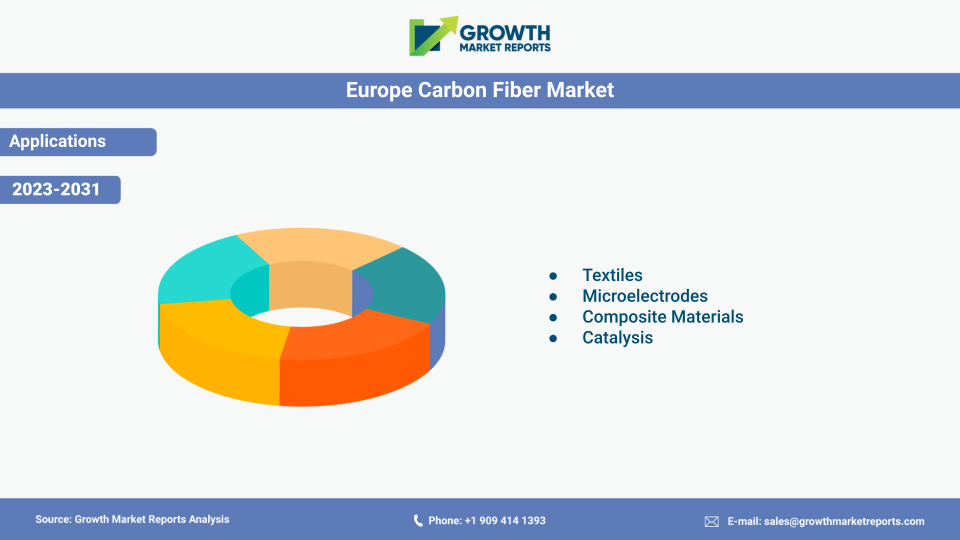
By Application Aerospace & Defense, Automotive, Wind Energy, Sporting Goods, Construction, Marine, Electrical & Electronics, Others
By End-Use Industry Aerospace, Automotive, Energy, Construction, Sporting Goods, Others
Regions Covered North America, Europe, APAC, Latin America, MEA
Base Year 2024
Historic Data 2018-2023
Forecast Period 2025-2033
Number of Pages 265
Number of Tables & Figures 284
Customization Available Yes, the report can be customized as per your need.

Raw Material Analysis

The raw material segment of the carbon fiber market is primarily categorized into polyacrylonitrile (PAN), pitch, and rayon, each offering unique characteristics and influencing the final properties of carbon fiber. PAN-based carbon fiber constitutes the largest share of the market, accounting for over 85% of global production. PAN is favored for its ability to produce carbon fibers with high tensile strength and modulus, making it the preferred choice for aerospace, automotive, and wind energy applications. The continuous innovation in PAN precursor chemistry and processing techniques has led to enhanced fiber quality, improved yield, and reduced costs, further consolidating its dominance in the market.

Pitch-based carbon fiber, derived from petroleum or coal tar pitch, is renowned for its exceptional modulus and thermal conductivity. While it represents a smaller share of the market, pitch-based carbon fiber is indispensable in specialized applications such as aerospace, defense, and high-performance sporting goods. These fibers are particularly suited for use in satellite structures, missile components, and advanced sporting equipment, where stiffness and thermal management are critical. The development of new pitch formulations and processing methods is expanding the potential applications of pitch-based carbon fiber, albeit at a slower pace compared to PAN-based fibers.

Rayon-based carbon fiber, once a prominent raw material, has seen a decline in usage due to the superior properties and cost-effectiveness of PAN and pitch-based fibers. However, rayon-based carbon fiber still finds niche applications in certain industrial and military segments where specific performance characteristics are required. Research efforts continue to explore the potential of advanced rayon precursors, particularly in regions with abundant cellulose resources. The ongoing diversification of raw material sources is a testament to the market’s commitment to innovation and resilience in the face of fluctuating raw material prices and supply chain disruptions.

The choice of raw material not only determines the mechanical and physical properties of carbon fiber but also impacts production costs and environmental sustainability. Manufacturers are increasingly investing in research to develop bio-based and renewable precursors, aiming to reduce the carbon footprint of carbon fiber production. These initiatives are aligned with global sustainability goals and are expected to drive long-term growth in the market. The interplay between material science, process engineering, and environmental stewardship is shaping the future landscape of the carbon fiber industry, positioning it as a key enabler of advanced manufacturing and sustainable development.

Application Analysis

The application landscape of the carbon fiber market is remarkably diverse, spanning aerospace & defense, automotive, wind energy, sporting goods, construction, marine, electrical & electronics, and other sectors. Aerospace & defense remains the largest application segment, accounting for a significant share of global demand. Carbon fiber composites are extensively used in aircraft structures, interiors, and propulsion systems, where their lightweight and high-strength properties contribute to improved fuel efficiency, payload capacity, and operational performance. The ongoing modernization of military fleets and the introduction of next-generation commercial aircraft are sustaining robust demand for advanced carbon fiber materials.

The automotive industry represents a rapidly growing application segment, driven by the imperative to enhance vehicle performance and comply with stringent emission standards. Carbon fiber is increasingly utilized in high-performance vehicles, electric cars, and luxury automobiles for components such as body panels, chassis, and interior parts. The material’s ability to reduce vehicle weight without compromising safety or aesthetics is a key factor driving its adoption. Collaborative efforts between automakers, material suppliers, and research institutions are focused on developing cost-effective production methods to enable the mass adoption of carbon fiber in mainstream vehicles, further accelerating market growth.

Wind energy is another critical application area, where carbon fiber is used to manufacture large, durable, and lightweight turbine blades. The transition towards renewable energy sources and the construction of larger wind farms have amplified the demand for carbon fiber composites, which offer superior fatigue resistance and longevity compared to traditional materials. The integration of carbon fiber in wind energy infrastructure not only enhances energy output but also reduces maintenance costs, contributing to the overall competitiveness of wind power as a sustainable energy solution.

Beyond these major segments, carbon fiber is making inroads into sporting goods, construction, marine, and electrical & electronics applications. In sporting goods, carbon fiber’s strength-to-weight ratio and design flexibility have revolutionized the production of bicycles, golf clubs, tennis rackets, and other high-performance equipment. The construction industry is leveraging carbon fiber for reinforcement, seismic retrofitting, and innovative architectural designs, while the marine sector benefits from lightweight, corrosion-resistant composites for boat hulls and components. In the electrical & electronics segment, carbon fiber is used for electromagnetic shielding, structural components, and thermal management solutions, reflecting the material’s versatility and adaptability across diverse industries.

End-Use Industry Analysis

The carbon fiber market’s end-use industry segmentation highlights its pervasive impact across aerospace, automotive, energy, construction, sporting goods, and other sectors. Aerospace remains the dominant end-use industry, driven by relentless innovation and the pursuit of lighter, more efficient aircraft. The use of carbon fiber composites in commercial and military aviation has become standard practice, with leading manufacturers integrating these materials into new-generation airframes, rotor blades, and propulsion systems. The need for improved fuel efficiency, reduced emissions, and enhanced safety continues to underpin the aerospace sector’s strong demand for high-performance carbon fiber products.

In the automotive industry, carbon fiber is increasingly recognized as a strategic material for achieving regulatory compliance and competitive differentiation. Automakers are investing in advanced manufacturing techniques, such as resin transfer molding and automated fiber placement, to scale up carbon fiber component production and reduce costs. The proliferation of electric and hybrid vehicles, which require lightweight materials to maximize battery range and performance, is further boosting carbon fiber adoption. Strategic alliances between automotive OEMs and material suppliers are accelerating the commercialization of carbon fiber solutions, positioning the industry for sustained growth.

The energy sector, encompassing wind power, oil & gas, and other renewable energy sources, represents another significant end-use industry for carbon fiber. The shift towards sustainable energy generation has led to increased deployment of wind turbines with longer, lighter blades made from carbon fiber composites. In the oil & gas sector, carbon fiber is used for high-pressure vessels, pipelines, and subsea structures, where its corrosion resistance and mechanical strength offer critical advantages. The ongoing diversification of energy sources and the emphasis on operational efficiency are expected to drive continued demand for carbon fiber in this sector.

Construction and sporting goods are also prominent end-use industries, each leveraging carbon fiber’s unique properties to address specific challenges and opportunities. In construction, carbon fiber is used for structural reinforcement, seismic retrofitting, and innovative architectural designs that require lightweight yet strong materials. The sporting goods industry, known for its emphasis on performance and innovation, has embraced carbon fiber for the production of bicycles, golf clubs, tennis rackets, and other high-performance equipment. The adoption of carbon fiber in these industries is facilitated by ongoing advancements in composite technology, process automation, and material science, ensuring that the market remains dynamic and responsive to evolving end-user needs.

Opportunities & Threats

The carbon fiber market is poised for significant opportunities in the coming years, driven by technological advancements, expanding application areas, and evolving regulatory landscapes. One of the most promising opportunities lies in the development of cost-effective production processes that enable the mass adoption of carbon fiber in automotive and construction industries. Innovations such as rapid curing resins, automated fiber placement, and recycling technologies are expected to lower production costs and enhance material properties, making carbon fiber accessible to a broader range of industries. Additionally, the growing emphasis on sustainability and circular economy principles is creating new markets for recycled carbon fiber, particularly in regions with stringent environmental regulations and robust recycling infrastructure.

Another key opportunity is the integration of carbon fiber composites in emerging industries such as urban air mobility, unmanned aerial vehicles (UAVs), and advanced robotics. These sectors require lightweight, high-strength materials to achieve operational efficiency and performance, positioning carbon fiber as a material of choice. The expansion of renewable energy infrastructure, particularly wind and solar power, also presents substantial growth potential for carbon fiber manufacturers. Strategic collaborations between industry players, research institutions, and government agencies are expected to accelerate innovation, facilitate knowledge transfer, and drive the commercialization of next-generation carbon fiber solutions. The convergence of material science, digital manufacturing, and sustainability initiatives is set to unlock new value streams and propel the market forward.

Despite these opportunities, the carbon fiber market faces several restraining factors that could impede its growth. The high cost of raw materials and energy-intensive production processes remain significant challenges, particularly for cost-sensitive applications in automotive and construction sectors. Supply chain disruptions, fluctuations in raw material prices, and limited recycling infrastructure can also affect market stability and profitability. Additionally, the need for specialized manufacturing equipment and skilled labor poses barriers to entry for new market participants. Addressing these challenges requires concerted efforts from industry stakeholders to invest in research and development, optimize production processes, and foster collaboration across the value chain.

Regional Outlook

The Asia Pacific region is emerging as the fastest-growing market for carbon fiber, accounting for approximately 35% of global demand in 2024. This growth is fueled by rapid industrialization, expanding automotive and aerospace manufacturing capabilities, and significant investments in renewable energy infrastructure. China, Japan, and South Korea are leading the regional market, benefiting from robust government support, advanced manufacturing ecosystems, and a strong focus on research and innovation. The region’s CAGR is projected to outpace the global average, reflecting its pivotal role in shaping the future of the carbon fiber industry.

North America and Europe remain key markets for carbon fiber, collectively accounting for over 50% of global demand in 2024. The United States and Germany are at the forefront, driven by advanced aerospace, automotive, and wind energy sectors. These regions are characterized by high levels of research and development, strong regulatory frameworks, and a focus on sustainability and environmental stewardship. The presence of leading carbon fiber manufacturers, coupled with a mature end-user base, ensures a steady demand for high-performance materials. Both regions are expected to maintain healthy growth rates, supported by ongoing investments in advanced manufacturing and renewable energy projects.

Latin America, the Middle East, and Africa represent emerging markets with significant growth potential, albeit from a smaller base. These regions are witnessing increased investments in infrastructure, energy, and industrial development, creating new opportunities for carbon fiber adoption. Brazil and the United Arab Emirates are notable markets, leveraging their strategic positions in aerospace, construction, and renewable energy sectors. While growth rates in these regions are expected to exceed the global average, challenges such as limited manufacturing infrastructure and regulatory barriers may temper market expansion. Nonetheless, the gradual integration of carbon fiber into local industries is expected to drive long-term growth and diversification.

Carbon Fiber Market Statistics

Competitor Outlook

The global carbon fiber market is characterized by intense competition, with a mix of established players and emerging entrants vying for market share. Leading companies are focused on expanding their production capacities, investing in research and development, and forming strategic partnerships to strengthen their market positions. The competitive landscape is shaped by factors such as product quality, technological innovation, pricing strategies, and supply chain integration. Companies are increasingly prioritizing sustainability and circular economy initiatives, developing recycled carbon fiber solutions, and optimizing production processes to reduce environmental impact and enhance profitability.

Innovation is a key differentiator in the carbon fiber market, with companies investing heavily in advanced manufacturing technologies, such as automated fiber placement, 3D printing, and rapid curing resins. These innovations are enabling manufacturers to produce high-quality carbon fiber composites at scale, reduce production costs, and meet the evolving needs of end-users. Collaboration with automotive, aerospace, and renewable energy companies is fostering the development of customized solutions tailored to specific industry requirements. The focus on vertical integration, from raw material sourcing to final product delivery, is further enhancing the competitiveness of leading market players.

Market leaders are also expanding their global footprint through mergers, acquisitions, and joint ventures. These strategic moves are aimed at accessing new markets, diversifying product portfolios, and leveraging synergies across the value chain. The entry of new players, particularly in Asia Pacific, is intensifying competition and driving innovation in product development, pricing, and customer service. The competitive dynamics are further influenced by regulatory trends, technological advancements, and shifting customer preferences, ensuring that the market remains dynamic and responsive to change.

Some of the major companies operating in the carbon fiber market include Toray Industries, Inc., Teijin Limited, Hexcel Corporation, SGL Carbon SE, Mitsubishi Chemical Holdings Corporation, Solvay S.A., and Formosa Plastics Corporation. Toray Industries, Inc. is the global leader, known for its extensive product portfolio, advanced manufacturing capabilities, and strong focus on sustainability. Teijin Limited and Hexcel Corporation are recognized for their innovation in aerospace and automotive applications, while SGL Carbon SE specializes in high-performance fibers for industrial and energy sectors. Mitsubishi Chemical Holdings Corporation and Solvay S.A. are prominent players in the development of advanced composite materials, leveraging their expertise in chemical engineering and material science. Formosa Plastics Corporation is expanding its presence in the Asia Pacific market, capitalizing on regional growth opportunities and strategic partnerships. These companies are at the forefront of the carbon fiber industry, driving innovation, sustainability, and market expansion through continuous investment and collaboration.

Key Players

  • Toray Industries, Inc.
  • Teijin Limited
  • Mitsubishi Chemical Corporation
  • Hexcel Corporation
  • SGL Carbon SE
  • Solvay S.A.
  • Formosa Plastics Corporation
  • Cytec Industries Inc. (part of Solvay)
  • DowAksa Advanced Composites Holdings B.V.
  • Hyosung Advanced Materials
  • Zoltek Companies, Inc. (a Toray Group Company)
  • Jiangsu Hengshen Co., Ltd.
  • Weihai Guangwei Composites Co., Ltd.
  • Taekwang Industrial Co., Ltd.
  • Kureha Corporation
  • Aksa Akrilik Kimya Sanayii A.Ş.
  • Nippon Graphite Fiber Corporation
  • Plasan Carbon Composites
  • SGL Automotive Carbon Fibers (SGL Group & BMW Group JV)
  • Sinosteel Jilin Carbon Co., Ltd.
Carbon Fiber Market Overview

Segments

The Carbon Fiber market has been segmented on the basis of

Product Type

  • Virgin Carbon Fiber
  • Recycled Carbon Fiber

Raw Material

  • Polyacrylonitrile (PAN)
  • Pitch
  • Rayon

Application

  • Aerospace & Defense
  • Automotive
  • Wind Energy
  • Sporting Goods
  • Construction
  • Marine
  • Electrical & Electronics
  • Others

End-Use Industry

  • Aerospace
  • Automotive
  • Energy
  • Construction
  • Sporting Goods
  • Others

Competitive Landscape

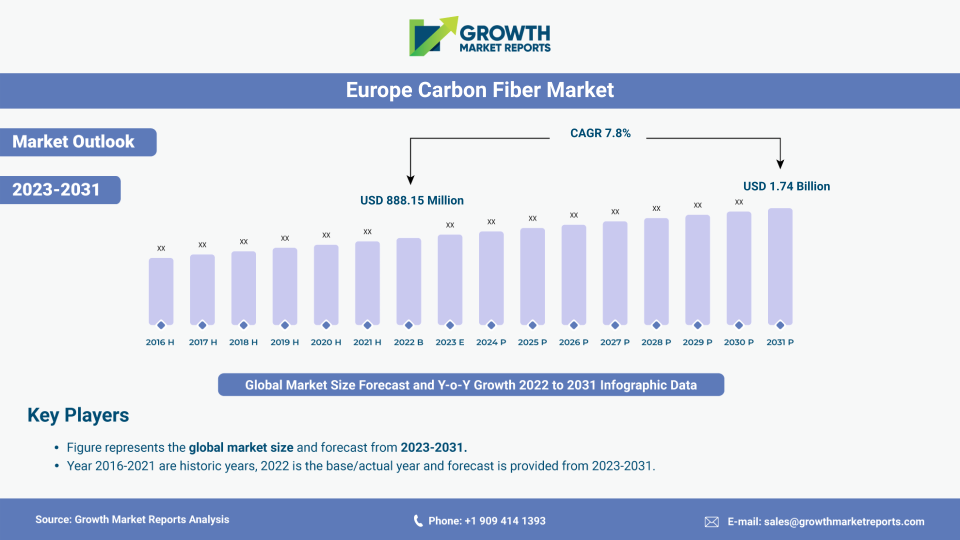
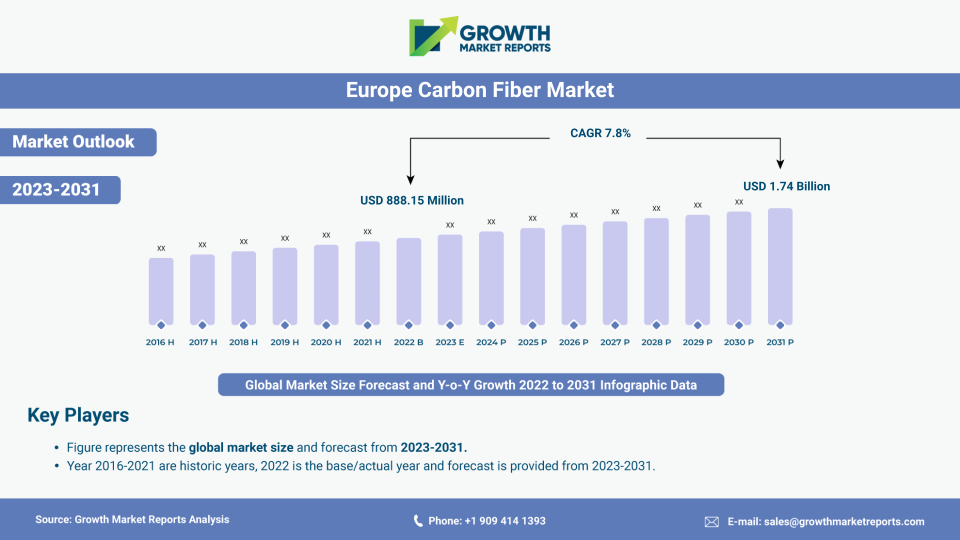
Key players competing in the Europe carbon fiber market include TEIJIN LIMITED; TORAY INDUSTRIES, INC; Mitsubishi Chemical Carbon Fiber and Composites Inc.; SGL Carbon, Solvay.

Some of these players are using several market strategies such as acquisitions, merger, collaborations, partnerships, capacity expansion, and product launches to enhance their market shares and to generate revenue and raise their production line of the business in the coming years.
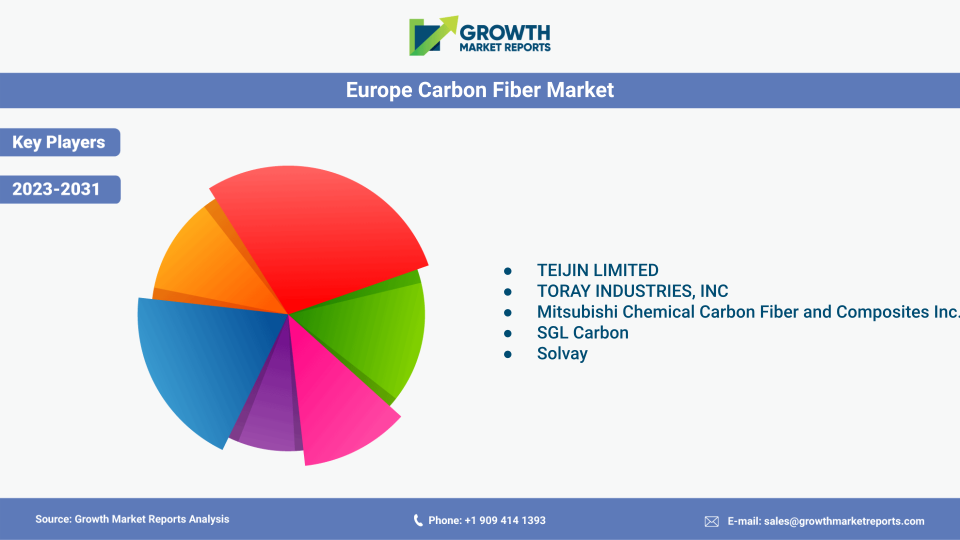

Europe Carbon Fiber Market Key Players

Frequently Asked Questions

Key challenges include high production costs, energy-intensive manufacturing, supply chain disruptions, raw material price fluctuations, and the need for specialized equipment and skilled labor.

Major companies include Toray Industries, Inc., Teijin Limited, Mitsubishi Chemical Corporation, Hexcel Corporation, SGL Carbon SE, Solvay S.A., Formosa Plastics Corporation, and others.

Asia Pacific is the fastest-growing region, driven by industrialization and investments in automotive and renewable energy. North America and Europe also hold significant market shares due to advanced aerospace and automotive industries.

Major trends include the adoption of recycled carbon fiber for sustainability, advancements in manufacturing technologies, increased use in renewable energy infrastructure, and the expansion of applications in emerging industries like urban air mobility and robotics.

The market is segmented by application into aerospace & defense, automotive, wind energy, sporting goods, construction, marine, electrical & electronics, and others.

The primary raw materials for carbon fiber are polyacrylonitrile (PAN), pitch, and rayon. PAN-based carbon fiber is the most common, accounting for over 85% of global production due to its high tensile strength and modulus.

Virgin carbon fiber is made from precursor materials like PAN, pitch, or rayon and offers superior mechanical properties, making it ideal for high-performance applications. Recycled carbon fiber is produced from reclaimed fibers and is more cost-effective and sustainable, though it typically has lower mechanical properties.

The largest consumers of carbon fiber are the aerospace & defense, automotive, wind energy, construction, sporting goods, marine, and electrical & electronics industries.

Key growth drivers include increasing demand for lightweight and high-strength materials in aerospace, automotive, wind energy, and construction, as well as a focus on fuel efficiency, sustainability, and advanced manufacturing technologies.

The global carbon fiber market size was valued at USD 4.7 billion in 2024 and is projected to reach USD 12.3 billion by 2033, growing at a CAGR of 10.2% from 2025 to 2033.

Table Of Content

Chapter 1 Executive Summary
Chapter 2 Assumptions and Acronyms Used
Chapter 3 Research Methodology
Chapter 4 Carbon Fiber Market Overview
   4.1 Introduction
      4.1.1 Market Taxonomy
      4.1.2 Market Definition
      4.1.3 Macro-Economic Factors Impacting the Market Growth
   4.2 Carbon Fiber Market Dynamics
      4.2.1 Market Drivers
      4.2.2 Market Restraints
      4.2.3 Market Opportunity
   4.3 Carbon Fiber Market - Supply Chain Analysis
      4.3.1 List of Key Suppliers
      4.3.2 List of Key Distributors
      4.3.3 List of Key Consumers
   4.4 Key Forces Shaping the Carbon Fiber Market
      4.4.1 Bargaining Power of Suppliers
      4.4.2 Bargaining Power of Buyers
      4.4.3 Threat of Substitution
      4.4.4 Threat of New Entrants
      4.4.5 Competitive Rivalry
   4.5 Global Carbon Fiber Market Size & Forecast, 2023-2032
      4.5.1 Carbon Fiber Market Size and Y-o-Y Growth
      4.5.2 Carbon Fiber Market Absolute $ Opportunity

Chapter 5 Global Carbon Fiber Market Analysis and Forecast By Product Type
   5.1 Introduction
      5.1.1 Key Market Trends & Growth Opportunities By Product Type
      5.1.2 Basis Point Share (BPS) Analysis By Product Type
      5.1.3 Absolute $ Opportunity Assessment By Product Type
   5.2 Carbon Fiber Market Size Forecast By Product Type
      5.2.1 Virgin Carbon Fiber
      5.2.2 Recycled Carbon Fiber
   5.3 Market Attractiveness Analysis By Product Type

Chapter 6 Global Carbon Fiber Market Analysis and Forecast By Raw Material
   6.1 Introduction
      6.1.1 Key Market Trends & Growth Opportunities By Raw Material
      6.1.2 Basis Point Share (BPS) Analysis By Raw Material
      6.1.3 Absolute $ Opportunity Assessment By Raw Material
   6.2 Carbon Fiber Market Size Forecast By Raw Material
      6.2.1 Polyacrylonitrile (PAN)
      6.2.2 Pitch
      6.2.3 Rayon
   6.3 Market Attractiveness Analysis By Raw Material

Chapter 7 Global Carbon Fiber Market Analysis and Forecast By Application
   7.1 Introduction
      7.1.1 Key Market Trends & Growth Opportunities By Application
      7.1.2 Basis Point Share (BPS) Analysis By Application
      7.1.3 Absolute $ Opportunity Assessment By Application
   7.2 Carbon Fiber Market Size Forecast By Application
      7.2.1 Aerospace & Defense
      7.2.2 Automotive
      7.2.3 Wind Energy
      7.2.4 Sporting Goods
      7.2.5 Construction
      7.2.6 Marine
      7.2.7 Electrical & Electronics
      7.2.8 Others
   7.3 Market Attractiveness Analysis By Application

Chapter 8 Global Carbon Fiber Market Analysis and Forecast By End-Use Industry
   8.1 Introduction
      8.1.1 Key Market Trends & Growth Opportunities By End-Use Industry
      8.1.2 Basis Point Share (BPS) Analysis By End-Use Industry
      8.1.3 Absolute $ Opportunity Assessment By End-Use Industry
   8.2 Carbon Fiber Market Size Forecast By End-Use Industry
      8.2.1 Aerospace
      8.2.2 Automotive
      8.2.3 Energy
      8.2.4 Construction
      8.2.5 Sporting Goods
      8.2.6 Others
   8.3 Market Attractiveness Analysis By End-Use Industry

Chapter 9 Global Carbon Fiber Market Analysis and Forecast by Region
   9.1 Introduction
      9.1.1 Key Market Trends & Growth Opportunities By Region
      9.1.2 Basis Point Share (BPS) Analysis By Region
      9.1.3 Absolute $ Opportunity Assessment By Region
   9.2 Carbon Fiber Market Size Forecast By Region
      9.2.1 North America
      9.2.2 Europe
      9.2.3 Asia Pacific
      9.2.4 Latin America
      9.2.5 Middle East & Africa (MEA)
   9.3 Market Attractiveness Analysis By Region

Chapter 10 Coronavirus Disease (COVID-19) Impact 
   10.1 Introduction 
   10.2 Current & Future Impact Analysis 
   10.3 Economic Impact Analysis 
   10.4 Government Policies 
   10.5 Investment Scenario

Chapter 11 North America Carbon Fiber Analysis and Forecast
   11.1 Introduction
   11.2 North America Carbon Fiber Market Size Forecast by Country
      11.2.1 U.S.
      11.2.2 Canada
   11.3 Basis Point Share (BPS) Analysis by Country
   11.4 Absolute $ Opportunity Assessment by Country
   11.5 Market Attractiveness Analysis by Country
   11.6 North America Carbon Fiber Market Size Forecast By Product Type
      11.6.1 Virgin Carbon Fiber
      11.6.2 Recycled Carbon Fiber
   11.7 Basis Point Share (BPS) Analysis By Product Type 
   11.8 Absolute $ Opportunity Assessment By Product Type 
   11.9 Market Attractiveness Analysis By Product Type
   11.10 North America Carbon Fiber Market Size Forecast By Raw Material
      11.10.1 Polyacrylonitrile (PAN)
      11.10.2 Pitch
      11.10.3 Rayon
   11.11 Basis Point Share (BPS) Analysis By Raw Material 
   11.12 Absolute $ Opportunity Assessment By Raw Material 
   11.13 Market Attractiveness Analysis By Raw Material
   11.14 North America Carbon Fiber Market Size Forecast By Application
      11.14.1 Aerospace & Defense
      11.14.2 Automotive
      11.14.3 Wind Energy
      11.14.4 Sporting Goods
      11.14.5 Construction
      11.14.6 Marine
      11.14.7 Electrical & Electronics
      11.14.8 Others
   11.15 Basis Point Share (BPS) Analysis By Application 
   11.16 Absolute $ Opportunity Assessment By Application 
   11.17 Market Attractiveness Analysis By Application
   11.18 North America Carbon Fiber Market Size Forecast By End-Use Industry
      11.18.1 Aerospace
      11.18.2 Automotive
      11.18.3 Energy
      11.18.4 Construction
      11.18.5 Sporting Goods
      11.18.6 Others
   11.19 Basis Point Share (BPS) Analysis By End-Use Industry 
   11.20 Absolute $ Opportunity Assessment By End-Use Industry 
   11.21 Market Attractiveness Analysis By End-Use Industry

Chapter 12 Europe Carbon Fiber Analysis and Forecast
   12.1 Introduction
   12.2 Europe Carbon Fiber Market Size Forecast by Country
      12.2.1 Germany
      12.2.2 France
      12.2.3 Italy
      12.2.4 U.K.
      12.2.5 Spain
      12.2.6 Russia
      12.2.7 Rest of Europe
   12.3 Basis Point Share (BPS) Analysis by Country
   12.4 Absolute $ Opportunity Assessment by Country
   12.5 Market Attractiveness Analysis by Country
   12.6 Europe Carbon Fiber Market Size Forecast By Product Type
      12.6.1 Virgin Carbon Fiber
      12.6.2 Recycled Carbon Fiber
   12.7 Basis Point Share (BPS) Analysis By Product Type 
   12.8 Absolute $ Opportunity Assessment By Product Type 
   12.9 Market Attractiveness Analysis By Product Type
   12.10 Europe Carbon Fiber Market Size Forecast By Raw Material
      12.10.1 Polyacrylonitrile (PAN)
      12.10.2 Pitch
      12.10.3 Rayon
   12.11 Basis Point Share (BPS) Analysis By Raw Material 
   12.12 Absolute $ Opportunity Assessment By Raw Material 
   12.13 Market Attractiveness Analysis By Raw Material
   12.14 Europe Carbon Fiber Market Size Forecast By Application
      12.14.1 Aerospace & Defense
      12.14.2 Automotive
      12.14.3 Wind Energy
      12.14.4 Sporting Goods
      12.14.5 Construction
      12.14.6 Marine
      12.14.7 Electrical & Electronics
      12.14.8 Others
   12.15 Basis Point Share (BPS) Analysis By Application 
   12.16 Absolute $ Opportunity Assessment By Application 
   12.17 Market Attractiveness Analysis By Application
   12.18 Europe Carbon Fiber Market Size Forecast By End-Use Industry
      12.18.1 Aerospace
      12.18.2 Automotive
      12.18.3 Energy
      12.18.4 Construction
      12.18.5 Sporting Goods
      12.18.6 Others
   12.19 Basis Point Share (BPS) Analysis By End-Use Industry 
   12.20 Absolute $ Opportunity Assessment By End-Use Industry 
   12.21 Market Attractiveness Analysis By End-Use Industry

Chapter 13 Asia Pacific Carbon Fiber Analysis and Forecast
   13.1 Introduction
   13.2 Asia Pacific Carbon Fiber Market Size Forecast by Country
      13.2.1 China
      13.2.2 Japan
      13.2.3 South Korea
      13.2.4 India
      13.2.5 Australia
      13.2.6 South East Asia (SEA)
      13.2.7 Rest of Asia Pacific (APAC)
   13.3 Basis Point Share (BPS) Analysis by Country
   13.4 Absolute $ Opportunity Assessment by Country
   13.5 Market Attractiveness Analysis by Country
   13.6 Asia Pacific Carbon Fiber Market Size Forecast By Product Type
      13.6.1 Virgin Carbon Fiber
      13.6.2 Recycled Carbon Fiber
   13.7 Basis Point Share (BPS) Analysis By Product Type 
   13.8 Absolute $ Opportunity Assessment By Product Type 
   13.9 Market Attractiveness Analysis By Product Type
   13.10 Asia Pacific Carbon Fiber Market Size Forecast By Raw Material
      13.10.1 Polyacrylonitrile (PAN)
      13.10.2 Pitch
      13.10.3 Rayon
   13.11 Basis Point Share (BPS) Analysis By Raw Material 
   13.12 Absolute $ Opportunity Assessment By Raw Material 
   13.13 Market Attractiveness Analysis By Raw Material
   13.14 Asia Pacific Carbon Fiber Market Size Forecast By Application
      13.14.1 Aerospace & Defense
      13.14.2 Automotive
      13.14.3 Wind Energy
      13.14.4 Sporting Goods
      13.14.5 Construction
      13.14.6 Marine
      13.14.7 Electrical & Electronics
      13.14.8 Others
   13.15 Basis Point Share (BPS) Analysis By Application 
   13.16 Absolute $ Opportunity Assessment By Application 
   13.17 Market Attractiveness Analysis By Application
   13.18 Asia Pacific Carbon Fiber Market Size Forecast By End-Use Industry
      13.18.1 Aerospace
      13.18.2 Automotive
      13.18.3 Energy
      13.18.4 Construction
      13.18.5 Sporting Goods
      13.18.6 Others
   13.19 Basis Point Share (BPS) Analysis By End-Use Industry 
   13.20 Absolute $ Opportunity Assessment By End-Use Industry 
   13.21 Market Attractiveness Analysis By End-Use Industry

Chapter 14 Latin America Carbon Fiber Analysis and Forecast
   14.1 Introduction
   14.2 Latin America Carbon Fiber Market Size Forecast by Country
      14.2.1 Brazil
      14.2.2 Mexico
      14.2.3 Rest of Latin America (LATAM)
   14.3 Basis Point Share (BPS) Analysis by Country
   14.4 Absolute $ Opportunity Assessment by Country
   14.5 Market Attractiveness Analysis by Country
   14.6 Latin America Carbon Fiber Market Size Forecast By Product Type
      14.6.1 Virgin Carbon Fiber
      14.6.2 Recycled Carbon Fiber
   14.7 Basis Point Share (BPS) Analysis By Product Type 
   14.8 Absolute $ Opportunity Assessment By Product Type 
   14.9 Market Attractiveness Analysis By Product Type
   14.10 Latin America Carbon Fiber Market Size Forecast By Raw Material
      14.10.1 Polyacrylonitrile (PAN)
      14.10.2 Pitch
      14.10.3 Rayon
   14.11 Basis Point Share (BPS) Analysis By Raw Material 
   14.12 Absolute $ Opportunity Assessment By Raw Material 
   14.13 Market Attractiveness Analysis By Raw Material
   14.14 Latin America Carbon Fiber Market Size Forecast By Application
      14.14.1 Aerospace & Defense
      14.14.2 Automotive
      14.14.3 Wind Energy
      14.14.4 Sporting Goods
      14.14.5 Construction
      14.14.6 Marine
      14.14.7 Electrical & Electronics
      14.14.8 Others
   14.15 Basis Point Share (BPS) Analysis By Application 
   14.16 Absolute $ Opportunity Assessment By Application 
   14.17 Market Attractiveness Analysis By Application
   14.18 Latin America Carbon Fiber Market Size Forecast By End-Use Industry
      14.18.1 Aerospace
      14.18.2 Automotive
      14.18.3 Energy
      14.18.4 Construction
      14.18.5 Sporting Goods
      14.18.6 Others
   14.19 Basis Point Share (BPS) Analysis By End-Use Industry 
   14.20 Absolute $ Opportunity Assessment By End-Use Industry 
   14.21 Market Attractiveness Analysis By End-Use Industry

Chapter 15 Middle East & Africa (MEA) Carbon Fiber Analysis and Forecast
   15.1 Introduction
   15.2 Middle East & Africa (MEA) Carbon Fiber Market Size Forecast by Country
      15.2.1 Saudi Arabia
      15.2.2 South Africa
      15.2.3 UAE
      15.2.4 Rest of Middle East & Africa (MEA)
   15.3 Basis Point Share (BPS) Analysis by Country
   15.4 Absolute $ Opportunity Assessment by Country
   15.5 Market Attractiveness Analysis by Country
   15.6 Middle East & Africa (MEA) Carbon Fiber Market Size Forecast By Product Type
      15.6.1 Virgin Carbon Fiber
      15.6.2 Recycled Carbon Fiber
   15.7 Basis Point Share (BPS) Analysis By Product Type 
   15.8 Absolute $ Opportunity Assessment By Product Type 
   15.9 Market Attractiveness Analysis By Product Type
   15.10 Middle East & Africa (MEA) Carbon Fiber Market Size Forecast By Raw Material
      15.10.1 Polyacrylonitrile (PAN)
      15.10.2 Pitch
      15.10.3 Rayon
   15.11 Basis Point Share (BPS) Analysis By Raw Material 
   15.12 Absolute $ Opportunity Assessment By Raw Material 
   15.13 Market Attractiveness Analysis By Raw Material
   15.14 Middle East & Africa (MEA) Carbon Fiber Market Size Forecast By Application
      15.14.1 Aerospace & Defense
      15.14.2 Automotive
      15.14.3 Wind Energy
      15.14.4 Sporting Goods
      15.14.5 Construction
      15.14.6 Marine
      15.14.7 Electrical & Electronics
      15.14.8 Others
   15.15 Basis Point Share (BPS) Analysis By Application 
   15.16 Absolute $ Opportunity Assessment By Application 
   15.17 Market Attractiveness Analysis By Application
   15.18 Middle East & Africa (MEA) Carbon Fiber Market Size Forecast By End-Use Industry
      15.18.1 Aerospace
      15.18.2 Automotive
      15.18.3 Energy
      15.18.4 Construction
      15.18.5 Sporting Goods
      15.18.6 Others
   15.19 Basis Point Share (BPS) Analysis By End-Use Industry 
   15.20 Absolute $ Opportunity Assessment By End-Use Industry 
   15.21 Market Attractiveness Analysis By End-Use Industry

Chapter 16 Competition Landscape 
   16.1 Carbon Fiber Market: Competitive Dashboard
   16.2 Global Carbon Fiber Market: Market Share Analysis, 2023
   16.3 Company Profiles (Details – Overview, Financials, Developments, Strategy) 
      16.3.1 Toray Industries, Inc.
Teijin Limited
Mitsubishi Chemical Corporation
Hexcel Corporation
SGL Carbon SE
Solvay S.A.
Formosa Plastics Corporation
Cytec Industries Inc. (part of Solvay)
DowAksa Advanced Composites Holdings B.V.
Hyosung Advanced Materials
Zoltek Companies, Inc. (a Toray Group Company)
Jiangsu Hengshen Co., Ltd.
Weihai Guangwei Composites Co., Ltd.
Taekwang Industrial Co., Ltd.
Kureha Corporation
Aksa Akrilik Kimya Sanayii A.Ş.
Nippon Graphite Fiber Corporation
Plasan Carbon Composites
SGL Automotive Carbon Fibers (SGL Group & BMW Group JV)
Sinosteel Jilin Carbon Co., Ltd.

Methodology

Our Clients

Microsoft
FedEx Logistics
Deloitte
The John Holland Group
Dassault Aviation
General Mills
Nestle SA
Pfizer