Segments - by Service Type (Consulting, Manufacturing, Research & Development, Clinical Trials, Regulatory Affairs, Pharmacovigilance, Others), by End-User (Pharmaceutical Companies, Biotechnology Companies, Medical Device Companies, Others)
This report is updated with the latest market data and insights as of June 2026. Base year: 2025 | Forecast period: 2026-2034
According to our latest research, the global Biotechnology & Pharmaceutical Services Outsourcing market size reached USD 79.5 billion in 2025, reflecting robust expansion across the sector. The market is projected to grow at a CAGR of 7.6% during the forecast period, leading to a forecasted market size of USD 154.2 billion by 2034. This sustained growth is primarily driven by increasing R&D investments, the rising complexity of drug development, and the growing need for cost efficiency and regulatory compliance across the pharmaceutical and biotechnology industries. The broader landscape of biotechnology and pharmaceutical services continues to evolve rapidly, making outsourcing a strategic priority for organizations of all sizes.
One of the key growth factors fueling the Biotechnology and Pharmaceutical Services Outsourcing market is the increasing trend among pharmaceutical and biotechnology companies to delegate non-core functions to specialized service providers. As drug pipelines expand and the pressure to reduce time-to-market intensifies, organizations are seeking external partners with advanced technical expertise and global reach. Outsourcing services such as clinical trials, regulatory affairs, and pharmacovigilance not only help in reducing operational costs but also enable access to cutting-edge technologies and global patient populations. This trend is especially prominent among small and mid-sized enterprises that lack in-house capabilities for large-scale research, development, and regulatory processes.
Another significant driver for the market is the rapid advancement in biotechnology, which has introduced a new era of precision medicine, biologics, and advanced therapies. These innovations require specialized development and manufacturing capabilities, prompting companies to collaborate with contract research organizations (CROs) and contract manufacturing organizations (CMOs). The growing demand for personalized medicine, cell and gene therapies, and biosimilars has spurred the need for highly specialized outsourcing partners who can manage complex clinical trials and navigate stringent regulatory pathways. The globalization of clinical trials has amplified the need for regulatory consulting and pharmacovigilance services, as companies seek to ensure compliance with diverse regulatory frameworks across different regions. Companies seeking deeper insights into related dynamics may also explore the biopharmaceuticals CMO and CRO segment, which captures the specialized production and research needs of next-generation therapeutics.
The market is also being propelled by increasing regulatory scrutiny and the need for comprehensive data management and safety monitoring. With regulatory bodies such as the FDA, EMA, and others imposing rigorous standards for drug approval and post-marketing surveillance, pharmaceutical and biotechnology companies are increasingly relying on outsourcing partners for regulatory affairs and pharmacovigilance. These services ensure that companies stay compliant with evolving regulations, manage adverse event reporting, and maintain robust documentation throughout the product lifecycle. The convergence of digital health, big data analytics, and artificial intelligence is further enhancing the value proposition of outsourcing partners, enabling more efficient trial management, data analysis, and regulatory submissions.
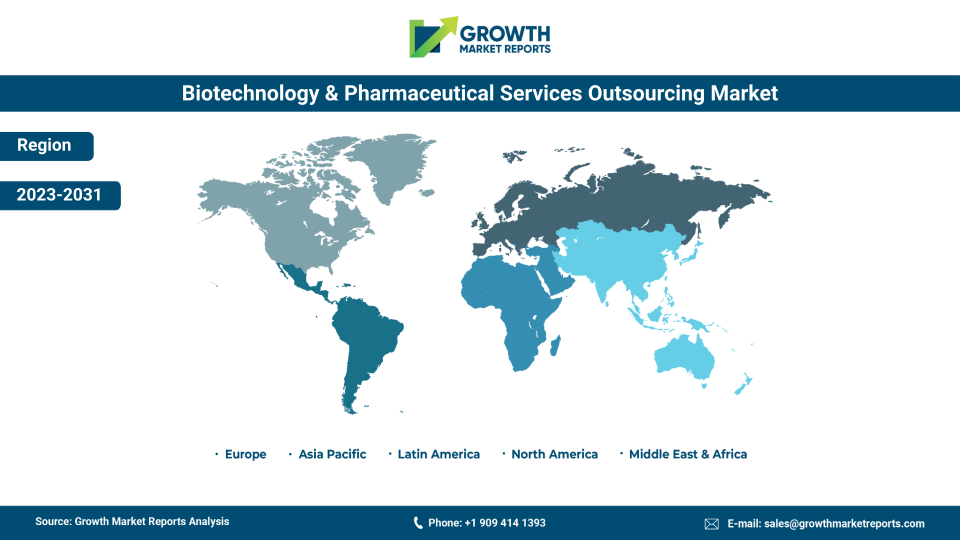
From a regional perspective, North America continues to dominate the Biotechnology and Pharmaceutical Services Outsourcing market, accounting for the largest share in 2025. This leadership is underpinned by the presence of a mature pharmaceutical sector, a strong regulatory environment, and a large pool of outsourcing vendors. Europe follows closely, with significant contributions from countries like Germany, the UK, and Switzerland, where innovation and regulatory expertise are well established. The Asia Pacific region is experiencing the fastest growth, driven by cost-effective service offerings, expanding clinical trial activities, and supportive government initiatives in countries like China and India. Latin America and the Middle East and Africa are emerging as attractive destinations for clinical trials, owing to diverse patient populations and evolving healthcare infrastructures.
The Biotechnology and Pharmaceutical Services Outsourcing market is segmented by service type into Consulting, Manufacturing, Research and Development, Clinical Trials, Regulatory Affairs, Pharmacovigilance, and Others. Among these, Clinical Trials represent the largest and most dynamic segment, accounting for approximately 31.5% of the market in 2025. The complexity of conducting multi-country, multi-center trials has made outsourcing a strategic imperative for pharmaceutical and biotechnology companies. CROs specializing in clinical trial management offer comprehensive services ranging from site selection and patient recruitment to data management and statistical analysis. The demand for clinical trial outsourcing is further accentuated by the need to access diverse patient populations, comply with global regulatory requirements, and leverage advanced digital platforms for remote monitoring and data collection, including decentralized and hybrid trial designs that gained significant traction after 2020 and have now become mainstream by 2025.
Research and Development (R&D) outsourcing is another rapidly expanding segment, commanding approximately 22.8% of the market in 2025, as companies seek to accelerate innovation while managing costs. R&D outsourcing encompasses activities such as early-stage discovery, preclinical studies, and laboratory testing. By collaborating with specialized research organizations, companies can tap into niche expertise, access state-of-the-art facilities, and focus internal resources on core competencies. The rise of biologics and biosimilars, coupled with the growing emphasis on precision medicine, is driving demand for R&D services that can support the development of complex molecules and novel therapeutic modalities. This trend is particularly evident among smaller biotechnology firms that rely on external partners for advanced research capabilities. The expanding scope of pharmaceutical R&D outsourcing reflects the increasing sophistication and specialization now required across early and late-stage development activities.
The Manufacturing segment, representing around 20.4% of total market revenue in 2025, is witnessing robust growth, propelled by the increasing adoption of CMOs for the production of APIs, biologics, and finished dosage forms. Outsourcing manufacturing enables companies to scale production, ensure regulatory compliance, and mitigate supply chain risks. The need for specialized manufacturing capabilities, such as sterile fill-finish, cell and gene therapy production, and high-potency active pharmaceutical ingredient (HPAPI) handling, has further elevated the importance of CMOs in the value chain. As regulatory expectations for quality and traceability intensify, companies are partnering with CMOs that offer integrated quality management systems and global supply chain networks. The related field of pharmaceutical contract manufacturing and research services is also expanding rapidly, particularly across emerging regional markets.
Regulatory Affairs and Pharmacovigilance services, accounting for approximately 10.2% and 8.6% of the market respectively in 2025, are critical for ensuring product safety and regulatory compliance throughout the drug lifecycle. Regulatory affairs outsourcing encompasses activities such as dossier preparation, submission management, and regulatory strategy development. With the globalization of drug development, companies must navigate a complex web of regulatory requirements across different markets, making external regulatory expertise invaluable. Pharmacovigilance services focus on monitoring and managing adverse events, signal detection, and risk management. The increasing focus on patient safety, coupled with stringent pharmacovigilance obligations, is driving demand for specialized service providers that can offer comprehensive safety monitoring and reporting solutions. The growing importance of pharmaceutical analytical testing outsourcing further underscores how companies are externalizing quality-critical activities to meet tighter compliance standards.
The Consulting and Others segments, though smaller in size at approximately 4.3% and 2.2% respectively, play a pivotal role in the market by providing strategic guidance, market access strategies, and technology integration support. Consulting services help companies navigate market entry, regulatory changes, and digital transformation initiatives. As the industry embraces digital health, artificial intelligence, and real-world evidence, consulting partners are increasingly involved in guiding companies through technology adoption, data integration, and process optimization. The evolving landscape of healthcare reimbursement, value-based care, and patient-centricity is further expanding the scope of consulting services in the Biotechnology and Pharmaceutical Services Outsourcing market.
| Attributes | Details |
| Report Title | Biotechnology & Pharmaceutical Services Outsourcing Market Research Report 2034 |
| By Service Type | Consulting, Manufacturing, Research & Development, Clinical Trials, Regulatory Affairs, Pharmacovigilance, Others |
| By End-User | Pharmaceutical Companies, Biotechnology Companies, Medical Device Companies, Others |
| Regions Covered | North America, Europe, APAC, Latin America, MEA |
| Base Year | 2025 |
| Historic Data | 2019-2024 |
| Forecast Period | 2026-2034 |
| Number of Pages | 259 |
| Number of Tables & Figures | 328 |
| Customization Available | Yes, the report can be customized as per your need. |
The Biotechnology and Pharmaceutical Services Outsourcing market is segmented by end-user into Pharmaceutical Companies, Biotechnology Companies, Medical Device Companies, and Others. Pharmaceutical Companies represent the largest end-user segment, accounting for a significant share of outsourcing demand in 2025. The need to accelerate drug development, manage costs, and ensure regulatory compliance drives pharmaceutical companies to engage with specialized service providers across the value chain. Large pharmaceutical organizations often adopt a hybrid model, combining in-house capabilities with strategic outsourcing partnerships to maximize efficiency and flexibility. The growing complexity of drug pipelines, coupled with the need for global market access, is further intensifying the reliance on outsourcing partners for clinical trials, regulatory affairs, and pharmacovigilance.
Biotechnology Companies are emerging as a key driver of market growth, particularly in the areas of R&D, clinical development, and manufacturing. Unlike traditional pharmaceutical firms, many biotechnology companies operate with lean structures and limited in-house resources, making outsourcing an essential component of their business models. By collaborating with CROs, CMOs, and regulatory consultants, biotechnology firms can accelerate the development of innovative therapies, access specialized expertise, and navigate complex regulatory pathways. The rise of cell and gene therapies, immunotherapies, and biosimilars is amplifying the demand for outsourcing services tailored to the unique needs of biotechnology innovators. The adjacent field of drug discovery outsourcing is also expanding rapidly as biotech firms externalize early-stage discovery to specialized partners.
Medical Device Companies are increasingly leveraging outsourcing to manage the growing regulatory complexity and technological innovation in the medical device sector. The development and commercialization of medical devices require specialized testing, clinical evaluation, and regulatory submission processes. Outsourcing partners provide end-to-end support, from preclinical testing and clinical trials to post-market surveillance and regulatory compliance. As the convergence of pharmaceuticals, biotechnology, and medical devices accelerates, integrated service providers capable of supporting combination products and digital health solutions are gaining prominence in the market.
The Others segment includes academic institutions, government agencies, and non-profit organizations involved in drug discovery, clinical research, and public health initiatives. These entities often collaborate with outsourcing partners to access technical expertise, scale research activities, and manage regulatory submissions. The growing emphasis on public-private partnerships, translational research, and global health initiatives is expanding the role of outsourcing in supporting collaborative innovation and addressing unmet medical needs. As the boundaries between traditional end-user categories blur, the market is witnessing the emergence of new business models and partnership structures that drive value across the healthcare ecosystem.
The interplay between different end-user segments is fostering a dynamic and competitive outsourcing landscape. Pharmaceutical and biotechnology companies are increasingly seeking integrated service offerings that span the entire product lifecycle, from discovery to commercialization. This trend is driving consolidation among service providers and the emergence of strategic partnerships aimed at delivering seamless, end-to-end solutions. The evolving needs of end-users, coupled with technological advancements and regulatory changes, are shaping the future trajectory of the Biotechnology and Pharmaceutical Services Outsourcing market through 2034.
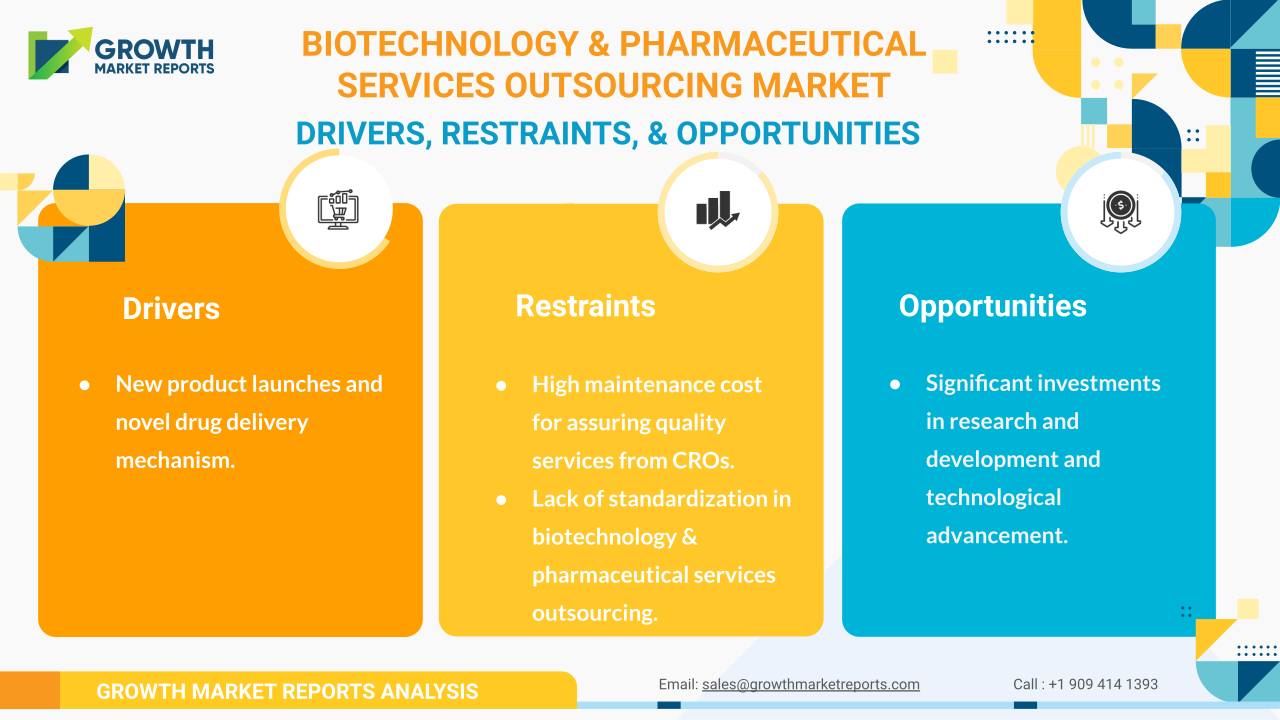
The Biotechnology and Pharmaceutical Services Outsourcing market presents a wealth of opportunities for both service providers and clients. The ongoing digital transformation of the healthcare sector is opening new avenues for innovation and efficiency. The adoption of artificial intelligence, machine learning, and big data analytics is revolutionizing clinical trial design, patient recruitment, and data analysis. Service providers that invest in digital capabilities and advanced analytics are well positioned to capture market share by offering differentiated, value-added solutions. Additionally, the expanding scope of personalized medicine, rare disease research, and advanced therapies is creating demand for specialized outsourcing partners with expertise in niche therapeutic areas and complex modalities. The globalization of clinical trials and the emergence of new markets in Asia Pacific, Latin America, and Africa further enhance growth prospects for outsourcing vendors with global reach and local expertise.
Strategic collaborations and partnerships represent another significant opportunity in the market. As pharmaceutical and biotechnology companies seek to streamline operations and accelerate innovation, they are increasingly forming long-term alliances with CROs, CMOs, and consulting firms. These partnerships enable the sharing of risks, resources, and expertise, fostering a collaborative approach to drug development and commercialization. The integration of real-world evidence, patient-centric trial designs, and decentralized clinical trials is driving the need for agile, technology-enabled service providers. Companies that can offer integrated, end-to-end solutions across the value chain are poised to benefit from the growing demand for seamless outsourcing experiences. The evolving regulatory landscape, including expedited approval pathways and adaptive trial designs, presents additional opportunities for service providers to add value through regulatory consulting and strategic guidance. The parallel growth of healthcare outsourcing services more broadly indicates that this structural shift toward externalization is a durable, long-term trend rather than a cyclical response to cost pressure.
Despite the positive outlook, the market faces several restraining factors that could impact growth. One of the primary challenges is the increasing regulatory complexity and variability across different regions. Navigating diverse regulatory requirements, ensuring data privacy and security, and managing cross-border collaborations can pose significant hurdles for both clients and service providers. Intellectual property protection, data integrity, and compliance with international standards are critical concerns that require robust governance frameworks and risk management strategies. Additionally, the highly competitive nature of the outsourcing market, coupled with pricing pressures and the need for continuous innovation, can impact profitability and sustainability for service providers. Addressing these challenges will require ongoing investment in talent, technology, and quality management systems to remain competitive through the 2026-2034 forecast window.
North America remains the largest regional market for Biotechnology and Pharmaceutical Services Outsourcing, accounting for approximately 38% of the global market in 2025, with a market size of around USD 30.2 billion. The region's dominance is attributed to its well-established pharmaceutical and biotechnology sectors, a robust regulatory framework, and the presence of leading CROs and CMOs. The United States, in particular, is home to a large number of innovative biotech firms and multinational pharmaceutical companies that drive demand for outsourcing services across the value chain. The region's focus on innovation, coupled with strong investment in R&D and digital health, continues to fuel market growth. North America is expected to maintain a steady CAGR of 7.1% through 2034, supported by ongoing advancements in drug development and a favorable business environment for outsourcing partnerships.
Europe ranks as the second-largest market, contributing approximately 28.5% of the global market share in 2025, with a market value of USD 22.7 billion. Countries such as Germany, the United Kingdom, France, and Switzerland serve as major hubs for pharmaceutical innovation, clinical research, and regulatory expertise. The region benefits from a collaborative research ecosystem, harmonized regulatory standards, and a strong focus on quality and patient safety. The increasing adoption of advanced therapies, biosimilars, and digital health solutions is driving demand for specialized outsourcing services. Europe is anticipated to witness a moderate CAGR of 7.4% over the forecast period, with growth supported by public-private partnerships, government funding, and the expansion of clinical trial networks.
The Asia Pacific region is emerging as the fastest-growing market, accounting for 24.5% of the global market in 2025, with a market size of USD 19.5 billion. The region's growth is fueled by cost-effective service offerings, a rapidly expanding patient population, and supportive government initiatives in countries such as China, India, South Korea, and Singapore. Asia Pacific has become a preferred destination for clinical trials, manufacturing, and regulatory affairs outsourcing, owing to its skilled workforce, advanced infrastructure, and favorable regulatory reforms. The region is projected to achieve a remarkable CAGR of 9.2% between 2026 and 2034, outpacing other regions and attracting significant investments from global pharmaceutical and biotechnology companies. Latin America and the Middle East and Africa, accounting for approximately 5.2% and 3.8% of the global market respectively in 2025, are witnessing increasing activity in clinical research and healthcare innovation, positioning them as emerging markets with compelling long-term growth potential over the forecast period.
The competitive landscape of the Biotechnology and Pharmaceutical Services Outsourcing market is characterized by a diverse array of global, regional, and niche service providers. The market is highly fragmented, with leading players competing on the basis of service breadth, technical expertise, geographic reach, and innovation. The increasing demand for integrated, end-to-end solutions is driving consolidation among CROs, CMOs, and consulting firms, as companies seek to expand their capabilities and geographic footprints. Strategic mergers, acquisitions, and partnerships are commonplace, enabling service providers to enhance their value proposition, access new markets, and deliver comprehensive outsourcing solutions across the product lifecycle.
Technological innovation is a key differentiator in the market, with leading companies investing heavily in digital platforms, data analytics, artificial intelligence, and automation. The adoption of advanced technologies is enabling service providers to streamline clinical trial management, enhance data quality, and accelerate regulatory submissions. Companies that can offer technology-enabled solutions, such as decentralized clinical trials, real-world evidence generation, and patient-centric engagement, are gaining a competitive edge. The integration of digital health and data-driven decision-making is transforming the outsourcing landscape, creating new opportunities for differentiation and value creation as the sector moves through the 2026-2034 forecast period.
Quality, compliance, and regulatory expertise remain critical success factors for service providers in this market. Clients are increasingly seeking partners with proven track records in regulatory affairs, pharmacovigilance, and quality management. The ability to navigate complex regulatory environments, ensure data integrity, and deliver timely, compliant solutions is essential for building long-term client relationships. Service providers are also investing in talent development, training, and certification programs to maintain high standards of quality and compliance across their operations. The growing emphasis on patient safety, data transparency, and ethical conduct is further shaping the competitive dynamics of the market.
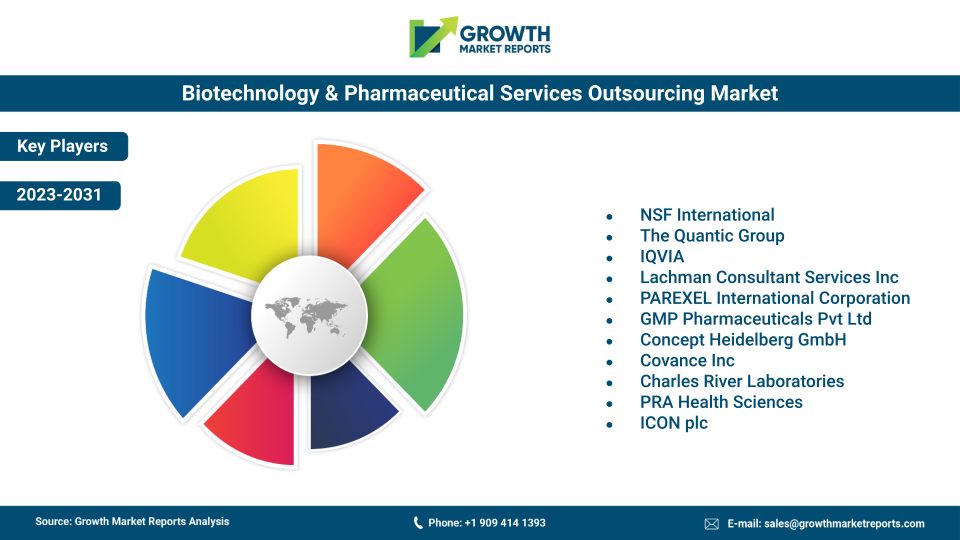
Major companies operating in the Biotechnology and Pharmaceutical Services Outsourcing market include IQVIA Holdings Inc., Laboratory Corporation of America Holdings (LabCorp), Charles River Laboratories International Inc., Syneos Health Inc., Pharmaceutical Product Development (PPD), Inc. (Thermo Fisher Scientific), ICON plc, WuXi AppTec, Covance Inc., Parexel International Corporation, Lonza Group AG, Samsung Biologics, and Catalent Inc.. These companies offer a comprehensive range of services spanning clinical trials, regulatory affairs, manufacturing, R&D, and consulting. IQVIA, for example, is renowned for its advanced analytics and technology-driven solutions, while LabCorp and Charles River Laboratories excel in preclinical and laboratory services. Syneos Health and ICON plc are recognized for their global clinical trial management capabilities and expertise in complex therapeutic areas.
WuXi AppTec and Parexel International have established strong positions in the Asia Pacific region, leveraging local expertise and global networks to support multinational clients. Lonza Group and Samsung Biologics have emerged as dominant forces in biologics and cell and gene therapy manufacturing, reflecting the growing importance of specialized production capabilities. Catalent continues to expand its footprint in drug delivery, biologics, and cell therapy manufacturing. These companies are continuously expanding their service portfolios, investing in digital transformation, and forging strategic partnerships to address the evolving needs of pharmaceutical and biotechnology clients. The competitive landscape is expected to remain dynamic, with ongoing consolidation, technological innovation, and the emergence of new entrants driving continued evolution in the Biotechnology and Pharmaceutical Services Outsourcing market through 2034.
The Biotechnology & Pharmaceutical Services Outsourcing market has been segmented on the basis of
The global Biotechnology and Pharmaceutical Services Outsourcing market reached a size of USD 79.5 billion in 2025. Driven by robust demand across clinical trials, manufacturing, and R&D outsourcing segments, the market is forecast to expand to approximately USD 154.2 billion by 2034, growing at a steady CAGR of 7.6% over the forecast period 2026-2034. North America accounts for the largest regional share at approximately 38%, followed by Europe at 28.5% and the rapidly growing Asia Pacific region at 24.5%.
The global Biotechnology and Pharmaceutical Services Outsourcing market is projected to grow at a compound annual growth rate (CAGR) of 7.6% during the forecast period from 2026 to 2034. Key growth drivers include rising R&D investments, increasing complexity of drug development pipelines, the expansion of cell and gene therapies, growing demand for biosimilars, and the accelerating adoption of digital technologies such as artificial intelligence and decentralized clinical trial platforms across the pharmaceutical and biotechnology industries.
The report covers the market by Service Type (Consulting, Manufacturing, Research and Development, Clinical Trials, Regulatory Affairs, Pharmacovigilance, and Others), by End-User (Pharmaceutical Companies, Biotechnology Companies, Medical Device Companies, and Others), and by Region (North America, Europe, Asia Pacific, Latin America, and Middle East and Africa). Historical data spans 2019-2024, the base year is 2025, and the forecast period covers 2026-2034.
The leading companies operating in the global Biotechnology and Pharmaceutical Services Outsourcing market as of 2025 include IQVIA Holdings Inc., Laboratory Corporation of America Holdings (LabCorp), Charles River Laboratories International Inc., ICON plc, Parexel International Corporation, Syneos Health Inc., WuXi AppTec, Medpace Holdings Inc., Eurofins Scientific, Lonza Group AG, Samsung Biologics, and Catalent Inc. These players compete on the basis of service breadth, technological capabilities, geographic reach, and regulatory expertise. The market continues to see consolidation through mergers and acquisitions as companies strive to offer integrated end-to-end outsourcing solutions.