Regulatory Affairs Market Research Report 2033

Regulatory Affairs Market Research Report 2033

Segments - by Service Type (Regulatory Consulting, Legal Representation, Product Registration, Clinical Trial Applications, Others), by Application (Pharmaceuticals, Medical Devices, Biotechnology, Food & Beverages, Others), by End-User (Pharmaceutical Companies, Biotechnology Firms, Medical Device Manufacturers, Others)

https://growthmarketreports.com/raksha
Author : Raksha Sharma
https://growthmarketreports.com/Vaibhav
Fact-checked by : V. Chandola
https://growthmarketreports.com/Shruti
Editor : Shruti Bhat

Upcoming | Report ID :HC-3991 | 5.0 Rating | 83 Reviews | 275 Pages | Format : Docx PDF

Report Description


Regulatory Affairs Market Outlook

According to our latest research, the global regulatory affairs market size reached USD 15.3 billion in 2024 and is poised to grow at a robust CAGR of 8.2% from 2025 to 2033. This growth trajectory will propel the market to an estimated USD 30.4 billion by 2033. The expansion of the regulatory affairs market is primarily driven by the increasing complexity of global regulatory requirements, a surge in product innovations across pharmaceuticals, biotechnology, and medical devices, and the growing need for expert guidance to ensure compliance and successful market entry.

The regulatory affairs market is experiencing significant growth due to the rapid pace of innovation in the life sciences sector. Pharmaceutical, biotechnology, and medical device companies are continually developing new products, therapies, and technologies, which necessitate meticulous navigation of evolving regulatory frameworks. The increasing stringency and variation of regulations across different regions make it critical for companies to engage specialized regulatory affairs services. These services help organizations manage submissions, approvals, and ongoing compliance, thereby minimizing the risk of product recalls, delays, or legal penalties. As the global healthcare landscape becomes more interconnected, the demand for expert regulatory consulting and legal representation is expected to intensify, further fueling market growth.

Another major growth factor is the rising number of clinical trials and the globalization of research and development activities. With pharmaceutical and biotechnology firms expanding their operations into emerging markets, the complexity of managing regulatory submissions has multiplied. Regulatory affairs professionals play a pivotal role in harmonizing submission processes, ensuring that clinical trial applications meet the specific requirements of local regulatory authorities, and facilitating faster approvals. The trend toward outsourcing regulatory affairs functions to specialized service providers is also gaining momentum, as companies seek to control costs, reduce time-to-market, and leverage the expertise of external consultants with deep regional knowledge.

Technological advancements are also playing a crucial role in the evolution of the regulatory affairs market. The adoption of digital tools, artificial intelligence, and cloud-based platforms is streamlining regulatory processes, enhancing data management, and improving communication between stakeholders. These technologies enable regulatory affairs professionals to manage large volumes of data, track regulatory changes in real time, and ensure timely and accurate submissions. As regulatory requirements become more data-intensive, the integration of advanced technologies is expected to become a standard practice, driving further efficiency and scalability in regulatory affairs operations.

From a regional perspective, North America continues to dominate the regulatory affairs market, accounting for the largest share in 2024, followed by Europe and Asia Pacific. The presence of leading pharmaceutical and biotechnology companies, stringent regulatory frameworks, and a high level of investment in research and development contribute to North America’s leadership. However, Asia Pacific is emerging as the fastest-growing region, with a CAGR of 10.1% projected through 2033, driven by expanding healthcare infrastructure, increasing clinical trial activity, and government initiatives to streamline regulatory processes. Europe remains a key market due to its robust pharmaceutical sector and harmonized regulatory environment under the European Medicines Agency (EMA).

Global Regulatory Affairs Industry Outlook

Service Type Analysis

The regulatory affairs market is segmented by service type into regulatory consulting, legal representation, product registration, clinical trial applications, and others. Among these, regulatory consulting services hold the largest share, reflecting the increasing reliance of life sciences companies on expert guidance to navigate complex and evolving regulatory landscapes. Regulatory consulting encompasses a wide range of activities, including strategic planning, gap analysis, compliance audits, and dossier preparation, all designed to optimize the approval process for new products. As regulatory requirements become more stringent, especially in highly regulated markets like the United States and Europe, the value of specialized consulting services continues to rise. Companies are seeking consultants who can provide insights into the latest regulatory trends, anticipate potential hurdles, and recommend best practices for global submissions.

Legal representation is another critical segment, particularly as regulatory scrutiny intensifies and the risk of litigation increases. Legal experts specializing in regulatory affairs assist companies in addressing issues related to intellectual property, labeling, advertising, and product liability. They also represent organizations in disputes with regulatory authorities, ensuring that their interests are protected in the face of enforcement actions or compliance challenges. The growing complexity of cross-border regulations and the need for legal expertise in navigating international trade requirements further underscore the importance of this segment. As regulatory frameworks evolve to address emerging technologies and therapies, the demand for legal representation is expected to grow steadily.

Product registration services are essential for companies aiming to launch new products in multiple markets. This segment includes the preparation and submission of registration dossiers, coordination with regulatory authorities, and management of post-approval requirements. The increasing globalization of the life sciences industry has made product registration a more intricate and resource-intensive process, as companies must comply with diverse regulatory standards and timelines. Service providers with deep knowledge of regional requirements and established relationships with regulatory agencies are in high demand, as they can expedite the approval process and reduce the risk of costly delays.

Clinical trial applications represent a rapidly growing segment, driven by the surge in clinical research activities worldwide. Regulatory affairs professionals play a vital role in preparing and submitting clinical trial applications, ensuring that all documentation meets the requirements of local and international regulatory bodies. They also manage ongoing communications with authorities, address queries, and facilitate amendments as needed. The increasing complexity of clinical trial designs, coupled with the need for faster approvals, is prompting companies to outsource these functions to specialized service providers. This trend is expected to continue as the volume and complexity of clinical trials increase, particularly in emerging markets.

Other services within the regulatory affairs market include pharmacovigilance, risk management, and regulatory intelligence. These services are gaining prominence as companies seek to enhance patient safety, monitor product performance, and stay ahead of regulatory changes. The integration of advanced analytics and real-time monitoring tools is enabling regulatory affairs professionals to proactively identify and address potential compliance issues, further strengthening the value proposition of these services.

Report Scope

Attributes Details
Report Title Regulatory Affairs Market Research Report 2033
By Service Type Regulatory Consulting, Legal Representation, Product Registration, Clinical Trial Applications, Others
By Application Pharmaceuticals, Medical Devices, Biotechnology, Food & Beverages, Others
By End-User Pharmaceutical Companies, Biotechnology Firms, Medical Device Manufacturers, Others
Regions Covered North America, Europe, APAC, Latin America, MEA
Base Year 2024
Historic Data 2018-2023
Forecast Period 2025-2033
Number of Pages 275
Number of Tables & Figures 308
Customization Available Yes, the report can be customized as per your need.

Application Analysis

The regulatory affairs market serves a diverse array of applications, with pharmaceuticals representing the largest segment. The pharmaceutical industry is characterized by rigorous regulatory oversight, with requirements spanning product development, clinical trials, manufacturing, labeling, and post-market surveillance. Regulatory affairs professionals are indispensable in ensuring that new drugs meet the safety, efficacy, and quality standards set by regulatory authorities such as the U.S. Food and Drug Administration (FDA) and the European Medicines Agency (EMA). The increasing pace of drug innovation, coupled with the rise of personalized medicine and biologics, is intensifying the demand for regulatory expertise in this sector. Companies are also facing growing pressure to accelerate time-to-market, making efficient regulatory management a key competitive advantage.

Medical devices represent another significant application area, driven by the proliferation of advanced diagnostic and therapeutic technologies. Regulatory requirements for medical devices vary widely across regions, encompassing pre-market approval, clinical evaluation, labeling, and post-market surveillance. The introduction of new regulations, such as the European Union Medical Device Regulation (EU MDR), has heightened the complexity of compliance, prompting manufacturers to seek specialized regulatory affairs support. Service providers with expertise in device classification, technical documentation, and conformity assessment are in high demand, as companies strive to ensure timely approvals and maintain market access.

Biotechnology is a rapidly expanding application segment within the regulatory affairs market, fueled by breakthroughs in gene therapy, cell therapy, and biologics. Regulatory pathways for biotechnology products are often more complex than those for traditional pharmaceuticals, requiring extensive data on safety, efficacy, and manufacturing processes. Regulatory affairs professionals play a critical role in guiding companies through these pathways, preparing comprehensive submissions, and managing interactions with regulatory authorities. The growing emphasis on innovation and the need for swift approvals are driving biotechnology firms to invest heavily in regulatory affairs services.

The food and beverages sector is also emerging as a key application area, particularly as regulations governing food safety, labeling, and health claims become more stringent. Regulatory affairs professionals assist companies in ensuring that their products comply with local and international standards, managing submissions for novel ingredients, and addressing issues related to product recalls or adverse events. The increasing globalization of the food supply chain and the rise of functional foods and nutraceuticals are further driving demand for regulatory expertise in this sector.

Other application areas include cosmetics, chemicals, and consumer health products. These industries are subject to a growing array of regulatory requirements, ranging from ingredient safety assessments to environmental impact evaluations. Regulatory affairs services are essential for companies operating in these sectors, as they help navigate the evolving regulatory landscape, ensure compliance, and facilitate market entry.

End-User Analysis

Pharmaceutical companies are the primary end-users of regulatory affairs services, accounting for the largest share of the market. These organizations rely on regulatory affairs professionals to manage the entire lifecycle of their products, from initial development through post-market surveillance. The increasing complexity of drug development, coupled with the need to comply with diverse regulatory requirements across multiple markets, has made regulatory affairs a strategic function within pharmaceutical companies. Outsourcing regulatory affairs activities to specialized service providers is becoming increasingly common, as companies seek to leverage external expertise, reduce operational costs, and accelerate product approvals.

Biotechnology firms represent a rapidly growing end-user segment, driven by the surge in innovative therapies and the need for specialized regulatory guidance. The unique challenges associated with biotechnology products, such as advanced manufacturing processes and complex clinical trial designs, require deep regulatory expertise. Biotechnology firms often lack the in-house resources to manage these challenges, prompting them to engage external regulatory affairs consultants who can provide tailored support and ensure compliance with evolving regulatory standards.

Medical device manufacturers are also significant end-users of regulatory affairs services, particularly in light of recent regulatory changes and the increasing complexity of device technologies. The introduction of new regulations, such as the EU MDR and the U.S. FDA’s evolving requirements for digital health products, has heightened the need for specialized regulatory support. Medical device manufacturers are seeking service providers with expertise in device classification, clinical evaluation, and post-market surveillance to ensure timely approvals and maintain market competitiveness.

Other end-users of regulatory affairs services include food and beverage companies, cosmetics manufacturers, and contract research organizations (CROs). These organizations face a growing array of regulatory challenges, ranging from ingredient safety assessments to environmental impact evaluations. Regulatory affairs professionals play a crucial role in helping these companies navigate the evolving regulatory landscape, ensure compliance, and facilitate market entry. The trend toward outsourcing regulatory affairs activities is expected to continue, as organizations seek to leverage external expertise and focus on their core competencies.

The increasing complexity of regulatory requirements, coupled with the globalization of product development and commercialization, is driving demand for regulatory affairs services across all end-user segments. Companies are recognizing the strategic value of regulatory affairs in ensuring compliance, minimizing risk, and accelerating time-to-market. As the regulatory landscape continues to evolve, the importance of regulatory affairs services is expected to grow, further fueling market expansion.

Opportunities & Threats

The regulatory affairs market presents significant opportunities for growth, particularly as the global life sciences industry continues to expand. The increasing complexity of regulatory requirements, coupled with the globalization of product development and commercialization, is creating demand for specialized regulatory affairs services. Companies are seeking service providers who can offer end-to-end support, from strategic planning and submission management to post-approval compliance and risk management. The growing trend toward outsourcing regulatory affairs activities is also creating opportunities for service providers to expand their offerings and enter new markets. As regulatory frameworks continue to evolve, there is a growing need for innovative solutions and technologies that can streamline regulatory processes, enhance data management, and improve communication between stakeholders.

Another key opportunity lies in the integration of advanced technologies, such as artificial intelligence, machine learning, and cloud-based platforms, into regulatory affairs operations. These technologies have the potential to revolutionize the way regulatory affairs professionals manage data, track regulatory changes, and ensure timely and accurate submissions. The adoption of digital tools is enabling service providers to offer more efficient and scalable solutions, reduce operational costs, and enhance the overall quality of regulatory submissions. As regulatory requirements become more data-intensive, the demand for technology-enabled regulatory affairs services is expected to grow, creating new opportunities for innovation and market expansion.

Despite the numerous opportunities, the regulatory affairs market faces several restraining factors. One of the primary challenges is the high cost and complexity associated with regulatory compliance, particularly for small and medium-sized enterprises (SMEs). The need to comply with diverse and evolving regulatory requirements across multiple markets can be resource-intensive and time-consuming, placing significant strain on organizational resources. Additionally, frequent changes in regulatory frameworks, particularly in emerging markets, can create uncertainty and increase the risk of non-compliance. The lack of harmonization between regulatory authorities in different regions further complicates the approval process, making it difficult for companies to navigate the global regulatory landscape. Addressing these challenges will require ongoing investment in regulatory expertise, technology, and process optimization.

Regional Outlook

North America remains the largest regional market for regulatory affairs, accounting for approximately 38% of the global market value in 2024, or about USD 5.8 billion. The region’s dominance is attributed to the presence of leading pharmaceutical and biotechnology companies, a highly developed healthcare infrastructure, and stringent regulatory frameworks enforced by agencies such as the FDA and Health Canada. North America continues to be a hub for innovation, with significant investment in research and development driving demand for regulatory affairs services. The trend toward outsourcing regulatory activities and the adoption of advanced technologies are further supporting market growth in the region. As regulatory requirements continue to evolve, North American companies are increasingly seeking expert guidance to ensure compliance and maintain competitive advantage.

Europe is the second-largest market, with a market size of USD 4.5 billion in 2024, representing about 29% of the global total. The region benefits from a harmonized regulatory environment under the EMA, which facilitates the approval and commercialization of pharmaceutical and medical device products across member states. The introduction of new regulations, such as the EU MDR and the In Vitro Diagnostic Regulation (IVDR), has increased the complexity of compliance, driving demand for specialized regulatory affairs services. Europe’s strong pharmaceutical sector, coupled with ongoing investment in research and development, is expected to support steady market growth through 2033, with a projected CAGR of 7.5%.

Asia Pacific is the fastest-growing region in the regulatory affairs market, with a projected CAGR of 10.1% through 2033. The region accounted for USD 3.1 billion in 2024, or roughly 20% of the global market. Rapid expansion of the healthcare sector, increasing clinical trial activity, and government initiatives to streamline regulatory processes are driving growth in countries such as China, India, and Japan. The growing presence of multinational pharmaceutical and biotechnology companies, coupled with rising investment in research and development, is further supporting market expansion. Asia Pacific is expected to play an increasingly important role in the global regulatory affairs market, as companies seek to capitalize on the region’s growth potential and navigate its complex regulatory landscape.

Regulatory Affairs Market Statistics

Competitor Outlook

The regulatory affairs market is characterized by intense competition, with a mix of global consulting firms, specialized regulatory service providers, and large contract research organizations (CROs) vying for market share. The competitive landscape is shaped by the need for deep expertise, regional knowledge, and the ability to offer end-to-end solutions across multiple therapeutic areas and geographies. Companies are increasingly differentiating themselves through the integration of advanced technologies, investment in talent, and the development of proprietary tools and platforms that streamline regulatory processes. Strategic partnerships, mergers, and acquisitions are also common, as firms seek to expand their service offerings, enter new markets, and enhance their capabilities.

Key players in the regulatory affairs market are focusing on expanding their global footprint and strengthening their service portfolios to meet the evolving needs of clients. This includes investing in digital transformation initiatives, building specialized teams with expertise in emerging therapeutic areas, and developing tailored solutions for small and medium-sized enterprises. The ability to provide comprehensive support, from early-stage development through post-market surveillance, is increasingly seen as a competitive advantage. Companies are also placing greater emphasis on regulatory intelligence and risk management, helping clients anticipate and respond to regulatory changes in real time.

The market is witnessing a shift toward value-added services, such as regulatory strategy development, market access consulting, and pharmacovigilance. These services are becoming increasingly important as companies seek to navigate complex regulatory environments, accelerate time-to-market, and ensure ongoing compliance. The adoption of advanced analytics and artificial intelligence is enabling service providers to offer more predictive and proactive regulatory support, further enhancing their value proposition. As the regulatory landscape continues to evolve, companies that can offer innovative, technology-enabled solutions are expected to gain a competitive edge.

Major companies operating in the regulatory affairs market include Parexel International Corporation, IQVIA Holdings Inc., PharmaLex GmbH, ICON plc, Charles River Laboratories International, Inc., Covance Inc., and Accell Clinical Research, LLC. Parexel is recognized for its comprehensive regulatory consulting and clinical research services, serving clients across pharmaceuticals, biotechnology, and medical devices. IQVIA leverages advanced data analytics and technology platforms to deliver regulatory affairs solutions that support global compliance and market access. PharmaLex is known for its deep expertise in regulatory strategy, product registration, and pharmacovigilance, with a strong presence in Europe and Asia Pacific. ICON and Charles River Laboratories offer integrated regulatory and clinical research services, supporting clients throughout the product lifecycle. Covance, now part of Labcorp, provides a broad range of regulatory consulting and submission management services, while Accell Clinical Research specializes in regulatory support for clinical trials and product approvals.

These companies are continually investing in talent, technology, and process optimization to enhance their service offerings and maintain competitive advantage. Strategic acquisitions and partnerships are enabling them to expand their geographic reach, enter new therapeutic areas, and offer more comprehensive solutions to clients. As the regulatory affairs market continues to evolve, these leading players are well positioned to capitalize on emerging opportunities and drive innovation in regulatory compliance and strategy.

Key Players

  • Parexel International
  • IQVIA Holdings Inc.
  • Labcorp Drug Development
  • ICON plc
  • Charles River Laboratories
  • PharmaLex GmbH
  • Certara, Inc.
  • Medpace Holdings, Inc.
  • Syneos Health
  • WuXi AppTec
  • PRA Health Sciences
  • Covance Inc.
  • Accell Clinical Research
  • Genpact Limited
  • Freyr Solutions
  • ArisGlobal
  • BioClinica, Inc.
  • Pharmalex
  • Deloitte Touche Tohmatsu Limited
  • NAVITAS Life Sciences
Regulatory Affairs Market Overview

Segments

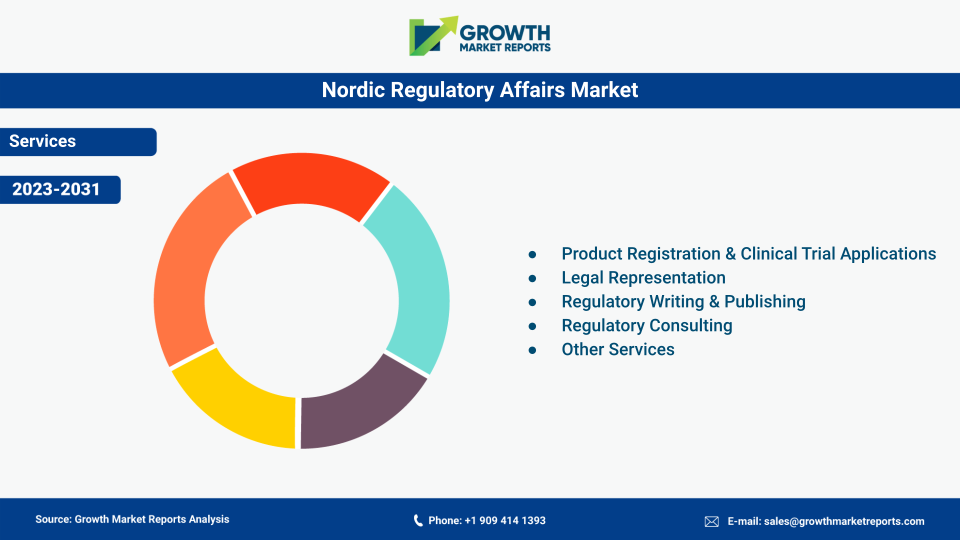
The Regulatory Affairs market has been segmented on the basis of

Service Type

  • Regulatory Consulting
  • Legal Representation
  • Product Registration
  • Clinical Trial Applications
  • Others

Application

  • Pharmaceuticals
  • Medical Devices
  • Biotechnology
  • Food & Beverages
  • Others

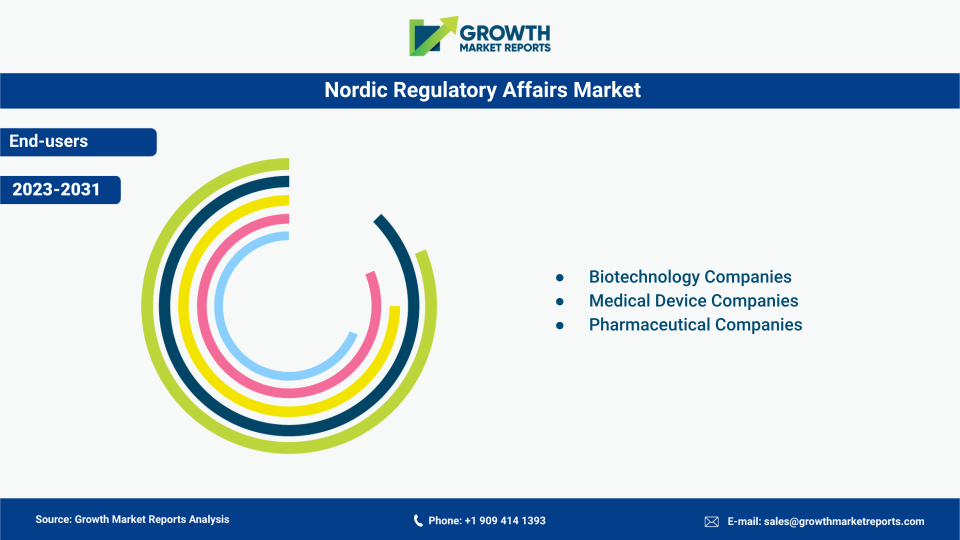
End-User

  • Pharmaceutical Companies
  • Biotechnology Firms
  • Medical Device Manufacturers
  • Others

Competitive Landscape

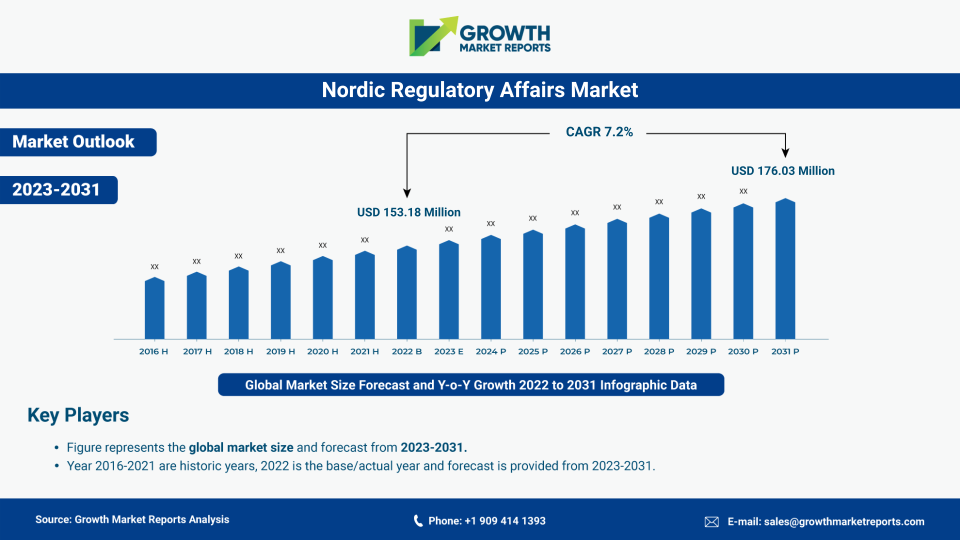
Key players competing in the Nordic regulatory affairs market are ICON plc; Global Pharma Consultancy AB; PRA Health Sciences; Parexel International Corp., Inc.; GenPact Ltd.; Freyr; Regsmart Lifesciences AB; Accell Clinical Research LLC; and Charles River Laboratories International, Inc. Companies are focusing on providing  services, such as such as regulatory consulting and writing & publishing for various medical devices and pharmaceutical  companies to maintain their competitive position in the market. Companies have been widely engaged in strategic partnership, merger & acquisition, new product launch, and collaborations to boost their market share and acquiring new buyers.

For instance, in January 2020, MedPass International, Europe based reimbursement and regulatory consultancy and medical device CRO, was acquired by ICON Investments Limited global provider of drug and device development and commercialization services to medical device, pharmaceutical, and biotechnology industries. This acquisition was aimed to enhance ICON’s Diagnostic Research and Medical Device Services, through the addition of new clinical and regulatory and capabilities in Europe.
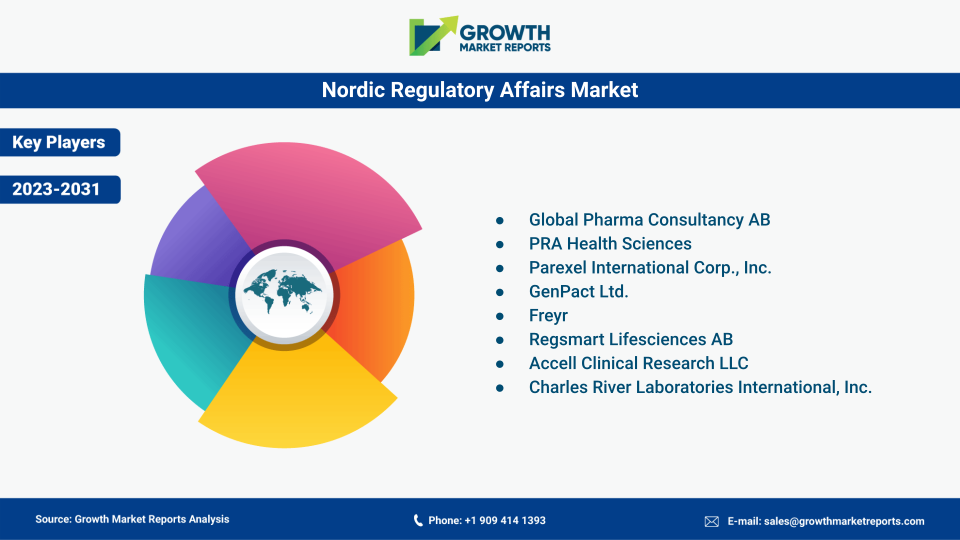

Nordic Regulatory Affairs Market Key Players

Frequently Asked Questions

Outsourcing helps companies control costs, reduce time-to-market, access specialized expertise, and efficiently manage complex and region-specific regulatory requirements.

Emerging markets, especially in Asia Pacific, are experiencing rapid growth due to expanding healthcare infrastructure, increased clinical trial activity, and government efforts to streamline regulations.

Major companies include Parexel International, IQVIA Holdings, Labcorp Drug Development, ICON plc, Charles River Laboratories, PharmaLex GmbH, Certara, Medpace, Syneos Health, WuXi AppTec, and Covance.

Challenges include the high cost and complexity of compliance, frequent regulatory changes, lack of harmonization across regions, and resource constraints for small and medium-sized enterprises.

Technologies like artificial intelligence, digital tools, and cloud-based platforms are streamlining regulatory processes, improving data management, and enabling real-time regulatory monitoring.

Pharmaceutical companies are the largest end-users, followed by biotechnology firms, medical device manufacturers, food and beverage companies, and contract research organizations (CROs).

Key service types include regulatory consulting, legal representation, product registration, clinical trial applications, and other services such as pharmacovigilance and regulatory intelligence.

North America holds the largest market share, followed by Europe and Asia Pacific. Asia Pacific is the fastest-growing region with a projected CAGR of 10.1% through 2033.

Growth is driven by increasing complexity of global regulations, innovation in pharmaceuticals, biotechnology, and medical devices, globalization of clinical trials, and the need for expert compliance guidance.

As of 2024, the global regulatory affairs market size reached USD 15.3 billion and is projected to grow to USD 30.4 billion by 2033.

Table Of Content

Chapter 1 Executive Summary
Chapter 2 Assumptions and Acronyms Used
Chapter 3 Research Methodology
Chapter 4 Regulatory Affairs Market Overview
   4.1 Introduction
      4.1.1 Market Taxonomy
      4.1.2 Market Definition
      4.1.3 Macro-Economic Factors Impacting the Market Growth
   4.2 Regulatory Affairs Market Dynamics
      4.2.1 Market Drivers
      4.2.2 Market Restraints
      4.2.3 Market Opportunity
   4.3 Regulatory Affairs Market - Supply Chain Analysis
      4.3.1 List of Key Suppliers
      4.3.2 List of Key Distributors
      4.3.3 List of Key Consumers
   4.4 Key Forces Shaping the Regulatory Affairs Market
      4.4.1 Bargaining Power of Suppliers
      4.4.2 Bargaining Power of Buyers
      4.4.3 Threat of Substitution
      4.4.4 Threat of New Entrants
      4.4.5 Competitive Rivalry
   4.5 Global Regulatory Affairs Market Size & Forecast, 2023-2032
      4.5.1 Regulatory Affairs Market Size and Y-o-Y Growth
      4.5.2 Regulatory Affairs Market Absolute $ Opportunity

Chapter 5 Global Regulatory Affairs Market Analysis and Forecast By Service Type
   5.1 Introduction
      5.1.1 Key Market Trends & Growth Opportunities By Service Type
      5.1.2 Basis Point Share (BPS) Analysis By Service Type
      5.1.3 Absolute $ Opportunity Assessment By Service Type
   5.2 Regulatory Affairs Market Size Forecast By Service Type
      5.2.1 Regulatory Consulting
      5.2.2 Legal Representation
      5.2.3 Product Registration
      5.2.4 Clinical Trial Applications
      5.2.5 Others
   5.3 Market Attractiveness Analysis By Service Type

Chapter 6 Global Regulatory Affairs Market Analysis and Forecast By Application
   6.1 Introduction
      6.1.1 Key Market Trends & Growth Opportunities By Application
      6.1.2 Basis Point Share (BPS) Analysis By Application
      6.1.3 Absolute $ Opportunity Assessment By Application
   6.2 Regulatory Affairs Market Size Forecast By Application
      6.2.1 Pharmaceuticals
      6.2.2 Medical Devices
      6.2.3 Biotechnology
      6.2.4 Food & Beverages
      6.2.5 Others
   6.3 Market Attractiveness Analysis By Application

Chapter 7 Global Regulatory Affairs Market Analysis and Forecast By End-User
   7.1 Introduction
      7.1.1 Key Market Trends & Growth Opportunities By End-User
      7.1.2 Basis Point Share (BPS) Analysis By End-User
      7.1.3 Absolute $ Opportunity Assessment By End-User
   7.2 Regulatory Affairs Market Size Forecast By End-User
      7.2.1 Pharmaceutical Companies
      7.2.2 Biotechnology Firms
      7.2.3 Medical Device Manufacturers
      7.2.4 Others
   7.3 Market Attractiveness Analysis By End-User

Chapter 8 Global Regulatory Affairs Market Analysis and Forecast by Region
   8.1 Introduction
      8.1.1 Key Market Trends & Growth Opportunities By Region
      8.1.2 Basis Point Share (BPS) Analysis By Region
      8.1.3 Absolute $ Opportunity Assessment By Region
   8.2 Regulatory Affairs Market Size Forecast By Region
      8.2.1 North America
      8.2.2 Europe
      8.2.3 Asia Pacific
      8.2.4 Latin America
      8.2.5 Middle East & Africa (MEA)
   8.3 Market Attractiveness Analysis By Region

Chapter 9 Coronavirus Disease (COVID-19) Impact 
   9.1 Introduction 
   9.2 Current & Future Impact Analysis 
   9.3 Economic Impact Analysis 
   9.4 Government Policies 
   9.5 Investment Scenario

Chapter 10 North America Regulatory Affairs Analysis and Forecast
   10.1 Introduction
   10.2 North America Regulatory Affairs Market Size Forecast by Country
      10.2.1 U.S.
      10.2.2 Canada
   10.3 Basis Point Share (BPS) Analysis by Country
   10.4 Absolute $ Opportunity Assessment by Country
   10.5 Market Attractiveness Analysis by Country
   10.6 North America Regulatory Affairs Market Size Forecast By Service Type
      10.6.1 Regulatory Consulting
      10.6.2 Legal Representation
      10.6.3 Product Registration
      10.6.4 Clinical Trial Applications
      10.6.5 Others
   10.7 Basis Point Share (BPS) Analysis By Service Type 
   10.8 Absolute $ Opportunity Assessment By Service Type 
   10.9 Market Attractiveness Analysis By Service Type
   10.10 North America Regulatory Affairs Market Size Forecast By Application
      10.10.1 Pharmaceuticals
      10.10.2 Medical Devices
      10.10.3 Biotechnology
      10.10.4 Food & Beverages
      10.10.5 Others
   10.11 Basis Point Share (BPS) Analysis By Application 
   10.12 Absolute $ Opportunity Assessment By Application 
   10.13 Market Attractiveness Analysis By Application
   10.14 North America Regulatory Affairs Market Size Forecast By End-User
      10.14.1 Pharmaceutical Companies
      10.14.2 Biotechnology Firms
      10.14.3 Medical Device Manufacturers
      10.14.4 Others
   10.15 Basis Point Share (BPS) Analysis By End-User 
   10.16 Absolute $ Opportunity Assessment By End-User 
   10.17 Market Attractiveness Analysis By End-User

Chapter 11 Europe Regulatory Affairs Analysis and Forecast
   11.1 Introduction
   11.2 Europe Regulatory Affairs Market Size Forecast by Country
      11.2.1 Germany
      11.2.2 France
      11.2.3 Italy
      11.2.4 U.K.
      11.2.5 Spain
      11.2.6 Russia
      11.2.7 Rest of Europe
   11.3 Basis Point Share (BPS) Analysis by Country
   11.4 Absolute $ Opportunity Assessment by Country
   11.5 Market Attractiveness Analysis by Country
   11.6 Europe Regulatory Affairs Market Size Forecast By Service Type
      11.6.1 Regulatory Consulting
      11.6.2 Legal Representation
      11.6.3 Product Registration
      11.6.4 Clinical Trial Applications
      11.6.5 Others
   11.7 Basis Point Share (BPS) Analysis By Service Type 
   11.8 Absolute $ Opportunity Assessment By Service Type 
   11.9 Market Attractiveness Analysis By Service Type
   11.10 Europe Regulatory Affairs Market Size Forecast By Application
      11.10.1 Pharmaceuticals
      11.10.2 Medical Devices
      11.10.3 Biotechnology
      11.10.4 Food & Beverages
      11.10.5 Others
   11.11 Basis Point Share (BPS) Analysis By Application 
   11.12 Absolute $ Opportunity Assessment By Application 
   11.13 Market Attractiveness Analysis By Application
   11.14 Europe Regulatory Affairs Market Size Forecast By End-User
      11.14.1 Pharmaceutical Companies
      11.14.2 Biotechnology Firms
      11.14.3 Medical Device Manufacturers
      11.14.4 Others
   11.15 Basis Point Share (BPS) Analysis By End-User 
   11.16 Absolute $ Opportunity Assessment By End-User 
   11.17 Market Attractiveness Analysis By End-User

Chapter 12 Asia Pacific Regulatory Affairs Analysis and Forecast
   12.1 Introduction
   12.2 Asia Pacific Regulatory Affairs Market Size Forecast by Country
      12.2.1 China
      12.2.2 Japan
      12.2.3 South Korea
      12.2.4 India
      12.2.5 Australia
      12.2.6 South East Asia (SEA)
      12.2.7 Rest of Asia Pacific (APAC)
   12.3 Basis Point Share (BPS) Analysis by Country
   12.4 Absolute $ Opportunity Assessment by Country
   12.5 Market Attractiveness Analysis by Country
   12.6 Asia Pacific Regulatory Affairs Market Size Forecast By Service Type
      12.6.1 Regulatory Consulting
      12.6.2 Legal Representation
      12.6.3 Product Registration
      12.6.4 Clinical Trial Applications
      12.6.5 Others
   12.7 Basis Point Share (BPS) Analysis By Service Type 
   12.8 Absolute $ Opportunity Assessment By Service Type 
   12.9 Market Attractiveness Analysis By Service Type
   12.10 Asia Pacific Regulatory Affairs Market Size Forecast By Application
      12.10.1 Pharmaceuticals
      12.10.2 Medical Devices
      12.10.3 Biotechnology
      12.10.4 Food & Beverages
      12.10.5 Others
   12.11 Basis Point Share (BPS) Analysis By Application 
   12.12 Absolute $ Opportunity Assessment By Application 
   12.13 Market Attractiveness Analysis By Application
   12.14 Asia Pacific Regulatory Affairs Market Size Forecast By End-User
      12.14.1 Pharmaceutical Companies
      12.14.2 Biotechnology Firms
      12.14.3 Medical Device Manufacturers
      12.14.4 Others
   12.15 Basis Point Share (BPS) Analysis By End-User 
   12.16 Absolute $ Opportunity Assessment By End-User 
   12.17 Market Attractiveness Analysis By End-User

Chapter 13 Latin America Regulatory Affairs Analysis and Forecast
   13.1 Introduction
   13.2 Latin America Regulatory Affairs Market Size Forecast by Country
      13.2.1 Brazil
      13.2.2 Mexico
      13.2.3 Rest of Latin America (LATAM)
   13.3 Basis Point Share (BPS) Analysis by Country
   13.4 Absolute $ Opportunity Assessment by Country
   13.5 Market Attractiveness Analysis by Country
   13.6 Latin America Regulatory Affairs Market Size Forecast By Service Type
      13.6.1 Regulatory Consulting
      13.6.2 Legal Representation
      13.6.3 Product Registration
      13.6.4 Clinical Trial Applications
      13.6.5 Others
   13.7 Basis Point Share (BPS) Analysis By Service Type 
   13.8 Absolute $ Opportunity Assessment By Service Type 
   13.9 Market Attractiveness Analysis By Service Type
   13.10 Latin America Regulatory Affairs Market Size Forecast By Application
      13.10.1 Pharmaceuticals
      13.10.2 Medical Devices
      13.10.3 Biotechnology
      13.10.4 Food & Beverages
      13.10.5 Others
   13.11 Basis Point Share (BPS) Analysis By Application 
   13.12 Absolute $ Opportunity Assessment By Application 
   13.13 Market Attractiveness Analysis By Application
   13.14 Latin America Regulatory Affairs Market Size Forecast By End-User
      13.14.1 Pharmaceutical Companies
      13.14.2 Biotechnology Firms
      13.14.3 Medical Device Manufacturers
      13.14.4 Others
   13.15 Basis Point Share (BPS) Analysis By End-User 
   13.16 Absolute $ Opportunity Assessment By End-User 
   13.17 Market Attractiveness Analysis By End-User

Chapter 14 Middle East & Africa (MEA) Regulatory Affairs Analysis and Forecast
   14.1 Introduction
   14.2 Middle East & Africa (MEA) Regulatory Affairs Market Size Forecast by Country
      14.2.1 Saudi Arabia
      14.2.2 South Africa
      14.2.3 UAE
      14.2.4 Rest of Middle East & Africa (MEA)
   14.3 Basis Point Share (BPS) Analysis by Country
   14.4 Absolute $ Opportunity Assessment by Country
   14.5 Market Attractiveness Analysis by Country
   14.6 Middle East & Africa (MEA) Regulatory Affairs Market Size Forecast By Service Type
      14.6.1 Regulatory Consulting
      14.6.2 Legal Representation
      14.6.3 Product Registration
      14.6.4 Clinical Trial Applications
      14.6.5 Others
   14.7 Basis Point Share (BPS) Analysis By Service Type 
   14.8 Absolute $ Opportunity Assessment By Service Type 
   14.9 Market Attractiveness Analysis By Service Type
   14.10 Middle East & Africa (MEA) Regulatory Affairs Market Size Forecast By Application
      14.10.1 Pharmaceuticals
      14.10.2 Medical Devices
      14.10.3 Biotechnology
      14.10.4 Food & Beverages
      14.10.5 Others
   14.11 Basis Point Share (BPS) Analysis By Application 
   14.12 Absolute $ Opportunity Assessment By Application 
   14.13 Market Attractiveness Analysis By Application
   14.14 Middle East & Africa (MEA) Regulatory Affairs Market Size Forecast By End-User
      14.14.1 Pharmaceutical Companies
      14.14.2 Biotechnology Firms
      14.14.3 Medical Device Manufacturers
      14.14.4 Others
   14.15 Basis Point Share (BPS) Analysis By End-User 
   14.16 Absolute $ Opportunity Assessment By End-User 
   14.17 Market Attractiveness Analysis By End-User

Chapter 15 Competition Landscape 
   15.1 Regulatory Affairs Market: Competitive Dashboard
   15.2 Global Regulatory Affairs Market: Market Share Analysis, 2023
   15.3 Company Profiles (Details – Overview, Financials, Developments, Strategy) 
      15.3.1 Parexel International
IQVIA Holdings Inc.
Labcorp Drug Development
ICON plc
Charles River Laboratories
PharmaLex GmbH
Certara, Inc.
Medpace Holdings, Inc.
Syneos Health
WuXi AppTec
PRA Health Sciences
Covance Inc.
Accell Clinical Research
Genpact Limited
Freyr Solutions
ArisGlobal
BioClinica, Inc.
Pharmalex
Deloitte Touche Tohmatsu Limited
NAVITAS Life Sciences

Methodology

Our Clients

Deloitte
Nestle SA
FedEx Logistics
The John Holland Group
General Electric
sinopec
Dassault Aviation
General Mills