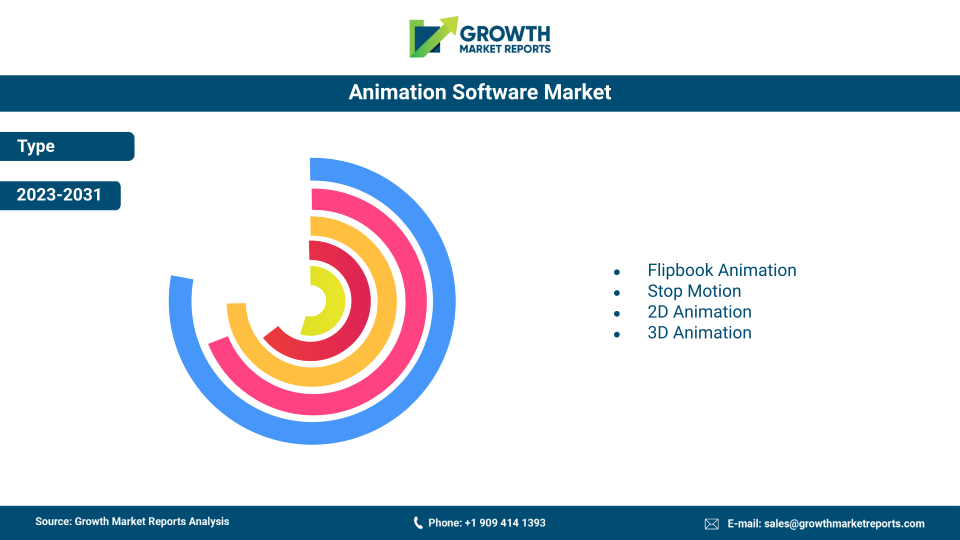
Segments - by Component (Software, Services), by Deployment Mode (On-Premises, Cloud-Based), by Application (Media & Entertainment, Education, Gaming, Advertising, Architecture, Others), by End-User (Individual, Enterprises)
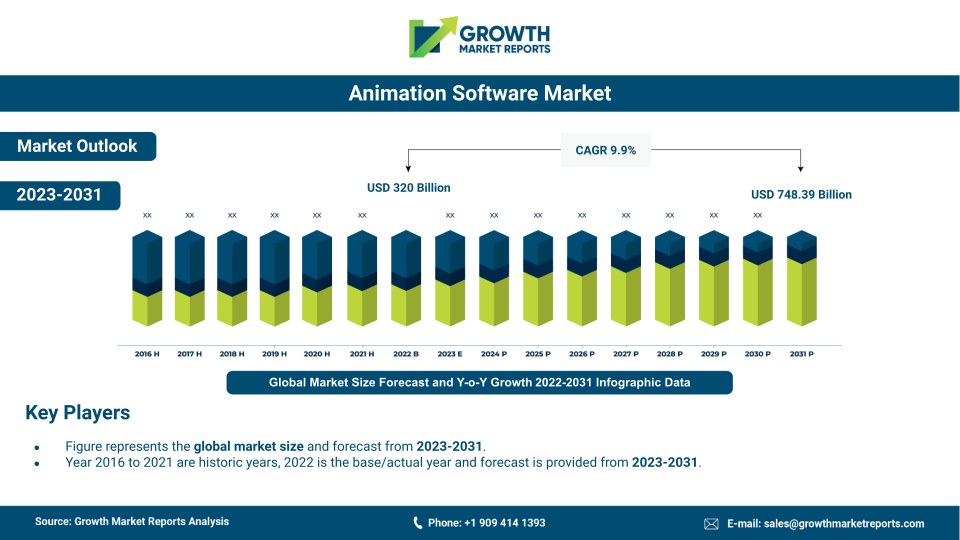
According to our latest research, the global animation software market size reached USD 4.18 billion in 2024, exhibiting robust momentum driven by technological advancements and rising demand for animated content across diverse sectors. The market is expected to expand at a CAGR of 11.4% from 2025 to 2033, propelling the market to an anticipated value of USD 11.08 billion by 2033. This significant growth is largely attributed to the increasing integration of animation in media and entertainment, gaming, and educational applications, as well as the proliferation of cloud-based solutions that enhance accessibility and collaboration in animation workflows.
One of the primary growth drivers for the animation software market is the surging consumption of digital content across streaming platforms, social media, and online advertising. The media and entertainment industry, in particular, has witnessed a paradigm shift as consumers demand higher-quality visual experiences, spurring investments in advanced animation tools. The proliferation of high-speed internet and mobile devices has further accelerated this trend, making animated content more accessible and engaging. As a result, animation studios and content creators are increasingly adopting sophisticated software solutions that offer enhanced rendering, real-time editing, and 3D modeling capabilities, thereby fueling market expansion.
Another crucial factor contributing to the growth of the animation software market is the rising adoption of animation in education and corporate training. Educational institutions are leveraging animated content to enhance learning outcomes, simplify complex concepts, and foster student engagement. Similarly, enterprises are utilizing animation for marketing, product demonstrations, and internal training modules. The flexibility and scalability offered by modern animation software enable users to create interactive and immersive experiences, catering to diverse educational and business needs. This trend is expected to gain further traction as remote learning and digital training become integral to academic and corporate environments worldwide.
Technological advancements in animation software, such as artificial intelligence-driven automation, cloud-based collaboration, and virtual reality integration, are also playing a pivotal role in market growth. These innovations have democratized access to high-end animation tools, lowering barriers for individual creators and small studios. Cloud-based platforms, in particular, facilitate real-time collaboration among geographically dispersed teams, streamlining production workflows and reducing operational costs. Furthermore, the integration of AI and machine learning algorithms enhances productivity by automating repetitive tasks, optimizing rendering processes, and enabling more realistic simulations, thus driving broader adoption across industries.
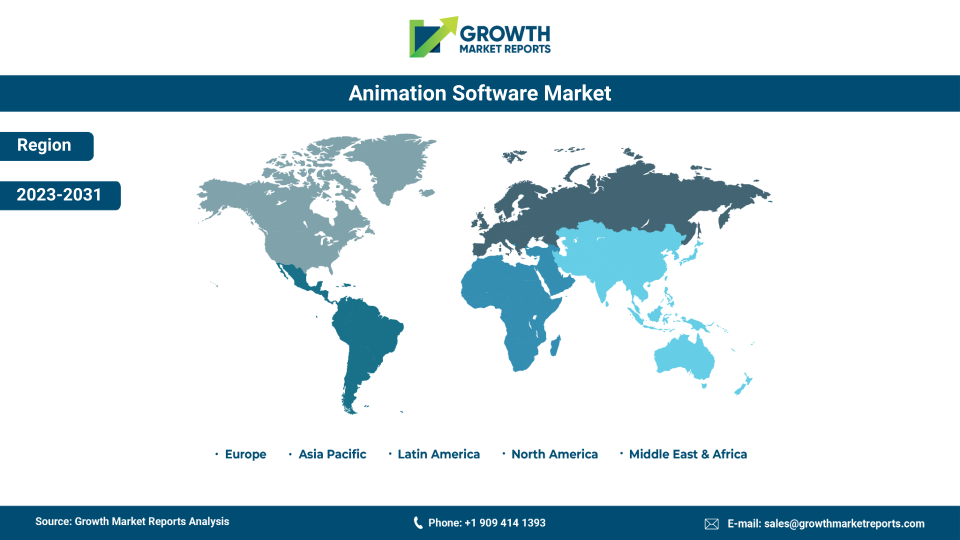
From a regional perspective, North America continues to dominate the animation software market, accounting for the largest revenue share in 2024. This leadership is underpinned by the presence of major animation studios, technology giants, and a mature digital infrastructure. However, the Asia Pacific region is emerging as the fastest-growing market, fueled by rapid urbanization, increasing investments in media and entertainment, and a burgeoning gaming industry. Countries such as China, India, and Japan are witnessing a surge in demand for animated content, supported by government initiatives and the expansion of local animation studios. Europe also maintains a strong foothold, driven by a vibrant creative industry and growing adoption of animation in advertising and architecture.
The animation software market by component is segmented into software and services, with each playing a distinct role in shaping the industry landscape. The software segment encompasses a wide array of solutions, including 2D and 3D animation tools, visual effects (VFX) software, and motion graphics platforms. These software solutions are at the heart of the creative process, enabling animators to design, model, render, and edit complex animations for various applications. The ongoing evolution of user interfaces, integration with AI, and support for cross-platform workflows have significantly enhanced the capabilities of modern animation software, making them indispensable for professionals and amateurs alike.
On the services front, the animation software market includes consulting, training, support, and maintenance services that complement software offerings. As animation projects become increasingly complex, the demand for specialized services has grown, particularly among enterprises seeking to optimize their production pipelines. Service providers assist clients in software deployment, customization, and troubleshooting, ensuring seamless integration with existing systems and maximizing return on investment. Additionally, training services empower users to harness the full potential of advanced animation tools, fostering skill development and enhancing productivity across organizations.
The synergy between software and services is vital for the sustained growth of the animation software market. Software vendors are increasingly bundling their products with value-added services, such as cloud storage, collaborative platforms, and AI-powered analytics, to differentiate themselves in a competitive market. This integrated approach not only enhances user experience but also drives customer loyalty and recurring revenue streams. As the market matures, the focus is shifting towards end-to-end solutions that encompass both software and services, catering to the evolving needs of diverse user segments.
Furthermore, the rise of subscription-based models and Software-as-a-Service (SaaS) offerings has transformed the way animation software and services are consumed. These models provide users with flexible pricing, regular updates, and scalable resources, reducing upfront costs and ensuring access to the latest features. This shift is particularly beneficial for small and medium-sized enterprises (SMEs) and individual creators, who can now leverage industry-leading tools without significant capital investment. As a result, the component landscape of the animation software market is poised for continued innovation and expansion.
| Attributes | Details |
| Report Title | Animation Software Market Research Report 2033 |
| By Component | Software, Services |
| By Deployment Mode | On-Premises, Cloud-Based |
| By Application | Media & Entertainment, Education, Gaming, Advertising, Architecture, Others |
| By End-User | Individual, Enterprises |
| Regions Covered | North America, Europe, APAC, Latin America, MEA |
| Base Year | 2024 |
| Historic Data | 2018-2023 |
| Forecast Period | 2025-2033 |
| Number of Pages | 296 |
| Number of Tables & Figures | 352 |
| Customization Available | Yes, the report can be customized as per your need. |
The animation software market is segmented by deployment mode into on-premises and cloud-based solutions, each offering unique advantages and challenges. On-premises deployment, traditionally favored by large studios and enterprises, provides complete control over software infrastructure, data security, and customization. This deployment mode is particularly suited for organizations with stringent compliance requirements, proprietary workflows, or high-performance computing needs. However, the high upfront costs, ongoing maintenance, and limited scalability associated with on-premises solutions have prompted many users to explore alternative deployment models.
Cloud-based deployment has emerged as a game-changer in the animation software market, enabling users to access powerful tools and resources via the internet. Cloud-based solutions offer unparalleled flexibility, scalability, and cost-efficiency, making them ideal for startups, SMEs, and geographically dispersed teams. By leveraging cloud infrastructure, users can collaborate in real-time, share assets seamlessly, and scale resources on demand, thereby accelerating production timelines and reducing operational overheads. The pay-as-you-go pricing model further democratizes access to advanced animation software, fostering innovation and creativity across the ecosystem.
The adoption of cloud-based animation software is being driven by several factors, including the proliferation of high-speed internet, advancements in cloud security, and the growing popularity of remote and distributed work models. Cloud providers are continuously enhancing their offerings with features such as AI-driven rendering, automated backups, and integration with other creative tools, further boosting the appeal of cloud-based deployment. As a result, the cloud-based segment is expected to register the highest growth rate during the forecast period, outpacing traditional on-premises solutions.
Despite the rapid growth of cloud-based deployment, on-premises solutions continue to hold relevance in certain segments of the animation software market. Organizations handling sensitive data, proprietary intellectual property, or large-scale rendering projects may prefer on-premises deployment for enhanced control and security. Hybrid deployment models, which combine the strengths of both on-premises and cloud-based solutions, are also gaining traction, enabling users to optimize workflows and balance performance, security, and cost considerations. This evolving deployment landscape underscores the need for flexible and adaptable animation software solutions that cater to diverse user requirements.
The animation software market serves a wide range of applications, with media and entertainment emerging as the dominant segment. Animation has become an integral part of film production, television programming, online streaming, and visual effects, driving continuous demand for cutting-edge software solutions. The rise of digital content consumption, coupled with the popularity of animated movies, series, and advertising campaigns, has propelled the adoption of animation software in this segment. Studios and content creators are increasingly leveraging advanced tools to produce high-quality visuals, enhance storytelling, and engage audiences across multiple platforms.
The education sector represents another significant application area for animation software, as educational institutions and e-learning platforms harness the power of animation to improve learning outcomes. Animated content simplifies complex concepts, fosters engagement, and caters to diverse learning styles, making it a valuable tool for educators and students alike. The shift towards digital and remote learning, accelerated by global events, has further amplified the demand for animation software in education. Interactive simulations, virtual classrooms, and gamified learning modules are just a few examples of how animation is transforming the educational landscape.
Gaming is a rapidly growing application segment within the animation software market, fueled by the global popularity of video games, mobile gaming, and eSports. Animation software plays a crucial role in character design, environment modeling, visual effects, and motion capture, enabling game developers to create immersive and engaging experiences. The advent of augmented reality (AR) and virtual reality (VR) technologies has further expanded the scope of animation in gaming, driving innovation and pushing the boundaries of interactive entertainment. As the gaming industry continues to evolve, the demand for specialized animation software is expected to rise in tandem.
In addition to media, education, and gaming, animation software finds applications in advertising, architecture, and other sectors. Advertisers leverage animation to create compelling commercials, explainer videos, and branded content that resonates with target audiences. In architecture, animation software is used for 3D modeling, walkthroughs, and visualization, enabling architects and designers to communicate their ideas effectively. Other emerging applications include healthcare, automotive design, and scientific visualization, reflecting the versatility and transformative potential of animation software across industries.
The animation software market caters to a diverse end-user base, segmented into individuals and enterprises. Individual users, including freelance animators, independent content creators, and hobbyists, represent a significant and growing segment of the market. The democratization of animation tools, driven by user-friendly interfaces, affordable pricing, and online tutorials, has empowered individuals to create professional-quality animations without the need for extensive technical expertise. Social media platforms, YouTube, and online marketplaces provide avenues for individual creators to showcase their work, monetize their content, and build global audiences.
Enterprises constitute the other major end-user segment, encompassing animation studios, media companies, advertising agencies, educational institutions, and corporate organizations. Enterprises typically require advanced animation software solutions that offer robust features, scalability, and integration with other creative tools. Large studios and production houses invest in high-end software to manage complex projects, collaborate across teams, and deliver high-quality content within tight deadlines. Enterprises also benefit from dedicated support, training, and customization services offered by software vendors, ensuring optimal utilization of animation tools in their workflows.
The needs and preferences of individual and enterprise users differ significantly, shaping the product development and marketing strategies of animation software vendors. While individual users prioritize affordability, ease of use, and community support, enterprises seek comprehensive solutions with advanced capabilities, security, and scalability. Vendors are responding to these diverse requirements by offering tiered pricing models, modular features, and flexible deployment options, catering to the unique needs of each end-user segment.
The growing convergence between individual and enterprise use cases is also influencing the evolution of the animation software market. Freelancers and small studios often collaborate with larger enterprises on project-based assignments, leveraging cloud-based platforms and collaborative tools to bridge the gap. This dynamic ecosystem fosters innovation, knowledge sharing, and skill development, contributing to the overall growth and vibrancy of the animation software market.
The animation software market presents a wealth of opportunities for growth and innovation, driven by the expanding scope of animation across industries. The proliferation of digital platforms, streaming services, and social media has created unprecedented demand for animated content, opening new avenues for software vendors and content creators. Emerging technologies such as AI, machine learning, AR, and VR are reshaping the animation landscape, enabling the development of more realistic, interactive, and immersive experiences. These technological advancements present significant opportunities for vendors to differentiate their offerings, capture new market segments, and drive revenue growth in the coming years.
Another major opportunity lies in the untapped potential of emerging markets, particularly in Asia Pacific, Latin America, and the Middle East & Africa. Rapid urbanization, increasing internet penetration, and rising disposable incomes are fueling demand for digital content and entertainment in these regions. Governments and private sector players are investing in local animation industries, fostering talent development and supporting the growth of animation studios. Software vendors that tailor their solutions to the unique needs and preferences of these markets stand to gain a competitive edge and expand their global footprint.
Despite the promising outlook, the animation software market faces several restraining factors that could impede growth. High software costs, particularly for advanced solutions, remain a barrier for individual creators and small studios with limited budgets. Piracy and unauthorized use of software continue to pose challenges for vendors, impacting revenue and undermining innovation. Additionally, the steep learning curve associated with some animation tools can hinder adoption among novice users, highlighting the need for intuitive interfaces, comprehensive training, and community support. Addressing these challenges will be critical for industry stakeholders to sustain long-term growth and competitiveness.
North America remains the largest regional market for animation software, with a market size of USD 1.64 billion in 2024, accounting for approximately 39% of the global market. This dominance is driven by the presence of leading animation studios, technology innovators, and a mature digital media ecosystem. The region is characterized by high adoption of advanced animation tools, significant investments in content creation, and a strong emphasis on research and development. The United States, in particular, is home to major players such as Disney, Pixar, and DreamWorks, which continue to set industry standards and drive demand for cutting-edge software solutions.
The Asia Pacific region is poised to register the fastest growth in the animation software market, with a projected CAGR of 13.6% from 2025 to 2033. The market size in Asia Pacific reached USD 1.09 billion in 2024, buoyed by the rapid expansion of the media and entertainment industry, burgeoning gaming sector, and increasing investments in digital infrastructure. Countries such as China, India, Japan, and South Korea are emerging as key hubs for animation production, supported by government initiatives, talent development programs, and the proliferation of local studios. The growing popularity of anime, mobile gaming, and online streaming platforms is further fueling demand for animation software in the region.
Europe holds a significant share of the animation software market, with a market size of USD 0.88 billion in 2024. The region boasts a vibrant creative industry, strong regulatory frameworks, and a growing emphasis on digital transformation in media, education, and advertising. The United Kingdom, France, and Germany are notable contributors to the European animation landscape, driven by a rich tradition of animation, robust funding mechanisms, and international collaborations. Latin America and the Middle East & Africa, while currently representing smaller shares of the global market, are expected to witness steady growth as digital adoption accelerates and local content production gains momentum.
The animation software market is characterized by intense competition, with a diverse array of players ranging from established technology giants to innovative startups. The competitive landscape is shaped by continuous product innovation, strategic partnerships, and mergers and acquisitions aimed at expanding product portfolios and enhancing market presence. Leading vendors are investing heavily in research and development to introduce new features, improve user experience, and integrate emerging technologies such as AI, cloud computing, and real-time rendering. The shift towards subscription-based and SaaS models has also intensified competition, as vendors vie to attract and retain customers through flexible pricing, regular updates, and value-added services.
Market leaders are differentiating themselves by offering comprehensive, end-to-end solutions that cater to the diverse needs of individual creators, small studios, and large enterprises. These solutions often include integrated collaboration tools, cloud storage, asset libraries, and advanced analytics, enabling users to streamline workflows and enhance productivity. Customer support, training, and community engagement are also key differentiators, as vendors seek to build brand loyalty and foster long-term relationships with users. The emphasis on interoperability and compatibility with other creative tools is another important trend, as users demand seamless integration across their digital ecosystems.
Emerging players and startups are disrupting the market with innovative approaches, such as AI-driven animation, real-time collaboration platforms, and mobile-first solutions. These companies are leveraging agile development processes, user-centric design, and community feedback to rapidly iterate and refine their offerings. By addressing niche segments and unmet needs, new entrants are challenging incumbents and driving overall market dynamism. Strategic partnerships with hardware manufacturers, content creators, and educational institutions are also enabling vendors to expand their reach and tap into new customer segments.
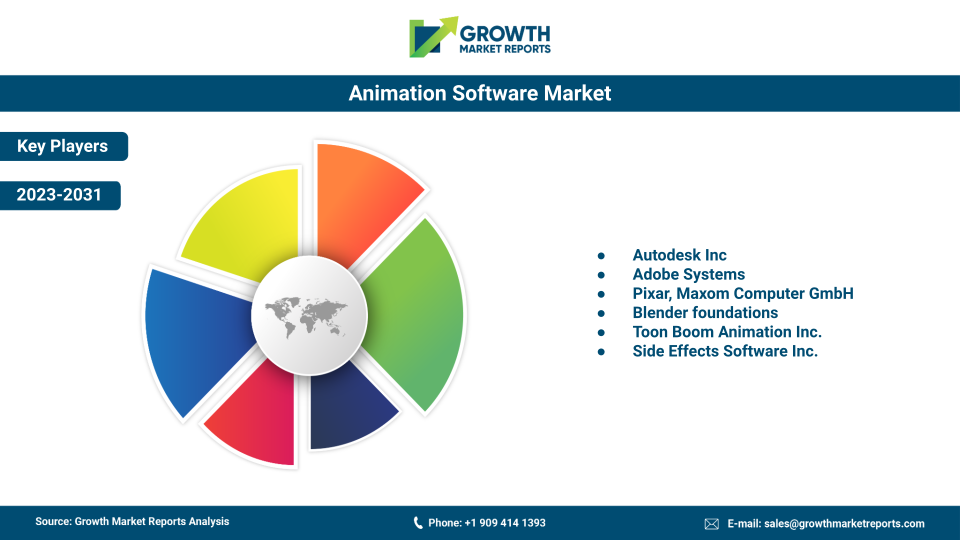
Major companies operating in the animation software market include Autodesk, Adobe Systems, Toon Boom Animation, SideFX, Maxon Computer, Blender Foundation, Foundry, and Corel Corporation. Autodesk is renowned for its industry-leading solutions such as Maya and 3ds Max, widely used in film, gaming, and architectural visualization. Adobe Systems offers a comprehensive suite of creative tools, including Adobe Animate and After Effects, catering to a broad spectrum of users from professionals to hobbyists. Toon Boom Animation specializes in 2D animation software, serving both educational and professional markets. SideFX and Maxon Computer are known for their advanced 3D modeling and visual effects tools, while Blender Foundation provides an open-source alternative that has gained significant traction among individual creators and small studios. Foundry and Corel Corporation also offer a range of animation and design solutions, further enriching the competitive landscape.
These companies are continuously enhancing their product offerings through innovation, acquisitions, and strategic collaborations. For instance, Autodesk and Adobe have expanded their cloud-based capabilities to support remote collaboration and real-time editing, while Toon Boom has introduced AI-powered features to streamline animation workflows. Blender Foundation's open-source model has fostered a vibrant community of contributors and users, driving rapid development and widespread adoption. As the animation software market evolves, competition is expected to intensify, with vendors focusing on innovation, customer engagement, and ecosystem development to maintain their competitive edge and capitalize on emerging opportunities.
The Animation Software market has been segmented on the basis of
Some of the prominent players in the market are Autodesk Inc, Adobe Systems, Pixar, Maxom Computer GmbH, Blender foundations, Toon Boom Animation Inc., and Side Effects Software Inc.
These players are constantly working on improving 2D and 3D animation software with the help of Adobe After Effects, Pivot Stick figure Animator, Flip note Studio, Autodesk 3ds Max, Autodesk Maya, and Cinema 4D. This is due to the advantages provided by these methods such as quick designs and a variety of visual effects, which are expected to positively affect consumer development.
Increasing quality of images produced by 3D animation techniques, 3D animation applications such as Autodesk Maya, Autodesk Softimage, Cinema 4D, and Blender3D animation techniques are expected to gain popularity. Adobe Systems, Nintendo, Dream, and Autodesk are among the companies that have produced these programs.
Major trends include AI-driven automation, VR/AR integration, cloud collaboration, and the rise of SaaS models. Opportunities exist in emerging markets, digital content proliferation, and technological innovation.
Educational institutions and enterprises use animation software to simplify complex concepts, enhance engagement, and create interactive learning modules for both academic and corporate training.
Animation software can be deployed on-premises for greater control and security, or via cloud-based platforms for flexibility, scalability, and lower upfront costs. Hybrid models are also gaining popularity.
Key companies include Autodesk, Adobe Systems, Toon Boom Animation, SideFX, Maxon Computer, Blender Foundation, Foundry, and Corel Corporation, among others.
North America holds the largest market share, while the Asia Pacific region is the fastest-growing, driven by rapid urbanization, investments in media and gaming, and government support.
The market is segmented into software (2D/3D animation tools, VFX, motion graphics) and services (consulting, training, support, maintenance), both of which are essential for industry growth.
Cloud-based animation software enables real-time collaboration, scalability, and cost efficiency, making advanced tools accessible to startups, SMEs, and remote teams, and is expected to register the highest growth rate.
Key industries fueling demand for animation software include media and entertainment, gaming, education, advertising, and architecture, with growing use in corporate training and marketing as well.
The animation software market is expected to grow at a CAGR of 11.4% from 2025 to 2033, reaching an estimated value of USD 11.08 billion by 2033.
As of 2024, the global animation software market reached a size of USD 4.18 billion, driven by technological advancements and increased demand for animated content across various sectors.