Ambulatory EHR Market Research Report 2033

Ambulatory EHR Market Research Report 2033

Segments - by Product Type (Cloud-based, On-premises), by Application (Practice Management, Patient Management, E-prescribing, Population Health Management, Others), by End User (Hospitals, Clinics, Ambulatory Surgical Centers, Others)

https://growthmarketreports.com/raksha
Author : Raksha Sharma
https://growthmarketreports.com/Vaibhav
Fact-checked by : V. Chandola
https://growthmarketreports.com/Shruti
Editor : Shruti Bhat

Upcoming | Report ID :HC-4544 | 4.3 Rating | 22 Reviews | 280 Pages | Format : Docx PDF

Report Description


Ambulatory EHR Market Outlook

According to our latest research, the global Ambulatory EHR market size reached USD 6.2 billion in 2024, reflecting robust growth driven by the increasing adoption of digital healthcare solutions. The market is expected to expand at a compound annual growth rate (CAGR) of 6.8% from 2025 to 2033. By the end of 2033, the market size is forecasted to reach approximately USD 12.1 billion. This growth is primarily fueled by the rising need for efficient patient data management, the growing emphasis on value-based care, and government mandates promoting the digitization of healthcare services worldwide.

The surge in demand for ambulatory electronic health records (EHR) systems is closely linked to the healthcare sector’s ongoing digital transformation. One of the most significant growth factors is the increasing push for interoperability and data integration across healthcare providers. As healthcare organizations strive to improve care coordination, reduce medical errors, and enhance patient outcomes, the need for seamless access to patient records in ambulatory settings has never been greater. Regulatory frameworks such as the Health Information Technology for Economic and Clinical Health (HITECH) Act in the United States and similar initiatives globally have incentivized providers to adopt certified EHR technology. These regulations, combined with the growing prevalence of chronic diseases and a rising geriatric population, are encouraging healthcare facilities to invest in ambulatory EHR systems to streamline workflows and ensure compliance with evolving standards.

Another key driver for the ambulatory EHR market is the shift towards value-based care and patient-centric healthcare delivery models. Ambulatory EHR solutions empower healthcare providers with real-time access to comprehensive patient information, enabling more accurate diagnoses, personalized treatment plans, and improved patient engagement. The integration of advanced analytics, artificial intelligence, and telehealth capabilities within EHR platforms is enhancing the utility of these solutions, allowing providers to proactively manage population health, identify at-risk patients, and optimize resource allocation. As healthcare organizations increasingly focus on cost containment and operational efficiency, ambulatory EHR systems are becoming indispensable tools for achieving these objectives while maintaining high standards of patient care.

The proliferation of cloud computing and mobile health technologies is further accelerating the adoption of ambulatory EHR systems. Cloud-based EHR solutions offer greater scalability, flexibility, and cost-effectiveness compared to traditional on-premises systems, making them particularly attractive for small and medium-sized practices. The ability to access patient records securely from any location supports remote consultations, telemedicine, and multi-site healthcare delivery, which have become essential in the post-pandemic era. Additionally, ongoing advancements in cybersecurity and data privacy measures are addressing concerns around sensitive patient data, fostering greater trust and confidence among healthcare providers and patients alike.

From a regional perspective, North America continues to dominate the ambulatory EHR market, accounting for the largest share in 2024. The region’s leadership is attributed to the presence of major EHR vendors, widespread healthcare IT adoption, and strong regulatory support for digital health initiatives. Europe follows closely, driven by increasing government investments in healthcare infrastructure and growing awareness of the benefits of EHR systems. Meanwhile, the Asia Pacific region is emerging as a high-growth market, propelled by rapid urbanization, expanding healthcare access, and rising investments in health IT. Latin America and the Middle East & Africa are also witnessing steady adoption, albeit at a slower pace due to budgetary constraints and infrastructural challenges.

Global Ambulatory EHR Industry Outlook

Product Type Analysis

The Product Type segment of the ambulatory EHR market is bifurcated into Cloud-based and On-premises solutions, each catering to distinct operational and infrastructural needs of healthcare providers. Cloud-based ambulatory EHR systems are experiencing exponential growth, primarily due to their inherent advantages such as scalability, remote accessibility, and reduced upfront costs. These systems enable healthcare organizations to streamline operations, facilitate seamless data sharing, and support telehealth initiatives, which have become increasingly vital in the wake of the COVID-19 pandemic. Cloud-based solutions also offer automatic updates, ensuring that providers remain compliant with ever-evolving regulatory requirements without the need for extensive IT resources. As a result, small and medium-sized practices, which often face budgetary and technical constraints, are rapidly migrating to cloud-based EHRs to modernize their healthcare delivery models.

On the other hand, on-premises ambulatory EHR systems continue to maintain a significant presence, particularly among large hospitals and healthcare networks with robust IT infrastructure. These solutions offer greater control over data security, customization, and integration with legacy systems, which is crucial for organizations handling sensitive patient information and complex workflows. While the initial capital investment and ongoing maintenance costs for on-premises systems are higher compared to cloud-based alternatives, many providers prefer this deployment model to address specific compliance requirements and minimize data privacy risks. Furthermore, on-premises EHRs allow for tailored configurations that align precisely with the unique operational needs of large healthcare entities, ensuring optimal performance and reliability.

The competitive landscape within the product type segment is intensifying as vendors strive to differentiate their offerings through enhanced interoperability, user-friendly interfaces, and advanced analytics capabilities. Cloud-based EHR providers are increasingly focusing on delivering integrated solutions that encompass electronic prescribing, practice management, and population health management functionalities within a single platform. This holistic approach not only simplifies adoption for healthcare providers but also maximizes the value derived from EHR investments. Meanwhile, on-premises vendors are investing in hybrid models that combine the benefits of both deployment types, offering greater flexibility and adaptability to evolving market demands.

Market trends indicate a clear shift towards cloud-based ambulatory EHR solutions, with this segment projected to outpace on-premises systems in terms of growth rate over the forecast period. The ongoing digital transformation of healthcare, coupled with the rising demand for scalable and cost-effective IT infrastructure, is expected to drive further adoption of cloud-based EHRs worldwide. However, on-premises systems will continue to play a vital role in regions or institutions where data sovereignty, customization, and integration with existing systems are paramount. As the market evolves, hybrid and multi-cloud approaches are likely to gain traction, enabling healthcare organizations to leverage the strengths of both deployment models to achieve their strategic objectives.

Report Scope

Attributes Details
Report Title Ambulatory EHR Market Research Report 2033
By Product Type Cloud-based, On-premises
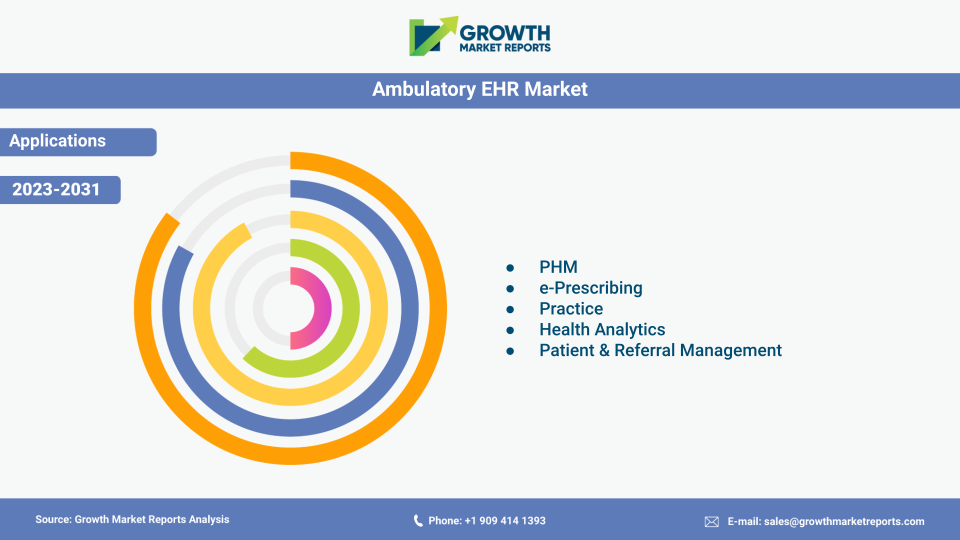
By Application Practice Management, Patient Management, E-prescribing, Population Health Management, Others
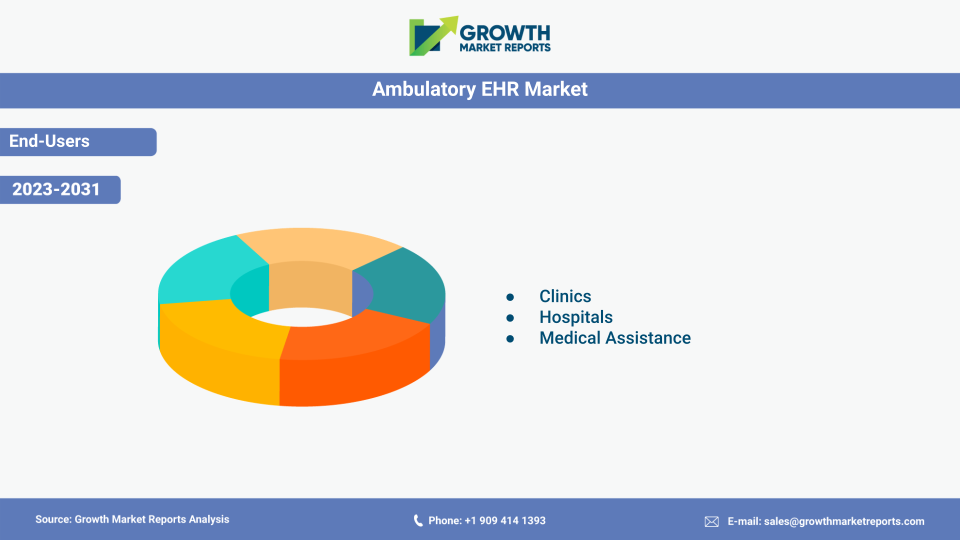
By End User Hospitals, Clinics, Ambulatory Surgical Centers, Others
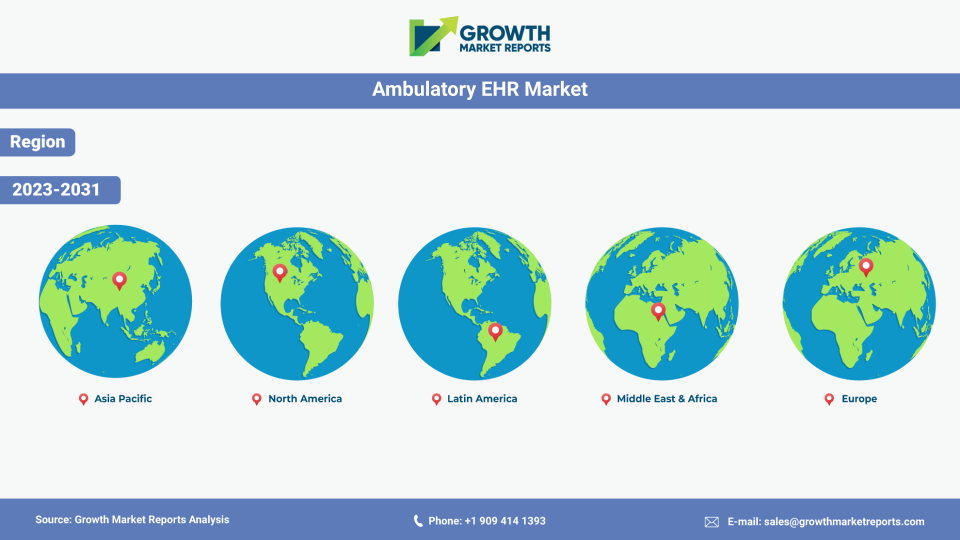
Regions Covered North America, Europe, APAC, Latin America, MEA
Base Year 2024
Historic Data 2018-2023
Forecast Period 2025-2033
Number of Pages 280
Number of Tables & Figures 383
Customization Available Yes, the report can be customized as per your need.

Application Analysis

The Application segment of the ambulatory EHR market encompasses a diverse range of use cases, including Practice Management, Patient Management, E-prescribing, Population Health Management, and others. Practice management applications are among the most widely adopted, as they streamline administrative tasks such as appointment scheduling, billing, and revenue cycle management. By automating these processes, ambulatory EHR systems enable healthcare providers to reduce operational inefficiencies, minimize errors, and optimize resource utilization. The integration of practice management functionalities within EHR platforms also facilitates seamless coordination between clinical and administrative teams, ensuring a more cohesive and efficient workflow.

Patient management applications are gaining prominence as healthcare organizations prioritize patient-centric care and personalized treatment plans. Ambulatory EHR systems equipped with robust patient management features enable providers to track patient histories, monitor ongoing treatments, and facilitate communication between patients and care teams. These capabilities are particularly valuable in managing chronic diseases, coordinating follow-up care, and enhancing patient engagement. The ability to access real-time patient data from any location empowers clinicians to make informed decisions, deliver timely interventions, and improve overall care quality.

E-prescribing is another critical application area within the ambulatory EHR market, driven by the growing emphasis on medication safety and regulatory compliance. E-prescribing modules allow healthcare providers to electronically generate and transmit prescriptions to pharmacies, reducing the risk of errors associated with handwritten prescriptions and streamlining the medication management process. The adoption of e-prescribing is further supported by government mandates and incentive programs aimed at promoting the use of health IT to enhance patient safety and reduce healthcare costs. As a result, e-prescribing is becoming an essential component of modern ambulatory EHR systems, contributing to improved medication adherence and better health outcomes.

Population health management is emerging as a strategic priority for healthcare organizations seeking to address the challenges of rising chronic disease prevalence and shifting reimbursement models. Ambulatory EHR systems equipped with advanced analytics and reporting tools enable providers to monitor population health trends, identify at-risk patient groups, and implement targeted interventions. These capabilities are instrumental in supporting value-based care initiatives, reducing hospital readmissions, and optimizing care delivery across diverse patient populations. Other applications, such as clinical decision support and telehealth integration, are also gaining traction, further expanding the scope and utility of ambulatory EHR solutions.

End User Analysis

The End User segment of the ambulatory EHR market is categorized into Hospitals, Clinics, Ambulatory Surgical Centers, and others, each representing unique adoption drivers and challenges. Hospitals, particularly those with dedicated outpatient departments, are major adopters of ambulatory EHR systems. These institutions require robust EHR platforms that can seamlessly integrate with inpatient EHRs, facilitate care coordination, and support complex clinical workflows. The ability to share patient data across care settings is critical for hospitals aiming to improve patient outcomes, reduce duplication of tests and procedures, and enhance overall care quality. As hospitals increasingly focus on outpatient care delivery and population health management, the demand for interoperable ambulatory EHR solutions continues to rise.

Clinics, including specialty and primary care practices, represent a significant and rapidly growing segment of the ambulatory EHR market. These providers often operate with limited resources and face unique challenges related to workflow optimization, regulatory compliance, and patient engagement. Ambulatory EHR systems tailored to the needs of clinics offer intuitive interfaces, customizable templates, and integrated practice management functionalities, enabling clinicians to deliver high-quality care efficiently. The adoption of cloud-based EHR solutions is particularly prevalent among clinics, as these systems offer cost-effective and scalable options that can be easily implemented and maintained without extensive IT infrastructure.

Ambulatory surgical centers (ASCs) are increasingly recognizing the value of EHR systems in enhancing surgical care delivery, optimizing perioperative workflows, and ensuring regulatory compliance. EHR platforms designed for ASCs offer specialized features such as electronic anesthesia records, surgical scheduling, and outcomes tracking, enabling these facilities to improve operational efficiency and patient safety. The integration of EHRs with other health IT systems, such as electronic billing and inventory management, further streamlines administrative processes and supports data-driven decision-making. As the volume of outpatient surgical procedures continues to grow, the adoption of ambulatory EHR systems among ASCs is expected to accelerate.

Other end users, including urgent care centers, diagnostic laboratories, and community health organizations, are also contributing to the expansion of the ambulatory EHR market. These entities require flexible and interoperable EHR solutions that can support diverse clinical and administrative workflows while ensuring data security and regulatory compliance. The growing emphasis on care coordination, patient engagement, and value-based reimbursement models is driving increased investment in ambulatory EHR systems across all end user segments. As healthcare delivery continues to shift towards outpatient and community-based settings, the demand for innovative and adaptable EHR solutions is set to rise further.

Opportunities & Threats

The ambulatory EHR market presents a multitude of opportunities for growth and innovation, particularly in the areas of interoperability, artificial intelligence, and patient engagement. As healthcare organizations seek to enhance data sharing and care coordination across disparate systems and providers, there is a significant opportunity for EHR vendors to develop solutions that facilitate seamless interoperability. The integration of artificial intelligence and machine learning capabilities within EHR platforms is another promising avenue, enabling providers to leverage predictive analytics, automate routine tasks, and deliver personalized care at scale. Furthermore, the increasing adoption of telehealth and remote patient monitoring is creating new opportunities for EHR systems to support virtual care delivery and empower patients to take a more active role in managing their health.

Expansion into emerging markets represents another major growth opportunity for the ambulatory EHR market. Rapid urbanization, expanding healthcare infrastructure, and rising investments in health IT are driving increased demand for EHR solutions in regions such as Asia Pacific, Latin America, and the Middle East & Africa. Vendors that can offer scalable, cost-effective, and locally tailored EHR platforms are well-positioned to capitalize on these opportunities. Additionally, the growing focus on population health management and value-based care is creating new avenues for EHR systems to support data-driven decision-making, improve patient outcomes, and optimize resource allocation across healthcare organizations of all sizes.

Despite these opportunities, the ambulatory EHR market faces several restraining factors that could hinder growth. Data security and privacy concerns remain a significant challenge, particularly as the volume and sensitivity of patient information stored in EHR systems continue to increase. Healthcare providers are apprehensive about potential data breaches, cyberattacks, and regulatory non-compliance, which can result in significant financial and reputational damage. Additionally, the high cost of EHR implementation, ongoing maintenance, and staff training can pose barriers to adoption, especially for small and medium-sized practices with limited budgets. Addressing these challenges will require ongoing investment in cybersecurity, user training, and regulatory compliance, as well as the development of more affordable and user-friendly EHR solutions.

Regional Outlook

North America remains the largest and most mature market for ambulatory EHR solutions, accounting for USD 2.7 billion of the global market size in 2024. The region’s dominance is underpinned by robust healthcare IT infrastructure, strong regulatory support, and the presence of leading EHR vendors. The United States, in particular, has been at the forefront of EHR adoption, driven by initiatives such as the HITECH Act and meaningful use incentives. Canada is also witnessing increased investment in digital health, with provincial governments promoting the adoption of interoperable EHR systems across healthcare settings. The North American market is expected to maintain a steady CAGR of 6.2% through 2033, fueled by ongoing innovation, regulatory compliance requirements, and the growing emphasis on value-based care.

Europe represents the second-largest regional market, with a value of USD 1.6 billion in 2024. The region is characterized by a diverse regulatory landscape, varying levels of healthcare IT adoption, and significant government investment in digital health infrastructure. Countries such as the United Kingdom, Germany, and the Netherlands are leading the way in EHR implementation, supported by national health strategies and funding programs. The European market is also benefiting from the increasing focus on interoperability, cross-border healthcare, and data privacy regulations such as the General Data Protection Regulation (GDPR). As healthcare systems across Europe continue to modernize and integrate digital technologies, the adoption of ambulatory EHR solutions is expected to accelerate, particularly in outpatient and community-based care settings.

The Asia Pacific region is emerging as a high-growth market for ambulatory EHR systems, with a market size of USD 1.1 billion in 2024 and a projected CAGR of 8.1% over the forecast period. Rapid urbanization, expanding healthcare access, and rising investments in health IT are driving increased adoption of EHR solutions across countries such as China, India, Japan, and Australia. Government initiatives aimed at improving healthcare quality, enhancing data management, and promoting digital health are further supporting market growth. While challenges related to infrastructure, funding, and data privacy persist in some markets, the overall outlook for the Asia Pacific region remains highly positive. Latin America and the Middle East & Africa are also witnessing steady growth, with market sizes of USD 0.5 billion and USD 0.3 billion respectively in 2024, as healthcare providers in these regions increasingly recognize the value of digital health solutions in improving care delivery and patient outcomes.

Ambulatory EHR Market Statistics

Competitor Outlook

The global ambulatory EHR market is highly competitive, with a diverse array of established players and emerging vendors vying for market share. The competitive landscape is characterized by ongoing innovation, strategic partnerships, mergers and acquisitions, and a relentless focus on product differentiation. Leading EHR vendors are investing heavily in research and development to enhance the functionality, interoperability, and user experience of their platforms. The integration of advanced analytics, artificial intelligence, and telehealth capabilities is becoming a key differentiator, enabling vendors to offer comprehensive solutions that address the evolving needs of healthcare providers. Additionally, vendors are expanding their global footprint through partnerships with healthcare organizations, government agencies, and technology providers, further strengthening their market position.

The shift towards cloud-based and subscription-based EHR models is intensifying competition, as vendors seek to capture a larger share of the small and medium-sized practice segment. These models offer greater affordability, scalability, and ease of implementation, making them particularly attractive for resource-constrained healthcare providers. Vendors are also focusing on enhancing interoperability and data integration capabilities, enabling seamless data exchange across disparate systems and care settings. The ability to offer customizable, user-friendly, and regulatory-compliant EHR solutions is becoming increasingly important, as healthcare organizations prioritize operational efficiency, patient engagement, and value-based care delivery.

In addition to established players, the ambulatory EHR market is witnessing the emergence of innovative startups and niche vendors that are disrupting traditional business models and driving technological advancements. These companies are leveraging cutting-edge technologies such as artificial intelligence, blockchain, and mobile health to develop next-generation EHR solutions that address specific pain points and unmet needs in the market. The rise of open-source and interoperable EHR platforms is also fostering greater competition, enabling healthcare organizations to tailor their EHR systems to their unique requirements and integrate with a wide range of third-party applications and devices.

Some of the major companies operating in the ambulatory EHR market include Epic Systems Corporation, Cerner Corporation (now part of Oracle Health), Allscripts Healthcare Solutions, athenahealth, Inc., eClinicalWorks, NextGen Healthcare, Greenway Health, MEDITECH, and GE Healthcare. Epic Systems is renowned for its comprehensive and interoperable EHR solutions, serving a wide range of healthcare providers globally. Cerner, now under Oracle Health, continues to innovate with cloud-based and AI-powered EHR platforms, focusing on enhancing care coordination and patient outcomes. Allscripts and athenahealth are recognized for their user-friendly, cloud-based EHR solutions that cater to the needs of ambulatory care providers and small to medium-sized practices.

eClinicalWorks and NextGen Healthcare are prominent players in the ambulatory EHR segment, offering integrated solutions that encompass practice management, patient engagement, and population health management functionalities. Greenway Health and MEDITECH are also notable for their commitment to interoperability, regulatory compliance, and customer support. GE Healthcare, with its extensive portfolio of healthcare IT solutions, continues to expand its presence in the ambulatory EHR market through strategic partnerships and product innovation. As competition intensifies, these companies are expected to focus on expanding their product offerings, enhancing customer support, and leveraging emerging technologies to maintain their leadership positions and capture new growth opportunities in the global ambulatory EHR market.

Key Players

  • Epic Systems Corporation
  • Cerner Corporation (Oracle Health)
  • Allscripts Healthcare Solutions
  • Athenahealth
  • eClinicalWorks
  • NextGen Healthcare
  • Greenway Health
  • MEDITECH
  • GE Healthcare
  • McKesson Corporation
  • AdvancedMD
  • Practice Fusion
  • Kareo
  • Amazing Charts
  • CureMD Healthcare
  • CompuGroup Medical
  • Medical Information Technology, Inc. (MEDITECH)
  • HealthFusion (a NextGen Healthcare company)
  • DrChrono
  • Quest Diagnostics (Quanum EHR)
Ambulatory EHR Market Overview

Segments

The Ambulatory EHR market has been segmented on the basis of

Product Type

  • Cloud-based
  • On-premises

Application

  • Practice Management
  • Patient Management
  • E-prescribing
  • Population Health Management
  • Others

End User

  • Hospitals
  • Clinics
  • Ambulatory Surgical Centers
  • Others

Competitive Landscape

Key players competing in the global ambulatory EHR market are Allscripts Healthcare Solutions, Inc.; Medical Information Technology, Inc.; Computer Programs and Systems, Inc.; Epic Systems Corporation; and Cerner Corporation.

Mergers and acquisitions are being pursued by major market players in order to increase their customer base. Aprima Medical Software, a prominent provider of Electronic Health Record (EHR), Practice Management (PM), and Revenue Cycle Management (RCM) solutions to ambulatory care companies, was acquired by eMDs, Inc.

  • In January 2019, Furthermore, Atchison Hospital in Kansas and Frances Mahon Deaconess Hospital in Montana launched the MEDITECH web-based electronic health record (EHR) system in April 2019 for its ambulatory applicability and flexibility.
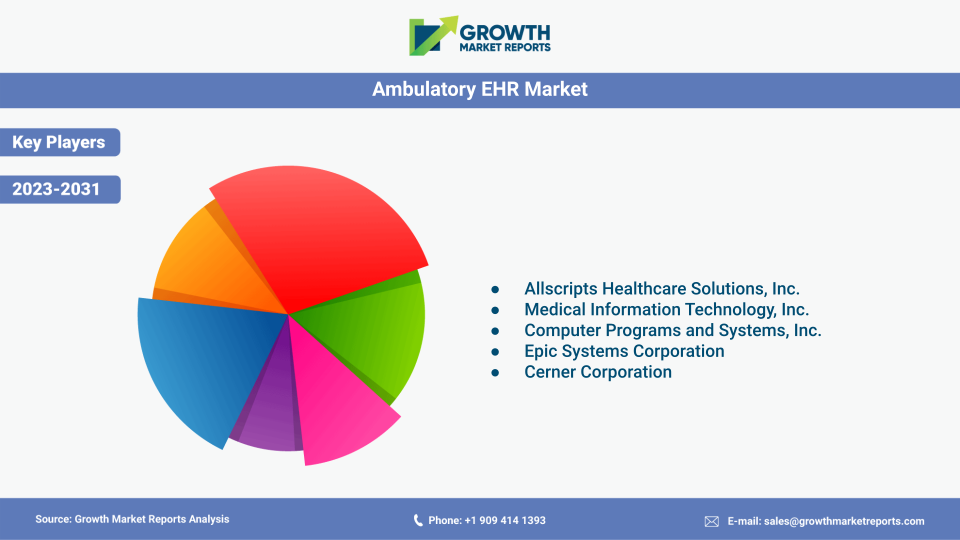

Ambulatory EHR Market Key Players

Frequently Asked Questions

Key players competing in the global ambulatory EHR market are Allscripts Healthcare Solutions, Inc.; Medical Information Technology, Inc.; Computer Programs and Systems, Inc.; Epic Systems Corporation; and Cerner Corporation.

North America is expected to constitute a key share of the market during the forecast period.

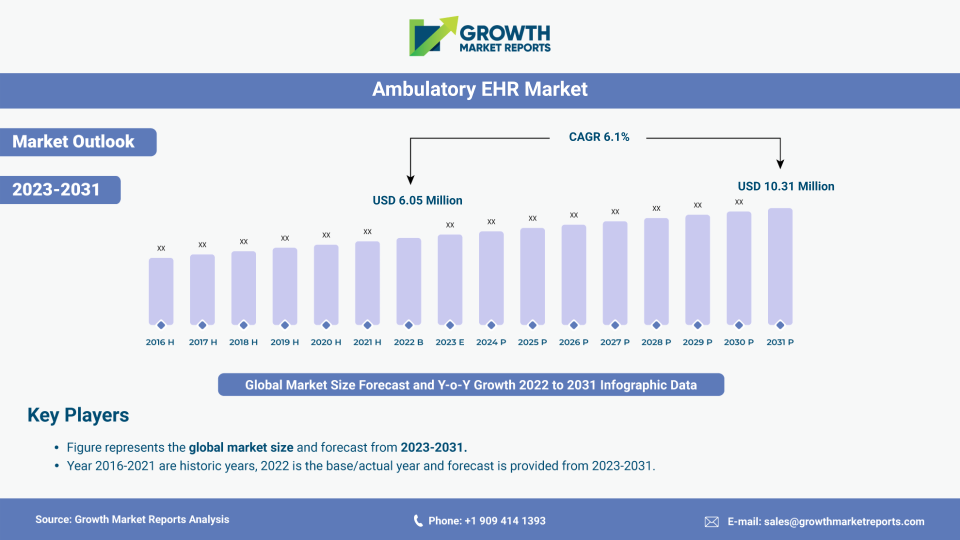
The global ambulatory EHR market is expanding at a CAGR of 6.1% during the forecast period, 2023–2031.

Growing government support for the adoption of EHR solutions is expected to drive the market.

The global ambulatory EHR market size was valued at USD 6.05 Million in 2022.

Table Of Content

Chapter 1 Executive Summary
Chapter 2 Assumptions and Acronyms Used
Chapter 3 Research Methodology
Chapter 4 Ambulatory EHR Market Overview
   4.1 Introduction
      4.1.1 Market Taxonomy
      4.1.2 Market Definition
      4.1.3 Macro-Economic Factors Impacting the Market Growth
   4.2 Ambulatory EHR Market Dynamics
      4.2.1 Market Drivers
      4.2.2 Market Restraints
      4.2.3 Market Opportunity
   4.3 Ambulatory EHR Market - Supply Chain Analysis
      4.3.1 List of Key Suppliers
      4.3.2 List of Key Distributors
      4.3.3 List of Key Consumers
   4.4 Key Forces Shaping the Ambulatory EHR Market
      4.4.1 Bargaining Power of Suppliers
      4.4.2 Bargaining Power of Buyers
      4.4.3 Threat of Substitution
      4.4.4 Threat of New Entrants
      4.4.5 Competitive Rivalry
   4.5 Global Ambulatory EHR Market Size & Forecast, 2023-2032
      4.5.1 Ambulatory EHR Market Size and Y-o-Y Growth
      4.5.2 Ambulatory EHR Market Absolute $ Opportunity

Chapter 5 Global Ambulatory EHR Market Analysis and Forecast By Product Type
   5.1 Introduction
      5.1.1 Key Market Trends & Growth Opportunities By Product Type
      5.1.2 Basis Point Share (BPS) Analysis By Product Type
      5.1.3 Absolute $ Opportunity Assessment By Product Type
   5.2 Ambulatory EHR Market Size Forecast By Product Type
      5.2.1 Cloud-based
      5.2.2 On-premises
   5.3 Market Attractiveness Analysis By Product Type

Chapter 6 Global Ambulatory EHR Market Analysis and Forecast By Application
   6.1 Introduction
      6.1.1 Key Market Trends & Growth Opportunities By Application
      6.1.2 Basis Point Share (BPS) Analysis By Application
      6.1.3 Absolute $ Opportunity Assessment By Application
   6.2 Ambulatory EHR Market Size Forecast By Application
      6.2.1 Practice Management
      6.2.2 Patient Management
      6.2.3 E-prescribing
      6.2.4 Population Health Management
      6.2.5 Others
   6.3 Market Attractiveness Analysis By Application

Chapter 7 Global Ambulatory EHR Market Analysis and Forecast By End User
   7.1 Introduction
      7.1.1 Key Market Trends & Growth Opportunities By End User
      7.1.2 Basis Point Share (BPS) Analysis By End User
      7.1.3 Absolute $ Opportunity Assessment By End User
   7.2 Ambulatory EHR Market Size Forecast By End User
      7.2.1 Hospitals
      7.2.2 Clinics
      7.2.3 Ambulatory Surgical Centers
      7.2.4 Others
   7.3 Market Attractiveness Analysis By End User

Chapter 8 Global Ambulatory EHR Market Analysis and Forecast by Region
   8.1 Introduction
      8.1.1 Key Market Trends & Growth Opportunities By Region
      8.1.2 Basis Point Share (BPS) Analysis By Region
      8.1.3 Absolute $ Opportunity Assessment By Region
   8.2 Ambulatory EHR Market Size Forecast By Region
      8.2.1 North America
      8.2.2 Europe
      8.2.3 Asia Pacific
      8.2.4 Latin America
      8.2.5 Middle East & Africa (MEA)
   8.3 Market Attractiveness Analysis By Region

Chapter 9 Coronavirus Disease (COVID-19) Impact 
   9.1 Introduction 
   9.2 Current & Future Impact Analysis 
   9.3 Economic Impact Analysis 
   9.4 Government Policies 
   9.5 Investment Scenario

Chapter 10 North America Ambulatory EHR Analysis and Forecast
   10.1 Introduction
   10.2 North America Ambulatory EHR Market Size Forecast by Country
      10.2.1 U.S.
      10.2.2 Canada
   10.3 Basis Point Share (BPS) Analysis by Country
   10.4 Absolute $ Opportunity Assessment by Country
   10.5 Market Attractiveness Analysis by Country
   10.6 North America Ambulatory EHR Market Size Forecast By Product Type
      10.6.1 Cloud-based
      10.6.2 On-premises
   10.7 Basis Point Share (BPS) Analysis By Product Type 
   10.8 Absolute $ Opportunity Assessment By Product Type 
   10.9 Market Attractiveness Analysis By Product Type
   10.10 North America Ambulatory EHR Market Size Forecast By Application
      10.10.1 Practice Management
      10.10.2 Patient Management
      10.10.3 E-prescribing
      10.10.4 Population Health Management
      10.10.5 Others
   10.11 Basis Point Share (BPS) Analysis By Application 
   10.12 Absolute $ Opportunity Assessment By Application 
   10.13 Market Attractiveness Analysis By Application
   10.14 North America Ambulatory EHR Market Size Forecast By End User
      10.14.1 Hospitals
      10.14.2 Clinics
      10.14.3 Ambulatory Surgical Centers
      10.14.4 Others
   10.15 Basis Point Share (BPS) Analysis By End User 
   10.16 Absolute $ Opportunity Assessment By End User 
   10.17 Market Attractiveness Analysis By End User

Chapter 11 Europe Ambulatory EHR Analysis and Forecast
   11.1 Introduction
   11.2 Europe Ambulatory EHR Market Size Forecast by Country
      11.2.1 Germany
      11.2.2 France
      11.2.3 Italy
      11.2.4 U.K.
      11.2.5 Spain
      11.2.6 Russia
      11.2.7 Rest of Europe
   11.3 Basis Point Share (BPS) Analysis by Country
   11.4 Absolute $ Opportunity Assessment by Country
   11.5 Market Attractiveness Analysis by Country
   11.6 Europe Ambulatory EHR Market Size Forecast By Product Type
      11.6.1 Cloud-based
      11.6.2 On-premises
   11.7 Basis Point Share (BPS) Analysis By Product Type 
   11.8 Absolute $ Opportunity Assessment By Product Type 
   11.9 Market Attractiveness Analysis By Product Type
   11.10 Europe Ambulatory EHR Market Size Forecast By Application
      11.10.1 Practice Management
      11.10.2 Patient Management
      11.10.3 E-prescribing
      11.10.4 Population Health Management
      11.10.5 Others
   11.11 Basis Point Share (BPS) Analysis By Application 
   11.12 Absolute $ Opportunity Assessment By Application 
   11.13 Market Attractiveness Analysis By Application
   11.14 Europe Ambulatory EHR Market Size Forecast By End User
      11.14.1 Hospitals
      11.14.2 Clinics
      11.14.3 Ambulatory Surgical Centers
      11.14.4 Others
   11.15 Basis Point Share (BPS) Analysis By End User 
   11.16 Absolute $ Opportunity Assessment By End User 
   11.17 Market Attractiveness Analysis By End User

Chapter 12 Asia Pacific Ambulatory EHR Analysis and Forecast
   12.1 Introduction
   12.2 Asia Pacific Ambulatory EHR Market Size Forecast by Country
      12.2.1 China
      12.2.2 Japan
      12.2.3 South Korea
      12.2.4 India
      12.2.5 Australia
      12.2.6 South East Asia (SEA)
      12.2.7 Rest of Asia Pacific (APAC)
   12.3 Basis Point Share (BPS) Analysis by Country
   12.4 Absolute $ Opportunity Assessment by Country
   12.5 Market Attractiveness Analysis by Country
   12.6 Asia Pacific Ambulatory EHR Market Size Forecast By Product Type
      12.6.1 Cloud-based
      12.6.2 On-premises
   12.7 Basis Point Share (BPS) Analysis By Product Type 
   12.8 Absolute $ Opportunity Assessment By Product Type 
   12.9 Market Attractiveness Analysis By Product Type
   12.10 Asia Pacific Ambulatory EHR Market Size Forecast By Application
      12.10.1 Practice Management
      12.10.2 Patient Management
      12.10.3 E-prescribing
      12.10.4 Population Health Management
      12.10.5 Others
   12.11 Basis Point Share (BPS) Analysis By Application 
   12.12 Absolute $ Opportunity Assessment By Application 
   12.13 Market Attractiveness Analysis By Application
   12.14 Asia Pacific Ambulatory EHR Market Size Forecast By End User
      12.14.1 Hospitals
      12.14.2 Clinics
      12.14.3 Ambulatory Surgical Centers
      12.14.4 Others
   12.15 Basis Point Share (BPS) Analysis By End User 
   12.16 Absolute $ Opportunity Assessment By End User 
   12.17 Market Attractiveness Analysis By End User

Chapter 13 Latin America Ambulatory EHR Analysis and Forecast
   13.1 Introduction
   13.2 Latin America Ambulatory EHR Market Size Forecast by Country
      13.2.1 Brazil
      13.2.2 Mexico
      13.2.3 Rest of Latin America (LATAM)
   13.3 Basis Point Share (BPS) Analysis by Country
   13.4 Absolute $ Opportunity Assessment by Country
   13.5 Market Attractiveness Analysis by Country
   13.6 Latin America Ambulatory EHR Market Size Forecast By Product Type
      13.6.1 Cloud-based
      13.6.2 On-premises
   13.7 Basis Point Share (BPS) Analysis By Product Type 
   13.8 Absolute $ Opportunity Assessment By Product Type 
   13.9 Market Attractiveness Analysis By Product Type
   13.10 Latin America Ambulatory EHR Market Size Forecast By Application
      13.10.1 Practice Management
      13.10.2 Patient Management
      13.10.3 E-prescribing
      13.10.4 Population Health Management
      13.10.5 Others
   13.11 Basis Point Share (BPS) Analysis By Application 
   13.12 Absolute $ Opportunity Assessment By Application 
   13.13 Market Attractiveness Analysis By Application
   13.14 Latin America Ambulatory EHR Market Size Forecast By End User
      13.14.1 Hospitals
      13.14.2 Clinics
      13.14.3 Ambulatory Surgical Centers
      13.14.4 Others
   13.15 Basis Point Share (BPS) Analysis By End User 
   13.16 Absolute $ Opportunity Assessment By End User 
   13.17 Market Attractiveness Analysis By End User

Chapter 14 Middle East & Africa (MEA) Ambulatory EHR Analysis and Forecast
   14.1 Introduction
   14.2 Middle East & Africa (MEA) Ambulatory EHR Market Size Forecast by Country
      14.2.1 Saudi Arabia
      14.2.2 South Africa
      14.2.3 UAE
      14.2.4 Rest of Middle East & Africa (MEA)
   14.3 Basis Point Share (BPS) Analysis by Country
   14.4 Absolute $ Opportunity Assessment by Country
   14.5 Market Attractiveness Analysis by Country
   14.6 Middle East & Africa (MEA) Ambulatory EHR Market Size Forecast By Product Type
      14.6.1 Cloud-based
      14.6.2 On-premises
   14.7 Basis Point Share (BPS) Analysis By Product Type 
   14.8 Absolute $ Opportunity Assessment By Product Type 
   14.9 Market Attractiveness Analysis By Product Type
   14.10 Middle East & Africa (MEA) Ambulatory EHR Market Size Forecast By Application
      14.10.1 Practice Management
      14.10.2 Patient Management
      14.10.3 E-prescribing
      14.10.4 Population Health Management
      14.10.5 Others
   14.11 Basis Point Share (BPS) Analysis By Application 
   14.12 Absolute $ Opportunity Assessment By Application 
   14.13 Market Attractiveness Analysis By Application
   14.14 Middle East & Africa (MEA) Ambulatory EHR Market Size Forecast By End User
      14.14.1 Hospitals
      14.14.2 Clinics
      14.14.3 Ambulatory Surgical Centers
      14.14.4 Others
   14.15 Basis Point Share (BPS) Analysis By End User 
   14.16 Absolute $ Opportunity Assessment By End User 
   14.17 Market Attractiveness Analysis By End User

Chapter 15 Competition Landscape 
   15.1 Ambulatory EHR Market: Competitive Dashboard
   15.2 Global Ambulatory EHR Market: Market Share Analysis, 2023
   15.3 Company Profiles (Details – Overview, Financials, Developments, Strategy) 
      15.3.1 Epic Systems Corporation
Cerner Corporation (Oracle Health)
Allscripts Healthcare Solutions
Athenahealth
eClinicalWorks
NextGen Healthcare
Greenway Health
MEDITECH
GE Healthcare
McKesson Corporation
AdvancedMD
Practice Fusion
Kareo
Amazing Charts
CureMD Healthcare
CompuGroup Medical
Medical Information Technology, Inc. (MEDITECH)
HealthFusion (a NextGen Healthcare company)
DrChrono
Quest Diagnostics (Quanum EHR)

Methodology

Our Clients

Honda Motor Co. Ltd.
sinopec
Microsoft
Deloitte
The John Holland Group
Dassault Aviation
Nestle SA
FedEx Logistics