Water Soluble Polymer Market Research Report 2033

Water Soluble Polymer Market Research Report 2033

Segments - by Product Type (Polyacrylamide, Polyvinyl Alcohol, Guar Gum, Gelatin, Polyacrylic Acid, Others), by Application (Water Treatment, Detergents & Household Products, Food Processing, Pharmaceuticals, Paper Making, Petroleum, Others), by End-User (Municipal, Industrial, Personal Care, Food & Beverage, Healthcare, Others)

https://growthmarketreports.com/Raksha
Author : Raksha Sharma
https://growthmarketreports.com/Vaibhav
Fact-checked by : V. Chandola
https://growthmarketreports.com/Shruti
Editor : Shruti Bhat

Upcoming | Report ID :MC-716 | 4.0 Rating | 71 Reviews | 289 Pages | Format : Docx PDF

Report Description


Water Soluble Polymer Market Outlook

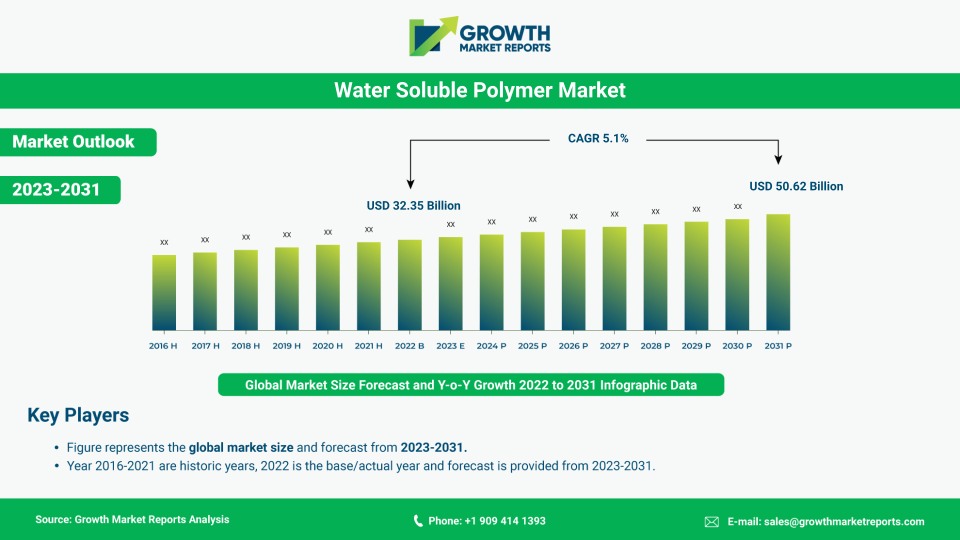
As per our latest research, the global water soluble polymer market size reached USD 39.7 billion in 2024, reflecting robust demand across diverse industries. The market is experiencing a healthy compound annual growth rate (CAGR) of 5.8% and is projected to attain a value of USD 66.2 billion by 2033. The primary growth factor behind this expansion is the increasing adoption of water soluble polymers in water treatment applications, driven by stringent environmental regulations and the rising need for sustainable solutions globally.

One of the most significant growth drivers for the water soluble polymer market is the escalating demand from the water treatment sector. As industrialization and urbanization accelerate, particularly in emerging economies, the necessity for efficient water treatment solutions has intensified. Water soluble polymers, such as polyacrylamide and polyacrylic acid, play a pivotal role in coagulation, flocculation, and sludge dewatering processes. This trend is further bolstered by government initiatives aimed at improving water quality and minimizing water pollution, which mandate the use of advanced treatment chemicals. The increasing scarcity of clean water resources worldwide is also compelling municipalities and industries to invest in innovative water purification technologies, thereby propelling the growth of the water soluble polymer market.

Another critical factor fueling market expansion is the rising utilization of water soluble polymers in the food processing and pharmaceutical industries. These polymers are extensively used as thickeners, stabilizers, and emulsifiers in food products, ensuring texture and consistency. The pharmaceutical sector leverages water soluble polymers for controlled drug release, tablet binding, and encapsulation, enhancing drug efficacy and patient compliance. The global shift towards processed and convenience foods, coupled with the burgeoning healthcare sector, has created a sustained demand for these polymers. Moreover, the trend of clean-label and biodegradable additives is encouraging manufacturers to develop eco-friendly water soluble polymer formulations, further augmenting market growth.

The water soluble polymer market is also benefiting from advancements in polymer chemistry and the development of novel, high-performance products. Innovations in bio-based and synthetic polymers have expanded their application scope, offering superior solubility, biodegradability, and functionality. The integration of water soluble polymers in personal care and detergent formulations is another growth avenue, as consumers increasingly seek products that are both effective and environmentally safe. Additionally, the growing adoption of enhanced oil recovery techniques in the petroleum industry, which utilize water soluble polymers to improve extraction efficiency, is contributing to market expansion. Collectively, these factors underscore the dynamic and multifaceted growth trajectory of the water soluble polymer market.

From a regional perspective, Asia Pacific continues to dominate the global water soluble polymer market, capturing the largest share in 2024. This leadership is attributed to rapid industrialization, expanding municipal water treatment infrastructure, and a thriving manufacturing sector, especially in China and India. North America and Europe also represent significant markets, driven by technological advancements and stringent environmental regulations. Meanwhile, Latin America and the Middle East & Africa are witnessing gradual growth, supported by infrastructural development and rising awareness about sustainable water management practices. The regional landscape is thus characterized by diverse growth patterns, shaped by local regulatory frameworks, industrial activity, and consumer preferences.

Global Water Soluble Polymer Industry Outlook

Product Type Analysis

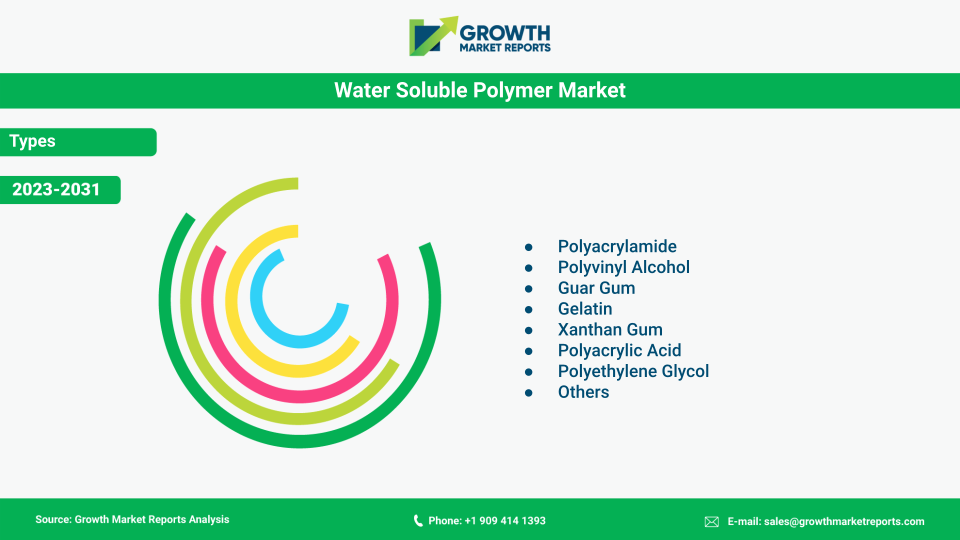
The water soluble polymer market is segmented by product type into polyacrylamide, polyvinyl alcohol, guar gum, gelatin, polyacrylic acid, and others. Among these, polyacrylamide holds a dominant position due to its extensive use in water treatment and enhanced oil recovery processes. Its high molecular weight and superior flocculating properties make it indispensable for municipal and industrial water purification. The demand for polyacrylamide is further supported by its cost-effectiveness and versatility, allowing it to be tailored for specific applications through copolymerization and functionalization. Manufacturers are investing in research and development to produce more environmentally friendly and biodegradable variants, responding to regulatory and consumer pressures for sustainability.

Polyvinyl alcohol (PVA) is another significant segment, widely utilized in the textile, paper, and packaging industries for its excellent film-forming, emulsifying, and adhesive properties. The growing emphasis on eco-friendly packaging solutions has spurred the adoption of PVA, particularly in single-use and biodegradable packaging materials. Its non-toxic nature and water solubility make it a preferred choice for food contact applications and pharmaceutical formulations. Innovations in PVA manufacturing processes, aimed at reducing energy consumption and improving product performance, are further driving segment growth. Additionally, the increasing use of PVA in agricultural applications, such as seed coatings and water retention agents, is opening new avenues for market expansion.

Guar gum and gelatin, both natural water soluble polymers, are experiencing rising demand in the food processing and pharmaceutical sectors. Guar gum is valued for its thickening, stabilizing, and emulsifying properties, making it a staple in processed foods, dairy products, and gluten-free formulations. The pharmaceutical industry utilizes guar gum for controlled drug release and as a binding agent in tablet formulations. Gelatin, derived from collagen, is extensively used in confectionery, capsules, and photographic films due to its gelling and film-forming capabilities. The trend towards clean-label and plant-based ingredients is prompting manufacturers to explore alternative sources and improve the functional attributes of these natural polymers.

Polyacrylic acid and other specialty water soluble polymers are gaining traction in niche applications, including detergents, personal care products, and superabsorbent materials. Polyacrylic acid is particularly valued for its high water absorption capacity and is widely used in diapers, sanitary products, and water retention agents for agriculture. The ongoing development of high-performance copolymers and blends is enhancing the application potential of these polymers, offering improved solubility, stability, and compatibility with other formulation ingredients. The "others" category encompasses a range of emerging polymers, such as carboxymethyl cellulose and polyaspartic acid, which are being explored for their unique properties and sustainability credentials.

Overall, the product type segment of the water soluble polymer market is characterized by a dynamic mix of synthetic and natural polymers, each catering to specific industry needs. The continuous evolution of polymer chemistry, coupled with the push for sustainability and regulatory compliance, is shaping the competitive landscape and driving innovation across all product categories. Manufacturers are increasingly focusing on developing multifunctional, biodegradable, and cost-effective water soluble polymers to meet the evolving demands of end-users and regulatory bodies.

Report Scope

Attributes Details
Report Title Water Soluble Polymer Market Research Report 2033
By Product Type Polyacrylamide, Polyvinyl Alcohol, Guar Gum, Gelatin, Polyacrylic Acid, Others
By Application Water Treatment, Detergents & Household Products, Food Processing, Pharmaceuticals, Paper Making, Petroleum, Others
By End-User Municipal, Industrial, Personal Care, Food & Beverage, Healthcare, Others
Regions Covered North America, Europe, APAC, Latin America, MEA
Base Year 2024
Historic Data 2018-2023
Forecast Period 2025-2033
Number of Pages 289
Number of Tables & Figures 302
Customization Available Yes, the report can be customized as per your need.

Application Analysis

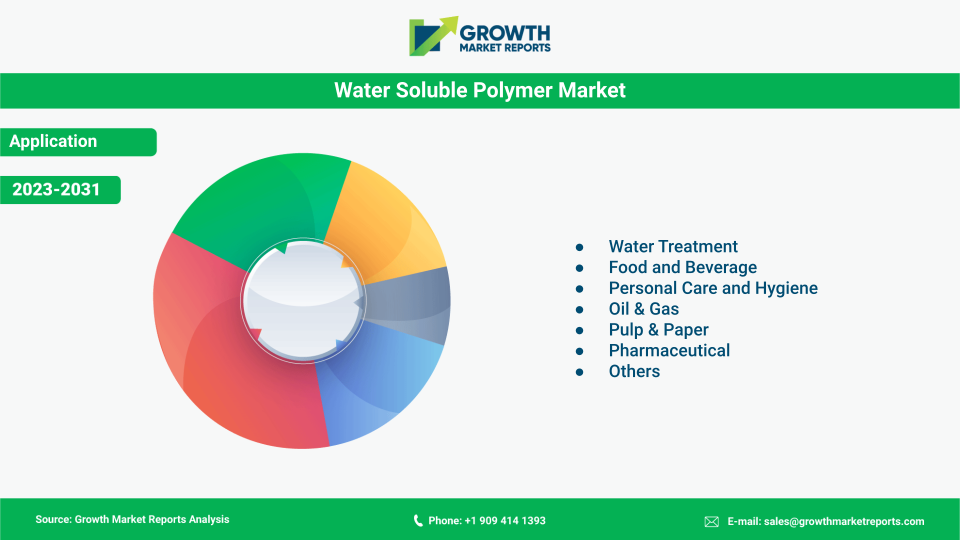
The application landscape of the water soluble polymer market is broad, encompassing water treatment, detergents and household products, food processing, pharmaceuticals, paper making, petroleum, and others. Water treatment remains the largest application segment, accounting for a substantial share of global consumption in 2024. The effectiveness of water soluble polymers in coagulation, flocculation, and sludge dewatering processes is driving their widespread adoption by municipal and industrial water treatment facilities. The increasing implementation of stringent water quality regulations, particularly in developed regions, is compelling utilities and industries to invest in advanced treatment chemicals, thereby fueling demand for water soluble polymers.

The detergents and household products segment is another significant contributor to market growth. Water soluble polymers are integral to the formulation of laundry detergents, dishwashing liquids, and cleaning agents, where they function as dispersants, anti-redeposition agents, and viscosity modifiers. The rising consumer preference for high-performance, eco-friendly cleaning products is prompting manufacturers to incorporate biodegradable and non-toxic polymers in their formulations. The trend towards concentrated and single-dose detergent formats, which require efficient solubilization and dispersion, is further boosting the adoption of water soluble polymers in this segment.

Food processing represents a dynamic application area for water soluble polymers, driven by the demand for texture modification, stabilization, and emulsification in processed foods and beverages. Polymers such as guar gum, gelatin, and modified starches are widely used to enhance mouthfeel, improve shelf life, and ensure product consistency. The growing popularity of convenience foods, ready-to-eat meals, and functional beverages is expanding the scope of water soluble polymer applications in the food industry. Additionally, the shift towards clean-label and plant-based ingredients is encouraging food manufacturers to explore novel, naturally derived polymers with enhanced functional properties.

The pharmaceutical sector is witnessing increasing utilization of water soluble polymers for drug formulation and delivery. These polymers are employed as binders, disintegrants, film-formers, and controlled release agents in oral, topical, and injectable dosage forms. The ability of water soluble polymers to improve drug solubility, stability, and bioavailability is critical in the development of advanced pharmaceutical products. The ongoing innovation in drug delivery technologies, including nanocarriers and targeted therapies, is creating new opportunities for polymer-based excipients. Regulatory approvals and quality standards for pharmaceutical-grade polymers are also influencing market dynamics in this segment.

Other notable applications include paper making, where water soluble polymers are used as retention aids, sizing agents, and coating binders to enhance paper quality and production efficiency. In the petroleum industry, polymers such as polyacrylamide are employed in enhanced oil recovery, drilling fluids, and fracturing operations to improve extraction rates and operational efficiency. The diverse application portfolio of water soluble polymers underscores their critical role in modern industrial processes and consumer products, driving sustained market growth across multiple end-use sectors.

End-User Analysis

The end-user landscape of the water soluble polymer market is segmented into municipal, industrial, personal care, food and beverage, healthcare, and others. The municipal segment represents the largest end-user category, primarily driven by the widespread adoption of water soluble polymers in water and wastewater treatment. Municipalities across the globe are increasingly investing in advanced water treatment infrastructure to meet rising population demands and comply with environmental regulations. Water soluble polymers are essential for efficient removal of suspended solids, organic matter, and contaminants, ensuring the delivery of safe and clean water to urban and rural communities.

The industrial end-user segment is characterized by diverse applications across manufacturing, mining, pulp and paper, textiles, and oil and gas industries. Industrial facilities rely on water soluble polymers for process water treatment, effluent management, and product formulation. The growing emphasis on sustainable manufacturing practices and resource optimization is prompting industries to adopt advanced polymer-based solutions for water conservation, waste minimization, and process efficiency. The integration of water soluble polymers in industrial processes not only enhances operational performance but also supports compliance with environmental standards and corporate sustainability goals.

Personal care is an emerging end-user segment, fueled by the rising demand for high-performance, safe, and environmentally friendly ingredients in cosmetics, toiletries, and hygiene products. Water soluble polymers are used as thickeners, film-formers, and conditioning agents in shampoos, lotions, gels, and oral care products. The shift towards natural and biodegradable polymers, driven by consumer awareness and regulatory initiatives, is shaping product development strategies in the personal care industry. Manufacturers are investing in research to create innovative polymer formulations that deliver superior sensory attributes and functional benefits while minimizing environmental impact.

The food and beverage sector is a key end-user of water soluble polymers, leveraging their functionality in product formulation, processing, and packaging. Polymers such as guar gum, gelatin, and modified cellulose are integral to the production of dairy products, bakery items, beverages, and meat alternatives. The increasing demand for clean-label, gluten-free, and plant-based foods is driving the adoption of naturally derived water soluble polymers in this sector. Food manufacturers are also exploring new polymer-based solutions for texture enhancement, shelf-life extension, and nutrient delivery, supporting market growth in the food and beverage end-user segment.

Healthcare is another important end-user, with water soluble polymers playing a critical role in pharmaceutical formulations, medical devices, and wound care products. The ability of these polymers to improve drug solubility, stability, and controlled release is vital in the development of advanced therapeutics and drug delivery systems. The ongoing innovation in biomedical materials and regenerative medicine is creating new opportunities for water soluble polymer applications in healthcare. The "others" category includes applications in agriculture, construction, and specialty chemicals, reflecting the versatility and broad utility of water soluble polymers across multiple end-user industries.

Opportunities & Threats

The water soluble polymer market presents significant opportunities for growth, particularly in the development of bio-based and biodegradable polymers. With increasing environmental concerns and regulatory pressures, industries are seeking sustainable alternatives to conventional synthetic polymers. The advancement of green chemistry and the availability of renewable raw materials are enabling the production of eco-friendly water soluble polymers with reduced carbon footprints. Companies investing in research and innovation to develop high-performance, biodegradable polymers are well positioned to capture emerging market segments and meet the evolving preferences of environmentally conscious consumers and end-users.

Another promising opportunity lies in the expanding application scope of water soluble polymers in emerging industries such as 3D printing, nanotechnology, and advanced healthcare solutions. The unique properties of water soluble polymers, such as controlled solubility, biocompatibility, and functional versatility, make them ideal for use in innovative manufacturing processes and medical devices. The integration of smart polymers in drug delivery systems, tissue engineering, and diagnostic platforms is expected to drive demand in the healthcare sector. Additionally, the growing adoption of advanced oil recovery techniques and sustainable agricultural practices is creating new avenues for the application of water soluble polymers, further enhancing market growth prospects.

Despite the positive outlook, the water soluble polymer market faces certain restraints, primarily related to fluctuating raw material prices and regulatory challenges. The production of synthetic polymers such as polyacrylamide and polyvinyl alcohol relies on petrochemical feedstocks, which are subject to price volatility and supply chain disruptions. Additionally, stringent regulations governing the use and disposal of certain polymers, particularly in food contact and pharmaceutical applications, can pose compliance challenges for manufacturers. The need for continuous innovation, quality assurance, and regulatory compliance adds to the operational complexity and cost structure of market participants, potentially impacting profitability and market expansion.

Regional Outlook

The Asia Pacific region leads the global water soluble polymer market, accounting for approximately 41% of the total market value in 2024, or about USD 16.3 billion. This dominance is attributed to rapid industrialization, urbanization, and significant investments in water treatment infrastructure across China, India, Japan, and Southeast Asian countries. The region’s manufacturing and municipal sectors are major consumers of water soluble polymers, driven by the need for efficient water management and compliance with environmental regulations. The Asia Pacific market is expected to maintain a strong CAGR of 6.4% through 2033, supported by ongoing infrastructural development, rising consumer awareness, and government initiatives promoting sustainable industrial practices.

North America is the second-largest regional market, valued at USD 10.4 billion in 2024. The region’s growth is underpinned by advanced technological adoption, stringent environmental standards, and a mature industrial base. The United States and Canada are at the forefront of innovation in water treatment, food processing, and pharmaceutical applications, driving demand for high-performance water soluble polymers. The increasing focus on sustainability, coupled with regulatory mandates for eco-friendly products, is encouraging the development and adoption of bio-based and biodegradable polymers in North America. The region is expected to witness steady growth, with a projected CAGR of 5.1% over the forecast period.

Europe holds a significant share of the global market, estimated at USD 8.9 billion in 2024, driven by robust industrial activity, environmental consciousness, and stringent regulatory frameworks. Countries such as Germany, France, and the United Kingdom are leading adopters of water soluble polymers in water treatment, food processing, and personal care applications. The European Union’s emphasis on circular economy principles and sustainable chemical management is fostering innovation in polymer chemistry and supporting the transition towards greener alternatives. Latin America and the Middle East & Africa, collectively valued at USD 4.1 billion, are experiencing gradual growth, supported by infrastructural development, urbanization, and increasing awareness of sustainable water management practices. These regions present untapped opportunities for market expansion as investments in industrial and municipal water treatment continue to rise.

Water Soluble Polymer Market Statistics

Competitor Outlook

The water soluble polymer market is highly competitive, characterized by the presence of several global and regional players striving for market leadership through product innovation, strategic partnerships, and capacity expansions. Companies are focusing on developing advanced polymer formulations with enhanced performance attributes, such as improved solubility, biodegradability, and environmental safety. The competitive landscape is further shaped by ongoing investments in research and development, aimed at addressing evolving customer needs and regulatory requirements. Mergers and acquisitions, joint ventures, and collaborations are common strategies employed by leading players to strengthen their market position and expand their geographic footprint.

Major players in the water soluble polymer market are also investing in sustainable manufacturing practices and supply chain optimization to reduce operational costs and environmental impact. The adoption of digital technologies and process automation is enabling companies to enhance production efficiency, quality control, and customer responsiveness. The competitive intensity is particularly high in the Asia Pacific region, where local manufacturers are leveraging cost advantages and proximity to end-users to gain market share. In contrast, North American and European companies are differentiating themselves through technological innovation, product quality, and compliance with stringent environmental standards.

The market is witnessing a shift towards the development of bio-based and specialty water soluble polymers, driven by rising consumer awareness and regulatory mandates for sustainable products. Companies are actively exploring renewable raw materials, green chemistry processes, and circular economy principles to create next-generation polymer solutions. The ability to offer customized and multifunctional polymers that meet specific industry requirements is emerging as a key competitive differentiator. Additionally, strategic collaborations with academic institutions, research organizations, and end-user industries are facilitating the development of innovative products and applications, further intensifying competition in the market.

Prominent companies operating in the water soluble polymer market include SNF Group, BASF SE, Kemira Oyj, Ashland Global Holdings Inc., The Dow Chemical Company, Kuraray Co., Ltd., Arkema S.A., Solvay S.A., and Mitsubishi Chemical Holdings Corporation. SNF Group is recognized for its extensive portfolio of polyacrylamide-based products and global manufacturing footprint. BASF SE and The Dow Chemical Company are leading innovators in synthetic and specialty polymers, with a strong focus on sustainability and R&D. Kemira Oyj specializes in water treatment chemicals, offering a wide range of water soluble polymers for municipal and industrial applications. Ashland Global Holdings Inc. and Kuraray Co., Ltd. are noted for their expertise in specialty polymers for personal care, food, and pharmaceutical industries.

Arkema S.A. and Solvay S.A. are at the forefront of developing advanced and eco-friendly polymer solutions, leveraging their strong research capabilities and commitment to sustainability. Mitsubishi Chemical Holdings Corporation is expanding its presence in the global market through strategic investments in high-performance polymers and green chemistry initiatives. These companies are continuously enhancing their product portfolios, expanding their global reach, and forging strategic alliances to address the diverse needs of end-users and maintain their competitive edge in the dynamic water soluble polymer market.

Key Players

  • BASF SE
  • SNF Group
  • Kemira Oyj
  • Ashland Global Holdings Inc.
  • The Dow Chemical Company
  • Arkema Group
  • Solvay S.A.
  • DuPont de Nemours, Inc.
  • Shandong Polymer Bio-chemicals Co., Ltd.
  • Kuraray Co., Ltd.
  • Mitsubishi Chemical Corporation
  • LG Chem Ltd.
  • Nitta Gelatin Inc.
  • Gelita AG
  • Zhejiang Xinyong Biochemical Co., Ltd.
  • CP Kelco
  • Jiangsu Feymer Technology Co., Ltd.
  • Sumitomo Seika Chemicals Co., Ltd.
  • ADM (Archer Daniels Midland Company)
  • Lubrizol Corporation
Water Soluble Polymer Market Overview

Segments

The Water Soluble Polymer market has been segmented on the basis of

Product Type

  • Polyacrylamide
  • Polyvinyl Alcohol
  • Guar Gum
  • Gelatin
  • Polyacrylic Acid
  • Others

Application

  • Water Treatment
  • Detergents & Household Products
  • Food Processing
  • Pharmaceuticals
  • Paper Making
  • Petroleum
  • Others

End-User

  • Municipal
  • Industrial
  • Personal Care
  • Food & Beverage
  • Healthcare
  • Others

Competitive Landscape

Some of the major players of the market are Ashland Inc., Arkema SA, DuPont, The Dow Chemical Company, BASF, Gantrade, Nitta Gelatin Inc., Kuraray Group, SNF Group, Kemira Oyj, AkzoNobel, Gelita AG, Shandong polymers Bio-chemicals Co. Ltd., Sumitomo Seika Chemicals Company, and CP Kelco.
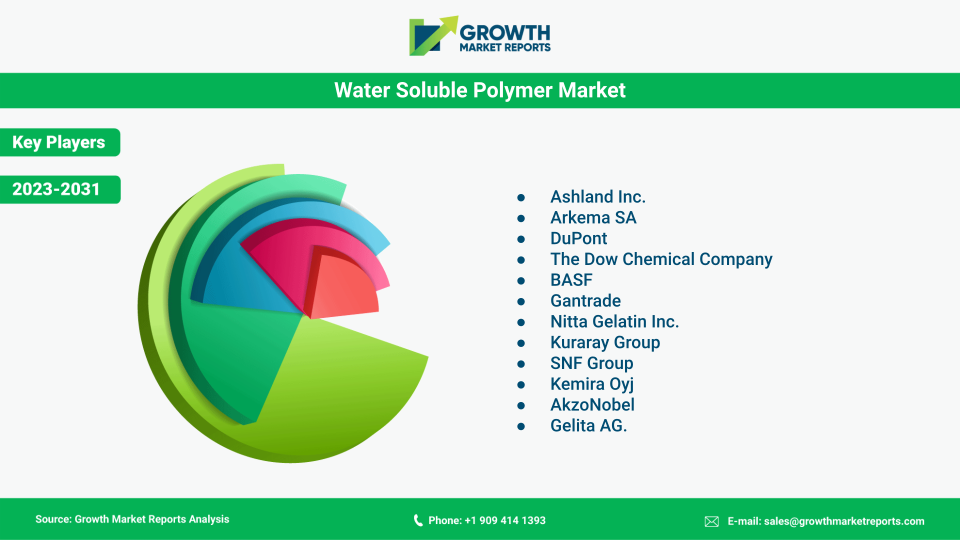

 Global Water Soluble Polymer Market Key Players

Frequently Asked Questions

The market is projected to grow at a CAGR of 5.8%, reaching USD 66.2 billion by 2033, driven by expanding applications and increasing demand for sustainable solutions.

Challenges include fluctuating raw material prices, regulatory compliance issues, and the need for continuous innovation and quality assurance.

Major companies include SNF Group, BASF SE, Kemira Oyj, Ashland Global Holdings Inc., The Dow Chemical Company, Kuraray Co., Ltd., Arkema S.A., Solvay S.A., and Mitsubishi Chemical Holdings Corporation.

Key trends include the development of bio-based and biodegradable polymers, increasing use in advanced healthcare and 3D printing, and a shift towards eco-friendly and sustainable solutions.

Asia Pacific leads the market, accounting for about 41% of the global value in 2024, driven by rapid industrialization and investment in water treatment infrastructure.

Main applications include coagulation and flocculation in water treatment, thickeners and stabilizers in food, controlled drug release in pharmaceuticals, and dispersants in detergents.

Polyacrylamide is the dominant product type, followed by polyvinyl alcohol, guar gum, gelatin, and polyacrylic acid.

Major industries using water soluble polymers include water treatment, food processing, pharmaceuticals, detergents and household products, paper making, petroleum, and personal care.

Key growth drivers include increasing demand for water treatment solutions, stringent environmental regulations, rising use in food processing and pharmaceuticals, and advancements in polymer chemistry.

As of 2024, the global water soluble polymer market size is estimated at USD 39.7 billion.

Table Of Content

Chapter 1 Executive Summary
Chapter 2 Assumptions and Acronyms Used
Chapter 3 Research Methodology
Chapter 4 Water Soluble Polymer Market Overview
   4.1 Introduction
      4.1.1 Market Taxonomy
      4.1.2 Market Definition
      4.1.3 Macro-Economic Factors Impacting the Market Growth
   4.2 Water Soluble Polymer Market Dynamics
      4.2.1 Market Drivers
      4.2.2 Market Restraints
      4.2.3 Market Opportunity
   4.3 Water Soluble Polymer Market - Supply Chain Analysis
      4.3.1 List of Key Suppliers
      4.3.2 List of Key Distributors
      4.3.3 List of Key Consumers
   4.4 Key Forces Shaping the Water Soluble Polymer Market
      4.4.1 Bargaining Power of Suppliers
      4.4.2 Bargaining Power of Buyers
      4.4.3 Threat of Substitution
      4.4.4 Threat of New Entrants
      4.4.5 Competitive Rivalry
   4.5 Global Water Soluble Polymer Market Size & Forecast, 2023-2032
      4.5.1 Water Soluble Polymer Market Size and Y-o-Y Growth
      4.5.2 Water Soluble Polymer Market Absolute $ Opportunity

Chapter 5 Global Water Soluble Polymer Market Analysis and Forecast By Product Type
   5.1 Introduction
      5.1.1 Key Market Trends & Growth Opportunities By Product Type
      5.1.2 Basis Point Share (BPS) Analysis By Product Type
      5.1.3 Absolute $ Opportunity Assessment By Product Type
   5.2 Water Soluble Polymer Market Size Forecast By Product Type
      5.2.1 Polyacrylamide
      5.2.2 Polyvinyl Alcohol
      5.2.3 Guar Gum
      5.2.4 Gelatin
      5.2.5 Polyacrylic Acid
      5.2.6 Others
   5.3 Market Attractiveness Analysis By Product Type

Chapter 6 Global Water Soluble Polymer Market Analysis and Forecast By Application
   6.1 Introduction
      6.1.1 Key Market Trends & Growth Opportunities By Application
      6.1.2 Basis Point Share (BPS) Analysis By Application
      6.1.3 Absolute $ Opportunity Assessment By Application
   6.2 Water Soluble Polymer Market Size Forecast By Application
      6.2.1 Water Treatment
      6.2.2 Detergents & Household Products
      6.2.3 Food Processing
      6.2.4 Pharmaceuticals
      6.2.5 Paper Making
      6.2.6 Petroleum
      6.2.7 Others
   6.3 Market Attractiveness Analysis By Application

Chapter 7 Global Water Soluble Polymer Market Analysis and Forecast By End-User
   7.1 Introduction
      7.1.1 Key Market Trends & Growth Opportunities By End-User
      7.1.2 Basis Point Share (BPS) Analysis By End-User
      7.1.3 Absolute $ Opportunity Assessment By End-User
   7.2 Water Soluble Polymer Market Size Forecast By End-User
      7.2.1 Municipal
      7.2.2 Industrial
      7.2.3 Personal Care
      7.2.4 Food & Beverage
      7.2.5 Healthcare
      7.2.6 Others
   7.3 Market Attractiveness Analysis By End-User

Chapter 8 Global Water Soluble Polymer Market Analysis and Forecast by Region
   8.1 Introduction
      8.1.1 Key Market Trends & Growth Opportunities By Region
      8.1.2 Basis Point Share (BPS) Analysis By Region
      8.1.3 Absolute $ Opportunity Assessment By Region
   8.2 Water Soluble Polymer Market Size Forecast By Region
      8.2.1 North America
      8.2.2 Europe
      8.2.3 Asia Pacific
      8.2.4 Latin America
      8.2.5 Middle East & Africa (MEA)
   8.3 Market Attractiveness Analysis By Region

Chapter 9 Coronavirus Disease (COVID-19) Impact 
   9.1 Introduction 
   9.2 Current & Future Impact Analysis 
   9.3 Economic Impact Analysis 
   9.4 Government Policies 
   9.5 Investment Scenario

Chapter 10 North America Water Soluble Polymer Analysis and Forecast
   10.1 Introduction
   10.2 North America Water Soluble Polymer Market Size Forecast by Country
      10.2.1 U.S.
      10.2.2 Canada
   10.3 Basis Point Share (BPS) Analysis by Country
   10.4 Absolute $ Opportunity Assessment by Country
   10.5 Market Attractiveness Analysis by Country
   10.6 North America Water Soluble Polymer Market Size Forecast By Product Type
      10.6.1 Polyacrylamide
      10.6.2 Polyvinyl Alcohol
      10.6.3 Guar Gum
      10.6.4 Gelatin
      10.6.5 Polyacrylic Acid
      10.6.6 Others
   10.7 Basis Point Share (BPS) Analysis By Product Type 
   10.8 Absolute $ Opportunity Assessment By Product Type 
   10.9 Market Attractiveness Analysis By Product Type
   10.10 North America Water Soluble Polymer Market Size Forecast By Application
      10.10.1 Water Treatment
      10.10.2 Detergents & Household Products
      10.10.3 Food Processing
      10.10.4 Pharmaceuticals
      10.10.5 Paper Making
      10.10.6 Petroleum
      10.10.7 Others
   10.11 Basis Point Share (BPS) Analysis By Application 
   10.12 Absolute $ Opportunity Assessment By Application 
   10.13 Market Attractiveness Analysis By Application
   10.14 North America Water Soluble Polymer Market Size Forecast By End-User
      10.14.1 Municipal
      10.14.2 Industrial
      10.14.3 Personal Care
      10.14.4 Food & Beverage
      10.14.5 Healthcare
      10.14.6 Others
   10.15 Basis Point Share (BPS) Analysis By End-User 
   10.16 Absolute $ Opportunity Assessment By End-User 
   10.17 Market Attractiveness Analysis By End-User

Chapter 11 Europe Water Soluble Polymer Analysis and Forecast
   11.1 Introduction
   11.2 Europe Water Soluble Polymer Market Size Forecast by Country
      11.2.1 Germany
      11.2.2 France
      11.2.3 Italy
      11.2.4 U.K.
      11.2.5 Spain
      11.2.6 Russia
      11.2.7 Rest of Europe
   11.3 Basis Point Share (BPS) Analysis by Country
   11.4 Absolute $ Opportunity Assessment by Country
   11.5 Market Attractiveness Analysis by Country
   11.6 Europe Water Soluble Polymer Market Size Forecast By Product Type
      11.6.1 Polyacrylamide
      11.6.2 Polyvinyl Alcohol
      11.6.3 Guar Gum
      11.6.4 Gelatin
      11.6.5 Polyacrylic Acid
      11.6.6 Others
   11.7 Basis Point Share (BPS) Analysis By Product Type 
   11.8 Absolute $ Opportunity Assessment By Product Type 
   11.9 Market Attractiveness Analysis By Product Type
   11.10 Europe Water Soluble Polymer Market Size Forecast By Application
      11.10.1 Water Treatment
      11.10.2 Detergents & Household Products
      11.10.3 Food Processing
      11.10.4 Pharmaceuticals
      11.10.5 Paper Making
      11.10.6 Petroleum
      11.10.7 Others
   11.11 Basis Point Share (BPS) Analysis By Application 
   11.12 Absolute $ Opportunity Assessment By Application 
   11.13 Market Attractiveness Analysis By Application
   11.14 Europe Water Soluble Polymer Market Size Forecast By End-User
      11.14.1 Municipal
      11.14.2 Industrial
      11.14.3 Personal Care
      11.14.4 Food & Beverage
      11.14.5 Healthcare
      11.14.6 Others
   11.15 Basis Point Share (BPS) Analysis By End-User 
   11.16 Absolute $ Opportunity Assessment By End-User 
   11.17 Market Attractiveness Analysis By End-User

Chapter 12 Asia Pacific Water Soluble Polymer Analysis and Forecast
   12.1 Introduction
   12.2 Asia Pacific Water Soluble Polymer Market Size Forecast by Country
      12.2.1 China
      12.2.2 Japan
      12.2.3 South Korea
      12.2.4 India
      12.2.5 Australia
      12.2.6 South East Asia (SEA)
      12.2.7 Rest of Asia Pacific (APAC)
   12.3 Basis Point Share (BPS) Analysis by Country
   12.4 Absolute $ Opportunity Assessment by Country
   12.5 Market Attractiveness Analysis by Country
   12.6 Asia Pacific Water Soluble Polymer Market Size Forecast By Product Type
      12.6.1 Polyacrylamide
      12.6.2 Polyvinyl Alcohol
      12.6.3 Guar Gum
      12.6.4 Gelatin
      12.6.5 Polyacrylic Acid
      12.6.6 Others
   12.7 Basis Point Share (BPS) Analysis By Product Type 
   12.8 Absolute $ Opportunity Assessment By Product Type 
   12.9 Market Attractiveness Analysis By Product Type
   12.10 Asia Pacific Water Soluble Polymer Market Size Forecast By Application
      12.10.1 Water Treatment
      12.10.2 Detergents & Household Products
      12.10.3 Food Processing
      12.10.4 Pharmaceuticals
      12.10.5 Paper Making
      12.10.6 Petroleum
      12.10.7 Others
   12.11 Basis Point Share (BPS) Analysis By Application 
   12.12 Absolute $ Opportunity Assessment By Application 
   12.13 Market Attractiveness Analysis By Application
   12.14 Asia Pacific Water Soluble Polymer Market Size Forecast By End-User
      12.14.1 Municipal
      12.14.2 Industrial
      12.14.3 Personal Care
      12.14.4 Food & Beverage
      12.14.5 Healthcare
      12.14.6 Others
   12.15 Basis Point Share (BPS) Analysis By End-User 
   12.16 Absolute $ Opportunity Assessment By End-User 
   12.17 Market Attractiveness Analysis By End-User

Chapter 13 Latin America Water Soluble Polymer Analysis and Forecast
   13.1 Introduction
   13.2 Latin America Water Soluble Polymer Market Size Forecast by Country
      13.2.1 Brazil
      13.2.2 Mexico
      13.2.3 Rest of Latin America (LATAM)
   13.3 Basis Point Share (BPS) Analysis by Country
   13.4 Absolute $ Opportunity Assessment by Country
   13.5 Market Attractiveness Analysis by Country
   13.6 Latin America Water Soluble Polymer Market Size Forecast By Product Type
      13.6.1 Polyacrylamide
      13.6.2 Polyvinyl Alcohol
      13.6.3 Guar Gum
      13.6.4 Gelatin
      13.6.5 Polyacrylic Acid
      13.6.6 Others
   13.7 Basis Point Share (BPS) Analysis By Product Type 
   13.8 Absolute $ Opportunity Assessment By Product Type 
   13.9 Market Attractiveness Analysis By Product Type
   13.10 Latin America Water Soluble Polymer Market Size Forecast By Application
      13.10.1 Water Treatment
      13.10.2 Detergents & Household Products
      13.10.3 Food Processing
      13.10.4 Pharmaceuticals
      13.10.5 Paper Making
      13.10.6 Petroleum
      13.10.7 Others
   13.11 Basis Point Share (BPS) Analysis By Application 
   13.12 Absolute $ Opportunity Assessment By Application 
   13.13 Market Attractiveness Analysis By Application
   13.14 Latin America Water Soluble Polymer Market Size Forecast By End-User
      13.14.1 Municipal
      13.14.2 Industrial
      13.14.3 Personal Care
      13.14.4 Food & Beverage
      13.14.5 Healthcare
      13.14.6 Others
   13.15 Basis Point Share (BPS) Analysis By End-User 
   13.16 Absolute $ Opportunity Assessment By End-User 
   13.17 Market Attractiveness Analysis By End-User

Chapter 14 Middle East & Africa (MEA) Water Soluble Polymer Analysis and Forecast
   14.1 Introduction
   14.2 Middle East & Africa (MEA) Water Soluble Polymer Market Size Forecast by Country
      14.2.1 Saudi Arabia
      14.2.2 South Africa
      14.2.3 UAE
      14.2.4 Rest of Middle East & Africa (MEA)
   14.3 Basis Point Share (BPS) Analysis by Country
   14.4 Absolute $ Opportunity Assessment by Country
   14.5 Market Attractiveness Analysis by Country
   14.6 Middle East & Africa (MEA) Water Soluble Polymer Market Size Forecast By Product Type
      14.6.1 Polyacrylamide
      14.6.2 Polyvinyl Alcohol
      14.6.3 Guar Gum
      14.6.4 Gelatin
      14.6.5 Polyacrylic Acid
      14.6.6 Others
   14.7 Basis Point Share (BPS) Analysis By Product Type 
   14.8 Absolute $ Opportunity Assessment By Product Type 
   14.9 Market Attractiveness Analysis By Product Type
   14.10 Middle East & Africa (MEA) Water Soluble Polymer Market Size Forecast By Application
      14.10.1 Water Treatment
      14.10.2 Detergents & Household Products
      14.10.3 Food Processing
      14.10.4 Pharmaceuticals
      14.10.5 Paper Making
      14.10.6 Petroleum
      14.10.7 Others
   14.11 Basis Point Share (BPS) Analysis By Application 
   14.12 Absolute $ Opportunity Assessment By Application 
   14.13 Market Attractiveness Analysis By Application
   14.14 Middle East & Africa (MEA) Water Soluble Polymer Market Size Forecast By End-User
      14.14.1 Municipal
      14.14.2 Industrial
      14.14.3 Personal Care
      14.14.4 Food & Beverage
      14.14.5 Healthcare
      14.14.6 Others
   14.15 Basis Point Share (BPS) Analysis By End-User 
   14.16 Absolute $ Opportunity Assessment By End-User 
   14.17 Market Attractiveness Analysis By End-User

Chapter 15 Competition Landscape 
   15.1 Water Soluble Polymer Market: Competitive Dashboard
   15.2 Global Water Soluble Polymer Market: Market Share Analysis, 2023
   15.3 Company Profiles (Details – Overview, Financials, Developments, Strategy) 
      15.3.1 BASF SE
SNF Group
Kemira Oyj
Ashland Global Holdings Inc.
The Dow Chemical Company
Arkema Group
Solvay S.A.
DuPont de Nemours, Inc.
Shandong Polymer Bio-chemicals Co., Ltd.
Kuraray Co., Ltd.
Mitsubishi Chemical Corporation
LG Chem Ltd.
Nitta Gelatin Inc.
Gelita AG
Zhejiang Xinyong Biochemical Co., Ltd.
CP Kelco
Jiangsu Feymer Technology Co., Ltd.
Sumitomo Seika Chemicals Co., Ltd.
ADM (Archer Daniels Midland Company)
Lubrizol Corporation

Methodology

Our Clients

sinopec
Deloitte
General Mills
The John Holland Group
Dassault Aviation
Siemens Healthcare
Microsoft
Honda Motor Co. Ltd.