Pectin Market Size, Share & Forecast 2025-2034

Pectin Market Size, Share & Forecast 2025-2034

Segments - by Product Type (High Methoxyl Pectin, Low Methoxyl Pectin), by Source (Citrus Fruits, Apples, Sugar Beet, Others), by Application (Food & Beverages, Pharmaceuticals, Personal Care & Cosmetics, Industrial, Others), by Function (Gelling Agent, Thickener, Stabilizer, Fat Replacer, Others)

https://growthmarketreports.com/Anuradha
Author : Anuradha B. More
https://growthmarketreports.com/Vaibhav
Fact-checked by : Vaibhav Chandola
https://growthmarketreports.com/Shruti
Editor : Shruti Bhat

Last Updated : Jun, 2026 | Report ID :FB-4181 | 4.5 Rating | 84 Reviews | 253 Pages | Format : Docx PDF

Report Description

This report is updated with the latest market data and insights as of June 2026. Base year: 2025  |  Forecast period: 2026-2034


Pectin Market Outlook

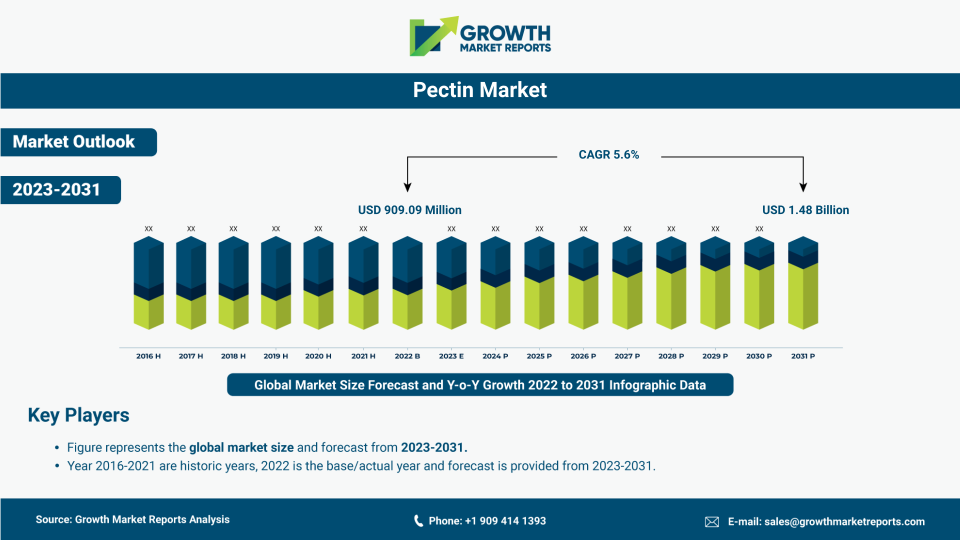
According to our latest research, the pectin market size reached USD 1.40 billion globally in 2025, the base year for this report, reflecting robust demand across diverse applications. The market demonstrated a compound annual growth rate (CAGR) of 5.8% from 2019 to 2024, underpinned by consistent adoption across food, pharmaceutical, and personal care sectors. Building on this trajectory, the pectin market is forecasted to attain a value of USD 2.36 billion by 2034, growing at a CAGR of 6.0% over the 2026-2034 forecast period. This upward trend is primarily fueled by the expanding utilization of pectin in the food and beverage sector, increasing consumer preference for natural and clean-label ingredients, and the burgeoning applications in pharmaceutical and personal care industries. As per our latest research, the market's expansion is underpinned by innovation in product formulations and a steady rise in health-conscious consumer behavior worldwide.

Global Pectin Market Size Forecast 2025-2034, USD Billion

The primary growth driver for the global pectin market is the escalating demand for natural food additives, especially as consumers and manufacturers alike shift toward clean-label products. Pectin, a naturally derived polysaccharide primarily extracted from citrus fruit peels and apples, has become a preferred ingredient due to its gelling, thickening, and stabilizing properties. The food and beverage industry, which accounts for the largest share of pectin consumption, leverages its functional benefits in the production of jams, jellies, yogurts, and bakery products. The trend toward low-sugar and sugar-free formulations has further propelled the adoption of pectin, as it enables the creation of desirable textures and mouthfeel without the need for artificial additives. Additionally, the growing awareness of pectin's dietary fiber content and its positive impact on digestive health are contributing to the market's sustained growth through 2034.

Another significant factor driving the pectin market is the surge in pharmaceutical and personal care applications. In the pharmaceutical sector, pectin is increasingly utilized as an excipient, owing to its biocompatibility, non-toxicity, and ability to form gels and encapsulate active ingredients. These properties make it ideal for controlled drug delivery systems and wound care products. The use of enzymes such as those studied in the pectinase industry is also informing advances in pectin modification and bioavailability enhancement. Meanwhile, the cosmetics and personal care industry has embraced pectin as a natural thickener, stabilizer, and moisturizer in a variety of products, including lotions, creams, and shampoos. The escalating consumer demand for natural and organic personal care products has encouraged manufacturers to incorporate pectin, further expanding the market's reach. The versatility and multifunctionality of pectin continue to drive innovation and new product development across these industries.

Sustainability and environmental considerations are also playing a pivotal role in shaping the pectin market. The extraction of pectin from fruit byproducts, such as citrus peels and apple pomace, aligns with the principles of circular economy and waste valorization. This not only reduces environmental impact but also adds value to agricultural supply chains. As sustainability becomes a core focus for both manufacturers and consumers, the demand for pectin sourced from renewable and traceable raw materials is expected to rise through the 2026-2034 forecast period. Moreover, regulatory support for natural ingredients and clean-label declarations is bolstering the market's growth prospects. Companies are investing in advanced extraction technologies to improve yield, purity, and functionality, further enhancing the competitiveness of pectin in various applications.

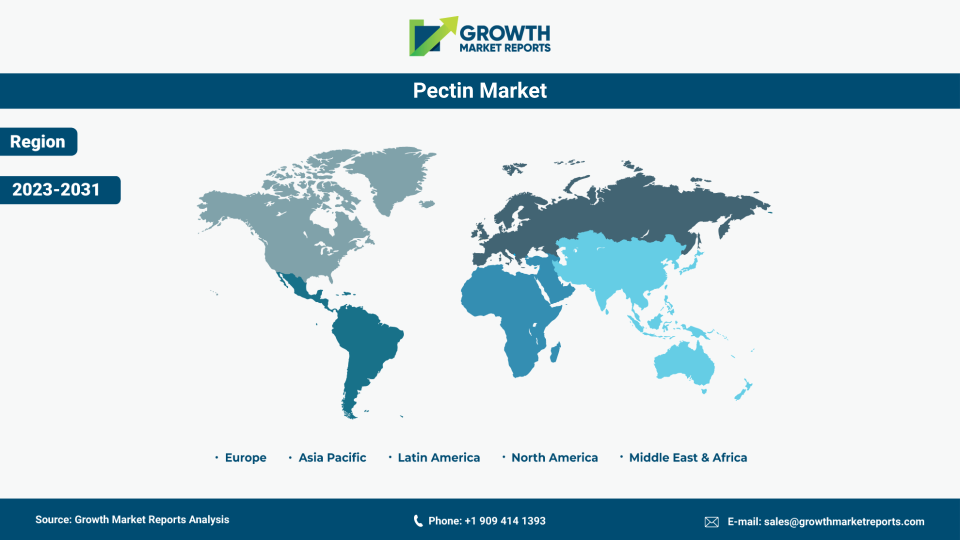
Regionally, Europe remains the dominant market for pectin, accounting for approximately 36.5% of global consumption in 2025, followed by North America at 23.5% and Asia Pacific at 20.0%. Europe's leadership position can be attributed to its well-established food processing industry, stringent regulations favoring natural additives, and high consumer awareness regarding health and wellness. North America is witnessing steady growth, driven by the increasing adoption of clean-label products and the expansion of the personal care and pharmaceutical sectors. The Asia Pacific region is anticipated to exhibit the fastest growth rate during the forecast period, with a projected CAGR of 7.5% through 2034, supported by rising disposable incomes, urbanization, and a burgeoning food and beverage industry. Emerging economies such as China and India are at the forefront of this growth, presenting lucrative opportunities for market players.

An emerging trend within the pectin industry is the exploration of novel sources such as pomelo peel as a pectin raw material. Pomelo, a large citrus fruit, offers a unique opportunity for pectin extraction due to its thick peel, which is rich in pectin content. This alternative source not only diversifies the raw material base but also aligns with sustainable practices by utilizing fruit byproducts. The extraction of pectin from pomelo peels can enhance the functional properties of pectin, offering distinct gelling and stabilizing characteristics that are highly sought after in the food and beverage industry. As consumer demand for diverse and exotic flavors grows, pomelo peel pectin could play a significant role in creating innovative food products that cater to evolving tastes. Furthermore, the utilization of pomelo peels supports waste reduction and adds value to the agricultural supply chain, reinforcing the industry's commitment to environmental sustainability through 2034.

Product Type Analysis

The pectin market is segmented by product type into High Methoxyl Pectin (HMP) and Low Methoxyl Pectin (LMP), each offering distinct functional properties and end-use applications. High Methoxyl Pectin, characterized by a higher degree of esterification, is widely utilized in traditional jam and jelly formulations due to its superior gelling ability in the presence of sugar and acid. This segment continues to dominate the market with approximately 62.5% share in 2025, particularly in regions with a strong tradition of fruit preserve consumption. The robust demand for high methoxyl pectin is further supported by its established use in bakery fillings, confectionery, and dairy products, where it imparts desirable texture and stability. Manufacturers are investing in process optimization to enhance the quality and consistency of HMP, ensuring compliance with stringent food safety standards.

Pectin Market Share by Product Type 2025

Low Methoxyl Pectin, on the other hand, has gained significant traction in recent years, driven by the growing demand for low-sugar and sugar-free products. LMP forms gels in the presence of calcium ions rather than sugar, making it highly suitable for reduced-calorie and diabetic-friendly formulations. This has opened new avenues in the production of low-sugar jams, jellies, and fruit preparations, catering to health-conscious consumers globally. The versatility of low methoxyl pectin extends to the pharmaceutical and personal care sectors, where it is valued for its controlled gelling properties and compatibility with a wide range of formulations. Specialty variants such as amidated low DE pectin are gaining particular attention for their superior calcium sensitivity and texture performance. As regulatory agencies and consumers increasingly favor reduced sugar content in food and beverages, the LMP segment is poised for robust growth through 2034.

The innovation landscape within the product type segment is marked by the development of customized pectin solutions tailored to specific application requirements. Manufacturers are leveraging advanced extraction and modification techniques to produce pectin with optimized gelling, thickening, and stabilizing properties. This has led to the introduction of specialty pectins designed for unique food textures, improved heat stability, and enhanced mouthfeel. The ability to offer differentiated products is becoming a key competitive advantage, as food and beverage companies seek to address evolving consumer preferences and regulatory demands. Collaborative efforts between ingredient suppliers and end-users are fostering innovation and accelerating the adoption of novel pectin solutions.

Market dynamics within the product type segment are also influenced by raw material availability and pricing volatility. The supply of high-quality citrus fruits and apples, the primary sources of pectin, is subject to seasonal fluctuations and climatic conditions, impacting production costs and market pricing. To mitigate these challenges, companies are exploring alternative sources and investing in sustainable sourcing practices. The focus on supply chain resilience and traceability is expected to strengthen the position of both high methoxyl and low methoxyl pectin in the global market through 2034. Overall, the product type segment is characterized by continuous innovation, strong demand across diverse applications, and a growing emphasis on sustainability and quality assurance.

Report Scope

Attributes Details
Report Title Pectin Market Research Report 2034
By Product Type High Methoxyl Pectin, Low Methoxyl Pectin
By Source Citrus Fruits, Apples, Sugar Beet, Others
By Application Food & Beverages, Pharmaceuticals, Personal Care & Cosmetics, Industrial, Others
By Function Gelling Agent, Thickener, Stabilizer, Fat Replacer, Others
Regions Covered North America, Europe, APAC, Latin America, MEA
Base Year 2025
Historic Data 2019-2024
Forecast Period 2026-2034
Number of Pages 253
Number of Tables & Figures 307
Customization Available Yes, the report can be customized as per your need.

Source Analysis

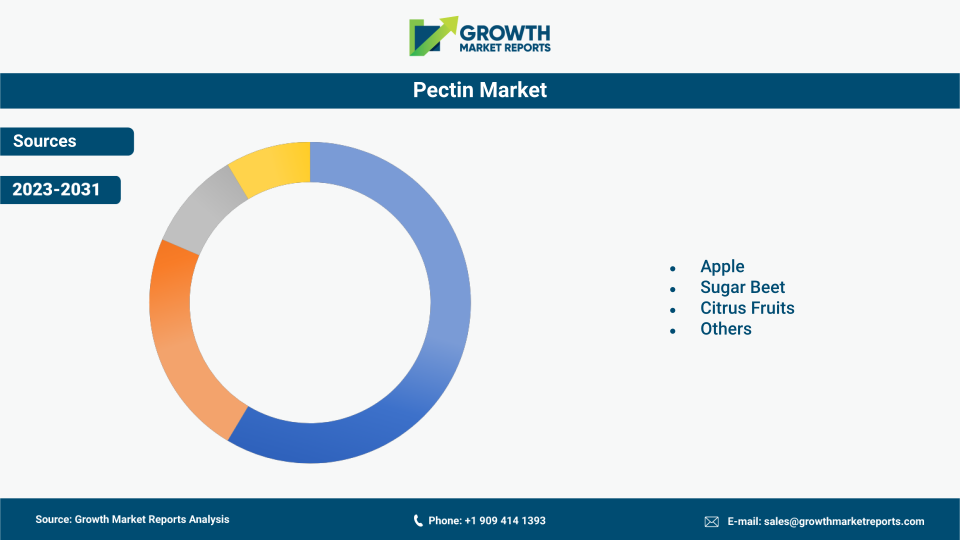
The source segment of the pectin market encompasses Citrus Fruits, Apples, Sugar Beet, and other minor sources, each contributing uniquely to the market's supply chain and product attributes. Citrus fruits, particularly orange and lemon peels, represent the predominant source of commercial pectin, accounting for over 70% of global production in 2025. The abundance of citrus byproducts from the juice processing industry provides a cost-effective and sustainable raw material base for pectin extraction. Citrus-derived pectin is prized for its high purity, consistent gelling properties, and broad applicability in food, pharmaceutical, and personal care products. The integration of citrus pectin production with juice processing operations enhances operational efficiency and waste valorization, aligning with circular economy principles that are central to the 2026-2034 industry outlook.

Apple pomace, a byproduct of apple juice and cider manufacturing, constitutes the second-largest source of pectin. Apple-derived pectin is valued for its unique gelling and stabilizing characteristics, making it a preferred choice for specific food applications such as bakery fillings, desserts, and dairy products. The regional availability of apples, particularly in Europe and North America, supports a stable supply chain for apple pectin production. Efforts to improve extraction efficiency and product quality are ongoing, with manufacturers investing in advanced technologies to maximize yield and minimize environmental impact. The utilization of apple pomace for pectin extraction also contributes to waste reduction and resource optimization within the fruit processing industry.

Sugar beet pectin, though representing a smaller share of the market, is gaining attention as an alternative source, particularly in regions with abundant sugar beet cultivation. Research into commercially viable beet pectin highlights its distinct functional properties, including high solubility and unique emulsification behavior, which can be advantageous in certain food and pharmaceutical applications. The diversification of raw material sources is becoming increasingly important as companies seek to mitigate supply chain risks and respond to fluctuations in citrus and apple production. Research and development efforts are focused on enhancing the functionality and commercial viability of sugar beet pectin, expanding its potential applications in the global market through 2034.

Other sources of pectin, such as sunflower and pumpkin, are being explored on a limited scale, primarily for niche applications and regional markets. The drive toward sustainability and the valorization of agricultural byproducts are encouraging innovation in pectin sourcing, with a focus on maximizing resource utilization and minimizing environmental impact. The development of new extraction methods, including enzymatic and microwave-assisted techniques, is enabling the efficient recovery of pectin from diverse raw materials. As the market evolves through the 2026-2034 forecast period, the source segment is expected to witness increased diversification, with continued emphasis on quality, traceability, and sustainability.

Application Analysis

The application segment of the pectin market is dominated by the Food & Beverages sector, which accounts for the majority of global pectin consumption in 2025. Within this sector, pectin is extensively used as a gelling agent, thickener, and stabilizer in jams, jellies, fruit preparations, dairy products, and confectionery. The trend toward natural and clean-label ingredients has accelerated the adoption of pectin, as manufacturers seek to replace synthetic additives with plant-based alternatives. The growing demand for low-sugar and reduced-calorie products has further expanded the use of pectin, particularly in the formulation of healthier fruit spreads and desserts. The versatility and multifunctionality of pectin make it an indispensable ingredient in modern food processing, a status expected to be reinforced throughout the forecast period.

The pharmaceutical industry represents another significant application area for pectin, leveraging its biocompatibility, non-toxicity, and gel-forming capabilities. Pectin is utilized as an excipient in tablet formulations, controlled-release drug delivery systems, and wound care products. Its ability to encapsulate active pharmaceutical ingredients and modulate drug release profiles makes it a valuable component in advanced pharmaceutical formulations. The increasing focus on natural and safe excipients, coupled with the rise in chronic diseases and the demand for innovative drug delivery solutions, is driving the growth of pectin applications in the pharmaceutical sector through 2034. Consumer health products such as fiber-based pectin chewable supplements are also bridging the pharmaceutical and nutraceutical application categories.

In the personal care and cosmetics industry, pectin is gaining traction as a natural thickener, stabilizer, and moisturizer. It is incorporated into a wide range of products, including lotions, creams, shampoos, and conditioners, to enhance texture, stability, and sensory appeal. The shift toward natural and organic personal care formulations is fueling the demand for pectin, as consumers seek products with clean ingredient labels and minimal synthetic additives. Manufacturers are responding by developing specialized pectin grades tailored to the unique requirements of cosmetic and personal care applications, further expanding the market's reach in the 2026-2034 period.

Industrial applications of pectin, though relatively niche, are emerging in areas such as biodegradable films, adhesives, and specialty coatings. The biodegradability and film-forming properties of pectin make it an attractive alternative to synthetic polymers in certain industrial applications, and its use in edible and biodegradable coating systems is an area of active commercial development. Research and development efforts are focused on enhancing the functional performance and cost-effectiveness of pectin-based materials, opening new avenues for market growth. The "others" category encompasses a range of innovative uses, including animal feed, dietary supplements, and functional foods, reflecting the ongoing diversification of pectin applications across industries.

Function Analysis

The function segment of the pectin market is characterized by its diverse roles as a Gelling Agent, Thickener, Stabilizer, Fat Replacer, and other specialized functions. As a gelling agent, pectin is indispensable in the production of jams, jellies, and fruit preserves, where it imparts the desired gel structure and consistency. The ability to form stable gels in the presence of sugar and acid (high methoxyl pectin) or calcium ions (low methoxyl pectin) underpins its widespread use in traditional and reduced-sugar formulations. The demand for high-quality gelling agents is particularly strong in regions with a rich tradition of fruit preserve consumption, supporting the sustained growth of this segment through 2034.

As a thickener, pectin is utilized in a variety of food and beverage products, including dairy desserts, sauces, and beverages, to enhance viscosity and mouthfeel. The clean-label movement has reinforced the preference for natural thickeners like pectin, as consumers seek products with recognizable and minimally processed ingredients. Pectin's compatibility with a wide range of formulations, coupled with its ability to improve texture and stability, makes it a preferred choice for manufacturers seeking to differentiate their products in a competitive market throughout the forecast period.

The stabilizing function of pectin is particularly valuable in emulsified and suspension-based products, such as fruit preparations, yogurts, and salad dressings. Pectin helps maintain product homogeneity, prevent phase separation, and extend shelf life, contributing to improved product quality and consumer satisfaction. The demand for natural stabilizers is on the rise, driven by regulatory restrictions on synthetic additives and the growing emphasis on food safety and quality assurance. Manufacturers are developing specialized pectin grades with enhanced stabilizing properties to meet the evolving needs of the food, beverage, and personal care industries through 2034.

As a fat replacer, pectin is finding increasing application in reduced-fat and low-calorie food products, where it mimics the texture and mouthfeel of fat while lowering overall caloric content. The rising prevalence of obesity and related health concerns has spurred the development of healthier food options, creating new opportunities for pectin-based fat replacers. The multifunctional nature of pectin, encompassing gelling, thickening, stabilizing, and fat-replacing properties, positions it as a versatile ingredient with broad application potential. Ongoing research and innovation are expected to further expand the functional capabilities of pectin, supporting the market's long-term growth from 2025 through 2034.

Opportunities & Threats

The pectin market presents a multitude of opportunities for growth, particularly in the context of evolving consumer preferences and regulatory trends. The increasing demand for natural, clean-label, and plant-based ingredients is creating a favorable environment for pectin adoption across food, beverage, pharmaceutical, and personal care applications. Manufacturers have the opportunity to capitalize on this trend by developing innovative pectin solutions tailored to specific market needs, such as low-sugar, organic, and allergen-free formulations. The expansion of the functional food and nutraceutical sectors, driven by rising health consciousness and the pursuit of preventive healthcare, is expected to further boost pectin consumption through 2034. Additionally, the valorization of agricultural byproducts for pectin extraction supports sustainability goals and offers cost advantages, enhancing the market's attractiveness for both established players and new entrants.

Technological advancements in extraction and processing methods are opening new avenues for product innovation and differentiation. The development of high-purity, customized pectin grades with enhanced functional properties enables manufacturers to address the unique requirements of diverse applications, from advanced drug delivery systems to biodegradable packaging materials. The growing emphasis on sustainability and circular economy principles is encouraging investment in eco-friendly production processes and renewable raw material sourcing. Strategic partnerships and collaborations between ingredient suppliers, food manufacturers, and research institutions are fostering knowledge exchange and accelerating the commercialization of next-generation pectin products. Innovations in enzyme-based pectin modification, studied alongside the broader pectin lyase concentrate sector, are also advancing product performance. As the market continues to evolve through 2034, companies that prioritize innovation, quality, and sustainability are poised to capture significant growth opportunities.

Despite the positive outlook, the pectin market faces certain restraining factors that could impact its growth trajectory. The reliance on a limited number of raw material sources, primarily citrus fruits and apples, exposes the market to supply chain risks associated with seasonal fluctuations, climate change, and crop diseases. Price volatility and supply constraints can affect production costs and profit margins, particularly for small and medium-sized manufacturers. Additionally, the competitive landscape is intensifying, with synthetic and alternative natural hydrocolloids posing a threat to pectin's market share in certain applications. Regulatory challenges related to food safety, labeling, and quality standards also require continuous monitoring and compliance efforts. Addressing these challenges will be critical for market players seeking to maintain a competitive edge and ensure long-term sustainability through the 2026-2034 forecast period.

Regional Outlook

Europe stands as the leading region in the global pectin market, with a market size of approximately USD 511 million in 2025, representing around 36.5% of global consumption. The region's dominance is underpinned by a well-established food processing industry, stringent regulations favoring natural and clean-label ingredients, and a high level of consumer awareness regarding health and wellness. Countries such as Germany, France, and the United Kingdom are major contributors to regional demand, supported by robust production and consumption of fruit preserves, dairy products, and bakery items. The presence of leading pectin manufacturers and advanced research capabilities further reinforce Europe's leadership position, and the region is forecast to maintain its dominant share through 2034.

Pectin Market Regional Share 2025

North America represents the second-largest regional market, with an estimated size of USD 329 million in 2025, accounting for approximately 23.5% of the global market. The region is characterized by a strong focus on innovation, clean-label product development, and the growing adoption of pectin in personal care and pharmaceutical applications. The United States accounts for the majority of regional demand, driven by the presence of major food and beverage companies, a dynamic health and wellness sector, and increasing consumer preference for natural ingredients. Canada and Mexico are also witnessing steady growth, supported by rising disposable incomes and expanding food processing industries, with North America projected to grow at a CAGR of approximately 5.5% through 2034.

The Asia Pacific region is projected to exhibit the fastest growth rate, with a CAGR of 7.5% during the 2026-2034 forecast period. The market size in Asia Pacific reached approximately USD 280 million in 2025 and is expected to surpass USD 560 million by 2034. Rapid urbanization, changing dietary patterns, and the expansion of the food and beverage industry are driving demand for pectin in countries such as China, India, and Japan. The increasing focus on health and wellness, coupled with rising awareness of the benefits of natural food additives, is fueling market growth. The region's large population base and growing middle class present significant opportunities for market expansion, particularly in functional foods, beverages, and personal care products. Latin America and the Middle East and Africa account for approximately 12.5% and 7.5% of global consumption respectively in 2025, with both regions benefiting from growing food processing investment and rising consumer health awareness through the forecast period.

Competitor Outlook

The global pectin market is characterized by a moderately consolidated competitive landscape, with a mix of multinational corporations and regional players vying for market share as of 2025. Leading companies are focusing on strategic initiatives such as product innovation, capacity expansion, and mergers and acquisitions to strengthen their positions. The emphasis on research and development is particularly pronounced, as manufacturers seek to develop high-purity, customized pectin solutions tailored to the evolving needs of end-users. Sustainability and traceability have emerged as key differentiators, with companies investing in eco-friendly sourcing and production practices to meet regulatory requirements and consumer expectations throughout the 2026-2034 forecast period.

Innovation is a central theme in the competitive dynamics of the pectin market, with players leveraging advanced extraction and modification technologies to enhance product functionality and application versatility. The development of specialty pectins for reduced-sugar, organic, and allergen-free formulations is gaining traction, as food and beverage companies respond to shifting consumer preferences. Collaboration with research institutions and industry partners is facilitating knowledge exchange and accelerating the commercialization of next-generation pectin products. The ability to offer differentiated products and value-added services is becoming increasingly important in maintaining a competitive edge across the global market.

Supply chain management and raw material sourcing are critical considerations for market participants, given the reliance on citrus fruits and apples for pectin production. Companies are investing in sustainable sourcing practices, building long-term relationships with suppliers, and exploring alternative raw materials to mitigate supply chain risks. The integration of pectin production with fruit processing operations enhances operational efficiency and supports waste valorization, contributing to cost competitiveness and environmental sustainability. The focus on supply chain resilience is expected to intensify as global demand expands through 2034.

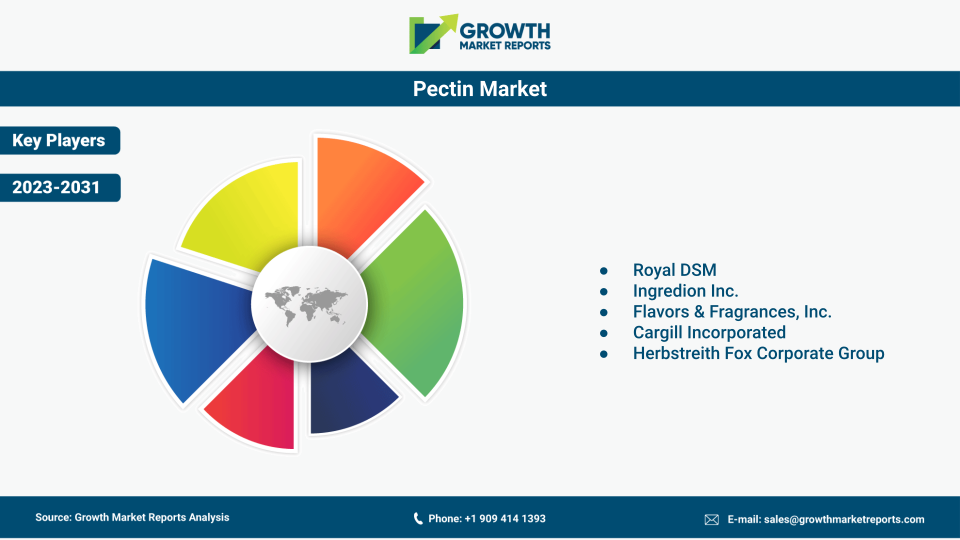
Major companies operating in the global pectin market include CP Kelco, Cargill Incorporated, IFF (International Flavors and Fragrances), Herbstreith and Fox KG, and Naturex (a Givaudan company). CP Kelco is recognized for its extensive portfolio of high-quality pectin products and commitment to sustainability, leveraging advanced extraction technologies and global supply chain capabilities. Cargill Incorporated is a key player with a strong focus on innovation and customized solutions for the food, beverage, and pharmaceutical industries. IFF, following its integration of legacy DuPont nutrition businesses, offers a comprehensive range of pectin products supported by robust research and development resources and a global distribution network. Herbstreith and Fox KG is renowned for its expertise in apple and citrus pectin production, serving a diverse customer base across Europe and beyond. Naturex, now part of Givaudan, specializes in natural ingredients, including pectin, with a focus on traceability, quality, and application support.

Other notable competitors include Yantai Andre Pectin Co. Ltd. and Shandong Jiejing Group Corporation from China, which are expanding their global footprint by offering competitively priced citrus and apple pectin products. Silvateam S.p.A. and Obipektin AG are recognized for their specialty pectin offerings targeting niche food and pharmaceutical applications. Tate and Lyle PLC and dsm-firmenich continue to invest in natural ingredient portfolios, reinforcing their presence in the clean-label segment. The competitive landscape is expected to remain dynamic, with ongoing consolidation, technological advancements, and evolving consumer preferences shaping the future of the global pectin market through 2034.

Key Players

  • CP Kelco
  • Cargill, Incorporated
  • IFF (International Flavors & Fragrances)
  • Herbstreith & Fox KG
  • Naturex (Givaudan)
  • Yantai Andre Pectin Co. Ltd.
  • Silvateam S.p.A.
  • Obipektin AG
  • Ceamsa S.A.
  • Pacific Pectin Inc.
  • Tate & Lyle PLC
  • dsm-firmenich
  • B&V Srl
  • Shandong Jiejing Group Corporation
  • Zhejiang Zhonghe Biotechnology Co., Ltd.
  • Fuerst Day Lawson Ltd.
  • Lucid Colloids Ltd.
  • Inner Mongolia Const Pectin Co., Ltd.
  • Sunresin New Materials Co. Ltd.

Segments

The Pectin market has been segmented on the basis of

Product Type

  • High Methoxyl Pectin
  • Low Methoxyl Pectin

Source

  • Citrus Fruits
  • Apples
  • Sugar Beet
  • Others

Application

  • Food & Beverages
  • Pharmaceuticals
  • Personal Care & Cosmetics
  • Industrial
  • Others

Function

  • Gelling Agent
  • Thickener
  • Stabilizer
  • Fat Replacer
  • Others

Frequently Asked Questions

Key challenges include raw material supply chain vulnerability due to seasonal and climatic variability in citrus and apple harvests, price volatility of key inputs, and intensifying competition from alternative hydrocolloids. Regulatory compliance across multiple geographies also requires ongoing investment. On the opportunity side, the clean-label and plant-based trends are expanding pectin's addressable market. Pharmaceutical applications in controlled drug release are growing rapidly. The functional food and nutraceutical sectors offer strong tailwinds, and innovations such as pectin-based fiber chewable supplements are opening new consumer health channels. Emerging source diversification and green chemistry advances present further upside through 2034.

Pectin serves multiple functional roles. As a gelling agent, it provides structure in jams, jellies, and fruit preserves. As a thickener, it enhances viscosity and mouthfeel in dairy desserts, sauces, and beverages. As a stabilizer, it prevents phase separation in emulsified products such as yogurts, fruit preparations, and dressings. As a fat replacer, pectin mimics the texture of fat in reduced-calorie food formulations, addressing obesity and wellness concerns. In industrial settings, its film-forming and biodegradable properties are being explored for edible coating solutions and sustainable packaging materials.

The global pectin market features a moderately consolidated competitive landscape. Leading players include CP Kelco, Cargill Incorporated, IFF (International Flavors and Fragrances), Herbstreith and Fox KG, Naturex (Givaudan), Yantai Andre Pectin Co. Ltd., Silvateam S.p.A., Obipektin AG, Ceamsa S.A., Tate and Lyle PLC, dsm-firmenich, Shandong Jiejing Group Corporation, and Zhejiang Zhonghe Biotechnology Co. Ltd. These companies compete on the basis of product innovation, extraction technology, raw material sourcing, and sustainability credentials.

Europe is the leading regional market, holding approximately 36.5% of global pectin consumption in 2025, driven by its established food processing industry and stringent regulations favoring natural additives. North America is the second-largest market at 23.5%, supported by clean-label trends and pharmaceutical sector demand. Asia Pacific, at 20.0%, is the fastest-growing region, with a projected CAGR of 7.5% through 2034, led by China, India, and Japan. Latin America and the Middle East and Africa collectively represent the remaining share, with growing food processing activity supporting demand.

Sustainability is a central theme shaping the pectin industry in 2025 and beyond. Pectin is extracted from agricultural byproducts such as citrus peels and apple pomace, directly supporting circular economy and waste valorization principles. Companies are investing in greener extraction technologies, including enzymatic and microwave-assisted methods, to reduce energy consumption and chemical use. Traceability and responsible sourcing are becoming key procurement criteria for large food and pharmaceutical manufacturers. Growing regulatory pressure on synthetic additives and consumer preference for environmentally responsible products are expected to drive further investment in sustainable pectin production through 2034.

Citrus fruits, particularly orange and lemon peels generated as byproducts of juice processing, account for over 70% of global pectin production in 2025. Apple pomace, a residue of juice and cider manufacturing, is the second-largest source and is especially prevalent in Europe and North America. Sugar beet pulp, a growing alternative source, is gaining commercial interest, particularly explored through beet-derived pectin research. Other emerging sources include sunflower heads, pumpkin, and pomelo peel.

The two primary types are High Methoxyl Pectin (HMP) and Low Methoxyl Pectin (LMP). HMP, which holds roughly 62.5% of the market in 2025, gels in the presence of sugar and acid and is widely used in traditional jams, jellies, confectionery, and bakery fillings. LMP gels in the presence of calcium ions rather than sugar, making it ideal for low-sugar, reduced-calorie, and diabetic-friendly food products, as well as pharmaceutical and personal care formulations. The LMP segment is growing faster, reflecting the global trend toward healthier, lower-sugar products.

The food and beverage industry is by far the largest consumer of pectin, accounting for more than 65% of total global demand in 2025. Key applications include jams, jellies, fruit preparations, dairy products, bakery fillings, and beverages. The pharmaceutical sector is the second-largest user, leveraging pectin in drug delivery systems and wound care. The personal care and cosmetics industry ranks third, incorporating pectin as a natural thickener and stabilizer in lotions, creams, and hair care products.

The primary drivers include the global shift toward natural and clean-label food ingredients, increasing consumer health awareness, and the surge in low-sugar and reduced-calorie product formulations. Growing pharmaceutical interest in biocompatible excipients, rising demand for natural personal care ingredients, and the valorization of citrus and apple byproducts under circular economy frameworks are also key catalysts. Regulatory support for plant-derived additives in major markets further underpins sustained growth through 2034.

The global pectin market reached USD 1.40 billion in 2025, the base year for this report. Growing at a CAGR of 6.0% over the 2026-2034 forecast period, the market is projected to surpass USD 2.36 billion by 2034. This growth is fueled by rising demand for natural food additives, expanding pharmaceutical applications, and accelerating adoption of clean-label formulations across developed and emerging economies alike.

Table Of Content

Chapter 1 Executive Summary
Chapter 2 Assumptions and Acronyms Used
Chapter 3 Research Methodology
Chapter 4 Pectin Market Overview
   4.1 Introduction
      4.1.1 Market Taxonomy
      4.1.2 Market Definition
      4.1.3 Macro-Economic Factors Impacting the Market Growth
   4.2 Pectin Market Dynamics
      4.2.1 Market Drivers
      4.2.2 Market Restraints
      4.2.3 Market Opportunity
   4.3 Pectin Market - Supply Chain Analysis
      4.3.1 List of Key Suppliers
      4.3.2 List of Key Distributors
      4.3.3 List of Key Consumers
   4.4 Key Forces Shaping the Pectin Market
      4.4.1 Bargaining Power of Suppliers
      4.4.2 Bargaining Power of Buyers
      4.4.3 Threat of Substitution
      4.4.4 Threat of New Entrants
      4.4.5 Competitive Rivalry
   4.5 Global Pectin Market Size & Forecast, 2023-2032
      4.5.1 Pectin Market Size and Y-o-Y Growth
      4.5.2 Pectin Market Absolute $ Opportunity

Chapter 5 Global Pectin Market Analysis and Forecast By Product Type
   5.1 Introduction
      5.1.1 Key Market Trends & Growth Opportunities By Product Type
      5.1.2 Basis Point Share (BPS) Analysis By Product Type
      5.1.3 Absolute $ Opportunity Assessment By Product Type
   5.2 Pectin Market Size Forecast By Product Type
      5.2.1 High Methoxyl Pectin
      5.2.2 Low Methoxyl Pectin
   5.3 Market Attractiveness Analysis By Product Type

Chapter 6 Global Pectin Market Analysis and Forecast By Source
   6.1 Introduction
      6.1.1 Key Market Trends & Growth Opportunities By Source
      6.1.2 Basis Point Share (BPS) Analysis By Source
      6.1.3 Absolute $ Opportunity Assessment By Source
   6.2 Pectin Market Size Forecast By Source
      6.2.1 Citrus Fruits
      6.2.2 Apples
      6.2.3 Sugar Beet
      6.2.4 Others
   6.3 Market Attractiveness Analysis By Source

Chapter 7 Global Pectin Market Analysis and Forecast By Application
   7.1 Introduction
      7.1.1 Key Market Trends & Growth Opportunities By Application
      7.1.2 Basis Point Share (BPS) Analysis By Application
      7.1.3 Absolute $ Opportunity Assessment By Application
   7.2 Pectin Market Size Forecast By Application
      7.2.1 Food & Beverages
      7.2.2 Pharmaceuticals
      7.2.3 Personal Care & Cosmetics
      7.2.4 Industrial
      7.2.5 Others
   7.3 Market Attractiveness Analysis By Application

Chapter 8 Global Pectin Market Analysis and Forecast By Function
   8.1 Introduction
      8.1.1 Key Market Trends & Growth Opportunities By Function
      8.1.2 Basis Point Share (BPS) Analysis By Function
      8.1.3 Absolute $ Opportunity Assessment By Function
   8.2 Pectin Market Size Forecast By Function
      8.2.1 Gelling Agent
      8.2.2 Thickener
      8.2.3 Stabilizer
      8.2.4 Fat Replacer
      8.2.5 Others
   8.3 Market Attractiveness Analysis By Function

Chapter 9 Global Pectin Market Analysis and Forecast by Region
   9.1 Introduction
      9.1.1 Key Market Trends & Growth Opportunities By Region
      9.1.2 Basis Point Share (BPS) Analysis By Region
      9.1.3 Absolute $ Opportunity Assessment By Region
   9.2 Pectin Market Size Forecast By Region
      9.2.1 North America
      9.2.2 Europe
      9.2.3 Asia Pacific
      9.2.4 Latin America
      9.2.5 Middle East & Africa (MEA)
   9.3 Market Attractiveness Analysis By Region

Chapter 10 Coronavirus Disease (COVID-19) Impact 
   10.1 Introduction 
   10.2 Current & Future Impact Analysis 
   10.3 Economic Impact Analysis 
   10.4 Government Policies 
   10.5 Investment Scenario

Chapter 11 North America Pectin Analysis and Forecast
   11.1 Introduction
   11.2 North America Pectin Market Size Forecast by Country
      11.2.1 U.S.
      11.2.2 Canada
   11.3 Basis Point Share (BPS) Analysis by Country
   11.4 Absolute $ Opportunity Assessment by Country
   11.5 Market Attractiveness Analysis by Country
   11.6 North America Pectin Market Size Forecast By Product Type
      11.6.1 High Methoxyl Pectin
      11.6.2 Low Methoxyl Pectin
   11.7 Basis Point Share (BPS) Analysis By Product Type 
   11.8 Absolute $ Opportunity Assessment By Product Type 
   11.9 Market Attractiveness Analysis By Product Type
   11.10 North America Pectin Market Size Forecast By Source
      11.10.1 Citrus Fruits
      11.10.2 Apples
      11.10.3 Sugar Beet
      11.10.4 Others
   11.11 Basis Point Share (BPS) Analysis By Source 
   11.12 Absolute $ Opportunity Assessment By Source 
   11.13 Market Attractiveness Analysis By Source
   11.14 North America Pectin Market Size Forecast By Application
      11.14.1 Food & Beverages
      11.14.2 Pharmaceuticals
      11.14.3 Personal Care & Cosmetics
      11.14.4 Industrial
      11.14.5 Others
   11.15 Basis Point Share (BPS) Analysis By Application 
   11.16 Absolute $ Opportunity Assessment By Application 
   11.17 Market Attractiveness Analysis By Application
   11.18 North America Pectin Market Size Forecast By Function
      11.18.1 Gelling Agent
      11.18.2 Thickener
      11.18.3 Stabilizer
      11.18.4 Fat Replacer
      11.18.5 Others
   11.19 Basis Point Share (BPS) Analysis By Function 
   11.20 Absolute $ Opportunity Assessment By Function 
   11.21 Market Attractiveness Analysis By Function

Chapter 12 Europe Pectin Analysis and Forecast
   12.1 Introduction
   12.2 Europe Pectin Market Size Forecast by Country
      12.2.1 Germany
      12.2.2 France
      12.2.3 Italy
      12.2.4 U.K.
      12.2.5 Spain
      12.2.6 Russia
      12.2.7 Rest of Europe
   12.3 Basis Point Share (BPS) Analysis by Country
   12.4 Absolute $ Opportunity Assessment by Country
   12.5 Market Attractiveness Analysis by Country
   12.6 Europe Pectin Market Size Forecast By Product Type
      12.6.1 High Methoxyl Pectin
      12.6.2 Low Methoxyl Pectin
   12.7 Basis Point Share (BPS) Analysis By Product Type 
   12.8 Absolute $ Opportunity Assessment By Product Type 
   12.9 Market Attractiveness Analysis By Product Type
   12.10 Europe Pectin Market Size Forecast By Source
      12.10.1 Citrus Fruits
      12.10.2 Apples
      12.10.3 Sugar Beet
      12.10.4 Others
   12.11 Basis Point Share (BPS) Analysis By Source 
   12.12 Absolute $ Opportunity Assessment By Source 
   12.13 Market Attractiveness Analysis By Source
   12.14 Europe Pectin Market Size Forecast By Application
      12.14.1 Food & Beverages
      12.14.2 Pharmaceuticals
      12.14.3 Personal Care & Cosmetics
      12.14.4 Industrial
      12.14.5 Others
   12.15 Basis Point Share (BPS) Analysis By Application 
   12.16 Absolute $ Opportunity Assessment By Application 
   12.17 Market Attractiveness Analysis By Application
   12.18 Europe Pectin Market Size Forecast By Function
      12.18.1 Gelling Agent
      12.18.2 Thickener
      12.18.3 Stabilizer
      12.18.4 Fat Replacer
      12.18.5 Others
   12.19 Basis Point Share (BPS) Analysis By Function 
   12.20 Absolute $ Opportunity Assessment By Function 
   12.21 Market Attractiveness Analysis By Function

Chapter 13 Asia Pacific Pectin Analysis and Forecast
   13.1 Introduction
   13.2 Asia Pacific Pectin Market Size Forecast by Country
      13.2.1 China
      13.2.2 Japan
      13.2.3 South Korea
      13.2.4 India
      13.2.5 Australia
      13.2.6 South East Asia (SEA)
      13.2.7 Rest of Asia Pacific (APAC)
   13.3 Basis Point Share (BPS) Analysis by Country
   13.4 Absolute $ Opportunity Assessment by Country
   13.5 Market Attractiveness Analysis by Country
   13.6 Asia Pacific Pectin Market Size Forecast By Product Type
      13.6.1 High Methoxyl Pectin
      13.6.2 Low Methoxyl Pectin
   13.7 Basis Point Share (BPS) Analysis By Product Type 
   13.8 Absolute $ Opportunity Assessment By Product Type 
   13.9 Market Attractiveness Analysis By Product Type
   13.10 Asia Pacific Pectin Market Size Forecast By Source
      13.10.1 Citrus Fruits
      13.10.2 Apples
      13.10.3 Sugar Beet
      13.10.4 Others
   13.11 Basis Point Share (BPS) Analysis By Source 
   13.12 Absolute $ Opportunity Assessment By Source 
   13.13 Market Attractiveness Analysis By Source
   13.14 Asia Pacific Pectin Market Size Forecast By Application
      13.14.1 Food & Beverages
      13.14.2 Pharmaceuticals
      13.14.3 Personal Care & Cosmetics
      13.14.4 Industrial
      13.14.5 Others
   13.15 Basis Point Share (BPS) Analysis By Application 
   13.16 Absolute $ Opportunity Assessment By Application 
   13.17 Market Attractiveness Analysis By Application
   13.18 Asia Pacific Pectin Market Size Forecast By Function
      13.18.1 Gelling Agent
      13.18.2 Thickener
      13.18.3 Stabilizer
      13.18.4 Fat Replacer
      13.18.5 Others
   13.19 Basis Point Share (BPS) Analysis By Function 
   13.20 Absolute $ Opportunity Assessment By Function 
   13.21 Market Attractiveness Analysis By Function

Chapter 14 Latin America Pectin Analysis and Forecast
   14.1 Introduction
   14.2 Latin America Pectin Market Size Forecast by Country
      14.2.1 Brazil
      14.2.2 Mexico
      14.2.3 Rest of Latin America (LATAM)
   14.3 Basis Point Share (BPS) Analysis by Country
   14.4 Absolute $ Opportunity Assessment by Country
   14.5 Market Attractiveness Analysis by Country
   14.6 Latin America Pectin Market Size Forecast By Product Type
      14.6.1 High Methoxyl Pectin
      14.6.2 Low Methoxyl Pectin
   14.7 Basis Point Share (BPS) Analysis By Product Type 
   14.8 Absolute $ Opportunity Assessment By Product Type 
   14.9 Market Attractiveness Analysis By Product Type
   14.10 Latin America Pectin Market Size Forecast By Source
      14.10.1 Citrus Fruits
      14.10.2 Apples
      14.10.3 Sugar Beet
      14.10.4 Others
   14.11 Basis Point Share (BPS) Analysis By Source 
   14.12 Absolute $ Opportunity Assessment By Source 
   14.13 Market Attractiveness Analysis By Source
   14.14 Latin America Pectin Market Size Forecast By Application
      14.14.1 Food & Beverages
      14.14.2 Pharmaceuticals
      14.14.3 Personal Care & Cosmetics
      14.14.4 Industrial
      14.14.5 Others
   14.15 Basis Point Share (BPS) Analysis By Application 
   14.16 Absolute $ Opportunity Assessment By Application 
   14.17 Market Attractiveness Analysis By Application
   14.18 Latin America Pectin Market Size Forecast By Function
      14.18.1 Gelling Agent
      14.18.2 Thickener
      14.18.3 Stabilizer
      14.18.4 Fat Replacer
      14.18.5 Others
   14.19 Basis Point Share (BPS) Analysis By Function 
   14.20 Absolute $ Opportunity Assessment By Function 
   14.21 Market Attractiveness Analysis By Function

Chapter 15 Middle East & Africa (MEA) Pectin Analysis and Forecast
   15.1 Introduction
   15.2 Middle East & Africa (MEA) Pectin Market Size Forecast by Country
      15.2.1 Saudi Arabia
      15.2.2 South Africa
      15.2.3 UAE
      15.2.4 Rest of Middle East & Africa (MEA)
   15.3 Basis Point Share (BPS) Analysis by Country
   15.4 Absolute $ Opportunity Assessment by Country
   15.5 Market Attractiveness Analysis by Country
   15.6 Middle East & Africa (MEA) Pectin Market Size Forecast By Product Type
      15.6.1 High Methoxyl Pectin
      15.6.2 Low Methoxyl Pectin
   15.7 Basis Point Share (BPS) Analysis By Product Type 
   15.8 Absolute $ Opportunity Assessment By Product Type 
   15.9 Market Attractiveness Analysis By Product Type
   15.10 Middle East & Africa (MEA) Pectin Market Size Forecast By Source
      15.10.1 Citrus Fruits
      15.10.2 Apples
      15.10.3 Sugar Beet
      15.10.4 Others
   15.11 Basis Point Share (BPS) Analysis By Source 
   15.12 Absolute $ Opportunity Assessment By Source 
   15.13 Market Attractiveness Analysis By Source
   15.14 Middle East & Africa (MEA) Pectin Market Size Forecast By Application
      15.14.1 Food & Beverages
      15.14.2 Pharmaceuticals
      15.14.3 Personal Care & Cosmetics
      15.14.4 Industrial
      15.14.5 Others
   15.15 Basis Point Share (BPS) Analysis By Application 
   15.16 Absolute $ Opportunity Assessment By Application 
   15.17 Market Attractiveness Analysis By Application
   15.18 Middle East & Africa (MEA) Pectin Market Size Forecast By Function
      15.18.1 Gelling Agent
      15.18.2 Thickener
      15.18.3 Stabilizer
      15.18.4 Fat Replacer
      15.18.5 Others
   15.19 Basis Point Share (BPS) Analysis By Function 
   15.20 Absolute $ Opportunity Assessment By Function 
   15.21 Market Attractiveness Analysis By Function

Chapter 16 Competition Landscape 
   16.1 Pectin Market: Competitive Dashboard
   16.2 Global Pectin Market: Market Share Analysis, 2023
   16.3 Company Profiles (Details – Overview, Financials, Developments, Strategy) 
      16.3.1 CP Kelco
      16.3.2 Cargill, Incorporated
      16.3.3 IFF (International Flavors & Fragrances)
      16.3.4 Herbstreith & Fox KG
      16.3.5 Naturex (Givaudan)
      16.3.6 Yantai Andre Pectin Co. Ltd.
      16.3.7 Silvateam S.p.A.
      16.3.8 Obipektin AG
      16.3.9 Ceamsa S.A.
      16.3.10 Pacific Pectin Inc.
      16.3.11 Tate & Lyle PLC
      16.3.12 dsm-firmenich
      16.3.13 B&V Srl
      16.3.14 Shandong Jiejing Group Corporation
      16.3.15 Zhejiang Zhonghe Biotechnology Co., Ltd.
      16.3.16 Fuerst Day Lawson Ltd.
      16.3.17 Lucid Colloids Ltd.
      16.3.18 Inner Mongolia Const Pectin Co., Ltd.
      16.3.19 Sunresin New Materials Co. Ltd.

Methodology

Our Clients

sinopec
Honda Motor Co. Ltd.
Siemens Healthcare
Dassault Aviation
FedEx Logistics
Pfizer
General Electric
Deloitte