Veterinary Management Software Market Research Report 2033

Veterinary Management Software Market Research Report 2033

Segments - by Product Type (On-Premises, Cloud-Based), by Application (Appointment Scheduling, Billing & Invoicing, Electronic Health Records, Inventory Management, Others), by End User (Hospitals & Clinics, Reference Laboratories, Others), by Practice Type (Small Animals, Mixed Animals, Equine, Others)

https://growthmarketreports.com/raksha
Author : Raksha Sharma
https://growthmarketreports.com/Vaibhav
Fact-checked by : V. Chandola
https://growthmarketreports.com/Shruti
Editor : Shruti Bhat

Upcoming | Report ID :HC-3878 | 4.6 Rating | 85 Reviews | 275 Pages | Format : Docx PDF

Report Description


Veterinary Management Software Market Outlook

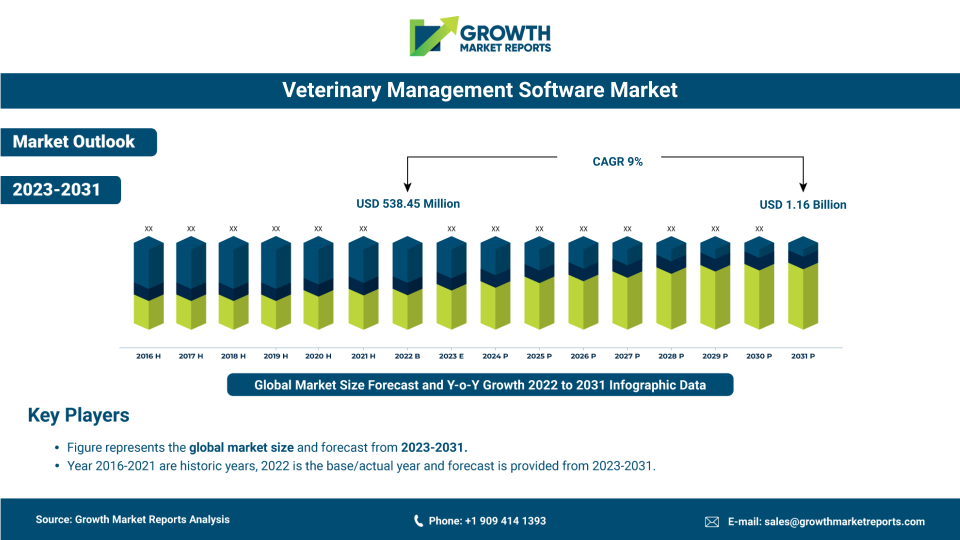
As per our latest research, the global veterinary management software market size reached USD 1.21 billion in 2024, demonstrating robust growth driven by the increasing digitalization of veterinary practices worldwide. The market is projected to expand at a CAGR of 8.5% during the forecast period, with the market size expected to reach USD 2.41 billion by 2033. This impressive growth is primarily fueled by the rising adoption of cloud-based solutions, the growing need for efficient practice management, and the surge in pet ownership and animal healthcare expenditure globally.

One of the primary growth factors for the veterinary management software market is the increasing demand for streamlined operations within veterinary practices. Veterinary clinics and hospitals are under constant pressure to enhance operational efficiency, reduce administrative burdens, and improve client communication. The integration of advanced software solutions enables automated appointment scheduling, billing, and record management, leading to significant time savings and error reduction. Additionally, the ability to maintain comprehensive electronic health records (EHRs) not only improves the quality of care but also ensures compliance with regulatory standards. This digital transformation is further accelerated by the growing awareness among veterinarians about the tangible benefits of adopting modern management software.

Another significant driver is the rising trend of pet humanization, which has led to increased expenditure on animal health and wellness. Pet owners are increasingly seeking high-quality veterinary care, pushing clinics and hospitals to upgrade their technological infrastructure. Veterinary management software plays a crucial role in supporting this shift by offering features such as telemedicine integration, automated reminders, and personalized care plans. These functionalities not only enhance the client experience but also contribute to improved patient outcomes. Moreover, the surge in livestock farming and the need for robust herd health management systems in the agricultural sector are further propelling the demand for comprehensive veterinary management solutions.

The evolution of cloud-based veterinary management software is also a pivotal growth catalyst for the market. Cloud-based solutions offer unparalleled scalability, data security, and remote accessibility, making them particularly attractive for multi-location veterinary practices and reference laboratories. The subscription-based pricing models associated with cloud deployments reduce the upfront investment required, enabling even small and medium-sized clinics to leverage advanced management tools. The growing penetration of high-speed internet and mobile devices has further facilitated the adoption of cloud-based platforms, allowing veterinarians to access critical information anytime and anywhere. This trend is expected to continue, with cloud-based solutions gradually outpacing traditional on-premises systems in terms of market share.

From a regional perspective, North America currently dominates the veterinary management software market, supported by the presence of a large number of veterinary clinics, high pet ownership rates, and well-established digital infrastructure. However, the Asia Pacific region is emerging as a high-growth market, driven by increasing investments in animal healthcare, rising awareness about veterinary software, and the rapid expansion of veterinary services in countries like China, India, and Australia. Europe also holds a significant share, with stringent regulatory requirements and a strong focus on advanced healthcare technologies. The Middle East & Africa and Latin America are expected to witness steady growth, albeit from a smaller base, as veterinary care infrastructure continues to develop across these regions.

The advent of Vet Clinic Management SaaS has revolutionized the way veterinary practices operate, offering a comprehensive suite of tools designed to streamline daily operations. This Software as a Service (SaaS) model provides veterinary clinics with the flexibility to manage appointments, billing, and patient records from any location with internet access. The cloud-based nature of these solutions ensures that data is securely stored and easily accessible, allowing veterinarians to focus more on patient care rather than administrative tasks. By reducing the need for in-house IT infrastructure, Vet Clinic Management SaaS also lowers operational costs, making it an attractive option for both small and large veterinary practices. The ability to integrate with other digital tools and platforms further enhances the functionality of these systems, supporting a seamless workflow and improving overall practice efficiency.

Global Veterinary Management Software Industry Outlook

Product Type Analysis

The product type segment of the veterinary management software market is primarily categorized into on-premises and cloud-based solutions. On-premises software has been the traditional choice for many veterinary practices, offering complete control over data and system customization. These solutions are typically favored by large hospitals and clinics with robust IT infrastructure and dedicated technical staff. On-premises systems are valued for their high degree of data security and the ability to operate independently of internet connectivity, which is crucial for practices in areas with unreliable internet access. However, the requirement for significant upfront investment in hardware and ongoing maintenance has limited their appeal among smaller practices.

In contrast, cloud-based veterinary management software has witnessed explosive growth in recent years, rapidly gaining market share. Cloud-based solutions offer several advantages, including lower initial costs, automatic updates, and enhanced scalability. Veterinary practices, particularly small and medium-sized ones, are increasingly opting for cloud-based platforms due to their flexibility and ease of use. The ability to access patient records, appointment schedules, and billing information remotely has become a game-changer for veterinary professionals, especially in the context of multi-location operations and telemedicine services. Cloud-based systems also provide robust data backup and disaster recovery features, ensuring business continuity in the event of hardware failure or cyberattacks.

The shift towards cloud-based veterinary management software is further supported by the growing trend of mobile veterinary services and the increasing adoption of smartphones and tablets among veterinarians. Mobile-friendly interfaces and dedicated applications enable veterinarians to manage their practices on the go, improving responsiveness and client engagement. Additionally, cloud-based solutions facilitate seamless integration with other digital tools such as diagnostic equipment, laboratory information systems, and client communication platforms. This interoperability enhances workflow efficiency and data accuracy, driving higher adoption rates across the industry.

Despite the rapid growth of cloud-based solutions, on-premises software continues to hold relevance in certain market segments, particularly in regions with stringent data privacy regulations or limited internet connectivity. Some large veterinary hospitals and reference laboratories prefer on-premises systems for their ability to offer greater control over sensitive client and patient data. Hybrid deployment models, which combine the strengths of both on-premises and cloud-based solutions, are also gaining traction, allowing practices to tailor their software infrastructure to their specific needs. Overall, the product type segment is expected to see continued innovation and diversification as vendors strive to meet the evolving requirements of the veterinary industry.

Veterinary Referral Management Software is becoming increasingly vital in the interconnected world of veterinary healthcare. This software facilitates the efficient management of referrals between general practitioners and specialists, ensuring that patients receive timely and appropriate care. By automating the referral process, veterinary practices can reduce administrative burdens and improve communication between different care providers. The software also allows for the tracking of referral outcomes, providing valuable insights into patient care pathways and helping to optimize treatment protocols. As veterinary practices continue to grow in complexity, the need for robust referral management solutions is becoming more pronounced, highlighting the importance of integrating such software into existing practice management systems.

Report Scope

Attributes Details
Report Title Veterinary Management Software Market Research Report 2033
By Product Type On-Premises, Cloud-Based
By Application Appointment Scheduling, Billing & Invoicing, Electronic Health Records, Inventory Management, Others
By End User Hospitals & Clinics, Reference Laboratories, Others
By Practice Type Small Animals, Mixed Animals, Equine, Others
Regions Covered North America, Europe, APAC, Latin America, MEA
Base Year 2024
Historic Data 2018-2023
Forecast Period 2025-2033
Number of Pages 275
Number of Tables & Figures 343
Customization Available Yes, the report can be customized as per your need.

Application Analysis

The application segment of the veterinary management software market encompasses a wide range of functionalities, including appointment scheduling, billing and invoicing, electronic health records (EHRs), inventory management, and other specialized modules. Appointment scheduling remains one of the most critical applications, enabling veterinary practices to optimize their daily operations, reduce no-shows, and enhance client satisfaction. Advanced scheduling tools offer features such as automated reminders, online booking, and integration with telemedicine platforms, allowing clinics to efficiently manage high patient volumes and minimize administrative overhead.

Billing and invoicing modules are essential for streamlining financial operations within veterinary practices. These applications automate the generation of invoices, track payments, and manage insurance claims, reducing the risk of errors and ensuring timely revenue collection. Integration with accounting software further enhances financial transparency and simplifies tax compliance. The growing complexity of veterinary billing, driven by the increasing use of advanced diagnostics and treatments, has made robust billing and invoicing solutions indispensable for modern practices.

Electronic health records (EHRs) represent a cornerstone of veterinary management software, providing a centralized repository for patient information, medical histories, diagnostic results, and treatment plans. EHRs facilitate seamless information sharing among veterinarians, improve the accuracy of diagnoses, and support evidence-based decision-making. The digitization of health records also enables compliance with regulatory requirements and enhances data security through access controls and audit trails. As the volume of patient data continues to grow, advanced EHR systems with analytics and reporting capabilities are becoming increasingly valuable for veterinary practices seeking to deliver high-quality care.

Inventory management is another vital application area, enabling practices to monitor stock levels, track product usage, and automate reordering processes. Efficient inventory management reduces the risk of stockouts and overstocking, improves cash flow, and minimizes waste. Veterinary management software with integrated inventory modules supports better resource allocation and cost control, particularly in practices that handle a wide range of pharmaceuticals, consumables, and medical devices. Other specialized applications, such as client communication tools, reporting and analytics, and telemedicine integration, further enhance the value proposition of veterinary management software, catering to the diverse needs of modern veterinary practices.

End User Analysis

The end user segment of the veterinary management software market is primarily divided into hospitals and clinics, reference laboratories, and other veterinary service providers. Hospitals and clinics represent the largest end user group, accounting for the majority of software adoption. These facilities require comprehensive management solutions to handle high patient volumes, complex workflows, and diverse service offerings. Veterinary management software enables hospitals and clinics to streamline appointment scheduling, billing, patient record management, and inventory control, resulting in improved operational efficiency and enhanced client satisfaction. The increasing trend towards multi-specialty veterinary hospitals and the growing demand for specialized services are further driving software adoption in this segment.

Reference laboratories play a critical role in the veterinary healthcare ecosystem, providing diagnostic and testing services to clinics and hospitals. The unique requirements of reference laboratories, such as sample tracking, test result management, and integration with laboratory information systems, have led to the development of specialized veterinary management software modules. These solutions enable laboratories to manage large volumes of samples, ensure data accuracy, and deliver timely results to referring veterinarians. The rising demand for advanced diagnostic services and the expansion of laboratory networks are expected to drive continued growth in this end user segment.

Other end users of veterinary management software include mobile veterinary services, animal shelters, and academic institutions. Mobile veterinary services, which provide on-site care for animals, require flexible and mobile-friendly software solutions to manage appointments, access patient records, and process payments in the field. Animal shelters and rescue organizations benefit from management software that supports animal intake, adoption tracking, and medical care management. Academic institutions and veterinary teaching hospitals utilize software solutions to support research, training, and clinical practice management. The diverse needs of these end users are driving the development of customizable and scalable software platforms that can be tailored to specific operational requirements.

The adoption of veterinary management software across different end user segments is influenced by factors such as practice size, service complexity, regulatory requirements, and budget constraints. Large hospitals and laboratories tend to invest in comprehensive, integrated solutions with advanced features and analytics capabilities, while smaller clinics and mobile services may prioritize affordability and ease of use. Vendors are responding to these varied needs by offering modular software platforms, flexible pricing models, and dedicated customer support services, ensuring that veterinary management software remains accessible and valuable to a broad spectrum of end users.

Practice Type Analysis

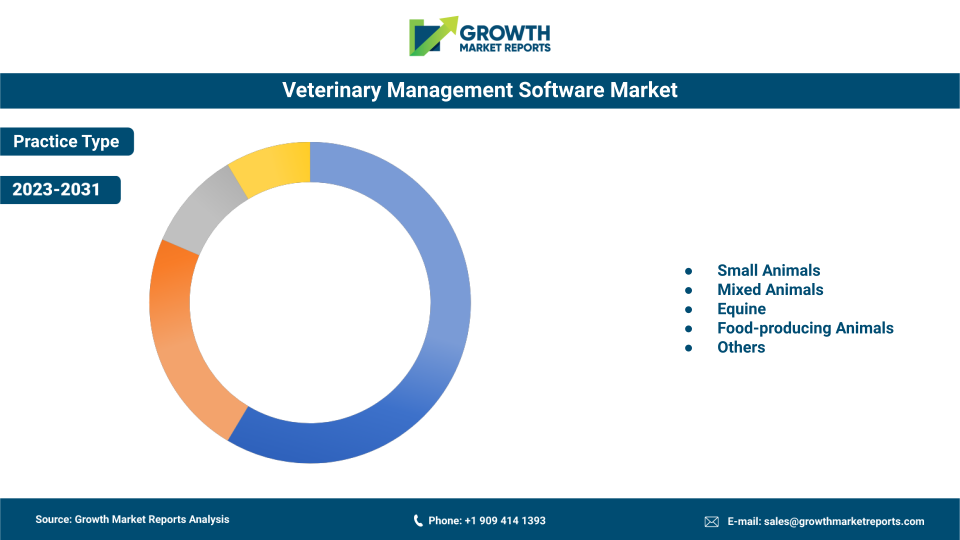
The practice type segment of the veterinary management software market is classified into small animals, mixed animals, equine, and other specialized practices. Small animal practices, which primarily cater to pets such as dogs, cats, and small mammals, constitute the largest segment. The high volume of patient visits, diverse service offerings, and strong client relationships characteristic of small animal practices drive the demand for robust management software. Features such as appointment scheduling, vaccination reminders, and detailed health records are particularly valuable in this segment, enabling practices to deliver personalized care and maintain long-term client engagement.

Mixed animal practices, which serve both companion animals and livestock, require versatile software solutions capable of managing a wide range of medical, surgical, and preventive care services. These practices often operate in rural or semi-rural areas, where the ability to manage herd health, track vaccination schedules, and monitor production parameters is critical. Veterinary management software tailored for mixed animal practices offers modules for herd management, farm visit scheduling, and integration with livestock management systems. The increasing focus on food safety, animal welfare, and disease prevention in the agricultural sector is driving the adoption of advanced software solutions in this segment.

Equine practices, which specialize in the care of horses, have unique management requirements due to the nature of equine medicine and the high value of individual animals. Equine veterinary management software includes features such as detailed medical histories, performance tracking, reproductive management, and client communication tools tailored to horse owners and trainers. The growing popularity of equestrian sports, increased investment in horse health, and the expansion of equine breeding programs are contributing to the growth of this segment. Software vendors are responding by developing specialized modules that address the specific needs of equine practitioners, ensuring comprehensive and efficient practice management.

Other practice types, including exotic animal, avian, and wildlife practices, represent a smaller but growing segment of the veterinary management software market. These practices often require highly customizable software solutions to accommodate the diverse species and unique care protocols involved. The increasing interest in exotic pet ownership, wildlife conservation, and zoological medicine is driving demand for specialized management tools that support comprehensive record-keeping, regulatory compliance, and research activities. Overall, the practice type segment reflects the diversity of the veterinary profession and underscores the importance of flexible, adaptable software solutions capable of meeting the evolving needs of different practice settings.

Opportunities & Threats

The veterinary management software market presents significant opportunities for growth and innovation, particularly in the areas of artificial intelligence (AI), data analytics, and telemedicine integration. The integration of AI-powered tools can enhance diagnostic accuracy, automate routine tasks, and provide actionable insights for practice management. Data analytics capabilities enable veterinarians to identify trends, optimize resource allocation, and improve patient outcomes through evidence-based decision-making. The growing adoption of telemedicine, accelerated by the COVID-19 pandemic, offers new avenues for software vendors to develop remote consultation and client communication modules. These technological advancements not only improve the efficiency of veterinary practices but also create new revenue streams and competitive differentiation for software providers.

Another major opportunity lies in the expansion of veterinary management software into emerging markets, particularly in Asia Pacific, Latin America, and the Middle East & Africa. As veterinary care infrastructure continues to develop in these regions, there is a growing need for affordable and scalable software solutions that can support the modernization of veterinary practices. Partnerships with local veterinary associations, government agencies, and educational institutions can facilitate market entry and drive adoption. Additionally, the increasing focus on animal welfare, food safety, and zoonotic disease prevention presents opportunities for software vendors to develop specialized solutions for livestock management, public health monitoring, and regulatory compliance. Customizable and multilingual software platforms can further enhance accessibility and usability in diverse market environments.

Despite the numerous opportunities, the veterinary management software market faces several restraining factors that could impede growth. One of the primary challenges is the resistance to technology adoption among some veterinarians, particularly those in small or rural practices. Concerns about data security, the complexity of software implementation, and the perceived cost of digital transformation can act as barriers to adoption. Additionally, the lack of standardized data formats and interoperability between different software systems can hinder seamless information sharing and integration with external platforms. Addressing these challenges requires ongoing education, robust customer support, and the development of user-friendly, affordable software solutions that cater to the unique needs of different practice settings.

Regional Outlook

North America remains the largest regional market for veterinary management software, accounting for approximately USD 540 million in 2024. The region's dominance is attributed to the high penetration of digital technologies in veterinary practices, well-established healthcare infrastructure, and a strong culture of pet ownership. The presence of leading software vendors, coupled with favorable regulatory environments and significant investments in animal health, further supports market growth. The United States, in particular, represents a major market, with a large number of veterinary clinics and hospitals adopting advanced management solutions to improve operational efficiency and client engagement. Canada also contributes to regional growth, driven by similar trends in digitalization and pet care.

Europe holds a significant share of the global veterinary management software market, with an estimated market size of USD 350 million in 2024. The region is characterized by stringent regulatory requirements, a strong emphasis on animal welfare, and widespread adoption of advanced healthcare technologies. Countries such as Germany, the United Kingdom, and France are leading adopters of veterinary management software, supported by robust veterinary care infrastructure and high levels of pet ownership. The European market is also witnessing increased demand for cloud-based solutions and telemedicine integration, driven by the need for flexible and scalable software platforms. The region is expected to grow at a steady CAGR of 7.5% during the forecast period, supported by ongoing investments in digital health and veterinary education.

The Asia Pacific region is emerging as a high-growth market for veterinary management software, with a market size of USD 210 million in 2024 and a projected CAGR of 11.2% through 2033. Rapid urbanization, rising disposable incomes, and increasing awareness of animal health are driving the expansion of veterinary services in countries such as China, India, Australia, and Japan. The growing adoption of cloud-based and mobile-friendly software solutions is enabling veterinary practices in the region to modernize their operations and improve service delivery. Latin America and the Middle East & Africa, while representing smaller shares of the global market, are expected to witness steady growth as veterinary care infrastructure continues to develop and digitalization efforts gain momentum. Together, these regions account for a combined market size of USD 110 million in 2024, with significant potential for future expansion.

Veterinary Management Software Market Statistics

Competitor Outlook

The global veterinary management software market is characterized by intense competition, with a diverse array of players ranging from established software vendors to emerging startups. The competitive landscape is shaped by continuous innovation, strategic partnerships, and a strong focus on customer-centric product development. Leading companies are investing heavily in research and development to introduce advanced features such as AI-driven analytics, telemedicine integration, and mobile compatibility. The market is also witnessing increased consolidation, with larger players acquiring smaller firms to expand their product portfolios and strengthen their market presence. The ability to offer comprehensive, scalable, and customizable solutions is a key differentiator in this highly competitive environment.

Major companies in the veterinary management software market include IDEXX Laboratories, Inc., Henry Schein, Inc., Covetrus, Inc., Patterson Companies, Inc., and Vetter Software, Inc. These companies have established strong brand recognition and extensive distribution networks, enabling them to serve a wide range of veterinary practices globally. IDEXX Laboratories is known for its integrated software solutions that combine practice management, diagnostics, and client communication tools. Henry Schein offers a comprehensive suite of veterinary management products, with a focus on cloud-based platforms and interoperability with other digital tools. Covetrus provides end-to-end solutions for practice management, inventory control, and client engagement, leveraging its global reach and industry expertise.

In addition to these industry leaders, a number of specialized vendors and startups are making significant contributions to the market. Companies such as Hippo Manager, ezyVet, and Vetport are gaining traction by offering innovative, user-friendly software platforms tailored to the unique needs of small and medium-sized veterinary practices. These companies differentiate themselves through flexible pricing models, robust customer support, and a strong emphasis on ease of use. The growing demand for mobile and cloud-based solutions has created opportunities for new entrants to disrupt the market and capture market share from established players.

Strategic partnerships and collaborations are also shaping the competitive landscape, with software vendors teaming up with diagnostic laboratories, pharmaceutical companies, and industry associations to enhance product offerings and expand market reach. The increasing importance of data security and regulatory compliance is driving vendors to invest in robust cybersecurity measures and ensure adherence to industry standards. As the veterinary management software market continues to evolve, companies that prioritize innovation, customer engagement, and strategic growth initiatives are well-positioned to succeed in an increasingly dynamic and competitive environment.

Key Players

  • IDEXX Laboratories, Inc.
  • Henry Schein, Inc.
  • Covetrus, Inc.
  • Patterson Companies, Inc.
  • Vetter Software, Inc.
  • ezyVet Limited
  • Hippo Manager Software, Inc.
  • Animal Intelligence Software, Inc.
  • Carestream Health
  • Timeless Veterinary Systems Inc.
  • ClienTrax (CompuGroup Medical)
  • DaySmart Vet (formerly Vetter Software)
  • NaVetor (Patterson Veterinary)
  • Provet Cloud (Nordhealth)
  • Shepherd Veterinary Software
  • Vetspire
  • VETport
  • InstaVet
  • Digitail
  • OpenVPMS
Veterinary Management Software Market Overview

Segments

The Veterinary Management Software market has been segmented on the basis of

Product Type

  • On-Premises
  • Cloud-Based

Application

  • Appointment Scheduling
  • Billing & Invoicing
  • Electronic Health Records
  • Inventory Management
  • Others

End User

  • Hospitals & Clinics
  • Reference Laboratories
  • Others

Practice Type

  • Small Animals
  • Mixed Animals
  • Equine
  • Others

Competitive Landscape

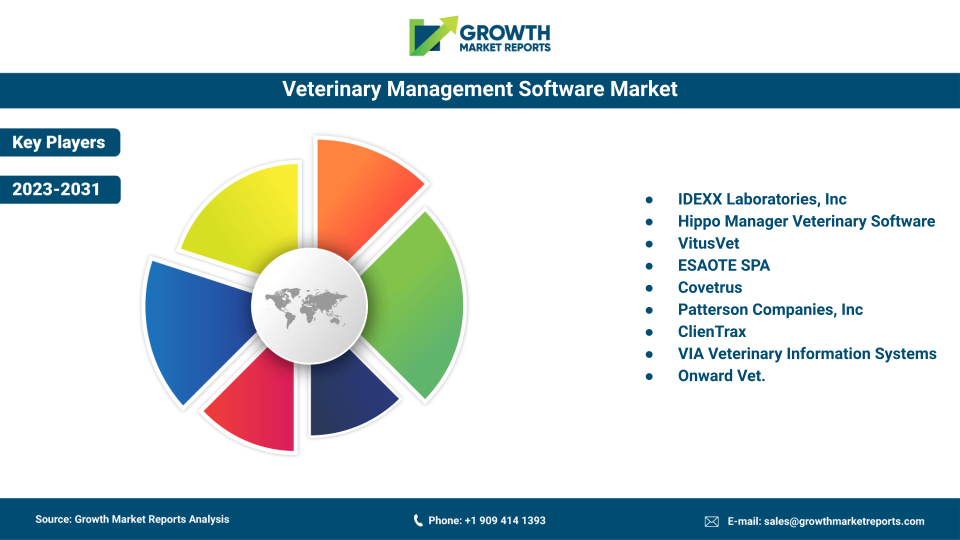
Major players in the market include IDEXX Laboratories, Inc., Hippo Manager Veterinary Software, VitusVet, ESAOTE SPA, Covetrus, Patterson Companies, Inc., ClienTrax, VIA Veterinary Information Systems., and Onward Vet.

Some of these players are using several market strategies such as acquisitions, merger, collaborations, partnerships, capacity expansion, and product launches to enhance their market shares and to generate revenue and raise their production line of the business in the coming years.

Veterinary Management Software Market Key Players

Frequently Asked Questions

Future trends include increased integration of artificial intelligence, data analytics, and telemedicine. There are significant opportunities in emerging markets, as well as in developing specialized solutions for livestock management, public health monitoring, and regulatory compliance.

Key players include IDEXX Laboratories, Henry Schein, Covetrus, Patterson Companies, Vetter Software, ezyVet, Hippo Manager, Animal Intelligence Software, Carestream Health, and several others. These companies offer a range of solutions catering to different practice sizes and needs.

Challenges include resistance to technology adoption among some veterinarians, concerns about data security, the complexity of implementation, cost considerations, and lack of standardization/interoperability between different software systems.

Growth is driven by the need for efficient practice management, rising pet and livestock ownership, increased animal healthcare spending, the adoption of cloud-based solutions, and the integration of advanced technologies like AI and telemedicine.

Major end users include veterinary hospitals and clinics, reference laboratories, mobile veterinary services, animal shelters, and academic institutions. Hospitals and clinics represent the largest segment, requiring comprehensive solutions for managing high patient volumes and complex workflows.

North America currently dominates the market, followed by Europe and the Asia Pacific region. North America benefits from high pet ownership and advanced digital infrastructure, while Asia Pacific is experiencing rapid growth due to increased investments in animal healthcare and digitalization.

Key features include appointment scheduling, billing and invoicing, electronic health records (EHRs), inventory management, telemedicine integration, automated reminders, and reporting/analytics. These functionalities help optimize daily operations, improve patient care, and enhance client satisfaction.

The two main types are on-premises and cloud-based veterinary management software. On-premises solutions offer greater control and data security, while cloud-based solutions provide scalability, remote access, lower upfront costs, and automatic updates. Hybrid models that combine both are also gaining popularity.

The global veterinary management software market reached USD 1.21 billion in 2024 and is projected to grow at a CAGR of 8.5%, reaching USD 2.41 billion by 2033. This growth is driven by increased digitalization, rising pet ownership, and higher animal healthcare expenditure.

Veterinary management software is a digital solution designed to streamline the operations of veterinary clinics, hospitals, and related services. It helps with appointment scheduling, billing, electronic health records, inventory management, and more. Its importance lies in improving operational efficiency, reducing administrative burdens, enhancing client communication, and ensuring compliance with regulatory standards.

Table Of Content

Chapter 1 Executive Summary
Chapter 2 Assumptions and Acronyms Used
Chapter 3 Research Methodology
Chapter 4 Veterinary Management Software Market Overview
   4.1 Introduction
      4.1.1 Market Taxonomy
      4.1.2 Market Definition
      4.1.3 Macro-Economic Factors Impacting the Market Growth
   4.2 Veterinary Management Software Market Dynamics
      4.2.1 Market Drivers
      4.2.2 Market Restraints
      4.2.3 Market Opportunity
   4.3 Veterinary Management Software Market - Supply Chain Analysis
      4.3.1 List of Key Suppliers
      4.3.2 List of Key Distributors
      4.3.3 List of Key Consumers
   4.4 Key Forces Shaping the Veterinary Management Software Market
      4.4.1 Bargaining Power of Suppliers
      4.4.2 Bargaining Power of Buyers
      4.4.3 Threat of Substitution
      4.4.4 Threat of New Entrants
      4.4.5 Competitive Rivalry
   4.5 Global Veterinary Management Software Market Size & Forecast, 2023-2032
      4.5.1 Veterinary Management Software Market Size and Y-o-Y Growth
      4.5.2 Veterinary Management Software Market Absolute $ Opportunity

Chapter 5 Global Veterinary Management Software Market Analysis and Forecast By Product Type
   5.1 Introduction
      5.1.1 Key Market Trends & Growth Opportunities By Product Type
      5.1.2 Basis Point Share (BPS) Analysis By Product Type
      5.1.3 Absolute $ Opportunity Assessment By Product Type
   5.2 Veterinary Management Software Market Size Forecast By Product Type
      5.2.1 On-Premises
      5.2.2 Cloud-Based
   5.3 Market Attractiveness Analysis By Product Type

Chapter 6 Global Veterinary Management Software Market Analysis and Forecast By Application
   6.1 Introduction
      6.1.1 Key Market Trends & Growth Opportunities By Application
      6.1.2 Basis Point Share (BPS) Analysis By Application
      6.1.3 Absolute $ Opportunity Assessment By Application
   6.2 Veterinary Management Software Market Size Forecast By Application
      6.2.1 Appointment Scheduling
      6.2.2 Billing & Invoicing
      6.2.3 Electronic Health Records
      6.2.4 Inventory Management
      6.2.5 Others
   6.3 Market Attractiveness Analysis By Application

Chapter 7 Global Veterinary Management Software Market Analysis and Forecast By End User
   7.1 Introduction
      7.1.1 Key Market Trends & Growth Opportunities By End User
      7.1.2 Basis Point Share (BPS) Analysis By End User
      7.1.3 Absolute $ Opportunity Assessment By End User
   7.2 Veterinary Management Software Market Size Forecast By End User
      7.2.1 Hospitals & Clinics
      7.2.2 Reference Laboratories
      7.2.3 Others
   7.3 Market Attractiveness Analysis By End User

Chapter 8 Global Veterinary Management Software Market Analysis and Forecast By Practice Type
   8.1 Introduction
      8.1.1 Key Market Trends & Growth Opportunities By Practice Type
      8.1.2 Basis Point Share (BPS) Analysis By Practice Type
      8.1.3 Absolute $ Opportunity Assessment By Practice Type
   8.2 Veterinary Management Software Market Size Forecast By Practice Type
      8.2.1 Small Animals
      8.2.2 Mixed Animals
      8.2.3 Equine
      8.2.4 Others
   8.3 Market Attractiveness Analysis By Practice Type

Chapter 9 Global Veterinary Management Software Market Analysis and Forecast by Region
   9.1 Introduction
      9.1.1 Key Market Trends & Growth Opportunities By Region
      9.1.2 Basis Point Share (BPS) Analysis By Region
      9.1.3 Absolute $ Opportunity Assessment By Region
   9.2 Veterinary Management Software Market Size Forecast By Region
      9.2.1 North America
      9.2.2 Europe
      9.2.3 Asia Pacific
      9.2.4 Latin America
      9.2.5 Middle East & Africa (MEA)
   9.3 Market Attractiveness Analysis By Region

Chapter 10 Coronavirus Disease (COVID-19) Impact 
   10.1 Introduction 
   10.2 Current & Future Impact Analysis 
   10.3 Economic Impact Analysis 
   10.4 Government Policies 
   10.5 Investment Scenario

Chapter 11 North America Veterinary Management Software Analysis and Forecast
   11.1 Introduction
   11.2 North America Veterinary Management Software Market Size Forecast by Country
      11.2.1 U.S.
      11.2.2 Canada
   11.3 Basis Point Share (BPS) Analysis by Country
   11.4 Absolute $ Opportunity Assessment by Country
   11.5 Market Attractiveness Analysis by Country
   11.6 North America Veterinary Management Software Market Size Forecast By Product Type
      11.6.1 On-Premises
      11.6.2 Cloud-Based
   11.7 Basis Point Share (BPS) Analysis By Product Type 
   11.8 Absolute $ Opportunity Assessment By Product Type 
   11.9 Market Attractiveness Analysis By Product Type
   11.10 North America Veterinary Management Software Market Size Forecast By Application
      11.10.1 Appointment Scheduling
      11.10.2 Billing & Invoicing
      11.10.3 Electronic Health Records
      11.10.4 Inventory Management
      11.10.5 Others
   11.11 Basis Point Share (BPS) Analysis By Application 
   11.12 Absolute $ Opportunity Assessment By Application 
   11.13 Market Attractiveness Analysis By Application
   11.14 North America Veterinary Management Software Market Size Forecast By End User
      11.14.1 Hospitals & Clinics
      11.14.2 Reference Laboratories
      11.14.3 Others
   11.15 Basis Point Share (BPS) Analysis By End User 
   11.16 Absolute $ Opportunity Assessment By End User 
   11.17 Market Attractiveness Analysis By End User
   11.18 North America Veterinary Management Software Market Size Forecast By Practice Type
      11.18.1 Small Animals
      11.18.2 Mixed Animals
      11.18.3 Equine
      11.18.4 Others
   11.19 Basis Point Share (BPS) Analysis By Practice Type 
   11.20 Absolute $ Opportunity Assessment By Practice Type 
   11.21 Market Attractiveness Analysis By Practice Type

Chapter 12 Europe Veterinary Management Software Analysis and Forecast
   12.1 Introduction
   12.2 Europe Veterinary Management Software Market Size Forecast by Country
      12.2.1 Germany
      12.2.2 France
      12.2.3 Italy
      12.2.4 U.K.
      12.2.5 Spain
      12.2.6 Russia
      12.2.7 Rest of Europe
   12.3 Basis Point Share (BPS) Analysis by Country
   12.4 Absolute $ Opportunity Assessment by Country
   12.5 Market Attractiveness Analysis by Country
   12.6 Europe Veterinary Management Software Market Size Forecast By Product Type
      12.6.1 On-Premises
      12.6.2 Cloud-Based
   12.7 Basis Point Share (BPS) Analysis By Product Type 
   12.8 Absolute $ Opportunity Assessment By Product Type 
   12.9 Market Attractiveness Analysis By Product Type
   12.10 Europe Veterinary Management Software Market Size Forecast By Application
      12.10.1 Appointment Scheduling
      12.10.2 Billing & Invoicing
      12.10.3 Electronic Health Records
      12.10.4 Inventory Management
      12.10.5 Others
   12.11 Basis Point Share (BPS) Analysis By Application 
   12.12 Absolute $ Opportunity Assessment By Application 
   12.13 Market Attractiveness Analysis By Application
   12.14 Europe Veterinary Management Software Market Size Forecast By End User
      12.14.1 Hospitals & Clinics
      12.14.2 Reference Laboratories
      12.14.3 Others
   12.15 Basis Point Share (BPS) Analysis By End User 
   12.16 Absolute $ Opportunity Assessment By End User 
   12.17 Market Attractiveness Analysis By End User
   12.18 Europe Veterinary Management Software Market Size Forecast By Practice Type
      12.18.1 Small Animals
      12.18.2 Mixed Animals
      12.18.3 Equine
      12.18.4 Others
   12.19 Basis Point Share (BPS) Analysis By Practice Type 
   12.20 Absolute $ Opportunity Assessment By Practice Type 
   12.21 Market Attractiveness Analysis By Practice Type

Chapter 13 Asia Pacific Veterinary Management Software Analysis and Forecast
   13.1 Introduction
   13.2 Asia Pacific Veterinary Management Software Market Size Forecast by Country
      13.2.1 China
      13.2.2 Japan
      13.2.3 South Korea
      13.2.4 India
      13.2.5 Australia
      13.2.6 South East Asia (SEA)
      13.2.7 Rest of Asia Pacific (APAC)
   13.3 Basis Point Share (BPS) Analysis by Country
   13.4 Absolute $ Opportunity Assessment by Country
   13.5 Market Attractiveness Analysis by Country
   13.6 Asia Pacific Veterinary Management Software Market Size Forecast By Product Type
      13.6.1 On-Premises
      13.6.2 Cloud-Based
   13.7 Basis Point Share (BPS) Analysis By Product Type 
   13.8 Absolute $ Opportunity Assessment By Product Type 
   13.9 Market Attractiveness Analysis By Product Type
   13.10 Asia Pacific Veterinary Management Software Market Size Forecast By Application
      13.10.1 Appointment Scheduling
      13.10.2 Billing & Invoicing
      13.10.3 Electronic Health Records
      13.10.4 Inventory Management
      13.10.5 Others
   13.11 Basis Point Share (BPS) Analysis By Application 
   13.12 Absolute $ Opportunity Assessment By Application 
   13.13 Market Attractiveness Analysis By Application
   13.14 Asia Pacific Veterinary Management Software Market Size Forecast By End User
      13.14.1 Hospitals & Clinics
      13.14.2 Reference Laboratories
      13.14.3 Others
   13.15 Basis Point Share (BPS) Analysis By End User 
   13.16 Absolute $ Opportunity Assessment By End User 
   13.17 Market Attractiveness Analysis By End User
   13.18 Asia Pacific Veterinary Management Software Market Size Forecast By Practice Type
      13.18.1 Small Animals
      13.18.2 Mixed Animals
      13.18.3 Equine
      13.18.4 Others
   13.19 Basis Point Share (BPS) Analysis By Practice Type 
   13.20 Absolute $ Opportunity Assessment By Practice Type 
   13.21 Market Attractiveness Analysis By Practice Type

Chapter 14 Latin America Veterinary Management Software Analysis and Forecast
   14.1 Introduction
   14.2 Latin America Veterinary Management Software Market Size Forecast by Country
      14.2.1 Brazil
      14.2.2 Mexico
      14.2.3 Rest of Latin America (LATAM)
   14.3 Basis Point Share (BPS) Analysis by Country
   14.4 Absolute $ Opportunity Assessment by Country
   14.5 Market Attractiveness Analysis by Country
   14.6 Latin America Veterinary Management Software Market Size Forecast By Product Type
      14.6.1 On-Premises
      14.6.2 Cloud-Based
   14.7 Basis Point Share (BPS) Analysis By Product Type 
   14.8 Absolute $ Opportunity Assessment By Product Type 
   14.9 Market Attractiveness Analysis By Product Type
   14.10 Latin America Veterinary Management Software Market Size Forecast By Application
      14.10.1 Appointment Scheduling
      14.10.2 Billing & Invoicing
      14.10.3 Electronic Health Records
      14.10.4 Inventory Management
      14.10.5 Others
   14.11 Basis Point Share (BPS) Analysis By Application 
   14.12 Absolute $ Opportunity Assessment By Application 
   14.13 Market Attractiveness Analysis By Application
   14.14 Latin America Veterinary Management Software Market Size Forecast By End User
      14.14.1 Hospitals & Clinics
      14.14.2 Reference Laboratories
      14.14.3 Others
   14.15 Basis Point Share (BPS) Analysis By End User 
   14.16 Absolute $ Opportunity Assessment By End User 
   14.17 Market Attractiveness Analysis By End User
   14.18 Latin America Veterinary Management Software Market Size Forecast By Practice Type
      14.18.1 Small Animals
      14.18.2 Mixed Animals
      14.18.3 Equine
      14.18.4 Others
   14.19 Basis Point Share (BPS) Analysis By Practice Type 
   14.20 Absolute $ Opportunity Assessment By Practice Type 
   14.21 Market Attractiveness Analysis By Practice Type

Chapter 15 Middle East & Africa (MEA) Veterinary Management Software Analysis and Forecast
   15.1 Introduction
   15.2 Middle East & Africa (MEA) Veterinary Management Software Market Size Forecast by Country
      15.2.1 Saudi Arabia
      15.2.2 South Africa
      15.2.3 UAE
      15.2.4 Rest of Middle East & Africa (MEA)
   15.3 Basis Point Share (BPS) Analysis by Country
   15.4 Absolute $ Opportunity Assessment by Country
   15.5 Market Attractiveness Analysis by Country
   15.6 Middle East & Africa (MEA) Veterinary Management Software Market Size Forecast By Product Type
      15.6.1 On-Premises
      15.6.2 Cloud-Based
   15.7 Basis Point Share (BPS) Analysis By Product Type 
   15.8 Absolute $ Opportunity Assessment By Product Type 
   15.9 Market Attractiveness Analysis By Product Type
   15.10 Middle East & Africa (MEA) Veterinary Management Software Market Size Forecast By Application
      15.10.1 Appointment Scheduling
      15.10.2 Billing & Invoicing
      15.10.3 Electronic Health Records
      15.10.4 Inventory Management
      15.10.5 Others
   15.11 Basis Point Share (BPS) Analysis By Application 
   15.12 Absolute $ Opportunity Assessment By Application 
   15.13 Market Attractiveness Analysis By Application
   15.14 Middle East & Africa (MEA) Veterinary Management Software Market Size Forecast By End User
      15.14.1 Hospitals & Clinics
      15.14.2 Reference Laboratories
      15.14.3 Others
   15.15 Basis Point Share (BPS) Analysis By End User 
   15.16 Absolute $ Opportunity Assessment By End User 
   15.17 Market Attractiveness Analysis By End User
   15.18 Middle East & Africa (MEA) Veterinary Management Software Market Size Forecast By Practice Type
      15.18.1 Small Animals
      15.18.2 Mixed Animals
      15.18.3 Equine
      15.18.4 Others
   15.19 Basis Point Share (BPS) Analysis By Practice Type 
   15.20 Absolute $ Opportunity Assessment By Practice Type 
   15.21 Market Attractiveness Analysis By Practice Type

Chapter 16 Competition Landscape 
   16.1 Veterinary Management Software Market: Competitive Dashboard
   16.2 Global Veterinary Management Software Market: Market Share Analysis, 2023
   16.3 Company Profiles (Details – Overview, Financials, Developments, Strategy) 
      16.3.1 IDEXX Laboratories, Inc.
Henry Schein, Inc.
Covetrus, Inc.
Patterson Companies, Inc.
Vetter Software, Inc.
ezyVet Limited
Hippo Manager Software, Inc.
Animal Intelligence Software, Inc.
Carestream Health
Timeless Veterinary Systems Inc.
ClienTrax (CompuGroup Medical)
DaySmart Vet (formerly Vetter Software)
NaVetor (Patterson Veterinary)
Provet Cloud (Nordhealth)
Shepherd Veterinary Software
Vetspire
VETport
InstaVet
Digitail
OpenVPMS

Methodology

Our Clients

General Mills
FedEx Logistics
General Electric
Deloitte
sinopec
The John Holland Group
Nestle SA
Dassault Aviation