Subsea Artificial Lift Systems Market Research Report 2033

Subsea Artificial Lift Systems Market Research Report 2033

Segments - by Type (Electrical Submersible Pumps, Gas Lift, Hydraulic Pumps, Progressive Cavity Pumps, Others), by Application (Deepwater, Ultra-Deepwater, Shallow Water), by Component (Pump, Motor, Separator, Variable Speed Drive, Others), by End-User (Oil & Gas, Offshore Exploration, Others)

https://growthmarketreports.com/Raksha
Author : Raksha Sharma
https://growthmarketreports.com/Vaibhav
Fact-checked by : V. Chandola
https://growthmarketreports.com/Shruti
Editor : Shruti Bhat

Upcoming | Report ID :EP-808 | 4.1 Rating | 89 Reviews | 270 Pages | Format : Docx PDF

Report Description


Subsea Artificial Lift Systems Market Outlook

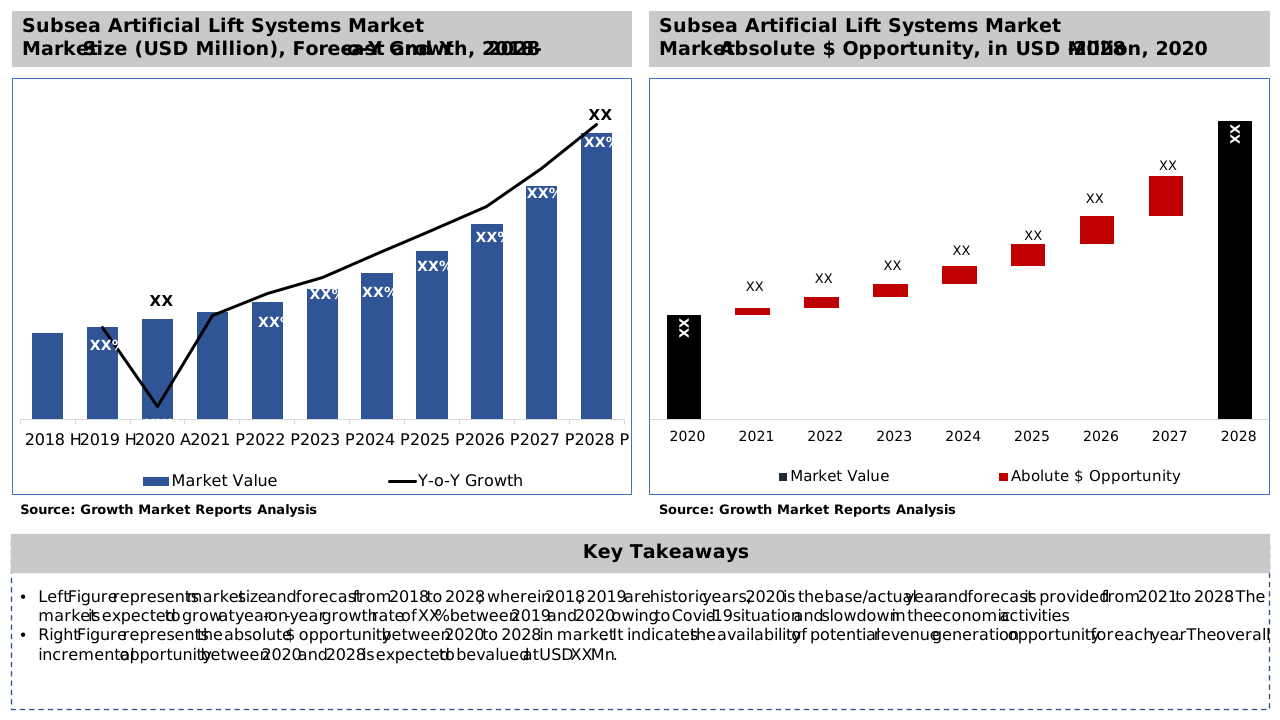
According to our latest research, the global Subsea Artificial Lift Systems market size in 2024 stands at USD 4.1 billion, registering a robust growth trajectory. The market is expected to expand at a CAGR of 7.2% from 2025 to 2033, reaching an estimated USD 7.7 billion by 2033. This growth is primarily driven by increasing offshore oil and gas exploration activities, technological advancements in subsea production systems, and the pressing need for enhanced oil recovery from mature subsea wells. The rising global energy demand and the shift towards exploiting deeper and more challenging offshore reserves are further fueling the adoption of advanced artificial lift solutions.

One of the most significant growth factors for the Subsea Artificial Lift Systems market is the continual depletion of easily accessible onshore oil reserves, which has compelled oil and gas companies to invest in offshore and deepwater fields. These subsea environments present unique production challenges, such as high pressure, low temperatures, and complex fluid dynamics, necessitating the deployment of sophisticated artificial lift technologies. The integration of digital monitoring, real-time data analytics, and automation within these systems is also enhancing operational efficiency, reducing downtime, and enabling predictive maintenance, thereby contributing to market expansion. Furthermore, the increasing focus on maximizing production from existing subsea wells and extending their operational life has made artificial lift systems an indispensable component in offshore field development strategies.

Technological innovation remains at the forefront of the marketÂ’s growth. The development of more reliable and energy-efficient artificial lift systems, such as next-generation electrical submersible pumps (ESPs) capable of withstanding harsh subsea conditions, is transforming the landscape. Companies are investing in research and development to produce systems that minimize intervention requirements and optimize recovery rates. The integration of subsea processing equipment, such as separators and variable speed drives, is further enhancing the flexibility and adaptability of artificial lift solutions. These advancements are not only improving system performance but also reducing operational costs and environmental impact, making subsea artificial lift systems more attractive to operators worldwide.

Another critical driver is the supportive policy environment and government initiatives aimed at boosting offshore oil and gas production. Several countries, particularly in regions like North America, the Middle East, and Asia Pacific, are implementing favorable regulatory frameworks, offering incentives, and investing in subsea infrastructure development. These measures are encouraging both international oil companies (IOCs) and national oil companies (NOCs) to accelerate their offshore exploration and production activities. The collaboration between equipment manufacturers, service providers, and oil operators is also fostering innovation and ensuring the deployment of tailored artificial lift solutions that address specific field requirements.

The role of the Subsea Pump in enhancing offshore oil recovery cannot be overstated. These pumps are crucial in managing the complex fluid dynamics encountered in subsea environments, where traditional pumping solutions often fall short. Subsea Pumps are designed to operate under extreme conditions, including high pressures and low temperatures, making them indispensable for efficient fluid transportation from the seabed to processing facilities. Their ability to handle multiphase flows, including mixtures of oil, gas, and water, significantly boosts production efficiency and reduces the need for costly surface processing equipment. As offshore exploration moves into deeper and more challenging waters, the demand for robust and reliable Subsea Pumps is expected to grow, driving further innovation and development in this critical technology.

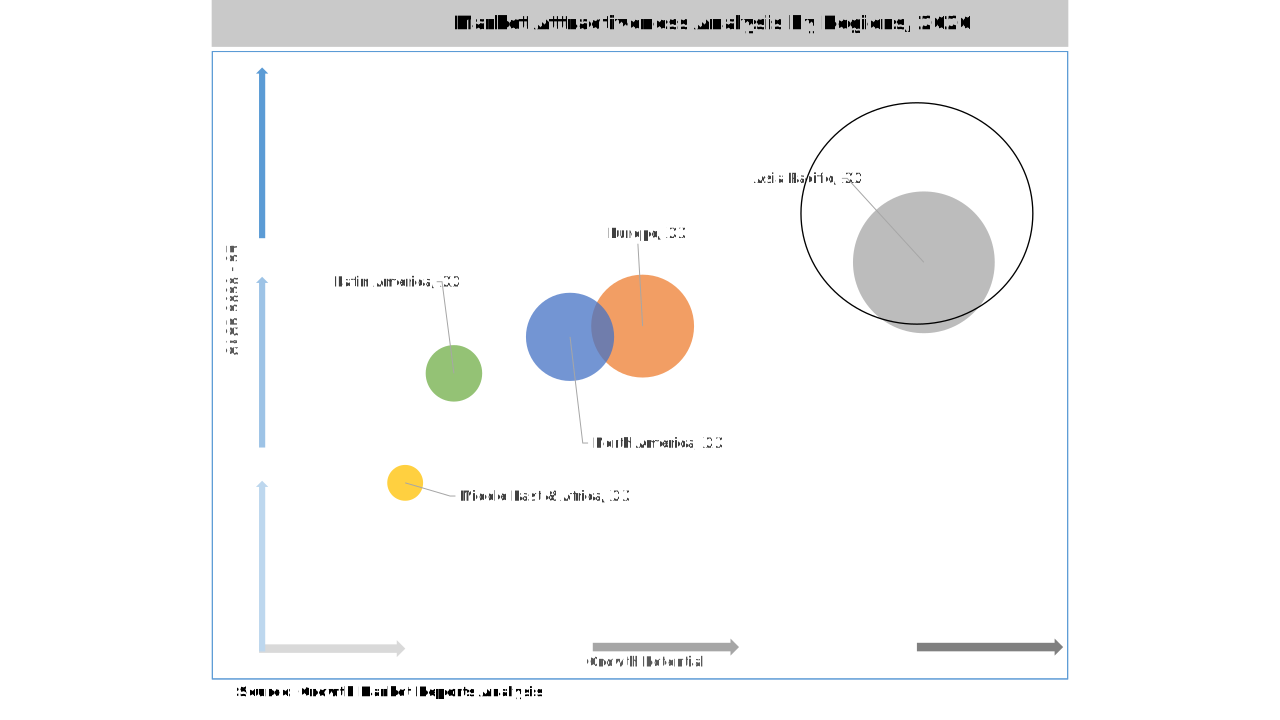
From a regional perspective, North America remains the largest market for Subsea Artificial Lift Systems, owing to its well-established offshore oil and gas sector, particularly in the Gulf of Mexico. Europe follows closely, driven by significant investments in the North Sea and Norwegian Continental Shelf. The Asia Pacific region is witnessing the fastest growth, propelled by increasing exploration activities in countries like Australia, Malaysia, and China. Meanwhile, Latin America and the Middle East & Africa are emerging as promising markets due to vast untapped offshore reserves and rising E&P investments. Each region presents unique opportunities and challenges, shaping the overall dynamics of the global subsea artificial lift systems market.

Global Subsea Artificial Lift Systems Industry Outlook

Type Analysis

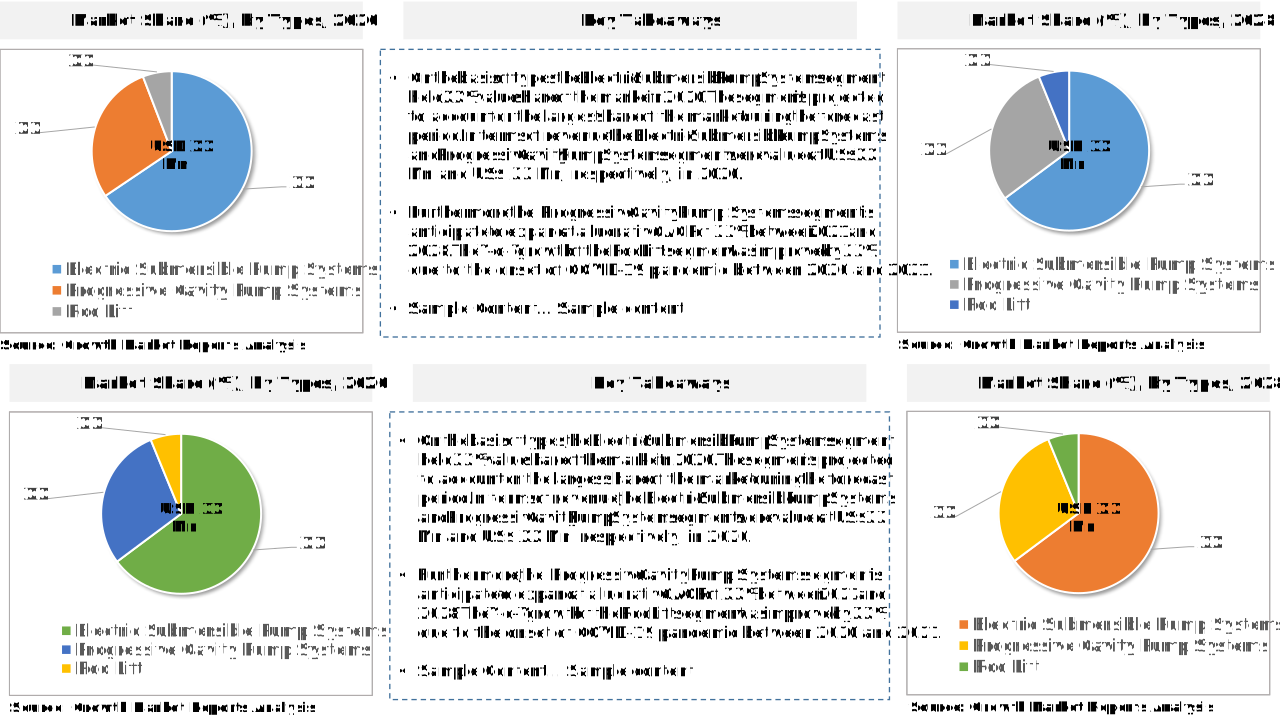
The Type segment in the Subsea Artificial Lift Systems market encompasses a range of technologies, each designed to address specific operational challenges associated with offshore oil and gas production. Electrical Submersible Pumps (ESPs) dominate this segment due to their high efficiency, reliability, and ability to handle large volumes of fluid under extreme subsea conditions. ESPs are widely adopted in deepwater and ultra-deepwater projects, where maintaining consistent production rates is critical. The ongoing development of high-pressure, high-temperature (HPHT) ESPs is further expanding their application scope, enabling operators to tap into more challenging reservoirs. Additionally, the integration of real-time monitoring and automated control systems is enhancing the performance and longevity of ESPs, making them a preferred choice for many offshore operators.

Gas Lift technology represents another significant type within this market, particularly suited for wells with variable production rates or those producing high gas-to-liquid ratios. Gas lift systems are valued for their flexibility, ease of installation, and ability to operate in wells with sand, scale, or other production challenges. They are commonly used in mature fields where reservoir pressure has declined, as well as in new developments requiring rapid deployment. Recent advancements in gas lift valve design and control systems are improving their efficiency and adaptability, allowing operators to optimize lift performance and minimize operational costs. The growing adoption of digital twin technology in gas lift operations is also contributing to enhanced system optimization and predictive maintenance.

Hydraulic Pumps are gaining traction in subsea applications where traditional ESPs or gas lift systems may not be suitable. These pumps are particularly effective in wells with high-viscosity fluids or where precise flow control is required. Hydraulic lift systems offer the advantage of remote operation and can be easily integrated with subsea processing equipment. Innovations in pump design, materials, and control systems are making hydraulic pumps more robust and reliable, capable of withstanding the harsh subsea environment. Their ability to deliver consistent performance over extended operational lifespans is making them increasingly popular in complex offshore projects.

Progressive Cavity Pumps (PCPs) and other specialized artificial lift solutions are also carving out a niche within the subsea market. PCPs are particularly effective in handling heavy oil, sand-laden fluids, and multiphase flows, making them suitable for unconventional offshore reservoirs. The development of subsea-compatible PCPs with improved sealing and corrosion resistance is expanding their application in challenging environments. Other types, such as jet pumps and plunger lifts, are being deployed in specific scenarios where conventional systems may not deliver optimal results. The diversity of artificial lift technologies within this segment underscores the importance of selecting the right solution based on reservoir characteristics, production targets, and operational constraints.

Report Scope

Attributes Details
Report Title Subsea Artificial Lift Systems Market Research Report 2033
By Type Electrical Submersible Pumps, Gas Lift, Hydraulic Pumps, Progressive Cavity Pumps, Others
By Application Deepwater, Ultra-Deepwater, Shallow Water
By Component Pump, Motor, Separator, Variable Speed Drive, Others
By End-User Oil & Gas, Offshore Exploration, Others
Regions Covered North America, Europe, APAC, Latin America, MEA
Base Year 2024
Historic Data 2018-2023
Forecast Period 2025-2033
Number of Pages 270
Number of Tables & Figures 307
Customization Available Yes, the report can be customized as per your need.

Application Analysis

The Application segment of the Subsea Artificial Lift Systems market is categorized into Deepwater, Ultra-Deepwater, and Shallow Water operations, each presenting unique technical and economic challenges. Deepwater projects, typically defined as operations at depths between 500 and 1,500 meters, constitute a significant share of the market. The increasing number of deepwater discoveries, particularly in the Gulf of Mexico, Brazil, and West Africa, is driving the demand for advanced artificial lift systems capable of operating reliably under high-pressure and low-temperature conditions. These systems are essential for maximizing recovery rates, maintaining production efficiency, and ensuring the economic viability of deepwater developments.

Ultra-deepwater operations, which take place at depths exceeding 1,500 meters, represent the fastest-growing application segment within the market. The technical complexity and high costs associated with ultra-deepwater projects necessitate the use of highly specialized artificial lift systems. These systems must be capable of withstanding extreme subsea conditions, including high hydrostatic pressures, corrosive environments, and challenging fluid compositions. The deployment of robust ESPs, gas lift systems, and hydraulic pumps in ultra-deepwater fields is enabling operators to unlock previously inaccessible reserves and extend the productive life of existing assets. Ongoing advancements in subsea processing and digital monitoring technologies are further enhancing the performance and reliability of artificial lift solutions in these demanding environments.

Subsea Pumps are at the forefront of technological advancements in the offshore oil and gas industry. These pumps are designed to operate efficiently in the harsh conditions of the subsea environment, where they face challenges such as high pressures, low temperatures, and corrosive fluids. The development of more energy-efficient and durable Subsea Pumps is transforming the landscape of subsea production, enabling operators to enhance recovery rates while minimizing environmental impact. By reducing the need for surface processing and transportation infrastructure, Subsea Pumps are helping to lower operational costs and improve the economic viability of offshore projects. As the industry continues to innovate, the capabilities of Subsea Pumps are expected to expand, offering even greater flexibility and adaptability in subsea operations.

Shallow water projects, defined as operations at depths of less than 500 meters, continue to play a vital role in the global offshore oil and gas industry. While these fields are generally less challenging from a technical perspective, they still require efficient artificial lift systems to maintain optimal production rates, particularly as reservoir pressure declines over time. The adoption of cost-effective and easily deployable lift solutions, such as gas lift and conventional ESPs, is common in shallow water applications. The relatively lower capital and operational expenditures associated with these projects make them attractive to both major and independent oil companies, especially in regions with established offshore infrastructure.

Overall, the application landscape for subsea artificial lift systems is evolving in response to shifting industry dynamics, technological advancements, and changing regulatory requirements. Operators are increasingly adopting a holistic approach to field development, integrating artificial lift systems with subsea processing, flow assurance, and digital monitoring solutions. This integrated approach is enabling them to optimize production, reduce operational risks, and enhance the economic viability of offshore projects across all water depths.

Component Analysis

The Component segment of the Subsea Artificial Lift Systems market includes Pumps, Motors, Separators, Variable Speed Drives (VSDs), and Others, each playing a crucial role in the overall performance and reliability of artificial lift solutions. Pumps, as the core component, are responsible for lifting fluids from the wellbore to the surface or processing facilities. Advances in pump design, materials, and manufacturing processes are enabling the development of more robust and efficient pumps capable of operating under extreme subsea conditions. The integration of advanced sealing technologies and corrosion-resistant materials is further enhancing pump reliability and lifespan, reducing the need for costly interventions.

Motors are another critical component, providing the necessary power to drive the pumps. The development of high-efficiency, subsea-rated electric motors is enabling operators to achieve higher lift capacities while minimizing energy consumption. Innovations in motor cooling, insulation, and control systems are improving operational efficiency and reducing the risk of failures. The adoption of permanent magnet motors and other advanced technologies is further enhancing motor performance, particularly in deepwater and ultra-deepwater applications where reliability is paramount.

Separators play a vital role in subsea artificial lift systems by enabling the separation of oil, gas, and water at the seabed, thereby reducing the volume of fluids that need to be lifted to the surface. The deployment of compact, high-efficiency separators is helping operators optimize production, reduce energy consumption, and minimize the environmental impact of offshore operations. The integration of real-time monitoring and automated control systems is further enhancing separator performance, enabling operators to respond quickly to changing field conditions and optimize system operation.

Variable Speed Drives (VSDs) are essential for providing precise control over pump and motor operation, allowing operators to adjust lift capacity in response to changing reservoir and production conditions. The adoption of advanced VSDs with digital control capabilities is enabling operators to optimize system performance, reduce energy consumption, and extend equipment lifespan. The integration of VSDs with real-time monitoring and predictive maintenance systems is further enhancing operational efficiency and reliability, making them a critical component of modern subsea artificial lift solutions.

Other components, such as control systems, sensors, and communication modules, are also playing an increasingly important role in the performance and reliability of subsea artificial lift systems. The integration of these components with digital monitoring and automation platforms is enabling operators to achieve higher levels of operational efficiency, reduce downtime, and minimize the risk of equipment failures. The ongoing development of more robust and reliable components is expected to drive further growth in this segment, enabling operators to tackle increasingly challenging offshore production environments.

End-User Analysis

The End-User segment of the Subsea Artificial Lift Systems market is primarily divided into Oil & Gas Companies, Offshore Exploration Firms, and Others, each with distinct operational requirements and investment priorities. Oil and gas companies, including both international majors and national oil companies (NOCs), represent the largest end-user group. These organizations are focused on maximizing production from existing offshore assets, extending field life, and optimizing recovery rates. The adoption of advanced artificial lift systems is enabling them to achieve these objectives while minimizing operational risks and costs. The increasing complexity of offshore projects, particularly in deepwater and ultra-deepwater environments, is driving demand for highly reliable and efficient artificial lift solutions tailored to specific field conditions.

Offshore exploration firms, including independent operators and specialized service providers, are also significant end-users of subsea artificial lift systems. These companies are often involved in the early stages of field development, where rapid deployment and flexible lift solutions are critical to project success. The ability to quickly adapt artificial lift systems to changing reservoir and production conditions is a key requirement for these end-users. The adoption of modular, easily deployable lift solutions is enabling exploration firms to accelerate project timelines, reduce capital expenditures, and minimize operational risks.

Other end-users, such as engineering, procurement, and construction (EPC) contractors, integrated service providers, and technology developers, play a vital role in the subsea artificial lift systems market. These organizations are often responsible for the design, installation, and maintenance of artificial lift systems, working closely with oil and gas operators to deliver tailored solutions that meet specific project requirements. The increasing trend towards integrated field development and the adoption of digital monitoring and automation technologies is enabling these end-users to deliver more efficient and reliable artificial lift solutions, enhancing overall project performance.

The evolving needs of end-users are driving innovation and collaboration across the subsea artificial lift systems value chain. Equipment manufacturers, service providers, and operators are working together to develop and deploy next-generation lift solutions that address the unique challenges of offshore oil and gas production. The integration of artificial intelligence, machine learning, and predictive analytics is enabling end-users to optimize system performance, reduce downtime, and minimize operational costs, further enhancing the value proposition of subsea artificial lift systems.

Opportunities & Threats

The Subsea Artificial Lift Systems market presents a wealth of opportunities for stakeholders across the value chain. One of the most promising opportunities lies in the continued expansion of deepwater and ultra-deepwater oil and gas exploration and production activities. As conventional onshore reserves become increasingly depleted, operators are turning to more challenging offshore environments to meet global energy demand. The deployment of advanced artificial lift systems is essential for maximizing recovery rates, maintaining production efficiency, and ensuring the economic viability of these projects. The ongoing development of new offshore fields, particularly in regions such as the Gulf of Mexico, Brazil, West Africa, and Southeast Asia, is expected to drive significant demand for innovative artificial lift solutions over the forecast period.

Another key opportunity is the integration of digital technologies, automation, and data analytics within subsea artificial lift systems. The adoption of real-time monitoring, predictive maintenance, and remote operation capabilities is enabling operators to optimize system performance, reduce downtime, and minimize operational risks. The development of digital twins and advanced analytics platforms is further enhancing the ability of operators to model, simulate, and optimize artificial lift operations, leading to improved recovery rates and reduced operational costs. The increasing focus on sustainability and environmental stewardship is also creating opportunities for the development of more energy-efficient and environmentally friendly artificial lift solutions, aligning with the broader industry shift towards cleaner and more sustainable energy production.

Despite these opportunities, the market faces several restraining factors that could impact growth. One of the primary challenges is the high capital and operational costs associated with the deployment and maintenance of subsea artificial lift systems. The technical complexity of offshore projects, coupled with the harsh and unpredictable subsea environment, can lead to increased risk of equipment failures, costly interventions, and extended downtime. Regulatory and environmental concerns, particularly related to offshore drilling and production activities, are also posing challenges for market participants. The need for continuous innovation, stringent quality standards, and robust risk management practices is essential for overcoming these challenges and ensuring the long-term sustainability of the market.

Regional Outlook

North America remains the largest regional market for Subsea Artificial Lift Systems, with a market size of USD 1.4 billion in 2024. This dominance is primarily attributed to the extensive offshore oil and gas operations in the Gulf of Mexico, where deepwater and ultra-deepwater projects are driving significant demand for advanced artificial lift solutions. The region benefits from a well-developed offshore infrastructure, a strong presence of major oil and gas companies, and a favorable regulatory environment that supports innovation and investment in subsea technologies. The adoption of digital monitoring, automation, and predictive maintenance solutions is further enhancing the performance and reliability of artificial lift systems in North America, positioning the region as a global leader in subsea production technology.

Europe is the second-largest market, with a market size of USD 1.1 billion in 2024, driven by significant investments in the North Sea and Norwegian Continental Shelf. The region is characterized by a high level of technological innovation, a strong focus on sustainability, and a collaborative approach to offshore field development. The adoption of advanced artificial lift systems, coupled with the integration of digital monitoring and automation technologies, is enabling operators to maximize recovery rates, extend field life, and minimize operational risks. Europe is projected to grow at a CAGR of 6.8% over the forecast period, supported by ongoing investments in new offshore projects and the redevelopment of mature fields.

The Asia Pacific region, with a market size of USD 0.8 billion in 2024, is witnessing the fastest growth in the global subsea artificial lift systems market. This rapid expansion is fueled by increasing exploration and production activities in countries such as Australia, Malaysia, Indonesia, and China. The region's vast offshore reserves, coupled with supportive government policies and growing investment in subsea infrastructure, are driving demand for advanced artificial lift solutions. The Middle East & Africa and Latin America, with market sizes of USD 0.5 billion and USD 0.3 billion respectively in 2024, are emerging as promising markets due to the presence of significant untapped offshore reserves and rising E&P investments. These regions are expected to experience steady growth over the forecast period, supported by ongoing field development and the adoption of innovative artificial lift technologies.

Subsea Artificial Lift Systems Market Statistics

Competitor Outlook

The Subsea Artificial Lift Systems market is characterized by intense competition, with a mix of established multinational corporations and specialized technology providers vying for market share. The competitive landscape is shaped by continuous innovation, strategic partnerships, and a strong focus on research and development. Major players are investing heavily in the development of next-generation artificial lift solutions that offer enhanced reliability, efficiency, and adaptability to meet the evolving needs of offshore oil and gas operators. The integration of digital technologies, automation, and data analytics is becoming a key differentiator, enabling companies to deliver more value-added services and maintain a competitive edge in the market.

Collaboration and strategic alliances are increasingly common in the subsea artificial lift systems market, as companies seek to leverage complementary strengths and expand their global footprint. Equipment manufacturers, service providers, and oil and gas operators are working together to develop and deploy tailored artificial lift solutions that address specific field requirements. The trend towards integrated field development and the adoption of digital monitoring and automation technologies is fostering greater collaboration across the value chain, enabling market participants to deliver more efficient and reliable solutions.

The market is also witnessing a growing emphasis on sustainability and environmental stewardship, with companies developing more energy-efficient and environmentally friendly artificial lift systems. The adoption of advanced materials, innovative design approaches, and digital monitoring capabilities is enabling companies to reduce the environmental impact of offshore operations while maintaining high levels of performance and reliability. The ability to deliver cost-effective, reliable, and sustainable artificial lift solutions is becoming increasingly important in securing long-term contracts and maintaining customer loyalty in a highly competitive market.

Some of the major companies operating in the global subsea artificial lift systems market include Baker Hughes Company, Schlumberger Limited, Halliburton Company, Weatherford International plc, NOV Inc., Aker Solutions ASA, TechnipFMC plc, and Oceaneering International, Inc. These companies are at the forefront of technological innovation, offering a comprehensive range of artificial lift solutions tailored to the needs of offshore oil and gas operators. Baker Hughes and Schlumberger, for example, are known for their extensive portfolio of ESPs, gas lift systems, and digital monitoring solutions, while Halliburton and Weatherford are recognized for their expertise in hydraulic and progressive cavity pump technologies.

Aker Solutions and TechnipFMC are leading providers of integrated subsea production systems, offering a wide range of artificial lift, separation, and processing solutions for deepwater and ultra-deepwater applications. NOV Inc. and Oceaneering International are also prominent players, specializing in the design and manufacture of advanced pumps, motors, and control systems for subsea applications. These companies are continuously investing in research and development, strategic partnerships, and digital transformation initiatives to maintain their competitive edge and address the evolving needs of the global offshore oil and gas industry.

Overall, the competitive landscape of the subsea artificial lift systems market is dynamic and evolving, shaped by technological innovation, strategic collaboration, and a relentless focus on delivering value to customers. The ability to offer reliable, efficient, and sustainable artificial lift solutions will be critical to success in this highly competitive and rapidly growing market.

Key Players

  • Baker Hughes
  • Schlumberger Limited
  • Halliburton Company
  • TechnipFMC plc
  • Weatherford International plc
  • Aker Solutions ASA
  • Oceaneering International, Inc.
  • National Oilwell Varco, Inc.
  • Siemens Energy AG
  • General Electric Company (GE Oil & Gas)
  • NOV Subsea Production Systems
  • OneSubsea (a Schlumberger company)
  • Sulzer Ltd
  • Leistritz Pumpen GmbH
  • Flowserve Corporation
  • SPX FLOW, Inc.
  • Forum Energy Technologies, Inc.
  • Cameron International Corporation
  • Sulzer Chemtech Ltd
  • ITT Bornemann GmbH
Subsea Artificial Lift Systems Market Overview

Segments

The Subsea Artificial Lift Systems market has been segmented on the basis of

Type

  • Electrical Submersible Pumps
  • Gas Lift
  • Hydraulic Pumps
  • Progressive Cavity Pumps
  • Others

Application

  • Deepwater
  • Ultra-Deepwater
  • Shallow Water

Component

  • Pump
  • Motor
  • Separator
  • Variable Speed Drive
  • Others

End-User

  • Oil & Gas
  • Offshore Exploration
  • Others

Competitive Landscape

Major players of the market are Baker Hughes, General Electric, Halliburton, National Oilwell Varco, Schlumberger, Weatherford, Borets, Dover Artificial Lift, Epic Lift Systems, Flotek Industries, JJ Tech, Lycon, Multi-Chase Group, NOVOMET, Superior Energy Services, Tenaris, and United Drilling Tools.
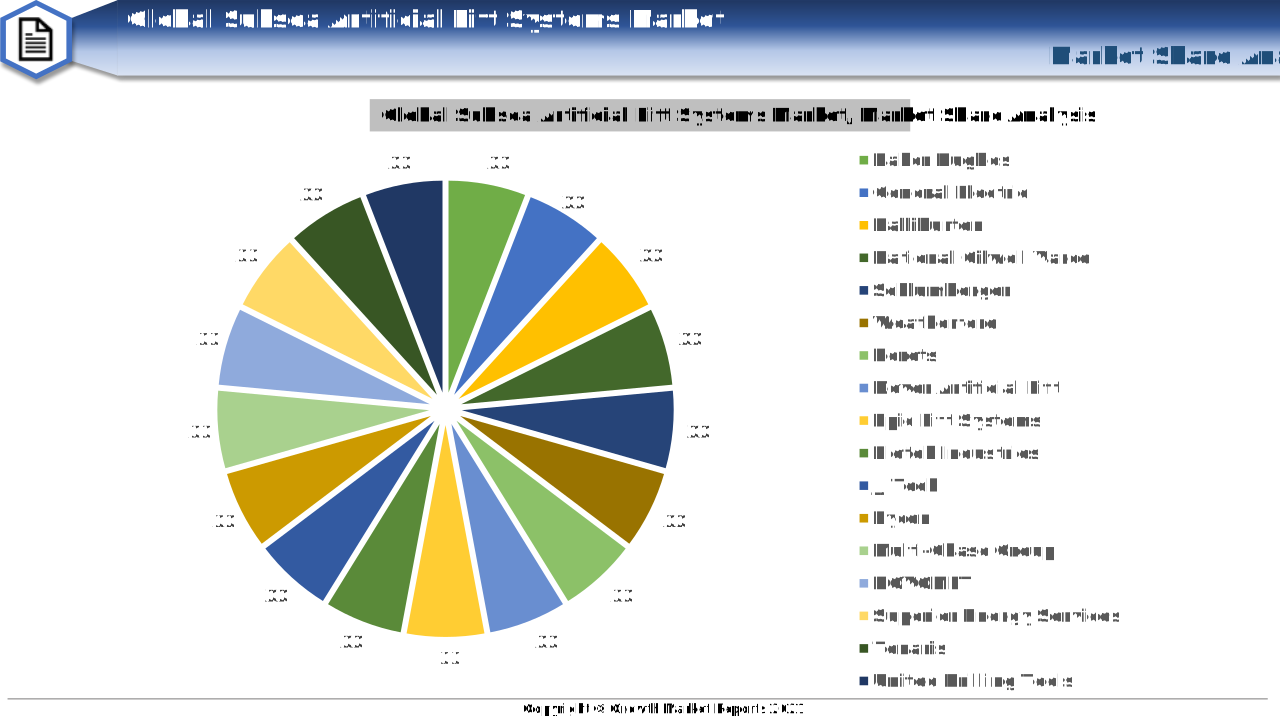

 Subsea Artificial Lift Systems Market By Key Players

Frequently Asked Questions

Digitalization is enabling real-time monitoring, predictive maintenance, remote operation, and advanced analytics, which optimize system performance, reduce downtime, and lower operational costs.

Key players include Baker Hughes, Schlumberger Limited, Halliburton Company, TechnipFMC plc, Weatherford International plc, Aker Solutions ASA, Oceaneering International, NOV Inc., Siemens Energy AG, and General Electric Company (GE Oil & Gas), among others.

Challenges include high capital and operational costs, technical complexity, harsh subsea environments, regulatory and environmental concerns, and the need for continuous innovation and risk management.

Advancements include the development of high-pressure, high-temperature ESPs, real-time digital monitoring, automation, predictive maintenance, digital twins, and the integration of subsea processing equipment like separators and variable speed drives.

Major end-users include oil and gas companies (both IOCs and NOCs), offshore exploration firms, EPC contractors, integrated service providers, and technology developers.

Subsea artificial lift systems are primarily used in deepwater, ultra-deepwater, and shallow water offshore oil and gas operations to maximize recovery rates and maintain production efficiency.

The main types include Electrical Submersible Pumps (ESPs), Gas Lift systems, Hydraulic Pumps, Progressive Cavity Pumps (PCPs), and other specialized solutions such as jet pumps and plunger lifts.

North America is the largest regional market, followed by Europe. The Asia Pacific region is experiencing the fastest growth, while Latin America and the Middle East & Africa are emerging as promising markets due to untapped offshore reserves.

Key growth drivers include increasing offshore oil and gas exploration, technological advancements in subsea production systems, the need for enhanced oil recovery from mature wells, rising global energy demand, and the shift towards deeper offshore reserves.

The global subsea artificial lift systems market size in 2024 is valued at USD 4.1 billion and is projected to grow at a CAGR of 7.2% from 2025 to 2033, reaching approximately USD 7.7 billion by 2033.

Table Of Content

Chapter 1 Executive Summary
Chapter 2 Assumptions and Acronyms Used
Chapter 3 Research Methodology
Chapter 4 Subsea Artificial Lift Systems Market Overview
   4.1 Introduction
      4.1.1 Market Taxonomy
      4.1.2 Market Definition
      4.1.3 Macro-Economic Factors Impacting the Market Growth
   4.2 Subsea Artificial Lift Systems Market Dynamics
      4.2.1 Market Drivers
      4.2.2 Market Restraints
      4.2.3 Market Opportunity
   4.3 Subsea Artificial Lift Systems Market - Supply Chain Analysis
      4.3.1 List of Key Suppliers
      4.3.2 List of Key Distributors
      4.3.3 List of Key Consumers
   4.4 Key Forces Shaping the Subsea Artificial Lift Systems Market
      4.4.1 Bargaining Power of Suppliers
      4.4.2 Bargaining Power of Buyers
      4.4.3 Threat of Substitution
      4.4.4 Threat of New Entrants
      4.4.5 Competitive Rivalry
   4.5 Global Subsea Artificial Lift Systems Market Size & Forecast, 2023-2032
      4.5.1 Subsea Artificial Lift Systems Market Size and Y-o-Y Growth
      4.5.2 Subsea Artificial Lift Systems Market Absolute $ Opportunity

Chapter 5 Global Subsea Artificial Lift Systems Market Analysis and Forecast By Type
   5.1 Introduction
      5.1.1 Key Market Trends & Growth Opportunities By Type
      5.1.2 Basis Point Share (BPS) Analysis By Type
      5.1.3 Absolute $ Opportunity Assessment By Type
   5.2 Subsea Artificial Lift Systems Market Size Forecast By Type
      5.2.1 Electrical Submersible Pumps
      5.2.2 Gas Lift
      5.2.3 Hydraulic Pumps
      5.2.4 Progressive Cavity Pumps
      5.2.5 Others
   5.3 Market Attractiveness Analysis By Type

Chapter 6 Global Subsea Artificial Lift Systems Market Analysis and Forecast By Application
   6.1 Introduction
      6.1.1 Key Market Trends & Growth Opportunities By Application
      6.1.2 Basis Point Share (BPS) Analysis By Application
      6.1.3 Absolute $ Opportunity Assessment By Application
   6.2 Subsea Artificial Lift Systems Market Size Forecast By Application
      6.2.1 Deepwater
      6.2.2 Ultra-Deepwater
      6.2.3 Shallow Water
   6.3 Market Attractiveness Analysis By Application

Chapter 7 Global Subsea Artificial Lift Systems Market Analysis and Forecast By Component
   7.1 Introduction
      7.1.1 Key Market Trends & Growth Opportunities By Component
      7.1.2 Basis Point Share (BPS) Analysis By Component
      7.1.3 Absolute $ Opportunity Assessment By Component
   7.2 Subsea Artificial Lift Systems Market Size Forecast By Component
      7.2.1 Pump
      7.2.2 Motor
      7.2.3 Separator
      7.2.4 Variable Speed Drive
      7.2.5 Others
   7.3 Market Attractiveness Analysis By Component

Chapter 8 Global Subsea Artificial Lift Systems Market Analysis and Forecast By End-User
   8.1 Introduction
      8.1.1 Key Market Trends & Growth Opportunities By End-User
      8.1.2 Basis Point Share (BPS) Analysis By End-User
      8.1.3 Absolute $ Opportunity Assessment By End-User
   8.2 Subsea Artificial Lift Systems Market Size Forecast By End-User
      8.2.1 Oil & Gas
      8.2.2 Offshore Exploration
      8.2.3 Others
   8.3 Market Attractiveness Analysis By End-User

Chapter 9 Global Subsea Artificial Lift Systems Market Analysis and Forecast by Region
   9.1 Introduction
      9.1.1 Key Market Trends & Growth Opportunities By Region
      9.1.2 Basis Point Share (BPS) Analysis By Region
      9.1.3 Absolute $ Opportunity Assessment By Region
   9.2 Subsea Artificial Lift Systems Market Size Forecast By Region
      9.2.1 North America
      9.2.2 Europe
      9.2.3 Asia Pacific
      9.2.4 Latin America
      9.2.5 Middle East & Africa (MEA)
   9.3 Market Attractiveness Analysis By Region

Chapter 10 Coronavirus Disease (COVID-19) Impact 
   10.1 Introduction 
   10.2 Current & Future Impact Analysis 
   10.3 Economic Impact Analysis 
   10.4 Government Policies 
   10.5 Investment Scenario

Chapter 11 North America Subsea Artificial Lift Systems Analysis and Forecast
   11.1 Introduction
   11.2 North America Subsea Artificial Lift Systems Market Size Forecast by Country
      11.2.1 U.S.
      11.2.2 Canada
   11.3 Basis Point Share (BPS) Analysis by Country
   11.4 Absolute $ Opportunity Assessment by Country
   11.5 Market Attractiveness Analysis by Country
   11.6 North America Subsea Artificial Lift Systems Market Size Forecast By Type
      11.6.1 Electrical Submersible Pumps
      11.6.2 Gas Lift
      11.6.3 Hydraulic Pumps
      11.6.4 Progressive Cavity Pumps
      11.6.5 Others
   11.7 Basis Point Share (BPS) Analysis By Type 
   11.8 Absolute $ Opportunity Assessment By Type 
   11.9 Market Attractiveness Analysis By Type
   11.10 North America Subsea Artificial Lift Systems Market Size Forecast By Application
      11.10.1 Deepwater
      11.10.2 Ultra-Deepwater
      11.10.3 Shallow Water
   11.11 Basis Point Share (BPS) Analysis By Application 
   11.12 Absolute $ Opportunity Assessment By Application 
   11.13 Market Attractiveness Analysis By Application
   11.14 North America Subsea Artificial Lift Systems Market Size Forecast By Component
      11.14.1 Pump
      11.14.2 Motor
      11.14.3 Separator
      11.14.4 Variable Speed Drive
      11.14.5 Others
   11.15 Basis Point Share (BPS) Analysis By Component 
   11.16 Absolute $ Opportunity Assessment By Component 
   11.17 Market Attractiveness Analysis By Component
   11.18 North America Subsea Artificial Lift Systems Market Size Forecast By End-User
      11.18.1 Oil & Gas
      11.18.2 Offshore Exploration
      11.18.3 Others
   11.19 Basis Point Share (BPS) Analysis By End-User 
   11.20 Absolute $ Opportunity Assessment By End-User 
   11.21 Market Attractiveness Analysis By End-User

Chapter 12 Europe Subsea Artificial Lift Systems Analysis and Forecast
   12.1 Introduction
   12.2 Europe Subsea Artificial Lift Systems Market Size Forecast by Country
      12.2.1 Germany
      12.2.2 France
      12.2.3 Italy
      12.2.4 U.K.
      12.2.5 Spain
      12.2.6 Russia
      12.2.7 Rest of Europe
   12.3 Basis Point Share (BPS) Analysis by Country
   12.4 Absolute $ Opportunity Assessment by Country
   12.5 Market Attractiveness Analysis by Country
   12.6 Europe Subsea Artificial Lift Systems Market Size Forecast By Type
      12.6.1 Electrical Submersible Pumps
      12.6.2 Gas Lift
      12.6.3 Hydraulic Pumps
      12.6.4 Progressive Cavity Pumps
      12.6.5 Others
   12.7 Basis Point Share (BPS) Analysis By Type 
   12.8 Absolute $ Opportunity Assessment By Type 
   12.9 Market Attractiveness Analysis By Type
   12.10 Europe Subsea Artificial Lift Systems Market Size Forecast By Application
      12.10.1 Deepwater
      12.10.2 Ultra-Deepwater
      12.10.3 Shallow Water
   12.11 Basis Point Share (BPS) Analysis By Application 
   12.12 Absolute $ Opportunity Assessment By Application 
   12.13 Market Attractiveness Analysis By Application
   12.14 Europe Subsea Artificial Lift Systems Market Size Forecast By Component
      12.14.1 Pump
      12.14.2 Motor
      12.14.3 Separator
      12.14.4 Variable Speed Drive
      12.14.5 Others
   12.15 Basis Point Share (BPS) Analysis By Component 
   12.16 Absolute $ Opportunity Assessment By Component 
   12.17 Market Attractiveness Analysis By Component
   12.18 Europe Subsea Artificial Lift Systems Market Size Forecast By End-User
      12.18.1 Oil & Gas
      12.18.2 Offshore Exploration
      12.18.3 Others
   12.19 Basis Point Share (BPS) Analysis By End-User 
   12.20 Absolute $ Opportunity Assessment By End-User 
   12.21 Market Attractiveness Analysis By End-User

Chapter 13 Asia Pacific Subsea Artificial Lift Systems Analysis and Forecast
   13.1 Introduction
   13.2 Asia Pacific Subsea Artificial Lift Systems Market Size Forecast by Country
      13.2.1 China
      13.2.2 Japan
      13.2.3 South Korea
      13.2.4 India
      13.2.5 Australia
      13.2.6 South East Asia (SEA)
      13.2.7 Rest of Asia Pacific (APAC)
   13.3 Basis Point Share (BPS) Analysis by Country
   13.4 Absolute $ Opportunity Assessment by Country
   13.5 Market Attractiveness Analysis by Country
   13.6 Asia Pacific Subsea Artificial Lift Systems Market Size Forecast By Type
      13.6.1 Electrical Submersible Pumps
      13.6.2 Gas Lift
      13.6.3 Hydraulic Pumps
      13.6.4 Progressive Cavity Pumps
      13.6.5 Others
   13.7 Basis Point Share (BPS) Analysis By Type 
   13.8 Absolute $ Opportunity Assessment By Type 
   13.9 Market Attractiveness Analysis By Type
   13.10 Asia Pacific Subsea Artificial Lift Systems Market Size Forecast By Application
      13.10.1 Deepwater
      13.10.2 Ultra-Deepwater
      13.10.3 Shallow Water
   13.11 Basis Point Share (BPS) Analysis By Application 
   13.12 Absolute $ Opportunity Assessment By Application 
   13.13 Market Attractiveness Analysis By Application
   13.14 Asia Pacific Subsea Artificial Lift Systems Market Size Forecast By Component
      13.14.1 Pump
      13.14.2 Motor
      13.14.3 Separator
      13.14.4 Variable Speed Drive
      13.14.5 Others
   13.15 Basis Point Share (BPS) Analysis By Component 
   13.16 Absolute $ Opportunity Assessment By Component 
   13.17 Market Attractiveness Analysis By Component
   13.18 Asia Pacific Subsea Artificial Lift Systems Market Size Forecast By End-User
      13.18.1 Oil & Gas
      13.18.2 Offshore Exploration
      13.18.3 Others
   13.19 Basis Point Share (BPS) Analysis By End-User 
   13.20 Absolute $ Opportunity Assessment By End-User 
   13.21 Market Attractiveness Analysis By End-User

Chapter 14 Latin America Subsea Artificial Lift Systems Analysis and Forecast
   14.1 Introduction
   14.2 Latin America Subsea Artificial Lift Systems Market Size Forecast by Country
      14.2.1 Brazil
      14.2.2 Mexico
      14.2.3 Rest of Latin America (LATAM)
   14.3 Basis Point Share (BPS) Analysis by Country
   14.4 Absolute $ Opportunity Assessment by Country
   14.5 Market Attractiveness Analysis by Country
   14.6 Latin America Subsea Artificial Lift Systems Market Size Forecast By Type
      14.6.1 Electrical Submersible Pumps
      14.6.2 Gas Lift
      14.6.3 Hydraulic Pumps
      14.6.4 Progressive Cavity Pumps
      14.6.5 Others
   14.7 Basis Point Share (BPS) Analysis By Type 
   14.8 Absolute $ Opportunity Assessment By Type 
   14.9 Market Attractiveness Analysis By Type
   14.10 Latin America Subsea Artificial Lift Systems Market Size Forecast By Application
      14.10.1 Deepwater
      14.10.2 Ultra-Deepwater
      14.10.3 Shallow Water
   14.11 Basis Point Share (BPS) Analysis By Application 
   14.12 Absolute $ Opportunity Assessment By Application 
   14.13 Market Attractiveness Analysis By Application
   14.14 Latin America Subsea Artificial Lift Systems Market Size Forecast By Component
      14.14.1 Pump
      14.14.2 Motor
      14.14.3 Separator
      14.14.4 Variable Speed Drive
      14.14.5 Others
   14.15 Basis Point Share (BPS) Analysis By Component 
   14.16 Absolute $ Opportunity Assessment By Component 
   14.17 Market Attractiveness Analysis By Component
   14.18 Latin America Subsea Artificial Lift Systems Market Size Forecast By End-User
      14.18.1 Oil & Gas
      14.18.2 Offshore Exploration
      14.18.3 Others
   14.19 Basis Point Share (BPS) Analysis By End-User 
   14.20 Absolute $ Opportunity Assessment By End-User 
   14.21 Market Attractiveness Analysis By End-User

Chapter 15 Middle East & Africa (MEA) Subsea Artificial Lift Systems Analysis and Forecast
   15.1 Introduction
   15.2 Middle East & Africa (MEA) Subsea Artificial Lift Systems Market Size Forecast by Country
      15.2.1 Saudi Arabia
      15.2.2 South Africa
      15.2.3 UAE
      15.2.4 Rest of Middle East & Africa (MEA)
   15.3 Basis Point Share (BPS) Analysis by Country
   15.4 Absolute $ Opportunity Assessment by Country
   15.5 Market Attractiveness Analysis by Country
   15.6 Middle East & Africa (MEA) Subsea Artificial Lift Systems Market Size Forecast By Type
      15.6.1 Electrical Submersible Pumps
      15.6.2 Gas Lift
      15.6.3 Hydraulic Pumps
      15.6.4 Progressive Cavity Pumps
      15.6.5 Others
   15.7 Basis Point Share (BPS) Analysis By Type 
   15.8 Absolute $ Opportunity Assessment By Type 
   15.9 Market Attractiveness Analysis By Type
   15.10 Middle East & Africa (MEA) Subsea Artificial Lift Systems Market Size Forecast By Application
      15.10.1 Deepwater
      15.10.2 Ultra-Deepwater
      15.10.3 Shallow Water
   15.11 Basis Point Share (BPS) Analysis By Application 
   15.12 Absolute $ Opportunity Assessment By Application 
   15.13 Market Attractiveness Analysis By Application
   15.14 Middle East & Africa (MEA) Subsea Artificial Lift Systems Market Size Forecast By Component
      15.14.1 Pump
      15.14.2 Motor
      15.14.3 Separator
      15.14.4 Variable Speed Drive
      15.14.5 Others
   15.15 Basis Point Share (BPS) Analysis By Component 
   15.16 Absolute $ Opportunity Assessment By Component 
   15.17 Market Attractiveness Analysis By Component
   15.18 Middle East & Africa (MEA) Subsea Artificial Lift Systems Market Size Forecast By End-User
      15.18.1 Oil & Gas
      15.18.2 Offshore Exploration
      15.18.3 Others
   15.19 Basis Point Share (BPS) Analysis By End-User 
   15.20 Absolute $ Opportunity Assessment By End-User 
   15.21 Market Attractiveness Analysis By End-User

Chapter 16 Competition Landscape 
   16.1 Subsea Artificial Lift Systems Market: Competitive Dashboard
   16.2 Global Subsea Artificial Lift Systems Market: Market Share Analysis, 2023
   16.3 Company Profiles (Details – Overview, Financials, Developments, Strategy) 
      16.3.1 Baker Hughes
Schlumberger Limited
Halliburton Company
TechnipFMC plc
Weatherford International plc
Aker Solutions ASA
Oceaneering International, Inc.
National Oilwell Varco, Inc.
Siemens Energy AG
General Electric Company (GE Oil & Gas)
NOV Subsea Production Systems
OneSubsea (a Schlumberger company)
Sulzer Ltd
Leistritz Pumpen GmbH
Flowserve Corporation
SPX FLOW, Inc.
Forum Energy Technologies, Inc.
Cameron International Corporation
Sulzer Chemtech Ltd
ITT Bornemann GmbH

Methodology

Our Clients

Nestle SA
sinopec
Pfizer
Siemens Healthcare
The John Holland Group
Dassault Aviation
General Mills
General Electric